<?xml version="1.0"?>
<News hasArchived="false" page="2" pageCount="3" pageSize="10" timestamp="Sat, 25 Apr 2026 17:49:40 -0400" url="https://dev.my.umbc.edu/groups/cbee/posts.xml?page=2&amp;tag=fall-2024">
  <NewsItem contentIssues="true" id="144104" important="false" status="posted" url="https://dev.my.umbc.edu/groups/cbee/posts/144104">
  <Title>FROM NIEHS: Path to environmental engineering</Title>
  <Tagline>NIEHS Director's converstaion with Dr. Ghosh</Tagline>
  <Body>
    <![CDATA[
    <div class="html-content"><div>
    <h3>Path to environmental engineering</h3>
    <p>By Rick Woychik | <a href="https://factor.niehs.nih.gov/2024/9/feature/4-feature-innovative-environmental-remediation" rel="nofollow external" class="bo">Environmental Factor</a> | September 2024</p>
    </div>
    <div>Rick Woychik: What inspired you to pursue a research career?</div>
    <div>
    <div>Upal Ghosh: If I go back and think about it, my early childhood played a big role. My father worked in a research institute in a coal mining town called Dhanbad in Bihar, India. He was the head of the Health Division at the Mining Research Institute.</div>
    <div>My father was a chemist by training, and he was researching the correlation between air pollution and cardiovascular disease in miners. I remember he had a jar with a preserved lung of a coal miner, and it was black from the coal dust. Seeing that black lung left a big imprint on me.</div>
    <div>I watched my father on local rooftops, conducting air sampling, and then going to hospitals to collect data on cardiovascular disease to correlate with mining activities. I’m sure that had an impact on how I viewed the relationship between environmental health and human health. That interest grew over time.</div>
    <div>I went on to study chemical engineering in Bombay. I’m an undergraduate chemical engineer by training, but I didn’t want to work in industry. I became more interested in the environment and nature, and I joined the nature club. My experiences led me to pursue environmental engineering.</div>
    <div>I completed my master’s and Ph.D. in environmental engineering at the State University of New York at Buffalo. Then I spent a few years at Stanford University with Dick Luthy, who was one of my greatest mentors, before being hired here at UMBC to start our environmental engineering program. We’ve made great strides over the past 22 years, and we have built a strong program here.</div>
    </div>
    <div>
    
    <p>(Rick Woychik, Ph.D., directs NIEHS and the National Toxicology Program.)</p>
    </div>
    <p>Read Original Post from Environmental FactorEnvironmental Factor<br>Your Online Source for NIEHS News: <a href="https://factor.niehs.nih.gov/2024/9/feature/4-feature-innovative-environmental-remediation" rel="nofollow external" class="bo">https://factor.niehs.nih.gov/2024/9/feature/4-feature-innovative-environmental-remediation</a></p>
    <div><br>
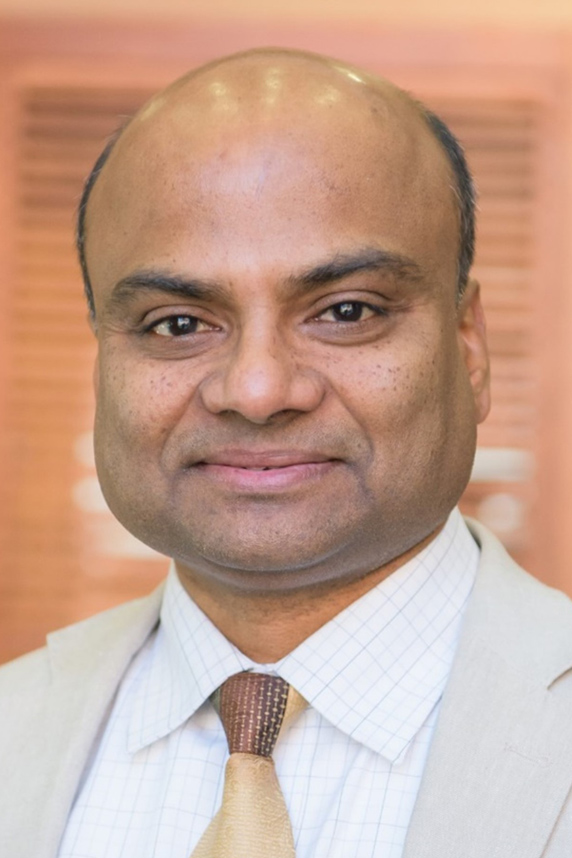
    <div>Photo credit: Rick Woychik, Ph.D., directs NIEHS and the National Toxicology Program. (Image courtesy of NIEHS)</div>
    </div></div>
]]>
  </Body>
  <Summary>Path to environmental engineering   By Rick Woychik | Environmental Factor | September 2024     Rick Woychik: What inspired you to pursue a research career?     Upal Ghosh: If I go back and think...</Summary>
  <TrackingUrl>https://dev.my.umbc.edu/api/v0/pixel/news/144104/guest@my.umbc.edu/652367c23d279509987138e8e9b7d924/api/pixel</TrackingUrl>
  <Tag>faculty</Tag>
  <Tag>fall-2024</Tag>
  <Tag>ghosh</Tag>
  <Tag>news</Tag>
  <Tag>research</Tag>
  <Group token="cbee">Chemical, Biochemical and Environmental Engineering</Group>
  <GroupUrl>https://dev.my.umbc.edu/groups/cbee</GroupUrl>
  <AvatarUrl>https://assets4-dev.my.umbc.edu/system/shared/avatars/groups/000/000/771/b5e579e81b2e3624611890fa3ca2716a/xsmall.png?1746794587</AvatarUrl>
  <AvatarUrl size="original">https://assets2-dev.my.umbc.edu/system/shared/avatars/groups/000/000/771/b5e579e81b2e3624611890fa3ca2716a/original.png?1746794587</AvatarUrl>
  <AvatarUrl size="xxlarge">https://assets1-dev.my.umbc.edu/system/shared/avatars/groups/000/000/771/b5e579e81b2e3624611890fa3ca2716a/xxlarge.png?1746794587</AvatarUrl>
  <AvatarUrl size="xlarge">https://assets2-dev.my.umbc.edu/system/shared/avatars/groups/000/000/771/b5e579e81b2e3624611890fa3ca2716a/xlarge.png?1746794587</AvatarUrl>
  <AvatarUrl size="large">https://assets2-dev.my.umbc.edu/system/shared/avatars/groups/000/000/771/b5e579e81b2e3624611890fa3ca2716a/large.png?1746794587</AvatarUrl>
  <AvatarUrl size="medium">https://assets4-dev.my.umbc.edu/system/shared/avatars/groups/000/000/771/b5e579e81b2e3624611890fa3ca2716a/medium.png?1746794587</AvatarUrl>
  <AvatarUrl size="small">https://assets1-dev.my.umbc.edu/system/shared/avatars/groups/000/000/771/b5e579e81b2e3624611890fa3ca2716a/small.png?1746794587</AvatarUrl>
  <AvatarUrl size="xsmall">https://assets4-dev.my.umbc.edu/system/shared/avatars/groups/000/000/771/b5e579e81b2e3624611890fa3ca2716a/xsmall.png?1746794587</AvatarUrl>
  <AvatarUrl size="xxsmall">https://assets1-dev.my.umbc.edu/system/shared/avatars/groups/000/000/771/b5e579e81b2e3624611890fa3ca2716a/xxsmall.png?1746794587</AvatarUrl>
  <Sponsor>Chemical, Biochemical and Environmental Engineering</Sponsor>
  <ThumbnailUrl size="xxlarge">https://assets1-dev.my.umbc.edu/system/shared/thumbnails/news/000/144/104/55a9af419f6612eb59fcd2309144ec38/xxlarge.jpg?1726852384</ThumbnailUrl>
  <ThumbnailUrl size="xlarge">https://assets3-dev.my.umbc.edu/system/shared/thumbnails/news/000/144/104/55a9af419f6612eb59fcd2309144ec38/xlarge.jpg?1726852384</ThumbnailUrl>
  <ThumbnailUrl size="large">https://assets3-dev.my.umbc.edu/system/shared/thumbnails/news/000/144/104/55a9af419f6612eb59fcd2309144ec38/large.jpg?1726852384</ThumbnailUrl>
  <ThumbnailUrl size="medium">https://assets4-dev.my.umbc.edu/system/shared/thumbnails/news/000/144/104/55a9af419f6612eb59fcd2309144ec38/medium.jpg?1726852384</ThumbnailUrl>
  <ThumbnailUrl size="small">https://assets1-dev.my.umbc.edu/system/shared/thumbnails/news/000/144/104/55a9af419f6612eb59fcd2309144ec38/small.jpg?1726852384</ThumbnailUrl>
  <ThumbnailUrl size="xsmall">https://assets2-dev.my.umbc.edu/system/shared/thumbnails/news/000/144/104/55a9af419f6612eb59fcd2309144ec38/xsmall.jpg?1726852384</ThumbnailUrl>
  <ThumbnailUrl size="xxsmall">https://assets1-dev.my.umbc.edu/system/shared/thumbnails/news/000/144/104/55a9af419f6612eb59fcd2309144ec38/xxsmall.jpg?1726852384</ThumbnailUrl>
  <PawCount>0</PawCount>
  <CommentCount>0</CommentCount>
  <CommentsAllowed>true</CommentsAllowed>
  <PostedAt>Fri, 20 Sep 2024 13:14:27 -0400</PostedAt>
  <EditAt>Fri, 20 Sep 2024 13:16:13 -0400</EditAt>
</NewsItem>
  <NewsItem contentIssues="true" id="144102" important="false" status="posted" url="https://dev.my.umbc.edu/groups/cbee/posts/144102">
  <Title>FROM NIEHS: Chemical contamination reduced by grantee&#8217;s innovative technology</Title>
  <Tagline>NIEHS Director's converstaion with Dr. Ghosh</Tagline>
  <Body>
    <![CDATA[
    <div class="html-content"><div><h3>Chemical contamination reduced by grantee’s innovative technology</h3><p><strong>I spoke with Upal Ghosh, Ph.D., about how effective environmental remediation requires rigorous exposure science, engineering.</strong></p><div><br></div><div>By Rick Woychik | <a href="https://factor.niehs.nih.gov/2024/9/feature/4-feature-innovative-environmental-remediation" rel="nofollow external" class="bo">Environmental Factor</a> | September 2024</div></div><div><br></div><div>
    <div>
    <p>Environmental contamination is a pressing challenge in parts of the U.S. and in many places around the world, affecting ecosystems, wildlife, and human health. From legacy pollutants like PCBs (polychlorinated biphenyls) to emerging contaminants such as PFAS (per- and polyfluoroalkyl substances), the complexity and scale of exposures is often daunting. But within these challenges lies opportunity for innovation, where it is possible to harness scientific and engineering breakthroughs to clean up contamination and protect public health. Recently, I had the privilege of speaking with someone who has dedicated his career to doing just that.</p>
    <hr>
    <img src="https://factor.niehs.nih.gov/sites/niehs-factor/files/2024/08/feature/innovative-environmental-remediation-body1.jpg" alt="Upal Ghosh, Ph.D." style="max-width: 100%; height: auto;">
    “Anytime a new technology is created, there may be some risk,” noted Ghosh. “But being able to take a risk on something that theoretically could work creates a situation where technologies can flourish and move from the lab to the field. Throughout my career, I’ve been fortunate to find enabling environments that allow new ideas to be tested.” (Photo courtesy of Upal Ghosh)
    
    <hr>
    
    <p>NIEHS grant recipient <a href="https://cbee.umbc.edu/upal-ghosh/" rel="nofollow external" class="bo">Upal Ghosh, Ph.D.</a>, is a professor of environmental engineering at the University of Maryland, Baltimore County, who has developed practical, scalable solutions to some of the toughest contamination problems we face. Much of his work focuses on reducing the bioavailability of pollutants — preventing them from entering the food web and reaching humans — in bodies of water such as lakes and rivers. SediMite, a technology he helped to create and commercialize, offers a sustainable solution to environmental cleanup of PCBs.</p>
    <p>Beyond his efforts in the lab, Dr. Ghosh works closely with communities disproportionately affected by contamination. His projects in places like Washington, D.C., Baltimore, and Delaware have demonstrated the benefits of his remediation technology, helping to reduce fish consumption advisories, restore wetlands, and strengthen resiliency among residents.</p>
    <p>In our conversation, Dr. Ghosh shared insights into the scale of environmental contamination globally and the evolving landscape of remediation technologies. He discussed the importance of understanding how exposures in a water body can lead to exposures in humans, as that knowledge is crucial to developing effective cleanup approaches. Dr. Ghosh also described his early interest in science and what inspired him to pursue a research career.</p>
    <h2>Economy and environment</h2>
    <p><strong>Rick Woychik</strong>: Thank you, Dr. Ghosh, for taking the time to speak with me. Can you provide an overview of the scale of environmental contamination problems, both in the U.S. and globally?</p>
    <p><strong>Upal Ghosh</strong>: Sure. The way I think about it, the scale of environmental problems is related to the scale of the economy. A lot of the problems we discuss — from <a href="https://www.epa.gov/superfund/what-superfund" rel="nofollow external" class="bo">Superfund sites</a> such as Love Canal to current challenges around <a href="https://www.niehs.nih.gov/health/topics/agents/pfc" rel="nofollow external" class="bo">PFAS contamination</a> — are tied to how productive an economy is, and how production and usage practices have caused leakages.</p>
    <p>The U.S. was the largest manufacturing center for many products, and we’re seeing the footprint of that. Love Canal is a prime example. All of these Superfund sites are remnants of an era where laws weren’t in place to internalize costs and reduce externalities, and now we’re realizing that.</p>
    <hr>
    <img src="https://factor.niehs.nih.gov/sites/niehs-factor/files/2024/08/feature/innovative-environmental-remediation-body2.jpg" alt="Ghosh on boat" style="max-width: 100%; height: auto;">
    Ghosh is shown here collecting sediments from the Fort Eustis Superfund site in Virginia. “Working at PCB-contaminated sites like this makes you think, ‘How can we reduce human and ecological exposure without destroying vibrant wetland ecosystems?’” said Ghosh. (Image courtesy of Upal Ghosh)
    
    <hr>
    <p>I also travel internationally, and I see the same trends in developing countries. In India, they're ramping up production, and China has already reached high levels of industrial production. They’re starting to face challenges associated with manufacturing, transporting, and using large volumes of chemicals to provide their populations with a quality of life they expect and deserve.</p>
    <p>In pharmaceutical production, we’re seeing leakages of pharmaceuticals, and with large-volume chemicals like petroleum and pesticides, every functioning economy creates this footprint. So, in short, the scale of the problem has often been tied to the scale of the economy. But I believe that new technologies will help to create a better dynamic, allowing for both strong economic growth and strong environmental health.</p>
    <h2>To solve the problem, first define it</h2>
    <p><strong>RW</strong>: How do you go about developing remediation approaches?</p>
    <p><strong>UG</strong>: Environmental contamination poses an interesting challenge for scientists and engineers because the problem is often poorly defined. If I put PCB molecules in a beaker of clean water, as a scientist, I can describe the behavior accurately. But when I deal with a river, lake, or coastal bay, the matrix is much more complicated. For a variety of reasons, such as complex geochemistry, hydrodynamics, air-water exchange, and so forth, the attributes of contamination are not uniform. The behavior of compounds in that matrix becomes much more difficult to describe.</p>
    <p>For example, in the PCB cases I’ve worked on, we have to try to understand not just what’s happening in a complex body of water, but also a complex ecological system that ultimately leads to human exposure via the food web. So, defining the problem is the first part of effective technology development, and in fact I think that’s where many technology needs lie: accurately defining exposure. We can’t solve the problem unless we do so.</p>
    <hr>
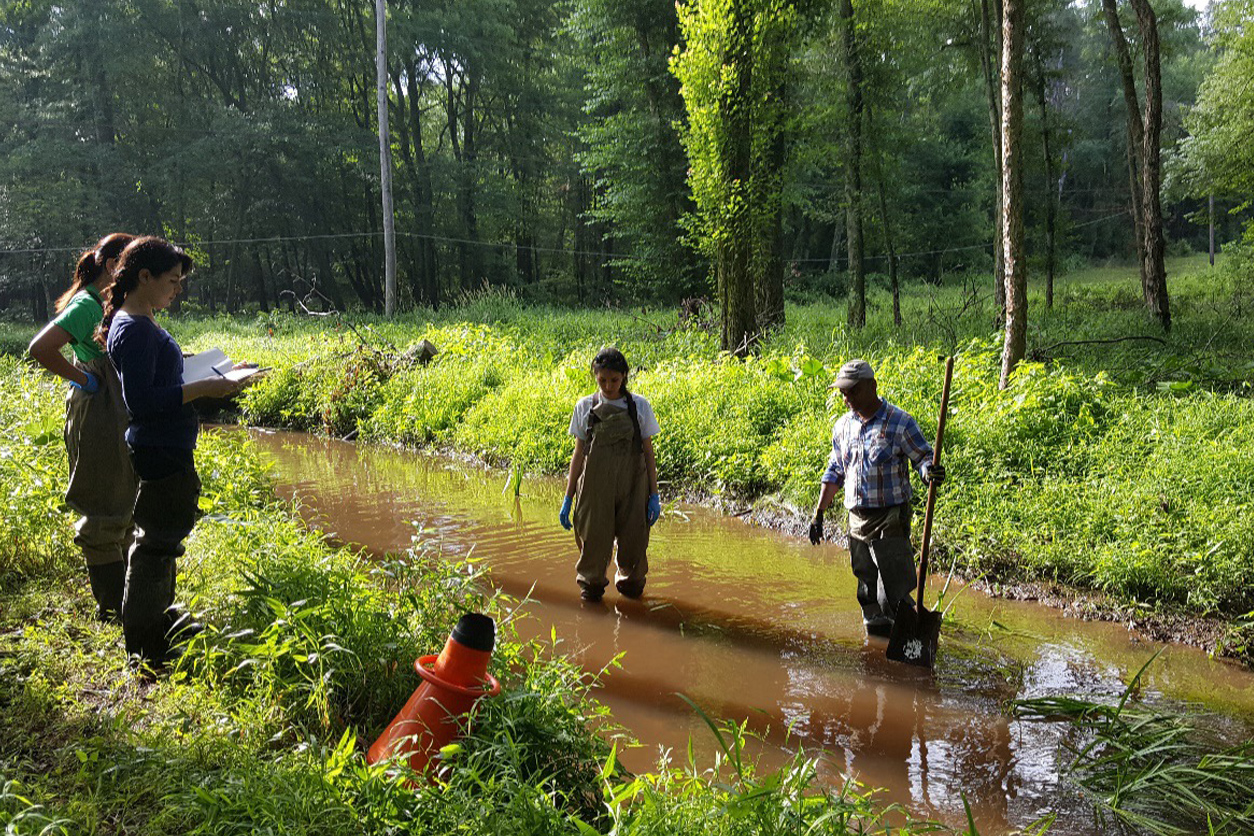
    <img src="https://factor.niehs.nih.gov/sites/niehs-factor/files/2024/08/feature/innovative-environmental-remediation-body3.jpg" alt="Ghosh and team standing in the river" style="max-width: 100%; height: auto;">
    Ghosh, right, is shown here installing passive samplers with students at a tributary of the Anacostia River in Washington, D.C., to help local decisionmakers better define the PCB and pesticide pollution problem and refine their remediation approach. (Photo courtesy of Upal Ghosh)
    
    <hr>
    <p>A lot of my work, and much of my colleagues’ work, falls under this category of accurately defining exposure, of understanding the bioavailability of pollutants in the soil or sediment environment. Once we understand the exposure — and the dominant exposure pathways — then I can bring in engineers, communities, and policymakers to create effective solutions.</p>
    <h2>Discovering black carbon’s key role</h2>
    <p><strong>RW</strong>: This is very interesting. If I’m understanding you correctly, the goal is to not just determine PCB levels in the soil of a riverbed, for example, but also to assess how much PCB in the soil of the riverbed will make it into the water and be ingested by fish, or absorbed through their gills, and eventually consumed by humans. Is that what you’re getting at?</p>
    <p><strong>UG</strong>: That’s exactly right. It’s not just about measuring contamination in sediments but understanding how it moves through the aquatic environment and enters the food web. Once we can accurately define the dominant exposure pathways, we can tailor our remediation efforts to address the most critical sources of exposure. To that end, we’ve adopted passive sampling techniques and environmental modeling methods to better assess the movement and exposures.</p>
    <p>Early in my research, when I was at Stanford working with my colleague and mentor Dr. Dick Luthy, we were studying the bioavailability of pollutants, looking specifically at PAHs [polycyclic aromatic hydrocarbons] and PCBs in sediments. The question we were asking was: Why is the bioavailability so different across sites? For example, when I took sediments from the Baltimore harbor versus sediments from the Milwaukee harbor, they didn’t behave the same.</p>
    <p>Just looking at the organic matter content, mineral content, and particle size wasn’t explaining the differences, which were sometimes more than an order of magnitude. In some sediments, pollutants like PAHs and PCBs were bound up much more strongly than we would predict. So, we started looking at that more carefully and discovered that in sediments where pollutants were strongly bound and less bioavailable, black carbon was present. Black carbon, the graphitic form of carbon, occurs naturally and can also come from things like forest fires, coal coke, and soot.</p>
    <p>We showed that these naturally present black carbon particles were binding PAHs and PCBs with affinities two orders of magnitude stronger than organic materials of plant origin. That was interesting because we could now explain the difference across our study sites. Some of our early papers focused on these natural differences in organic matter geochemistry, explaining the differences in bioavailability. Of course, we didn’t stop at just understanding the science — we wanted to use that knowledge to develop remediation technology.</p>
    <h2>Pellets pack a punch</h2>
    <p><strong>RW</strong>: And this is where the product you helped to develop, SediMite, comes into play. Can you explain the technology behind it?</p>
    <hr>
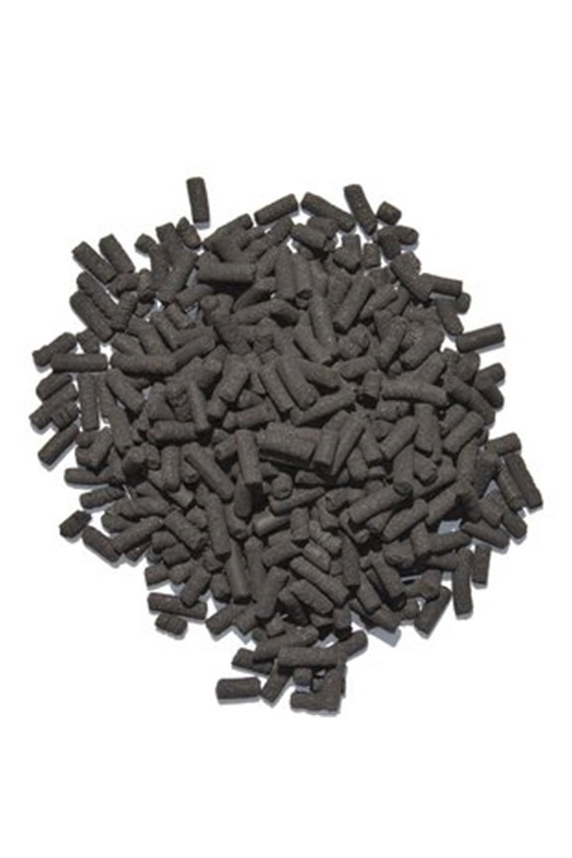
    <img src="https://factor.niehs.nih.gov/sites/niehs-factor/files/2024/08/feature/innovative-environmental-remediation-body4.jpg" alt="SediMite pellets" style="max-width: 100%; height: auto;">
    Ghosh patented SediMite in 2010 and created a university spin-off company to produce it at scale. (Photo courtesy of Sediment Solutions)
    
    <hr>
    <p><strong>UG</strong>: SediMite works by binding contaminants in sediments, reducing their availability to organisms in the food web. The product consists of activated carbon packaged into pellets, which makes it easy to handle and apply in the field. Once dispersed in sediments, the activated carbon binds to hydrophobic pollutants like PCBs, making them less bioavailable to aquatic organisms. It can apply to a whole range of hydrophobic chemicals — pesticides, dioxins, and even PFAS. It works for some metals, too. We have done some work with mercury, and it binds strongly.</p>
    <p>What sets this technology apart from traditional methods like dredging is that it minimizes environmental disruption. Dredging can release buried contaminants into the water, potentially exacerbating the problem. With SediMite, we’re able to stabilize contaminants in place, reducing the risk of exposure without disturbing the ecosystem. Additionally, this method is often more cost-effective than large-scale dredging and landfill disposal. SediMite can also be adjusted, so we can blend new formulations of absorbents in our pellets to target different pollutants.</p>
    <h2>Targeting contamination hotspots</h2>
    <p><strong>RW</strong>: It sounds like this technology has the potential to significantly improve remediation efforts. How scalable is it? Could it be applied to larger bodies of water, like Lake Michigan?</p>
    <p><strong>UG</strong>: Scaling is always a consideration, and while SediMite can be successfully applied to larger areas, it’s often most effective in targeted locations where contamination levels are highest. With targeted dispersal, we have been able to reduce PCB bioavailability by 80% or more. We’ve successfully applied this technology in places like Mirror Lake in Delaware, where it helped to reduce concentrations in fish to levels below consumption advisory guidelines.</p>
    <p>The broader notion of introducing activated carbon in a contaminated site, demonstrated successfully through our research, has now become mainstream technology. For example, the technique has been applied at multiple Superfund sites, such as the <a href="https://semspub.epa.gov/work/02/580386.pdf" rel="nofollow external" class="bo">Passaic River</a> in New Jersey.</p>
    <p>In a large body of water like Lake Michigan, the focus would likely be on contaminated hotspots near industrial sites rather than attempting to treat the entire lake. This targeted approach allows for more efficient use of resources while still achieving significant risk reduction.</p>
    <p>Recently, the U.S. Environmental Protection Agency used our product in Minnesota’s Scanlon Reservoir to clean up dioxins, and they covered about 15 acres. They used SediMite to reduce bioavailability in shoreline areas with wetlands without destroying the wetlands.</p>
    <h2>Using microbes to degrade contaminants</h2>
    <p><strong>RW</strong>: One intriguing aspect of your work involves microbial degradation of contaminants. Can you tell us more about that?</p>
    <p><strong>UG</strong>: Absolutely. Microbial degradation is the ultimate solution — finding ways to not only bind contaminants but also break them down over time. In the case of PCBs, there are naturally occurring microorganisms that can dechlorinate these compounds, making them less harmful. We’ve worked with my microbiologist colleague Dr. Kevin Sowers to isolate these organisms, grow them in the lab, and then reintroduce them into contaminated environments as microbial catalysts. This process enhances the natural degradation of contaminants, further reducing their impact over time.</p>
    <h2>For the benefit of communities</h2>
    <p><strong>RW</strong>: It’s inspiring to see remediation technologies applied in the real world. Could you share some examples of how your work has benefited communities disproportionately affected by environmental contamination?</p>
    <p><strong>UG</strong>: One project that stands out is the Middle Branch Resiliency Initiative in Southwest Baltimore, a community that faces multiple environmental challenges, including contaminated sediments and coastal flooding. By using SediMite to treat nearby sediments and creating elevated wetlands, we’re not only improving environmental conditions but also helping to protect the community from future flooding events. This project shows how environmental remediation can be integrated with broader resilience and restoration efforts, ultimately enhancing the quality of life for residents.</p>
    </div>
    <p>(Rick Woychik, Ph.D., directs NIEHS and the National Toxicology Program.)</p>
    <h5><br></h5></div>Read Original Post from Environmental FactorEnvironmental Factor<br>Your Online Source for NIEHS News: <a href="https://factor.niehs.nih.gov/2024/9/feature/4-feature-innovative-environmental-remediation" rel="nofollow external" class="bo">https://factor.niehs.nih.gov/2024/9/feature/4-feature-innovative-environmental-remediation</a><div><br></div><div>Photo credit: Rick Woychik, Ph.D., directs NIEHS and the National Toxicology Program. (Image courtesy of NIEHS)</div></div>
]]>
  </Body>
  <Summary>Chemical contamination reduced by grantee’s innovative technology  I spoke with Upal Ghosh, Ph.D., about how effective environmental remediation requires rigorous exposure science, engineering....</Summary>
  <TrackingUrl>https://dev.my.umbc.edu/api/v0/pixel/news/144102/guest@my.umbc.edu/2c601ff79b1021d3edd14fba422a7a16/api/pixel</TrackingUrl>
  <Tag>faculty</Tag>
  <Tag>fall-2024</Tag>
  <Tag>ghosh</Tag>
  <Tag>news</Tag>
  <Tag>research</Tag>
  <Group token="cbee">Chemical, Biochemical and Environmental Engineering</Group>
  <GroupUrl>https://dev.my.umbc.edu/groups/cbee</GroupUrl>
  <AvatarUrl>https://assets4-dev.my.umbc.edu/system/shared/avatars/groups/000/000/771/b5e579e81b2e3624611890fa3ca2716a/xsmall.png?1746794587</AvatarUrl>
  <AvatarUrl size="original">https://assets2-dev.my.umbc.edu/system/shared/avatars/groups/000/000/771/b5e579e81b2e3624611890fa3ca2716a/original.png?1746794587</AvatarUrl>
  <AvatarUrl size="xxlarge">https://assets1-dev.my.umbc.edu/system/shared/avatars/groups/000/000/771/b5e579e81b2e3624611890fa3ca2716a/xxlarge.png?1746794587</AvatarUrl>
  <AvatarUrl size="xlarge">https://assets2-dev.my.umbc.edu/system/shared/avatars/groups/000/000/771/b5e579e81b2e3624611890fa3ca2716a/xlarge.png?1746794587</AvatarUrl>
  <AvatarUrl size="large">https://assets2-dev.my.umbc.edu/system/shared/avatars/groups/000/000/771/b5e579e81b2e3624611890fa3ca2716a/large.png?1746794587</AvatarUrl>
  <AvatarUrl size="medium">https://assets4-dev.my.umbc.edu/system/shared/avatars/groups/000/000/771/b5e579e81b2e3624611890fa3ca2716a/medium.png?1746794587</AvatarUrl>
  <AvatarUrl size="small">https://assets1-dev.my.umbc.edu/system/shared/avatars/groups/000/000/771/b5e579e81b2e3624611890fa3ca2716a/small.png?1746794587</AvatarUrl>
  <AvatarUrl size="xsmall">https://assets4-dev.my.umbc.edu/system/shared/avatars/groups/000/000/771/b5e579e81b2e3624611890fa3ca2716a/xsmall.png?1746794587</AvatarUrl>
  <AvatarUrl size="xxsmall">https://assets1-dev.my.umbc.edu/system/shared/avatars/groups/000/000/771/b5e579e81b2e3624611890fa3ca2716a/xxsmall.png?1746794587</AvatarUrl>
  <Sponsor>Chemical, Biochemical and Environmental Engineering</Sponsor>
  <ThumbnailUrl size="xxlarge">https://assets3-dev.my.umbc.edu/system/shared/thumbnails/news/000/144/102/eacf9b2d0a66c0730b01eb78ad35fbe9/xxlarge.jpg?1726851683</ThumbnailUrl>
  <ThumbnailUrl size="xlarge">https://assets2-dev.my.umbc.edu/system/shared/thumbnails/news/000/144/102/eacf9b2d0a66c0730b01eb78ad35fbe9/xlarge.jpg?1726851683</ThumbnailUrl>
  <ThumbnailUrl size="large">https://assets3-dev.my.umbc.edu/system/shared/thumbnails/news/000/144/102/eacf9b2d0a66c0730b01eb78ad35fbe9/large.jpg?1726851683</ThumbnailUrl>
  <ThumbnailUrl size="medium">https://assets2-dev.my.umbc.edu/system/shared/thumbnails/news/000/144/102/eacf9b2d0a66c0730b01eb78ad35fbe9/medium.jpg?1726851683</ThumbnailUrl>
  <ThumbnailUrl size="small">https://assets1-dev.my.umbc.edu/system/shared/thumbnails/news/000/144/102/eacf9b2d0a66c0730b01eb78ad35fbe9/small.jpg?1726851683</ThumbnailUrl>
  <ThumbnailUrl size="xsmall">https://assets2-dev.my.umbc.edu/system/shared/thumbnails/news/000/144/102/eacf9b2d0a66c0730b01eb78ad35fbe9/xsmall.jpg?1726851683</ThumbnailUrl>
  <ThumbnailUrl size="xxsmall">https://assets1-dev.my.umbc.edu/system/shared/thumbnails/news/000/144/102/eacf9b2d0a66c0730b01eb78ad35fbe9/xxsmall.jpg?1726851683</ThumbnailUrl>
  <PawCount>0</PawCount>
  <CommentCount>0</CommentCount>
  <CommentsAllowed>true</CommentsAllowed>
  <PostedAt>Fri, 20 Sep 2024 13:07:06 -0400</PostedAt>
  <EditAt>Fri, 20 Sep 2024 13:17:00 -0400</EditAt>
</NewsItem>
  <NewsItem contentIssues="true" id="144096" important="false" status="posted" url="https://dev.my.umbc.edu/groups/cbee/posts/144096">
    <Title>Mt. St. Joseph High School Students Explore Chemical Engineering at CBEE</Title>
    <Tagline>Mt. St. Joe students visit UMBC</Tagline>
    <Body>
      <![CDATA[
          <div class="html-content"><p>Students from Mt. St. Joseph High School had an engaging day at the Department of Chemical, Biochemical and Environmental Engineering (CBEE) today, where they toured cutting-edge labs and learned about innovative research and CBEE’s academic excellence from leading faculty members. They were accompanied by Jason Ader, Mt. St. Joe’s Director of Sustainability, STEM, and Innovation, and Dr. Rebecca Obniski, a STEM coordinator.</p>
          <p>The visit kicked off with a tour of the laboratories of <strong>Drs.</strong> <strong>Josephson</strong>, <strong>Blaney</strong>, and <strong>Marten</strong>, where students got a firsthand look at ongoing projects in the field. Each lab showcased unique research efforts, sparking curiosity and inspiring future engineers.</p>
          <p>Following the lab tour, the students enjoyed a pizza lunch, where they had the opportunity to discuss their interests and ask questions about the engineering field. Dr. <strong>Marten</strong>, Chair of CBEE, shared insights into the department's research efforts and academic program.</p>
          <p>Additionally, COEIT advisor Krista Wallace provided valuable information on the application process for the CBEE program, highlighting opportunities for prospective students to engage in research and hands-on learning.</p>
          <p>The visit was a fantastic opportunity for high school students to connect with university faculty and explore potential career paths in engineering, fostering a deeper understanding of the impact of chemical, biochemical, and environmental engineering on society.</p></div>
      ]]>
    </Body>
    <Summary>Students from Mt. St. Joseph High School had an engaging day at the Department of Chemical, Biochemical and Environmental Engineering (CBEE) today, where they toured cutting-edge labs and learned...</Summary>
    <TrackingUrl>https://dev.my.umbc.edu/api/v0/pixel/news/144096/guest@my.umbc.edu/044f6b28bc6333070d26c9e75539ed0f/api/pixel</TrackingUrl>
    <Tag>coeit</Tag>
    <Tag>fall-2024</Tag>
    <Tag>high-school</Tag>
    <Tag>marten</Tag>
    <Tag>prospective-student</Tag>
    <Tag>recruitment</Tag>
    <Tag>research</Tag>
    <Tag>ug</Tag>
    <Tag>ugrad</Tag>
    <Group token="cbee">Chemical, Biochemical and Environmental Engineering</Group>
    <GroupUrl>https://dev.my.umbc.edu/groups/cbee</GroupUrl>
    <AvatarUrl>https://assets4-dev.my.umbc.edu/system/shared/avatars/groups/000/000/771/b5e579e81b2e3624611890fa3ca2716a/xsmall.png?1746794587</AvatarUrl>
    <AvatarUrl size="original">https://assets2-dev.my.umbc.edu/system/shared/avatars/groups/000/000/771/b5e579e81b2e3624611890fa3ca2716a/original.png?1746794587</AvatarUrl>
    <AvatarUrl size="xxlarge">https://assets1-dev.my.umbc.edu/system/shared/avatars/groups/000/000/771/b5e579e81b2e3624611890fa3ca2716a/xxlarge.png?1746794587</AvatarUrl>
    <AvatarUrl size="xlarge">https://assets2-dev.my.umbc.edu/system/shared/avatars/groups/000/000/771/b5e579e81b2e3624611890fa3ca2716a/xlarge.png?1746794587</AvatarUrl>
    <AvatarUrl size="large">https://assets2-dev.my.umbc.edu/system/shared/avatars/groups/000/000/771/b5e579e81b2e3624611890fa3ca2716a/large.png?1746794587</AvatarUrl>
    <AvatarUrl size="medium">https://assets4-dev.my.umbc.edu/system/shared/avatars/groups/000/000/771/b5e579e81b2e3624611890fa3ca2716a/medium.png?1746794587</AvatarUrl>
    <AvatarUrl size="small">https://assets1-dev.my.umbc.edu/system/shared/avatars/groups/000/000/771/b5e579e81b2e3624611890fa3ca2716a/small.png?1746794587</AvatarUrl>
    <AvatarUrl size="xsmall">https://assets4-dev.my.umbc.edu/system/shared/avatars/groups/000/000/771/b5e579e81b2e3624611890fa3ca2716a/xsmall.png?1746794587</AvatarUrl>
    <AvatarUrl size="xxsmall">https://assets1-dev.my.umbc.edu/system/shared/avatars/groups/000/000/771/b5e579e81b2e3624611890fa3ca2716a/xxsmall.png?1746794587</AvatarUrl>
    <Sponsor>Chemical, Biochemical and Environmental Engineering</Sponsor>
    <ThumbnailUrl size="xxlarge">https://assets3-dev.my.umbc.edu/system/shared/thumbnails/news/000/144/096/30e4eabd86545b4dac4057a81b970fb6/xxlarge.jpg?1726845390</ThumbnailUrl>
    <ThumbnailUrl size="xlarge">https://assets2-dev.my.umbc.edu/system/shared/thumbnails/news/000/144/096/30e4eabd86545b4dac4057a81b970fb6/xlarge.jpg?1726845390</ThumbnailUrl>
    <ThumbnailUrl size="large">https://assets2-dev.my.umbc.edu/system/shared/thumbnails/news/000/144/096/30e4eabd86545b4dac4057a81b970fb6/large.jpg?1726845390</ThumbnailUrl>
    <ThumbnailUrl size="medium">https://assets2-dev.my.umbc.edu/system/shared/thumbnails/news/000/144/096/30e4eabd86545b4dac4057a81b970fb6/medium.jpg?1726845390</ThumbnailUrl>
    <ThumbnailUrl size="small">https://assets1-dev.my.umbc.edu/system/shared/thumbnails/news/000/144/096/30e4eabd86545b4dac4057a81b970fb6/small.jpg?1726845390</ThumbnailUrl>
    <ThumbnailUrl size="xsmall">https://assets4-dev.my.umbc.edu/system/shared/thumbnails/news/000/144/096/30e4eabd86545b4dac4057a81b970fb6/xsmall.jpg?1726845390</ThumbnailUrl>
    <ThumbnailUrl size="xxsmall">https://assets1-dev.my.umbc.edu/system/shared/thumbnails/news/000/144/096/30e4eabd86545b4dac4057a81b970fb6/xxsmall.jpg?1726845390</ThumbnailUrl>
    <PawCount>0</PawCount>
    <CommentCount>0</CommentCount>
    <CommentsAllowed>true</CommentsAllowed>
    <PostedAt>Fri, 20 Sep 2024 11:19:29 -0400</PostedAt>
    <EditAt>Fri, 20 Sep 2024 11:21:24 -0400</EditAt>
  </NewsItem>
  <NewsItem contentIssues="true" id="144072" important="false" status="posted" url="https://dev.my.umbc.edu/groups/cbee/posts/144072">
  <Title>Upal Ghosh appointed to D.C. mayor&#8217;s Leadership Council for a Cleaner Anacostia River</Title>
  <Tagline>from UMBC News</Tagline>
  <Body>
    <![CDATA[
    <div class="html-content"><p><a href="https://umbc.edu/quick-posts/upal-ghosh-leadership-council-for-a-cleaner-anacostia-river/" rel="nofollow external" class="bo"> UMBC News</a> | Published: Sep 18, 2024 |By:<a href="https://umbc.edu/author/cmeyers2/" rel="nofollow external" class="bo"><strong>Catherine Meyers</strong></a></p>
    <p>On September 12, UMBC’s <strong><a href="https://cbee.umbc.edu/upal-ghosh/" rel="nofollow external" class="bo">Upal Ghosh</a></strong>, from the Department of Chemical, Biochemical, and Environmental Engineering, was sworn in as a member of the Washington, D.C., mayor’s Leadership Council for a Cleaner Anacostia River (LCCAR). The council consists of 25 high-level government officials, community leaders, and environmental experts who support the vision of a swimmable and fishable Anacostia River. The members meet quarterly to advise the D.C. government on ongoing restoration projects. </p>
    <p>The Anacostia River, which runs from Prince George’s County in Maryland into Washington, D.C., before joining the Potomac River and ultimately flowing into the Chesapeake Bay, has historically suffered from high levels of industrial pollution and contamination from sewage overflow. In recent years, government officials have been making concerted efforts to clean up the river. UMBC was invited to sit on the council, with Ghosh as the representative, based on the university’s key contributions to these clean-up efforts. </p>
    <img src="https://umbc.edu/wp-content/uploads/2024/09/LCCAR-swearing-in_Sept.-12.png" alt="Screen shots shows people on conference call on top and agenda for meeting below. Some people raise their hands for a swearing in." width="601" height="485" style="max-width: 100%; height: auto;">
    On Sept. 12, Upal Ghosh (top left) and other members of the LCCAR were sworn in during a virtual meeting of the council. (Image courtesy of Ghosh)
    
    <p><br>Since 2016, Ghosh and his UMBC colleagues and students have developed innovative methods of measuring contaminants in the river and created models to elucidate where the contaminants come from and how they travel through and accumulate in the water, sediment, and aquatic life, such as fish. <strong><a href="https://imet.usmd.edu/directory/nathalie-lombard" rel="nofollow external" class="bo">Nathalie Lombard</a></strong>, a research assistant professor at UMBC who has played a significant role in the projects, will serve as the alternate representative on the LLCAR when Ghosh cannot attend. </p>
    <p><br>In addition to his work on the Anacostia, Ghosh and his students have studied and contributed to the cleanup of the <a href="https://factor.niehs.nih.gov/2024/9/feature/4-feature-innovative-environmental-remediation" rel="nofollow external" class="bo">waterways throughout Maryland, Delaware, and across the country</a>. “Students learn a lot from being out in the field,” Ghosh says. “They learn how the science and engineering we do helps guide major decisions. Our ultimate goal is making a positive difference in the health of the river, lake, or bay. That gives me a lot of excitement, and it really motivates the students too.”</p>
    <p>Read original post via UMBC NEWS: <a href="https://umbc.edu/quick-posts/upal-ghosh-leadership-council-for-a-cleaner-anacostia-river/" rel="nofollow external" class="bo">Upal Ghosh Appointed To D.C. Mayor’s Leadership Council For A Cleaner Anacostia River - UMBC</a></p></div>
]]>
  </Body>
  <Summary>UMBC News | Published: Sep 18, 2024 |By:Catherine Meyers   On September 12, UMBC’s Upal Ghosh, from the Department of Chemical, Biochemical, and Environmental Engineering, was sworn in as a member...</Summary>
  <TrackingUrl>https://dev.my.umbc.edu/api/v0/pixel/news/144072/guest@my.umbc.edu/8f57de1fd5874947076a22abb7de8539/api/pixel</TrackingUrl>
  <Tag>cbee</Tag>
  <Tag>coeit</Tag>
  <Tag>faculty</Tag>
  <Tag>fall-2024</Tag>
  <Tag>ghosh</Tag>
  <Tag>news</Tag>
  <Group token="cbee">Chemical, Biochemical and Environmental Engineering</Group>
  <GroupUrl>https://dev.my.umbc.edu/groups/cbee</GroupUrl>
  <AvatarUrl>https://assets4-dev.my.umbc.edu/system/shared/avatars/groups/000/000/771/b5e579e81b2e3624611890fa3ca2716a/xsmall.png?1746794587</AvatarUrl>
  <AvatarUrl size="original">https://assets2-dev.my.umbc.edu/system/shared/avatars/groups/000/000/771/b5e579e81b2e3624611890fa3ca2716a/original.png?1746794587</AvatarUrl>
  <AvatarUrl size="xxlarge">https://assets1-dev.my.umbc.edu/system/shared/avatars/groups/000/000/771/b5e579e81b2e3624611890fa3ca2716a/xxlarge.png?1746794587</AvatarUrl>
  <AvatarUrl size="xlarge">https://assets2-dev.my.umbc.edu/system/shared/avatars/groups/000/000/771/b5e579e81b2e3624611890fa3ca2716a/xlarge.png?1746794587</AvatarUrl>
  <AvatarUrl size="large">https://assets2-dev.my.umbc.edu/system/shared/avatars/groups/000/000/771/b5e579e81b2e3624611890fa3ca2716a/large.png?1746794587</AvatarUrl>
  <AvatarUrl size="medium">https://assets4-dev.my.umbc.edu/system/shared/avatars/groups/000/000/771/b5e579e81b2e3624611890fa3ca2716a/medium.png?1746794587</AvatarUrl>
  <AvatarUrl size="small">https://assets1-dev.my.umbc.edu/system/shared/avatars/groups/000/000/771/b5e579e81b2e3624611890fa3ca2716a/small.png?1746794587</AvatarUrl>
  <AvatarUrl size="xsmall">https://assets4-dev.my.umbc.edu/system/shared/avatars/groups/000/000/771/b5e579e81b2e3624611890fa3ca2716a/xsmall.png?1746794587</AvatarUrl>
  <AvatarUrl size="xxsmall">https://assets1-dev.my.umbc.edu/system/shared/avatars/groups/000/000/771/b5e579e81b2e3624611890fa3ca2716a/xxsmall.png?1746794587</AvatarUrl>
  <Sponsor>Chemical, Biochemical and Environmental Engineering</Sponsor>
  <ThumbnailUrl size="xxlarge">https://assets2-dev.my.umbc.edu/system/shared/thumbnails/news/000/144/072/6ae323c355a16250b66c41004a6f7c0e/xxlarge.jpg?1726777022</ThumbnailUrl>
  <ThumbnailUrl size="xlarge">https://assets2-dev.my.umbc.edu/system/shared/thumbnails/news/000/144/072/6ae323c355a16250b66c41004a6f7c0e/xlarge.jpg?1726777022</ThumbnailUrl>
  <ThumbnailUrl size="large">https://assets1-dev.my.umbc.edu/system/shared/thumbnails/news/000/144/072/6ae323c355a16250b66c41004a6f7c0e/large.jpg?1726777022</ThumbnailUrl>
  <ThumbnailUrl size="medium">https://assets1-dev.my.umbc.edu/system/shared/thumbnails/news/000/144/072/6ae323c355a16250b66c41004a6f7c0e/medium.jpg?1726777022</ThumbnailUrl>
  <ThumbnailUrl size="small">https://assets1-dev.my.umbc.edu/system/shared/thumbnails/news/000/144/072/6ae323c355a16250b66c41004a6f7c0e/small.jpg?1726777022</ThumbnailUrl>
  <ThumbnailUrl size="xsmall">https://assets1-dev.my.umbc.edu/system/shared/thumbnails/news/000/144/072/6ae323c355a16250b66c41004a6f7c0e/xsmall.jpg?1726777022</ThumbnailUrl>
  <ThumbnailUrl size="xxsmall">https://assets2-dev.my.umbc.edu/system/shared/thumbnails/news/000/144/072/6ae323c355a16250b66c41004a6f7c0e/xxsmall.jpg?1726777022</ThumbnailUrl>
  <PawCount>0</PawCount>
  <CommentCount>0</CommentCount>
  <CommentsAllowed>true</CommentsAllowed>
  <PostedAt>Thu, 19 Sep 2024 16:19:54 -0400</PostedAt>
  <EditAt>Fri, 20 Sep 2024 10:14:46 -0400</EditAt>
</NewsItem>
  <NewsItem contentIssues="true" id="144012" important="false" status="posted" url="https://dev.my.umbc.edu/groups/cbee/posts/144012">
  <Title>Lee Blaney assumes presidency of the Association of Environmental Engineering and Science Professors</Title>
  <Tagline>From UMBC News</Tagline>
  <Body>
    <![CDATA[
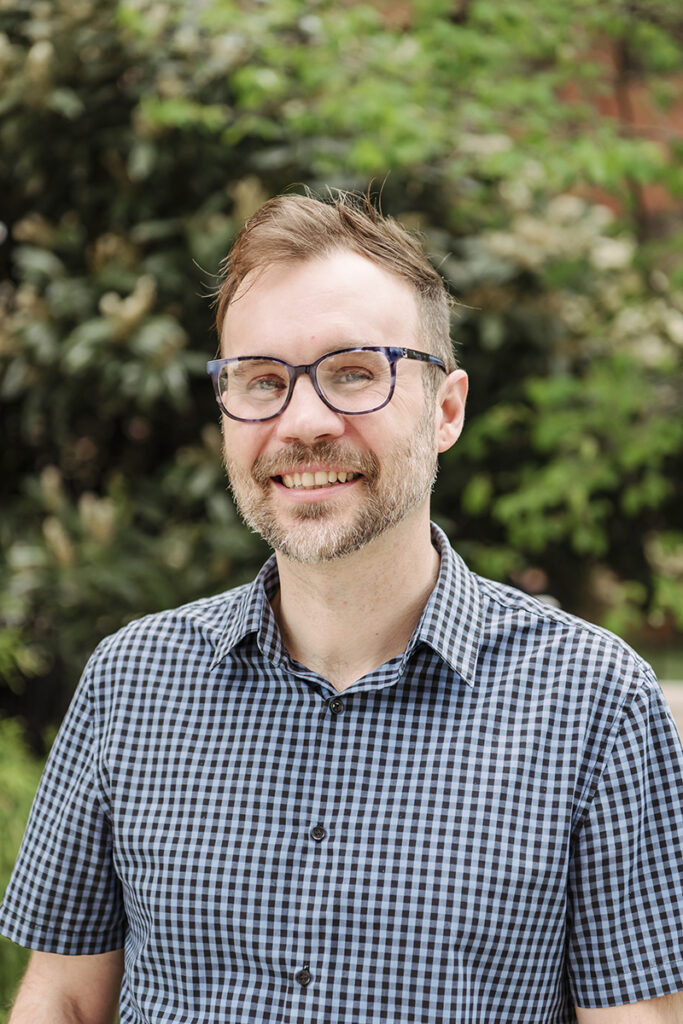
    <div class="html-content"><p>From <a href="https://umbc.edu/stories/lee-blaney-president-association-environmental-engineering-science-professors/" rel="nofollow external" class="bo">UMBC News</a> | By: Catherine Meyers | Published: Sep 16, 2024</p><p>Professor <strong>Lee Blaney</strong>, in the Department of Chemical, Biochemical, and Environmental Engineering, formally assumed the role of president of the Association of Environmental Engineering and Science Professors (AEESP) at a board of directors meeting in early September.</p>
    <img src="https://www.umbc.edu/wp-content/uploads/2024/09/PFSA24-Lee-Blaney-1882-683x1024.jpg" alt="A man wearing glasses and checkered shirt smile at camera in front of greenery." width="170" style="max-width: 100%; height: auto;">
    <br>Lee Blaney (Marlayna Demond ’11/UMBC)
    
    
    <p><br></p><p>AEESP is a nonprofit organization founded in 1963 to foster inclusive connections between environmental engineering and science researchers and educators. It provides programs for members to develop the academic networks and career skills needed for professional success, increase equitable societal impact of environmental engineering and science scholarship and creative expression, and reimagine the skills necessary for environmental engineers and scientists to provide solutions that benefit regional, national, and global communities. </p>
    <p>The association currently has more than 1000 members from universities around the world. AEESP assists its members in improving education and research programs, encourages graduate education, and provides information to government agencies and the public. The biennial AEESP Research and Education Conference brings the field together to share research, teaching, and outreach outcomes. Blaney’s term as president will include the next conference, which is scheduled to occur in May 2025 at Duke University. </p>
    <p>“We’re excited about Dr. Blaney’s new role as president of AEESP,” says <strong>Mark Marten</strong>, the chair of the Department of Chemical, Biochemical, and Environmental Engineering. “His deep involvement with this organization not only makes a positive impact in our discipline, but also raises awareness of our department and UMBC in this influential community.” </p>
    <p>Blaney and his research group study environmental contaminants of emerging concern, <a href="https://umbc.edu/quick-posts/lee-blaney-wins-funding-to-develop-new-ways-to-remove-forever-chemicals-from-water/" rel="nofollow external" class="bo">such as per- and polyfluoroalkyl substances</a>, or PFAS, which are sometimes called “forever chemicals” because of the way they persist in the environment. They also research how to recover vital resources, such as nitrogen and phosphorus, from waste streams to improve water quality and ensure sustainable development. Blaney was a winner of the <a href="https://pubs.acs.org/doi/10.1021/acs.estlett.0c00904?utm_source=SendGrid_ealert&amp;utm_medium=ealert&amp;utm_campaign=TOC_estlcu_v7_i12&amp;ref=SendGrid_ealert_TOC_estlcu_v7_i12_" rel="nofollow external" class="bo">2021 James J. Morgan Early Career Award</a> from the American Chemical Society, and has also been recognized for the quality of his <a href="https://facultystaffawards.umbc.edu/umbc-presidential-faculty-staff-awards-2022/2020-2023-presidential-teaching-professor/" rel="nofollow external" class="bo">teaching</a> and <a href="https://facultystaffawards.umbc.edu/lee-blaney/" rel="nofollow external" class="bo">mentorship</a>.</p>
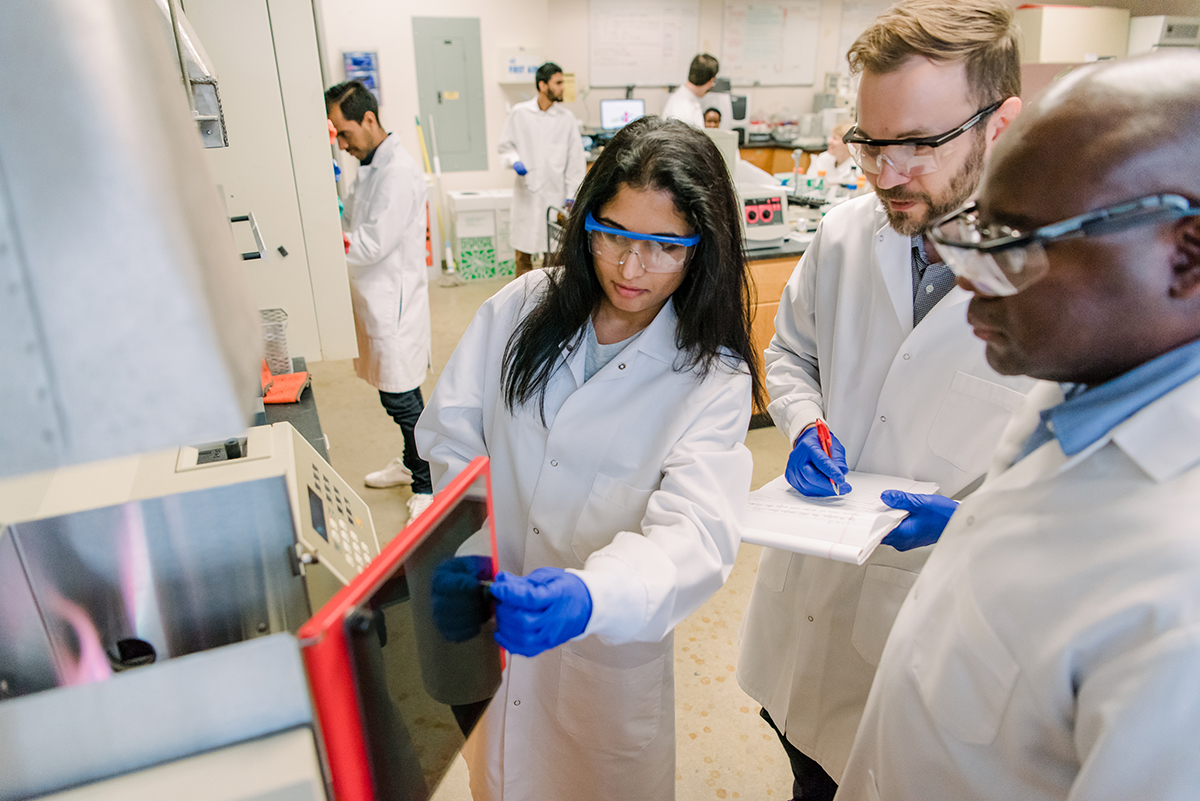
    <img src="https://umbc.edu/wp-content/uploads/2024/09/Lee-Blaney-Lab19-0755.jpg" alt="People wearing lab coats, gloves, and safety glasses stand in a lab. In the center, a woman opens the door of a piece of lab equipment while two men stand nearby, one holding a pen and paper." width="1200" height="801" style="max-width: 100%; height: auto;">
    Lee Blaney (center) in his UMBC lab in 2019. (Marlayna Demond ’11/UMBC)
    
    <p>Blaney joined AEESP in 2012 after starting as an assistant professor at UMBC. He quickly joined and became chair of the AEESP Membership &amp; Demographics Committee, through which he led efforts to initiate a student video competition (check out this <a href="https://www.youtube.com/watch?v=MUT8zya53Vg" rel="nofollow external" class="bo">winning video from UMBC</a>). He also led efforts to document the demographics of environmental engineering faculty and students in reports such as “<a href="https://www.liebertpub.com/doi/abs/10.1089/ees.2016.0063" rel="nofollow external" class="bo">Trends in Population and Demographics of U.S. Environmental Engineering Students and Faculty from 2005 to 2013</a>” and “<a href="https://www.liebertpub.com/doi/abs/10.1089/ees.2017.0337" rel="nofollow external" class="bo">Another Grand Challenge: Diversity in Environmental Engineering</a>.”</p>
    <p>In 2021, Blaney was elected to the AEESP board of directors. Since that time, he has led a number of initiatives aimed at improving inclusion. During his one-year term as president, he will lead the board and executive committee, provide new charges to standing committees, correspond with members, represent AEESP at conferences and meetings, and drive new initiatives to grow the organization and support its members. </p>
    <img src="https://umbc.edu/wp-content/uploads/2024/09/2023-AEESP-Research-and-Education-Conference.jpg" alt="Four people wearing conference badges stand in large room and smile at camera." width="1200" height="900" style="max-width: 100%; height: auto;">
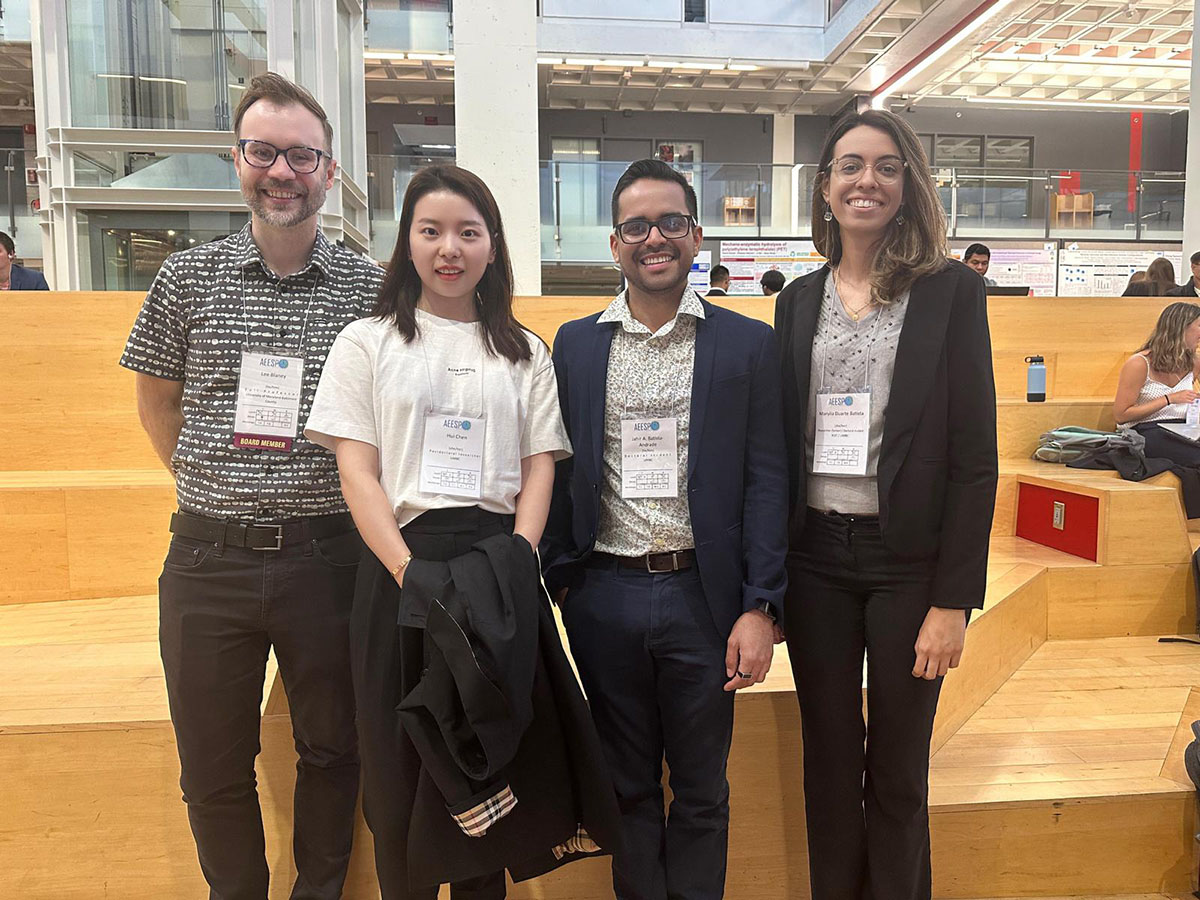
    Lee Blaney (left) and his group members (left to right), Hui Chen (completed postdoc in 2024, now assistant professor at James Madison University), Jahir Batista Andrade, Ph.D. ’23, (now postdoc at University of Minnesota), and Marylia Duarte Batista (current Ph.D. student), at the 2023 AEESP Research and Education Conference in Boston. (Photo courtesy of Blaney)
    
    <p>In his first presidential address to AEESP, given in June, Blaney told members of how he found direction as an undergraduate student after attending a talk by environmental engineer Arup SenGupta, who spoke of efforts to remove arsenic from contaminated groundwater in rural villages in India.</p>
    <p>“His passion and dedication to helping those without other resources inspired me, set me on the path to becoming an environmental engineer, and helped me to become a better person,” Blaney said. He hopes to bring these same values to AEESP and its members.</p>
    <p>As president of AEESP, Blaney plans to develop an “AEESP Experts” program, which will connect environmental experts with reporters, and also an “AEESP Communities of Practice” initiative, which will gather small groups of AEESP members to develop new resources, such as new course material on climate change or best practices for graduate student recruitment, which can be shared with the whole community.</p><p><br></p><p>Read original post via UMBC NEWS: <a href="https://umbc.edu/stories/lee-blaney-president-association-environmental-engineering-science-professors/" rel="nofollow external" class="bo">Lee Blaney assumes presidency of the Association of Environmental Engineering and Science Professors</a></p><div><br></div></div>
]]>
  </Body>
  <Summary>From UMBC News | By: Catherine Meyers | Published: Sep 16, 2024  Professor Lee Blaney, in the Department of Chemical, Biochemical, and Environmental Engineering, formally assumed the role of...</Summary>
  <TrackingUrl>https://dev.my.umbc.edu/api/v0/pixel/news/144012/guest@my.umbc.edu/22bd330d437a3e89a2c8510cd58b6f79/api/pixel</TrackingUrl>
  <Tag>blaney</Tag>
  <Tag>faculty</Tag>
  <Tag>fall-2024</Tag>
  <Tag>marten</Tag>
  <Tag>news</Tag>
  <Group token="cbee">Chemical, Biochemical and Environmental Engineering</Group>
  <GroupUrl>https://dev.my.umbc.edu/groups/cbee</GroupUrl>
  <AvatarUrl>https://assets4-dev.my.umbc.edu/system/shared/avatars/groups/000/000/771/b5e579e81b2e3624611890fa3ca2716a/xsmall.png?1746794587</AvatarUrl>
  <AvatarUrl size="original">https://assets2-dev.my.umbc.edu/system/shared/avatars/groups/000/000/771/b5e579e81b2e3624611890fa3ca2716a/original.png?1746794587</AvatarUrl>
  <AvatarUrl size="xxlarge">https://assets1-dev.my.umbc.edu/system/shared/avatars/groups/000/000/771/b5e579e81b2e3624611890fa3ca2716a/xxlarge.png?1746794587</AvatarUrl>
  <AvatarUrl size="xlarge">https://assets2-dev.my.umbc.edu/system/shared/avatars/groups/000/000/771/b5e579e81b2e3624611890fa3ca2716a/xlarge.png?1746794587</AvatarUrl>
  <AvatarUrl size="large">https://assets2-dev.my.umbc.edu/system/shared/avatars/groups/000/000/771/b5e579e81b2e3624611890fa3ca2716a/large.png?1746794587</AvatarUrl>
  <AvatarUrl size="medium">https://assets4-dev.my.umbc.edu/system/shared/avatars/groups/000/000/771/b5e579e81b2e3624611890fa3ca2716a/medium.png?1746794587</AvatarUrl>
  <AvatarUrl size="small">https://assets1-dev.my.umbc.edu/system/shared/avatars/groups/000/000/771/b5e579e81b2e3624611890fa3ca2716a/small.png?1746794587</AvatarUrl>
  <AvatarUrl size="xsmall">https://assets4-dev.my.umbc.edu/system/shared/avatars/groups/000/000/771/b5e579e81b2e3624611890fa3ca2716a/xsmall.png?1746794587</AvatarUrl>
  <AvatarUrl size="xxsmall">https://assets1-dev.my.umbc.edu/system/shared/avatars/groups/000/000/771/b5e579e81b2e3624611890fa3ca2716a/xxsmall.png?1746794587</AvatarUrl>
  <Sponsor>Chemical, Biochemical and Environmental Engineering</Sponsor>
  <ThumbnailUrl size="xxlarge">https://assets2-dev.my.umbc.edu/system/shared/thumbnails/news/000/144/012/f2220563be1e736a340793e0622087f8/xxlarge.jpg?1726673870</ThumbnailUrl>
  <ThumbnailUrl size="xlarge">https://assets2-dev.my.umbc.edu/system/shared/thumbnails/news/000/144/012/f2220563be1e736a340793e0622087f8/xlarge.jpg?1726673870</ThumbnailUrl>
  <ThumbnailUrl size="large">https://assets1-dev.my.umbc.edu/system/shared/thumbnails/news/000/144/012/f2220563be1e736a340793e0622087f8/large.jpg?1726673870</ThumbnailUrl>
  <ThumbnailUrl size="medium">https://assets1-dev.my.umbc.edu/system/shared/thumbnails/news/000/144/012/f2220563be1e736a340793e0622087f8/medium.jpg?1726673870</ThumbnailUrl>
  <ThumbnailUrl size="small">https://assets2-dev.my.umbc.edu/system/shared/thumbnails/news/000/144/012/f2220563be1e736a340793e0622087f8/small.jpg?1726673870</ThumbnailUrl>
  <ThumbnailUrl size="xsmall">https://assets4-dev.my.umbc.edu/system/shared/thumbnails/news/000/144/012/f2220563be1e736a340793e0622087f8/xsmall.jpg?1726673870</ThumbnailUrl>
  <ThumbnailUrl size="xxsmall">https://assets4-dev.my.umbc.edu/system/shared/thumbnails/news/000/144/012/f2220563be1e736a340793e0622087f8/xxsmall.jpg?1726673870</ThumbnailUrl>
  <PawCount>1</PawCount>
  <CommentCount>0</CommentCount>
  <CommentsAllowed>true</CommentsAllowed>
  <PostedAt>Wed, 18 Sep 2024 11:38:00 -0400</PostedAt>
  <EditAt>Thu, 19 Sep 2024 15:49:23 -0400</EditAt>
</NewsItem>
  <NewsItem contentIssues="true" id="143886" important="false" status="posted" url="https://dev.my.umbc.edu/groups/cbee/posts/143886">
  <Title>2024 Lunch with CBEE Chair -- building community with first semester pre-chemical engineering students.</Title>
  <Body>
    <![CDATA[
    <div class="html-content"><p>Dr. Marten spoke with 31 first semester students during three “Lunch with CBEE Chair” events in September 2024. These lunches were a part of<strong> <a href="https://my3.my.umbc.edu/groups/cbee/posts/143283" rel="nofollow external" class="bo">CBEE’s welcome week events</a>. </strong></p>
    <p>During each lunch Dr. Marten and CBEE Student Ambassadors (who are current chemical engineering undergraduate students), met with groups of first semester students. The group enjoyed meeting each other over a lunch of pizza and sodas as they discussed the academic and research opportunities available to chemical engineering majors at UMBC. In one group, students learned they lived in the same dorm, while others recognized each other from classes. </p>
    <p>“This is the first year we've hosted this event, and it was a tremendous success! Not only were we able to help the students feel more connected with CBEE, but it allowed them to develop new connections with each other.” - Dr. Mark Marten, CBEE Chair</p>
    <p>Every student received the highly coveted 2024 CBEE t-shirt. Since the first event on September 5, CBEE faculty have already recognized students with their shirts and connected with them while walking across campus. Thus, further building community among students and faculty. </p><p>"I had just finished teaching my class and, as I was walking out of the classroom, I saw a student wearing their ChemE shirt as they were heading into class. Excited, I said, 'You’re a ChemE!' to the student, and they replied with a big smile, 'Yes!' Without the shirts, I wouldn’t have known they were first-year ChemE students so early in the semester." - Dr. Mariajose Castellanos, CBEE Undergraduate Program Director.</p>
    <p>These efforts are part of a strategic approach to support student success in chemical engineering by connecting first semester pre-chemical engineering students with CBEE faculty and peers before their <a href="https://cbee.umbc.edu/academics/chemical-engineering-gateway-requirements/" rel="nofollow external" class="bo"><strong>Gateway requirements</strong></a> are completed. </p>
    <p>Based on research CBEE conducted in 2021 with data provided from IRADS, early career undergraduate students have limited interaction with CBEE faculty and other chemical engineering students prior to completing their gateway coursework.</p>
    <p>In Fall 2022, CBEE partnered with COEIT Advising to pilot <strong>CH</strong>emical <strong>E</strong>ngineering <strong>C</strong>urriculum <strong>K</strong>nowledge (CHECK) meetings (<a href="http://cbee.umbc.edu/check" rel="nofollow external" class="bo"><strong>cbee.umbc.edu/check</strong></a>). <strong>CHECK</strong> meetings provide pre-chemical engineering students with the opportunity to talk with a CBEE faculty member, receive specialized chemical engineering pre-advising and learn about internship and research opportunities for chemical engineering students. Due to the success of the Fall 2022 pilot, this program has continued each semester. </p>
    <p>We look forward to connecting with (pre-) chemical engineering students at our next event. See you there! </p></div>
]]>
  </Body>
  <Summary>Dr. Marten spoke with 31 first semester students during three “Lunch with CBEE Chair” events in September 2024. These lunches were a part of CBEE’s welcome week events.    During each lunch Dr....</Summary>
  <TrackingUrl>https://dev.my.umbc.edu/api/v0/pixel/news/143886/guest@my.umbc.edu/a43b802273192dd67c8e19aa022d41da/api/pixel</TrackingUrl>
  <Tag>fall-2024</Tag>
  <Tag>ug</Tag>
  <Tag>ugrad</Tag>
  <Tag>welcome-week</Tag>
  <Group token="cbee">Chemical, Biochemical and Environmental Engineering</Group>
  <GroupUrl>https://dev.my.umbc.edu/groups/cbee</GroupUrl>
  <AvatarUrl>https://assets4-dev.my.umbc.edu/system/shared/avatars/groups/000/000/771/b5e579e81b2e3624611890fa3ca2716a/xsmall.png?1746794587</AvatarUrl>
  <AvatarUrl size="original">https://assets2-dev.my.umbc.edu/system/shared/avatars/groups/000/000/771/b5e579e81b2e3624611890fa3ca2716a/original.png?1746794587</AvatarUrl>
  <AvatarUrl size="xxlarge">https://assets1-dev.my.umbc.edu/system/shared/avatars/groups/000/000/771/b5e579e81b2e3624611890fa3ca2716a/xxlarge.png?1746794587</AvatarUrl>
  <AvatarUrl size="xlarge">https://assets2-dev.my.umbc.edu/system/shared/avatars/groups/000/000/771/b5e579e81b2e3624611890fa3ca2716a/xlarge.png?1746794587</AvatarUrl>
  <AvatarUrl size="large">https://assets2-dev.my.umbc.edu/system/shared/avatars/groups/000/000/771/b5e579e81b2e3624611890fa3ca2716a/large.png?1746794587</AvatarUrl>
  <AvatarUrl size="medium">https://assets4-dev.my.umbc.edu/system/shared/avatars/groups/000/000/771/b5e579e81b2e3624611890fa3ca2716a/medium.png?1746794587</AvatarUrl>
  <AvatarUrl size="small">https://assets1-dev.my.umbc.edu/system/shared/avatars/groups/000/000/771/b5e579e81b2e3624611890fa3ca2716a/small.png?1746794587</AvatarUrl>
  <AvatarUrl size="xsmall">https://assets4-dev.my.umbc.edu/system/shared/avatars/groups/000/000/771/b5e579e81b2e3624611890fa3ca2716a/xsmall.png?1746794587</AvatarUrl>
  <AvatarUrl size="xxsmall">https://assets1-dev.my.umbc.edu/system/shared/avatars/groups/000/000/771/b5e579e81b2e3624611890fa3ca2716a/xxsmall.png?1746794587</AvatarUrl>
  <Sponsor>Chemical, Biochemical and Environmental Engineering</Sponsor>
  <ThumbnailUrl size="xxlarge">https://assets3-dev.my.umbc.edu/system/shared/thumbnails/news/000/143/886/ea305a4dfeb1f9f6c10044e2aee7146e/xxlarge.jpg?1726248621</ThumbnailUrl>
  <ThumbnailUrl size="xlarge">https://assets4-dev.my.umbc.edu/system/shared/thumbnails/news/000/143/886/ea305a4dfeb1f9f6c10044e2aee7146e/xlarge.jpg?1726248621</ThumbnailUrl>
  <ThumbnailUrl size="large">https://assets2-dev.my.umbc.edu/system/shared/thumbnails/news/000/143/886/ea305a4dfeb1f9f6c10044e2aee7146e/large.jpg?1726248621</ThumbnailUrl>
  <ThumbnailUrl size="medium">https://assets4-dev.my.umbc.edu/system/shared/thumbnails/news/000/143/886/ea305a4dfeb1f9f6c10044e2aee7146e/medium.jpg?1726248621</ThumbnailUrl>
  <ThumbnailUrl size="small">https://assets1-dev.my.umbc.edu/system/shared/thumbnails/news/000/143/886/ea305a4dfeb1f9f6c10044e2aee7146e/small.jpg?1726248621</ThumbnailUrl>
  <ThumbnailUrl size="xsmall">https://assets4-dev.my.umbc.edu/system/shared/thumbnails/news/000/143/886/ea305a4dfeb1f9f6c10044e2aee7146e/xsmall.jpg?1726248621</ThumbnailUrl>
  <ThumbnailUrl size="xxsmall">https://assets3-dev.my.umbc.edu/system/shared/thumbnails/news/000/143/886/ea305a4dfeb1f9f6c10044e2aee7146e/xxsmall.jpg?1726248621</ThumbnailUrl>
  <PawCount>0</PawCount>
  <CommentCount>0</CommentCount>
  <CommentsAllowed>true</CommentsAllowed>
  <PostedAt>Mon, 16 Sep 2024 08:04:07 -0400</PostedAt>
  <EditAt>Mon, 16 Sep 2024 10:16:45 -0400</EditAt>
</NewsItem>
  <NewsItem contentIssues="false" id="143594" important="false" status="posted" url="https://dev.my.umbc.edu/groups/cbee/posts/143594">
    <Title>UMBC offers Responsible Conduct of Research (RCR) Microcredential Series. From UMBC's Grad Student &amp; Postdoc Development</Title>
    <Tagline>Required for any individual receiving funding from NIH</Tagline>
    <Body>
      <![CDATA[
          <div class="html-content"><div>Grad Student &amp; Postdoc Development Group is pleased to announce the launch of the <em>Responsible Conduct of Research (RCR) Microcredential Series</em> - a set of <em><strong>in-person</strong></em> workshops this fall. </div><div><br></div><div>While we will still offer virtual RCR training in <a href="https://research.umbc.edu/2135-2/" rel="nofollow external" class="bo">CITI</a>, these new in-person discussion-based workshops are required for any individual receiving funding from the National Institutes of Health (NIH), including undergraduate students, graduate students, staff, postdocs, and faculty (see NIH guidance <a href="https://grants.nih.gov/grants/guide/notice-files/NOT-OD-22-055.html" rel="nofollow external" class="bo">here</a>). In order to meet NIH’s requirements for in-person RCR training, we have established these workshops as a series of microcredentials (also called “badges”) that lead to an overarching RCR “mega”credential. It should be noted that UMBC requires all graduate students completing a master's thesis or doctoral degree, along with all postdoctoral research associates, to complete RCR training through either <a href="https://research.umbc.edu/2135-2/" rel="nofollow external" class="bo">CITI </a>or the new in-person RCR Microcredential Series. </div><div><br></div><div>read full details here:<br><a href="https://my3.my.umbc.edu/groups/gspd/posts/143590" rel="nofollow external" class="bo">https://my3.my.umbc.edu/groups/gspd/posts/143590</a></div><div><br></div><div><br></div><div><br></div><div><div><strong>Workshop Details:</strong></div><div><strong><br></strong></div><div><ul><li><strong>Info Session:</strong> Wednesday, September 11, 2024 (virtual)</li><li><strong>Start Date:</strong> Wednesday, September 18, 2024</li><li><strong>End Date:</strong> Wednesday, December 4, 2024</li><li><strong>Schedule:</strong> Wednesdays 11-12:30* (one session on 11/6 will be 12:30-2pm)</li><li><strong>Location:</strong> The Commons Building</li></ul></div><div><br></div><div>Please note that each session may be held in different rooms or at different times within The Commons each Wednesday. Please check in with the MyUMBC GSPD group page regularly for updates on locations and any potential changes to the schedule.</div><div><br></div><div>MyUMBC GSPD Group Page: <a href="https://my3.my.umbc.edu/groups/gspd" rel="nofollow external" class="bo">https://my3.my.umbc.edu/groups/gspd</a> </div><div><br></div><div><strong>If you have any questions, please contact: </strong><a href="mailto:RCR@umbc.edu" rel="nofollow external" class="bo">RCR@umbc.edu</a> </div><div><br></div><div>We look forward to your active participation and insightful contributions as we work together to uphold the highest standards of research integrity. If you have any questions, please do not hesitate to reach out.</div><div><br></div></div></div>
      ]]>
    </Body>
    <Summary>Grad Student &amp; Postdoc Development Group is pleased to announce the launch of the Responsible Conduct of Research (RCR) Microcredential Series - a set of in-person workshops this fall. ...</Summary>
    <TrackingUrl>https://dev.my.umbc.edu/api/v0/pixel/news/143594/guest@my.umbc.edu/18b6f0f979ff98b4393c1511e44c763c/api/pixel</TrackingUrl>
    <Tag>fall-2024</Tag>
    <Tag>grad</Tag>
    <Tag>research</Tag>
    <Tag>ug</Tag>
    <Tag>ugrad</Tag>
    <Group token="cbee">Chemical, Biochemical and Environmental Engineering</Group>
    <GroupUrl>https://dev.my.umbc.edu/groups/cbee</GroupUrl>
    <AvatarUrl>https://assets4-dev.my.umbc.edu/system/shared/avatars/groups/000/000/771/b5e579e81b2e3624611890fa3ca2716a/xsmall.png?1746794587</AvatarUrl>
    <AvatarUrl size="original">https://assets2-dev.my.umbc.edu/system/shared/avatars/groups/000/000/771/b5e579e81b2e3624611890fa3ca2716a/original.png?1746794587</AvatarUrl>
    <AvatarUrl size="xxlarge">https://assets1-dev.my.umbc.edu/system/shared/avatars/groups/000/000/771/b5e579e81b2e3624611890fa3ca2716a/xxlarge.png?1746794587</AvatarUrl>
    <AvatarUrl size="xlarge">https://assets2-dev.my.umbc.edu/system/shared/avatars/groups/000/000/771/b5e579e81b2e3624611890fa3ca2716a/xlarge.png?1746794587</AvatarUrl>
    <AvatarUrl size="large">https://assets2-dev.my.umbc.edu/system/shared/avatars/groups/000/000/771/b5e579e81b2e3624611890fa3ca2716a/large.png?1746794587</AvatarUrl>
    <AvatarUrl size="medium">https://assets4-dev.my.umbc.edu/system/shared/avatars/groups/000/000/771/b5e579e81b2e3624611890fa3ca2716a/medium.png?1746794587</AvatarUrl>
    <AvatarUrl size="small">https://assets1-dev.my.umbc.edu/system/shared/avatars/groups/000/000/771/b5e579e81b2e3624611890fa3ca2716a/small.png?1746794587</AvatarUrl>
    <AvatarUrl size="xsmall">https://assets4-dev.my.umbc.edu/system/shared/avatars/groups/000/000/771/b5e579e81b2e3624611890fa3ca2716a/xsmall.png?1746794587</AvatarUrl>
    <AvatarUrl size="xxsmall">https://assets1-dev.my.umbc.edu/system/shared/avatars/groups/000/000/771/b5e579e81b2e3624611890fa3ca2716a/xxsmall.png?1746794587</AvatarUrl>
    <Sponsor>Chemical, Biochemical and Environmental Engineering</Sponsor>
    <PawCount>0</PawCount>
    <CommentCount>0</CommentCount>
    <CommentsAllowed>true</CommentsAllowed>
    <PostedAt>Wed, 04 Sep 2024 15:33:46 -0400</PostedAt>
    <EditAt>Tue, 17 Sep 2024 09:05:00 -0400</EditAt>
  </NewsItem>
  <NewsItem contentIssues="true" id="143534" important="false" status="posted" url="https://dev.my.umbc.edu/groups/cbee/posts/143534">
  <Title>CBEE Graduate Students recognized for excellence in leadership and research</Title>
  <Body>
    <![CDATA[
    <div class="html-content"><p>CBEE hosted the 2024 CBEE Graduate Student Awards on Friday, August 30, 2024 where graduate students were formally recognized for their research and leadership. During the awards ceremony, each awardee gave a 10-minute presentation on their current research. </p>
    <p>Congratulations to the award recipients. </p>
    <h4><strong>Excellence in Master's Research</strong></h4>
    <h5><strong>Margaret Siao</strong></h5>
    <p>’23, M.S. student, Environmental Engineering</p>
    <p>Advisor: Dr. Lee Blaney</p>
    <p><em>This award recognizes a CBEE Master’s Student for outstanding performance in research.</em></p>
    <h4><strong>Excellence in Doctoral Research</strong></h4>
    <h5><strong>Chad Sundberg<br></strong></h5>
    <p>Ph.D. student, Environmental Engineering</p>
    <p>Advisor: Dr. Govind Rao</p>
    <p><em>This award recognizes a CBEE Doctoral Student for outstanding performance in research. </em></p>
    <h4><strong>Excellence in Leadership</strong></h4>
    <h5>Alex Doan</h5>
    <p>Ph.D. student, Chemical and Biochemical Engineering</p>
    <p><em>This award recognizes a CBEE Graduate Student for outstanding leadership demonstrated in service to the department, college, or their fellow students.</em><strong><br></strong></p>
    
    
    <p>Award recipients were nominated by CBEE faculty, staff, or students (graduate or undergraduate). The nominations were reviewed and selected by CBEE’s Graduate program Committee. </p></div>
]]>
  </Body>
  <Summary>CBEE hosted the 2024 CBEE Graduate Student Awards on Friday, August 30, 2024 where graduate students were formally recognized for their research and leadership. During the awards ceremony, each...</Summary>
  <TrackingUrl>https://dev.my.umbc.edu/api/v0/pixel/news/143534/guest@my.umbc.edu/e839f4f72a7d7a71f4e7e32687fef448/api/pixel</TrackingUrl>
  <Tag>award</Tag>
  <Tag>blaney</Tag>
  <Tag>fall-2024</Tag>
  <Tag>grad</Tag>
  <Tag>grad-awards</Tag>
  <Tag>marten</Tag>
  <Tag>rao</Tag>
  <Tag>research</Tag>
  <Group token="cbee">Chemical, Biochemical and Environmental Engineering</Group>
  <GroupUrl>https://dev.my.umbc.edu/groups/cbee</GroupUrl>
  <AvatarUrl>https://assets4-dev.my.umbc.edu/system/shared/avatars/groups/000/000/771/b5e579e81b2e3624611890fa3ca2716a/xsmall.png?1746794587</AvatarUrl>
  <AvatarUrl size="original">https://assets2-dev.my.umbc.edu/system/shared/avatars/groups/000/000/771/b5e579e81b2e3624611890fa3ca2716a/original.png?1746794587</AvatarUrl>
  <AvatarUrl size="xxlarge">https://assets1-dev.my.umbc.edu/system/shared/avatars/groups/000/000/771/b5e579e81b2e3624611890fa3ca2716a/xxlarge.png?1746794587</AvatarUrl>
  <AvatarUrl size="xlarge">https://assets2-dev.my.umbc.edu/system/shared/avatars/groups/000/000/771/b5e579e81b2e3624611890fa3ca2716a/xlarge.png?1746794587</AvatarUrl>
  <AvatarUrl size="large">https://assets2-dev.my.umbc.edu/system/shared/avatars/groups/000/000/771/b5e579e81b2e3624611890fa3ca2716a/large.png?1746794587</AvatarUrl>
  <AvatarUrl size="medium">https://assets4-dev.my.umbc.edu/system/shared/avatars/groups/000/000/771/b5e579e81b2e3624611890fa3ca2716a/medium.png?1746794587</AvatarUrl>
  <AvatarUrl size="small">https://assets1-dev.my.umbc.edu/system/shared/avatars/groups/000/000/771/b5e579e81b2e3624611890fa3ca2716a/small.png?1746794587</AvatarUrl>
  <AvatarUrl size="xsmall">https://assets4-dev.my.umbc.edu/system/shared/avatars/groups/000/000/771/b5e579e81b2e3624611890fa3ca2716a/xsmall.png?1746794587</AvatarUrl>
  <AvatarUrl size="xxsmall">https://assets1-dev.my.umbc.edu/system/shared/avatars/groups/000/000/771/b5e579e81b2e3624611890fa3ca2716a/xxsmall.png?1746794587</AvatarUrl>
  <Sponsor>Chemical, Biochemical and Environmental Engineering</Sponsor>
  <ThumbnailUrl size="xxlarge">https://assets3-dev.my.umbc.edu/system/shared/thumbnails/news/000/143/534/9af1e0b3da01ddc7825487fec3c80073/xxlarge.jpg?1725378392</ThumbnailUrl>
  <ThumbnailUrl size="xlarge">https://assets4-dev.my.umbc.edu/system/shared/thumbnails/news/000/143/534/9af1e0b3da01ddc7825487fec3c80073/xlarge.jpg?1725378392</ThumbnailUrl>
  <ThumbnailUrl size="large">https://assets4-dev.my.umbc.edu/system/shared/thumbnails/news/000/143/534/9af1e0b3da01ddc7825487fec3c80073/large.jpg?1725378392</ThumbnailUrl>
  <ThumbnailUrl size="medium">https://assets3-dev.my.umbc.edu/system/shared/thumbnails/news/000/143/534/9af1e0b3da01ddc7825487fec3c80073/medium.jpg?1725378392</ThumbnailUrl>
  <ThumbnailUrl size="small">https://assets3-dev.my.umbc.edu/system/shared/thumbnails/news/000/143/534/9af1e0b3da01ddc7825487fec3c80073/small.jpg?1725378392</ThumbnailUrl>
  <ThumbnailUrl size="xsmall">https://assets3-dev.my.umbc.edu/system/shared/thumbnails/news/000/143/534/9af1e0b3da01ddc7825487fec3c80073/xsmall.jpg?1725378392</ThumbnailUrl>
  <ThumbnailUrl size="xxsmall">https://assets4-dev.my.umbc.edu/system/shared/thumbnails/news/000/143/534/9af1e0b3da01ddc7825487fec3c80073/xxsmall.jpg?1725378392</ThumbnailUrl>
  <PawCount>0</PawCount>
  <CommentCount>0</CommentCount>
  <CommentsAllowed>true</CommentsAllowed>
  <PostedAt>Tue, 03 Sep 2024 11:53:25 -0400</PostedAt>
  <EditAt>Thu, 13 Feb 2025 10:50:11 -0500</EditAt>
</NewsItem>
  <NewsItem contentIssues="true" id="143283" important="false" status="posted" url="https://dev.my.umbc.edu/groups/cbee/posts/143283">
    <Title>CBEE WELCOME WEEK</Title>
    <Tagline>2024 WELCOME WEEK FLYER</Tagline>
    <Body>
      <![CDATA[
          <div class="html-content"><p>CBEE is excited to Welcome students (back) to campus for Fall 2024. </p>
          <h3>We have a variety of events that we want to highlight as part of welcome week: <a href="https://my3.my.umbc.edu/groups/cbee/events?tag=welcome-week" rel="nofollow external" class="bo">https://my3.my.umbc.edu/groups/cbee/events?tag=welcome-week</a></h3>
          <div>We look forward to seeing you the first week of the Fall semester!</div></div>
      ]]>
    </Body>
    <Summary>CBEE is excited to Welcome students (back) to campus for Fall 2024.    We have a variety of events that we want to highlight as part of welcome...</Summary>
    <TrackingUrl>https://dev.my.umbc.edu/api/v0/pixel/news/143283/guest@my.umbc.edu/4b914647b7101e38f53e493705327504/api/pixel</TrackingUrl>
    <Tag>fall-2024</Tag>
    <Tag>pceng</Tag>
    <Tag>ug</Tag>
    <Tag>ugrad</Tag>
    <Tag>welcome-week</Tag>
    <Group token="cbee">Chemical, Biochemical and Environmental Engineering</Group>
    <GroupUrl>https://dev.my.umbc.edu/groups/cbee</GroupUrl>
    <AvatarUrl>https://assets4-dev.my.umbc.edu/system/shared/avatars/groups/000/000/771/b5e579e81b2e3624611890fa3ca2716a/xsmall.png?1746794587</AvatarUrl>
    <AvatarUrl size="original">https://assets2-dev.my.umbc.edu/system/shared/avatars/groups/000/000/771/b5e579e81b2e3624611890fa3ca2716a/original.png?1746794587</AvatarUrl>
    <AvatarUrl size="xxlarge">https://assets1-dev.my.umbc.edu/system/shared/avatars/groups/000/000/771/b5e579e81b2e3624611890fa3ca2716a/xxlarge.png?1746794587</AvatarUrl>
    <AvatarUrl size="xlarge">https://assets2-dev.my.umbc.edu/system/shared/avatars/groups/000/000/771/b5e579e81b2e3624611890fa3ca2716a/xlarge.png?1746794587</AvatarUrl>
    <AvatarUrl size="large">https://assets2-dev.my.umbc.edu/system/shared/avatars/groups/000/000/771/b5e579e81b2e3624611890fa3ca2716a/large.png?1746794587</AvatarUrl>
    <AvatarUrl size="medium">https://assets4-dev.my.umbc.edu/system/shared/avatars/groups/000/000/771/b5e579e81b2e3624611890fa3ca2716a/medium.png?1746794587</AvatarUrl>
    <AvatarUrl size="small">https://assets1-dev.my.umbc.edu/system/shared/avatars/groups/000/000/771/b5e579e81b2e3624611890fa3ca2716a/small.png?1746794587</AvatarUrl>
    <AvatarUrl size="xsmall">https://assets4-dev.my.umbc.edu/system/shared/avatars/groups/000/000/771/b5e579e81b2e3624611890fa3ca2716a/xsmall.png?1746794587</AvatarUrl>
    <AvatarUrl size="xxsmall">https://assets1-dev.my.umbc.edu/system/shared/avatars/groups/000/000/771/b5e579e81b2e3624611890fa3ca2716a/xxsmall.png?1746794587</AvatarUrl>
    <Sponsor>Chemical, Biochemical and Environmental Engineering</Sponsor>
    <ThumbnailUrl size="xxlarge">https://assets4-dev.my.umbc.edu/system/shared/thumbnails/news/000/143/283/c757f3ab755333754f9188f9390836b9/xxlarge.jpg?1724762807</ThumbnailUrl>
    <ThumbnailUrl size="xlarge">https://assets2-dev.my.umbc.edu/system/shared/thumbnails/news/000/143/283/c757f3ab755333754f9188f9390836b9/xlarge.jpg?1724762807</ThumbnailUrl>
    <ThumbnailUrl size="large">https://assets3-dev.my.umbc.edu/system/shared/thumbnails/news/000/143/283/c757f3ab755333754f9188f9390836b9/large.jpg?1724762807</ThumbnailUrl>
    <ThumbnailUrl size="medium">https://assets2-dev.my.umbc.edu/system/shared/thumbnails/news/000/143/283/c757f3ab755333754f9188f9390836b9/medium.jpg?1724762807</ThumbnailUrl>
    <ThumbnailUrl size="small">https://assets2-dev.my.umbc.edu/system/shared/thumbnails/news/000/143/283/c757f3ab755333754f9188f9390836b9/small.jpg?1724762807</ThumbnailUrl>
    <ThumbnailUrl size="xsmall">https://assets4-dev.my.umbc.edu/system/shared/thumbnails/news/000/143/283/c757f3ab755333754f9188f9390836b9/xsmall.jpg?1724762807</ThumbnailUrl>
    <ThumbnailUrl size="xxsmall">https://assets3-dev.my.umbc.edu/system/shared/thumbnails/news/000/143/283/c757f3ab755333754f9188f9390836b9/xxsmall.jpg?1724762807</ThumbnailUrl>
    <PawCount>0</PawCount>
    <CommentCount>0</CommentCount>
    <CommentsAllowed>true</CommentsAllowed>
    <PostedAt>Tue, 27 Aug 2024 08:49:33 -0400</PostedAt>
    <EditAt>Tue, 27 Aug 2024 08:50:55 -0400</EditAt>
  </NewsItem>
  <NewsItem contentIssues="true" id="143376" important="false" status="posted" url="https://dev.my.umbc.edu/groups/cbee/posts/143376">
  <Title>Blaney Lab presents at 2024 ACS Conference</Title>
  <Body>
    <![CDATA[
    <div class="html-content"><div>Four group members from the Blaney Lab attended the 2024 ACS conference in Denver, CO. All four gave excellent oral presentations (see attached photos) on the following topics:</div><div><br></div><div><ul><li><strong>Sahar Souizi, Ph.D. student, Environmental Engineering  </strong>- Enhanced Donnan dialysis for nutrient recovery via tube-in-tube reactors: Impact of operating conditions and application to real waste</li><li><strong>Marylia Duarte Batista </strong><strong>, Ph.D. student, Environmental Engineering</strong> - Hybrid anion-exchange resins with enhanced selectivity for (ultra)short-chain PFAS</li><li><strong>Margaret Siao, '22 chemical engineering, M.S. student environmental engineering </strong>- Influence of solution pH and dissolved organic matter on PFAS uptake by ion-exchange membrane-based passive samplers</li><li><strong>Donya Hamidi</strong><strong>, Ph.D. student, Environmental Engineering</strong> - Salting out of PFAS anions: Calculation of Setschenow constants</li></ul></div><div>They also made the official <a href="https://cen.acs.org/acs-news/acs-meeting-news/Scenes-ACS-Fall-2024-hybrid/102/web/2024/08" rel="nofollow external" class="bo">Chemical &amp; Engineering News page</a> (Day 4, second photo).</div></div>
]]>
  </Body>
  <Summary>Four group members from the Blaney Lab attended the 2024 ACS conference in Denver, CO. All four gave excellent oral presentations (see attached photos) on the following topics:       Sahar Souizi,...</Summary>
  <TrackingUrl>https://dev.my.umbc.edu/api/v0/pixel/news/143376/guest@my.umbc.edu/95c9a6eaf61f7995ec914987152e8f5e/api/pixel</TrackingUrl>
  <Tag>blaney</Tag>
  <Tag>fall-2024</Tag>
  <Tag>grad</Tag>
  <Tag>research</Tag>
  <Group token="cbee">Chemical, Biochemical and Environmental Engineering</Group>
  <GroupUrl>https://dev.my.umbc.edu/groups/cbee</GroupUrl>
  <AvatarUrl>https://assets4-dev.my.umbc.edu/system/shared/avatars/groups/000/000/771/b5e579e81b2e3624611890fa3ca2716a/xsmall.png?1746794587</AvatarUrl>
  <AvatarUrl size="original">https://assets2-dev.my.umbc.edu/system/shared/avatars/groups/000/000/771/b5e579e81b2e3624611890fa3ca2716a/original.png?1746794587</AvatarUrl>
  <AvatarUrl size="xxlarge">https://assets1-dev.my.umbc.edu/system/shared/avatars/groups/000/000/771/b5e579e81b2e3624611890fa3ca2716a/xxlarge.png?1746794587</AvatarUrl>
  <AvatarUrl size="xlarge">https://assets2-dev.my.umbc.edu/system/shared/avatars/groups/000/000/771/b5e579e81b2e3624611890fa3ca2716a/xlarge.png?1746794587</AvatarUrl>
  <AvatarUrl size="large">https://assets2-dev.my.umbc.edu/system/shared/avatars/groups/000/000/771/b5e579e81b2e3624611890fa3ca2716a/large.png?1746794587</AvatarUrl>
  <AvatarUrl size="medium">https://assets4-dev.my.umbc.edu/system/shared/avatars/groups/000/000/771/b5e579e81b2e3624611890fa3ca2716a/medium.png?1746794587</AvatarUrl>
  <AvatarUrl size="small">https://assets1-dev.my.umbc.edu/system/shared/avatars/groups/000/000/771/b5e579e81b2e3624611890fa3ca2716a/small.png?1746794587</AvatarUrl>
  <AvatarUrl size="xsmall">https://assets4-dev.my.umbc.edu/system/shared/avatars/groups/000/000/771/b5e579e81b2e3624611890fa3ca2716a/xsmall.png?1746794587</AvatarUrl>
  <AvatarUrl size="xxsmall">https://assets1-dev.my.umbc.edu/system/shared/avatars/groups/000/000/771/b5e579e81b2e3624611890fa3ca2716a/xxsmall.png?1746794587</AvatarUrl>
  <Sponsor>Chemical, Biochemical and Environmental Engineering</Sponsor>
  <ThumbnailUrl size="xxlarge">https://assets2-dev.my.umbc.edu/system/shared/thumbnails/news/000/143/376/3b28e5295b4acff42d4613522f670c0d/xxlarge.jpg?1724761188</ThumbnailUrl>
  <ThumbnailUrl size="xlarge">https://assets1-dev.my.umbc.edu/system/shared/thumbnails/news/000/143/376/3b28e5295b4acff42d4613522f670c0d/xlarge.jpg?1724761188</ThumbnailUrl>
  <ThumbnailUrl size="large">https://assets2-dev.my.umbc.edu/system/shared/thumbnails/news/000/143/376/3b28e5295b4acff42d4613522f670c0d/large.jpg?1724761188</ThumbnailUrl>
  <ThumbnailUrl size="medium">https://assets3-dev.my.umbc.edu/system/shared/thumbnails/news/000/143/376/3b28e5295b4acff42d4613522f670c0d/medium.jpg?1724761188</ThumbnailUrl>
  <ThumbnailUrl size="small">https://assets3-dev.my.umbc.edu/system/shared/thumbnails/news/000/143/376/3b28e5295b4acff42d4613522f670c0d/small.jpg?1724761188</ThumbnailUrl>
  <ThumbnailUrl size="xsmall">https://assets4-dev.my.umbc.edu/system/shared/thumbnails/news/000/143/376/3b28e5295b4acff42d4613522f670c0d/xsmall.jpg?1724761188</ThumbnailUrl>
  <ThumbnailUrl size="xxsmall">https://assets3-dev.my.umbc.edu/system/shared/thumbnails/news/000/143/376/3b28e5295b4acff42d4613522f670c0d/xxsmall.jpg?1724761188</ThumbnailUrl>
  <PawCount>1</PawCount>
  <CommentCount>0</CommentCount>
  <CommentsAllowed>true</CommentsAllowed>
  <PostedAt>Tue, 27 Aug 2024 08:20:40 -0400</PostedAt>
  <EditAt>Tue, 27 Aug 2024 08:22:40 -0400</EditAt>
</NewsItem>
</News>