<?xml version="1.0"?>
<News hasArchived="false" page="4" pageCount="17" pageSize="10" timestamp="Sat, 25 Apr 2026 10:48:12 -0400" url="https://dev.my.umbc.edu/groups/cbee/posts.xml?page=4&amp;tag=research">
  <NewsItem contentIssues="true" id="144941" important="false" status="posted" url="https://dev.my.umbc.edu/groups/cbee/posts/144941">
  <Title>NEW PUBLICATION: Using flux theory in dynamic omics data sets to identify differentially changing signals using DPoP</Title>
  <Tagline>Harley Edwards, Ph.D. Candidate Marten Lab with Dr. Marten</Tagline>
  <Body>
    <![CDATA[
    <div class="html-content"><h3><span>Authors: </span></h3><div><strong>Harley Edwards</strong>, Joseph Zavorskas, <strong>Walker Huso</strong>, <strong>Alexander G. Doan</strong>, <strong>Caton Silbiger</strong>, Steven Harris, Ranjan Srivastava &amp; <strong>Mark R. Marten </strong> </div><div><strong><br></strong></div><h3><span>Title: </span></h3><div><strong>Using flux theory in dynamic omics data sets to identify differentially changing signals using DPoP</strong></div><div><br></div><div><br></div><div><h3><span>ABSTRACT:</span></h3><div><h4>Background</h4><div>Derivative profiling is a novel approach to identify differential signals from dynamic omics data sets. This approach applies variable step-size differentiation to time dynamic omics data. This work assumes that there is a general omics derivative that is a useful and descriptive feature of dynamic omics experiments. We assert that this omics derivative, or omics flux, is a valuable descriptor that can be used instead of, or with, fold change calculations.</div><div><br></div><h4>Results</h4><div>The results of derivative profiling are compared to established methods such as Multivariate Adaptive Regression Splines, significance versus fold change analysis (Volcano), and an adjusted ratio over intensity (M/A) analysis to find that there is a statistically significant similarity between the results. This comparison is repeated for transcriptomic and phosphoproteomic expression profiles previously characterized in Aspergillus nidulans. This method has been packaged in an open-source, GUI-based MATLAB app, the Derivative Profiling omics Package (DPoP). Gene Ontology (GO) term enrichment has been included in the app so that a user can automatically/programmatically describe the over/under-represented GO terms in the derivative profiling results using domain specific knowledge found in their organism’s specific GO database file. The advantage of the DPoP analysis is that it is computationally inexpensive, it does not require fold change calculations, it describes both instantaneous as well as overall behavior, and it achieves statistical confidence with signal trajectories of a single bio-replicate over four or more points.</div><div><br></div><h4>Conclusions</h4><div>While we apply this method to time dynamic transcriptomic and phosphoproteomic datasets, it is a numerically generalizable technique that can be applied to any organism and any field interested in time series data analysis. The app described in this work enables omics researchers with no computer science background to apply derivative profiling to their data sets, while also allowing multidisciplined users to build on the nascent idea of profiling derivatives in omics.</div></div></div><div><br></div><div>full article: <a href="https://doi.org/10.1186/s12859-024-05938-9" rel="nofollow external" class="bo">https://doi.org/10.1186/s12859-024-05938-9</a></div><div><br></div></div>
]]>
  </Body>
  <Summary>Authors:   Harley Edwards, Joseph Zavorskas, Walker Huso, Alexander G. Doan, Caton Silbiger, Steven Harris, Ranjan Srivastava &amp; Mark R. Marten       Title:   Using flux theory in dynamic omics...</Summary>
  <TrackingUrl>https://dev.my.umbc.edu/api/v0/pixel/news/144941/guest@my.umbc.edu/9a25cdc5a8257ed2f8e5140db5820093/api/pixel</TrackingUrl>
  <Tag>fall-2024</Tag>
  <Tag>grad</Tag>
  <Tag>marten</Tag>
  <Tag>research</Tag>
  <Group token="cbee">Chemical, Biochemical and Environmental Engineering</Group>
  <GroupUrl>https://dev.my.umbc.edu/groups/cbee</GroupUrl>
  <AvatarUrl>https://assets4-dev.my.umbc.edu/system/shared/avatars/groups/000/000/771/b5e579e81b2e3624611890fa3ca2716a/xsmall.png?1746794587</AvatarUrl>
  <AvatarUrl size="original">https://assets2-dev.my.umbc.edu/system/shared/avatars/groups/000/000/771/b5e579e81b2e3624611890fa3ca2716a/original.png?1746794587</AvatarUrl>
  <AvatarUrl size="xxlarge">https://assets1-dev.my.umbc.edu/system/shared/avatars/groups/000/000/771/b5e579e81b2e3624611890fa3ca2716a/xxlarge.png?1746794587</AvatarUrl>
  <AvatarUrl size="xlarge">https://assets2-dev.my.umbc.edu/system/shared/avatars/groups/000/000/771/b5e579e81b2e3624611890fa3ca2716a/xlarge.png?1746794587</AvatarUrl>
  <AvatarUrl size="large">https://assets2-dev.my.umbc.edu/system/shared/avatars/groups/000/000/771/b5e579e81b2e3624611890fa3ca2716a/large.png?1746794587</AvatarUrl>
  <AvatarUrl size="medium">https://assets4-dev.my.umbc.edu/system/shared/avatars/groups/000/000/771/b5e579e81b2e3624611890fa3ca2716a/medium.png?1746794587</AvatarUrl>
  <AvatarUrl size="small">https://assets1-dev.my.umbc.edu/system/shared/avatars/groups/000/000/771/b5e579e81b2e3624611890fa3ca2716a/small.png?1746794587</AvatarUrl>
  <AvatarUrl size="xsmall">https://assets4-dev.my.umbc.edu/system/shared/avatars/groups/000/000/771/b5e579e81b2e3624611890fa3ca2716a/xsmall.png?1746794587</AvatarUrl>
  <AvatarUrl size="xxsmall">https://assets1-dev.my.umbc.edu/system/shared/avatars/groups/000/000/771/b5e579e81b2e3624611890fa3ca2716a/xxsmall.png?1746794587</AvatarUrl>
  <Sponsor>Chemical, Biochemical and Environmental Engineering</Sponsor>
  <ThumbnailUrl size="xxlarge">https://assets1-dev.my.umbc.edu/system/shared/thumbnails/news/000/144/941/f836e975348302fd84e1d922a022d181/xxlarge.jpg?1729520119</ThumbnailUrl>
  <ThumbnailUrl size="xlarge">https://assets1-dev.my.umbc.edu/system/shared/thumbnails/news/000/144/941/f836e975348302fd84e1d922a022d181/xlarge.jpg?1729520119</ThumbnailUrl>
  <ThumbnailUrl size="large">https://assets4-dev.my.umbc.edu/system/shared/thumbnails/news/000/144/941/f836e975348302fd84e1d922a022d181/large.jpg?1729520119</ThumbnailUrl>
  <ThumbnailUrl size="medium">https://assets4-dev.my.umbc.edu/system/shared/thumbnails/news/000/144/941/f836e975348302fd84e1d922a022d181/medium.jpg?1729520119</ThumbnailUrl>
  <ThumbnailUrl size="small">https://assets1-dev.my.umbc.edu/system/shared/thumbnails/news/000/144/941/f836e975348302fd84e1d922a022d181/small.jpg?1729520119</ThumbnailUrl>
  <ThumbnailUrl size="xsmall">https://assets2-dev.my.umbc.edu/system/shared/thumbnails/news/000/144/941/f836e975348302fd84e1d922a022d181/xsmall.jpg?1729520119</ThumbnailUrl>
  <ThumbnailUrl size="xxsmall">https://assets1-dev.my.umbc.edu/system/shared/thumbnails/news/000/144/941/f836e975348302fd84e1d922a022d181/xxsmall.jpg?1729520119</ThumbnailUrl>
  <PawCount>0</PawCount>
  <CommentCount>0</CommentCount>
  <CommentsAllowed>true</CommentsAllowed>
  <PostedAt>Mon, 21 Oct 2024 10:14:44 -0400</PostedAt>
  <EditAt>Mon, 21 Oct 2024 10:16:46 -0400</EditAt>
</NewsItem>
  <NewsItem contentIssues="true" id="144939" important="false" status="posted" url="https://dev.my.umbc.edu/groups/cbee/posts/144939">
  <Title>NEW PUBLICATION: Chemo-Mechanical Instabilities in Lithium Cobalt Oxide at Higher State-of-Charge in Li-Ion Batteries,</Title>
  <Tagline>AMEE Lab with Dr. &#199;apraz</Tagline>
  <Body>
    <![CDATA[
    <div class="html-content"><h3><span>Authors: </span></h3><div>B. Bal*, B. Ozdogru*, <strong>M. Wable, </strong>V. Murugesan, G. M. Veith and Ö. <strong>Ö. Çapraz</strong>, </div><div><strong><br></strong></div><h3><span>Title: </span></h3><div><strong>Chemo-Mechanical Instabilities in Lithium Cobalt Oxide at Higher State-of-Charge in Li-Ion Batteries</strong>, Electrochimica Acta, 2024, In Press </div><div><br></div><div><br></div><div><h3><span>ABSTRACT:</span></h3><div>Transition metal oxide cathodes are widely used in commercial Li-ion batteries. However, their practical charge capacity is limited due to severe chemo-mechanical instabilities at higher charge voltage, and state-of-charge condition. Here, in situ stress and strain measurements were synchronized to probe mechanical deformations on the lithium cobalt oxide (LCO) cathode via a multi-beam stress sensor and digital image correlation, respectively. In situ mechanical measurements revealed how Li removal from the electrode structure induces deformations on the LCO cathodes during cycling. The structure and morphology of the LCO cathodes were further investigated by X-ray diffraction (XRD) and scanning electron microscopy (SEM) studies. Two distinct electrochemical and mechanical behaviors were identified when the LCO was charged up to 4.65 V. The LCO undergoes a compressive stress generation when charged up to 4.2 V and surface fractures on the LCO particles were detected by SEM. LCO cathode experienced significantly large contractions (negative strains) when charged up to 4.65 V, where intergranular crack formation and phase transformation were detected on the LCO particles via SEM and XRD, respectively. Overall, the study bridges complicated structural deformations with in situ analysis of mechanical degradations in LCO cathodes charged at higher voltages. The correlation is vital to understanding instability mechanisms in transition metal oxides at high voltages for alkali metal ion batteries.</div></div><div><br></div><div>full article: <a href="https://doi.org/10.1016/j.electacta.2024.145223" title="Persistent link using digital object identifier" rel="nofollow external" class="bo"><span><span>https://doi.org/10.1016/j.electacta.2024.145223</span></span></a></div><div><br></div></div>
]]>
  </Body>
  <Summary>Authors:   B. Bal*, B. Ozdogru*, M. Wable, V. Murugesan, G. M. Veith and Ö. Ö. Çapraz,      Title:   Chemo-Mechanical Instabilities in Lithium Cobalt Oxide at Higher State-of-Charge in Li-Ion...</Summary>
  <TrackingUrl>https://dev.my.umbc.edu/api/v0/pixel/news/144939/guest@my.umbc.edu/6a40a23957a984fe588811ef01bd666a/api/pixel</TrackingUrl>
  <Tag>capraz</Tag>
  <Tag>fall-2024</Tag>
  <Tag>research</Tag>
  <Group token="cbee">Chemical, Biochemical and Environmental Engineering</Group>
  <GroupUrl>https://dev.my.umbc.edu/groups/cbee</GroupUrl>
  <AvatarUrl>https://assets4-dev.my.umbc.edu/system/shared/avatars/groups/000/000/771/b5e579e81b2e3624611890fa3ca2716a/xsmall.png?1746794587</AvatarUrl>
  <AvatarUrl size="original">https://assets2-dev.my.umbc.edu/system/shared/avatars/groups/000/000/771/b5e579e81b2e3624611890fa3ca2716a/original.png?1746794587</AvatarUrl>
  <AvatarUrl size="xxlarge">https://assets1-dev.my.umbc.edu/system/shared/avatars/groups/000/000/771/b5e579e81b2e3624611890fa3ca2716a/xxlarge.png?1746794587</AvatarUrl>
  <AvatarUrl size="xlarge">https://assets2-dev.my.umbc.edu/system/shared/avatars/groups/000/000/771/b5e579e81b2e3624611890fa3ca2716a/xlarge.png?1746794587</AvatarUrl>
  <AvatarUrl size="large">https://assets2-dev.my.umbc.edu/system/shared/avatars/groups/000/000/771/b5e579e81b2e3624611890fa3ca2716a/large.png?1746794587</AvatarUrl>
  <AvatarUrl size="medium">https://assets4-dev.my.umbc.edu/system/shared/avatars/groups/000/000/771/b5e579e81b2e3624611890fa3ca2716a/medium.png?1746794587</AvatarUrl>
  <AvatarUrl size="small">https://assets1-dev.my.umbc.edu/system/shared/avatars/groups/000/000/771/b5e579e81b2e3624611890fa3ca2716a/small.png?1746794587</AvatarUrl>
  <AvatarUrl size="xsmall">https://assets4-dev.my.umbc.edu/system/shared/avatars/groups/000/000/771/b5e579e81b2e3624611890fa3ca2716a/xsmall.png?1746794587</AvatarUrl>
  <AvatarUrl size="xxsmall">https://assets1-dev.my.umbc.edu/system/shared/avatars/groups/000/000/771/b5e579e81b2e3624611890fa3ca2716a/xxsmall.png?1746794587</AvatarUrl>
  <Sponsor>Chemical, Biochemical and Environmental Engineering</Sponsor>
  <ThumbnailUrl size="xxlarge">https://assets2-dev.my.umbc.edu/system/shared/thumbnails/news/000/144/939/3d8b450317588bb61af92127296839da/xxlarge.jpg?1729519639</ThumbnailUrl>
  <ThumbnailUrl size="xlarge">https://assets3-dev.my.umbc.edu/system/shared/thumbnails/news/000/144/939/3d8b450317588bb61af92127296839da/xlarge.jpg?1729519639</ThumbnailUrl>
  <ThumbnailUrl size="large">https://assets1-dev.my.umbc.edu/system/shared/thumbnails/news/000/144/939/3d8b450317588bb61af92127296839da/large.jpg?1729519639</ThumbnailUrl>
  <ThumbnailUrl size="medium">https://assets1-dev.my.umbc.edu/system/shared/thumbnails/news/000/144/939/3d8b450317588bb61af92127296839da/medium.jpg?1729519639</ThumbnailUrl>
  <ThumbnailUrl size="small">https://assets3-dev.my.umbc.edu/system/shared/thumbnails/news/000/144/939/3d8b450317588bb61af92127296839da/small.jpg?1729519639</ThumbnailUrl>
  <ThumbnailUrl size="xsmall">https://assets3-dev.my.umbc.edu/system/shared/thumbnails/news/000/144/939/3d8b450317588bb61af92127296839da/xsmall.jpg?1729519639</ThumbnailUrl>
  <ThumbnailUrl size="xxsmall">https://assets4-dev.my.umbc.edu/system/shared/thumbnails/news/000/144/939/3d8b450317588bb61af92127296839da/xxsmall.jpg?1729519639</ThumbnailUrl>
  <PawCount>0</PawCount>
  <CommentCount>0</CommentCount>
  <CommentsAllowed>true</CommentsAllowed>
  <PostedAt>Mon, 21 Oct 2024 10:11:53 -0400</PostedAt>
  <EditAt>Mon, 21 Oct 2024 10:12:29 -0400</EditAt>
</NewsItem>
  <NewsItem contentIssues="true" id="144936" important="false" status="posted" url="https://dev.my.umbc.edu/groups/cbee/posts/144936">
  <Title>NEW PUBLICATION: Chemo-Mechanical Instabilities in Lithium Cobalt Oxide at Higher State-of-Charge in Li-Ion Batteries,</Title>
  <Tagline>AMEE Lab with Dr. &#199;apraz</Tagline>
  <Body>
    <![CDATA[
    <div class="html-content"><div>B. Bal*, B. Ozdogru*, <strong>M. Wable, </strong>V. Murugesan, G. M. Veith and Ö. <strong>Ö. Çapraz</strong>, </div><div><strong>Chemo-Mechanical Instabilities in Lithium Cobalt Oxide at Higher State-of-Charge in Li-Ion Batteries</strong>, Electrochimica Acta, 2024, In Press </div><div><br></div><div><br></div><div><h3>ABSTRACT</h3><div>Transition metal oxide cathodes are widely used in commercial Li-ion batteries. However, their practical charge capacity is limited due to severe chemo-mechanical instabilities at higher charge voltage, and state-of-charge condition. Here, in situ stress and strain measurements were synchronized to probe mechanical deformations on the lithium cobalt oxide (LCO) cathode via a multi-beam stress sensor and digital image correlation, respectively. In situ mechanical measurements revealed how Li removal from the electrode structure induces deformations on the LCO cathodes during cycling. The structure and morphology of the LCO cathodes were further investigated by X-ray diffraction (XRD) and scanning electron microscopy (SEM) studies. Two distinct electrochemical and mechanical behaviors were identified when the LCO was charged up to 4.65 V. The LCO undergoes a compressive stress generation when charged up to 4.2 V and surface fractures on the LCO particles were detected by SEM. LCO cathode experienced significantly large contractions (negative strains) when charged up to 4.65 V, where intergranular crack formation and phase transformation were detected on the LCO particles via SEM and XRD, respectively. Overall, the study bridges complicated structural deformations with in situ analysis of mechanical degradations in LCO cathodes charged at higher voltages. The correlation is vital to understanding instability mechanisms in transition metal oxides at high voltages for alkali metal ion batteries.</div></div><div><br></div><div>fulle article: <a href="https://doi.org/10.1016/j.electacta.2024.145223" title="Persistent link using digital object identifier" rel="nofollow external" class="bo"><span><span>https://doi.org/10.1016/j.electacta.2024.145223</span></span></a></div><div><br></div></div>
]]>
  </Body>
  <Summary>B. Bal*, B. Ozdogru*, M. Wable, V. Murugesan, G. M. Veith and Ö. Ö. Çapraz,   Chemo-Mechanical Instabilities in Lithium Cobalt Oxide at Higher State-of-Charge in Li-Ion Batteries, Electrochimica...</Summary>
  <TrackingUrl>https://dev.my.umbc.edu/api/v0/pixel/news/144936/guest@my.umbc.edu/a273aef7acbbedb708cc2e1c25c69476/api/pixel</TrackingUrl>
  <Tag>capraz</Tag>
  <Tag>fall-2024</Tag>
  <Tag>research</Tag>
  <Group token="cbee">Chemical, Biochemical and Environmental Engineering</Group>
  <GroupUrl>https://dev.my.umbc.edu/groups/cbee</GroupUrl>
  <AvatarUrl>https://assets4-dev.my.umbc.edu/system/shared/avatars/groups/000/000/771/b5e579e81b2e3624611890fa3ca2716a/xsmall.png?1746794587</AvatarUrl>
  <AvatarUrl size="original">https://assets2-dev.my.umbc.edu/system/shared/avatars/groups/000/000/771/b5e579e81b2e3624611890fa3ca2716a/original.png?1746794587</AvatarUrl>
  <AvatarUrl size="xxlarge">https://assets1-dev.my.umbc.edu/system/shared/avatars/groups/000/000/771/b5e579e81b2e3624611890fa3ca2716a/xxlarge.png?1746794587</AvatarUrl>
  <AvatarUrl size="xlarge">https://assets2-dev.my.umbc.edu/system/shared/avatars/groups/000/000/771/b5e579e81b2e3624611890fa3ca2716a/xlarge.png?1746794587</AvatarUrl>
  <AvatarUrl size="large">https://assets2-dev.my.umbc.edu/system/shared/avatars/groups/000/000/771/b5e579e81b2e3624611890fa3ca2716a/large.png?1746794587</AvatarUrl>
  <AvatarUrl size="medium">https://assets4-dev.my.umbc.edu/system/shared/avatars/groups/000/000/771/b5e579e81b2e3624611890fa3ca2716a/medium.png?1746794587</AvatarUrl>
  <AvatarUrl size="small">https://assets1-dev.my.umbc.edu/system/shared/avatars/groups/000/000/771/b5e579e81b2e3624611890fa3ca2716a/small.png?1746794587</AvatarUrl>
  <AvatarUrl size="xsmall">https://assets4-dev.my.umbc.edu/system/shared/avatars/groups/000/000/771/b5e579e81b2e3624611890fa3ca2716a/xsmall.png?1746794587</AvatarUrl>
  <AvatarUrl size="xxsmall">https://assets1-dev.my.umbc.edu/system/shared/avatars/groups/000/000/771/b5e579e81b2e3624611890fa3ca2716a/xxsmall.png?1746794587</AvatarUrl>
  <Sponsor>Chemical, Biochemical and Environmental Engineering</Sponsor>
  <ThumbnailUrl size="xxlarge">https://assets3-dev.my.umbc.edu/system/shared/thumbnails/news/000/144/936/a49a4377e679fcd78a427d6d6dbfe22b/xxlarge.jpg?1729517801</ThumbnailUrl>
  <ThumbnailUrl size="xlarge">https://assets1-dev.my.umbc.edu/system/shared/thumbnails/news/000/144/936/a49a4377e679fcd78a427d6d6dbfe22b/xlarge.jpg?1729517801</ThumbnailUrl>
  <ThumbnailUrl size="large">https://assets3-dev.my.umbc.edu/system/shared/thumbnails/news/000/144/936/a49a4377e679fcd78a427d6d6dbfe22b/large.jpg?1729517801</ThumbnailUrl>
  <ThumbnailUrl size="medium">https://assets2-dev.my.umbc.edu/system/shared/thumbnails/news/000/144/936/a49a4377e679fcd78a427d6d6dbfe22b/medium.jpg?1729517801</ThumbnailUrl>
  <ThumbnailUrl size="small">https://assets1-dev.my.umbc.edu/system/shared/thumbnails/news/000/144/936/a49a4377e679fcd78a427d6d6dbfe22b/small.jpg?1729517801</ThumbnailUrl>
  <ThumbnailUrl size="xsmall">https://assets1-dev.my.umbc.edu/system/shared/thumbnails/news/000/144/936/a49a4377e679fcd78a427d6d6dbfe22b/xsmall.jpg?1729517801</ThumbnailUrl>
  <ThumbnailUrl size="xxsmall">https://assets4-dev.my.umbc.edu/system/shared/thumbnails/news/000/144/936/a49a4377e679fcd78a427d6d6dbfe22b/xxsmall.jpg?1729517801</ThumbnailUrl>
  <PawCount>0</PawCount>
  <CommentCount>0</CommentCount>
  <CommentsAllowed>true</CommentsAllowed>
  <PostedAt>Mon, 21 Oct 2024 09:39:29 -0400</PostedAt>
  <EditAt>Mon, 21 Oct 2024 09:40:09 -0400</EditAt>
</NewsItem>
  <NewsItem contentIssues="true" id="144826" important="false" status="posted" url="https://dev.my.umbc.edu/groups/cbee/posts/144826">
    <Title>Undergraduate Research: Gebbie Group at UW-Madison</Title>
    <Tagline>'26 chemical engineering - traditional track</Tagline>
    <Body>
      <![CDATA[
          <div class="html-content"><p><strong>Afrah Ahmes,</strong></p>
          <p>'26 chemical engineering - traditional track</p>
          <p><strong>When did you do your Research?</strong></p>
          <p>Summer 2024</p>
          <p><strong>Where was your Research?</strong></p>
          <p>Gebbie Group at University of Wisconsin, Madison</p>
          <p><strong>What is the focus of your Research?</strong></p>
          <p>Investigating the effects of Ion Correlations in the Electrochemical reduction of Nitrate to Ammonia by managing the electrolyte microenvironment.</p>
          <p><strong>What was the best part of your Research OR What was the biggest learning moment of your Research ?</strong></p>
          <p>The best part was being able to interact with and learn from my mentors and gain insight in graduate student life.</p>
          <p><strong>What advice do you have for students who are interested in getting involved in research or an internship?</strong></p>
          <p>Never be afraid to reach out to others. Having connections is a very important thing regardless of what you plan to pursue.</p>
          <p><strong>Are you a member of any clubs/campus organizations?</strong></p>
          <p>UMBC AIChE secretary, ENCH 215 Teaching Fellow, CBEE Student Ambassador</p>
          <p><strong>What are your goals after graduation?</strong></p>
          <p>Earn a PhD in Chemical Engineering</p>
          <p><strong>Learn more about Afrah Ahmes:</strong> </p>
          <p><a href="https://www.linkedin.com/in/afrahahmed0318" rel="nofollow external" class="bo">https://www.linkedin.com/in/afrahahmed0318</a></p></div>
      ]]>
    </Body>
    <Summary>Afrah Ahmes,   '26 chemical engineering - traditional track   When did you do your Research?   Summer 2024   Where was your Research?   Gebbie Group at University of Wisconsin, Madison   What is...</Summary>
    <TrackingUrl>https://dev.my.umbc.edu/api/v0/pixel/news/144826/guest@my.umbc.edu/b7265b3ebc6ecc3b40ce392a2ddbe888/api/pixel</TrackingUrl>
    <Tag>research</Tag>
    <Tag>student-highlight</Tag>
    <Tag>summer-2024</Tag>
    <Tag>ug</Tag>
    <Tag>ugrad</Tag>
    <Group token="cbee">Chemical, Biochemical and Environmental Engineering</Group>
    <GroupUrl>https://dev.my.umbc.edu/groups/cbee</GroupUrl>
    <AvatarUrl>https://assets4-dev.my.umbc.edu/system/shared/avatars/groups/000/000/771/b5e579e81b2e3624611890fa3ca2716a/xsmall.png?1746794587</AvatarUrl>
    <AvatarUrl size="original">https://assets2-dev.my.umbc.edu/system/shared/avatars/groups/000/000/771/b5e579e81b2e3624611890fa3ca2716a/original.png?1746794587</AvatarUrl>
    <AvatarUrl size="xxlarge">https://assets1-dev.my.umbc.edu/system/shared/avatars/groups/000/000/771/b5e579e81b2e3624611890fa3ca2716a/xxlarge.png?1746794587</AvatarUrl>
    <AvatarUrl size="xlarge">https://assets2-dev.my.umbc.edu/system/shared/avatars/groups/000/000/771/b5e579e81b2e3624611890fa3ca2716a/xlarge.png?1746794587</AvatarUrl>
    <AvatarUrl size="large">https://assets2-dev.my.umbc.edu/system/shared/avatars/groups/000/000/771/b5e579e81b2e3624611890fa3ca2716a/large.png?1746794587</AvatarUrl>
    <AvatarUrl size="medium">https://assets4-dev.my.umbc.edu/system/shared/avatars/groups/000/000/771/b5e579e81b2e3624611890fa3ca2716a/medium.png?1746794587</AvatarUrl>
    <AvatarUrl size="small">https://assets1-dev.my.umbc.edu/system/shared/avatars/groups/000/000/771/b5e579e81b2e3624611890fa3ca2716a/small.png?1746794587</AvatarUrl>
    <AvatarUrl size="xsmall">https://assets4-dev.my.umbc.edu/system/shared/avatars/groups/000/000/771/b5e579e81b2e3624611890fa3ca2716a/xsmall.png?1746794587</AvatarUrl>
    <AvatarUrl size="xxsmall">https://assets1-dev.my.umbc.edu/system/shared/avatars/groups/000/000/771/b5e579e81b2e3624611890fa3ca2716a/xxsmall.png?1746794587</AvatarUrl>
    <Sponsor>Chemical, Biochemical and Environmental Engineering</Sponsor>
    <ThumbnailUrl size="xxlarge">https://assets4-dev.my.umbc.edu/system/shared/thumbnails/news/000/144/826/81c5a5ad6b0aa6812d11940777e561d8/xxlarge.jpg?1729092519</ThumbnailUrl>
    <ThumbnailUrl size="xlarge">https://assets1-dev.my.umbc.edu/system/shared/thumbnails/news/000/144/826/81c5a5ad6b0aa6812d11940777e561d8/xlarge.jpg?1729092519</ThumbnailUrl>
    <ThumbnailUrl size="large">https://assets2-dev.my.umbc.edu/system/shared/thumbnails/news/000/144/826/81c5a5ad6b0aa6812d11940777e561d8/large.jpg?1729092519</ThumbnailUrl>
    <ThumbnailUrl size="medium">https://assets1-dev.my.umbc.edu/system/shared/thumbnails/news/000/144/826/81c5a5ad6b0aa6812d11940777e561d8/medium.jpg?1729092519</ThumbnailUrl>
    <ThumbnailUrl size="small">https://assets1-dev.my.umbc.edu/system/shared/thumbnails/news/000/144/826/81c5a5ad6b0aa6812d11940777e561d8/small.jpg?1729092519</ThumbnailUrl>
    <ThumbnailUrl size="xsmall">https://assets2-dev.my.umbc.edu/system/shared/thumbnails/news/000/144/826/81c5a5ad6b0aa6812d11940777e561d8/xsmall.jpg?1729092519</ThumbnailUrl>
    <ThumbnailUrl size="xxsmall">https://assets4-dev.my.umbc.edu/system/shared/thumbnails/news/000/144/826/81c5a5ad6b0aa6812d11940777e561d8/xxsmall.jpg?1729092519</ThumbnailUrl>
    <PawCount>0</PawCount>
    <CommentCount>0</CommentCount>
    <CommentsAllowed>true</CommentsAllowed>
    <PostedAt>Wed, 16 Oct 2024 11:35:12 -0400</PostedAt>
    <EditAt>Wed, 10 Sep 2025 11:49:27 -0400</EditAt>
  </NewsItem>
  <NewsItem contentIssues="true" id="144819" important="false" status="posted" url="https://dev.my.umbc.edu/groups/cbee/posts/144819">
  <Title>Undergraduate Research: ATOMS lab</Title>
  <Tagline>&#8216;26 chemical engineering-biotechnology &amp;  bioengineering</Tagline>
  <Body>
    <![CDATA[
    <div class="html-content"><p><strong>Shashane Anderson</strong></p>
    <p>‘26 chemical engineering - biotechnology &amp; bioengineering track</p>
    <p><strong>When did you do your Research?</strong></p>
    <p>Fall 2023 - still doing it</p>
    <p><strong>Where was your R</strong><strong>esearch?</strong></p>
    <p>My research is at the ATOMS Lab with Dr. Josephson at UMBC.</p>
    <p><strong>What is the focus of your Research?</strong></p>
    <p>My current focus is on formalizing proofs regarding chemical equilibrium using the Lean Theorem Prover.</p>
    <p><strong>What are you looking forward to the most about your Research? </strong></p>
    <p>I am eager to become more proficient with the computational aspects of engineering and math. Although it can be challenging, it’s an incredibly valuable skill.</p>
    <p><strong>What was the best part of your Research OR What was the biggest learning moment of your Research?</strong></p>
    <p>As a beginner, it’s been fascinating to observe my growth. I’ve gradually developed the ability to apply the knowledge I’ve gained from my courses and research in more practical ways such as proving the mathematical concepts I learn in class. This has significantly strengthened my skills. For this reason, I can be more appreciative of the value of the learning process and the insight it brings.</p>
    <p><strong>What advice do you have for students who are interested in getting involved in research or an internship?</strong></p>
    <p>Never underestimate your ability to learn and apply new concepts.</p>
    <p><strong>What are your goals after graduation?</strong></p>
    <p>I will be pursuing a job in the pharmaceutical industry.</p></div>
]]>
  </Body>
  <Summary>Shashane Anderson   ‘26 chemical engineering - biotechnology &amp; bioengineering track   When did you do your Research?   Fall 2023 - still doing it   Where was your Research?   My research is at...</Summary>
  <TrackingUrl>https://dev.my.umbc.edu/api/v0/pixel/news/144819/guest@my.umbc.edu/91f6ef46418671f6d199234e29f917af/api/pixel</TrackingUrl>
  <Tag>fall-2023</Tag>
  <Tag>internship</Tag>
  <Tag>research</Tag>
  <Tag>spring-2024</Tag>
  <Tag>student-highlight</Tag>
  <Tag>summer-2024</Tag>
  <Tag>ug</Tag>
  <Tag>ugrad</Tag>
  <Group token="cbee">Chemical, Biochemical and Environmental Engineering</Group>
  <GroupUrl>https://dev.my.umbc.edu/groups/cbee</GroupUrl>
  <AvatarUrl>https://assets4-dev.my.umbc.edu/system/shared/avatars/groups/000/000/771/b5e579e81b2e3624611890fa3ca2716a/xsmall.png?1746794587</AvatarUrl>
  <AvatarUrl size="original">https://assets2-dev.my.umbc.edu/system/shared/avatars/groups/000/000/771/b5e579e81b2e3624611890fa3ca2716a/original.png?1746794587</AvatarUrl>
  <AvatarUrl size="xxlarge">https://assets1-dev.my.umbc.edu/system/shared/avatars/groups/000/000/771/b5e579e81b2e3624611890fa3ca2716a/xxlarge.png?1746794587</AvatarUrl>
  <AvatarUrl size="xlarge">https://assets2-dev.my.umbc.edu/system/shared/avatars/groups/000/000/771/b5e579e81b2e3624611890fa3ca2716a/xlarge.png?1746794587</AvatarUrl>
  <AvatarUrl size="large">https://assets2-dev.my.umbc.edu/system/shared/avatars/groups/000/000/771/b5e579e81b2e3624611890fa3ca2716a/large.png?1746794587</AvatarUrl>
  <AvatarUrl size="medium">https://assets4-dev.my.umbc.edu/system/shared/avatars/groups/000/000/771/b5e579e81b2e3624611890fa3ca2716a/medium.png?1746794587</AvatarUrl>
  <AvatarUrl size="small">https://assets1-dev.my.umbc.edu/system/shared/avatars/groups/000/000/771/b5e579e81b2e3624611890fa3ca2716a/small.png?1746794587</AvatarUrl>
  <AvatarUrl size="xsmall">https://assets4-dev.my.umbc.edu/system/shared/avatars/groups/000/000/771/b5e579e81b2e3624611890fa3ca2716a/xsmall.png?1746794587</AvatarUrl>
  <AvatarUrl size="xxsmall">https://assets1-dev.my.umbc.edu/system/shared/avatars/groups/000/000/771/b5e579e81b2e3624611890fa3ca2716a/xxsmall.png?1746794587</AvatarUrl>
  <Sponsor>Chemical, Biochemical and Environmental Engineering</Sponsor>
  <ThumbnailUrl size="xxlarge">https://assets3-dev.my.umbc.edu/system/shared/thumbnails/news/000/144/819/b61815281f788b014b22ff0fa8a0f2d6/xxlarge.jpg?1729090626</ThumbnailUrl>
  <ThumbnailUrl size="xlarge">https://assets1-dev.my.umbc.edu/system/shared/thumbnails/news/000/144/819/b61815281f788b014b22ff0fa8a0f2d6/xlarge.jpg?1729090626</ThumbnailUrl>
  <ThumbnailUrl size="large">https://assets2-dev.my.umbc.edu/system/shared/thumbnails/news/000/144/819/b61815281f788b014b22ff0fa8a0f2d6/large.jpg?1729090626</ThumbnailUrl>
  <ThumbnailUrl size="medium">https://assets4-dev.my.umbc.edu/system/shared/thumbnails/news/000/144/819/b61815281f788b014b22ff0fa8a0f2d6/medium.jpg?1729090626</ThumbnailUrl>
  <ThumbnailUrl size="small">https://assets3-dev.my.umbc.edu/system/shared/thumbnails/news/000/144/819/b61815281f788b014b22ff0fa8a0f2d6/small.jpg?1729090626</ThumbnailUrl>
  <ThumbnailUrl size="xsmall">https://assets1-dev.my.umbc.edu/system/shared/thumbnails/news/000/144/819/b61815281f788b014b22ff0fa8a0f2d6/xsmall.jpg?1729090626</ThumbnailUrl>
  <ThumbnailUrl size="xxsmall">https://assets4-dev.my.umbc.edu/system/shared/thumbnails/news/000/144/819/b61815281f788b014b22ff0fa8a0f2d6/xxsmall.jpg?1729090626</ThumbnailUrl>
  <PawCount>3</PawCount>
  <CommentCount>0</CommentCount>
  <CommentsAllowed>true</CommentsAllowed>
  <PostedAt>Wed, 16 Oct 2024 10:58:22 -0400</PostedAt>
  <EditAt>Wed, 10 Sep 2025 11:49:55 -0400</EditAt>
</NewsItem>
  <NewsItem contentIssues="true" id="144409" important="false" status="posted" url="https://dev.my.umbc.edu/groups/cbee/posts/144409">
    <Title>New Publication by CBEE Alumni</Title>
    <Tagline>Vida Rahmatnejad, Ph.D in CAST with Dr. Rao.</Tagline>
    <Body>
      <![CDATA[
          <div class="html-content"><p><strong>Vida Rahmatnejad, 'M.S. Chemical and Biochemical EngineeringPh.D. '23 Chemical and Biochemical Engineering with Michael Tolosa, Xudong Ge &amp; Govind Rao</strong><strong> </strong>have a new paper, published in the Biotechnology Letters. The title of the paper is: "Completely noninvasive multi-analyte monitoring system for cell culture processes".</p>
          <p>Publication is available here</p><a href="https://link.springer.com/article/10.1007/s10529-024-03521-z" rel="nofollow external" class="bo">
          https://link.springer.com/article/10.1007/s10529-024-03521-z</a><div><br>
          <p><strong>Abstract:</strong> 
          </p><p>Although online monitoring of dissolved O<sub>2</sub>, pH, and dissolved CO<sub>2</sub> is critical in bioprocesses, nearly all existing technologies require some level of direct contact with the cell culture environment, posing risks of contamination. This study addresses the need for an accurate, and completely noninvasive technique for simultaneous measurement of these analytes. A “non-contact” technique for simultaneous monitoring of dissolved O<sub>2,</sub> pH, and dissolved CO<sub>2</sub> was developed. Instead of direct contact with the culture media, the measurements were made through permeable membranes via either a sampling port in the culture vessel wall or a flow cell. The efficacy of the “non-contact” technique was validated in <em>Escherichia coli</em> (<em>E.coli)</em>, Chinese hamster ovary (CHO) culture processes, and dynamic environments created by sparging gases in cell culture medium. The measurements obtained through the developed techniques were comparable to those obtained through control methods. The noninvasive monitoring system can offer accurate, and contamination-minimized monitoring of critical process parameters including dissolved O<sub>2</sub>, pH, and dissolved CO<sub>2</sub>. These advancements will enhance the control and optimization of cell culture processes, promising improved cell culture performance.</p></div></div>
      ]]>
    </Body>
    <Summary>Vida Rahmatnejad, 'M.S. Chemical and Biochemical EngineeringPh.D. '23 Chemical and Biochemical Engineering with Michael Tolosa, Xudong Ge &amp; Govind Rao have a new paper, published in the...</Summary>
    <TrackingUrl>https://dev.my.umbc.edu/api/v0/pixel/news/144409/guest@my.umbc.edu/893be9a51d271b6990937e8e37f857da/api/pixel</TrackingUrl>
    <Tag>alumni</Tag>
    <Tag>cast</Tag>
    <Tag>fall-2024</Tag>
    <Tag>rao</Tag>
    <Tag>research</Tag>
    <Group token="cbee">Chemical, Biochemical and Environmental Engineering</Group>
    <GroupUrl>https://dev.my.umbc.edu/groups/cbee</GroupUrl>
    <AvatarUrl>https://assets4-dev.my.umbc.edu/system/shared/avatars/groups/000/000/771/b5e579e81b2e3624611890fa3ca2716a/xsmall.png?1746794587</AvatarUrl>
    <AvatarUrl size="original">https://assets2-dev.my.umbc.edu/system/shared/avatars/groups/000/000/771/b5e579e81b2e3624611890fa3ca2716a/original.png?1746794587</AvatarUrl>
    <AvatarUrl size="xxlarge">https://assets1-dev.my.umbc.edu/system/shared/avatars/groups/000/000/771/b5e579e81b2e3624611890fa3ca2716a/xxlarge.png?1746794587</AvatarUrl>
    <AvatarUrl size="xlarge">https://assets2-dev.my.umbc.edu/system/shared/avatars/groups/000/000/771/b5e579e81b2e3624611890fa3ca2716a/xlarge.png?1746794587</AvatarUrl>
    <AvatarUrl size="large">https://assets2-dev.my.umbc.edu/system/shared/avatars/groups/000/000/771/b5e579e81b2e3624611890fa3ca2716a/large.png?1746794587</AvatarUrl>
    <AvatarUrl size="medium">https://assets4-dev.my.umbc.edu/system/shared/avatars/groups/000/000/771/b5e579e81b2e3624611890fa3ca2716a/medium.png?1746794587</AvatarUrl>
    <AvatarUrl size="small">https://assets1-dev.my.umbc.edu/system/shared/avatars/groups/000/000/771/b5e579e81b2e3624611890fa3ca2716a/small.png?1746794587</AvatarUrl>
    <AvatarUrl size="xsmall">https://assets4-dev.my.umbc.edu/system/shared/avatars/groups/000/000/771/b5e579e81b2e3624611890fa3ca2716a/xsmall.png?1746794587</AvatarUrl>
    <AvatarUrl size="xxsmall">https://assets1-dev.my.umbc.edu/system/shared/avatars/groups/000/000/771/b5e579e81b2e3624611890fa3ca2716a/xxsmall.png?1746794587</AvatarUrl>
    <Sponsor>Chemical, Biochemical and Environmental Engineering</Sponsor>
    <ThumbnailUrl size="xxlarge">https://assets4-dev.my.umbc.edu/system/shared/thumbnails/news/000/144/409/7ab5c992d88931f293421a57d3a1c4b7/xxlarge.jpg?1727882283</ThumbnailUrl>
    <ThumbnailUrl size="xlarge">https://assets2-dev.my.umbc.edu/system/shared/thumbnails/news/000/144/409/7ab5c992d88931f293421a57d3a1c4b7/xlarge.jpg?1727882283</ThumbnailUrl>
    <ThumbnailUrl size="large">https://assets2-dev.my.umbc.edu/system/shared/thumbnails/news/000/144/409/7ab5c992d88931f293421a57d3a1c4b7/large.jpg?1727882283</ThumbnailUrl>
    <ThumbnailUrl size="medium">https://assets3-dev.my.umbc.edu/system/shared/thumbnails/news/000/144/409/7ab5c992d88931f293421a57d3a1c4b7/medium.jpg?1727882283</ThumbnailUrl>
    <ThumbnailUrl size="small">https://assets1-dev.my.umbc.edu/system/shared/thumbnails/news/000/144/409/7ab5c992d88931f293421a57d3a1c4b7/small.jpg?1727882283</ThumbnailUrl>
    <ThumbnailUrl size="xsmall">https://assets1-dev.my.umbc.edu/system/shared/thumbnails/news/000/144/409/7ab5c992d88931f293421a57d3a1c4b7/xsmall.jpg?1727882283</ThumbnailUrl>
    <ThumbnailUrl size="xxsmall">https://assets3-dev.my.umbc.edu/system/shared/thumbnails/news/000/144/409/7ab5c992d88931f293421a57d3a1c4b7/xxsmall.jpg?1727882283</ThumbnailUrl>
    <PawCount>1</PawCount>
    <CommentCount>0</CommentCount>
    <CommentsAllowed>true</CommentsAllowed>
    <PostedAt>Wed, 02 Oct 2024 11:24:16 -0400</PostedAt>
  </NewsItem>
  <NewsItem contentIssues="true" id="144227" important="false" status="posted" url="https://dev.my.umbc.edu/groups/cbee/posts/144227">
    <Title>Undergraduate Internship: Exxonmobil</Title>
    <Tagline>&#8216;25 chemical engineering - traditional track</Tagline>
    <Body>
      <![CDATA[
          <div class="html-content"><h2>David Ni,</h2>
          <h3>‘25 chemical engineering - traditional track, computer science minor</h3>
          <p><strong>When did you do your Internship?</strong></p>
          <p>Summer 2024</p>
          <p><strong>Where was your Internship?</strong></p>
          <p>Exxonmobil in Clinton, New Jersey</p>
          <p><strong>What is the focus of your Internship?</strong></p>
          <p>Extracting data from multiple lab reports and looking for new insights using data analysis.</p>
          <p><strong>What was the best part of your Internship OR What was the biggest learning moment of your Internship ?</strong></p>
          <p>Best part of the internship was learning about Exxon's product line and wide career development within the company.</p>
          <p><strong>What advice do you have for students who are interested in getting involved in research or an internship?</strong></p>
          <p>Network a lot and pursue a leadership role/team-based project.</p>
          <p><strong>Are you a member of any clubs/campus organizations?</strong></p>
          <p>AIChE Senior Rep, ChemE Car Power Lead, CSA(Chinese Student Association) Treasurer</p>
          <p><strong>What are your goals after graduation?</strong></p>
          <p>Pursue a job in industry and potentially earn master's degree in the future</p>
          <p><strong>Learn more about David Ni:</strong> </p>
          <p><a href="http://linkedin.com/in/david-n40725/" rel="nofollow external" class="bo">linkedin.com/in/david-n40725/ </a></p></div>
      ]]>
    </Body>
    <Summary>David Ni,   ‘25 chemical engineering - traditional track, computer science minor   When did you do your Internship?   Summer 2024   Where was your Internship?   Exxonmobil in Clinton, New Jersey...</Summary>
    <TrackingUrl>https://dev.my.umbc.edu/api/v0/pixel/news/144227/guest@my.umbc.edu/033298310c1a99e3107c0f2731d59eea/api/pixel</TrackingUrl>
    <Tag>internship</Tag>
    <Tag>research</Tag>
    <Tag>student-highlight</Tag>
    <Tag>summer-2024</Tag>
    <Tag>ug</Tag>
    <Tag>ugrad</Tag>
    <Group token="cbee">Chemical, Biochemical and Environmental Engineering</Group>
    <GroupUrl>https://dev.my.umbc.edu/groups/cbee</GroupUrl>
    <AvatarUrl>https://assets4-dev.my.umbc.edu/system/shared/avatars/groups/000/000/771/b5e579e81b2e3624611890fa3ca2716a/xsmall.png?1746794587</AvatarUrl>
    <AvatarUrl size="original">https://assets2-dev.my.umbc.edu/system/shared/avatars/groups/000/000/771/b5e579e81b2e3624611890fa3ca2716a/original.png?1746794587</AvatarUrl>
    <AvatarUrl size="xxlarge">https://assets1-dev.my.umbc.edu/system/shared/avatars/groups/000/000/771/b5e579e81b2e3624611890fa3ca2716a/xxlarge.png?1746794587</AvatarUrl>
    <AvatarUrl size="xlarge">https://assets2-dev.my.umbc.edu/system/shared/avatars/groups/000/000/771/b5e579e81b2e3624611890fa3ca2716a/xlarge.png?1746794587</AvatarUrl>
    <AvatarUrl size="large">https://assets2-dev.my.umbc.edu/system/shared/avatars/groups/000/000/771/b5e579e81b2e3624611890fa3ca2716a/large.png?1746794587</AvatarUrl>
    <AvatarUrl size="medium">https://assets4-dev.my.umbc.edu/system/shared/avatars/groups/000/000/771/b5e579e81b2e3624611890fa3ca2716a/medium.png?1746794587</AvatarUrl>
    <AvatarUrl size="small">https://assets1-dev.my.umbc.edu/system/shared/avatars/groups/000/000/771/b5e579e81b2e3624611890fa3ca2716a/small.png?1746794587</AvatarUrl>
    <AvatarUrl size="xsmall">https://assets4-dev.my.umbc.edu/system/shared/avatars/groups/000/000/771/b5e579e81b2e3624611890fa3ca2716a/xsmall.png?1746794587</AvatarUrl>
    <AvatarUrl size="xxsmall">https://assets1-dev.my.umbc.edu/system/shared/avatars/groups/000/000/771/b5e579e81b2e3624611890fa3ca2716a/xxsmall.png?1746794587</AvatarUrl>
    <Sponsor>Chemical, Biochemical and Environmental Engineering</Sponsor>
    <ThumbnailUrl size="xxlarge">https://assets1-dev.my.umbc.edu/system/shared/thumbnails/news/000/144/227/5386fc4d3007bf96f5241d243ad0adc7/xxlarge.jpg?1727294179</ThumbnailUrl>
    <ThumbnailUrl size="xlarge">https://assets2-dev.my.umbc.edu/system/shared/thumbnails/news/000/144/227/5386fc4d3007bf96f5241d243ad0adc7/xlarge.jpg?1727294179</ThumbnailUrl>
    <ThumbnailUrl size="large">https://assets3-dev.my.umbc.edu/system/shared/thumbnails/news/000/144/227/5386fc4d3007bf96f5241d243ad0adc7/large.jpg?1727294179</ThumbnailUrl>
    <ThumbnailUrl size="medium">https://assets1-dev.my.umbc.edu/system/shared/thumbnails/news/000/144/227/5386fc4d3007bf96f5241d243ad0adc7/medium.jpg?1727294179</ThumbnailUrl>
    <ThumbnailUrl size="small">https://assets3-dev.my.umbc.edu/system/shared/thumbnails/news/000/144/227/5386fc4d3007bf96f5241d243ad0adc7/small.jpg?1727294179</ThumbnailUrl>
    <ThumbnailUrl size="xsmall">https://assets4-dev.my.umbc.edu/system/shared/thumbnails/news/000/144/227/5386fc4d3007bf96f5241d243ad0adc7/xsmall.jpg?1727294179</ThumbnailUrl>
    <ThumbnailUrl size="xxsmall">https://assets1-dev.my.umbc.edu/system/shared/thumbnails/news/000/144/227/5386fc4d3007bf96f5241d243ad0adc7/xxsmall.jpg?1727294179</ThumbnailUrl>
    <PawCount>1</PawCount>
    <CommentCount>0</CommentCount>
    <CommentsAllowed>true</CommentsAllowed>
    <PostedAt>Wed, 25 Sep 2024 15:56:34 -0400</PostedAt>
    <EditAt>Wed, 10 Sep 2025 11:50:17 -0400</EditAt>
  </NewsItem>
  <NewsItem contentIssues="true" id="144217" important="false" status="posted" url="https://dev.my.umbc.edu/groups/cbee/posts/144217">
  <Title>Undergraduate Research: Rutgers University RISE Program: Cellular Bioengineering REU</Title>
  <Tagline>'27 chemical engineering - biotechnology and bioengineering</Tagline>
  <Body>
    <![CDATA[
    <div class="html-content"><h2>Maya Schreiber</h2>
    <h3>‘27 chemical engineering - biotechnology and bioengineering track </h3>
    <p><strong>When did you do your Research?</strong></p>
    <p>Summer 2024</p>
    <p><strong>Where was your Research?</strong></p>
    <p>Rutgers University, RISE Program: Cellular Bioengineering REU (<a href="http://www.rise.rutgers.edu/" rel="nofollow external" class="bo">www.rise.rutgers.edu/</a>)</p>
    <p><strong>What is the focus of your Research?</strong></p>
    <p>Investigating optimal chronic wound healing environments through measuring oxygen consumption.</p>
    <p><strong>What are you looking forward to the most about your Research? </strong></p>
    <p>When first starting the research internship, I was excited to gain experience in a wet lab and a better understanding of graduate student life.</p>
    <p><strong>What was the best part of your Research OR What was the biggest learning moment of your Research ?</strong></p>
    <p>The biggest lesson I learned was the importance of continually asking questions! I was the only undergraduate in the lab. It could be intimidating at times, however I used it as an opportunity to learn from people with much more experience than me. I was inspired by the passion my mentor had for his research. He constantly encouraged me to think of new approaches for my own project. The friendships formed with my REU cohort in the BME department broadened my perspective, exposing me to various research techniques, studies, and research environments across the country.</p>
    <p><strong>What advice do you have for students who are interested in getting involved in research or an internship?</strong></p>
    <p>Embrace every opportunity that comes your way! Never underestimate your resume or abilities—you might be exactly what a lab, company, or school is searching for.</p>
    <p><strong>Are you a member of any clubs/campus organizations?</strong></p>
    <p>Event Coordinator for Society of Women Engineers, Member of the National Society of Black Engineers, College of Engineering and Informational Technology Peer Navigator</p>
    <p><strong>What are your goals after graduation? </strong><strong><br></strong>After graduating, I hope to pursue a Ph.D. in Biomedical Engineering.</p>
    <p><strong>Learn more about Maya Schreiber:</strong> <a href="http://www.linkedin.com/in/maya-schreiber1">www.linkedin.com/in/maya-schreiber1</a> </p>
    <p><strong>Read more about her summer research here: </strong><a href="https://collections.libraries.rutgers.edu/new-brunswick-student-exhibits/presenter-list" rel="nofollow external" class="bo">https://collections.libraries.rutgers.edu/new-brunswick-student-exhibits/presenter-list</a></p>
    <h2><a href="https://collections.libraries.rutgers.edu/new-brunswick-student-exhibits/presenter-list" rel="nofollow external" class="bo">Student Exhibit Description from RISE 2024 Cohort</a></h2>
    <p><strong>Maya R. Schreiber</strong></p>
    <p>University of Maryland, Baltimore County</p>
    <p>Co-Author: Dr. Rick Cohen</p>
    <p>Mentor: Dr. Francois Berthiaume, Biomedical Engineering</p>
    <p><strong>Measuring Oxygen Consumption to Understand Optimal Chronic Wound Healing Environments</strong></p>
    <p>Chronic wounds affect 6.5 million people across the United States, altering lifestyles and immobilizing patients. Adequate healing conditions for chronic wounds involve proper access to oxygen and nutrients, and since these quantities differ between wounds, we seek to quantify the extracellular oxygen consumption rate of wound cells to form conclusions about healing. To understand wound cell metabolism in the context of chronic wounds, we cultured immortalized human keratinocytes (HaCaT) in multi-well plates to mimic epidermal healing in a controlled environment. We developed a system to simulate wounds with differing oxygen levels and manipulate the environment easily and at a low cost. We hypothesize greater rates of oxygen consumption will correlate to faster chronic wound healing because oxygen is vital to cell proliferation and migration. Utilizing an extracellular oxygen sensitive dye allowed us to monitor the oxygen consumption of the HaCaT cells in the well. We standardized the method, confirming that fluorescence intensity increases with decreasing oxygen concentration. Then we plated HaCaT cells to confluence and multiple different treatments were added to the media. We observed changes in fluorescence as a function time over a two hour period. After validating these tools to manipulate oxygen uptake, my lab will perform a scratch assay and image cell closure over time with different conditions, such as the addition of drugs, amino acids, or using cell culture media with differing oxygen exposures. The assay would correlate oxygen uptake rate by the cells with the rate of healing in the wells. We also expect that chronic wounds will heal faster when in high-oxygen environments. The assay platform developed in this project will allow testing different compounds that improve cellular metabolism and wound healing rate, which will support the development of innovative treatments for people with chronic wounds worldwide.</p>
    <p><strong>Biography</strong>: Maya Schreiber is a motivated rising sophomore attending University of Maryland, Baltimore County (UMBC), originally from Ridley Park, Pennsylvania. Maya is majoring in chemical engineering with a biotechnology and bioengineering focus, aiming to deepen her knowledge in pharmaceutical sciences. She has been part of the cellular bioengineering REU, under the mentorship of Dr. Francois Berthiaume and Dr. Rick Cohen of the Department of Biomedical Engineering. With a passion for seeing under-represented groups succeed in STEM graduate and professional fields, Maya is a part of the Meyerhoff Scholars Program, serves on the executive board of UMBC’s chapter of Society of Women Engineers, and is an ambassador for the College of Engineering and Informational Technology. She plans to participate in sustained research at her university this fall, and after graduating she hopes to attend graduate school in pursuit of a PhD.</p></div>
]]>
  </Body>
  <Summary>Maya Schreiber   ‘27 chemical engineering - biotechnology and bioengineering track    When did you do your Research?   Summer 2024   Where was your Research?   Rutgers University, RISE Program:...</Summary>
  <TrackingUrl>https://dev.my.umbc.edu/api/v0/pixel/news/144217/guest@my.umbc.edu/763235888ebcf5eb97e8cfb9c0e5bda7/api/pixel</TrackingUrl>
  <Tag>internship</Tag>
  <Tag>research</Tag>
  <Tag>student-highlight</Tag>
  <Tag>summer-2024</Tag>
  <Tag>ug</Tag>
  <Tag>ugrad</Tag>
  <Group token="cbee">Chemical, Biochemical and Environmental Engineering</Group>
  <GroupUrl>https://dev.my.umbc.edu/groups/cbee</GroupUrl>
  <AvatarUrl>https://assets4-dev.my.umbc.edu/system/shared/avatars/groups/000/000/771/b5e579e81b2e3624611890fa3ca2716a/xsmall.png?1746794587</AvatarUrl>
  <AvatarUrl size="original">https://assets2-dev.my.umbc.edu/system/shared/avatars/groups/000/000/771/b5e579e81b2e3624611890fa3ca2716a/original.png?1746794587</AvatarUrl>
  <AvatarUrl size="xxlarge">https://assets1-dev.my.umbc.edu/system/shared/avatars/groups/000/000/771/b5e579e81b2e3624611890fa3ca2716a/xxlarge.png?1746794587</AvatarUrl>
  <AvatarUrl size="xlarge">https://assets2-dev.my.umbc.edu/system/shared/avatars/groups/000/000/771/b5e579e81b2e3624611890fa3ca2716a/xlarge.png?1746794587</AvatarUrl>
  <AvatarUrl size="large">https://assets2-dev.my.umbc.edu/system/shared/avatars/groups/000/000/771/b5e579e81b2e3624611890fa3ca2716a/large.png?1746794587</AvatarUrl>
  <AvatarUrl size="medium">https://assets4-dev.my.umbc.edu/system/shared/avatars/groups/000/000/771/b5e579e81b2e3624611890fa3ca2716a/medium.png?1746794587</AvatarUrl>
  <AvatarUrl size="small">https://assets1-dev.my.umbc.edu/system/shared/avatars/groups/000/000/771/b5e579e81b2e3624611890fa3ca2716a/small.png?1746794587</AvatarUrl>
  <AvatarUrl size="xsmall">https://assets4-dev.my.umbc.edu/system/shared/avatars/groups/000/000/771/b5e579e81b2e3624611890fa3ca2716a/xsmall.png?1746794587</AvatarUrl>
  <AvatarUrl size="xxsmall">https://assets1-dev.my.umbc.edu/system/shared/avatars/groups/000/000/771/b5e579e81b2e3624611890fa3ca2716a/xxsmall.png?1746794587</AvatarUrl>
  <Sponsor>Chemical, Biochemical and Environmental Engineering</Sponsor>
  <ThumbnailUrl size="xxlarge">https://assets4-dev.my.umbc.edu/system/shared/thumbnails/news/000/144/217/7a087026bc90b43a253fc3dc51e23665/xxlarge.jpg?1727279369</ThumbnailUrl>
  <ThumbnailUrl size="xlarge">https://assets4-dev.my.umbc.edu/system/shared/thumbnails/news/000/144/217/7a087026bc90b43a253fc3dc51e23665/xlarge.jpg?1727279369</ThumbnailUrl>
  <ThumbnailUrl size="large">https://assets3-dev.my.umbc.edu/system/shared/thumbnails/news/000/144/217/7a087026bc90b43a253fc3dc51e23665/large.jpg?1727279369</ThumbnailUrl>
  <ThumbnailUrl size="medium">https://assets3-dev.my.umbc.edu/system/shared/thumbnails/news/000/144/217/7a087026bc90b43a253fc3dc51e23665/medium.jpg?1727279369</ThumbnailUrl>
  <ThumbnailUrl size="small">https://assets3-dev.my.umbc.edu/system/shared/thumbnails/news/000/144/217/7a087026bc90b43a253fc3dc51e23665/small.jpg?1727279369</ThumbnailUrl>
  <ThumbnailUrl size="xsmall">https://assets2-dev.my.umbc.edu/system/shared/thumbnails/news/000/144/217/7a087026bc90b43a253fc3dc51e23665/xsmall.jpg?1727279369</ThumbnailUrl>
  <ThumbnailUrl size="xxsmall">https://assets1-dev.my.umbc.edu/system/shared/thumbnails/news/000/144/217/7a087026bc90b43a253fc3dc51e23665/xxsmall.jpg?1727279369</ThumbnailUrl>
  <PawCount>0</PawCount>
  <CommentCount>0</CommentCount>
  <CommentsAllowed>true</CommentsAllowed>
  <PostedAt>Wed, 25 Sep 2024 11:51:11 -0400</PostedAt>
  <EditAt>Wed, 10 Sep 2025 11:50:29 -0400</EditAt>
</NewsItem>
  <NewsItem contentIssues="true" id="144104" important="false" status="posted" url="https://dev.my.umbc.edu/groups/cbee/posts/144104">
  <Title>FROM NIEHS: Path to environmental engineering</Title>
  <Tagline>NIEHS Director's converstaion with Dr. Ghosh</Tagline>
  <Body>
    <![CDATA[
    <div class="html-content"><div>
    <h3>Path to environmental engineering</h3>
    <p>By Rick Woychik | <a href="https://factor.niehs.nih.gov/2024/9/feature/4-feature-innovative-environmental-remediation" rel="nofollow external" class="bo">Environmental Factor</a> | September 2024</p>
    </div>
    <div>Rick Woychik: What inspired you to pursue a research career?</div>
    <div>
    <div>Upal Ghosh: If I go back and think about it, my early childhood played a big role. My father worked in a research institute in a coal mining town called Dhanbad in Bihar, India. He was the head of the Health Division at the Mining Research Institute.</div>
    <div>My father was a chemist by training, and he was researching the correlation between air pollution and cardiovascular disease in miners. I remember he had a jar with a preserved lung of a coal miner, and it was black from the coal dust. Seeing that black lung left a big imprint on me.</div>
    <div>I watched my father on local rooftops, conducting air sampling, and then going to hospitals to collect data on cardiovascular disease to correlate with mining activities. I’m sure that had an impact on how I viewed the relationship between environmental health and human health. That interest grew over time.</div>
    <div>I went on to study chemical engineering in Bombay. I’m an undergraduate chemical engineer by training, but I didn’t want to work in industry. I became more interested in the environment and nature, and I joined the nature club. My experiences led me to pursue environmental engineering.</div>
    <div>I completed my master’s and Ph.D. in environmental engineering at the State University of New York at Buffalo. Then I spent a few years at Stanford University with Dick Luthy, who was one of my greatest mentors, before being hired here at UMBC to start our environmental engineering program. We’ve made great strides over the past 22 years, and we have built a strong program here.</div>
    </div>
    <div>
    
    <p>(Rick Woychik, Ph.D., directs NIEHS and the National Toxicology Program.)</p>
    </div>
    <p>Read Original Post from Environmental FactorEnvironmental Factor<br>Your Online Source for NIEHS News: <a href="https://factor.niehs.nih.gov/2024/9/feature/4-feature-innovative-environmental-remediation" rel="nofollow external" class="bo">https://factor.niehs.nih.gov/2024/9/feature/4-feature-innovative-environmental-remediation</a></p>
    <div><br>
    <div>Photo credit: Rick Woychik, Ph.D., directs NIEHS and the National Toxicology Program. (Image courtesy of NIEHS)</div>
    </div></div>
]]>
  </Body>
  <Summary>Path to environmental engineering   By Rick Woychik | Environmental Factor | September 2024     Rick Woychik: What inspired you to pursue a research career?     Upal Ghosh: If I go back and think...</Summary>
  <TrackingUrl>https://dev.my.umbc.edu/api/v0/pixel/news/144104/guest@my.umbc.edu/652367c23d279509987138e8e9b7d924/api/pixel</TrackingUrl>
  <Tag>faculty</Tag>
  <Tag>fall-2024</Tag>
  <Tag>ghosh</Tag>
  <Tag>news</Tag>
  <Tag>research</Tag>
  <Group token="cbee">Chemical, Biochemical and Environmental Engineering</Group>
  <GroupUrl>https://dev.my.umbc.edu/groups/cbee</GroupUrl>
  <AvatarUrl>https://assets4-dev.my.umbc.edu/system/shared/avatars/groups/000/000/771/b5e579e81b2e3624611890fa3ca2716a/xsmall.png?1746794587</AvatarUrl>
  <AvatarUrl size="original">https://assets2-dev.my.umbc.edu/system/shared/avatars/groups/000/000/771/b5e579e81b2e3624611890fa3ca2716a/original.png?1746794587</AvatarUrl>
  <AvatarUrl size="xxlarge">https://assets1-dev.my.umbc.edu/system/shared/avatars/groups/000/000/771/b5e579e81b2e3624611890fa3ca2716a/xxlarge.png?1746794587</AvatarUrl>
  <AvatarUrl size="xlarge">https://assets2-dev.my.umbc.edu/system/shared/avatars/groups/000/000/771/b5e579e81b2e3624611890fa3ca2716a/xlarge.png?1746794587</AvatarUrl>
  <AvatarUrl size="large">https://assets2-dev.my.umbc.edu/system/shared/avatars/groups/000/000/771/b5e579e81b2e3624611890fa3ca2716a/large.png?1746794587</AvatarUrl>
  <AvatarUrl size="medium">https://assets4-dev.my.umbc.edu/system/shared/avatars/groups/000/000/771/b5e579e81b2e3624611890fa3ca2716a/medium.png?1746794587</AvatarUrl>
  <AvatarUrl size="small">https://assets1-dev.my.umbc.edu/system/shared/avatars/groups/000/000/771/b5e579e81b2e3624611890fa3ca2716a/small.png?1746794587</AvatarUrl>
  <AvatarUrl size="xsmall">https://assets4-dev.my.umbc.edu/system/shared/avatars/groups/000/000/771/b5e579e81b2e3624611890fa3ca2716a/xsmall.png?1746794587</AvatarUrl>
  <AvatarUrl size="xxsmall">https://assets1-dev.my.umbc.edu/system/shared/avatars/groups/000/000/771/b5e579e81b2e3624611890fa3ca2716a/xxsmall.png?1746794587</AvatarUrl>
  <Sponsor>Chemical, Biochemical and Environmental Engineering</Sponsor>
  <ThumbnailUrl size="xxlarge">https://assets1-dev.my.umbc.edu/system/shared/thumbnails/news/000/144/104/55a9af419f6612eb59fcd2309144ec38/xxlarge.jpg?1726852384</ThumbnailUrl>
  <ThumbnailUrl size="xlarge">https://assets3-dev.my.umbc.edu/system/shared/thumbnails/news/000/144/104/55a9af419f6612eb59fcd2309144ec38/xlarge.jpg?1726852384</ThumbnailUrl>
  <ThumbnailUrl size="large">https://assets3-dev.my.umbc.edu/system/shared/thumbnails/news/000/144/104/55a9af419f6612eb59fcd2309144ec38/large.jpg?1726852384</ThumbnailUrl>
  <ThumbnailUrl size="medium">https://assets4-dev.my.umbc.edu/system/shared/thumbnails/news/000/144/104/55a9af419f6612eb59fcd2309144ec38/medium.jpg?1726852384</ThumbnailUrl>
  <ThumbnailUrl size="small">https://assets1-dev.my.umbc.edu/system/shared/thumbnails/news/000/144/104/55a9af419f6612eb59fcd2309144ec38/small.jpg?1726852384</ThumbnailUrl>
  <ThumbnailUrl size="xsmall">https://assets2-dev.my.umbc.edu/system/shared/thumbnails/news/000/144/104/55a9af419f6612eb59fcd2309144ec38/xsmall.jpg?1726852384</ThumbnailUrl>
  <ThumbnailUrl size="xxsmall">https://assets1-dev.my.umbc.edu/system/shared/thumbnails/news/000/144/104/55a9af419f6612eb59fcd2309144ec38/xxsmall.jpg?1726852384</ThumbnailUrl>
  <PawCount>0</PawCount>
  <CommentCount>0</CommentCount>
  <CommentsAllowed>true</CommentsAllowed>
  <PostedAt>Fri, 20 Sep 2024 13:14:27 -0400</PostedAt>
  <EditAt>Fri, 20 Sep 2024 13:16:13 -0400</EditAt>
</NewsItem>
  <NewsItem contentIssues="true" id="144102" important="false" status="posted" url="https://dev.my.umbc.edu/groups/cbee/posts/144102">
  <Title>FROM NIEHS: Chemical contamination reduced by grantee&#8217;s innovative technology</Title>
  <Tagline>NIEHS Director's converstaion with Dr. Ghosh</Tagline>
  <Body>
    <![CDATA[
    <div class="html-content"><div><h3>Chemical contamination reduced by grantee’s innovative technology</h3><p><strong>I spoke with Upal Ghosh, Ph.D., about how effective environmental remediation requires rigorous exposure science, engineering.</strong></p><div><br></div><div>By Rick Woychik | <a href="https://factor.niehs.nih.gov/2024/9/feature/4-feature-innovative-environmental-remediation" rel="nofollow external" class="bo">Environmental Factor</a> | September 2024</div></div><div><br></div><div>
    <div>
    <p>Environmental contamination is a pressing challenge in parts of the U.S. and in many places around the world, affecting ecosystems, wildlife, and human health. From legacy pollutants like PCBs (polychlorinated biphenyls) to emerging contaminants such as PFAS (per- and polyfluoroalkyl substances), the complexity and scale of exposures is often daunting. But within these challenges lies opportunity for innovation, where it is possible to harness scientific and engineering breakthroughs to clean up contamination and protect public health. Recently, I had the privilege of speaking with someone who has dedicated his career to doing just that.</p>
    <hr>
    <img src="https://factor.niehs.nih.gov/sites/niehs-factor/files/2024/08/feature/innovative-environmental-remediation-body1.jpg" alt="Upal Ghosh, Ph.D." style="max-width: 100%; height: auto;">
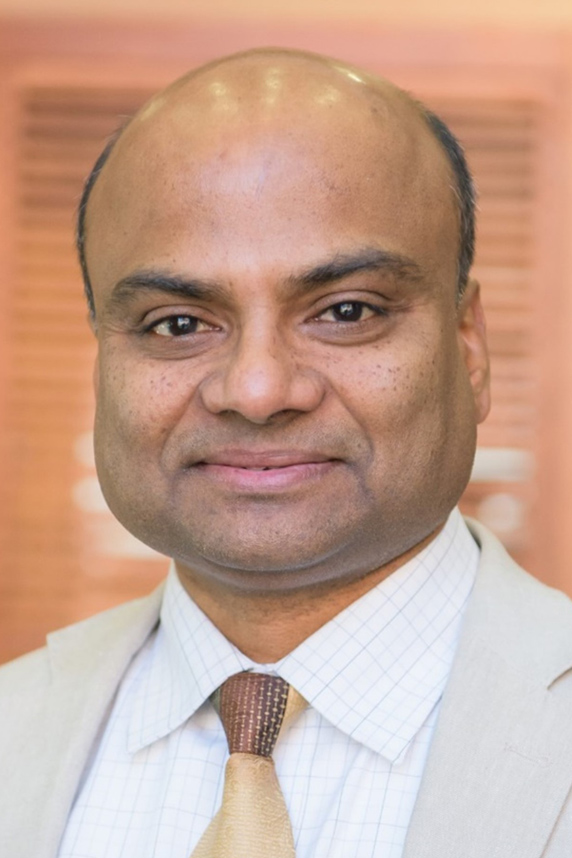
    “Anytime a new technology is created, there may be some risk,” noted Ghosh. “But being able to take a risk on something that theoretically could work creates a situation where technologies can flourish and move from the lab to the field. Throughout my career, I’ve been fortunate to find enabling environments that allow new ideas to be tested.” (Photo courtesy of Upal Ghosh)
    
    <hr>
    
    <p>NIEHS grant recipient <a href="https://cbee.umbc.edu/upal-ghosh/" rel="nofollow external" class="bo">Upal Ghosh, Ph.D.</a>, is a professor of environmental engineering at the University of Maryland, Baltimore County, who has developed practical, scalable solutions to some of the toughest contamination problems we face. Much of his work focuses on reducing the bioavailability of pollutants — preventing them from entering the food web and reaching humans — in bodies of water such as lakes and rivers. SediMite, a technology he helped to create and commercialize, offers a sustainable solution to environmental cleanup of PCBs.</p>
    <p>Beyond his efforts in the lab, Dr. Ghosh works closely with communities disproportionately affected by contamination. His projects in places like Washington, D.C., Baltimore, and Delaware have demonstrated the benefits of his remediation technology, helping to reduce fish consumption advisories, restore wetlands, and strengthen resiliency among residents.</p>
    <p>In our conversation, Dr. Ghosh shared insights into the scale of environmental contamination globally and the evolving landscape of remediation technologies. He discussed the importance of understanding how exposures in a water body can lead to exposures in humans, as that knowledge is crucial to developing effective cleanup approaches. Dr. Ghosh also described his early interest in science and what inspired him to pursue a research career.</p>
    <h2>Economy and environment</h2>
    <p><strong>Rick Woychik</strong>: Thank you, Dr. Ghosh, for taking the time to speak with me. Can you provide an overview of the scale of environmental contamination problems, both in the U.S. and globally?</p>
    <p><strong>Upal Ghosh</strong>: Sure. The way I think about it, the scale of environmental problems is related to the scale of the economy. A lot of the problems we discuss — from <a href="https://www.epa.gov/superfund/what-superfund" rel="nofollow external" class="bo">Superfund sites</a> such as Love Canal to current challenges around <a href="https://www.niehs.nih.gov/health/topics/agents/pfc" rel="nofollow external" class="bo">PFAS contamination</a> — are tied to how productive an economy is, and how production and usage practices have caused leakages.</p>
    <p>The U.S. was the largest manufacturing center for many products, and we’re seeing the footprint of that. Love Canal is a prime example. All of these Superfund sites are remnants of an era where laws weren’t in place to internalize costs and reduce externalities, and now we’re realizing that.</p>
    <hr>
    <img src="https://factor.niehs.nih.gov/sites/niehs-factor/files/2024/08/feature/innovative-environmental-remediation-body2.jpg" alt="Ghosh on boat" style="max-width: 100%; height: auto;">
    Ghosh is shown here collecting sediments from the Fort Eustis Superfund site in Virginia. “Working at PCB-contaminated sites like this makes you think, ‘How can we reduce human and ecological exposure without destroying vibrant wetland ecosystems?’” said Ghosh. (Image courtesy of Upal Ghosh)
    
    <hr>
    <p>I also travel internationally, and I see the same trends in developing countries. In India, they're ramping up production, and China has already reached high levels of industrial production. They’re starting to face challenges associated with manufacturing, transporting, and using large volumes of chemicals to provide their populations with a quality of life they expect and deserve.</p>
    <p>In pharmaceutical production, we’re seeing leakages of pharmaceuticals, and with large-volume chemicals like petroleum and pesticides, every functioning economy creates this footprint. So, in short, the scale of the problem has often been tied to the scale of the economy. But I believe that new technologies will help to create a better dynamic, allowing for both strong economic growth and strong environmental health.</p>
    <h2>To solve the problem, first define it</h2>
    <p><strong>RW</strong>: How do you go about developing remediation approaches?</p>
    <p><strong>UG</strong>: Environmental contamination poses an interesting challenge for scientists and engineers because the problem is often poorly defined. If I put PCB molecules in a beaker of clean water, as a scientist, I can describe the behavior accurately. But when I deal with a river, lake, or coastal bay, the matrix is much more complicated. For a variety of reasons, such as complex geochemistry, hydrodynamics, air-water exchange, and so forth, the attributes of contamination are not uniform. The behavior of compounds in that matrix becomes much more difficult to describe.</p>
    <p>For example, in the PCB cases I’ve worked on, we have to try to understand not just what’s happening in a complex body of water, but also a complex ecological system that ultimately leads to human exposure via the food web. So, defining the problem is the first part of effective technology development, and in fact I think that’s where many technology needs lie: accurately defining exposure. We can’t solve the problem unless we do so.</p>
    <hr>
    <img src="https://factor.niehs.nih.gov/sites/niehs-factor/files/2024/08/feature/innovative-environmental-remediation-body3.jpg" alt="Ghosh and team standing in the river" style="max-width: 100%; height: auto;">
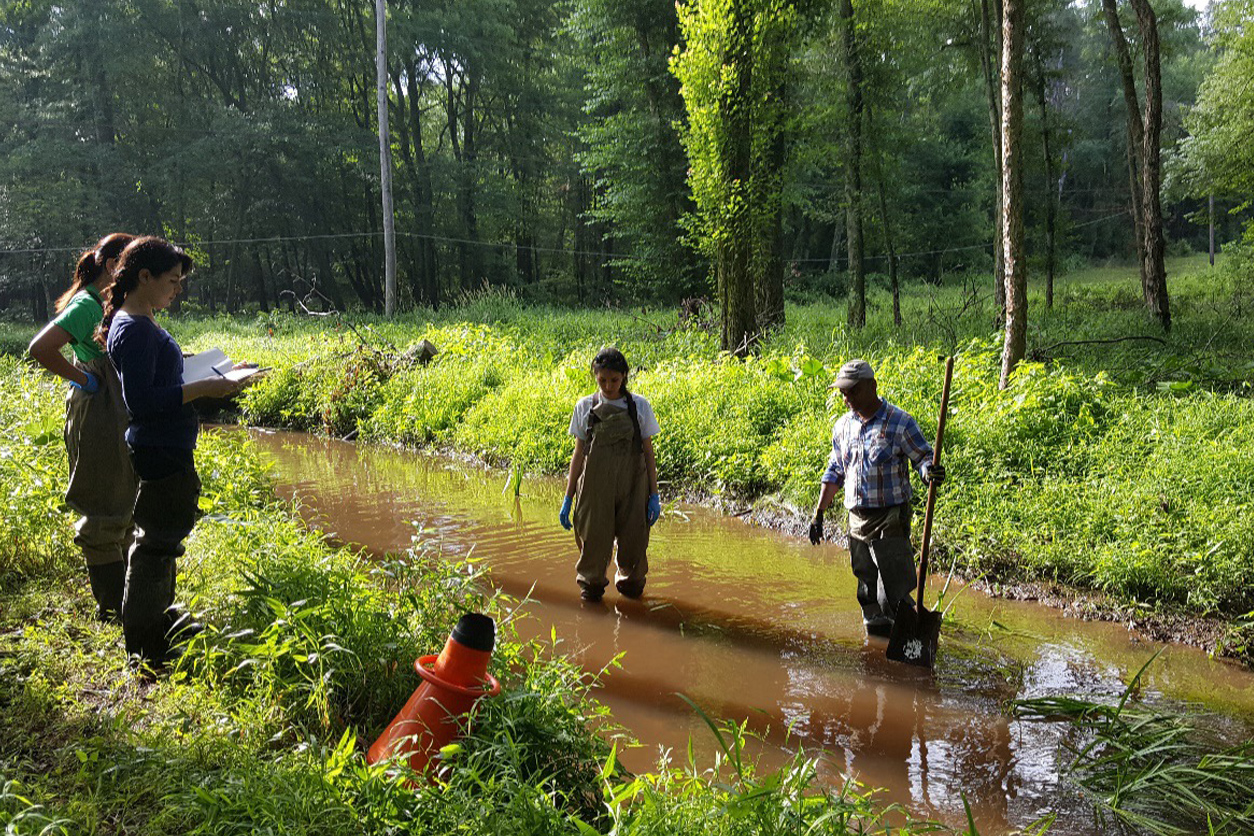
    Ghosh, right, is shown here installing passive samplers with students at a tributary of the Anacostia River in Washington, D.C., to help local decisionmakers better define the PCB and pesticide pollution problem and refine their remediation approach. (Photo courtesy of Upal Ghosh)
    
    <hr>
    <p>A lot of my work, and much of my colleagues’ work, falls under this category of accurately defining exposure, of understanding the bioavailability of pollutants in the soil or sediment environment. Once we understand the exposure — and the dominant exposure pathways — then I can bring in engineers, communities, and policymakers to create effective solutions.</p>
    <h2>Discovering black carbon’s key role</h2>
    <p><strong>RW</strong>: This is very interesting. If I’m understanding you correctly, the goal is to not just determine PCB levels in the soil of a riverbed, for example, but also to assess how much PCB in the soil of the riverbed will make it into the water and be ingested by fish, or absorbed through their gills, and eventually consumed by humans. Is that what you’re getting at?</p>
    <p><strong>UG</strong>: That’s exactly right. It’s not just about measuring contamination in sediments but understanding how it moves through the aquatic environment and enters the food web. Once we can accurately define the dominant exposure pathways, we can tailor our remediation efforts to address the most critical sources of exposure. To that end, we’ve adopted passive sampling techniques and environmental modeling methods to better assess the movement and exposures.</p>
    <p>Early in my research, when I was at Stanford working with my colleague and mentor Dr. Dick Luthy, we were studying the bioavailability of pollutants, looking specifically at PAHs [polycyclic aromatic hydrocarbons] and PCBs in sediments. The question we were asking was: Why is the bioavailability so different across sites? For example, when I took sediments from the Baltimore harbor versus sediments from the Milwaukee harbor, they didn’t behave the same.</p>
    <p>Just looking at the organic matter content, mineral content, and particle size wasn’t explaining the differences, which were sometimes more than an order of magnitude. In some sediments, pollutants like PAHs and PCBs were bound up much more strongly than we would predict. So, we started looking at that more carefully and discovered that in sediments where pollutants were strongly bound and less bioavailable, black carbon was present. Black carbon, the graphitic form of carbon, occurs naturally and can also come from things like forest fires, coal coke, and soot.</p>
    <p>We showed that these naturally present black carbon particles were binding PAHs and PCBs with affinities two orders of magnitude stronger than organic materials of plant origin. That was interesting because we could now explain the difference across our study sites. Some of our early papers focused on these natural differences in organic matter geochemistry, explaining the differences in bioavailability. Of course, we didn’t stop at just understanding the science — we wanted to use that knowledge to develop remediation technology.</p>
    <h2>Pellets pack a punch</h2>
    <p><strong>RW</strong>: And this is where the product you helped to develop, SediMite, comes into play. Can you explain the technology behind it?</p>
    <hr>
    <img src="https://factor.niehs.nih.gov/sites/niehs-factor/files/2024/08/feature/innovative-environmental-remediation-body4.jpg" alt="SediMite pellets" style="max-width: 100%; height: auto;">
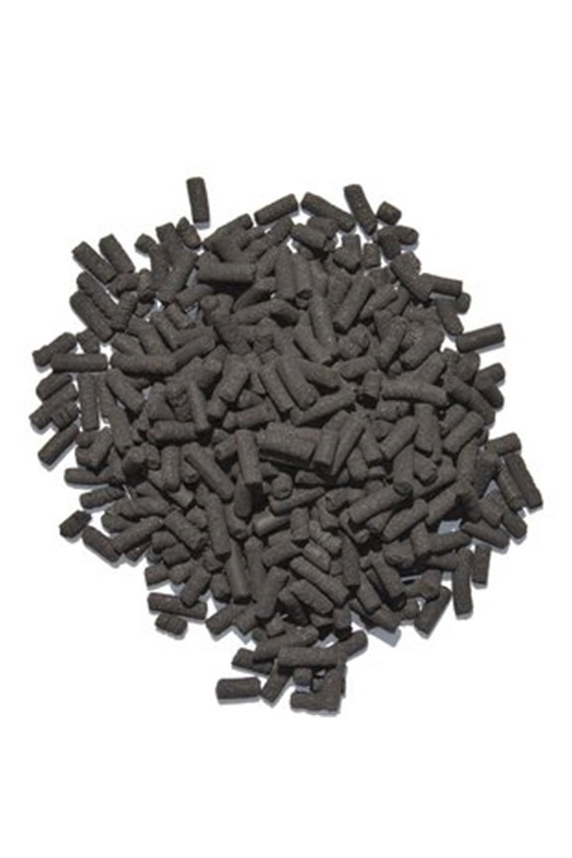
    Ghosh patented SediMite in 2010 and created a university spin-off company to produce it at scale. (Photo courtesy of Sediment Solutions)
    
    <hr>
    <p><strong>UG</strong>: SediMite works by binding contaminants in sediments, reducing their availability to organisms in the food web. The product consists of activated carbon packaged into pellets, which makes it easy to handle and apply in the field. Once dispersed in sediments, the activated carbon binds to hydrophobic pollutants like PCBs, making them less bioavailable to aquatic organisms. It can apply to a whole range of hydrophobic chemicals — pesticides, dioxins, and even PFAS. It works for some metals, too. We have done some work with mercury, and it binds strongly.</p>
    <p>What sets this technology apart from traditional methods like dredging is that it minimizes environmental disruption. Dredging can release buried contaminants into the water, potentially exacerbating the problem. With SediMite, we’re able to stabilize contaminants in place, reducing the risk of exposure without disturbing the ecosystem. Additionally, this method is often more cost-effective than large-scale dredging and landfill disposal. SediMite can also be adjusted, so we can blend new formulations of absorbents in our pellets to target different pollutants.</p>
    <h2>Targeting contamination hotspots</h2>
    <p><strong>RW</strong>: It sounds like this technology has the potential to significantly improve remediation efforts. How scalable is it? Could it be applied to larger bodies of water, like Lake Michigan?</p>
    <p><strong>UG</strong>: Scaling is always a consideration, and while SediMite can be successfully applied to larger areas, it’s often most effective in targeted locations where contamination levels are highest. With targeted dispersal, we have been able to reduce PCB bioavailability by 80% or more. We’ve successfully applied this technology in places like Mirror Lake in Delaware, where it helped to reduce concentrations in fish to levels below consumption advisory guidelines.</p>
    <p>The broader notion of introducing activated carbon in a contaminated site, demonstrated successfully through our research, has now become mainstream technology. For example, the technique has been applied at multiple Superfund sites, such as the <a href="https://semspub.epa.gov/work/02/580386.pdf" rel="nofollow external" class="bo">Passaic River</a> in New Jersey.</p>
    <p>In a large body of water like Lake Michigan, the focus would likely be on contaminated hotspots near industrial sites rather than attempting to treat the entire lake. This targeted approach allows for more efficient use of resources while still achieving significant risk reduction.</p>
    <p>Recently, the U.S. Environmental Protection Agency used our product in Minnesota’s Scanlon Reservoir to clean up dioxins, and they covered about 15 acres. They used SediMite to reduce bioavailability in shoreline areas with wetlands without destroying the wetlands.</p>
    <h2>Using microbes to degrade contaminants</h2>
    <p><strong>RW</strong>: One intriguing aspect of your work involves microbial degradation of contaminants. Can you tell us more about that?</p>
    <p><strong>UG</strong>: Absolutely. Microbial degradation is the ultimate solution — finding ways to not only bind contaminants but also break them down over time. In the case of PCBs, there are naturally occurring microorganisms that can dechlorinate these compounds, making them less harmful. We’ve worked with my microbiologist colleague Dr. Kevin Sowers to isolate these organisms, grow them in the lab, and then reintroduce them into contaminated environments as microbial catalysts. This process enhances the natural degradation of contaminants, further reducing their impact over time.</p>
    <h2>For the benefit of communities</h2>
    <p><strong>RW</strong>: It’s inspiring to see remediation technologies applied in the real world. Could you share some examples of how your work has benefited communities disproportionately affected by environmental contamination?</p>
    <p><strong>UG</strong>: One project that stands out is the Middle Branch Resiliency Initiative in Southwest Baltimore, a community that faces multiple environmental challenges, including contaminated sediments and coastal flooding. By using SediMite to treat nearby sediments and creating elevated wetlands, we’re not only improving environmental conditions but also helping to protect the community from future flooding events. This project shows how environmental remediation can be integrated with broader resilience and restoration efforts, ultimately enhancing the quality of life for residents.</p>
    </div>
    <p>(Rick Woychik, Ph.D., directs NIEHS and the National Toxicology Program.)</p>
    <h5><br></h5></div>Read Original Post from Environmental FactorEnvironmental Factor<br>Your Online Source for NIEHS News: <a href="https://factor.niehs.nih.gov/2024/9/feature/4-feature-innovative-environmental-remediation" rel="nofollow external" class="bo">https://factor.niehs.nih.gov/2024/9/feature/4-feature-innovative-environmental-remediation</a><div><br></div><div>Photo credit: Rick Woychik, Ph.D., directs NIEHS and the National Toxicology Program. (Image courtesy of NIEHS)</div></div>
]]>
  </Body>
  <Summary>Chemical contamination reduced by grantee’s innovative technology  I spoke with Upal Ghosh, Ph.D., about how effective environmental remediation requires rigorous exposure science, engineering....</Summary>
  <TrackingUrl>https://dev.my.umbc.edu/api/v0/pixel/news/144102/guest@my.umbc.edu/2c601ff79b1021d3edd14fba422a7a16/api/pixel</TrackingUrl>
  <Tag>faculty</Tag>
  <Tag>fall-2024</Tag>
  <Tag>ghosh</Tag>
  <Tag>news</Tag>
  <Tag>research</Tag>
  <Group token="cbee">Chemical, Biochemical and Environmental Engineering</Group>
  <GroupUrl>https://dev.my.umbc.edu/groups/cbee</GroupUrl>
  <AvatarUrl>https://assets4-dev.my.umbc.edu/system/shared/avatars/groups/000/000/771/b5e579e81b2e3624611890fa3ca2716a/xsmall.png?1746794587</AvatarUrl>
  <AvatarUrl size="original">https://assets2-dev.my.umbc.edu/system/shared/avatars/groups/000/000/771/b5e579e81b2e3624611890fa3ca2716a/original.png?1746794587</AvatarUrl>
  <AvatarUrl size="xxlarge">https://assets1-dev.my.umbc.edu/system/shared/avatars/groups/000/000/771/b5e579e81b2e3624611890fa3ca2716a/xxlarge.png?1746794587</AvatarUrl>
  <AvatarUrl size="xlarge">https://assets2-dev.my.umbc.edu/system/shared/avatars/groups/000/000/771/b5e579e81b2e3624611890fa3ca2716a/xlarge.png?1746794587</AvatarUrl>
  <AvatarUrl size="large">https://assets2-dev.my.umbc.edu/system/shared/avatars/groups/000/000/771/b5e579e81b2e3624611890fa3ca2716a/large.png?1746794587</AvatarUrl>
  <AvatarUrl size="medium">https://assets4-dev.my.umbc.edu/system/shared/avatars/groups/000/000/771/b5e579e81b2e3624611890fa3ca2716a/medium.png?1746794587</AvatarUrl>
  <AvatarUrl size="small">https://assets1-dev.my.umbc.edu/system/shared/avatars/groups/000/000/771/b5e579e81b2e3624611890fa3ca2716a/small.png?1746794587</AvatarUrl>
  <AvatarUrl size="xsmall">https://assets4-dev.my.umbc.edu/system/shared/avatars/groups/000/000/771/b5e579e81b2e3624611890fa3ca2716a/xsmall.png?1746794587</AvatarUrl>
  <AvatarUrl size="xxsmall">https://assets1-dev.my.umbc.edu/system/shared/avatars/groups/000/000/771/b5e579e81b2e3624611890fa3ca2716a/xxsmall.png?1746794587</AvatarUrl>
  <Sponsor>Chemical, Biochemical and Environmental Engineering</Sponsor>
  <ThumbnailUrl size="xxlarge">https://assets3-dev.my.umbc.edu/system/shared/thumbnails/news/000/144/102/eacf9b2d0a66c0730b01eb78ad35fbe9/xxlarge.jpg?1726851683</ThumbnailUrl>
  <ThumbnailUrl size="xlarge">https://assets2-dev.my.umbc.edu/system/shared/thumbnails/news/000/144/102/eacf9b2d0a66c0730b01eb78ad35fbe9/xlarge.jpg?1726851683</ThumbnailUrl>
  <ThumbnailUrl size="large">https://assets3-dev.my.umbc.edu/system/shared/thumbnails/news/000/144/102/eacf9b2d0a66c0730b01eb78ad35fbe9/large.jpg?1726851683</ThumbnailUrl>
  <ThumbnailUrl size="medium">https://assets2-dev.my.umbc.edu/system/shared/thumbnails/news/000/144/102/eacf9b2d0a66c0730b01eb78ad35fbe9/medium.jpg?1726851683</ThumbnailUrl>
  <ThumbnailUrl size="small">https://assets1-dev.my.umbc.edu/system/shared/thumbnails/news/000/144/102/eacf9b2d0a66c0730b01eb78ad35fbe9/small.jpg?1726851683</ThumbnailUrl>
  <ThumbnailUrl size="xsmall">https://assets2-dev.my.umbc.edu/system/shared/thumbnails/news/000/144/102/eacf9b2d0a66c0730b01eb78ad35fbe9/xsmall.jpg?1726851683</ThumbnailUrl>
  <ThumbnailUrl size="xxsmall">https://assets1-dev.my.umbc.edu/system/shared/thumbnails/news/000/144/102/eacf9b2d0a66c0730b01eb78ad35fbe9/xxsmall.jpg?1726851683</ThumbnailUrl>
  <PawCount>0</PawCount>
  <CommentCount>0</CommentCount>
  <CommentsAllowed>true</CommentsAllowed>
  <PostedAt>Fri, 20 Sep 2024 13:07:06 -0400</PostedAt>
  <EditAt>Fri, 20 Sep 2024 13:17:00 -0400</EditAt>
</NewsItem>
</News>