2014 Global Game Jam at UMBC, Jan 24-26

For the 6th year in a row, UMBC is the Baltimore host site for the Global Game Jam, which will be held from 5:00pm Friday January 24 to 5:00pm Sunday January 26. Many Global Game Jam sites charge admission. Thanks to the generous support of Next Century, the UMBC site will again be free, meals included. So we can plan appropriately, we do require advance registration.
In a game jam, participants come together to make a video game. Each participant joins a small team at the jam, and over a couple of day period creates a new, unique and creative video game according to the rules of the jam. Game Jams are a great way to meet other developers, beef up your resume, or just learn what it takes to make a game. Teams need designers who can come up with a creative game idea according to the jam constraints, artists, programmers and testers, so there is something to do for participants at all levels of experience.
The Global Game Jam takes place in the same 48 hours all over the world! Last year had more than 300 host sites across the world. All participants will be constrained by the same theme and set of rules. After the theme is announced, participants will have the chance to brainstorm game ideas and pitch them to other participants to form development teams. After a couple of mad days of game development, all the games are demoed and submitted to the global game jam site.
Even if you don’t participate, you can track the action on twitter by following @globalgamejam and monitoring #ggj14 and #umbcggj, and try out the game submissions after the event is over.
]]>
For the 6th year in a row, UMBC is the Baltimore host site for the Global Game Jam, which will be held from 5:00pm Friday January 24 to 5:00pm Sunday January 26. Many Global Game Jam sites charge...
http://www.csee.umbc.edu/2013/11/2014-global-game-jam-at-umbc-jan-24-26/
https://dev.my.umbc.edu/api/v0/pixel/news/38417/guest@my.umbc.edu/bfce13ec6eb8bce3ed4a403f0141152b/api/pixel
game-track
news
Computer Science and Electrical Engineering
https://dev.my.umbc.edu/groups/csee
https://assets3-dev.my.umbc.edu/system/shared/avatars/groups/000/000/099/d117dca133c64bf78a4b7696dd007189/xsmall.png?1314043393
https://assets1-dev.my.umbc.edu/system/shared/avatars/groups/000/000/099/d117dca133c64bf78a4b7696dd007189/original.png?1314043393
https://assets1-dev.my.umbc.edu/system/shared/avatars/groups/000/000/099/d117dca133c64bf78a4b7696dd007189/xxlarge.png?1314043393
https://assets4-dev.my.umbc.edu/system/shared/avatars/groups/000/000/099/d117dca133c64bf78a4b7696dd007189/xlarge.png?1314043393
https://assets3-dev.my.umbc.edu/system/shared/avatars/groups/000/000/099/d117dca133c64bf78a4b7696dd007189/large.png?1314043393
https://assets1-dev.my.umbc.edu/system/shared/avatars/groups/000/000/099/d117dca133c64bf78a4b7696dd007189/medium.png?1314043393
https://assets2-dev.my.umbc.edu/system/shared/avatars/groups/000/000/099/d117dca133c64bf78a4b7696dd007189/small.png?1314043393
https://assets3-dev.my.umbc.edu/system/shared/avatars/groups/000/000/099/d117dca133c64bf78a4b7696dd007189/xsmall.png?1314043393
https://assets3-dev.my.umbc.edu/system/shared/avatars/groups/000/000/099/d117dca133c64bf78a4b7696dd007189/xxsmall.png?1314043393
Computer Science and Electrical Engineering
1
1
true
Fri, 15 Nov 2013 09:14:08 -0500
Tue, 19 Nov 2013 09:14:08 -0500
talk: Human Computing Capacity and Future Human Development, Mon 11/18
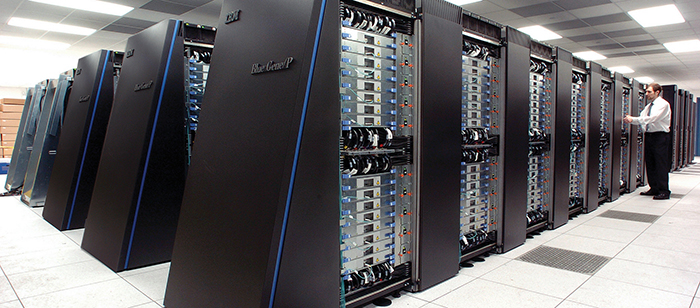
Center for Hybrid Multicore Productivity Research
Distinguished Computational Science Lecture Series
Human Computing Capacity and Future Human Development
Professor Bezalel Gavish
Information Technology and Operations Management
Southern Methodist University, Dallas TX
2:30pm Monday, 18 November 2013, ITE 325B, UMBC
This talk introduces bounds on future computers’ processing capacity and analyzes the possibilities for their realization in the long run. The analysis shows the existence of hard limits on the progress in processing capacity, which in turn generates bounds on future computing capacity. The results show that it is unlikely that some of the predictions on future computing capabilities will ever be achieved. The capacity bounds stem from fundamental physical limitations, which generate the relatively tight bounds. Different bounds have been developed that will be reached much faster than expected when compared to using simple traditional forecasting methods. This will be discussed in the lecture.
Assuming that computational activities like decision making, processing, vision, control, auditory and sensing activities of human beings require energy, the above energy based results generate upper bounds on the computational capacity (in the broadest sense) of human beings. The results are architecture independent and have direct impact on research on models of the brain and provide bounds on the cognitive abilities of human beings. A byproduct of this line of research is providing some new conjectures on the past and future physical development of the human species.
Professor Bezalel Gavish holds the Eugene J. and Ruth F. Constantin Distinguished Chair at Southern Methodist University in Dallas, Texas. He was the Chairman of the Information Technology and Operations Management department at the Cox business School. Professor Gavish is the founding Chairman of the International Conference on Telecommunications Systems Management and the International Conference on Networking and Electronic Commerce. He is the Editor-in-Chief of two top ranked research oriented journals, the Telecommunication Systems Journal, and of the Electronic Commerce Research Journal; serves as an Editorial board member of the Wireless Networks journal, Networks, Annals of Information Systems; was Telecommunications Departmental Editor for the Operations Research journal and Department Editor of Distributed Systems in ORSA Journal on Computing; and serves on the editorial boards of Computers and Operations Research, Annals of Mathematics of Artificial Intelligence, INFOR, Mathematics of Industrial Systems, Combinatorial Optimization: Theory and Practice, and Pesquisa Operacional. Prof. Gavish has published over 100 papers in his areas of expertise. He received the Ph.D. (1975) in operations research from the Technion, Israel Institute of Technology.
]]>
Center for Hybrid Multicore Productivity Research Distinguished Computational Science Lecture Series Human Computing Capacity and Future Human Development Professor Bezalel Gavish...
http://www.csee.umbc.edu/2013/11/talk-human-computing-capacity-and-future-human-development-mon-1118/
https://dev.my.umbc.edu/api/v0/pixel/news/38356/guest@my.umbc.edu/4b924e6443844bfe3d591108c51040d0/api/pixel
news
research
talks
Computer Science and Electrical Engineering
https://dev.my.umbc.edu/groups/csee
https://assets3-dev.my.umbc.edu/system/shared/avatars/groups/000/000/099/d117dca133c64bf78a4b7696dd007189/xsmall.png?1314043393
https://assets1-dev.my.umbc.edu/system/shared/avatars/groups/000/000/099/d117dca133c64bf78a4b7696dd007189/original.png?1314043393
https://assets1-dev.my.umbc.edu/system/shared/avatars/groups/000/000/099/d117dca133c64bf78a4b7696dd007189/xxlarge.png?1314043393
https://assets4-dev.my.umbc.edu/system/shared/avatars/groups/000/000/099/d117dca133c64bf78a4b7696dd007189/xlarge.png?1314043393
https://assets3-dev.my.umbc.edu/system/shared/avatars/groups/000/000/099/d117dca133c64bf78a4b7696dd007189/large.png?1314043393
https://assets1-dev.my.umbc.edu/system/shared/avatars/groups/000/000/099/d117dca133c64bf78a4b7696dd007189/medium.png?1314043393
https://assets2-dev.my.umbc.edu/system/shared/avatars/groups/000/000/099/d117dca133c64bf78a4b7696dd007189/small.png?1314043393
https://assets3-dev.my.umbc.edu/system/shared/avatars/groups/000/000/099/d117dca133c64bf78a4b7696dd007189/xsmall.png?1314043393
https://assets3-dev.my.umbc.edu/system/shared/avatars/groups/000/000/099/d117dca133c64bf78a4b7696dd007189/xxsmall.png?1314043393
Computer Science and Electrical Engineering
1
0
true
Thu, 14 Nov 2013 01:17:01 -0500
PhD defense: Oehler on Private Packet Filtering, 11/21
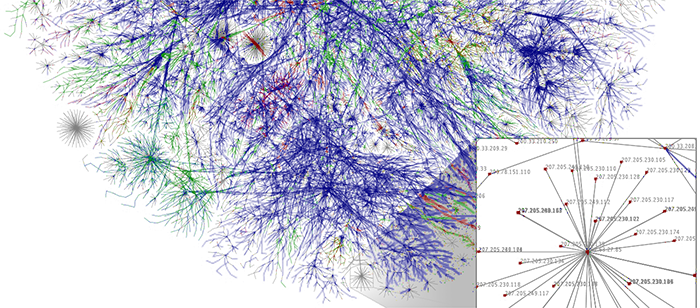
Computer Science and Electrical Engineering
University of Maryland, Baltimore County
Ph.D. Dissertation Defense
Private Packet Filtering Searching for Sensitive Indicators
without Revealing the Indicators in Collaborative Environments
Michael John Oehler
10:30-12:30 Thursday, 21 November 2013, ITE 325
Private Packet Filtering (PPF) is a new capability that preserves the confidentiality of sensitive attack indicators, and retrieves network packets that match those indicators without revealing the matching packets. The capability is achieved through the definition of a high-level language, the definition of a conjunction operator that expands the breadth of the language, a simulation of the document detection and recovery rates of the output buffer, and through a description of applicable system facets. Fundamentally, PPF uses a private search mechanism that in turn relies on the (partial) homomorphic property of the Paillier cryptosystem. PPF is intended for use in a collaborative environment involving a cyber defender and a partner: The defender has access to a set of sensitive indicators, and is willing to share some of those indicators with the partner. The partner has access to network data, and is willing to share that access. Neither is willing to provide full access. Using the language, the defender creates an encrypted form of the sensitive indicators, and passes the encrypted indicators to the partner. The partner then uses the encrypted indicators to filter packets, and returns an encrypted packet capture file. The partner does not decrypt the indicators and cannot identify which packets matched. The defender decrypts, reassembles the matching packets, gains situational awareness, and notifies the partner of any malicious activity. In this sense, the defender reveals only the observed indicator and retains control of all other indicators. PPF allows both parties to gain situational awareness of malicious activity, and to retain control without exposing every indicator or all network data.
Committee: Dhananjay Phatak (chair), Michael Collins, Josiah Dykstra, Russell Fink, John Pinkston and Alan Sherman
]]>
Computer Science and Electrical Engineering University of Maryland, Baltimore County Ph.D. Dissertation Defense Private Packet Filtering Searching for Sensitive Indicators without Revealing...
http://www.csee.umbc.edu/2013/11/defense-oehler-on-private-packet-filtering-1121/
https://dev.my.umbc.edu/api/v0/pixel/news/38128/guest@my.umbc.edu/a2f6dfd8a5f7d8da485f08fa504e8409/api/pixel
computer-science
cybersecurity
defense
graduate
news
research
students
talks
Computer Science and Electrical Engineering
https://dev.my.umbc.edu/groups/csee
https://assets3-dev.my.umbc.edu/system/shared/avatars/groups/000/000/099/d117dca133c64bf78a4b7696dd007189/xsmall.png?1314043393
https://assets1-dev.my.umbc.edu/system/shared/avatars/groups/000/000/099/d117dca133c64bf78a4b7696dd007189/original.png?1314043393
https://assets1-dev.my.umbc.edu/system/shared/avatars/groups/000/000/099/d117dca133c64bf78a4b7696dd007189/xxlarge.png?1314043393
https://assets4-dev.my.umbc.edu/system/shared/avatars/groups/000/000/099/d117dca133c64bf78a4b7696dd007189/xlarge.png?1314043393
https://assets3-dev.my.umbc.edu/system/shared/avatars/groups/000/000/099/d117dca133c64bf78a4b7696dd007189/large.png?1314043393
https://assets1-dev.my.umbc.edu/system/shared/avatars/groups/000/000/099/d117dca133c64bf78a4b7696dd007189/medium.png?1314043393
https://assets2-dev.my.umbc.edu/system/shared/avatars/groups/000/000/099/d117dca133c64bf78a4b7696dd007189/small.png?1314043393
https://assets3-dev.my.umbc.edu/system/shared/avatars/groups/000/000/099/d117dca133c64bf78a4b7696dd007189/xsmall.png?1314043393
https://assets3-dev.my.umbc.edu/system/shared/avatars/groups/000/000/099/d117dca133c64bf78a4b7696dd007189/xxsmall.png?1314043393
Computer Science and Electrical Engineering
0
0
true
Fri, 08 Nov 2013 08:10:49 -0500
Thu, 21 Nov 2013 08:10:49 -0500
talk: Ophir Frieder on Collective Intelligence, Noon Wed 11/13
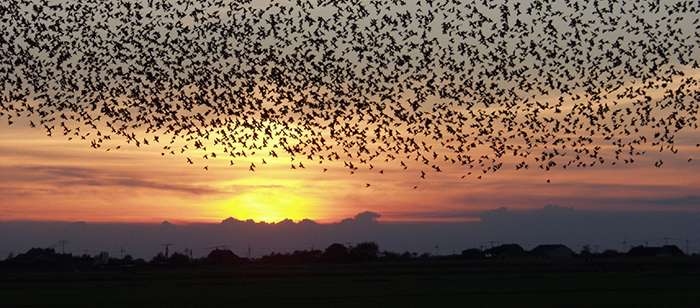
UMBC Information Systems Department
Distinguished Lecture for the Fall
Collective Intelligence
Dr. Ophir Frieder
Georgetown University
12:00-1:00pm Wednesday, 13 November, ITE 456
Collective Intelligence is group intelligence generated by the collaboration of many individuals. However, such intelligence is only as powerful as one’s ability to digest it. Thus, after describing two recent efforts, the first focusing on early disease detection using microblogs and the second focusing on collaborative tag labeling. Potentially, I will likewise describe an older effort that effectively integrates information and comment on its potential for the future.
Ophir Frieder holds the Robert L. McDevitt, K.S.G., K.C.H.S. and Catherine H. McDevitt L.C.H.S. Chair in Computer Science and Information Processing and is Chair of the Department of Computer Science at Georgetown University. He is also Professor of Biostatistics, Bioinformatics and Biomathematics in the Georgetown University Medical Center. He is a Fellow of the AAAS, ACM, and IEEE.
]]>
UMBC Information Systems Department Distinguished Lecture for the Fall Collective Intelligence Dr. Ophir Frieder Georgetown University 12:00-1:00pm Wednesday, 13 November, ITE 456...
http://www.csee.umbc.edu/2013/11/talk-ophir-frieder-on-collective-intelligence-noon-wed-1113/
https://dev.my.umbc.edu/api/v0/pixel/news/38062/guest@my.umbc.edu/e72d13feea4307e981f95e912e114a1e/api/pixel
news
research
talks
Computer Science and Electrical Engineering
https://dev.my.umbc.edu/groups/csee
https://assets3-dev.my.umbc.edu/system/shared/avatars/groups/000/000/099/d117dca133c64bf78a4b7696dd007189/xsmall.png?1314043393
https://assets1-dev.my.umbc.edu/system/shared/avatars/groups/000/000/099/d117dca133c64bf78a4b7696dd007189/original.png?1314043393
https://assets1-dev.my.umbc.edu/system/shared/avatars/groups/000/000/099/d117dca133c64bf78a4b7696dd007189/xxlarge.png?1314043393
https://assets4-dev.my.umbc.edu/system/shared/avatars/groups/000/000/099/d117dca133c64bf78a4b7696dd007189/xlarge.png?1314043393
https://assets3-dev.my.umbc.edu/system/shared/avatars/groups/000/000/099/d117dca133c64bf78a4b7696dd007189/large.png?1314043393
https://assets1-dev.my.umbc.edu/system/shared/avatars/groups/000/000/099/d117dca133c64bf78a4b7696dd007189/medium.png?1314043393
https://assets2-dev.my.umbc.edu/system/shared/avatars/groups/000/000/099/d117dca133c64bf78a4b7696dd007189/small.png?1314043393
https://assets3-dev.my.umbc.edu/system/shared/avatars/groups/000/000/099/d117dca133c64bf78a4b7696dd007189/xsmall.png?1314043393
https://assets3-dev.my.umbc.edu/system/shared/avatars/groups/000/000/099/d117dca133c64bf78a4b7696dd007189/xxsmall.png?1314043393
Computer Science and Electrical Engineering
0
0
true
Wed, 06 Nov 2013 15:08:02 -0500
IEEE Job Search Workshop

IEEE – Job Search Workshop
12:00-1:00 Monday, 11 November 2013, ITE LH 7
Join IEEE for a job search workshop. A Career Services’ expert will give a presentation tailored for STEM grad students. Learn about job search techniques that work best for those in a STEM major and start your search now.
It could take up to 9 months to find a job after graduation… Don’t wait until your last year to start looking for a job.
Kick start your job search with us, November 11th, at noon, in Lecture Hall 7. No matter where you are in your studies, it’s never too early to start job searching. Lunch will be served!
RSVP online.
]]>
IEEE – Job Search Workshop 12:00-1:00 Monday, 11 November 2013, ITE LH 7 Join IEEE for a job search workshop. A Career Services’ expert will give a presentation tailored for STEM grad...
http://www.csee.umbc.edu/2013/11/ieee-job-search-workshop/
https://dev.my.umbc.edu/api/v0/pixel/news/37920/guest@my.umbc.edu/5a9c0bbd7b961ee7cc4827cf431d3eff/api/pixel
graduate
jobs
students
undergraduate
Computer Science and Electrical Engineering
https://dev.my.umbc.edu/groups/csee
https://assets3-dev.my.umbc.edu/system/shared/avatars/groups/000/000/099/d117dca133c64bf78a4b7696dd007189/xsmall.png?1314043393
https://assets1-dev.my.umbc.edu/system/shared/avatars/groups/000/000/099/d117dca133c64bf78a4b7696dd007189/original.png?1314043393
https://assets1-dev.my.umbc.edu/system/shared/avatars/groups/000/000/099/d117dca133c64bf78a4b7696dd007189/xxlarge.png?1314043393
https://assets4-dev.my.umbc.edu/system/shared/avatars/groups/000/000/099/d117dca133c64bf78a4b7696dd007189/xlarge.png?1314043393
https://assets3-dev.my.umbc.edu/system/shared/avatars/groups/000/000/099/d117dca133c64bf78a4b7696dd007189/large.png?1314043393
https://assets1-dev.my.umbc.edu/system/shared/avatars/groups/000/000/099/d117dca133c64bf78a4b7696dd007189/medium.png?1314043393
https://assets2-dev.my.umbc.edu/system/shared/avatars/groups/000/000/099/d117dca133c64bf78a4b7696dd007189/small.png?1314043393
https://assets3-dev.my.umbc.edu/system/shared/avatars/groups/000/000/099/d117dca133c64bf78a4b7696dd007189/xsmall.png?1314043393
https://assets3-dev.my.umbc.edu/system/shared/avatars/groups/000/000/099/d117dca133c64bf78a4b7696dd007189/xxsmall.png?1314043393
Computer Science and Electrical Engineering
0
0
true
Mon, 04 Nov 2013 11:58:45 -0500
Mon, 04 Nov 2013 11:58:45 -0500
IEEE Job Search Workshop
IEEE – Job Search Workshop
12:00-1:00 Monday, 11 November 2013, ITE LH 7
Join IEEE for a job search workshop. A Career Services’ expert will give a presentation tailored for STEM grad students. Learn about job search techniques that work best for those in a STEM major and start your search now.
It could take up to 9 months to find a job after graduation… Don’t wait until your last year to start looking for a job.
Kick start your job search with us, November 11th, at noon, in Lecture Hall 7. No matter where you are in your studies, it’s never too early to start job searching. Lunch will be served!
RSVP online.
]]>
IEEE – Job Search Workshop 12:00-1:00 Monday, 11 November 2013, ITE LH 7 Join IEEE for a job search workshop. A Career Services’ expert will give a presentation tailored for STEM grad...
http://www.csee.umbc.edu/2013/11/ieee-job-search-workshop/?utm_source=rss&utm_medium=rss&utm_campaign=ieee-job-search-workshop
https://dev.my.umbc.edu/api/v0/pixel/news/42650/guest@my.umbc.edu/89726624b969279373494070c0e09620/api/pixel
graduate
jobs
students
undergraduate
Computer Science and Electrical Engineering
https://dev.my.umbc.edu/groups/csee
https://assets3-dev.my.umbc.edu/system/shared/avatars/groups/000/000/099/d117dca133c64bf78a4b7696dd007189/xsmall.png?1314043393
https://assets1-dev.my.umbc.edu/system/shared/avatars/groups/000/000/099/d117dca133c64bf78a4b7696dd007189/original.png?1314043393
https://assets1-dev.my.umbc.edu/system/shared/avatars/groups/000/000/099/d117dca133c64bf78a4b7696dd007189/xxlarge.png?1314043393
https://assets4-dev.my.umbc.edu/system/shared/avatars/groups/000/000/099/d117dca133c64bf78a4b7696dd007189/xlarge.png?1314043393
https://assets3-dev.my.umbc.edu/system/shared/avatars/groups/000/000/099/d117dca133c64bf78a4b7696dd007189/large.png?1314043393
https://assets1-dev.my.umbc.edu/system/shared/avatars/groups/000/000/099/d117dca133c64bf78a4b7696dd007189/medium.png?1314043393
https://assets2-dev.my.umbc.edu/system/shared/avatars/groups/000/000/099/d117dca133c64bf78a4b7696dd007189/small.png?1314043393
https://assets3-dev.my.umbc.edu/system/shared/avatars/groups/000/000/099/d117dca133c64bf78a4b7696dd007189/xsmall.png?1314043393
https://assets3-dev.my.umbc.edu/system/shared/avatars/groups/000/000/099/d117dca133c64bf78a4b7696dd007189/xxsmall.png?1314043393
Computer Science and Electrical Engineering
0
0
true
Mon, 04 Nov 2013 11:58:45 -0500
Mon, 04 Nov 2013 11:58:45 -0500
Talk: Niloy Ganguly on Topical Search in Twitter, 1pm Tue 11/5, ITE 459
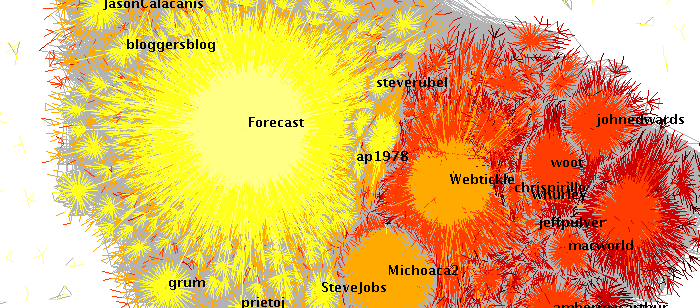
UMBC Information Systems Department
Topical Search in Twitter
Indian Institute of Technology Kharagpur
1:00pm Tuesday, 5 November 2013, ITE 459
Twitter is now a popular platform for discovering real-time news on various topics. We are developing methodologies to improve topical search in Twitter, specifically search for topical experts and popular content on specific topics. Utilizing social annotations provided by the Twitter population through the Lists feature, we have developed the following:
- A novel who-is-who system for Twitter, which gives the topical attributes of a specified user. The list-based methodology gives accurate and comprehensive topical attributes for millions of popular Twitter users.
- A search system for topical experts in Twitter. Comparison of our system with the expert search service offered by Twitter shows that the List-based method provide better results for a large number of topical queries.
- A novel topical search system which, given a topic, identifies and clusters the content (tweets, hashtags) being discussed by the community of experts on that topic. Our methodology gives relevant and trustworthy content for a wide range of topics. To the best our knowledge, this is the first systematic attempt to utilize social annotations to provide topical search in Twitter.
Niloy Ganguly is an associate professor in the department of computer science and engineering, Indian Institute of Technology Kharagpur. He received his PhD from Bengal Engineering and Science University, Calcutta, India and his Bachelors in Computer Science and Engineering from IIT Kharagpur. He has been a post doctoral fellow in Technical University of Dresden, Germany. He focuses on investigating several different aspects on online-social networks. He has worked on designing recommendation system based on community structures on various web-social networks like Twitter and Delicious. He has also simultaneously worked on various theoretical issues related to dynamical large networks often termed as complex networks. Specifically he has looked into problems related to percolation, evolution of networks as well as flow of information over these networks. He has been collaborating with various national and international universities and research lab including Duke University, TU Dresden, Germany, MPI PKS and MPI SWS, Germany, Microsoft Lab, India etc. He currently publishes in various top ranking international journals and conferences including CCS, PODC, ICDM, ACL, WWW, INFOCOM, SIGIR, Euro Physics Letters, Physical Review E, ACM and IEEE Transactions, etc.
]]>
UMBC Information Systems Department Topical Search in Twitter Dr. Niloy Ganguly Indian Institute of Technology Kharagpur 1:00pm Tuesday, 5 November 2013, ITE 459 Twitter is now a popular...
http://www.csee.umbc.edu/2013/11/talk-niloy-ganguly-on-topical-search-in-twitter-10am-tue-115-ite-459/
https://dev.my.umbc.edu/api/v0/pixel/news/37889/guest@my.umbc.edu/0f5d683b4b9ecaffe0a224661861fb0e/api/pixel
news
research
talks
Computer Science and Electrical Engineering
https://dev.my.umbc.edu/groups/csee
https://assets3-dev.my.umbc.edu/system/shared/avatars/groups/000/000/099/d117dca133c64bf78a4b7696dd007189/xsmall.png?1314043393
https://assets1-dev.my.umbc.edu/system/shared/avatars/groups/000/000/099/d117dca133c64bf78a4b7696dd007189/original.png?1314043393
https://assets1-dev.my.umbc.edu/system/shared/avatars/groups/000/000/099/d117dca133c64bf78a4b7696dd007189/xxlarge.png?1314043393
https://assets4-dev.my.umbc.edu/system/shared/avatars/groups/000/000/099/d117dca133c64bf78a4b7696dd007189/xlarge.png?1314043393
https://assets3-dev.my.umbc.edu/system/shared/avatars/groups/000/000/099/d117dca133c64bf78a4b7696dd007189/large.png?1314043393
https://assets1-dev.my.umbc.edu/system/shared/avatars/groups/000/000/099/d117dca133c64bf78a4b7696dd007189/medium.png?1314043393
https://assets2-dev.my.umbc.edu/system/shared/avatars/groups/000/000/099/d117dca133c64bf78a4b7696dd007189/small.png?1314043393
https://assets3-dev.my.umbc.edu/system/shared/avatars/groups/000/000/099/d117dca133c64bf78a4b7696dd007189/xsmall.png?1314043393
https://assets3-dev.my.umbc.edu/system/shared/avatars/groups/000/000/099/d117dca133c64bf78a4b7696dd007189/xxsmall.png?1314043393
Computer Science and Electrical Engineering
0
0
true
Sun, 03 Nov 2013 10:09:54 -0500
Sun, 03 Nov 2013 10:09:54 -0500
Professors Mohsenin and Slaughter receive NSF grants for medical applications

CSEE Professors Tinoosh Mohsenin and Gymama Slaughter each received recent grants from NSF to apply their computing engineering expertise to develop new medical technology. What follows is an excerpt from a recent article on their work written by Joel N.Shurkin.
The Body Electric: UMBC researchers forge links between tech and medicine
Monitoring significant developments in a patient’s health outside a hospital setting can be challenging, but two UMBC researchers – Tinoosh Mohsenin and Gymama Slaughter – have won separate grants from the National Science Foundation (NSF) to help meet those challenges.
Mohsenin received a $100,000 grant from the NSF to develop signal processing architecture to detect seizures. The award of $150,000 to Slaughter from the foundation was to pursue work on nanoelectric probe arrays.
Not only does the work done by these two UMBC professors have important implications for basic medical science, but it is also research that may also provide more insight into how we think and feel, or improve how people with disabilities navigate in the world.
]]>
CSEE Professors Tinoosh Mohsenin and Gymama Slaughter each received recent grants from NSF to apply their computing engineering expertise to develop new medical technology. What follows is an...
http://www.csee.umbc.edu/2013/11/professors-mohsenin-and-slaughter-receive-nsf-grants-for-medical-applications/
https://dev.my.umbc.edu/api/v0/pixel/news/37884/guest@my.umbc.edu/c8beaacd50e7bdafd2b70da0cba510fa/api/pixel
computer-engineering
news
research
research-awards
Computer Science and Electrical Engineering
https://dev.my.umbc.edu/groups/csee
https://assets3-dev.my.umbc.edu/system/shared/avatars/groups/000/000/099/d117dca133c64bf78a4b7696dd007189/xsmall.png?1314043393
https://assets1-dev.my.umbc.edu/system/shared/avatars/groups/000/000/099/d117dca133c64bf78a4b7696dd007189/original.png?1314043393
https://assets1-dev.my.umbc.edu/system/shared/avatars/groups/000/000/099/d117dca133c64bf78a4b7696dd007189/xxlarge.png?1314043393
https://assets4-dev.my.umbc.edu/system/shared/avatars/groups/000/000/099/d117dca133c64bf78a4b7696dd007189/xlarge.png?1314043393
https://assets3-dev.my.umbc.edu/system/shared/avatars/groups/000/000/099/d117dca133c64bf78a4b7696dd007189/large.png?1314043393
https://assets1-dev.my.umbc.edu/system/shared/avatars/groups/000/000/099/d117dca133c64bf78a4b7696dd007189/medium.png?1314043393
https://assets2-dev.my.umbc.edu/system/shared/avatars/groups/000/000/099/d117dca133c64bf78a4b7696dd007189/small.png?1314043393
https://assets3-dev.my.umbc.edu/system/shared/avatars/groups/000/000/099/d117dca133c64bf78a4b7696dd007189/xsmall.png?1314043393
https://assets3-dev.my.umbc.edu/system/shared/avatars/groups/000/000/099/d117dca133c64bf78a4b7696dd007189/xxsmall.png?1314043393
Computer Science and Electrical Engineering
2
1
true
Sun, 03 Nov 2013 00:22:01 -0400
talk: The strange world of quantum computing, 2:30 Tue 11/5, ITE 325
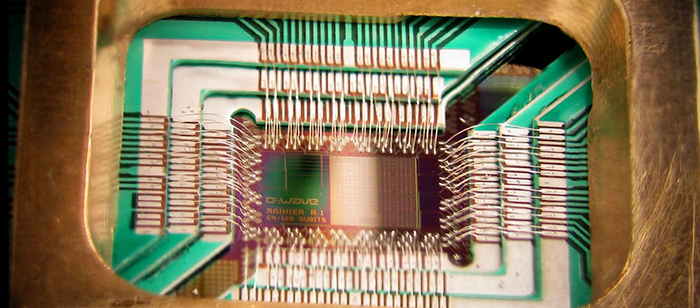
Computer Science and Electrical Engineering
Quantum Computing Seminar
The Strange World of Quantum Computing
Samuel Lomonaco, CSEE, UMBC
2:30-3:00 Tuesday, 5 November 2013, ITE 325b
This talk will give an introductory overview of quantum computing in an intuitive and conceptual fashion. No prior knowledge of quantum mechanics will be assumed. This is the first of a series of talks based on the four invited lectures given at Oxford. PowerPoint slides can be found online here.
Samuel J. Lomonaco is a professor at the Department of Computer Science and Electrical Engineering of the University of Maryland Baltimore County. He is internationally known for his many contributions in mathematics and in computer science. His research interests span a wide range of subjects from knot theory, algebraic and differential topology to algebraic coding theory, quantum computation, and symbolic computation. In quantum cryptography, he has shown how quantum information theory can be used to gain a better understanding of eavesdropping with quantum entanglement. In quantum computation, he has shown how Lie groups can be used to solve problems arising in the study of quantum entanglement. In 2000 Professor Lomonoco organized the first American Mathematical Society short course on quantum computation.
Organizer: Prof. Samuel Lomonaco, Sorry, you need javascript to view this email address.
]]>
Computer Science and Electrical Engineering Quantum Computing Seminar The Strange World of Quantum Computing Samuel Lomonaco, CSEE, UMBC 2:30-3:00 Tuesday, 5 November 2013, ITE 325b This...
http://www.csee.umbc.edu/2013/11/talk-the-strangeworld-of-quantum-computing-230-tue-115-ite-325/
https://dev.my.umbc.edu/api/v0/pixel/news/37870/guest@my.umbc.edu/4b219e984ef45e700fbf3d781245ba59/api/pixel
computer-science
news
research
talks
Computer Science and Electrical Engineering
https://dev.my.umbc.edu/groups/csee
https://assets3-dev.my.umbc.edu/system/shared/avatars/groups/000/000/099/d117dca133c64bf78a4b7696dd007189/xsmall.png?1314043393
https://assets1-dev.my.umbc.edu/system/shared/avatars/groups/000/000/099/d117dca133c64bf78a4b7696dd007189/original.png?1314043393
https://assets1-dev.my.umbc.edu/system/shared/avatars/groups/000/000/099/d117dca133c64bf78a4b7696dd007189/xxlarge.png?1314043393
https://assets4-dev.my.umbc.edu/system/shared/avatars/groups/000/000/099/d117dca133c64bf78a4b7696dd007189/xlarge.png?1314043393
https://assets3-dev.my.umbc.edu/system/shared/avatars/groups/000/000/099/d117dca133c64bf78a4b7696dd007189/large.png?1314043393
https://assets1-dev.my.umbc.edu/system/shared/avatars/groups/000/000/099/d117dca133c64bf78a4b7696dd007189/medium.png?1314043393
https://assets2-dev.my.umbc.edu/system/shared/avatars/groups/000/000/099/d117dca133c64bf78a4b7696dd007189/small.png?1314043393
https://assets3-dev.my.umbc.edu/system/shared/avatars/groups/000/000/099/d117dca133c64bf78a4b7696dd007189/xsmall.png?1314043393
https://assets3-dev.my.umbc.edu/system/shared/avatars/groups/000/000/099/d117dca133c64bf78a4b7696dd007189/xxsmall.png?1314043393
Computer Science and Electrical Engineering
2
0
true
Sat, 02 Nov 2013 12:31:05 -0400
Sat, 02 Nov 2013 12:31:05 -0400
Defense: Nguyen on Fast Modular Exponentiation Using Residue Domain Representation, Noon 11/5
M.S. Thesis Defense
Computer Science and Electrical Engineering
University of Maryland, Baltimore County
Fast Modular Exponentiation Using Residue Domain Representation:
A Hardware Reference Implementation and Analysis
Christopher D. Nguyen
12:00–2:00pm, Tuesday, 5 November 2013, ITE 228, UMBC
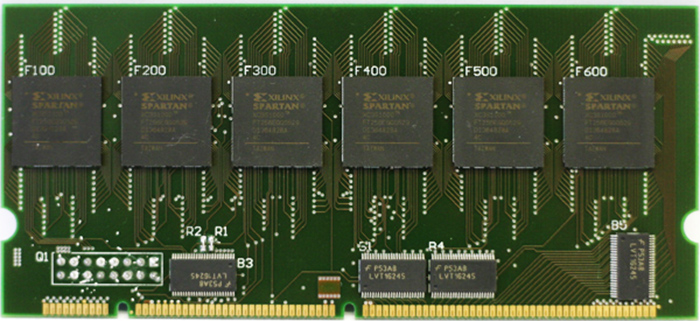
Using field-programmable gate arrays (FPGAs) we engineered and analyzed the first hardware implementation of Phatak’s reduced-precision residue number system (RP-RNS) to perform modular exponentiation.
Residue number systems (RNSs) provide an alternative representation to the binary system for performing integer arithmetic used in applications such as public-key cryptography and digital signal processing. They offer full parallel computation for addition, subtraction, and multiplication increasing performance from O(K) to O(lg K) for a K-bit number. However, base extension, division, and sign detection become harder operations.
RP-RNS is a new set of algorithms that uses approximation and a time-memory trade-off to address the hard operations. The partial reconstruction (PR) algorithm addresses base extension and the quotient-first scaling (QFS) algorithm addresses scaling. RP-RNS modular exponentiation uses the PR and QFS algorithms. RP-RNS improves performance of modular multiplication in an RNS with range [0, M-1] from the O((lg n)^2) delay of current systems (e.g. Cox-Rower) to a theoretical O(lg n) delay where n is the word-length of M.
Our implementation is based on Phatak’s description and recommended architecture diagrams. We found even low-end FPGAs can store over 30 channels of logic. Following the recommendation of parallel look-up table (LUT) access, we distributed the LUTs to be local to each channel. We found this recommendation applied to QFS exceeds the capacity of today’s high-capacity FPGAs (e.g. Xilinx Virtex-7) for modest 2,000-bit divisors. We propose several improvements to increase feasibility; one is to store the LUTs external to the FPGA, which would introduce a performance penalty per look-up.
Committee: Alan Sherman (chair), Dhananjay Phatak, Chintan Patel and
Ryan Robucci
]]>
M.S. Thesis Defense Computer Science and Electrical Engineering University of Maryland, Baltimore County Fast Modular Exponentiation Using Residue Domain Representation: A Hardware Reference...
http://www.csee.umbc.edu/2013/11/defense-nguyen-on-fast-modular-exponentiation-using-residue-domain-representation-noon-115/
https://dev.my.umbc.edu/api/v0/pixel/news/37866/guest@my.umbc.edu/f15d022d3a1e2611e3d7fc477bc44c81/api/pixel
computer-engineering
computer-science
defense
graduate
news
research
Computer Science and Electrical Engineering
https://dev.my.umbc.edu/groups/csee
https://assets3-dev.my.umbc.edu/system/shared/avatars/groups/000/000/099/d117dca133c64bf78a4b7696dd007189/xsmall.png?1314043393
https://assets1-dev.my.umbc.edu/system/shared/avatars/groups/000/000/099/d117dca133c64bf78a4b7696dd007189/original.png?1314043393
https://assets1-dev.my.umbc.edu/system/shared/avatars/groups/000/000/099/d117dca133c64bf78a4b7696dd007189/xxlarge.png?1314043393
https://assets4-dev.my.umbc.edu/system/shared/avatars/groups/000/000/099/d117dca133c64bf78a4b7696dd007189/xlarge.png?1314043393
https://assets3-dev.my.umbc.edu/system/shared/avatars/groups/000/000/099/d117dca133c64bf78a4b7696dd007189/large.png?1314043393
https://assets1-dev.my.umbc.edu/system/shared/avatars/groups/000/000/099/d117dca133c64bf78a4b7696dd007189/medium.png?1314043393
https://assets2-dev.my.umbc.edu/system/shared/avatars/groups/000/000/099/d117dca133c64bf78a4b7696dd007189/small.png?1314043393
https://assets3-dev.my.umbc.edu/system/shared/avatars/groups/000/000/099/d117dca133c64bf78a4b7696dd007189/xsmall.png?1314043393
https://assets3-dev.my.umbc.edu/system/shared/avatars/groups/000/000/099/d117dca133c64bf78a4b7696dd007189/xxsmall.png?1314043393
Computer Science and Electrical Engineering
5
3
true
Sat, 02 Nov 2013 10:41:07 -0400