talk: Security Review of the MyUMBC Mobile App, 11/20

The UMBC Cyber Defense Lab presents
Security Review of the MyUMBC Mobile App
Mikhail Aleksander, Enis Golaszewski, Gavin Lebo and Daniel Whitt
11:15am-12:30pm Friday, 20 November 2015, ITE 231
Our team will present preliminary findings and lead an informal discussion on its project to carry out a security review of new custom software for mobile devices in the UMBC enterprise. Using Highpoint, this custom software allows users to connect from IOS and Android mobile devices to application services including Peoplesoft (registration and administrative functions), Blackboard (instructional support), and Cashnet (campus financial transactions). Focusing on the custom software, the review includes an adversarial model, summary of the data and resources to be protected, analysis of the system design and architecture, and static and dynamic analysis of the source code using a variety of tools. Among other questions, the review addresses the following: What are potential vulnerabilities? How might an adversary exploit these vulnerabilities? What attacks are possible, how difficult would it be to carry out such attacks, what would their consequences be, and what is the risk of such attacks? Are appropriate cryptography and protocols used, are they used appropriately, and are the key lengths appropriate? Is the key management sound, and where are keys stored? Does the design and implementation follow best practices? The final report will include constructive recommendations.
Mikhail Aleksander, Enis Golaszewski, Gavin Lebo, and Daniel Whitt are students in Dr. Sherman’s CMSC-491/691 Cybersecurity Research class of the NSF-funded INSuRE project. Aleksander, Golaszewski, and Lebo are BS students in computer science; Whitt is a MPS student in Cyber. Lebo and Whitt are also SFS Scholars.
Host: Alan T. Sherman, Sorry, you need javascript to view this email address.
]]>
The UMBC Cyber Defense Lab presents Security Review of the MyUMBC Mobile App Mikhail Aleksander, Enis Golaszewski, Gavin Lebo and Daniel Whitt 11:15am-12:30pm Friday, 20 November 2015, ITE...
http://www.csee.umbc.edu/2015/11/talk-security-review-of-the-myumbc-mobile-app-1120/
https://dev.my.umbc.edu/api/v0/pixel/news/56062/guest@my.umbc.edu/e0f42b2faed2e9ce6a78d128523676a9/api/pixel
cybersecurity
news
talks
Computer Science and Electrical Engineering
https://dev.my.umbc.edu/groups/csee
https://assets3-dev.my.umbc.edu/system/shared/avatars/groups/000/000/099/d117dca133c64bf78a4b7696dd007189/xsmall.png?1314043393
https://assets1-dev.my.umbc.edu/system/shared/avatars/groups/000/000/099/d117dca133c64bf78a4b7696dd007189/original.png?1314043393
https://assets1-dev.my.umbc.edu/system/shared/avatars/groups/000/000/099/d117dca133c64bf78a4b7696dd007189/xxlarge.png?1314043393
https://assets4-dev.my.umbc.edu/system/shared/avatars/groups/000/000/099/d117dca133c64bf78a4b7696dd007189/xlarge.png?1314043393
https://assets3-dev.my.umbc.edu/system/shared/avatars/groups/000/000/099/d117dca133c64bf78a4b7696dd007189/large.png?1314043393
https://assets1-dev.my.umbc.edu/system/shared/avatars/groups/000/000/099/d117dca133c64bf78a4b7696dd007189/medium.png?1314043393
https://assets2-dev.my.umbc.edu/system/shared/avatars/groups/000/000/099/d117dca133c64bf78a4b7696dd007189/small.png?1314043393
https://assets3-dev.my.umbc.edu/system/shared/avatars/groups/000/000/099/d117dca133c64bf78a4b7696dd007189/xsmall.png?1314043393
https://assets3-dev.my.umbc.edu/system/shared/avatars/groups/000/000/099/d117dca133c64bf78a4b7696dd007189/xxsmall.png?1314043393
Computer Science and Electrical Engineering
0
0
true
Wed, 18 Nov 2015 22:12:42 -0500
Wed, 18 Nov 2015 22:12:42 -0500
MS defense: Distance Adaptation of Diffuse Reflectance and Subsurface Scattering

MS Defense
UMBC Computer Science and Electrical Engineering
Distance Adaptation of Diffuse Reflectance
and Subsurface Scattering
Elizabeth Baumel
1:30pm Friday, November 20, ITE 352, UMBC
Objects in the world around us are made of a myriad of materials, both metallic and non-metallic. Most non-metallic materials scatter light in varying amounts within their surfaces, giving softer, more saturated diffuse colors and softer-edged shadows. This effect, subsurface scattering, is important to make translucent objects look realistic. Non-metallic objects that are opaque also scatter light, just at a very small distance. These non-metallic materials may look somewhat translucent at very close viewing distances, but from farther away they exhibit a more opaque, but still soft diffuse appearance. To shade these objects realistically from all distances, a method is needed to model subsurface scattering effects at close ranges and to smoothly transition to a soft diffuse reflection at larger viewing distances. We present a method that takes advantage of graphics processor texture filtering hardware to linearly filter maps that encode diffuse reflection and translucency information and to interpolate between a close-range subsurface scattering effect and a long-range reflectance function.
Committee: Drs. Marc Olano (Advisor, Chair), Penny Rheingans, Jian Chen
]]>
MS Defense UMBC Computer Science and Electrical Engineering Distance Adaptation of Diffuse Reflectance and Subsurface Scattering Elizabeth Baumel 1:30pm Friday, November 20, ITE 352, UMBC...
http://www.csee.umbc.edu/2015/11/ms-defense-distance-adaptation-of-diffuse-reflectance-and-subsurface-scattering/
https://dev.my.umbc.edu/api/v0/pixel/news/56043/guest@my.umbc.edu/b19a7e8d02c518814e0acd2ad024dfd9/api/pixel
defense
graduate
news
research
talks
Computer Science and Electrical Engineering
https://dev.my.umbc.edu/groups/csee
https://assets3-dev.my.umbc.edu/system/shared/avatars/groups/000/000/099/d117dca133c64bf78a4b7696dd007189/xsmall.png?1314043393
https://assets1-dev.my.umbc.edu/system/shared/avatars/groups/000/000/099/d117dca133c64bf78a4b7696dd007189/original.png?1314043393
https://assets1-dev.my.umbc.edu/system/shared/avatars/groups/000/000/099/d117dca133c64bf78a4b7696dd007189/xxlarge.png?1314043393
https://assets4-dev.my.umbc.edu/system/shared/avatars/groups/000/000/099/d117dca133c64bf78a4b7696dd007189/xlarge.png?1314043393
https://assets3-dev.my.umbc.edu/system/shared/avatars/groups/000/000/099/d117dca133c64bf78a4b7696dd007189/large.png?1314043393
https://assets1-dev.my.umbc.edu/system/shared/avatars/groups/000/000/099/d117dca133c64bf78a4b7696dd007189/medium.png?1314043393
https://assets2-dev.my.umbc.edu/system/shared/avatars/groups/000/000/099/d117dca133c64bf78a4b7696dd007189/small.png?1314043393
https://assets3-dev.my.umbc.edu/system/shared/avatars/groups/000/000/099/d117dca133c64bf78a4b7696dd007189/xsmall.png?1314043393
https://assets3-dev.my.umbc.edu/system/shared/avatars/groups/000/000/099/d117dca133c64bf78a4b7696dd007189/xxsmall.png?1314043393
Computer Science and Electrical Engineering
0
0
true
Wed, 18 Nov 2015 09:23:35 -0500
Wed, 18 Nov 2015 09:23:35 -0500
Panel: Women and IT Leadership, 5:30pm Wed 11/18
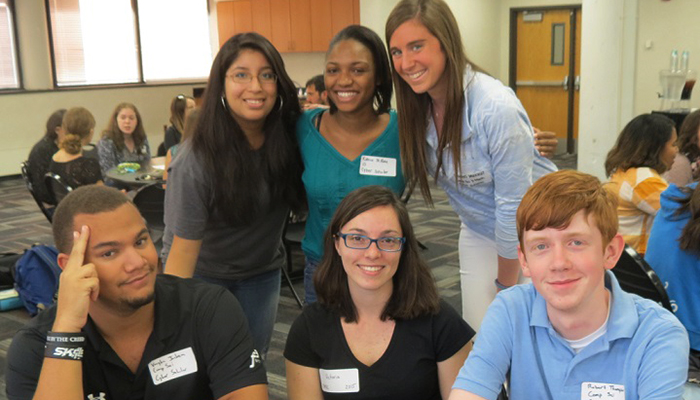
UMBC’s Information Systems Security Association Chapter and Cyber Scholars & Affiliates Program will host a panel on Women and Leadership in IT followed by hors d’oeuvres and networking with the panelists and representatives from Northrop Grumman. The event will take place from 5:00 to 6:30pm on Wednesday, 18 November 2015 in room 312 of the University Center at UMBC. Panelists include:
- Deborah Bonanni: Former Chief of Staff of NSA & VP of Intelligent Decisions, Inc.
- Diane Howard: VP of Cyber Operations of Northrop Grumman
- Belinda Coleman: President/CEO the Coleman Group Inc.
- Brenda Martineau : Organizational Leadership & Management Skill Community Director of NSA
- Jennifer R. Walker : President/CEO Resolute Technologies, LLC
Everyone is welcome. See the event announcement for more information and to optionally RSVP.
]]>
UMBC’s Information Systems Security Association Chapter and Cyber Scholars & Affiliates Program will host a panel on Women and Leadership in IT followed by hors d’oeuvres and networking with...
http://www.csee.umbc.edu/2015/11/panel-women-and-it-leadership-530pm-wed-1118/
https://dev.my.umbc.edu/api/v0/pixel/news/56037/guest@my.umbc.edu/240e970c8aefd4c9147dcb004499ecf6/api/pixel
computer-engineering
computer-science
cybersecurity
data-science
events
news
talks
Computer Science and Electrical Engineering
https://dev.my.umbc.edu/groups/csee
https://assets3-dev.my.umbc.edu/system/shared/avatars/groups/000/000/099/d117dca133c64bf78a4b7696dd007189/xsmall.png?1314043393
https://assets1-dev.my.umbc.edu/system/shared/avatars/groups/000/000/099/d117dca133c64bf78a4b7696dd007189/original.png?1314043393
https://assets1-dev.my.umbc.edu/system/shared/avatars/groups/000/000/099/d117dca133c64bf78a4b7696dd007189/xxlarge.png?1314043393
https://assets4-dev.my.umbc.edu/system/shared/avatars/groups/000/000/099/d117dca133c64bf78a4b7696dd007189/xlarge.png?1314043393
https://assets3-dev.my.umbc.edu/system/shared/avatars/groups/000/000/099/d117dca133c64bf78a4b7696dd007189/large.png?1314043393
https://assets1-dev.my.umbc.edu/system/shared/avatars/groups/000/000/099/d117dca133c64bf78a4b7696dd007189/medium.png?1314043393
https://assets2-dev.my.umbc.edu/system/shared/avatars/groups/000/000/099/d117dca133c64bf78a4b7696dd007189/small.png?1314043393
https://assets3-dev.my.umbc.edu/system/shared/avatars/groups/000/000/099/d117dca133c64bf78a4b7696dd007189/xsmall.png?1314043393
https://assets3-dev.my.umbc.edu/system/shared/avatars/groups/000/000/099/d117dca133c64bf78a4b7696dd007189/xxsmall.png?1314043393
Computer Science and Electrical Engineering
1
0
true
Tue, 17 Nov 2015 20:24:51 -0500
Tue, 17 Nov 2015 20:24:51 -0500
talk: Matuszek on Giving Successful Technical Presentations, 2pm 11/18
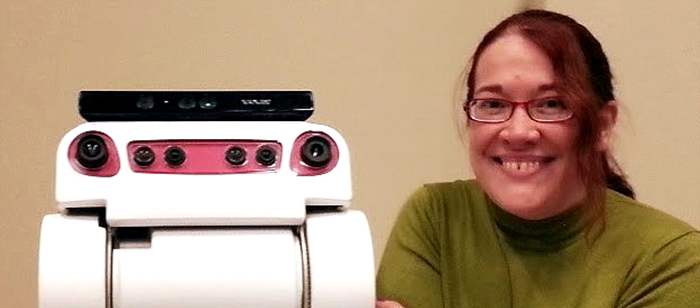
UMBC ACM Tech Talk
Giving Successful Technical Presentations
Prof. Cynthia Matuszek, UMBC
2:00pm Wednesday 18 November 2015, ITE325
Giving talks is one of the core tasks of a researcher. Technical presentations are how we accomplish some of our most important tasks: talks are the first step in getting other people excited about our work, getting suggestions and feedback, teaching, and applying for jobs and grants. Nonetheless, the art and science of giving a really good technical talk is one we are more likely to leave to chance than to deliberately train in. Not only does this mean we aren’t accomplishing everything we could with our presentations; we’re missing a chance to distinguish ourselves by improving a comparatively rare — but learnable — skill.
In this talk, I will describe the idea of the “culture of conveying information,” and give a number of specific suggestions for improving technical talks — including tools, rules of thumb, social conventions, and suggestions for making your talks engaging, informative, and memorable.
Cynthia Matuszek is an Assistant Professor at the University of Maryland, Baltimore County’s Computer Science and Electrical Engineering department where she heads the Interactive Robotics and Language lab. She completed her Ph.D. at the University of Washington in 2014, where she was a member of both the Robotics and State Estimation lab and the Language, Interaction, and Learning group. She is published in the areas of artificial intelligence, robotics, ubiquitous computing, and human-robot interaction. Her research interests include human-robot interaction, natural language processing, and machine learning.
]]>
UMBC ACM Tech Talk Giving Successful Technical Presentations Prof. Cynthia Matuszek, UMBC 2:00pm Wednesday 18 November 2015, ITE325 Giving talks is one of the core tasks of a researcher....
http://www.csee.umbc.edu/2015/11/talk-matuszek-on-giving-successful-technical-presentations-2pm-1118/
https://dev.my.umbc.edu/api/v0/pixel/news/56007/guest@my.umbc.edu/61782d69c9b3662d92422b5c19f3b3be/api/pixel
csee
events
graduate
news
talks
undergraduate
Computer Science and Electrical Engineering
https://dev.my.umbc.edu/groups/csee
https://assets3-dev.my.umbc.edu/system/shared/avatars/groups/000/000/099/d117dca133c64bf78a4b7696dd007189/xsmall.png?1314043393
https://assets1-dev.my.umbc.edu/system/shared/avatars/groups/000/000/099/d117dca133c64bf78a4b7696dd007189/original.png?1314043393
https://assets1-dev.my.umbc.edu/system/shared/avatars/groups/000/000/099/d117dca133c64bf78a4b7696dd007189/xxlarge.png?1314043393
https://assets4-dev.my.umbc.edu/system/shared/avatars/groups/000/000/099/d117dca133c64bf78a4b7696dd007189/xlarge.png?1314043393
https://assets3-dev.my.umbc.edu/system/shared/avatars/groups/000/000/099/d117dca133c64bf78a4b7696dd007189/large.png?1314043393
https://assets1-dev.my.umbc.edu/system/shared/avatars/groups/000/000/099/d117dca133c64bf78a4b7696dd007189/medium.png?1314043393
https://assets2-dev.my.umbc.edu/system/shared/avatars/groups/000/000/099/d117dca133c64bf78a4b7696dd007189/small.png?1314043393
https://assets3-dev.my.umbc.edu/system/shared/avatars/groups/000/000/099/d117dca133c64bf78a4b7696dd007189/xsmall.png?1314043393
https://assets3-dev.my.umbc.edu/system/shared/avatars/groups/000/000/099/d117dca133c64bf78a4b7696dd007189/xxsmall.png?1314043393
Computer Science and Electrical Engineering
0
0
true
Mon, 16 Nov 2015 16:40:06 -0500
Mon, 16 Nov 2015 16:40:06 -0500
MS Defense: Blind source separation for detection of abandoned objects

ENEE MS Thesis Defense
Blind source separation for detection of abandoned objects:
Exploiting different types of diversity
Suchita Bhinge
2:30pm Friday, 13 November 2015, ITE 325B
Due to the increase in security concerns, automated detection of abandoned objects has become an important application in video surveillance. Because of its increasing importance, a number of techniques have been proposed recently to automatically detect abandoned objects. The general procedure implemented for detection of abandoned objects includes background subtraction or foreground object extraction followed by post-processing steps in order to classify the foreground object as an abandoned or non-abandoned object. However, these techniques make use of a number of user-defined parameters such as track time, co-ordinates of the object/owner, the vicinity of the object, and properties of the object such as its shape, color, among others.
In this thesis, we present a new technique based on blind source separation (BSS) for detection of abandoned objects that does not keep track of the extracted objects or owners and does not require a dual background scheme for stationary object extraction. Order selection is an important step for our implementation of blind source separation based scheme since this step captures the signals with high energy and disregards signals that are not relevant to the detection of abandoned objects. In this thesis, we show that the performance of ICA improves when an algorithm that assumes a flexible source distribution along with multiple types of diversity, such as higher-order statistics and sample dependence is used for the estimation of the source components. ICA, however, can only model one dataset at a time, thus limiting its usage to monochrome frames. In order to address this issue, we also present another implementation of blind source separation called independent vector analysis (IVA), a recent extension of ICA to multiple data that takes the dependence across multiple datasets into account while retaining the model of independent components within each dataset. We show that the proposed blind source separation techniques performs successfully in complicated scenarios such as crowd, occlusion, and illumination changes.
Committee: Drs. Tulay Adali (chair), Joel Morris and Mohamed Younis
]]>
ENEE MS Thesis Defense Blind source separation for detection of abandoned objects: Exploiting different types of diversity Suchita Bhinge 2:30pm Friday, 13 November 2015, ITE 325B Due to...
http://www.csee.umbc.edu/2015/11/ms-defense-blind-source-separation-for-detection-of-abandoned-objects/
https://dev.my.umbc.edu/api/v0/pixel/news/55897/guest@my.umbc.edu/d415fe47c70219747013e3dfdc6e2986/api/pixel
defense
electrical-engineering
graduate
news
research
students
talks
Computer Science and Electrical Engineering
https://dev.my.umbc.edu/groups/csee
https://assets3-dev.my.umbc.edu/system/shared/avatars/groups/000/000/099/d117dca133c64bf78a4b7696dd007189/xsmall.png?1314043393
https://assets1-dev.my.umbc.edu/system/shared/avatars/groups/000/000/099/d117dca133c64bf78a4b7696dd007189/original.png?1314043393
https://assets1-dev.my.umbc.edu/system/shared/avatars/groups/000/000/099/d117dca133c64bf78a4b7696dd007189/xxlarge.png?1314043393
https://assets4-dev.my.umbc.edu/system/shared/avatars/groups/000/000/099/d117dca133c64bf78a4b7696dd007189/xlarge.png?1314043393
https://assets3-dev.my.umbc.edu/system/shared/avatars/groups/000/000/099/d117dca133c64bf78a4b7696dd007189/large.png?1314043393
https://assets1-dev.my.umbc.edu/system/shared/avatars/groups/000/000/099/d117dca133c64bf78a4b7696dd007189/medium.png?1314043393
https://assets2-dev.my.umbc.edu/system/shared/avatars/groups/000/000/099/d117dca133c64bf78a4b7696dd007189/small.png?1314043393
https://assets3-dev.my.umbc.edu/system/shared/avatars/groups/000/000/099/d117dca133c64bf78a4b7696dd007189/xsmall.png?1314043393
https://assets3-dev.my.umbc.edu/system/shared/avatars/groups/000/000/099/d117dca133c64bf78a4b7696dd007189/xxsmall.png?1314043393
Computer Science and Electrical Engineering
0
0
true
Thu, 12 Nov 2015 22:45:05 -0500
Thu, 12 Nov 2015 22:45:05 -0500
Free workshop on using the Arduino microcontroller, Sat. 11/14 and 11/21
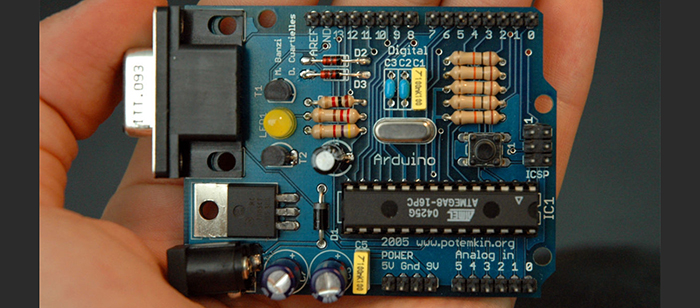
The UMBC IEEE Branch will hold an Arduino workshop on Saturday November 14th and next Saturday November 21st from 2:00-6:00pm in SHER 003 (Lecture Hall 4). It’s a great opportunity for people to learn about microcontrollers and circuit basics and how to use Arduino for building cyber-physical systems for home automation, robotics, games and more.
The Arduino microcontroller is a great device for anyone who wants to learn more about technology. It is used in a variety of fields in research and academia and may even help you get an internship. Our instructors have used the Arduino for researching self-replicating robots and remote-controlled helicopters, hacking into a vehicle’s control system, and using radars to detect human activity in a room. Some of the hackathon projects by our IEEE members include developing a drink mixer that wirelessly connects with a Tesla Model S and a full-body haptic feedback suit for the Oculus Rift. The Arduino is a wonderful tool and is fairly easy to use. Everyone should learn how to use it!
UMBC’s Institute of Electrical and Electronics Engineers is hosting two Level 1 workshops this semester. They are hosted this Saturday (Nov. 14th) and next Saturday (Nov. 21st). The workshop will be SHER 003 (Lecture Hall 4) from 2pm to 6pm. Please register online to sign up for either workshop. Contact Sekar Kulandaivel (Sorry, you need javascript to view this email address. ) if you have any questions.
The workshop is open to all majors (minimum coding experience recommended). You only need to bring your laptop and charger and download and install the Arduino IDE. We hope to see many of you this weekend! You REALLY don’t want to miss out on this opportunity.
]]>
The UMBC IEEE Branch will hold an Arduino workshop on Saturday November 14th and next Saturday November 21st from 2:00-6:00pm in SHER 003 (Lecture Hall 4). It’s a great opportunity for people to...
http://www.csee.umbc.edu/2015/11/free-workshop-on-using-the-arduino-microcontroller-sat-1114-and-1121/
https://dev.my.umbc.edu/api/v0/pixel/news/55886/guest@my.umbc.edu/8065a369b2b5c0ea22cb0aa36b23c1df/api/pixel
computer-engineering
computer-science
electrical-engineering
events
graduate
news
robotics
students
undergraduate
Computer Science and Electrical Engineering
https://dev.my.umbc.edu/groups/csee
https://assets3-dev.my.umbc.edu/system/shared/avatars/groups/000/000/099/d117dca133c64bf78a4b7696dd007189/xsmall.png?1314043393
https://assets1-dev.my.umbc.edu/system/shared/avatars/groups/000/000/099/d117dca133c64bf78a4b7696dd007189/original.png?1314043393
https://assets1-dev.my.umbc.edu/system/shared/avatars/groups/000/000/099/d117dca133c64bf78a4b7696dd007189/xxlarge.png?1314043393
https://assets4-dev.my.umbc.edu/system/shared/avatars/groups/000/000/099/d117dca133c64bf78a4b7696dd007189/xlarge.png?1314043393
https://assets3-dev.my.umbc.edu/system/shared/avatars/groups/000/000/099/d117dca133c64bf78a4b7696dd007189/large.png?1314043393
https://assets1-dev.my.umbc.edu/system/shared/avatars/groups/000/000/099/d117dca133c64bf78a4b7696dd007189/medium.png?1314043393
https://assets2-dev.my.umbc.edu/system/shared/avatars/groups/000/000/099/d117dca133c64bf78a4b7696dd007189/small.png?1314043393
https://assets3-dev.my.umbc.edu/system/shared/avatars/groups/000/000/099/d117dca133c64bf78a4b7696dd007189/xsmall.png?1314043393
https://assets3-dev.my.umbc.edu/system/shared/avatars/groups/000/000/099/d117dca133c64bf78a4b7696dd007189/xxsmall.png?1314043393
Computer Science and Electrical Engineering
1
0
true
Thu, 12 Nov 2015 17:06:24 -0500
Thu, 12 Nov 2015 17:06:24 -0500
talk: Thad Starner, Extension of Self: Present & Future of Wearable Computing, Noon 11/16

Information Systems Department Distinguished Speaker
An Extension of Self: The Present
and Future of Wearable Computing
Professor Thad Starner
School of Interactive Computing
Georgia Institute of Technology
Noon Monday, 16 November 2015, ITE 459, UMBC
Google Glass captured the world’s imagination, perhaps more than any other head-up display. Yet, why would people want a wearable computer in their everyday lives? For over 20 years, Professor Thad Starner and his teams of researchers have been creating living laboratories to discover the most compelling reasons to integrate humans and computers. They have created “wearables” that augment human memory and the senses, focus attention, and assist communication. Is it possible that computers and wearable devices will transform humans for the better, enhancing key abilities and leaving more time and space for deeper connections? In this talk, Starner will discuss why wearables, more than any class of computing to date, have the potential to extend us beyond ourselves.
Thad Starner is a wearable computing pioneer; he has been wearing a head-up display based computer as part of his daily life since 1993 – perhaps the longest such experience known. Starner is a Professor in the School of Interactive Computing at the Georgia Institute of Technology and a Technical Lead on Google’s Glass. In 1990 he coined the term “augmented reality” to describe the types of interfaces he envisioned at the time. He is a founder of the annual ACM/IEEE International Symposium on Wearable Computers, now in its 19th year, and has produced over 450 papers and presentations on his work.
Starner is an inventor on over 80 United States patents awarded or in process. In addition to Google Glass, he has worked on a wireless glove that teaches the wearer to play piano melodies without active attention; a game for deaf children that helps them acquire language skills using sign language recognition; wearable computers that enable two-way communication experiments with wild dolphins; and wearable computers for working dogs to better communicate with their handlers.
]]>
Information Systems Department Distinguished Speaker An Extension of Self: The Present and Future of Wearable Computing Professor Thad Starner School of Interactive Computing Georgia...
http://www.csee.umbc.edu/2015/11/talk-thad-starner-extension-of-self-present-future-of-wearable-computing-noon-1116/
https://dev.my.umbc.edu/api/v0/pixel/news/55858/guest@my.umbc.edu/9580be37cf67b4aae8b4de2027a46871/api/pixel
news
talks
Computer Science and Electrical Engineering
https://dev.my.umbc.edu/groups/csee
https://assets3-dev.my.umbc.edu/system/shared/avatars/groups/000/000/099/d117dca133c64bf78a4b7696dd007189/xsmall.png?1314043393
https://assets1-dev.my.umbc.edu/system/shared/avatars/groups/000/000/099/d117dca133c64bf78a4b7696dd007189/original.png?1314043393
https://assets1-dev.my.umbc.edu/system/shared/avatars/groups/000/000/099/d117dca133c64bf78a4b7696dd007189/xxlarge.png?1314043393
https://assets4-dev.my.umbc.edu/system/shared/avatars/groups/000/000/099/d117dca133c64bf78a4b7696dd007189/xlarge.png?1314043393
https://assets3-dev.my.umbc.edu/system/shared/avatars/groups/000/000/099/d117dca133c64bf78a4b7696dd007189/large.png?1314043393
https://assets1-dev.my.umbc.edu/system/shared/avatars/groups/000/000/099/d117dca133c64bf78a4b7696dd007189/medium.png?1314043393
https://assets2-dev.my.umbc.edu/system/shared/avatars/groups/000/000/099/d117dca133c64bf78a4b7696dd007189/small.png?1314043393
https://assets3-dev.my.umbc.edu/system/shared/avatars/groups/000/000/099/d117dca133c64bf78a4b7696dd007189/xsmall.png?1314043393
https://assets3-dev.my.umbc.edu/system/shared/avatars/groups/000/000/099/d117dca133c64bf78a4b7696dd007189/xxsmall.png?1314043393
Computer Science and Electrical Engineering
1
0
true
Wed, 11 Nov 2015 20:24:43 -0500
Wed, 11 Nov 2015 20:24:43 -0500
PhD defense: Connectivity Restoration in Damaged Wireless Sensor Networks

PhD Dissertation Defense
Distributed Protocols for Connectivity Restoration
in Damaged Wireless Sensor Networks
Yatish Joshi
9:30 Monday, 23 November 2015, ITE 325b
Decreasing costs and increasing functionality of hardware devices have made Wireless Sensor Networks (WSNs) attractive for applications that serve in inhospitable environments like battlefields, planetary exploration or environmental monitoring. WSNs employed in these environments are expected to work autonomously and extend network lifespan for as long as possible while carrying out their designated tasks. The harsh environment exposes individual nodes to a high risk of failure and their failure can partition the network into disjoint segments. Therefore, a network must be able to self-heal and restore lost connectivity using available resources. The ad-hoc nature of deployment, harsh operating environment means that proactive strategies based on redundancy cannot be applied as the scope of the damage could be so large that redundant nodes could be lost as well. The lack of external resources like satellite coverage preclude the application of centralized recovery approaches since they require the entire network state to be available for recovery. Hence distributed approaches that employ reactive strategies are the most viable solutions for these networks.
In this dissertation, we tackle the problem of distributed connectivity restoration in a WSN that has been partitioned into multiple disjoint segments due to multi-node failures. We consider multiple variants of the problem based on the available resources, and present a set of novel recovery schemes that suit the capabilities and requirements of the WSN being repaired. The correctness and time-complexity of all proposed approaches are analyzed and their performance is validated through extensive experiments.
Committee: Drs. Mohamed Younis (Chair), Charles Nicholas, Chintan Patel, Kemal Akkaya (FIU), Waleed Youssef (IBM)
]]>
PhD Dissertation Defense Distributed Protocols for Connectivity Restoration in Damaged Wireless Sensor Networks Yatish Joshi 9:30 Monday, 23 November 2015, ITE 325b Decreasing costs and...
http://www.csee.umbc.edu/2015/11/19864/
https://dev.my.umbc.edu/api/v0/pixel/news/55791/guest@my.umbc.edu/866c4effdd50b1e627340b03e13cee46/api/pixel
computer-engineering
computer-science
defense
graduate
news
research
talks
Computer Science and Electrical Engineering
https://dev.my.umbc.edu/groups/csee
https://assets3-dev.my.umbc.edu/system/shared/avatars/groups/000/000/099/d117dca133c64bf78a4b7696dd007189/xsmall.png?1314043393
https://assets1-dev.my.umbc.edu/system/shared/avatars/groups/000/000/099/d117dca133c64bf78a4b7696dd007189/original.png?1314043393
https://assets1-dev.my.umbc.edu/system/shared/avatars/groups/000/000/099/d117dca133c64bf78a4b7696dd007189/xxlarge.png?1314043393
https://assets4-dev.my.umbc.edu/system/shared/avatars/groups/000/000/099/d117dca133c64bf78a4b7696dd007189/xlarge.png?1314043393
https://assets3-dev.my.umbc.edu/system/shared/avatars/groups/000/000/099/d117dca133c64bf78a4b7696dd007189/large.png?1314043393
https://assets1-dev.my.umbc.edu/system/shared/avatars/groups/000/000/099/d117dca133c64bf78a4b7696dd007189/medium.png?1314043393
https://assets2-dev.my.umbc.edu/system/shared/avatars/groups/000/000/099/d117dca133c64bf78a4b7696dd007189/small.png?1314043393
https://assets3-dev.my.umbc.edu/system/shared/avatars/groups/000/000/099/d117dca133c64bf78a4b7696dd007189/xsmall.png?1314043393
https://assets3-dev.my.umbc.edu/system/shared/avatars/groups/000/000/099/d117dca133c64bf78a4b7696dd007189/xxsmall.png?1314043393
Computer Science and Electrical Engineering
2
0
true
Mon, 09 Nov 2015 22:25:24 -0500
Professor Gymama Slaughter to speak at 2016 TEDxBaltimore
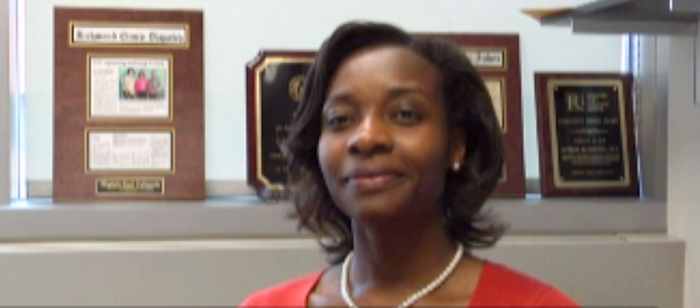
CSEE Professor Gymama Slaughter will talk about her research on Human Powered Biosensors as part at the 2016 TEDxBaltimore conference in January. The one-day conference will be held at Morgan State University on January 14, 2016 with the theme OUTLIERS: ideas that challenge traditional thinking. She will join about 15 other speakers each sharing an “idea worth spreading” with the expected 1,500 attendees.
Dr. Slaughter’s research focuses on the application of sensor-processor integration, bioelectronics design and theory, optimization methods for physical circuit design, biologically inspired computing (neural networks), and sensor interfacing and wireless networking and communications. You can find out more about the work that she and her students are doing by visiting her Biolectronics Laboratory website.
]]>
CSEE Professor Gymama Slaughter will talk about her research on Human Powered Biosensors as part at the 2016 TEDxBaltimore conference in January. The one-day conference will be held at Morgan...
http://www.csee.umbc.edu/2015/11/professor-gymama-slaughter-to-speak-at-2016-tedxbaltimore/
https://dev.my.umbc.edu/api/v0/pixel/news/55790/guest@my.umbc.edu/f734ed2ec75c7b1fbb5b10c5eafb0079/api/pixel
computer-engineering
electrical-engineering
events
faculty-and-staff
news
research
talks
Computer Science and Electrical Engineering
https://dev.my.umbc.edu/groups/csee
https://assets3-dev.my.umbc.edu/system/shared/avatars/groups/000/000/099/d117dca133c64bf78a4b7696dd007189/xsmall.png?1314043393
https://assets1-dev.my.umbc.edu/system/shared/avatars/groups/000/000/099/d117dca133c64bf78a4b7696dd007189/original.png?1314043393
https://assets1-dev.my.umbc.edu/system/shared/avatars/groups/000/000/099/d117dca133c64bf78a4b7696dd007189/xxlarge.png?1314043393
https://assets4-dev.my.umbc.edu/system/shared/avatars/groups/000/000/099/d117dca133c64bf78a4b7696dd007189/xlarge.png?1314043393
https://assets3-dev.my.umbc.edu/system/shared/avatars/groups/000/000/099/d117dca133c64bf78a4b7696dd007189/large.png?1314043393
https://assets1-dev.my.umbc.edu/system/shared/avatars/groups/000/000/099/d117dca133c64bf78a4b7696dd007189/medium.png?1314043393
https://assets2-dev.my.umbc.edu/system/shared/avatars/groups/000/000/099/d117dca133c64bf78a4b7696dd007189/small.png?1314043393
https://assets3-dev.my.umbc.edu/system/shared/avatars/groups/000/000/099/d117dca133c64bf78a4b7696dd007189/xsmall.png?1314043393
https://assets3-dev.my.umbc.edu/system/shared/avatars/groups/000/000/099/d117dca133c64bf78a4b7696dd007189/xxsmall.png?1314043393
Computer Science and Electrical Engineering
0
0
true
Mon, 09 Nov 2015 21:57:26 -0500
Mon, 09 Nov 2015 21:57:26 -0500
talk: John Kloetzli, DirectX 11 Software Tessellation, 11/13
The UMBC CSEE Seminar Series Presents
DirectX 11 Software Tessellation
John Kloetzli, Firaxis Games
12noon-1pm, Friday, November 13, 2015 ITE 102
Graphics Processing Units (GPUs) have become increasingly important in general purpose high performance computing, both because of the enormous computing power of these highly parallel processors as well as the evolution of general purpose software APIs that provide a domain-independent software environment. Graphics applications are also being redesigned to take advantage of this general GPU access, both for design of new algorithms as well as optimization and specialization of existing ones. This talk will explore how having access to the general purpose compute API in DirectX 11 allows us to design a tessellation algorithm for a specific use case that has superior performance and quality to the fixed-function tessellation hardware.
John Kloetzli is a graphics programmer at Firaxis Games. He is an alumnus of UMBC, having received a BS in 2006 majoring in Computer Science with a minor in both Mathematics and Philosophy, and a MS in Computer Science in 2008. He has worked at Firaxis since 2006 and is part of the team that produces the popular Civilization game series.
Hosts: Professors Fow-Sen Choa (Sorry, you need javascript to view this email address. ) and Alan T. Sherman (Sorry, you need javascript to view this email address. )
]]>
The UMBC CSEE Seminar Series Presents DirectX 11 Software Tessellation John Kloetzli, Firaxis Games 12noon-1pm, Friday, November 13, 2015 ITE 102 Graphics Processing Units (GPUs) have...
http://www.csee.umbc.edu/2015/11/talk-john-kloetzli-directx-11-software-tessellation-umbc/
https://dev.my.umbc.edu/api/v0/pixel/news/55613/guest@my.umbc.edu/d9b71baf7dc17632d0c817480e677046/api/pixel
computer-science
game-track
news
talks
Computer Science and Electrical Engineering
https://dev.my.umbc.edu/groups/csee
https://assets3-dev.my.umbc.edu/system/shared/avatars/groups/000/000/099/d117dca133c64bf78a4b7696dd007189/xsmall.png?1314043393
https://assets1-dev.my.umbc.edu/system/shared/avatars/groups/000/000/099/d117dca133c64bf78a4b7696dd007189/original.png?1314043393
https://assets1-dev.my.umbc.edu/system/shared/avatars/groups/000/000/099/d117dca133c64bf78a4b7696dd007189/xxlarge.png?1314043393
https://assets4-dev.my.umbc.edu/system/shared/avatars/groups/000/000/099/d117dca133c64bf78a4b7696dd007189/xlarge.png?1314043393
https://assets3-dev.my.umbc.edu/system/shared/avatars/groups/000/000/099/d117dca133c64bf78a4b7696dd007189/large.png?1314043393
https://assets1-dev.my.umbc.edu/system/shared/avatars/groups/000/000/099/d117dca133c64bf78a4b7696dd007189/medium.png?1314043393
https://assets2-dev.my.umbc.edu/system/shared/avatars/groups/000/000/099/d117dca133c64bf78a4b7696dd007189/small.png?1314043393
https://assets3-dev.my.umbc.edu/system/shared/avatars/groups/000/000/099/d117dca133c64bf78a4b7696dd007189/xsmall.png?1314043393
https://assets3-dev.my.umbc.edu/system/shared/avatars/groups/000/000/099/d117dca133c64bf78a4b7696dd007189/xxsmall.png?1314043393
Computer Science and Electrical Engineering
0
0
true
Wed, 04 Nov 2015 08:46:49 -0500
Wed, 04 Nov 2015 08:46:49 -0500