2012 Google Summer of Code program announced

If you have good programming skills and are looking for an interesting alternative to the usual summer internship, you might check out the Google Summer of Code program. It pays student developers $5000 stipends to write code for various open source projects over the summer. Over the past seven years, it's brought together over 6,000 students with over 300 open source projects to create millions of lines of code.
A set of open source projects (aka mentoring organizations) will be selected and announced in mid-March. Students apply to work on one of more of these and each mentoring organization ranks the students interested in working with them. Google facilitates the final selection and pairing. The mentoring organization works closely with the student to define tasks, check progress, help solve problems, etc. Typically the student works remotely, interacting with his or her mentor via email, chat, skype, etc.
Students can submit applications via the Google Summer of Code 2012 site from March 26 to April 6. Google says that that the best applications they receive are from students who took the time to interact with one of the participating mentoring organizations and discuss their ideas before submitting an application. About 1,100 students are expected to be funded this year.
You can get more information on the 2012 GSoC site, an associated Google+ page, or by subscribing to a mailing list.
]]>
If you have good programming skills and are looking for an interesting alternative to the usual summer internship, you might check out the Google Summer of Code program. It pays student developers...
http://www.csee.umbc.edu/2012/02/2012-google-summer-of-code-program-announced/
https://dev.my.umbc.edu/api/v0/pixel/news/11803/guest@my.umbc.edu/cd3a67fc1f1745f6b1c4a3e6fa92c0cb/api/pixel
computer-engineering
computer-science
electrical-engineering
graduate
internship
internships
jobs
news
undergraduate
Computer Science and Electrical Engineering
https://dev.my.umbc.edu/groups/csee
https://assets3-dev.my.umbc.edu/system/shared/avatars/groups/000/000/099/d117dca133c64bf78a4b7696dd007189/xsmall.png?1314043393
https://assets1-dev.my.umbc.edu/system/shared/avatars/groups/000/000/099/d117dca133c64bf78a4b7696dd007189/original.png?1314043393
https://assets1-dev.my.umbc.edu/system/shared/avatars/groups/000/000/099/d117dca133c64bf78a4b7696dd007189/xxlarge.png?1314043393
https://assets4-dev.my.umbc.edu/system/shared/avatars/groups/000/000/099/d117dca133c64bf78a4b7696dd007189/xlarge.png?1314043393
https://assets3-dev.my.umbc.edu/system/shared/avatars/groups/000/000/099/d117dca133c64bf78a4b7696dd007189/large.png?1314043393
https://assets1-dev.my.umbc.edu/system/shared/avatars/groups/000/000/099/d117dca133c64bf78a4b7696dd007189/medium.png?1314043393
https://assets2-dev.my.umbc.edu/system/shared/avatars/groups/000/000/099/d117dca133c64bf78a4b7696dd007189/small.png?1314043393
https://assets3-dev.my.umbc.edu/system/shared/avatars/groups/000/000/099/d117dca133c64bf78a4b7696dd007189/xsmall.png?1314043393
https://assets3-dev.my.umbc.edu/system/shared/avatars/groups/000/000/099/d117dca133c64bf78a4b7696dd007189/xxsmall.png?1314043393
Computer Science and Electrical Engineering
13
1
true
Sun, 05 Feb 2012 00:10:30 -0500
talk: Rutledge on multichannel amplitude compression...
Full Title: talk: Rutledge on multichannel amplitude compression for speech processing, 11/18
EE Graduate Seminar
Time-Varying Amplitude Compression Processing to
Preserve and Enhance Spectral Contrast in Speech Signals
Dr. Janet C. Rutledge
Dean, UMBC Graduate School
Vice-Provost for Graduate Education
Affiliate Associate Professor of Electrical Engineering
11:30-12:45 Friday, 18 November 2011, ITE 231
Multichannel amplitude compression processing is used to reduce the level variations of speech to fit the reduced dynamic ranges of listeners with sensorineural hearing loss. This processing, however, can result in smearing of temporal information, artifacts due to spectral discontinuities at fixed channel edges, and spectral flattening due to reduced peak-to-valley ratios. Presented here is an implementation of a time-varying compression processing algorithm based on a sinusoidal speech model. The algorithm operates on a time-varying, stimulus-dependent basis to adjust to the speech variations and the listeners hearing profile. The algorithm provides fast-acting compression with minimal artifact, has time-varying frequency channels, is computationally inexpensive and preserves the important spectral peaks in speech.
This method has been extended to provide real-time enhancement of spectral peaks and valleys. This work is also related to processing audio signals that will be transmitted over amplitude-limited noisy channels or for listeners in a noisy environment.
Dr. Janet Rutledge is Dean of the Graduate School and Affiliate Associate Professor in the CSEE Department at UMBC. She received the BS in electrical engineering from Rensselaer Polytechnic Institute and the MS and Ph.D. in electrical engineering from Georgia Tech. Prior to coming to UMBC in 2001, she was a faculty member at Northwestern University, and program director at the National Science Foundation.
Host: Prof. Joel M. Morris
]]>
Full Title: talk: Rutledge on multichannel amplitude compression for speech processing, 11/18 EE Graduate Seminar Time-Varying Amplitude Compression Processing to Preserve and Enhance...
http://www.csee.umbc.edu/2011/11/talk-rutledge-on-multichannel-amplitude-compression-for-speech-processing-1118/
https://dev.my.umbc.edu/api/v0/pixel/news/10246/guest@my.umbc.edu/920f439f72927b5d9b1ccf02ce1238fa/api/pixel
electrical-engineering
graduate
news
research
talks
Computer Science and Electrical Engineering
https://dev.my.umbc.edu/groups/csee
https://assets3-dev.my.umbc.edu/system/shared/avatars/groups/000/000/099/d117dca133c64bf78a4b7696dd007189/xsmall.png?1314043393
https://assets1-dev.my.umbc.edu/system/shared/avatars/groups/000/000/099/d117dca133c64bf78a4b7696dd007189/original.png?1314043393
https://assets1-dev.my.umbc.edu/system/shared/avatars/groups/000/000/099/d117dca133c64bf78a4b7696dd007189/xxlarge.png?1314043393
https://assets4-dev.my.umbc.edu/system/shared/avatars/groups/000/000/099/d117dca133c64bf78a4b7696dd007189/xlarge.png?1314043393
https://assets3-dev.my.umbc.edu/system/shared/avatars/groups/000/000/099/d117dca133c64bf78a4b7696dd007189/large.png?1314043393
https://assets1-dev.my.umbc.edu/system/shared/avatars/groups/000/000/099/d117dca133c64bf78a4b7696dd007189/medium.png?1314043393
https://assets2-dev.my.umbc.edu/system/shared/avatars/groups/000/000/099/d117dca133c64bf78a4b7696dd007189/small.png?1314043393
https://assets3-dev.my.umbc.edu/system/shared/avatars/groups/000/000/099/d117dca133c64bf78a4b7696dd007189/xsmall.png?1314043393
https://assets3-dev.my.umbc.edu/system/shared/avatars/groups/000/000/099/d117dca133c64bf78a4b7696dd007189/xxsmall.png?1314043393
Computer Science and Electrical Engineering
1
0
true
Wed, 16 Nov 2011 09:16:50 -0500
talk: Rutledge on multichannel amplitude compression...
Full Title: talk: Rutledge on multichannel amplitude compression for speech processing, 11/18
EE Graduate Seminar
Time-Varying Amplitude Compression Processing to
Preserve and Enhance Spectral Contrast in Speech Signals
Dr. Janet C. Rutledge
Dean, UMBC Graduate School
Vice-Provost for Graduate Education
Affiliate Associate Professor of Electrical Engineering
11:30-12:45 Friday, 18 November 2011, ITE 231
Multichannel amplitude compression processing is used to reduce the level variations of speech to fit the reduced dynamic ranges of listeners with sensorineural hearing loss. This processing, however, can result in smearing of temporal information, artifacts due to spectral discontinuities at fixed channel edges, and spectral flattening due to reduced peak-to-valley ratios. Presented here is an implementation of a time-varying compression processing algorithm based on a sinusoidal speech model. The algorithm operates on a time-varying, stimulus-dependent basis to adjust to the speech variations and the listeners hearing profile. The algorithm provides fast-acting compression with minimal artifact, has time-varying frequency channels, is computationally inexpensive and preserves the important spectral peaks in speech.
This method has been extended to provide real-time enhancement of spectral peaks and valleys. This work is also related to processing audio signals that will be transmitted over amplitude-limited noisy channels or for listeners in a noisy environment.
Dr. Janet Rutledge is Dean of the Graduate School and Affiliate Associate Professor in the CSEE Department at UMBC. She received the BS in electrical engineering from Rensselaer Polytechnic Institute and the MS and Ph.D. in electrical engineering from Georgia Tech. Prior to coming to UMBC in 2001, she was a faculty member at Northwestern University, and program director at the National Science Foundation.
Host: Prof. Joel M. Morris
]]>
Full Title: talk: Rutledge on multichannel amplitude compression for speech processing, 11/18 EE Graduate Seminar Time-Varying Amplitude Compression Processing to Preserve and Enhance...
http://www.cs.umbc.edu/2011/11/talk-rutledge-on-multichannel-amplitude-compression-for-speech-processing-1118/
https://dev.my.umbc.edu/api/v0/pixel/news/10238/guest@my.umbc.edu/8d5e9967cdba1ce3e13df8224f2d23fc/api/pixel
electrical-engineering
graduate
news
research
talks
Computer Science and Electrical Engineering
https://dev.my.umbc.edu/groups/csee
https://assets3-dev.my.umbc.edu/system/shared/avatars/groups/000/000/099/d117dca133c64bf78a4b7696dd007189/xsmall.png?1314043393
https://assets1-dev.my.umbc.edu/system/shared/avatars/groups/000/000/099/d117dca133c64bf78a4b7696dd007189/original.png?1314043393
https://assets1-dev.my.umbc.edu/system/shared/avatars/groups/000/000/099/d117dca133c64bf78a4b7696dd007189/xxlarge.png?1314043393
https://assets4-dev.my.umbc.edu/system/shared/avatars/groups/000/000/099/d117dca133c64bf78a4b7696dd007189/xlarge.png?1314043393
https://assets3-dev.my.umbc.edu/system/shared/avatars/groups/000/000/099/d117dca133c64bf78a4b7696dd007189/large.png?1314043393
https://assets1-dev.my.umbc.edu/system/shared/avatars/groups/000/000/099/d117dca133c64bf78a4b7696dd007189/medium.png?1314043393
https://assets2-dev.my.umbc.edu/system/shared/avatars/groups/000/000/099/d117dca133c64bf78a4b7696dd007189/small.png?1314043393
https://assets3-dev.my.umbc.edu/system/shared/avatars/groups/000/000/099/d117dca133c64bf78a4b7696dd007189/xsmall.png?1314043393
https://assets3-dev.my.umbc.edu/system/shared/avatars/groups/000/000/099/d117dca133c64bf78a4b7696dd007189/xxsmall.png?1314043393
Computer Science and Electrical Engineering
1
0
true
Wed, 16 Nov 2011 09:16:50 -0500
Talk: Stochastic Graph Grammars, Oates, 11/11/11
EE Graduate Seminar
Stochastic Graph Grammars
Prof. Tim Oates
Associate Professor of Computer Science
Computer Science and Electrical Engineering, UMBC
11:30am Friday November 11, ITE 231, UMBC
Many important domains are naturally described relationally, often using graphs in which nodes correspond to entities and edges to relations. Stochastic graph grammars compactly represent probability distributions over graphs and can be learned from data, such as a set of graphs corresponding to proteins that have the same function.
In this talk we consider the problem of learning the parameters (i.e., the production probabilities) of stochastic graph grammars and the structure of the grammar (i.e., the productions) given a representative sample of graphs taken from the underlying distribution. We also present efficient algorithms for computing properties of the distribution over graphs defined by a graph grammar such as expectations of graph size, node degree, and number of edges.
Dr. Tim Oates is an Associate Professor in the CSEE Department at UMBC. He received B.S. degrees in Computer Science and Electrical Engineering from North Carolina State University in 1989, and M.S. and PhD degrees from the Univ of Massachusetts Amherst in 1997 and 2000, respectively. Prior to coming to UMBC in Fall 2001, Prof. Oates spent a year as a postdoc in the Artificial Intelligence Lab at MIT.
Host: Prof. Joel M. Morris
]]>
EE Graduate Seminar Stochastic Graph Grammars Prof. Tim Oates Associate Professor of Computer Science Computer Science and Electrical Engineering, UMBC 11:30am Friday November 11, ITE...
http://www.csee.umbc.edu/2011/11/talk-stochastic-graph-grammars-oates-111111/
https://dev.my.umbc.edu/api/v0/pixel/news/10250/guest@my.umbc.edu/0beca4496ae96a372fc096f560b7db1e/api/pixel
electrical-engineering
news
talks
Computer Science and Electrical Engineering
https://dev.my.umbc.edu/groups/csee
https://assets3-dev.my.umbc.edu/system/shared/avatars/groups/000/000/099/d117dca133c64bf78a4b7696dd007189/xsmall.png?1314043393
https://assets1-dev.my.umbc.edu/system/shared/avatars/groups/000/000/099/d117dca133c64bf78a4b7696dd007189/original.png?1314043393
https://assets1-dev.my.umbc.edu/system/shared/avatars/groups/000/000/099/d117dca133c64bf78a4b7696dd007189/xxlarge.png?1314043393
https://assets4-dev.my.umbc.edu/system/shared/avatars/groups/000/000/099/d117dca133c64bf78a4b7696dd007189/xlarge.png?1314043393
https://assets3-dev.my.umbc.edu/system/shared/avatars/groups/000/000/099/d117dca133c64bf78a4b7696dd007189/large.png?1314043393
https://assets1-dev.my.umbc.edu/system/shared/avatars/groups/000/000/099/d117dca133c64bf78a4b7696dd007189/medium.png?1314043393
https://assets2-dev.my.umbc.edu/system/shared/avatars/groups/000/000/099/d117dca133c64bf78a4b7696dd007189/small.png?1314043393
https://assets3-dev.my.umbc.edu/system/shared/avatars/groups/000/000/099/d117dca133c64bf78a4b7696dd007189/xsmall.png?1314043393
https://assets3-dev.my.umbc.edu/system/shared/avatars/groups/000/000/099/d117dca133c64bf78a4b7696dd007189/xxsmall.png?1314043393
Computer Science and Electrical Engineering
0
0
true
Wed, 09 Nov 2011 11:59:23 -0500
Talk: Stochastic Graph Grammars, Oates, 11/11/11
EE Graduate Seminar
Stochastic Graph Grammars
Prof. Tim Oates
Associate Professor of Computer Science
Computer Science and Electrical Engineering, UMBC
11:30am Friday November 11, ITE 231, UMBC
Many important domains are naturally described relationally, often using graphs in which nodes correspond to entities and edges to relations. Stochastic graph grammars compactly represent probability distributions over graphs and can be learned from data, such as a set of graphs corresponding to proteins that have the same function.
In this talk we consider the problem of learning the parameters (i.e., the production probabilities) of stochastic graph grammars and the structure of the grammar (i.e., the productions) given a representative sample of graphs taken from the underlying distribution. We also present efficient algorithms for computing properties of the distribution over graphs defined by a graph grammar such as expectations of graph size, node degree, and number of edges.
Dr. Tim Oates is an Associate Professor in the CSEE Department at UMBC. He received B.S. degrees in Computer Science and Electrical Engineering from North Carolina State University in 1989, and M.S. and PhD degrees from the Univ of Massachusetts Amherst in 1997 and 2000, respectively. Prior to coming to UMBC in Fall 2001, Prof. Oates spent a year as a postdoc in the Artificial Intelligence Lab at MIT.
Host: Prof. Joel M. Morris
]]>
EE Graduate Seminar Stochastic Graph Grammars Prof. Tim Oates Associate Professor of Computer Science Computer Science and Electrical Engineering, UMBC 11:30am Friday November 11, ITE...
http://www.cs.umbc.edu/2011/11/talk-stochastic-graph-grammars-oates-111111/
https://dev.my.umbc.edu/api/v0/pixel/news/10085/guest@my.umbc.edu/76c780e08349b19cece16d880a173d60/api/pixel
electrical-engineering
news
talks
Computer Science and Electrical Engineering
https://dev.my.umbc.edu/groups/csee
https://assets3-dev.my.umbc.edu/system/shared/avatars/groups/000/000/099/d117dca133c64bf78a4b7696dd007189/xsmall.png?1314043393
https://assets1-dev.my.umbc.edu/system/shared/avatars/groups/000/000/099/d117dca133c64bf78a4b7696dd007189/original.png?1314043393
https://assets1-dev.my.umbc.edu/system/shared/avatars/groups/000/000/099/d117dca133c64bf78a4b7696dd007189/xxlarge.png?1314043393
https://assets4-dev.my.umbc.edu/system/shared/avatars/groups/000/000/099/d117dca133c64bf78a4b7696dd007189/xlarge.png?1314043393
https://assets3-dev.my.umbc.edu/system/shared/avatars/groups/000/000/099/d117dca133c64bf78a4b7696dd007189/large.png?1314043393
https://assets1-dev.my.umbc.edu/system/shared/avatars/groups/000/000/099/d117dca133c64bf78a4b7696dd007189/medium.png?1314043393
https://assets2-dev.my.umbc.edu/system/shared/avatars/groups/000/000/099/d117dca133c64bf78a4b7696dd007189/small.png?1314043393
https://assets3-dev.my.umbc.edu/system/shared/avatars/groups/000/000/099/d117dca133c64bf78a4b7696dd007189/xsmall.png?1314043393
https://assets3-dev.my.umbc.edu/system/shared/avatars/groups/000/000/099/d117dca133c64bf78a4b7696dd007189/xxsmall.png?1314043393
Computer Science and Electrical Engineering
1
0
true
Wed, 09 Nov 2011 11:59:23 -0500
talk: Functional Brain Circuits, nAChR Genes, and...
Full Title: talk: Functional Brain Circuits, nAChR Genes, and Smoking, 11:30am Fri 11/4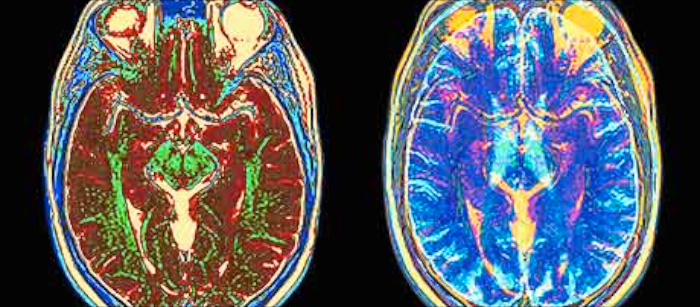
EE Graduate Seminar
Functional Brain Circuits, nAChR Genes, and Smoking
Dr. Elliot Hong
Director, Brain Imaging Center
Associate Professor
Maryland Psychiatric Research Center
University of Maryland School of Medicine
11:30am-12:45pm Friday, 4 Nov 11, ITE 231
About 20% of the US population smokes cigarettes. Smoking is influenced by genetic and environmental factors and mental illnesses.The neurobiological basis of severe nicotine addiction is unclear. We use gene-circuit analysis, resting fMRI, diffusion tensor imaging, and circuit-addiction behavior analyses to examine the dorsal anterior cingulate and the ventral striatum/extended amygdala (dACC-VS/EA) brain circuit and its relationship to smoking.
Dr. Hong received the M.D. degree in 1986 from the Sun Yat-Sen University Science in China. In 2003-07 he was an Asst Professor in the Maryland Psychiatric Research Center (MPRC), Psychiatry Department, University of Maryland School of Medicine. He became an Assoc. Professor in 2008. In 2010 Dr. Hong was appointed as both the Chief of the Neuroimaging Research Program and Director of the Brain Imaging Center at MPRC.
Seminar Host: Prof. Joel M. Morris
]]>
Full Title: talk: Functional Brain Circuits, nAChR Genes, and Smoking, 11:30am Fri 11/4 EE Graduate Seminar Functional Brain Circuits, nAChR Genes, and Smoking Dr. Elliot Hong Director,...
http://www.csee.umbc.edu/2011/11/talk-functional-brain-circuits-nachr-genes-and-smoking-1130am-fri-114/
https://dev.my.umbc.edu/api/v0/pixel/news/10260/guest@my.umbc.edu/1ab7092079a85b30d3906f4fcf3e4540/api/pixel
electrical-engineering
graduate
news
research
talks
Computer Science and Electrical Engineering
https://dev.my.umbc.edu/groups/csee
https://assets3-dev.my.umbc.edu/system/shared/avatars/groups/000/000/099/d117dca133c64bf78a4b7696dd007189/xsmall.png?1314043393
https://assets1-dev.my.umbc.edu/system/shared/avatars/groups/000/000/099/d117dca133c64bf78a4b7696dd007189/original.png?1314043393
https://assets1-dev.my.umbc.edu/system/shared/avatars/groups/000/000/099/d117dca133c64bf78a4b7696dd007189/xxlarge.png?1314043393
https://assets4-dev.my.umbc.edu/system/shared/avatars/groups/000/000/099/d117dca133c64bf78a4b7696dd007189/xlarge.png?1314043393
https://assets3-dev.my.umbc.edu/system/shared/avatars/groups/000/000/099/d117dca133c64bf78a4b7696dd007189/large.png?1314043393
https://assets1-dev.my.umbc.edu/system/shared/avatars/groups/000/000/099/d117dca133c64bf78a4b7696dd007189/medium.png?1314043393
https://assets2-dev.my.umbc.edu/system/shared/avatars/groups/000/000/099/d117dca133c64bf78a4b7696dd007189/small.png?1314043393
https://assets3-dev.my.umbc.edu/system/shared/avatars/groups/000/000/099/d117dca133c64bf78a4b7696dd007189/xsmall.png?1314043393
https://assets3-dev.my.umbc.edu/system/shared/avatars/groups/000/000/099/d117dca133c64bf78a4b7696dd007189/xxsmall.png?1314043393
Computer Science and Electrical Engineering
0
0
true
Wed, 02 Nov 2011 11:59:13 -0400
talk: Functional Brain Circuits, nAChR Genes, and...
Full Title: talk: Functional Brain Circuits, nAChR Genes, and Smoking, 11:30am Fri 11/4
EE Graduate Seminar
Functional Brain Circuits, nAChR Genes, and Smoking
Dr. Elliot Hong
Director, Brain Imaging Center
Associate Professor
Maryland Psychiatric Research Center
University of Maryland School of Medicine
11:30am-12:45pm Friday, 4 Nov 11, ITE 231
About 20% of the US population smokes cigarettes. Smoking is influenced by genetic and environmental factors and mental illnesses.The neurobiological basis of severe nicotine addiction is unclear. We use gene-circuit analysis, resting fMRI, diffusion tensor imaging, and circuit-addiction behavior analyses to examine the dorsal anterior cingulate and the ventral striatum/extended amygdala (dACC-VS/EA) brain circuit and its relationship to smoking.
Dr. Hong received the M.D. degree in 1986 from the Sun Yat-Sen University Science in China. In 2003-07 he was an Asst Professor in the Maryland Psychiatric Research Center (MPRC), Psychiatry Department, University of Maryland School of Medicine. He became an Assoc. Professor in 2008. In 2010 Dr. Hong was appointed as both the Chief of the Neuroimaging Research Program and Director of the Brain Imaging Center at MPRC.
Seminar Host: Prof. Joel M. Morris
]]>
Full Title: talk: Functional Brain Circuits, nAChR Genes, and Smoking, 11:30am Fri 11/4 EE Graduate Seminar Functional Brain Circuits, nAChR Genes, and Smoking Dr. Elliot Hong Director,...
http://www.cs.umbc.edu/2011/11/talk-functional-brain-circuits-nachr-genes-and-smoking-1130am-fri-114/
https://dev.my.umbc.edu/api/v0/pixel/news/9903/guest@my.umbc.edu/b09909aee0df871545ab8335c2a146e6/api/pixel
electrical-engineering
graduate
news
research
talks
Computer Science and Electrical Engineering
https://dev.my.umbc.edu/groups/csee
https://assets3-dev.my.umbc.edu/system/shared/avatars/groups/000/000/099/d117dca133c64bf78a4b7696dd007189/xsmall.png?1314043393
https://assets1-dev.my.umbc.edu/system/shared/avatars/groups/000/000/099/d117dca133c64bf78a4b7696dd007189/original.png?1314043393
https://assets1-dev.my.umbc.edu/system/shared/avatars/groups/000/000/099/d117dca133c64bf78a4b7696dd007189/xxlarge.png?1314043393
https://assets4-dev.my.umbc.edu/system/shared/avatars/groups/000/000/099/d117dca133c64bf78a4b7696dd007189/xlarge.png?1314043393
https://assets3-dev.my.umbc.edu/system/shared/avatars/groups/000/000/099/d117dca133c64bf78a4b7696dd007189/large.png?1314043393
https://assets1-dev.my.umbc.edu/system/shared/avatars/groups/000/000/099/d117dca133c64bf78a4b7696dd007189/medium.png?1314043393
https://assets2-dev.my.umbc.edu/system/shared/avatars/groups/000/000/099/d117dca133c64bf78a4b7696dd007189/small.png?1314043393
https://assets3-dev.my.umbc.edu/system/shared/avatars/groups/000/000/099/d117dca133c64bf78a4b7696dd007189/xsmall.png?1314043393
https://assets3-dev.my.umbc.edu/system/shared/avatars/groups/000/000/099/d117dca133c64bf78a4b7696dd007189/xxsmall.png?1314043393
Computer Science and Electrical Engineering
1
0
true
Wed, 02 Nov 2011 11:59:13 -0400
talk: Detection of Chemical, Biological and Explosive...
Full Title: talk: Detection of Chemical, Biological and Explosive Materials, 11:30am Fri 10/21
EE Graduate Seminar
Detection and Classification of Chemical, Biological, and Explosive
Materials: A Brief Overview of Several Cutting-Edge Problem Areas
Darren Emge
PI and Deputy Branch Chief
Laser Standoff Detection Branch
US Army Edgewood Chemical Biological Center
11:30am-12:45pm Friday, 21 October 11, ITE 231
The detection and classification of chemical, biological, and explosive (CBE) materials is an area of extremely active research. With the advent of new sensor technologies and sensing methods there is the rapidly growing need for timely robust detection and classification algorithms. Several factors associated with emerging sensors offer novel challenges for the signal processing community. As sensor platforms become more mobile the added complexities of "on the move" standoff detection requires the use of non-stationary and adaptive methods. Ever increasing overall sensitivity introduces variations in signal response and many methods currently lack adequate performance models or ground truth. Reduction in size, weight, and power, along with real time performance, further limit approaches that can be used in addressing these issues. This presentation will provide a brief overview of several of these cutting edge problem areas and offer a glimpse into this challenging problem space.
Mr. Darren Emge earned a BS in Physics from UMBC in 1992. He then went to work for the University of Maryland Medical System, Department of Neurology. During his time at University Medical System, he developed analysis algorithms for evoked response potentials (ERP), functional magnetic resonance (fMRI), or neuronal mapping. He also supported the cognitive psychology group in the development of a pupil motion tracking system in the study of dyslexia. Mr. Emge earned the MSEE from UMBC/CSEE Dept in 2000. In 2001 He joined the US Army ECBC passive detection team investigating advanced mathematical techniques for the detection of chemical vapors based on Fourier transform infrared (FTRI) imaging. In 2003 Mr. Emge was promoted to a Principal Investigator (PI) in the laser standoff detection branch, where he currently serves as PI and Deputy Branch Chief. His current work is in the areas of the detection of small signals, detection of non-stationary signals, and the application of non-linear signal processing methods for the detection of biological and trace chemical/explosive materials.
Seminar Host: Prof. Joel M. Morris
]]>
Full Title: talk: Detection of Chemical, Biological and Explosive Materials, 11:30am Fri 10/21 EE Graduate Seminar Detection and Classification of Chemical, Biological, and Explosive...
http://www.cs.umbc.edu/2011/10/talk-detection-of-chemical-biological-and-explosive-materials-1130am-fri-1021/
https://dev.my.umbc.edu/api/v0/pixel/news/9596/guest@my.umbc.edu/07256e56e02a278530146d2679b897ce/api/pixel
electrical-engineering
graduate
news
research
talks
Computer Science and Electrical Engineering
https://dev.my.umbc.edu/groups/csee
https://assets3-dev.my.umbc.edu/system/shared/avatars/groups/000/000/099/d117dca133c64bf78a4b7696dd007189/xsmall.png?1314043393
https://assets1-dev.my.umbc.edu/system/shared/avatars/groups/000/000/099/d117dca133c64bf78a4b7696dd007189/original.png?1314043393
https://assets1-dev.my.umbc.edu/system/shared/avatars/groups/000/000/099/d117dca133c64bf78a4b7696dd007189/xxlarge.png?1314043393
https://assets4-dev.my.umbc.edu/system/shared/avatars/groups/000/000/099/d117dca133c64bf78a4b7696dd007189/xlarge.png?1314043393
https://assets3-dev.my.umbc.edu/system/shared/avatars/groups/000/000/099/d117dca133c64bf78a4b7696dd007189/large.png?1314043393
https://assets1-dev.my.umbc.edu/system/shared/avatars/groups/000/000/099/d117dca133c64bf78a4b7696dd007189/medium.png?1314043393
https://assets2-dev.my.umbc.edu/system/shared/avatars/groups/000/000/099/d117dca133c64bf78a4b7696dd007189/small.png?1314043393
https://assets3-dev.my.umbc.edu/system/shared/avatars/groups/000/000/099/d117dca133c64bf78a4b7696dd007189/xsmall.png?1314043393
https://assets3-dev.my.umbc.edu/system/shared/avatars/groups/000/000/099/d117dca133c64bf78a4b7696dd007189/xxsmall.png?1314043393
Computer Science and Electrical Engineering
2
0
true
Mon, 17 Oct 2011 21:31:18 -0400
talk: Optical Sensors for Biotechnology & Bioengineering
EE Graduate Seminar
Optical Sensors for Biotechnology and Bioengineering
Yordan Kostov, PhD
Research Associate Professor
UMBC Center for Advanced Sensor Technology
11:30am-12:45pm, Friday 14 October 2011, ITE 231
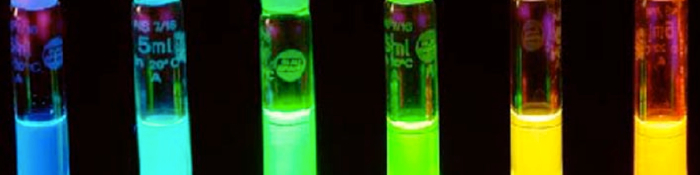
Interaction of the light with the matter is one of the fundamental interactions in the nature. It is used in a variety of fields, stretching from telecommunications to life sciences. In this talk, the use of luminescence for sensing purposes will be highlighted. In particular, fluorescence spectroscopy will be illustrated. Multiple examples that employ different characteristics of the fluorescence (excitation and emission spectrum, decay time, polarization, and combination thereof) will be given. The presented sensing principles are used for measurements of oxygen, pH, CO2, ethanol, etc. As an optical chemical sensor requires successful interweaving of elements from 5 different scientific areas (analytical chemistry, polymer science, optics, electronics and computer science), the problems and the requirements for system integration are discussed.
Dr. Yordan Kostov received his B.Sc. and M.Sc. with honors in 1987 from Department of Electrical Engineering, Odessa Politechnic Institute, Former USSR. He received a Ph.D. Degree in Electrical/Chemical Engineering from Bulgarian Academy of Sciences for his work in the area of optical chemical sensors and biosensors. After that, Dr. Kostov spent an year as a post-doctoral fellow at the Institute for Technical Chemistry, University of Hanover, Germany. In 1994 he accepted a position as an Assistant Professor in the Department of Biotechincs, Sofia Technical University, Bulgaria. In 1999 he became a post-doctoral fellow at University of Maryland Biotechnology Institute, at the Medical Biotechnology Center. He joined the UMBC Department of Chemical and Biochemical Engineering as a Research Assistant Professor in 2000, and is now Research Associate Professor since 2006. Dr. Kostov also holds a position as an Assistant Director of the Center for Advanced Sensor Technology at UMBC. He is involved in the development of chemical and biochemical sensors for biotechnology, bioengineering and biomedical applications.
Seminar Host: Prof. Joel M. Morris
]]>
EE Graduate Seminar Optical Sensors for Biotechnology and Bioengineering Yordan Kostov, PhD Research Associate Professor UMBC Center for Advanced Sensor Technology 11:30am-12:45pm,...
http://www.cs.umbc.edu/2011/10/talk-optical-sensors-for-biotechnology-and-bioengineering/
https://dev.my.umbc.edu/api/v0/pixel/news/9430/guest@my.umbc.edu/d5bf12d02b2f9ad9c4265c1205b7f10e/api/pixel
computer-engineering
electrical-engineering
graduate
news
research
talks
Computer Science and Electrical Engineering
https://dev.my.umbc.edu/groups/csee
https://assets3-dev.my.umbc.edu/system/shared/avatars/groups/000/000/099/d117dca133c64bf78a4b7696dd007189/xsmall.png?1314043393
https://assets1-dev.my.umbc.edu/system/shared/avatars/groups/000/000/099/d117dca133c64bf78a4b7696dd007189/original.png?1314043393
https://assets1-dev.my.umbc.edu/system/shared/avatars/groups/000/000/099/d117dca133c64bf78a4b7696dd007189/xxlarge.png?1314043393
https://assets4-dev.my.umbc.edu/system/shared/avatars/groups/000/000/099/d117dca133c64bf78a4b7696dd007189/xlarge.png?1314043393
https://assets3-dev.my.umbc.edu/system/shared/avatars/groups/000/000/099/d117dca133c64bf78a4b7696dd007189/large.png?1314043393
https://assets1-dev.my.umbc.edu/system/shared/avatars/groups/000/000/099/d117dca133c64bf78a4b7696dd007189/medium.png?1314043393
https://assets2-dev.my.umbc.edu/system/shared/avatars/groups/000/000/099/d117dca133c64bf78a4b7696dd007189/small.png?1314043393
https://assets3-dev.my.umbc.edu/system/shared/avatars/groups/000/000/099/d117dca133c64bf78a4b7696dd007189/xsmall.png?1314043393
https://assets3-dev.my.umbc.edu/system/shared/avatars/groups/000/000/099/d117dca133c64bf78a4b7696dd007189/xxsmall.png?1314043393
Computer Science and Electrical Engineering
2
0
true
Tue, 11 Oct 2011 19:53:53 -0400
Tue, 11 Oct 2011 19:53:53 -0400
talk: Intelligent Agents in the OntoAgent Cognitive...
Full Title: talk: Intelligent Agents in the OntoAgent Cognitive Architecture
EE Graduate Seminar
Intelligent Agents in the OntoAgent Cognitive Architecture
Professor Sergei Nirenburg
Director, Institute for Language and Information Technologies
Computer Science and Electrical Engineering
University of Maryland, Baltimore County
11:30am-12:45pm Friday 30 September 2011, ITE 231
OntoAgent is a constantly evolving cognitive architecture that facilitates development of and experimentation with artificial intelligent agents (ontoagents). Distinguishing characteristics of Ontoagents include the following.
- They model human information processing capabilities by simulating conscious perception and action, which involves reasoning and decision-making;
- They are intended to operate in a hybrid network of human and artificial agents; and
- They incorporate: (a) an ontological world model and a memory (fact repository) of instances of ontological objects, events and properties; (b) OntoSem, a natural language processing module that supports two-way translation between texts (including dialog turns) and their semantic and discourse/pragmatic meanings; (c) a goal- and plan-oriented reasoning module; (d) a decision theory for choosing goals, plans and individual actions that relies on knowledge (beliefs) about self, other agents, the ontological world model, the current world state and memory of past world states and past actions; (e) a capability for verbal, mental and simulated physical action; (f) (optionally) a physiological model, making them what we call double agents with simulated bodies as well as simulated minds and providing an additional channel of perception; and (g) (optionally) personality traits, preferences and psychological states that influence their overtly perceived or subconscious preferences in decision-making.
OntoAgent has so far provided the basis for two proof-of-concept systems:
- Maryland Virtual Patient (MVP) modeling a patient and a tutor to help training in medical diagnostics and treatment; and
- CLinicians ADdvisor (CLAD) assisting clinicians by reducing their cognitive load.
This talk will give a brief introduction to OntoAgent functionalities implemented in MVP and CLAD.
Professor Nirenburg has worked in the areas of cognitive systems, artificial intelligence, and natural language processing (NLP) for over 30 years. His professional interests include developing computational models of human cognitive capabilities and implementing them in hybrid-engine models of societies of human and computer agents; computational studies of meaning in natural languages; and representation and management of knowledge about the world and about language. He is Member of the Intl Committee on Computational Linguistics (ICCL) and Honorary Editor of Machine Translation (served as Editor-in-Chief in 1987-96). He has been Program Committee Chair for: Machine Translation Summit III (Washington, DC, 1991), the Conference on Applied NLP sponsored by the Association for Computational Linguistics (Seattle, WA, 2000), and COLING 2004 in Geneva, Switzerland. He served as a director of two NATO-sponsored Advanced Studies Institutes on Language Engineering for Lesser-Studied Languages (Ankara, Turkey, 2000 and Batumi, Georgia, 2007).
Host: Professor Joel Morris
]]>
Full Title: talk: Intelligent Agents in the OntoAgent Cognitive Architecture EE Graduate Seminar Intelligent Agents in the OntoAgent Cognitive Architecture Professor Sergei Nirenburg...
http://www.cs.umbc.edu/2011/09/talk-intelligent-agents-in-the-ontoagent-cognitive-architecture/
https://dev.my.umbc.edu/api/v0/pixel/news/8960/guest@my.umbc.edu/b4053be4f01cb75dcedd7c4a94aa1679/api/pixel
computer-science
electrical-engineering
graduate
news
talks
Computer Science and Electrical Engineering
https://dev.my.umbc.edu/groups/csee
https://assets3-dev.my.umbc.edu/system/shared/avatars/groups/000/000/099/d117dca133c64bf78a4b7696dd007189/xsmall.png?1314043393
https://assets1-dev.my.umbc.edu/system/shared/avatars/groups/000/000/099/d117dca133c64bf78a4b7696dd007189/original.png?1314043393
https://assets1-dev.my.umbc.edu/system/shared/avatars/groups/000/000/099/d117dca133c64bf78a4b7696dd007189/xxlarge.png?1314043393
https://assets4-dev.my.umbc.edu/system/shared/avatars/groups/000/000/099/d117dca133c64bf78a4b7696dd007189/xlarge.png?1314043393
https://assets3-dev.my.umbc.edu/system/shared/avatars/groups/000/000/099/d117dca133c64bf78a4b7696dd007189/large.png?1314043393
https://assets1-dev.my.umbc.edu/system/shared/avatars/groups/000/000/099/d117dca133c64bf78a4b7696dd007189/medium.png?1314043393
https://assets2-dev.my.umbc.edu/system/shared/avatars/groups/000/000/099/d117dca133c64bf78a4b7696dd007189/small.png?1314043393
https://assets3-dev.my.umbc.edu/system/shared/avatars/groups/000/000/099/d117dca133c64bf78a4b7696dd007189/xsmall.png?1314043393
https://assets3-dev.my.umbc.edu/system/shared/avatars/groups/000/000/099/d117dca133c64bf78a4b7696dd007189/xxsmall.png?1314043393
Computer Science and Electrical Engineering
1
0
false
Sat, 24 Sep 2011 16:27:48 -0400