talk: Bill Fisher (NCCOE) on IoT Security @ USG 10/30 6-8PM
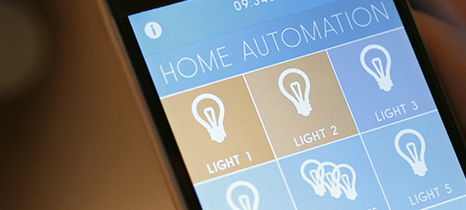
The UMBC Cybersecurity program at USG Speaker Series Presents
The Internet of Things (IoT)
With speaker
William (Bill) Fisher, NCCoE Security Engineer
Monday, October 30th 6:00-8:00 pm
The Internet of Things (IoT) is the inevitable result of years of Moore’s law – compact, cheap, chip platforms that can take ordinarily house hold items and make them data generating and collection devices that users can manage with their smart phone, web browser or their favorite automation platform. Physical proximity is no longer needed for things like cameras, door locks or thermostats. Instead users remotely access all of these “things” while on the go, even sharing some of their favorite things with friends and family, who need not own the thing, but simply be granted access through a web portal or mobile application. Like many technology trends before it, the IoT has brought great innovation but also great security challenges. These challenges go beyond standards and technology to economic and market forces that hinder security best practices, even for some of the most basic cyber hygiene. Join Bill Fisher of the National Cybersecurity Center of Excellence for a presentation on these challenges and basic mitigations organizations can put into place to help alleviate the risk that the IoT devices pose to consumers and the enterprise.
Speaker Bio:
Bill Fisher is a security engineer at the National Cybersecurity Center of Excellence (NCCoE). In this role, he is responsible for leading a team of engineers that work collaboratively with industry partners to address cybersecurity business challenges facing the nation. He leads the center’s Attribute Based Access Control (ABAC) project, Mobile Application Single Sign On (SSO) for the Public Safety and First Responder Sector, and is part of the ITL Cybersecurity for IoT program. Prior to his work at the NCCoE, Mr. Fisher was a program security advisor for the System High Corporation in support of the Network Security Deployment division at the Department of Homeland Security. He holds a bachelor’s degree in business administration from American University and a master’s degree in cybersecurity from Johns Hopkins University.
Host: Dr. Behnam Shariati (*protected email*) and UMBC Graduate Cybersecurity Association at USG
The post talk: Bill Fisher (NCCOE) on IoT Security @ USG 10/30 6-8PM appeared first on Department of Computer Science and Electrical Engineering.
]]>
The UMBC Cybersecurity program at USG Speaker Series Presents The Internet of Things (IoT) With speaker William (Bill) Fisher, NCCoE Security Engineer Building III – Room 4230...
https://www.csee.umbc.edu/2017/10/talk-bill-fisher-nccoe-iot-security-usg-1030-6-8pm/
https://dev.my.umbc.edu/api/v0/pixel/news/71147/guest@my.umbc.edu/9bfa051611f67f5053c9d3d4f7991dba/api/pixel
computer-science
csee
cybersecurity
events
news
talks
Computer Science and Electrical Engineering
https://dev.my.umbc.edu/groups/csee
https://assets3-dev.my.umbc.edu/system/shared/avatars/groups/000/000/099/d117dca133c64bf78a4b7696dd007189/xsmall.png?1314043393
https://assets1-dev.my.umbc.edu/system/shared/avatars/groups/000/000/099/d117dca133c64bf78a4b7696dd007189/original.png?1314043393
https://assets1-dev.my.umbc.edu/system/shared/avatars/groups/000/000/099/d117dca133c64bf78a4b7696dd007189/xxlarge.png?1314043393
https://assets4-dev.my.umbc.edu/system/shared/avatars/groups/000/000/099/d117dca133c64bf78a4b7696dd007189/xlarge.png?1314043393
https://assets3-dev.my.umbc.edu/system/shared/avatars/groups/000/000/099/d117dca133c64bf78a4b7696dd007189/large.png?1314043393
https://assets1-dev.my.umbc.edu/system/shared/avatars/groups/000/000/099/d117dca133c64bf78a4b7696dd007189/medium.png?1314043393
https://assets2-dev.my.umbc.edu/system/shared/avatars/groups/000/000/099/d117dca133c64bf78a4b7696dd007189/small.png?1314043393
https://assets3-dev.my.umbc.edu/system/shared/avatars/groups/000/000/099/d117dca133c64bf78a4b7696dd007189/xsmall.png?1314043393
https://assets3-dev.my.umbc.edu/system/shared/avatars/groups/000/000/099/d117dca133c64bf78a4b7696dd007189/xxsmall.png?1314043393
Computer Science and Electrical Engineering
1
0
true
Mon, 16 Oct 2017 11:47:51 -0400
Mon, 16 Oct 2017 11:47:51 -0400
talk: Keith Mayes on Attacks on Smart Cards, RFIDs and Embedded System
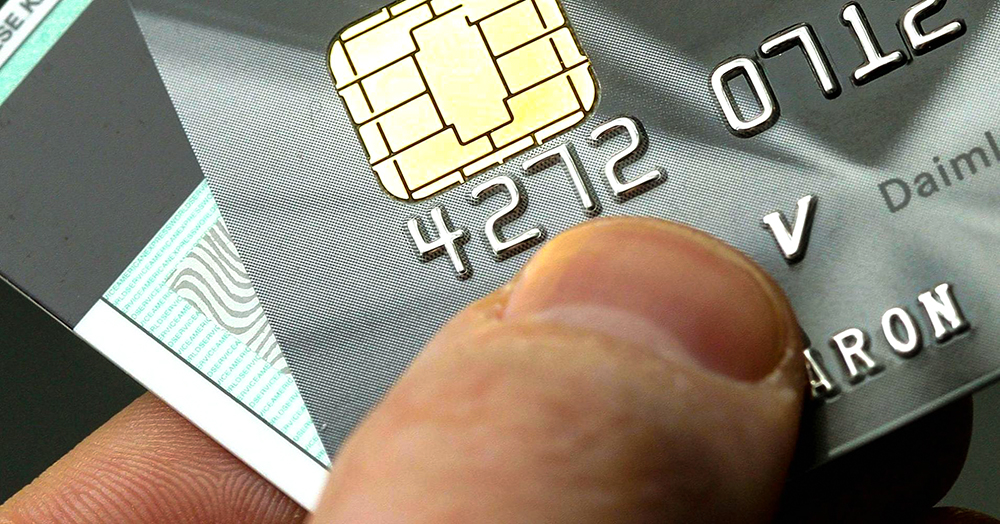
Attacks on Smart Cards, RFIDs and Embedded Systems
Prof. Keith Mayes
Royal Holloway University of London
10-11:00am Tuesday, 10 October 2017, ITE 325, UMBC
Smart Cards and RFIDs exist with a range of capabilities and are used in their billions throughout the world. The simpler devices have poor security, however, for many years, high-end smart cards have successfully been used in a range of systems such as banking, passports, mobile communication, satellite TV etc. Fundamental to their success is a specialist design to offer remarkable resistance to a wide range of attacks, including physical, side-channel and fault. This talk describes a range of known attacks and the countermeasures that are employed to defeat them.
Prof. Keith Mayes is the Head of the School of Mathematics and Information Security at Royal Holloway University of London. He received his BSc (Hons) in Electronic Engineering in 1983 from the University of Bath, and his PhD degree in Digital Image Processing in 1987. He is an active researcher/author with 100+ publications in numerous conferences, books and journals. His interests include the design of secure protocols, communications architectures and security tokens as well as associated attacks/countermeasures. He is a Fellow of the Institution of Engineering and Technology, a Founder Associate Member of the Institute of Information Security Professionals, a Member of the Licensing Executives Society and a member of the editorial board of the Journal of Theoretical and Applied Electronic Commerce Research (JTAER).
The post talk: Keith Mayes on Attacks on Smart Cards, RFIDs and Embedded System appeared first on Department of Computer Science and Electrical Engineering.
]]>
Attacks on Smart Cards, RFIDs and Embedded Systems Prof. Keith Mayes Royal Holloway University of London 10-11:00am Tuesday, 10 October 2017, ITE 325, UMBC Smart Cards and RFIDs exist...
https://www.csee.umbc.edu/2017/10/talk-keith-mayes-attacks-smart-cards-rfids-embedded-system-cybersecurity-rfid/
https://dev.my.umbc.edu/api/v0/pixel/news/70882/guest@my.umbc.edu/b389c888c96e7ad4aee560d560fa05f1/api/pixel
computer-engineering
computer-science
cybersecurity
events
news
talks
Computer Science and Electrical Engineering
https://dev.my.umbc.edu/groups/csee
https://assets3-dev.my.umbc.edu/system/shared/avatars/groups/000/000/099/d117dca133c64bf78a4b7696dd007189/xsmall.png?1314043393
https://assets1-dev.my.umbc.edu/system/shared/avatars/groups/000/000/099/d117dca133c64bf78a4b7696dd007189/original.png?1314043393
https://assets1-dev.my.umbc.edu/system/shared/avatars/groups/000/000/099/d117dca133c64bf78a4b7696dd007189/xxlarge.png?1314043393
https://assets4-dev.my.umbc.edu/system/shared/avatars/groups/000/000/099/d117dca133c64bf78a4b7696dd007189/xlarge.png?1314043393
https://assets3-dev.my.umbc.edu/system/shared/avatars/groups/000/000/099/d117dca133c64bf78a4b7696dd007189/large.png?1314043393
https://assets1-dev.my.umbc.edu/system/shared/avatars/groups/000/000/099/d117dca133c64bf78a4b7696dd007189/medium.png?1314043393
https://assets2-dev.my.umbc.edu/system/shared/avatars/groups/000/000/099/d117dca133c64bf78a4b7696dd007189/small.png?1314043393
https://assets3-dev.my.umbc.edu/system/shared/avatars/groups/000/000/099/d117dca133c64bf78a4b7696dd007189/xsmall.png?1314043393
https://assets3-dev.my.umbc.edu/system/shared/avatars/groups/000/000/099/d117dca133c64bf78a4b7696dd007189/xxsmall.png?1314043393
Computer Science and Electrical Engineering
2
0
true
Fri, 06 Oct 2017 21:46:20 -0400
Fri, 06 Oct 2017 21:46:20 -0400
talk: Shukla on Predictability and Prediction of Asian Summer Monsoon, 2pm Tue 10/10
CHMPR Distinguished Lecture Series
Predictability and Prediction of Asian Summer Monsoon
Dr. Jagadish Shukla, George Mason University
2:30pm Tuesday, October 10, 2017, ITE 325, UMBC
Coffee & Tea at 2:00pm
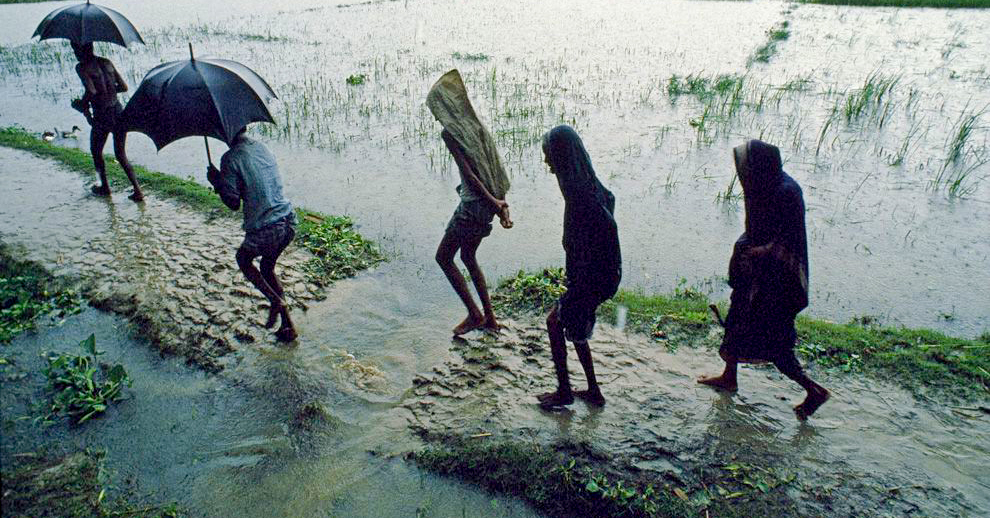
The chaotic nature of the atmosphere puts an upper limit of about two weeks for deterministic prediction of weather. Yet, there is evidence for predictability in the midst of chaos. Societally beneficial dynamical seasonal predictions of short-term climate variations are routinely being made by modeling the interactions among atmosphere, ocean, and land processes. The first part of the seminar will review the evolution of our field from weather prediction to climate prediction.
The second part of the seminar will describe the results for prediction of Asian Summer Monsoons. It will be shown that after 50 years of climate modeling, the fidelity of climate models has improved so that it is possible to produce a skillful prediction of Asian Summer Monsoon rainfall. The seminar will give a historical overview of monsoon forecasting and will present the results of re-forecasting summer monsoon rainfall in the past 57 years (1958-2014) using the NCEP Climate Forecast System. It will be shown that if the modern day coupled climate models were available during the 1970’s, even with the limited ocean observations at that time, it should have been possible to predict the 1972-73 ENSO event and the associated severe monsoon drought over India. Finally, the prospects and future challenges for skillful dynamical seasonal prediction will be described.
J. Shukla was born in 1944 in a small village (Mirdha) in the Ballia district of Uttar Pradesh, India. This village had no electricity, no roads or transportation, and no primary school building. Most of his primary school education was received under a large banyan tree. He passed from the S.R.S. High School, Sheopur, in the first class with distinction in Mathematics and Sanskrit. He was unable to study science in high school because none of the schools near his village included science education. His father, the late Shri Chandra Shekhar Shukla, asked him to read all the science books for classes 6 through 10 during the summer before he was admitted to the S.C. College, Ballia, to study science. After passing the twelfth grade from S.C. College, he went to Banaras Hindu University (B.H.U.) where, at the age of 18, he passed BS (honors) with Physics, Mathematics, and Geology in the first class and then earned the MS in Geophysics in the first class in 1964. He received Ph.D. in Geophysics from BHU in 1971 and ScD in Meteorology from MIT in 1976
The post talk: Shukla on Predictability and Prediction of Asian Summer Monsoon, 2pm Tue 10/10 appeared first on Department of Computer Science and Electrical Engineering.
]]>
CHMPR Distinguished Lecture Series Predictability and Prediction of Asian Summer Monsoon Dr. Jagadish Shukla, George Mason University 2:30pm Tuesday, October 10, 2017, ITE 325, UMBC Coffee...
https://www.csee.umbc.edu/2017/10/talk-shukla-on/
https://dev.my.umbc.edu/api/v0/pixel/news/70794/guest@my.umbc.edu/049815b536532076555f15125bbb47cd/api/pixel
events
news
talks
Computer Science and Electrical Engineering
https://dev.my.umbc.edu/groups/csee
https://assets3-dev.my.umbc.edu/system/shared/avatars/groups/000/000/099/d117dca133c64bf78a4b7696dd007189/xsmall.png?1314043393
https://assets1-dev.my.umbc.edu/system/shared/avatars/groups/000/000/099/d117dca133c64bf78a4b7696dd007189/original.png?1314043393
https://assets1-dev.my.umbc.edu/system/shared/avatars/groups/000/000/099/d117dca133c64bf78a4b7696dd007189/xxlarge.png?1314043393
https://assets4-dev.my.umbc.edu/system/shared/avatars/groups/000/000/099/d117dca133c64bf78a4b7696dd007189/xlarge.png?1314043393
https://assets3-dev.my.umbc.edu/system/shared/avatars/groups/000/000/099/d117dca133c64bf78a4b7696dd007189/large.png?1314043393
https://assets1-dev.my.umbc.edu/system/shared/avatars/groups/000/000/099/d117dca133c64bf78a4b7696dd007189/medium.png?1314043393
https://assets2-dev.my.umbc.edu/system/shared/avatars/groups/000/000/099/d117dca133c64bf78a4b7696dd007189/small.png?1314043393
https://assets3-dev.my.umbc.edu/system/shared/avatars/groups/000/000/099/d117dca133c64bf78a4b7696dd007189/xsmall.png?1314043393
https://assets3-dev.my.umbc.edu/system/shared/avatars/groups/000/000/099/d117dca133c64bf78a4b7696dd007189/xxsmall.png?1314043393
Computer Science and Electrical Engineering
1
0
true
Wed, 04 Oct 2017 15:01:53 -0400
talk: James R. Clapper, former US Director of Intelligence, 12-1pm Fri. Oct 6, 132 PAHB, UMBC
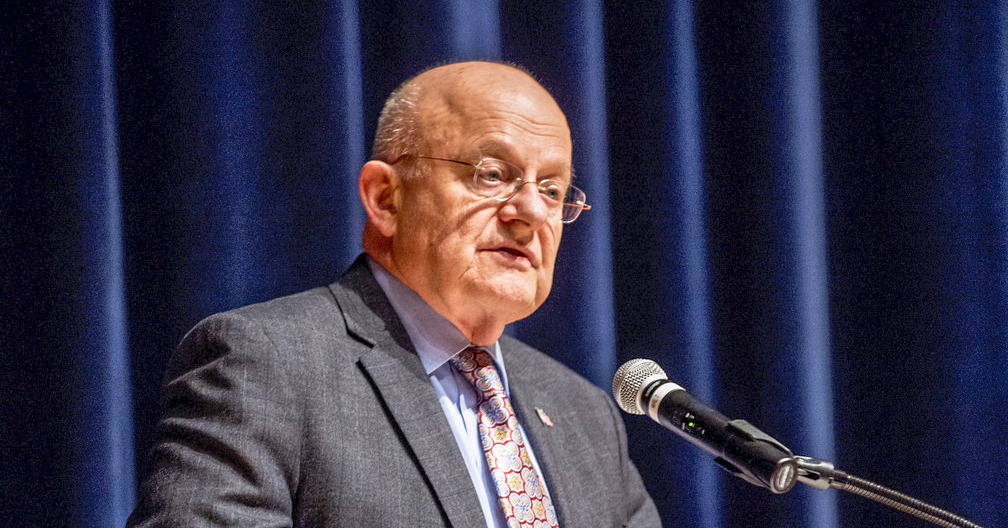
Lecture by James Clapper, former US Director of Intelligence, 12-1pm Fri. Oct. 6 at UMBC
James R. Clapper, former US Director of Intelligence, will give a public lecture on Friday, 6 October 2017 in the lecture hall (room 132) of the Performing Arts & Humanities Building at UMBC.
The Honorable James R. Clapper served as the fourth US Director of Intelligence from August 9, 2010 to January 20, 2017. In this position, Mr. Clapper led the United States Intelligence Community and served as the principal intelligence advisor to President Barack Obama.
Mr. Clapper retired in 1995 after a distinguished career in the U.S. Armed Forces. His career began in 1961 when he enlisted in the U.S. Marine Corps Reserve and culminated as a lieutenant general in the U.S. Air Force and Director of the Defense Intelligence Agency. His intelligence-related positions over his 32 years in uniform included Assistant Chief of Staff for Intelligence at Headquarters, US Air Force during Operations Desert Shield/Desert Storm, and Director of Intelligence for three combatant commands: US Forces, Korea; Pacific Command, and Strategic Air Command. He served two combat tours during the Southeast Asia conflict, and flew 73 combat support missions in EC-47’s over Laos and Cambodia.
Directly following his retirement, Mr. Clapper worked in industry for six years as an executive in three successive companies with the Intelligence Community as his business focus. He also served as a consultant and advisor to Congress and to the Departments of Defense and Energy, and as a member of a variety of government panels, boards, commissions, and advisory groups. He was a senior member of the Downing Assessment Task Force which investigated the Khobar Towers bombing in 1996, was vice chairman of a commission chaired by former Governor Jim Gilmore of Virginia on the subject of homeland security, and served on the NSA Advisory Board.
Mr. Clapper returned to the government two days after 9/11 as the first civilian director of the National Imagery and Mapping Agency (NIMA). He served in this capacity for almost five years, transforming it into the National Geospatial-Intelligence Agency (NGA) as it is today.
Prior to becoming the Director of National Intelligence, Mr. Clapper served for over the three years in two Administrations as the Under Secretary of Defense for Intelligence, where he served as the principal staff assistant and advisor to the Secretary and Deputy Secretary on intelligence, counterintelligence, and security matters for the Department. In this capacity, he was also dual-hatted as the Director of Defense Intelligence for the DNI.
Mr. Clapper earned a bachelor’s degree in government and politics from the University of Maryland, a master’s degree in political science from St. Mary’s University, San Antonio, Texas, and an honorary doctorate in strategic intelligence form the then Joint Military Intelligence College.
His awards include three National Intelligence Distinguished Service Medals, two Defense Distinguished Service Medals, the Air Force Distinguished Service Medal, the Coast Guard’s Distinguished Public Service Award, three Department of Defense Distinguished Civilian Service Awards, the Presidentially-conferred National Security Medal, and many other U.S. civilian and military, as well as foreign government awards and decorations.
He is married to the former Susan Terry, and they have two grown children and four grandchildren
The post talk: James R. Clapper, former US Director of Intelligence, 12-1pm Fri. Oct 6, 132 PAHB, UMBC appeared first on Department of Computer Science and Electrical Engineering.
]]>
Lecture by James Clapper, former US Director of Intelligence, 12-1pm Fri. Oct. 6 at UMBC James R. Clapper, former US Director of Intelligence, will give a public lecture on Friday, 6 October...
https://www.csee.umbc.edu/2017/09/talk-james-r-clapper-former-us-director-of-intelligence-12-1pm-fri-oct-6-132-pahb-umbc/
https://dev.my.umbc.edu/api/v0/pixel/news/70570/guest@my.umbc.edu/e3c084b8e0949a8b10e8284063aff28a/api/pixel
cybersecurity
news
talks
Computer Science and Electrical Engineering
https://dev.my.umbc.edu/groups/csee
https://assets3-dev.my.umbc.edu/system/shared/avatars/groups/000/000/099/d117dca133c64bf78a4b7696dd007189/xsmall.png?1314043393
https://assets1-dev.my.umbc.edu/system/shared/avatars/groups/000/000/099/d117dca133c64bf78a4b7696dd007189/original.png?1314043393
https://assets1-dev.my.umbc.edu/system/shared/avatars/groups/000/000/099/d117dca133c64bf78a4b7696dd007189/xxlarge.png?1314043393
https://assets4-dev.my.umbc.edu/system/shared/avatars/groups/000/000/099/d117dca133c64bf78a4b7696dd007189/xlarge.png?1314043393
https://assets3-dev.my.umbc.edu/system/shared/avatars/groups/000/000/099/d117dca133c64bf78a4b7696dd007189/large.png?1314043393
https://assets1-dev.my.umbc.edu/system/shared/avatars/groups/000/000/099/d117dca133c64bf78a4b7696dd007189/medium.png?1314043393
https://assets2-dev.my.umbc.edu/system/shared/avatars/groups/000/000/099/d117dca133c64bf78a4b7696dd007189/small.png?1314043393
https://assets3-dev.my.umbc.edu/system/shared/avatars/groups/000/000/099/d117dca133c64bf78a4b7696dd007189/xsmall.png?1314043393
https://assets3-dev.my.umbc.edu/system/shared/avatars/groups/000/000/099/d117dca133c64bf78a4b7696dd007189/xxsmall.png?1314043393
Computer Science and Electrical Engineering
2
0
true
Wed, 27 Sep 2017 13:45:01 -0400
Talk: Role of the Defense Information Systems Agency, 12p Fri 9/22
UMBC Cyber Defense Lab
Tech Talk with the Defense Information Systems Agency (DISA)
James Curry
Lead Engineer – Cyber Security Range
IDC – Cyber Workforce Development Division
Defense Information Systems Agency (DISA)
12:00–1:00pm, Friday, 22 September 2017, ITE 228, UMBC
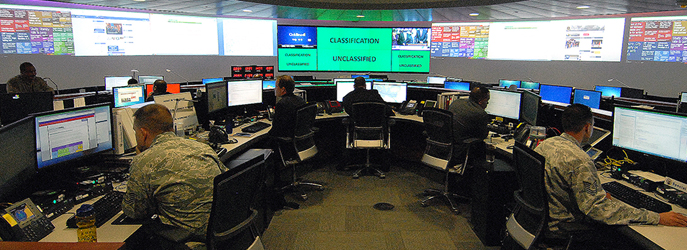
A broad reaching brief on some of the technical aspects of DISA’s role as a combat support agency within the Department of Defense. Topics will include Scalability and the challenges of Big Data Analytics, Interoperability of systems, Visualization, Incident Response and Digital Forensics, Challenges with Classification Guidance, Supply Chain Risk Management, and Software Defined Networks/Infrastructure as a Service. Attendees are highly encouraged to ask questions.
James Curry is DISA’s Lead Engineer for the Cyber Security Range (CSR), which is chartered to develop and host a realistic DoD Information Network (DODIN) environment for Training, Testing, or Exercises. In this position, he has designed and built fully virtual implementations of DISA’s Internet Access Points (IAPs) and its Joint Regional Security Stack (JRSS), enabling the DoD Workforce to train in an IaaS on-demand environment that realistically matches DISA’s core infrastructure. He is a Scholarship for Service (SFS) recipient (2008-2009) and received his Masters and Bachelors of Science in Computer Science from New Mexico Tech. Email: *protected email*
Host: Alan T. Sherman, *protected email*
The UMBC Cyber Defense Lab meets biweekly Fridays. All meetings are open to the public.
The post Talk: Role of the Defense Information Systems Agency, 12p Fri 9/22 appeared first on Department of Computer Science and Electrical Engineering.
]]>
UMBC Cyber Defense Lab Tech Talk with the Defense Information Systems Agency (DISA) James Curry Lead Engineer – Cyber Security Range IDC – Cyber Workforce Development Division Defense...
https://www.csee.umbc.edu/2017/09/talk-umbc-defense-information-systems-agency-disa/
https://dev.my.umbc.edu/api/v0/pixel/news/70385/guest@my.umbc.edu/90105b38b7ce4e1e1beb4e7e77a6e88b/api/pixel
computer-engineering
computer-science
cybersecurity
data-science
news
talks
Computer Science and Electrical Engineering
https://dev.my.umbc.edu/groups/csee
https://assets3-dev.my.umbc.edu/system/shared/avatars/groups/000/000/099/d117dca133c64bf78a4b7696dd007189/xsmall.png?1314043393
https://assets1-dev.my.umbc.edu/system/shared/avatars/groups/000/000/099/d117dca133c64bf78a4b7696dd007189/original.png?1314043393
https://assets1-dev.my.umbc.edu/system/shared/avatars/groups/000/000/099/d117dca133c64bf78a4b7696dd007189/xxlarge.png?1314043393
https://assets4-dev.my.umbc.edu/system/shared/avatars/groups/000/000/099/d117dca133c64bf78a4b7696dd007189/xlarge.png?1314043393
https://assets3-dev.my.umbc.edu/system/shared/avatars/groups/000/000/099/d117dca133c64bf78a4b7696dd007189/large.png?1314043393
https://assets1-dev.my.umbc.edu/system/shared/avatars/groups/000/000/099/d117dca133c64bf78a4b7696dd007189/medium.png?1314043393
https://assets2-dev.my.umbc.edu/system/shared/avatars/groups/000/000/099/d117dca133c64bf78a4b7696dd007189/small.png?1314043393
https://assets3-dev.my.umbc.edu/system/shared/avatars/groups/000/000/099/d117dca133c64bf78a4b7696dd007189/xsmall.png?1314043393
https://assets3-dev.my.umbc.edu/system/shared/avatars/groups/000/000/099/d117dca133c64bf78a4b7696dd007189/xxsmall.png?1314043393
Computer Science and Electrical Engineering
2
0
true
Thu, 21 Sep 2017 12:47:18 -0400
talk: Sarit Kraus on Computer Agents that Interact Proficiently with People, Noon Fri 8/4
Computer Agents that Interact Proficiently with People
Prof. Sarit Kraus
Deptartment of Computer Science, Bar-Ilan University
Ramat-Gan, 52900 Israel
12:00-1:00pm Friday, 4 August 2017, ITE ITE 217B, UMBC
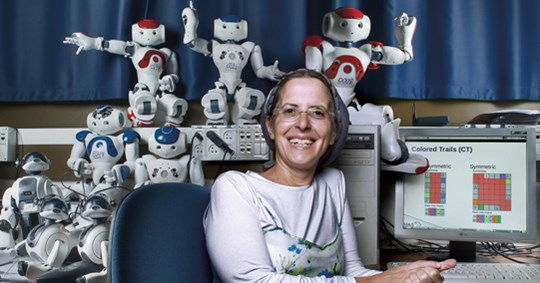
Automated agents that interact proficiently with people can be useful in supporting, training or replacing people in complex tasks. The inclusion of people presents novel problems for the design of automated agents strategies. People do not necessarily adhere to the optimal, monolithic strategies that can be derived analytically. Their behavior is affected by a multitude of social and psychological factors. In this talk I will show how combining machine learning techniques for human modeling, human behavioral models, formal decision-making and game theory approaches enables agents to interact well with people. Applications include intelligent agents that help drivers reduce energy consumption, agents that support rehabilitation, employer-employee negotiation and agents that support a human operator in managing a team of low-cost mobile robots in search and rescue task
Sarit Kraus (Ph.D. Computer Science, Hebrew University, 1989) is a Professor and is the Department Chair of Computer Science at Bar-Ilan University. Her research is focused on intelligent agents and multi-agent systems (including people and robots). In particular, she studies the development of intelligent agents that can interact proficiently with people. She studies both cooperative and conflicting scenarios. She considers modeling human behavior and predicting their decisions necessary for facing these challenges as well as the development of formal models for the agent’s decision making. She has also contributed to the research on agent optimization, homeland security, adversarial patrolling, social networks and nonmonotonic reasoning.
For her pioneer work she received many prestigious awards. She was awarded the IJCAI Computers and Thought Award, the ACM SIGART Agents Research award, the EMET prize and was twice the winner of the IFAAMAS influential paper award. She is an ACM, AAAI and ECCAI fellow and a recipient of the advanced ERC grant. She also received a special commendation from the city of Los Angeles, together with Prof. Tambe, Prof. Ordonez and their USC students, for the creation of the ARMOR security scheduling system. She has published over 350 papers in leading journals and major conferences. She is the author of the book “Strategic Negotiation in Multiagent Environments” (2001) and a co-author of the books “Heterogeneous Active Agents” (2000) and “Principles of Automated Negotiation” (2014). Kraus is a senior associate editor of the Annals of Mathematics and Artificial Intelligence Journal and an associate editor of the Journal of Autonomous Agents and Multi-Agent Systems and of JAIR. She is a member of the board of directors of the International Foundation for Multi-agent Systems (IFAAMAS).
The post talk: Sarit Kraus on Computer Agents that Interact Proficiently with People, Noon Fri 8/4 appeared first on Department of Computer Science and Electrical Engineering.
]]>
Computer Agents that Interact Proficiently with People Prof. Sarit Kraus Deptartment of Computer Science, Bar-Ilan University Ramat-Gan, 52900 Israel 12:00-1:00pm Friday, 4 August 2017,...
https://www.csee.umbc.edu/2017/08/talk-sarit-kraus-computer-agents-interact-proficiently-with-people-robots-hci-hri-human/
https://dev.my.umbc.edu/api/v0/pixel/news/69213/guest@my.umbc.edu/7146ec839243a1af3f175244dbf978bf/api/pixel
ai
news
robotics
talks
Computer Science and Electrical Engineering
https://dev.my.umbc.edu/groups/csee
https://assets3-dev.my.umbc.edu/system/shared/avatars/groups/000/000/099/d117dca133c64bf78a4b7696dd007189/xsmall.png?1314043393
https://assets1-dev.my.umbc.edu/system/shared/avatars/groups/000/000/099/d117dca133c64bf78a4b7696dd007189/original.png?1314043393
https://assets1-dev.my.umbc.edu/system/shared/avatars/groups/000/000/099/d117dca133c64bf78a4b7696dd007189/xxlarge.png?1314043393
https://assets4-dev.my.umbc.edu/system/shared/avatars/groups/000/000/099/d117dca133c64bf78a4b7696dd007189/xlarge.png?1314043393
https://assets3-dev.my.umbc.edu/system/shared/avatars/groups/000/000/099/d117dca133c64bf78a4b7696dd007189/large.png?1314043393
https://assets1-dev.my.umbc.edu/system/shared/avatars/groups/000/000/099/d117dca133c64bf78a4b7696dd007189/medium.png?1314043393
https://assets2-dev.my.umbc.edu/system/shared/avatars/groups/000/000/099/d117dca133c64bf78a4b7696dd007189/small.png?1314043393
https://assets3-dev.my.umbc.edu/system/shared/avatars/groups/000/000/099/d117dca133c64bf78a4b7696dd007189/xsmall.png?1314043393
https://assets3-dev.my.umbc.edu/system/shared/avatars/groups/000/000/099/d117dca133c64bf78a4b7696dd007189/xxsmall.png?1314043393
Computer Science and Electrical Engineering
5
0
true
Tue, 01 Aug 2017 11:56:40 -0400
talk: Big Microbiome Data, 10am Tue May 2, UMBC
Information Systems Eminent Scholar Talk
Big Microbiome Data
10:00am Tuesday, 2 May 2017, ITE 459, UMBC
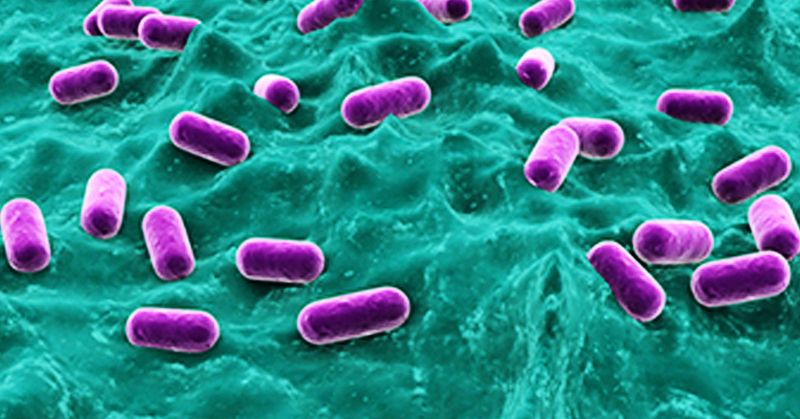
We know little about the microbial world. Microbiome sequencing (i.e., metagenome, 16s rRNA) extracts DNA directly from a microbial environment without culturing any species. Recently, huge amount of data are generated from many micorbiome projects such as Human Microbiome Project (HMP), Metagenomics of the Human Intestinal Tract (MetaHIT), et al. Analyzing these data will help us to better understand the function and structure of microbial community of human body, earth and other environmental eco-systems. However, the huge data volume, the complexity of microbial community and the intricate data properties have created a lot of opportunities and challenges for data analysis and mining. For example, it is estimate that in the microbial eco- system of human gut, there are about 1000 kinds of bacteria with ten billion bacteria and more than four million genes in more than 6000 orthologous gene family. The challenges are due to the complex properties of microbiome: large-scale, complicated, diversity, correlation, composition, hierarchy, incompleteness etc.
Current microbiomes data analysis methods seldom consider these data properties and often make some assumptions such as linear, Euclidean space, metric-space, continue data type, which conflict with the true data properties. For example, some similarities are non-metric because the prevalent existence of some species; and the interactions among species and environment are complex in high order. Thus it is urgent to develop novel computational methods to overcome these assumptions and consider the microbiome data properties in the analysis procedure. In this talk, we will discuss some computational methods to analyze and visualize microbiome big data. Our studies are focusing on 1) novel machine learning and computational technologies for dimension reduction and visualization of microbiome data based on non-Euclidean spaces (manifold learning) to discover nonlinear intrinsic features and patterns in these data to overcome the linear assumptions, 2) novel statistical methods for variable selection in microbiome data by integrating group information among variables.
Xiaohua Tony Hu is a full professor and the founding director of the data mining and bioinformatics lab at the College of Computing and Informatics. He is also serving as the founding Co-Director of the NSF Center on Visual and Decision Informatics, IEEE Computer Society Bioinformatics and Biomedicine Steering Committee Chair, and IEEE Computer Society Big Data Steering Committee Chair. He joined Drexel University in 2002. He founded the International Journal of Data Mining and Bioinformatics, the IEEE International Conference on Big Data and the IEEE International Conference on Bioinformatics and Biomedicine. In 2001, he founded the DMW Software in Silicon Valley, California. He received many awards, including NSF CAREER Award and IEEE Data Mining Outstanding Service Award. Tony’s current research interests are in data/text/web mining, big data, bioinformatics, information retrieval and information extraction, social network analysis, healthcare informatics, rough set theory and application. He has published more than 270 peer-reviewed research papers in various journals, conferences and books He has obtained more than US$8.5 million research grants in the past ten years as PI or Co-PI. He has graduated 19 Ph.D. students from 2006 to 2017 and is currently supervising nine Ph.D. students.
The post talk: Big Microbiome Data, 10am Tue May 2, UMBC appeared first on Department of Computer Science and Electrical Engineering.
]]>
Information Systems Eminent Scholar Talk Big Microbiome Data Xiaohua Hu, Drexel University 10:00am Tuesday, 2 May 2017, ITE 459, UMBC We know little about the microbial world. Microbiome...
https://www.csee.umbc.edu/2017/04/talk-big-microbiome-data-10am-tue-may-2-umbc/
https://dev.my.umbc.edu/api/v0/pixel/news/67646/guest@my.umbc.edu/346b0d581bec088cb3bac44ca80e5cc4/api/pixel
data-science
news
research
talks
Computer Science and Electrical Engineering
https://dev.my.umbc.edu/groups/csee
https://assets3-dev.my.umbc.edu/system/shared/avatars/groups/000/000/099/d117dca133c64bf78a4b7696dd007189/xsmall.png?1314043393
https://assets1-dev.my.umbc.edu/system/shared/avatars/groups/000/000/099/d117dca133c64bf78a4b7696dd007189/original.png?1314043393
https://assets1-dev.my.umbc.edu/system/shared/avatars/groups/000/000/099/d117dca133c64bf78a4b7696dd007189/xxlarge.png?1314043393
https://assets4-dev.my.umbc.edu/system/shared/avatars/groups/000/000/099/d117dca133c64bf78a4b7696dd007189/xlarge.png?1314043393
https://assets3-dev.my.umbc.edu/system/shared/avatars/groups/000/000/099/d117dca133c64bf78a4b7696dd007189/large.png?1314043393
https://assets1-dev.my.umbc.edu/system/shared/avatars/groups/000/000/099/d117dca133c64bf78a4b7696dd007189/medium.png?1314043393
https://assets2-dev.my.umbc.edu/system/shared/avatars/groups/000/000/099/d117dca133c64bf78a4b7696dd007189/small.png?1314043393
https://assets3-dev.my.umbc.edu/system/shared/avatars/groups/000/000/099/d117dca133c64bf78a4b7696dd007189/xsmall.png?1314043393
https://assets3-dev.my.umbc.edu/system/shared/avatars/groups/000/000/099/d117dca133c64bf78a4b7696dd007189/xxsmall.png?1314043393
Computer Science and Electrical Engineering
3
0
true
Thu, 27 Apr 2017 16:47:48 -0400
talk: Practical Introduction to Penetration Testing , 12pm 4/28, ITE227, UMBC

The UMBC Cyber Defense Lab presents
A Practical Introduction to Penetration Testing
Dr. Arno Wacker
University of Kassel, Germany
and UMBC 2017
12:00noon Friday, 28 April 2017, ITE 227, UMBC
While many students learn the theoretical concepts of cybersecurity and cryptology at universities, their exposure to real life systems and the application of learned theoretical foundations in the real world is usually limited. Additionally, most students and sometimes even students of cybersecurity often deal with cybersecurity threats on a very abstract level, thereby being unaware that these threats are not abstract but real for everyone, including for themselves.
Therefore, this talk intends to raise the awareness about real cybersecurity threats for everyone by demonstrating live the process of penetration testing a system. I will show live how an attacker can gain control over a victim’s PC in a matter of seconds, and how this attack can be prevented. To do so, several techniques and tools will be used, including breaking a WPA-protected wireless network, defeating SSL/TLS encryption, and obtaining a reverse shell with system rights on the victim’s computer.
By experiencing these attacks in a simulated penetration test, we can gain a deeper understanding of the theoretical foundations and their implications for real-life scenarios. With this knowledge, the attack vectors can be mitigated to a bare minimum. In many cases, the cybersecurity-aware usage of IT systems is already countering many real threats.
Prof. Dr. Arno Wacker is an assistant professor with the University of Kassel in Germany and the head of the research group Applied Information Security (AIS). Currently, he is a visiting assistant professor at UMBC teaching the network security class. He is also the lead of the open source project CrypTool 2 and a member of the steering group of MysteryTwister C3 . His main research interests are modern security protocols for decentralized distributed systems, computerized cryptanalysis of classical ciphers, and cybersecurity awareness. At the University of Kassel, he teaches classes about cryptology and cybersecurity. Additionally, he regularly offers cryptology workshops for students at local schools and gives talks about penetration testing for companies. Email: <*protected email*>
Host: Alan T. Sherman, *protected email*
The post talk: Practical Introduction to Penetration Testing , 12pm 4/28, ITE227, UMBC appeared first on Department of Computer Science and Electrical Engineering.
]]>
The UMBC Cyber Defense Lab presents A Practical Introduction to Penetration Testing Dr. Arno Wacker University of Kassel, Germany and UMBC 2017 12:00noon Friday, 28 April 2017, ITE 227,...
https://www.csee.umbc.edu/2017/04/talk-practical-introduction-to-penetration-testing-12pm-428-ite227-umbc/
https://dev.my.umbc.edu/api/v0/pixel/news/67536/guest@my.umbc.edu/744caff3aef35b575537c21be69eb163/api/pixel
cybersecurity
events
news
talks
Computer Science and Electrical Engineering
https://dev.my.umbc.edu/groups/csee
https://assets3-dev.my.umbc.edu/system/shared/avatars/groups/000/000/099/d117dca133c64bf78a4b7696dd007189/xsmall.png?1314043393
https://assets1-dev.my.umbc.edu/system/shared/avatars/groups/000/000/099/d117dca133c64bf78a4b7696dd007189/original.png?1314043393
https://assets1-dev.my.umbc.edu/system/shared/avatars/groups/000/000/099/d117dca133c64bf78a4b7696dd007189/xxlarge.png?1314043393
https://assets4-dev.my.umbc.edu/system/shared/avatars/groups/000/000/099/d117dca133c64bf78a4b7696dd007189/xlarge.png?1314043393
https://assets3-dev.my.umbc.edu/system/shared/avatars/groups/000/000/099/d117dca133c64bf78a4b7696dd007189/large.png?1314043393
https://assets1-dev.my.umbc.edu/system/shared/avatars/groups/000/000/099/d117dca133c64bf78a4b7696dd007189/medium.png?1314043393
https://assets2-dev.my.umbc.edu/system/shared/avatars/groups/000/000/099/d117dca133c64bf78a4b7696dd007189/small.png?1314043393
https://assets3-dev.my.umbc.edu/system/shared/avatars/groups/000/000/099/d117dca133c64bf78a4b7696dd007189/xsmall.png?1314043393
https://assets3-dev.my.umbc.edu/system/shared/avatars/groups/000/000/099/d117dca133c64bf78a4b7696dd007189/xxsmall.png?1314043393
Computer Science and Electrical Engineering
4
0
true
Mon, 24 Apr 2017 14:00:42 -0400
talk: Human-Like Strategies for Language-Endowed Intelligent Agents, 11am Fri 4/48, UMBC
The UMBC Center for Hybrid Multicore Productivity Research (CHMPR)
is pleased to present as part of our distinguished lecture series
Human-Like Strategies for Language-Endowed Intelligent Agents
Dr. Sergei Nirenburg
Professor of Cognitive Science
Rensselaer Polytechnic Institute
11:00am Friday, 28 April 2017, ITE 325b
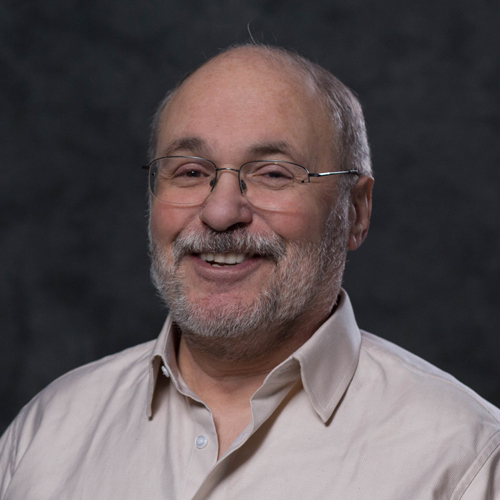
Artificial intelligent agents functioning in human-agent teams must correctly interpret perceptual input and make appropriate decisions about their actions. These are arguably the two central problems in computational cognitive modeling. The RPI LEIA Lab builds language-endowed intelligent agents that extract meaning of text and dialog and use the results together with input from other perception modes, a long-term belief repository, rich models of the world and of other agents, and a model of the interaction situation to make decisions about actions. Specific phenomena we currently concentrate on include incrementality, treatment of unexpected input and non-literal language (e.g., metaphor), analysis of agent biases and “mindreading,” and deliberate concept learning. All these studies are characterized by our belief in the ultimate utility of building causal models of agent capabilities that are inspired by human strategies in language processing and decision-making that go beyond analogical reasoning. In this talk I will give an overview of our recent work in the above areas.
Sergei Nirenburg is Professor of Cognitive Science and Computer Science at the Rensselaer Polytechnic Institute. He also serves as Head of the Department of Cognitive Science. He has worked in the areas of cognitive science, artificial intelligence and natural language processing for over 35 years, leading R&D teams of up to 80. Dr. Nirenburg’s professional interests include developing computational models of human cognitive capabilities and implementing them in computer models of societies of human and computer agents, continuing development of the theory of ontological semantics, and the acquisition and management of knowledge about the world and about language. Academic R&D teams under Dr. Nirenburg’s leadership have implemented a variety of proof-of-concept and prototype application systems for cognitive modeling, intelligent tutoring and a variety of NLP tasks (machine translation, question answering, text summarization, information extraction, computational field linguistics, knowledge elicitation and learning). Dr. Nirenburg has written two and edited five books and published over 200 scholarly articles in journals and peer-reviewed conference proceedings.
The post talk: Human-Like Strategies for Language-Endowed Intelligent Agents, 11am Fri 4/48, UMBC appeared first on Department of Computer Science and Electrical Engineering.
]]>
The UMBC Center for Hybrid Multicore Productivity Research (CHMPR) is pleased to present as part of our distinguished lecture series Human-Like Strategies for Language-Endowed Intelligent...
https://www.csee.umbc.edu/2017/04/talk-human-like-strategies-for-language-endowed-intelligent-agents-11am-fri-448-umbc/
https://dev.my.umbc.edu/api/v0/pixel/news/67497/guest@my.umbc.edu/33ba57d404239529dd6964e9f9260e58/api/pixel
ai
computer-science
news
talks
Computer Science and Electrical Engineering
https://dev.my.umbc.edu/groups/csee
https://assets3-dev.my.umbc.edu/system/shared/avatars/groups/000/000/099/d117dca133c64bf78a4b7696dd007189/xsmall.png?1314043393
https://assets1-dev.my.umbc.edu/system/shared/avatars/groups/000/000/099/d117dca133c64bf78a4b7696dd007189/original.png?1314043393
https://assets1-dev.my.umbc.edu/system/shared/avatars/groups/000/000/099/d117dca133c64bf78a4b7696dd007189/xxlarge.png?1314043393
https://assets4-dev.my.umbc.edu/system/shared/avatars/groups/000/000/099/d117dca133c64bf78a4b7696dd007189/xlarge.png?1314043393
https://assets3-dev.my.umbc.edu/system/shared/avatars/groups/000/000/099/d117dca133c64bf78a4b7696dd007189/large.png?1314043393
https://assets1-dev.my.umbc.edu/system/shared/avatars/groups/000/000/099/d117dca133c64bf78a4b7696dd007189/medium.png?1314043393
https://assets2-dev.my.umbc.edu/system/shared/avatars/groups/000/000/099/d117dca133c64bf78a4b7696dd007189/small.png?1314043393
https://assets3-dev.my.umbc.edu/system/shared/avatars/groups/000/000/099/d117dca133c64bf78a4b7696dd007189/xsmall.png?1314043393
https://assets3-dev.my.umbc.edu/system/shared/avatars/groups/000/000/099/d117dca133c64bf78a4b7696dd007189/xxsmall.png?1314043393
Computer Science and Electrical Engineering
2
0
true
Mon, 24 Apr 2017 00:24:52 -0400
talk: Resynchronization of circadian neurons, 1pm Fri 4/21
UMBC CSEE Seminar Series
Resynchronization of circadian neurons and the east-west asymmetry of jet-lag recovery
Zhixin Lu
University of Maryland, College Park
1-2pm Friday, 21 April 2017, ITE 231
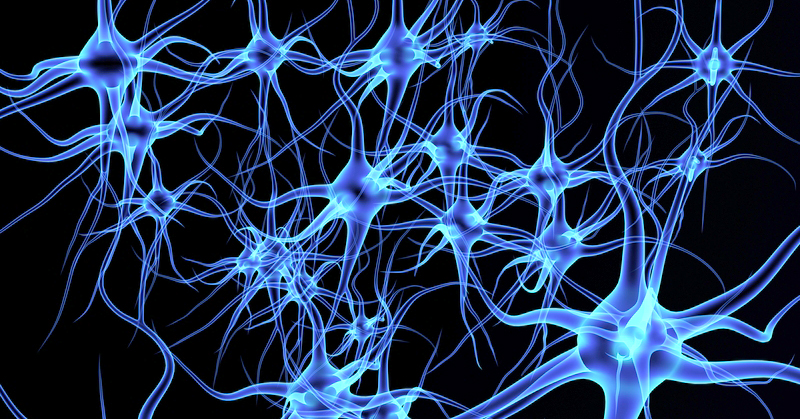
Cells in the brain’s Suprachiasmatic Nucleus (SCN) are known to regulate circadian rhythms in mammals. We model synchronization of SCN cells using the forced Kuramoto model, which consists of a large population of coupled phase oscillators (modeling individual SCN cells) with heterogeneous intrinsic frequencies and external periodic forcing. Here, the periodic forcing models diurnally varying external inputs such as sunrise, sunset, and alarm clocks. We reduce the dimensionality of the system using the ansatz of Ott and Antonsen and then study the effect of a sudden change of clock phase to simulate cross-time-zone travel. We estimate model parameters from previous biological experiments. By examining the phase space dynamics of the model, we study the mechanism leading to the difference typically experienced in the severity of jet-lag resulting from eastward and westward travel.
Zhixin Lu, PhD Candidate, joined the Nonlinear Dynamics and Chaos Group in the University of Maryland, College Park in 2011, as a Graduate Research Assistant in Dr. Edward Ott’s group. He acquired expertise in nonlinear dynamics and complex systems. Together with the colleagues from UMD, he used methods from nonlinear dynamics theory to investigate the synchronization of circadian neurons, the statistical properties of critical avalanching firing in integrate-and-fire neuron models, as well as dynamical behavior of artificial recurrent neuronal networks. His main research interests are the applications of nonlinear dynamics and the theory of complex networks to biological and artificial neural networks.
Host: Fow-Sen Choa; Organizer: Tulay Adali
About the CSEE Seminar Series: The UMBC Department of Computer Science and Electrical Engineering presents technical talks on current significant research projects of broad interest to the Department and the research community. Each talk is free and open to the public. We welcome your feedback and suggestions for future talks.
The post talk: Resynchronization of circadian neurons, 1pm Fri 4/21 appeared first on Department of Computer Science and Electrical Engineering.
]]>
UMBC CSEE Seminar Series Resynchronization of circadian neurons and the east-west asymmetry of jet-lag recovery Zhixin Lu University of Maryland, College Park 1-2pm Friday, 21 April 2017,...
https://www.csee.umbc.edu/2017/04/talk-resynchronization-of-circadian-neurons-1pm-fri-4-21-umbc/
https://dev.my.umbc.edu/api/v0/pixel/news/67447/guest@my.umbc.edu/bbf3e85334e32661ad368af4f1ac9697/api/pixel
news
talks
Computer Science and Electrical Engineering
https://dev.my.umbc.edu/groups/csee
https://assets3-dev.my.umbc.edu/system/shared/avatars/groups/000/000/099/d117dca133c64bf78a4b7696dd007189/xsmall.png?1314043393
https://assets1-dev.my.umbc.edu/system/shared/avatars/groups/000/000/099/d117dca133c64bf78a4b7696dd007189/original.png?1314043393
https://assets1-dev.my.umbc.edu/system/shared/avatars/groups/000/000/099/d117dca133c64bf78a4b7696dd007189/xxlarge.png?1314043393
https://assets4-dev.my.umbc.edu/system/shared/avatars/groups/000/000/099/d117dca133c64bf78a4b7696dd007189/xlarge.png?1314043393
https://assets3-dev.my.umbc.edu/system/shared/avatars/groups/000/000/099/d117dca133c64bf78a4b7696dd007189/large.png?1314043393
https://assets1-dev.my.umbc.edu/system/shared/avatars/groups/000/000/099/d117dca133c64bf78a4b7696dd007189/medium.png?1314043393
https://assets2-dev.my.umbc.edu/system/shared/avatars/groups/000/000/099/d117dca133c64bf78a4b7696dd007189/small.png?1314043393
https://assets3-dev.my.umbc.edu/system/shared/avatars/groups/000/000/099/d117dca133c64bf78a4b7696dd007189/xsmall.png?1314043393
https://assets3-dev.my.umbc.edu/system/shared/avatars/groups/000/000/099/d117dca133c64bf78a4b7696dd007189/xxsmall.png?1314043393
Computer Science and Electrical Engineering
2
0
true
Fri, 21 Apr 2017 09:23:10 -0400