MS Defense: Blind source separation for detection of abandoned objects

ENEE MS Thesis Defense
Blind source separation for detection of abandoned objects:
Exploiting different types of diversity
Suchita Bhinge
2:30pm Friday, 13 November 2015, ITE 325B
Due to the increase in security concerns, automated detection of abandoned objects has become an important application in video surveillance. Because of its increasing importance, a number of techniques have been proposed recently to automatically detect abandoned objects. The general procedure implemented for detection of abandoned objects includes background subtraction or foreground object extraction followed by post-processing steps in order to classify the foreground object as an abandoned or non-abandoned object. However, these techniques make use of a number of user-defined parameters such as track time, co-ordinates of the object/owner, the vicinity of the object, and properties of the object such as its shape, color, among others.
In this thesis, we present a new technique based on blind source separation (BSS) for detection of abandoned objects that does not keep track of the extracted objects or owners and does not require a dual background scheme for stationary object extraction. Order selection is an important step for our implementation of blind source separation based scheme since this step captures the signals with high energy and disregards signals that are not relevant to the detection of abandoned objects. In this thesis, we show that the performance of ICA improves when an algorithm that assumes a flexible source distribution along with multiple types of diversity, such as higher-order statistics and sample dependence is used for the estimation of the source components. ICA, however, can only model one dataset at a time, thus limiting its usage to monochrome frames. In order to address this issue, we also present another implementation of blind source separation called independent vector analysis (IVA), a recent extension of ICA to multiple data that takes the dependence across multiple datasets into account while retaining the model of independent components within each dataset. We show that the proposed blind source separation techniques performs successfully in complicated scenarios such as crowd, occlusion, and illumination changes.
Committee: Drs. Tulay Adali (chair), Joel Morris and Mohamed Younis
]]>
ENEE MS Thesis Defense Blind source separation for detection of abandoned objects: Exploiting different types of diversity Suchita Bhinge 2:30pm Friday, 13 November 2015, ITE 325B Due to...
http://www.csee.umbc.edu/2015/11/ms-defense-blind-source-separation-for-detection-of-abandoned-objects/
https://dev.my.umbc.edu/api/v0/pixel/news/55897/guest@my.umbc.edu/d415fe47c70219747013e3dfdc6e2986/api/pixel
defense
electrical-engineering
graduate
news
research
students
talks
Computer Science and Electrical Engineering
https://dev.my.umbc.edu/groups/csee
https://assets3-dev.my.umbc.edu/system/shared/avatars/groups/000/000/099/d117dca133c64bf78a4b7696dd007189/xsmall.png?1314043393
https://assets1-dev.my.umbc.edu/system/shared/avatars/groups/000/000/099/d117dca133c64bf78a4b7696dd007189/original.png?1314043393
https://assets1-dev.my.umbc.edu/system/shared/avatars/groups/000/000/099/d117dca133c64bf78a4b7696dd007189/xxlarge.png?1314043393
https://assets4-dev.my.umbc.edu/system/shared/avatars/groups/000/000/099/d117dca133c64bf78a4b7696dd007189/xlarge.png?1314043393
https://assets3-dev.my.umbc.edu/system/shared/avatars/groups/000/000/099/d117dca133c64bf78a4b7696dd007189/large.png?1314043393
https://assets1-dev.my.umbc.edu/system/shared/avatars/groups/000/000/099/d117dca133c64bf78a4b7696dd007189/medium.png?1314043393
https://assets2-dev.my.umbc.edu/system/shared/avatars/groups/000/000/099/d117dca133c64bf78a4b7696dd007189/small.png?1314043393
https://assets3-dev.my.umbc.edu/system/shared/avatars/groups/000/000/099/d117dca133c64bf78a4b7696dd007189/xsmall.png?1314043393
https://assets3-dev.my.umbc.edu/system/shared/avatars/groups/000/000/099/d117dca133c64bf78a4b7696dd007189/xxsmall.png?1314043393
Computer Science and Electrical Engineering
0
0
true
Thu, 12 Nov 2015 22:45:05 -0500
Thu, 12 Nov 2015 22:45:05 -0500
talk: Thad Starner, Extension of Self: Present & Future of Wearable Computing, Noon 11/16

Information Systems Department Distinguished Speaker
An Extension of Self: The Present
and Future of Wearable Computing
Professor Thad Starner
School of Interactive Computing
Georgia Institute of Technology
Noon Monday, 16 November 2015, ITE 459, UMBC
Google Glass captured the world’s imagination, perhaps more than any other head-up display. Yet, why would people want a wearable computer in their everyday lives? For over 20 years, Professor Thad Starner and his teams of researchers have been creating living laboratories to discover the most compelling reasons to integrate humans and computers. They have created “wearables” that augment human memory and the senses, focus attention, and assist communication. Is it possible that computers and wearable devices will transform humans for the better, enhancing key abilities and leaving more time and space for deeper connections? In this talk, Starner will discuss why wearables, more than any class of computing to date, have the potential to extend us beyond ourselves.
Thad Starner is a wearable computing pioneer; he has been wearing a head-up display based computer as part of his daily life since 1993 – perhaps the longest such experience known. Starner is a Professor in the School of Interactive Computing at the Georgia Institute of Technology and a Technical Lead on Google’s Glass. In 1990 he coined the term “augmented reality” to describe the types of interfaces he envisioned at the time. He is a founder of the annual ACM/IEEE International Symposium on Wearable Computers, now in its 19th year, and has produced over 450 papers and presentations on his work.
Starner is an inventor on over 80 United States patents awarded or in process. In addition to Google Glass, he has worked on a wireless glove that teaches the wearer to play piano melodies without active attention; a game for deaf children that helps them acquire language skills using sign language recognition; wearable computers that enable two-way communication experiments with wild dolphins; and wearable computers for working dogs to better communicate with their handlers.
]]>
Information Systems Department Distinguished Speaker An Extension of Self: The Present and Future of Wearable Computing Professor Thad Starner School of Interactive Computing Georgia...
http://www.csee.umbc.edu/2015/11/talk-thad-starner-extension-of-self-present-future-of-wearable-computing-noon-1116/
https://dev.my.umbc.edu/api/v0/pixel/news/55858/guest@my.umbc.edu/9580be37cf67b4aae8b4de2027a46871/api/pixel
news
talks
Computer Science and Electrical Engineering
https://dev.my.umbc.edu/groups/csee
https://assets3-dev.my.umbc.edu/system/shared/avatars/groups/000/000/099/d117dca133c64bf78a4b7696dd007189/xsmall.png?1314043393
https://assets1-dev.my.umbc.edu/system/shared/avatars/groups/000/000/099/d117dca133c64bf78a4b7696dd007189/original.png?1314043393
https://assets1-dev.my.umbc.edu/system/shared/avatars/groups/000/000/099/d117dca133c64bf78a4b7696dd007189/xxlarge.png?1314043393
https://assets4-dev.my.umbc.edu/system/shared/avatars/groups/000/000/099/d117dca133c64bf78a4b7696dd007189/xlarge.png?1314043393
https://assets3-dev.my.umbc.edu/system/shared/avatars/groups/000/000/099/d117dca133c64bf78a4b7696dd007189/large.png?1314043393
https://assets1-dev.my.umbc.edu/system/shared/avatars/groups/000/000/099/d117dca133c64bf78a4b7696dd007189/medium.png?1314043393
https://assets2-dev.my.umbc.edu/system/shared/avatars/groups/000/000/099/d117dca133c64bf78a4b7696dd007189/small.png?1314043393
https://assets3-dev.my.umbc.edu/system/shared/avatars/groups/000/000/099/d117dca133c64bf78a4b7696dd007189/xsmall.png?1314043393
https://assets3-dev.my.umbc.edu/system/shared/avatars/groups/000/000/099/d117dca133c64bf78a4b7696dd007189/xxsmall.png?1314043393
Computer Science and Electrical Engineering
1
0
true
Wed, 11 Nov 2015 20:24:43 -0500
Wed, 11 Nov 2015 20:24:43 -0500
PhD defense: Connectivity Restoration in Damaged Wireless Sensor Networks
PhD Dissertation Defense
Distributed Protocols for Connectivity Restoration
in Damaged Wireless Sensor Networks
Yatish Joshi
9:30 Monday, 23 November 2015, ITE 325b
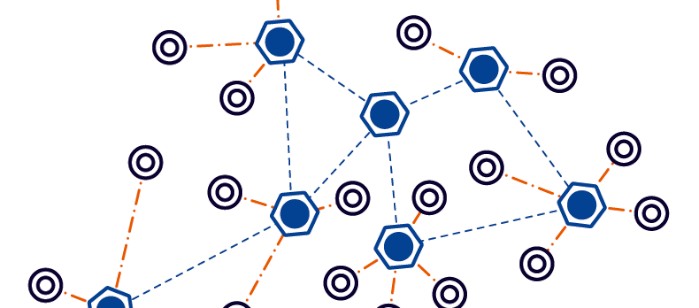
Decreasing costs and increasing functionality of hardware devices have made Wireless Sensor Networks (WSNs) attractive for applications that serve in inhospitable environments like battlefields, planetary exploration or environmental monitoring. WSNs employed in these environments are expected to work autonomously and extend network lifespan for as long as possible while carrying out their designated tasks. The harsh environment exposes individual nodes to a high risk of failure and their failure can partition the network into disjoint segments. Therefore, a network must be able to self-heal and restore lost connectivity using available resources. The ad-hoc nature of deployment, harsh operating environment means that proactive strategies based on redundancy cannot be applied as the scope of the damage could be so large that redundant nodes could be lost as well. The lack of external resources like satellite coverage preclude the application of centralized recovery approaches since they require the entire network state to be available for recovery. Hence distributed approaches that employ reactive strategies are the most viable solutions for these networks.
In this dissertation, we tackle the problem of distributed connectivity restoration in a WSN that has been partitioned into multiple disjoint segments due to multi-node failures. We consider multiple variants of the problem based on the available resources, and present a set of novel recovery schemes that suit the capabilities and requirements of the WSN being repaired. The correctness and time-complexity of all proposed approaches are analyzed and their performance is validated through extensive experiments.
Committee: Drs. Mohamed Younis (Chair), Charles Nicholas, Chintan Patel, Kemal Akkaya (FIU), Waleed Youssef (IBM)
]]>
PhD Dissertation Defense Distributed Protocols for Connectivity Restoration in Damaged Wireless Sensor Networks Yatish Joshi 9:30 Monday, 23 November 2015, ITE 325b Decreasing costs and...
http://www.csee.umbc.edu/2015/11/19864/
https://dev.my.umbc.edu/api/v0/pixel/news/55791/guest@my.umbc.edu/866c4effdd50b1e627340b03e13cee46/api/pixel
computer-engineering
computer-science
defense
graduate
news
research
talks
Computer Science and Electrical Engineering
https://dev.my.umbc.edu/groups/csee
https://assets3-dev.my.umbc.edu/system/shared/avatars/groups/000/000/099/d117dca133c64bf78a4b7696dd007189/xsmall.png?1314043393
https://assets1-dev.my.umbc.edu/system/shared/avatars/groups/000/000/099/d117dca133c64bf78a4b7696dd007189/original.png?1314043393
https://assets1-dev.my.umbc.edu/system/shared/avatars/groups/000/000/099/d117dca133c64bf78a4b7696dd007189/xxlarge.png?1314043393
https://assets4-dev.my.umbc.edu/system/shared/avatars/groups/000/000/099/d117dca133c64bf78a4b7696dd007189/xlarge.png?1314043393
https://assets3-dev.my.umbc.edu/system/shared/avatars/groups/000/000/099/d117dca133c64bf78a4b7696dd007189/large.png?1314043393
https://assets1-dev.my.umbc.edu/system/shared/avatars/groups/000/000/099/d117dca133c64bf78a4b7696dd007189/medium.png?1314043393
https://assets2-dev.my.umbc.edu/system/shared/avatars/groups/000/000/099/d117dca133c64bf78a4b7696dd007189/small.png?1314043393
https://assets3-dev.my.umbc.edu/system/shared/avatars/groups/000/000/099/d117dca133c64bf78a4b7696dd007189/xsmall.png?1314043393
https://assets3-dev.my.umbc.edu/system/shared/avatars/groups/000/000/099/d117dca133c64bf78a4b7696dd007189/xxsmall.png?1314043393
Computer Science and Electrical Engineering
2
0
true
Mon, 09 Nov 2015 22:25:24 -0500
Professor Gymama Slaughter to speak at 2016 TEDxBaltimore
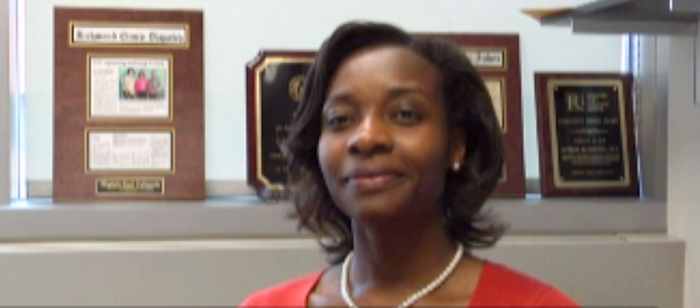
CSEE Professor Gymama Slaughter will talk about her research on Human Powered Biosensors as part at the 2016 TEDxBaltimore conference in January. The one-day conference will be held at Morgan State University on January 14, 2016 with the theme OUTLIERS: ideas that challenge traditional thinking. She will join about 15 other speakers each sharing an “idea worth spreading” with the expected 1,500 attendees.
Dr. Slaughter’s research focuses on the application of sensor-processor integration, bioelectronics design and theory, optimization methods for physical circuit design, biologically inspired computing (neural networks), and sensor interfacing and wireless networking and communications. You can find out more about the work that she and her students are doing by visiting her Biolectronics Laboratory website.
]]>
CSEE Professor Gymama Slaughter will talk about her research on Human Powered Biosensors as part at the 2016 TEDxBaltimore conference in January. The one-day conference will be held at Morgan...
http://www.csee.umbc.edu/2015/11/professor-gymama-slaughter-to-speak-at-2016-tedxbaltimore/
https://dev.my.umbc.edu/api/v0/pixel/news/55790/guest@my.umbc.edu/f734ed2ec75c7b1fbb5b10c5eafb0079/api/pixel
computer-engineering
electrical-engineering
events
faculty-and-staff
news
research
talks
Computer Science and Electrical Engineering
https://dev.my.umbc.edu/groups/csee
https://assets3-dev.my.umbc.edu/system/shared/avatars/groups/000/000/099/d117dca133c64bf78a4b7696dd007189/xsmall.png?1314043393
https://assets1-dev.my.umbc.edu/system/shared/avatars/groups/000/000/099/d117dca133c64bf78a4b7696dd007189/original.png?1314043393
https://assets1-dev.my.umbc.edu/system/shared/avatars/groups/000/000/099/d117dca133c64bf78a4b7696dd007189/xxlarge.png?1314043393
https://assets4-dev.my.umbc.edu/system/shared/avatars/groups/000/000/099/d117dca133c64bf78a4b7696dd007189/xlarge.png?1314043393
https://assets3-dev.my.umbc.edu/system/shared/avatars/groups/000/000/099/d117dca133c64bf78a4b7696dd007189/large.png?1314043393
https://assets1-dev.my.umbc.edu/system/shared/avatars/groups/000/000/099/d117dca133c64bf78a4b7696dd007189/medium.png?1314043393
https://assets2-dev.my.umbc.edu/system/shared/avatars/groups/000/000/099/d117dca133c64bf78a4b7696dd007189/small.png?1314043393
https://assets3-dev.my.umbc.edu/system/shared/avatars/groups/000/000/099/d117dca133c64bf78a4b7696dd007189/xsmall.png?1314043393
https://assets3-dev.my.umbc.edu/system/shared/avatars/groups/000/000/099/d117dca133c64bf78a4b7696dd007189/xxsmall.png?1314043393
Computer Science and Electrical Engineering
0
0
true
Mon, 09 Nov 2015 21:57:26 -0500
Mon, 09 Nov 2015 21:57:26 -0500
talk: John Kloetzli, DirectX 11 Software Tessellation, 11/13
The UMBC CSEE Seminar Series Presents
DirectX 11 Software Tessellation
John Kloetzli, Firaxis Games
12noon-1pm, Friday, November 13, 2015 ITE 102
Graphics Processing Units (GPUs) have become increasingly important in general purpose high performance computing, both because of the enormous computing power of these highly parallel processors as well as the evolution of general purpose software APIs that provide a domain-independent software environment. Graphics applications are also being redesigned to take advantage of this general GPU access, both for design of new algorithms as well as optimization and specialization of existing ones. This talk will explore how having access to the general purpose compute API in DirectX 11 allows us to design a tessellation algorithm for a specific use case that has superior performance and quality to the fixed-function tessellation hardware.
John Kloetzli is a graphics programmer at Firaxis Games. He is an alumnus of UMBC, having received a BS in 2006 majoring in Computer Science with a minor in both Mathematics and Philosophy, and a MS in Computer Science in 2008. He has worked at Firaxis since 2006 and is part of the team that produces the popular Civilization game series.
Hosts: Professors Fow-Sen Choa (Sorry, you need javascript to view this email address. ) and Alan T. Sherman (Sorry, you need javascript to view this email address. )
]]>
The UMBC CSEE Seminar Series Presents DirectX 11 Software Tessellation John Kloetzli, Firaxis Games 12noon-1pm, Friday, November 13, 2015 ITE 102 Graphics Processing Units (GPUs) have...
http://www.csee.umbc.edu/2015/11/talk-john-kloetzli-directx-11-software-tessellation-umbc/
https://dev.my.umbc.edu/api/v0/pixel/news/55613/guest@my.umbc.edu/d9b71baf7dc17632d0c817480e677046/api/pixel
computer-science
game-track
news
talks
Computer Science and Electrical Engineering
https://dev.my.umbc.edu/groups/csee
https://assets3-dev.my.umbc.edu/system/shared/avatars/groups/000/000/099/d117dca133c64bf78a4b7696dd007189/xsmall.png?1314043393
https://assets1-dev.my.umbc.edu/system/shared/avatars/groups/000/000/099/d117dca133c64bf78a4b7696dd007189/original.png?1314043393
https://assets1-dev.my.umbc.edu/system/shared/avatars/groups/000/000/099/d117dca133c64bf78a4b7696dd007189/xxlarge.png?1314043393
https://assets4-dev.my.umbc.edu/system/shared/avatars/groups/000/000/099/d117dca133c64bf78a4b7696dd007189/xlarge.png?1314043393
https://assets3-dev.my.umbc.edu/system/shared/avatars/groups/000/000/099/d117dca133c64bf78a4b7696dd007189/large.png?1314043393
https://assets1-dev.my.umbc.edu/system/shared/avatars/groups/000/000/099/d117dca133c64bf78a4b7696dd007189/medium.png?1314043393
https://assets2-dev.my.umbc.edu/system/shared/avatars/groups/000/000/099/d117dca133c64bf78a4b7696dd007189/small.png?1314043393
https://assets3-dev.my.umbc.edu/system/shared/avatars/groups/000/000/099/d117dca133c64bf78a4b7696dd007189/xsmall.png?1314043393
https://assets3-dev.my.umbc.edu/system/shared/avatars/groups/000/000/099/d117dca133c64bf78a4b7696dd007189/xxsmall.png?1314043393
Computer Science and Electrical Engineering
0
0
true
Wed, 04 Nov 2015 08:46:49 -0500
Wed, 04 Nov 2015 08:46:49 -0500
talk: Banerjee, Wearable Sensors for Individuals with Mobility Impairments
The UMBC CSEE Seminar Series Presents
Wearable Sensors for Individuals
with Mobility Impairments
Nilanjan Banerjee
Associate Professor, CSEE Dept., UMBC
1-2pm Friday, 6 November 2015, ITE 325
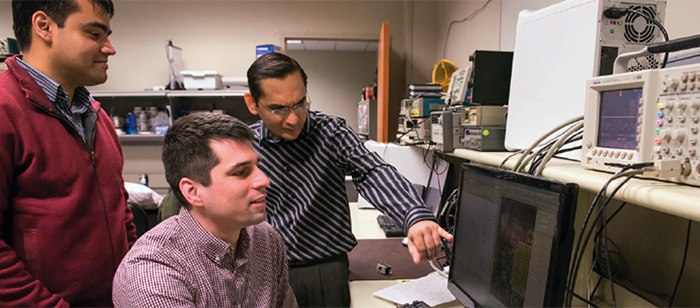
More than 500,000 individuals in the US are hospitalized every year due to spinal cord injuries. The severity of the injury dictates the degree of mobility that an individual has. All mobility impaired individuals rely on assistive devices to perform their daily life activities. Present assistive devices, however, are cumbersome, expensive, and limited. To this end, in this talk I will present two minimally intrusive systems — InviZ and Tongue-n-Cheek that can be used for environmental control in individuals with limited mobility. InviZ is based on textile capacitive sensors built into clothing and is used for gesture recognition; Tongue-n-Cheek is a micro-radar based system for tongue gesture recognition. This is joint work with Ryan Robucci and Chintan Patel and students in the ECLIPSE cluster at UMBC (eclipse.umbc.edu)
Nilanjan Banerjee is an associate professor in the CSEE Dept. at UMBC. He is a 2011 NSF Career Awardee and received a Microsoft Research Software Engineering Innovations Award. His research interests are in embedded systems, mobile systems, and sensor design.
Hosts: Professors Fow-Sen Choa (Sorry, you need javascript to view this email address. ) and Alan T. Sherman (Sorry, you need javascript to view this email address. )
]]>
The UMBC CSEE Seminar Series Presents Wearable Sensors for Individuals with Mobility Impairments Nilanjan Banerjee Associate Professor, CSEE Dept., UMBC 1-2pm Friday, 6 November 2015, ITE...
http://www.csee.umbc.edu/2015/11/talk-banerjee-wearable-sensors-for-individuals-with-mobility-impairments/
https://dev.my.umbc.edu/api/v0/pixel/news/55591/guest@my.umbc.edu/a86f99e8a64eb072a784ab28088fb4a8/api/pixel
computer-engineering
computer-science
news
talks
Computer Science and Electrical Engineering
https://dev.my.umbc.edu/groups/csee
https://assets3-dev.my.umbc.edu/system/shared/avatars/groups/000/000/099/d117dca133c64bf78a4b7696dd007189/xsmall.png?1314043393
https://assets1-dev.my.umbc.edu/system/shared/avatars/groups/000/000/099/d117dca133c64bf78a4b7696dd007189/original.png?1314043393
https://assets1-dev.my.umbc.edu/system/shared/avatars/groups/000/000/099/d117dca133c64bf78a4b7696dd007189/xxlarge.png?1314043393
https://assets4-dev.my.umbc.edu/system/shared/avatars/groups/000/000/099/d117dca133c64bf78a4b7696dd007189/xlarge.png?1314043393
https://assets3-dev.my.umbc.edu/system/shared/avatars/groups/000/000/099/d117dca133c64bf78a4b7696dd007189/large.png?1314043393
https://assets1-dev.my.umbc.edu/system/shared/avatars/groups/000/000/099/d117dca133c64bf78a4b7696dd007189/medium.png?1314043393
https://assets2-dev.my.umbc.edu/system/shared/avatars/groups/000/000/099/d117dca133c64bf78a4b7696dd007189/small.png?1314043393
https://assets3-dev.my.umbc.edu/system/shared/avatars/groups/000/000/099/d117dca133c64bf78a4b7696dd007189/xsmall.png?1314043393
https://assets3-dev.my.umbc.edu/system/shared/avatars/groups/000/000/099/d117dca133c64bf78a4b7696dd007189/xxsmall.png?1314043393
Computer Science and Electrical Engineering
1
0
true
Tue, 03 Nov 2015 12:56:09 -0500
Tue, 03 Nov 2015 12:56:09 -0500
talk: Charles Nicholas, How colorful is your exploit kit?, 11/6

The UMBC Cyber Defense Lab presents
How colorful is your exploit kit?
Professor Charles Nicholas
Computer Science, CSEE Department, UMBC
11:15am-12:30pm Friday 6 November 2015, ITE 325b
Exploit kits have emerged as a significant form of malware in recent years. When a user visits an infected web site, code is executed that inspects the user’s computer for vulnerabilities, and then downloads malicious payloads based on that information. When a user visits an infected site, the so-called “landing page” can then begin its reconnaissance work. These landing pages, and in particular the embedded code, usually Javascript or a Java applet, can be captured and analyzed. Our hypothesis is that exploit kits can be characterized by their landing pages.
We have completed our effort to build a data set of malware domains and the landing pages they send. At this point we have almost seven gigabytes of pcap data, collected from about 4500 web sites, to analyze. The analysis began with informal inspection of pcap files. We parsed the pcap data into n-grams, and applied established numerical analysis techniques to produce some graphs. These graphs were the heart of our presentation at the July, 2014 Malware Technical Exchange Meeting.
Since then, we have succeeded in running the pcap data through the Suricata program, which separates the pcap data into individual HTML files. Some of these contain Javascript code, which we have parsed out into separate objects. These Javascript specimens were then subjected to the same visual cluster analysis that was used with the original pcap data.
Charles Nicholas is a Professor in the Department of Computer Science and Electrical Engineering at UMBC, where he has been on the faculty since 1988. He earned the B.S. degree from the University of Michigan – Flint in 1979, and the M.S. and Ph.D. degrees from The Ohio State University in 1982 and 1988, respectively. He has written more than one hundred scholarly papers, and has advised seven Ph.D. students and more than eighty M.S. students. He served as Chair of the CSEE Department from 2004 to 2010. In addition to his appointment at UMBC, Dr. Nicholas has held appointments at the National Institute of Standards and Technology, and the NASA Goddard Space Flight Center. He spent academic years 1996-97 and 2011-2012 on sabbatical at the National Security Agency. Dr. Nicholas’ research interests include document engineering, information retrieval, and malware analysis. His work has been funded by a number of agencies, including NASA, Maryland Industrial Partnerships, DARPA, AFOSR, and the Department of Defense. He has served five times as the General Chair of the ACM Conference on Information and Knowledge Management (CIKM), and serves on the SIGWEB Executive Committee. Dr. Nicholas is a member of the Board of Directors of UMBC Training Centers, and the Advisory Board of the UMBC Research Park.
Host: Alan T. Sherman, Sorry, you need javascript to view this email address.
]]>
The UMBC Cyber Defense Lab presents How colorful is your exploit kit? Professor Charles Nicholas Computer Science, CSEE Department, UMBC 11:15am-12:30pm Friday 6 November 2015, ITE 325b...
http://www.csee.umbc.edu/2015/10/talk-charles-nicholas-how-colorful-is-your-exploit-kit-116/
https://dev.my.umbc.edu/api/v0/pixel/news/55524/guest@my.umbc.edu/ccb86e4a4dc1aeb58619c7dc07628f51/api/pixel
computer-science
cybersecurity
news
talks
Computer Science and Electrical Engineering
https://dev.my.umbc.edu/groups/csee
https://assets3-dev.my.umbc.edu/system/shared/avatars/groups/000/000/099/d117dca133c64bf78a4b7696dd007189/xsmall.png?1314043393
https://assets1-dev.my.umbc.edu/system/shared/avatars/groups/000/000/099/d117dca133c64bf78a4b7696dd007189/original.png?1314043393
https://assets1-dev.my.umbc.edu/system/shared/avatars/groups/000/000/099/d117dca133c64bf78a4b7696dd007189/xxlarge.png?1314043393
https://assets4-dev.my.umbc.edu/system/shared/avatars/groups/000/000/099/d117dca133c64bf78a4b7696dd007189/xlarge.png?1314043393
https://assets3-dev.my.umbc.edu/system/shared/avatars/groups/000/000/099/d117dca133c64bf78a4b7696dd007189/large.png?1314043393
https://assets1-dev.my.umbc.edu/system/shared/avatars/groups/000/000/099/d117dca133c64bf78a4b7696dd007189/medium.png?1314043393
https://assets2-dev.my.umbc.edu/system/shared/avatars/groups/000/000/099/d117dca133c64bf78a4b7696dd007189/small.png?1314043393
https://assets3-dev.my.umbc.edu/system/shared/avatars/groups/000/000/099/d117dca133c64bf78a4b7696dd007189/xsmall.png?1314043393
https://assets3-dev.my.umbc.edu/system/shared/avatars/groups/000/000/099/d117dca133c64bf78a4b7696dd007189/xxsmall.png?1314043393
Computer Science and Electrical Engineering
1
0
true
Sat, 31 Oct 2015 11:43:10 -0400
Sat, 31 Oct 2015 11:43:10 -0400
PhD proposal: Lyrics Augmented Multi-modal Music Recommendation, 1pm 10/30

Lyrics Augmented Multi-modal
Music Recommendation
Abhay Kashyap
1:00pm Friday 30 October, ITE 325b
In an increasingly mobile and connected world, digital music consumption has rapidly increased. More recently, faster and cheaper mobile bandwidth has given the average mobile user the potential to access large troves of music through streaming services like Spotify and Google Music that boast catalogs with tens of millions of songs. At this scale, effective music recommendation is critical for music discovery and personalized user experience.
Recommenders that rely on collaborative information suffer from two major problems: the long tail problem, which is induced by popularity bias, and the cold start problem caused by new items with no data. In such cases, they fall back on content to compute similarity. For music, content based features can be divided into acoustic and textual domains. Acoustic features are extracted from the audio signal while textual features come from song metadata, lyrical content, collaborative tags and associated web text.
Research in content based music similarity has largely been focused in the acoustic domain while text based features have been limited to metadata, tags and shallow methods for web text and lyrics. Song lyrics house information about the sentiment and topic of a song that cannot be easily extracted from the audio. Past work has shown that even shallow lyrical features improved audio-only features and in some tasks like mood classification, outperformed audio-only features. In addition, lyrics are also easily available which make them a valuable resource and warrant a deeper analysis.
The goal of this research is to fill the lyrical gap in existing music recommender systems. The first step is to build algorithms to extract and represent the meaning and emotion contained in the song’s lyrics. The next step is to effectively combine lyrical features with acoustic and collaborative information to build a multi-modal recommendation engine.
For this work, the genre is restricted to Rap because it is a lyrics-centric genre and techniques built for Rap can be generalized to other genres. It was also the highest streamed genre in 2014, accounting for 28.5% of all music streamed. Rap lyrics are scraped from dedicated lyrics websites like ohhla.com and genius.com while the semantic knowledge base comprising artists, albums and song metadata come from the MusicBrainz project. Acoustic features are directly used from EchoNest while collaborative information like tags, plays, co-plays etc. come from Last.fm.
Preliminary work involved extraction of compositional style features like rhyme patterns and density, vocabulary size, simile and profanity usage from over 10,000 songs by over 150 artists. These features are available for users to browse and explore through interactive visualizations on Rapalytics.com. Song semantics were represented using off-the-shelf neural language based vector models (doc2vec). Future work will involve building novel language models for lyrics and latent representations for attributes that is driven by collaborative information for multi-modal recommendation.
Committee: Drs. Tim Finin (Chair), Anupam Joshi, Pranam Kolari (WalmartLabs), Cynthia Matuszek and Tim Oates
]]>
Lyrics Augmented Multi-modal Music Recommendation Abhay Kashyap 1:00pm Friday 30 October, ITE 325b In an increasingly mobile and connected world, digital music consumption has rapidly...
http://www.csee.umbc.edu/2015/10/phd-proposal-lyrics-augmented-multi-modal-music-recommendation-1pm-1030/
https://dev.my.umbc.edu/api/v0/pixel/news/55472/guest@my.umbc.edu/543c1870c1aff5e948113b01dcd96a38/api/pixel
computer-science
graduate
news
research
talks
Computer Science and Electrical Engineering
https://dev.my.umbc.edu/groups/csee
https://assets3-dev.my.umbc.edu/system/shared/avatars/groups/000/000/099/d117dca133c64bf78a4b7696dd007189/xsmall.png?1314043393
https://assets1-dev.my.umbc.edu/system/shared/avatars/groups/000/000/099/d117dca133c64bf78a4b7696dd007189/original.png?1314043393
https://assets1-dev.my.umbc.edu/system/shared/avatars/groups/000/000/099/d117dca133c64bf78a4b7696dd007189/xxlarge.png?1314043393
https://assets4-dev.my.umbc.edu/system/shared/avatars/groups/000/000/099/d117dca133c64bf78a4b7696dd007189/xlarge.png?1314043393
https://assets3-dev.my.umbc.edu/system/shared/avatars/groups/000/000/099/d117dca133c64bf78a4b7696dd007189/large.png?1314043393
https://assets1-dev.my.umbc.edu/system/shared/avatars/groups/000/000/099/d117dca133c64bf78a4b7696dd007189/medium.png?1314043393
https://assets2-dev.my.umbc.edu/system/shared/avatars/groups/000/000/099/d117dca133c64bf78a4b7696dd007189/small.png?1314043393
https://assets3-dev.my.umbc.edu/system/shared/avatars/groups/000/000/099/d117dca133c64bf78a4b7696dd007189/xsmall.png?1314043393
https://assets3-dev.my.umbc.edu/system/shared/avatars/groups/000/000/099/d117dca133c64bf78a4b7696dd007189/xxsmall.png?1314043393
Computer Science and Electrical Engineering
0
0
true
Thu, 29 Oct 2015 15:05:23 -0400
Tue, 27 Oct 2015 15:05:23 -0400
talk: Graphical-model-based machine learning for neuroimaging data, 12pm Fri 10/30

The UMBC CSEE Seminar Series Presents
Graphical-model-based machine learning for neuroimaging data
Professor Rong Chen
University of Maryland School of Medicine
12noon-1pm Friday, 30 October 2015, ITE 102, UMBC
Two important problem in neuroimaging data mining is high-dimensionality and temporal network modeling. Analyzing high-dimensional neuroimaging data is a very challenging problem. We developed an algorithms called Graphical-Model-based Multivariate Analysis (GAMMA) to model complex interactions among brain regions and a clinical variable. GAMMA has embedded dimension reduction and regularization mechanism. GAMMA has been used in distinguishing patients with mild cognitive impairment and normal elderly.
Identifying spatial-temporal interactions among brain regions from longitudinal structural magnetic-resonance images presents one of the major challenges in computational neuroanatomy. We developed a dynamic Bayesian network based method called structural dynamic network analysis (SDNA) to solve this problem. SDNA enables the detection of spatial-temporal interactions among brain regions, leading to dynamic network analysis. SDNA has been used to model trajectory changes in patients with Alzheimer’s disease.
Dr. Rong Chen is an Assistant Professor at in the department of Radiology the University of Maryland School of Medicine. He completed his Ph.D. in Electrical and Computer Engineering at Washington State University in 2003, and his MTR in Translational Medicine at the University of Pennsylvania in 2012. He published 45 peer-reviewed research articles in the areas of neuroimaging and data mining. His research interests include computational neuroscience, data mining, medical image analysis, and translational medicine.
Hosts: Professors Fow-Sen Choa (Sorry, you need javascript to view this email address. ) and Alan T. Sherman (Sorry, you need javascript to view this email address. )
About the CSEE Seminar Series: The UMBC Department of Computer Science and Electrical Engineering presents technical talks on current significant research projects of broad interest to the Department and the research community. Each talk is free and open to the public. We welcome your feedback and suggestions for future talks.
]]>
The UMBC CSEE Seminar Series Presents Graphical-model-based machine learning for neuroimaging data Professor Rong Chen University of Maryland School of Medicine 12noon-1pm Friday, 30...
http://www.csee.umbc.edu/2015/10/talk-graphical-model-based-machine-learning-for-neuroimaging-data-12pm-fri-1030/
https://dev.my.umbc.edu/api/v0/pixel/news/55341/guest@my.umbc.edu/3807623c90be15a7a47acb5e3015a64a/api/pixel
computer-science
electrical-engineering
news
research
talks
Computer Science and Electrical Engineering
https://dev.my.umbc.edu/groups/csee
https://assets3-dev.my.umbc.edu/system/shared/avatars/groups/000/000/099/d117dca133c64bf78a4b7696dd007189/xsmall.png?1314043393
https://assets1-dev.my.umbc.edu/system/shared/avatars/groups/000/000/099/d117dca133c64bf78a4b7696dd007189/original.png?1314043393
https://assets1-dev.my.umbc.edu/system/shared/avatars/groups/000/000/099/d117dca133c64bf78a4b7696dd007189/xxlarge.png?1314043393
https://assets4-dev.my.umbc.edu/system/shared/avatars/groups/000/000/099/d117dca133c64bf78a4b7696dd007189/xlarge.png?1314043393
https://assets3-dev.my.umbc.edu/system/shared/avatars/groups/000/000/099/d117dca133c64bf78a4b7696dd007189/large.png?1314043393
https://assets1-dev.my.umbc.edu/system/shared/avatars/groups/000/000/099/d117dca133c64bf78a4b7696dd007189/medium.png?1314043393
https://assets2-dev.my.umbc.edu/system/shared/avatars/groups/000/000/099/d117dca133c64bf78a4b7696dd007189/small.png?1314043393
https://assets3-dev.my.umbc.edu/system/shared/avatars/groups/000/000/099/d117dca133c64bf78a4b7696dd007189/xsmall.png?1314043393
https://assets3-dev.my.umbc.edu/system/shared/avatars/groups/000/000/099/d117dca133c64bf78a4b7696dd007189/xxsmall.png?1314043393
Computer Science and Electrical Engineering
0
0
true
Mon, 26 Oct 2015 22:15:51 -0400
Mon, 26 Oct 2015 22:15:51 -0400
Webinar: Chinese Cyber Power, 6pm 10/26
WEBINAR: Chinese Cyber Power
6:00-7:00pm Monday, 26 Oct 26 2015
Register online
Dr. Terry Thompson, of the UMBC Cybersecurity Graduate Program faculty, will present on the political, economic, military, and foreign policy dimensions of China’s cyber strategy and operations. He will explore:
- How does cyber fit into China’s military strategy?
- Why is there so much focus on offensive cyber operations?
- What is the Chinese view of the U.S. response (or lack of responses) to their cyber attacks on U.S. government and industry?
- Given the large amount of U.S. debt held by China, what is the rationale for cyber attacks that can damage the U.S. economy?
- Who is behind the strategy and operational planning and execution of China’s cyber attacks on the U.S.?
This webinar is a preview of Dr. Thompson’s Spring 2016 course CYBR 691 Special Topics in Cybersecurity: “Chinese Cyber Power: Perspectives and Implications.” Please Note: Due to time constraints, not all topics may be covered during the webinar.
Register online
]]>
WEBINAR: Chinese Cyber Power 6:00-7:00pm Monday, 26 Oct 26 2015 Register online Dr. Terry Thompson, of the UMBC Cybersecurity Graduate Program faculty, will present on the political,...
http://www.csee.umbc.edu/2015/10/webinar-chinese-cyber-power-6pm-1026/
https://dev.my.umbc.edu/api/v0/pixel/news/55311/guest@my.umbc.edu/0abfe49f459922ddd4e62475f04b4718/api/pixel
cybersecurity
news
talks
Computer Science and Electrical Engineering
https://dev.my.umbc.edu/groups/csee
https://assets3-dev.my.umbc.edu/system/shared/avatars/groups/000/000/099/d117dca133c64bf78a4b7696dd007189/xsmall.png?1314043393
https://assets1-dev.my.umbc.edu/system/shared/avatars/groups/000/000/099/d117dca133c64bf78a4b7696dd007189/original.png?1314043393
https://assets1-dev.my.umbc.edu/system/shared/avatars/groups/000/000/099/d117dca133c64bf78a4b7696dd007189/xxlarge.png?1314043393
https://assets4-dev.my.umbc.edu/system/shared/avatars/groups/000/000/099/d117dca133c64bf78a4b7696dd007189/xlarge.png?1314043393
https://assets3-dev.my.umbc.edu/system/shared/avatars/groups/000/000/099/d117dca133c64bf78a4b7696dd007189/large.png?1314043393
https://assets1-dev.my.umbc.edu/system/shared/avatars/groups/000/000/099/d117dca133c64bf78a4b7696dd007189/medium.png?1314043393
https://assets2-dev.my.umbc.edu/system/shared/avatars/groups/000/000/099/d117dca133c64bf78a4b7696dd007189/small.png?1314043393
https://assets3-dev.my.umbc.edu/system/shared/avatars/groups/000/000/099/d117dca133c64bf78a4b7696dd007189/xsmall.png?1314043393
https://assets3-dev.my.umbc.edu/system/shared/avatars/groups/000/000/099/d117dca133c64bf78a4b7696dd007189/xxsmall.png?1314043393
Computer Science and Electrical Engineering
0
0
true
Mon, 26 Oct 2015 13:28:53 -0400