talk: Challenges & opportunities in studying the brain’s network activity, 12p 9/25

The UMBC CSEE Seminar Series Presents
Technical challenges and opportunities
in studying the brain’s network activity
Dr. Hanbing Lu
National Institute of Drug Abuse, NIH
12:00-1:00pm, Friday 25 September 2015, ITE 325b
Brain structures do not work in isolation; they work in concert to produce sensory perception, motivation and behavior. Recent advances in fMRI technology offer the opportunity to investigate brain’s network activity. Data are accumulated suggesting that dysregulations within and between network activity are implicated in a number of neurodegenerative and neuropsychiatric disorders, including Alzheimer’s disease and drug addiction. Despite wide application of this approach in systems neuroscience, the fundamentals of brain network activity remain poorly understood. Animal models permit invasive manipulations and are uniquely advantageous in this regard. In this talk, Dr. Lu will discuss technical challenges and opportunities in studying brain networks by integrating multiple modalities, including MRI, electrophysiological recording, optical and electromagnetic neural modulation.
Dr. Hanbing Lu received his doctorate training in Biophysics at the Medical College of Wisconsin, during which he developed hardware and imaging sequence for functional magnetic resonance imaging (fMRI) in rodents. He is currently a staff scientist in the Neuroimaging Research Branch, National Institute on Drug Abuse, NIH. Dr. Lu pioneered animal models to investigate brain’s large scale networks. Current efforts include integrating multiple modalities to better understand the neurobiology of brain’s network activity
Hosts: Professors Fow-Sen Choa (Sorry, you need javascript to view this email address. ) and Alan T. Sherman (Sorry, you need javascript to view this email address. )
]]>
The UMBC CSEE Seminar Series Presents Technical challenges and opportunities in studying the brain’s network activity Dr. Hanbing Lu National Institute of Drug Abuse, NIH 12:00-1:00pm,...
http://www.csee.umbc.edu/2015/09/talk-challenges-opportunities-in-studying-the-brains-network-activity-12p-925/
https://dev.my.umbc.edu/api/v0/pixel/news/54327/guest@my.umbc.edu/841a8b5b4d15443c9708628621308021/api/pixel
news
research
talks
Computer Science and Electrical Engineering
https://dev.my.umbc.edu/groups/csee
https://assets3-dev.my.umbc.edu/system/shared/avatars/groups/000/000/099/d117dca133c64bf78a4b7696dd007189/xsmall.png?1314043393
https://assets1-dev.my.umbc.edu/system/shared/avatars/groups/000/000/099/d117dca133c64bf78a4b7696dd007189/original.png?1314043393
https://assets1-dev.my.umbc.edu/system/shared/avatars/groups/000/000/099/d117dca133c64bf78a4b7696dd007189/xxlarge.png?1314043393
https://assets4-dev.my.umbc.edu/system/shared/avatars/groups/000/000/099/d117dca133c64bf78a4b7696dd007189/xlarge.png?1314043393
https://assets3-dev.my.umbc.edu/system/shared/avatars/groups/000/000/099/d117dca133c64bf78a4b7696dd007189/large.png?1314043393
https://assets1-dev.my.umbc.edu/system/shared/avatars/groups/000/000/099/d117dca133c64bf78a4b7696dd007189/medium.png?1314043393
https://assets2-dev.my.umbc.edu/system/shared/avatars/groups/000/000/099/d117dca133c64bf78a4b7696dd007189/small.png?1314043393
https://assets3-dev.my.umbc.edu/system/shared/avatars/groups/000/000/099/d117dca133c64bf78a4b7696dd007189/xsmall.png?1314043393
https://assets3-dev.my.umbc.edu/system/shared/avatars/groups/000/000/099/d117dca133c64bf78a4b7696dd007189/xxsmall.png?1314043393
Computer Science and Electrical Engineering
0
0
true
Sat, 19 Sep 2015 17:11:42 -0400
Sat, 19 Sep 2015 17:11:42 -0400
PhD proposal: Kulkarni, Secured Embedded Many-Core Accelerator for Big Data Processing
PhD Dissertation Proposal
Secured Embedded Many-Core Accelerator for Big Data Processing
Amey Kulkarni
2:00-4:00pm Friday, 18 September 2015, ITE 325b
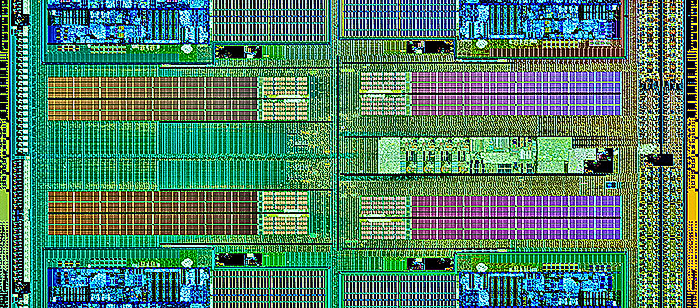
I/O bandwidth and stringent delay constraints on processing time, limits the use of streaming Big Data for a large variety of real world problems. On the other hand, examining Big Data in applications such as intelligence, surveillance and reconnaissance unveils sensitive information in terms of hidden patterns or unknown correlations, thus demanding secured processing environment. In this PhD research, we propose a scalable and secured framework for a many-core accelerator architecture for efficient big data parallel processing. We propose to merge a compressive sensing-based framework to reduce IO Bandwidth and a machine learning-based framework to secure many-core communications. Four different reduced complexity architectures and two different modifications to Orthogonal Matching Pursuit (OMP) compressive sensing reconstruction algorithm are proposed. We implement the proposed OMP architectures on FPGA, ASIC, CPU/GPU and Many-Core to investigate hardware overhead cost. To secure communications within many-core, we propose two different machine learning-based Trojan detection framework which have minimal hardware overhead. To conclude this work, we aim to implement and evaluate the proposed scalable and secured many-core accelerator hardware for image and multi-channel biomedical signal processing on quad-core and sixteen-core architectures.
Committee: Drs. Tinoosh Mohsenin, (Chair), Mohamed Younis, Seung-Jun Kim, Farinaz Koushanfar (Rice University) and Houman Homayoun (George Mason University)
]]>
PhD Dissertation Proposal Secured Embedded Many-Core Accelerator for Big Data Processing Amey Kulkarni 2:00-4:00pm Friday, 18 September 2015, ITE 325b I/O bandwidth and stringent delay...
http://www.csee.umbc.edu/2015/09/phd-proposal-kulkarni-secured-embedded-many-core-accelerator-for-big-data-processing/
https://dev.my.umbc.edu/api/v0/pixel/news/54277/guest@my.umbc.edu/4b123e9077faca201411ab83d8a178e5/api/pixel
computer-engineering
graduate
news
research
talks
Computer Science and Electrical Engineering
https://dev.my.umbc.edu/groups/csee
https://assets3-dev.my.umbc.edu/system/shared/avatars/groups/000/000/099/d117dca133c64bf78a4b7696dd007189/xsmall.png?1314043393
https://assets1-dev.my.umbc.edu/system/shared/avatars/groups/000/000/099/d117dca133c64bf78a4b7696dd007189/original.png?1314043393
https://assets1-dev.my.umbc.edu/system/shared/avatars/groups/000/000/099/d117dca133c64bf78a4b7696dd007189/xxlarge.png?1314043393
https://assets4-dev.my.umbc.edu/system/shared/avatars/groups/000/000/099/d117dca133c64bf78a4b7696dd007189/xlarge.png?1314043393
https://assets3-dev.my.umbc.edu/system/shared/avatars/groups/000/000/099/d117dca133c64bf78a4b7696dd007189/large.png?1314043393
https://assets1-dev.my.umbc.edu/system/shared/avatars/groups/000/000/099/d117dca133c64bf78a4b7696dd007189/medium.png?1314043393
https://assets2-dev.my.umbc.edu/system/shared/avatars/groups/000/000/099/d117dca133c64bf78a4b7696dd007189/small.png?1314043393
https://assets3-dev.my.umbc.edu/system/shared/avatars/groups/000/000/099/d117dca133c64bf78a4b7696dd007189/xsmall.png?1314043393
https://assets3-dev.my.umbc.edu/system/shared/avatars/groups/000/000/099/d117dca133c64bf78a4b7696dd007189/xxsmall.png?1314043393
Computer Science and Electrical Engineering
1
0
true
Thu, 17 Sep 2015 22:05:14 -0400
talk: Optical Measurements and Devices for Biotechnology and Biomedicine, 12pm 9/18
The UMBC CSEE Seminar Series Presents
Optical Measurements and Devices for Biotechnology and Biomedicine
Dr. Yordan Kostov
Assistant Director, Center for Advanced Sensor Technology, UMBC
12-1pm Friday, 18 September 2015
ITE 102 (Lecture Hall VIII)
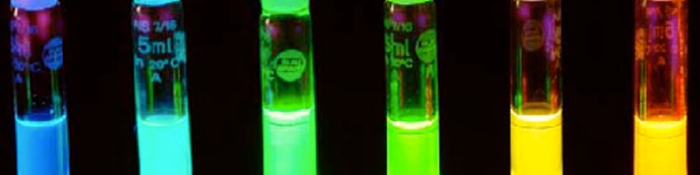
A variety of approaches for measurement of bioprocess and biomedical variables are presented. Classical optical measurements (fluorescence, absorption, decay time, etc.) are employed together with miniaturized versions of benchtop spectroscopy equipment to measure a number of bioprocess variables (pH, DO, protein concentration, etc.). Similar approach allows for measurement of biomedical parameters (transcutaneous O2 and CO2, glucose). The sensing is made possible by the developed miniaturized versions of lab equipment, use of microfluidics and actuation, as well as the use of proper data processing coupled with customizable user interface. A number of examples will be given.
Dr. Yordan Kostov holds an M.Sc. in Electrical engineering from Odessa Polytechnical Institute (Ukraine) and a combined Ph.D. Degree in ChemE./EE from Bulgarian Academy of Sciences. He has industry experience as electronic technology engineer. In his doctoral studies, he focused on optical sensing of biomedical parameters, and pursues this line of research ever since. Currently, he is Assistant Director of the Center for Advanced Sensor Technology at UMBC and Adjunct Professor at CSEE. His main interests are in the area of Biomedical measurements and devices.
Hosts: Professors Fow-Sen Choa (Sorry, you need javascript to view this email address. ) and Alan T. Sherman (Sorry, you need javascript to view this email address. )
]]>
The UMBC CSEE Seminar Series Presents Optical Measurements and Devices for Biotechnology and Biomedicine Dr. Yordan Kostov Assistant Director, Center for Advanced Sensor Technology, UMBC...
http://www.csee.umbc.edu/2015/09/19483/
https://dev.my.umbc.edu/api/v0/pixel/news/54149/guest@my.umbc.edu/11dab9a498c7fb826b43ddc2cbefb9f4/api/pixel
news
talks
Computer Science and Electrical Engineering
https://dev.my.umbc.edu/groups/csee
https://assets3-dev.my.umbc.edu/system/shared/avatars/groups/000/000/099/d117dca133c64bf78a4b7696dd007189/xsmall.png?1314043393
https://assets1-dev.my.umbc.edu/system/shared/avatars/groups/000/000/099/d117dca133c64bf78a4b7696dd007189/original.png?1314043393
https://assets1-dev.my.umbc.edu/system/shared/avatars/groups/000/000/099/d117dca133c64bf78a4b7696dd007189/xxlarge.png?1314043393
https://assets4-dev.my.umbc.edu/system/shared/avatars/groups/000/000/099/d117dca133c64bf78a4b7696dd007189/xlarge.png?1314043393
https://assets3-dev.my.umbc.edu/system/shared/avatars/groups/000/000/099/d117dca133c64bf78a4b7696dd007189/large.png?1314043393
https://assets1-dev.my.umbc.edu/system/shared/avatars/groups/000/000/099/d117dca133c64bf78a4b7696dd007189/medium.png?1314043393
https://assets2-dev.my.umbc.edu/system/shared/avatars/groups/000/000/099/d117dca133c64bf78a4b7696dd007189/small.png?1314043393
https://assets3-dev.my.umbc.edu/system/shared/avatars/groups/000/000/099/d117dca133c64bf78a4b7696dd007189/xsmall.png?1314043393
https://assets3-dev.my.umbc.edu/system/shared/avatars/groups/000/000/099/d117dca133c64bf78a4b7696dd007189/xxsmall.png?1314043393
Computer Science and Electrical Engineering
0
0
true
Tue, 15 Sep 2015 09:12:30 -0400
Tue, 15 Sep 2015 09:12:30 -0400
Center of Academic Excellence Community online events, 1-3 Thr 9/17

If you are interested in cybersecurity, consider joining the CAE community.
UMBC is designated as a Center of Academic Excellence in Information Assurance/Cyber Defense Education and Research by the NSA and DHS. The CAE Community site is a good place for information, ideas and events for students, faculty and staff who are interested in information assurance and cybersecurity.
For example, a recent news post has information on an online event on Thursday 17 September 2015 that will include two talks: one from 1-2pm on Digital Investigation and the Trojan Defense and another from 2:15-3:15 on the NSA Codebreaker Challenge.
See the post for more information on the talks and how to particiate online.
]]>
If you are interested in cybersecurity, consider joining the CAE community. UMBC is designated as a Center of Academic Excellence in Information Assurance/Cyber Defense Education and Research by...
http://www.csee.umbc.edu/2015/09/center-of-academic-excellence-community-online-events-1-3-thr-917/
https://dev.my.umbc.edu/api/v0/pixel/news/53950/guest@my.umbc.edu/e392d71fbe9a8294ffda6365d29b9428/api/pixel
cybersecurity
events
news
talks
Computer Science and Electrical Engineering
https://dev.my.umbc.edu/groups/csee
https://assets3-dev.my.umbc.edu/system/shared/avatars/groups/000/000/099/d117dca133c64bf78a4b7696dd007189/xsmall.png?1314043393
https://assets1-dev.my.umbc.edu/system/shared/avatars/groups/000/000/099/d117dca133c64bf78a4b7696dd007189/original.png?1314043393
https://assets1-dev.my.umbc.edu/system/shared/avatars/groups/000/000/099/d117dca133c64bf78a4b7696dd007189/xxlarge.png?1314043393
https://assets4-dev.my.umbc.edu/system/shared/avatars/groups/000/000/099/d117dca133c64bf78a4b7696dd007189/xlarge.png?1314043393
https://assets3-dev.my.umbc.edu/system/shared/avatars/groups/000/000/099/d117dca133c64bf78a4b7696dd007189/large.png?1314043393
https://assets1-dev.my.umbc.edu/system/shared/avatars/groups/000/000/099/d117dca133c64bf78a4b7696dd007189/medium.png?1314043393
https://assets2-dev.my.umbc.edu/system/shared/avatars/groups/000/000/099/d117dca133c64bf78a4b7696dd007189/small.png?1314043393
https://assets3-dev.my.umbc.edu/system/shared/avatars/groups/000/000/099/d117dca133c64bf78a4b7696dd007189/xsmall.png?1314043393
https://assets3-dev.my.umbc.edu/system/shared/avatars/groups/000/000/099/d117dca133c64bf78a4b7696dd007189/xxsmall.png?1314043393
Computer Science and Electrical Engineering
1
0
true
Wed, 09 Sep 2015 09:26:22 -0400
talk: Mark Cather, Enterprise and Higher Education Security, 11:15 Fri 9/11 UMBC
UMBC Cyber Defense Laboratory
University of Maryland, Baltimore County
Enterprise and Higher Education Security
Mark Cather
Chief Information Security Officer
University of Maryland, Baltimore County
11:15am-12:30pm Friday 11 September 2015, ITE 231
Mark Cather will speak about the priorities and current challenges in securing a higher education environment and enterprises in general. Mr. Cather has been working for UMBC’s Department of Information Technology since he received his BS in computer science from UMBC in 1997. He assumed his current role as UMBC’s Chief Information Security Officer in 2014.
For more information, contact Prof. Alan Sherman, sherman at umbc.edu .
]]>
UMBC Cyber Defense Laboratory University of Maryland, Baltimore County Enterprise and Higher Education Security Mark Cather Chief Information Security Officer University of Maryland,...
http://www.csee.umbc.edu/2015/09/mark-cather-on-enterprise-and-higher-education-security-1115-fri-911-umbc/
https://dev.my.umbc.edu/api/v0/pixel/news/53941/guest@my.umbc.edu/348b01f332a80dc06d8bb0a0cb0ad946/api/pixel
cybersecurity
news
talks
Computer Science and Electrical Engineering
https://dev.my.umbc.edu/groups/csee
https://assets3-dev.my.umbc.edu/system/shared/avatars/groups/000/000/099/d117dca133c64bf78a4b7696dd007189/xsmall.png?1314043393
https://assets1-dev.my.umbc.edu/system/shared/avatars/groups/000/000/099/d117dca133c64bf78a4b7696dd007189/original.png?1314043393
https://assets1-dev.my.umbc.edu/system/shared/avatars/groups/000/000/099/d117dca133c64bf78a4b7696dd007189/xxlarge.png?1314043393
https://assets4-dev.my.umbc.edu/system/shared/avatars/groups/000/000/099/d117dca133c64bf78a4b7696dd007189/xlarge.png?1314043393
https://assets3-dev.my.umbc.edu/system/shared/avatars/groups/000/000/099/d117dca133c64bf78a4b7696dd007189/large.png?1314043393
https://assets1-dev.my.umbc.edu/system/shared/avatars/groups/000/000/099/d117dca133c64bf78a4b7696dd007189/medium.png?1314043393
https://assets2-dev.my.umbc.edu/system/shared/avatars/groups/000/000/099/d117dca133c64bf78a4b7696dd007189/small.png?1314043393
https://assets3-dev.my.umbc.edu/system/shared/avatars/groups/000/000/099/d117dca133c64bf78a4b7696dd007189/xsmall.png?1314043393
https://assets3-dev.my.umbc.edu/system/shared/avatars/groups/000/000/099/d117dca133c64bf78a4b7696dd007189/xxsmall.png?1314043393
Computer Science and Electrical Engineering
0
0
true
Tue, 08 Sep 2015 20:59:53 -0400
Tue, 08 Sep 2015 20:59:53 -0400
talk: Keith Clark, Programming Robotic Agents, 2pm Fri 10/2, ITE325
Programming Robotic Agents: A Multi-tasking Teleo-Reactive Approach
Keith Clark, Imperial College London
University of Queensland, University New South Wales
joint work with Peter Robinson, University of Queensland
2:00pm Friday, 2 October 2015, ITE325b
We present a multi-threaded/multi-tasking message communicating robotic agent architecture in which the concurrently executing tasks are programmed in TeleoR, a major extension of Nilsson’s Teleo-Reactive Procedures (TR) guard ~> action rule language for robotic agents.
The rule guards query rapidly changing percept facts, and more slowly changing told and remembered facts, using fixed facts, relation and function rules (the agent’s knowledge) in the agent’s deductive BeliefStore. Its operational semantics makes the languages well suited to robot/robot or human/robot co-operative tasks.
TeleoR extends TR in:
- being typed and higher order,
- having a typed higher order LP/FP language, QuLog, for encoding BeliefStore knowledge,
- having extra forms of rules and actions, and o having task atomic procedures to control the deadlock and starvation free sharing of several robotic resources by concurrently executing tasks.
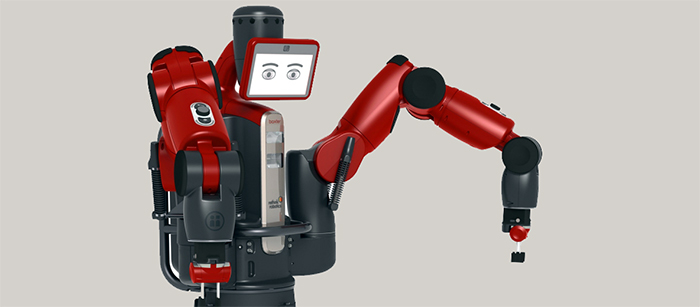
Its use is illustrated in the video at http://bit.ly/teleor. It is being used at UNSW to write the control program for a two armed Baxter robot working in co-operation with a person concurrently engaged in several assembly tasks.
Keith Clark is Emeritus Professor of Computer Science at Imperial College London, England and a Visiting Professor at the University of Queensland and the University New South Wales. He has lectured in both mathematics and computer science.
Host: Sorry, you need javascript to view this email address.
Upcoming talks and directions
]]>
Programming Robotic Agents: A Multi-tasking Teleo-Reactive Approach Keith Clark, Imperial College London University of Queensland, University New South Wales joint work with Peter Robinson,...
http://www.csee.umbc.edu/2015/09/talk-keith-clark-programming-robotic-agents-2pm-fri-102-ite325/
https://dev.my.umbc.edu/api/v0/pixel/news/53907/guest@my.umbc.edu/1223a84b03bbb29514a2ce28068129aa/api/pixel
events
news
other
research
robotics
talks
Computer Science and Electrical Engineering
https://dev.my.umbc.edu/groups/csee
https://assets3-dev.my.umbc.edu/system/shared/avatars/groups/000/000/099/d117dca133c64bf78a4b7696dd007189/xsmall.png?1314043393
https://assets1-dev.my.umbc.edu/system/shared/avatars/groups/000/000/099/d117dca133c64bf78a4b7696dd007189/original.png?1314043393
https://assets1-dev.my.umbc.edu/system/shared/avatars/groups/000/000/099/d117dca133c64bf78a4b7696dd007189/xxlarge.png?1314043393
https://assets4-dev.my.umbc.edu/system/shared/avatars/groups/000/000/099/d117dca133c64bf78a4b7696dd007189/xlarge.png?1314043393
https://assets3-dev.my.umbc.edu/system/shared/avatars/groups/000/000/099/d117dca133c64bf78a4b7696dd007189/large.png?1314043393
https://assets1-dev.my.umbc.edu/system/shared/avatars/groups/000/000/099/d117dca133c64bf78a4b7696dd007189/medium.png?1314043393
https://assets2-dev.my.umbc.edu/system/shared/avatars/groups/000/000/099/d117dca133c64bf78a4b7696dd007189/small.png?1314043393
https://assets3-dev.my.umbc.edu/system/shared/avatars/groups/000/000/099/d117dca133c64bf78a4b7696dd007189/xsmall.png?1314043393
https://assets3-dev.my.umbc.edu/system/shared/avatars/groups/000/000/099/d117dca133c64bf78a4b7696dd007189/xxsmall.png?1314043393
Computer Science and Electrical Engineering
0
0
true
Sun, 06 Sep 2015 11:23:44 -0400
Mon, 28 Sep 2015 23:23:44 -0400
PhD defense: Yu Wang, Physically-Based Modeling and Animation
Computer Science and Electrical Engineering
University of Maryland, Baltimore County
Ph.D. Dissertation Defense
The Modeling Equation: Solving the Physically-Based
Modeling and Animation Problem with a Unified Solution
Yu Wang
12:00pm Friday, 28 August 2015, ITE 352
Physically-based modeling research in computer graphics is based largely on derivation or close approximation from physics laws defining the material behaviors. From rigid object dynamics, to various kinds of deformable objects, such as elastic, plastic, and viscous fluid flow, to their interaction, almost every natural phenomena can find a rich history in computer graphics research. Due to the nonlinear nature of almost all real world dynamics, the mathematical definition of their behavior is rarely linear. As a result, solving for the dynamics of these phenomena involves non-linear numerical solvers, which sometimes introduces numerical instability, such as volume gain or loss, slow convergence.
The contribution of this project is a unified particle-based model that implements an extended SPH solver for modeling fluid motion, integrated with rigid body deformation using shape matching. The model handles phase changes between solid and liquid, including melting and solidification, where material rigidity is treated as a function of time and particle distance to the object surface, and solid fluid coupling, where rigid body motion causes secondary fluid flow motion. Due to the stability of the fluid-rigid interplay solver, we can introduce artistic control to the framework, such as rigging, where object motion is predefined by either artistic control, or procedurally generated dynamics path. Interaction with the fluid can be indirectly achieved by rigging the rigid particles which implicitly handles rigid-fluid coupling. We used marching cubes to extract the surfaces of the objects, and applied the PN-triangles to replace the planar silhouettes with cubic approximations. We provide discussion on evaluation metrics for physically-based modeling algorithms. In addition, GPU solutions are designed for physics solvers, isosurface extraction and smoothing.
Committee: Drs. Marc Olano (CSEE; Advisor, Chair), Penny Rheingans (CSEE), Jian Chen (CSEE), Matthias Gobbert (Math), Lynn Sparling (Physics)
]]>
Computer Science and Electrical Engineering University of Maryland, Baltimore County Ph.D. Dissertation Defense The Modeling Equation: Solving the Physically-Based Modeling and Animation...
http://www.csee.umbc.edu/2015/08/phd-defense-yu-wang-physically-based-modeling-and-animation/
https://dev.my.umbc.edu/api/v0/pixel/news/53568/guest@my.umbc.edu/e888fcdb70074f9cf8efa8209f3ab323/api/pixel
computer-science
defense
graduate
news
research
talks
Computer Science and Electrical Engineering
https://dev.my.umbc.edu/groups/csee
https://assets3-dev.my.umbc.edu/system/shared/avatars/groups/000/000/099/d117dca133c64bf78a4b7696dd007189/xsmall.png?1314043393
https://assets1-dev.my.umbc.edu/system/shared/avatars/groups/000/000/099/d117dca133c64bf78a4b7696dd007189/original.png?1314043393
https://assets1-dev.my.umbc.edu/system/shared/avatars/groups/000/000/099/d117dca133c64bf78a4b7696dd007189/xxlarge.png?1314043393
https://assets4-dev.my.umbc.edu/system/shared/avatars/groups/000/000/099/d117dca133c64bf78a4b7696dd007189/xlarge.png?1314043393
https://assets3-dev.my.umbc.edu/system/shared/avatars/groups/000/000/099/d117dca133c64bf78a4b7696dd007189/large.png?1314043393
https://assets1-dev.my.umbc.edu/system/shared/avatars/groups/000/000/099/d117dca133c64bf78a4b7696dd007189/medium.png?1314043393
https://assets2-dev.my.umbc.edu/system/shared/avatars/groups/000/000/099/d117dca133c64bf78a4b7696dd007189/small.png?1314043393
https://assets3-dev.my.umbc.edu/system/shared/avatars/groups/000/000/099/d117dca133c64bf78a4b7696dd007189/xsmall.png?1314043393
https://assets3-dev.my.umbc.edu/system/shared/avatars/groups/000/000/099/d117dca133c64bf78a4b7696dd007189/xxsmall.png?1314043393
Computer Science and Electrical Engineering
1
0
true
Mon, 24 Aug 2015 22:17:32 -0400
PhD proposal: Assistive Contactless Capacitive Electrostatic Sensing System, 12pm 8/21
Ph.D. Proposal
ACCESS: An Assistive Contactless Capacitive
Electrostatic Sensing System
Alexander Nelson
12:00pm Friday, 21 August 2015, ITE 325b
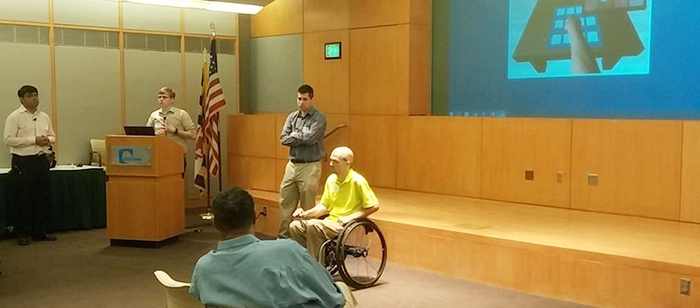
The objective of ACCESS is to develop fabric capacitor sensor arrays as a holistic, wearable, touchless sensing solution. The fabric sensors are lightweight, flexible, and can therefore be integrated into items of everyday use. Further, the capacitive sensing hardware is low-power, unobtrusive, and easily maintainable. The research includes: the construction of fabric sensor prototypes and custom sensing hardware; the development of adaptive signal processing and gesture recognition; and the creation of an assistive cyber-physical interface for mobility impairment. The research is conducted with advisement from medical professionals and private consultants, and evaluated in clinical trials by individuals with upper-extremity mobility impairment. Proposed future work includes evaluation of the assistive device for computational overhead, the inclusion of personal contextual information in gesture recognition and device actuation, and investigation of a dense spatial-resolution capacitor sensor array as a low-resolution greyscale imaging system.
Committee: Drs. Nilanjan Banerjee and Ryan Robucci (Chairs), Chintan Patel, Sandy McCombe-Waller (UMB Medical School)
]]>
Ph.D. Proposal ACCESS: An Assistive Contactless Capacitive Electrostatic Sensing System Alexander Nelson 12:00pm Friday, 21 August 2015, ITE 325b The objective of ACCESS is to develop...
http://www.csee.umbc.edu/2015/08/phd-proposal-assistive-contactless-capacitive-electrostatic-sensing-system-12pm-821/
https://dev.my.umbc.edu/api/v0/pixel/news/53495/guest@my.umbc.edu/776bc6d1a9e148b889d4ca616b355001/api/pixel
computer-engineering
graduate
news
research
students
talks
Computer Science and Electrical Engineering
https://dev.my.umbc.edu/groups/csee
https://assets3-dev.my.umbc.edu/system/shared/avatars/groups/000/000/099/d117dca133c64bf78a4b7696dd007189/xsmall.png?1314043393
https://assets1-dev.my.umbc.edu/system/shared/avatars/groups/000/000/099/d117dca133c64bf78a4b7696dd007189/original.png?1314043393
https://assets1-dev.my.umbc.edu/system/shared/avatars/groups/000/000/099/d117dca133c64bf78a4b7696dd007189/xxlarge.png?1314043393
https://assets4-dev.my.umbc.edu/system/shared/avatars/groups/000/000/099/d117dca133c64bf78a4b7696dd007189/xlarge.png?1314043393
https://assets3-dev.my.umbc.edu/system/shared/avatars/groups/000/000/099/d117dca133c64bf78a4b7696dd007189/large.png?1314043393
https://assets1-dev.my.umbc.edu/system/shared/avatars/groups/000/000/099/d117dca133c64bf78a4b7696dd007189/medium.png?1314043393
https://assets2-dev.my.umbc.edu/system/shared/avatars/groups/000/000/099/d117dca133c64bf78a4b7696dd007189/small.png?1314043393
https://assets3-dev.my.umbc.edu/system/shared/avatars/groups/000/000/099/d117dca133c64bf78a4b7696dd007189/xsmall.png?1314043393
https://assets3-dev.my.umbc.edu/system/shared/avatars/groups/000/000/099/d117dca133c64bf78a4b7696dd007189/xxsmall.png?1314043393
Computer Science and Electrical Engineering
0
0
true
Thu, 20 Aug 2015 21:24:37 -0400
PhD proposal: Data, Energy, and Privacy Management Techniques for Sustainable Microgrids, 11am 8/11

Ph.D. Proposal Defense
Data, Energy, and Privacy Management
Techniques for Sustainable Microgrids
Zhichuan Huang
11:00am Tuesday, 11 August 2015, ITE 325b
Sustainable microgrids have gained increasing attention recently, because they can provide the power supply to places i) where the traditional power grid does not exist due to the poor economy or limited number of residences (e.g., islands); and ii) when the traditional power grid is temporally not functioning due to severe weather conditions (e.g., storms). However, in order to achieve sustainability, there are a lot of challenges to be addressed. In this thesis, we propose to investigate three key techniques in sustainable microgrids. First, we investigate the big energy data management problem and present E-Sketch, a middleware for utility companies to gather data from smart meters with much less storage and communication overhead. E-Sketch utilizes adaptive sampling to compress power consumption changes in time domain. Then frequency compression is applied to further compress the sampled data.
The second key technique is the energy management in microgrids. Because energy generation and demand in each individual home and microgrid is not matching, the key challenge of the energy management is to model the existing energy demand and propose novel energy management to reduce the overall energy usage and cost in microgrids. In this technique, we study the theoretical, technical, and economic feasibility of sustainable microgrids. To enable distributed energy management, energy consumption data of different homes needs to be shared in the microgrid. Thus an important problem is how we guarantee that the shared data can only be used for energy management but not revealing the privacy of individual homes in the microgrid. To address this problem, we leverage the unique feature of hybrid AC-DC microgrids and propose the third technique — Shepherd, a privacy protection framework to effectively protect occupants’ privacy. In Shepherd, we provide a generic model for energy consumption hiding from different types of detection techniques.
Committee: Drs. Ting Zhu (chair), Nilanjan Banerjee, Chintan Patel, and David Irwin (UMass Amherst)
]]>
Ph.D. Proposal Defense Data, Energy, and Privacy Management Techniques for Sustainable Microgrids Zhichuan Huang 11:00am Tuesday, 11 August 2015, ITE 325b Sustainable microgrids have...
http://www.csee.umbc.edu/2015/08/phd-proposal-data-energy-and-privacy-management-techniques-for-sustainable-microgrids-11am-811/
https://dev.my.umbc.edu/api/v0/pixel/news/53213/guest@my.umbc.edu/a23776996423c3d96c5c306f45de896b/api/pixel
computer-science
graduate
news
research
talks
Computer Science and Electrical Engineering
https://dev.my.umbc.edu/groups/csee
https://assets3-dev.my.umbc.edu/system/shared/avatars/groups/000/000/099/d117dca133c64bf78a4b7696dd007189/xsmall.png?1314043393
https://assets1-dev.my.umbc.edu/system/shared/avatars/groups/000/000/099/d117dca133c64bf78a4b7696dd007189/original.png?1314043393
https://assets1-dev.my.umbc.edu/system/shared/avatars/groups/000/000/099/d117dca133c64bf78a4b7696dd007189/xxlarge.png?1314043393
https://assets4-dev.my.umbc.edu/system/shared/avatars/groups/000/000/099/d117dca133c64bf78a4b7696dd007189/xlarge.png?1314043393
https://assets3-dev.my.umbc.edu/system/shared/avatars/groups/000/000/099/d117dca133c64bf78a4b7696dd007189/large.png?1314043393
https://assets1-dev.my.umbc.edu/system/shared/avatars/groups/000/000/099/d117dca133c64bf78a4b7696dd007189/medium.png?1314043393
https://assets2-dev.my.umbc.edu/system/shared/avatars/groups/000/000/099/d117dca133c64bf78a4b7696dd007189/small.png?1314043393
https://assets3-dev.my.umbc.edu/system/shared/avatars/groups/000/000/099/d117dca133c64bf78a4b7696dd007189/xsmall.png?1314043393
https://assets3-dev.my.umbc.edu/system/shared/avatars/groups/000/000/099/d117dca133c64bf78a4b7696dd007189/xxsmall.png?1314043393
Computer Science and Electrical Engineering
2
0
true
Tue, 11 Aug 2015 09:06:52 -0400
PhD proposal: Holistic Home Energy Management: From Sensing to Data Analytics, 2pm 8/11

Ph.D. Proposal Defense
Holistic Home Energy Management:
From Sensing to Data Analytics
David Lachut
2:00pm Tuesday, 11 August 2015, ITE 325b
As home automation tools become more prevalent, they provide great potential to assist energy conservation and promote sustainable energy use in a way that increases users’ quality of life. This paper proposes the Greenhome System: a software system for using off-the-shelf home automation components and back-end data analytics to provide intelligent home energy management capabilities primarily targeted to renewable powered homes. The system will take input from various sensors and user input to detect user activities, predict home energy consumption, and make energy consumption recommendations to users. To accomplish the project goals, the Greenhome system requires in-home hardware and software components, a mobile component for user interaction, and a server component to tie them together. These components will accomplish tasks of data collection and analysis, activity and anomaly detection, prediction, planning, and recommendation.
This project builds on prior research in several areas, combining such diverse fields as predictive analytics, data visualization and annotation, planning, and recommender systems into a holistic approach. Combining these fields will result in new adaptations and make the overall Greenhome System a novel contribution. Work has begun on the Greenhome System preliminary to this proposal, with published work on residential sensor system design and implementation, data annotation collection, and energy demand prediction. It remains to incorporate automated self-maintenance, user activity detection, and personalized recommendations into a holistic system for home energy management.
Committee: Drs. Nilanjan Banerjee (chair), Ting Zhu, Charles Nicholas, Nirmalya Roy
]]>
Ph.D. Proposal Defense Holistic Home Energy Management: From Sensing to Data Analytics David Lachut 2:00pm Tuesday, 11 August 2015, ITE 325b As home automation tools become more...
http://www.csee.umbc.edu/2015/08/phd-proposal-holistic-home-energy-management-from-sensing-to-data-analytics-2pm-811/
https://dev.my.umbc.edu/api/v0/pixel/news/53214/guest@my.umbc.edu/89f9498d480f18ce230066dcab3b6997/api/pixel
computer-science
graduate
news
research
talks
Computer Science and Electrical Engineering
https://dev.my.umbc.edu/groups/csee
https://assets3-dev.my.umbc.edu/system/shared/avatars/groups/000/000/099/d117dca133c64bf78a4b7696dd007189/xsmall.png?1314043393
https://assets1-dev.my.umbc.edu/system/shared/avatars/groups/000/000/099/d117dca133c64bf78a4b7696dd007189/original.png?1314043393
https://assets1-dev.my.umbc.edu/system/shared/avatars/groups/000/000/099/d117dca133c64bf78a4b7696dd007189/xxlarge.png?1314043393
https://assets4-dev.my.umbc.edu/system/shared/avatars/groups/000/000/099/d117dca133c64bf78a4b7696dd007189/xlarge.png?1314043393
https://assets3-dev.my.umbc.edu/system/shared/avatars/groups/000/000/099/d117dca133c64bf78a4b7696dd007189/large.png?1314043393
https://assets1-dev.my.umbc.edu/system/shared/avatars/groups/000/000/099/d117dca133c64bf78a4b7696dd007189/medium.png?1314043393
https://assets2-dev.my.umbc.edu/system/shared/avatars/groups/000/000/099/d117dca133c64bf78a4b7696dd007189/small.png?1314043393
https://assets3-dev.my.umbc.edu/system/shared/avatars/groups/000/000/099/d117dca133c64bf78a4b7696dd007189/xsmall.png?1314043393
https://assets3-dev.my.umbc.edu/system/shared/avatars/groups/000/000/099/d117dca133c64bf78a4b7696dd007189/xxsmall.png?1314043393
Computer Science and Electrical Engineering
1
0
true
Tue, 11 Aug 2015 08:53:09 -0400
