MS defense: Epileptic Seizure Detection using Symbolic Aggregate Approximation and Bag of Patterns

MS Thesis Defense
SAX-BOP: Epileptic Seizure Detection using
Symbolic Aggregate Approximation and Bag of Patterns
Sidharth Allani
1:00pm Friday, 12 December 2014, ITE 325b
Epilepsy is a chronic neurological disorder that makes patients susceptible to experiencing recurrent seizures. A seizure occurs when abnormal activity in the brain leads to involuntary body moment, lack of awareness or behavior, short-term loss of memory or attention, short-term unconsciousness, or body convulsions. Epilepsy affects three million people in the United States and accounts for $15.5 billion in direct and indirect costs.
Epilepsy has many different causes, and often no definite cause can be found. Patients who suffer from intractable seizures experience unpredictable and frequent seizures that cannot be controlled using anti-seizure drugs. Such seizures leave the patient traumatized and, due to their uncertainty, the patient’s mobility and independence are restricted, resulting in social isolation and economic hardship.
The research in this thesis aims to detect epileptic seizures and to analyze the performance of Symbolic Aggregate approXimation and the Bag of Patterns representation for seizure event detection. We use Electroencephalogram (EEG) recordings as the data source for seizure detection, which is the recording of electrical activity along the scalp that measures ionic current flows within the neurons of the brain. These signals are a good source of information about abnormal activity in the brain and are helpful in the process of epileptic seizure detection. This problem becomes challenging because of the enormous size of the EEG data, making it difficult to effectively and efficiently analyze these signals and detect a seizure. We use Symbolic Aggregate approXimation (SAX) and the Bag of Patterns Representation (BOP) and analyze their performance with EEG time series data to detect seizures.
Committee: Drs. Tim Oates (chair), Tim Finin and Tinoosh Mohsenin
]]>
MS Thesis Defense SAX-BOP: Epileptic Seizure Detection using Symbolic Aggregate Approximation and Bag of Patterns Sidharth Allani 1:00pm Friday, 12 December 2014, ITE 325b Epilepsy is a...
http://www.csee.umbc.edu/2014/12/ms-defense-epileptic-seizure-detection-using-symbolic-aggregate-approximation-and-bag-of-patterns/
https://dev.my.umbc.edu/api/v0/pixel/news/48647/guest@my.umbc.edu/e3575a4d9ee7bc9a24f6ba4c61b59675/api/pixel
defense
graduate
news
research
students
talks
Computer Science and Electrical Engineering
https://dev.my.umbc.edu/groups/csee
https://assets3-dev.my.umbc.edu/system/shared/avatars/groups/000/000/099/d117dca133c64bf78a4b7696dd007189/xsmall.png?1314043393
https://assets1-dev.my.umbc.edu/system/shared/avatars/groups/000/000/099/d117dca133c64bf78a4b7696dd007189/original.png?1314043393
https://assets1-dev.my.umbc.edu/system/shared/avatars/groups/000/000/099/d117dca133c64bf78a4b7696dd007189/xxlarge.png?1314043393
https://assets4-dev.my.umbc.edu/system/shared/avatars/groups/000/000/099/d117dca133c64bf78a4b7696dd007189/xlarge.png?1314043393
https://assets3-dev.my.umbc.edu/system/shared/avatars/groups/000/000/099/d117dca133c64bf78a4b7696dd007189/large.png?1314043393
https://assets1-dev.my.umbc.edu/system/shared/avatars/groups/000/000/099/d117dca133c64bf78a4b7696dd007189/medium.png?1314043393
https://assets2-dev.my.umbc.edu/system/shared/avatars/groups/000/000/099/d117dca133c64bf78a4b7696dd007189/small.png?1314043393
https://assets3-dev.my.umbc.edu/system/shared/avatars/groups/000/000/099/d117dca133c64bf78a4b7696dd007189/xsmall.png?1314043393
https://assets3-dev.my.umbc.edu/system/shared/avatars/groups/000/000/099/d117dca133c64bf78a4b7696dd007189/xxsmall.png?1314043393
Computer Science and Electrical Engineering
7
0
true
Fri, 12 Dec 2014 08:38:01 -0500
talk: Increasing Base-Station Anonymity in Wireless Ad-hoc and Sensor Networks, 1:15pm Wed 11/12
UMBC ACM techTalk
Increasing Base-Station Anonymity in
Wireless Ad-hoc and Sensor Networks
Profesor Mohamed Younis
University of Maryland, Baltimore County
1:15pm Wednesday, 12 November 2014, ITE 325b
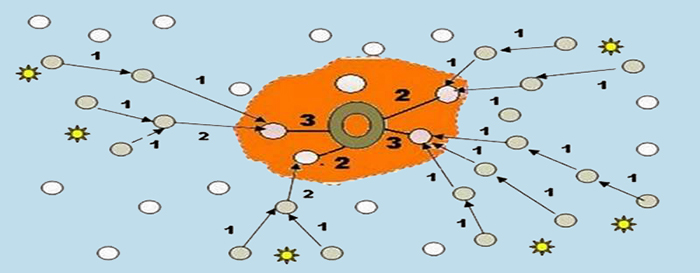
In many applications of ad-hoc networks, the bulk of the traffic is targeted to few nodes. For example, in wireless sensor networks the base-station (BS) collects data from a large number of sensor nodes. Another example is a surveillance network in which the gathered intelligence data about criminal activities flow towards field commanders and/or an in-situ BS. Such a network operation model makes the BS a critical asset for these applications. An adversary can nullify the value of a network by simply disrupting or physically damaging the BS, without targeting individual data sources. The failure of the BS can also cause a loss of important data that may not have been processed and can cause a major negative impact if the BS represents a commanding authority for the network. Therefore, concealing the location and role of the BS is of utmost importance for maintaining a robust network operation.
Packet encryption does not achieve BS anonymity since an adversary can intercept the individual wireless transmissions and employ traffic analysis techniques to follow the data paths without knowing the content of intercepted traffic. Since all active routes end at the BS, the adversary may be able to determine the BS’s location and launch targeted attacks. Similarly, camouflaging or hiding the BS does not provide protection when its location is unveiled via traffic analysis. Employing spread spectrum signaling methods is not a sufficient BS anonymity countermeasure as adversaries are becoming more advanced and equipped with sophisticated intercept technologies. In addition, signal spreading reduces rather than eliminates the prospect of transmission detection. This talk will highlight the traffic analysis threat, present anonymity assessment metrics, provide an overview of effective cross-layer techniques developed in the ESNet Lab for increasing the BS anonymity, and outline open research problems.
Dr. Mohamed Younis is an associate professor in the department of computer science and electrical engineering at the university of Maryland, Baltimore County. He received his Ph.D. degree in computer science from New Jersey Institute of Technology. Before joining UMBC, he was with the Advanced Systems Technology Group, an Aerospace Electronic Systems R&D organization of Honeywell International Inc. While at Honeywell he led multiple projects for building integrated fault tolerant avionics and dependable computing infrastructure. He also participated in the development of the Redundancy Management System, which is a key component of the Vehicle and Mission Computer for NASA-s X-33 space launch vehicle. He has published over 150 technical papers in refereed conferences and journals. Dr. Younis has five granted and two pending patents. In addition, he serves/served on the editorial board of multiple journals and the organizing and technical program committees of numerous conferences. Dr. Younis is a senior member of the IEEE.
]]>
UMBC ACM techTalk Increasing Base-Station Anonymity in Wireless Ad-hoc and Sensor Networks Profesor Mohamed Younis University of Maryland, Baltimore County 1:15pm Wednesday, 12 November...
http://www.csee.umbc.edu/2014/11/talk-increasing-base-station-anonymity-in-wireless-ad-hoc-and-sensor-networks-115pm-wed-1112/
https://dev.my.umbc.edu/api/v0/pixel/news/48004/guest@my.umbc.edu/39e20c4a56e21769fb2d081de1cf873f/api/pixel
faculty-and-staff
news
research
talks
Computer Science and Electrical Engineering
https://dev.my.umbc.edu/groups/csee
https://assets3-dev.my.umbc.edu/system/shared/avatars/groups/000/000/099/d117dca133c64bf78a4b7696dd007189/xsmall.png?1314043393
https://assets1-dev.my.umbc.edu/system/shared/avatars/groups/000/000/099/d117dca133c64bf78a4b7696dd007189/original.png?1314043393
https://assets1-dev.my.umbc.edu/system/shared/avatars/groups/000/000/099/d117dca133c64bf78a4b7696dd007189/xxlarge.png?1314043393
https://assets4-dev.my.umbc.edu/system/shared/avatars/groups/000/000/099/d117dca133c64bf78a4b7696dd007189/xlarge.png?1314043393
https://assets3-dev.my.umbc.edu/system/shared/avatars/groups/000/000/099/d117dca133c64bf78a4b7696dd007189/large.png?1314043393
https://assets1-dev.my.umbc.edu/system/shared/avatars/groups/000/000/099/d117dca133c64bf78a4b7696dd007189/medium.png?1314043393
https://assets2-dev.my.umbc.edu/system/shared/avatars/groups/000/000/099/d117dca133c64bf78a4b7696dd007189/small.png?1314043393
https://assets3-dev.my.umbc.edu/system/shared/avatars/groups/000/000/099/d117dca133c64bf78a4b7696dd007189/xsmall.png?1314043393
https://assets3-dev.my.umbc.edu/system/shared/avatars/groups/000/000/099/d117dca133c64bf78a4b7696dd007189/xxsmall.png?1314043393
Computer Science and Electrical Engineering
0
0
true
Tue, 11 Nov 2014 22:59:47 -0500
talk: R. Balu on Quantum Probabilistic Logic Programming, 2:30pm Tue 10/28, ITE 325b
UMBC Quantum Computation Seminar
Quantum Probabilistic Logic Programming
Radhakrishnan Balu
Army Research Laboratory
2:30-4:00pm, Tuesday, 28 October 2014, ITE 325B
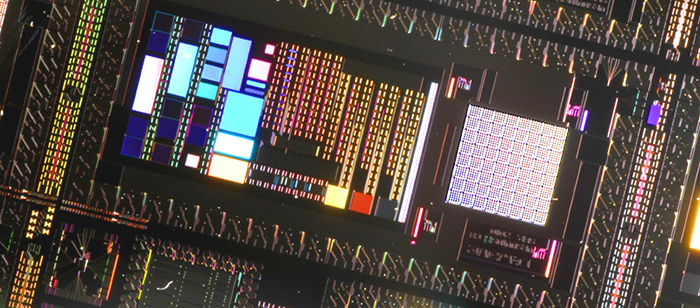
We describe a logic programming language that supports Horn clauses, random variables, and covariance matrices to express and solve problems in probabilistic logic. The Horn clauses of the language wrap random variables and matrices to express probability distributions and statistical correlations, a powerful way to capture relationship between identical distributions that are not independent. A salient feature of the language is a mechanism to implement statistical ensembles and to solve the underlying SAT instances of probabilistic predicates using quantum mechanical machinery. We exploit the fact that classical random variables have quantum decompositions to build the quantum mechanical observables. We establish the semantics of the language in a rigorous fashion by considering an existing probabilistic logic language called PRISM with classical probability measures defined on the Herbrand base and extend it to the case of quantum probability. In the classical case H-interpretations form the sample space and probability measures defined on them lead to consistent definition of probabilities for well formed formulae. In the quantum analogue probability amplitudes are attached to H-interpretations facilitating the model generations and verifications via quantum mechanical superpositions and entanglements. The well formed formulae of the language can be cast as quantum mechanical observables and thus providing an elegant interpretation for their probabilities. We discuss several examples to combine statistical ensembles and predicates of first order logic to reason with situations involving uncertainty.Further studies include extension of the semantics to temporal logic constructs using quantum dynamic evolutions.
Radhakrishnan Balu is a computational scientist with a research focus on application of quantum mechanics to computation, communications, Chemistry, Physics, and biology. He has been working at the Army Research Lab since 2007 and uses D-wave system, a quantum annealer, and state-of-the-art quantum mechanics based software leveraging the high performance computing infrastructure for research. He has over 20 publications, including peer reviewed journal papers. He has five degrees in science and engineering, with a Ph.D in computational chemistry from the University of Maryland, Baltimore County, an M.S in biotechnology from Johns Hopkins University, and a B.S in computer science from the Indian Institute of Science, Bangalore.
Organizer: Prof. Samuel Lomonaco, Sorry, you need javascript to view this email address.
]]>
UMBC Quantum Computation Seminar Quantum Probabilistic Logic Programming Radhakrishnan Balu Army Research Laboratory 2:30-4:00pm, Tuesday, 28 October 2014, ITE 325B We describe a logic...
http://www.csee.umbc.edu/2014/10/17628/
https://dev.my.umbc.edu/api/v0/pixel/news/47588/guest@my.umbc.edu/3ba28a84b4e77874606dcfbc3ce1a6d0/api/pixel
news
research
talks
Computer Science and Electrical Engineering
https://dev.my.umbc.edu/groups/csee
https://assets3-dev.my.umbc.edu/system/shared/avatars/groups/000/000/099/d117dca133c64bf78a4b7696dd007189/xsmall.png?1314043393
https://assets1-dev.my.umbc.edu/system/shared/avatars/groups/000/000/099/d117dca133c64bf78a4b7696dd007189/original.png?1314043393
https://assets1-dev.my.umbc.edu/system/shared/avatars/groups/000/000/099/d117dca133c64bf78a4b7696dd007189/xxlarge.png?1314043393
https://assets4-dev.my.umbc.edu/system/shared/avatars/groups/000/000/099/d117dca133c64bf78a4b7696dd007189/xlarge.png?1314043393
https://assets3-dev.my.umbc.edu/system/shared/avatars/groups/000/000/099/d117dca133c64bf78a4b7696dd007189/large.png?1314043393
https://assets1-dev.my.umbc.edu/system/shared/avatars/groups/000/000/099/d117dca133c64bf78a4b7696dd007189/medium.png?1314043393
https://assets2-dev.my.umbc.edu/system/shared/avatars/groups/000/000/099/d117dca133c64bf78a4b7696dd007189/small.png?1314043393
https://assets3-dev.my.umbc.edu/system/shared/avatars/groups/000/000/099/d117dca133c64bf78a4b7696dd007189/xsmall.png?1314043393
https://assets3-dev.my.umbc.edu/system/shared/avatars/groups/000/000/099/d117dca133c64bf78a4b7696dd007189/xxsmall.png?1314043393
Computer Science and Electrical Engineering
1
0
true
Sun, 26 Oct 2014 22:10:43 -0400
Sun, 26 Oct 2014 22:10:43 -0400
Inside Look at Grad School & Summer Research: How to Prepare, Get Accepted, and Succeed.
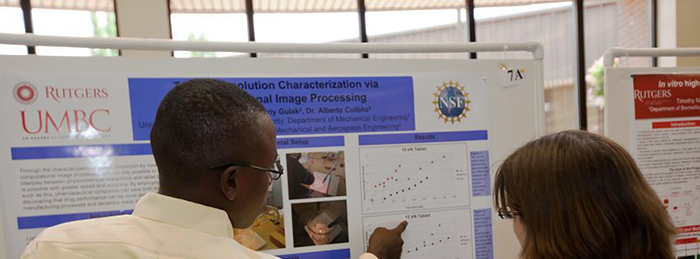
If you are interested in going on to graduate school after graduation, either directly or later, and either full-time and part time, you might attend the following workshop on Monday, October 27.
An Inside Look at Graduate School & Summer Research:
How to Prepare, Get Accepted, and Succeed
Evelyn S. Erenrich, PhD
Asst Dean, Rutgers Graduate School-New Brunswick
Rutgers University
12– 1pm, Monday October 27, 2014
Public Policy Bldg 105
In addition to discussing strategies for research success, I will spotlight exciting programs and interdisciplinary opportunities at Rutgers University, including a summer program, RiSE (Research in Science & Engineering). I will be joined by a UMBC alumnus, now a doctoral Fellow at Rutgers, who will give his personal perspective. Several current UMBC undergraduates who participated in our RiSE program last summer will discuss their experiences.
This session is arranged by the Meyerhoff Program, but all UMBC students are welcome. Students can also sign up for individual appointments before or after the presentation by contacting Ms. Alicia Hall, Sorry, you need javascript to view this email address.
For a flyer and more details, see here. Please contact Dr. Erenrich if you have any questions (Sorry, you need javascript to view this email address. , 848.932.9286).
]]>
If you are interested in going on to graduate school after graduation, either directly or later, and either full-time and part time, you might attend the following workshop on Monday, October 27....
http://www.csee.umbc.edu/2014/10/inside-look-at-grad-school-summer-research-how-to-prepare-get-accepted-and-succeed/
https://dev.my.umbc.edu/api/v0/pixel/news/47488/guest@my.umbc.edu/09203a41277e93de28f199e828379204/api/pixel
news
students
talks
undergraduate
Computer Science and Electrical Engineering
https://dev.my.umbc.edu/groups/csee
https://assets3-dev.my.umbc.edu/system/shared/avatars/groups/000/000/099/d117dca133c64bf78a4b7696dd007189/xsmall.png?1314043393
https://assets1-dev.my.umbc.edu/system/shared/avatars/groups/000/000/099/d117dca133c64bf78a4b7696dd007189/original.png?1314043393
https://assets1-dev.my.umbc.edu/system/shared/avatars/groups/000/000/099/d117dca133c64bf78a4b7696dd007189/xxlarge.png?1314043393
https://assets4-dev.my.umbc.edu/system/shared/avatars/groups/000/000/099/d117dca133c64bf78a4b7696dd007189/xlarge.png?1314043393
https://assets3-dev.my.umbc.edu/system/shared/avatars/groups/000/000/099/d117dca133c64bf78a4b7696dd007189/large.png?1314043393
https://assets1-dev.my.umbc.edu/system/shared/avatars/groups/000/000/099/d117dca133c64bf78a4b7696dd007189/medium.png?1314043393
https://assets2-dev.my.umbc.edu/system/shared/avatars/groups/000/000/099/d117dca133c64bf78a4b7696dd007189/small.png?1314043393
https://assets3-dev.my.umbc.edu/system/shared/avatars/groups/000/000/099/d117dca133c64bf78a4b7696dd007189/xsmall.png?1314043393
https://assets3-dev.my.umbc.edu/system/shared/avatars/groups/000/000/099/d117dca133c64bf78a4b7696dd007189/xxsmall.png?1314043393
Computer Science and Electrical Engineering
0
0
true
Wed, 22 Oct 2014 08:39:53 -0400
Wed, 22 Oct 2014 08:39:53 -0400
talk: How to program the D-Wave quantum annealing computer, 2:30 Tue 9/9
UMBC Quantum Computation Seminar
How to program the D-Wave Quantum Annealing Computer?
Omar Shehab
2:30-4:00 pm, Tuesday, 9 September 2014, ITE 325B
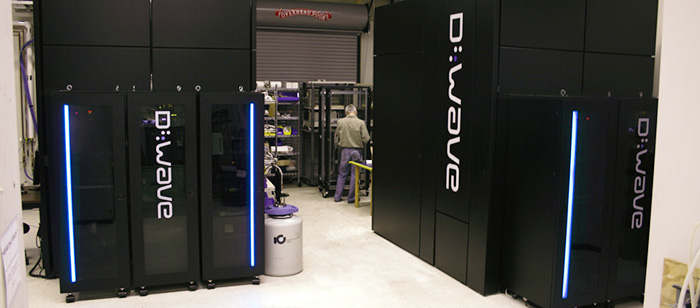
In this tutorial session, we will give a gentle introduction to the programming model of the D-Wave Quantum Annealing Computer. The implementations of a number of programs will be demonstrated. Mapping of generic problems, minor embedding of problem Ising graphs, classical computational complexity of problem mapping and different system parameters will be discussed in details. We will also discuss how to enhance the success probability of finding a solution.
Omar Shehab is a PhD student of the department of Computer Science and Electrical Engineering working under the direction of Professor Samuel Lomonaco. Omar’s research areas of interest are quantum Hamiltonian complexity and quantum cryptography.
]]>
UMBC Quantum Computation Seminar How to program the D-Wave Quantum Annealing Computer? Omar Shehab 2:30-4:00 pm, Tuesday, 9 September 2014, ITE 325B In this tutorial session, we will give...
http://www.csee.umbc.edu/2014/09/talk-how-to-program-the-d-wave-quantum-annealing-computer-230-tue-99/
https://dev.my.umbc.edu/api/v0/pixel/news/46199/guest@my.umbc.edu/7b153658ba348b4a9f00cc179b467cc4/api/pixel
news
talks
Computer Science and Electrical Engineering
https://dev.my.umbc.edu/groups/csee
https://assets3-dev.my.umbc.edu/system/shared/avatars/groups/000/000/099/d117dca133c64bf78a4b7696dd007189/xsmall.png?1314043393
https://assets1-dev.my.umbc.edu/system/shared/avatars/groups/000/000/099/d117dca133c64bf78a4b7696dd007189/original.png?1314043393
https://assets1-dev.my.umbc.edu/system/shared/avatars/groups/000/000/099/d117dca133c64bf78a4b7696dd007189/xxlarge.png?1314043393
https://assets4-dev.my.umbc.edu/system/shared/avatars/groups/000/000/099/d117dca133c64bf78a4b7696dd007189/xlarge.png?1314043393
https://assets3-dev.my.umbc.edu/system/shared/avatars/groups/000/000/099/d117dca133c64bf78a4b7696dd007189/large.png?1314043393
https://assets1-dev.my.umbc.edu/system/shared/avatars/groups/000/000/099/d117dca133c64bf78a4b7696dd007189/medium.png?1314043393
https://assets2-dev.my.umbc.edu/system/shared/avatars/groups/000/000/099/d117dca133c64bf78a4b7696dd007189/small.png?1314043393
https://assets3-dev.my.umbc.edu/system/shared/avatars/groups/000/000/099/d117dca133c64bf78a4b7696dd007189/xsmall.png?1314043393
https://assets3-dev.my.umbc.edu/system/shared/avatars/groups/000/000/099/d117dca133c64bf78a4b7696dd007189/xxsmall.png?1314043393
Computer Science and Electrical Engineering
0
0
true
Mon, 08 Sep 2014 19:01:18 -0400
PhD Defense, E. Birrane on Virtual Circuit Provisioning in Challenged Sensor Internetworks: with Application to the Solar System Internet, 10am Mon 8/11
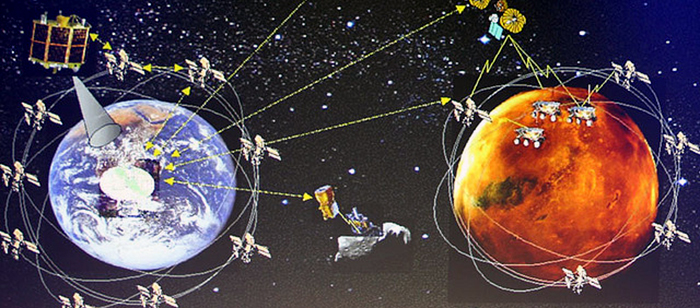
Dissertation Defense
Virtual Circuit Provisioning in Challenged Sensor Internetworks:
with Application to the Solar System Internet
Ed Birrane
10:00am-12:00pm Monday, 11 August 2014, ITE325b
In this thesis, we present a challenged sensor internetwork (CSI) networking architecture which federates heterogeneous constituent networks behind an overlay routing mechanism abstracted from individual data link layers. The CSI is unique and required to implement expanding sensor networks.
Demand for sensing networks with increasing spatial footprints is evidenced by ongoing efforts to build geo-political border monitoring networks, intelligent highway initiatives, automated undersea surveillance, and NASA effort to construct a Solar System Internet. Existing network technologies fail to address multiple physical links, frequent disruptions, and significant signal propagation delays. The construction and maintenance of virtual circuits in an internetwork abstracted from differences in the physical, data-link, and transport layers of an internetwork represents a unique research contribution with immediate utility for a wide variety of sensing network concepts.
We describe the CSI architecture as the intersection of wireless, delay-tolerant, and heterogeneous networks and describe special characteristics of this architecture than enable useful assumptions to optimize messaging. We define an internetwork routing (INR) framework that decomposes the routing function into discrete logical steps and we provide algorithms for each of these steps. An inferred Contact Graph Routing (iCGR) algorithm populates logical graphs from local nodes. A Contact Graph Routing with Extension Blocks (CGR-EB) algorithm provides a hybrid source-path algorithm for synchronizing link state along network paths. A Predictive Capacity Consumption (PCC) algorithm exploits CGR-EB data to build a congestion model. Payload Aggregation and Fragmentation (PAF) and Traffic-Shaping Contacts (TSC) algorithms condition data and place limits on the amount of internetwork traffic carried over local networks.
From simulation, iCGR performs within ~15% of a perfect-knowledge system. CGR-EB has a speedup over standard approaches by 300% in stable topologies, by 3000% in unstable topologies, and by 11000% in unstable topologies with non-monotonic cost functions. PCC delivers 97% more data in congested networks over table-based approaches and 37% more data than the INR framework without the congestion model. PAF/TSC reduces message count by 43% while increasing goodput by 63%.
Together, these algorithms build and monitor virtual circuits in the CSI architecture. Portions of this work are in consideration for deployment in NASA networks.
Committee: Drs. Alan Sherman (Co-Chair, UMBC), Mohammed Younis (Co-Chair, UMBC), Dhananjay Phatak (UMBC), Vinton Cerf (Google), Keith Scott (MITRE), Hans Kruse (OU)
]]>
Dissertation Defense Virtual Circuit Provisioning in Challenged Sensor Internetworks: with Application to the Solar System Internet Ed Birrane 10:00am-12:00pm Monday, 11 August 2014,...
http://www.csee.umbc.edu/2014/08/phd-defense-e-birrane-on-virtual-circuit-provisioning-in-challenged-sensor-internetworks-with-application-to-the-solar-system-internet-10am-mon-811/
https://dev.my.umbc.edu/api/v0/pixel/news/45669/guest@my.umbc.edu/3b65a38cde5540392909f4fd7599c268/api/pixel
computer-science
defense
graduate
news
research
talks
Computer Science and Electrical Engineering
https://dev.my.umbc.edu/groups/csee
https://assets3-dev.my.umbc.edu/system/shared/avatars/groups/000/000/099/d117dca133c64bf78a4b7696dd007189/xsmall.png?1314043393
https://assets1-dev.my.umbc.edu/system/shared/avatars/groups/000/000/099/d117dca133c64bf78a4b7696dd007189/original.png?1314043393
https://assets1-dev.my.umbc.edu/system/shared/avatars/groups/000/000/099/d117dca133c64bf78a4b7696dd007189/xxlarge.png?1314043393
https://assets4-dev.my.umbc.edu/system/shared/avatars/groups/000/000/099/d117dca133c64bf78a4b7696dd007189/xlarge.png?1314043393
https://assets3-dev.my.umbc.edu/system/shared/avatars/groups/000/000/099/d117dca133c64bf78a4b7696dd007189/large.png?1314043393
https://assets1-dev.my.umbc.edu/system/shared/avatars/groups/000/000/099/d117dca133c64bf78a4b7696dd007189/medium.png?1314043393
https://assets2-dev.my.umbc.edu/system/shared/avatars/groups/000/000/099/d117dca133c64bf78a4b7696dd007189/small.png?1314043393
https://assets3-dev.my.umbc.edu/system/shared/avatars/groups/000/000/099/d117dca133c64bf78a4b7696dd007189/xsmall.png?1314043393
https://assets3-dev.my.umbc.edu/system/shared/avatars/groups/000/000/099/d117dca133c64bf78a4b7696dd007189/xxsmall.png?1314043393
Computer Science and Electrical Engineering
3
0
true
Mon, 04 Aug 2014 14:50:20 -0400
PhD proposal: C. Grasso, Information Extraction from Clinical Notes, 11am Mon 8/4

PhD Dissertation Proposal
“S:PT.-HAS NO PMD.”
Information Extraction from Clinical Notes
Clare Grasso
11:00am Monday, 4 August 2014, ITE 325b
Clinical decision support (CDS) systems aid clinical decision making by matching an individual patient’s data to a computerized knowledge base in order to present clinicians with patient-specific recommendations. The need for methods to extract the clinical information in the free-text portions of the clinical record into a form that clinical decision support systems could access and utilize has been identified as one of the top five grand challenges in clinical decision support. This research focuses on investigating scalable machine learning and semantic techniques that do not rely on an underlying grammar to extract medical concepts in the text in order to apply them in CDS on commodity hardware and software systems. Additionally, by packaging the extracted data within a semantic representation, the facts can be combined with other semantically encoded facts and reasoned over. This allows other clinically relevant facts to be inferred which are not directly mentioned in the text and presented to the clinician for decision making.
Committee: Drs. Anupam Joshi (chair), Tim Finin, Aryya Gangopadhyay, Charles Nicholas, Claudia Pearce and Eliot Siegel
]]>
PhD Dissertation Proposal “S:PT.-HAS NO PMD.” Information Extraction from Clinical Notes Clare Grasso 11:00am Monday, 4 August 2014, ITE 325b Clinical decision support (CDS) systems aid...
http://www.csee.umbc.edu/2014/08/phd-proposal-c-grasso-information-extraction-from-clinical-notes-11am-mon-84/
https://dev.my.umbc.edu/api/v0/pixel/news/45649/guest@my.umbc.edu/a160fa57f1c87b830c8be46212e4e0b2/api/pixel
computer-science
graduate
news
research
talks
Computer Science and Electrical Engineering
https://dev.my.umbc.edu/groups/csee
https://assets3-dev.my.umbc.edu/system/shared/avatars/groups/000/000/099/d117dca133c64bf78a4b7696dd007189/xsmall.png?1314043393
https://assets1-dev.my.umbc.edu/system/shared/avatars/groups/000/000/099/d117dca133c64bf78a4b7696dd007189/original.png?1314043393
https://assets1-dev.my.umbc.edu/system/shared/avatars/groups/000/000/099/d117dca133c64bf78a4b7696dd007189/xxlarge.png?1314043393
https://assets4-dev.my.umbc.edu/system/shared/avatars/groups/000/000/099/d117dca133c64bf78a4b7696dd007189/xlarge.png?1314043393
https://assets3-dev.my.umbc.edu/system/shared/avatars/groups/000/000/099/d117dca133c64bf78a4b7696dd007189/large.png?1314043393
https://assets1-dev.my.umbc.edu/system/shared/avatars/groups/000/000/099/d117dca133c64bf78a4b7696dd007189/medium.png?1314043393
https://assets2-dev.my.umbc.edu/system/shared/avatars/groups/000/000/099/d117dca133c64bf78a4b7696dd007189/small.png?1314043393
https://assets3-dev.my.umbc.edu/system/shared/avatars/groups/000/000/099/d117dca133c64bf78a4b7696dd007189/xsmall.png?1314043393
https://assets3-dev.my.umbc.edu/system/shared/avatars/groups/000/000/099/d117dca133c64bf78a4b7696dd007189/xxsmall.png?1314043393
Computer Science and Electrical Engineering
0
0
true
Fri, 01 Aug 2014 12:51:54 -0400
MS defense: M. Madeira, Analyzing Opinions in the Mom Community on Youtube, 2pm Wed 7/30
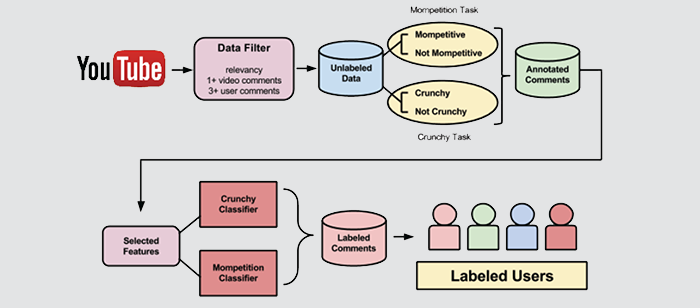
MS Thesis Defense
Analyzing Opinions in the Mom Community on Youtube
Morgan Madeira
2:00pm Wednesday, 30 June 2014, ITE 325b
The “Mom Community” on YouTube consists of a large group of parents that share their parenting beliefs and experiences to connect and share information with others. Although there is a lot of positive support in this community, it is often a hotspot for debate of controversial parenting topics. Many of these topics have one side that represents the belief of “crunchy” moms. Crunchy is a term used to describe parents that intentionally choose natural parenting methods and eco-friendly products to raise their children. Debate over these practices has led to “mompetition” and the idea that there is a right way to parent. This research investigates these claims such as how different crunchy topics are discussed and how the community has changed over time. Video comments and user data are collected from YouTube and used to understand parenting practices and opinions in the mom community.
Committee: Drs. Anupam Joshi (chair), Tim Finin, Karuna Joshi
]]>
MS Thesis Defense Analyzing Opinions in the Mom Community on Youtube Morgan Madeira 2:00pm Wednesday, 30 June 2014, ITE 325b The “Mom Community” on YouTube consists of a large group of...
http://www.csee.umbc.edu/2014/07/ms-defense-m-madeira-analyzing-opinions-in-the-mom-community-on-youtube-2pm-wed-730/
https://dev.my.umbc.edu/api/v0/pixel/news/45598/guest@my.umbc.edu/95eb0209206f85139a4275ab7080d217/api/pixel
computer-science
defense
graduate
news
research
talks
Computer Science and Electrical Engineering
https://dev.my.umbc.edu/groups/csee
https://assets3-dev.my.umbc.edu/system/shared/avatars/groups/000/000/099/d117dca133c64bf78a4b7696dd007189/xsmall.png?1314043393
https://assets1-dev.my.umbc.edu/system/shared/avatars/groups/000/000/099/d117dca133c64bf78a4b7696dd007189/original.png?1314043393
https://assets1-dev.my.umbc.edu/system/shared/avatars/groups/000/000/099/d117dca133c64bf78a4b7696dd007189/xxlarge.png?1314043393
https://assets4-dev.my.umbc.edu/system/shared/avatars/groups/000/000/099/d117dca133c64bf78a4b7696dd007189/xlarge.png?1314043393
https://assets3-dev.my.umbc.edu/system/shared/avatars/groups/000/000/099/d117dca133c64bf78a4b7696dd007189/large.png?1314043393
https://assets1-dev.my.umbc.edu/system/shared/avatars/groups/000/000/099/d117dca133c64bf78a4b7696dd007189/medium.png?1314043393
https://assets2-dev.my.umbc.edu/system/shared/avatars/groups/000/000/099/d117dca133c64bf78a4b7696dd007189/small.png?1314043393
https://assets3-dev.my.umbc.edu/system/shared/avatars/groups/000/000/099/d117dca133c64bf78a4b7696dd007189/xsmall.png?1314043393
https://assets3-dev.my.umbc.edu/system/shared/avatars/groups/000/000/099/d117dca133c64bf78a4b7696dd007189/xxsmall.png?1314043393
Computer Science and Electrical Engineering
8
3
true
Tue, 29 Jul 2014 08:07:33 -0400
Phd proposal: Lisa Mathews, Creating a Collaborative Situational-Aware IDPS, 11am Tue 6/10
Ph.D. Dissertation proposal
Creating a Collaborative Situational-Aware IDPS
Lisa Mathews
11:00am Tuesday, 10 June 2014, ITE 346
Traditional intrusion detection and prevention systems (IDPSs) have well known limitations that decrease their utility against many kinds of attacks. Current state-of-the-art IDPSs are point based solutions that perform a simple analysis of host or network data and then flag an alert. Only known attacks whose signatures have been identified and stored in some form can be discovered by most of these systems. They cannot detect “zero day” type attacks or attacks that use “low-and-slow” vectors. Many times an attack is only revealed by post facto forensics after some damage has already been done.
To address these issues, we are developing a semantic approach to intrusion detection that uses traditional as well non-traditional sensors collaboratively. Traditional sensors include hardware or software such as network scanners, host scanners, and IDPSs like Snort. Potential non-traditional sensors include open sources or information such as online forums, blogs, and vulnerability databases which contain textual descriptions of proposed attacks or discovered exploits. After analyzing the data streams from these sensors, the information extracted is added as facts to a knowledge base using a W3C standards based ontology that our group has developed. We have also developed rules/policies that can reason over the facts to identify the situation or context in which an attack can occur. By having different sources collaborate to discover potential security threats and create additional rules/policies, the resulting situational-aware IDPS is better equipped to stop creative attacks such as those that follow a low-and-slow intrusion pattern. Leveraging information from these heterogeneous sources leads to a more robust, situational-aware IDPS that is better equipped to detect complicated attacks. This will allow for detection in soft real time. We will create a prototype of this system and test the efficiency and accuracy of its ability to detect complex malware.
Committee: Drs. Anupam Joshi (Chair), Tim Finin, John Pinkston, Charles Nicholas, Claudia Pearce, Yul Williams
]]>
Ph.D. Dissertation proposal Creating a Collaborative Situational-Aware IDPS Lisa Mathews 11:00am Tuesday, 10 June 2014, ITE 346 Traditional intrusion detection and prevention systems...
http://www.csee.umbc.edu/2014/06/phd-proposal-lisa-mathews-creating-a-collaborative-situational-aware-idps-11am-tue-610/
https://dev.my.umbc.edu/api/v0/pixel/news/44969/guest@my.umbc.edu/cd63ae72205ad7ff326e780758043f76/api/pixel
cybersecurity
graduate
news
research
talks
Computer Science and Electrical Engineering
https://dev.my.umbc.edu/groups/csee
https://assets3-dev.my.umbc.edu/system/shared/avatars/groups/000/000/099/d117dca133c64bf78a4b7696dd007189/xsmall.png?1314043393
https://assets1-dev.my.umbc.edu/system/shared/avatars/groups/000/000/099/d117dca133c64bf78a4b7696dd007189/original.png?1314043393
https://assets1-dev.my.umbc.edu/system/shared/avatars/groups/000/000/099/d117dca133c64bf78a4b7696dd007189/xxlarge.png?1314043393
https://assets4-dev.my.umbc.edu/system/shared/avatars/groups/000/000/099/d117dca133c64bf78a4b7696dd007189/xlarge.png?1314043393
https://assets3-dev.my.umbc.edu/system/shared/avatars/groups/000/000/099/d117dca133c64bf78a4b7696dd007189/large.png?1314043393
https://assets1-dev.my.umbc.edu/system/shared/avatars/groups/000/000/099/d117dca133c64bf78a4b7696dd007189/medium.png?1314043393
https://assets2-dev.my.umbc.edu/system/shared/avatars/groups/000/000/099/d117dca133c64bf78a4b7696dd007189/small.png?1314043393
https://assets3-dev.my.umbc.edu/system/shared/avatars/groups/000/000/099/d117dca133c64bf78a4b7696dd007189/xsmall.png?1314043393
https://assets3-dev.my.umbc.edu/system/shared/avatars/groups/000/000/099/d117dca133c64bf78a4b7696dd007189/xxsmall.png?1314043393
Computer Science and Electrical Engineering
6
0
true
Mon, 09 Jun 2014 22:27:35 -0400
talk: Mobile Analytics: An Enabler for Urban Lifestyle Applications, 10am Tue 6/24
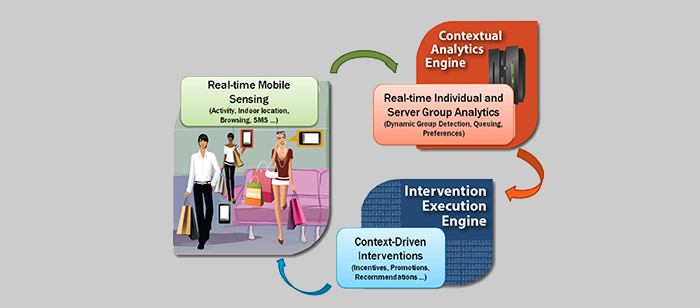
Mobile Analytics: An Enabler for Urban Lifestyle Applications
Professor Archan Misra
School of Information Systems, Singapore Management University
10-11:00am 24 June 2014, ITE 459, UMBC
This talk will describe various research initiatives related to the theme of “urban mobile analytics and applications”, which utilizes smartphone sensor data from multiple individuals to extract near-real time insights about individual and collective behavior in urban public spaces. A major part of this research is being conducted under the auspices of the LiveLabs Experimentation Platform, a unique urban behavioral testbed effort that enables an ecosystem of industry partners to test advanced context-based applications on a pool of approximately 30,000 real-world users in multiple real-world public spaces in Singapore. Besides describing LiveLabs-related research in areas related to energy-efficient mobile sensing and large-scale mobile analytics (e.g., queuing analytics, group detection and adaptive indoor localization). I will describe the role of such analytics for a couple of novel industry-driven applications: (a) in-store shopper intent monitoring and (b) large-scale mobile crowd-tasking.
Archan Misra is an Associate Professor of Information Systems at Singapore Management University (SMU), and a Director of the LiveLabs research center at SMU. Over the past 14 years (as part of his previous jobs with IBM Research and Telcordia Technologies), he has worked extensively in the areas of mobile systems, wireless networking and pervasive computing, and is a co-author on papers that received the Best Paper awards in EUC 2008, ACM WOWMOM 2002 and IEEE MILCOM 2001. Archan’s broad research interests lie in the areas of pervasive computing and mobile systems, with specific current focus on applying mobile sensing and real-time analytics to understand human lifestyle-driven activities in urban spaces. He is presently an Editor of the IEEE Transactions on Mobile Computing and the Elsevier Journal of Pervasive and Mobile Computing and chaired the IEEE Computer Society’s Technical Committee on Computer Communications (TCCC) from 2005-2007. Archan holds a Ph.D. in Electrical and Computer Engineering from the University of Maryland at College Park.
Host: Prof. Nirmalya Roy, Sorry, you need javascript to view this email address.
]]>
Mobile Analytics: An Enabler for Urban Lifestyle Applications Professor Archan Misra School of Information Systems, Singapore Management University 10-11:00am 24 June 2014, ITE 459, UMBC...
http://www.csee.umbc.edu/2014/06/talk-mobile-analytics-an-enabler-for-urban-lifestyle-applications-10am-tue-624/
https://dev.my.umbc.edu/api/v0/pixel/news/44924/guest@my.umbc.edu/8d529841e516a5cb3258f21ab3186f8f/api/pixel
news
research
talks
Computer Science and Electrical Engineering
https://dev.my.umbc.edu/groups/csee
https://assets3-dev.my.umbc.edu/system/shared/avatars/groups/000/000/099/d117dca133c64bf78a4b7696dd007189/xsmall.png?1314043393
https://assets1-dev.my.umbc.edu/system/shared/avatars/groups/000/000/099/d117dca133c64bf78a4b7696dd007189/original.png?1314043393
https://assets1-dev.my.umbc.edu/system/shared/avatars/groups/000/000/099/d117dca133c64bf78a4b7696dd007189/xxlarge.png?1314043393
https://assets4-dev.my.umbc.edu/system/shared/avatars/groups/000/000/099/d117dca133c64bf78a4b7696dd007189/xlarge.png?1314043393
https://assets3-dev.my.umbc.edu/system/shared/avatars/groups/000/000/099/d117dca133c64bf78a4b7696dd007189/large.png?1314043393
https://assets1-dev.my.umbc.edu/system/shared/avatars/groups/000/000/099/d117dca133c64bf78a4b7696dd007189/medium.png?1314043393
https://assets2-dev.my.umbc.edu/system/shared/avatars/groups/000/000/099/d117dca133c64bf78a4b7696dd007189/small.png?1314043393
https://assets3-dev.my.umbc.edu/system/shared/avatars/groups/000/000/099/d117dca133c64bf78a4b7696dd007189/xsmall.png?1314043393
https://assets3-dev.my.umbc.edu/system/shared/avatars/groups/000/000/099/d117dca133c64bf78a4b7696dd007189/xxsmall.png?1314043393
Computer Science and Electrical Engineering
2
0
true
Tue, 03 Jun 2014 12:51:19 -0400
Tue, 03 Jun 2014 12:51:19 -0400