talk: Translational Bioinformatics Approaches to Evaluate and Implement Genomic Medicine Programs, 1pm 4/25
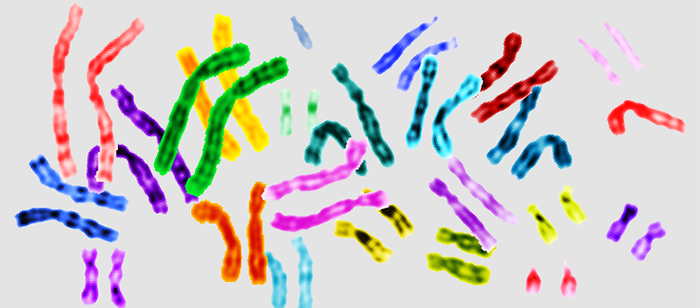
Translational Bioinformatics Approaches to Evaluate
and Implement Genomic Medicine Programs
Dr. Casey Overby, Assistant Professor
Program for Personalized and Genomic Medicine
University of Maryland – Baltimore
1:00pm Friday, 25 April 2014, ITE 325b, UMBC
There is a growing evidence base to support the use of many genomic applications in healthcare. There are, however, several barriers to healthcare providers making use of genomic data and information on a routine basis. In this talk, I will describe some of our challenges and successes with implementing genomic medicine programs within the Program for Personalized and Genomic Medicine at UMB, introduce one way to conceptualize translational research and translational bioinformatics in this context, describe a proposed model for evaluating and implementing genomic medicine programs, and describe some of my current and planned research in translational bioinformatics.
Casey L. Overby is an Assistant Professor of Medicine in the Program for Personalized and Genomic Medicine and the Center for Health-related Informatics and Bio-Imaging at the University of Maryland School of Medicine. She received her Masters of Biotechnology from the University of Pennsylvania in 2006, her PhD in Biomedical and Health Informatics and a Graduate Certificate in Public Health Genetics from the University of Washington in 2011. In 2013, she completed her post-doctoral training in the Department of Biomedical Informatics at Columbia University and started her position at University of Maryland, Baltimore.
Host: Marie desJardins, Sorry, you need javascript to view this email address.
]]>
Translational Bioinformatics Approaches to Evaluate and Implement Genomic Medicine Programs Dr. Casey Overby, Assistant Professor Program for Personalized and Genomic Medicine University of...
http://www.csee.umbc.edu/2014/04/talk-translational-bioinformatics-approaches-to-evaluate-and-implement-genomic-medicine-programs-1pm-425/
https://dev.my.umbc.edu/api/v0/pixel/news/43870/guest@my.umbc.edu/965ca9fd503c9c06d8dc6a93f1f8eead/api/pixel
bioinformatics
news
research
talks
Computer Science and Electrical Engineering
https://dev.my.umbc.edu/groups/csee
https://assets3-dev.my.umbc.edu/system/shared/avatars/groups/000/000/099/d117dca133c64bf78a4b7696dd007189/xsmall.png?1314043393
https://assets1-dev.my.umbc.edu/system/shared/avatars/groups/000/000/099/d117dca133c64bf78a4b7696dd007189/original.png?1314043393
https://assets1-dev.my.umbc.edu/system/shared/avatars/groups/000/000/099/d117dca133c64bf78a4b7696dd007189/xxlarge.png?1314043393
https://assets4-dev.my.umbc.edu/system/shared/avatars/groups/000/000/099/d117dca133c64bf78a4b7696dd007189/xlarge.png?1314043393
https://assets3-dev.my.umbc.edu/system/shared/avatars/groups/000/000/099/d117dca133c64bf78a4b7696dd007189/large.png?1314043393
https://assets1-dev.my.umbc.edu/system/shared/avatars/groups/000/000/099/d117dca133c64bf78a4b7696dd007189/medium.png?1314043393
https://assets2-dev.my.umbc.edu/system/shared/avatars/groups/000/000/099/d117dca133c64bf78a4b7696dd007189/small.png?1314043393
https://assets3-dev.my.umbc.edu/system/shared/avatars/groups/000/000/099/d117dca133c64bf78a4b7696dd007189/xsmall.png?1314043393
https://assets3-dev.my.umbc.edu/system/shared/avatars/groups/000/000/099/d117dca133c64bf78a4b7696dd007189/xxsmall.png?1314043393
Computer Science and Electrical Engineering
0
0
true
Thu, 17 Apr 2014 23:28:57 -0400
Thu, 24 Apr 2014 21:28:57 -0400
talk: Translational Bioinformatics Approaches to Evaluate and Implement Genomic Medicine Programs, 1pm 4/25
Translational Bioinformatics Approaches to Evaluate
and Implement Genomic Medicine Programs
Dr. Casey Overby, Assistant Professor
Program for Personalized and Genomic Medicine
University of Maryland – Baltimore
1:00pm Friday, 25 April 2014, ITE 325b, UMBC
There is a growing evidence base to support the use of many genomic applications in healthcare. There are, however, several barriers to healthcare providers making use of genomic data and information on a routine basis. In this talk, I will describe some of our challenges and successes with implementing genomic medicine programs within the Program for Personalized and Genomic Medicine at UMB, introduce one way to conceptualize translational research and translational bioinformatics in this context, describe a proposed model for evaluating and implementing genomic medicine programs, and describe some of my current and planned research in translational bioinformatics.
Casey L. Overby is an Assistant Professor of Medicine in the Program for Personalized and Genomic Medicine and the Center for Health-related Informatics and Bio-Imaging at the University of Maryland School of Medicine. She received her Masters of Biotechnology from the University of Pennsylvania in 2006, her PhD in Biomedical and Health Informatics and a Graduate Certificate in Public Health Genetics from the University of Washington in 2011. In 2013, she completed her post-doctoral training in the Department of Biomedical Informatics at Columbia University and started her position at University of Maryland, Baltimore.
Host: Marie desJardins, Sorry, you need javascript to view this email address.
]]>
Translational Bioinformatics Approaches to Evaluate and Implement Genomic Medicine Programs Dr. Casey Overby, Assistant Professor Program for Personalized and Genomic Medicine University of...
http://www.csee.umbc.edu/2014/04/talk-translational-bioinformatics-approaches-to-evaluate-and-implement-genomic-medicine-programs-1pm-425/?utm_source=rss&utm_medium=rss&utm_campaign=talk-translational-bioinformatics-approaches-to-evaluate-and-implement-genomic-medicine-programs-1pm-425
https://dev.my.umbc.edu/api/v0/pixel/news/43726/guest@my.umbc.edu/d1ef68d2adb2706bc8b6396913a7c951/api/pixel
bioinformatics
news
research
talks
Computer Science and Electrical Engineering
https://dev.my.umbc.edu/groups/csee
https://assets3-dev.my.umbc.edu/system/shared/avatars/groups/000/000/099/d117dca133c64bf78a4b7696dd007189/xsmall.png?1314043393
https://assets1-dev.my.umbc.edu/system/shared/avatars/groups/000/000/099/d117dca133c64bf78a4b7696dd007189/original.png?1314043393
https://assets1-dev.my.umbc.edu/system/shared/avatars/groups/000/000/099/d117dca133c64bf78a4b7696dd007189/xxlarge.png?1314043393
https://assets4-dev.my.umbc.edu/system/shared/avatars/groups/000/000/099/d117dca133c64bf78a4b7696dd007189/xlarge.png?1314043393
https://assets3-dev.my.umbc.edu/system/shared/avatars/groups/000/000/099/d117dca133c64bf78a4b7696dd007189/large.png?1314043393
https://assets1-dev.my.umbc.edu/system/shared/avatars/groups/000/000/099/d117dca133c64bf78a4b7696dd007189/medium.png?1314043393
https://assets2-dev.my.umbc.edu/system/shared/avatars/groups/000/000/099/d117dca133c64bf78a4b7696dd007189/small.png?1314043393
https://assets3-dev.my.umbc.edu/system/shared/avatars/groups/000/000/099/d117dca133c64bf78a4b7696dd007189/xsmall.png?1314043393
https://assets3-dev.my.umbc.edu/system/shared/avatars/groups/000/000/099/d117dca133c64bf78a4b7696dd007189/xxsmall.png?1314043393
Computer Science and Electrical Engineering
0
0
true
Thu, 17 Apr 2014 23:28:57 -0400
Thu, 17 Apr 2014 23:28:57 -0400
defense: Rosebrock on Image Classification, 9am 4/18
Computer Science and Electrical Engineering
University of Maryland, Baltimore County
Ph.D. Dissertation Defense
A Rapidly Deployable Image Classification System Using Feature Views
Adrian Rosebrock
9:00am Friday, 18 April 2014, ITE 346, UMBC
Constructing an image classification system using strong, local invariant descriptors is both time consuming and tedious, requiring much experimentation and parameter tunings to obtain an adequate performing model. Furthermore, training a system in a given domain and then migrating the model to a separate domain will likely yield poor performance. As the recent Boston Marathon attacks demonstrated, large, unstructured image databases from traffic cameras, security systems, law enforcement officials, and citizens can be quickly amassed for authorities to review; however, reviewing each and every image is an expensive undertaking, in terms of both time and human effort. Inherently, reviewing crime scene images is a classification task. For example, authorities may want to know if a given image contains a suspect, a suspicious package, or if there are injured people in the photo. Given an emergency situation, these classifications will be needed as quickly and accurately as possible. In this work we present a rapidly deployable image classification system using “feature views”, where each view consists of a set of weak, global features. These weak global descriptors are computationally simple to extract, intuitive to understand, and require substantially less parameter tuning than their local invariant counterparts. We demonstrate that by combining weak features with ensemble methods we are able to outperform current state-of-the-art methods or achieve comparable accuracy with much less effort and domain knowledge. We then provide both theoretical and empirical justifications for our ensemble framework that can be used to construct rapidly deployable image classification systems called “Ecosembles”.
Finally, we recognize the fact that image datasets give us the relatively unique opportunity to extract multiple feature representations through the use of various descriptors. In situations where the original dataset is not available for further feature extraction or in cases where multiple feature views are ambiguous (such as predicting income based on geographical location and census data) the Ecosemble method cannot be applied. In order to extend Ecosembles to arbitrary datasets of diverse modalities, we introduce artificial feature views using kernel approximations. These artificial feature views are constructed from a single representation of the data, alleviating the need to explicitly extract multiple feature views. We then apply artificial feature views to a diverse range of non-image classification datasets to demonstrate our method is applicable to multiple modalities, while still outperforming current state-of-the-art methods.
Committee: Drs. Tim Oates (chair), Jesus Caban, Tim Finin, Charles Nicholas, Jian Chen
]]>
Computer Science and Electrical Engineering University of Maryland, Baltimore County Ph.D. Dissertation Defense A Rapidly Deployable Image Classification System Using Feature Views Adrian...
http://www.csee.umbc.edu/2014/04/defense-rosebrock-on-image-classification-9am-418/?utm_source=rss&utm_medium=rss&utm_campaign=defense-rosebrock-on-image-classification-9am-418
https://dev.my.umbc.edu/api/v0/pixel/news/43545/guest@my.umbc.edu/0535e8122c313c9e47bbf819a70965ef/api/pixel
computer-science
defense
graduate
news
talks
Computer Science and Electrical Engineering
https://dev.my.umbc.edu/groups/csee
https://assets3-dev.my.umbc.edu/system/shared/avatars/groups/000/000/099/d117dca133c64bf78a4b7696dd007189/xsmall.png?1314043393
https://assets1-dev.my.umbc.edu/system/shared/avatars/groups/000/000/099/d117dca133c64bf78a4b7696dd007189/original.png?1314043393
https://assets1-dev.my.umbc.edu/system/shared/avatars/groups/000/000/099/d117dca133c64bf78a4b7696dd007189/xxlarge.png?1314043393
https://assets4-dev.my.umbc.edu/system/shared/avatars/groups/000/000/099/d117dca133c64bf78a4b7696dd007189/xlarge.png?1314043393
https://assets3-dev.my.umbc.edu/system/shared/avatars/groups/000/000/099/d117dca133c64bf78a4b7696dd007189/large.png?1314043393
https://assets1-dev.my.umbc.edu/system/shared/avatars/groups/000/000/099/d117dca133c64bf78a4b7696dd007189/medium.png?1314043393
https://assets2-dev.my.umbc.edu/system/shared/avatars/groups/000/000/099/d117dca133c64bf78a4b7696dd007189/small.png?1314043393
https://assets3-dev.my.umbc.edu/system/shared/avatars/groups/000/000/099/d117dca133c64bf78a4b7696dd007189/xsmall.png?1314043393
https://assets3-dev.my.umbc.edu/system/shared/avatars/groups/000/000/099/d117dca133c64bf78a4b7696dd007189/xxsmall.png?1314043393
Computer Science and Electrical Engineering
0
0
true
Sun, 13 Apr 2014 00:56:18 -0400
defense: Rosebrock on Image Classification, 9am 4/18
Computer Science and Electrical Engineering
University of Maryland, Baltimore County
Ph.D. Dissertation Defense
A Rapidly Deployable Image Classification System Using Feature Views
Adrian Rosebrock
9:00am Friday, 18 April 2014, ITE 346, UMBC
Constructing an image classification system using strong, local invariant descriptors is both time consuming and tedious, requiring much experimentation and parameter tunings to obtain an adequate performing model. Furthermore, training a system in a given domain and then migrating the model to a separate domain will likely yield poor performance. As the recent Boston Marathon attacks demonstrated, large, unstructured image databases from traffic cameras, security systems, law enforcement officials, and citizens can be quickly amassed for authorities to review; however, reviewing each and every image is an expensive undertaking, in terms of both time and human effort. Inherently, reviewing crime scene images is a classification task. For example, authorities may want to know if a given image contains a suspect, a suspicious package, or if there are injured people in the photo. Given an emergency situation, these classifications will be needed as quickly and accurately as possible. In this work we present a rapidly deployable image classification system using “feature views”, where each view consists of a set of weak, global features. These weak global descriptors are computationally simple to extract, intuitive to understand, and require substantially less parameter tuning than their local invariant counterparts. We demonstrate that by combining weak features with ensemble methods we are able to outperform current state-of-the-art methods or achieve comparable accuracy with much less effort and domain knowledge. We then provide both theoretical and empirical justifications for our ensemble framework that can be used to construct rapidly deployable image classification systems called “Ecosembles”.
Finally, we recognize the fact that image datasets give us the relatively unique opportunity to extract multiple feature representations through the use of various descriptors. In situations where the original dataset is not available for further feature extraction or in cases where multiple feature views are ambiguous (such as predicting income based on geographical location and census data) the Ecosemble method cannot be applied. In order to extend Ecosembles to arbitrary datasets of diverse modalities, we introduce artificial feature views using kernel approximations. These artificial feature views are constructed from a single representation of the data, alleviating the need to explicitly extract multiple feature views. We then apply artificial feature views to a diverse range of non-image classification datasets to demonstrate our method is applicable to multiple modalities, while still outperforming current state-of-the-art methods.
Committee: Drs. Tim Oates (chair), Jesus Caban, Tim Finin, Charles Nicholas, Jian Chen
]]>
Computer Science and Electrical Engineering University of Maryland, Baltimore County Ph.D. Dissertation Defense A Rapidly Deployable Image Classification System Using Feature Views Adrian...
http://www.csee.umbc.edu/2014/04/defense-rosebrock-on-image-classification-9am-418/
https://dev.my.umbc.edu/api/v0/pixel/news/43871/guest@my.umbc.edu/f67678ed83eccf1b1826b672d2c4ee6a/api/pixel
computer-science
defense
graduate
news
talks
Computer Science and Electrical Engineering
https://dev.my.umbc.edu/groups/csee
https://assets3-dev.my.umbc.edu/system/shared/avatars/groups/000/000/099/d117dca133c64bf78a4b7696dd007189/xsmall.png?1314043393
https://assets1-dev.my.umbc.edu/system/shared/avatars/groups/000/000/099/d117dca133c64bf78a4b7696dd007189/original.png?1314043393
https://assets1-dev.my.umbc.edu/system/shared/avatars/groups/000/000/099/d117dca133c64bf78a4b7696dd007189/xxlarge.png?1314043393
https://assets4-dev.my.umbc.edu/system/shared/avatars/groups/000/000/099/d117dca133c64bf78a4b7696dd007189/xlarge.png?1314043393
https://assets3-dev.my.umbc.edu/system/shared/avatars/groups/000/000/099/d117dca133c64bf78a4b7696dd007189/large.png?1314043393
https://assets1-dev.my.umbc.edu/system/shared/avatars/groups/000/000/099/d117dca133c64bf78a4b7696dd007189/medium.png?1314043393
https://assets2-dev.my.umbc.edu/system/shared/avatars/groups/000/000/099/d117dca133c64bf78a4b7696dd007189/small.png?1314043393
https://assets3-dev.my.umbc.edu/system/shared/avatars/groups/000/000/099/d117dca133c64bf78a4b7696dd007189/xsmall.png?1314043393
https://assets3-dev.my.umbc.edu/system/shared/avatars/groups/000/000/099/d117dca133c64bf78a4b7696dd007189/xxsmall.png?1314043393
Computer Science and Electrical Engineering
0
0
true
Sun, 13 Apr 2014 00:56:18 -0400
talk: A multi-scale approach to analyze large clinical datasets, Noon Thr 4/10
A multi-scale approach to analyze large clinical datasets:
Towards the understanding of the complex effects of concussions
Dr. Jesus Caban
National Intrepid Center of Excellence
Walter Reed, Bethesda, MD
Noon Thursday, 10 April 2014, ITE325b
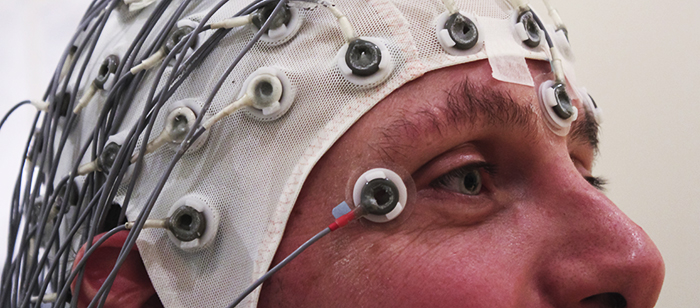
Mild traumatic brain injuries (mTBIs) or concussions are invisible injuries that are poorly understood and their sequelae can be difficult to diagnose. Individuals who have had concussions are at an increased risk of depression, post-traumatic stress disorder (PTSD), headaches, concentration difficulties, and other problems. During the last decade, a significant amount of attention has been given to the acquisition of clinical data from patients suffering from mTBI. Unfortunately, most of the data collection and analysis have focused on individual aspects of the injury, not necessarily on comprehensive and multi-modal analytical techniques to capture the complex biological state of mTBI patients.
This talk will discuss a large-scale informatics database that has been developed to enable interdisciplinary research on mTBI and will introduce a multi-scale approach to mine complex clinical datasets. The millions of multi-modal elements originated from different clinical disciplines are treated as weak features and modeled independently to generate stronger features. Three cases of going from weak to stronger features will be discussed including (a) an inductive/transductive model to extract stable image features from multi-modal MRI scans, (b) a rule-based model used to infer knowledge from blood measurements, and (c) a sentiment analysis-based model to extract behavioral signals from writing samples. Once stronger features are obtained, a relational model is used to integrate the data and extract new knowledge from such a complex dataset.
Dr. Caban is the Acting Chief of Clinical & Research Informatics at the National Intrepid Center of Excellence (NICoE) at Walter Reed Bethesda. He received a Ph.D. in Computer Science from UMBC (2009), his M.S. degree in Computer Science from the University of Kentucky (2005), and his B.S. in Computer Science from the University of Puerto Rico (2002). Over the last eight years Dr. Caban’s research has focused on the design and development of techniques to analyze clinical and imaging data. His research and experience has given him the opportunity to work at top research and healthcare organizations including the National Institutes of Health (NIH), John Hopkins University, the University of Maryland Medical Center, and IBM Research. Dr. Caban is presently an adjunct faculty member at John Hopkins University Applied Physics Lab and a part-time instructor at the Department of Computer Science at UMBC. Recently, he received the 2013-14 JHU/APL Junior faculty award for his commitment to teaching. Currently, he is serving as the Associate Editor of the JAMIA special issue on Visual Analytics in Healthcare and as the contracting officer representative (COR) for the DoD program on “Watson-Like Technologies for TBI/PTSD Clinical Decision Support and Predictive Analytics”.
]]>
A multi-scale approach to analyze large clinical datasets: Towards the understanding of the complex effects of concussions Dr. Jesus Caban National Intrepid Center of Excellence Walter Reed,...
http://www.csee.umbc.edu/2014/04/talk-a-multi-scale-approach-to-analyze-large-clinical-datasets-1pm-fri-411/?utm_source=rss&utm_medium=rss&utm_campaign=talk-a-multi-scale-approach-to-analyze-large-clinical-datasets-1pm-fri-411
https://dev.my.umbc.edu/api/v0/pixel/news/43295/guest@my.umbc.edu/ae99eaaec5c9c5183e70d773c3c9e7d5/api/pixel
news
research
talks
Computer Science and Electrical Engineering
https://dev.my.umbc.edu/groups/csee
https://assets3-dev.my.umbc.edu/system/shared/avatars/groups/000/000/099/d117dca133c64bf78a4b7696dd007189/xsmall.png?1314043393
https://assets1-dev.my.umbc.edu/system/shared/avatars/groups/000/000/099/d117dca133c64bf78a4b7696dd007189/original.png?1314043393
https://assets1-dev.my.umbc.edu/system/shared/avatars/groups/000/000/099/d117dca133c64bf78a4b7696dd007189/xxlarge.png?1314043393
https://assets4-dev.my.umbc.edu/system/shared/avatars/groups/000/000/099/d117dca133c64bf78a4b7696dd007189/xlarge.png?1314043393
https://assets3-dev.my.umbc.edu/system/shared/avatars/groups/000/000/099/d117dca133c64bf78a4b7696dd007189/large.png?1314043393
https://assets1-dev.my.umbc.edu/system/shared/avatars/groups/000/000/099/d117dca133c64bf78a4b7696dd007189/medium.png?1314043393
https://assets2-dev.my.umbc.edu/system/shared/avatars/groups/000/000/099/d117dca133c64bf78a4b7696dd007189/small.png?1314043393
https://assets3-dev.my.umbc.edu/system/shared/avatars/groups/000/000/099/d117dca133c64bf78a4b7696dd007189/xsmall.png?1314043393
https://assets3-dev.my.umbc.edu/system/shared/avatars/groups/000/000/099/d117dca133c64bf78a4b7696dd007189/xxsmall.png?1314043393
Computer Science and Electrical Engineering
0
0
true
Mon, 07 Apr 2014 11:47:03 -0400
Mon, 07 Apr 2014 11:47:03 -0400
talk: A multi-scale approach to analyze large clinical datasets, Noon Thr 4/10
A multi-scale approach to analyze large clinical datasets:
Towards the understanding of the complex effects of concussions
Dr. Jesus Caban
National Intrepid Center of Excellence
Walter Reed, Bethesda, MD
Noon Thursday, 10 April 2014, ITE325b
Mild traumatic brain injuries (mTBIs) or concussions are invisible injuries that are poorly understood and their sequelae can be difficult to diagnose. Individuals who have had concussions are at an increased risk of depression, post-traumatic stress disorder (PTSD), headaches, concentration difficulties, and other problems. During the last decade, a significant amount of attention has been given to the acquisition of clinical data from patients suffering from mTBI. Unfortunately, most of the data collection and analysis have focused on individual aspects of the injury, not necessarily on comprehensive and multi-modal analytical techniques to capture the complex biological state of mTBI patients.
This talk will discuss a large-scale informatics database that has been developed to enable interdisciplinary research on mTBI and will introduce a multi-scale approach to mine complex clinical datasets. The millions of multi-modal elements originated from different clinical disciplines are treated as weak features and modeled independently to generate stronger features. Three cases of going from weak to stronger features will be discussed including (a) an inductive/transductive model to extract stable image features from multi-modal MRI scans, (b) a rule-based model used to infer knowledge from blood measurements, and (c) a sentiment analysis-based model to extract behavioral signals from writing samples. Once stronger features are obtained, a relational model is used to integrate the data and extract new knowledge from such a complex dataset.
Dr. Caban is the Acting Chief of Clinical & Research Informatics at the National Intrepid Center of Excellence (NICoE) at Walter Reed Bethesda. He received a Ph.D. in Computer Science from UMBC (2009), his M.S. degree in Computer Science from the University of Kentucky (2005), and his B.S. in Computer Science from the University of Puerto Rico (2002). Over the last eight years Dr. Caban’s research has focused on the design and development of techniques to analyze clinical and imaging data. His research and experience has given him the opportunity to work at top research and healthcare organizations including the National Institutes of Health (NIH), John Hopkins University, the University of Maryland Medical Center, and IBM Research. Dr. Caban is presently an adjunct faculty member at John Hopkins University Applied Physics Lab and a part-time instructor at the Department of Computer Science at UMBC. Recently, he received the 2013-14 JHU/APL Junior faculty award for his commitment to teaching. Currently, he is serving as the Associate Editor of the JAMIA special issue on Visual Analytics in Healthcare and as the contracting officer representative (COR) for the DoD program on “Watson-Like Technologies for TBI/PTSD Clinical Decision Support and Predictive Analytics”.
]]>
A multi-scale approach to analyze large clinical datasets: Towards the understanding of the complex effects of concussions Dr. Jesus Caban National Intrepid Center of Excellence Walter Reed,...
http://www.csee.umbc.edu/2014/04/talk-a-multi-scale-approach-to-analyze-large-clinical-datasets-1pm-fri-411/
https://dev.my.umbc.edu/api/v0/pixel/news/43873/guest@my.umbc.edu/3ba36b966a6a56d3e76234f0946f1452/api/pixel
news
research
talks
Computer Science and Electrical Engineering
https://dev.my.umbc.edu/groups/csee
https://assets3-dev.my.umbc.edu/system/shared/avatars/groups/000/000/099/d117dca133c64bf78a4b7696dd007189/xsmall.png?1314043393
https://assets1-dev.my.umbc.edu/system/shared/avatars/groups/000/000/099/d117dca133c64bf78a4b7696dd007189/original.png?1314043393
https://assets1-dev.my.umbc.edu/system/shared/avatars/groups/000/000/099/d117dca133c64bf78a4b7696dd007189/xxlarge.png?1314043393
https://assets4-dev.my.umbc.edu/system/shared/avatars/groups/000/000/099/d117dca133c64bf78a4b7696dd007189/xlarge.png?1314043393
https://assets3-dev.my.umbc.edu/system/shared/avatars/groups/000/000/099/d117dca133c64bf78a4b7696dd007189/large.png?1314043393
https://assets1-dev.my.umbc.edu/system/shared/avatars/groups/000/000/099/d117dca133c64bf78a4b7696dd007189/medium.png?1314043393
https://assets2-dev.my.umbc.edu/system/shared/avatars/groups/000/000/099/d117dca133c64bf78a4b7696dd007189/small.png?1314043393
https://assets3-dev.my.umbc.edu/system/shared/avatars/groups/000/000/099/d117dca133c64bf78a4b7696dd007189/xsmall.png?1314043393
https://assets3-dev.my.umbc.edu/system/shared/avatars/groups/000/000/099/d117dca133c64bf78a4b7696dd007189/xxsmall.png?1314043393
Computer Science and Electrical Engineering
0
0
true
Mon, 07 Apr 2014 11:47:03 -0400
talk: Talking to Robots, 1pm Mon 4/7 ITE325b
Talking to Robots: Learning to Ground Human
Language in Robotic Perception
1:00pm Monday, 7 April 2014, ITE325b, UMBC
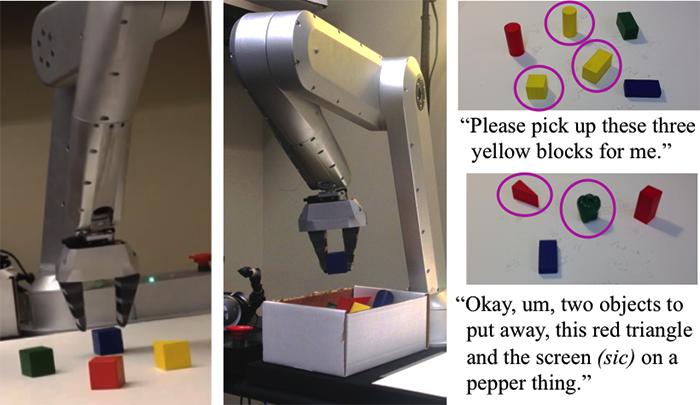
Advances in computation, sensing, and hardware are enabling robots to perform an increasing variety of tasks in ever less constrained settings. It is now possible to imagine robots that can operate in traditionally human-centric settings. However, such robots need the flexibility to take instructions and learn about tasks from nonspecialists using language and other natural modalities. At the same time, learning to process natural language about the physical world is difficult without a robot’s sensors and actuators. Combining these areas to create useful robotic systems is a fundamentally multidisciplinary problem, requiring advances in natural language processing, machine learning, robotics, and human-robot interaction. In this talk, I describe my work on learning natural language from end users in a physical context; such language allows a person to communicate their needs in a natural, unscripted way. I demonstrate that this approach can enable a robot to follow directions, learn about novel objects in the world, and perform simple tasks such as navigating an unfamiliar map or putting away objects.
Cynthia Matuszek is a Ph.D. candidate in the University of Washington Computer Science and Engineering department, where she is a member of both the Robotics and State Estimation lab and the Language, Interaction, and Learning group. She earned a B.S. in Computer Science from the University of Texas at Austin, and M.Sc. from the University of Washington. She is published in the areas of artificial intelligence, robotics, ubiquitous computing, and human-robot interaction.
]]>
Talking to Robots: Learning to Ground Human Language in Robotic Perception Cynthia Matuszek University of Washington 1:00pm Monday, 7 April 2014, ITE325b, UMBC Advances in computation,...
http://www.csee.umbc.edu/2014/04/talk-talking-to-robots-1pm-mon-47-ite325b/
https://dev.my.umbc.edu/api/v0/pixel/news/43874/guest@my.umbc.edu/0b8b8da68f72648d5aabaf446d3db1a6/api/pixel
news
talks
Computer Science and Electrical Engineering
https://dev.my.umbc.edu/groups/csee
https://assets3-dev.my.umbc.edu/system/shared/avatars/groups/000/000/099/d117dca133c64bf78a4b7696dd007189/xsmall.png?1314043393
https://assets1-dev.my.umbc.edu/system/shared/avatars/groups/000/000/099/d117dca133c64bf78a4b7696dd007189/original.png?1314043393
https://assets1-dev.my.umbc.edu/system/shared/avatars/groups/000/000/099/d117dca133c64bf78a4b7696dd007189/xxlarge.png?1314043393
https://assets4-dev.my.umbc.edu/system/shared/avatars/groups/000/000/099/d117dca133c64bf78a4b7696dd007189/xlarge.png?1314043393
https://assets3-dev.my.umbc.edu/system/shared/avatars/groups/000/000/099/d117dca133c64bf78a4b7696dd007189/large.png?1314043393
https://assets1-dev.my.umbc.edu/system/shared/avatars/groups/000/000/099/d117dca133c64bf78a4b7696dd007189/medium.png?1314043393
https://assets2-dev.my.umbc.edu/system/shared/avatars/groups/000/000/099/d117dca133c64bf78a4b7696dd007189/small.png?1314043393
https://assets3-dev.my.umbc.edu/system/shared/avatars/groups/000/000/099/d117dca133c64bf78a4b7696dd007189/xsmall.png?1314043393
https://assets3-dev.my.umbc.edu/system/shared/avatars/groups/000/000/099/d117dca133c64bf78a4b7696dd007189/xxsmall.png?1314043393
Computer Science and Electrical Engineering
0
0
true
Sat, 05 Apr 2014 15:23:54 -0400
talk: Talking to Robots, 1pm Mon 4/7 ITE325b
Talking to Robots: Learning to Ground Human
Language in Robotic Perception
1:00pm Monday, 7 April 2014, ITE325b, UMBC
Advances in computation, sensing, and hardware are enabling robots to perform an increasing variety of tasks in ever less constrained settings. It is now possible to imagine robots that can operate in traditionally human-centric settings. However, such robots need the flexibility to take instructions and learn about tasks from nonspecialists using language and other natural modalities. At the same time, learning to process natural language about the physical world is difficult without a robot’s sensors and actuators. Combining these areas to create useful robotic systems is a fundamentally multidisciplinary problem, requiring advances in natural language processing, machine learning, robotics, and human-robot interaction. In this talk, I describe my work on learning natural language from end users in a physical context; such language allows a person to communicate their needs in a natural, unscripted way. I demonstrate that this approach can enable a robot to follow directions, learn about novel objects in the world, and perform simple tasks such as navigating an unfamiliar map or putting away objects.
Cynthia Matuszek is a Ph.D. candidate in the University of Washington Computer Science and Engineering department, where she is a member of both the Robotics and State Estimation lab and the Language, Interaction, and Learning group. She earned a B.S. in Computer Science from the University of Texas at Austin, and M.Sc. from the University of Washington. She is published in the areas of artificial intelligence, robotics, ubiquitous computing, and human-robot interaction.
]]>
Talking to Robots: Learning to Ground Human Language in Robotic Perception Cynthia Matuszek University of Washington 1:00pm Monday, 7 April 2014, ITE325b, UMBC Advances in computation,...
http://www.csee.umbc.edu/2014/04/talk-talking-to-robots-1pm-mon-47-ite325b/?utm_source=rss&utm_medium=rss&utm_campaign=talk-talking-to-robots-1pm-mon-47-ite325b
https://dev.my.umbc.edu/api/v0/pixel/news/43257/guest@my.umbc.edu/c77a9469f84afdd20a15a105c48039d2/api/pixel
news
talks
Computer Science and Electrical Engineering
https://dev.my.umbc.edu/groups/csee
https://assets3-dev.my.umbc.edu/system/shared/avatars/groups/000/000/099/d117dca133c64bf78a4b7696dd007189/xsmall.png?1314043393
https://assets1-dev.my.umbc.edu/system/shared/avatars/groups/000/000/099/d117dca133c64bf78a4b7696dd007189/original.png?1314043393
https://assets1-dev.my.umbc.edu/system/shared/avatars/groups/000/000/099/d117dca133c64bf78a4b7696dd007189/xxlarge.png?1314043393
https://assets4-dev.my.umbc.edu/system/shared/avatars/groups/000/000/099/d117dca133c64bf78a4b7696dd007189/xlarge.png?1314043393
https://assets3-dev.my.umbc.edu/system/shared/avatars/groups/000/000/099/d117dca133c64bf78a4b7696dd007189/large.png?1314043393
https://assets1-dev.my.umbc.edu/system/shared/avatars/groups/000/000/099/d117dca133c64bf78a4b7696dd007189/medium.png?1314043393
https://assets2-dev.my.umbc.edu/system/shared/avatars/groups/000/000/099/d117dca133c64bf78a4b7696dd007189/small.png?1314043393
https://assets3-dev.my.umbc.edu/system/shared/avatars/groups/000/000/099/d117dca133c64bf78a4b7696dd007189/xsmall.png?1314043393
https://assets3-dev.my.umbc.edu/system/shared/avatars/groups/000/000/099/d117dca133c64bf78a4b7696dd007189/xxsmall.png?1314043393
Computer Science and Electrical Engineering
0
0
true
Sat, 05 Apr 2014 15:23:54 -0400
talk: Making Physical Inferences to Enhance Wireless Security, 1pm Tue 4/8
Computer Science and Electrical Engineering
University of Maryland, Baltimore County
Making Physical Inferences to Enhance Wireless Security
Prof. Jie Yang, Oakland University
1:00pm Tuesday, 8 April 2014, ITE 325b
The ubiquity of wireless is redefining security challenges as the increasingly pervasive wireless networks make it easier to conduct attacks for new and rapidly evolving adversaries. There is an urgent need to seek security solutions that can be built into any wireless network stack to defend against attacks across the current heterogeneous mix of wireless technologies, which do not require extensive customization on wireless devices and cannot be undermined easily even when nodes are compromised. In particular, security solutions that are generic across all wireless technologies and can complement conventional security methods must be devised. My research efforts are centered around exploiting physical properties correlated with pervasive wireless environments to enhance wireless security and make inferences for context-aware applications. In this talk, I will present my research work in exploiting spatial correlation as a unique physical property inherited from any wireless device to address identity-based attacks including both spoofing and Sybil. These attacks are especially harmful as the claimed identity of a wireless device is often considered as an important first step in an adversary’s attempt to launch a variety of attacks in different network layers.
Our proposed techniques address several challenges include (1) detecting identity-based attacks in challenging mobile environments, (2) determining the number of attackers, and (3) localizing multiple adversaries. I will also present our work in secret key generation for facilitating secure data communication in the increasing dynamic wireless environments. Our work addressed the problem of collaborative secret key extraction for a group of wireless devices without relying on a key distribution infrastructure. Moreover, in order to provide efficient secret key generation, we exploit fine-grained physical layer information, such as the channel state information made available from OFDM system, to improve the secret key generation rate and make the secret key extraction approach more practical.
Jie Yang received his Ph.D. degree in Computer Engineering from Stevens Institute of Technology in 2011. He is currently an assistant professor in the Department of Computer Science and Engineering at Oakland University. His research interests include cyber security and privacy, and mobile and pervasive computing, with an emphasis on network security, smartphone security and applications, security in cognitive radio and smart grid, location systems and vehicular applications. His research is supported by National Science Foundation and Army Research Office. He is the recipient of the Best Paper Runner-up Award from IEEE Conference on Communications and Network Security 2013 and the Best Paper Award from ACM MobiCom 2011. His research has received wide press coverage including MIT Technology Review, The Wall Street Journal, NPR, CNET News, and Yahoo News.
Hosts: Nilanjan Banerjee and Tim Finin
]]>
Computer Science and Electrical Engineering University of Maryland, Baltimore County Making Physical Inferences to Enhance Wireless Security Prof. Jie Yang, Oakland University 1:00pm...
http://www.csee.umbc.edu/2014/04/talk-making-physical-inferences-to-enhance-wireless-security-1pm-tue-48/
https://dev.my.umbc.edu/api/v0/pixel/news/43875/guest@my.umbc.edu/6b45c2ce5bc2edd26083db829e539294/api/pixel
cybersecurity
news
talks
Computer Science and Electrical Engineering
https://dev.my.umbc.edu/groups/csee
https://assets3-dev.my.umbc.edu/system/shared/avatars/groups/000/000/099/d117dca133c64bf78a4b7696dd007189/xsmall.png?1314043393
https://assets1-dev.my.umbc.edu/system/shared/avatars/groups/000/000/099/d117dca133c64bf78a4b7696dd007189/original.png?1314043393
https://assets1-dev.my.umbc.edu/system/shared/avatars/groups/000/000/099/d117dca133c64bf78a4b7696dd007189/xxlarge.png?1314043393
https://assets4-dev.my.umbc.edu/system/shared/avatars/groups/000/000/099/d117dca133c64bf78a4b7696dd007189/xlarge.png?1314043393
https://assets3-dev.my.umbc.edu/system/shared/avatars/groups/000/000/099/d117dca133c64bf78a4b7696dd007189/large.png?1314043393
https://assets1-dev.my.umbc.edu/system/shared/avatars/groups/000/000/099/d117dca133c64bf78a4b7696dd007189/medium.png?1314043393
https://assets2-dev.my.umbc.edu/system/shared/avatars/groups/000/000/099/d117dca133c64bf78a4b7696dd007189/small.png?1314043393
https://assets3-dev.my.umbc.edu/system/shared/avatars/groups/000/000/099/d117dca133c64bf78a4b7696dd007189/xsmall.png?1314043393
https://assets3-dev.my.umbc.edu/system/shared/avatars/groups/000/000/099/d117dca133c64bf78a4b7696dd007189/xxsmall.png?1314043393
Computer Science and Electrical Engineering
0
0
true
Fri, 04 Apr 2014 16:10:46 -0400
talk: Making Physical Inferences to Enhance Wireless Security, 1pm Tue 4/8
Computer Science and Electrical Engineering
University of Maryland, Baltimore County
Making Physical Inferences to Enhance Wireless Security
Prof. Jie Yang, Oakland University
1:00pm Tuesday, 8 April 2014, ITE 325b
The ubiquity of wireless is redefining security challenges as the increasingly pervasive wireless networks make it easier to conduct attacks for new and rapidly evolving adversaries. There is an urgent need to seek security solutions that can be built into any wireless network stack to defend against attacks across the current heterogeneous mix of wireless technologies, which do not require extensive customization on wireless devices and cannot be undermined easily even when nodes are compromised. In particular, security solutions that are generic across all wireless technologies and can complement conventional security methods must be devised. My research efforts are centered around exploiting physical properties correlated with pervasive wireless environments to enhance wireless security and make inferences for context-aware applications. In this talk, I will present my research work in exploiting spatial correlation as a unique physical property inherited from any wireless device to address identity-based attacks including both spoofing and Sybil. These attacks are especially harmful as the claimed identity of a wireless device is often considered as an important first step in an adversary’s attempt to launch a variety of attacks in different network layers.
Our proposed techniques address several challenges include (1) detecting identity-based attacks in challenging mobile environments, (2) determining the number of attackers, and (3) localizing multiple adversaries. I will also present our work in secret key generation for facilitating secure data communication in the increasing dynamic wireless environments. Our work addressed the problem of collaborative secret key extraction for a group of wireless devices without relying on a key distribution infrastructure. Moreover, in order to provide efficient secret key generation, we exploit fine-grained physical layer information, such as the channel state information made available from OFDM system, to improve the secret key generation rate and make the secret key extraction approach more practical.
Jie Yang received his Ph.D. degree in Computer Engineering from Stevens Institute of Technology in 2011. He is currently an assistant professor in the Department of Computer Science and Engineering at Oakland University. His research interests include cyber security and privacy, and mobile and pervasive computing, with an emphasis on network security, smartphone security and applications, security in cognitive radio and smart grid, location systems and vehicular applications. His research is supported by National Science Foundation and Army Research Office. He is the recipient of the Best Paper Runner-up Award from IEEE Conference on Communications and Network Security 2013 and the Best Paper Award from ACM MobiCom 2011. His research has received wide press coverage including MIT Technology Review, The Wall Street Journal, NPR, CNET News, and Yahoo News.
Hosts: Nilanjan Banerjee and Tim Finin
]]>
Computer Science and Electrical Engineering University of Maryland, Baltimore County Making Physical Inferences to Enhance Wireless Security Prof. Jie Yang, Oakland University 1:00pm...
http://www.csee.umbc.edu/2014/04/talk-making-physical-inferences-to-enhance-wireless-security-1pm-tue-48/?utm_source=rss&utm_medium=rss&utm_campaign=talk-making-physical-inferences-to-enhance-wireless-security-1pm-tue-48
https://dev.my.umbc.edu/api/v0/pixel/news/43239/guest@my.umbc.edu/87f87f90205f40096757d5c3a1bd2d69/api/pixel
cybersecurity
news
talks
Computer Science and Electrical Engineering
https://dev.my.umbc.edu/groups/csee
https://assets3-dev.my.umbc.edu/system/shared/avatars/groups/000/000/099/d117dca133c64bf78a4b7696dd007189/xsmall.png?1314043393
https://assets1-dev.my.umbc.edu/system/shared/avatars/groups/000/000/099/d117dca133c64bf78a4b7696dd007189/original.png?1314043393
https://assets1-dev.my.umbc.edu/system/shared/avatars/groups/000/000/099/d117dca133c64bf78a4b7696dd007189/xxlarge.png?1314043393
https://assets4-dev.my.umbc.edu/system/shared/avatars/groups/000/000/099/d117dca133c64bf78a4b7696dd007189/xlarge.png?1314043393
https://assets3-dev.my.umbc.edu/system/shared/avatars/groups/000/000/099/d117dca133c64bf78a4b7696dd007189/large.png?1314043393
https://assets1-dev.my.umbc.edu/system/shared/avatars/groups/000/000/099/d117dca133c64bf78a4b7696dd007189/medium.png?1314043393
https://assets2-dev.my.umbc.edu/system/shared/avatars/groups/000/000/099/d117dca133c64bf78a4b7696dd007189/small.png?1314043393
https://assets3-dev.my.umbc.edu/system/shared/avatars/groups/000/000/099/d117dca133c64bf78a4b7696dd007189/xsmall.png?1314043393
https://assets3-dev.my.umbc.edu/system/shared/avatars/groups/000/000/099/d117dca133c64bf78a4b7696dd007189/xxsmall.png?1314043393
Computer Science and Electrical Engineering
0
0
true
Fri, 04 Apr 2014 16:10:46 -0400