talk: Image Registration for Multisource Remote Sensing, 3pm Thr 4/3, ITE456
Center for Hybrid Multicore Productivity Research
Distinguished Computational Science Lecture Series
Image Registration for Multisource Remote Sensing
Dr. Jacqueline Le Moigne
NASA Goddard Space Flight Center
Software Engineering Division – Code 580
3:00pm Thursday, 3 April 2014, ITE 456, UMBC
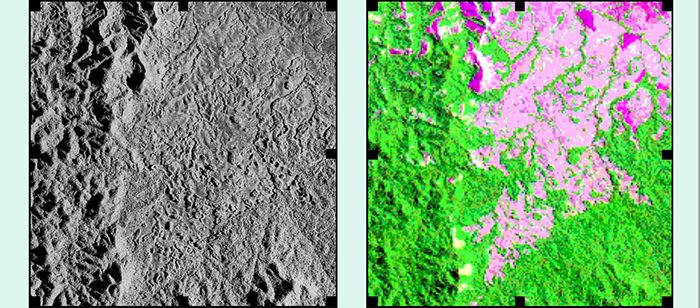
Satellite remote sensing systems provide large amounts of global coverage and repetitive measurements representing simultaneous or multi-temporal observations of the same features by different sensors; for example over the last 40 years, Landsat satellites have been acquiring more than three million images representing about one petabyte of data. Furthermore, most sensors are carried on separate platforms, resulting in a tremendous amount of data that must be combined. In meeting some of the Earth System Science objectives, the combination of all these data at various resolutions — spatial, radiometric and temporal — will facilitate a better understanding of Earth and space science phenomena, and image registration enables the first step towards this integration.
In this talk, we will describe the image registration challenge in the context of Earth and space remote sensing. Then, we will review a subset of the methods that are being utilized to tackle this challenge, and finally we will describe some of our work that utilizes multiscale representations, in particular wavelets and over-complete representations, as well as more recent work dealing with the registration of Martian data based on crater extraction and matching.
Dr. Le Moigne is the Assistant Chief for Technology in the Software Engineering Division at NASA Goddard, and was Goddard Center Associate for ESTO/Advanced Information Systems Technology Program, from 2009 to 2012. Dr. Le Moigne received a B.S. and a M.S. in Mathematics, and a Ph.D. in Computer Science from the University Pierre and Marie Curie, France. While her Ph.D. thesis dealt with biomedical imagery, her post-doctoral work at the UMD Computer Vision Lab focused on the development of a visual navigation system for the first DARPA Autonomous Land Vehicle project. At NASA Goddard since 1990, Dr. Le Moigne has performed extensive work in the processing and the analysis of remote sensing data. Her work particularly focuses on image registration, utilizing multiscale representations as well as high-performance and on-board processing. More recent work dealt with creating web-based access to benchmark data for Image Processing education and research (imageseer.nasa.gov). Currently, Dr. Le Moigne is the PI of a Goddard Internal project focused on Distributed Spacecraft Missions. She has published over 120 publications, including 23 journal papers, holds one patent, and has co-edited a book on “Image Registration for Remote Sensing” published by Cambridge University Press in 2011. She is a NASA Goddard Senior Fellow, an IEEE Senior Member and an ABET Program Evaluator. She was a NATO Science for Peace and Security Committee Panel Member from 2008 to 2011. In 2012, she received the NASA Exceptional Service Medal and the Goddard Information Science and Technology Award.
]]>
Center for Hybrid Multicore Productivity Research Distinguished Computational Science Lecture Series Image Registration for Multisource Remote Sensing Dr. Jacqueline Le Moigne NASA Goddard...
http://www.csee.umbc.edu/2014/04/le_moigne_nasa_remote_sensing_image_registration/?utm_source=rss&utm_medium=rss&utm_campaign=le_moigne_nasa_remote_sensing_image_registration
https://dev.my.umbc.edu/api/v0/pixel/news/43063/guest@my.umbc.edu/91740103d285e8b7db02babcb9f58147/api/pixel
news
research
talks
Computer Science and Electrical Engineering
https://dev.my.umbc.edu/groups/csee
https://assets3-dev.my.umbc.edu/system/shared/avatars/groups/000/000/099/d117dca133c64bf78a4b7696dd007189/xsmall.png?1314043393
https://assets1-dev.my.umbc.edu/system/shared/avatars/groups/000/000/099/d117dca133c64bf78a4b7696dd007189/original.png?1314043393
https://assets1-dev.my.umbc.edu/system/shared/avatars/groups/000/000/099/d117dca133c64bf78a4b7696dd007189/xxlarge.png?1314043393
https://assets4-dev.my.umbc.edu/system/shared/avatars/groups/000/000/099/d117dca133c64bf78a4b7696dd007189/xlarge.png?1314043393
https://assets3-dev.my.umbc.edu/system/shared/avatars/groups/000/000/099/d117dca133c64bf78a4b7696dd007189/large.png?1314043393
https://assets1-dev.my.umbc.edu/system/shared/avatars/groups/000/000/099/d117dca133c64bf78a4b7696dd007189/medium.png?1314043393
https://assets2-dev.my.umbc.edu/system/shared/avatars/groups/000/000/099/d117dca133c64bf78a4b7696dd007189/small.png?1314043393
https://assets3-dev.my.umbc.edu/system/shared/avatars/groups/000/000/099/d117dca133c64bf78a4b7696dd007189/xsmall.png?1314043393
https://assets3-dev.my.umbc.edu/system/shared/avatars/groups/000/000/099/d117dca133c64bf78a4b7696dd007189/xxsmall.png?1314043393
Computer Science and Electrical Engineering
0
0
true
Tue, 01 Apr 2014 09:03:49 -0400
talk: Image Registration for Multisource Remote Sensing, 3pm Thr 4/3, ITE456
Center for Hybrid Multicore Productivity Research
Distinguished Computational Science Lecture Series
Image Registration for Multisource Remote Sensing
Dr. Jacqueline Le Moigne
NASA Goddard Space Flight Center
Software Engineering Division – Code 580
3:00pm Thursday, 3 April 2014, ITE 456, UMBC
Satellite remote sensing systems provide large amounts of global coverage and repetitive measurements representing simultaneous or multi-temporal observations of the same features by different sensors; for example over the last 40 years, Landsat satellites have been acquiring more than three million images representing about one petabyte of data. Furthermore, most sensors are carried on separate platforms, resulting in a tremendous amount of data that must be combined. In meeting some of the Earth System Science objectives, the combination of all these data at various resolutions — spatial, radiometric and temporal — will facilitate a better understanding of Earth and space science phenomena, and image registration enables the first step towards this integration.
In this talk, we will describe the image registration challenge in the context of Earth and space remote sensing. Then, we will review a subset of the methods that are being utilized to tackle this challenge, and finally we will describe some of our work that utilizes multiscale representations, in particular wavelets and over-complete representations, as well as more recent work dealing with the registration of Martian data based on crater extraction and matching.
Dr. Le Moigne is the Assistant Chief for Technology in the Software Engineering Division at NASA Goddard, and was Goddard Center Associate for ESTO/Advanced Information Systems Technology Program, from 2009 to 2012. Dr. Le Moigne received a B.S. and a M.S. in Mathematics, and a Ph.D. in Computer Science from the University Pierre and Marie Curie, France. While her Ph.D. thesis dealt with biomedical imagery, her post-doctoral work at the UMD Computer Vision Lab focused on the development of a visual navigation system for the first DARPA Autonomous Land Vehicle project. At NASA Goddard since 1990, Dr. Le Moigne has performed extensive work in the processing and the analysis of remote sensing data. Her work particularly focuses on image registration, utilizing multiscale representations as well as high-performance and on-board processing. More recent work dealt with creating web-based access to benchmark data for Image Processing education and research (imageseer.nasa.gov). Currently, Dr. Le Moigne is the PI of a Goddard Internal project focused on Distributed Spacecraft Missions. She has published over 120 publications, including 23 journal papers, holds one patent, and has co-edited a book on “Image Registration for Remote Sensing” published by Cambridge University Press in 2011. She is a NASA Goddard Senior Fellow, an IEEE Senior Member and an ABET Program Evaluator. She was a NATO Science for Peace and Security Committee Panel Member from 2008 to 2011. In 2012, she received the NASA Exceptional Service Medal and the Goddard Information Science and Technology Award.
]]>
Center for Hybrid Multicore Productivity Research Distinguished Computational Science Lecture Series Image Registration for Multisource Remote Sensing Dr. Jacqueline Le Moigne NASA Goddard...
http://www.csee.umbc.edu/2014/04/le_moigne_nasa_remote_sensing_image_registration/
https://dev.my.umbc.edu/api/v0/pixel/news/43878/guest@my.umbc.edu/e41d475e162439dee9963f38dd8b6a93/api/pixel
news
research
talks
Computer Science and Electrical Engineering
https://dev.my.umbc.edu/groups/csee
https://assets3-dev.my.umbc.edu/system/shared/avatars/groups/000/000/099/d117dca133c64bf78a4b7696dd007189/xsmall.png?1314043393
https://assets1-dev.my.umbc.edu/system/shared/avatars/groups/000/000/099/d117dca133c64bf78a4b7696dd007189/original.png?1314043393
https://assets1-dev.my.umbc.edu/system/shared/avatars/groups/000/000/099/d117dca133c64bf78a4b7696dd007189/xxlarge.png?1314043393
https://assets4-dev.my.umbc.edu/system/shared/avatars/groups/000/000/099/d117dca133c64bf78a4b7696dd007189/xlarge.png?1314043393
https://assets3-dev.my.umbc.edu/system/shared/avatars/groups/000/000/099/d117dca133c64bf78a4b7696dd007189/large.png?1314043393
https://assets1-dev.my.umbc.edu/system/shared/avatars/groups/000/000/099/d117dca133c64bf78a4b7696dd007189/medium.png?1314043393
https://assets2-dev.my.umbc.edu/system/shared/avatars/groups/000/000/099/d117dca133c64bf78a4b7696dd007189/small.png?1314043393
https://assets3-dev.my.umbc.edu/system/shared/avatars/groups/000/000/099/d117dca133c64bf78a4b7696dd007189/xsmall.png?1314043393
https://assets3-dev.my.umbc.edu/system/shared/avatars/groups/000/000/099/d117dca133c64bf78a4b7696dd007189/xxsmall.png?1314043393
Computer Science and Electrical Engineering
0
0
true
Tue, 01 Apr 2014 09:03:49 -0400
talk: Talking to Robots: Learning to Ground Human Language in Robotic Perception, 1pm Mon 4/7
Talking to Robots: Learning to Ground Human
Language in Robotic Perception
1:00pm Monday, 7 April 2014, ITE325b, UMBC
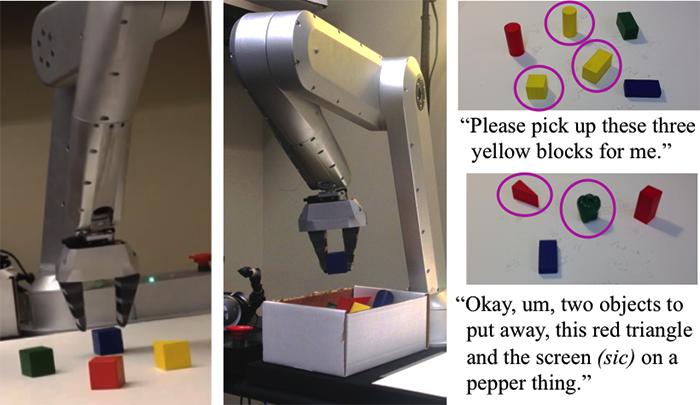
Advances in computation, sensing, and hardware are enabling robots to perform an increasing variety of tasks in ever less constrained settings. It is now possible to imagine robots that can operate in traditionally human-centric settings. However, such robots need the flexibility to take instructions and learn about tasks from nonspecialists using language and other natural modalities. At the same time, learning to process natural language about the physical world is difficult without a robot’s sensors and actuators. Combining these areas to create useful robotic systems is a fundamentally multidisciplinary problem, requiring advances in natural language processing, machine learning, robotics, and human-robot interaction. In this talk, I describe my work on learning natural language from end users in a physical context; such language allows a person to communicate their needs in a natural, unscripted way. I demonstrate that this approach can enable a robot to follow directions, learn about novel objects in the world, and perform simple tasks such as navigating an unfamiliar map or putting away objects.
Cynthia Matuszek is a Ph.D. candidate in the University of Washington Computer Science and Engineering department, where she is a member of both the Robotics and State Estimation lab and the Language, Interaction, and Learning group. She earned a B.S. in Computer Science from the University of Texas at Austin, and M.Sc. from the University of Washington. She is published in the areas of artificial intelligence, robotics, ubiquitous computing, and human-robot interaction.
]]>
Talking to Robots: Learning to Ground Human Language in Robotic Perception Cynthia Matuszek University of Washington 1:00pm Monday, 7 April 2014, ITE325b, UMBC Advances in computation,...
http://www.csee.umbc.edu/2014/03/talk-talking-to-robots-learning-to-ground-human-language-in-robotic-perception/?utm_source=rss&utm_medium=rss&utm_campaign=talk-talking-to-robots-learning-to-ground-human-language-in-robotic-perception
https://dev.my.umbc.edu/api/v0/pixel/news/43051/guest@my.umbc.edu/71549bf7299a2941177e8e7e5f0275c3/api/pixel
news
research
talks
Computer Science and Electrical Engineering
https://dev.my.umbc.edu/groups/csee
https://assets3-dev.my.umbc.edu/system/shared/avatars/groups/000/000/099/d117dca133c64bf78a4b7696dd007189/xsmall.png?1314043393
https://assets1-dev.my.umbc.edu/system/shared/avatars/groups/000/000/099/d117dca133c64bf78a4b7696dd007189/original.png?1314043393
https://assets1-dev.my.umbc.edu/system/shared/avatars/groups/000/000/099/d117dca133c64bf78a4b7696dd007189/xxlarge.png?1314043393
https://assets4-dev.my.umbc.edu/system/shared/avatars/groups/000/000/099/d117dca133c64bf78a4b7696dd007189/xlarge.png?1314043393
https://assets3-dev.my.umbc.edu/system/shared/avatars/groups/000/000/099/d117dca133c64bf78a4b7696dd007189/large.png?1314043393
https://assets1-dev.my.umbc.edu/system/shared/avatars/groups/000/000/099/d117dca133c64bf78a4b7696dd007189/medium.png?1314043393
https://assets2-dev.my.umbc.edu/system/shared/avatars/groups/000/000/099/d117dca133c64bf78a4b7696dd007189/small.png?1314043393
https://assets3-dev.my.umbc.edu/system/shared/avatars/groups/000/000/099/d117dca133c64bf78a4b7696dd007189/xsmall.png?1314043393
https://assets3-dev.my.umbc.edu/system/shared/avatars/groups/000/000/099/d117dca133c64bf78a4b7696dd007189/xxsmall.png?1314043393
Computer Science and Electrical Engineering
1
0
true
Mon, 31 Mar 2014 20:41:57 -0400
Mon, 31 Mar 2014 20:41:57 -0400
talk: Talking to Robots: Learning to Ground Human Language in Robotic Perception, 1pm Mon 4/7
Talking to Robots: Learning to Ground Human
Language in Robotic Perception
1:00pm Monday, 7 April 2014, ITE325b, UMBC
Advances in computation, sensing, and hardware are enabling robots to perform an increasing variety of tasks in ever less constrained settings. It is now possible to imagine robots that can operate in traditionally human-centric settings. However, such robots need the flexibility to take instructions and learn about tasks from nonspecialists using language and other natural modalities. At the same time, learning to process natural language about the physical world is difficult without a robot’s sensors and actuators. Combining these areas to create useful robotic systems is a fundamentally multidisciplinary problem, requiring advances in natural language processing, machine learning, robotics, and human-robot interaction. In this talk, I describe my work on learning natural language from end users in a physical context; such language allows a person to communicate their needs in a natural, unscripted way. I demonstrate that this approach can enable a robot to follow directions, learn about novel objects in the world, and perform simple tasks such as navigating an unfamiliar map or putting away objects.
Cynthia Matuszek is a Ph.D. candidate in the University of Washington Computer Science and Engineering department, where she is a member of both the Robotics and State Estimation lab and the Language, Interaction, and Learning group. She earned a B.S. in Computer Science from the University of Texas at Austin, and M.Sc. from the University of Washington. She is published in the areas of artificial intelligence, robotics, ubiquitous computing, and human-robot interaction.
]]>
Talking to Robots: Learning to Ground Human Language in Robotic Perception Cynthia Matuszek University of Washington 1:00pm Monday, 7 April 2014, ITE325b, UMBC Advances in computation,...
http://www.csee.umbc.edu/2014/03/talk-talking-to-robots-learning-to-ground-human-language-in-robotic-perception/
https://dev.my.umbc.edu/api/v0/pixel/news/43880/guest@my.umbc.edu/09d8e2ddc95bb7e8e2bd3a69fbf9301e/api/pixel
news
research
talks
Computer Science and Electrical Engineering
https://dev.my.umbc.edu/groups/csee
https://assets3-dev.my.umbc.edu/system/shared/avatars/groups/000/000/099/d117dca133c64bf78a4b7696dd007189/xsmall.png?1314043393
https://assets1-dev.my.umbc.edu/system/shared/avatars/groups/000/000/099/d117dca133c64bf78a4b7696dd007189/original.png?1314043393
https://assets1-dev.my.umbc.edu/system/shared/avatars/groups/000/000/099/d117dca133c64bf78a4b7696dd007189/xxlarge.png?1314043393
https://assets4-dev.my.umbc.edu/system/shared/avatars/groups/000/000/099/d117dca133c64bf78a4b7696dd007189/xlarge.png?1314043393
https://assets3-dev.my.umbc.edu/system/shared/avatars/groups/000/000/099/d117dca133c64bf78a4b7696dd007189/large.png?1314043393
https://assets1-dev.my.umbc.edu/system/shared/avatars/groups/000/000/099/d117dca133c64bf78a4b7696dd007189/medium.png?1314043393
https://assets2-dev.my.umbc.edu/system/shared/avatars/groups/000/000/099/d117dca133c64bf78a4b7696dd007189/small.png?1314043393
https://assets3-dev.my.umbc.edu/system/shared/avatars/groups/000/000/099/d117dca133c64bf78a4b7696dd007189/xsmall.png?1314043393
https://assets3-dev.my.umbc.edu/system/shared/avatars/groups/000/000/099/d117dca133c64bf78a4b7696dd007189/xxsmall.png?1314043393
Computer Science and Electrical Engineering
0
0
true
Mon, 31 Mar 2014 20:41:57 -0400
Talk: What can a Humanoid Robot Learn?, 10am Fri 4/2 UMBC
UMBC ACM Student Chapter
Tech Talk: What can a Humanoid Robot Learn?
Professor Tim Oates, UMBC
10:00am-11:00am Friday, 4 April 2014, ITE346
We hope everyone had a fun spring break! We are back with another talk in our UMBC ACM techTalk series. Professor Tim Oates, who is also one of the faculty advisers of the ACM student chapter, will talk about “What can a Humanoid Robot Learn?”. Dr. Oates will split the talk into two sessions. In the first half, he will introduce the topic and talk about current research being pursued in the area of humanoid robots. Whereas, the second half of the talk will be an interactive session focusing on ideating challenges and future research directions. To make the discussion interactive, Dr. Oates encourages you to spend a few minutes beforehand to think about what you would do if you had access to a humanoid robot for research purposes.
Abstract: Robots and AI have a long history together, both in the popular culture and in research. In this talk I will review some of my past work at the juncture of robotics, AI, and machine learning, as well as ongoing work with collaborators at UMCP along the same lines. With those collaborators, I wrote a proposal to buy a few humanoid robots that was funded, so I’ll next describe the robots that we’ve bought. Finally, I’d like to have an open discussion about my ideas for research using these robots, and ideas that those in the audience might have as well. My goal is to get as many people as is practical involved with the robots, which are relatively expensive and thus not a common resource. If you’re coming to the talk, spend a few minutes beforehand thinking about what you would do if you had access to a humanoid robot for research purposes.
Dr. Tim Oates is an Oros Familty Professor of Computer Science at the University of Maryland Baltimore County. He received B.S. degrees in Computer Science and Electrical Engineering from North Carolina State University in 1989, and M.S. and Ph.D. degrees from the University of Massachusetts Amherst in 1997 and 2000, respectively. Prior to coming to UMBC in the Fall of 2001, he spent a year as a postdoc in the Artificial Intelligence Lab at the Massachusetts Institute of Technology. In 2004 Dr. Oates won a prestigious NSF CAREER award. He is an author or co-author of more than 100 peer reviewed papers and is a member of the Association for Computing Machinery and the Association for the Advancement of Artificial Intelligence. His research interests include pattern discovery in time series, grammatical inference, graph mining, statistical natural language processing, robotics, and language acquisition.
RSVP for the talk at http://my.umbc.edu/events/23881
]]>
UMBC ACM Student Chapter Tech Talk: What can a Humanoid Robot Learn? Professor Tim Oates, UMBC 10:00am-11:00am Friday, 4 April 2014, ITE346 We hope everyone had a fun spring break! We are...
http://www.csee.umbc.edu/2014/03/talk-what-can-a-humanoid-robot-learn-10am-fri-42-umbc/?utm_source=rss&utm_medium=rss&utm_campaign=talk-what-can-a-humanoid-robot-learn-10am-fri-42-umbc
https://dev.my.umbc.edu/api/v0/pixel/news/43012/guest@my.umbc.edu/e7473f2619d1fb27fe453d4354635156/api/pixel
faculty-and-staff
news
talks
Computer Science and Electrical Engineering
https://dev.my.umbc.edu/groups/csee
https://assets3-dev.my.umbc.edu/system/shared/avatars/groups/000/000/099/d117dca133c64bf78a4b7696dd007189/xsmall.png?1314043393
https://assets1-dev.my.umbc.edu/system/shared/avatars/groups/000/000/099/d117dca133c64bf78a4b7696dd007189/original.png?1314043393
https://assets1-dev.my.umbc.edu/system/shared/avatars/groups/000/000/099/d117dca133c64bf78a4b7696dd007189/xxlarge.png?1314043393
https://assets4-dev.my.umbc.edu/system/shared/avatars/groups/000/000/099/d117dca133c64bf78a4b7696dd007189/xlarge.png?1314043393
https://assets3-dev.my.umbc.edu/system/shared/avatars/groups/000/000/099/d117dca133c64bf78a4b7696dd007189/large.png?1314043393
https://assets1-dev.my.umbc.edu/system/shared/avatars/groups/000/000/099/d117dca133c64bf78a4b7696dd007189/medium.png?1314043393
https://assets2-dev.my.umbc.edu/system/shared/avatars/groups/000/000/099/d117dca133c64bf78a4b7696dd007189/small.png?1314043393
https://assets3-dev.my.umbc.edu/system/shared/avatars/groups/000/000/099/d117dca133c64bf78a4b7696dd007189/xsmall.png?1314043393
https://assets3-dev.my.umbc.edu/system/shared/avatars/groups/000/000/099/d117dca133c64bf78a4b7696dd007189/xxsmall.png?1314043393
Computer Science and Electrical Engineering
0
0
true
Sun, 30 Mar 2014 17:14:38 -0400
Sun, 30 Mar 2014 17:14:38 -0400
Talk: What can a Humanoid Robot Learn?, 10am Fri 4/2 UMBC
UMBC ACM Student Chapter
Tech Talk: What can a Humanoid Robot Learn?
Professor Tim Oates, UMBC
10:00am-11:00am Friday, 4 April 2014, ITE346
We hope everyone had a fun spring break! We are back with another talk in our UMBC ACM techTalk series. Professor Tim Oates, who is also one of the faculty advisers of the ACM student chapter, will talk about “What can a Humanoid Robot Learn?”. Dr. Oates will split the talk into two sessions. In the first half, he will introduce the topic and talk about current research being pursued in the area of humanoid robots. Whereas, the second half of the talk will be an interactive session focusing on ideating challenges and future research directions. To make the discussion interactive, Dr. Oates encourages you to spend a few minutes beforehand to think about what you would do if you had access to a humanoid robot for research purposes.
Abstract: Robots and AI have a long history together, both in the popular culture and in research. In this talk I will review some of my past work at the juncture of robotics, AI, and machine learning, as well as ongoing work with collaborators at UMCP along the same lines. With those collaborators, I wrote a proposal to buy a few humanoid robots that was funded, so I’ll next describe the robots that we’ve bought. Finally, I’d like to have an open discussion about my ideas for research using these robots, and ideas that those in the audience might have as well. My goal is to get as many people as is practical involved with the robots, which are relatively expensive and thus not a common resource. If you’re coming to the talk, spend a few minutes beforehand thinking about what you would do if you had access to a humanoid robot for research purposes.
Dr. Tim Oates is an Oros Familty Professor of Computer Science at the University of Maryland Baltimore County. He received B.S. degrees in Computer Science and Electrical Engineering from North Carolina State University in 1989, and M.S. and Ph.D. degrees from the University of Massachusetts Amherst in 1997 and 2000, respectively. Prior to coming to UMBC in the Fall of 2001, he spent a year as a postdoc in the Artificial Intelligence Lab at the Massachusetts Institute of Technology. In 2004 Dr. Oates won a prestigious NSF CAREER award. He is an author or co-author of more than 100 peer reviewed papers and is a member of the Association for Computing Machinery and the Association for the Advancement of Artificial Intelligence. His research interests include pattern discovery in time series, grammatical inference, graph mining, statistical natural language processing, robotics, and language acquisition.
RSVP for the talk at http://my.umbc.edu/events/23881
]]>
UMBC ACM Student Chapter Tech Talk: What can a Humanoid Robot Learn? Professor Tim Oates, UMBC 10:00am-11:00am Friday, 4 April 2014, ITE346 We hope everyone had a fun spring break! We are...
http://www.csee.umbc.edu/2014/03/talk-what-can-a-humanoid-robot-learn-10am-fri-42-umbc/
https://dev.my.umbc.edu/api/v0/pixel/news/43881/guest@my.umbc.edu/fe682f22f955144e38e9d0ed4a956c84/api/pixel
faculty-and-staff
news
talks
Computer Science and Electrical Engineering
https://dev.my.umbc.edu/groups/csee
https://assets3-dev.my.umbc.edu/system/shared/avatars/groups/000/000/099/d117dca133c64bf78a4b7696dd007189/xsmall.png?1314043393
https://assets1-dev.my.umbc.edu/system/shared/avatars/groups/000/000/099/d117dca133c64bf78a4b7696dd007189/original.png?1314043393
https://assets1-dev.my.umbc.edu/system/shared/avatars/groups/000/000/099/d117dca133c64bf78a4b7696dd007189/xxlarge.png?1314043393
https://assets4-dev.my.umbc.edu/system/shared/avatars/groups/000/000/099/d117dca133c64bf78a4b7696dd007189/xlarge.png?1314043393
https://assets3-dev.my.umbc.edu/system/shared/avatars/groups/000/000/099/d117dca133c64bf78a4b7696dd007189/large.png?1314043393
https://assets1-dev.my.umbc.edu/system/shared/avatars/groups/000/000/099/d117dca133c64bf78a4b7696dd007189/medium.png?1314043393
https://assets2-dev.my.umbc.edu/system/shared/avatars/groups/000/000/099/d117dca133c64bf78a4b7696dd007189/small.png?1314043393
https://assets3-dev.my.umbc.edu/system/shared/avatars/groups/000/000/099/d117dca133c64bf78a4b7696dd007189/xsmall.png?1314043393
https://assets3-dev.my.umbc.edu/system/shared/avatars/groups/000/000/099/d117dca133c64bf78a4b7696dd007189/xxsmall.png?1314043393
Computer Science and Electrical Engineering
0
0
true
Sun, 30 Mar 2014 17:14:38 -0400
talk: Underwater Acoustic Communication…, 11:45am Thr 3/27, ITE325b
Underwater Acoustic Communication and
Networking for Ocean Sampling
Dr. Aijun Song
Assistant Research Professor
College of Earth, Ocean, and Environment
University of Delaware, Newark, DE 19716
11:45am – 12:45pm Thursday, 27 March 2014, ITE325b, UMBC
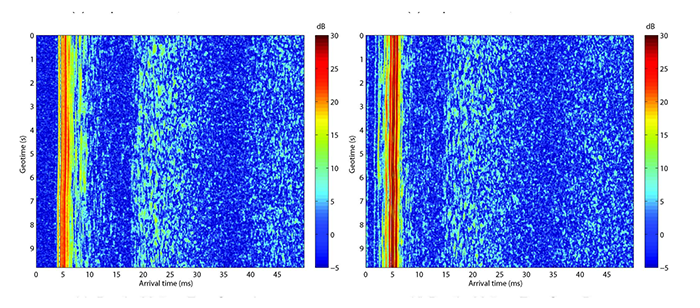
On our planet Earth, the marine ecosystem is undergoing significant changes due to human activities and natural processes. These changes call for enhanced capabilities to sample and communicate in the oceans. With this background, underwater acoustic communication has attracted much attention across multiple disciplines, as a means to access oceanographic data in real-time and to support navigation of underwater vehicles. This talk will focus on my recent efforts in 1) characterization and modeling of the ocean environment as a communication medium, 2) development of high data rate acoustic modems, both software and hardware, and 3) application of underwater acoustic communication networks in ocean sampling.
Dr. Aijun Song received his Ph.D. degree in the Department of Electrical Engineering, University of Delaware, Newark, Delaware in 2005. From 2005 to 2008, he was a postdoctoral research associate at the College of Earth, Ocean, and Environment (CEOE), University of Delaware. During this period, he was also an Office of Naval Research (ONR) postdoctoral fellow, supported by the special research award in the Ocean Acoustics program. Since 2008, he has been an Assistant Research Professor of the CEOE, University of Delaware. His research interests include advanced signal processing and communication techniques for mobile radio frequencies as well as for underwater acoustic environments, underwater acoustic signal propagation, and the general area of ocean sampling.
]]>
Underwater Acoustic Communication and Networking for Ocean Sampling Dr. Aijun Song Assistant Research Professor College of Earth, Ocean, and Environment University of Delaware, Newark, DE...
http://www.csee.umbc.edu/2014/03/talk-underwater-acoustic-communication-1145am-thr-327-ite325b/?utm_source=rss&utm_medium=rss&utm_campaign=talk-underwater-acoustic-communication-1145am-thr-327-ite325b
https://dev.my.umbc.edu/api/v0/pixel/news/42713/guest@my.umbc.edu/694e8bd26dc03cad4531f92c313764ed/api/pixel
news
research
talks
Computer Science and Electrical Engineering
https://dev.my.umbc.edu/groups/csee
https://assets3-dev.my.umbc.edu/system/shared/avatars/groups/000/000/099/d117dca133c64bf78a4b7696dd007189/xsmall.png?1314043393
https://assets1-dev.my.umbc.edu/system/shared/avatars/groups/000/000/099/d117dca133c64bf78a4b7696dd007189/original.png?1314043393
https://assets1-dev.my.umbc.edu/system/shared/avatars/groups/000/000/099/d117dca133c64bf78a4b7696dd007189/xxlarge.png?1314043393
https://assets4-dev.my.umbc.edu/system/shared/avatars/groups/000/000/099/d117dca133c64bf78a4b7696dd007189/xlarge.png?1314043393
https://assets3-dev.my.umbc.edu/system/shared/avatars/groups/000/000/099/d117dca133c64bf78a4b7696dd007189/large.png?1314043393
https://assets1-dev.my.umbc.edu/system/shared/avatars/groups/000/000/099/d117dca133c64bf78a4b7696dd007189/medium.png?1314043393
https://assets2-dev.my.umbc.edu/system/shared/avatars/groups/000/000/099/d117dca133c64bf78a4b7696dd007189/small.png?1314043393
https://assets3-dev.my.umbc.edu/system/shared/avatars/groups/000/000/099/d117dca133c64bf78a4b7696dd007189/xsmall.png?1314043393
https://assets3-dev.my.umbc.edu/system/shared/avatars/groups/000/000/099/d117dca133c64bf78a4b7696dd007189/xxsmall.png?1314043393
Computer Science and Electrical Engineering
0
0
true
Fri, 21 Mar 2014 10:03:42 -0400
talk: Large Scale Predictive Modeling with Electronic Health Records, 1pm Wed 3/26
Feature Engineering for Large Scale Predictive
Modeling with Electronic Health Records
Dr. Fei Wang
Healthcare Analytics Research group
IBM T. J. Watson Research Center
1:00pm Wednesday, 26 March 2014, ITE325b, UMBC
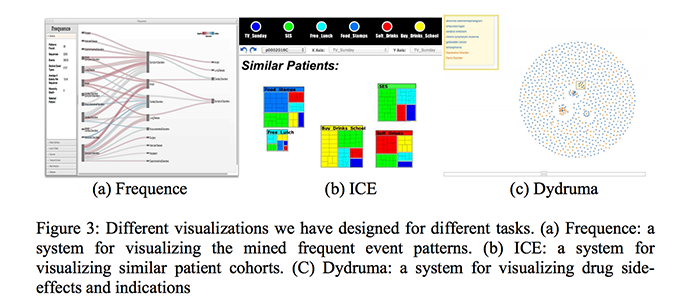
Predictive modeling lies in the heart of many medical informatics problems, such as early detection of some chronic diseases and patient hospitalization/readmission prediction. Typically those predictive models are built upon patient Electronic Health Records (EHR), which are systematic collection of patient information including demographics, diagnosis, medication, lab tests, etc. We refer those information as patient features. High quality features are of vital importance to building successful predictive models. In this talk, I will present two feature engineering technologies to improve the quality of the raw features extracted from original patient EHRs: (1) feature augmentation, which constructs more effective derived features from existing raw features by exploring the event sequentiality; (2) feature densification, which imputes the missing feature values via knowledge transfer across similar patients. Along with each technique we also developed a visual interface to facilitate the user exploring the derived features. Finally I will conclude the whole talk with some future research directions.
Dr. Fei Wang is currently a research staff member in Healthcare Analytics Research group, IBM T. J. Watson Research Center. Before his current position he was a postdoc in Department of Statistical Science, Cornell University. He received his Ph.D. from Department of Automation, Tsinghua University in 2008. Dr. Wang’s major research interests include data mining, machine learning as well as their applications in social and health informatics. He actively publishes papers on the top venues of the relevant fields including AMIA, KDD, ICML and InfoVis, and he has filed over 20 patents (four issued). Dr. Wang has given seven tutorials on different topics at ICDM/SDM/ICDM, organized seven workshops on KDD/ICDM/SDM/WSDM, and edited three special issues on Journal of Data Mining and Knowledge Discovery. His Ph.D. thesis was awarded the National Excellent Doctoral Thesis in China. His research paper was selected as the recipient of the Honorable mention of the best research paper award in ICDM 2010, and best research paper finalist in SDM 2011. More information can be found on his homepage.
Host: Prof. Kostas Kalpakis, Sorry, you need javascript to view this email address.
]]>
Feature Engineering for Large Scale Predictive Modeling with Electronic Health Records Dr. Fei Wang Healthcare Analytics Research group IBM T. J. Watson Research Center 1:00pm Wednesday, 26...
http://www.csee.umbc.edu/2014/03/talk-large-scale-predictive-modeling-with-electronic-health-records-1pm-wed-326/
https://dev.my.umbc.edu/api/v0/pixel/news/42566/guest@my.umbc.edu/0c735328a68757b2eec2a407dea9f68d/api/pixel
news
research
talks
Computer Science and Electrical Engineering
https://dev.my.umbc.edu/groups/csee
https://assets3-dev.my.umbc.edu/system/shared/avatars/groups/000/000/099/d117dca133c64bf78a4b7696dd007189/xsmall.png?1314043393
https://assets1-dev.my.umbc.edu/system/shared/avatars/groups/000/000/099/d117dca133c64bf78a4b7696dd007189/original.png?1314043393
https://assets1-dev.my.umbc.edu/system/shared/avatars/groups/000/000/099/d117dca133c64bf78a4b7696dd007189/xxlarge.png?1314043393
https://assets4-dev.my.umbc.edu/system/shared/avatars/groups/000/000/099/d117dca133c64bf78a4b7696dd007189/xlarge.png?1314043393
https://assets3-dev.my.umbc.edu/system/shared/avatars/groups/000/000/099/d117dca133c64bf78a4b7696dd007189/large.png?1314043393
https://assets1-dev.my.umbc.edu/system/shared/avatars/groups/000/000/099/d117dca133c64bf78a4b7696dd007189/medium.png?1314043393
https://assets2-dev.my.umbc.edu/system/shared/avatars/groups/000/000/099/d117dca133c64bf78a4b7696dd007189/small.png?1314043393
https://assets3-dev.my.umbc.edu/system/shared/avatars/groups/000/000/099/d117dca133c64bf78a4b7696dd007189/xsmall.png?1314043393
https://assets3-dev.my.umbc.edu/system/shared/avatars/groups/000/000/099/d117dca133c64bf78a4b7696dd007189/xxsmall.png?1314043393
Computer Science and Electrical Engineering
0
0
true
Wed, 19 Mar 2014 10:55:27 -0400
Wed, 19 Mar 2014 10:55:27 -0400
talk: Large Scale Predictive Modeling with Electronic Health Records, 1pm Wed 3/26
Feature Engineering for Large Scale Predictive
Modeling with Electronic Health Records
Dr. Fei Wang
Healthcare Analytics Research group
IBM T. J. Watson Research Center
1:00pm Wednesday, 26 March 2014, ITE325b, UMBC
Predictive modeling lies in the heart of many medical informatics problems, such as early detection of some chronic diseases and patient hospitalization/readmission prediction. Typically those predictive models are built upon patient Electronic Health Records (EHR), which are systematic collection of patient information including demographics, diagnosis, medication, lab tests, etc. We refer those information as patient features. High quality features are of vital importance to building successful predictive models. In this talk, I will present two feature engineering technologies to improve the quality of the raw features extracted from original patient EHRs: (1) feature augmentation, which constructs more effective derived features from existing raw features by exploring the event sequentiality; (2) feature densification, which imputes the missing feature values via knowledge transfer across similar patients. Along with each technique we also developed a visual interface to facilitate the user exploring the derived features. Finally I will conclude the whole talk with some future research directions.
Dr. Fei Wang is currently a research staff member in Healthcare Analytics Research group, IBM T. J. Watson Research Center. Before his current position he was a postdoc in Department of Statistical Science, Cornell University. He received his Ph.D. from Department of Automation, Tsinghua University in 2008. Dr. Wang’s major research interests include data mining, machine learning as well as their applications in social and health informatics. He actively publishes papers on the top venues of the relevant fields including AMIA, KDD, ICML and InfoVis, and he has filed over 20 patents (four issued). Dr. Wang has given seven tutorials on different topics at ICDM/SDM/ICDM, organized seven workshops on KDD/ICDM/SDM/WSDM, and edited three special issues on Journal of Data Mining and Knowledge Discovery. His Ph.D. thesis was awarded the National Excellent Doctoral Thesis in China. His research paper was selected as the recipient of the Honorable mention of the best research paper award in ICDM 2010, and best research paper finalist in SDM 2011. More information can be found on his homepage.
Host: Prof. Kostas Kalpakis, Sorry, you need javascript to view this email address.
]]>
Feature Engineering for Large Scale Predictive Modeling with Electronic Health Records Dr. Fei Wang Healthcare Analytics Research group IBM T. J. Watson Research Center 1:00pm Wednesday, 26...
http://www.csee.umbc.edu/2014/03/talk-large-scale-predictive-modeling-with-electronic-health-records-1pm-wed-326/?utm_source=rss&utm_medium=rss&utm_campaign=talk-large-scale-predictive-modeling-with-electronic-health-records-1pm-wed-326
https://dev.my.umbc.edu/api/v0/pixel/news/42608/guest@my.umbc.edu/bb76a76bc9bb38aaff7779cc3f4af09f/api/pixel
news
research
talks
Computer Science and Electrical Engineering
https://dev.my.umbc.edu/groups/csee
https://assets3-dev.my.umbc.edu/system/shared/avatars/groups/000/000/099/d117dca133c64bf78a4b7696dd007189/xsmall.png?1314043393
https://assets1-dev.my.umbc.edu/system/shared/avatars/groups/000/000/099/d117dca133c64bf78a4b7696dd007189/original.png?1314043393
https://assets1-dev.my.umbc.edu/system/shared/avatars/groups/000/000/099/d117dca133c64bf78a4b7696dd007189/xxlarge.png?1314043393
https://assets4-dev.my.umbc.edu/system/shared/avatars/groups/000/000/099/d117dca133c64bf78a4b7696dd007189/xlarge.png?1314043393
https://assets3-dev.my.umbc.edu/system/shared/avatars/groups/000/000/099/d117dca133c64bf78a4b7696dd007189/large.png?1314043393
https://assets1-dev.my.umbc.edu/system/shared/avatars/groups/000/000/099/d117dca133c64bf78a4b7696dd007189/medium.png?1314043393
https://assets2-dev.my.umbc.edu/system/shared/avatars/groups/000/000/099/d117dca133c64bf78a4b7696dd007189/small.png?1314043393
https://assets3-dev.my.umbc.edu/system/shared/avatars/groups/000/000/099/d117dca133c64bf78a4b7696dd007189/xsmall.png?1314043393
https://assets3-dev.my.umbc.edu/system/shared/avatars/groups/000/000/099/d117dca133c64bf78a4b7696dd007189/xxsmall.png?1314043393
Computer Science and Electrical Engineering
0
0
true
Wed, 19 Mar 2014 10:55:27 -0400
Wed, 19 Mar 2014 10:55:27 -0400
Phd Defense: Amplified Quantum Transforms
PhD Dissertation Defense
Amplified Quantum Transforms
David J. Cornwell
10:00am-12:00pm, 26 March 2014, ITE346
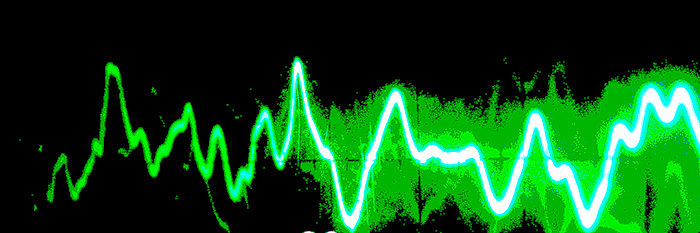
In this work we investigate a new quantum algorithm called the Amplified Quantum Fourier Transform (Amplified-QFT) to solve the Local Period Problem where there is an Oracle with a periodic subset and we wish to recover its period. This algorithm uses parts of the famous Grover’s quantum search algorithm to amplify the amplitudes on the subset, followed by the equally famous Shor’s quantum algorithm for recovering the period. We compare the Amplified-QFT algorithm against the Quantum Fourier Transform (QFT) and Quantum Hidden Subgroup (QHS) algorithms and calculate the probabilities of success for all three algorithms. We show that the Amplified-QFT algorithm is on average, quadratically faster than either the QFT or QHS algorithms. We also investigate two more general settings: a) where the QFT is replaced by a general unitary operator U in the Amplified-QFT algorithm and b) where Grover’s algorithm is replaced by a general amplification procedure in the Amplified-QFT algorithm.
We also investigate this algorithm when a random Error Stream affects the Oracle, which involves calculating expectations and variances over a random set. We calculate the probabilities of success in this case. Further, we find an Uncertainty Principle for the Amplified-QFT algorithm. We also identify a decision problem, the Constant or Balanced Signal Decision Problem, which can be solved by using the one dimensional Amplified Haar Wavelet Transform. This decision problem is a generalization of the Deutsch-Josza problem.
Committee: Drs. S. Lomonaco (CSEE), Chair and advisor; T. Armstrong (Math), Co-advisor and Reader; Dr. Y. Shih (Physics), Reader; Dr. F. Potra (Math) and Dr. M. Gowda (Math)
]]>
PhD Dissertation Defense Amplified Quantum Transforms David J. Cornwell 10:00am-12:00pm, 26 March 2014, ITE346 In this work we investigate a new quantum algorithm called the Amplified...
http://www.csee.umbc.edu/2014/03/phd-defense-amplified-quantum-transforms/
https://dev.my.umbc.edu/api/v0/pixel/news/42551/guest@my.umbc.edu/13469f7cc73e0abaf19fba29cafc09f4/api/pixel
defense
graduate
news
talks
Computer Science and Electrical Engineering
https://dev.my.umbc.edu/groups/csee
https://assets3-dev.my.umbc.edu/system/shared/avatars/groups/000/000/099/d117dca133c64bf78a4b7696dd007189/xsmall.png?1314043393
https://assets1-dev.my.umbc.edu/system/shared/avatars/groups/000/000/099/d117dca133c64bf78a4b7696dd007189/original.png?1314043393
https://assets1-dev.my.umbc.edu/system/shared/avatars/groups/000/000/099/d117dca133c64bf78a4b7696dd007189/xxlarge.png?1314043393
https://assets4-dev.my.umbc.edu/system/shared/avatars/groups/000/000/099/d117dca133c64bf78a4b7696dd007189/xlarge.png?1314043393
https://assets3-dev.my.umbc.edu/system/shared/avatars/groups/000/000/099/d117dca133c64bf78a4b7696dd007189/large.png?1314043393
https://assets1-dev.my.umbc.edu/system/shared/avatars/groups/000/000/099/d117dca133c64bf78a4b7696dd007189/medium.png?1314043393
https://assets2-dev.my.umbc.edu/system/shared/avatars/groups/000/000/099/d117dca133c64bf78a4b7696dd007189/small.png?1314043393
https://assets3-dev.my.umbc.edu/system/shared/avatars/groups/000/000/099/d117dca133c64bf78a4b7696dd007189/xsmall.png?1314043393
https://assets3-dev.my.umbc.edu/system/shared/avatars/groups/000/000/099/d117dca133c64bf78a4b7696dd007189/xxsmall.png?1314043393
Computer Science and Electrical Engineering
0
0
true
Tue, 18 Mar 2014 21:43:29 -0400