Ph.D. proposal: S. Rao, Accurate Estimation of Dynamic Power Supply Noise and its Effect on Path Delays, 7/29
Computer Science and Electrical Engineering
Ph.D. Dissertation Proposal
Framework for Accurate Estimation of Dynamic
Power Supply Noise and its Effect on Path Delays
Sushmita K. Rao
11:00am-1:00pm Monday, July 29, 2013, ITE 346
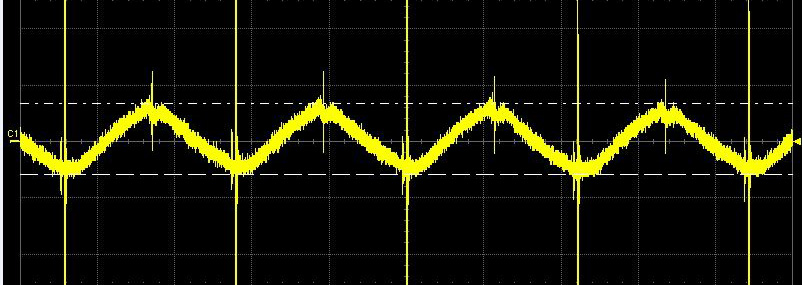
Power-supply noise is a major contributing factor for yield loss in sub-micron designs. Excessive switching in test mode causes supply voltage to droop more than in functional mode leading to failures in delay tests that would not occur otherwise under normal operation. Thus, there exists a need to accurately estimate on-chip supply noise early in the design phase to meet power requirements in normal mode and during test to prevent over-stimulation during test cycle and avoid false failures.
Simultaneous switching activity (SSA) of several logic components is one of the main sources of power-supply noise (PSN) which results in reduction of supply voltages at the power-supplies of the logic gates. Current research concentrate on static IR-drop which accounts for only part of the total voltage drop on the power grid and therefore insufficient for nanometer designs. To our knowledge, inductive drop is not included in current noise analysis techniques for simplification. The power delivery networks in today’s very deep-submicron chips are susceptible to slight variations and cause sudden large current spikes leading to higher Ldi/dt drop than resistive drop essentiating the need to be accounted. Simultaneous switching in localized areas in a chip too result in large instantaneous current to be drawn from a particular power bump or pad reducing supply voltage further. Thus, there arises a growing need to accurately characterize the resistive and inductive voltage drop caused by simultaneous switching of multiple paths. Power-supply noise also impacts circuit operation incurring a significant increase in path delays. It is critical to account for this increase in delay during the ATPG process else it can lead to overkill during transition and delay testing. However, it is infeasible to carry out full-chip SPICE-level simulations on a design to validate the large number of ATPG generated test patterns. Accurate and efficient techniques are required to quantify supply noise and its impact on path delays to ensure reliable operation in both mission mode and during test.
A scalable current-based dynamic method is presented to estimate both IR and Ldi/dt drop caused by simultaneous switching activity. Also presented is a technique to predict the increase in path delays caused by supply noise. The noise and delay estimation techniques use simulations of individual extracted paths in comparison to time-consuming full-chip simulations and thus it can be integrated with existing ATPG tools. Simulation results for combinational and sequential benchmark circuits are presented demonstrating the effectiveness of the convolution-based techniques.
Committee: Professors Chintan Patel (Chair), Mohamed Younis, Ryan Robucci and Nilanjan Banerjee
]]>
Computer Science and Electrical Engineering Ph.D. Dissertation Proposal Framework for Accurate Estimation of Dynamic Power Supply Noise and its Effect on Path Delays Sushmita K. Rao...
http://www.csee.umbc.edu/2013/07/ph-d-proposal-s-rao-accurate-estimation-of-dynamic-power-supply-noise-and-its-effect-on-path-delays-729/
https://dev.my.umbc.edu/api/v0/pixel/news/33240/guest@my.umbc.edu/78ba8dcc9382a603e519427394864d73/api/pixel
computer-engineering
graduate
news
research
students
talks
Computer Science and Electrical Engineering
https://dev.my.umbc.edu/groups/csee
https://assets3-dev.my.umbc.edu/system/shared/avatars/groups/000/000/099/d117dca133c64bf78a4b7696dd007189/xsmall.png?1314043393
https://assets1-dev.my.umbc.edu/system/shared/avatars/groups/000/000/099/d117dca133c64bf78a4b7696dd007189/original.png?1314043393
https://assets1-dev.my.umbc.edu/system/shared/avatars/groups/000/000/099/d117dca133c64bf78a4b7696dd007189/xxlarge.png?1314043393
https://assets4-dev.my.umbc.edu/system/shared/avatars/groups/000/000/099/d117dca133c64bf78a4b7696dd007189/xlarge.png?1314043393
https://assets3-dev.my.umbc.edu/system/shared/avatars/groups/000/000/099/d117dca133c64bf78a4b7696dd007189/large.png?1314043393
https://assets1-dev.my.umbc.edu/system/shared/avatars/groups/000/000/099/d117dca133c64bf78a4b7696dd007189/medium.png?1314043393
https://assets2-dev.my.umbc.edu/system/shared/avatars/groups/000/000/099/d117dca133c64bf78a4b7696dd007189/small.png?1314043393
https://assets3-dev.my.umbc.edu/system/shared/avatars/groups/000/000/099/d117dca133c64bf78a4b7696dd007189/xsmall.png?1314043393
https://assets3-dev.my.umbc.edu/system/shared/avatars/groups/000/000/099/d117dca133c64bf78a4b7696dd007189/xxsmall.png?1314043393
Computer Science and Electrical Engineering
2
0
true
Sat, 27 Jul 2013 13:41:05 -0400
Sat, 27 Jul 2013 13:41:05 -0400
MS Defense: Sentiment Analysis on Tweets and their Relationship with Stock Market Trends, J. Sharma, 7/29

Computer Science and Electrical Engineering
MS Thesis Defense
Sentiment Analysis on Tweets and their
Relationship with Stock Market Trends
Jay Sharma
10:00 AM – 12:00 PM Monday, July 29, 2013, ITE 325
We investigate whether sentiment derived from micro-blogging site Twitter can be used to identify important events (product launch, quarter results etc.) and help to infer the future movement of the stock. We used the volume and key performance index of Apple Company’s financial tweets to identify important events and infer the future movement. We present the results of machine learning algorithms (Naïve Bayes, Maximum Entropy, and SVM) for classifying the sentiment of Apple Company’s financial tweets. Statistical analysis using Granger causality test showed that we were able to infer the movement of Apple Company’s stock close price in advance.
Committee: Professors Yelena Yesha (chair), Shujia Zhou, and Tim Finin
]]>
Computer Science and Electrical Engineering MS Thesis Defense Sentiment Analysis on Tweets and their Relationship with Stock Market Trends Jay Sharma 10:00 AM – 12:00 PM Monday, July 29,...
http://www.csee.umbc.edu/2013/07/ms-defense-sentiment-analysis-on-tweets-and-their-relationship-with-stock-market-trends-j-sharma-729/
https://dev.my.umbc.edu/api/v0/pixel/news/33179/guest@my.umbc.edu/9aa82ef1133879530375161ec33fc3e1/api/pixel
computer-science
defense
graduate
news
research
students
talks
Computer Science and Electrical Engineering
https://dev.my.umbc.edu/groups/csee
https://assets3-dev.my.umbc.edu/system/shared/avatars/groups/000/000/099/d117dca133c64bf78a4b7696dd007189/xsmall.png?1314043393
https://assets1-dev.my.umbc.edu/system/shared/avatars/groups/000/000/099/d117dca133c64bf78a4b7696dd007189/original.png?1314043393
https://assets1-dev.my.umbc.edu/system/shared/avatars/groups/000/000/099/d117dca133c64bf78a4b7696dd007189/xxlarge.png?1314043393
https://assets4-dev.my.umbc.edu/system/shared/avatars/groups/000/000/099/d117dca133c64bf78a4b7696dd007189/xlarge.png?1314043393
https://assets3-dev.my.umbc.edu/system/shared/avatars/groups/000/000/099/d117dca133c64bf78a4b7696dd007189/large.png?1314043393
https://assets1-dev.my.umbc.edu/system/shared/avatars/groups/000/000/099/d117dca133c64bf78a4b7696dd007189/medium.png?1314043393
https://assets2-dev.my.umbc.edu/system/shared/avatars/groups/000/000/099/d117dca133c64bf78a4b7696dd007189/small.png?1314043393
https://assets3-dev.my.umbc.edu/system/shared/avatars/groups/000/000/099/d117dca133c64bf78a4b7696dd007189/xsmall.png?1314043393
https://assets3-dev.my.umbc.edu/system/shared/avatars/groups/000/000/099/d117dca133c64bf78a4b7696dd007189/xxsmall.png?1314043393
Computer Science and Electrical Engineering
2
0
true
Thu, 25 Jul 2013 17:47:57 -0400
Thu, 25 Jul 2013 17:47:57 -0400
MS Defense: A. Korde, Radar Compressive Sensing for Noisy Signals, 7/24

MS Defense
Computer Science and Electrical Engineering
Detection Performance and Computational Complexity of
Radar Compressive Sensing for Noisy Signals
Asmita Korde
2:00-4:00 Wednesday, 24 July 2013, ITE 325
In recent years, compressive sensing has received a lot of attention due to its ability to reducethe sampling bandwidth, yet reproduce a good reconstructed signal back. Compressivesensing is a new theory of sampling which allows the reconstruction of a sparse signal bysampling at a much lower rate than the Nyquist rate. This concept can be applied to severalimaging and detection techniques. In this thesis, we explore the use of compressive sensing for radar applications. By using this technique in radar, the use of matched filter can be eliminated and high rate sampling can be replaced with low rate sampling. We analyze compressive sensing in the context of radar by applying varying factors such as noise and different measurement matrices. Different reconstruction algorithms are compared by generating ROC curves to determine their detection performance, which in turn are also compared against a traditional radar system. Computational complexity and MATLAB run time are also measured for the different algorithms. We also propose an algorithm called simplified OMP, which works well in noisy environments and has a very low computational complexity.
Committee: Professors Tinoosh Mohsenin (Chair), Joel Morris, Tulay Adali, and Mohamed Younis
]]>
MS Defense Computer Science and Electrical Engineering Detection Performance and Computational Complexity of Radar Compressive Sensing for Noisy Signals Asmita Korde 2:00-4:00 Wednesday,...
http://www.csee.umbc.edu/2013/07/ms-defense-a-korde-radar-compressive-sensing-for-noisy-signals-724/
https://dev.my.umbc.edu/api/v0/pixel/news/33133/guest@my.umbc.edu/4df12e1517a8df339ec5690886da46f3/api/pixel
defense
graduate
news
research
students
talks
Computer Science and Electrical Engineering
https://dev.my.umbc.edu/groups/csee
https://assets3-dev.my.umbc.edu/system/shared/avatars/groups/000/000/099/d117dca133c64bf78a4b7696dd007189/xsmall.png?1314043393
https://assets1-dev.my.umbc.edu/system/shared/avatars/groups/000/000/099/d117dca133c64bf78a4b7696dd007189/original.png?1314043393
https://assets1-dev.my.umbc.edu/system/shared/avatars/groups/000/000/099/d117dca133c64bf78a4b7696dd007189/xxlarge.png?1314043393
https://assets4-dev.my.umbc.edu/system/shared/avatars/groups/000/000/099/d117dca133c64bf78a4b7696dd007189/xlarge.png?1314043393
https://assets3-dev.my.umbc.edu/system/shared/avatars/groups/000/000/099/d117dca133c64bf78a4b7696dd007189/large.png?1314043393
https://assets1-dev.my.umbc.edu/system/shared/avatars/groups/000/000/099/d117dca133c64bf78a4b7696dd007189/medium.png?1314043393
https://assets2-dev.my.umbc.edu/system/shared/avatars/groups/000/000/099/d117dca133c64bf78a4b7696dd007189/small.png?1314043393
https://assets3-dev.my.umbc.edu/system/shared/avatars/groups/000/000/099/d117dca133c64bf78a4b7696dd007189/xsmall.png?1314043393
https://assets3-dev.my.umbc.edu/system/shared/avatars/groups/000/000/099/d117dca133c64bf78a4b7696dd007189/xxsmall.png?1314043393
Computer Science and Electrical Engineering
3
1
true
Wed, 24 Jul 2013 22:22:02 -0400
Wed, 24 Jul 2013 22:22:02 -0400
MS defense: Multicast Routing with Byzantine Robustness, D. Mukherjee, 2:30 7/23
Computer Science and Electrical Engineering
MS Thesis Defense
Multicast Routing with Byzantine Robustness
Debdatta Mukherjee
2:30-4:30 Tuesday, july 23, 2013, ITE 346
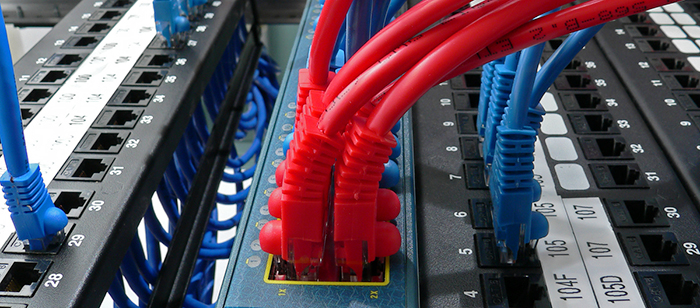
Network problems arise when nodes behave in arbitrary ways such as sending malformed messages, sending incorrect messages or not forwarding messages at all to other nodes in the network. These faults are called Byzantine failures. In a real network, these faults can be a result of hardware failure, cyber-attacks or network congestion. Due to the serious problems these faults can cause, it becomes important to make the network robust against them, so that the network continues to operate properly or degrades in an acceptable way in the presence of such faults. In this thesis, we propose methods that include multiple node disjoint path calculations and robust flooding to find byzantine-free multicast trees. By finding such trees, we can guarantee the delivery of the messages from a source to a particular multicast group.
Committee: Professors Deepinder Sidhu (chair), Kostas Kalpakis and Sergei Nirenburg
]]>
Computer Science and Electrical Engineering MS Thesis Defense Multicast Routing with Byzantine Robustness Debdatta Mukherjee 2:30-4:30 Tuesday, july 23, 2013, ITE 346 Network problems...
http://www.csee.umbc.edu/2013/07/ms-defense-multicast-routing-with-byzantine-robustness-d-mukherjee-230-723/
https://dev.my.umbc.edu/api/v0/pixel/news/33006/guest@my.umbc.edu/249fbb6681dde4c55763636577e14154/api/pixel
computer-science
defense
graduate
news
research
talks
Computer Science and Electrical Engineering
https://dev.my.umbc.edu/groups/csee
https://assets3-dev.my.umbc.edu/system/shared/avatars/groups/000/000/099/d117dca133c64bf78a4b7696dd007189/xsmall.png?1314043393
https://assets1-dev.my.umbc.edu/system/shared/avatars/groups/000/000/099/d117dca133c64bf78a4b7696dd007189/original.png?1314043393
https://assets1-dev.my.umbc.edu/system/shared/avatars/groups/000/000/099/d117dca133c64bf78a4b7696dd007189/xxlarge.png?1314043393
https://assets4-dev.my.umbc.edu/system/shared/avatars/groups/000/000/099/d117dca133c64bf78a4b7696dd007189/xlarge.png?1314043393
https://assets3-dev.my.umbc.edu/system/shared/avatars/groups/000/000/099/d117dca133c64bf78a4b7696dd007189/large.png?1314043393
https://assets1-dev.my.umbc.edu/system/shared/avatars/groups/000/000/099/d117dca133c64bf78a4b7696dd007189/medium.png?1314043393
https://assets2-dev.my.umbc.edu/system/shared/avatars/groups/000/000/099/d117dca133c64bf78a4b7696dd007189/small.png?1314043393
https://assets3-dev.my.umbc.edu/system/shared/avatars/groups/000/000/099/d117dca133c64bf78a4b7696dd007189/xsmall.png?1314043393
https://assets3-dev.my.umbc.edu/system/shared/avatars/groups/000/000/099/d117dca133c64bf78a4b7696dd007189/xxsmall.png?1314043393
Computer Science and Electrical Engineering
5
0
true
Mon, 22 Jul 2013 12:43:10 -0400
Mon, 22 Jul 2013 12:43:10 -0400
MS defense: Social Media Data Analytics Applied to Hurricane Sandy, Han Dong, 7/29
MS Defense
Computer Science and Electrical Engineering
Social Media Data Analytics Applied to Hurricane Sandy
Han Dong
12:30-2:30 Monday, 29 July 2013, ITE 325b
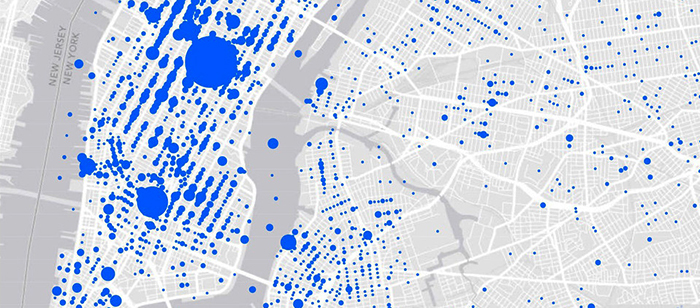
Social media websites are an integral part of many people’s lives in delivering news and other emergency information. This is especially true during natural disasters. Furthermore, the role of social media websites is becoming more important due to the cost of recent natural disasters. These online platforms are usually the first to deliver emergency news to a wide variety of people due to the significantly large number of users registered. During disasters, extracting useful information from this pool of social media data can be useful in understanding the sentiment of the public; this information can then be used to improve decision making. In this work, I am presenting a system that automates the process of collecting and analyzing social media data from Twitter. I also explore a variety of visualizations that can be generated by the system in order to understand the public sentiment. I demonstrate an example of utilizing this system on the Hurricane Sandy disaster from October 26, 2012 to October 30, 2012. Finally, a statistical analysis is performed to explore the causality correlation between an approaching hurricane and the sentiment of the public.
As a result of the large amount of data collected by this system; scalable machine learning algorithms are needed for analysis. Boosting is a popular and powerful ensemble method in the area of supervised machine learning algorithms due to its theoretical convergence guarantees, simple implementation and ability to use different learning algorithms to produce a classifier with high accuracy. A novel parallel implementation of the multiclass version of Boosting (AdaBoost.MH) is proposed and our experimental results show that the parallel implementation achieves classification error percentages similar to serial implementation with fewer execution iterations. By distributing the tasks, the number of Boosting iterations decreased linearly at least up to 16 computational threads.
Committee: Professors Milton Halem (chair), Yelena Yesha, John Dorband and Shujia Zhou
]]>
MS Defense Computer Science and Electrical Engineering Social Media Data Analytics Applied to Hurricane Sandy Han Dong 12:30-2:30 Monday, 29 July 2013, ITE 325b Social media websites are...
http://www.csee.umbc.edu/2013/07/ms-defense-social-media-data-analytics-applied-to-hurricane-sandy-han-dong-11am-717/
https://dev.my.umbc.edu/api/v0/pixel/news/32882/guest@my.umbc.edu/be0a009f505ea7ffd8201ec33417e5f4/api/pixel
computer-science
defense
graduate
news
research
students
talks
Computer Science and Electrical Engineering
https://dev.my.umbc.edu/groups/csee
https://assets3-dev.my.umbc.edu/system/shared/avatars/groups/000/000/099/d117dca133c64bf78a4b7696dd007189/xsmall.png?1314043393
https://assets1-dev.my.umbc.edu/system/shared/avatars/groups/000/000/099/d117dca133c64bf78a4b7696dd007189/original.png?1314043393
https://assets1-dev.my.umbc.edu/system/shared/avatars/groups/000/000/099/d117dca133c64bf78a4b7696dd007189/xxlarge.png?1314043393
https://assets4-dev.my.umbc.edu/system/shared/avatars/groups/000/000/099/d117dca133c64bf78a4b7696dd007189/xlarge.png?1314043393
https://assets3-dev.my.umbc.edu/system/shared/avatars/groups/000/000/099/d117dca133c64bf78a4b7696dd007189/large.png?1314043393
https://assets1-dev.my.umbc.edu/system/shared/avatars/groups/000/000/099/d117dca133c64bf78a4b7696dd007189/medium.png?1314043393
https://assets2-dev.my.umbc.edu/system/shared/avatars/groups/000/000/099/d117dca133c64bf78a4b7696dd007189/small.png?1314043393
https://assets3-dev.my.umbc.edu/system/shared/avatars/groups/000/000/099/d117dca133c64bf78a4b7696dd007189/xsmall.png?1314043393
https://assets3-dev.my.umbc.edu/system/shared/avatars/groups/000/000/099/d117dca133c64bf78a4b7696dd007189/xxsmall.png?1314043393
Computer Science and Electrical Engineering
1
1
true
Thu, 18 Jul 2013 11:27:50 -0400
Fri, 26 Jul 2013 09:27:50 -0400
Talk: Personalized Medicine — the future is already here, 6/20

CSEE Colloquium
Personalized Medicine – the future is already here
Professor Eddy Karnieli, MD
Director, Institute of Endocrinology, Diabetes and Metabolism
Rambam Health Care Campus, Israel
Director, Galil Center for Medical Informatics, Telemedicine
and Personalized Medicine
Technion, Israel
2:30pm June 20, 2013, ITE 325b, UMBC
Professor Eddy Karnieli will talk about applications of personalized medicine in healthcare. Personalized medicine allows us to determine an individual's unique genetic and molecular characteristics and use this to better diagnose and treat diseases and reduce possible adverse reactions. Personalized medicine can also be used to predict an individual's susceptibility to diseases, enabling steps to help avoid or reduce the extent to which an individual will experience a disease.
Professor Eddy Karnieli is a graduate of the Rappaport Faculty of Medicine at the Technion– Israel Institute of Technology in Haifa. He obtained clinical training in Internal Medicine and Endocrinology at the Rambam Medical Center and did his Post-Doctoral Fellowship in Diabetes, Obesity and Endocrinology at the National Institutes of Health in Bethesda, Maryland.He was a visiting scholar at the University of California at San Diego and at the National Institutes of Health.Recently, he was a visiting professor at MSSM in New York.
He is currently the Director of the Institute of Endocrinology, Diabetes and Metabolism at the Rambam Medical Center and the Director of Galil Center for Medical informatics, Telemedicine and personalized Medicine at the Faculty of Medicine – Technion. Professor Karnieli's main research interests are the molecular mechanisms for regulating cellular glucose uptake and transporters and their implications in diabetes and obesity; Medical informatics, telemedicine and personalized medicine. He is also the current President of the Israel Endocrine Society.
He has published over 70 peer reviewed papers and reviews. Professor Karnieli serves on the editorial board of several scientific journals and review boards.Professor Karnieli is a retired Colonel from the Israel Defense Forces Medical Corps.
]]>
CSEE Colloquium Personalized Medicine – the future is already here Professor Eddy Karnieli, MD Director, Institute of Endocrinology, Diabetes and Metabolism Rambam Health Care Campus,...
http://www.csee.umbc.edu/2013/06/talk-personalized-medicine-the-future-is-already-here-620/
https://dev.my.umbc.edu/api/v0/pixel/news/31367/guest@my.umbc.edu/3aadefa3ce77dc71b34b878b64246140/api/pixel
news
research
talks
Computer Science and Electrical Engineering
https://dev.my.umbc.edu/groups/csee
https://assets3-dev.my.umbc.edu/system/shared/avatars/groups/000/000/099/d117dca133c64bf78a4b7696dd007189/xsmall.png?1314043393
https://assets1-dev.my.umbc.edu/system/shared/avatars/groups/000/000/099/d117dca133c64bf78a4b7696dd007189/original.png?1314043393
https://assets1-dev.my.umbc.edu/system/shared/avatars/groups/000/000/099/d117dca133c64bf78a4b7696dd007189/xxlarge.png?1314043393
https://assets4-dev.my.umbc.edu/system/shared/avatars/groups/000/000/099/d117dca133c64bf78a4b7696dd007189/xlarge.png?1314043393
https://assets3-dev.my.umbc.edu/system/shared/avatars/groups/000/000/099/d117dca133c64bf78a4b7696dd007189/large.png?1314043393
https://assets1-dev.my.umbc.edu/system/shared/avatars/groups/000/000/099/d117dca133c64bf78a4b7696dd007189/medium.png?1314043393
https://assets2-dev.my.umbc.edu/system/shared/avatars/groups/000/000/099/d117dca133c64bf78a4b7696dd007189/small.png?1314043393
https://assets3-dev.my.umbc.edu/system/shared/avatars/groups/000/000/099/d117dca133c64bf78a4b7696dd007189/xsmall.png?1314043393
https://assets3-dev.my.umbc.edu/system/shared/avatars/groups/000/000/099/d117dca133c64bf78a4b7696dd007189/xxsmall.png?1314043393
Computer Science and Electrical Engineering
2
0
true
Sun, 16 Jun 2013 11:07:18 -0400
Sun, 16 Jun 2013 11:07:18 -0400
Talk: Sparse models for integrative analysis of fMRI and genetic data, 6/13

CSEE Talk
Sparse models for integrative analysis
of fMRI and genetic data
Dr. Yu-Ping Wang
Biomedical Engineering Department
Biostatistics & Bioinformatics Department
Tulane University
2pm Thursday, 13 June 2013, ITE 346
In the last few years, the combination of imaging and genetic approaches has become an emerging area, where multiple complementary data are utilized for systematic and comprehensive analysis of a patient. While imaging approaches such as functional MRI (fMRI) continue to be major diagnostic tools for extracting structural and functional patterns at the tissue and organ levels, genetic techniques such as SNPs, microarray gene expression and the emerging next generation sequencing (NGS) add new dimensions by revealing structural variations at genomic level. The integration of these multiscale and multimodality approaches has been promising for complex disease diagnosis and prognosis. However, the combination of these data has been challenging because these data are of different nature, format, organization and structure are produced by different genomic platforms at multiple scales; each of these imaging data is currently still analyzed separately and the results are interpreted independently. Being a powerful approach recently developed in statistics and signal processing, sparse data representations or compressive sensing provides a promising way to address these challenges facing multiscale genomic imaging informatics. In this talk, I will present our recent research on the development of sparse models such as sparse canonical correlation analysis (sCCA) and joint sparse representation of multi-modal data that can better capture the interrelations between these data. We show latest examples of using these models for integrative analysis of SNP and fMRI to identify biomarkers, and use the joint information for the identification of schizophrenia diseases.
Dr. Yu-Ping Wang received the BS degree in applied mathematics from Tianjin University, China, in 1990, and the MS degree in computational mathematics and the PhD degree in communications and electronic systems from Xi'an Jiaotong University, China, in 1993 and 1996, respectively. After his graduation, he had visiting positions at the Center for Wavelets, Approximation and Information Processing of the National University of Singapore and Washington University Medical School in St. Louis. From 2000 to 2003, he worked as a senior research engineer at Perceptive Scientific Instruments, Inc., and then Advanced Digital Imaging Research, LLC, Houston, Texas. In the fall of 2003, he returned to academia as an assistant professor of computer science and electrical engineering at the University of Missouri-Kansas City. He is currently an Associate Professor of Biomedical Engineering and Biostatistics & Bioinformatics at Tulane University School of Science and Engineering & School of Public Health and Tropical Medicine. He is also a member of Tulane Center of Bioinformatics and Genomics and Tulane Cancer Center. His research interests lie in the interdisciplinary biomedical imaging and bioinformatics areas, where he has over 100 publications. He has served on numerous program committees and NSF/NIH review panels, and was a member of Machine Learning for Signal Processing technical committee of the IEEE Signal Processing Society.
]]>
CSEE Talk Sparse models for integrative analysis of fMRI and genetic data Dr. Yu-Ping Wang Biomedical Engineering Department Biostatistics & Bioinformatics Department Tulane...
http://www.csee.umbc.edu/2013/06/talk-sparse-models-for-integrative-analysis-of-fmri-and-genetic-data-613/
https://dev.my.umbc.edu/api/v0/pixel/news/31048/guest@my.umbc.edu/0950fddb94afaf13f48ca92bbcdda5b0/api/pixel
news
research
talks
Computer Science and Electrical Engineering
https://dev.my.umbc.edu/groups/csee
https://assets3-dev.my.umbc.edu/system/shared/avatars/groups/000/000/099/d117dca133c64bf78a4b7696dd007189/xsmall.png?1314043393
https://assets1-dev.my.umbc.edu/system/shared/avatars/groups/000/000/099/d117dca133c64bf78a4b7696dd007189/original.png?1314043393
https://assets1-dev.my.umbc.edu/system/shared/avatars/groups/000/000/099/d117dca133c64bf78a4b7696dd007189/xxlarge.png?1314043393
https://assets4-dev.my.umbc.edu/system/shared/avatars/groups/000/000/099/d117dca133c64bf78a4b7696dd007189/xlarge.png?1314043393
https://assets3-dev.my.umbc.edu/system/shared/avatars/groups/000/000/099/d117dca133c64bf78a4b7696dd007189/large.png?1314043393
https://assets1-dev.my.umbc.edu/system/shared/avatars/groups/000/000/099/d117dca133c64bf78a4b7696dd007189/medium.png?1314043393
https://assets2-dev.my.umbc.edu/system/shared/avatars/groups/000/000/099/d117dca133c64bf78a4b7696dd007189/small.png?1314043393
https://assets3-dev.my.umbc.edu/system/shared/avatars/groups/000/000/099/d117dca133c64bf78a4b7696dd007189/xsmall.png?1314043393
https://assets3-dev.my.umbc.edu/system/shared/avatars/groups/000/000/099/d117dca133c64bf78a4b7696dd007189/xxsmall.png?1314043393
Computer Science and Electrical Engineering
0
0
true
Mon, 10 Jun 2013 13:43:09 -0400
Mon, 10 Jun 2013 13:43:09 -0400
Tutorials by Center for Hybrid Multicore Productivity Research students,1-5 Wed 6/12

UMBC's Center for Hybrid Multicore Productivity Research, an NSF Industry & University Cooperative Research Center is holding its Industry Advisory Board meeting at UMBC 12-14 June. Students from UMBC and UCSD will present tutorials on a number of the technologies underlying ongoing CHMPR projects in a session from 1:00-5:00 on Wednesday June 12 in ITE 456. The tutorial session is free and open to the public.
- 3-D Printing – Timothy Blattner (UMBC)
- Semantic Table Information – Varish Mulwad (UMBC)
- Social Media Elastic Search – Oleg Aulov (UMBC)
- Machine Learning for Social Media – Han Dong (UMBC)
- Virtual World Interactions – Erik Hill (UCSD)
]]>
UMBC's Center for Hybrid Multicore Productivity Research, an NSF Industry & University Cooperative Research Center is holding its Industry Advisory Board meeting at UMBC 12-14 June. Students...
http://www.csee.umbc.edu/2013/06/tutorials-by-center-for-hybrid-multicore-productivity-research-students1-5-wed-612/
https://dev.my.umbc.edu/api/v0/pixel/news/31027/guest@my.umbc.edu/f60c2f6e718d1b730b4c95ea2820f701/api/pixel
news
research
talks
Computer Science and Electrical Engineering
https://dev.my.umbc.edu/groups/csee
https://assets3-dev.my.umbc.edu/system/shared/avatars/groups/000/000/099/d117dca133c64bf78a4b7696dd007189/xsmall.png?1314043393
https://assets1-dev.my.umbc.edu/system/shared/avatars/groups/000/000/099/d117dca133c64bf78a4b7696dd007189/original.png?1314043393
https://assets1-dev.my.umbc.edu/system/shared/avatars/groups/000/000/099/d117dca133c64bf78a4b7696dd007189/xxlarge.png?1314043393
https://assets4-dev.my.umbc.edu/system/shared/avatars/groups/000/000/099/d117dca133c64bf78a4b7696dd007189/xlarge.png?1314043393
https://assets3-dev.my.umbc.edu/system/shared/avatars/groups/000/000/099/d117dca133c64bf78a4b7696dd007189/large.png?1314043393
https://assets1-dev.my.umbc.edu/system/shared/avatars/groups/000/000/099/d117dca133c64bf78a4b7696dd007189/medium.png?1314043393
https://assets2-dev.my.umbc.edu/system/shared/avatars/groups/000/000/099/d117dca133c64bf78a4b7696dd007189/small.png?1314043393
https://assets3-dev.my.umbc.edu/system/shared/avatars/groups/000/000/099/d117dca133c64bf78a4b7696dd007189/xsmall.png?1314043393
https://assets3-dev.my.umbc.edu/system/shared/avatars/groups/000/000/099/d117dca133c64bf78a4b7696dd007189/xxsmall.png?1314043393
Computer Science and Electrical Engineering
1
0
true
Mon, 10 Jun 2013 09:36:11 -0400
Mon, 10 Jun 2013 09:36:11 -0400
PhD defense: On Prediction and Estimation for Datastreams Utilizing Sparsity and Structure, 6/6
Ph.D. Dissertation Defense
On Prediction and Estimation for Datastreams
Utilizing Sparsity and Structure
Shiming Yang
10:00am-12:00pm, 6 June 2013, ITE 325b, UMBC
With the unprecedented fast growth of data, we have better opportunities to understand our complex world, and simultaneously face pervasive challenges in efficiently inferring the meaning behind these vast amounts of data. It is particularly important to explore the intrinsic structures in data to increase our rational understanding of the latent mechanisms that generate them. In modeling, structures are features used to characterize the underlying systems, such as the rank of a system, the number of clusters, the levels of hierarchy, and the order of spatio-temporal correlations in multiple measurements.
In this thesis, we present our research contributions on utilizing structures and sparsity in observed data to improve estimation and prediction of trajectories of system states for two systems: the highway traffic system and the human physiology systems. Both systems exhibit features that are seen in many other applications.
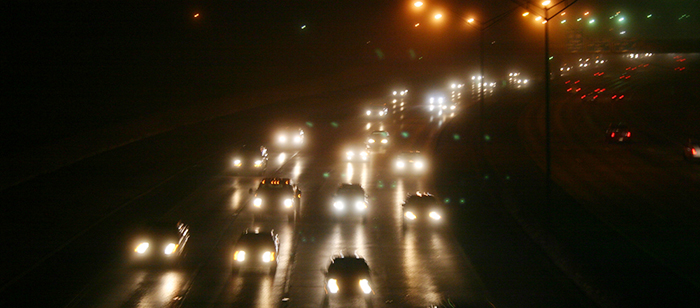
For the traffic problem, it is useful to know the near–term traffic conditions after the occurrence of some events which have noticeable impact on the road traffic. Often used macroscopic models, which view road traffic as fluid flowing in pipes, suffer from various inaccuracies, which could be mitigated by incorporating past observations to correct predictions. However, we often have limited observation and computing resources (e.g., probe vehicles, smartphones, bandwidth, sensors) to gather and process past observations. We describe a novel low-overhead strategy to adaptively select observation sites in real-time by using the density of the mesh of the numerical solution of the underlying mathematical model to capture the variability of that solution. We show that our proposed strategy improves the numerical accuracy of near–term traffic forecasting with limited observation resources as compared with with uniform deployment of the observation resources. In addition to deploying limited observation resources, one is often concerned with detecting special traffic events. To this end, we propose a novel method to decompose traffic observations into normal background and sparse events. Our method couples multiple traffic datastreams so that they share a certain sparse spatio–temporal structure.
We also study the utility of sparseness and structure in physiological datastreams. Missing values hinder the use of many machine learning methods. We show how to incorporate ideas from compressive sensing into handling the missing values problem in continuous intracranial pressure (ICP) datastreams from patients with traumatic brain injury. We experimentally evaluate the proposed method in experiments where randomly selected ICP values are marked as missing. We find our method gives estimated missing values that are in better agreement with the true values as compared with k–nearest neighbor and expectation maximization data imputation methods.
Moreover, predicting the near–term intracranial pressure for traumatic brain injury patients is of great importance to clinicians. Traditional regression methods, need an explicit parametric form of the model to fit. However, due to our limited knowledge of the complex brain physiology, it is difficult to specify an accurate parametric model. To overcome this difficulty, our model uses Gaussian processes to quantify our prior beliefs on the smoothness of the regression model, and performs regression in an infinite dimensional space. We show that the proposed Gaussian process regression model shows predicts ICP changes in clinically useful timeframes and may support future development of minimally-invasive ICP monitoring systems, earlier intervention strategies, and better patient outcomes.
Committee: Drs. K. Kalpakis (Chair), Alain Biem (IBM TJ Watson), Chein-I Chang, Colin MacKenzie, Dhananjay Phatak, Yaacov Yesha
]]>
Ph.D. Dissertation Defense On Prediction and Estimation for Datastreams Utilizing Sparsity and Structure Shiming Yang 10:00am-12:00pm, 6 June 2013, ITE 325b, UMBC With the unprecedented...
http://www.csee.umbc.edu/2013/06/phd-defense-on-prediction-and-estimation-for-datastreams-utilizing-sparsity-and-structure-66/
https://dev.my.umbc.edu/api/v0/pixel/news/30879/guest@my.umbc.edu/0bb56239d694d79af34e62614527b3b0/api/pixel
computer-science
defense
graduate
news
research
students
talks
Computer Science and Electrical Engineering
https://dev.my.umbc.edu/groups/csee
https://assets3-dev.my.umbc.edu/system/shared/avatars/groups/000/000/099/d117dca133c64bf78a4b7696dd007189/xsmall.png?1314043393
https://assets1-dev.my.umbc.edu/system/shared/avatars/groups/000/000/099/d117dca133c64bf78a4b7696dd007189/original.png?1314043393
https://assets1-dev.my.umbc.edu/system/shared/avatars/groups/000/000/099/d117dca133c64bf78a4b7696dd007189/xxlarge.png?1314043393
https://assets4-dev.my.umbc.edu/system/shared/avatars/groups/000/000/099/d117dca133c64bf78a4b7696dd007189/xlarge.png?1314043393
https://assets3-dev.my.umbc.edu/system/shared/avatars/groups/000/000/099/d117dca133c64bf78a4b7696dd007189/large.png?1314043393
https://assets1-dev.my.umbc.edu/system/shared/avatars/groups/000/000/099/d117dca133c64bf78a4b7696dd007189/medium.png?1314043393
https://assets2-dev.my.umbc.edu/system/shared/avatars/groups/000/000/099/d117dca133c64bf78a4b7696dd007189/small.png?1314043393
https://assets3-dev.my.umbc.edu/system/shared/avatars/groups/000/000/099/d117dca133c64bf78a4b7696dd007189/xsmall.png?1314043393
https://assets3-dev.my.umbc.edu/system/shared/avatars/groups/000/000/099/d117dca133c64bf78a4b7696dd007189/xxsmall.png?1314043393
Computer Science and Electrical Engineering
0
0
true
Wed, 05 Jun 2013 17:05:09 -0400
MS Defense: Nimbus: Scalable, Distributed, In-Memory Data Storage 6/6
MS Defense
Nimbus: Scalable, Distributed, In-Memory Data Storage
Adam Shook
1:30pm Thursday, 6 June 2013, 325b ITE, UMBC
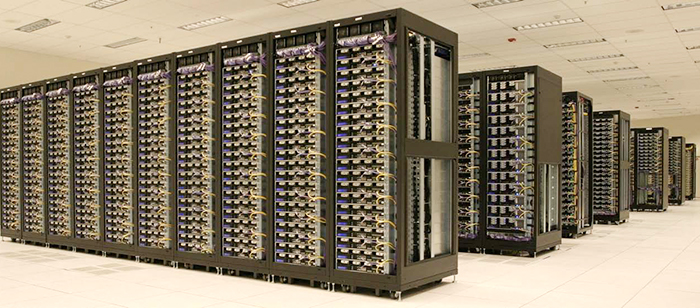
The Apache Hadoop project provides a framework for reliable, scalable, distributed computing. The storage layer of Hadoop, called the Hadoop Distributed File System (HDFS), is an append-only distributed file system designed for commodity hardware. The append-only nature of the file system limits the ability for applications to have random reads and writes of data. This was addressed by Apache HBase and Apache Accumulo, which both allow for quick random access to a highly scalable key/value store.
However, these projects still require data to be read from the local disk of the server, and therefore cannot handle the type of I/O throughput that many applications require. This limits the potential for "hot" data sets that cannot be stored in memory of one machine, but do not need the scalability of HBase, i.e. the ones that can be sharded and stored in memory on dozens of machines. These data sets are often referenced by many applications and can be dozens of gigabytes in size.
Nimbus is a project designed for Hadoop to expose distributed in-memory data structures, backed by the reliability of HDFS. By executing a series of I/O benchmarks against HBase, Nimbus's architecture and implementation are validated by demonstrating the performance advantage over HBase, allowing for high-throughput data fetch operations. The overall architecture and design of each component are discussed to validate Nimbus's design goals, as well as a description of relevant use cases and future work for the project.
Committee: Drs. Tim Finin (chair), Anupam Joshi and Konstantinos Kalpakis
]]>
MS Defense Nimbus: Scalable, Distributed, In-Memory Data Storage Adam Shook 1:30pm Thursday, 6 June 2013, 325b ITE, UMBC The Apache Hadoop project provides a framework for reliable,...
http://www.csee.umbc.edu/2013/06/ms-defense-nimbus-scalable-distributed-in-memory-data-storage-66/
https://dev.my.umbc.edu/api/v0/pixel/news/30825/guest@my.umbc.edu/76921cd930668e609d483b99fda5d1fc/api/pixel
computer-science
defense
news
research
talks
Computer Science and Electrical Engineering
https://dev.my.umbc.edu/groups/csee
https://assets3-dev.my.umbc.edu/system/shared/avatars/groups/000/000/099/d117dca133c64bf78a4b7696dd007189/xsmall.png?1314043393
https://assets1-dev.my.umbc.edu/system/shared/avatars/groups/000/000/099/d117dca133c64bf78a4b7696dd007189/original.png?1314043393
https://assets1-dev.my.umbc.edu/system/shared/avatars/groups/000/000/099/d117dca133c64bf78a4b7696dd007189/xxlarge.png?1314043393
https://assets4-dev.my.umbc.edu/system/shared/avatars/groups/000/000/099/d117dca133c64bf78a4b7696dd007189/xlarge.png?1314043393
https://assets3-dev.my.umbc.edu/system/shared/avatars/groups/000/000/099/d117dca133c64bf78a4b7696dd007189/large.png?1314043393
https://assets1-dev.my.umbc.edu/system/shared/avatars/groups/000/000/099/d117dca133c64bf78a4b7696dd007189/medium.png?1314043393
https://assets2-dev.my.umbc.edu/system/shared/avatars/groups/000/000/099/d117dca133c64bf78a4b7696dd007189/small.png?1314043393
https://assets3-dev.my.umbc.edu/system/shared/avatars/groups/000/000/099/d117dca133c64bf78a4b7696dd007189/xsmall.png?1314043393
https://assets3-dev.my.umbc.edu/system/shared/avatars/groups/000/000/099/d117dca133c64bf78a4b7696dd007189/xxsmall.png?1314043393
Computer Science and Electrical Engineering
0
0
true
Tue, 04 Jun 2013 21:39:06 -0400

