talk: Quantum Engineering of Semiconductor Atomic Structures for Biosensing 4/30

Baltimore Chapter of Electron Devices and Solid-State Circuits
Quantum Engineering of Semiconductor Atomic Structures for Biosensing
Dr. Manijeh Razeghi
Center for Quantum Devices
Electrical Engineering and Computer Science
Northwestern University
5:30pm Tuesday, 30 April 2013
206 Technology Research Center, UMBC
5:30pm social hour, talk begins at 6:15pm. Free but please RSVP to Sorry, you need javascript to view this email address. by Monday, April 29
Nature offers us different kinds of atoms, but it takes human intelligence to put them together in an elegant way in order to realize functional structures not found in nature. III-V semiconductors are made of atoms from column III (B, Al, Ga, In, Tl) and column V (N, As, P, Sb, Bi) of the periodic table, and constitute a particularly rich variety of compounds with many useful optical and electronic properties. Guided by highly accurate simulations of the electronic structure, modern semiconductor optoelectronic devices are literally made atom by atom using advanced growth technology such as Molecular Beam Epitaxy (MBE) and Metal Organic Chemical Vapor Deposition (MOCVD). Recent breakthroughs have brought quantum engineering to an unprecedented level, creating light detectors and emitters over an extremely wide spectral range from 0.2 µm to 300 µm. Nitrogen serves as the best column V element for the short wavelength side of the electromagnetic spectrum, where we have demonstrated III-nitride light emitting diodes and photo detectors in the deep ultraviolet to visible wavelengths. In the infrared, III-V compounds using phosphorus, arsenic, or antimony from column V with indium, gallium, aluminum, or thallium from column III can create lasers and detectors based on quantum-dot (QD) or type-II superlattice (T2SL). These are fast becoming the choice of technology in crucial applications such as environmental monitoring and space exploration. Last but not least, on the far-infrared end of the electromagnetic spectrum known as the terahertz (THz) region, III-V semiconductors offer a unique solution of generating THz waves in a compact device at room temperature. Continued effort is being devoted to all of the above areas with the intention of developing smart technologies which meet the current challenges in environment, health, security, and energy. This talk will highlight contributions to the world of III-V semiconductor nano-scale optoelectronic devices from deep UV to THz.
Dr. Manijeh Razeghi received the Doctorat d'État es Sciences Physiques from the Université de Paris in 1980. After heading the Exploratory Materials Lab at Thomson-CSF (France), she joined Northwestern University in Evanston, IL, in the fall of 1991 as the Director of the Center for Quantum Devices, where she created undergraduate and graduate programs in solid-state engineering. Dr. Razeghi pioneered the development and implementation of major modern epitaxial techniques such as MOCVD, VPE, gas MBE, and MOMBE for the growth of entire compositional ranges of III-V compound semiconductors. She is on the editorial board of journals such as the Journal of Nanotechnology and the Journal of Nanoscience and Nanotechnology, and is an Associate Editor of the Opto-Electronics Review. Dr. Razeghi is on the International Advisory Board for the Polish Committee of Science, and is an Adjunct Professor at the College of Optical Sciences of the University of Arizona in Tucson. She ha s authored or co-authored more than 1000 papers, over 30 book chapters, and fifteen books, including the textbooks Technology of Quantum Devices and Fundamentals of Solid State Engineering, 3rd Edition. Two of her books, MOCVD Challenge Vol. 1 (1989) and MOCVD Challenge Vol. 2 (1995), discuss some of her pioneering work in InP-GaInAsP and GaAs-GaInAsP based systems. [The MOCVD Challenge, 2nd Edition (2010) represents the combined updated version of Volumes 1 and 2]. Dr. Razeghi holds 50 U.S. patents and has given more than 1000 invited and plenary talks. Her current research interest is in nanoscale optoelectronic quantum devices. Dr. Razeghi is a Fellow of MRS, IOP, IEEE, APS, SPIE, OSA, and the International Engineering Consortium (IEC), a Fellow and Life Member of the Society of Women Engineers (SWE), and a member of the Electrochemical Society, ACS, AAAS, and the French Academy of Sciences and Technology. She received the IBM Europe Science and Technology Prize in 1987, the Achievement Award from the SWE in 1995, the R.F. Bunshah! Award in 2004, and multiple best paper awards.
]]>
Baltimore Chapter of Electron Devices and Solid-State Circuits Quantum Engineering of Semiconductor Atomic Structures for Biosensing Dr. Manijeh Razeghi Center for Quantum Devices...
http://www.csee.umbc.edu/2013/04/talk-quantum-engineering-of-semiconductor-atomic-structures-for-biosensing/
https://dev.my.umbc.edu/api/v0/pixel/news/28216/guest@my.umbc.edu/f25859fecb1f8d6659d818cb94e74382/api/pixel
electrical-engineering
news
talks
Computer Science and Electrical Engineering
https://dev.my.umbc.edu/groups/csee
https://assets3-dev.my.umbc.edu/system/shared/avatars/groups/000/000/099/d117dca133c64bf78a4b7696dd007189/xsmall.png?1314043393
https://assets1-dev.my.umbc.edu/system/shared/avatars/groups/000/000/099/d117dca133c64bf78a4b7696dd007189/original.png?1314043393
https://assets1-dev.my.umbc.edu/system/shared/avatars/groups/000/000/099/d117dca133c64bf78a4b7696dd007189/xxlarge.png?1314043393
https://assets4-dev.my.umbc.edu/system/shared/avatars/groups/000/000/099/d117dca133c64bf78a4b7696dd007189/xlarge.png?1314043393
https://assets3-dev.my.umbc.edu/system/shared/avatars/groups/000/000/099/d117dca133c64bf78a4b7696dd007189/large.png?1314043393
https://assets1-dev.my.umbc.edu/system/shared/avatars/groups/000/000/099/d117dca133c64bf78a4b7696dd007189/medium.png?1314043393
https://assets2-dev.my.umbc.edu/system/shared/avatars/groups/000/000/099/d117dca133c64bf78a4b7696dd007189/small.png?1314043393
https://assets3-dev.my.umbc.edu/system/shared/avatars/groups/000/000/099/d117dca133c64bf78a4b7696dd007189/xsmall.png?1314043393
https://assets3-dev.my.umbc.edu/system/shared/avatars/groups/000/000/099/d117dca133c64bf78a4b7696dd007189/xxsmall.png?1314043393
Computer Science and Electrical Engineering
0
0
true
Wed, 24 Apr 2013 22:19:18 -0400
Wed, 24 Apr 2013 22:19:18 -0400
Security talk and film screening: Game of Pawns, 7pm 4/30
UMBC's cyber defense team, the Cyber Dawgs, will host an interdisciplinary talk and screening of the film Game of Pawns at 7:00pm on Tuesday, April 30, 2013 in room 102 of the ITE building (LH8). The film is a true story of an American student who was recruited by the Chinese government to infiltrate a U.S. intelligence agency.
The event is sponsored and run by InfraGuard, an organization that acts as a partnership mediator between the FBI and US businesses. The talk will be nontechnical and will present an overview of the dangers that might arise when dealing with foreign businesses or representatives. It should be of interest to students considering studying abroad, pursuing international relations or business, or anticipating working for a government agency.
]]>
UMBC's cyber defense team, the Cyber Dawgs, will host an interdisciplinary talk and screening of the film Game of Pawns at 7:00pm on Tuesday, April 30, 2013 in room 102 of the ITE building (LH8)....
http://www.csee.umbc.edu/2013/04/security-talk-and-film-screening-game-of-pawns-7pm-430/
https://dev.my.umbc.edu/api/v0/pixel/news/28040/guest@my.umbc.edu/ef4ddddf549ed7f4be19e5d4f614e043/api/pixel
cybersecurity
events
news
students
talks
Computer Science and Electrical Engineering
https://dev.my.umbc.edu/groups/csee
https://assets3-dev.my.umbc.edu/system/shared/avatars/groups/000/000/099/d117dca133c64bf78a4b7696dd007189/xsmall.png?1314043393
https://assets1-dev.my.umbc.edu/system/shared/avatars/groups/000/000/099/d117dca133c64bf78a4b7696dd007189/original.png?1314043393
https://assets1-dev.my.umbc.edu/system/shared/avatars/groups/000/000/099/d117dca133c64bf78a4b7696dd007189/xxlarge.png?1314043393
https://assets4-dev.my.umbc.edu/system/shared/avatars/groups/000/000/099/d117dca133c64bf78a4b7696dd007189/xlarge.png?1314043393
https://assets3-dev.my.umbc.edu/system/shared/avatars/groups/000/000/099/d117dca133c64bf78a4b7696dd007189/large.png?1314043393
https://assets1-dev.my.umbc.edu/system/shared/avatars/groups/000/000/099/d117dca133c64bf78a4b7696dd007189/medium.png?1314043393
https://assets2-dev.my.umbc.edu/system/shared/avatars/groups/000/000/099/d117dca133c64bf78a4b7696dd007189/small.png?1314043393
https://assets3-dev.my.umbc.edu/system/shared/avatars/groups/000/000/099/d117dca133c64bf78a4b7696dd007189/xsmall.png?1314043393
https://assets3-dev.my.umbc.edu/system/shared/avatars/groups/000/000/099/d117dca133c64bf78a4b7696dd007189/xxsmall.png?1314043393
Computer Science and Electrical Engineering
1
0
true
Mon, 22 Apr 2013 08:35:20 -0400
Thu, 25 Apr 2013 10:35:20 -0400
Talk: Queuing and Long Lines: How to run efficient elections
CSEE Colloquium
Queuing and Long Lines: How to run efficient elections
Dr. William A. Edelstein
Visiting Distinguished Professor of Radiology
Johns Hopkins School of Medicine
1:00pm Friday, 3 May 2013, ITE227, UMBC
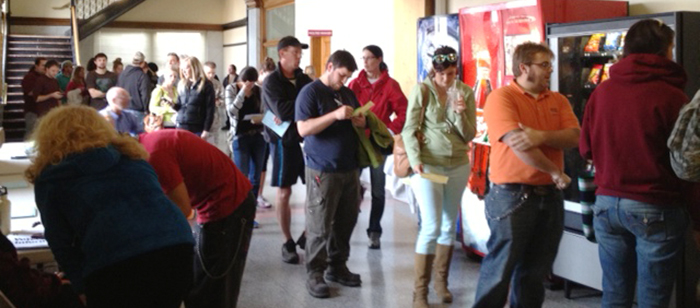
Computerized touchscreen "Direct Recording Electronic" (DRE) voting systems have been used by over 1/3 of American voters in recent elections, including in Maryland. In many places, insufficient DRE numbers, in combination with lengthy ballots and high voter traffic, have caused long lines and disenfranchised voters who left without voting. We have applied computer queuing simulation to the voting process and conclude that far more DREs, at great expense, would be needed to keep waiting times low. Alternatively, paper ballot-optical scan systems can be easily and economically scaled to prevent long lines and meet unexpected contingencies. We have developed a heuristic "Queue Stop Rule" that can be applied to prevent long lines at voting stations. We have also carried out queuing simulations of other parts of the voting process, for example, voter check-in and ballot scanning. Our results can be used to help plan cost-effective election systems that will produce expeditious elections.
William Edelstein, physicist, received BS and PhD degrees in that subject from University of Illinois and Harvard, respectively. His career has principally focused on the development of MRI, starting in Scotland in 1977 and continuing from 1980 at the GE research lab in Schenectady, NY. He has been Visiting Distinguished Professor of Radiology at Johns Hopkins School of Medicine since 2007. His MRI work has been recognized with many honors, including the 2005 Industrial Applications of Physics Prize from the American Institute of Physics. His interest in election systems began several years ago in NY State during the debate to replace lever voting machines.
]]>
CSEE Colloquium Queuing and Long Lines: How to run efficient elections Dr. William A. Edelstein Visiting Distinguished Professor of Radiology Johns Hopkins School of Medicine 1:00pm...
http://www.csee.umbc.edu/2013/04/talk-queuing-and-long-lines-how-to-run-efficient-elections/
https://dev.my.umbc.edu/api/v0/pixel/news/28009/guest@my.umbc.edu/60f8c58807d708012129c89e9737c1c6/api/pixel
news
research
talks
Computer Science and Electrical Engineering
https://dev.my.umbc.edu/groups/csee
https://assets3-dev.my.umbc.edu/system/shared/avatars/groups/000/000/099/d117dca133c64bf78a4b7696dd007189/xsmall.png?1314043393
https://assets1-dev.my.umbc.edu/system/shared/avatars/groups/000/000/099/d117dca133c64bf78a4b7696dd007189/original.png?1314043393
https://assets1-dev.my.umbc.edu/system/shared/avatars/groups/000/000/099/d117dca133c64bf78a4b7696dd007189/xxlarge.png?1314043393
https://assets4-dev.my.umbc.edu/system/shared/avatars/groups/000/000/099/d117dca133c64bf78a4b7696dd007189/xlarge.png?1314043393
https://assets3-dev.my.umbc.edu/system/shared/avatars/groups/000/000/099/d117dca133c64bf78a4b7696dd007189/large.png?1314043393
https://assets1-dev.my.umbc.edu/system/shared/avatars/groups/000/000/099/d117dca133c64bf78a4b7696dd007189/medium.png?1314043393
https://assets2-dev.my.umbc.edu/system/shared/avatars/groups/000/000/099/d117dca133c64bf78a4b7696dd007189/small.png?1314043393
https://assets3-dev.my.umbc.edu/system/shared/avatars/groups/000/000/099/d117dca133c64bf78a4b7696dd007189/xsmall.png?1314043393
https://assets3-dev.my.umbc.edu/system/shared/avatars/groups/000/000/099/d117dca133c64bf78a4b7696dd007189/xxsmall.png?1314043393
Computer Science and Electrical Engineering
2
0
true
Sat, 20 Apr 2013 23:53:20 -0400
MS Defense: Text and Ontology Driven Clinical Decision Support System
MS Thesis Defense
Text and Ontology Driven
Clinical Decision Support System
Deepal Dhariwal
9:00am Tuesday 23 April 2013, ITE325b, UMBC
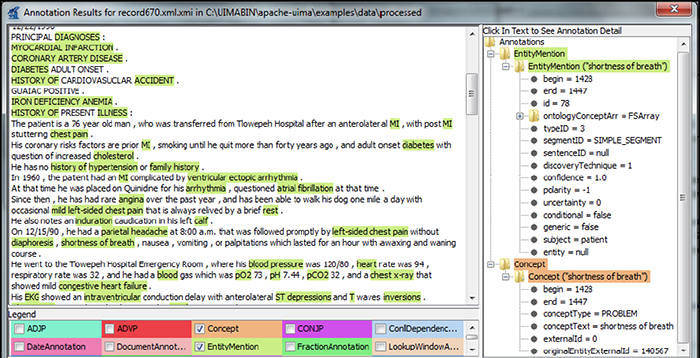
This thesis discusses our ongoing research in the domain of text and ontology driven clinical decision support system. The proposed framework uses text analytics to extract clinical entities from electronic health records and semantic web analytics to generate a domain specific knowledge base (KB) of patients’ clinical facts. Clinical Rules expressed in the Semantic Web Language OWL are used to reason over the KB to infer additional facts about the patient. The KB is then queried to provide clinically relevant information to the physicians. In the first phase, standard text pre processing techniques such as section tagging, dependency parsing, gazetteer lists are used filter clinical terms from the raw data.
In the second phase, a domain specific medical ontology is used to establish relation between the extracted clinical terms. The output of this phase is a Resource Description Framework KB that stores all possible medical facts about the patient. In the final phase, an OWL reasoner and clinical rules are used to infer additional facts about patient and generate a richer KB. This KB can then be queried for a variety of clinical tasks. To demonstrate a proof of concept of this framework, we have used discharge summaries from the cardiovascular domain and determined the TIMI Risk Score and San Francisco Syncope Score for a patient. The goal of this research is to combine factual knowledge about patients, procedural knowledge (clinical rules), and structured knowledge (medical ontologies) to develop a clinical decision support system.
Committee: Dr. Anupam Joshi (chair), Dr. Michael Grasso, Dr. Tim Finin, Dr. Yelena Yesha
]]>
MS Thesis Defense Text and Ontology Driven Clinical Decision Support System Deepal Dhariwal 9:00am Tuesday 23 April 2013, ITE325b, UMBC This thesis discusses our ongoing research in the...
http://www.csee.umbc.edu/2013/04/ms-defense-text-and-ontology-driven-clinical-decision-support-system/
https://dev.my.umbc.edu/api/v0/pixel/news/28001/guest@my.umbc.edu/ddc6fce6dd89b6ddd788a2f0a170bc47/api/pixel
fyi
graduate
research
talks
Computer Science and Electrical Engineering
https://dev.my.umbc.edu/groups/csee
https://assets3-dev.my.umbc.edu/system/shared/avatars/groups/000/000/099/d117dca133c64bf78a4b7696dd007189/xsmall.png?1314043393
https://assets1-dev.my.umbc.edu/system/shared/avatars/groups/000/000/099/d117dca133c64bf78a4b7696dd007189/original.png?1314043393
https://assets1-dev.my.umbc.edu/system/shared/avatars/groups/000/000/099/d117dca133c64bf78a4b7696dd007189/xxlarge.png?1314043393
https://assets4-dev.my.umbc.edu/system/shared/avatars/groups/000/000/099/d117dca133c64bf78a4b7696dd007189/xlarge.png?1314043393
https://assets3-dev.my.umbc.edu/system/shared/avatars/groups/000/000/099/d117dca133c64bf78a4b7696dd007189/large.png?1314043393
https://assets1-dev.my.umbc.edu/system/shared/avatars/groups/000/000/099/d117dca133c64bf78a4b7696dd007189/medium.png?1314043393
https://assets2-dev.my.umbc.edu/system/shared/avatars/groups/000/000/099/d117dca133c64bf78a4b7696dd007189/small.png?1314043393
https://assets3-dev.my.umbc.edu/system/shared/avatars/groups/000/000/099/d117dca133c64bf78a4b7696dd007189/xsmall.png?1314043393
https://assets3-dev.my.umbc.edu/system/shared/avatars/groups/000/000/099/d117dca133c64bf78a4b7696dd007189/xxsmall.png?1314043393
Computer Science and Electrical Engineering
0
0
true
Sat, 20 Apr 2013 17:35:59 -0400
Sat, 20 Apr 2013 17:35:59 -0400
MS Defense: Text and Ontology Driven Clinical Decision Support System
MS Thesis Defense
Text and Ontology Driven
Clinical Decision Support System
Deepal Dhariwal
9:00am Tuesday 23 April 2013, ITE325b, UMBC
This thesis discusses our ongoing research in the domain of text and ontology driven clinical decision support system. The proposed framework uses text analytics to extract clinical entities from electronic health records and semantic web analytics to generate a domain specific knowledge base (KB) of patients’ clinical facts. Clinical Rules expressed in the Semantic Web Language OWL are used to reason over the KB to infer additional facts about the patient. The KB is then queried to provide clinically relevant information to the physicians. In the first phase, standard text pre processing techniques such as section tagging, dependency parsing, gazetteer lists are used filter clinical terms from the raw data.
In the second phase, a domain specific medical ontology is used to establish relation between the extracted clinical terms. The output of this phase is a Resource Description Framework KB that stores all possible medical facts about the patient. In the final phase, an OWL reasoner and clinical rules are used to infer additional facts about patient and generate a richer KB. This KB can then be queried for a variety of clinical tasks. To demonstrate a proof of concept of this framework, we have used discharge summaries from the cardiovascular domain and determined the TIMI Risk Score and San Francisco Syncope Score for a patient. The goal of this research is to combine factual knowledge about patients, procedural knowledge (clinical rules), and structured knowledge (medical ontologies) to develop a clinical decision support system.
Committee: Dr. Anupam Joshi (chair), Dr. Michael Grasso, Dr. Tim Finin, Dr. Yelena Yesha
]]>
MS Thesis Defense Text and Ontology Driven Clinical Decision Support System Deepal Dhariwal 9:00am Tuesday 23 April 2013, ITE325b, UMBC This thesis discusses our ongoing research in the...
http://www.csee.umbc.edu/2013/04/ms-defense-text-and-ontology-driven-clinical-decision-support-system/?utm_source=rss&utm_medium=rss&utm_campaign=ms-defense-text-and-ontology-driven-clinical-decision-support-system
https://dev.my.umbc.edu/api/v0/pixel/news/42633/guest@my.umbc.edu/46a8da4a1f18918e26eb082a3102a88e/api/pixel
fyi
graduate
research
talks
Computer Science and Electrical Engineering
https://dev.my.umbc.edu/groups/csee
https://assets3-dev.my.umbc.edu/system/shared/avatars/groups/000/000/099/d117dca133c64bf78a4b7696dd007189/xsmall.png?1314043393
https://assets1-dev.my.umbc.edu/system/shared/avatars/groups/000/000/099/d117dca133c64bf78a4b7696dd007189/original.png?1314043393
https://assets1-dev.my.umbc.edu/system/shared/avatars/groups/000/000/099/d117dca133c64bf78a4b7696dd007189/xxlarge.png?1314043393
https://assets4-dev.my.umbc.edu/system/shared/avatars/groups/000/000/099/d117dca133c64bf78a4b7696dd007189/xlarge.png?1314043393
https://assets3-dev.my.umbc.edu/system/shared/avatars/groups/000/000/099/d117dca133c64bf78a4b7696dd007189/large.png?1314043393
https://assets1-dev.my.umbc.edu/system/shared/avatars/groups/000/000/099/d117dca133c64bf78a4b7696dd007189/medium.png?1314043393
https://assets2-dev.my.umbc.edu/system/shared/avatars/groups/000/000/099/d117dca133c64bf78a4b7696dd007189/small.png?1314043393
https://assets3-dev.my.umbc.edu/system/shared/avatars/groups/000/000/099/d117dca133c64bf78a4b7696dd007189/xsmall.png?1314043393
https://assets3-dev.my.umbc.edu/system/shared/avatars/groups/000/000/099/d117dca133c64bf78a4b7696dd007189/xxsmall.png?1314043393
Computer Science and Electrical Engineering
0
0
true
Sat, 20 Apr 2013 17:35:59 -0400
MS Defense: Text and Ontology Driven Clinical Decision Support System
MS Thesis Defense
Text and Ontology Driven
Clinical Decision Support System
Deepal Dhariwal
9:00am Tuesday 23 April 2013, ITE325b, UMBC
This thesis discusses our ongoing research in the domain of text and ontology driven clinical decision support system. The proposed framework uses text analytics to extract clinical entities from electronic health records and semantic web analytics to generate a domain specific knowledge base (KB) of patients’ clinical facts. Clinical Rules expressed in the Semantic Web Language OWL are used to reason over the KB to infer additional facts about the patient. The KB is then queried to provide clinically relevant information to the physicians. In the first phase, standard text pre processing techniques such as section tagging, dependency parsing, gazetteer lists are used filter clinical terms from the raw data.
In the second phase, a domain specific medical ontology is used to establish relation between the extracted clinical terms. The output of this phase is a Resource Description Framework KB that stores all possible medical facts about the patient. In the final phase, an OWL reasoner and clinical rules are used to infer additional facts about patient and generate a richer KB. This KB can then be queried for a variety of clinical tasks. To demonstrate a proof of concept of this framework, we have used discharge summaries from the cardiovascular domain and determined the TIMI Risk Score and San Francisco Syncope Score for a patient. The goal of this research is to combine factual knowledge about patients, procedural knowledge (clinical rules), and structured knowledge (medical ontologies) to develop a clinical decision support system.
Committee: Dr. Anupam Joshi (chair), Dr. Michael Grasso, Dr. Tim Finin, Dr. Yelena Yesha
]]>
MS Thesis Defense Text and Ontology Driven Clinical Decision Support System Deepal Dhariwal 9:00am Tuesday 23 April 2013, ITE325b, UMBC This thesis discusses our ongoing research in the...
https://www.csee.umbc.edu/2013/04/ms-defense-text-and-ontology-driven-clinical-decision-support-system/
https://dev.my.umbc.edu/api/v0/pixel/news/57844/guest@my.umbc.edu/26e1163aa82dfb9da02a9eb6e8c874a6/api/pixel
fyi
graduate
research
talks
Computer Science and Electrical Engineering
https://dev.my.umbc.edu/groups/csee
https://assets3-dev.my.umbc.edu/system/shared/avatars/groups/000/000/099/d117dca133c64bf78a4b7696dd007189/xsmall.png?1314043393
https://assets1-dev.my.umbc.edu/system/shared/avatars/groups/000/000/099/d117dca133c64bf78a4b7696dd007189/original.png?1314043393
https://assets1-dev.my.umbc.edu/system/shared/avatars/groups/000/000/099/d117dca133c64bf78a4b7696dd007189/xxlarge.png?1314043393
https://assets4-dev.my.umbc.edu/system/shared/avatars/groups/000/000/099/d117dca133c64bf78a4b7696dd007189/xlarge.png?1314043393
https://assets3-dev.my.umbc.edu/system/shared/avatars/groups/000/000/099/d117dca133c64bf78a4b7696dd007189/large.png?1314043393
https://assets1-dev.my.umbc.edu/system/shared/avatars/groups/000/000/099/d117dca133c64bf78a4b7696dd007189/medium.png?1314043393
https://assets2-dev.my.umbc.edu/system/shared/avatars/groups/000/000/099/d117dca133c64bf78a4b7696dd007189/small.png?1314043393
https://assets3-dev.my.umbc.edu/system/shared/avatars/groups/000/000/099/d117dca133c64bf78a4b7696dd007189/xsmall.png?1314043393
https://assets3-dev.my.umbc.edu/system/shared/avatars/groups/000/000/099/d117dca133c64bf78a4b7696dd007189/xxsmall.png?1314043393
Computer Science and Electrical Engineering
0
0
true
Sat, 20 Apr 2013 17:35:59 -0400
Talk: Large Data Transfer over the Wide Area Network, 4/26
UMBC CSEE Colloquium
Large Data Transfer over the Wide Area Network
Jim Finlayson
Laboratory for Physical Sciences
Advanced Computing Systems Group
1:00pm Friday, 26 April 2013, ITE 227, UMBC
The Department of Defense has challenges related to the transfer of large data sets over distance. This talk will go over some of the investigations into potential solutions in this space.
Jim Finlayson is a File Systems and I/O researcher for the Laboratory for Physical Sciences' Advanced Computing Systems Group. Mr. Finlayson has a long history in data storage infrastructure. He graduated from the University of Maryland, College Park with a BS in Computer Science and later received his MS in Computer Science from The Johns Hopkins University's Whiting School of Engineering.
]]>
UMBC CSEE Colloquium Large Data Transfer over the Wide Area Network Jim Finlayson Laboratory for Physical Sciences Advanced Computing Systems Group 1:00pm Friday, 26 April 2013, ITE 227,...
http://www.csee.umbc.edu/2013/04/talk-large-data-transfer-over-the-wide-area-network-426/
https://dev.my.umbc.edu/api/v0/pixel/news/28000/guest@my.umbc.edu/a3877302259f5d698120add27958b5a9/api/pixel
news
research
talks
Computer Science and Electrical Engineering
https://dev.my.umbc.edu/groups/csee
https://assets3-dev.my.umbc.edu/system/shared/avatars/groups/000/000/099/d117dca133c64bf78a4b7696dd007189/xsmall.png?1314043393
https://assets1-dev.my.umbc.edu/system/shared/avatars/groups/000/000/099/d117dca133c64bf78a4b7696dd007189/original.png?1314043393
https://assets1-dev.my.umbc.edu/system/shared/avatars/groups/000/000/099/d117dca133c64bf78a4b7696dd007189/xxlarge.png?1314043393
https://assets4-dev.my.umbc.edu/system/shared/avatars/groups/000/000/099/d117dca133c64bf78a4b7696dd007189/xlarge.png?1314043393
https://assets3-dev.my.umbc.edu/system/shared/avatars/groups/000/000/099/d117dca133c64bf78a4b7696dd007189/large.png?1314043393
https://assets1-dev.my.umbc.edu/system/shared/avatars/groups/000/000/099/d117dca133c64bf78a4b7696dd007189/medium.png?1314043393
https://assets2-dev.my.umbc.edu/system/shared/avatars/groups/000/000/099/d117dca133c64bf78a4b7696dd007189/small.png?1314043393
https://assets3-dev.my.umbc.edu/system/shared/avatars/groups/000/000/099/d117dca133c64bf78a4b7696dd007189/xsmall.png?1314043393
https://assets3-dev.my.umbc.edu/system/shared/avatars/groups/000/000/099/d117dca133c64bf78a4b7696dd007189/xxsmall.png?1314043393
Computer Science and Electrical Engineering
1
0
true
Sat, 20 Apr 2013 12:31:53 -0400
Talk: Aho on Quantum Computer Compilers, 3pm 4/25
Center for Hybrid Multicore Productivity Research
Distinguished Computational Science Lecture Series
Quantum Computer Compilers
Professor Alfred V. Aho
Department of Computer Science, Columbia University
3:00pm Thursday, 25 April 2013, ITE 456, UMBC
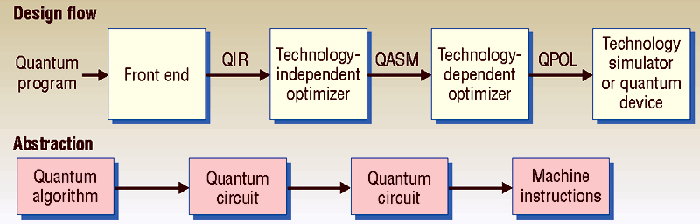
Quantum computing is an exciting emerging field that offers great potential for next generation information processing but also presents great scientific and engineering challenges. Assuming that someday we will be able to build scalable and reliable quantum computers, we will need to create programming languages and compilers that will allow programmers to harness quantum phenomena. In this talk, Alfred Aho will look at quantum computing from a compiler writer's perspective and discuss some of the formidable challenges that face quantum computer compilers.
Alfred Aho is the Lawrence Gussman Professor of Computer Science at Columbia University. He received a B.A.Sc. in Engineering Physics from the University of Toronto and a Ph.D. in Electrical Engineering/ Computer Science from Princeton University. Prior to his current position, he served as vice president of the Computing Sciences Research Center at Bell Labs, the lab that invented UNIX, C and C++. He is the "A" in AWK, a widely used pattern-matching language. His current research interests include programming languages, compilers, algorithms, software engineering and quantum computing. He has won the IEEE John von Neumann Medal and is a Member of the National Academy of Engineering and of the American Academy of Arts and Sciences. He is a Fellow of the AAAS, ACM, Bell Labs and IEEE. In 2003 he received the Great Teacher Award from the Society of Columbia Graduates.
Host: Professor Milton Halem
]]>
Center for Hybrid Multicore Productivity Research Distinguished Computational Science Lecture Series Quantum Computer Compilers Professor Alfred V. Aho Department of Computer Science,...
http://www.csee.umbc.edu/2013/04/talk-aho-on-quantum-computer-compilers-3pm-425/
https://dev.my.umbc.edu/api/v0/pixel/news/27860/guest@my.umbc.edu/a6938e93eb3116a03ea6d2cd8d2b777b/api/pixel
news
research
talks
Computer Science and Electrical Engineering
https://dev.my.umbc.edu/groups/csee
https://assets3-dev.my.umbc.edu/system/shared/avatars/groups/000/000/099/d117dca133c64bf78a4b7696dd007189/xsmall.png?1314043393
https://assets1-dev.my.umbc.edu/system/shared/avatars/groups/000/000/099/d117dca133c64bf78a4b7696dd007189/original.png?1314043393
https://assets1-dev.my.umbc.edu/system/shared/avatars/groups/000/000/099/d117dca133c64bf78a4b7696dd007189/xxlarge.png?1314043393
https://assets4-dev.my.umbc.edu/system/shared/avatars/groups/000/000/099/d117dca133c64bf78a4b7696dd007189/xlarge.png?1314043393
https://assets3-dev.my.umbc.edu/system/shared/avatars/groups/000/000/099/d117dca133c64bf78a4b7696dd007189/large.png?1314043393
https://assets1-dev.my.umbc.edu/system/shared/avatars/groups/000/000/099/d117dca133c64bf78a4b7696dd007189/medium.png?1314043393
https://assets2-dev.my.umbc.edu/system/shared/avatars/groups/000/000/099/d117dca133c64bf78a4b7696dd007189/small.png?1314043393
https://assets3-dev.my.umbc.edu/system/shared/avatars/groups/000/000/099/d117dca133c64bf78a4b7696dd007189/xsmall.png?1314043393
https://assets3-dev.my.umbc.edu/system/shared/avatars/groups/000/000/099/d117dca133c64bf78a4b7696dd007189/xxsmall.png?1314043393
Computer Science and Electrical Engineering
1
0
true
Wed, 17 Apr 2013 15:32:39 -0400
Sat, 20 Apr 2013 10:40:39 -0400
ISCOM talk: Freeman Hrabowski on Technology, Diversity and Lifelong Learning
Information Systems Council of Majors Speaker Series
Technology, Diversity and Lifelong Learning
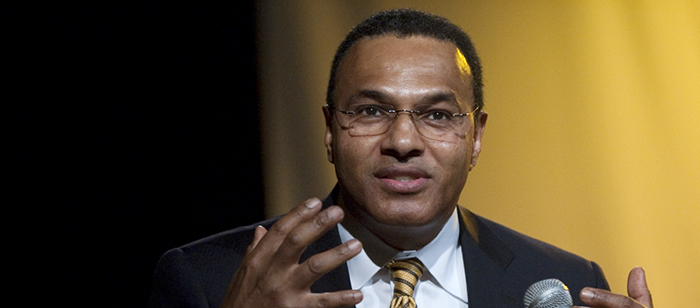
Dr. Freeman Hrabowski
President, University of Maryland, Baltimore County
3:00-4:30pm Friday, 26 April 2013, ITE102
As an ongoing service to UMBC our student group, the Information Systems Council of Majors (ISCOM), has developed a speaker series to bring industry professionals, academic luminaries, and prominent regional figures to discuss topics relating to technology, education, or topics of the speakers choosing.
This month our very special guest is Dr. Freeman Hrabowski. He will meet with members of ISCOM and UMBC students who are interested in hearing him speak about diversity, lifelong learning and of course technology. There will be interactive sessions prior to his remarks and our President Tabitha Haverkamp will provide closing remarks.
]]>
Information Systems Council of Majors Speaker Series Technology, Diversity and Lifelong Learning Dr. Freeman Hrabowski President, University of Maryland, Baltimore County 3:00-4:30pm...
http://www.csee.umbc.edu/2013/04/iscom-talk-freeman-hrabowski-on-technology-diversity-and-lifelong-learning/
https://dev.my.umbc.edu/api/v0/pixel/news/27680/guest@my.umbc.edu/8a92a2e3fe7b8055d80d46e300e59040/api/pixel
news
talks
Computer Science and Electrical Engineering
https://dev.my.umbc.edu/groups/csee
https://assets3-dev.my.umbc.edu/system/shared/avatars/groups/000/000/099/d117dca133c64bf78a4b7696dd007189/xsmall.png?1314043393
https://assets1-dev.my.umbc.edu/system/shared/avatars/groups/000/000/099/d117dca133c64bf78a4b7696dd007189/original.png?1314043393
https://assets1-dev.my.umbc.edu/system/shared/avatars/groups/000/000/099/d117dca133c64bf78a4b7696dd007189/xxlarge.png?1314043393
https://assets4-dev.my.umbc.edu/system/shared/avatars/groups/000/000/099/d117dca133c64bf78a4b7696dd007189/xlarge.png?1314043393
https://assets3-dev.my.umbc.edu/system/shared/avatars/groups/000/000/099/d117dca133c64bf78a4b7696dd007189/large.png?1314043393
https://assets1-dev.my.umbc.edu/system/shared/avatars/groups/000/000/099/d117dca133c64bf78a4b7696dd007189/medium.png?1314043393
https://assets2-dev.my.umbc.edu/system/shared/avatars/groups/000/000/099/d117dca133c64bf78a4b7696dd007189/small.png?1314043393
https://assets3-dev.my.umbc.edu/system/shared/avatars/groups/000/000/099/d117dca133c64bf78a4b7696dd007189/xsmall.png?1314043393
https://assets3-dev.my.umbc.edu/system/shared/avatars/groups/000/000/099/d117dca133c64bf78a4b7696dd007189/xxsmall.png?1314043393
Computer Science and Electrical Engineering
12
0
true
Sun, 14 Apr 2013 20:36:06 -0400
PhD defense: Analysis of brain network connectivity using spatial information
PhD Dissertation Defense
Analysis of brain network connectivity
using spatial information
Sai Ma
1:00pm Thursday, 18 April 2013, ITE 325b
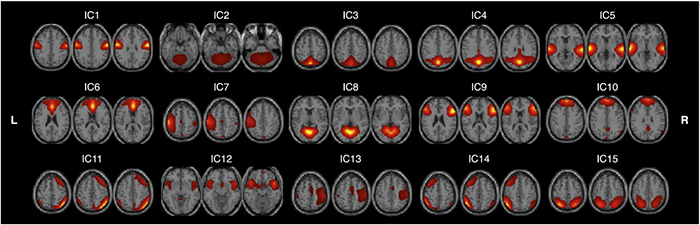
In current functional magnetic resonance imaging (fMRI) research, one of the most active areas involves exploring statistical dependencies among brain regions, known as functional connectivity analysis. Data-driven methods, especially independent component analysis (ICA), have been successfully applied to fMRI data to extract distributed brain networks and offer an opportunity to investigate functional connectivity on a network level, thus at a multivariate level. However, the independence assumption in ICA is neither necessarily nor typically satisfied in real applications and an extension is desirable. Furthermore, most current ICA-based studies focus on the use of temporal information and second-order statistics for functional connectivity analysis. Taking spatial information and higher-order statistics in fMRI data into account is expected to lead to better understanding of the overall brain network connectivity in healthy controls and also in patients with mental disorders, such as schizophrenia.
We develop a dependent component analysis (DCA) framework to generalize the ICA-based connectivity analysis methods by grouping components into maximally independent clusters. First, we define functional network connectivity as the statistical dependence among spatial components, instead of the typically used temporal correlation. Based on this definition, we use a hypothesis test to automatically generate functional connectivity structure for a large number of brain networks. After that, we separate dependent components within a given cluster using prior information, such as sparsity and experimental paradigm information, to achieve a better decomposition. We also combine this DCA-based clustering analysis with graph-theoretical analysis to discover significant group differences in topological properties of functional connectivity structure. To extend the methodologies currently available for functional connectivity, we propose an independent vector analysis (IVA) based scheme to extract and analyze dynamic functional connectivity.
The methods we develop offer advantages for effective and efficient examination of not only static, but also dynamic functional connectivity among different brain networks. We identify significant differences in functional connectivity structure between healthy controls and patients with schizophrenia, which may prove useful to serve as potential biomarkers for diagnosis. We also find task-induced modulations in functional connectivity when comparing different active states in the brain. Furthermore, we observe temporal variability in functional connectivity structure and physiologically meaningful group differences in dynamic connectivity among several brain networks. Our methods can provide insights to understanding of functional characteristics of the brain network organization in healthy individuals and patients with schizophrenia.
Committee: Dr. Adali (Chair), Dr. Morris, Dr. Rutledge, Dr. LaBerge, Dr. Phlypo, Dr. Calhoun, and Dr. Westlake
]]>
PhD Dissertation Defense Analysis of brain network connectivity using spatial information Sai Ma 1:00pm Thursday, 18 April 2013, ITE 325b In current functional magnetic resonance imaging...
http://www.csee.umbc.edu/2013/04/phd-defense-analysis-of-brain-network-connectivity-using-spatial-information/
https://dev.my.umbc.edu/api/v0/pixel/news/27673/guest@my.umbc.edu/dafdc0ff0eb8f9f9e78022b538029ee8/api/pixel
electrical-engineering
graduate
news
research
talks
Computer Science and Electrical Engineering
https://dev.my.umbc.edu/groups/csee
https://assets3-dev.my.umbc.edu/system/shared/avatars/groups/000/000/099/d117dca133c64bf78a4b7696dd007189/xsmall.png?1314043393
https://assets1-dev.my.umbc.edu/system/shared/avatars/groups/000/000/099/d117dca133c64bf78a4b7696dd007189/original.png?1314043393
https://assets1-dev.my.umbc.edu/system/shared/avatars/groups/000/000/099/d117dca133c64bf78a4b7696dd007189/xxlarge.png?1314043393
https://assets4-dev.my.umbc.edu/system/shared/avatars/groups/000/000/099/d117dca133c64bf78a4b7696dd007189/xlarge.png?1314043393
https://assets3-dev.my.umbc.edu/system/shared/avatars/groups/000/000/099/d117dca133c64bf78a4b7696dd007189/large.png?1314043393
https://assets1-dev.my.umbc.edu/system/shared/avatars/groups/000/000/099/d117dca133c64bf78a4b7696dd007189/medium.png?1314043393
https://assets2-dev.my.umbc.edu/system/shared/avatars/groups/000/000/099/d117dca133c64bf78a4b7696dd007189/small.png?1314043393
https://assets3-dev.my.umbc.edu/system/shared/avatars/groups/000/000/099/d117dca133c64bf78a4b7696dd007189/xsmall.png?1314043393
https://assets3-dev.my.umbc.edu/system/shared/avatars/groups/000/000/099/d117dca133c64bf78a4b7696dd007189/xxsmall.png?1314043393
Computer Science and Electrical Engineering
0
0
true
Sun, 14 Apr 2013 08:35:42 -0400
