PhD defense: Data-driven group analysis of complex-valued fMRI data
PhD Dissertation Defense
Data-driven group analysis of complex-valued fMRI data
Pedro A. Rodriguez
11:00am Tuesday, 16 April 2013, ITE 346, UMBC
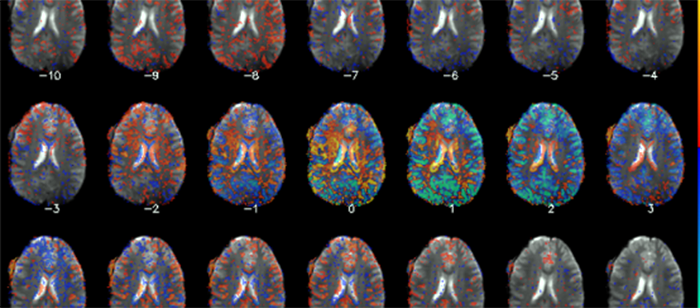
Analysis of functional magnetic resonance imaging (fMRI) data in its native, complex form has been shown to increase the sensitivity of the analysis both for data-driven techniques such as independent component analysis (ICA) and for model-driven techniques. The promise of an increase in sensitivity and specificity in clinical studies provides a powerful motivation for utilizing both the phase and magnitude data; however, the unknown and noisy nature of the phase poses a challenge for successful study of the fMRI data. In addition, complex-valued analysis algorithms, such as ICA, suffer from an inherent phase ambiguity, which introduces additional difficulty for group analysis and visualization of the results. We present solutions for these issues, which have been among the main reasons phase information has been traditionally discarded, and show their effectiveness when used as part of a complex-valued group ICA algorithm application. The developed methods become key components of a framework that allows the development of new fully complex data-driven and semi-blind methods to process, analyze, and visualize fMRI data.
In this dissertation, we first introduce the methods developed as part of the fully complex framework for ICA of fMRI data. We introduce a physiologically motivated de-noising method that uses phase quality maps to successfully identify and eliminate noisy voxels—3D pixels—in the fMRI complex images so they can be used in individual and group studies. We also introduce a phase correction scheme that can be either applied sub-sequent to ICA of fMRI data or can be incorporated into the ICA algorithm in the form of prior information to eliminate the need for further processing for phase correction. Finally, we present two visualization methods that are used to augment the sensitivity and specificity in the detection of activated voxels. We show the benefits of using the developed methods on actual complex-valued fMRI data.
In the remainder of the dissertation, we focus on developing constrained ICA (C-ICA) algorithms for complex-valued fMRI data. C-ICA uses prior information, hence providing a balance between model-based and data-driven approaches such as ICA to improve the source estimation performance and robustness to noise. C-ICA algorithms have been used to improve the estimation performance in real-valued fMRI data, but—to our knowledge—have not been applied to complex-valued fMRI data. We develop the first C-ICA algorithm that uses complex-valued references to constrain either the sources or the mixing coefficients. The designed algorithm is not restricted to having a unitary demixing matrix, which is a major assumption in existing C-ICA algorithms. We show, on both simulated and actual fMRI data, how the performance of ICA improves by using prior information about the fMRI paradigm.
Committee: Dr. Adali (Chair), Dr. Morris, Dr. Rutledge, Dr. Laberge, Dr. Phlypo, and Dr. Calhoun
]]>
PhD Dissertation Defense Data-driven group analysis of complex-valued fMRI data Pedro A. Rodriguez 11:00am Tuesday, 16 April 2013, ITE 346, UMBC Analysis of functional magnetic resonance...
http://www.csee.umbc.edu/2013/04/phd-defense-data-driven-group-analysis-of-complex-valued-fmri-data/
https://dev.my.umbc.edu/api/v0/pixel/news/27660/guest@my.umbc.edu/867ff131084b654fd64d3fb11041a6f7/api/pixel
electrical-engineering
graduate
news
research
talks
Computer Science and Electrical Engineering
https://dev.my.umbc.edu/groups/csee
https://assets3-dev.my.umbc.edu/system/shared/avatars/groups/000/000/099/d117dca133c64bf78a4b7696dd007189/xsmall.png?1314043393
https://assets1-dev.my.umbc.edu/system/shared/avatars/groups/000/000/099/d117dca133c64bf78a4b7696dd007189/original.png?1314043393
https://assets1-dev.my.umbc.edu/system/shared/avatars/groups/000/000/099/d117dca133c64bf78a4b7696dd007189/xxlarge.png?1314043393
https://assets4-dev.my.umbc.edu/system/shared/avatars/groups/000/000/099/d117dca133c64bf78a4b7696dd007189/xlarge.png?1314043393
https://assets3-dev.my.umbc.edu/system/shared/avatars/groups/000/000/099/d117dca133c64bf78a4b7696dd007189/large.png?1314043393
https://assets1-dev.my.umbc.edu/system/shared/avatars/groups/000/000/099/d117dca133c64bf78a4b7696dd007189/medium.png?1314043393
https://assets2-dev.my.umbc.edu/system/shared/avatars/groups/000/000/099/d117dca133c64bf78a4b7696dd007189/small.png?1314043393
https://assets3-dev.my.umbc.edu/system/shared/avatars/groups/000/000/099/d117dca133c64bf78a4b7696dd007189/xsmall.png?1314043393
https://assets3-dev.my.umbc.edu/system/shared/avatars/groups/000/000/099/d117dca133c64bf78a4b7696dd007189/xxsmall.png?1314043393
Computer Science and Electrical Engineering
0
0
true
Sat, 13 Apr 2013 10:47:42 -0400
PhD defense: Independent Vector Analysis: Theory, Algorithms and Applications, 4/17
PhD Dissertation Defense
Independent Vector Analysis:
Theory, Algorithms, and Applications
Matthew Anderson
1:45pm Wednesday, 17 April 2013, ITE 325B
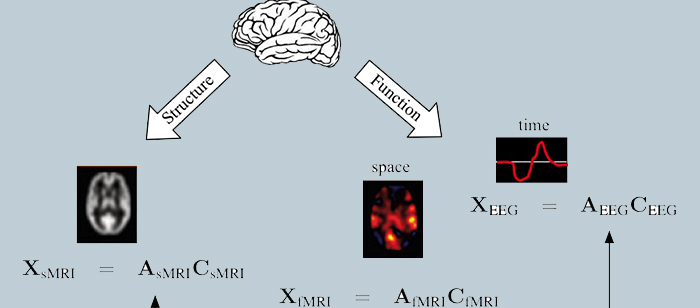
The field of blind source separation (BSS) is a well studied discipline within the signal processing community due to its applicability to a variety of problems when the data observation model is poorly known or difficult to model. For example, in the study of the human brain with functional magnetic resonance imaging (fMRI), a neuroimaging sensor, BSS algorithms are able to provide medical researchers and practitioners with a decomposition of a three-dimensional ‘movie’ of the brain that is amenable to analysis. BSS algorithms achieve this decomposition with only a few justifiable assumptions; this is contrary to methods based on the general linear model, which require prespecified models of the expected or desired response to achieve analysis of fMRI data.
Most BSS algorithms consider just a single dataset, but it also desirable to have methods that can analyze multiple subjects or data collections in fMRI jointly, so as to provide insights beyond that achieved with individual analysis of single datasets. Several frameworks for using BSS on multiple datasets jointly have been proposed. The subject of this dissertation is the study of one of these frameworks, which has been termed independent vector analysis (IVA). IVA is a recent extension of the classical independent component analysis (ICA) model to BSS of multiple datasets and it has been the subject of significant research interest. In this dissertation, we provide a formulation of IVA that accounts for sources which possess properties such as a) following Gaussian or non-Gaussian distributions; b) samples are independently and identically distributed (iid) or are dependent; and c) having either linear or nonlinear dependence of sources between datasets. The proposed IVA formulation utilizes the likelihood to define the objective function. This formulation admits to theoretical analysis. In particular, we provide the identification conditions, i.e., we determine when the sources can be ‘blindly’ recovered by IVA, and give a lower bound on the source separation performance.
Several algorithms exist for achieving IVA. We provide several new approaches to developing IVA algorithms and apply these approaches using a Gaussian distribution source model and a more general Kotz distribution model. The former, in addition to leading to efficient IVA algorithms, serves as the distribution model that directly connects canonical correlation analysis (CCA) and ICA.
Committee: Dr. Tulay Adali (Chair), Dr. Joel Morris, Dr. Aninyda Roy, Dr. Ronald Phlypo, and Dr. Mike Novey
]]>
PhD Dissertation Defense Independent Vector Analysis: Theory, Algorithms, and Applications Matthew Anderson 1:45pm Wednesday, 17 April 2013, ITE 325B The field of blind source separation...
http://www.csee.umbc.edu/2013/04/phd-defense-independent-vector-analysis-theory-algorithms-and-applications-417/
https://dev.my.umbc.edu/api/v0/pixel/news/27594/guest@my.umbc.edu/fa6f88ea18c664ec484355d9ae13c087/api/pixel
electrical-engineering
graduate
news
research
talks
Computer Science and Electrical Engineering
https://dev.my.umbc.edu/groups/csee
https://assets3-dev.my.umbc.edu/system/shared/avatars/groups/000/000/099/d117dca133c64bf78a4b7696dd007189/xsmall.png?1314043393
https://assets1-dev.my.umbc.edu/system/shared/avatars/groups/000/000/099/d117dca133c64bf78a4b7696dd007189/original.png?1314043393
https://assets1-dev.my.umbc.edu/system/shared/avatars/groups/000/000/099/d117dca133c64bf78a4b7696dd007189/xxlarge.png?1314043393
https://assets4-dev.my.umbc.edu/system/shared/avatars/groups/000/000/099/d117dca133c64bf78a4b7696dd007189/xlarge.png?1314043393
https://assets3-dev.my.umbc.edu/system/shared/avatars/groups/000/000/099/d117dca133c64bf78a4b7696dd007189/large.png?1314043393
https://assets1-dev.my.umbc.edu/system/shared/avatars/groups/000/000/099/d117dca133c64bf78a4b7696dd007189/medium.png?1314043393
https://assets2-dev.my.umbc.edu/system/shared/avatars/groups/000/000/099/d117dca133c64bf78a4b7696dd007189/small.png?1314043393
https://assets3-dev.my.umbc.edu/system/shared/avatars/groups/000/000/099/d117dca133c64bf78a4b7696dd007189/xsmall.png?1314043393
https://assets3-dev.my.umbc.edu/system/shared/avatars/groups/000/000/099/d117dca133c64bf78a4b7696dd007189/xxsmall.png?1314043393
Computer Science and Electrical Engineering
0
0
true
Thu, 11 Apr 2013 23:34:06 -0400
PhD defense: Digital Forensics for Infrastructure-as-a-Service Cloud Computing

Dissertation Defense
Digital Forensics for
Infrastructure-as-a-Service Cloud Computing
Josiah Dykstra
10:00am Tuesday, 16 April 2013, ITE 325b
We identify important issues in the application of digital forensics to Infrastructure-as-a-Service cloud computing and develop new practical forensic tools and techniques to facilitate forensic exams of the cloud. When investigating suspected cases involving cloud computing, forensic examiners have been poorly equipped to deal with the technical and legal challenges. Because data in the cloud are remote, distributed, and elastic, these challenges include understanding the cloud environment, acquiring and analyzing data remotely, and applying the law to a new domain. Today digital forensics for cloud computing is challenging at best, but can be performed in a manner consistent with federal law using the tools and techniques we developed.
The first problem is understanding how and why criminal and civil actions in and against cloud computing are unique and difficult to prosecute. We analyze a digital forensic investigation of crime in the cloud, and present two hypothetical case studies that illustrate the unique challenges of acquisition, chain of custody, trust, and forensic integrity. Understanding these issues introduces legal challenges which are also important for federal, state, and local law enforcement who will soon be called upon to conduct cloud investigations.
The second problem is the lack of practical technical tools to conduct cloud forensics. We examine the capabilities for forensics today, evaluate the use of existing tools including EnCase and FTK, and discuss why these tools are incapable of trustworthy cloud acquisition. We design consumer-driven forensic capabilities for OpenStack, including new features for acquiring trustworthy firewall logs, API logs, and disk images.
The third problem is a deficit of legal instruments for seizing cloud-based electronically-stored information. We analyze the application of existing policies and laws to the new domain of cloud computing by analyzing case law and legal opinions about digital evidence discovery, and suggest modifications that would enhance cloud the prosecution of cloud-based crimes. We offer guidance about how to author a search warrant for cloud data, and what pertinent data to request.
This dissertation enhances our understanding of technical, trust, and legal issues needed to investigate cloud-based crimes and offers new tools and techniques to facilitate such investigations.
Committee: Dr. Alan T. Sherman (Chair), Dr. Charles Nicholas, Dr. Richard Forno, Dr. Simson Garfinkel (Naval Postgraduate School), Mr. Donald Flynn, JD (Department of Defense Cyber Crime Center)
]]>
Dissertation Defense Digital Forensics for Infrastructure-as-a-Service Cloud Computing Josiah Dykstra 10:00am Tuesday, 16 April 2013, ITE 325b We identify important issues in the...
http://www.csee.umbc.edu/2013/04/phd-defense-digital-forensics-for-infrastructure-as-a-service-cloud-computing/
https://dev.my.umbc.edu/api/v0/pixel/news/27478/guest@my.umbc.edu/0179cf153977fda1698eb8ad4dd6a41a/api/pixel
computer-science
cybersecurity
graduate
news
research
talks
Computer Science and Electrical Engineering
https://dev.my.umbc.edu/groups/csee
https://assets3-dev.my.umbc.edu/system/shared/avatars/groups/000/000/099/d117dca133c64bf78a4b7696dd007189/xsmall.png?1314043393
https://assets1-dev.my.umbc.edu/system/shared/avatars/groups/000/000/099/d117dca133c64bf78a4b7696dd007189/original.png?1314043393
https://assets1-dev.my.umbc.edu/system/shared/avatars/groups/000/000/099/d117dca133c64bf78a4b7696dd007189/xxlarge.png?1314043393
https://assets4-dev.my.umbc.edu/system/shared/avatars/groups/000/000/099/d117dca133c64bf78a4b7696dd007189/xlarge.png?1314043393
https://assets3-dev.my.umbc.edu/system/shared/avatars/groups/000/000/099/d117dca133c64bf78a4b7696dd007189/large.png?1314043393
https://assets1-dev.my.umbc.edu/system/shared/avatars/groups/000/000/099/d117dca133c64bf78a4b7696dd007189/medium.png?1314043393
https://assets2-dev.my.umbc.edu/system/shared/avatars/groups/000/000/099/d117dca133c64bf78a4b7696dd007189/small.png?1314043393
https://assets3-dev.my.umbc.edu/system/shared/avatars/groups/000/000/099/d117dca133c64bf78a4b7696dd007189/xsmall.png?1314043393
https://assets3-dev.my.umbc.edu/system/shared/avatars/groups/000/000/099/d117dca133c64bf78a4b7696dd007189/xxsmall.png?1314043393
Computer Science and Electrical Engineering
0
0
true
Wed, 10 Apr 2013 09:28:30 -0400
talk: Sensor-based assessment of human motion during therapeutic exercise
UMBC Information Systems
Sensor-based assessment of the quality
of human motion during therapeutic exercise
Dr. Portia Taylor
Social Security Administration
12-1pm Wednesday, 10 April 2013, ITE 459
Advances in technology and research have been employed in recent years to develop efficient mechanisms to deliver home-based exercise therapy to patients suffering from knee osteoarthritis, a degenerative disease associated with aging. Essential to the success of a therapeutic home-exercise program is the quality of the motion performed by the patient. The unsupervised nature of home-based exercise may lead to incorrect exercise performance by patients; however, current home-based exercise programs do not provide mechanisms for monitoring the quality of motion performed or for providing feedback to the patient. This lack of support has been found to be a factor in patient non-compliance to home exercise programs.
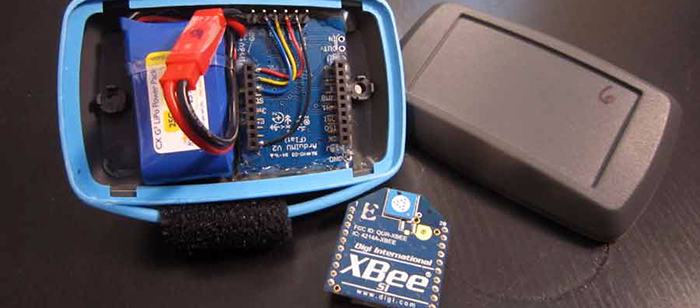
Our goal is to provide a motion sensor-based system that can evaluate the quality of exercise to support home rehabilitation. We introduce the Quality Assessment Framework (QAF) that uses low-cost motion sensors with data processing and machine learning techniques to assess the quality of human motion performed during therapeutic exercises. Data from fifteen persons with knee osteoarthritis was collected in a laboratory environment, and a classifier was trained using multi-label learning methods to detect descriptive characteristics of the patient's motion. These characteristics represent errors in the exercise performance as well as variables regularly monitored by the patient's therapist, such as speed.
Results from multi-label learning are presented and recommendations made on requirements for an in-home therapeutic exercise system. The QAF can be adapted to the home therapy needs of conditions other than knee OA. We present a preliminary design of the InForm Exercise System that utilizes the QAF and has the potential to present feedback to patients completing home exercise programs.
Portia Taylor received her BS degree in Computer Science from Grambling State University in 2007 and a Ph.D. degree in Biomedical Engineering from Carnegie Mellon University in 2012. At CMU, she was part of the Quality of LifeTechnology Center, a NSF Engineering Research Center dedicated to the development of technologies for the elderly and disabled. Currently, Dr. Taylor works at the Social Security Administration as an IT Fellow. Her research interests include machine learning applications in biomedical engineering, intelligent systems for rehabilitation and physical therapy, and heath information technology.
]]>
UMBC Information Systems Sensor-based assessment of the quality of human motion during therapeutic exercise Dr. Portia Taylor Social Security Administration 12-1pm Wednesday, 10 April...
http://www.csee.umbc.edu/2013/04/talk-sensor-based-assessment-of-human-motion-during-therapeutic-exercise/
https://dev.my.umbc.edu/api/v0/pixel/news/27099/guest@my.umbc.edu/d82a5232e0b7f8757242b3717cd88350/api/pixel
news
talks
Computer Science and Electrical Engineering
https://dev.my.umbc.edu/groups/csee
https://assets3-dev.my.umbc.edu/system/shared/avatars/groups/000/000/099/d117dca133c64bf78a4b7696dd007189/xsmall.png?1314043393
https://assets1-dev.my.umbc.edu/system/shared/avatars/groups/000/000/099/d117dca133c64bf78a4b7696dd007189/original.png?1314043393
https://assets1-dev.my.umbc.edu/system/shared/avatars/groups/000/000/099/d117dca133c64bf78a4b7696dd007189/xxlarge.png?1314043393
https://assets4-dev.my.umbc.edu/system/shared/avatars/groups/000/000/099/d117dca133c64bf78a4b7696dd007189/xlarge.png?1314043393
https://assets3-dev.my.umbc.edu/system/shared/avatars/groups/000/000/099/d117dca133c64bf78a4b7696dd007189/large.png?1314043393
https://assets1-dev.my.umbc.edu/system/shared/avatars/groups/000/000/099/d117dca133c64bf78a4b7696dd007189/medium.png?1314043393
https://assets2-dev.my.umbc.edu/system/shared/avatars/groups/000/000/099/d117dca133c64bf78a4b7696dd007189/small.png?1314043393
https://assets3-dev.my.umbc.edu/system/shared/avatars/groups/000/000/099/d117dca133c64bf78a4b7696dd007189/xsmall.png?1314043393
https://assets3-dev.my.umbc.edu/system/shared/avatars/groups/000/000/099/d117dca133c64bf78a4b7696dd007189/xxsmall.png?1314043393
Computer Science and Electrical Engineering
0
0
true
Tue, 02 Apr 2013 09:34:48 -0400
talk: Machine learning for predicting chronic diseases

UMBC CSEE Colloquium
Machine learning techniques for predicting chronic diseases
Vladimir Korolev
1:00pm Friday, 5 April 2013, ITE 227, UMBC
In recent years we saw an explosion of cheap genetic tests, which lead to the emergence of personalized medicine. Personalized medicine is defined as practice of medicine that is tailored to specifics of individual patient. My work addresses the problem predicting an individual’s predisposition towards certain chronic diseases based on the their genetic makeup. The benefits of such work allow for more selective administration of invasive tests such as biopsies, which are known to cause health problems themselves.
Recently NIH has done a number of Gene Wide Association Studies q that resulted in massive datasets containing subjects’ generic makeup and labeled with clinical data including occurrence of chronic diseases. Unfortunately, given the relatively small number of patients in such studies and the vast number of genes possessed by human beings, these datasets cannot be analyzed with traditional statistical predictive models, which require a large number of samples (patients) with a very few features per sample.
My work attempts to solve this problem by employing state of the art machine learning techniques. In the past year I have built a software system that is capable of crunching of multi-terabyte scale datasets to refactor the NIH data into the form that is palatable by modern big data systems. I have run initial stages of feature selection. I will present the current state of the work and future plans. Another goal of this work is to ensure the repeatability of the experiments and flexibility to run with any similar dataset from current and future studies
Vlad Korolev is a PhD student in the UMBC Computer Science program. His research interests are in the are of personalized medicine, machine learning and large scale data processing. Vlad has considerable experience in the industry specializing in IT security, large scale data processing and the organization of software development processes.
]]>
UMBC CSEE Colloquium Machine learning techniques for predicting chronic diseases Vladimir Korolev 1:00pm Friday, 5 April 2013, ITE 227, UMBC In recent years we saw an explosion of cheap...
http://www.csee.umbc.edu/2013/04/talk-machine-learning-for-predicting-chronic-diseases/
https://dev.my.umbc.edu/api/v0/pixel/news/27082/guest@my.umbc.edu/51eae82f61e5ae6ad7ac0d3107533a6c/api/pixel
news
research
talks
Computer Science and Electrical Engineering
https://dev.my.umbc.edu/groups/csee
https://assets3-dev.my.umbc.edu/system/shared/avatars/groups/000/000/099/d117dca133c64bf78a4b7696dd007189/xsmall.png?1314043393
https://assets1-dev.my.umbc.edu/system/shared/avatars/groups/000/000/099/d117dca133c64bf78a4b7696dd007189/original.png?1314043393
https://assets1-dev.my.umbc.edu/system/shared/avatars/groups/000/000/099/d117dca133c64bf78a4b7696dd007189/xxlarge.png?1314043393
https://assets4-dev.my.umbc.edu/system/shared/avatars/groups/000/000/099/d117dca133c64bf78a4b7696dd007189/xlarge.png?1314043393
https://assets3-dev.my.umbc.edu/system/shared/avatars/groups/000/000/099/d117dca133c64bf78a4b7696dd007189/large.png?1314043393
https://assets1-dev.my.umbc.edu/system/shared/avatars/groups/000/000/099/d117dca133c64bf78a4b7696dd007189/medium.png?1314043393
https://assets2-dev.my.umbc.edu/system/shared/avatars/groups/000/000/099/d117dca133c64bf78a4b7696dd007189/small.png?1314043393
https://assets3-dev.my.umbc.edu/system/shared/avatars/groups/000/000/099/d117dca133c64bf78a4b7696dd007189/xsmall.png?1314043393
https://assets3-dev.my.umbc.edu/system/shared/avatars/groups/000/000/099/d117dca133c64bf78a4b7696dd007189/xxsmall.png?1314043393
Computer Science and Electrical Engineering
0
0
true
Mon, 01 Apr 2013 20:37:48 -0400
talk: User Interface Design & Functional Gains from Cognitive Assistive Technology

ACM Mid-Atlantic Special Interest Group on Accessibility
User Interface Design and Functional Gains from Cognitive
Assistive Technology: Treading on the Frontiers of Neuroscience
Dr. Elliot Cole
Institute for Cognitive Prosthetics
1:30pm Thursday, 4 April 2013, ITE 404, UMBC
Assistive Technology can and should be viewed as a therapy modality, by increasing functioning as a technology effect, and sometimes by an increase in underlying abilities through one or more neuroscience mechanisms. User interface design has been a core technique in achieving gains in the cognitive dimensions. Patient-Centered Design was developed as a methodology to help achieve these gains. This methodology seems to be a close relative of Ability-Based Design. Case studies will help demonstrate effects achieved with Patient-Centered Design. Older psychological and the emerging neuroscience paradigm will be presented.
Elliot Cole, PhD is the founder of the Institute for Cognitive Prosthetics. He brings his training in human-centered computing to developing technology and techniques which address cognitive disabilities from brain injury. The Institute's successful R&D efforts came from a multidisciplinary staff from clinical and computing specialties working closely together and focusing on the rehabilitation needs of the individual patient. This approach has generated deep knowledge of the cognitive disabilities computing domain. For over a decade, the Institute had a "lab" brain injury cognitive rehabilitation facility. Dr. Cole was an associate professor at Drexel University and a research associate at the University of Pennsylvania, where he is currently a Visiting Scholar. His book Patient-Centered Design of Cognitive Assistive Technology for Traumatic Brain Injury Telerehabilitation is being published in April by Morgan and Claypool as part of the series Synthesis Lectures on Assistive, Rehabilitative, and Health-Preserving Technologies.
]]>
ACM Mid-Atlantic Special Interest Group on Accessibility User Interface Design and Functional Gains from Cognitive Assistive Technology: Treading on the Frontiers of Neuroscience Dr....
http://www.csee.umbc.edu/2013/03/talk-user-interface-design-functional-gains-from-cognitive-assistive-technology/
https://dev.my.umbc.edu/api/v0/pixel/news/26977/guest@my.umbc.edu/608fe60ddd62b0bc7b978a81779fcc14/api/pixel
news
talks
Computer Science and Electrical Engineering
https://dev.my.umbc.edu/groups/csee
https://assets3-dev.my.umbc.edu/system/shared/avatars/groups/000/000/099/d117dca133c64bf78a4b7696dd007189/xsmall.png?1314043393
https://assets1-dev.my.umbc.edu/system/shared/avatars/groups/000/000/099/d117dca133c64bf78a4b7696dd007189/original.png?1314043393
https://assets1-dev.my.umbc.edu/system/shared/avatars/groups/000/000/099/d117dca133c64bf78a4b7696dd007189/xxlarge.png?1314043393
https://assets4-dev.my.umbc.edu/system/shared/avatars/groups/000/000/099/d117dca133c64bf78a4b7696dd007189/xlarge.png?1314043393
https://assets3-dev.my.umbc.edu/system/shared/avatars/groups/000/000/099/d117dca133c64bf78a4b7696dd007189/large.png?1314043393
https://assets1-dev.my.umbc.edu/system/shared/avatars/groups/000/000/099/d117dca133c64bf78a4b7696dd007189/medium.png?1314043393
https://assets2-dev.my.umbc.edu/system/shared/avatars/groups/000/000/099/d117dca133c64bf78a4b7696dd007189/small.png?1314043393
https://assets3-dev.my.umbc.edu/system/shared/avatars/groups/000/000/099/d117dca133c64bf78a4b7696dd007189/xsmall.png?1314043393
https://assets3-dev.my.umbc.edu/system/shared/avatars/groups/000/000/099/d117dca133c64bf78a4b7696dd007189/xxsmall.png?1314043393
Computer Science and Electrical Engineering
3
0
true
Sat, 30 Mar 2013 12:12:07 -0400
CSEE research review 9-4 Friday April 12, UC Ballroom
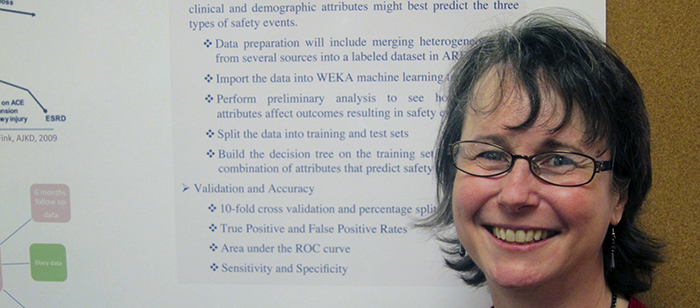
The UMBC Computer Science and Electrical Engineering department will hold its annual day-long research review from 9:00am to 4:00pm on Friday April 12, 2013 in University Center Ballroom. Faculty, research staff and students will present their latest research results in talks, posters and demonstrations. Refreshments and a free buffet lunch are provided. Submit poster and talk abstracts by April 8. The public is welcome.
]]>
The UMBC Computer Science and Electrical Engineering department will hold its annual day-long research review from 9:00am to 4:00pm on Friday April 12, 2013 in University Center Ballroom....
http://www.csee.umbc.edu/2013/03/csee-research-review-9-4-friday-april-12-uc-ballroom/
https://dev.my.umbc.edu/api/v0/pixel/news/26896/guest@my.umbc.edu/ffa006c80d6d9a716b67ae4d5f0d9703/api/pixel
events
news
research
talks
Computer Science and Electrical Engineering
https://dev.my.umbc.edu/groups/csee
https://assets3-dev.my.umbc.edu/system/shared/avatars/groups/000/000/099/d117dca133c64bf78a4b7696dd007189/xsmall.png?1314043393
https://assets1-dev.my.umbc.edu/system/shared/avatars/groups/000/000/099/d117dca133c64bf78a4b7696dd007189/original.png?1314043393
https://assets1-dev.my.umbc.edu/system/shared/avatars/groups/000/000/099/d117dca133c64bf78a4b7696dd007189/xxlarge.png?1314043393
https://assets4-dev.my.umbc.edu/system/shared/avatars/groups/000/000/099/d117dca133c64bf78a4b7696dd007189/xlarge.png?1314043393
https://assets3-dev.my.umbc.edu/system/shared/avatars/groups/000/000/099/d117dca133c64bf78a4b7696dd007189/large.png?1314043393
https://assets1-dev.my.umbc.edu/system/shared/avatars/groups/000/000/099/d117dca133c64bf78a4b7696dd007189/medium.png?1314043393
https://assets2-dev.my.umbc.edu/system/shared/avatars/groups/000/000/099/d117dca133c64bf78a4b7696dd007189/small.png?1314043393
https://assets3-dev.my.umbc.edu/system/shared/avatars/groups/000/000/099/d117dca133c64bf78a4b7696dd007189/xsmall.png?1314043393
https://assets3-dev.my.umbc.edu/system/shared/avatars/groups/000/000/099/d117dca133c64bf78a4b7696dd007189/xxsmall.png?1314043393
Computer Science and Electrical Engineering
1
0
true
Fri, 29 Mar 2013 08:35:57 -0400
3rd Annual CWIT Spring into Leadership Event, April 11
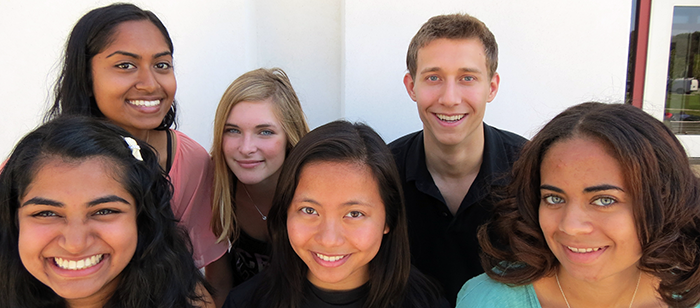
The UMBC Center for Women in Technology will hold its 3rd Annual CWIT Spring into Leadership event on Thursday evening, April 11, 2013 in the University Center Ballroom at UMBC. Space is limited and registration is required. Register online by Monday, April 8.
Schedule
6:15-6:30 Check-in and Refreshments, UC 3rd floor
6:30-7:00 Networking Activity, Dessert will be served!
7:10-7:30 Keynote Speaker's Story: Tina Kuhn, Northrop Grumman Corporation
7:30-7:45 Discussion Activity and Q&A with Ms. Kuhn
7:45-8:00 Wrap-Up & Evaluations
Keynote Speaker:
Ms. Tina Kuhn
Vice President, Security and Information Operations
Cyber Intelligence Division
Northrop Grumman Information Systems
Ms. Kuhn will share information about her career path and offer advice and wisdom based on her personal experiences as a successful technical leader.
 Tina Kuhn is vice president of Security and Information Operations (S&IO) in the Cyber Solutions division of Northrop Grumman’s Information Systems sector. The S&IO business unit provides intelligence-related systems and services to U.S. government and international security customers. The organization’s focus is on full-spectrum cyber solutions that protect critical national systems and support the nation’s information dominance. S&IO also is a premier supplier and integrator of net-centric, next-generation signal processing solutions for specialized customers. Ms. Kuhn brings more than 25 years of management experience to her current position. She joined Northrop Grumman from General Dynamics, where she served as vice president of its Intelligence Systems line of business, leading three business units that addressed the cyber and intelligence communities. Prior to that, she was the vice president/director of programs for the Intelligence and Information Solutions business unit for SAIC in Columbia MD. Ms. Kuhn began her career at General Electric and also held positions at GTE Corp. Ms. Kuhn has a bachelor’s degree in information systems management from the University of Maryland and also is a certified Program Management Professional.
The event is co-hosted by the Center for Women in Technology, CWIT Student Council, IS Council of Majors, SWE, ASME, and the WISE graduate student organization. Contact Dr. Susan Martin, Associate CWIT Director as susan at umbc.edu if you have any questions about the event or registering online.
]]>
The UMBC Center for Women in Technology will hold its 3rd Annual CWIT Spring into Leadership event on Thursday evening, April 11, 2013 in the University Center Ballroom at UMBC. Space is limited...
http://www.csee.umbc.edu/2013/03/3rd-annual-cwit-spring-into-leadership-event/
https://dev.my.umbc.edu/api/v0/pixel/news/26827/guest@my.umbc.edu/f48de3ec1d0c2f3bc08e3117a886d5cc/api/pixel
cwit
cybersecurity
news
talks
Computer Science and Electrical Engineering
https://dev.my.umbc.edu/groups/csee
https://assets3-dev.my.umbc.edu/system/shared/avatars/groups/000/000/099/d117dca133c64bf78a4b7696dd007189/xsmall.png?1314043393
https://assets1-dev.my.umbc.edu/system/shared/avatars/groups/000/000/099/d117dca133c64bf78a4b7696dd007189/original.png?1314043393
https://assets1-dev.my.umbc.edu/system/shared/avatars/groups/000/000/099/d117dca133c64bf78a4b7696dd007189/xxlarge.png?1314043393
https://assets4-dev.my.umbc.edu/system/shared/avatars/groups/000/000/099/d117dca133c64bf78a4b7696dd007189/xlarge.png?1314043393
https://assets3-dev.my.umbc.edu/system/shared/avatars/groups/000/000/099/d117dca133c64bf78a4b7696dd007189/large.png?1314043393
https://assets1-dev.my.umbc.edu/system/shared/avatars/groups/000/000/099/d117dca133c64bf78a4b7696dd007189/medium.png?1314043393
https://assets2-dev.my.umbc.edu/system/shared/avatars/groups/000/000/099/d117dca133c64bf78a4b7696dd007189/small.png?1314043393
https://assets3-dev.my.umbc.edu/system/shared/avatars/groups/000/000/099/d117dca133c64bf78a4b7696dd007189/xsmall.png?1314043393
https://assets3-dev.my.umbc.edu/system/shared/avatars/groups/000/000/099/d117dca133c64bf78a4b7696dd007189/xxsmall.png?1314043393
Computer Science and Electrical Engineering
4
0
true
Wed, 27 Mar 2013 21:59:02 -0400
talk: Enhancing the Independence and Quality of Life for Older Adults

UMBC Information Systems Distinguished Speaker
The Potential of Technology Systems for Enhancing the
Independence and Quality of Life for Older Adults
Dr. Sara J. Czaja
Department of Psychiatry and Behavioral Sciences
and Department of Industrial Engineering
University of Miami
10:00am Thursday, March 28, 2013, ITE 456, UMBC
Sara J. Czaja is a Leonard M. Miller Professor in the Departments of Psychiatry and Behavioral Sciences and Industrial Engineering at the University of Miami. She is also the Scientific Director of the Center on Aging at the University of Miami and the Director of the Center on Research and Education for Aging and Technology Enhancement (CREATE). The focus of CREATE is on making technology more accessible, useful, and usable for older adults. Dr. Czaja has extensive experience in aging research and a long commitment to developing strategies to improve the quality of life for older adults. Her research interests include: aging and cognition, aging and healthcare access, family caregiving, aging and technology, and functional assessment. She is a fellow of the American Psychological Association and the Human Factors and Ergonomics Society and the Gerontological Society of America. She served as a member of the Technical Advisory Panel of the APA Presidential Task Force on Integrative Healthcare for an Aging Population. In addition, she is a member of the National Research Council/National Academy of Sciences Committee on Human Factors and Home Health Care.
]]>
UMBC Information Systems Distinguished Speaker The Potential of Technology Systems for Enhancing the Independence and Quality of Life for Older Adults Dr. Sara J. Czaja Department of...
http://www.csee.umbc.edu/2013/03/talk-enhancing-the-independence-and-quality-of-life-for-older-adults/
https://dev.my.umbc.edu/api/v0/pixel/news/26770/guest@my.umbc.edu/e04d6b7ec6403c9e92949fa273f3900b/api/pixel
news
talks
Computer Science and Electrical Engineering
https://dev.my.umbc.edu/groups/csee
https://assets3-dev.my.umbc.edu/system/shared/avatars/groups/000/000/099/d117dca133c64bf78a4b7696dd007189/xsmall.png?1314043393
https://assets1-dev.my.umbc.edu/system/shared/avatars/groups/000/000/099/d117dca133c64bf78a4b7696dd007189/original.png?1314043393
https://assets1-dev.my.umbc.edu/system/shared/avatars/groups/000/000/099/d117dca133c64bf78a4b7696dd007189/xxlarge.png?1314043393
https://assets4-dev.my.umbc.edu/system/shared/avatars/groups/000/000/099/d117dca133c64bf78a4b7696dd007189/xlarge.png?1314043393
https://assets3-dev.my.umbc.edu/system/shared/avatars/groups/000/000/099/d117dca133c64bf78a4b7696dd007189/large.png?1314043393
https://assets1-dev.my.umbc.edu/system/shared/avatars/groups/000/000/099/d117dca133c64bf78a4b7696dd007189/medium.png?1314043393
https://assets2-dev.my.umbc.edu/system/shared/avatars/groups/000/000/099/d117dca133c64bf78a4b7696dd007189/small.png?1314043393
https://assets3-dev.my.umbc.edu/system/shared/avatars/groups/000/000/099/d117dca133c64bf78a4b7696dd007189/xsmall.png?1314043393
https://assets3-dev.my.umbc.edu/system/shared/avatars/groups/000/000/099/d117dca133c64bf78a4b7696dd007189/xxsmall.png?1314043393
Computer Science and Electrical Engineering
1
0
true
Tue, 26 Mar 2013 16:09:44 -0400
Tue, 26 Mar 2013 16:09:44 -0400
talk: The Problem with Print: publishing born digital scholarship
The Problem with Print: publishing born digital scholarship
Professor Helen J. Burgess
Department of English, UMBC
4:00pm Monday, 25 March 2013
7th Floor, A. O. Kuhn Library
Dr. Burgess will discuss some of the difficulties for academics seeking to work and publish outside traditional "print-bound" models of humanities scholarship – including issues of professional evaluation and distribution – and show some examples of "born digital" works that would benefit from a new model of publishing. A reception, sponsored by the Libby Kuhn Endowment Fund, will follow the program.
Helen J. Burgess is an Assistant Professor of English in the Communication and Technology track. Dr Burgess received her BA(Hons) and MA(Dist.) in English Language and Literature from Victoria University of Wellington, in New Zealand, and her PhD in English from West Virginia University. She is active in the new media research community as editor of the online journal Hyperrhiz: new Media Cultures, and technical editor of Rhizomes: Cultural Studies in Emerging Knowledge. Dr Burgess is coauthor of Red Planet: Scientific and Cultural Enounters with Mars and Biofutures: Owning Body Parts and Information, both titles published in the Mariner10 interactive DVD-Rom series at the University of Pennsylvania Press. She has interests in multimedia and web development, open source and open content production, electronic literature, and science fiction.
]]>
The Problem with Print: publishing born digital scholarship Professor Helen J. Burgess Department of English, UMBC 4:00pm Monday, 25 March 2013 7th Floor, A. O. Kuhn Library Dr. Burgess...
http://www.csee.umbc.edu/2013/03/talk-the-problem-with-print-publishing-born-digital-scholarship/
https://dev.my.umbc.edu/api/v0/pixel/news/26620/guest@my.umbc.edu/a0ed758411aaca30c7f68d61ea23e68f/api/pixel
news
talks
Computer Science and Electrical Engineering
https://dev.my.umbc.edu/groups/csee
https://assets3-dev.my.umbc.edu/system/shared/avatars/groups/000/000/099/d117dca133c64bf78a4b7696dd007189/xsmall.png?1314043393
https://assets1-dev.my.umbc.edu/system/shared/avatars/groups/000/000/099/d117dca133c64bf78a4b7696dd007189/original.png?1314043393
https://assets1-dev.my.umbc.edu/system/shared/avatars/groups/000/000/099/d117dca133c64bf78a4b7696dd007189/xxlarge.png?1314043393
https://assets4-dev.my.umbc.edu/system/shared/avatars/groups/000/000/099/d117dca133c64bf78a4b7696dd007189/xlarge.png?1314043393
https://assets3-dev.my.umbc.edu/system/shared/avatars/groups/000/000/099/d117dca133c64bf78a4b7696dd007189/large.png?1314043393
https://assets1-dev.my.umbc.edu/system/shared/avatars/groups/000/000/099/d117dca133c64bf78a4b7696dd007189/medium.png?1314043393
https://assets2-dev.my.umbc.edu/system/shared/avatars/groups/000/000/099/d117dca133c64bf78a4b7696dd007189/small.png?1314043393
https://assets3-dev.my.umbc.edu/system/shared/avatars/groups/000/000/099/d117dca133c64bf78a4b7696dd007189/xsmall.png?1314043393
https://assets3-dev.my.umbc.edu/system/shared/avatars/groups/000/000/099/d117dca133c64bf78a4b7696dd007189/xxsmall.png?1314043393
Computer Science and Electrical Engineering
1
0
true
Fri, 22 Mar 2013 18:24:17 -0400