Talk: Energy Efficiency in Large-Scale Computing, to be rescheduled
CSEE Colloquium
Energy Efficiency in Large-Scale Computing
David Prucnal, PE
Advanced Computing Systems
*TO BE RESCHEDULED, ITE 227, UMBC
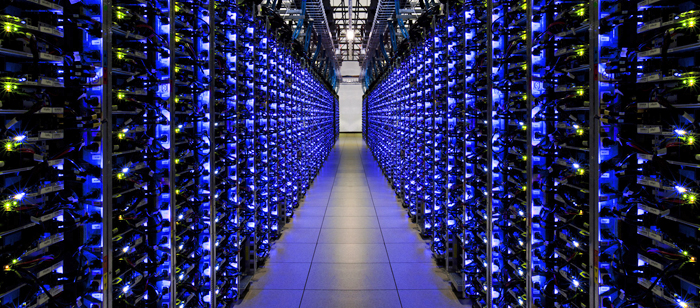
Data center power demand and energy consumption have grown substantially over the past 10-20 yrs. For high performance computing, power has become one of the main limiting factors. The Supercomputing Top500 List is now dominated by individual machines that demand nearly 10MW, which is equivalent to the technical load of an entire data center just 10 yrs ago. In addition these machines require another 5-10MW to power the necessary cooling systems. This talk will examine the power problem, and discuss some approaches to improving energy efficiency in large scale computing environments. In particular, it will look at demand side techniques for fully exploiting existing infrastructure, and at the use of immersion cooling.
Mr. Prucnal has been active as a Professional Engineer in the field of power engineering for over 25 yrs. Over the past 15 yrs. he has been involved with designing, building, and optimizing high-reliability data centers. He joined the Agency as a power systems engineer and was one of the first to recognize the power, space and cooling problem in high performance computing. He moved from the facilities engineering directorate to the research directorate to pursue solutions to the HPC power problem from the demand side versus the infrastructure supply side. Mr. Prucnal leads the Energy Efficiency Thrust within the Advanced Computing Systems research team. His current work includes Power-Aware Data Center Operation, and Immersion Cooling. He also oversees projects investigating single/few electron transistors, 3D chip packaging, low-power electrical and optical interconnects, and power efficiency through enhanced data locality.
more information and directions
]]>
CSEE Colloquium Energy Efficiency in Large-Scale Computing David Prucnal, PE Advanced Computing Systems *TO BE RESCHEDULED, ITE 227, UMBC Data center power demand and energy consumption...
http://www.csee.umbc.edu/2013/01/energy-efficiency-large-scale-computing/
https://dev.my.umbc.edu/api/v0/pixel/news/23025/guest@my.umbc.edu/a6d0c5fa986eb448f7227502b8e3e637/api/pixel
news
talks
Computer Science and Electrical Engineering
https://dev.my.umbc.edu/groups/csee
https://assets3-dev.my.umbc.edu/system/shared/avatars/groups/000/000/099/d117dca133c64bf78a4b7696dd007189/xsmall.png?1314043393
https://assets1-dev.my.umbc.edu/system/shared/avatars/groups/000/000/099/d117dca133c64bf78a4b7696dd007189/original.png?1314043393
https://assets1-dev.my.umbc.edu/system/shared/avatars/groups/000/000/099/d117dca133c64bf78a4b7696dd007189/xxlarge.png?1314043393
https://assets4-dev.my.umbc.edu/system/shared/avatars/groups/000/000/099/d117dca133c64bf78a4b7696dd007189/xlarge.png?1314043393
https://assets3-dev.my.umbc.edu/system/shared/avatars/groups/000/000/099/d117dca133c64bf78a4b7696dd007189/large.png?1314043393
https://assets1-dev.my.umbc.edu/system/shared/avatars/groups/000/000/099/d117dca133c64bf78a4b7696dd007189/medium.png?1314043393
https://assets2-dev.my.umbc.edu/system/shared/avatars/groups/000/000/099/d117dca133c64bf78a4b7696dd007189/small.png?1314043393
https://assets3-dev.my.umbc.edu/system/shared/avatars/groups/000/000/099/d117dca133c64bf78a4b7696dd007189/xsmall.png?1314043393
https://assets3-dev.my.umbc.edu/system/shared/avatars/groups/000/000/099/d117dca133c64bf78a4b7696dd007189/xxsmall.png?1314043393
Computer Science and Electrical Engineering
2
0
true
Wed, 30 Jan 2013 09:10:47 -0500
Wed, 30 Jan 2013 09:10:47 -0500
Ph.D. defense: Multi-Source Option-Based Policy Transfer
Ph.D. Defense
Multi-Source Option-Based Policy Transfer
James MacGlashan
10:00am Friday, 25 January 2013, ITE 325B
Reinforcement learning algorithms are very effective at learning policies (mappings from states to actions) for specific well defined tasks, thereby allowing an agent to learn how to behave without extensive deliberation. However, if an agent must complete a novel variant of a task that is similar to, but not exactly the same as, a previous version for which it has already learned a policy, learning must begin anew and there is no benefit to having previously learned anything. To address this challenge, I introduce novel approaches for policy transfer. Policy transfer allows the agent to follow the policy of a previously solved, but different, task (called a source task) while it is learning a new task (called a target task). Specifically, I introduce option-based policy transfer (OPT). OPT enables policy transfer by encapsulating the policy for a source task in an option (Sutton, Precup, & Singh 1999), which allows the agent to treat the policy of a source task as if it were a primitive action. A significant advantage of this approach is that if there are multiple source tasks, an option can be created for each of them, thereby enabling the agent to transfer knowledge from multiple sources and to combine their knowledge in useful ways. Moreover, this approach allows the agent to learn in which states of the world each source task is most applicable. OPT's approach to constructing and learning with options that represent source tasks allows OPT to greatly outperform existing policy transfer approaches. Additionally, OPT can utilize source tasks that other forms of transfer learning for reinforcement learning cannot.
Challenges for policy transfer include identifying sets of source tasks that would be useful for a target task and providing mappings between the state and action spaces of source and target tasks. That is, it may not be useful to transfer from all previously solved source tasks. If a source task has a different state or action space than the target task, then a mapping between these spaces must be provided. To address these challenges, I introduce object-oriented OPT (OO-OPT), which leverages object-oriented MDP (OO-MDP) (Diuk, Cohen, & Littman 2008) state representations to automatically detect related tasks and redundant source tasks, and to provide multiple useful state and action space mappings between tasks. I also introduce methods to adapt value function approximation techniques (which are useful when the state space of a task is very large or continuous) to the unique state representation of OO-MDPs.
Committee: Dr. Marie desJardins (Chair), Dr. Tim Finin, Dr. Michael Littman, Dr. Tim Oates, Dr. Yun Peng
]]>
Ph.D. Defense Multi-Source Option-Based Policy Transfer James MacGlashan 10:00am Friday, 25 January 2013, ITE 325B Reinforcement learning algorithms are very effective at learning...
http://www.csee.umbc.edu/2013/01/ph-d-defense-multi-source-option-based-policy-transfer/
https://dev.my.umbc.edu/api/v0/pixel/news/22412/guest@my.umbc.edu/6430a14c38db716c88c2ce5d5f5e2217/api/pixel
graduate
news
research
talks
Computer Science and Electrical Engineering
https://dev.my.umbc.edu/groups/csee
https://assets3-dev.my.umbc.edu/system/shared/avatars/groups/000/000/099/d117dca133c64bf78a4b7696dd007189/xsmall.png?1314043393
https://assets1-dev.my.umbc.edu/system/shared/avatars/groups/000/000/099/d117dca133c64bf78a4b7696dd007189/original.png?1314043393
https://assets1-dev.my.umbc.edu/system/shared/avatars/groups/000/000/099/d117dca133c64bf78a4b7696dd007189/xxlarge.png?1314043393
https://assets4-dev.my.umbc.edu/system/shared/avatars/groups/000/000/099/d117dca133c64bf78a4b7696dd007189/xlarge.png?1314043393
https://assets3-dev.my.umbc.edu/system/shared/avatars/groups/000/000/099/d117dca133c64bf78a4b7696dd007189/large.png?1314043393
https://assets1-dev.my.umbc.edu/system/shared/avatars/groups/000/000/099/d117dca133c64bf78a4b7696dd007189/medium.png?1314043393
https://assets2-dev.my.umbc.edu/system/shared/avatars/groups/000/000/099/d117dca133c64bf78a4b7696dd007189/small.png?1314043393
https://assets3-dev.my.umbc.edu/system/shared/avatars/groups/000/000/099/d117dca133c64bf78a4b7696dd007189/xsmall.png?1314043393
https://assets3-dev.my.umbc.edu/system/shared/avatars/groups/000/000/099/d117dca133c64bf78a4b7696dd007189/xxsmall.png?1314043393
Computer Science and Electrical Engineering
3
0
true
Thu, 17 Jan 2013 08:10:12 -0500
Public tutorials on high performance computing research and technologies
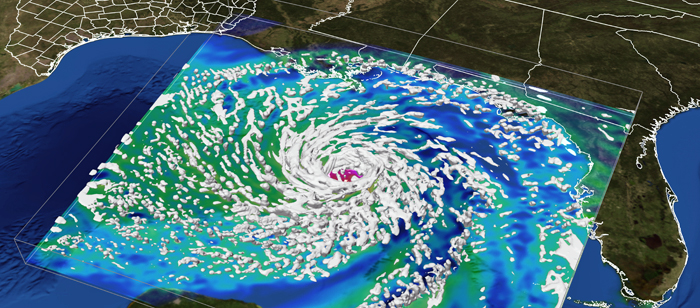
The Center for Hybrid Multicore Productivity Research is a collaborative research center sponsored by the National Science Foundation with two university partners (UMBC and University of California San Diego), six government, and seven industry members. The Center's research is focused on addressing productivity, performance, and scalability issues in meeting the insatiable computational demands of its members' applications through the continuous evolution of multicore architectures and open source tools.
As part of its annual industrial advisory board meeting next week, the center will hold an afternoon of public tutorials from 1:00pm to 4:00pm on Monday, 17 December 2012 in room 456 of the ITE building at UMBC. The tutorials will be presented by students doing research sponsored by the Center and feature some of the underlying technologies being used and some of their applications. The tutorials are:
- GPGPUs – Tim Blattner and Fahad Zafa
- Cloud Policies – Karuna Joshi
- Human Sensors Networks – Oleg Aulov
- Machine Learning Disaster Warnings – Han Dong
- Graph 500 – Tyler Simon
- HBase – Phuong Nyguen
The tutorial talks are free and open to the public. If you plan to attend, please RSVP by email to Dr. Valerie L. Thomas, Sorry, you need javascript to view this email address.
]]>
The Center for Hybrid Multicore Productivity Research is a collaborative research center sponsored by the National Science Foundation with two university partners (UMBC and University of...
http://www.csee.umbc.edu/2012/12/public-tutorials-on-high-performance-computing-research-and-technologies/
https://dev.my.umbc.edu/api/v0/pixel/news/21142/guest@my.umbc.edu/9fcd6d11da1ffc259db124352f46cf3b/api/pixel
events
news
research
talks
Computer Science and Electrical Engineering
https://dev.my.umbc.edu/groups/csee
https://assets3-dev.my.umbc.edu/system/shared/avatars/groups/000/000/099/d117dca133c64bf78a4b7696dd007189/xsmall.png?1314043393
https://assets1-dev.my.umbc.edu/system/shared/avatars/groups/000/000/099/d117dca133c64bf78a4b7696dd007189/original.png?1314043393
https://assets1-dev.my.umbc.edu/system/shared/avatars/groups/000/000/099/d117dca133c64bf78a4b7696dd007189/xxlarge.png?1314043393
https://assets4-dev.my.umbc.edu/system/shared/avatars/groups/000/000/099/d117dca133c64bf78a4b7696dd007189/xlarge.png?1314043393
https://assets3-dev.my.umbc.edu/system/shared/avatars/groups/000/000/099/d117dca133c64bf78a4b7696dd007189/large.png?1314043393
https://assets1-dev.my.umbc.edu/system/shared/avatars/groups/000/000/099/d117dca133c64bf78a4b7696dd007189/medium.png?1314043393
https://assets2-dev.my.umbc.edu/system/shared/avatars/groups/000/000/099/d117dca133c64bf78a4b7696dd007189/small.png?1314043393
https://assets3-dev.my.umbc.edu/system/shared/avatars/groups/000/000/099/d117dca133c64bf78a4b7696dd007189/xsmall.png?1314043393
https://assets3-dev.my.umbc.edu/system/shared/avatars/groups/000/000/099/d117dca133c64bf78a4b7696dd007189/xxsmall.png?1314043393
Computer Science and Electrical Engineering
1
0
true
Thu, 13 Dec 2012 21:48:51 -0500
Thu, 13 Dec 2012 21:48:51 -0500
PhD defense: Supporting Citizen Science and Biodiversity Informatics on the Semantic Web

Ph.D. Dissertation Defense
Supporting Citizen Science and
Biodiversity Informatics on the Semantic Web
Joel Sachs
10:00am Friday, 14 December 2012, ITE 325b
It is common for Semantic Web documents to use terms from multiple ontologies, with no expectation that the full semantics of each ontology will be imported by consuming applications. This makes sense, because importing all ontologies referenced by a document causes both practical and logical problems. But it has the drawback of leaving it to the consuming application to determine appropriate semantics for the terms being used. We describe an approach to constructing ontologies by layer, designed to make it easier for both data publishers and application developers to tailor-fit semantics to use cases.
The layers that we develop correspond to patterns in the RDF graph. This contrasts with typical approaches to modular ontology development, where the layers are domain based. The three primary motivations for this approach are i) preserving computational tractability; ii) enabling easy coupling and decoupling with foundational ontologies and iii) maintaining cognitive tractability. This third motivation is still under-studied in semantic web development; we consider it in relation to reducing the ease with which ontology users can publish data that accidentally implies things that they do not mean. This is important always, but becomes especially so in citizen science, where users will naturally bring intuitive semantics to the terms that they encounter.
We describe case studies that involved deploying our approach in the context of citizen science activities, and which provided opportunities to assess its capabilities and limitations. We also describe subsequent work aimed at addressing these limitations, and, by applying newly defined layers over the underlying data, show that we are able to improve the competency of our knowledge base. More generally, we show that appropriately combining triple-pattern-based layers allows us to support a wide variety of use cases with varied (and occasionally conflicting) requirements.
In addition to our approach to semantic layering, contributions include an improved understanding of how to blend social and semantic computing to support citizen science, and a collection of layers for representing biodiversity information in RDF, with a focus on invasive species. Compared with other proposed “semanticizations” of the Darwin Core standard for representing biodiversity occurrence data, these layers involve minimal modification to the Darwin Core vocabulary, and make maximal use of the Darwin Core namespace, thereby simplifying the transition of current practices onto the semantic web.
Committee: Drs. Tim Finin (Chair), Anupam Joshi, Tim Oates, Cynthia Parr, Yelena Yesha, Laura Zavala
]]>
Ph.D. Dissertation Defense Supporting Citizen Science and Biodiversity Informatics on the Semantic Web Joel Sachs 10:00am Friday, 14 December 2012, ITE 325b It is common for Semantic Web...
http://www.csee.umbc.edu/2012/12/citizen_science_semantic_web/
https://dev.my.umbc.edu/api/v0/pixel/news/20867/guest@my.umbc.edu/29db66987272b40b0e3bb99910209c7e/api/pixel
computer-science
graduate
news
talks
Computer Science and Electrical Engineering
https://dev.my.umbc.edu/groups/csee
https://assets3-dev.my.umbc.edu/system/shared/avatars/groups/000/000/099/d117dca133c64bf78a4b7696dd007189/xsmall.png?1314043393
https://assets1-dev.my.umbc.edu/system/shared/avatars/groups/000/000/099/d117dca133c64bf78a4b7696dd007189/original.png?1314043393
https://assets1-dev.my.umbc.edu/system/shared/avatars/groups/000/000/099/d117dca133c64bf78a4b7696dd007189/xxlarge.png?1314043393
https://assets4-dev.my.umbc.edu/system/shared/avatars/groups/000/000/099/d117dca133c64bf78a4b7696dd007189/xlarge.png?1314043393
https://assets3-dev.my.umbc.edu/system/shared/avatars/groups/000/000/099/d117dca133c64bf78a4b7696dd007189/large.png?1314043393
https://assets1-dev.my.umbc.edu/system/shared/avatars/groups/000/000/099/d117dca133c64bf78a4b7696dd007189/medium.png?1314043393
https://assets2-dev.my.umbc.edu/system/shared/avatars/groups/000/000/099/d117dca133c64bf78a4b7696dd007189/small.png?1314043393
https://assets3-dev.my.umbc.edu/system/shared/avatars/groups/000/000/099/d117dca133c64bf78a4b7696dd007189/xsmall.png?1314043393
https://assets3-dev.my.umbc.edu/system/shared/avatars/groups/000/000/099/d117dca133c64bf78a4b7696dd007189/xxsmall.png?1314043393
Computer Science and Electrical Engineering
2
0
true
Mon, 10 Dec 2012 23:13:42 -0500
MS Defense: Simultaneous Feature Acquisition and Cost Estimation
MS Thesis Defense
Simultaneous Feature Acquisition and Cost Estimation
Zachary Kurtz
11:00am Thursday, 6 December 2012, ITE 325b
This thesis will address classification problems with two sources of cost: the cost of acquiring feature values and the cost of incorrect classifications. In particular, I address problems with feature costs and instance-dependent misclassification costs. Many real-world applications, such as medical diagnosis, contain both feature acquisition costs and instance-dependent misclassification costs. The goal of my research is to minimize the total cost of classifying an unknown instance. This goal is accomplished with a new approach: Simultaneous Feature Acquisition and Cost Estimation (SFACE), which combines feature acquisition methods with a regression algorithm that estimates misclassification costs. The estimated cost values are used to estimate the expected cost reduction for the acquisition of each feature. SFACE is evaluated by comparing the total cost of operation to the cost incurred by existing cost-insensitive, cost-sensitive, and feature acquisition algorithms. The results show that SFACE results in lower total cost for the tested datasets.
Committee: Dr. Marie desJardins (Chair), Dr. Tim Oates and Dr. Michael Grasso
]]>
MS Thesis Defense Simultaneous Feature Acquisition and Cost Estimation Zachary Kurtz 11:00am Thursday, 6 December 2012, ITE 325b This thesis will address classification problems with two...
http://www.csee.umbc.edu/2012/12/ms-defense-simultaneous-feature-acquisition-and-cost-estimation/
https://dev.my.umbc.edu/api/v0/pixel/news/20547/guest@my.umbc.edu/df9288959e847b1fdeb5c7b85eb85a8b/api/pixel
computer-science
graduate
news
talks
Computer Science and Electrical Engineering
https://dev.my.umbc.edu/groups/csee
https://assets3-dev.my.umbc.edu/system/shared/avatars/groups/000/000/099/d117dca133c64bf78a4b7696dd007189/xsmall.png?1314043393
https://assets1-dev.my.umbc.edu/system/shared/avatars/groups/000/000/099/d117dca133c64bf78a4b7696dd007189/original.png?1314043393
https://assets1-dev.my.umbc.edu/system/shared/avatars/groups/000/000/099/d117dca133c64bf78a4b7696dd007189/xxlarge.png?1314043393
https://assets4-dev.my.umbc.edu/system/shared/avatars/groups/000/000/099/d117dca133c64bf78a4b7696dd007189/xlarge.png?1314043393
https://assets3-dev.my.umbc.edu/system/shared/avatars/groups/000/000/099/d117dca133c64bf78a4b7696dd007189/large.png?1314043393
https://assets1-dev.my.umbc.edu/system/shared/avatars/groups/000/000/099/d117dca133c64bf78a4b7696dd007189/medium.png?1314043393
https://assets2-dev.my.umbc.edu/system/shared/avatars/groups/000/000/099/d117dca133c64bf78a4b7696dd007189/small.png?1314043393
https://assets3-dev.my.umbc.edu/system/shared/avatars/groups/000/000/099/d117dca133c64bf78a4b7696dd007189/xsmall.png?1314043393
https://assets3-dev.my.umbc.edu/system/shared/avatars/groups/000/000/099/d117dca133c64bf78a4b7696dd007189/xxsmall.png?1314043393
Computer Science and Electrical Engineering
1
0
true
Wed, 05 Dec 2012 00:31:54 -0500
Sat, 01 Dec 2012 00:31:54 -0500
Talk: Energy Efficient Platforms for High Performance and Embedded Computing, 1pm 12/7
UMBC CSEE Colloquium
Energy Efficient Platforms for
High Performance and Embedded Computing
Dr. Tinoosh Mohsenin
Computer Science and Electrical Engineering
University of Maryland, Baltimore County
1:00pm Friday, 7 December 2012, ITE 227, UMBC
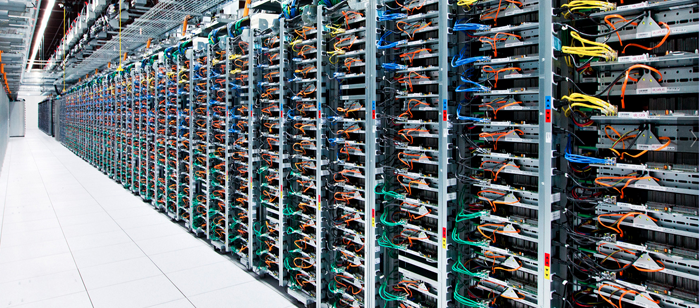
Future embedded, high performance, and cloud computing must meet limited energy capacity, cost, and sustainability. These devices will regularly execute over one tera-operations per second (TOPS) with a variety of diverse workloads—from baseband communications to wearable medical devices—while operating on a 5 to 25 Watt-hour cellphone/tablet battery. The need for greater energy efficiency, smaller size and improved performance of these devices demands a co-optimization of algorithms, architectures, and implementations. This talk presents several programmable and application specific solutions that illustrate the cross-domain optimization.
The design of system-on-Chip blocks becomes increasingly sophisticated with emerging real-time computational and limited power budget requirements. Two such algorithms, Low Density Parity Check (LDPC) decoding and Compressive Sensing (CS), have received significant attention. LDPC decoding is an error correction technique which has shown superior error correction performance and has been adopted by several recent communication standards. Compressive sensing is a revolutionary technique which significantly reduces the amount of data collected during acquisition. While both LDPC decoding and compressive sampling have several advantages, they require high computational intensive algorithms which typically suffer from high power consumption and low clock rates. We present novel algorithms and architectures to address these challenges.
As future systems demand increasing flexibility and performance within a limited power budget, many-core chip architectures have become a promising solution. The design and implementation of a programmable many-core platform containing 64 cores routed in a hierarchical network is presented. For demonstration, Electroencephalogram (EEG) seizure detection and analysis and ultrasound spectral doppler are mapped onto the cores. The seizure detection and analysis takes 900 ns and consumes 240 nJ of energy. Spectral doppler takes 715 ns and consumes 182 nJ of energy. The prototype is implemented in 65 nm CMOS which contains 64 cores, occupies 19.51 mm2 and runs at 1.18 GHz at 1 V.
Dr. Tinoosh Mohsenin is an assistant professor in the Department of Computer Science and Electrical Engineering at the University of Maryland Baltimore County since 2011. Prior to joining UMBC, she was finishing her PhD at the University of California, Davis. Dr. Mohsenin’s research interests lie in the areas of high performance and energy-efficiency in programmable and special purpose processors. She is the director of Energy Efficient High Performance Computing (EEHPC) Lab where she leads projects in architecture, hardware, software tools, and applications for VLSI computation with an emphasis on digital signal processing workloads. She has been consultant to early stage technology companies and currently serves in the Technical Program Committees of the IEEE Biomedical Circuits & Systems Conference (BioCAS), Life Science Systems and Applications Workshop (LiSSA), International Symposium on Quality Electronic Design (ISQED) and IEEE Women in Circuits and Systems (WiCAS).
More information and directions: http://bit.ly/UMBCtalks
]]>
UMBC CSEE Colloquium Energy Efficient Platforms for High Performance and Embedded Computing Dr. Tinoosh Mohsenin Computer Science and Electrical Engineering University of Maryland,...
http://www.csee.umbc.edu/2012/12/talk-energy-efficient-platforms-for-high-performance-and-embedded-computing-1pm-127/
https://dev.my.umbc.edu/api/v0/pixel/news/20544/guest@my.umbc.edu/32c6a6e039f0526936b2ac26826c3d5c/api/pixel
computer-engineering
electrical-engineering
news
research
talks
Computer Science and Electrical Engineering
https://dev.my.umbc.edu/groups/csee
https://assets3-dev.my.umbc.edu/system/shared/avatars/groups/000/000/099/d117dca133c64bf78a4b7696dd007189/xsmall.png?1314043393
https://assets1-dev.my.umbc.edu/system/shared/avatars/groups/000/000/099/d117dca133c64bf78a4b7696dd007189/original.png?1314043393
https://assets1-dev.my.umbc.edu/system/shared/avatars/groups/000/000/099/d117dca133c64bf78a4b7696dd007189/xxlarge.png?1314043393
https://assets4-dev.my.umbc.edu/system/shared/avatars/groups/000/000/099/d117dca133c64bf78a4b7696dd007189/xlarge.png?1314043393
https://assets3-dev.my.umbc.edu/system/shared/avatars/groups/000/000/099/d117dca133c64bf78a4b7696dd007189/large.png?1314043393
https://assets1-dev.my.umbc.edu/system/shared/avatars/groups/000/000/099/d117dca133c64bf78a4b7696dd007189/medium.png?1314043393
https://assets2-dev.my.umbc.edu/system/shared/avatars/groups/000/000/099/d117dca133c64bf78a4b7696dd007189/small.png?1314043393
https://assets3-dev.my.umbc.edu/system/shared/avatars/groups/000/000/099/d117dca133c64bf78a4b7696dd007189/xsmall.png?1314043393
https://assets3-dev.my.umbc.edu/system/shared/avatars/groups/000/000/099/d117dca133c64bf78a4b7696dd007189/xxsmall.png?1314043393
Computer Science and Electrical Engineering
1
0
true
Tue, 04 Dec 2012 23:36:28 -0500
Sat, 01 Dec 2012 23:36:28 -0500
talk: Parallel Real-Time OLAP on Multi-Core Processors
![]()
Center for Hybrid Multicore Productivity Research (CHMPR)
Distinguished Computational Science Lecture Series
Parallel Real-Time OLAP on Multi-Core Processors
Frank Dehne
Chancellor's Professor of Computer Science
Carleton University, Ottawa, Canada
http://www.dehne.net
3:00 p.m. Thursday, 6 December 2012, ITE 456, UMBC
One of the most powerful and prominent technologies for knowledge discovery in Decision Support systems is On-line Analytical Processing (OLAP). Most of the traditional OLAP research, and most of the commercial systems, follow the static data cube approach proposed by Gray etal. and materialize all or a subset of the cuboids of the data cube in order to ensure adequate query performance. Practitioners have called for some time for a real-time OLAP approach where the OLAP system gets updated instantaneously as new data arrives and always provides an up-to-date data warehouse for the decision support process. However, major problems for real-time OLAP are significant performance issues with large scale data warehouses. The aim of our research is to address these problems through the use of efficient parallel computing methods. We present a parallel real-time OLAP system for multi-core processors. To our knowledge, this is the first real-time OLAP system that has been parallelized and optimized for contemporary multi-core processors, providing the opportunity for real-time OLAP on large scale data warehouses. Our system allows for multiple insert and multiple query operations (transactions) to be executed in parallel and in real-time. We evaluated our method for a multitude of scenarios (different ratios of insert and query transactions, query transactions with different sizes of results, different system loads, etc.), using the TPC-DS “Decision Support” benchmark data set. The tests demonstrate that our parallel system achieves a significant speedup in transaction response time and a significant increase in transaction throughput. Since hardware performance improvements are currently achieved not by faster processors but by increasing the number of processor cores, our new parallel real-time OLAP method has the potential to enable OLAP systems that are real-time and efficient/feasible for large databases.
]]>
Center for Hybrid Multicore Productivity Research (CHMPR) Distinguished Computational Science Lecture Series Parallel Real-Time OLAP on Multi-Core Processors Frank Dehne...
http://www.csee.umbc.edu/2012/12/talk-parallel-real-time-olap-on-multi-core-processors/
https://dev.my.umbc.edu/api/v0/pixel/news/20522/guest@my.umbc.edu/d92e96692b33423741ee86b650ea6836/api/pixel
news
talks
Computer Science and Electrical Engineering
https://dev.my.umbc.edu/groups/csee
https://assets3-dev.my.umbc.edu/system/shared/avatars/groups/000/000/099/d117dca133c64bf78a4b7696dd007189/xsmall.png?1314043393
https://assets1-dev.my.umbc.edu/system/shared/avatars/groups/000/000/099/d117dca133c64bf78a4b7696dd007189/original.png?1314043393
https://assets1-dev.my.umbc.edu/system/shared/avatars/groups/000/000/099/d117dca133c64bf78a4b7696dd007189/xxlarge.png?1314043393
https://assets4-dev.my.umbc.edu/system/shared/avatars/groups/000/000/099/d117dca133c64bf78a4b7696dd007189/xlarge.png?1314043393
https://assets3-dev.my.umbc.edu/system/shared/avatars/groups/000/000/099/d117dca133c64bf78a4b7696dd007189/large.png?1314043393
https://assets1-dev.my.umbc.edu/system/shared/avatars/groups/000/000/099/d117dca133c64bf78a4b7696dd007189/medium.png?1314043393
https://assets2-dev.my.umbc.edu/system/shared/avatars/groups/000/000/099/d117dca133c64bf78a4b7696dd007189/small.png?1314043393
https://assets3-dev.my.umbc.edu/system/shared/avatars/groups/000/000/099/d117dca133c64bf78a4b7696dd007189/xsmall.png?1314043393
https://assets3-dev.my.umbc.edu/system/shared/avatars/groups/000/000/099/d117dca133c64bf78a4b7696dd007189/xxsmall.png?1314043393
Computer Science and Electrical Engineering
2
0
true
Tue, 04 Dec 2012 16:06:53 -0500
Sat, 01 Dec 2012 16:06:53 -0500
MS Defense: Stateless Detection of Malicious Traffic: Emphasis on User Privacy

MS Thesis Defense
Stateless Detection of Malicious Traffic:
Emphasis on User Privacy
Paul Halvorsen
1:00pm Monday, 3 December 2012, ITE 346, UMBC
In order to allow flexibility in deployment location and to preserve user privacy we have performed research into stateless classification of network traffic. Stateless detection allows for flexibility in deployment location because traffic on a network does not necessarily follow the same path to and from the end points. By only requiring a single direction of traffic, we have the ability to deploy this classifier anywhere on a network. We also do not require the data from a packet which preserves user privacy and allows for the classification of encrypted traffic.
Our research shows that it is possible to determine if traffic is malicious by using packets traveling in a single direction and without the data contained in the packet. Our research shows that with the use of the timing of the packets, time to live value, and source and destination IP addresses and ports, it is possible to determine if the traffic is malicious. In this way we are able to deploy the classifier anywhere on a network, preserve user privacy, and classify encrypted traffic.
Committee members:
- Dr. Anupam Joshi (chair)
- Dr. Charles Nicholas
- Dr. Tim Finin
]]>
MS Thesis Defense Stateless Detection of Malicious Traffic: Emphasis on User Privacy Paul Halvorsen 1:00pm Monday, 3 December 2012, ITE 346, UMBC In order to allow flexibility in...
http://www.csee.umbc.edu/2012/11/ms-defense-stateless-detection-of-malicious-traffic-emphasis-on-user-privacy/
https://dev.my.umbc.edu/api/v0/pixel/news/20261/guest@my.umbc.edu/fc0b07a340fbe6278f71ddc7f5fa5a3d/api/pixel
cybersecurity
news
talks
Computer Science and Electrical Engineering
https://dev.my.umbc.edu/groups/csee
https://assets3-dev.my.umbc.edu/system/shared/avatars/groups/000/000/099/d117dca133c64bf78a4b7696dd007189/xsmall.png?1314043393
https://assets1-dev.my.umbc.edu/system/shared/avatars/groups/000/000/099/d117dca133c64bf78a4b7696dd007189/original.png?1314043393
https://assets1-dev.my.umbc.edu/system/shared/avatars/groups/000/000/099/d117dca133c64bf78a4b7696dd007189/xxlarge.png?1314043393
https://assets4-dev.my.umbc.edu/system/shared/avatars/groups/000/000/099/d117dca133c64bf78a4b7696dd007189/xlarge.png?1314043393
https://assets3-dev.my.umbc.edu/system/shared/avatars/groups/000/000/099/d117dca133c64bf78a4b7696dd007189/large.png?1314043393
https://assets1-dev.my.umbc.edu/system/shared/avatars/groups/000/000/099/d117dca133c64bf78a4b7696dd007189/medium.png?1314043393
https://assets2-dev.my.umbc.edu/system/shared/avatars/groups/000/000/099/d117dca133c64bf78a4b7696dd007189/small.png?1314043393
https://assets3-dev.my.umbc.edu/system/shared/avatars/groups/000/000/099/d117dca133c64bf78a4b7696dd007189/xsmall.png?1314043393
https://assets3-dev.my.umbc.edu/system/shared/avatars/groups/000/000/099/d117dca133c64bf78a4b7696dd007189/xxsmall.png?1314043393
Computer Science and Electrical Engineering
1
0
true
Fri, 30 Nov 2012 09:08:40 -0500
ACM talk: Cloud based Active Archiving Solution for Databases, 2:30pm Fri 11/30
ACM Distinguished Speaker
Cloud based Active Archiving Solution for Databases
Dr. Mukesh Mohania
IBM Research – India
2:30pm Friday, 30 November 2012
Room 102 (LH8), ITE Building, UMBC
In the second talk of the UMBC ACM Student Chapter's Tech Talk Series, ACM Distinguished Speaker Dr. Mukesh Mohania will visit UMBC and talk about "Cloud based Active Archiving Solution for Databases".
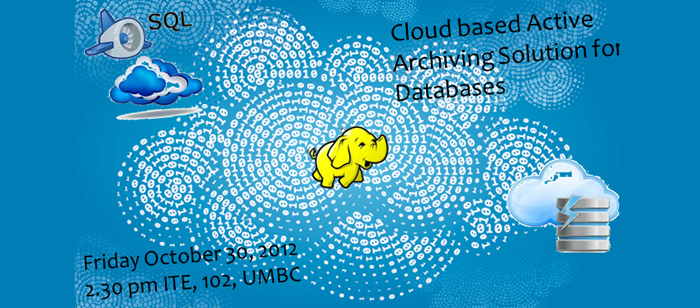
Cloud computing offers an exciting opportunity to bring on-demand applications to customers and is being used for delivering hosted services over the Internet and/or processing massive amount of data for business intelligence. In this talk, we will discuss the architecture of cloud computing, MapReduce, and Hadoop. We will then discuss how the cloud infrastructure can be used for data management services, how the massive amount of data can be processed over cloud for various business intelligence applications, and how the cloud can be used for 'Active' Data Archival for near real-time data access. We discuss various issues concerning the active archive system including schema modification, query federation, query optimization, access control and data provenance. Using TPC-DS benchmark data, we present evaluation results that shows the ability of our system to seamlessly query archive data along with data stored in the warehouse in order of minutes compared to hours required to move the data into the warehouse from traditional archival systems.
Mukesh Mohania received his Ph.D. in Computer Science & Engineering from Indian Institute of Technology, Bombay, India in 1995. Currently, he is a Senior Technical Staff Member and IBM Master Inventor in IBM Research – India. He has worked extensively in the areas of distributed databases, data warehousing, data integration, and autonomic computing. He has published more than 120 papers and also filed more than 50 patents in these or related areas, and more than 14 have already been granted. He received the best paper awards in CIKM 2004 and CIKM 2005. His work on Data Quality, Information Integration, and Autonomic Computing has led to the development of new products and also influenced several existing IBM products. He has received several awards within IBM, such as "Excellence in People Management", “Outstanding Innovation Award”, "Technical Accomplishment Award", “Leadership By Doing”, and many more. He also received IEEE Meritorious Service Award. He is an ACM Distinguished Scientist, and a member of IBM Academy of Technology.
Light refreshments will be served after the talk outside ITE-325
RSVP via Facebook https://facebook.com/events/378277722253548/
More information and directions: http://bit.ly/UMBCtalks
]]>
ACM Distinguished Speaker Cloud based Active Archiving Solution for Databases Dr. Mukesh Mohania IBM Research – India 2:30pm Friday, 30 November 2012 Room 102 (LH8), ITE Building, UMBC...
http://www.csee.umbc.edu/2012/11/acm-talk-cloud-based-active-archiving-solution-for-databases-230pm-fri-1130/
https://dev.my.umbc.edu/api/v0/pixel/news/20087/guest@my.umbc.edu/2098c34ca58041a619ac3dcd5e836b14/api/pixel
graduate
news
students
talks
undergraduate
Computer Science and Electrical Engineering
https://dev.my.umbc.edu/groups/csee
https://assets3-dev.my.umbc.edu/system/shared/avatars/groups/000/000/099/d117dca133c64bf78a4b7696dd007189/xsmall.png?1314043393
https://assets1-dev.my.umbc.edu/system/shared/avatars/groups/000/000/099/d117dca133c64bf78a4b7696dd007189/original.png?1314043393
https://assets1-dev.my.umbc.edu/system/shared/avatars/groups/000/000/099/d117dca133c64bf78a4b7696dd007189/xxlarge.png?1314043393
https://assets4-dev.my.umbc.edu/system/shared/avatars/groups/000/000/099/d117dca133c64bf78a4b7696dd007189/xlarge.png?1314043393
https://assets3-dev.my.umbc.edu/system/shared/avatars/groups/000/000/099/d117dca133c64bf78a4b7696dd007189/large.png?1314043393
https://assets1-dev.my.umbc.edu/system/shared/avatars/groups/000/000/099/d117dca133c64bf78a4b7696dd007189/medium.png?1314043393
https://assets2-dev.my.umbc.edu/system/shared/avatars/groups/000/000/099/d117dca133c64bf78a4b7696dd007189/small.png?1314043393
https://assets3-dev.my.umbc.edu/system/shared/avatars/groups/000/000/099/d117dca133c64bf78a4b7696dd007189/xsmall.png?1314043393
https://assets3-dev.my.umbc.edu/system/shared/avatars/groups/000/000/099/d117dca133c64bf78a4b7696dd007189/xxsmall.png?1314043393
Computer Science and Electrical Engineering
1
0
true
Tue, 27 Nov 2012 16:20:08 -0500
Sun, 25 Nov 2012 16:20:08 -0500
MS Defense: Smartphone Application and Data Privacy Control Using Semantically Rich Reasoning and Context Modeling

MS Thesis Defense
Smartphone Application and Data Privacy Control Using Semantically Rich Reasoning and Context Modeling
Dibyajyoti Ghosh
9:00am Tuesday, 20 November 2012, ITE 325B, UMBC
We present our ongoing work on user data and contextual privacy preservation in mobile devices through semantic reasoning. Recent advances in context modeling, tracking and collaborative localization has led to the emergence of a new class of smartphone applications that can access and share embedded sensor data. Unfortunately, this also means significant amount of user context information is now accessible to applications and potentially others, creating serious privacy and security concerns. Mobile OS frameworks like Android lack mechanisms for dynamic privacy control. We show how data flow among applications can be successfully filtered at a much more granular level using semantic web driven technologies that model device location, surroundings, application roles as well as context-dependent information sharing policies.
Committee members:
- Prof. Anupam Joshi (Chair)
- Prof. Tim Finin
- Prof. Yelena Yesha
- Prof. Shujia Zhou
]]>
MS Thesis Defense Smartphone Application and Data Privacy Control Using Semantically Rich Reasoning and Context Modeling Dibyajyoti Ghosh 9:00am Tuesday, 20 November 2012, ITE 325B, UMBC ...
http://www.csee.umbc.edu/2012/11/ms-defense-smartphone-application-and-data-privacy-control-using-semantically-rich-reasoning-and-context-modeling/
https://dev.my.umbc.edu/api/v0/pixel/news/19729/guest@my.umbc.edu/547c4be00148640b0ae794196c51921e/api/pixel
cybersecurity
news
talks
Computer Science and Electrical Engineering
https://dev.my.umbc.edu/groups/csee
https://assets3-dev.my.umbc.edu/system/shared/avatars/groups/000/000/099/d117dca133c64bf78a4b7696dd007189/xsmall.png?1314043393
https://assets1-dev.my.umbc.edu/system/shared/avatars/groups/000/000/099/d117dca133c64bf78a4b7696dd007189/original.png?1314043393
https://assets1-dev.my.umbc.edu/system/shared/avatars/groups/000/000/099/d117dca133c64bf78a4b7696dd007189/xxlarge.png?1314043393
https://assets4-dev.my.umbc.edu/system/shared/avatars/groups/000/000/099/d117dca133c64bf78a4b7696dd007189/xlarge.png?1314043393
https://assets3-dev.my.umbc.edu/system/shared/avatars/groups/000/000/099/d117dca133c64bf78a4b7696dd007189/large.png?1314043393
https://assets1-dev.my.umbc.edu/system/shared/avatars/groups/000/000/099/d117dca133c64bf78a4b7696dd007189/medium.png?1314043393
https://assets2-dev.my.umbc.edu/system/shared/avatars/groups/000/000/099/d117dca133c64bf78a4b7696dd007189/small.png?1314043393
https://assets3-dev.my.umbc.edu/system/shared/avatars/groups/000/000/099/d117dca133c64bf78a4b7696dd007189/xsmall.png?1314043393
https://assets3-dev.my.umbc.edu/system/shared/avatars/groups/000/000/099/d117dca133c64bf78a4b7696dd007189/xxsmall.png?1314043393
Computer Science and Electrical Engineering
1
0
true
Tue, 20 Nov 2012 11:22:38 -0500
Sun, 18 Nov 2012 11:22:38 -0500