Free workshop on using the Arduino microcontroller, Sat. 11/14 and 11/21
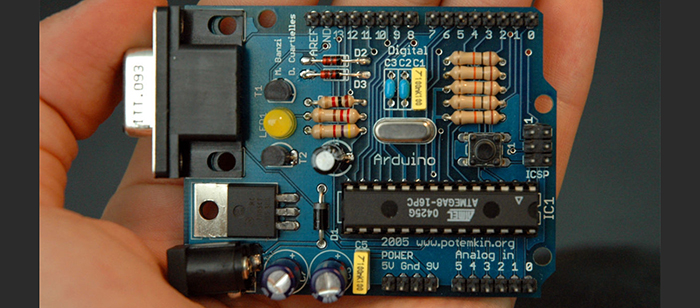
The UMBC IEEE Branch will hold an Arduino workshop on Saturday November 14th and next Saturday November 21st from 2:00-6:00pm in SHER 003 (Lecture Hall 4). It’s a great opportunity for people to learn about microcontrollers and circuit basics and how to use Arduino for building cyber-physical systems for home automation, robotics, games and more.
The Arduino microcontroller is a great device for anyone who wants to learn more about technology. It is used in a variety of fields in research and academia and may even help you get an internship. Our instructors have used the Arduino for researching self-replicating robots and remote-controlled helicopters, hacking into a vehicle’s control system, and using radars to detect human activity in a room. Some of the hackathon projects by our IEEE members include developing a drink mixer that wirelessly connects with a Tesla Model S and a full-body haptic feedback suit for the Oculus Rift. The Arduino is a wonderful tool and is fairly easy to use. Everyone should learn how to use it!
UMBC’s Institute of Electrical and Electronics Engineers is hosting two Level 1 workshops this semester. They are hosted this Saturday (Nov. 14th) and next Saturday (Nov. 21st). The workshop will be SHER 003 (Lecture Hall 4) from 2pm to 6pm. Please register online to sign up for either workshop. Contact Sekar Kulandaivel (Sorry, you need javascript to view this email address. ) if you have any questions.
The workshop is open to all majors (minimum coding experience recommended). You only need to bring your laptop and charger and download and install the Arduino IDE. We hope to see many of you this weekend! You REALLY don’t want to miss out on this opportunity.
]]>
The UMBC IEEE Branch will hold an Arduino workshop on Saturday November 14th and next Saturday November 21st from 2:00-6:00pm in SHER 003 (Lecture Hall 4). It’s a great opportunity for people to...
http://www.csee.umbc.edu/2015/11/free-workshop-on-using-the-arduino-microcontroller-sat-1114-and-1121/
https://dev.my.umbc.edu/api/v0/pixel/news/55886/guest@my.umbc.edu/8065a369b2b5c0ea22cb0aa36b23c1df/api/pixel
computer-engineering
computer-science
electrical-engineering
events
graduate
news
robotics
students
undergraduate
Computer Science and Electrical Engineering
https://dev.my.umbc.edu/groups/csee
https://assets3-dev.my.umbc.edu/system/shared/avatars/groups/000/000/099/d117dca133c64bf78a4b7696dd007189/xsmall.png?1314043393
https://assets1-dev.my.umbc.edu/system/shared/avatars/groups/000/000/099/d117dca133c64bf78a4b7696dd007189/original.png?1314043393
https://assets1-dev.my.umbc.edu/system/shared/avatars/groups/000/000/099/d117dca133c64bf78a4b7696dd007189/xxlarge.png?1314043393
https://assets4-dev.my.umbc.edu/system/shared/avatars/groups/000/000/099/d117dca133c64bf78a4b7696dd007189/xlarge.png?1314043393
https://assets3-dev.my.umbc.edu/system/shared/avatars/groups/000/000/099/d117dca133c64bf78a4b7696dd007189/large.png?1314043393
https://assets1-dev.my.umbc.edu/system/shared/avatars/groups/000/000/099/d117dca133c64bf78a4b7696dd007189/medium.png?1314043393
https://assets2-dev.my.umbc.edu/system/shared/avatars/groups/000/000/099/d117dca133c64bf78a4b7696dd007189/small.png?1314043393
https://assets3-dev.my.umbc.edu/system/shared/avatars/groups/000/000/099/d117dca133c64bf78a4b7696dd007189/xsmall.png?1314043393
https://assets3-dev.my.umbc.edu/system/shared/avatars/groups/000/000/099/d117dca133c64bf78a4b7696dd007189/xxsmall.png?1314043393
Computer Science and Electrical Engineering
1
0
true
Thu, 12 Nov 2015 17:06:24 -0500
Thu, 12 Nov 2015 17:06:24 -0500
Professor Gymama Slaughter to speak at 2016 TEDxBaltimore
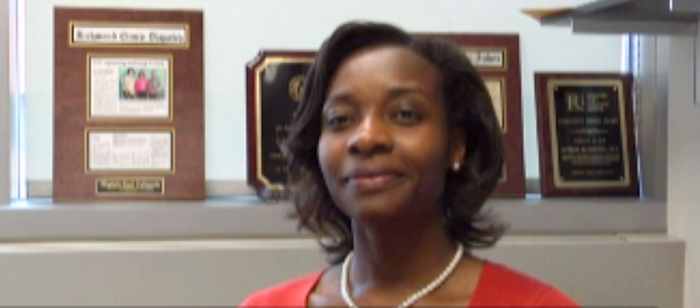
CSEE Professor Gymama Slaughter will talk about her research on Human Powered Biosensors as part at the 2016 TEDxBaltimore conference in January. The one-day conference will be held at Morgan State University on January 14, 2016 with the theme OUTLIERS: ideas that challenge traditional thinking. She will join about 15 other speakers each sharing an “idea worth spreading” with the expected 1,500 attendees.
Dr. Slaughter’s research focuses on the application of sensor-processor integration, bioelectronics design and theory, optimization methods for physical circuit design, biologically inspired computing (neural networks), and sensor interfacing and wireless networking and communications. You can find out more about the work that she and her students are doing by visiting her Biolectronics Laboratory website.
]]>
CSEE Professor Gymama Slaughter will talk about her research on Human Powered Biosensors as part at the 2016 TEDxBaltimore conference in January. The one-day conference will be held at Morgan...
http://www.csee.umbc.edu/2015/11/professor-gymama-slaughter-to-speak-at-2016-tedxbaltimore/
https://dev.my.umbc.edu/api/v0/pixel/news/55790/guest@my.umbc.edu/f734ed2ec75c7b1fbb5b10c5eafb0079/api/pixel
computer-engineering
electrical-engineering
events
faculty-and-staff
news
research
talks
Computer Science and Electrical Engineering
https://dev.my.umbc.edu/groups/csee
https://assets3-dev.my.umbc.edu/system/shared/avatars/groups/000/000/099/d117dca133c64bf78a4b7696dd007189/xsmall.png?1314043393
https://assets1-dev.my.umbc.edu/system/shared/avatars/groups/000/000/099/d117dca133c64bf78a4b7696dd007189/original.png?1314043393
https://assets1-dev.my.umbc.edu/system/shared/avatars/groups/000/000/099/d117dca133c64bf78a4b7696dd007189/xxlarge.png?1314043393
https://assets4-dev.my.umbc.edu/system/shared/avatars/groups/000/000/099/d117dca133c64bf78a4b7696dd007189/xlarge.png?1314043393
https://assets3-dev.my.umbc.edu/system/shared/avatars/groups/000/000/099/d117dca133c64bf78a4b7696dd007189/large.png?1314043393
https://assets1-dev.my.umbc.edu/system/shared/avatars/groups/000/000/099/d117dca133c64bf78a4b7696dd007189/medium.png?1314043393
https://assets2-dev.my.umbc.edu/system/shared/avatars/groups/000/000/099/d117dca133c64bf78a4b7696dd007189/small.png?1314043393
https://assets3-dev.my.umbc.edu/system/shared/avatars/groups/000/000/099/d117dca133c64bf78a4b7696dd007189/xsmall.png?1314043393
https://assets3-dev.my.umbc.edu/system/shared/avatars/groups/000/000/099/d117dca133c64bf78a4b7696dd007189/xxsmall.png?1314043393
Computer Science and Electrical Engineering
0
0
true
Mon, 09 Nov 2015 21:57:26 -0500
Mon, 09 Nov 2015 21:57:26 -0500
talk: Graphical-model-based machine learning for neuroimaging data, 12pm Fri 10/30

The UMBC CSEE Seminar Series Presents
Graphical-model-based machine learning for neuroimaging data
Professor Rong Chen
University of Maryland School of Medicine
12noon-1pm Friday, 30 October 2015, ITE 102, UMBC
Two important problem in neuroimaging data mining is high-dimensionality and temporal network modeling. Analyzing high-dimensional neuroimaging data is a very challenging problem. We developed an algorithms called Graphical-Model-based Multivariate Analysis (GAMMA) to model complex interactions among brain regions and a clinical variable. GAMMA has embedded dimension reduction and regularization mechanism. GAMMA has been used in distinguishing patients with mild cognitive impairment and normal elderly.
Identifying spatial-temporal interactions among brain regions from longitudinal structural magnetic-resonance images presents one of the major challenges in computational neuroanatomy. We developed a dynamic Bayesian network based method called structural dynamic network analysis (SDNA) to solve this problem. SDNA enables the detection of spatial-temporal interactions among brain regions, leading to dynamic network analysis. SDNA has been used to model trajectory changes in patients with Alzheimer’s disease.
Dr. Rong Chen is an Assistant Professor at in the department of Radiology the University of Maryland School of Medicine. He completed his Ph.D. in Electrical and Computer Engineering at Washington State University in 2003, and his MTR in Translational Medicine at the University of Pennsylvania in 2012. He published 45 peer-reviewed research articles in the areas of neuroimaging and data mining. His research interests include computational neuroscience, data mining, medical image analysis, and translational medicine.
Hosts: Professors Fow-Sen Choa (Sorry, you need javascript to view this email address. ) and Alan T. Sherman (Sorry, you need javascript to view this email address. )
About the CSEE Seminar Series: The UMBC Department of Computer Science and Electrical Engineering presents technical talks on current significant research projects of broad interest to the Department and the research community. Each talk is free and open to the public. We welcome your feedback and suggestions for future talks.
]]>
The UMBC CSEE Seminar Series Presents Graphical-model-based machine learning for neuroimaging data Professor Rong Chen University of Maryland School of Medicine 12noon-1pm Friday, 30...
http://www.csee.umbc.edu/2015/10/talk-graphical-model-based-machine-learning-for-neuroimaging-data-12pm-fri-1030/
https://dev.my.umbc.edu/api/v0/pixel/news/55341/guest@my.umbc.edu/3807623c90be15a7a47acb5e3015a64a/api/pixel
computer-science
electrical-engineering
news
research
talks
Computer Science and Electrical Engineering
https://dev.my.umbc.edu/groups/csee
https://assets3-dev.my.umbc.edu/system/shared/avatars/groups/000/000/099/d117dca133c64bf78a4b7696dd007189/xsmall.png?1314043393
https://assets1-dev.my.umbc.edu/system/shared/avatars/groups/000/000/099/d117dca133c64bf78a4b7696dd007189/original.png?1314043393
https://assets1-dev.my.umbc.edu/system/shared/avatars/groups/000/000/099/d117dca133c64bf78a4b7696dd007189/xxlarge.png?1314043393
https://assets4-dev.my.umbc.edu/system/shared/avatars/groups/000/000/099/d117dca133c64bf78a4b7696dd007189/xlarge.png?1314043393
https://assets3-dev.my.umbc.edu/system/shared/avatars/groups/000/000/099/d117dca133c64bf78a4b7696dd007189/large.png?1314043393
https://assets1-dev.my.umbc.edu/system/shared/avatars/groups/000/000/099/d117dca133c64bf78a4b7696dd007189/medium.png?1314043393
https://assets2-dev.my.umbc.edu/system/shared/avatars/groups/000/000/099/d117dca133c64bf78a4b7696dd007189/small.png?1314043393
https://assets3-dev.my.umbc.edu/system/shared/avatars/groups/000/000/099/d117dca133c64bf78a4b7696dd007189/xsmall.png?1314043393
https://assets3-dev.my.umbc.edu/system/shared/avatars/groups/000/000/099/d117dca133c64bf78a4b7696dd007189/xxsmall.png?1314043393
Computer Science and Electrical Engineering
0
0
true
Mon, 26 Oct 2015 22:15:51 -0400
Mon, 26 Oct 2015 22:15:51 -0400
talk: Online Learning for Cognitive Radios, Power Grids & Brain Imaging, 1pm 10/23
 The UMBC CSEE Seminar Series Presents
Online Learning for Cognitive Radios,
Power Grids, and Brain Imaging
Dr. Seung-Jun Kim
Department of CSEE, UMBC
1-2pm, Friday, 23 October 2015, ITE 325b
With the advent of big data era with pervasive sensors and powerful computational intelligence techniques, application of data-driven techniques to various domains is becoming quite popular. In this talk, some of our recent research activities in the signal processing and smart systems lab (SPSS) will be sampled. In particular, it will be highlighted how the online learning techniques can benefit different applications in the wireless communication, power systems, and medical imaging areas.
Seung-Jun Kim received his B.S. and M.S. degrees from Seoul National University in Seoul, Korea, and his Ph.D. from the University of California at Santa Barbara in 2005, all in electrical engineering. From 2005 to 2008, he worked for NEC Laboratories America in Princeton, New Jersey. He was with the University of Minnesota during 2008-2014, where his final title was Research Associate Professor. In August 2014, he joined the CSEE department at UMBC. Dr. Kim’s research interests include statistical signal processing, optimization, and machine learning, with applications to wireless communication and networking, future power systems, and big data analytics.
Hosts: Professors Fow-Sen Choa (Sorry, you need javascript to view this email address. ) and Alan T. Sherman (Sorry, you need javascript to view this email address. )
About the CSEE Seminar Series: The UMBC Department of Computer Science and Electrical Engineering presents technical talks on current significant research projects of broad interest to the Department and the research community. Each talk is free and open to the public. We welcome your feedback and suggestions for future talks. Upcoming talks include the following.
Signature Track (Fridays, 12noon-1pm, in ITE 102):
- Oct. 30, Rong Chen, SOM Faculty, computational neuroscience
- Nov.13, John Kloetzli (Firaxis), computer graphics
- Weekly Track (Thursday 12noon-1pm, or Friday 1-2pm, in ITE 325):
- Nov. 20 Hamed Pirsiavash (UMBC), computer vision
- Nov. 6 Nilanjan Banerjee (UMBC), Internet of Things
- Dec. 4 Ting Zhu (UMBC), energy system and big data
Other UMBC CSEE Seminar Series: The UMBC Cyber Defense Lab (CDL) meets biweekly Fridays 11:15am-12:30pm in ITE 231, for research talks about cybersecurity.
]]>
The UMBC CSEE Seminar Series Presents Online Learning for Cognitive Radios, Power Grids, and Brain Imaging Dr. Seung-Jun Kim Department of CSEE, UMBC 1-2pm, Friday, 23 October 2015, ITE...
http://www.csee.umbc.edu/2015/10/talk-online-learning-for-cognitive-radios-power-grids-brain-imaging-1pm-1023/
https://dev.my.umbc.edu/api/v0/pixel/news/55201/guest@my.umbc.edu/0a1d2cb495320a3451a3ba995fdefd65/api/pixel
computer-engineering
electrical-engineering
news
research
talks
Computer Science and Electrical Engineering
https://dev.my.umbc.edu/groups/csee
https://assets3-dev.my.umbc.edu/system/shared/avatars/groups/000/000/099/d117dca133c64bf78a4b7696dd007189/xsmall.png?1314043393
https://assets1-dev.my.umbc.edu/system/shared/avatars/groups/000/000/099/d117dca133c64bf78a4b7696dd007189/original.png?1314043393
https://assets1-dev.my.umbc.edu/system/shared/avatars/groups/000/000/099/d117dca133c64bf78a4b7696dd007189/xxlarge.png?1314043393
https://assets4-dev.my.umbc.edu/system/shared/avatars/groups/000/000/099/d117dca133c64bf78a4b7696dd007189/xlarge.png?1314043393
https://assets3-dev.my.umbc.edu/system/shared/avatars/groups/000/000/099/d117dca133c64bf78a4b7696dd007189/large.png?1314043393
https://assets1-dev.my.umbc.edu/system/shared/avatars/groups/000/000/099/d117dca133c64bf78a4b7696dd007189/medium.png?1314043393
https://assets2-dev.my.umbc.edu/system/shared/avatars/groups/000/000/099/d117dca133c64bf78a4b7696dd007189/small.png?1314043393
https://assets3-dev.my.umbc.edu/system/shared/avatars/groups/000/000/099/d117dca133c64bf78a4b7696dd007189/xsmall.png?1314043393
https://assets3-dev.my.umbc.edu/system/shared/avatars/groups/000/000/099/d117dca133c64bf78a4b7696dd007189/xxsmall.png?1314043393
Computer Science and Electrical Engineering
1
0
true
Wed, 21 Oct 2015 09:47:06 -0400
Wed, 21 Oct 2015 09:47:06 -0400
talk: Sharon Gannot, Multi-Microphone Speech Enhancement, 10/14
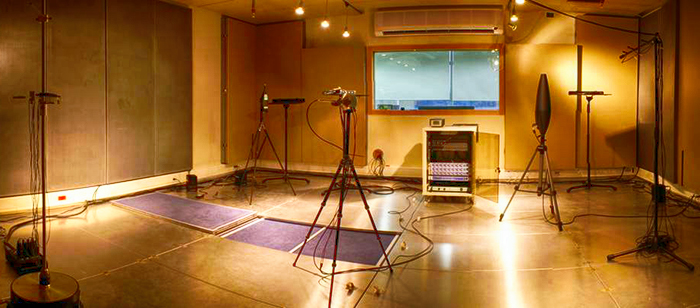
Multi-Microphone Speech Enhancement
Sharon Gannot
Bar-Ilan University, Israel
1:30pm Wednesday, 14 October 2015, ITE 325B, UMBC
Microphone array algorithms emerged in the early 1990s as viable solutions to speech processing problems. However, the adaptation of beamforming methods to speech processing is still an open issue. There are many difficulties which arise from the characteristics of the speech signal and the acoustic environment. The speech signal is a wide-band and non-stationary signal. Very long room impulse responses (RIRs), which are several thousands of taps long, may be attributed to multiple reflections of the sound source on objects in the enclosure. Moreover, due to the inevitable movements of both sources (speakers) and receivers (microphones), the room impulse responses become time-varying.
In this talk, we will focus on spatial processors, a.k.a, beamformers, based on the linearly constrained minimum variance (LCMV) criterion, and its special case, the minimum variance distortionless (MVDR) beamformer. We show that classical beamformers that merely take into account angular information (as reflected by the so-called beam-pattern), are too simplistic to fully address the intricate propagation regime of the sound source in reverberant environment. We will therefore reformulate the LCMV beamformer in the shorttime Fourier transform (STFT) domain and substitute the free-field steering vector by the entire acoustic transfer function (ATF). The corresponding relative transfer function (RTF) will be then introduced, and its applicability to the design of beamformers in reverberant environments will be discussed. We will then elaborate on several blind RTF estimation techniques, e.g. based on subspace analysis, that enable the implementation of all necessary beamformer’s blocks. Several applications of the powerful LCMV beamformer, e.g. speech enhancement, extraction of desired speakers in multiple competing speaker environment, and binaural processing, will then be presented.
We will conclude the talk with an overview of the emerging field of distributed algorithms for ad hoc microphone arrays, and discuss the advantages and challenges they raise. The presentation will be accompanied by audio clips demonstrating the capabilities of the introduced schemes.
Sharon Gannot received his B.Sc. degree (summa cum laude) from the Technion-Israel Institute of Technology, Haifa, Israel in 1986 and the M.Sc. (cum laude) and Ph.D. degrees from Tel-Aviv University, Israel in 1995 and 2000 respectively, all in Electrical Engineering. In 2001 he held a post-doctoral position at the department of Electrical Engineering (ESAT-SISTA) at K.U.Leuven, Belgium. In 2002-2003 he held a research and teaching position at the Faculty of Electrical Engineering, Technion-Israel Institute of Technology, Haifa, Israel. Currently, he is a Full Professor at the Faculty of Engineering, Bar-Ilan University, Israel, where he is heading the Speech and Signal Processing laboratory and the Signal Processing Track. Prof. Gannot is the recipient of Bar-Ilan University outstanding lecturer award for 2010 and 2014. Prof. Gannot has served as an Associate Editor of the EURASIP Journal of Advances in Signal Processing in 2003-2012, and as an Editor of several special issues on Multi-microphone Speech Processing of the same journal. He has also served as a Guest Editor of ELSEVIER Speech Communication and Signal Processing journals. Prof. Gannot has served as an Associate Editor of IEEE Transactions on Speech, Audio and Language Processing in 2009-2013. Currently, he is a Senior Area Chair of the same journal. He also serves as a reviewer of many IEEE journals and conferences. Prof. Gannot is a member of the Audio and Acoustic Signal Processing (AASP) technical committee of the IEEE since Jan., 2010. He is also a member of the Technical and Steering committee of the International Workshop on Acoustic Signal Enhancement (IWAENC) since 2005. He was the general co-chair of IWAENC held at Tel-Aviv, Israel in August 2010. Prof. Gannot has served as the general co-chair of the IEEE Workshop on Applications of Signal Processing to Audio and Acoustics (WASPAA), New-Paltz, NY, USA in October 2013. Prof. Gannot was selected (with colleagues) to present a tutorial sessions in ICASSP 2012, EUSIPCO 2012, ICASSP 2013 and EUSIPCO 2013. His research interests include multi-microphone speech processing and specifically distributed algorithms for ad hoc microphone arrays for noise reduction and speaker separation; machine learning methods in speech processing; dereverberation; single microphone speech enhancement and speaker localization and tracking.
]]>
Multi-Microphone Speech Enhancement Sharon Gannot Bar-Ilan University, Israel 1:30pm Wednesday, 14 October 2015, ITE 325B, UMBC Microphone array algorithms emerged in the early 1990s as...
http://www.csee.umbc.edu/2015/09/talk-sharon-gannot-multi-microphone-speech-enhancement-1014/
https://dev.my.umbc.edu/api/v0/pixel/news/54463/guest@my.umbc.edu/35fd3f067993917b6a27898982d394ff/api/pixel
computer-engineering
electrical-engineering
news
research
talks
Computer Science and Electrical Engineering
https://dev.my.umbc.edu/groups/csee
https://assets3-dev.my.umbc.edu/system/shared/avatars/groups/000/000/099/d117dca133c64bf78a4b7696dd007189/xsmall.png?1314043393
https://assets1-dev.my.umbc.edu/system/shared/avatars/groups/000/000/099/d117dca133c64bf78a4b7696dd007189/original.png?1314043393
https://assets1-dev.my.umbc.edu/system/shared/avatars/groups/000/000/099/d117dca133c64bf78a4b7696dd007189/xxlarge.png?1314043393
https://assets4-dev.my.umbc.edu/system/shared/avatars/groups/000/000/099/d117dca133c64bf78a4b7696dd007189/xlarge.png?1314043393
https://assets3-dev.my.umbc.edu/system/shared/avatars/groups/000/000/099/d117dca133c64bf78a4b7696dd007189/large.png?1314043393
https://assets1-dev.my.umbc.edu/system/shared/avatars/groups/000/000/099/d117dca133c64bf78a4b7696dd007189/medium.png?1314043393
https://assets2-dev.my.umbc.edu/system/shared/avatars/groups/000/000/099/d117dca133c64bf78a4b7696dd007189/small.png?1314043393
https://assets3-dev.my.umbc.edu/system/shared/avatars/groups/000/000/099/d117dca133c64bf78a4b7696dd007189/xsmall.png?1314043393
https://assets3-dev.my.umbc.edu/system/shared/avatars/groups/000/000/099/d117dca133c64bf78a4b7696dd007189/xxsmall.png?1314043393
Computer Science and Electrical Engineering
0
0
true
Thu, 24 Sep 2015 23:17:08 -0400
PhD Defense: Tanvir Mahmood, 2pm 9/24
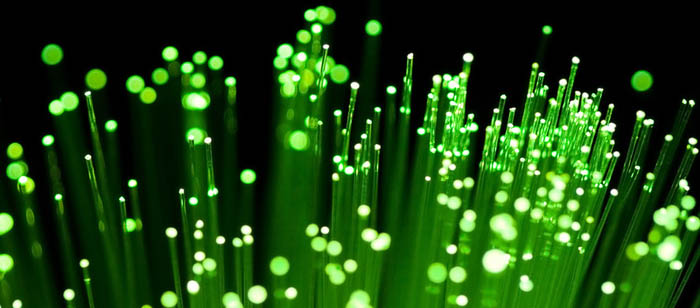
PhD Dissertation Defense Announcement
Electrical Engineering
Polarization-insensitive all-optical dual pump-phase trans-multiplexing from 2 × 10-GBd OOKs to 10-GBd RZ-QPSK using cross-phase modulation in a passive nonlinear birefringent photonic crystal fiber
Tanvir Mahmood
2:00pm Thursday, 24 September 2015, ITE325b
Considering the network size, bit rate, spectral and channel capacity limitations, different modulation formats may be selectively used in future optical networks. Although the traditional metropolitan area networks (MANs) still use the non-return-to-zero on-off keying (NRZ-OOK) modulation format due to its technical simplicity and therefore low cost, QPSK format is more advantageous in spectrally efficient long-haul fiber optic transmission systems because of its constant power envelope, and robustness to various transmission impairments. Consequently, an important problem may arise, in particular how to route the OOK-data streams from MANs to long-haul backbone networks when the state of polarization (SOP) of the remotely generated OOK is unpredictable. Hence, the focus of this dissertation was to investigate a polarization-insensitive (PI) all-optical nonlinear optical signal processing (NOSP) method that can be implemented at the network cross-connect (X-connect) to transfer data from a remotely and a locally generated OOK data simultaneously to more effectual QPSK format for long-haul transmission. By utilizing cross-phase modulation (XPM) and inherent birefringence of the device, the work demonstrated, for the first time, PI all-optical data transfer utilizing dual pump-phase transmultiplexing (DPTM) from 2 × 10-GBd OOKs to 10-GBd RZ-QPSK in a passive nonlinear birefringent photonic crystal fiber (PCF). Polarization insensitivity was achieved by scrambling the SOP of the remotely generated OOK pump and launching the locally generated OOK pump and the probe off-axis. To mitigate polarization induced power fluctuations and detrimental effects due to nearby partially degenerate and non-degenerate four wave mixings, an optimum pump-probe detuning was also utilized. The PI DPTM RZ-QPSK demonstrated a pre-amplified receiver sensitivity penalty < 5.5 dB at 10−9 bit-error-rate (BER), relative to the FPGA-precoded RZ-DQPSK baseline in ASE-limited transmission system. The effect of the remotely generated OOK pump OSNR degradation on the PI DPTM RZ-QPSK was also investigated and it was established that 10−9 BER metric was attainable till the remotely generated OOK pump reached the threshold OSNR limit of 34 dB/0.1nm. Finally, DWDM transmission performance of the PI DPTM RZ-QPSK signal was evaluated using a 138-km long recirculating loop and it was demonstrated that the PI DPTM RZ-QPSK can be transmitted over 1,500 km before it reached ITU-T G.709 7% HD-FEC overhead limit. This propagation distance was well beyond the transmission requisites of any typical metro network (≈ 600 km). Furthermore, it was demonstrated that, within the threshold limit, OSNR degradation of the remotely generated OOK pump had minimal impact on the transmission distance of the PI DPTM RZ-QPSK before it reached 7% HD-FEC overhead limit.
Committee: Drs. Gary M. Carter (Chair), Anthony M. Johnson, Fow-Sen Choa, Tinoosh Mohsenin, Thomas E. Murphy (ECE,UMCP), William Astar
]]>
PhD Dissertation Defense Announcement Electrical Engineering Polarization-insensitive all-optical dual pump-phase trans-multiplexing from 2 × 10-GBd OOKs to 10-GBd RZ-QPSK using cross-phase...
http://www.csee.umbc.edu/2015/09/phd-defense-tanvir-mahmood-2pm-924/
https://dev.my.umbc.edu/api/v0/pixel/news/54374/guest@my.umbc.edu/581750de64defe8a947953f1424fd919/api/pixel
defense
electrical-engineering
graduate
news
research
Computer Science and Electrical Engineering
https://dev.my.umbc.edu/groups/csee
https://assets3-dev.my.umbc.edu/system/shared/avatars/groups/000/000/099/d117dca133c64bf78a4b7696dd007189/xsmall.png?1314043393
https://assets1-dev.my.umbc.edu/system/shared/avatars/groups/000/000/099/d117dca133c64bf78a4b7696dd007189/original.png?1314043393
https://assets1-dev.my.umbc.edu/system/shared/avatars/groups/000/000/099/d117dca133c64bf78a4b7696dd007189/xxlarge.png?1314043393
https://assets4-dev.my.umbc.edu/system/shared/avatars/groups/000/000/099/d117dca133c64bf78a4b7696dd007189/xlarge.png?1314043393
https://assets3-dev.my.umbc.edu/system/shared/avatars/groups/000/000/099/d117dca133c64bf78a4b7696dd007189/large.png?1314043393
https://assets1-dev.my.umbc.edu/system/shared/avatars/groups/000/000/099/d117dca133c64bf78a4b7696dd007189/medium.png?1314043393
https://assets2-dev.my.umbc.edu/system/shared/avatars/groups/000/000/099/d117dca133c64bf78a4b7696dd007189/small.png?1314043393
https://assets3-dev.my.umbc.edu/system/shared/avatars/groups/000/000/099/d117dca133c64bf78a4b7696dd007189/xsmall.png?1314043393
https://assets3-dev.my.umbc.edu/system/shared/avatars/groups/000/000/099/d117dca133c64bf78a4b7696dd007189/xxsmall.png?1314043393
Computer Science and Electrical Engineering
4
0
true
Mon, 21 Sep 2015 23:10:07 -0400
CSEE Prof. Curtis Menyuk wins Humboldt Research Award
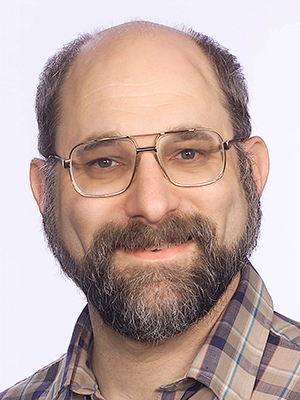 CSEE professor Curtis Menyuk was recently awarded the Alexander von Humboldt Foundation Research Award. This award is a significant honor, and comes with 60,000 euros in funding to support research in with German research collaborators.
The Humbolt Research Award award is given to recognize the lifetime research achievments of academics "whose fundamental discoveries, new theories, or insights have had a significant impact on their own discipline and who are expected to continue producing cutting-edge achievements in the future."
Dr. Menyuk's research is in the field of nonlinear optics and its applications. His expertise is in theoretical and computational modeling, although much of his work has been in collaboration with experimental groups. One major reearch achievement is the development of the basic equations that govern light propagation in optical fibers in the presence of nonlinearity, birefringence, and chromatic dispersion. These equations are the basis for the physical layer modeling of optical fiber communication systems and are used extensively in the telecommunications and photonics industry.
A second achievment is the development of models for determining the stability and noise response of modelocked lasers and other resonators. This work is ongoing, but has already had a significant on the design of short-pulse lasers and other resonators.
A third body of work has been fundamental studies of nonlinear processes in gases and optical fibers. This theoretical work led to scientifically important experimental work and may lead to new methods for high-energy pulse generation and time transfer in optical fibers.
Dr. Menyuk has authored or co-authored more than 250 archival journal publications, edited three books and he is a co-inventor of six patents. He is a fellow of the American Physical Society, the Optical Society of America, and the IEEE. He is a former UMBC Presidential Research Professor.
Here is what Dr. Menyuk has to say about winning the award:
“I was pleased and honored to receive the Humboldt Research Award, which is one of the world's most prestigious academic awards. Most Nobel prize winners in my field and many members of the national academies have won this award. I have been at UMBC for 30 years, and this award is really a recognition of the collective efforts of my research group and colleagues here at UMBC. I am grateful for Dr. Philip Russell of the Max Planck Institute for Light for nominating me and — what is even more important — for giving my research group at UMBC the opportunity to collaborate with one of the world's great research institutes.”
This is the second major international award Dr. Menyuk has won in the past two years. In 2013, Dr. Menyuk was awarded the IEEE Photonics Society Streifer Award.
]]>
CSEE professor Curtis Menyuk was recently awarded the Alexander von Humboldt Foundation Research Award. This award is a significant honor, and comes with 60,000 euros in funding to support...
http://www.csee.umbc.edu/2015/07/csee-prof-curtis-menyuk-wins-humboldt-research-award/
https://dev.my.umbc.edu/api/v0/pixel/news/52967/guest@my.umbc.edu/d914e75966cdd9b369f892c5a55da61c/api/pixel
electrical-engineering
faculty-and-staff
news
research
research-awards
Computer Science and Electrical Engineering
https://dev.my.umbc.edu/groups/csee
https://assets3-dev.my.umbc.edu/system/shared/avatars/groups/000/000/099/d117dca133c64bf78a4b7696dd007189/xsmall.png?1314043393
https://assets1-dev.my.umbc.edu/system/shared/avatars/groups/000/000/099/d117dca133c64bf78a4b7696dd007189/original.png?1314043393
https://assets1-dev.my.umbc.edu/system/shared/avatars/groups/000/000/099/d117dca133c64bf78a4b7696dd007189/xxlarge.png?1314043393
https://assets4-dev.my.umbc.edu/system/shared/avatars/groups/000/000/099/d117dca133c64bf78a4b7696dd007189/xlarge.png?1314043393
https://assets3-dev.my.umbc.edu/system/shared/avatars/groups/000/000/099/d117dca133c64bf78a4b7696dd007189/large.png?1314043393
https://assets1-dev.my.umbc.edu/system/shared/avatars/groups/000/000/099/d117dca133c64bf78a4b7696dd007189/medium.png?1314043393
https://assets2-dev.my.umbc.edu/system/shared/avatars/groups/000/000/099/d117dca133c64bf78a4b7696dd007189/small.png?1314043393
https://assets3-dev.my.umbc.edu/system/shared/avatars/groups/000/000/099/d117dca133c64bf78a4b7696dd007189/xsmall.png?1314043393
https://assets3-dev.my.umbc.edu/system/shared/avatars/groups/000/000/099/d117dca133c64bf78a4b7696dd007189/xxsmall.png?1314043393
Computer Science and Electrical Engineering
2
1
true
Tue, 28 Jul 2015 09:00:25 -0400
Tue, 28 Jul 2015 09:00:25 -0400
Professor Tulay Adali appointed UMBC Distinguished University Professor
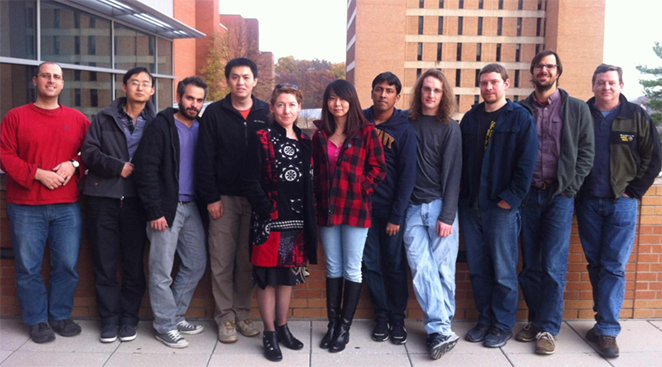
CSEE faculty member Tulay Adali has been appointed as a Distinguished University Professor for UMBC. Professor Adali is being recognized for:
"…outstanding theoretical contributions to the field of signal processing that have enabled significant advances in medical imaging, and excellence in teaching and mentoring the next generation of engineers and scholars who continue to advance the field of signal processing."
Professor Adali started teaching at UMBC in 1992, the same year that she received her Ph.D. in Electrical Engineering from North Carolina State University in Raleigh. Shortly after joining UMBC, she began forging lasting collaborations, first locally, and then nationwide and internationally. This resulted in the steady buildup of a research program, with continuous and growing funding from major federal agencies, including the prestigious NSF CAREER grant, the U.S. Army, and industry. She took full advantage of UMBC’s advantageous position, with respect to proximity to major medical institutions. She moved her application domain to biomedical data analysis early in her career, where she helped define the field of data-driven image analysis and fusion, an area that continues to grow in importance. She is a very popular teacher and is mentor to an impressive number of Ph.D students, several of whom have assumed faculty positions at institutions such as Virginia Tech, the University of New Mexico, and Yale.
Professor Adali has been also active within her professional community, having chaired the Machine Learning for Signal Processing (MLSP) Technical Committee of the IEEE Signal Processing Society, and having served on a number of boards of the IEEE Signal Processing Society. She has also assisted in the organization of numerous international conferences and workshops, including the IEEE International Conference on Acoustics, Speech, and Signal Processing (ICASSP), the IEEE International Workshop on Neural Networks for Signal Processing (NNSP), and the IEEE International Workshop on MLSP. She has been on the editorial boards of a number of transactions and journals and is currently serving on the Editorial Board of the Proceedings of the IEEE, among others.
In addition, Professor Adali is a Fellow of the IEEE and the AIMBE, and has received the following awards: the 2010 IEEE Signal Processing Society Best Paper Award, the 2013 University System of Maryland Regents' Award for Research, and an NSF CAREER Award. She was also an IEEE Signal Processing Society Distinguished Lecturer for 2012 and 2013.
]]>
CSEE faculty member Tulay Adali has been appointed as a Distinguished University Professor for UMBC. Professor Adali is being recognized for: "…outstanding theoretical contributions to the...
http://www.csee.umbc.edu/2015/05/professor-tulay-adali-appointed-as-distinguished-university-professor-for-umbc/
https://dev.my.umbc.edu/api/v0/pixel/news/51952/guest@my.umbc.edu/1865de5cc0243fe2a631e7e5c7c1cc38/api/pixel
electrical-engineering
faculty-and-staff
news
research
Computer Science and Electrical Engineering
https://dev.my.umbc.edu/groups/csee
https://assets3-dev.my.umbc.edu/system/shared/avatars/groups/000/000/099/d117dca133c64bf78a4b7696dd007189/xsmall.png?1314043393
https://assets1-dev.my.umbc.edu/system/shared/avatars/groups/000/000/099/d117dca133c64bf78a4b7696dd007189/original.png?1314043393
https://assets1-dev.my.umbc.edu/system/shared/avatars/groups/000/000/099/d117dca133c64bf78a4b7696dd007189/xxlarge.png?1314043393
https://assets4-dev.my.umbc.edu/system/shared/avatars/groups/000/000/099/d117dca133c64bf78a4b7696dd007189/xlarge.png?1314043393
https://assets3-dev.my.umbc.edu/system/shared/avatars/groups/000/000/099/d117dca133c64bf78a4b7696dd007189/large.png?1314043393
https://assets1-dev.my.umbc.edu/system/shared/avatars/groups/000/000/099/d117dca133c64bf78a4b7696dd007189/medium.png?1314043393
https://assets2-dev.my.umbc.edu/system/shared/avatars/groups/000/000/099/d117dca133c64bf78a4b7696dd007189/small.png?1314043393
https://assets3-dev.my.umbc.edu/system/shared/avatars/groups/000/000/099/d117dca133c64bf78a4b7696dd007189/xsmall.png?1314043393
https://assets3-dev.my.umbc.edu/system/shared/avatars/groups/000/000/099/d117dca133c64bf78a4b7696dd007189/xxsmall.png?1314043393
Computer Science and Electrical Engineering
2
0
true
Thu, 14 May 2015 09:22:59 -0400
Thu, 14 May 2015 09:22:59 -0400
PhD defense: Simultaneous Polarization-Insensitive Phase-space Trans-multiplexing and Wavelength Multicasting via Cross-phase Modulation in a Photonic Crystal Fiber at 10 GBd
Ph.D. Dissertation Defense
Electrical Engineering
Simultaneous Polarization-Insensitive Phase-space
Trans-multiplexingand Wavelength Multicasting via
Cross-phase Modulation in a Photonic Crystal Fiber at 10 GBd
Brice Cannon
2:00pm Monday, 6 April 2015, ITE325b, UMBC
This thesis investigates the all-optical combination of amplitude and phase modulated signals into one unified multi-level phase modulated signal, utilizing the Kerr nonlinearity of cross-phase modulation (XPM). Predominantly, the first experimental demonstration of simultaneous polarization-insensitive phase-transmultiplexing and multicasting (PI-PTMM) will be discussed. The PI-PTMM operation combines the data of a single 10-Gbaud carrier-suppressed return-to-zero (CSRZ) on-off keyed (OOK) pump signal and 4×10-Gbaud return-to-zero (RZ) binary phase-shift keyed (BPSK) probe signals to generate 4×10-GBd RZ-quadrature phase-shift keyed (QPSK) signals utilizing a highly nonlinear, birefringent photonic crystal fiber (PCF). Since XPM is a highly polarization dependent nonlinearity, a polarization sensitivity reduction technique was used to alleviate the fluctuations due to the remotely generated signals’ unpredictable states of polarization (SOP). The measured amplified spontaneous emission (ASE) limited receiver sensitivity optical signal-to-noise ratio (OSNR) penalty of the PI-PTMM signal relative to the field-programmable gate array (FPGA) pre-coded RZ-DQPSK baseline at a forward-error correction (FEC) limit of 10-3 BER was ≈ 0.3 dB. In addition, the OSNR of the remotely generated CSRZ-OOK signal could be degraded to ≈ 29 dB/0.1nm, before the bit error rate (BER) performance of the PI-PTMM operation began to exponentially degrade. A 138-km dispersion-managed recirculating loop system with a 100-GHz, 13-channel mixed-format dense-wavelength-division multiplexed (DWDM) transmitter was constructed to investigate the effect of metro/long-haul transmission impairments. The PI-PTMM DQPSK and the FPGA pre-coded RZ-DQPSK baseline signals were transmitted 1,900 km and 2,400 km in the nonlinearity-limited transmission regime before reaching the 10-3 BER FEC limit. The relative reduction in transmission distance for the PI-PTMM signal was due to the additional transmitter impairments in the PCF that interact negatively with the transmission fiber.
Committee: Drs. Professor Gary M. Carter (Chair), William Astar, Anthony M. Johnson, Tinoosh Mohsenin, Thomas E. Murphy, Terrance L. Worchesky
]]>
Ph.D. Dissertation Defense Electrical Engineering Simultaneous Polarization-Insensitive Phase-space Trans-multiplexingand Wavelength Multicasting via Cross-phase Modulation in a Photonic...
http://www.csee.umbc.edu/2015/04/phd-defense-simultaneous-polarization-insensitive-phase-space-trans-multiplexing-and-wavelength-multicasting-via-cross-phase-modulation-in-a-photonic-crystal-fiber-at-10-gbd/
https://dev.my.umbc.edu/api/v0/pixel/news/50915/guest@my.umbc.edu/d6e28ee5f9a75108c2d523bf93d9f3e6/api/pixel
defense
electrical-engineering
graduate
news
research
students
Computer Science and Electrical Engineering
https://dev.my.umbc.edu/groups/csee
https://assets3-dev.my.umbc.edu/system/shared/avatars/groups/000/000/099/d117dca133c64bf78a4b7696dd007189/xsmall.png?1314043393
https://assets1-dev.my.umbc.edu/system/shared/avatars/groups/000/000/099/d117dca133c64bf78a4b7696dd007189/original.png?1314043393
https://assets1-dev.my.umbc.edu/system/shared/avatars/groups/000/000/099/d117dca133c64bf78a4b7696dd007189/xxlarge.png?1314043393
https://assets4-dev.my.umbc.edu/system/shared/avatars/groups/000/000/099/d117dca133c64bf78a4b7696dd007189/xlarge.png?1314043393
https://assets3-dev.my.umbc.edu/system/shared/avatars/groups/000/000/099/d117dca133c64bf78a4b7696dd007189/large.png?1314043393
https://assets1-dev.my.umbc.edu/system/shared/avatars/groups/000/000/099/d117dca133c64bf78a4b7696dd007189/medium.png?1314043393
https://assets2-dev.my.umbc.edu/system/shared/avatars/groups/000/000/099/d117dca133c64bf78a4b7696dd007189/small.png?1314043393
https://assets3-dev.my.umbc.edu/system/shared/avatars/groups/000/000/099/d117dca133c64bf78a4b7696dd007189/xsmall.png?1314043393
https://assets3-dev.my.umbc.edu/system/shared/avatars/groups/000/000/099/d117dca133c64bf78a4b7696dd007189/xxsmall.png?1314043393
Computer Science and Electrical Engineering
2
0
true
Thu, 02 Apr 2015 20:45:25 -0400
MS defense: Graph-Theoretical Analysis using Data-Driven Features: Application to Rehabilitation After Stroke
ENEE MS Thesis Defense
Graph-Theoretical Analysis using Data-Driven Features:
Application to Rehabilitation After Stroke
Jonathan Laney
1:30pm Friday, 3 April 2015, ITE 346, UMBC
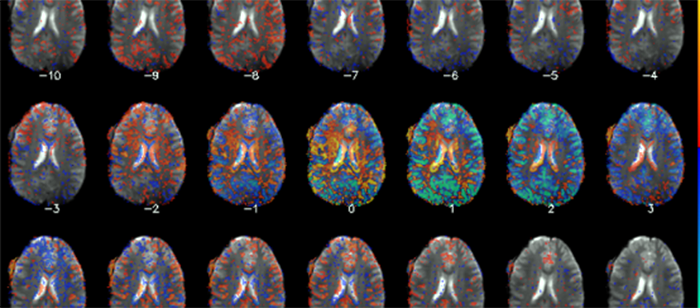
The assessment of neuroplasticity after stroke through functional magnetic resonance imaging (fMRI) analysis is a developing field where the objective is to better understand the neural process of recovery and to better target rehabilitation interventions. In this study, the connectivity structure of the stroke-affected brain is analyzed before and after a rehabilitation intervention. The challenge associated with our fMRI data stems from the large amount of individual spatial variability exhibited by the dataset and the need to summarize entire brain maps by generating simple, yet discriminating features, to highlight differences in patients’ functional connectivity. The comparison of algorithms in terms of their ability to capture spatial variability for each subject is not straightforward due to the lack of a ground truth for real fMRI data.
We provide a graph-theoretical (GT) framework to effectively make such a comparison for real data. We investigate and discuss the important role of order selection for data that exhibits large amounts of subject variability. Furthermore, we demonstrate that Independent vector analysis (IVA) provides superior performance in preserving subject variability when compared with widely used methods such as group independent component analysis. We pair IVA with GT analysis to produce discriminative features, which highlight neuroplastic changes between the groups before and after intervention. Resulting GT features are shown to capture connectivity changes that are not evident through direct comparison of the group t-maps, i.e., brain maps obtained by a t-test taken across subjects’ spatial brain maps. Additionally, we compare the responders to the intervention with the non-responders and demonstrate that their relative improvements, as shown through our fMRI analysis, correspond to clinical findings. In this study, increased small worldness across components and greater centrality in key motor networks are demonstrated as a result of the intervention, suggesting improved efficiency in neural communication. Clinically, these results bring forth new possibilities as a means to observe the neural processes underlying improvements in motor function.
Committee: Drs. Tulay Adali (Chair), Joel Morris, Chuck LaBerge, Kelly Westlake and Charles Cavalcante
]]>
ENEE MS Thesis Defense Graph-Theoretical Analysis using Data-Driven Features: Application to Rehabilitation After Stroke Jonathan Laney 1:30pm Friday, 3 April 2015, ITE 346, UMBC The...
http://www.csee.umbc.edu/2015/04/ms-defense-graph-theoretical-analysis-using-data-driven-features-application-to-rehabilitation-after-stroke/
https://dev.my.umbc.edu/api/v0/pixel/news/50864/guest@my.umbc.edu/0947a01ef07af94a802448e4d09bec92/api/pixel
defense
electrical-engineering
graduate
news
research
students
Computer Science and Electrical Engineering
https://dev.my.umbc.edu/groups/csee
https://assets3-dev.my.umbc.edu/system/shared/avatars/groups/000/000/099/d117dca133c64bf78a4b7696dd007189/xsmall.png?1314043393
https://assets1-dev.my.umbc.edu/system/shared/avatars/groups/000/000/099/d117dca133c64bf78a4b7696dd007189/original.png?1314043393
https://assets1-dev.my.umbc.edu/system/shared/avatars/groups/000/000/099/d117dca133c64bf78a4b7696dd007189/xxlarge.png?1314043393
https://assets4-dev.my.umbc.edu/system/shared/avatars/groups/000/000/099/d117dca133c64bf78a4b7696dd007189/xlarge.png?1314043393
https://assets3-dev.my.umbc.edu/system/shared/avatars/groups/000/000/099/d117dca133c64bf78a4b7696dd007189/large.png?1314043393
https://assets1-dev.my.umbc.edu/system/shared/avatars/groups/000/000/099/d117dca133c64bf78a4b7696dd007189/medium.png?1314043393
https://assets2-dev.my.umbc.edu/system/shared/avatars/groups/000/000/099/d117dca133c64bf78a4b7696dd007189/small.png?1314043393
https://assets3-dev.my.umbc.edu/system/shared/avatars/groups/000/000/099/d117dca133c64bf78a4b7696dd007189/xsmall.png?1314043393
https://assets3-dev.my.umbc.edu/system/shared/avatars/groups/000/000/099/d117dca133c64bf78a4b7696dd007189/xxsmall.png?1314043393
Computer Science and Electrical Engineering
2
0
true
Wed, 01 Apr 2015 17:05:55 -0400