talk: Computational Science at the Argonne Leadership Computing Facility
Center for Hybrid Multicore Productivity Research (CHMPR)
Distinguished Computational Science Lecture Series
Computational Science at the
Argonne Leadership Computing Facility
Paul Messina
Director of Science Argonne National Laboratory
http://www.alcf.anl.gov
3:00 p.m. Thursday, 1 November 2012, ITE 456, UMBC
The goal of the Argonne Leadership Computing Facility (ALCF) is to extend the frontiers of science by solving problems that require innovative approaches and the largest-scale computing systems. ALCF’s current production computer has over 150,000 cores, and the system currently being readied for production – Mira, an IBM Blue Gene/Q system — has nearly one million cores. How does one program such systems? Are current software tools such as MPI and OpenMP available for such systems. Are scientific and engineering applications able to scale to such levels of parallelism? Is resilience a new concern for 1,000,000 production codes on Mira This talk will address these questions and describe a sampling of projects that are using ALCF systems in their research. Finally, the ways to gain access to ALCF resources will be presented.
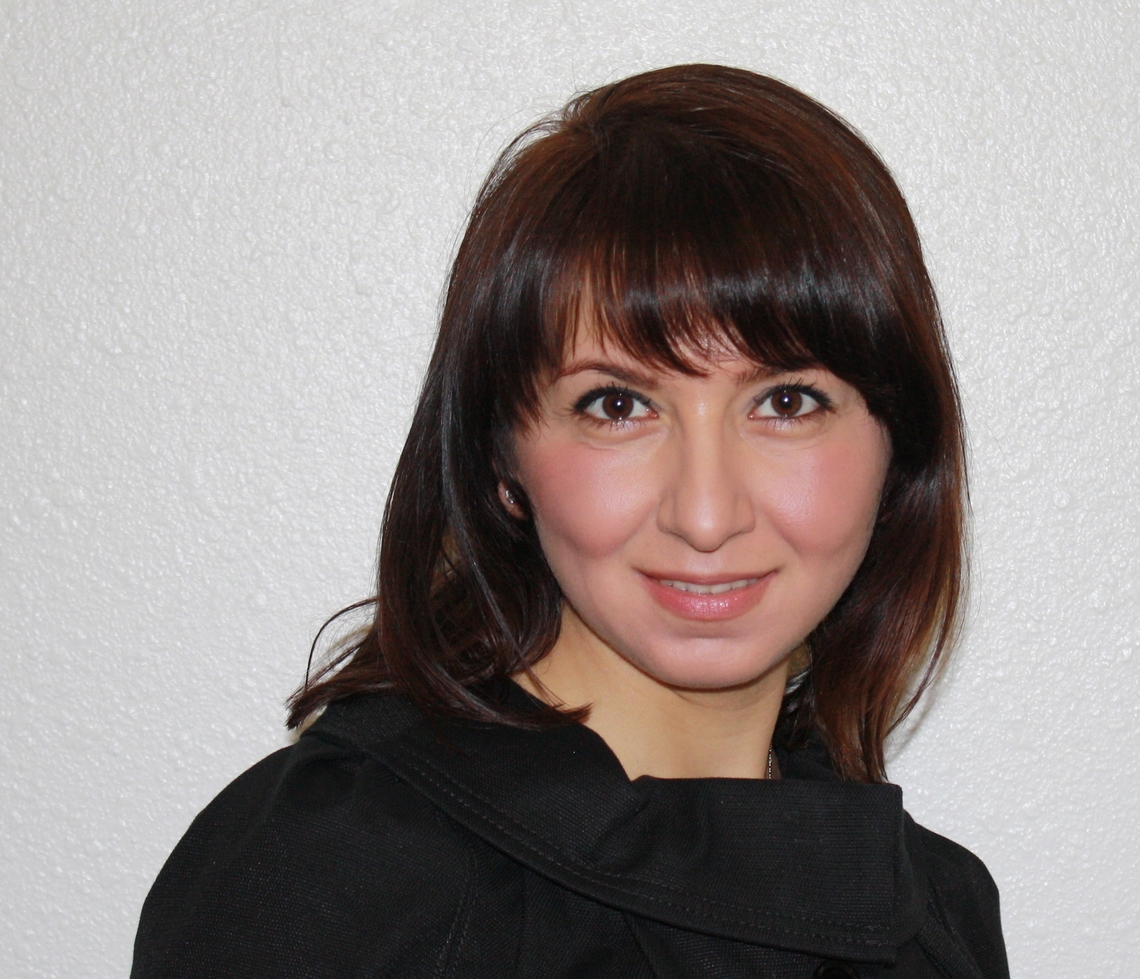
Paul Messina is Director of Science at the ALCF. Dr. Messina guides the ALCF science teams using the IBM Blue Gene systems. In 2002-2004, he served as Distinguished Senior Computer Scientist at Argonne and as Adviser to the Director General at CERN (European Organization for Nuclear Research). Previously at Caltech, Dr. Messina served as Director of the Center for Advanced Computing Research, as Assistant Vice President for Scientific Computing, and as Faculty Associate for Scientific Computing. He led the Computational and Computer Science component of Caltech’s research project funded by the Academic Strategic Alliances Program of the Accelerated Strategic Computing Initiative. He also acted as Co-principal Investigator for the National Virtual Observatory and TeraGrid. At Argonne, he held a number of positions from 1973-1987 and was the founding Director of the Mathematics and Computer Science Division.
]]>
Center for Hybrid Multicore Productivity Research (CHMPR) Distinguished Computational Science Lecture Series Computational Science at the Argonne Leadership Computing Facility Paul Messina...
http://www.csee.umbc.edu/2012/10/talk-computational-science-at-the-argonne-leadership-computing-facility/
https://dev.my.umbc.edu/api/v0/pixel/news/17859/guest@my.umbc.edu/d82deb5b396bc0d8d69728f5b92d06c2/api/pixel
news
talks
Computer Science and Electrical Engineering
https://dev.my.umbc.edu/groups/csee
https://assets3-dev.my.umbc.edu/system/shared/avatars/groups/000/000/099/d117dca133c64bf78a4b7696dd007189/xsmall.png?1314043393
https://assets1-dev.my.umbc.edu/system/shared/avatars/groups/000/000/099/d117dca133c64bf78a4b7696dd007189/original.png?1314043393
https://assets1-dev.my.umbc.edu/system/shared/avatars/groups/000/000/099/d117dca133c64bf78a4b7696dd007189/xxlarge.png?1314043393
https://assets4-dev.my.umbc.edu/system/shared/avatars/groups/000/000/099/d117dca133c64bf78a4b7696dd007189/xlarge.png?1314043393
https://assets3-dev.my.umbc.edu/system/shared/avatars/groups/000/000/099/d117dca133c64bf78a4b7696dd007189/large.png?1314043393
https://assets1-dev.my.umbc.edu/system/shared/avatars/groups/000/000/099/d117dca133c64bf78a4b7696dd007189/medium.png?1314043393
https://assets2-dev.my.umbc.edu/system/shared/avatars/groups/000/000/099/d117dca133c64bf78a4b7696dd007189/small.png?1314043393
https://assets3-dev.my.umbc.edu/system/shared/avatars/groups/000/000/099/d117dca133c64bf78a4b7696dd007189/xsmall.png?1314043393
https://assets3-dev.my.umbc.edu/system/shared/avatars/groups/000/000/099/d117dca133c64bf78a4b7696dd007189/xxsmall.png?1314043393
Computer Science and Electrical Engineering
1
0
true
Tue, 23 Oct 2012 08:36:50 -0400
Sat, 20 Oct 2012 08:36:50 -0400
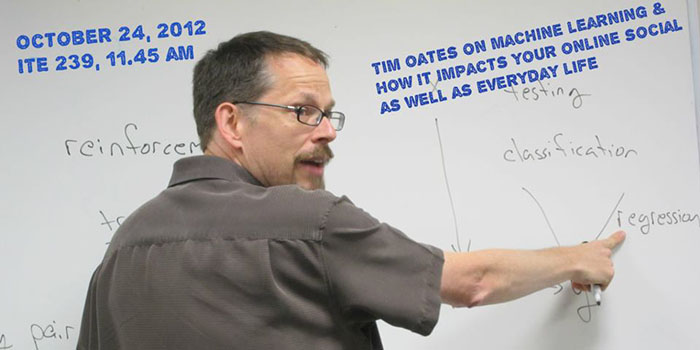
UMBC ACM Tech Talk Series 10/24: Oates on Machine Learning
In the first talk of the
UMBC ACM Student Chapter's Tech Talk Series, CSEE Prof. Tim Oates will talk about Machine Learning and how it makes an impact on your daily life.
Abstract :
Facebook has one billion users, there are more than 400 million tweets per day, and Google is approaching 5 billion searches per day. These companies and many of their brick and mortar counterparts are increasingly interested in what their data can tell them, and are hiring data scientists – people with a background in machine learning or data mining – at an astounding rate. In this talk I will briefly introduce the core concepts of machine learning, and describe some of its most interesting successes and some of the more mundane (though perhaps surprising) ways it impacts your life on a daily basis. Finally, I will conclude with a short overview of some successes of machine learning in my own lab, including producing textual descriptions of people in triage images involved in mass disasters, extracting scripts (stereotypical actions sequences) from massive text corpora, and predicting outcomes for victims of traumatic brain injury using vital signs time series.
Light refreshments will be served. Please RSVP via the event on
Facebook.
Where: ITE Building, Room 239
Date : Wednesday October 24, 2012
Time 11.45 am – 12.45 pm
]]>
In the first talk of the UMBC ACM Student Chapter's Tech Talk Series, CSEE Prof. Tim Oates will talk about Machine Learning and how it makes an impact on your daily life. Abstract : ...
http://www.csee.umbc.edu/2012/10/umbc-acm-tech-talk-series-1024-oates-on-machine-learning/
https://dev.my.umbc.edu/api/v0/pixel/news/17845/guest@my.umbc.edu/506637d5e3a2251529ff99635c826e05/api/pixel
events
news
talks
Computer Science and Electrical Engineering
https://dev.my.umbc.edu/groups/csee
https://assets3-dev.my.umbc.edu/system/shared/avatars/groups/000/000/099/d117dca133c64bf78a4b7696dd007189/xsmall.png?1314043393
https://assets1-dev.my.umbc.edu/system/shared/avatars/groups/000/000/099/d117dca133c64bf78a4b7696dd007189/original.png?1314043393
https://assets1-dev.my.umbc.edu/system/shared/avatars/groups/000/000/099/d117dca133c64bf78a4b7696dd007189/xxlarge.png?1314043393
https://assets4-dev.my.umbc.edu/system/shared/avatars/groups/000/000/099/d117dca133c64bf78a4b7696dd007189/xlarge.png?1314043393
https://assets3-dev.my.umbc.edu/system/shared/avatars/groups/000/000/099/d117dca133c64bf78a4b7696dd007189/large.png?1314043393
https://assets1-dev.my.umbc.edu/system/shared/avatars/groups/000/000/099/d117dca133c64bf78a4b7696dd007189/medium.png?1314043393
https://assets2-dev.my.umbc.edu/system/shared/avatars/groups/000/000/099/d117dca133c64bf78a4b7696dd007189/small.png?1314043393
https://assets3-dev.my.umbc.edu/system/shared/avatars/groups/000/000/099/d117dca133c64bf78a4b7696dd007189/xsmall.png?1314043393
https://assets3-dev.my.umbc.edu/system/shared/avatars/groups/000/000/099/d117dca133c64bf78a4b7696dd007189/xxsmall.png?1314043393
Computer Science and Electrical Engineering
5
0
true
Mon, 22 Oct 2012 16:21:47 -0400
talk: Energy Conservation in Biometric Algorithms
CSEE Colloquium
Energy Conservation in Biometric Algorithms
LCDR Robert Schultz
United States Naval Academy
1:00pm Friday, 19 October 2012, ITE 227
Whether using iris recognition to gain access to a secure facility or face recognition to unlock a cell phone, biometric signal processing is rapidly becoming a part of everyday life. Many algorithms are being implemented on portable devices that have a limited battery life. This talk will present some work, conducted at the USNA Center for Biometric Signal Processing, which indicates that significant energy savings can be obtained by using C versus Java and Integers versus software Floats in applications written for the Android operating system. A comparison of the effect of using Integers versus Floats on a modern iris recognition algorithm will also be presented.
LCDR Robert Schultz is a submarine officer that has been assigned as a Junior Permanent Military Professor of Electrical Engineering at the United States Naval Academy. His research interests include hyperspectral and biometric image processing. As a member of the USNA Center for Biometric Signal Processing, he has recently been working to identify more energy efficient methods for biometric algorithm implementation.
]]>
CSEE Colloquium Energy Conservation in Biometric Algorithms LCDR Robert Schultz United States Naval Academy 1:00pm Friday, 19 October 2012, ITE 227 Whether using iris recognition to gain...
http://www.csee.umbc.edu/2012/10/talk-energy-conservation-in-biometric-algorithms/
https://dev.my.umbc.edu/api/v0/pixel/news/17571/guest@my.umbc.edu/48045aaf323a3b143acbfe7a12746762/api/pixel
computer-engineering
electrical-engineering
events
news
research
talks
Computer Science and Electrical Engineering
https://dev.my.umbc.edu/groups/csee
https://assets3-dev.my.umbc.edu/system/shared/avatars/groups/000/000/099/d117dca133c64bf78a4b7696dd007189/xsmall.png?1314043393
https://assets1-dev.my.umbc.edu/system/shared/avatars/groups/000/000/099/d117dca133c64bf78a4b7696dd007189/original.png?1314043393
https://assets1-dev.my.umbc.edu/system/shared/avatars/groups/000/000/099/d117dca133c64bf78a4b7696dd007189/xxlarge.png?1314043393
https://assets4-dev.my.umbc.edu/system/shared/avatars/groups/000/000/099/d117dca133c64bf78a4b7696dd007189/xlarge.png?1314043393
https://assets3-dev.my.umbc.edu/system/shared/avatars/groups/000/000/099/d117dca133c64bf78a4b7696dd007189/large.png?1314043393
https://assets1-dev.my.umbc.edu/system/shared/avatars/groups/000/000/099/d117dca133c64bf78a4b7696dd007189/medium.png?1314043393
https://assets2-dev.my.umbc.edu/system/shared/avatars/groups/000/000/099/d117dca133c64bf78a4b7696dd007189/small.png?1314043393
https://assets3-dev.my.umbc.edu/system/shared/avatars/groups/000/000/099/d117dca133c64bf78a4b7696dd007189/xsmall.png?1314043393
https://assets3-dev.my.umbc.edu/system/shared/avatars/groups/000/000/099/d117dca133c64bf78a4b7696dd007189/xxsmall.png?1314043393
Computer Science and Electrical Engineering
0
0
true
Mon, 15 Oct 2012 09:29:34 -0400
talk: The ‘Learning Health System’ as the Consummate Informatics Challenge
UMBC Information Systems Department
Fall 2012 Distinguished Lecture Series
The 'Learning Health System'
as the Consummate Informatics Challenge
Dr. Charles P. Friedman
Professor of Information and Public Health
Director of the Michigan Health Informatics Program
University of Michigan
11:00am 19 October 2012, ITE456, UMBC
It is widely recognized that the nation requires a Learning Health System (LHS) to provide higher quality, safer, and more affordable health care. An LHS is one that can routinely and securely aggregate data from disparate sources, convert the data to knowledge, and disseminate that knowledge, in actionable forms, to everyone who can benefit from it. Achieving a Learning Health System at national scale requires solution of a wide array of technology and policy problems and, as such, is the consummate challenge in health informatics. This presentation will describe the LHS, why it is vital to our future, the specific problems that must be addressed, and a pathway through which the nation might achieve an LHS.
Charles Friedman directs the Health Informatics program at the University of Michigan. Prior to joining the university in 2011, he was chief scientific officer of the Office of National Coordinator for Health Information Technology in the U.S. Department of Health and Human Services. From 2007-2009 he served as the nation’s deputy national coordinator for health IT. He has also held federal positions as associate director for research informatics and information technology at the National Heart Lung and Blood Institute at the National Institutes of Health and senior scholar at the National Library of Medicine. He led the creation of informatics programs during his professorships in medicine, information science, and biomedical engineering at the University of Pittsburgh and the University of North Carolina-Chapel Hill. He is the author of a well-known health informatics textbook and serves as associate editor of the Journal of the American Medical Informatics Association.
see http://bit.ly/SVgTEE for more information
]]>
UMBC Information Systems Department Fall 2012 Distinguished Lecture Series The 'Learning Health System' as the Consummate Informatics Challenge Dr. Charles P. Friedman Professor of...
http://www.csee.umbc.edu/2012/10/talk-the-learning-health-system-as-the-consummate-informatics-challenge/
https://dev.my.umbc.edu/api/v0/pixel/news/17548/guest@my.umbc.edu/7e70359061608a73f43ca355fe531e05/api/pixel
news
research
talks
Computer Science and Electrical Engineering
https://dev.my.umbc.edu/groups/csee
https://assets3-dev.my.umbc.edu/system/shared/avatars/groups/000/000/099/d117dca133c64bf78a4b7696dd007189/xsmall.png?1314043393
https://assets1-dev.my.umbc.edu/system/shared/avatars/groups/000/000/099/d117dca133c64bf78a4b7696dd007189/original.png?1314043393
https://assets1-dev.my.umbc.edu/system/shared/avatars/groups/000/000/099/d117dca133c64bf78a4b7696dd007189/xxlarge.png?1314043393
https://assets4-dev.my.umbc.edu/system/shared/avatars/groups/000/000/099/d117dca133c64bf78a4b7696dd007189/xlarge.png?1314043393
https://assets3-dev.my.umbc.edu/system/shared/avatars/groups/000/000/099/d117dca133c64bf78a4b7696dd007189/large.png?1314043393
https://assets1-dev.my.umbc.edu/system/shared/avatars/groups/000/000/099/d117dca133c64bf78a4b7696dd007189/medium.png?1314043393
https://assets2-dev.my.umbc.edu/system/shared/avatars/groups/000/000/099/d117dca133c64bf78a4b7696dd007189/small.png?1314043393
https://assets3-dev.my.umbc.edu/system/shared/avatars/groups/000/000/099/d117dca133c64bf78a4b7696dd007189/xsmall.png?1314043393
https://assets3-dev.my.umbc.edu/system/shared/avatars/groups/000/000/099/d117dca133c64bf78a4b7696dd007189/xxsmall.png?1314043393
Computer Science and Electrical Engineering
2
0
true
Fri, 12 Oct 2012 17:02:51 -0400
talk: Experiences Teaching Thousands Online

CSEE Colloquium
Experiences Teaching Thousands Online
Professor Michael L. Littman
Computer Science, Brown University
1:00pm Friday, 26 October 2012, ITE 227, UMBC
Last Fall, a pair of well-respected computer scientists at Stanford offered their AI class for free to people everywhere via the Internet. Over 160,000 students signed up, spurring a worldwide conversation on the impact of online teaching on higher education and sending universities throughout the US scrambling to announce initiatives in this space. I had the good fortune to teach a class for one of the startups and will share my experiences.
Michael L. Littman is a professor of computer scientist at Brown University. He works mainly in reinforcement learning, but has done work in machine learning, game theory, computer networking, partially observable Markov decision process solving, computer solving of analogy problems and other areas. He has held faculty positions in the computer science departments at Duke University and Rutgers University, where he chaired the department from 2009 to 2012. In the summer of 2012 he taught a massive open online course (MOOC) on graph algorithms.
Host: Tim Finin, Sorry, you need javascript to view this email address.
more information and directions
]]>
CSEE Colloquium Experiences Teaching Thousands Online Professor Michael L. Littman Computer Science, Brown University 1:00pm Friday, 26 October 2012, ITE 227, UMBC Last Fall, a pair of...
http://www.csee.umbc.edu/2012/10/talk-experiences-teaching-thousands-online/
https://dev.my.umbc.edu/api/v0/pixel/news/17433/guest@my.umbc.edu/f0f990e791ae5127e1bcfc0f48b6ac85/api/pixel
news
talks
Computer Science and Electrical Engineering
https://dev.my.umbc.edu/groups/csee
https://assets3-dev.my.umbc.edu/system/shared/avatars/groups/000/000/099/d117dca133c64bf78a4b7696dd007189/xsmall.png?1314043393
https://assets1-dev.my.umbc.edu/system/shared/avatars/groups/000/000/099/d117dca133c64bf78a4b7696dd007189/original.png?1314043393
https://assets1-dev.my.umbc.edu/system/shared/avatars/groups/000/000/099/d117dca133c64bf78a4b7696dd007189/xxlarge.png?1314043393
https://assets4-dev.my.umbc.edu/system/shared/avatars/groups/000/000/099/d117dca133c64bf78a4b7696dd007189/xlarge.png?1314043393
https://assets3-dev.my.umbc.edu/system/shared/avatars/groups/000/000/099/d117dca133c64bf78a4b7696dd007189/large.png?1314043393
https://assets1-dev.my.umbc.edu/system/shared/avatars/groups/000/000/099/d117dca133c64bf78a4b7696dd007189/medium.png?1314043393
https://assets2-dev.my.umbc.edu/system/shared/avatars/groups/000/000/099/d117dca133c64bf78a4b7696dd007189/small.png?1314043393
https://assets3-dev.my.umbc.edu/system/shared/avatars/groups/000/000/099/d117dca133c64bf78a4b7696dd007189/xsmall.png?1314043393
https://assets3-dev.my.umbc.edu/system/shared/avatars/groups/000/000/099/d117dca133c64bf78a4b7696dd007189/xxsmall.png?1314043393
Computer Science and Electrical Engineering
4
0
true
Wed, 10 Oct 2012 00:49:44 -0400
Fri, 19 Oct 2012 08:47:44 -0400
talk: Real-time Causal Anomaly Detection for Hyperspectral Imagery
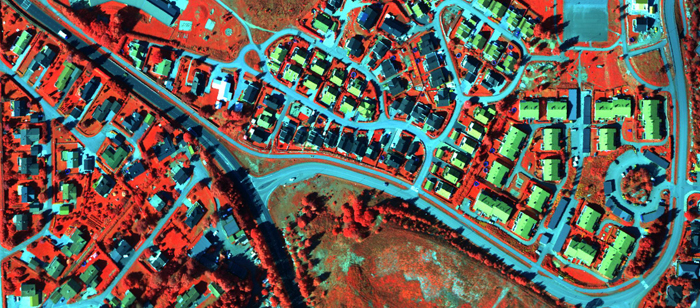
UMBC CSEE Colloquium
Real-time Causal Anomaly Detection for Hyperspectral Imagery
Yu-Lei Wang
Information and Communication Engineering College
Harbin Engineering University, China
1:00pm Friday, 12 October 2012, ITE 227, UMBC
Due to availability of very high spectral resolution, a hyperspectral imaging sensor is capable of uncovering many subtle signal sources which cannot be visually inspected or known by prior knowledge. Such signal sources generally appear as anomalies in the data. As a result, anomaly detection has received considerable interest in hyperspectral imaging. In anomaly detection real time causal processing is particularly important and crucial. This is because many anomalies, such as moving targets, may not stay long enough and the duration of their presence is very short. Most importantly, they may show up suddenly and instantly, then disappear quickly afterwards. Therefore, for an algorithm to be able to detect these targets in a timely fashion, the process must be real time. In addition, the data that can be used should be only those which have been visited and processed. So, the data processing must be also causal as well. Such causality is a very important pre-requisite to real time processing. Our work is believed to be the first work devoted to exploring this concept into anomaly detection. Specifically, it further derives a causal innovations information update equation for implementing real time causal anomaly detection. This concept which makes use of only innovations information provided by the pixel currently being processed without re-processing previous pixels is similar to those derived in Kalman filtering.
Yu-Lei Wang received her BS degree in Electrical Engineering from Harbin Engineering University, China in 2009 and is currently a Ph.D. student in the same university. Since December 2011 Ms. Wang has been working in the Remote Sensing Signal and Image Processing Laboratory at UMBC on hyperspectral anomaly detection under a China State Scholarship awarded by China Scholarship Council for a two-year visit to UMBC. Ms. Wang's research interest includes remote sensing image processing and vital sign signal processing.
more information and directions
]]>
UMBC CSEE Colloquium Real-time Causal Anomaly Detection for Hyperspectral Imagery Yu-Lei Wang Information and Communication Engineering College Harbin Engineering University, China...
http://www.csee.umbc.edu/2012/10/talk-real-time-causal-anomaly-detection-for-hyperspectral-imagery/
https://dev.my.umbc.edu/api/v0/pixel/news/17338/guest@my.umbc.edu/5ff0e01cd40219d803aa56dd4f1d0e9a/api/pixel
news
research
talks
Computer Science and Electrical Engineering
https://dev.my.umbc.edu/groups/csee
https://assets3-dev.my.umbc.edu/system/shared/avatars/groups/000/000/099/d117dca133c64bf78a4b7696dd007189/xsmall.png?1314043393
https://assets1-dev.my.umbc.edu/system/shared/avatars/groups/000/000/099/d117dca133c64bf78a4b7696dd007189/original.png?1314043393
https://assets1-dev.my.umbc.edu/system/shared/avatars/groups/000/000/099/d117dca133c64bf78a4b7696dd007189/xxlarge.png?1314043393
https://assets4-dev.my.umbc.edu/system/shared/avatars/groups/000/000/099/d117dca133c64bf78a4b7696dd007189/xlarge.png?1314043393
https://assets3-dev.my.umbc.edu/system/shared/avatars/groups/000/000/099/d117dca133c64bf78a4b7696dd007189/large.png?1314043393
https://assets1-dev.my.umbc.edu/system/shared/avatars/groups/000/000/099/d117dca133c64bf78a4b7696dd007189/medium.png?1314043393
https://assets2-dev.my.umbc.edu/system/shared/avatars/groups/000/000/099/d117dca133c64bf78a4b7696dd007189/small.png?1314043393
https://assets3-dev.my.umbc.edu/system/shared/avatars/groups/000/000/099/d117dca133c64bf78a4b7696dd007189/xsmall.png?1314043393
https://assets3-dev.my.umbc.edu/system/shared/avatars/groups/000/000/099/d117dca133c64bf78a4b7696dd007189/xxsmall.png?1314043393
Computer Science and Electrical Engineering
2
0
true
Sat, 06 Oct 2012 11:50:32 -0400
CSEE professor Tinoosh Mohsenin to speak at Grace Hopper conference, 10/3

Tomorrow, Wednesday, October 3rd, Dr. Tinoosh Mohsenin will speak at the Grace Hopper Celebration of Women in Computing Conference at the Baltimore Convention Center. She will talk about a "A Many-core Platform for Intelligent Biomedical Systems". Her presentation will be on "Data Intensive Computing" in the New Investigators session starting at 10:45 am. For more details, visit: http://gracehopper.org/2012/schedule-at-a-glance/10-3/
Abstract
This talk presents a low power programmable many-core platform well suited for portable biomedical and DSP applications and contains 64 cores routed in a hierarchical network. For demonstration, Electroencephalogram (EEG) seizure detection and analysis and ultrasound spectral doppler are mapped onto the cores. The seizure detection and analysis algorithm takes 900 ns and consumes 240 nJ of energy. Spectral doppler takes 715 ns and consumes 182 nJ of energy. The prototype is implemented in 65 nm CMOS which contains 64 cores, occupies 19.51 mm2 and runs at 1.18 GHz at 1 V.
 Speaker’s bio
Dr. Tinoosh Mohsenin is an assistant professor in the Department of Computer Science and Electrical Engineering at the University of Maryland Baltimore County since 2011. Prior to joining UMBC, she was finishing her PhD at the University of California, Davis. Dr. Mohsenin’s research interests lie in the areas of high performance and energy-efficiency in programmable and special purpose processors. She is the director of Energy Efficient High Performance Computing (EEPC) Lab where she leads projects in architecture, hardware, software tools, and applications for VLSI computation with an emphasis on digital signal processing workloads. She has been consultant to early stage technology companies and currently serves inTechnical Program Committees of the IEEE Biomedical Circuits & Systems Conference (BioCAS), Life Science Systems and Applications Workshop (LiSSA), International Symposium on Quality Electronic Design (ISQED) and IEEE Women in Circuits and Systems (WiCAS).
]]>
Tomorrow, Wednesday, October 3rd, Dr. Tinoosh Mohsenin will speak at the Grace Hopper Celebration of Women in Computing Conference at the Baltimore Convention Center. She will talk about a "A...
http://www.csee.umbc.edu/2012/10/csee-professor-tinoosh-mohsenin-to-speak-at-grace-hopper-conference-103/
https://dev.my.umbc.edu/api/v0/pixel/news/17221/guest@my.umbc.edu/bc54e61fb464ffc3e435ee803b026cca/api/pixel
events
news
other
talks
Computer Science and Electrical Engineering
https://dev.my.umbc.edu/groups/csee
https://assets3-dev.my.umbc.edu/system/shared/avatars/groups/000/000/099/d117dca133c64bf78a4b7696dd007189/xsmall.png?1314043393
https://assets1-dev.my.umbc.edu/system/shared/avatars/groups/000/000/099/d117dca133c64bf78a4b7696dd007189/original.png?1314043393
https://assets1-dev.my.umbc.edu/system/shared/avatars/groups/000/000/099/d117dca133c64bf78a4b7696dd007189/xxlarge.png?1314043393
https://assets4-dev.my.umbc.edu/system/shared/avatars/groups/000/000/099/d117dca133c64bf78a4b7696dd007189/xlarge.png?1314043393
https://assets3-dev.my.umbc.edu/system/shared/avatars/groups/000/000/099/d117dca133c64bf78a4b7696dd007189/large.png?1314043393
https://assets1-dev.my.umbc.edu/system/shared/avatars/groups/000/000/099/d117dca133c64bf78a4b7696dd007189/medium.png?1314043393
https://assets2-dev.my.umbc.edu/system/shared/avatars/groups/000/000/099/d117dca133c64bf78a4b7696dd007189/small.png?1314043393
https://assets3-dev.my.umbc.edu/system/shared/avatars/groups/000/000/099/d117dca133c64bf78a4b7696dd007189/xsmall.png?1314043393
https://assets3-dev.my.umbc.edu/system/shared/avatars/groups/000/000/099/d117dca133c64bf78a4b7696dd007189/xxsmall.png?1314043393
Computer Science and Electrical Engineering
3
1
true
Tue, 02 Oct 2012 13:10:30 -0400
MS defense: Using Mobile Data Collectors to Federate Clusters of Disjoint Sensor Network Segments
MS Thesis Defense
Using Mobile Data Collectors to Federate Clusters
of Disjoint Sensor Network Segments
Bhuvana Kalyanasundaram
11:00am Tuesday 2 October 2012, ITE 346
Wireless Sensor Networks (WSN) operating unattended in harsh environments have the higher probability of suffering from large scale damage, where many nodes fail simultaneously and the network gets partitioned into several disjoint segments. Restoring connectivity of structurally damaged WSN’s segments may be very urgent considering that they are employed to assist in risky missions. A similar scenario is when multiple standalone networks are to be federated to serve an emerging event such as an earthquake and conduct search-and-rescue. To deal with these scenarios, Mobile Data Mules (MDMs) are employed to establish intermittent links by moving around and carrying data from one segment to another. To limit data delivery latency and minimize the motion overhead, the travel path of the MDM should be shortened. We present a novel algorithm that groups the segments into k overlapping clusters based on the inter-segment proximity. Each cluster is assigned a distinct MDM to tour its segments. A segment that belongs to two clusters serves as a gateway that enables data transfer across clusters. Our algorithm minimizes the tour length for each MDM and sets the speed of the individual MDMs to rendezvous at the gateway nodes so that buffering space and time for inter-cluster traffic are minimized.
Committee: Drs. Mohamed Younis (chair), Charles Nicholas and Chintan Patel
]]>
MS Thesis Defense Using Mobile Data Collectors to Federate Clusters of Disjoint Sensor Network Segments Bhuvana Kalyanasundaram 11:00am Tuesday 2 October 2012, ITE 346 Wireless Sensor...
http://www.csee.umbc.edu/2012/10/ms-defense-using-mobile-data-collectors-to-federate-clusters-of-disjoint-sensor-network-segments/
https://dev.my.umbc.edu/api/v0/pixel/news/17208/guest@my.umbc.edu/ece83555452fe3c64318f835c9a8c656/api/pixel
graduate
news
talks
Computer Science and Electrical Engineering
https://dev.my.umbc.edu/groups/csee
https://assets3-dev.my.umbc.edu/system/shared/avatars/groups/000/000/099/d117dca133c64bf78a4b7696dd007189/xsmall.png?1314043393
https://assets1-dev.my.umbc.edu/system/shared/avatars/groups/000/000/099/d117dca133c64bf78a4b7696dd007189/original.png?1314043393
https://assets1-dev.my.umbc.edu/system/shared/avatars/groups/000/000/099/d117dca133c64bf78a4b7696dd007189/xxlarge.png?1314043393
https://assets4-dev.my.umbc.edu/system/shared/avatars/groups/000/000/099/d117dca133c64bf78a4b7696dd007189/xlarge.png?1314043393
https://assets3-dev.my.umbc.edu/system/shared/avatars/groups/000/000/099/d117dca133c64bf78a4b7696dd007189/large.png?1314043393
https://assets1-dev.my.umbc.edu/system/shared/avatars/groups/000/000/099/d117dca133c64bf78a4b7696dd007189/medium.png?1314043393
https://assets2-dev.my.umbc.edu/system/shared/avatars/groups/000/000/099/d117dca133c64bf78a4b7696dd007189/small.png?1314043393
https://assets3-dev.my.umbc.edu/system/shared/avatars/groups/000/000/099/d117dca133c64bf78a4b7696dd007189/xsmall.png?1314043393
https://assets3-dev.my.umbc.edu/system/shared/avatars/groups/000/000/099/d117dca133c64bf78a4b7696dd007189/xxsmall.png?1314043393
Computer Science and Electrical Engineering
1
0
true
Tue, 02 Oct 2012 00:17:19 -0400
talk: introduction to the OpenACC parallel programming standard
Introduction to OpenACC
Mark Ebersole, NVIDIA
1:00pm Thursday, 27 September 2012, ENG 005a
Modern GPUs have grown past their graphics heritage and evolved into the world's most successful parallel computing architecture. The introduction of this talk will briefly cover where the GPU came from and how it turned into this processing powerhouse. We will then look into how to access this power by using the relatively new standard called OpenACC. This method is a balance between the maximum flexibility you get by writing your own kernels and the ease of use you get using existing libraries. We will then end the lecture looking at the existing GPU Computing ecosystem that works well with OpenACC.
As CUDA Educator at NVIDIA, Mark Ebersole teaches developers and programmers about the NVIDIA CUDA parallel computing platform and programming model, and the benefits of GPU computing. With more than ten years of experience as a low-level systems programmer, Mark has spent much of his time at NVIDIA as a GPU systems diagnostics programmer in which he developed a tool to test, debug, validate, and verify GPUs from pre-emulation through bringup and into production. Before joining NVIDIA, he worked for IBM developing Linux drivers for the IBM iSeries server. Mark holds a BS degree in math and computer science from St. Cloud State University.
Host: Marc Olano, Sorry, you need javascript to view this email address.
more information and directions
]]>
Introduction to OpenACC Mark Ebersole, NVIDIA 1:00pm Thursday, 27 September 2012, ENG 005a Modern GPUs have grown past their graphics heritage and evolved into the world's most successful...
http://www.csee.umbc.edu/2012/09/an-introduction-to-the-openacc-parallel-programming-standard/
https://dev.my.umbc.edu/api/v0/pixel/news/17096/guest@my.umbc.edu/f5d8415586f00af47c0f16e90694fccf/api/pixel
news
research
talks
Computer Science and Electrical Engineering
https://dev.my.umbc.edu/groups/csee
https://assets3-dev.my.umbc.edu/system/shared/avatars/groups/000/000/099/d117dca133c64bf78a4b7696dd007189/xsmall.png?1314043393
https://assets1-dev.my.umbc.edu/system/shared/avatars/groups/000/000/099/d117dca133c64bf78a4b7696dd007189/original.png?1314043393
https://assets1-dev.my.umbc.edu/system/shared/avatars/groups/000/000/099/d117dca133c64bf78a4b7696dd007189/xxlarge.png?1314043393
https://assets4-dev.my.umbc.edu/system/shared/avatars/groups/000/000/099/d117dca133c64bf78a4b7696dd007189/xlarge.png?1314043393
https://assets3-dev.my.umbc.edu/system/shared/avatars/groups/000/000/099/d117dca133c64bf78a4b7696dd007189/large.png?1314043393
https://assets1-dev.my.umbc.edu/system/shared/avatars/groups/000/000/099/d117dca133c64bf78a4b7696dd007189/medium.png?1314043393
https://assets2-dev.my.umbc.edu/system/shared/avatars/groups/000/000/099/d117dca133c64bf78a4b7696dd007189/small.png?1314043393
https://assets3-dev.my.umbc.edu/system/shared/avatars/groups/000/000/099/d117dca133c64bf78a4b7696dd007189/xsmall.png?1314043393
https://assets3-dev.my.umbc.edu/system/shared/avatars/groups/000/000/099/d117dca133c64bf78a4b7696dd007189/xxsmall.png?1314043393
Computer Science and Electrical Engineering
3
0
true
Wed, 26 Sep 2012 14:15:11 -0400
Wed, 26 Sep 2012 14:15:11 -0400
talk: Volume Calculation of Magnetic Resonance Tissues via Image Classification
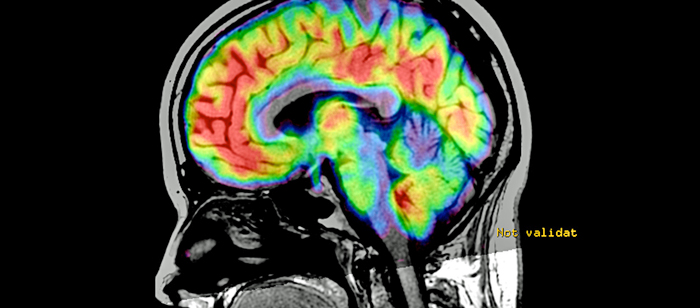
CSEE Colloquium
Volume Calculation of Magnetic Resonance
Tissues via Image Classification
Shih-Yu Chen
Remote Sensing Signal & Image Processing Laboratory
UMBC Computer Science and Electrical Engineering
1:00pm Friday 5 October 2012, ITE 227
Magnetic resonance (MR) tissue volume calculation is very important in medical diagnosis. A general approach is to first perform image classification of desired tissue substances slice by slice and then calculate tissue volumes via classified data samples in each slice. Two issues are generally involved; (1) selection of training samples which are slice-dependent, i.e., each slice requires its own specific training samples and (2) classification which must be carried out slice by slice individually because training samples obtained from one slice are not necessarily applicable to another. We develop a volume sphering analysis (VSA) approach which can process all MR image slices as one single image cube to calculate tissue volumes via image classification using only one set of training samples that is obtained from a single image slice. The proposed VSA using one set of training samples not only performs comparably to that using training samples specifically selected for individual image slices, but also saves significant amounts of selecting training samples and computing time.
Shih-Yu Chen received the BS degree in Electrical Engineering from Da-Yeh University in 2005, and the MS EE degree from National Chung Hsing University in 2010. He is currently a PhD (EE) student at UMBC. Mr. Chen's research interest includes medical image, remote sensing image and vital sign signal processing.
more information and directions
]]>
CSEE Colloquium Volume Calculation of Magnetic Resonance Tissues via Image Classification Shih-Yu Chen Remote Sensing Signal & Image Processing Laboratory UMBC Computer Science and...
http://www.csee.umbc.edu/2012/09/talk-volume-calculation-of-magnetic-resonance-tissues-via-image-classification/
https://dev.my.umbc.edu/api/v0/pixel/news/17080/guest@my.umbc.edu/d094d7b1d281654f7b7d326360e42d1c/api/pixel
electrical-engineering
graduate
news
talks
Computer Science and Electrical Engineering
https://dev.my.umbc.edu/groups/csee
https://assets3-dev.my.umbc.edu/system/shared/avatars/groups/000/000/099/d117dca133c64bf78a4b7696dd007189/xsmall.png?1314043393
https://assets1-dev.my.umbc.edu/system/shared/avatars/groups/000/000/099/d117dca133c64bf78a4b7696dd007189/original.png?1314043393
https://assets1-dev.my.umbc.edu/system/shared/avatars/groups/000/000/099/d117dca133c64bf78a4b7696dd007189/xxlarge.png?1314043393
https://assets4-dev.my.umbc.edu/system/shared/avatars/groups/000/000/099/d117dca133c64bf78a4b7696dd007189/xlarge.png?1314043393
https://assets3-dev.my.umbc.edu/system/shared/avatars/groups/000/000/099/d117dca133c64bf78a4b7696dd007189/large.png?1314043393
https://assets1-dev.my.umbc.edu/system/shared/avatars/groups/000/000/099/d117dca133c64bf78a4b7696dd007189/medium.png?1314043393
https://assets2-dev.my.umbc.edu/system/shared/avatars/groups/000/000/099/d117dca133c64bf78a4b7696dd007189/small.png?1314043393
https://assets3-dev.my.umbc.edu/system/shared/avatars/groups/000/000/099/d117dca133c64bf78a4b7696dd007189/xsmall.png?1314043393
https://assets3-dev.my.umbc.edu/system/shared/avatars/groups/000/000/099/d117dca133c64bf78a4b7696dd007189/xxsmall.png?1314043393
Computer Science and Electrical Engineering
3
0
true
Tue, 25 Sep 2012 20:59:26 -0400