talk: Geometric Modeling and Visualization for Science, 3pm Wed 10/3
CSEE Colloquium
Geometric Modeling and Visualization for Science
Dr. Liz Marai
Associate Professor of Computer Science
University of Pittsburgh
3:00pm Wednesday 3 October 2012, ITE325b
The incredible array of measurement technologies available to the scientific community is changing fundamentally our understanding of physical and biological processes. However, scientific data acquisition marks only the first step. To turn numbers into insight, computer graphics and visualization help us model complex systems, make predictions about their behavior, and finally harness the immense power of the human visual perception system to make insights into complex processes possible. In this talk I will present several novel geometric representations, computational modeling, and visual analysis tools to facilitate the simulation and analysis of such complex scientific phenomena. These representations and tools were developed at the Pitt Interdisciplinary Visualization Research lab I direct, and have applications in domains as diverse as neuroimaging, astronomy, biology, turbulent combustion, or machine translation.
Liz Marai is an Assistant Professor of Computer Science at the University of Pittsburgh, with joint and adjunct appointments in the Pitt Department of Computational Biology and at the CMU Robotics Institute. She is the Director of the Interdisciplinary Visualization Research lab at Pitt, featuring interdisciplinary research in computational modeling, data visualization, and computer graphics. She is a recipient of an NSF CAREER award, of a recent Best Paper Award at BioVis 2011, and of multiple teaching awards for courses that blend research and teaching.
Host: Dr. Jian Chen, Sorry, you need javascript to view this email address.
More information and directions
]]>
CSEE Colloquium Geometric Modeling and Visualization for Science Dr. Liz Marai Associate Professor of Computer Science University of Pittsburgh 3:00pm Wednesday 3 October 2012, ITE325b...
http://www.csee.umbc.edu/2012/09/talk-geometric-modeling-and-visualization-for-science-3pm-wed-103/
https://dev.my.umbc.edu/api/v0/pixel/news/17007/guest@my.umbc.edu/425c9cf7af045faa0efc8c6ee9f14de0/api/pixel
news
research
talks
Computer Science and Electrical Engineering
https://dev.my.umbc.edu/groups/csee
https://assets3-dev.my.umbc.edu/system/shared/avatars/groups/000/000/099/d117dca133c64bf78a4b7696dd007189/xsmall.png?1314043393
https://assets1-dev.my.umbc.edu/system/shared/avatars/groups/000/000/099/d117dca133c64bf78a4b7696dd007189/original.png?1314043393
https://assets1-dev.my.umbc.edu/system/shared/avatars/groups/000/000/099/d117dca133c64bf78a4b7696dd007189/xxlarge.png?1314043393
https://assets4-dev.my.umbc.edu/system/shared/avatars/groups/000/000/099/d117dca133c64bf78a4b7696dd007189/xlarge.png?1314043393
https://assets3-dev.my.umbc.edu/system/shared/avatars/groups/000/000/099/d117dca133c64bf78a4b7696dd007189/large.png?1314043393
https://assets1-dev.my.umbc.edu/system/shared/avatars/groups/000/000/099/d117dca133c64bf78a4b7696dd007189/medium.png?1314043393
https://assets2-dev.my.umbc.edu/system/shared/avatars/groups/000/000/099/d117dca133c64bf78a4b7696dd007189/small.png?1314043393
https://assets3-dev.my.umbc.edu/system/shared/avatars/groups/000/000/099/d117dca133c64bf78a4b7696dd007189/xsmall.png?1314043393
https://assets3-dev.my.umbc.edu/system/shared/avatars/groups/000/000/099/d117dca133c64bf78a4b7696dd007189/xxsmall.png?1314043393
Computer Science and Electrical Engineering
1
0
true
Mon, 24 Sep 2012 08:07:24 -0400
Mon, 24 Sep 2012 08:07:24 -0400
talk: Wolff on Local Thresholding for Structured and Unstructured Graphs, 2pm 9/28
UMBC CSEE Colloquium
Local Thresholding for Structured and Unstructured Graphs
Dr. Ran Wolff, Haifa University, Israel
2:00pm Friday, 28 September 2012, ITE 325B
note unusual time and room
Local thresholding algorithms were first offered a decade ago as a communication thrifty alternative for computation in large distributed environments. Their disadvantage, however, has always been in their brittleness. A single cycle in the communication graph could mean the algorithm converges to the wrong value. This talk describes two advances in local thresholding algorithms which overcome the demand for cycle freedom. The first is a local tree induction protocol for structured peer-to-peer networks which seamlessly integrates with the local thresholding algorithm. The second are new local stopping and update rules which permit execution of the local thresholding algorithm on general graphs. The first solution vastly outperforms a gossip based algorithm on simple computation tasks in a Chord-like peer-to-peer network. The second may transform the way data is processed in wireless sensor networks, where gossip is mostly considered impermissibly costly.
UMBC Host: Hillol Kargupta, Sorry, you need javascript to view this email address.
More information and directions
]]>
UMBC CSEE Colloquium Local Thresholding for Structured and Unstructured Graphs Dr. Ran Wolff, Haifa University, Israel 2:00pm Friday, 28 September 2012, ITE 325B note unusual time and room...
http://www.csee.umbc.edu/2012/09/talk-wolff-on-local-thresholding-for-structured-and-unstructured-graphs-2pm-928/
https://dev.my.umbc.edu/api/v0/pixel/news/16966/guest@my.umbc.edu/fc31d27bff7a3ea9f62eaedaa61f4e93/api/pixel
news
research
talks
Computer Science and Electrical Engineering
https://dev.my.umbc.edu/groups/csee
https://assets3-dev.my.umbc.edu/system/shared/avatars/groups/000/000/099/d117dca133c64bf78a4b7696dd007189/xsmall.png?1314043393
https://assets1-dev.my.umbc.edu/system/shared/avatars/groups/000/000/099/d117dca133c64bf78a4b7696dd007189/original.png?1314043393
https://assets1-dev.my.umbc.edu/system/shared/avatars/groups/000/000/099/d117dca133c64bf78a4b7696dd007189/xxlarge.png?1314043393
https://assets4-dev.my.umbc.edu/system/shared/avatars/groups/000/000/099/d117dca133c64bf78a4b7696dd007189/xlarge.png?1314043393
https://assets3-dev.my.umbc.edu/system/shared/avatars/groups/000/000/099/d117dca133c64bf78a4b7696dd007189/large.png?1314043393
https://assets1-dev.my.umbc.edu/system/shared/avatars/groups/000/000/099/d117dca133c64bf78a4b7696dd007189/medium.png?1314043393
https://assets2-dev.my.umbc.edu/system/shared/avatars/groups/000/000/099/d117dca133c64bf78a4b7696dd007189/small.png?1314043393
https://assets3-dev.my.umbc.edu/system/shared/avatars/groups/000/000/099/d117dca133c64bf78a4b7696dd007189/xsmall.png?1314043393
https://assets3-dev.my.umbc.edu/system/shared/avatars/groups/000/000/099/d117dca133c64bf78a4b7696dd007189/xxsmall.png?1314043393
Computer Science and Electrical Engineering
1
0
true
Thu, 20 Sep 2012 15:41:04 -0400
Thu, 20 Sep 2012 15:41:04 -0400
PhD proposal: Birrane on Virtual Circuit Provisioning in Challenged Sensor Internetworks
Ph.D. Dissertation Proposal
Virtual Circuit Provisioning in Challenged Sensor Internetworks,
with Application to the Solar System Internet
Ed Birrane
9:00am Friday, 21 September 2012, ITE 325b, UMBC
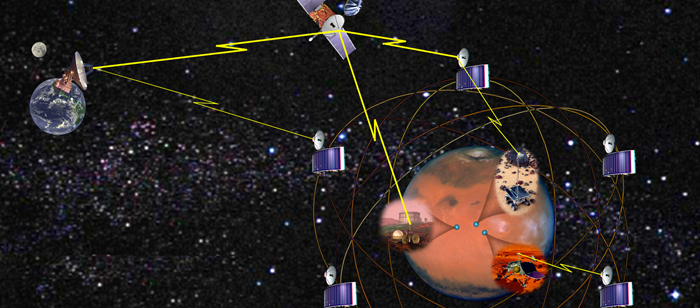
As sensing devices are applied to increasingly diverse tasks the network architectures that connect them must handle increasingly complex sets of operational constraints. One dimension in which these networks must scale is in their spatial footprint: there is a desire to distribute sensing devices over areas from miles to hundreds of miles to millions of miles. A second dimension in which these networks scale is in their media access heterogeneity: to gradually cover larger distances, existing networks (that may not otherwise communicate amongst themselves) must be stitched together. Examples of such networks include the Solar System Internet (SSI), Autonomous Underwater Surveillance (ASU), National Border Protection (NBP) and Intelligent Highway Initiatives (IHI).
I propose that the non-random sensing performed in these networks supports the establishment of virtual circuits that communicate information more efficiently than in broadcast mesh networks. Specifically, virtual circuits may be pre-negotiated using data-link-agnostic overlay techniques based on directed, weighted, time-variant graphs. The construction and maintenance of these circuits is feasible in non-random networks and may be accomplished through proposed protocols and stochastic processes. My first contribution will define an emerging, useful special case of networks. I label this architecture the "Challenged Sensor Internetwork" (CSI) and provide models relating to data motion and path selection. My second contribution will provide algorithms and associated analysis for path selection and synchronization. The network topology created by a CSI is graphically modeled as a multi-hypergraph. Since transmission in a CSI is wireless, a single transmission may be received by multiple nodes in the network, hence a hypergraph. However, as a challenged network, link opportunities amongst nodes will change as a function of time, hence a multigraph. I will show that the multi-cast problem, as formulated for CSIs, is NP-Complete, propose an approximation algorithm for the generation of paths in such a multi-hypergraph, and provide an analysis of the performance of this algorithm. My third contribution will provide heuristic algorithms and performance measurements. Each node in the CSI must store its own copy of the network graph so as to make local routing decisions. Synchronization of these network graphs across the network is often impossible. I propose two heuristic mechanisms, based on my proposed principle of path locality, to synchronize preferred path information in the network: exchanging relevant sub-graphs along paths as part of nominal messaging and altering local graphs based on predicted congestion based on observed traffic. Finally, I propose a method for inferring overlay-level contact opportunities from routing information available to local nodes via existing physical and data link layer mechanisms. My final contribution will demonstrate this work in the context of a real-world CSI deployment. I will provide a case study demonstrating how the SSI networking concept exemplifies the definition and characteristics of a CSI and showing how my proposed algorithms are mission enabling to existing, published SSI scenarios.
Several portions of the proposed dissertation work have been completed and validated through simulation and peer-reviewed publication. To complete the dissertation, I plan to finalize the problem statements, proofs, and algorithm analysis supporting achieved heuristic results. I will also apply these algorithms to scaled simulations and emulations of increasingly complex CSIs.
Committee: Drs. Dr. Mohammed Younis (Chair), Alan Sherman (Co-Advisor) Dhananjay Phatak, Vinton Cerf, Keith Scott, Hans Kruse
More information and directions
]]>
Ph.D. Dissertation Proposal Virtual Circuit Provisioning in Challenged Sensor Internetworks, with Application to the Solar System Internet Ed Birrane 9:00am Friday, 21 September 2012, ITE...
http://www.csee.umbc.edu/2012/09/phd-proposal-birrane-on-virtual-circuit-provisioning-in-challenged-sensor-internetworks/
https://dev.my.umbc.edu/api/v0/pixel/news/16890/guest@my.umbc.edu/ac1a2a9552fb813ac1e4135e693d855e/api/pixel
graduate
news
research
talks
Computer Science and Electrical Engineering
https://dev.my.umbc.edu/groups/csee
https://assets3-dev.my.umbc.edu/system/shared/avatars/groups/000/000/099/d117dca133c64bf78a4b7696dd007189/xsmall.png?1314043393
https://assets1-dev.my.umbc.edu/system/shared/avatars/groups/000/000/099/d117dca133c64bf78a4b7696dd007189/original.png?1314043393
https://assets1-dev.my.umbc.edu/system/shared/avatars/groups/000/000/099/d117dca133c64bf78a4b7696dd007189/xxlarge.png?1314043393
https://assets4-dev.my.umbc.edu/system/shared/avatars/groups/000/000/099/d117dca133c64bf78a4b7696dd007189/xlarge.png?1314043393
https://assets3-dev.my.umbc.edu/system/shared/avatars/groups/000/000/099/d117dca133c64bf78a4b7696dd007189/large.png?1314043393
https://assets1-dev.my.umbc.edu/system/shared/avatars/groups/000/000/099/d117dca133c64bf78a4b7696dd007189/medium.png?1314043393
https://assets2-dev.my.umbc.edu/system/shared/avatars/groups/000/000/099/d117dca133c64bf78a4b7696dd007189/small.png?1314043393
https://assets3-dev.my.umbc.edu/system/shared/avatars/groups/000/000/099/d117dca133c64bf78a4b7696dd007189/xsmall.png?1314043393
https://assets3-dev.my.umbc.edu/system/shared/avatars/groups/000/000/099/d117dca133c64bf78a4b7696dd007189/xxsmall.png?1314043393
Computer Science and Electrical Engineering
1
0
true
Tue, 18 Sep 2012 15:17:19 -0400
talk: Simon on A Novel Dynamic Task Scheduling Environment for High Performance Distributed Systems
CSEE Colloquium
A Novel Dynamic Task Scheduling Environment
for High Performance Distributed Systems
Tyler Simon
Faculty Research Assistant, UMBC
1:00pm Friday, 21 September 2012, ITE 227, UMBC
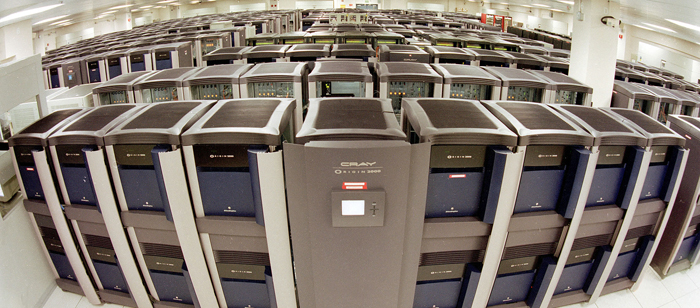
The number of concurrently executing tasks required for a single application to perform at the petascale is on the order of hundreds of thousands. Given current manycore hardware trends, future peta- and exa-scale class systems will require applications to run tasks on the order of hundreds of millions to billions. To address the problem of creating, running and managing jobs of this scale, both from a system user and administration perspective we have developed, ARRIA, an Autonomic Runtime for Resource Intensive Applications. ARRIA uses a decentralized bag of tasks and workload scheduler that increases individual job priorities based on weighed factors that are of interest to the application programmer or the system administrator. ARRIA is designed to run millions of independent tasks reliably and efficiently without explicit message passing from the user. In previous work, using the ARRIA scheduler for scientific MapReduce workloads, we have shown a 2.1x speedup over the Hadoop Fair Share scheduler. We investigate novel scheduling parameters and strategies that guarantee efficient job execution for a wide range of realistic and simulated workloads with both user and administrator objectives, such as increased throughput and maximized utilization with minimal wait times for specific job classes. Finally our experiments investigate the long tail phenomenon for mixed workloads and the overheads incurred for increased system size.
Mr. Simon has undergraduate degrees in Computer Science and Philosophy with a Master of Science in Computer Science from the University of Mississippi, he is currently pursuing a PhD in Computer Science at the University of Maryland Baltimore County. Mr. Simon has worked professionally in the high performance computing (HPC) field for over a decade. In 2005 he earned a Department of Energy graduate research fellowship at Oak Ridge National Laboratory, where he worked for in the Computer Science and Mathematics Division developing and implementing the Freeloader distributed storage system. Mr. Simon has worked as a computational scientist for the Department of Defense High Performance Computing Modernization Office based at the U.S. Army Engineer Research and Development Center in Vicksburg, MS, evaluating both current and future HPC system requirements for applications of interest to the Department of Defense. Since 2009 Mr. Simon has been a computational scientist and manager of HPC user services at the NASA Center for Climate Simulation at Goddard Space Flight Center and is currently a Faculty Research Assistant at the University of Maryland Baltimore County working at the NSF Center for Hybrid Multicore Productivity Research. Mr. Simon’s research involves the study of dynamic distributed runtime environments, parallelization strategies and scheduling of large scale scientific applications for current petascale and future HPC architectures.
For more information and directions see http://bit.ly/UMBCtalks.
]]>
CSEE Colloquium A Novel Dynamic Task Scheduling Environment for High Performance Distributed Systems Tyler Simon Faculty Research Assistant, UMBC 1:00pm Friday, 21 September 2012, ITE...
http://www.csee.umbc.edu/2012/09/talk-simon-on-a-novel-dynamic-task-scheduling-environment-for-high-performance-distributed-systems/
https://dev.my.umbc.edu/api/v0/pixel/news/16751/guest@my.umbc.edu/0893058078da7830a94dddd2a1f61684/api/pixel
news
research
talks
Computer Science and Electrical Engineering
https://dev.my.umbc.edu/groups/csee
https://assets3-dev.my.umbc.edu/system/shared/avatars/groups/000/000/099/d117dca133c64bf78a4b7696dd007189/xsmall.png?1314043393
https://assets1-dev.my.umbc.edu/system/shared/avatars/groups/000/000/099/d117dca133c64bf78a4b7696dd007189/original.png?1314043393
https://assets1-dev.my.umbc.edu/system/shared/avatars/groups/000/000/099/d117dca133c64bf78a4b7696dd007189/xxlarge.png?1314043393
https://assets4-dev.my.umbc.edu/system/shared/avatars/groups/000/000/099/d117dca133c64bf78a4b7696dd007189/xlarge.png?1314043393
https://assets3-dev.my.umbc.edu/system/shared/avatars/groups/000/000/099/d117dca133c64bf78a4b7696dd007189/large.png?1314043393
https://assets1-dev.my.umbc.edu/system/shared/avatars/groups/000/000/099/d117dca133c64bf78a4b7696dd007189/medium.png?1314043393
https://assets2-dev.my.umbc.edu/system/shared/avatars/groups/000/000/099/d117dca133c64bf78a4b7696dd007189/small.png?1314043393
https://assets3-dev.my.umbc.edu/system/shared/avatars/groups/000/000/099/d117dca133c64bf78a4b7696dd007189/xsmall.png?1314043393
https://assets3-dev.my.umbc.edu/system/shared/avatars/groups/000/000/099/d117dca133c64bf78a4b7696dd007189/xxsmall.png?1314043393
Computer Science and Electrical Engineering
3
0
true
Wed, 12 Sep 2012 08:22:04 -0400
Wed, 12 Sep 2012 08:22:04 -0400
talk: Ҫağatay Demiralp on Computational Brain Connectivity Using Diffusion MRI
CSEE Colloquium
Computational Brain Connectivity Using Diffusion MRI
Ҫağatay Demiralp
Brown University
1:30pm Tuesday, 18 September 2012, ITE 325B
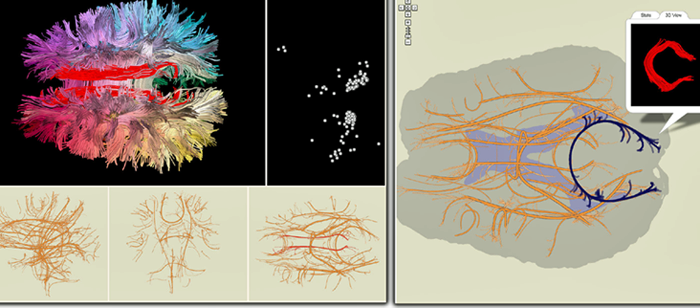
In my talk, I’ll present examples from modeling, visualization, and analysis of diffusion-derived structural brain connectivity. I’ll first introduce two interactive visual analysis tools that use novel planar representations of the brain. I’ll show that two-dimensional map representations that are viewed, interacted with, and enriched like online geographical maps result in faster and more accurate exploration of brain connectivity.
Second, I’ll introduce neural tract-based probability density functions, including joint densities of tract arc length and scalar diffusivity measures, as biomarkers. I’ll demonstrate their simple and effective use in detecting individual and group differences. I’ll also describe a new coherence measure for neural tract clusters based on geometric slicing. I’ll show that a refinement of neural tract clustering based on this measure leads to a significant improvement in clustering results that is not possible directly using standard methods.
Third, I’ll describe a new coloring method for three-dimensional line fields based on Boy's real projective plane immersion. This coloring method is smooth and one-to-one, except on a set of measure zero. I’ll demonstrate its use in visualization of neural tracts and cross-sectional diffusion MRI brain images.
Çağatay Demiralp is a PhD candidate in computer science at Brown University. His research interests are in characterizing patterned structures in data both qualitatively and quantitatively using topological, geometric as well as statistical approaches. While computational brain connectivity using diffusion MRI has been the focus of his thesis research, he has published on a diverse set of topics ranging from surface deformation to semantic segmentation. He received Brown University’s Brain Sciences Research award, IEEE Vis Best Poster award, and ASSH Best Layout and Best Scientific Presentation awards.
]]>
CSEE Colloquium Computational Brain Connectivity Using Diffusion MRI Ҫağatay Demiralp Brown University 1:30pm Tuesday, 18 September 2012, ITE 325B In my talk, I’ll present...
http://www.csee.umbc.edu/2012/09/talk-%d2%abagatay-demiralp-on-computational-brain-connectivity-using-diffusion-mri/
https://dev.my.umbc.edu/api/v0/pixel/news/16743/guest@my.umbc.edu/82dfb05a6ffea7b11a123e692da3cb9e/api/pixel
news
research
talks
Computer Science and Electrical Engineering
https://dev.my.umbc.edu/groups/csee
https://assets3-dev.my.umbc.edu/system/shared/avatars/groups/000/000/099/d117dca133c64bf78a4b7696dd007189/xsmall.png?1314043393
https://assets1-dev.my.umbc.edu/system/shared/avatars/groups/000/000/099/d117dca133c64bf78a4b7696dd007189/original.png?1314043393
https://assets1-dev.my.umbc.edu/system/shared/avatars/groups/000/000/099/d117dca133c64bf78a4b7696dd007189/xxlarge.png?1314043393
https://assets4-dev.my.umbc.edu/system/shared/avatars/groups/000/000/099/d117dca133c64bf78a4b7696dd007189/xlarge.png?1314043393
https://assets3-dev.my.umbc.edu/system/shared/avatars/groups/000/000/099/d117dca133c64bf78a4b7696dd007189/large.png?1314043393
https://assets1-dev.my.umbc.edu/system/shared/avatars/groups/000/000/099/d117dca133c64bf78a4b7696dd007189/medium.png?1314043393
https://assets2-dev.my.umbc.edu/system/shared/avatars/groups/000/000/099/d117dca133c64bf78a4b7696dd007189/small.png?1314043393
https://assets3-dev.my.umbc.edu/system/shared/avatars/groups/000/000/099/d117dca133c64bf78a4b7696dd007189/xsmall.png?1314043393
https://assets3-dev.my.umbc.edu/system/shared/avatars/groups/000/000/099/d117dca133c64bf78a4b7696dd007189/xxsmall.png?1314043393
Computer Science and Electrical Engineering
4
0
true
Tue, 11 Sep 2012 22:38:50 -0400
talk: Oleg Aulov on Human Sensor Networks, 1pm Fri 9/14, UMBC
UMBC CSEE Colloquium
Human Sensor Networks for Improved Modeling
of Natural and Human-Caused Disasters
Oleg Aulov, Computer Science Ph.D. Student, UMBC
1:00pm Friday, 14 September 2012, ITE 227, UMBC
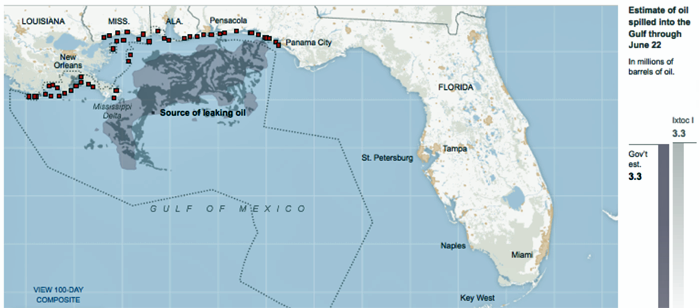
This talk will discuss the importance of different roles that social media can play in management, monitoring, modeling and mitigation of natural and human-caused disasters. We will present a novel approach that views social media data as a human sensor network. These data can serve as a low-cost augmentation to an observing system, which can be incorporated into geophysical models together with other scientific data such as satellite observations and sensor measurements. As a use case scenario, we analyze the Deepwater Horizon oil spill disaster. We gather the social media data that mention sightings of oil from Flickr, geolocate them, and use them as boundary forcings in the General NOAA Oil Modeling Environment (GNOME) software for oil spill predictions. We show how social media data can be incorporated into the GNOME model to obtain improved estimates of the model parameters such as rates of oil spill, couplings between surface winds and ocean currents, diffusion coefficient, and other model parameters. Other social media mining and citizen science projects performed by groups outside of UMBC, on air quality, earthquakes and the Fukushima disaster will also be summarized as related work.
Oleg Aulov received B.S. degree in mathematics from the University of Central Missouri, Warrensburg, MO, in 2004 and M.S. degree in Computer Science with a concentration in Computer Security and Information Assurance from George Washington University, Washington, DC, in 2006. He is currently working toward a Ph.D. degree in the Department of Computer Science and Electrical Engineering at University of Maryland, Baltimore County, Baltimore, MD. His topics of interest include social media mining, citizen science, machine learning, trust establishment and management, information assurance, and social engineering.
For more information and directions see http://bit.ly/UMBCtalks
]]>
UMBC CSEE Colloquium Human Sensor Networks for Improved Modeling of Natural and Human-Caused Disasters Oleg Aulov, Computer Science Ph.D. Student, UMBC 1:00pm Friday, 14 September 2012,...
http://www.csee.umbc.edu/2012/09/talk-oleg-aulov-on-human-sensor-networks-1pm-fri-914-umbc/
https://dev.my.umbc.edu/api/v0/pixel/news/16660/guest@my.umbc.edu/899045323753930b8cb409a9dfc89075/api/pixel
graduate
news
research
talks
Computer Science and Electrical Engineering
https://dev.my.umbc.edu/groups/csee
https://assets3-dev.my.umbc.edu/system/shared/avatars/groups/000/000/099/d117dca133c64bf78a4b7696dd007189/xsmall.png?1314043393
https://assets1-dev.my.umbc.edu/system/shared/avatars/groups/000/000/099/d117dca133c64bf78a4b7696dd007189/original.png?1314043393
https://assets1-dev.my.umbc.edu/system/shared/avatars/groups/000/000/099/d117dca133c64bf78a4b7696dd007189/xxlarge.png?1314043393
https://assets4-dev.my.umbc.edu/system/shared/avatars/groups/000/000/099/d117dca133c64bf78a4b7696dd007189/xlarge.png?1314043393
https://assets3-dev.my.umbc.edu/system/shared/avatars/groups/000/000/099/d117dca133c64bf78a4b7696dd007189/large.png?1314043393
https://assets1-dev.my.umbc.edu/system/shared/avatars/groups/000/000/099/d117dca133c64bf78a4b7696dd007189/medium.png?1314043393
https://assets2-dev.my.umbc.edu/system/shared/avatars/groups/000/000/099/d117dca133c64bf78a4b7696dd007189/small.png?1314043393
https://assets3-dev.my.umbc.edu/system/shared/avatars/groups/000/000/099/d117dca133c64bf78a4b7696dd007189/xsmall.png?1314043393
https://assets3-dev.my.umbc.edu/system/shared/avatars/groups/000/000/099/d117dca133c64bf78a4b7696dd007189/xxsmall.png?1314043393
Computer Science and Electrical Engineering
3
0
true
Mon, 10 Sep 2012 23:04:09 -0400
talk: Mountain on the DoD Advanced Computing Systems Research Program
COLLOQUIUM
Computer Science and Electrical Engineering
University of Maryland, Baltimore County
The Advanced Computing Systems Research Program
David J. Mountain
Technical Director, Center for Exceptional Computing
1:00pm Friday, 7 September 2012, ITE 227, UMBC
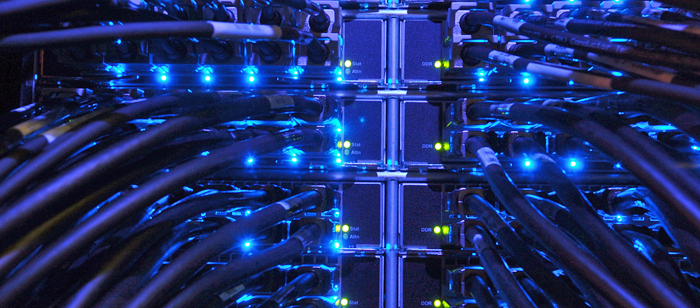
The Advanced Computing Systems (ACS) Research Program recently relocated from Adelphi, Maryland, to the Research Park complex next to UMBC. What type of computing research does ACS focus on? How is it organized? What opportunities for collaboration exist for UMBC? This talk will provide answers to these questions, explain how ACS tackles its research challenges, and provide a sneak preview of upcoming ACS presentations on specific research projects.
David J. Mountain is the Technical Director at the Center for Exceptional Computing (CEC), a Department of Defense research laboratory in the UMBC Research Park. The mission of the CEC is to collaborate with industry, academia, and the government to drive innovative research that will impact advanced computing systems at the multi-petaflop scale and beyond. His responsibilities include directing research activities in technical thrusts including power efficiency, chip IO, system level interconnects, file system IO, productivity, and resilience.
Mr. Mountain’s personal research projects have included radiation effects studies, hot carrier reliability characterization, and chip-on-flex process development utilizing ultra-thin circuits. He has been actively involved with 3D electronics research for nearly two decades. Mr. Mountain is the author of seven papers, has been awarded eight patents, and is a Senior Member of the IEEE.
Host: Yaacov Yesha, Sorry, you need javascript to view this email address.
Directions and more information on recent and upcoming talks.
]]>
COLLOQUIUM Computer Science and Electrical Engineering University of Maryland, Baltimore County The Advanced Computing Systems Research Program David J. Mountain Technical Director,...
http://www.csee.umbc.edu/2012/09/talk-mountain-on-the-dod-advanced-computing-systems-research-program/
https://dev.my.umbc.edu/api/v0/pixel/news/16533/guest@my.umbc.edu/23b9106d99adf4e55a2588bd0054d5ab/api/pixel
news
research
talks
Computer Science and Electrical Engineering
https://dev.my.umbc.edu/groups/csee
https://assets3-dev.my.umbc.edu/system/shared/avatars/groups/000/000/099/d117dca133c64bf78a4b7696dd007189/xsmall.png?1314043393
https://assets1-dev.my.umbc.edu/system/shared/avatars/groups/000/000/099/d117dca133c64bf78a4b7696dd007189/original.png?1314043393
https://assets1-dev.my.umbc.edu/system/shared/avatars/groups/000/000/099/d117dca133c64bf78a4b7696dd007189/xxlarge.png?1314043393
https://assets4-dev.my.umbc.edu/system/shared/avatars/groups/000/000/099/d117dca133c64bf78a4b7696dd007189/xlarge.png?1314043393
https://assets3-dev.my.umbc.edu/system/shared/avatars/groups/000/000/099/d117dca133c64bf78a4b7696dd007189/large.png?1314043393
https://assets1-dev.my.umbc.edu/system/shared/avatars/groups/000/000/099/d117dca133c64bf78a4b7696dd007189/medium.png?1314043393
https://assets2-dev.my.umbc.edu/system/shared/avatars/groups/000/000/099/d117dca133c64bf78a4b7696dd007189/small.png?1314043393
https://assets3-dev.my.umbc.edu/system/shared/avatars/groups/000/000/099/d117dca133c64bf78a4b7696dd007189/xsmall.png?1314043393
https://assets3-dev.my.umbc.edu/system/shared/avatars/groups/000/000/099/d117dca133c64bf78a4b7696dd007189/xxsmall.png?1314043393
Computer Science and Electrical Engineering
2
0
true
Fri, 07 Sep 2012 10:41:58 -0400
Fri, 07 Sep 2012 10:41:58 -0400
Ashwinkumar Ganesan MS defense: Calculating Representativeness of Geographic Sites Across the World
MS Thesis Defense
Calculating Representativeness of
Geographic Sites Across the World
Ashwinkumar Ganesan
11:00am Friday, 31 August 2012, ITE 325b, UMBC
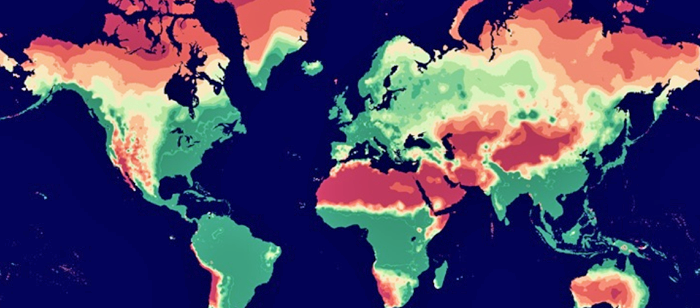
GLOBE is a global correlation engine, a project to study the effects of human activity on land change based on a set of parameters that include temperature, forest cover, human population, atmospheric parameters, and many other variables. The aim of this research is to understand how a land change study or set of studies of specific geographic areas generalizes to other areas of the world. The generic form of the question is – given a set of data points with a set of variables, how can we determine how much a selected subset of points represents the rest of the distribution. The research aims to answer a set of questions which include the definition of representativeness of a geographical site and how the representativeness can be computed. Land change researchers will dynamically select a subset of variables which they would like to study. Hence the method developed not only computes representativeness, but must do so in an efficient manner. For this purpose, we apply dimension reduction techniques to reduce the size of computation and analyze the effectiveness of using these techniques to calculate representativeness.
Committee: Drs. Tim Oates (chair), Tim Finin and Dr. Matt Schmill
]]>
MS Thesis Defense Calculating Representativeness of Geographic Sites Across the World Ashwinkumar Ganesan 11:00am Friday, 31 August 2012, ITE 325b, UMBC GLOBE is a global correlation...
http://www.csee.umbc.edu/2012/08/ashwinkumar-ganesan-ms-defense-calculating-representativeness-of-geographic-sites-across-the-world/
https://dev.my.umbc.edu/api/v0/pixel/news/16214/guest@my.umbc.edu/2b816ac2f6f610046bc0d8ce627fa2b8/api/pixel
graduate
news
research
talks
Computer Science and Electrical Engineering
https://dev.my.umbc.edu/groups/csee
https://assets3-dev.my.umbc.edu/system/shared/avatars/groups/000/000/099/d117dca133c64bf78a4b7696dd007189/xsmall.png?1314043393
https://assets1-dev.my.umbc.edu/system/shared/avatars/groups/000/000/099/d117dca133c64bf78a4b7696dd007189/original.png?1314043393
https://assets1-dev.my.umbc.edu/system/shared/avatars/groups/000/000/099/d117dca133c64bf78a4b7696dd007189/xxlarge.png?1314043393
https://assets4-dev.my.umbc.edu/system/shared/avatars/groups/000/000/099/d117dca133c64bf78a4b7696dd007189/xlarge.png?1314043393
https://assets3-dev.my.umbc.edu/system/shared/avatars/groups/000/000/099/d117dca133c64bf78a4b7696dd007189/large.png?1314043393
https://assets1-dev.my.umbc.edu/system/shared/avatars/groups/000/000/099/d117dca133c64bf78a4b7696dd007189/medium.png?1314043393
https://assets2-dev.my.umbc.edu/system/shared/avatars/groups/000/000/099/d117dca133c64bf78a4b7696dd007189/small.png?1314043393
https://assets3-dev.my.umbc.edu/system/shared/avatars/groups/000/000/099/d117dca133c64bf78a4b7696dd007189/xsmall.png?1314043393
https://assets3-dev.my.umbc.edu/system/shared/avatars/groups/000/000/099/d117dca133c64bf78a4b7696dd007189/xxsmall.png?1314043393
Computer Science and Electrical Engineering
3
0
true
Mon, 27 Aug 2012 20:20:11 -0400
Amey Sane MS defense: Predicting the activities of mobile phone with HMMs
MS Thesis Defense
Predicting the Activities of Mobile Phone Users
with Hidden Markov Models
Amey Sane
9:00am Tuesday, 28 August 2012, ITE 325b, UMBC
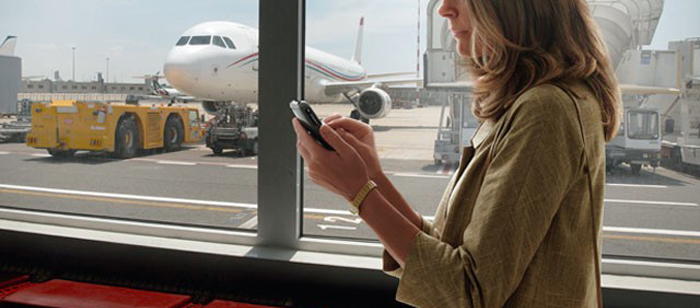
Mobile phones are ubiquitous and increasingly capable, with sophisticated sensors, network access, significant storage and processing power and access to a wide range of application data. They can improve the range and quality of their services by acquiring and using models of their context, including the activities in which their users are engaged. This thesis explores the use of supervised machine learning techniques for predicting a smartphone user's activities from available sensor data. We have specifically concentrated on applying classifiers and ensembles using hidden markov models for activity recognition. Our classifiers predict a user's current activity from among a set of conceptual activity classes such as sleeping, traveling, playing, working, and chatting/watching TV. We have experimented with and evaluated the effectiveness of different approaches on data collected on Android smartphones by university faculty and students.
Committee: Drs. Tim Finin (chair), Anupam Joshi and Yelena Yesha
]]>
MS Thesis Defense Predicting the Activities of Mobile Phone Users with Hidden Markov Models Amey Sane 9:00am Tuesday, 28 August 2012, ITE 325b, UMBC Mobile phones are ubiquitous and...
http://www.csee.umbc.edu/2012/08/amey-sane-ms-defense-predicting-the-activities-of-mobile-phone-withhmms/
https://dev.my.umbc.edu/api/v0/pixel/news/16172/guest@my.umbc.edu/007afe2f38345875c39549f4e4483254/api/pixel
computer-science
graduate
news
students
talks
Computer Science and Electrical Engineering
https://dev.my.umbc.edu/groups/csee
https://assets3-dev.my.umbc.edu/system/shared/avatars/groups/000/000/099/d117dca133c64bf78a4b7696dd007189/xsmall.png?1314043393
https://assets1-dev.my.umbc.edu/system/shared/avatars/groups/000/000/099/d117dca133c64bf78a4b7696dd007189/original.png?1314043393
https://assets1-dev.my.umbc.edu/system/shared/avatars/groups/000/000/099/d117dca133c64bf78a4b7696dd007189/xxlarge.png?1314043393
https://assets4-dev.my.umbc.edu/system/shared/avatars/groups/000/000/099/d117dca133c64bf78a4b7696dd007189/xlarge.png?1314043393
https://assets3-dev.my.umbc.edu/system/shared/avatars/groups/000/000/099/d117dca133c64bf78a4b7696dd007189/large.png?1314043393
https://assets1-dev.my.umbc.edu/system/shared/avatars/groups/000/000/099/d117dca133c64bf78a4b7696dd007189/medium.png?1314043393
https://assets2-dev.my.umbc.edu/system/shared/avatars/groups/000/000/099/d117dca133c64bf78a4b7696dd007189/small.png?1314043393
https://assets3-dev.my.umbc.edu/system/shared/avatars/groups/000/000/099/d117dca133c64bf78a4b7696dd007189/xsmall.png?1314043393
https://assets3-dev.my.umbc.edu/system/shared/avatars/groups/000/000/099/d117dca133c64bf78a4b7696dd007189/xxsmall.png?1314043393
Computer Science and Electrical Engineering
6
0
true
Sun, 26 Aug 2012 16:27:49 -0400
Nikhil Puranik MS defense: Classification of Column Data, 8/24
MS Thesis Defense
A Specialist Approach for Classification of Column Data
Nikhil Puranik
1:30pm Friday 24 August, 2012, 325b ITE, UMBC
Much information is encoded in spreadsheets, databases, and tables on the Web and in documents. Interpreting this content and making its meaning explicit in a representation language like RDF enables many applications. This thesis addresses the problem of identifying the semantic type of the information represented in a table column containing conventionally encoded data such as phone numbers or stock ticker symbols. We describe a ‘specialist’ approach for classification in which different specialists work together to come up with a ranked list for the given input column. We use three types of specialists: those based on regular expressions, dictionaries and classifiers. We discuss a serial and parallel framework for the specialists. We evaluate our system in two ways: by testing individual specialist for accuracy and by testing the performance of the overall system in terms of generation of ranked list. We also discuss the scalability of the system in terms of addition of new specialists and performance impact for systems with hundreds of specialists.
Committee: Drs. Tim Finin (chair), Anupam Joshi, Tim Oates and Yelena Yesha
]]>
MS Thesis Defense A Specialist Approach for Classification of Column Data Nikhil Puranik 1:30pm Friday 24 August, 2012, 325b ITE, UMBC Much information is encoded in spreadsheets,...
http://www.csee.umbc.edu/2012/08/nikhil-puranik-ms-defense-classification-of-column-data-824/
https://dev.my.umbc.edu/api/v0/pixel/news/16098/guest@my.umbc.edu/db26c8230adeeb6617d04739cf8178d9/api/pixel
computer-science
graduate
news
research
talks
Computer Science and Electrical Engineering
https://dev.my.umbc.edu/groups/csee
https://assets3-dev.my.umbc.edu/system/shared/avatars/groups/000/000/099/d117dca133c64bf78a4b7696dd007189/xsmall.png?1314043393
https://assets1-dev.my.umbc.edu/system/shared/avatars/groups/000/000/099/d117dca133c64bf78a4b7696dd007189/original.png?1314043393
https://assets1-dev.my.umbc.edu/system/shared/avatars/groups/000/000/099/d117dca133c64bf78a4b7696dd007189/xxlarge.png?1314043393
https://assets4-dev.my.umbc.edu/system/shared/avatars/groups/000/000/099/d117dca133c64bf78a4b7696dd007189/xlarge.png?1314043393
https://assets3-dev.my.umbc.edu/system/shared/avatars/groups/000/000/099/d117dca133c64bf78a4b7696dd007189/large.png?1314043393
https://assets1-dev.my.umbc.edu/system/shared/avatars/groups/000/000/099/d117dca133c64bf78a4b7696dd007189/medium.png?1314043393
https://assets2-dev.my.umbc.edu/system/shared/avatars/groups/000/000/099/d117dca133c64bf78a4b7696dd007189/small.png?1314043393
https://assets3-dev.my.umbc.edu/system/shared/avatars/groups/000/000/099/d117dca133c64bf78a4b7696dd007189/xsmall.png?1314043393
https://assets3-dev.my.umbc.edu/system/shared/avatars/groups/000/000/099/d117dca133c64bf78a4b7696dd007189/xxsmall.png?1314043393
Computer Science and Electrical Engineering
3
0
true
Thu, 23 Aug 2012 00:03:23 -0400