MS defense: Integrating Domain Knowledge in Supervised Machine Learning to Assess the Risk of Breast Cancer Using Genomic Data
MS Thesis Defense
Integrating Domain Knowledge in Supervised Machine Learning
to Assess the Risk of Breast Cancer Using Genomic Data
Aniket Bochare
9:00am Friday 29 June 2012, ITE 325b
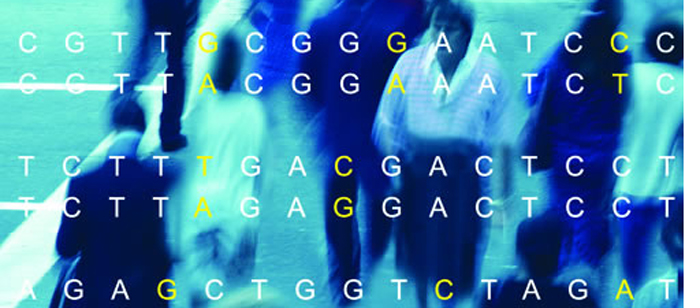
Breast cancer is the most common form of cancer in women. Breast cancer comprises 22.9% of the invasive cancers in women and 16% of all the female cancers. Currently, treatment decisions are based primarily on clinical parameters, with little use of genomic data. Our study takes into consideration the data of postmenopausal women of European descent and their single nucleotide polymorphism (SNP) information to assess the risk of developing breast cancer. We used various supervised machine learning and data mining techniques to generate a model for predicting risk of breast cancer using only genomic data.
In this research we propose an approach to select the nine best SNPs using various feature selection algorithms to improve binary classification accuracy and validate our results with the existing literature. The machine learning model generated without the domain knowledge yields poor prediction results. After the addition of the domain knowledge of the 11 SNPs into the original training set we performed classification using the best features obtained by feature selection techniques. The machine learning model generated using both the domain knowledge and the feature selection techniques performed much better compared to the naive approach of classification.
Committee: Drs. Yelena Yesha (chair), Anupam Joshi, Aryya Gangopadhyay and Micheal Grasso
]]>
MS Thesis Defense Integrating Domain Knowledge in Supervised Machine Learning to Assess the Risk of Breast Cancer Using Genomic Data Aniket Bochare 9:00am Friday 29 June 2012, ITE 325b...
http://www.csee.umbc.edu/2012/06/ms-defense-integrating-domain-knowledge-in-supervised-machine-learning-to-assess-the-risk-of-breast-cancer-using-genomic-data/
https://dev.my.umbc.edu/api/v0/pixel/news/15380/guest@my.umbc.edu/f129f5ab6fce1f2c7781f1994f7d5ff5/api/pixel
graduate
news
other
research
talks
Computer Science and Electrical Engineering
https://dev.my.umbc.edu/groups/csee
https://assets3-dev.my.umbc.edu/system/shared/avatars/groups/000/000/099/d117dca133c64bf78a4b7696dd007189/xsmall.png?1314043393
https://assets1-dev.my.umbc.edu/system/shared/avatars/groups/000/000/099/d117dca133c64bf78a4b7696dd007189/original.png?1314043393
https://assets1-dev.my.umbc.edu/system/shared/avatars/groups/000/000/099/d117dca133c64bf78a4b7696dd007189/xxlarge.png?1314043393
https://assets4-dev.my.umbc.edu/system/shared/avatars/groups/000/000/099/d117dca133c64bf78a4b7696dd007189/xlarge.png?1314043393
https://assets3-dev.my.umbc.edu/system/shared/avatars/groups/000/000/099/d117dca133c64bf78a4b7696dd007189/large.png?1314043393
https://assets1-dev.my.umbc.edu/system/shared/avatars/groups/000/000/099/d117dca133c64bf78a4b7696dd007189/medium.png?1314043393
https://assets2-dev.my.umbc.edu/system/shared/avatars/groups/000/000/099/d117dca133c64bf78a4b7696dd007189/small.png?1314043393
https://assets3-dev.my.umbc.edu/system/shared/avatars/groups/000/000/099/d117dca133c64bf78a4b7696dd007189/xsmall.png?1314043393
https://assets3-dev.my.umbc.edu/system/shared/avatars/groups/000/000/099/d117dca133c64bf78a4b7696dd007189/xxsmall.png?1314043393
Computer Science and Electrical Engineering
1
0
true
Fri, 22 Jun 2012 18:37:24 -0400
Fri, 22 Jun 2012 18:37:24 -0400
Integrated Distributed-Bragg-Reflector Thermally Tunable Quantum Cascade Lasers
Ph.D. Dissertation Defense
Fabrication and Operation of Integrated Distributed-Bragg-Reflector
Thermally Tunable Quantum Cascade Lasers
Liwei Cheng
10:00am Friday, 22 June 2012
Center for Advanced Studied in Photonics Research Conference Room
Quantum cascade lasers (QCLs) that emit in the mid-infrared (IR) range between 3 and 10 μm of the electromagnetic spectrum play an important role in optical gas sensing and molecular spectroscopic applications because several important environmental molecules such as CO, CO2, CH4, and NH3 are known to exhibit strong absorption lines in this mid-IR range. To differentiate such fine absorption features as narrow as a few angstroms, a single-mode QCL with an extremely narrow spectral linewidth, broadly tunable over the molecular absorption fingerprints and operating at sufficient optical power at room temperature, is highly desirable. We present, in this dissertation, two major studies on mid-IR QCLs, one being an improvement in device performance through a buried-heterostructure (BH) regrowth study, and the other being a realization of single-mode tunable QCLs integrated with distributed-Bragg-reflector (DBR) grating and thermal tuning mechanism.
Efficient heat dissipation in the QCL active region, which is crucial for high optical-power operation, can be effectively achieved using BH waveguides laterally embedded with InP grown by metal-organic chemical vapor disposition. We have experimentally studied the effects of the structural features of mesas, such as mesa orientation, geometry, sidewall-etched profile, and the length of the oxide overhang, on the BH regrowth. We find that the mesa oriented in the [01 1 ] direction with smoothly etched sidewalls produces a satisfactory planar growth profile and uniform lateral growth coverage and that a mesa-height–to–overhang-length ratio between 2.5 and 3.0 is effective in reducing anomalous growth in the vicinity of oxide edges. As a result, high-power QCLs capable of producing multi-hundred milliwatts at room temperature at ~4.6 μm and ~7.9 μm through reproducible BH regrowth results have been demonstrated.
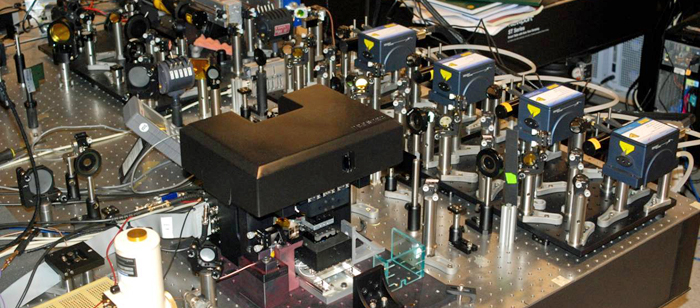
We have also demonstrated single-mode tunable QCLs operating at ~7.9 μm with an internal DBR grating structure and thermal tuning scheme incorporated. A special flip-chip bonding configuration and device assembly utilizing two copper heatsinks—one for the gain section and the other for the DBR grating section—were devised and constructed to achieve separate temperature controls in both sections. A miniature thermoelectric (TE) cooler dedicated to the DBR grating section was implemented to control the DBR grating temperature while the gain section was kept at a different temperature to achieve single-wavelength tuning. Under ±1000 mA bias conditions, a quasi-single-wavelength tuning range of ~7.2 cm-1 was realized across the TE cooler temperature span, combined with an additional temperature contrast of 56 °C between the two heatsinks (gain/DBR = 10/66 °C) owing to the implementation of additional temperature-controlling elements. We have also developed a two-dimensional thermal model to investigate the thermal dynamics in the device, including the temperature distribution and thermal dependency of each section, and the thermal response time, which ultimately dictates the wavelength tuning speed. We find that a 250-μm passive section located between the gain and DBR grating section can significantly improve temperature uniformity in both the sections as it absorbs most temperature gradients. Further, a swift thermal response time of ~7 ms is simulated if the DBR grating section is directly bonded on the miniature TE cooler.
More importantly, we have realized a monolithic photonic integration platform, both thermally and electrically, for mid-IR QCLs. The QCLs fabricated in this dissertation possess two major functionalities. The gain section, an active component, is electrically pumped to provide optical gain and is kept at a temperature different from the DBR grating section, and the DBR grating section, a passive component, provides optical feedback for single-wavelength emission and subsequently tunes the emission wavelength through a local temperature variation. Such thermal and optoelectronic integration opens new perspectives for mid-IR QC technology.
Committee: Drs. Fow-Sen Choa, Anthony Johnson, Li Yan, Ryan Robucci, Terrance Worchesky and Jocob Khurgin
]]>
Ph.D. Dissertation Defense Fabrication and Operation of Integrated Distributed-Bragg-Reflector Thermally Tunable Quantum Cascade Lasers Liwei Cheng 10:00am Friday, 22 June 2012 Center...
http://www.csee.umbc.edu/2012/06/integrated-distributed-bragg-reflector-thermally-tunable-quantum-cascade-lasers/
https://dev.my.umbc.edu/api/v0/pixel/news/15327/guest@my.umbc.edu/4bd29284a2149fd8dfbf59694e368e09/api/pixel
computer-engineering
electrical-engineering
graduate
news
research
talks
Computer Science and Electrical Engineering
https://dev.my.umbc.edu/groups/csee
https://assets3-dev.my.umbc.edu/system/shared/avatars/groups/000/000/099/d117dca133c64bf78a4b7696dd007189/xsmall.png?1314043393
https://assets1-dev.my.umbc.edu/system/shared/avatars/groups/000/000/099/d117dca133c64bf78a4b7696dd007189/original.png?1314043393
https://assets1-dev.my.umbc.edu/system/shared/avatars/groups/000/000/099/d117dca133c64bf78a4b7696dd007189/xxlarge.png?1314043393
https://assets4-dev.my.umbc.edu/system/shared/avatars/groups/000/000/099/d117dca133c64bf78a4b7696dd007189/xlarge.png?1314043393
https://assets3-dev.my.umbc.edu/system/shared/avatars/groups/000/000/099/d117dca133c64bf78a4b7696dd007189/large.png?1314043393
https://assets1-dev.my.umbc.edu/system/shared/avatars/groups/000/000/099/d117dca133c64bf78a4b7696dd007189/medium.png?1314043393
https://assets2-dev.my.umbc.edu/system/shared/avatars/groups/000/000/099/d117dca133c64bf78a4b7696dd007189/small.png?1314043393
https://assets3-dev.my.umbc.edu/system/shared/avatars/groups/000/000/099/d117dca133c64bf78a4b7696dd007189/xsmall.png?1314043393
https://assets3-dev.my.umbc.edu/system/shared/avatars/groups/000/000/099/d117dca133c64bf78a4b7696dd007189/xxsmall.png?1314043393
Computer Science and Electrical Engineering
2
0
true
Mon, 18 Jun 2012 11:50:55 -0400
talk: Via on Multi-Antenna Spectrum Sensing, 6/22
Multi-antenna Spectrum Sensing: From GLRTs to LMPITs
Dr. Javier Via
University of Cantabria, Spain
2:00pm Friday 22 June 2012, ITE 325b
Spectrum Sensing represents one of the critical aspects of the Cognitive Radio paradigm, where spectral monitors need to determine the presence or absence of primary users under very low SNR conditions. In this talk, we briefly revisit the main spectrum sensing techniques, with special emphasis in multi-antenna detectors, and we will see that the heuristic eigenvalue-based approaches can be outperformed by making use of some important results in the hypothesis testing literature. In particular, we will consider two related hypothesis testing problems, and derive the locally (under low SNR) best detectors among those preserving the problem invariances. Interestingly, this challenging task can be accomplished thanks to Wijsman's theorem, which allows us to obtain the optimal test statistic without the explicit knowledge of the maximal invariant distributions.
Javier Vía received his Telecommunication Engineer Degree and his Ph.D. in Electrical Engineering from the University of Cantabria, Spain in 2002 and 2007, respectively. In 2002 he joined the Department of Communications Engineering, University of Cantabria, Spain, where he is currently an Associate Professor. He has spent visiting periods at Stanford University, Hong Kong University of Science and Technology, and more recently at SUNY at Buffalo. Prof. Vía has actively participated in several European and Spanish research projects. His current research interests include hypothesis testing and spectrum sensing, quaternion signal processing, and financial engineering.
Host: Tulay Adali
]]>
Multi-antenna Spectrum Sensing: From GLRTs to LMPITs Dr. Javier Via University of Cantabria, Spain 2:00pm Friday 22 June 2012, ITE 325b Spectrum Sensing represents one of the critical...
http://www.csee.umbc.edu/2012/06/talk-via-on-multi-antenna-spectrum-sensing/
https://dev.my.umbc.edu/api/v0/pixel/news/15318/guest@my.umbc.edu/6078e88b2086516832633e962b4c2333/api/pixel
electrical-engineering
graduate
news
research
talks
Computer Science and Electrical Engineering
https://dev.my.umbc.edu/groups/csee
https://assets3-dev.my.umbc.edu/system/shared/avatars/groups/000/000/099/d117dca133c64bf78a4b7696dd007189/xsmall.png?1314043393
https://assets1-dev.my.umbc.edu/system/shared/avatars/groups/000/000/099/d117dca133c64bf78a4b7696dd007189/original.png?1314043393
https://assets1-dev.my.umbc.edu/system/shared/avatars/groups/000/000/099/d117dca133c64bf78a4b7696dd007189/xxlarge.png?1314043393
https://assets4-dev.my.umbc.edu/system/shared/avatars/groups/000/000/099/d117dca133c64bf78a4b7696dd007189/xlarge.png?1314043393
https://assets3-dev.my.umbc.edu/system/shared/avatars/groups/000/000/099/d117dca133c64bf78a4b7696dd007189/large.png?1314043393
https://assets1-dev.my.umbc.edu/system/shared/avatars/groups/000/000/099/d117dca133c64bf78a4b7696dd007189/medium.png?1314043393
https://assets2-dev.my.umbc.edu/system/shared/avatars/groups/000/000/099/d117dca133c64bf78a4b7696dd007189/small.png?1314043393
https://assets3-dev.my.umbc.edu/system/shared/avatars/groups/000/000/099/d117dca133c64bf78a4b7696dd007189/xsmall.png?1314043393
https://assets3-dev.my.umbc.edu/system/shared/avatars/groups/000/000/099/d117dca133c64bf78a4b7696dd007189/xxsmall.png?1314043393
Computer Science and Electrical Engineering
0
0
true
Sat, 16 Jun 2012 09:22:02 -0400
MS defense: DNSSEC and PKI

MS Thesis Defense
An Operational Study of DNSSEC and its Practical
Application in Establishing a Secure PKI Framework
Colin Roby
4:00pm 19 June 2012, ITE 325b
With the recent completion of signing the DNS Root and various TLD (top level domain), DNSSEC is gradually progressing towards an internet-wide adoption. The extension of DNSSEC security measures addresses many of the security flaws plagued the underlying DNS architecture since its inception. Once widely deployed, DNSSEC will pave the way for extending security service to a wide range of applications. This study focuses on the practicability of current iteration of DNSSEC implementation. Through a virtual network configuration which mimics a typical corporate environment, we explore viable options to establish a secure PKI framework based on DNSSEC in spite of its current limitations. In this endeavour, we propose a simple yet effective method to combine a corporate existing LDAP based directory service with DNSSEC to form a PKI key exchange infrastructure – one which is intuitive to administer and easy to scale to any large corporate network. We demonstrate the advantage of such a PKI framework in one area of its application – the common use of email. Using a prototype email client application, we illustrate how such a framework can promote and facilitate a more secure email system in terms of authenticity, integrity and confidentiality.
Committee: Dr. Deepinder Sidhu (Chair), Dr. Chein-I Chang, Dr. Yun Peng
]]>
MS Thesis Defense An Operational Study of DNSSEC and its Practical Application in Establishing a Secure PKI Framework Colin Roby 4:00pm 19 June 2012, ITE 325b With the recent completion...
http://www.csee.umbc.edu/2012/06/ms-defense-dnssec-and-pki/
https://dev.my.umbc.edu/api/v0/pixel/news/15317/guest@my.umbc.edu/544046f53aae3b14c5032446dd5076a7/api/pixel
computer-science
cybersecurity
graduate
news
research
talks
Computer Science and Electrical Engineering
https://dev.my.umbc.edu/groups/csee
https://assets3-dev.my.umbc.edu/system/shared/avatars/groups/000/000/099/d117dca133c64bf78a4b7696dd007189/xsmall.png?1314043393
https://assets1-dev.my.umbc.edu/system/shared/avatars/groups/000/000/099/d117dca133c64bf78a4b7696dd007189/original.png?1314043393
https://assets1-dev.my.umbc.edu/system/shared/avatars/groups/000/000/099/d117dca133c64bf78a4b7696dd007189/xxlarge.png?1314043393
https://assets4-dev.my.umbc.edu/system/shared/avatars/groups/000/000/099/d117dca133c64bf78a4b7696dd007189/xlarge.png?1314043393
https://assets3-dev.my.umbc.edu/system/shared/avatars/groups/000/000/099/d117dca133c64bf78a4b7696dd007189/large.png?1314043393
https://assets1-dev.my.umbc.edu/system/shared/avatars/groups/000/000/099/d117dca133c64bf78a4b7696dd007189/medium.png?1314043393
https://assets2-dev.my.umbc.edu/system/shared/avatars/groups/000/000/099/d117dca133c64bf78a4b7696dd007189/small.png?1314043393
https://assets3-dev.my.umbc.edu/system/shared/avatars/groups/000/000/099/d117dca133c64bf78a4b7696dd007189/xsmall.png?1314043393
https://assets3-dev.my.umbc.edu/system/shared/avatars/groups/000/000/099/d117dca133c64bf78a4b7696dd007189/xxsmall.png?1314043393
Computer Science and Electrical Engineering
2
0
true
Sat, 16 Jun 2012 08:46:27 -0400
PhD proposal: Online Unsupervised Coreference Resolution
Computer Science PhD Dissertation Proposal
Online Unsupervised Coreference Resolution for
Semi-Structured, Heterogeneous Data
Jennifer Alexander Sleeman
1:00pm Tuesday, 22 May 2012, 325b ITE, UMBC
Coreference resolution, determining when an instance represents a real world entity, has been widely researched in multiple domains. Online coreference resolution that supports heterogeneous data is not as well researched though these aspects of coreference resolution are incredibly important. With the complexities of computing environments today, a more flexible coreference resolution algorithm is required to support data that is processed over time rather than all at once. We present an online unsupervised coreference resolution framework for heterogeneous semi-structured data. We describe a two phase clustering model that is both flexible and distributable. We also describe a multi-dimensional attribute model that will support robust schema mappings. As part of this framework we propose a way to perform instance consolidation that will improve recall measures by addressing data spareness. We also outline how our framework will support ’cold start' knowledge base population.
Committee: Professors Tim Finin (chair), Anupam Joshi, Charles Nicholas, Tim Oates, Yun Peng, and Dr. Rafael Alonso (SAIC)
]]>
Computer Science PhD Dissertation Proposal Online Unsupervised Coreference Resolution for Semi-Structured, Heterogeneous Data Jennifer Alexander Sleeman 1:00pm Tuesday, 22 May 2012, 325b...
http://www.csee.umbc.edu/2012/05/phd-proposal-online-unsupervised-coreference-resolution/
https://dev.my.umbc.edu/api/v0/pixel/news/15047/guest@my.umbc.edu/76aa159540832b454564364b65d4c64d/api/pixel
graduate
news
research
talks
Computer Science and Electrical Engineering
https://dev.my.umbc.edu/groups/csee
https://assets3-dev.my.umbc.edu/system/shared/avatars/groups/000/000/099/d117dca133c64bf78a4b7696dd007189/xsmall.png?1314043393
https://assets1-dev.my.umbc.edu/system/shared/avatars/groups/000/000/099/d117dca133c64bf78a4b7696dd007189/original.png?1314043393
https://assets1-dev.my.umbc.edu/system/shared/avatars/groups/000/000/099/d117dca133c64bf78a4b7696dd007189/xxlarge.png?1314043393
https://assets4-dev.my.umbc.edu/system/shared/avatars/groups/000/000/099/d117dca133c64bf78a4b7696dd007189/xlarge.png?1314043393
https://assets3-dev.my.umbc.edu/system/shared/avatars/groups/000/000/099/d117dca133c64bf78a4b7696dd007189/large.png?1314043393
https://assets1-dev.my.umbc.edu/system/shared/avatars/groups/000/000/099/d117dca133c64bf78a4b7696dd007189/medium.png?1314043393
https://assets2-dev.my.umbc.edu/system/shared/avatars/groups/000/000/099/d117dca133c64bf78a4b7696dd007189/small.png?1314043393
https://assets3-dev.my.umbc.edu/system/shared/avatars/groups/000/000/099/d117dca133c64bf78a4b7696dd007189/xsmall.png?1314043393
https://assets3-dev.my.umbc.edu/system/shared/avatars/groups/000/000/099/d117dca133c64bf78a4b7696dd007189/xxsmall.png?1314043393
Computer Science and Electrical Engineering
1
0
true
Fri, 18 May 2012 23:01:09 -0400
MS defense: Mobile Relays Based Federation of Multiple Wireless Sensor Network Segments with Reduced-Latency
Masters Thesis Defense
Mobile Relays Based Federation of Multiple Wireless
Sensor Network Segments with Reduced-Latency
Jerome Stanislaus
10:00am Tuesday, 15 May 2012, ITE 325b, UMBC
Wireless sensor networks are used to continuously monitor certain area of interest and send data to a base station for processing. In many applications, WSN serve in inhospitable environments where multiple nodes may simultaneously fail causing the network to be divided into disjoint segments. Restoring connectivity in this case would be necessary for the WSN to become fully functional again. A similar scenario is when multiple standalone WSNs may need to be federated to collectively handle an important event that requires data sharing among these networks. A viable approach for establishing connectivity among these network segments is by employing mobile data collectors (MDCs). Few MDCs can be used to create intermittent links among the segments by touring and carrying data. Obviously, the travel path of the MDCs will affect the date delivery latency. We present two algorithms for finding optimized travel routes for the MDCs so that the average and maximum delay for delivering the inter-segment traffic is minimized. The algorithms deal with two variants of the federation problem that differ in the available MDC count. The first algorithm handles the case when the number of available MDCs is more than the number of segments, while the second tackles the problemwhen the MDC count is significantly less. The performance of the algorithm is validated through simulation.
Committee: Dr. Mohamed Younis (chair), Dr. Charles Nicholas, Dr. Gymama Slaughter
]]>
Masters Thesis Defense Mobile Relays Based Federation of Multiple Wireless Sensor Network Segments with Reduced-Latency Jerome Stanislaus 10:00am Tuesday, 15 May 2012, ITE 325b, UMBC...
http://www.csee.umbc.edu/2012/05/mobile-relays-based-federation-wireless-sensor-network-segments-reduced-latency/
https://dev.my.umbc.edu/api/v0/pixel/news/14984/guest@my.umbc.edu/9892b68b91dae3605e0fff309f1bd26d/api/pixel
graduate
news
research
talks
Computer Science and Electrical Engineering
https://dev.my.umbc.edu/groups/csee
https://assets3-dev.my.umbc.edu/system/shared/avatars/groups/000/000/099/d117dca133c64bf78a4b7696dd007189/xsmall.png?1314043393
https://assets1-dev.my.umbc.edu/system/shared/avatars/groups/000/000/099/d117dca133c64bf78a4b7696dd007189/original.png?1314043393
https://assets1-dev.my.umbc.edu/system/shared/avatars/groups/000/000/099/d117dca133c64bf78a4b7696dd007189/xxlarge.png?1314043393
https://assets4-dev.my.umbc.edu/system/shared/avatars/groups/000/000/099/d117dca133c64bf78a4b7696dd007189/xlarge.png?1314043393
https://assets3-dev.my.umbc.edu/system/shared/avatars/groups/000/000/099/d117dca133c64bf78a4b7696dd007189/large.png?1314043393
https://assets1-dev.my.umbc.edu/system/shared/avatars/groups/000/000/099/d117dca133c64bf78a4b7696dd007189/medium.png?1314043393
https://assets2-dev.my.umbc.edu/system/shared/avatars/groups/000/000/099/d117dca133c64bf78a4b7696dd007189/small.png?1314043393
https://assets3-dev.my.umbc.edu/system/shared/avatars/groups/000/000/099/d117dca133c64bf78a4b7696dd007189/xsmall.png?1314043393
https://assets3-dev.my.umbc.edu/system/shared/avatars/groups/000/000/099/d117dca133c64bf78a4b7696dd007189/xxsmall.png?1314043393
Computer Science and Electrical Engineering
2
0
true
Sat, 12 May 2012 02:03:02 -0400
MS defense: Numerical Integration Techniques for Volume Rendering
MS Thesis Defense
Numerical Integration Techniques for Volume Rendering
Preeti Bindu
10:00am Monday, 7 May 2012, ITE 352, UMBC
Medical image visualization often relies on 3D volume rendering. To enable interaction with 3D rendering of medical scans, improvements in the performance of Volume Rendering Algorithms need significant attention. Real-time visualization of 3D image data set is one of the key tasks of Augmented Reality Systems required by many medical imaging applications. Over past five years the development of the Graphics Processing Unit (GPU) has proved beneficial when it comes to Real Time Volume Rendering. We propose a GPU based volume rendering system for medical images using adaptive integration to improve performance. Our system is able to read and render DICOM images, implementing adaptive integration techniques that increase frame rate for volume rendering with the same quality of output images.
Committee: Dr. Marc Olano (advisor), Dr. Penny Rheingans and Dr. Samir Chettri
]]>
MS Thesis Defense Numerical Integration Techniques for Volume Rendering Preeti Bindu 10:00am Monday, 7 May 2012, ITE 352, UMBC Medical image visualization often relies on 3D volume...
http://www.csee.umbc.edu/2012/05/ms-defense-numerical-integration-techniques-for-volume-rendering/
https://dev.my.umbc.edu/api/v0/pixel/news/14895/guest@my.umbc.edu/693a349b8d2c779f7c43533f2bef58c2/api/pixel
computer-science
graduate
news
talks
Computer Science and Electrical Engineering
https://dev.my.umbc.edu/groups/csee
https://assets3-dev.my.umbc.edu/system/shared/avatars/groups/000/000/099/d117dca133c64bf78a4b7696dd007189/xsmall.png?1314043393
https://assets1-dev.my.umbc.edu/system/shared/avatars/groups/000/000/099/d117dca133c64bf78a4b7696dd007189/original.png?1314043393
https://assets1-dev.my.umbc.edu/system/shared/avatars/groups/000/000/099/d117dca133c64bf78a4b7696dd007189/xxlarge.png?1314043393
https://assets4-dev.my.umbc.edu/system/shared/avatars/groups/000/000/099/d117dca133c64bf78a4b7696dd007189/xlarge.png?1314043393
https://assets3-dev.my.umbc.edu/system/shared/avatars/groups/000/000/099/d117dca133c64bf78a4b7696dd007189/large.png?1314043393
https://assets1-dev.my.umbc.edu/system/shared/avatars/groups/000/000/099/d117dca133c64bf78a4b7696dd007189/medium.png?1314043393
https://assets2-dev.my.umbc.edu/system/shared/avatars/groups/000/000/099/d117dca133c64bf78a4b7696dd007189/small.png?1314043393
https://assets3-dev.my.umbc.edu/system/shared/avatars/groups/000/000/099/d117dca133c64bf78a4b7696dd007189/xsmall.png?1314043393
https://assets3-dev.my.umbc.edu/system/shared/avatars/groups/000/000/099/d117dca133c64bf78a4b7696dd007189/xxsmall.png?1314043393
Computer Science and Electrical Engineering
1
0
true
Mon, 07 May 2012 09:09:58 -0400
MS defense: A Modular, Power-Intelligent Wireless Sensor Node Architecture
MS Thesis Defense
A Modular, Power-Intelligent Wireless Sensor Node Architecture
David Riley
10:30am Monday, 7 May 2012, ITE 346
The current state of the art in wireless sensor nodes, both in academia and the commercial world, is a fractured landscape of designs which mostly address individual problems. The most common commercial design derives directly from a mote developed at the University of California, Berkeley around 1999, and presents only moderate, incremental improvements over the original design. No designs yet present a comprehensive, intelligent design befitting a modern system.
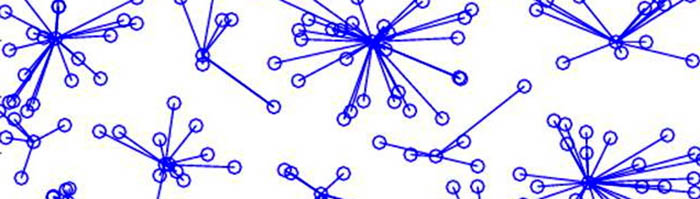
By using dynamic power management, deep system configurability, autonomous peripheral modules, and multiple CPU architectures, this thesis presents a flexible and efficient node architecture. Modules in a system communicate between each other to coordinate their activities and power levels. Special attention is given to power sourcing and distribution. Individual peripheral boards supply their own drivers to the CPU using architecture-independent code. The platform may be configured to work with most networks, sensor types and power sources due to its improved connectivity and hierarchical design.
The resulting Configurable Sensor Node (CoSeN) architecture is competitive with existing designs on price, size and power while greatly exceeding most of them on performance, configurability and application potential. The CoSeN architecture is validated through a prototype implementation.
Committee: Professors Mohammed Younis, Tim Oates and Gymama Slaughter
]]>
MS Thesis Defense A Modular, Power-Intelligent Wireless Sensor Node Architecture David Riley 10:30am Monday, 7 May 2012, ITE 346 The current state of the art in wireless sensor nodes, both...
http://www.csee.umbc.edu/2012/05/ms-defense-a-modular-power-intelligent-wireless-sensor-node-architecture/
https://dev.my.umbc.edu/api/v0/pixel/news/14857/guest@my.umbc.edu/f427a3f41f050886a6f6e314bbe9cab4/api/pixel
graduate
news
research
talks
Computer Science and Electrical Engineering
https://dev.my.umbc.edu/groups/csee
https://assets3-dev.my.umbc.edu/system/shared/avatars/groups/000/000/099/d117dca133c64bf78a4b7696dd007189/xsmall.png?1314043393
https://assets1-dev.my.umbc.edu/system/shared/avatars/groups/000/000/099/d117dca133c64bf78a4b7696dd007189/original.png?1314043393
https://assets1-dev.my.umbc.edu/system/shared/avatars/groups/000/000/099/d117dca133c64bf78a4b7696dd007189/xxlarge.png?1314043393
https://assets4-dev.my.umbc.edu/system/shared/avatars/groups/000/000/099/d117dca133c64bf78a4b7696dd007189/xlarge.png?1314043393
https://assets3-dev.my.umbc.edu/system/shared/avatars/groups/000/000/099/d117dca133c64bf78a4b7696dd007189/large.png?1314043393
https://assets1-dev.my.umbc.edu/system/shared/avatars/groups/000/000/099/d117dca133c64bf78a4b7696dd007189/medium.png?1314043393
https://assets2-dev.my.umbc.edu/system/shared/avatars/groups/000/000/099/d117dca133c64bf78a4b7696dd007189/small.png?1314043393
https://assets3-dev.my.umbc.edu/system/shared/avatars/groups/000/000/099/d117dca133c64bf78a4b7696dd007189/xsmall.png?1314043393
https://assets3-dev.my.umbc.edu/system/shared/avatars/groups/000/000/099/d117dca133c64bf78a4b7696dd007189/xxsmall.png?1314043393
Computer Science and Electrical Engineering
2
0
true
Fri, 04 May 2012 00:11:35 -0400
talk: Research vs. Development: Building A Career in the Modern Tech Industry
EE Graduate Seminar
Research vs. Development: Building a
Career in the Modern Tech Industry
Christopher Morris
Fellow Engineer, Northrop Grumman Corp
PhD (CS) Student, CSEE Dept/UMBC
11:30am-12:45pm, Friday, 4 May 2012, ITE 237, UMBC
With the uncertainty present in todays job market, technical college graduates are under increasing pressure to choose a career path that not only fits their personal strengths and interests. but is sustainable. Jobs and employees are becoming more transient and it is seemingly more difficult to establish a career with longevity. In this talk, we will discuss what a recent graduate can look forward to in various technical career paths, specifically a career in research versus a career in development. I will draw upon personal experience to provide an overview of what a student may expect when entering these careers. Lastly, we will discuss how one can prepare to make the most out of their career choice and handle the volatility of the industry.
Christopher (Chris) Morris is currently a Fellow Engineer at the Northrop Grumman Corporation where he is a member of the Teton Project team. The team is charged with research and development of Open Architecture (OA) Processing solutions for distributed, real-time, embedded (DRE) systems. Prior to joining Northrop Grumman in 2009, Chris was an Advisory Staff Engineer in the Visualization Systems Group at IBM Research in Westchester County, New York, where he researched and developed distributed rendering and visualization systems. He holds a BSME from UMBC (`96), a MSME in from Stanford University (`98), and a MSCS from UMBC (`01). Currently, he is a PhD (CS) Candidate at UMBC. His research interests are computer graphics and scientific visualization.
Host: Prof. Joel M. Morris
]]>
EE Graduate Seminar Research vs. Development: Building a Career in the Modern Tech Industry Christopher Morris Fellow Engineer, Northrop Grumman Corp PhD (CS) Student, CSEE Dept/UMBC...
http://www.csee.umbc.edu/2012/04/talk-research-vs-development-building-a-career-in-the-modern-tech-industry/
https://dev.my.umbc.edu/api/v0/pixel/news/14776/guest@my.umbc.edu/164cb04f6ca502aaf3bf2f3579dfc7bc/api/pixel
electrical-engineering
news
talks
Computer Science and Electrical Engineering
https://dev.my.umbc.edu/groups/csee
https://assets3-dev.my.umbc.edu/system/shared/avatars/groups/000/000/099/d117dca133c64bf78a4b7696dd007189/xsmall.png?1314043393
https://assets1-dev.my.umbc.edu/system/shared/avatars/groups/000/000/099/d117dca133c64bf78a4b7696dd007189/original.png?1314043393
https://assets1-dev.my.umbc.edu/system/shared/avatars/groups/000/000/099/d117dca133c64bf78a4b7696dd007189/xxlarge.png?1314043393
https://assets4-dev.my.umbc.edu/system/shared/avatars/groups/000/000/099/d117dca133c64bf78a4b7696dd007189/xlarge.png?1314043393
https://assets3-dev.my.umbc.edu/system/shared/avatars/groups/000/000/099/d117dca133c64bf78a4b7696dd007189/large.png?1314043393
https://assets1-dev.my.umbc.edu/system/shared/avatars/groups/000/000/099/d117dca133c64bf78a4b7696dd007189/medium.png?1314043393
https://assets2-dev.my.umbc.edu/system/shared/avatars/groups/000/000/099/d117dca133c64bf78a4b7696dd007189/small.png?1314043393
https://assets3-dev.my.umbc.edu/system/shared/avatars/groups/000/000/099/d117dca133c64bf78a4b7696dd007189/xsmall.png?1314043393
https://assets3-dev.my.umbc.edu/system/shared/avatars/groups/000/000/099/d117dca133c64bf78a4b7696dd007189/xxsmall.png?1314043393
Computer Science and Electrical Engineering
1
0
true
Mon, 30 Apr 2012 23:37:07 -0400
MS Defense: Chandler on Efficient Network on Chip for a Low-Power, Low-Area Homogeneous Many-Core DSP Platform
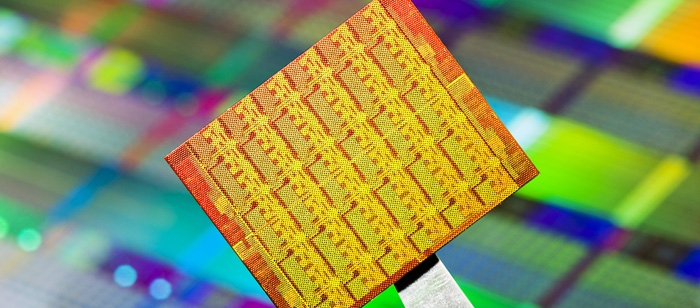
MS Thesis Defense
An Efficient Network on Chip (NoC) for a Low-Power,
Low-Area Homogeneous Many-Core DSP Platform
James Chandler
10:30am Monday, 30 April 30 2012, ITE 325b
This thesis presents an NoC architecture that is optimized for a course-grained, deterministic many core DSP platform supporting up to 256 cores. The proposed network supports both local and long-distance communication in the event that large applications or multiple smaller applications are mapped onto the platform by means of a hierarchical cluster topology. The NoC is designed to optimize the area- and power-to-performance ratio through implementing the following key characteristics: low hop-count long distance communication, optimized flit buffer size, efficient virtual channel implementation, and a highly restricted virtual channel flow control.
The NoC architecture is implemented in 65 nm CMOS technology with a nominal supply voltage of 1V. Place and Route results show that the proposed architecture saves up to 33% in area and up to 87.6% in energy-per-flit in comparison to some currently-implemented NoCs. Through several traffic pattern tests on a network of 16 cores, the NoC attains a throughput of up to 21.7Gbps. A 256-point FFT mapped onto 16 cores executes in 4.3$us and dissipates 0.649W. This is an improvement of 187% and 508% in latency and power dissipation over a 256-point Xilinx FFT IP Core implemented on a Virtex 6 FPGA.
Committee: Professors Tinoosh Mohsenin (chair), Dr. Chintan Patel and Mohamed Younis
]]>
MS Thesis Defense An Efficient Network on Chip (NoC) for a Low-Power, Low-Area Homogeneous Many-Core DSP Platform James Chandler 10:30am Monday, 30 April 30 2012, ITE 325b This thesis...
http://www.csee.umbc.edu/2012/04/ms-defense-chandler-on-efficient-network-on-chip-for-a-low-power-low-area-homogeneous-many-core-dsp-platform/
https://dev.my.umbc.edu/api/v0/pixel/news/14716/guest@my.umbc.edu/e685c6c18d31e058edf670ec5663a5d3/api/pixel
computer-engineering
news
research
students
talks
Computer Science and Electrical Engineering
https://dev.my.umbc.edu/groups/csee
https://assets3-dev.my.umbc.edu/system/shared/avatars/groups/000/000/099/d117dca133c64bf78a4b7696dd007189/xsmall.png?1314043393
https://assets1-dev.my.umbc.edu/system/shared/avatars/groups/000/000/099/d117dca133c64bf78a4b7696dd007189/original.png?1314043393
https://assets1-dev.my.umbc.edu/system/shared/avatars/groups/000/000/099/d117dca133c64bf78a4b7696dd007189/xxlarge.png?1314043393
https://assets4-dev.my.umbc.edu/system/shared/avatars/groups/000/000/099/d117dca133c64bf78a4b7696dd007189/xlarge.png?1314043393
https://assets3-dev.my.umbc.edu/system/shared/avatars/groups/000/000/099/d117dca133c64bf78a4b7696dd007189/large.png?1314043393
https://assets1-dev.my.umbc.edu/system/shared/avatars/groups/000/000/099/d117dca133c64bf78a4b7696dd007189/medium.png?1314043393
https://assets2-dev.my.umbc.edu/system/shared/avatars/groups/000/000/099/d117dca133c64bf78a4b7696dd007189/small.png?1314043393
https://assets3-dev.my.umbc.edu/system/shared/avatars/groups/000/000/099/d117dca133c64bf78a4b7696dd007189/xsmall.png?1314043393
https://assets3-dev.my.umbc.edu/system/shared/avatars/groups/000/000/099/d117dca133c64bf78a4b7696dd007189/xxsmall.png?1314043393
Computer Science and Electrical Engineering
3
0
true
Fri, 27 Apr 2012 13:32:31 -0400