CRA-W Distinguished Lecture Series: 4/16
 On Monday, April 16, a panel discussion, colloquium, and lecture make up this year's three-part CRA-W Distinguished Lecture Series. Sponsored by the Committee on the Status of Women in Computing Research (CRA-W), UMBC’s Center for Women in Technology (CWIT), UMBC’s Computer Science and Electrical Engineering (CSEE) Department, UMBC’s Information Systems (IS) Department, the Graduate School at UMBC, and WISE and ADVANCE at UMBC, the lecture series approaches topics ranging from how to succeed in graduate school to computing challenges.
10:00 A.M., Room 310, University Center
The Panel Discussion, entitled "Graduate School: Before, During, and After" features a panel of UMBC graduate students and academic professionals who will talk about common issues facing prospective graduate students. Questions like "Should I go to graduate school?" "Should I choose an M.S. or Ph.D.?" and "What jobs will be open to me after graduate school?" will be tackled.
Dr. Ellen Zegura, Professor and Chair of the School of Computer Science at Georgia Tech and Dr. Jeffrey Forbes, a Duke University professor of Computer Science currently on leave with the National Science Foundation as a Program Director for the Education and Workforce Program in the Division of Computer and Network Systems, Directorate for Computer and Information Science and Engineering, will be part of the panel. Mr. James MacGlashan, a Ph.D. candidate within the CSEE Department and Ms. Alyson Young, a Human-Centered Computing (HCC) Ph.D. Student will join them for the discussion.
1:00 – 2:00 P.M., Information Technology/Engineering (ITE) Building 325B
The Computer Science and Information Systems Joint Colloquium will feature a talk by Dr. Ellen Zegura entitled "Computing in Cirrus Clouds: The Challenge of Intermittent Connectivity."
Abstract
Mobile devices are increasingly relied on for services that go beyond simple connectivity and require more complex processing. Improved connectivity options for mobile devices have enabled applications that transcend an individual device's capabilities by making use of remote processing and storage.
The primary approach in wide use today to enable such remote processing makes use of cloud computing resources to offload the "heavy lifting" that may be required in some mobile applications to specially designated servers or server clusters. In reality, a mobile device often encounters, albeit intermittently, many entities capable of lending computational resources. We call these alternative settings "cirrus clouds". In this talk I will discuss the unique challenges posed by intermittent connectivity and describe some early progress on managing such a setting.
4:00 – 5:00 P.M., Albin O. Kuhn Library Gallery
The CRA-W Distinguished Lecture will feature a talk by Dr. Ellen Zegura entitled "Computing for Good: Experiences in Humanitarian Computing."
Abstract
Almost four years ago, I was involved in the creation of Computing for Good (C4G), a Georgia Tech College of Computing initiative centered around using computing to help solve pressing societal problems. The primary activity of C4G has been a project-based course taught once per year and taken by seniors (satisfying the capstone requirement) and masters-level graduate students. Projects with life beyond one semester are frequently taken up by master's students as MS projects.
Over the last year, I have had the opportunity to work closely with the Carter Center and their Mental Health Program in Liberia. With students in the C4G fall 2010 course, my experiences have included technology consulting, technology training, technology integration, and technology invention. I have also had the chance to observe first hand a set of additional country-wide challenges where computing might play a role. In this talk, I will describe my experiences and highlight additional opportunities for computationalists.
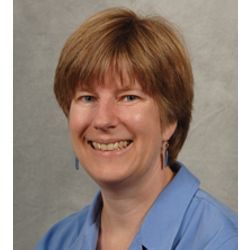
Dr. Ellen Zegura
Professor and Chair School of Computer Science
College of Computing, Georgia Tech
Light refreshments will follow both the Panel Discussion and the Computer Science and Information Systems Joint Colloquium. A reception will follow the CRA-W Distinguished Lecture.
Click HERE to download the event flyer.
]]>
On Monday, April 16, a panel discussion, colloquium, and lecture make up this year's three-part CRA-W Distinguished Lecture Series. Sponsored by the Committee on the Status of Women in Computing...
http://www.csee.umbc.edu/2012/04/cra-w-distinguished-lecture-series-416/
https://dev.my.umbc.edu/api/v0/pixel/news/13496/guest@my.umbc.edu/87617e7a9b2aa4e6ae055530e110b407/api/pixel
news
talks
Computer Science and Electrical Engineering
https://dev.my.umbc.edu/groups/csee
https://assets3-dev.my.umbc.edu/system/shared/avatars/groups/000/000/099/d117dca133c64bf78a4b7696dd007189/xsmall.png?1314043393
https://assets1-dev.my.umbc.edu/system/shared/avatars/groups/000/000/099/d117dca133c64bf78a4b7696dd007189/original.png?1314043393
https://assets1-dev.my.umbc.edu/system/shared/avatars/groups/000/000/099/d117dca133c64bf78a4b7696dd007189/xxlarge.png?1314043393
https://assets4-dev.my.umbc.edu/system/shared/avatars/groups/000/000/099/d117dca133c64bf78a4b7696dd007189/xlarge.png?1314043393
https://assets3-dev.my.umbc.edu/system/shared/avatars/groups/000/000/099/d117dca133c64bf78a4b7696dd007189/large.png?1314043393
https://assets1-dev.my.umbc.edu/system/shared/avatars/groups/000/000/099/d117dca133c64bf78a4b7696dd007189/medium.png?1314043393
https://assets2-dev.my.umbc.edu/system/shared/avatars/groups/000/000/099/d117dca133c64bf78a4b7696dd007189/small.png?1314043393
https://assets3-dev.my.umbc.edu/system/shared/avatars/groups/000/000/099/d117dca133c64bf78a4b7696dd007189/xsmall.png?1314043393
https://assets3-dev.my.umbc.edu/system/shared/avatars/groups/000/000/099/d117dca133c64bf78a4b7696dd007189/xxsmall.png?1314043393
Computer Science and Electrical Engineering
2
0
true
Thu, 05 Apr 2012 11:53:31 -0400
Sat, 14 Apr 2012 03:53:31 -0400
talk: Ram Sriram on Cyber-Physical Social Systems April 6

Cyber-Physical Social Systems: Research Challenges
Ram D. Sriram
Chief, Software and Systems Division
Information Technology Laboratory
National Institute of Standards and Technology
1:00pm 6 April 2012, ITE 325 227 UMBC
We are witnessing a new revolution in computing and communication. The Internet, which has spanned several networks in a wide variety of domains, is having a significant impact on every aspect of our lives. The next generation of networks will utilize a wide variety of resources with significant sensing capabilities. Such networks will extend beyond physically linked computers to include multimodal information from biological, cognitive, semantic, and social networks. This paradigm shift will involve symbiotic networks of people (social networks), intelligent devices, and mobile personal computing and communication devices (mPCDs), that will form net-centric societies (NCS) or cyber-physical social systems (CPSS). mPCDs are already equipped with myriad sensors, with regular updates of additional sensing capabilities. Additionally, we are witnessing the emergence of “intelligent devices,” such as smart meters, smart cars, etc., with considerable sensing and networking capabilities. Hence, these devices – and the network — will be constantly sensing, monitoring, and interpreting the environment; this is sometimes referred to as the Internet of Things (IOT). The symbiosis of IOT and social networks will have significant implications for both the market for advanced computing and communication infrastructure and the future markets – for nearly 4.5 billion people — that CPSS will create. In this seminar, I will provide an overview of the Software and Systems Division at NIST, followed by a discussion of research challenges for CPSS with a specific focus on smart healthcare.
Dr. Ram D. Sriram is currently the chief of the Software and Systems Division, Information Technology Laboratory, at the National Institute of Standards and Technology. Before joining the Software and Systems Division, Sriram was the leader of the Design and Process group in the Manufacturing Systems Integration Division, Manufacturing Engineering Laboratory, where he conducted research on standards for interoperability of computer-aided design systems. He was also the manager of the Sustainable Manufacturing Program. Prior to joining NIST, he was on the engineering faculty (1986-1994) at the Massachusetts Institute of Technology (MIT) and was instrumental in setting up the Intelligent Engineering Systems Laboratory. Sriram has co-authored or authored nearly 250 publications, including several books. Sriram was a founding co-editor of the International Journal for AI in Engineering. In 1989, he was awarded a Presidential Young Investigator Award from the National Science Foundation. In 2011, Sriram received the ASME Design Automation Award for his work on computer-supported collaborative design. Sriram is a Fellow of ASME and AAAS, a member (life) of ACM, a Senior Member of the IEEE, and a member (life) of AAAI. Sriram has a B.Tech. from IIT, Madras, India, and an M.S. and a Ph.D. from Carnegie Mellon University, Pittsburgh, USA.
Host: Yelena Yesha
]]>
Cyber-Physical Social Systems: Research Challenges Ram D. Sriram Chief, Software and Systems Division Information Technology Laboratory National Institute of Standards and Technology...
http://www.csee.umbc.edu/2012/04/talk-ram-sriram-on-cyber-physical-social-systems-april-6/
https://dev.my.umbc.edu/api/v0/pixel/news/13502/guest@my.umbc.edu/e24a9decf48f90fbaddc115f0b8983cd/api/pixel
news
research
talks
Computer Science and Electrical Engineering
https://dev.my.umbc.edu/groups/csee
https://assets3-dev.my.umbc.edu/system/shared/avatars/groups/000/000/099/d117dca133c64bf78a4b7696dd007189/xsmall.png?1314043393
https://assets1-dev.my.umbc.edu/system/shared/avatars/groups/000/000/099/d117dca133c64bf78a4b7696dd007189/original.png?1314043393
https://assets1-dev.my.umbc.edu/system/shared/avatars/groups/000/000/099/d117dca133c64bf78a4b7696dd007189/xxlarge.png?1314043393
https://assets4-dev.my.umbc.edu/system/shared/avatars/groups/000/000/099/d117dca133c64bf78a4b7696dd007189/xlarge.png?1314043393
https://assets3-dev.my.umbc.edu/system/shared/avatars/groups/000/000/099/d117dca133c64bf78a4b7696dd007189/large.png?1314043393
https://assets1-dev.my.umbc.edu/system/shared/avatars/groups/000/000/099/d117dca133c64bf78a4b7696dd007189/medium.png?1314043393
https://assets2-dev.my.umbc.edu/system/shared/avatars/groups/000/000/099/d117dca133c64bf78a4b7696dd007189/small.png?1314043393
https://assets3-dev.my.umbc.edu/system/shared/avatars/groups/000/000/099/d117dca133c64bf78a4b7696dd007189/xsmall.png?1314043393
https://assets3-dev.my.umbc.edu/system/shared/avatars/groups/000/000/099/d117dca133c64bf78a4b7696dd007189/xxsmall.png?1314043393
Computer Science and Electrical Engineering
1
0
true
Thu, 05 Apr 2012 00:40:50 -0400
Thu, 05 Apr 2012 00:01:50 -0400
2012 UMBC CSEE Research Review: Friday May 4
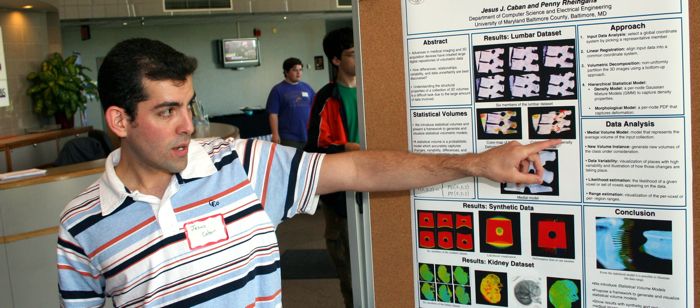
The CSEE Department will hold its annual CSEE Research Review day from 9:00am to 4:00pm on Friday, May 4, 2012. Faculty, research staff and students from the Computer Science, Computer Engineering and Electrical Engineering programs will present and discuss their latest research results via short oral presentations and a poster session.
The event is open to the public and is a good way for prospective collaborators and students to find out about the research our department is doing and meet and network with current faculty and students. See pictures from CRR-06, CRR-08, CRR-09, CRR-10 and CRR-11 to get an idea of what goes on at this event.
The 2012 CSEE Research Review (CRR-12) will take place in the large conference room of the UMBC Technology Center's business Incubator and Accelerator building on South Campus. There is ample free parking and refreshments and a free buffet lunch will be provided.
CSEE faculty, staff and students are encouraged to submit papers and posters for possible presentation by the April 12 deadline. See the CRR-12 Call for Submissions for details on how to submit research work. Awards with cash prizes will be given for the best research paper submitted by a undergraduate, M.S. and Ph.D. student and for the best three posters.
For more information, contact the CRR-11 General Chair, Professor Alan Sherman, Sorry, you need javascript to view this email address.
]]>
The CSEE Department will hold its annual CSEE Research Review day from 9:00am to 4:00pm on Friday, May 4, 2012. Faculty, research staff and students from the Computer Science, Computer Engineering...
http://www.csee.umbc.edu/2012/04/2012-umbc-csee-research-review-friday-may-4/
https://dev.my.umbc.edu/api/v0/pixel/news/13395/guest@my.umbc.edu/3d3aa3f8c631e9d67c1cca0fa6f7c880/api/pixel
csee
events
news
research
talks
Computer Science and Electrical Engineering
https://dev.my.umbc.edu/groups/csee
https://assets3-dev.my.umbc.edu/system/shared/avatars/groups/000/000/099/d117dca133c64bf78a4b7696dd007189/xsmall.png?1314043393
https://assets1-dev.my.umbc.edu/system/shared/avatars/groups/000/000/099/d117dca133c64bf78a4b7696dd007189/original.png?1314043393
https://assets1-dev.my.umbc.edu/system/shared/avatars/groups/000/000/099/d117dca133c64bf78a4b7696dd007189/xxlarge.png?1314043393
https://assets4-dev.my.umbc.edu/system/shared/avatars/groups/000/000/099/d117dca133c64bf78a4b7696dd007189/xlarge.png?1314043393
https://assets3-dev.my.umbc.edu/system/shared/avatars/groups/000/000/099/d117dca133c64bf78a4b7696dd007189/large.png?1314043393
https://assets1-dev.my.umbc.edu/system/shared/avatars/groups/000/000/099/d117dca133c64bf78a4b7696dd007189/medium.png?1314043393
https://assets2-dev.my.umbc.edu/system/shared/avatars/groups/000/000/099/d117dca133c64bf78a4b7696dd007189/small.png?1314043393
https://assets3-dev.my.umbc.edu/system/shared/avatars/groups/000/000/099/d117dca133c64bf78a4b7696dd007189/xsmall.png?1314043393
https://assets3-dev.my.umbc.edu/system/shared/avatars/groups/000/000/099/d117dca133c64bf78a4b7696dd007189/xxsmall.png?1314043393
Computer Science and Electrical Engineering
1
0
true
Tue, 03 Apr 2012 00:53:13 -0400
Fri, 13 Apr 2012 23:50:13 -0400
talk: Unsupervised Multispectral Image Classification, 11:30 Fri 46
EE Graduate Seminar
Unsupervised Multispectral Image Classification
Shih-Yu Chen
PhD (EE) Student, CSEE Dept/UMBC
11:30am-12:45pm, Friday, 6 April 2012, ITE 237
This seminar presents a new approach to unsupervised classification for multispectral imagery. It first uses a Gaussian pyramid multi- resolution technique to reduce image size from which the pixel purity index (PPI) is implemented to find regions of interest (ROIs) with PPI counts greater than zero. These PPI-found samples are further used as support vectors for a support vector machine (SVM) to classify data. The resulting SVM-classified data samples are further processed by a newly designed iterative Fishers linear discriminant analysis (IFLDA), which implements FLDA in an iterative manner to refine classification results. The experimental results show the proposed approach has great promise in unsupervised classification.
Shih-Yu Chen received the BSEE degree from Da-Yeh University in 2005, and the MSEE degree from National Chung Hsing University in 2010. He is currently a PhD (EE) student at UMBC. Mr. Chen's research interest includes medical image, remote sensing image, and vital-sign signal processing.
Host: Prof. Joel M. Morris
]]>
EE Graduate Seminar Unsupervised Multispectral Image Classification Shih-Yu Chen PhD (EE) Student, CSEE Dept/UMBC 11:30am-12:45pm, Friday, 6 April 2012, ITE 237 This seminar presents...
http://www.csee.umbc.edu/2012/03/talk-unsupervised-multispectral-image-classification-1130-fri-46/
https://dev.my.umbc.edu/api/v0/pixel/news/13311/guest@my.umbc.edu/1545dd9c9c70f25579e37c07c770d287/api/pixel
electrical-engineering
graduate
news
research
talks
Computer Science and Electrical Engineering
https://dev.my.umbc.edu/groups/csee
https://assets3-dev.my.umbc.edu/system/shared/avatars/groups/000/000/099/d117dca133c64bf78a4b7696dd007189/xsmall.png?1314043393
https://assets1-dev.my.umbc.edu/system/shared/avatars/groups/000/000/099/d117dca133c64bf78a4b7696dd007189/original.png?1314043393
https://assets1-dev.my.umbc.edu/system/shared/avatars/groups/000/000/099/d117dca133c64bf78a4b7696dd007189/xxlarge.png?1314043393
https://assets4-dev.my.umbc.edu/system/shared/avatars/groups/000/000/099/d117dca133c64bf78a4b7696dd007189/xlarge.png?1314043393
https://assets3-dev.my.umbc.edu/system/shared/avatars/groups/000/000/099/d117dca133c64bf78a4b7696dd007189/large.png?1314043393
https://assets1-dev.my.umbc.edu/system/shared/avatars/groups/000/000/099/d117dca133c64bf78a4b7696dd007189/medium.png?1314043393
https://assets2-dev.my.umbc.edu/system/shared/avatars/groups/000/000/099/d117dca133c64bf78a4b7696dd007189/small.png?1314043393
https://assets3-dev.my.umbc.edu/system/shared/avatars/groups/000/000/099/d117dca133c64bf78a4b7696dd007189/xsmall.png?1314043393
https://assets3-dev.my.umbc.edu/system/shared/avatars/groups/000/000/099/d117dca133c64bf78a4b7696dd007189/xxsmall.png?1314043393
Computer Science and Electrical Engineering
2
0
true
Fri, 30 Mar 2012 00:28:47 -0400
talk: Mid-Infrared Quantum Cascade Laser Arrays for Photoacoustic Chemical Detection
EE Graduate Seminar
High Power Mid-Infrared Quantum Cascade Laser
Arrays for Standoff Photoacoustic Chemical Detection
Xing Chen, PhD (EE) Student
Computer Science and Electrical Engineering, UMBC
11:30am-12:45pm, Friday, 30 March 2012, ITE 237
Quantum cascade lasers (QCLs) are compact, powerful, mid-infrared, Semiconductor laser sources. High power QCLs are very important to infrared counter measures (IRCM) and standoff chemical detection applications, as well as others. The performance of such systems critically depend on the amount of power that QCLs can produce. One way to achieve high power operation is to use multi-emitter phase-locked laser arrays.
The first part of the seminar presents the issues and challenges to design, fabricate, and characterize multi-emitter phase-locked QCL arrays for achieving high power operation. The second part of the seminar discusses using high power mid-infrared QCLs to perform standoff photoacoustic (PA) chemical detection. The PA effect is a photo-matter effect involving generation and detection of an acoustic signal when a gas sample absorbs electromagnetic energy (particularly of light).
In recent years, with the help of the development of mid-infrared QCLs, significant progress has been made in their use for PA chemical detection, and sensitivity has been improved significantly. Our theoretical and experimental studies of standoff photoacoustic chemical detection, using QCLs as the laser source, will be presented.
Xing Chen received the BS degree in Opto-Electronics Engineering from Huazhong University of Science and Technology in 2007, and the MSEE degree from UMBC in 2009. He is currently a PhD (EE) candidate at UMBC. Mr. Chen's research interest includes design and fabrication of high power mid-infrared phase-locked QCL arrays and application to standoff photoacoustic chemical detection.
Host: Prof. Joel M. Morris
]]>
EE Graduate Seminar High Power Mid-Infrared Quantum Cascade Laser Arrays for Standoff Photoacoustic Chemical Detection Xing Chen, PhD (EE) Student Computer Science and Electrical...
http://www.csee.umbc.edu/2012/03/talk-mid-infrared-quantum-cascade-laser-arrays-for-photoacoustic-chemical-detection/
https://dev.my.umbc.edu/api/v0/pixel/news/13217/guest@my.umbc.edu/8cd187401849f11915ccadda2d14536e/api/pixel
electrical-engineering
graduate
news
research
talks
Computer Science and Electrical Engineering
https://dev.my.umbc.edu/groups/csee
https://assets3-dev.my.umbc.edu/system/shared/avatars/groups/000/000/099/d117dca133c64bf78a4b7696dd007189/xsmall.png?1314043393
https://assets1-dev.my.umbc.edu/system/shared/avatars/groups/000/000/099/d117dca133c64bf78a4b7696dd007189/original.png?1314043393
https://assets1-dev.my.umbc.edu/system/shared/avatars/groups/000/000/099/d117dca133c64bf78a4b7696dd007189/xxlarge.png?1314043393
https://assets4-dev.my.umbc.edu/system/shared/avatars/groups/000/000/099/d117dca133c64bf78a4b7696dd007189/xlarge.png?1314043393
https://assets3-dev.my.umbc.edu/system/shared/avatars/groups/000/000/099/d117dca133c64bf78a4b7696dd007189/large.png?1314043393
https://assets1-dev.my.umbc.edu/system/shared/avatars/groups/000/000/099/d117dca133c64bf78a4b7696dd007189/medium.png?1314043393
https://assets2-dev.my.umbc.edu/system/shared/avatars/groups/000/000/099/d117dca133c64bf78a4b7696dd007189/small.png?1314043393
https://assets3-dev.my.umbc.edu/system/shared/avatars/groups/000/000/099/d117dca133c64bf78a4b7696dd007189/xsmall.png?1314043393
https://assets3-dev.my.umbc.edu/system/shared/avatars/groups/000/000/099/d117dca133c64bf78a4b7696dd007189/xxsmall.png?1314043393
Computer Science and Electrical Engineering
1
0
true
Mon, 26 Mar 2012 22:25:09 -0400
talk: Changing the Landscape of Voting and Voter Registration

Changing the Landscape of Voting and Voter Registration through Universal Design
Dr. Juan E. Gilbert
School of Computing
Clemson University
12:00-1:00pm Wednesday, 28 March 2012
room 459 ITE Building, UMBC
Subsequent to the debacle of the 2000 U.S. Presidential election, it became abundantly clear that America’s archaic voting system was in dire need of a major overhaul. Consequently, Direct Recording Electronic (DRE) voting machines were purchased by several states. The use of these machines has not been without controversy with respect to security, trust and ease of use. Professors and security research teams have found several vulnerabilities in current voting technologies. In 2002, the Help America Vote Act (HAVA) was created to provide all citizens equal access to participate in the electoral process, regardless of ability. The Prime III voting system, http://www.PrimeVotingSystem.com , is a secure, multimodal electronic voting system that takes a universal design approach to address security, trust and ease of use. Dr. Gilbert and his research team were recently awarded a $4.5 million dollar grant from the U.S. Election Assistance Commission to conduct research on accessible voting technologies.
Dr. Juan E. Gilbert is an IDEaS Professor and Chair of the Human-Centered Computing Division in the School of Computing at Clemson University where he leads the HCC Lab. He is also a Professor in the Automotive Engineering Department at Clemson University. Dr. Gilbert is a Fellow of the American Association for the Advancement Science (AAAS), an ACM Distinguished Scientist, National Associate of the National Research Council of the National Academies, an ACM Distinguished Speaker and a Senior Member of the IEEE Computer Society. In 2011, Dr. Gilbert was given a Presidential Award for Excellence in Science, Engineering and Mathematics Mentoring by President Barack Obama.
]]>
Changing the Landscape of Voting and Voter Registration through Universal Design Dr. Juan E. Gilbert School of Computing Clemson University 12:00-1:00pm Wednesday, 28 March 2012 room 459...
http://www.csee.umbc.edu/2012/03/talk-changing-the-landscape-of-voting-and-voter-registration/
https://dev.my.umbc.edu/api/v0/pixel/news/13065/guest@my.umbc.edu/30591711847654b6677d9cbc6da35664/api/pixel
fyi
research
talks
Computer Science and Electrical Engineering
https://dev.my.umbc.edu/groups/csee
https://assets3-dev.my.umbc.edu/system/shared/avatars/groups/000/000/099/d117dca133c64bf78a4b7696dd007189/xsmall.png?1314043393
https://assets1-dev.my.umbc.edu/system/shared/avatars/groups/000/000/099/d117dca133c64bf78a4b7696dd007189/original.png?1314043393
https://assets1-dev.my.umbc.edu/system/shared/avatars/groups/000/000/099/d117dca133c64bf78a4b7696dd007189/xxlarge.png?1314043393
https://assets4-dev.my.umbc.edu/system/shared/avatars/groups/000/000/099/d117dca133c64bf78a4b7696dd007189/xlarge.png?1314043393
https://assets3-dev.my.umbc.edu/system/shared/avatars/groups/000/000/099/d117dca133c64bf78a4b7696dd007189/large.png?1314043393
https://assets1-dev.my.umbc.edu/system/shared/avatars/groups/000/000/099/d117dca133c64bf78a4b7696dd007189/medium.png?1314043393
https://assets2-dev.my.umbc.edu/system/shared/avatars/groups/000/000/099/d117dca133c64bf78a4b7696dd007189/small.png?1314043393
https://assets3-dev.my.umbc.edu/system/shared/avatars/groups/000/000/099/d117dca133c64bf78a4b7696dd007189/xsmall.png?1314043393
https://assets3-dev.my.umbc.edu/system/shared/avatars/groups/000/000/099/d117dca133c64bf78a4b7696dd007189/xxsmall.png?1314043393
Computer Science and Electrical Engineering
1
0
true
Mon, 19 Mar 2012 10:31:45 -0400
Mon, 19 Mar 2012 10:31:45 -0400
talk: Interaction with Virtual Environments, 3/27
Interaction with Virtual Environments
Tabitha C. Peck
Event Lab, University of Barcelona
1:00pm Tuesday 27 March 2012, ITE32bb, UMBC
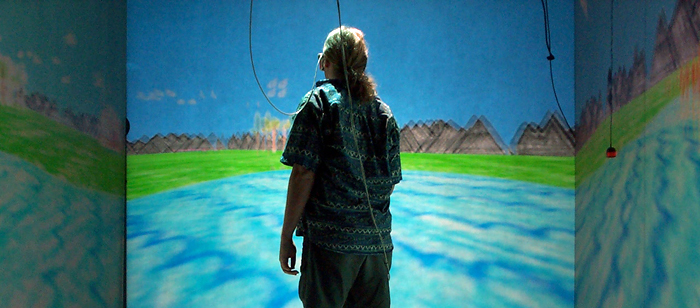
Immersive virtual environments (VEs) enable user-controlled interactions within a computer-generated virtual world, such as head-controlled point-of-view, user-controlled locomotion, and user-controlled self-avatars. In this talk I will present three projects focusing on the development of VE systems through understanding human interactions within the VE. The first project presents a VE system that enables users to really walk through VEs that are larger than the tracker-space by manipulating the imprecisions of the human visual system. The remaining two projects focus on virtual embodiment. The theory of embodiment is based on the plasticity of the human mind and its ability to accept a virtual avatar’s body as its own. One theory as to why embodiment works, following the same underlying principles thought to cause the “rubber hand illusion” from cognitive psychology, is that when given appropriate visual and/or haptic stimuli, people will accept an external representation of a body part as their own. This effect has been shown to extend to full-body avatars in virtual environments. I will present one project that demonstrates, through electroencephalography (EEG), that people respond to a virtual avatar as if it is their own body, and a second project that explores harnessing the powers of embodiment to reduce racism and study other psychological issues.
My name is Tabitha C. Peck and I am a post-doctoral researcher at the Event Lab in Barcelona, Spain working with Professor Mel Slater. I received my PhD from The University of North Carolina at Chapel Hill under the supervision of Professors Henry Fuchs and Mary C. Whitton. My PhD research focused on locomotion interfaces in virtual environments and enabling people to physically walk in small spaces while walking in much larger virtual spaces. I am currently working in the European project, Virtual Embodiment and Robotic Re-Embodiment (VERE), and my current research focuses on the psychological effects of embodiment in virtual environments. My research interests include immersive virtual environments, virtual embodiment, human-computer interaction, 3D user interfaces, locomotion, navigation, system design and evaluation, and human perception.
]]>
Interaction with Virtual Environments Tabitha C. Peck Event Lab, University of Barcelona 1:00pm Tuesday 27 March 2012, ITE32bb, UMBC Immersive virtual environments (VEs) enable...
http://www.csee.umbc.edu/2012/03/talk-interaction-with-virtual-environments-327/
https://dev.my.umbc.edu/api/v0/pixel/news/13059/guest@my.umbc.edu/e4db073ded9041363c499d999236b63d/api/pixel
news
research
talks
Computer Science and Electrical Engineering
https://dev.my.umbc.edu/groups/csee
https://assets3-dev.my.umbc.edu/system/shared/avatars/groups/000/000/099/d117dca133c64bf78a4b7696dd007189/xsmall.png?1314043393
https://assets1-dev.my.umbc.edu/system/shared/avatars/groups/000/000/099/d117dca133c64bf78a4b7696dd007189/original.png?1314043393
https://assets1-dev.my.umbc.edu/system/shared/avatars/groups/000/000/099/d117dca133c64bf78a4b7696dd007189/xxlarge.png?1314043393
https://assets4-dev.my.umbc.edu/system/shared/avatars/groups/000/000/099/d117dca133c64bf78a4b7696dd007189/xlarge.png?1314043393
https://assets3-dev.my.umbc.edu/system/shared/avatars/groups/000/000/099/d117dca133c64bf78a4b7696dd007189/large.png?1314043393
https://assets1-dev.my.umbc.edu/system/shared/avatars/groups/000/000/099/d117dca133c64bf78a4b7696dd007189/medium.png?1314043393
https://assets2-dev.my.umbc.edu/system/shared/avatars/groups/000/000/099/d117dca133c64bf78a4b7696dd007189/small.png?1314043393
https://assets3-dev.my.umbc.edu/system/shared/avatars/groups/000/000/099/d117dca133c64bf78a4b7696dd007189/xsmall.png?1314043393
https://assets3-dev.my.umbc.edu/system/shared/avatars/groups/000/000/099/d117dca133c64bf78a4b7696dd007189/xxsmall.png?1314043393
Computer Science and Electrical Engineering
1
0
true
Mon, 19 Mar 2012 00:04:40 -0400
talk: Securing Cyber-Physical Systems, 3/26

Securing Cyber-Physical Systems
Alvaro Cardenas
Fujitsu Laboratories of America
1:00pm Monday 26 March 2012, ITE 325b, UMBC
Our critical infrastructure systems are being modernized with information and communication technologies to face the operational requirements and efficiency challenges of the 21st century. The smart grid in particular, will introduce millions of new intelligent components to the electric grid, buildings, and homes within the next decade. While this modernization will bring many operational benefits to infrastructure systems, it will also introduce new vulnerabilities, a larger attack surface, and raise privacy concerns.
This presentation will be divided in three parts. The first part of the talk will cover the unique and fundamentally new challenges and solutions required for securing cyber-physical systems. The second part of the talk will focus on new mechanisms for securing cyber-physical systems. The final part of the talk will cover my other research interests in intrusion detection and future plans for big-data security.
Alvaro A. Cárdenas is a research staff engineer at Fujitsu Laboratories of America. Prior to this he was a postdoctoral fellow at the University of California, Berkeley working in securing critical infrastructure systems. His research focuses on network security, the smart grid and other cyber-physical systems, intrusion detection and big data security. He has received numerous awards for his research including a best paper award from the U.S. Army Research Office, a best presentation award from the IEEE, a fellowship from the University of Maryland, and a Distinguished Assistantship from the Institute of Systems Research. He has also been an invited visiting professor at the University of Cagliari. Alvaro holds M.S. and Ph.D. degrees from the University of Maryland, College Park, and a B.S. from Universidad de los Andes.
See http://csee.umbc.edu/talks for more information
]]>
Securing Cyber-Physical Systems Alvaro Cardenas Fujitsu Laboratories of America 1:00pm Monday 26 March 2012, ITE 325b, UMBC Our critical infrastructure systems are being modernized...
http://www.csee.umbc.edu/2012/03/talk-securing-cyber-physical-systems-326/
https://dev.my.umbc.edu/api/v0/pixel/news/13056/guest@my.umbc.edu/57fa7e3f0d89a046405e689b1e186e8b/api/pixel
cybersecurity
news
research
talks
Computer Science and Electrical Engineering
https://dev.my.umbc.edu/groups/csee
https://assets3-dev.my.umbc.edu/system/shared/avatars/groups/000/000/099/d117dca133c64bf78a4b7696dd007189/xsmall.png?1314043393
https://assets1-dev.my.umbc.edu/system/shared/avatars/groups/000/000/099/d117dca133c64bf78a4b7696dd007189/original.png?1314043393
https://assets1-dev.my.umbc.edu/system/shared/avatars/groups/000/000/099/d117dca133c64bf78a4b7696dd007189/xxlarge.png?1314043393
https://assets4-dev.my.umbc.edu/system/shared/avatars/groups/000/000/099/d117dca133c64bf78a4b7696dd007189/xlarge.png?1314043393
https://assets3-dev.my.umbc.edu/system/shared/avatars/groups/000/000/099/d117dca133c64bf78a4b7696dd007189/large.png?1314043393
https://assets1-dev.my.umbc.edu/system/shared/avatars/groups/000/000/099/d117dca133c64bf78a4b7696dd007189/medium.png?1314043393
https://assets2-dev.my.umbc.edu/system/shared/avatars/groups/000/000/099/d117dca133c64bf78a4b7696dd007189/small.png?1314043393
https://assets3-dev.my.umbc.edu/system/shared/avatars/groups/000/000/099/d117dca133c64bf78a4b7696dd007189/xsmall.png?1314043393
https://assets3-dev.my.umbc.edu/system/shared/avatars/groups/000/000/099/d117dca133c64bf78a4b7696dd007189/xxsmall.png?1314043393
Computer Science and Electrical Engineering
1
0
true
Sun, 18 Mar 2012 20:08:14 -0400
Talk: Kapitanova on Addressing failures in wireless sensor networks
Addressing failures in wireless sensor networks
Krasimira Kapitanova
University of Virginia
1:00pm Wednesday 28 March, 2012, ITE 325b, UMBC
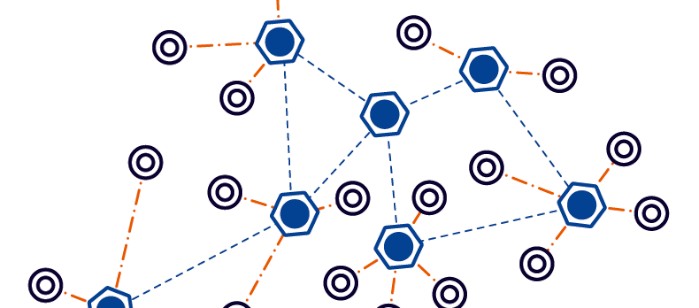
Wireless sensor networks are now being used for a growing number of applications, from mission critical applications, including fire-fighting, emergency response, infrastructure monitoring, and medical application, to smart home applications, such as home automation, energy efficiency, and home security. These applications must operate reliably and continuously due to the high costs associated with system failure and maintenance. However, continuous and reliable operation of sensor networks is notoriously difficult to guarantee due to hardware degradation and environmental changes, which can cause operating conditions that were impossible for the original system designers to foresee. Recent studies have found that low-cost sensors suffer from many types of faults. Inexpensive nodes can break and battery-powered nodes lose power. Furthermore, sensor network installations suffer from a large number of non-fail-stop faults in which the sensor does not completely fail. Instead, it continues to report values, but the meaning of the values changes or becomes invalid. This talk will discuss a number of new run-time techniques that use application-level semantics to detect, assess, and adapt to sensor node failures.
Krasimira Kapitanova is a PhD candidate of Computer Science at the University of Virginia. Her research focuses on wireless sensor network, in particular using formal approaches for event description and detection. She is also interested in how testing and machine learning techniques can be used to improve the reliability of sensor network applications.
Host: Tim Finin
]]>
Addressing failures in wireless sensor networks Krasimira Kapitanova University of Virginia 1:00pm Wednesday 28 March, 2012, ITE 325b, UMBC Wireless sensor networks are now being used for...
http://www.csee.umbc.edu/2012/03/talk-kapitanova-on-addressing-failures-in-wireless-sensor-networks/
https://dev.my.umbc.edu/api/v0/pixel/news/13051/guest@my.umbc.edu/5899335172fc7ae87f17e6b80fa0ed3c/api/pixel
news
research
talks
Computer Science and Electrical Engineering
https://dev.my.umbc.edu/groups/csee
https://assets3-dev.my.umbc.edu/system/shared/avatars/groups/000/000/099/d117dca133c64bf78a4b7696dd007189/xsmall.png?1314043393
https://assets1-dev.my.umbc.edu/system/shared/avatars/groups/000/000/099/d117dca133c64bf78a4b7696dd007189/original.png?1314043393
https://assets1-dev.my.umbc.edu/system/shared/avatars/groups/000/000/099/d117dca133c64bf78a4b7696dd007189/xxlarge.png?1314043393
https://assets4-dev.my.umbc.edu/system/shared/avatars/groups/000/000/099/d117dca133c64bf78a4b7696dd007189/xlarge.png?1314043393
https://assets3-dev.my.umbc.edu/system/shared/avatars/groups/000/000/099/d117dca133c64bf78a4b7696dd007189/large.png?1314043393
https://assets1-dev.my.umbc.edu/system/shared/avatars/groups/000/000/099/d117dca133c64bf78a4b7696dd007189/medium.png?1314043393
https://assets2-dev.my.umbc.edu/system/shared/avatars/groups/000/000/099/d117dca133c64bf78a4b7696dd007189/small.png?1314043393
https://assets3-dev.my.umbc.edu/system/shared/avatars/groups/000/000/099/d117dca133c64bf78a4b7696dd007189/xsmall.png?1314043393
https://assets3-dev.my.umbc.edu/system/shared/avatars/groups/000/000/099/d117dca133c64bf78a4b7696dd007189/xxsmall.png?1314043393
Computer Science and Electrical Engineering
1
0
true
Sun, 18 Mar 2012 07:48:20 -0400
Sun, 18 Mar 2012 07:48:20 -0400
talk: Barsky on Suffix trees for very large strings
Suffix trees for very large strings
Dr. Marina Barsky
University of Illinois at Urbana-Champaign
1:00pm Friday, 30 March 2012, ITE 325b, UMBC
The seminar is dedicated to the construction of suffix trees in external memory. A suffix tree is a compact index of all substrings of a given text. While being asymptotically linear in the size of the input, in practice, suffix trees can easily be 50 times larger than the input. As such, suffix trees often exceed typical main memory sizes, even when the input does not. As most existing algorithms are designed for RAM, their performance severely degrades when the tree and/or input do not fit in main memory. So far, this has prevented the wide application of suffix trees for the analysis of massive string collections.
We will look at new advanced methods of suffix tree construction which circumvent memory concerns and allow us to construct suffix trees for inputs of any size using secondary storage (magnetic disks). We will also discuss how this disk-based index can be used for facilitating the pattern discovery in sequential data.
Dr. Marina Barsky is currently a Post-Doctoral fellow in the Department of Computer Science at the University of Illinois at Urbana-Champaign, IL. She received her PhD in Computer Science from the University of Victoria, British Columbia, Canada in 2010. A large part of her post-graduate research was dedicated to pattern discovery in string data, primarily in massive DNA databases. She is currently expanding her expertise in database systems to new areas such as index management and data mining. Her research interests include data mining of sequential data, information networks, and teaching of computer science through interactive interfaces.
Host: Richard Chang
]]>
Suffix trees for very large strings Dr. Marina Barsky University of Illinois at Urbana-Champaign 1:00pm Friday, 30 March 2012, ITE 325b, UMBC The seminar is dedicated to the construction...
http://www.csee.umbc.edu/2012/03/talk-barsky-on-suffix-trees-for-very-large-strings/
https://dev.my.umbc.edu/api/v0/pixel/news/13046/guest@my.umbc.edu/4e6b05568a8507891b7a5321e21e12be/api/pixel
news
research
talks
Computer Science and Electrical Engineering
https://dev.my.umbc.edu/groups/csee
https://assets3-dev.my.umbc.edu/system/shared/avatars/groups/000/000/099/d117dca133c64bf78a4b7696dd007189/xsmall.png?1314043393
https://assets1-dev.my.umbc.edu/system/shared/avatars/groups/000/000/099/d117dca133c64bf78a4b7696dd007189/original.png?1314043393
https://assets1-dev.my.umbc.edu/system/shared/avatars/groups/000/000/099/d117dca133c64bf78a4b7696dd007189/xxlarge.png?1314043393
https://assets4-dev.my.umbc.edu/system/shared/avatars/groups/000/000/099/d117dca133c64bf78a4b7696dd007189/xlarge.png?1314043393
https://assets3-dev.my.umbc.edu/system/shared/avatars/groups/000/000/099/d117dca133c64bf78a4b7696dd007189/large.png?1314043393
https://assets1-dev.my.umbc.edu/system/shared/avatars/groups/000/000/099/d117dca133c64bf78a4b7696dd007189/medium.png?1314043393
https://assets2-dev.my.umbc.edu/system/shared/avatars/groups/000/000/099/d117dca133c64bf78a4b7696dd007189/small.png?1314043393
https://assets3-dev.my.umbc.edu/system/shared/avatars/groups/000/000/099/d117dca133c64bf78a4b7696dd007189/xsmall.png?1314043393
https://assets3-dev.my.umbc.edu/system/shared/avatars/groups/000/000/099/d117dca133c64bf78a4b7696dd007189/xxsmall.png?1314043393
Computer Science and Electrical Engineering
1
0
true
Fri, 16 Mar 2012 23:56:22 -0400
Thu, 29 Mar 2012 00:56:22 -0400
