talk: Transition from the Academic World to Corporate Culture, 11:30 Fri 3/16
EE Graduate Seminar
From Backpack to Briefcase: Transition from
the Academic World to Corporate Culture
George W. Reynolds
Director, Industry and University Initiatives
Northrop Grumman Electronic Systems
11:30-12:45pm Friday 16 March 2012, ITE 237
This seminar explores the pitfalls that new hires can encounter as they transition to the corporate world from academia. We explore the personal characteristics that people will evaluate, over and above performance. We will learn the importance of having appropriate, unbiased mentors and how to choose them, as well as strategies to develop key relationships that add value to our career growth and non-technical education. The importance of image and appropriate wardrobe for success will be addressed in addition to what top executives look for when selecting staff with leadership potential.
George Reynolds is a licensed professional engineer with over forty years of experience with the Westinghouse Electric and Northrop Grumman Corporations. His current responsibilities include establishing key strategic relationships with selected universities for long-term research, business and recruitment partnerships. He is also responsible for sector wide initiatives that include knowledge management and introducing lean thinking into engineering and manufacturing organizations.
Mr. Reynolds has served as industry liaison for the Lean Aerospace/ Advancement initiatives at MIT since its inception in 1992. He also serves as the chairman and/or member of numerous engineering Advisory Boards for major universities, and is the past Chairman of the Aerospace Industries Associations Engineering Management Committee. Mr. Reynolds was selected as National Black Engineer of the Year for Professional Achievement in Industry in 1991, and Black Engineer of the Year for Corporate Support of Engineering Education in 2008. He is one of three people in the nation to receive two of these awards. In 2001, he was awarded the Distinguished Black Marylander Award.
Mr. Reynolds holds a B.S. in Engineering from Howard University, an M.S. in Engineering Administration from George Washington University, and is a graduate of the Program for Management Development at Harvard School of Business. He is also a Johns Hopkins Fellow in the Management of Change. He holds a black belt in Six Sigma and is an expert in Lean Thinking. Mr. Reynolds holds a commercial pilots license with multi-engine and jet ratings.
Host: Prof. Joel M. Morris
]]>
EE Graduate Seminar From Backpack to Briefcase: Transition from the Academic World to Corporate Culture George W. Reynolds Director, Industry and University Initiatives Northrop Grumman...
http://www.csee.umbc.edu/2012/03/talk-transition-from-the-academic-world-to-corporate-culture-1130-fri-316/
https://dev.my.umbc.edu/api/v0/pixel/news/12981/guest@my.umbc.edu/3deb6b2f313565d24a90ec725a59f5c1/api/pixel
electrical-engineering
news
talks
Computer Science and Electrical Engineering
https://dev.my.umbc.edu/groups/csee
https://assets3-dev.my.umbc.edu/system/shared/avatars/groups/000/000/099/d117dca133c64bf78a4b7696dd007189/xsmall.png?1314043393
https://assets1-dev.my.umbc.edu/system/shared/avatars/groups/000/000/099/d117dca133c64bf78a4b7696dd007189/original.png?1314043393
https://assets1-dev.my.umbc.edu/system/shared/avatars/groups/000/000/099/d117dca133c64bf78a4b7696dd007189/xxlarge.png?1314043393
https://assets4-dev.my.umbc.edu/system/shared/avatars/groups/000/000/099/d117dca133c64bf78a4b7696dd007189/xlarge.png?1314043393
https://assets3-dev.my.umbc.edu/system/shared/avatars/groups/000/000/099/d117dca133c64bf78a4b7696dd007189/large.png?1314043393
https://assets1-dev.my.umbc.edu/system/shared/avatars/groups/000/000/099/d117dca133c64bf78a4b7696dd007189/medium.png?1314043393
https://assets2-dev.my.umbc.edu/system/shared/avatars/groups/000/000/099/d117dca133c64bf78a4b7696dd007189/small.png?1314043393
https://assets3-dev.my.umbc.edu/system/shared/avatars/groups/000/000/099/d117dca133c64bf78a4b7696dd007189/xsmall.png?1314043393
https://assets3-dev.my.umbc.edu/system/shared/avatars/groups/000/000/099/d117dca133c64bf78a4b7696dd007189/xxsmall.png?1314043393
Computer Science and Electrical Engineering
1
0
true
Wed, 14 Mar 2012 11:40:43 -0400
Wed, 14 Mar 2012 11:40:43 -0400
talk: Ram Sriram on Cyber-Physical Social Systems April 6

Cyber-Physical Social Systems: Research Challenges
Ram D. Sriram
Chief, Software and Systems Division
Information Technology Laboratory
National Institute of Standards and Technology
1:00pm 6 April 2012, ITE325 UMBC
We are witnessing a new revolution in computing and communication. The Internet, which has spanned several networks in a wide variety of domains, is having a significant impact on every aspect of our lives. The next generation of networks will utilize a wide variety of resources with significant sensing capabilities. Such networks will extend beyond physically linked computers to include multimodal information from biological, cognitive, semantic, and social networks. This paradigm shift will involve symbiotic networks of people (social networks), intelligent devices, and mobile personal computing and communication devices (mPCDs), that will form net-centric societies (NCS) or cyber-physical social systems (CPSS). mPCDs are already equipped with myriad sensors, with regular updates of additional sensing capabilities. Additionally, we are witnessing the emergence of “intelligent devices,” such as smart meters, smart cars, etc., with considerable sensing and networking capabilities. Hence, these devices – and the network — will be constantly sensing, monitoring, and interpreting the environment; this is sometimes referred to as the Internet of Things (IOT). The symbiosis of IOT and social networks will have significant implications for both the market for advanced computing and communication infrastructure and the future markets – for nearly 4.5 billion people — that CPSS will create. In this seminar, I will provide an overview of the Software and Systems Division at NIST, followed by a discussion of research challenges for CPSS with a specific focus on smart healthcare.
Dr. Ram D. Sriram is currently the chief of the Software and Systems Division, Information Technology Laboratory, at the National Institute of Standards and Technology. Before joining the Software and Systems Division, Sriram was the leader of the Design and Process group in the Manufacturing Systems Integration Division, Manufacturing Engineering Laboratory, where he conducted research on standards for interoperability of computer-aided design systems. He was also the manager of the Sustainable Manufacturing Program. Prior to joining NIST, he was on the engineering faculty (1986-1994) at the Massachusetts Institute of Technology (MIT) and was instrumental in setting up the Intelligent Engineering Systems Laboratory. Sriram has co-authored or authored nearly 250 publications, including several books. Sriram was a founding co-editor of the International Journal for AI in Engineering. In 1989, he was awarded a Presidential Young Investigator Award from the National Science Foundation. In 2011, Sriram received the ASME Design Automation Award for his work on computer-supported collaborative design. Sriram is a Fellow of ASME and AAAS, a member (life) of ACM, a Senior Member of the IEEE, and a member (life) of AAAI. Sriram has a B.Tech. from IIT, Madras, India, and an M.S. and a Ph.D. from Carnegie Mellon University, Pittsburgh, USA.
Host: Yelena Yesha
]]>
Cyber-Physical Social Systems: Research Challenges Ram D. Sriram Chief, Software and Systems Division Information Technology Laboratory National Institute of Standards and Technology...
http://www.csee.umbc.edu/2012/03/talk-ram-sriram-on-cyber-physical-social-systems-april-6/
https://dev.my.umbc.edu/api/v0/pixel/news/12970/guest@my.umbc.edu/d50de9c1bad88dcf76e8846d9a53da29/api/pixel
news
research
talks
Computer Science and Electrical Engineering
https://dev.my.umbc.edu/groups/csee
https://assets3-dev.my.umbc.edu/system/shared/avatars/groups/000/000/099/d117dca133c64bf78a4b7696dd007189/xsmall.png?1314043393
https://assets1-dev.my.umbc.edu/system/shared/avatars/groups/000/000/099/d117dca133c64bf78a4b7696dd007189/original.png?1314043393
https://assets1-dev.my.umbc.edu/system/shared/avatars/groups/000/000/099/d117dca133c64bf78a4b7696dd007189/xxlarge.png?1314043393
https://assets4-dev.my.umbc.edu/system/shared/avatars/groups/000/000/099/d117dca133c64bf78a4b7696dd007189/xlarge.png?1314043393
https://assets3-dev.my.umbc.edu/system/shared/avatars/groups/000/000/099/d117dca133c64bf78a4b7696dd007189/large.png?1314043393
https://assets1-dev.my.umbc.edu/system/shared/avatars/groups/000/000/099/d117dca133c64bf78a4b7696dd007189/medium.png?1314043393
https://assets2-dev.my.umbc.edu/system/shared/avatars/groups/000/000/099/d117dca133c64bf78a4b7696dd007189/small.png?1314043393
https://assets3-dev.my.umbc.edu/system/shared/avatars/groups/000/000/099/d117dca133c64bf78a4b7696dd007189/xsmall.png?1314043393
https://assets3-dev.my.umbc.edu/system/shared/avatars/groups/000/000/099/d117dca133c64bf78a4b7696dd007189/xxsmall.png?1314043393
Computer Science and Electrical Engineering
1
0
true
Wed, 14 Mar 2012 08:08:50 -0400
Fri, 30 Mar 2012 00:40:50 -0400
talk: Self-sustainable Cyber-physical System Design
Self-sustainable Cyber-physical System Design
Dr. Nilanjan Banerjee
University of Arkansas Fayetteville
1:00pm Tuesday 13 March 2012, ITE 325b UMBC
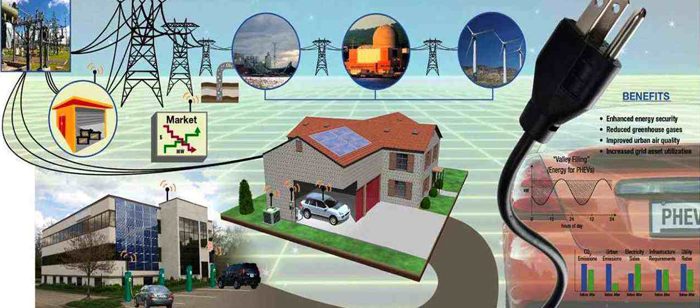
Renewable energy can enable diverse self-sustainable cyber-physical systems with applications ranging from healthcare to off-grid home energy management. However, there are several challenges that need to be addressed before such systems can be realized. For instance, how do we balance the small and often variable energy budgets imposed by renewables with system functionality? How can we design sensitive physical sensors and efficient harvesting circuits for mW energy sources such as sound and indoor light? For systems such as off-grid homes that interact with humans, how do we balance demand and supply while being cognizant to usability needs?
In this talk, I will present techniques that address these challenges. Specifically, I will propose a Hierarchical Power Management paradigm that combines platforms with varied energy needs to balance energy consumption and functionality, the design of an efficient harvester for sound scavenging, and sensitive ECG sensors. I will also present a measurement study that reveals the energy management challenges faced by off-grid home residents. Finally, I will conclude with the design of a solar replayer platform that allows immense flexibility in evaluating solar panel driven systems, and works for a wide range of panels.
Nilanjan Banerjee is an Assistant Professor in the department of Computer Science and Computer Engineering at University of Arkansas Fayetteville. He graduated with a M.S. and a Ph.D. from the University of Massachusetts at Amherst in 2009 and a BTech. (Hons.) from IIT Kharagpur in 2004. He has won the Yahoo! Outstanding dissertation award at UMass, a best undergraduate thesis award at IIT Kharagpur, and an Outstanding Researcher award at University of Arkansas. He is a 2011 NSF Career awardee and has won three other NSF awards (including the NSF I-Corp grant). His research interests span renewable energy driven systems, healthcare systems, and mobile systems.
Host: Anupam Joshi
See http://csee.umbc.edu/talks for more information
]]>
Self-sustainable Cyber-physical System Design Dr. Nilanjan Banerjee University of Arkansas Fayetteville 1:00pm Tuesday 13 March 2012, ITE 325b UMBC Renewable energy can enable diverse...
http://www.csee.umbc.edu/2012/03/talk-self-sustainable-cyber-physical-system-design/
https://dev.my.umbc.edu/api/v0/pixel/news/12874/guest@my.umbc.edu/649502cf0ae91475c5e9a7f9d4e7c4e0/api/pixel
cybersecurity
news
research
talks
Computer Science and Electrical Engineering
https://dev.my.umbc.edu/groups/csee
https://assets3-dev.my.umbc.edu/system/shared/avatars/groups/000/000/099/d117dca133c64bf78a4b7696dd007189/xsmall.png?1314043393
https://assets1-dev.my.umbc.edu/system/shared/avatars/groups/000/000/099/d117dca133c64bf78a4b7696dd007189/original.png?1314043393
https://assets1-dev.my.umbc.edu/system/shared/avatars/groups/000/000/099/d117dca133c64bf78a4b7696dd007189/xxlarge.png?1314043393
https://assets4-dev.my.umbc.edu/system/shared/avatars/groups/000/000/099/d117dca133c64bf78a4b7696dd007189/xlarge.png?1314043393
https://assets3-dev.my.umbc.edu/system/shared/avatars/groups/000/000/099/d117dca133c64bf78a4b7696dd007189/large.png?1314043393
https://assets1-dev.my.umbc.edu/system/shared/avatars/groups/000/000/099/d117dca133c64bf78a4b7696dd007189/medium.png?1314043393
https://assets2-dev.my.umbc.edu/system/shared/avatars/groups/000/000/099/d117dca133c64bf78a4b7696dd007189/small.png?1314043393
https://assets3-dev.my.umbc.edu/system/shared/avatars/groups/000/000/099/d117dca133c64bf78a4b7696dd007189/xsmall.png?1314043393
https://assets3-dev.my.umbc.edu/system/shared/avatars/groups/000/000/099/d117dca133c64bf78a4b7696dd007189/xxsmall.png?1314043393
Computer Science and Electrical Engineering
2
0
true
Sat, 10 Mar 2012 00:33:07 -0500
Sat, 10 Mar 2012 00:33:07 -0500
talk: Analytics for Detecting Web and Social Media Abuse
Analytics for Detecting Web and Social Media Abuse
Dr. Justin Ma, UC Berkeley
1:00pm Friday 16 March 2012, ITE 325, UMBC
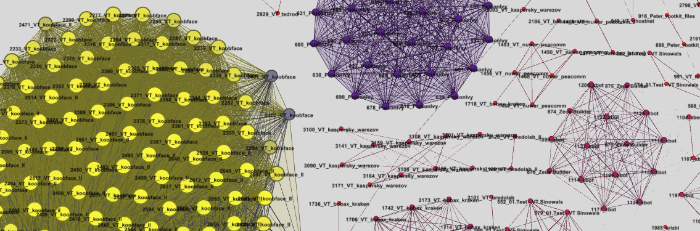
The Web and online social media provide invaluable communication services to a global Internet user base. The tremendous success of these services, however, has also created valuable opportunities for criminals and other miscreants to abuse them for their own gain. As a result, it is both an important yet challenging problem to detect, monitor, and curtail this abuse. However, the large scale and diversity of these services, combined with the tactics used by attackers, make it difficult to discern one clear and robust signal for detecting abuse. One approach, relying on domain expertise, is to construct a small set of well-crafted heuristics, but such heuristics tend to rapidly become obsolete. In this talk, I will describe more robust approaches based on machine learning, statistical modeling, and large-scale analytics of large data sets.
First I will describe online learning approaches for detecting malicious Web sites (those involved in criminal scams) using lexical and host-based features of the associated URLs. This application is particularly appropriate for online algorithms as the size of the training data is larger than can be efficiently processed in batch and because the features that typify malicious URLs evolve continuously. Motivated by this application, we built a real-time system to gather URL features and analyze them against a source of labeled URLs from a large Web mail provider. Our system adapts in an online fashion to the evolving characteristics of malicious URLs, achieving daily classification accuracies up to 99% over a balanced data set.
Next I will describe our ongoing efforts for creating analytics for detecting social media abuse. Deciding on a universal definition of social media abuse is difficult, as abuse is often in the eye of the beholder. In light of this challenge, we explore a more formal definition based on information theory. In particular, we hypothesize that messages with low information content are likely to be abusive. From this, we develop a measure of content complexity to identify abusive users that shows promise in our early evaluations.
In addition to our own experiments in the lab, this work has found success in practice as well. Companies serving hundreds of millions of users have adopted these ideas to improve abuse detection within their own services.
Justin Ma is a postdoc in the UC Berkeley AMPLab. His primary research is in systems security, and his other interests include applications of machine learning to systems problems, systems for large-scale machine learning, and the impact of energy availability on computing. He received B.S. degrees in Computer Science and Mathematics from the University of Maryland in 2004, and he received his Ph.D. in Computer Science from UC San Diego in 2010.
Host: Anupam Joshi
See http://csee.umbc.edu/talks for more information
]]>
Analytics for Detecting Web and Social Media Abuse Dr. Justin Ma, UC Berkeley 1:00pm Friday 16 March 2012, ITE 325, UMBC The Web and online social media provide invaluable communication...
http://www.csee.umbc.edu/2012/03/talk-analytics-for-detecting-web-and-social-media-abuse-1pm-316/
https://dev.my.umbc.edu/api/v0/pixel/news/12876/guest@my.umbc.edu/6a06d76cfa8a670f2da3ca3d89138744/api/pixel
cybersecurity
news
research
security
social-media
talks
web
Computer Science and Electrical Engineering
https://dev.my.umbc.edu/groups/csee
https://assets3-dev.my.umbc.edu/system/shared/avatars/groups/000/000/099/d117dca133c64bf78a4b7696dd007189/xsmall.png?1314043393
https://assets1-dev.my.umbc.edu/system/shared/avatars/groups/000/000/099/d117dca133c64bf78a4b7696dd007189/original.png?1314043393
https://assets1-dev.my.umbc.edu/system/shared/avatars/groups/000/000/099/d117dca133c64bf78a4b7696dd007189/xxlarge.png?1314043393
https://assets4-dev.my.umbc.edu/system/shared/avatars/groups/000/000/099/d117dca133c64bf78a4b7696dd007189/xlarge.png?1314043393
https://assets3-dev.my.umbc.edu/system/shared/avatars/groups/000/000/099/d117dca133c64bf78a4b7696dd007189/large.png?1314043393
https://assets1-dev.my.umbc.edu/system/shared/avatars/groups/000/000/099/d117dca133c64bf78a4b7696dd007189/medium.png?1314043393
https://assets2-dev.my.umbc.edu/system/shared/avatars/groups/000/000/099/d117dca133c64bf78a4b7696dd007189/small.png?1314043393
https://assets3-dev.my.umbc.edu/system/shared/avatars/groups/000/000/099/d117dca133c64bf78a4b7696dd007189/xsmall.png?1314043393
https://assets3-dev.my.umbc.edu/system/shared/avatars/groups/000/000/099/d117dca133c64bf78a4b7696dd007189/xxsmall.png?1314043393
Computer Science and Electrical Engineering
2
0
true
Sat, 10 Mar 2012 00:01:06 -0500
Wed, 14 Mar 2012 00:01:06 -0400
talk: Energy Efficient and High Performance Architectures for DSP and Communication Applications
EE Graduate Seminar
Energy Efficient and High Performance Architectures
for DSP and Communication Applications
Tinoosh Mohsenin, PhD
Assistant Professor of Computer Engineering
CSEE Dept/UMBC
11:30am-12:45pm, 9 March 2012, ITE 231
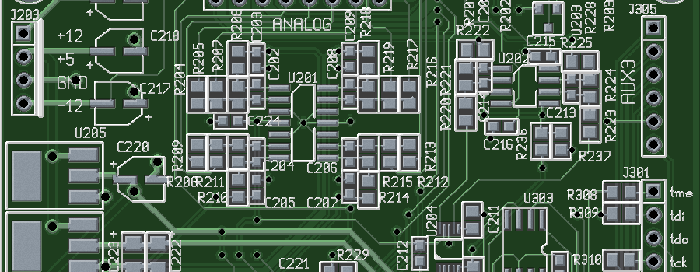
Many emerging and future communication applications require a significant amount of high throughput data processing and operate with decreasing power budgets. This need for greater energy efficiency and improved performance of electronic devices demands co-optimization of algorithms, architectures, and implementations. This talk presents several design projects that illustrate the cross-domain optimization.
The design of System-on-Chip (SoC) blocks becomes increasingly sophisticated with emergent communication standards that have large real-time computational requirements. Two such algorithms, Low Density Parity Check (LDPC) decoding and Compressive Sensing (CS), have received significant attention. LDPC decoding is an error correction technique which has shown superior error correction performance and has been adopted by several recent communication standards. Compressive sensing is a revolutionary technique which reduces the amount of data collected during acquisition and allows sparse signals and images to be recovered from very few samples compared to the traditional Nyquist sampling. While both LDPC decoding and compressive sampling have several advantages, they require high computational intensive algorithms which typically suffer from high power consumption and low clock rates. This talk presents novel algorithms and architectures to address these challenges.
As future communication systems demand increasing flexibility and performance within a limited power budget, multi-core and many-core chip architectures have become a promising solution. The design and implementation of a many-core platform capable of performing DSP applications is presented. The low power and low area core processors are connected through a hierarchical network structure. The network protocol includes contention resolution for high data traffic between cores. The result is a platform with higher performance and lower power consumption than a traditional DSP with the ease of programmability lacking in an ASIC. Early post place and route results from a standard-cell design gives processor areas of 0.078 mm2 each using TSMCs 65 nm.
Dr. Mohsenin received the B.S. degree in electrical engineering from the Sharif University of Technology, Iran and the M.S. and PhD degrees in electrical and computer engineering from Rice University and University of California Davis in 2004 and 2010, respectively. In 2011, she joined the Department of Computer Science and Electrical Engineering at the University of Maryland Baltimore County where she is currently an Assistant Professor. Dr. Mohsenin's research interests lie in the areas of high performance and energy-efficiency in programmable and special purpose processors. She is the director of the Energy Efficient High Performance Computing (EEPC) Lab, where she leads projects in architecture, hardware, software tools, and applications for VLSI computation with an emphasis on DSP workloads. Dr. Mohsenin has been consultant to early stage technology companies and currently serves as a member of the Technical Program Committees of the IEEE Biomedical Circuits & Systems Conference (BioCAS), the Life Science Systems and Applications Workshop (LiSSA), and IEEE Women in Circuits and Systems (WiCAS).
Host: Prof. Joel M. Morris
]]>
EE Graduate Seminar Energy Efficient and High Performance Architectures for DSP and Communication Applications Tinoosh Mohsenin, PhD Assistant Professor of Computer Engineering CSEE...
http://www.csee.umbc.edu/2012/03/talk-energy-efficient-and-high-performance-architectures-for-dsp-and-communication-applications/
https://dev.my.umbc.edu/api/v0/pixel/news/12761/guest@my.umbc.edu/7466a6e0cd17a96b95868d42b2669975/api/pixel
faculty-and-staff
news
research
talks
Computer Science and Electrical Engineering
https://dev.my.umbc.edu/groups/csee
https://assets3-dev.my.umbc.edu/system/shared/avatars/groups/000/000/099/d117dca133c64bf78a4b7696dd007189/xsmall.png?1314043393
https://assets1-dev.my.umbc.edu/system/shared/avatars/groups/000/000/099/d117dca133c64bf78a4b7696dd007189/original.png?1314043393
https://assets1-dev.my.umbc.edu/system/shared/avatars/groups/000/000/099/d117dca133c64bf78a4b7696dd007189/xxlarge.png?1314043393
https://assets4-dev.my.umbc.edu/system/shared/avatars/groups/000/000/099/d117dca133c64bf78a4b7696dd007189/xlarge.png?1314043393
https://assets3-dev.my.umbc.edu/system/shared/avatars/groups/000/000/099/d117dca133c64bf78a4b7696dd007189/large.png?1314043393
https://assets1-dev.my.umbc.edu/system/shared/avatars/groups/000/000/099/d117dca133c64bf78a4b7696dd007189/medium.png?1314043393
https://assets2-dev.my.umbc.edu/system/shared/avatars/groups/000/000/099/d117dca133c64bf78a4b7696dd007189/small.png?1314043393
https://assets3-dev.my.umbc.edu/system/shared/avatars/groups/000/000/099/d117dca133c64bf78a4b7696dd007189/xsmall.png?1314043393
https://assets3-dev.my.umbc.edu/system/shared/avatars/groups/000/000/099/d117dca133c64bf78a4b7696dd007189/xxsmall.png?1314043393
Computer Science and Electrical Engineering
2
0
true
Tue, 06 Mar 2012 23:20:32 -0500
Tue, 06 Mar 2012 23:20:32 -0500
Niels Kasch PhD Defense: Mining Commonsense Knowledge...
Full Title: Niels Kasch PhD Defense: Mining Commonsense Knowledge from the WebPh.D. Dissertation Defense
Mining Commonsense Knowledge from the Web:
Towards Inducing Script-like Structures From Large-scale Text Sources
Niels Kasch
10:00am Friday, March 9th, 2012, ITE 325B
Knowing the sequences of events in situations such as eating at a restaurant is an example of commonsense knowledge needed for a broad range of cognitive tasks (e.g., language understanding). This thesis outlines an approach to mine information about sequential, every day situations in a topic-driven fashion to produce declarative, script-like representations (c.f., Schank's scripts). Given a topic such as eating at a restaurant, we produce graphs of temporally ordered events involved with the activity referenced by the topic. Our work utilizes large-scale data sources (e.g., the Web) to avoid data sparseness issues of narrow corpora.
We describe steps that address the scale and noisiness of the Web to make it accessible for script extraction. Boilerplate elements (e.g., navigation bars and advertising) on web pages skew distributional statistics of words and obstruct information retrieval tasks. To make the web usable as a corpus, we introduce a machine learning technique to separate boilerplate elements from content in arbitrary web pages.
A key element for commonsense knowledge extraction is the generation of a topic-specific corpus that facilitates script extraction in a topic-driven manner. We introduce Concept Modeling for Scripts as an efficient method to induce concepts containing script elements (e.g., events, people, and objects) from topic-specific corpora. Our experiments and user studies conducted on the 2011 ICWSM Spinn3r dataset show that our method outperforms state of the art topic-modeling approaches such as Latent Dirichlet Allocation (LDA) on this task when applied to unbalanced (topic-specific) corpora.
Concept Modeling serves as a starting point for automated methods to discover events relevant to a script. We demonstrate event detection methods in topic-specific corpora based on (1) learned dependency paths indicative of individual event structures, (2) semantic cohesiveness of event pairs, and (3) surface structures indicative of golden sentences containing sequential information. Events extracted for a given topic can be arranged in a graph. The detection methods exploit graph analysis methods to identify strongly connected components to prune the event set such that related and central events are predominant in the structure. User studies demonstrate that (1) the Web is suitable for mining script-like knowledge and (2) the resulting graph structures portray events strongly related to a given topic.
Script-like structures, by definition, impose temporal ordering on the events contained within the structure. This work also presents a novel method to induce ordering information from topic-specific corpora based on a counting framework to judge the presence and strength of a temporal happens-before relation. The framework is extensible to several counting methods, where a counting method provides co-occurrence and ordering statistics. We present, among others, a novel naive counting methods that uses a simple sentence position assumption for temporal order. Comparisons to existing temporal resources show that our naive method, in conjunction with connected components analysis, induces temporal relationship with similar accuracy than more sophisticated methods, yet with a smaller computational footprint.
Committee
- Dr. Tim Oates (chair)
- Dr. Ronnie W. Smith
- Dr. Matt Schmill
- Dr. Tim Finin
- Dr. Charles Nicholas
]]>
Full Title: Niels Kasch PhD Defense: Mining Commonsense Knowledge from the Web Ph.D. Dissertation Defense Mining Commonsense Knowledge from the Web: Towards Inducing Script-like Structures...
http://www.csee.umbc.edu/2012/03/kasch-phd-defense-mining-commonsense-knowledge-from-the-web/
https://dev.my.umbc.edu/api/v0/pixel/news/12721/guest@my.umbc.edu/59a0244a73eb0e3a6c7fa9a7439e1ef1/api/pixel
graduate
news
research
talks
Computer Science and Electrical Engineering
https://dev.my.umbc.edu/groups/csee
https://assets3-dev.my.umbc.edu/system/shared/avatars/groups/000/000/099/d117dca133c64bf78a4b7696dd007189/xsmall.png?1314043393
https://assets1-dev.my.umbc.edu/system/shared/avatars/groups/000/000/099/d117dca133c64bf78a4b7696dd007189/original.png?1314043393
https://assets1-dev.my.umbc.edu/system/shared/avatars/groups/000/000/099/d117dca133c64bf78a4b7696dd007189/xxlarge.png?1314043393
https://assets4-dev.my.umbc.edu/system/shared/avatars/groups/000/000/099/d117dca133c64bf78a4b7696dd007189/xlarge.png?1314043393
https://assets3-dev.my.umbc.edu/system/shared/avatars/groups/000/000/099/d117dca133c64bf78a4b7696dd007189/large.png?1314043393
https://assets1-dev.my.umbc.edu/system/shared/avatars/groups/000/000/099/d117dca133c64bf78a4b7696dd007189/medium.png?1314043393
https://assets2-dev.my.umbc.edu/system/shared/avatars/groups/000/000/099/d117dca133c64bf78a4b7696dd007189/small.png?1314043393
https://assets3-dev.my.umbc.edu/system/shared/avatars/groups/000/000/099/d117dca133c64bf78a4b7696dd007189/xsmall.png?1314043393
https://assets3-dev.my.umbc.edu/system/shared/avatars/groups/000/000/099/d117dca133c64bf78a4b7696dd007189/xxsmall.png?1314043393
Computer Science and Electrical Engineering
0
0
true
Mon, 05 Mar 2012 17:58:06 -0500
Mon, 05 Mar 2012 17:58:06 -0500
talk: Correlation Aware Optimizations for Analytic Databases

Correlation Aware Optimizations for Analytic Databases
Hideaki Kimura, Brown University
1:00pm Friday 9 March 2012, ITE 325b, UMBC
Recent years have seen that the analysis of large data-sets is crucially important in a wide range of business, governmental, and scientific applications. For example, research projects in astronomy need to analyze petabytes of image data taken from telescopes. Providing a fast and scalable analytical data management system for such users has become increasingly important.
The major bottlenecks for analytics on such big data are disk- and network-I/O. Because the data is too large to fit in RAM, each query causes substantial disk I/O. Traditional database systems provide indexes to speed up disk reads, but many analytic queries do not benefit from indexes because data is scattered over a large number of disk blocks and disk seeks are prohibitively expensive. Furthermore, such huge data sets need to be partitioned and distributed over hundreds or many thousands of nodes. When a query requires more than one data at once, such as a query involving a JOIN operation, the data management system must transmit a large amount of data over the network. For example, the Shuffle phase in Map-Reduce systems copies file blocks over the network and causes a significant bottleneck in many cases.
Our approach to tackling these challenges in big data analytics is to exploit correlations. I will describe our correlation-aware indexing, replication, and data placement which make big data analytics faster and more scalable.
Finally, if time allows, I will also introduce another on-going project to develop a scalable transactional processing system on modern hardware in collaboration with Hewlett-Packard Laboratories.
Hideaki Kimura is a doctoral candidate in the Computer Science Department at Brown University. His main research interests are in data management systems. His dissertation research with Prof. Stan Zdonik is on correlation-based optimizations for large analytic databases. He also worked on transaction processing systems exploiting modern hardware at HP Labs.
Host: Anupam Joshi
See http://csee.umbc.edu/talks for more information
]]>
Correlation Aware Optimizations for Analytic Databases Hideaki Kimura, Brown University 1:00pm Friday 9 March 2012, ITE 325b, UMBC Recent years have seen that the analysis of large data-sets...
http://www.csee.umbc.edu/2012/03/talk-correlation-aware-optimizations-for-analytic-databases/
https://dev.my.umbc.edu/api/v0/pixel/news/12684/guest@my.umbc.edu/3f37e3b9254a65912cdd35aadc17810f/api/pixel
analytics
big-data
map-reduce
news
research
talks
Computer Science and Electrical Engineering
https://dev.my.umbc.edu/groups/csee
https://assets3-dev.my.umbc.edu/system/shared/avatars/groups/000/000/099/d117dca133c64bf78a4b7696dd007189/xsmall.png?1314043393
https://assets1-dev.my.umbc.edu/system/shared/avatars/groups/000/000/099/d117dca133c64bf78a4b7696dd007189/original.png?1314043393
https://assets1-dev.my.umbc.edu/system/shared/avatars/groups/000/000/099/d117dca133c64bf78a4b7696dd007189/xxlarge.png?1314043393
https://assets4-dev.my.umbc.edu/system/shared/avatars/groups/000/000/099/d117dca133c64bf78a4b7696dd007189/xlarge.png?1314043393
https://assets3-dev.my.umbc.edu/system/shared/avatars/groups/000/000/099/d117dca133c64bf78a4b7696dd007189/large.png?1314043393
https://assets1-dev.my.umbc.edu/system/shared/avatars/groups/000/000/099/d117dca133c64bf78a4b7696dd007189/medium.png?1314043393
https://assets2-dev.my.umbc.edu/system/shared/avatars/groups/000/000/099/d117dca133c64bf78a4b7696dd007189/small.png?1314043393
https://assets3-dev.my.umbc.edu/system/shared/avatars/groups/000/000/099/d117dca133c64bf78a4b7696dd007189/xsmall.png?1314043393
https://assets3-dev.my.umbc.edu/system/shared/avatars/groups/000/000/099/d117dca133c64bf78a4b7696dd007189/xxsmall.png?1314043393
Computer Science and Electrical Engineering
1
0
true
Sat, 03 Mar 2012 00:41:18 -0500
Wed, 07 Mar 2012 09:39:18 -0500
talk: Interactive visual computing for knowledge...
Full Title: talk: Interactive visual computing for knowledge discovery in science, engineering and training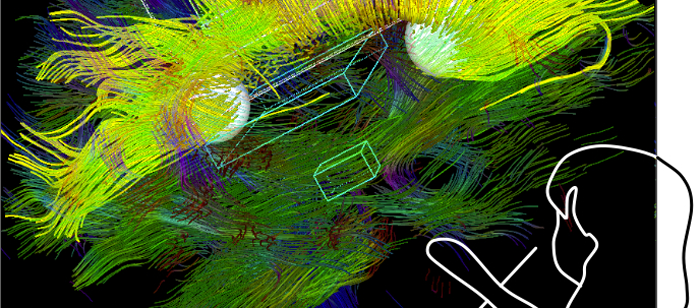
Interactive visual computing for knowledge discovery
in science, engineering and training
Dr. Jian Chen
University of Southern Mississippi
1:00pm Wednesday 7 March 2012, ITE 325b UMBC
Advances in simulations and lab experiments are producing huge datasets at unprecedented rates, and deriving meanings from these data will have far-reaching impacts on our lives in many areas of science, engineering, and medicine. Visualization and interactive computing provide great tools for exploiting these data in scientific discovery and engineering innovations. A limiting factor in the scientific use of visualization tools is the lack of guiding principles to identify and assess visualization methods that are helpful in scientific tasks. In this talk, I present research designed to advance knowledge discovery through the design and evaluation of interactive visualizations. Experiments on image illumination and density are described that successfully address this limitation in brain imaging for medical diagnoses. I also present the theoretical foundations that have led to the various choices in visualization design. In the second part of the talk, I argue that most existing tools designed for scientific discovery fail to address the dynamic nature of the discovery workflow. I present a new visualization tool, VisBubbles, that integrates programming, visualization, and interaction in one environment to create fluid workflows in which new hypotheses can be tested efficiently. VisBubbles augments interactive computing and analysis of time-varying motion data of bat flights by enabling dynamic displays, thus facilitating scientists' quest for new knowledge. I present the design methods we have followed in our long-term collaboration with biologists and engineering scientists on motion analysis. Finally, I present future work I envision in interactive visualization that will be critical in developing future visualization tools for science, engineering, and training.
Jian Chen is an assistant professor in the School of Computing at the University of Southern Mississippi. She is the founder and director of Interactive Visual Computing Lab. Her research is in the broad area of interaction and visualization, with current focuses on the emerging field of scientific visualization theory and workflow analysis. She has published numerous articles in top journals and international conferences. Her panel on combining human-centered computing and scientific visualization received honorable mention at the 2007 IEEE Visualization Conference. She was a postdoc at Brown University with Drs. David H. Laidlaw (CS) and Sharon Swartz (BioMed) from 2006 to 2009. She has a Ph.D. degree in Computer Science from Virginia Tech and Master’s degrees in both Computer Science and Mechanical Engineering. Her research has been funded by DHS and NSF.
Host: Penny Rheingans
See here for more information
]]>
Full Title: talk: Interactive visual computing for knowledge discovery in science, engineering and training Interactive visual computing for knowledge discovery in science, engineering and...
http://www.csee.umbc.edu/2012/03/talk-interactive-visual-computing-for-knowledge-discovery-in-science-engineering-and-training/
https://dev.my.umbc.edu/api/v0/pixel/news/12647/guest@my.umbc.edu/e3ecad344525f94e8064428efc9bcd65/api/pixel
news
research
talks
Computer Science and Electrical Engineering
https://dev.my.umbc.edu/groups/csee
https://assets3-dev.my.umbc.edu/system/shared/avatars/groups/000/000/099/d117dca133c64bf78a4b7696dd007189/xsmall.png?1314043393
https://assets1-dev.my.umbc.edu/system/shared/avatars/groups/000/000/099/d117dca133c64bf78a4b7696dd007189/original.png?1314043393
https://assets1-dev.my.umbc.edu/system/shared/avatars/groups/000/000/099/d117dca133c64bf78a4b7696dd007189/xxlarge.png?1314043393
https://assets4-dev.my.umbc.edu/system/shared/avatars/groups/000/000/099/d117dca133c64bf78a4b7696dd007189/xlarge.png?1314043393
https://assets3-dev.my.umbc.edu/system/shared/avatars/groups/000/000/099/d117dca133c64bf78a4b7696dd007189/large.png?1314043393
https://assets1-dev.my.umbc.edu/system/shared/avatars/groups/000/000/099/d117dca133c64bf78a4b7696dd007189/medium.png?1314043393
https://assets2-dev.my.umbc.edu/system/shared/avatars/groups/000/000/099/d117dca133c64bf78a4b7696dd007189/small.png?1314043393
https://assets3-dev.my.umbc.edu/system/shared/avatars/groups/000/000/099/d117dca133c64bf78a4b7696dd007189/xsmall.png?1314043393
https://assets3-dev.my.umbc.edu/system/shared/avatars/groups/000/000/099/d117dca133c64bf78a4b7696dd007189/xxsmall.png?1314043393
Computer Science and Electrical Engineering
1
0
true
Fri, 02 Mar 2012 17:06:46 -0500
Fri, 02 Mar 2012 17:06:46 -0500
talk: Spectrum Wars: LightSquared vs. GPS, 11:30am Fri 2/2
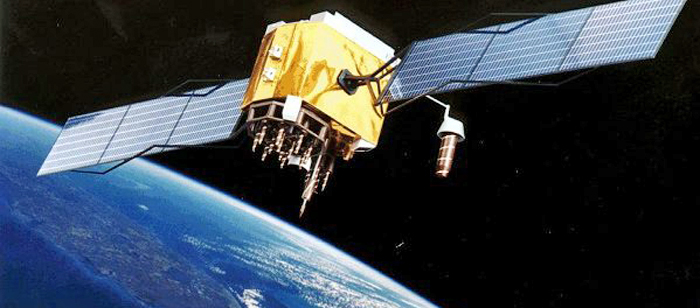
EE Graduate Seminar
Spectrum Wars: LightSquared vs. GPS
Professor Chuck LaBerge
Professor of the Practice, CSEE Dept/UMBC
11:30am-12:45pm Friday, 2 March 2012, ITE 231
The radio-frequency spectrum is a limited resource. Within the US, commercial use of the spectrum is administered by the Federal Communications Commission (FCC), while government use of the spectrum is administered by the National Telecommunications and Information Administration. Currently, the regulatory community is locked in a battle about spectrum utilization in the vicinity of 1.5 GHz. This struggle pits millions of users of GPS technology for position and time information against technical innovators desiring to bring 4G wireless communications to millions of users in underserved populations. So who wins the spectrum wars?
The talk will outline the technologies involved, and provide a time-line of the regulatory actions to date. There are some innovative things going on here, and some simple analysis will show why there are points of contention. A final resolution cannot be provided at this time, because the issue is currently an open discussion in FCC. And, as might expected, there are financial and political ramifications as well.
This talk will provide an interesting insight into how the 'real world' works.
Dr. LaBerge is Professor of the Practice of Electrical and Computer Engineering in the CSEE at UMBC, where he teaches a wide variety of courses ranging from Introductory Circuits to Error Correcting Codes. From 1975-2008, he was employed by Bendix, which became AlliedSignal, which became Honeywell through a series of corporate mergers. He retired in July 2008 as the Senior Fellow for Communications, Navigation, and Surveillance in Honeywell's Aerospace Research and Technology Center.
Dr. LaBerge has worked on precision landing systems and a wide variety of aeronautical radios and applications. He's recognized as an expert in issues involving interference to aeronautical systems. His technical, writing, and editorial contributions have received numerous citations from regulatory bodies, and he was the winner of the Best Paper of Conference at the 2000 IEEE/AIAA Digital Avionics Systems Conference.
Dr. LaBerge is a Senior Member of IEEE, a member of Tau Beta Pi, and an inductee in the Order of the Engineer. He received his BES-EE and MSE-EE, degrees, both with Honors, from The Johns Hopkins University and the PhD. in Electrical Engineering from UMBC. His three kids are older than his students. He's been married to his patient wife for almost 38 years.
Host: Prof. Joel M. Morris
]]>
EE Graduate Seminar Spectrum Wars: LightSquared vs. GPS Professor Chuck LaBerge Professor of the Practice, CSEE Dept/UMBC 11:30am-12:45pm Friday, 2 March 2012, ITE 231 The...
http://www.csee.umbc.edu/2012/03/talk-spectrum-wars-lightsquared-vs-gps-1130am-fri-22/
https://dev.my.umbc.edu/api/v0/pixel/news/12614/guest@my.umbc.edu/23b86c89611c7b89c89066e29d349723/api/pixel
electrical-engineering
graduate
news
research
talks
Computer Science and Electrical Engineering
https://dev.my.umbc.edu/groups/csee
https://assets3-dev.my.umbc.edu/system/shared/avatars/groups/000/000/099/d117dca133c64bf78a4b7696dd007189/xsmall.png?1314043393
https://assets1-dev.my.umbc.edu/system/shared/avatars/groups/000/000/099/d117dca133c64bf78a4b7696dd007189/original.png?1314043393
https://assets1-dev.my.umbc.edu/system/shared/avatars/groups/000/000/099/d117dca133c64bf78a4b7696dd007189/xxlarge.png?1314043393
https://assets4-dev.my.umbc.edu/system/shared/avatars/groups/000/000/099/d117dca133c64bf78a4b7696dd007189/xlarge.png?1314043393
https://assets3-dev.my.umbc.edu/system/shared/avatars/groups/000/000/099/d117dca133c64bf78a4b7696dd007189/large.png?1314043393
https://assets1-dev.my.umbc.edu/system/shared/avatars/groups/000/000/099/d117dca133c64bf78a4b7696dd007189/medium.png?1314043393
https://assets2-dev.my.umbc.edu/system/shared/avatars/groups/000/000/099/d117dca133c64bf78a4b7696dd007189/small.png?1314043393
https://assets3-dev.my.umbc.edu/system/shared/avatars/groups/000/000/099/d117dca133c64bf78a4b7696dd007189/xsmall.png?1314043393
https://assets3-dev.my.umbc.edu/system/shared/avatars/groups/000/000/099/d117dca133c64bf78a4b7696dd007189/xxsmall.png?1314043393
Computer Science and Electrical Engineering
1
0
true
Fri, 02 Mar 2012 09:37:54 -0500
Fri, 02 Mar 2012 00:37:54 -0500
talk: Using Static Analysis to Diagnose Misconfigured...
Full Title: talk: Using Static Analysis to Diagnose Misconfigured Open Source Systems Software
Using Static Analysis to Diagnose
Misconfigured Open Source Systems Software
Ariel Rabkin, UC Berkeley
1:00pm Monday 5 March 2012, ITE 325b UMBC
Ten years ago, few software developers worked on distributed systems. Today, developers often run code on clusters, relying on large open-source software stacks to manage resources. These systems are challenging to configure and debug. Fortunately, developments in program analysis have given us new tools for managing the complexity of modern software. This talk will show how static analysis can help users configure their systems. I present a technique that builds an explicit table mapping a program's possible error messages to the options that might cause them. As a result, users can get immediate feedback on how to resolve configuration errors.
Ari Rabkin is a PhD student in Computer Science at UC Berkeley working in the AMP lab. His current research interest is the software engineering and administration challenges of big-data systems. He is particularly interested in applying program analysis techniques to tasks like log analysis and configuration debugging. His broader interests focus on systems and security, including improving system usability by making systems easier to understand, the connections between computer science research and technology policy, developing program analysis techniques that work acceptably well on large, complex, messy software systems.
Host: Anupam Joshi
See http://csee.umbc.edu/talks for more information
]]>
Full Title: talk: Using Static Analysis to Diagnose Misconfigured Open Source Systems Software Using Static Analysis to Diagnose Misconfigured Open Source Systems Software Ariel Rabkin, UC...
http://www.csee.umbc.edu/2012/03/using-static-analysis-to-diagnose-misconfigured-open-source-systems-software/
https://dev.my.umbc.edu/api/v0/pixel/news/12648/guest@my.umbc.edu/3ca2f0619dd821f9284ebf751e5536b4/api/pixel
cybersecurity
news
research
talks
Computer Science and Electrical Engineering
https://dev.my.umbc.edu/groups/csee
https://assets3-dev.my.umbc.edu/system/shared/avatars/groups/000/000/099/d117dca133c64bf78a4b7696dd007189/xsmall.png?1314043393
https://assets1-dev.my.umbc.edu/system/shared/avatars/groups/000/000/099/d117dca133c64bf78a4b7696dd007189/original.png?1314043393
https://assets1-dev.my.umbc.edu/system/shared/avatars/groups/000/000/099/d117dca133c64bf78a4b7696dd007189/xxlarge.png?1314043393
https://assets4-dev.my.umbc.edu/system/shared/avatars/groups/000/000/099/d117dca133c64bf78a4b7696dd007189/xlarge.png?1314043393
https://assets3-dev.my.umbc.edu/system/shared/avatars/groups/000/000/099/d117dca133c64bf78a4b7696dd007189/large.png?1314043393
https://assets1-dev.my.umbc.edu/system/shared/avatars/groups/000/000/099/d117dca133c64bf78a4b7696dd007189/medium.png?1314043393
https://assets2-dev.my.umbc.edu/system/shared/avatars/groups/000/000/099/d117dca133c64bf78a4b7696dd007189/small.png?1314043393
https://assets3-dev.my.umbc.edu/system/shared/avatars/groups/000/000/099/d117dca133c64bf78a4b7696dd007189/xsmall.png?1314043393
https://assets3-dev.my.umbc.edu/system/shared/avatars/groups/000/000/099/d117dca133c64bf78a4b7696dd007189/xxsmall.png?1314043393
Computer Science and Electrical Engineering
1
0
true
Fri, 02 Mar 2012 00:25:32 -0500