talk: Programming Model for Data Intensive Parallel...
Full Title: talk: Programming Model for Data Intensive Parallel Applications
A Scalable, Fault Tolerant Programming Model for
Developing Data Intensive Parallel Applications
Tyler A. Simon
Faculty Research Scientist
UMBC Center for Hybrid Multicore Productivity Research
1:00pm Friday 17 February 2012, ITE 325b
Future exascale computing systems will have to execute a single program on the order of 10^8-10^9 individual, low powered processing elements. These processors need to be fed data efficiently and reliably through the duration of a parallel computation. The current methods for explicit message passing between processors provide little in terms of fault tolerance support and the overheads of system level and application checkpoint/restart incur unreasonable overheads for exascale class computing systems.
We propose the development of novel autonomic execution model and an Adaptive Runtime Resource for Intensive Applications (RRIA), which improves application reliability, scalability and performance while freeing the programmer from explicit message passing. Experiments were conducted to evaluate ARRIA's capabilities on data intensive applications, those where the majority of execution time is spent reading and writing either to local or remote memory locations. In our approach, we focus on managing data movement both on a compute node and across a cluster of nodes for the application during runtime. We use a hybrid "threaded data parallel" model in which message passing is hidden entirely from the programmer and parallel tasks are bundled and farmed to a dynamic resource pool for execution.
Tyler Simon is a Faculty Research Assistant and PhD student working for the Center for Hybrid Multicore Productivity Research in the Computer Science and Electrical Engineering Department at the University of Maryland Baltimore County. He is also a computational scientist at the NASA Center for Climate Simulation at Goddard Space Flight Center. Tyler is interested in the theoretical and practical aspects of concurrency and parallel computation in general. His research is focused on what can be done with the effective application of distributed, parallel algorithms in high performance computing environments, particularly in parallel numerical methods and data movement.
Host: Yelena Yesha
]]>
Full Title: talk: Programming Model for Data Intensive Parallel Applications A Scalable, Fault Tolerant Programming Model for Developing Data Intensive Parallel Applications Tyler A. Simon...
http://www.csee.umbc.edu/2012/02/talk-programming-model-for-data-intensive-parallel-applications/
https://dev.my.umbc.edu/api/v0/pixel/news/12100/guest@my.umbc.edu/c4cfcb9581dc6294ad7c5b261c643380/api/pixel
big-data
news
parallel
programming-languages
research
talks
Computer Science and Electrical Engineering
https://dev.my.umbc.edu/groups/csee
https://assets3-dev.my.umbc.edu/system/shared/avatars/groups/000/000/099/d117dca133c64bf78a4b7696dd007189/xsmall.png?1314043393
https://assets1-dev.my.umbc.edu/system/shared/avatars/groups/000/000/099/d117dca133c64bf78a4b7696dd007189/original.png?1314043393
https://assets1-dev.my.umbc.edu/system/shared/avatars/groups/000/000/099/d117dca133c64bf78a4b7696dd007189/xxlarge.png?1314043393
https://assets4-dev.my.umbc.edu/system/shared/avatars/groups/000/000/099/d117dca133c64bf78a4b7696dd007189/xlarge.png?1314043393
https://assets3-dev.my.umbc.edu/system/shared/avatars/groups/000/000/099/d117dca133c64bf78a4b7696dd007189/large.png?1314043393
https://assets1-dev.my.umbc.edu/system/shared/avatars/groups/000/000/099/d117dca133c64bf78a4b7696dd007189/medium.png?1314043393
https://assets2-dev.my.umbc.edu/system/shared/avatars/groups/000/000/099/d117dca133c64bf78a4b7696dd007189/small.png?1314043393
https://assets3-dev.my.umbc.edu/system/shared/avatars/groups/000/000/099/d117dca133c64bf78a4b7696dd007189/xsmall.png?1314043393
https://assets3-dev.my.umbc.edu/system/shared/avatars/groups/000/000/099/d117dca133c64bf78a4b7696dd007189/xxsmall.png?1314043393
Computer Science and Electrical Engineering
1
0
true
Tue, 14 Feb 2012 10:11:41 -0500
talk: Self-Powered In-Vitro Biosensing Microsystem
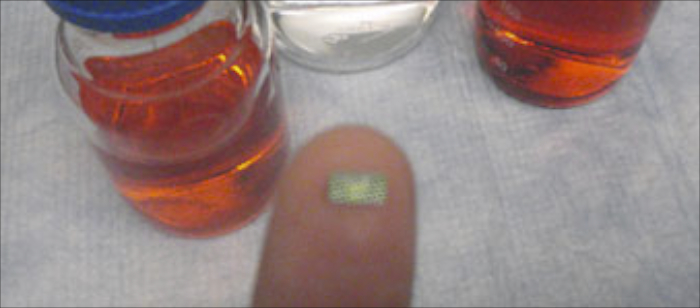
A Self-Powered In-Vitro Biosensing Microsystem
Dr. Gymama Slaughter
Computer Science and Electrical Engineering
University of Maryland, Baltimore County
11:30am-12:45pm Friday, 10 February 2012, ITE 237
Recent studies on biofuel cells have shown that energy can be harvested from biological compounds. Because of the recent biofuel cell discoveries, it possible to use inertial power scavenging design by converting interstitial glucose into energy through the coupling of enzymes and three-dimensional nanowire arrays. This talk will discuss our own contribution to identifying a pathway to embed sensing by eliminating the need for a potentiostat circuit and an external power source.
The self-powered biosensing microsystem consist of massively dense 3D nanowire cell structures fused with an energy harvesting circuit that maximizes power and energy densities while maintaining short ion transport distances, thus leading to dramatic improvement in both speed and energy efficiency of biofuel cells. Not only is such a paradigm extremely fast because of absence of a potentiostat circuit, but it is also extremely energy-efficient since the device operates at low voltage and current levels. As a result, the biosensing microsystem generates a drive signal in real-time and periodically powers an electrical device by generating and accumulating electrical power as a result of the catalysis of glucose.
Gymama Slaughter received her B.S. in Chemistry in 2001, M.S. in Chemical Engineering in 2003, and a Ph.D. in Computer Engineering from the Virginia Commonwealth University in 2005. She then joined Virginia State University as an Assistant Professor in Computer Engineering and Director of the Center for Biosystems and Engineering University. Finally, she joined the UMBC as Assistant Professor in Computer Engineering in August 2010.
Dr. Slaughter is currently the Director of the Bioelectronics Laboratory Group and oversees research and research outreach programs in the BEL Group. She develops and applies sensor-processor platforms, focusing on innovative contributions to identifying a pathway to embed sensing and processing functions in the same device to eliminate bottlenecks arising from communication between the sensor, transducer, and processor, thus, resulting in ultra-fast and ultra-low power devices.
Her research has been supported by the NSF for her diabetes research that focuses on the design and development of glucose biosensor, especially in relationship to monitoring blood glucose in diabetics. Her research interests include biosensors, microsensors, microfabrication technology, and BioMEMS and design.
Host: Prof. Joel M. Morris
]]>
A Self-Powered In-Vitro Biosensing Microsystem Dr. Gymama Slaughter Computer Science and Electrical Engineering University of Maryland, Baltimore County 11:30am-12:45pm Friday, 10 February...
http://www.csee.umbc.edu/2012/02/talk-self-powered-in-vitro-biosensing-microsystem/
https://dev.my.umbc.edu/api/v0/pixel/news/11975/guest@my.umbc.edu/ec1f4a18449e26d1d6a1986f92048140/api/pixel
computer-engineering
graduate
news
research
talks
Computer Science and Electrical Engineering
https://dev.my.umbc.edu/groups/csee
https://assets3-dev.my.umbc.edu/system/shared/avatars/groups/000/000/099/d117dca133c64bf78a4b7696dd007189/xsmall.png?1314043393
https://assets1-dev.my.umbc.edu/system/shared/avatars/groups/000/000/099/d117dca133c64bf78a4b7696dd007189/original.png?1314043393
https://assets1-dev.my.umbc.edu/system/shared/avatars/groups/000/000/099/d117dca133c64bf78a4b7696dd007189/xxlarge.png?1314043393
https://assets4-dev.my.umbc.edu/system/shared/avatars/groups/000/000/099/d117dca133c64bf78a4b7696dd007189/xlarge.png?1314043393
https://assets3-dev.my.umbc.edu/system/shared/avatars/groups/000/000/099/d117dca133c64bf78a4b7696dd007189/large.png?1314043393
https://assets1-dev.my.umbc.edu/system/shared/avatars/groups/000/000/099/d117dca133c64bf78a4b7696dd007189/medium.png?1314043393
https://assets2-dev.my.umbc.edu/system/shared/avatars/groups/000/000/099/d117dca133c64bf78a4b7696dd007189/small.png?1314043393
https://assets3-dev.my.umbc.edu/system/shared/avatars/groups/000/000/099/d117dca133c64bf78a4b7696dd007189/xsmall.png?1314043393
https://assets3-dev.my.umbc.edu/system/shared/avatars/groups/000/000/099/d117dca133c64bf78a4b7696dd007189/xxsmall.png?1314043393
Computer Science and Electrical Engineering
1
0
true
Wed, 08 Feb 2012 20:52:15 -0500
talk: Innovating for Society: Realizing the Promise...
Full Title: talk: Innovating for Society: Realizing the Promise and Potential of Computing
Innovating for Society: Realizing the
Promise and Potential of Computing
Dr. Farnam Jahanian
Directorate for Computer and Information Science and Engineering
National Science Foundation
10:30am Thursday, 9 February 2012, ITE 456, UMBC
The computing discipline is at the center of an ongoing societal transformation. The explosive growth of scientific and social data, wireless connectivity at broadband speeds for billions of mobile endpoints, and seamless access to computational resources in the “cloud” are transforming the way we work, learn, play, and communicate. Advances in computation and data-enabled techniques will continue to accelerate the pace of scientific discovery and engineering innovation, with the impact becoming more pervasive throughout society for decades to come. Dr. Jahanian will focus his talk on some of the technological and societal trends that are shaping our future and providing new opportunities for foundational research and education. He will describe how these advances influence the portfolio of the Computer and Information Science and Engineering Directorate at NSF and, therefore, also serve as key drivers of economic competitiveness and are crucial to achieving national priorities.
Farnam Jahanian serves as the National Science Foundation Assistant Director for the Computer and Information Science and Engineering (CISE) Directorate. He guides CISE, with a budget of over $635 million, in its mission to uphold the nation’s leadership in computer and information science and engineering through support of fundamental and transformative advances that are a key driver of economic competitiveness and that are crucial to achieving national priorities. Dr. Jahanian is also co-chair of the Networking and Information Technology Research and Development (NITRD) Subcommittee of the National Science and Technology Council Committee on Technology, providing overall coordination for the activities of 15 government agencies.
Dr. Jahanian is on leave from the University of Michigan, where he holds the Edward S. Davidson Collegiate Professorship and served as Chair for Computer Science and Engineering from 2007 – 2011 and as Director of the Software Systems Laboratory from 1997 – 2000. His research on Internet infrastructure security formed the basis for the Internet security company Arbor Networks, which he co-founded in 2001. He served as Chairman of Arbor Networks until its acquisition by Tektronix Communication in 2010. Dr. Jahanian holds a master's degree and a Ph.D. in Computer Science from the University of Texas at Austin. He is a Fellow of the Association for Computing Machinery (ACM), the Institute of Electrical and Electronic Engineers (IEEE), and the American Association for the Advancement of Science (AAAS).
Host: Prof. Anupam Joshi
]]>
Full Title: talk: Innovating for Society: Realizing the Promise and Potential of Computing Innovating for Society: Realizing the Promise and Potential of Computing Dr. Farnam Jahanian...
http://www.csee.umbc.edu/2012/02/talk-innovating-for-society-realizing-the-promise-and-potential-of-computing/
https://dev.my.umbc.edu/api/v0/pixel/news/11859/guest@my.umbc.edu/c6b1bdb935d1adb17d43279d4b05f065/api/pixel
news
research
talks
Computer Science and Electrical Engineering
https://dev.my.umbc.edu/groups/csee
https://assets3-dev.my.umbc.edu/system/shared/avatars/groups/000/000/099/d117dca133c64bf78a4b7696dd007189/xsmall.png?1314043393
https://assets1-dev.my.umbc.edu/system/shared/avatars/groups/000/000/099/d117dca133c64bf78a4b7696dd007189/original.png?1314043393
https://assets1-dev.my.umbc.edu/system/shared/avatars/groups/000/000/099/d117dca133c64bf78a4b7696dd007189/xxlarge.png?1314043393
https://assets4-dev.my.umbc.edu/system/shared/avatars/groups/000/000/099/d117dca133c64bf78a4b7696dd007189/xlarge.png?1314043393
https://assets3-dev.my.umbc.edu/system/shared/avatars/groups/000/000/099/d117dca133c64bf78a4b7696dd007189/large.png?1314043393
https://assets1-dev.my.umbc.edu/system/shared/avatars/groups/000/000/099/d117dca133c64bf78a4b7696dd007189/medium.png?1314043393
https://assets2-dev.my.umbc.edu/system/shared/avatars/groups/000/000/099/d117dca133c64bf78a4b7696dd007189/small.png?1314043393
https://assets3-dev.my.umbc.edu/system/shared/avatars/groups/000/000/099/d117dca133c64bf78a4b7696dd007189/xsmall.png?1314043393
https://assets3-dev.my.umbc.edu/system/shared/avatars/groups/000/000/099/d117dca133c64bf78a4b7696dd007189/xxsmall.png?1314043393
Computer Science and Electrical Engineering
0
0
true
Mon, 06 Feb 2012 13:04:53 -0500
Mon, 06 Feb 2012 13:04:53 -0500
talk: An Integrated Machine Learning Framework for...
Full Title: talk: An Integrated Machine Learning Framework for Analyzing Protein-Ligand Interaction Data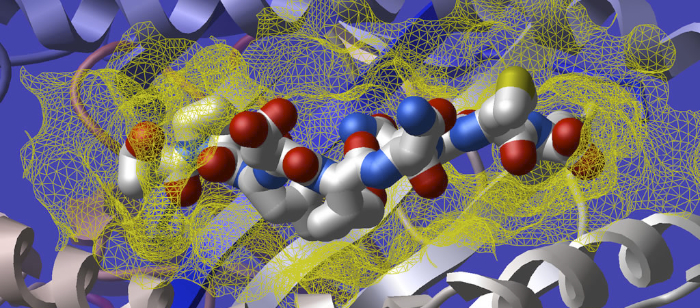
CSEE Colloquium
An Integrated Machine Learning Framework for Analyzing Protein-Ligand Interaction Data
Dr. Huzefa Rangwala
Assistant Professor, Computer Science & Engineering
George Mason University
1:00 p.m., Friday, February 10, 2012, ITE 325B, UMBC
Proteins have a vast influence on the molecular machinery of life. Stunningly complex networks of proteins perform innumerable functions in every living cell. Small organic molecules (a.k.a. ligands) can bind to different proteins and modulate (inhibit/activate) their functions. Understanding these interactions provides insight into the underlying biological processes and is useful for designing therapeutic drugs.
In this talk I will describe our work related to the analysis of information associated with proteins and their interacting molecule partners (protein-ligand activity matrix). The underlying hypothesis of our approach is that by extracting information from protein-ligand activity matrix, we are drawing bridges between the structure of chemical compounds (chemical space) and the structure of the proteins and their functions (biological space). I will present an approach used for mining relational data, especially when the data is sparse and high dimensional. I will also present methods that are based on the principles of multi-task learning and semi-supervised learning.
Huzefa Rangwala is an Assistant Professor at the department of Computer Science & Engineering, George Mason University. He holds affiliate positions with the Department of Bioengineering and the Department of Bioinformatics & Computational Biology. He received his Ph.D. in Computer Science from the University of Minnesota in the year 2008. His core research interests include bioinformatics, machine learning, and high performance computing. Specifically, he is working on developing new data mining algorithms and applying them to the fields of genomics, structural bioinformatics, drug discovery and social media analysis.
Host: Dr. Marie desJardins
]]>
Full Title: talk: An Integrated Machine Learning Framework for Analyzing Protein-Ligand Interaction Data CSEE Colloquium An Integrated Machine Learning Framework for Analyzing Protein-Ligand...
http://www.csee.umbc.edu/2012/02/talk-an-integrated-machine-learning-framework-for-analyzing-protein-ligand-interaction-data/
https://dev.my.umbc.edu/api/v0/pixel/news/11827/guest@my.umbc.edu/488321c392a7f8f6764ef2b6705347e8/api/pixel
news
research
talks
Computer Science and Electrical Engineering
https://dev.my.umbc.edu/groups/csee
https://assets3-dev.my.umbc.edu/system/shared/avatars/groups/000/000/099/d117dca133c64bf78a4b7696dd007189/xsmall.png?1314043393
https://assets1-dev.my.umbc.edu/system/shared/avatars/groups/000/000/099/d117dca133c64bf78a4b7696dd007189/original.png?1314043393
https://assets1-dev.my.umbc.edu/system/shared/avatars/groups/000/000/099/d117dca133c64bf78a4b7696dd007189/xxlarge.png?1314043393
https://assets4-dev.my.umbc.edu/system/shared/avatars/groups/000/000/099/d117dca133c64bf78a4b7696dd007189/xlarge.png?1314043393
https://assets3-dev.my.umbc.edu/system/shared/avatars/groups/000/000/099/d117dca133c64bf78a4b7696dd007189/large.png?1314043393
https://assets1-dev.my.umbc.edu/system/shared/avatars/groups/000/000/099/d117dca133c64bf78a4b7696dd007189/medium.png?1314043393
https://assets2-dev.my.umbc.edu/system/shared/avatars/groups/000/000/099/d117dca133c64bf78a4b7696dd007189/small.png?1314043393
https://assets3-dev.my.umbc.edu/system/shared/avatars/groups/000/000/099/d117dca133c64bf78a4b7696dd007189/xsmall.png?1314043393
https://assets3-dev.my.umbc.edu/system/shared/avatars/groups/000/000/099/d117dca133c64bf78a4b7696dd007189/xxsmall.png?1314043393
Computer Science and Electrical Engineering
1
0
true
Fri, 03 Feb 2012 16:07:17 -0500
Using data visualization techniques to support...
Full Title: Using data visualization techniques to support digital forensics
UMBC Cyber Defense Lab Research Meeting
Using data visualization techniques to support digital forensics
Tim Leschke
11:00am-12:15pm, Friday, Feb 3, 2012
ITE Room 228
Digital forensic examiners explore large datasets in search of evidence of a crime. In order to keep pace with the growing amount of data that is subject to a forensic examination, digital forensic examiners need to be more selective about the data they examine. One way to be selective about data is to focus attention at data that has changed-over-time. We present Change-Link, a data exploration tool which allows the user to see directories that have changed within an operating system. Our novel contributions are 1) the development of a segmented-box-and-whisker icon for representing change to individual directories, and 2) the first data visualization tool developed specifically for the domain of digital forensic data. We show that by using Change-Link to view change to a directory-tree structure, digital forensic examiners can enhance their ability to perform forensic examinations.
Tim Leschke is a Ph.D. student in the Computer Science program at UMBC.
Host: Professor Alan Sherman
]]>
Full Title: Using data visualization techniques to support digital forensics UMBC Cyber Defense Lab Research Meeting Using data visualization techniques to support digital forensics Tim...
http://www.csee.umbc.edu/2012/01/using-data-visualization-techniques-to-support-digital-forensics/
https://dev.my.umbc.edu/api/v0/pixel/news/11670/guest@my.umbc.edu/1fd19283b4b1e403362e356149042212/api/pixel
cybersecurity
graduate
news
research
talks
Computer Science and Electrical Engineering
https://dev.my.umbc.edu/groups/csee
https://assets3-dev.my.umbc.edu/system/shared/avatars/groups/000/000/099/d117dca133c64bf78a4b7696dd007189/xsmall.png?1314043393
https://assets1-dev.my.umbc.edu/system/shared/avatars/groups/000/000/099/d117dca133c64bf78a4b7696dd007189/original.png?1314043393
https://assets1-dev.my.umbc.edu/system/shared/avatars/groups/000/000/099/d117dca133c64bf78a4b7696dd007189/xxlarge.png?1314043393
https://assets4-dev.my.umbc.edu/system/shared/avatars/groups/000/000/099/d117dca133c64bf78a4b7696dd007189/xlarge.png?1314043393
https://assets3-dev.my.umbc.edu/system/shared/avatars/groups/000/000/099/d117dca133c64bf78a4b7696dd007189/large.png?1314043393
https://assets1-dev.my.umbc.edu/system/shared/avatars/groups/000/000/099/d117dca133c64bf78a4b7696dd007189/medium.png?1314043393
https://assets2-dev.my.umbc.edu/system/shared/avatars/groups/000/000/099/d117dca133c64bf78a4b7696dd007189/small.png?1314043393
https://assets3-dev.my.umbc.edu/system/shared/avatars/groups/000/000/099/d117dca133c64bf78a4b7696dd007189/xsmall.png?1314043393
https://assets3-dev.my.umbc.edu/system/shared/avatars/groups/000/000/099/d117dca133c64bf78a4b7696dd007189/xxsmall.png?1314043393
Computer Science and Electrical Engineering
2
0
true
Tue, 31 Jan 2012 10:26:37 -0500
talk: An Integrated Machine Learning Framework for...
Full Title: talk: An Integrated Machine Learning Framework for Analyzing Protein-Ligand Interaction Data
CSEE Colloquium
An Integrated Machine Learning Framework for Analyzing Protein-Ligand Interaction Data
Dr. Huzefa Rangwala
Assistant Professor, Computer Science & Engineering
George Mason University
1:00 p.m., Friday, February 10, 2012, ITE 325B, UMBC
Proteins have a vast influence on the molecular machinery of life. Stunningly complex networks of proteins perform innumerable functions in every living cell. Small organic molecules (a.k.a. ligands) can bind to different proteins and modulate (inhibit/activate) their functions. Understanding these interactions provides insight into the underlying biological processes and is useful for designing therapeutic drugs.
In this talk I will describe our work related to the analysis of information associated with proteins and their interacting molecule partners (protein-ligand activity matrix). The underlying hypothesis of our approach is that by extracting information from protein-ligand activity matrix, we are drawing bridges between the structure of chemical compounds (chemical space) and the structure of the proteins and their functions (biological space). I will present an approach used for mining relational data, especially when the data is sparse and high dimensional. I will also present methods that are based on the principles of multi-task learning and semi-supervised learning.
Huzefa Rangwala is an Assistant Professor at the department of Computer Science & Engineering, George Mason University. He holds affiliate positions with the Department of Bioengineering and the Department of Bioinformatics & Computational Biology. He received his Ph.D. in Computer Science from the University of Minnesota in the year 2008. His core research interests include bioinformatics, machine learning, and high performance computing. Specifically, he is working on developing new data mining algorithms and applying them to the fields of genomics, structural bioinformatics, drug discovery and social media analysis.
Host: Dr. Marie desJardins
]]>
Full Title: talk: An Integrated Machine Learning Framework for Analyzing Protein-Ligand Interaction Data CSEE Colloquium An Integrated Machine Learning Framework for Analyzing Protein-Ligand...
http://www.csee.umbc.edu/2012/01/talk-an-integrated-machine-learning-framework-for-analyzing-protein-ligand-interaction-data/
https://dev.my.umbc.edu/api/v0/pixel/news/11254/guest@my.umbc.edu/d90e9e9cd6def52a42419ee3403d2256/api/pixel
news
talks
Computer Science and Electrical Engineering
https://dev.my.umbc.edu/groups/csee
https://assets3-dev.my.umbc.edu/system/shared/avatars/groups/000/000/099/d117dca133c64bf78a4b7696dd007189/xsmall.png?1314043393
https://assets1-dev.my.umbc.edu/system/shared/avatars/groups/000/000/099/d117dca133c64bf78a4b7696dd007189/original.png?1314043393
https://assets1-dev.my.umbc.edu/system/shared/avatars/groups/000/000/099/d117dca133c64bf78a4b7696dd007189/xxlarge.png?1314043393
https://assets4-dev.my.umbc.edu/system/shared/avatars/groups/000/000/099/d117dca133c64bf78a4b7696dd007189/xlarge.png?1314043393
https://assets3-dev.my.umbc.edu/system/shared/avatars/groups/000/000/099/d117dca133c64bf78a4b7696dd007189/large.png?1314043393
https://assets1-dev.my.umbc.edu/system/shared/avatars/groups/000/000/099/d117dca133c64bf78a4b7696dd007189/medium.png?1314043393
https://assets2-dev.my.umbc.edu/system/shared/avatars/groups/000/000/099/d117dca133c64bf78a4b7696dd007189/small.png?1314043393
https://assets3-dev.my.umbc.edu/system/shared/avatars/groups/000/000/099/d117dca133c64bf78a4b7696dd007189/xsmall.png?1314043393
https://assets3-dev.my.umbc.edu/system/shared/avatars/groups/000/000/099/d117dca133c64bf78a4b7696dd007189/xxsmall.png?1314043393
Computer Science and Electrical Engineering
2
0
true
Thu, 12 Jan 2012 16:07:17 -0500
Thu, 12 Jan 2012 16:07:17 -0500
talk: Oil Spills and Search and Rescue: Key...
Full Title: talk: Oil Spills and Search and Rescue: Key Computational Challenges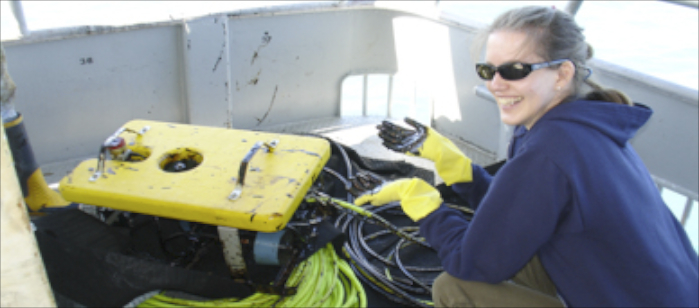
UMBC CHMPR Colloquium
Oil Spills and Search and Rescue:
Key Computational Challenges
Dr. C. J. Beegle-Krause
Environmental Research for Decision, Inc.
1:00pm 16 December 2011, ITE 227 325b
Leveraging the research community into societal issues can help save lives and reduce environmental impacts from both natural and anthropogenic disasters. For example, Search and Rescue, oil Spills, and marine debris drift are decision support areas commonly solved with Eulerian-Lagrangian models. These models typically use wind and current fields derived from external circulation models. These problems share many similarities:
- Use of a “leeway” or “windage” to simulate drift on the water surface or atmospheric transport,
- Increased leveraging of larger scale physical ocean and atmospheric circulation models, and
- Predicting geolocation information with sufficient accuracy for detection (e.g. finding the person) or response (booming off the beach),
However, there are some distinct differences and each field has some case types with complexities that remain unanswered by the research community. This presentation will cover some key examples, such as:
- Mystery spills (reverse drift) – Where did oil come from?
- Surface collection areas (sensitivity of drift to surface circulation convergence and divergences and shoreline contact);
- Accuracy required for locating a target – small islands may be missing in implementation of numerical model; and
- Extensive drift problems – an overdue vessel may have crossed the domains of several small and large-‐scale models.
The 21st century vision of numerical modeling includes Lagrangian Coherent Structures (LCS, and application of chaos theory), Social Media (thanks to UMBC), further integration of numerical and geospatial data streams, and more real-‐time information access through handheld computing.
Dr. C.J. Beegle-Krause is President of Environmental Research for Decision, Inc., a nonprofit dedicated to three primary missions: transitioning peer reviewed research into Decision Support applications; Education; and Data Rescue. As founder of the nonprofit, she has a strong vision of the Next Generation Trajectory. Her background is in physical oceanography, specializing in modeling chemical transport. She is one of the original developers of the NOAA Office of Response and Restoration (OR&R) GNOME trajectory model, and spent five years of her career at NOAA as one of the U.S. lead trajectory forecasters, on-call 24×7 for events around the world. She was called back to NOAA OR&R for the Deepwater Horizon (MC252) oil spill and continues to work on aspects of that incident and future model development.
]]>
Full Title: talk: Oil Spills and Search and Rescue: Key Computational Challenges UMBC CHMPR Colloquium Oil Spills and Search and Rescue: Key Computational Challenges Dr. C. J....
http://www.csee.umbc.edu/2011/12/talk-oil-spills-and-search-and-rescue-key-computational-challenges/
https://dev.my.umbc.edu/api/v0/pixel/news/10776/guest@my.umbc.edu/459ec042f59c37e16d12fd5b375c9ff0/api/pixel
news
research
talks
Computer Science and Electrical Engineering
https://dev.my.umbc.edu/groups/csee
https://assets3-dev.my.umbc.edu/system/shared/avatars/groups/000/000/099/d117dca133c64bf78a4b7696dd007189/xsmall.png?1314043393
https://assets1-dev.my.umbc.edu/system/shared/avatars/groups/000/000/099/d117dca133c64bf78a4b7696dd007189/original.png?1314043393
https://assets1-dev.my.umbc.edu/system/shared/avatars/groups/000/000/099/d117dca133c64bf78a4b7696dd007189/xxlarge.png?1314043393
https://assets4-dev.my.umbc.edu/system/shared/avatars/groups/000/000/099/d117dca133c64bf78a4b7696dd007189/xlarge.png?1314043393
https://assets3-dev.my.umbc.edu/system/shared/avatars/groups/000/000/099/d117dca133c64bf78a4b7696dd007189/large.png?1314043393
https://assets1-dev.my.umbc.edu/system/shared/avatars/groups/000/000/099/d117dca133c64bf78a4b7696dd007189/medium.png?1314043393
https://assets2-dev.my.umbc.edu/system/shared/avatars/groups/000/000/099/d117dca133c64bf78a4b7696dd007189/small.png?1314043393
https://assets3-dev.my.umbc.edu/system/shared/avatars/groups/000/000/099/d117dca133c64bf78a4b7696dd007189/xsmall.png?1314043393
https://assets3-dev.my.umbc.edu/system/shared/avatars/groups/000/000/099/d117dca133c64bf78a4b7696dd007189/xxsmall.png?1314043393
Computer Science and Electrical Engineering
1
0
true
Thu, 08 Dec 2011 22:30:39 -0500
Thu, 08 Dec 2011 22:30:39 -0500
talk: Christopher Rose (Rutgers): Write or Radiate
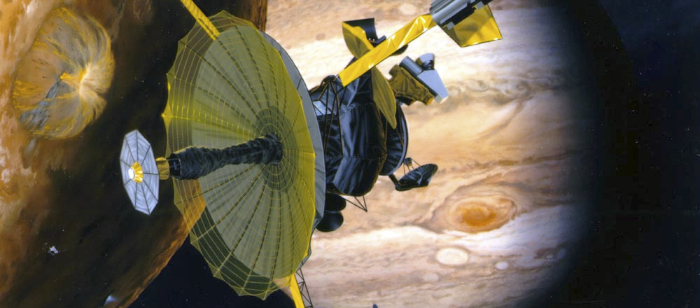
Write or Radiate
Professor Christopher Rose
Rutgers University
1:00pm Friday December 9, 2011, ITE 227
Communication theory researchers do the relatively routine but deeply important work that maintains and expands our increasingly connected society. It is therefore easy to forget that communications research, by its very nature, is more than about telephones and the Internet, but is about interactions of any and every kind. That is, communication theory is an inherently profound subject and as communications researchers, we should be sensitive to the deeper questions our discipline often raises. In illustration, we describe how some routine wireless research had something surprising to say about how we might efficiently communicate across a wide range of distances and in so doing knocked on the door of one of the "big questions" — are we alone in the universe?
Christopher Rose was a semi-lifer at MIT from 1975 to 1985. He was paroled by his new wife and new baby in 1985 when he graduated with a Ph.D. in EECS. Almost immediately afterward he began what is now a 26-year-and-counting postdoc in communication theory starting at Bell Laboratories Research where he rubbed shoulders with a wide range of uniformly delightful technical angels and curmudgeons. He's currently an ECE professor at Rutgers, WINLAB and an IEEE Fellow cited for "contributions to wireless systems theory."
Chris has always been confused about his technical identity and has thus roamed over research terrain that has included introducing surprisingly good random switch architectures as an antidote to the "topology of the week" rage back in the late '80s, better-than-fiber superconducting coax with levitated center conductors during the heady days of High-Tc superconductors, and a variety of wireless problems, culminating in his proudest moment — an interview on NPR where a caller asked him about crop circles and ET communication. That interview (and the Nature paper which spawned it) has done wonders for his reputation as an expert witness.
He is currently thinking hard about (but not making loads of progress on) fundamental problems in bio-molecular communication. He is also thinking about communications as a lens on everything — with some already surprising initial results.
]]>
Write or Radiate Professor Christopher Rose Rutgers University 1:00pm Friday December 9, 2011, ITE 227 Communication theory researchers do the relatively routine but deeply important work...
http://www.csee.umbc.edu/2011/11/talk-christopher-rose-rutgers-write-or-radiate/
https://dev.my.umbc.edu/api/v0/pixel/news/10555/guest@my.umbc.edu/b306f360322360c1f71914211d3ae116/api/pixel
news
other
research
talks
Computer Science and Electrical Engineering
https://dev.my.umbc.edu/groups/csee
https://assets3-dev.my.umbc.edu/system/shared/avatars/groups/000/000/099/d117dca133c64bf78a4b7696dd007189/xsmall.png?1314043393
https://assets1-dev.my.umbc.edu/system/shared/avatars/groups/000/000/099/d117dca133c64bf78a4b7696dd007189/original.png?1314043393
https://assets1-dev.my.umbc.edu/system/shared/avatars/groups/000/000/099/d117dca133c64bf78a4b7696dd007189/xxlarge.png?1314043393
https://assets4-dev.my.umbc.edu/system/shared/avatars/groups/000/000/099/d117dca133c64bf78a4b7696dd007189/xlarge.png?1314043393
https://assets3-dev.my.umbc.edu/system/shared/avatars/groups/000/000/099/d117dca133c64bf78a4b7696dd007189/large.png?1314043393
https://assets1-dev.my.umbc.edu/system/shared/avatars/groups/000/000/099/d117dca133c64bf78a4b7696dd007189/medium.png?1314043393
https://assets2-dev.my.umbc.edu/system/shared/avatars/groups/000/000/099/d117dca133c64bf78a4b7696dd007189/small.png?1314043393
https://assets3-dev.my.umbc.edu/system/shared/avatars/groups/000/000/099/d117dca133c64bf78a4b7696dd007189/xsmall.png?1314043393
https://assets3-dev.my.umbc.edu/system/shared/avatars/groups/000/000/099/d117dca133c64bf78a4b7696dd007189/xxsmall.png?1314043393
Computer Science and Electrical Engineering
2
0
true
Wed, 30 Nov 2011 09:05:40 -0500
Wed, 30 Nov 2011 09:05:40 -0500
MS defense: Sawhney on Analyzing the Growth of...
Full Title: MS defense: Sawhney on Analyzing the Growth of Hoeffding Trees
MS Thesis Defense
Analyzing the Growth of Hoeffding Trees
Mayank Sawhney
12:00-1:30pm Thursday 1 December 2011, ITE 346
Mining high speed data streams has become a necessity because of the enormous growth in the volume of electronic data. In the past decade, researchers have suggested various models for learning in both stationary and concept drifting data streams. Hoeffding Trees (Domingos & Hulten 2000) are one such model for mining stationary data streams. Several modifications of the nave Hoeffding Tree algorithm have been proposed to study data streams.
Our work analyzes the behavior of Hoeffding Trees when they are trained on infinite and experiments, we show that the Hoeffding bound suffers from an inherent shortcoming. Even after reaching a stage where accuracy asymptotes, Hoeffding Trees continue to grow. We examine this behavior in data streams with both nominal and numeric attributes. We also study enhancements made to the naive Hoeffding Tree algorithm and also evaluate different discretization methods.
In our work, we analyze how the Hoeffding bound relates to the information gain when splits are made and also when we send a random distribution as a data stream. We conclude that this behavior is a result of decisions made for the early growth of Hoeffding Trees and the induced randomness in an online setting. We also argue that the presence of this behavior will impact the use of Hoeffding algorithms in real world online applications.
Committee Members
- Dr. Tim Oates (Chair)
- Dr. Tim Finin
- Dr. Kostas Kalpakis
]]>
Full Title: MS defense: Sawhney on Analyzing the Growth of Hoeffding Trees MS Thesis Defense Analyzing the Growth of Hoeffding Trees Mayank Sawhney 12:00-1:30pm Thursday 1 December 2011,...
http://www.csee.umbc.edu/2011/11/ms-defense-sawhney-on-analyzing-the-growth-of-hoeffding-trees/
https://dev.my.umbc.edu/api/v0/pixel/news/10516/guest@my.umbc.edu/ab03026150fa3a8a4a082c972edfae19/api/pixel
computer-science
graduate
news
talks
Computer Science and Electrical Engineering
https://dev.my.umbc.edu/groups/csee
https://assets3-dev.my.umbc.edu/system/shared/avatars/groups/000/000/099/d117dca133c64bf78a4b7696dd007189/xsmall.png?1314043393
https://assets1-dev.my.umbc.edu/system/shared/avatars/groups/000/000/099/d117dca133c64bf78a4b7696dd007189/original.png?1314043393
https://assets1-dev.my.umbc.edu/system/shared/avatars/groups/000/000/099/d117dca133c64bf78a4b7696dd007189/xxlarge.png?1314043393
https://assets4-dev.my.umbc.edu/system/shared/avatars/groups/000/000/099/d117dca133c64bf78a4b7696dd007189/xlarge.png?1314043393
https://assets3-dev.my.umbc.edu/system/shared/avatars/groups/000/000/099/d117dca133c64bf78a4b7696dd007189/large.png?1314043393
https://assets1-dev.my.umbc.edu/system/shared/avatars/groups/000/000/099/d117dca133c64bf78a4b7696dd007189/medium.png?1314043393
https://assets2-dev.my.umbc.edu/system/shared/avatars/groups/000/000/099/d117dca133c64bf78a4b7696dd007189/small.png?1314043393
https://assets3-dev.my.umbc.edu/system/shared/avatars/groups/000/000/099/d117dca133c64bf78a4b7696dd007189/xsmall.png?1314043393
https://assets3-dev.my.umbc.edu/system/shared/avatars/groups/000/000/099/d117dca133c64bf78a4b7696dd007189/xxsmall.png?1314043393
Computer Science and Electrical Engineering
3
0
true
Tue, 29 Nov 2011 08:33:53 -0500
Tue, 29 Nov 2011 08:33:53 -0500
talk: Wolfson on Intelligent Transportation Systems,...
Full Title: talk: Wolfson on Intelligent Transportation Systems, 1pm Fri 12/2, ITE 227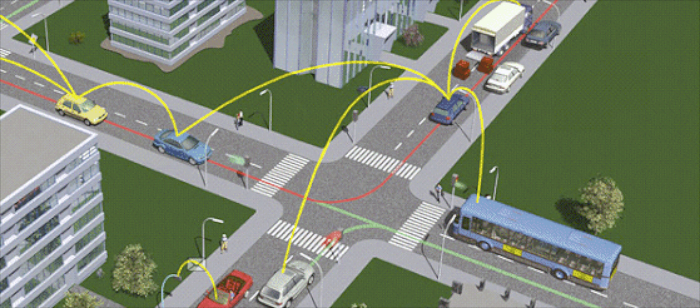
Silence of the labs: Why are we still commuting
the way we did 40 years ago?
Professor Ouri Wolfson
University of Illinois at Chicago
1:00pm Friday 2 December 2011, ITE 227
Intelligent Transportation Systems (ITS) have been in research and development since the 70's but their impact so far has been relatively small. In this talk I will argue that this is about to change, and that these systems will soon revolutionize the way we commute. I will describe research issues and Information Technology approaches related to ITS. I will focus on urban transportation, and discuss novel applications enabled by mobile wireless technologies. Such applications have the potential to improve safety, mobility, environmental impact, and energy efficiency of urban transportation. The applications are based on vehicle-to-vehicle and vehicle-to-infrastructure communication, and they epitomize ITS efforts currently undertaken throughout the world, particularly the IntelliDrive initiative of the US Department of Transportation. I will also relate these efforts to our NSF-sponsored IGERT PhD program in Computational Transportation Science.
Ouri Wolfson is the Richard and Loan Hill Professor of Computer Science at the University of Illinois at Chicago, and an Affiliate Professor in the Department of Computer Science at the University of Illinois at Urbana Champaign. He is the sole founder of Mobitrac, a venture-funded high-tech startup that was acquired by Fluensee Co. in 2006.
Ouri Wolfson authored over 180 publications, and holds seven patents. He is a Fellow of the Association of Computing Machinery, a Fellow of the American Association for the Advancement of Science (AAAS), a University of Illinois Scholar for 2009, and serves on the editorial boards of several journals. He co-authored three award winning papers, served as a Distinguished Lecturer for the Association of Computing Machinery during 2001-2003, and participated in numerous conferences as a keynote speaker, general chairman, program committee chairman or member, tutorial presenter, session chairman, and panelist. Most recently he was the keynote speaker at the Mobilware 2010 Conference, and the general chair of the 17th ACM SIGSPATIAL International Conference on Advances in Geographic Information Systems (ACM GIS 2009) . His research has been funded by the National Science Foundation (NSF), Air Force Office of Scientific Research (AFOSR), Defense Advanced Research Projects Agency (DARPA), NATO, US Army, NASA, the New York State Science and Technology Foundation, Hughes Research Laboratories, Informix Co., Accenture Co., and Hitachi Co.
Wolfson’s main research interests are in database systems, distributed systems, and mobile/pervasive computing. Before joining the University of Illinois he has been on the computer science faculty at the Technion, Columbia University, and a Member of Technical Staff at Bell Labs.
Host: Yelena Yesha
]]>
Full Title: talk: Wolfson on Intelligent Transportation Systems, 1pm Fri 12/2, ITE 227 Silence of the labs: Why are we still commuting the way we did 40 years ago? Professor Ouri Wolfson...
http://www.csee.umbc.edu/2011/11/talk-wolfson-on-intelligent-transportation-systems-1pm-fri-122-ite-325/
https://dev.my.umbc.edu/api/v0/pixel/news/10482/guest@my.umbc.edu/77b17f8e737abaa6fa32a2b18ddda68f/api/pixel
news
research
talks
Computer Science and Electrical Engineering
https://dev.my.umbc.edu/groups/csee
https://assets3-dev.my.umbc.edu/system/shared/avatars/groups/000/000/099/d117dca133c64bf78a4b7696dd007189/xsmall.png?1314043393
https://assets1-dev.my.umbc.edu/system/shared/avatars/groups/000/000/099/d117dca133c64bf78a4b7696dd007189/original.png?1314043393
https://assets1-dev.my.umbc.edu/system/shared/avatars/groups/000/000/099/d117dca133c64bf78a4b7696dd007189/xxlarge.png?1314043393
https://assets4-dev.my.umbc.edu/system/shared/avatars/groups/000/000/099/d117dca133c64bf78a4b7696dd007189/xlarge.png?1314043393
https://assets3-dev.my.umbc.edu/system/shared/avatars/groups/000/000/099/d117dca133c64bf78a4b7696dd007189/large.png?1314043393
https://assets1-dev.my.umbc.edu/system/shared/avatars/groups/000/000/099/d117dca133c64bf78a4b7696dd007189/medium.png?1314043393
https://assets2-dev.my.umbc.edu/system/shared/avatars/groups/000/000/099/d117dca133c64bf78a4b7696dd007189/small.png?1314043393
https://assets3-dev.my.umbc.edu/system/shared/avatars/groups/000/000/099/d117dca133c64bf78a4b7696dd007189/xsmall.png?1314043393
https://assets3-dev.my.umbc.edu/system/shared/avatars/groups/000/000/099/d117dca133c64bf78a4b7696dd007189/xxsmall.png?1314043393
Computer Science and Electrical Engineering
1
0
true
Sun, 27 Nov 2011 20:36:32 -0500
Sun, 27 Nov 2011 20:36:32 -0500