<?xml version="1.0"?>
<News hasArchived="false" page="5" pageCount="49" pageSize="10" timestamp="Wed, 29 Apr 2026 14:47:47 -0400" url="https://dev.my.umbc.edu/groups/csee/posts.xml?page=5&amp;tag=cybersecurity">
  <NewsItem contentIssues="true" id="130121" important="false" status="posted" url="https://dev.my.umbc.edu/groups/csee/posts/130121">
  <Title>Some universities are blocking TikTok</Title>
  <Tagline>UMBC's Dr. Forno explains some of the issues</Tagline>
  <Body>
    <![CDATA[
    <div class="html-content"><div><span><span>Congress passed a bill in late December that banned the popular <a href="https://en.wikipedia.org/wiki/TikTok" rel="nofollow external" class="bo">TikTok</a> from government devices due to a growing concern about the popular video-sharing app owned by China's ByteDance. </span></span><span>At least 19 states, including <a href="https://www.npr.org/2022/12/07/1141338246/tiktok-maryland-ban-cybersecurity-china" rel="nofollow external" class="bo">Maryland</a>, have banned TikTok in some fashion from government-issued devices. Higher Ed Drive reports that </span><a href="https://www.highereddive.com/news/heres-a-look-at-which-colleges-are-blocking-tiktok/639668/" rel="nofollow external" class="bo">some public universities have followed suit</a><span>. </span></div><div><span><br></span></div><div><span>UMBC's Dr. <a href="https://cybersecurity.umbc.edu/richard-forno/" rel="nofollow external" class="bo">Richard Forno</a> discusses the challenges universities face in banning TikTok from campus systems and related concerns over data privacy on that popular platform in this <a href="https://www.diverseeducation.com/institutions/article/15304965/some-universities-are-blocking-tiktok-on-school-devices-and-networks" rel="nofollow external" class="bo">article</a> on the </span><span>Diverse: Issues In Higher Education site. </span><span>Such concerns are warranted, said Dr. Forno </span></div><div><span><div><br></div><div>"You got all this data being collected, personal data being contributed to TikTok, and then user profiles and user interests and activities and all that kinds of stuff, that's all being collected and stored by <a href="https://en.wikipedia.org/wiki/ByteDance" rel="nofollow external" class="bo">ByteDance</a>, which is a Chinese company," Forno said. "From a security and privacy perspective, that does raise concerns, absolutely. ... All this personal information ... is online in a data center physically outside of the U.S., which makes it much more difficult to ensure the security and privacy and how that information is being handled."</div><div><br></div><div>But while multiple states and federal agencies taking action against TikTok is not surprising, the restrictions being put in place will be ineffectual in terms of improving cybersecurity, Forno said.</div><div><br></div><div>"Blocking TikTok on government systems, devices, and networks can help. But it's not a 100% solution because users (students, faculty, staff, other employees, visitors, etc.) can download TikTok to their personal phones/laptops and connect to TikTok over cellular networks, thus bypassing the school's restriction. Such restrictions make it more difficult to access TikTok, but not impossible since the university's security controls pretty much only impacts university owned networks and devices, not personal ones. Of course, another concern is that even if a person uses TikTok on their own device, you can bet they have contacts from work in their phonebook or email app, so even there there's still a potential for privacy concerns from the app."</div><div><br></div><div>You can read the full article <a href="https://www.diverseeducation.com/institutions/article/15304965/some-universities-are-blocking-tiktok-on-school-devices-and-networks" rel="nofollow external" class="bo">here</a>.</div></span></div></div>
]]>
  </Body>
  <Summary>Congress passed a bill in late December that banned the popular TikTok from government devices due to a growing concern about the popular video-sharing app owned by China's ByteDance. At least 19...</Summary>
  <TrackingUrl>https://dev.my.umbc.edu/api/v0/pixel/news/130121/guest@my.umbc.edu/b81764f7db49fa627b65a727e8c5d325/api/pixel</TrackingUrl>
  <Tag>cybersecurity</Tag>
  <Tag>tiktoc</Tag>
  <Group token="csee">Computer Science and Electrical Engineering</Group>
  <GroupUrl>https://dev.my.umbc.edu/groups/csee</GroupUrl>
  <AvatarUrl>https://assets3-dev.my.umbc.edu/system/shared/avatars/groups/000/000/099/d117dca133c64bf78a4b7696dd007189/xsmall.png?1314043393</AvatarUrl>
  <AvatarUrl size="original">https://assets1-dev.my.umbc.edu/system/shared/avatars/groups/000/000/099/d117dca133c64bf78a4b7696dd007189/original.png?1314043393</AvatarUrl>
  <AvatarUrl size="xxlarge">https://assets1-dev.my.umbc.edu/system/shared/avatars/groups/000/000/099/d117dca133c64bf78a4b7696dd007189/xxlarge.png?1314043393</AvatarUrl>
  <AvatarUrl size="xlarge">https://assets4-dev.my.umbc.edu/system/shared/avatars/groups/000/000/099/d117dca133c64bf78a4b7696dd007189/xlarge.png?1314043393</AvatarUrl>
  <AvatarUrl size="large">https://assets3-dev.my.umbc.edu/system/shared/avatars/groups/000/000/099/d117dca133c64bf78a4b7696dd007189/large.png?1314043393</AvatarUrl>
  <AvatarUrl size="medium">https://assets1-dev.my.umbc.edu/system/shared/avatars/groups/000/000/099/d117dca133c64bf78a4b7696dd007189/medium.png?1314043393</AvatarUrl>
  <AvatarUrl size="small">https://assets2-dev.my.umbc.edu/system/shared/avatars/groups/000/000/099/d117dca133c64bf78a4b7696dd007189/small.png?1314043393</AvatarUrl>
  <AvatarUrl size="xsmall">https://assets3-dev.my.umbc.edu/system/shared/avatars/groups/000/000/099/d117dca133c64bf78a4b7696dd007189/xsmall.png?1314043393</AvatarUrl>
  <AvatarUrl size="xxsmall">https://assets3-dev.my.umbc.edu/system/shared/avatars/groups/000/000/099/d117dca133c64bf78a4b7696dd007189/xxsmall.png?1314043393</AvatarUrl>
  <Sponsor>Computer Science and Electrical Engineering</Sponsor>
  <ThumbnailUrl size="xxlarge">https://assets3-dev.my.umbc.edu/system/shared/thumbnails/news/000/130/121/6deecfc16edc5ff8ed1ad2f586f55305/xxlarge.jpg?1673318662</ThumbnailUrl>
  <ThumbnailUrl size="xlarge">https://assets3-dev.my.umbc.edu/system/shared/thumbnails/news/000/130/121/6deecfc16edc5ff8ed1ad2f586f55305/xlarge.jpg?1673318662</ThumbnailUrl>
  <ThumbnailUrl size="large">https://assets2-dev.my.umbc.edu/system/shared/thumbnails/news/000/130/121/6deecfc16edc5ff8ed1ad2f586f55305/large.jpg?1673318662</ThumbnailUrl>
  <ThumbnailUrl size="medium">https://assets2-dev.my.umbc.edu/system/shared/thumbnails/news/000/130/121/6deecfc16edc5ff8ed1ad2f586f55305/medium.jpg?1673318662</ThumbnailUrl>
  <ThumbnailUrl size="small">https://assets3-dev.my.umbc.edu/system/shared/thumbnails/news/000/130/121/6deecfc16edc5ff8ed1ad2f586f55305/small.jpg?1673318662</ThumbnailUrl>
  <ThumbnailUrl size="xsmall">https://assets1-dev.my.umbc.edu/system/shared/thumbnails/news/000/130/121/6deecfc16edc5ff8ed1ad2f586f55305/xsmall.jpg?1673318662</ThumbnailUrl>
  <ThumbnailUrl size="xxsmall">https://assets1-dev.my.umbc.edu/system/shared/thumbnails/news/000/130/121/6deecfc16edc5ff8ed1ad2f586f55305/xxsmall.jpg?1673318662</ThumbnailUrl>
  <PawCount>5</PawCount>
  <CommentCount>1</CommentCount>
  <CommentsAllowed>true</CommentsAllowed>
  <PostedAt>Mon, 09 Jan 2023 22:10:17 -0500</PostedAt>
  <EditAt>Tue, 10 Jan 2023 16:36:01 -0500</EditAt>
</NewsItem>
  <NewsItem contentIssues="true" id="130100" important="false" status="posted" url="https://dev.my.umbc.edu/groups/csee/posts/130100">
    <Title>DoD CySP Cybersecurity Scholarships</Title>
    <Tagline>Apply by February 1</Tagline>
    <Body>
      <![CDATA[
          <div class="html-content"><div><img src="https://www.csee.umbc.edu/wp-content/uploads/sites/659/2023/01/summer_students-2015-8538_21633550236_o-1024x683-1.jpg" style="max-width: 100%; height: auto;"></div>
          
          
          <p><strong><br></strong></p><p><strong>DoD CySP Cybersecurity Scholarships at UMBC</strong></p>
          
          <p>UMBC participates in the CySP scholarship (formerly IASP) funded by the Department of Defense (DoD). This full-ride scholarship is available for rising junior and senior undergraduate and graduate students who are studying cybersecurity.  Scholars gain hands-on experience through information security internships, and post-graduation is required to fulfill one year of service to the DoD.</p>
          
          <p> US citizenship is required. For full-time rising juniors, MS, MPS, or Ph.D. students in cybersecurity-related programs at UMBC (including CMSC, CE, IS, Cyber). Must be capable of obtaining a top-secret security clearance. Must agree to work for DoD. We seek strong students with a high GPA (&gt; 3.0), high test scores, cybersecurity experience, strong upper-level technical courses, passion for cybersecurity, dedicated to working for the government.</p>
          
          <strong>Application Deadline. </strong><span>DoD Cybersecurity Scholarship Program (CySP) to UMBC beginning fall 2023: Applications due February 1, 2023, via the DoD </span><a href="https://www.dodemergingtech.com/cyber-scholarship-program-cysp/" rel="nofollow external" class="bo">website</a><span>.  This deadline is the only application deadline for 2023.</span><div><br>
          
          <strong>Benefits. </strong>
          
          Benefits include full tuition and mandatory fees (including health insurance)., n annual stipend ($27,000 for undergraduates, $32,000 for graduate students), and 
          books required for courses. </div><div><br></div><div><strong>Eligibility. </strong><span>For BS, MS, Ph.D., and MPS cybersecurity students in CS, CE, IS, Cyber who will have at least junior status in fall 2023.
          Must be a US citizen, at least 18 years old, capable of obtaining a top-secret clearance. Minimum GPA required: 3.25. </span><span>The DoD CySP Recruitment Program is not applicable to current DoD civilians or active duty military. </span><span>These highly competitive scholarships favor students who have excelled in upper-level technical courses and who have demonstrated a passion and talent for cybersecurity through relevant accomplishments.</span></div><div><span><br></span></div><div>
          
          <strong> Obligations. </strong><span>Upon graduation, must work for DoD for each year of support.
          Complete </span><span>a DoD summer internship (if holding scholarship for more than one year).
          Complete a track in cybersecurity at UMBC.</span></div><div><br>
          
          <strong>More information. </strong><span>For more information about cybersecurity and cybersecurity scholarships at UMBC, see these websites.</span><ul>
          <li><a href="https://cybersecurity.umbc.edu/scholarships/" rel="nofollow external" class="bo"> Cybersecurity Scholarships</a> </li>
          <li><a href="https://cisa.umbc.edu/" rel="nofollow external" class="bo"> Cyber Defense Lab</a> (CDL)</li>
          <li><a href="https://cybersecurity.umbc.edu/" rel="nofollow external" class="bo"> Cybersecurity Center</a> (UCYBR)</li>
          </ul>
          
          <p>For more details, contact Dr. Alan T. Sherman <a href="mailto:sherman@umbc.edu">sherman@umbc.edu</a>. MPS students should contact Dr. Richard Forno, <a href="mailto:rforno@umbc.edu">rforno@umbc.edu</a>)</p></div></div>
      ]]>
    </Body>
    <Summary>DoD CySP Cybersecurity Scholarships at UMBC    UMBC participates in the CySP scholarship (formerly IASP) funded by the Department of Defense (DoD). This full-ride scholarship is available for...</Summary>
    <Website>https://cybersecurity.umbc.edu/scholarships/</Website>
    <TrackingUrl>https://dev.my.umbc.edu/api/v0/pixel/news/130100/guest@my.umbc.edu/71b8b4fef6052111f7b0e628fbf9a99d/api/pixel</TrackingUrl>
    <Tag>cybersecurity</Tag>
    <Tag>dod</Tag>
    <Tag>scholarship</Tag>
    <Group token="csee">Computer Science and Electrical Engineering</Group>
    <GroupUrl>https://dev.my.umbc.edu/groups/csee</GroupUrl>
    <AvatarUrl>https://assets3-dev.my.umbc.edu/system/shared/avatars/groups/000/000/099/d117dca133c64bf78a4b7696dd007189/xsmall.png?1314043393</AvatarUrl>
    <AvatarUrl size="original">https://assets1-dev.my.umbc.edu/system/shared/avatars/groups/000/000/099/d117dca133c64bf78a4b7696dd007189/original.png?1314043393</AvatarUrl>
    <AvatarUrl size="xxlarge">https://assets1-dev.my.umbc.edu/system/shared/avatars/groups/000/000/099/d117dca133c64bf78a4b7696dd007189/xxlarge.png?1314043393</AvatarUrl>
    <AvatarUrl size="xlarge">https://assets4-dev.my.umbc.edu/system/shared/avatars/groups/000/000/099/d117dca133c64bf78a4b7696dd007189/xlarge.png?1314043393</AvatarUrl>
    <AvatarUrl size="large">https://assets3-dev.my.umbc.edu/system/shared/avatars/groups/000/000/099/d117dca133c64bf78a4b7696dd007189/large.png?1314043393</AvatarUrl>
    <AvatarUrl size="medium">https://assets1-dev.my.umbc.edu/system/shared/avatars/groups/000/000/099/d117dca133c64bf78a4b7696dd007189/medium.png?1314043393</AvatarUrl>
    <AvatarUrl size="small">https://assets2-dev.my.umbc.edu/system/shared/avatars/groups/000/000/099/d117dca133c64bf78a4b7696dd007189/small.png?1314043393</AvatarUrl>
    <AvatarUrl size="xsmall">https://assets3-dev.my.umbc.edu/system/shared/avatars/groups/000/000/099/d117dca133c64bf78a4b7696dd007189/xsmall.png?1314043393</AvatarUrl>
    <AvatarUrl size="xxsmall">https://assets3-dev.my.umbc.edu/system/shared/avatars/groups/000/000/099/d117dca133c64bf78a4b7696dd007189/xxsmall.png?1314043393</AvatarUrl>
    <Sponsor>Computer Science and Electrical Engineering</Sponsor>
    <PawCount>0</PawCount>
    <CommentCount>0</CommentCount>
    <CommentsAllowed>true</CommentsAllowed>
    <PostedAt>Sat, 07 Jan 2023 15:26:58 -0500</PostedAt>
    <EditAt>Mon, 09 Jan 2023 09:12:19 -0500</EditAt>
  </NewsItem>
  <NewsItem contentIssues="true" id="129802" important="false" status="posted" url="https://dev.my.umbc.edu/groups/csee/posts/129802">
    <Title>CyMOT program gets new funding for manufacturing security</Title>
    <Tagline>Cybersecurity for Manufacturing Operational Technology</Tagline>
    <Body>
      <![CDATA[
          <div class="html-content"><div><img src="https://umbc.edu/wp-content/uploads/2022/12/Nilanjan-Banerjee.jpg" style="max-width: 100%; height: auto;"><strong><a href="https://umbc.edu/stories/cyber-training-for-manufacturing-workers/" rel="nofollow external" class="bo">Nilanjan Banerjee</a></strong>, professor of computer science and electrical engineering (Marlayna Demond '11/UMBC</div><div><br></div>
          
          <p>UMBC researchers designed the Cybersecurity for Manufacturing Operational Technology (<a href="https://cymot.org/" rel="nofollow external" class="bo"><strong>CyMOT</strong></a>) program to help manufacturing professionals grow their cybersecurity skills, protecting the sector from cyber threats and increasing their career opportunities. Now, the program has received significant additional funding to expand its impact. </p>
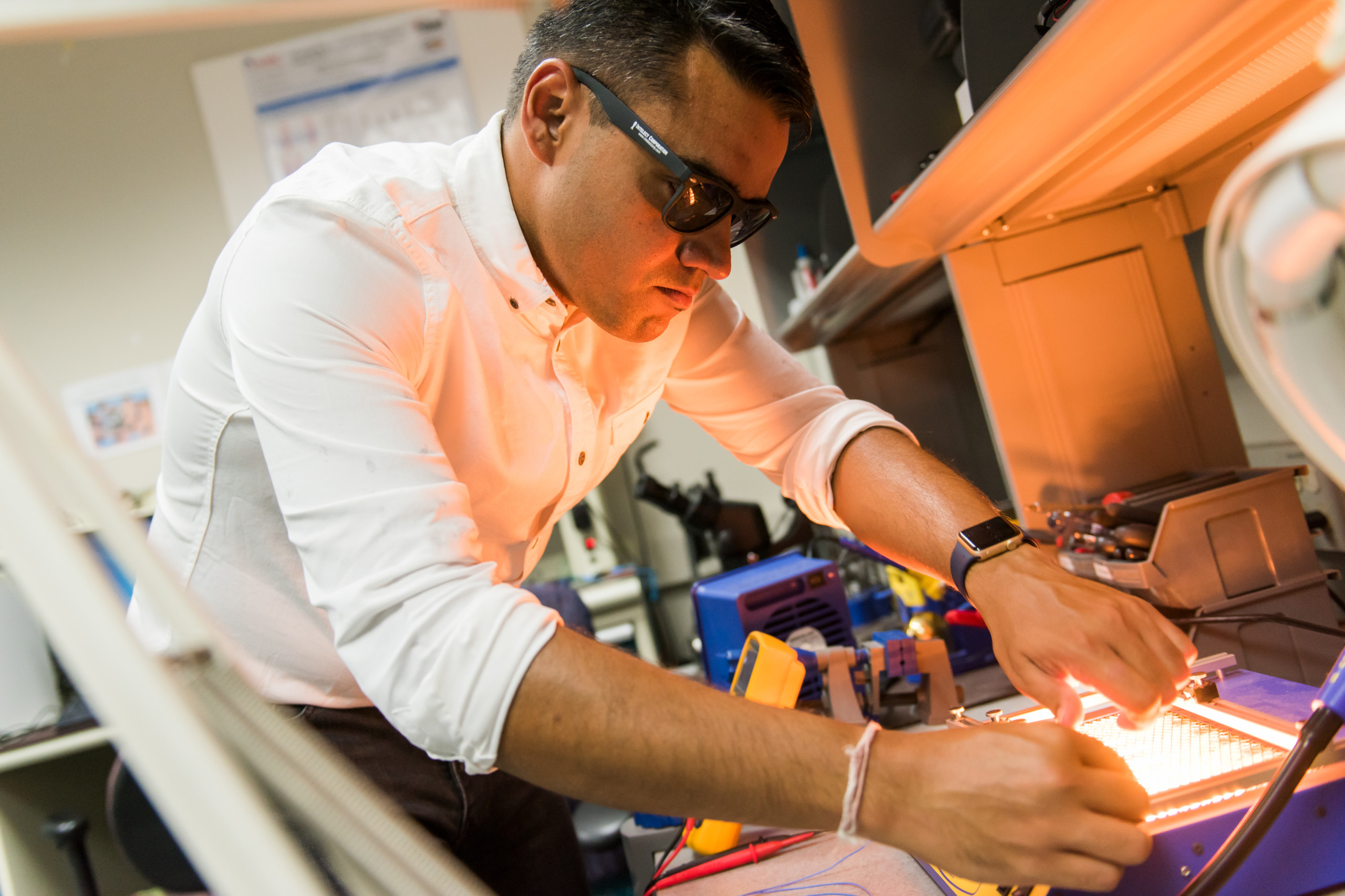
          
          <p>The CyMOT program -- <a href="https://umbc.edu/stories/umbc-collaborates-with-mxd-to-develop-cybersecurity-curriculum-for-workers-in-manufacturing/" rel="nofollow external" class="bo">launched in 2020</a> in collaboration with the Chicago-based MxD (<a href="http://mxdusa.org/" rel="nofollow external" class="bo">Manufacturing x Digital</a>) and <a href="https://www.umbctraining.com/" rel="nofollow external" class="bo">UMBC Training Centers</a> -- has been renewed with a $1.2 million grant from the U.S. Department of Defense's Office of Local Defense Community Cooperation (OLDCC). The funding will support the implementation of new training curricula around machine learning and cybersecurity. 
          </p>
          
          <p>"In recent years, there has been a large number of cyber attacks on the manufacturing sector," says <strong><a href="https://www.csee.umbc.edu/people/faculty/nilanjan-banerjee/" rel="nofollow external" class="bo">Nilanjan Banerjee</a></strong>, professor of computer science and electrical engineering and the grant's principal investigator. To address this rising concern, Banerjee explains, CyMOT aims to "make sure that people that are in the manufacturing business can get trained and upskilled in cybersecurity concepts around manufacturing."</p>
          
          <p>Read more about the CyMOT program in this <a href="https://umbc.edu/stories/cyber-training-for-manufacturing-workers/" rel="nofollow external" class="bo">UMBC News article</a>.</p></div>
      ]]>
    </Body>
    <Summary>Nilanjan Banerjee, professor of computer science and electrical engineering (Marlayna Demond '11/UMBC       UMBC researchers designed the Cybersecurity for Manufacturing Operational Technology...</Summary>
    <Website>https://umbc.edu/stories/cyber-training-for-manufacturing-workers/</Website>
    <TrackingUrl>https://dev.my.umbc.edu/api/v0/pixel/news/129802/guest@my.umbc.edu/e15802b8e63e033f219133b7e391654d/api/pixel</TrackingUrl>
    <Tag>banerjee</Tag>
    <Tag>cybersecurity</Tag>
    <Tag>cymot</Tag>
    <Tag>manufacturing</Tag>
    <Group token="csee">Computer Science and Electrical Engineering</Group>
    <GroupUrl>https://dev.my.umbc.edu/groups/csee</GroupUrl>
    <AvatarUrl>https://assets3-dev.my.umbc.edu/system/shared/avatars/groups/000/000/099/d117dca133c64bf78a4b7696dd007189/xsmall.png?1314043393</AvatarUrl>
    <AvatarUrl size="original">https://assets1-dev.my.umbc.edu/system/shared/avatars/groups/000/000/099/d117dca133c64bf78a4b7696dd007189/original.png?1314043393</AvatarUrl>
    <AvatarUrl size="xxlarge">https://assets1-dev.my.umbc.edu/system/shared/avatars/groups/000/000/099/d117dca133c64bf78a4b7696dd007189/xxlarge.png?1314043393</AvatarUrl>
    <AvatarUrl size="xlarge">https://assets4-dev.my.umbc.edu/system/shared/avatars/groups/000/000/099/d117dca133c64bf78a4b7696dd007189/xlarge.png?1314043393</AvatarUrl>
    <AvatarUrl size="large">https://assets3-dev.my.umbc.edu/system/shared/avatars/groups/000/000/099/d117dca133c64bf78a4b7696dd007189/large.png?1314043393</AvatarUrl>
    <AvatarUrl size="medium">https://assets1-dev.my.umbc.edu/system/shared/avatars/groups/000/000/099/d117dca133c64bf78a4b7696dd007189/medium.png?1314043393</AvatarUrl>
    <AvatarUrl size="small">https://assets2-dev.my.umbc.edu/system/shared/avatars/groups/000/000/099/d117dca133c64bf78a4b7696dd007189/small.png?1314043393</AvatarUrl>
    <AvatarUrl size="xsmall">https://assets3-dev.my.umbc.edu/system/shared/avatars/groups/000/000/099/d117dca133c64bf78a4b7696dd007189/xsmall.png?1314043393</AvatarUrl>
    <AvatarUrl size="xxsmall">https://assets3-dev.my.umbc.edu/system/shared/avatars/groups/000/000/099/d117dca133c64bf78a4b7696dd007189/xxsmall.png?1314043393</AvatarUrl>
    <Sponsor>Computer Science and Electrical Engineering</Sponsor>
    <PawCount>0</PawCount>
    <CommentCount>0</CommentCount>
    <CommentsAllowed>true</CommentsAllowed>
    <PostedAt>Wed, 14 Dec 2022 12:30:04 -0500</PostedAt>
    <EditAt>Wed, 14 Dec 2022 14:22:27 -0500</EditAt>
  </NewsItem>
  <NewsItem contentIssues="true" id="129663" important="false" status="posted" url="https://dev.my.umbc.edu/groups/csee/posts/129663">
  <Title>Students Present Cybersecurity Research Projects; Tue 12/20</Title>
  <Tagline>Information Security Research &amp; Education (INSuRE) project</Tagline>
  <Body>
    <![CDATA[
    <div class="html-content"><div><img src="https://www.csee.umbc.edu/wp-content/uploads/sites/659/2022/12/caer.jpg" style="max-width: 100%; height: auto;"></div><div><strong><br></strong></div><div><strong>The UMBC Cyber Defense Lab presents</strong></div><div><br></div><div><strong>Student Presentations from CMSC-491/691 Cybersecurity Research (INSuRE)</strong></div><div><strong><br></strong></div><div><strong>10:30-12:30 ET Tuesday, 20 December 2022, </strong><strong>ITE 229, UMBC</strong></div><div><br></div><div>Students from Alan Sherman's fall edition of CMSC-491/691 Cybersecurity Research (INSuRE) will present their research projects through talks and posters.  In this project-based learning course, 18 students carried out original research projects, working collaboratively in three groups.  Each group prepared a written report, poster, and presentation, guided in part by a technical director (TD) and other subject experts.  For more information about the INSuRE network of <a href="https://www.nsa.gov/Academics/Centers-of-Academic-Excellence/" rel="nofollow external" class="bo">CAE-R</a> universities, see their <a href="https://caecommunity.org/initiative/insure" rel="nofollow external" class="bo">website</a>  and an <a href="https://ieeexplore.ieee.org/document/8012344" rel="nofollow external" class="bo">article</a> written by Sherman et al. (IEEE Security &amp; Privacy Magazine, July/August 2017, Vol. 15, Issue 4, pp. 72-78.) The next UMBC edition of INSuRE will take place in fall 2024.  (CAE-R = National Center of Academic Excellence in Cyber Defense Research)</div><div><ul><li>Group 1 (10:30am-11:10am): <strong>A Man-in-the-Middle Attack against the Registration Protocol in FIDO UAF,</strong> Jonathan Fuchs, Sophia Hamer, Danning Liu, TD: Edward Zieglar (NSA)</li><li>Group 2: (11:10am-11:50am): <strong>Detecting Outliers in Malware:Analyzing Control Flow Graphs Using Machine Learning</strong><span>, Naod Assefa, Mason Herndon, Xavier Jenkins, Jack Kingsbury, Bojing (Tim) Li,  Alex Ruthloff, Joseph Shaalan, Brian Yi, Duo (Dora) Zhong</span></li><li>Group 3: (11:50am-12:30pm): <strong>Reconnaissance and Reverse Engineering: A Case Study of the Cyberphysical Systems in the UMBC Academic Building ILSB</strong><span>, Zachary Amoss, Leo Brown, Kevin Chen, Will DeStaffan, Andrea Ferketich, Brandon Hill, Kathleen Koerner, TD: Zachary Birnbaum (APL)</span></li></ul></div><div>Host: Alan T. Sherman, <a href="mailto:sherman@umbc.edu">sherman@umbc.edu</a>. Support for this event was provided in part by the National Science Foundation under SFS grant DGE-1753681. The UMBC Cyber Defense Lab meets biweekly Fridays.  All meetings are open to the public. Upcoming CDL Meetings: January 2-6, 2023, SFS/CySP Research Study. Biweekly CDL talks will resume on Fridays in the spring 2023 semester on Webex.</div></div>
]]>
  </Body>
  <Summary>The UMBC Cyber Defense Lab presents     Student Presentations from CMSC-491/691 Cybersecurity Research (INSuRE)     10:30-12:30 ET Tuesday, 20 December 2022, ITE 229, UMBC     Students from Alan...</Summary>
  <Website>https://cisa.umbc.edu/</Website>
  <TrackingUrl>https://dev.my.umbc.edu/api/v0/pixel/news/129663/guest@my.umbc.edu/42810680d543715a903723ca7366d827/api/pixel</TrackingUrl>
  <Tag>cybersecurity</Tag>
  <Tag>research</Tag>
  <Group token="csee">Computer Science and Electrical Engineering</Group>
  <GroupUrl>https://dev.my.umbc.edu/groups/csee</GroupUrl>
  <AvatarUrl>https://assets3-dev.my.umbc.edu/system/shared/avatars/groups/000/000/099/d117dca133c64bf78a4b7696dd007189/xsmall.png?1314043393</AvatarUrl>
  <AvatarUrl size="original">https://assets1-dev.my.umbc.edu/system/shared/avatars/groups/000/000/099/d117dca133c64bf78a4b7696dd007189/original.png?1314043393</AvatarUrl>
  <AvatarUrl size="xxlarge">https://assets1-dev.my.umbc.edu/system/shared/avatars/groups/000/000/099/d117dca133c64bf78a4b7696dd007189/xxlarge.png?1314043393</AvatarUrl>
  <AvatarUrl size="xlarge">https://assets4-dev.my.umbc.edu/system/shared/avatars/groups/000/000/099/d117dca133c64bf78a4b7696dd007189/xlarge.png?1314043393</AvatarUrl>
  <AvatarUrl size="large">https://assets3-dev.my.umbc.edu/system/shared/avatars/groups/000/000/099/d117dca133c64bf78a4b7696dd007189/large.png?1314043393</AvatarUrl>
  <AvatarUrl size="medium">https://assets1-dev.my.umbc.edu/system/shared/avatars/groups/000/000/099/d117dca133c64bf78a4b7696dd007189/medium.png?1314043393</AvatarUrl>
  <AvatarUrl size="small">https://assets2-dev.my.umbc.edu/system/shared/avatars/groups/000/000/099/d117dca133c64bf78a4b7696dd007189/small.png?1314043393</AvatarUrl>
  <AvatarUrl size="xsmall">https://assets3-dev.my.umbc.edu/system/shared/avatars/groups/000/000/099/d117dca133c64bf78a4b7696dd007189/xsmall.png?1314043393</AvatarUrl>
  <AvatarUrl size="xxsmall">https://assets3-dev.my.umbc.edu/system/shared/avatars/groups/000/000/099/d117dca133c64bf78a4b7696dd007189/xxsmall.png?1314043393</AvatarUrl>
  <Sponsor>UMBC Cyber Defense Lab</Sponsor>
  <PawCount>0</PawCount>
  <CommentCount>0</CommentCount>
  <CommentsAllowed>true</CommentsAllowed>
  <PostedAt>Wed, 07 Dec 2022 16:09:37 -0500</PostedAt>
</NewsItem>
  <NewsItem contentIssues="true" id="129511" important="false" status="posted" url="https://dev.my.umbc.edu/groups/csee/posts/129511">
  <Title>Talk: Think Like an Attacker, 12-1 Fri. 12/2 online</Title>
  <Tagline>Towards a definition and assessment of Adversarial Thinking</Tagline>
  <Body>
    <![CDATA[
    <div class="html-content"><div><img src="https://i.imgur.com/xMNI4ho.jpg" style="max-width: 100%; height: auto;"></div><div><strong><br></strong></div><div><strong>The UMBC Cyber Defense Lab presents</strong></div><div><br></div><div><strong>Think Like an Attacker: Towards a Definition and Non-Technical Assessment of Adversarial Thinking</strong></div><div><br></div><div><a href="https://www.d.umn.edu/~pahp/" rel="nofollow external" class="bo"><strong>Peter A. H. Peterson</strong></a></div><div><strong>University of Minnesota Duluth</strong></div><div><strong><br></strong></div><div><strong>12-1:00 pm ET, Friday, 2 Dec, 2022, via <a href="https://umbc.webex.com/meet/sherman" rel="nofollow external" class="bo">WebEx</a><span> </span></strong></div><div><br></div><div><div>"Adversarial thinking" (AT), sometimes called the "security mindset" or described as the ability to "think like an attacker," is widely accepted in the computer security community as an essential ability for successful cybersecurity practice. Supported by intuition and anecdotes, many in the community stress the importance of AT, and multiple projects have produced interventions explicitly intended to strengthen individual AT skills to improve security in general.  However, there is no agreed-upon definition of "adversarial thinking" or its components, and accordingly, no test for it.  Because of this absence, it is impossible to meaningfully quantify AT in subjects, AT's importance for cybersecurity practitioners, or the effectiveness of interventions designed to improve AT. Working towards the goal of a characterization of AT in cybersecurity and a non-technical test for AT that anyone can take, I will discuss existing conceptions of AT from the security community, as well as ideas about AT in other fields with adversarial aspects including war, politics, law, critical thinking, and games. I will also describe some of the unique difficulties of creating a non-technical test for AT, compare and contrast this effort to our work on the CATS and Security Misconceptions projects, and describe some potential solutions. I will explore potential uses for such an instrument, including measuring a student's change in AT over time, measuring the effectiveness of interventions meant to improve AT, comparing AT in different populations (e.g., security professionals vs. software engineers), and identifying individuals from all walks of life with strong AT skills -- people who might help meet our world's pressing need for skilled and insightful security professionals and researchers. Along the way, I will give some sample non-technical adversarial thinking challenges and describe how they might be graded and validated.</div><div><br></div><div>Peter A. H. Peterson is an associate professor of computer science at the University of Minnesota Duluth, where he teaches and directs the Laboratory for Advanced Research in Systems (LARS), a group dedicated to research in operating systems and security, with a special focus on research and development to make security education more effective and accessible. He is an active member of the Cybersecurity Assessment Tools (CATS) project, which created and validated two concept inventories for cybersecurity (the CCI and CCA) and is working on an NSF-funded grant to evaluate educational interventions at US military academies using the CCI. He is also working on an NSF CAREER award to articulate the most critical components of Adversarial Thinking, and to create, validate, and use a non- technical assessment for AT that anyone can take. He is also finishing an NSF project to create a misconcept inventory -- a test about common misconceptions in cybersecurity. He earned his PhD from the University of California, Los Angeles for work on "adaptive compression" -- systems that make compression decisions dynamically to improve efficiency. He can be reached at <a href="mailto:pahp@d.umn.edu">pahp@d.umn.edu</a>.</div><div><br></div><div>Host: Alan T. Sherman, <a href="mailto:sherman@umbc.edu">sherman@umbc.edu</a>. Support for this event was provided in part by the National Science Foundation under SFS grant DGE-1753681.  The UMBC Cyber Defense Lab meets biweekly Fridays. All meetings are open to the public. Upcoming CDL Meetings: Dec 20, 10:30am-12:30pm, 3 in-person presentations from the UMBC fall 2022 cybersecurity research class, ITE-229.  Topics: protocol analysis of FIDO UAF Registration, malware analysis, cyber-physical security of UMBC's ILSB.  January 2-6, 2023, SFS/CySP Research Study</div></div></div>
]]>
  </Body>
  <Summary>The UMBC Cyber Defense Lab presents     Think Like an Attacker: Towards a Definition and Non-Technical Assessment of Adversarial Thinking     Peter A. H. Peterson  University of Minnesota Duluth...</Summary>
  <TrackingUrl>https://dev.my.umbc.edu/api/v0/pixel/news/129511/guest@my.umbc.edu/7ee65e33d4ecdf5e252d67df784170c5/api/pixel</TrackingUrl>
  <Tag>cybersecurity</Tag>
  <Tag>talk</Tag>
  <Group token="csee">Computer Science and Electrical Engineering</Group>
  <GroupUrl>https://dev.my.umbc.edu/groups/csee</GroupUrl>
  <AvatarUrl>https://assets3-dev.my.umbc.edu/system/shared/avatars/groups/000/000/099/d117dca133c64bf78a4b7696dd007189/xsmall.png?1314043393</AvatarUrl>
  <AvatarUrl size="original">https://assets1-dev.my.umbc.edu/system/shared/avatars/groups/000/000/099/d117dca133c64bf78a4b7696dd007189/original.png?1314043393</AvatarUrl>
  <AvatarUrl size="xxlarge">https://assets1-dev.my.umbc.edu/system/shared/avatars/groups/000/000/099/d117dca133c64bf78a4b7696dd007189/xxlarge.png?1314043393</AvatarUrl>
  <AvatarUrl size="xlarge">https://assets4-dev.my.umbc.edu/system/shared/avatars/groups/000/000/099/d117dca133c64bf78a4b7696dd007189/xlarge.png?1314043393</AvatarUrl>
  <AvatarUrl size="large">https://assets3-dev.my.umbc.edu/system/shared/avatars/groups/000/000/099/d117dca133c64bf78a4b7696dd007189/large.png?1314043393</AvatarUrl>
  <AvatarUrl size="medium">https://assets1-dev.my.umbc.edu/system/shared/avatars/groups/000/000/099/d117dca133c64bf78a4b7696dd007189/medium.png?1314043393</AvatarUrl>
  <AvatarUrl size="small">https://assets2-dev.my.umbc.edu/system/shared/avatars/groups/000/000/099/d117dca133c64bf78a4b7696dd007189/small.png?1314043393</AvatarUrl>
  <AvatarUrl size="xsmall">https://assets3-dev.my.umbc.edu/system/shared/avatars/groups/000/000/099/d117dca133c64bf78a4b7696dd007189/xsmall.png?1314043393</AvatarUrl>
  <AvatarUrl size="xxsmall">https://assets3-dev.my.umbc.edu/system/shared/avatars/groups/000/000/099/d117dca133c64bf78a4b7696dd007189/xxsmall.png?1314043393</AvatarUrl>
  <Sponsor>UMBC Cyber Defense Lab</Sponsor>
  <PawCount>0</PawCount>
  <CommentCount>0</CommentCount>
  <CommentsAllowed>true</CommentsAllowed>
  <PostedAt>Thu, 01 Dec 2022 14:54:04 -0500</PostedAt>
  <EditAt>Thu, 01 Dec 2022 21:53:06 -0500</EditAt>
</NewsItem>
  <NewsItem contentIssues="true" id="129320" important="false" status="posted" url="https://dev.my.umbc.edu/groups/csee/posts/129320">
  <Title>Talk: Forno on What Evils Lurk Over That Horizon? 6pm Dec. 8</Title>
  <Tagline>Hear what new cybersecurity threats we should prepare for</Tagline>
  <Body>
    <![CDATA[
    <div class="html-content"><div><img src="https://i.imgur.com/zKiJbRl.jpg" style="max-width: 100%; height: auto;"></div><div><br></div>
    
    As cyberattacks continue to grow in prevalence and sophistication, their costs continue to increase for corporations, governments, and consumers. But what are the next threats that we should be preparing for? Join the DataWorks MD Meetup in December to hear from UMBC cybersecurity expert Dr. Richard Forno on what evils are lurking over the horizon.<div><br></div><div><strong>What Evils Lurk Over That Horizon?</strong></div>
    
    <div><strong>Dr. Richard Forno, UMBC</strong></div><div><strong><br></strong></div><div><strong>6-7:30 pm ET via Zoom &amp; YouTube</strong></div><div><strong><a href="https://www.meetup.com/dataworks/events/289595430/" rel="nofollow external" class="bo">Register at DataWorks MD</a></strong></div><div><br></div>
    
    <div>This discussion will explore several likely cyber-related threats facing individuals, businesses, and global society at large over the next decade. In doing so, the state of cybersecurity at America's grassroots --our cities and communities-- will be examined since not only are these the most intimate levels of government interaction with citizens, but they often are fairly vulnerable targets.</div><div><br></div>
    
    <div><a href="https://cybersecurity.umbc.edu/richard-forno/" rel="nofollow external" class="bo"><strong>Dr. Richard Forno</strong></a> is a Principal Lecturer in the UMBC Department of Computer Science and Electrical Engineering, where he directs the UMBC Graduate Cybersecurity Program, serves as the Assistant Director of the <a href="https://cybersecurity.umbc.edu/" rel="nofollow external" class="bo"><strong>UMBC Center for Cybersecurity</strong></a>, and is an Affiliate of the Stanford Law School's Center for Internet and Society (CIS). Prior to academia, his twenty-year career in operational cybersecurity includes helping build a formal cybersecurity program for the US House of Representatives, serving as the first Chief Security Officer for Network Solutions (then the global center of the internet DNS system), consulting to Fortune 100 companies, the government, military, and more. As a technologist and student of national security studies, Dr. Forno is an unconventional, albeit realistic, critical thinker about the relationships between technology, security, and society. His latest book is <a href="https://www.wiley.com/en-us/Cybersecurity+and+Local+Government-p-9781119788287" rel="nofollow external" class="bo"><strong>Cybersecurity for Local Government</strong> </a>(Wiley, 2022.)</div></div>
]]>
  </Body>
  <Summary>As cyberattacks continue to grow in prevalence and sophistication, their costs continue to increase for corporations, governments, and consumers. But what are the next threats that we should be...</Summary>
  <TrackingUrl>https://dev.my.umbc.edu/api/v0/pixel/news/129320/guest@my.umbc.edu/10708b8d35957a4422fa61377f3d8608/api/pixel</TrackingUrl>
  <Tag>cyber-threats</Tag>
  <Tag>cybersecurity</Tag>
  <Tag>talk</Tag>
  <Group token="csee">Computer Science and Electrical Engineering</Group>
  <GroupUrl>https://dev.my.umbc.edu/groups/csee</GroupUrl>
  <AvatarUrl>https://assets3-dev.my.umbc.edu/system/shared/avatars/groups/000/000/099/d117dca133c64bf78a4b7696dd007189/xsmall.png?1314043393</AvatarUrl>
  <AvatarUrl size="original">https://assets1-dev.my.umbc.edu/system/shared/avatars/groups/000/000/099/d117dca133c64bf78a4b7696dd007189/original.png?1314043393</AvatarUrl>
  <AvatarUrl size="xxlarge">https://assets1-dev.my.umbc.edu/system/shared/avatars/groups/000/000/099/d117dca133c64bf78a4b7696dd007189/xxlarge.png?1314043393</AvatarUrl>
  <AvatarUrl size="xlarge">https://assets4-dev.my.umbc.edu/system/shared/avatars/groups/000/000/099/d117dca133c64bf78a4b7696dd007189/xlarge.png?1314043393</AvatarUrl>
  <AvatarUrl size="large">https://assets3-dev.my.umbc.edu/system/shared/avatars/groups/000/000/099/d117dca133c64bf78a4b7696dd007189/large.png?1314043393</AvatarUrl>
  <AvatarUrl size="medium">https://assets1-dev.my.umbc.edu/system/shared/avatars/groups/000/000/099/d117dca133c64bf78a4b7696dd007189/medium.png?1314043393</AvatarUrl>
  <AvatarUrl size="small">https://assets2-dev.my.umbc.edu/system/shared/avatars/groups/000/000/099/d117dca133c64bf78a4b7696dd007189/small.png?1314043393</AvatarUrl>
  <AvatarUrl size="xsmall">https://assets3-dev.my.umbc.edu/system/shared/avatars/groups/000/000/099/d117dca133c64bf78a4b7696dd007189/xsmall.png?1314043393</AvatarUrl>
  <AvatarUrl size="xxsmall">https://assets3-dev.my.umbc.edu/system/shared/avatars/groups/000/000/099/d117dca133c64bf78a4b7696dd007189/xxsmall.png?1314043393</AvatarUrl>
  <Sponsor>Computer Science and Electrical Engineering</Sponsor>
  <PawCount>1</PawCount>
  <CommentCount>0</CommentCount>
  <CommentsAllowed>true</CommentsAllowed>
  <PostedAt>Sun, 20 Nov 2022 17:52:08 -0500</PostedAt>
</NewsItem>
  <NewsItem contentIssues="false" id="129138" important="false" status="posted" url="https://dev.my.umbc.edu/groups/csee/posts/129138">
  <Title>Talk: Myths in Cybersecurity: Pros &amp; Cons of Analogies</Title>
  <Tagline>Avoiding the hazards and pitfalls that derail us</Tagline>
  <Body>
    <![CDATA[
    <div class="html-content"><div><strong>The UMBC Cyber Defense Lab presents</strong></div><div><br></div><h4>Myths in Cybersecurity: Pros and Cons of Analogies</h4><div><br></div><h5><strong><a href="https://josiahdykstra.com/" rel="nofollow external" class="bo">Dr. Josiah Dykstra<br></a></strong><strong>Technical Fellow, National Security Agency</strong></h5><div><br></div><h5><strong>12-1<span> pm, Friday, 18 November 2022 via <a href="https://umbc.webex.com/meet/sherman" rel="nofollow external" class="bo">WebEx</a></span></strong></h5><div><br></div><h5><strong>Joint work with Dr. Eugene H. Spafford and Dr. Leigh Metcalf</strong></h5><div><br></div><div>Cybersecurity is rich with analogies, from keys and locks to Trojan horses. We look for the "needle in the haystack" and "evict malware resident on our systems." We debate "baked-in" versus "bolted-on" security. We do not mean all these things literally, of course. The language and analogies we use in this field are borrowed from many different domains. Analogies can help explain basic cybersecurity concepts, but too often they omit or overgeneralize important details. They can mislead, sometimes deliberately, because the experience they purport to connect might be out of proportion. <span>Despite their shortcoming and imprecision, using an analogy or an abstraction might be helpful in appropriate situations. Using analogies, abstractions, and metaphors shapes technology's development, practice, and policies. The analogies are more than simple figures of speech. They have a normative dimension; sometimes, they can be used to help the imaginary shape reality. </span></div><div><br></div><div>This talk explores the use and misuse of analogies and metaphors across cybersecurity. We consider analogies from the physical world, medicine and biology, war and military, and law before discussing tips for avoiding pitfalls in using analogies and metaphors.  This talk is adapted from material in the forthcoming book <a href="https://www.amazon.com/Cybersecurity-Myths-Misconceptions-Avoiding-Pitfalls/dp/0137929234" rel="nofollow external" class="bo">Cybersecurity Myths and Misconceptions: Avoiding the Hazards and Pitfalls That Derail Us</a> by Drs. Spafford, Metcalf, and Dykstra. The book presents 175+ common myths and misconceptions held by users, leaders, and cybersecurity professionals, along with tips for how to avoid them.</div><div><br></div><div><strong><a href="https://josiahdykstra.com/" rel="nofollow external" class="bo">Josiah Dykstra</a></strong> is a Technical Fellow in the Cybersecurity Collaboration Center at the National Security Agency (NSA) and the owner of Designer Security, LLC. In 2013, he earned his PhD in computer science from UMBC studying cloud forensics with Dr. Sherman. He is interested in cybersecurity science, especially where humans intersect with technology. He has studied stress in hacking, action bias in incident response, and economics of cyber threat intelligence. Dr. Dykstra is a frequent author and speaker, including at the Black Hat and RSA Conference. He received the CyberCorps Scholarship for Service (SFS) fellowship and is one of seven people in the SFS Hall of Fame. In 2017, he received the Presidential Early Career Award for Scientists and Engineers (PECASE) from then President Barack Obama.  Dr. Dykstra is a Fellow of the American Academy of Forensic Sciences and a Distinguished Member of the Association for Computing Machinery (ACM). He is the author of numerous research papers and two books.</div><div><br></div><div>Host: Alan T. Sherman, <a href="mailto:sherman@umbc.edu">sherman@umbc.edu</a>. Support for this event was provided in part by the National Science Foundation under SFS grant DGE-1753681.  The UMBC Cyber Defense Lab meets biweekly Fridays 12-1pm. All meetings are open to the public.  Upcoming CDL meetings: Dec 2, Peter Peterson (UMN Duluth), Adversarial Thinking Dec 20, 10:30am-12:30pm, 3 In-Person presentations from the UMBC fall 2022 cybersecurity research class, location TBA SFS/CySP Research Study: January 2-6, 2023 (tentative)</div></div>
]]>
  </Body>
  <Summary>The UMBC Cyber Defense Lab presents     Myths in Cybersecurity: Pros and Cons of Analogies     Dr. Josiah Dykstra Technical Fellow, National Security Agency     12-1 pm, Friday, 18 November 2022...</Summary>
  <TrackingUrl>https://dev.my.umbc.edu/api/v0/pixel/news/129138/guest@my.umbc.edu/a0bae89114b97ff890d767599fd903e9/api/pixel</TrackingUrl>
  <Tag>cybersecurity</Tag>
  <Tag>talk</Tag>
  <Group token="csee">Computer Science and Electrical Engineering</Group>
  <GroupUrl>https://dev.my.umbc.edu/groups/csee</GroupUrl>
  <AvatarUrl>https://assets3-dev.my.umbc.edu/system/shared/avatars/groups/000/000/099/d117dca133c64bf78a4b7696dd007189/xsmall.png?1314043393</AvatarUrl>
  <AvatarUrl size="original">https://assets1-dev.my.umbc.edu/system/shared/avatars/groups/000/000/099/d117dca133c64bf78a4b7696dd007189/original.png?1314043393</AvatarUrl>
  <AvatarUrl size="xxlarge">https://assets1-dev.my.umbc.edu/system/shared/avatars/groups/000/000/099/d117dca133c64bf78a4b7696dd007189/xxlarge.png?1314043393</AvatarUrl>
  <AvatarUrl size="xlarge">https://assets4-dev.my.umbc.edu/system/shared/avatars/groups/000/000/099/d117dca133c64bf78a4b7696dd007189/xlarge.png?1314043393</AvatarUrl>
  <AvatarUrl size="large">https://assets3-dev.my.umbc.edu/system/shared/avatars/groups/000/000/099/d117dca133c64bf78a4b7696dd007189/large.png?1314043393</AvatarUrl>
  <AvatarUrl size="medium">https://assets1-dev.my.umbc.edu/system/shared/avatars/groups/000/000/099/d117dca133c64bf78a4b7696dd007189/medium.png?1314043393</AvatarUrl>
  <AvatarUrl size="small">https://assets2-dev.my.umbc.edu/system/shared/avatars/groups/000/000/099/d117dca133c64bf78a4b7696dd007189/small.png?1314043393</AvatarUrl>
  <AvatarUrl size="xsmall">https://assets3-dev.my.umbc.edu/system/shared/avatars/groups/000/000/099/d117dca133c64bf78a4b7696dd007189/xsmall.png?1314043393</AvatarUrl>
  <AvatarUrl size="xxsmall">https://assets3-dev.my.umbc.edu/system/shared/avatars/groups/000/000/099/d117dca133c64bf78a4b7696dd007189/xxsmall.png?1314043393</AvatarUrl>
  <Sponsor>Computer Science and Electrical Engineering</Sponsor>
  <PawCount>0</PawCount>
  <CommentCount>0</CommentCount>
  <CommentsAllowed>true</CommentsAllowed>
  <PostedAt>Fri, 11 Nov 2022 15:41:46 -0500</PostedAt>
  <EditAt>Fri, 11 Nov 2022 20:37:31 -0500</EditAt>
</NewsItem>
  <NewsItem contentIssues="false" id="128918" important="false" status="posted" url="https://dev.my.umbc.edu/groups/csee/posts/128918">
  <Title>Talk: ARMR: From Idea to Commercialization</Title>
  <Tagline>JHU/APL Autonomous Resiliency/Machine Recovery system</Tagline>
  <Body>
    <![CDATA[
    <div class="html-content"><div>The UMBC Cyber Defense Lab presents</div><div><br></div><h3><strong>ARMR: From Idea to Commercialization</strong></h3><div><strong><br></strong></div><div><strong>Russ Fink, Ph.D. (UMBC 2010)</strong></div><div><strong>Chief Engineer, Resilient Military Systems Group</strong></div><div><strong>The Johns Hopkins University / Applied Physics Laboratory</strong></div><div><strong><br></strong></div><div><strong>12:00-1pm ET, Friday, 4 Nov. 2022, via <a href="https://umbc.webex.com/meet/sherman" rel="nofollow external" class="bo">WebEx</a></strong></div><div><br></div><div>The Autonomous Resiliency / Machine Recovery (ARMR) system has been developed by APL since 2015, has recently identified a commercial licensee, and is just starting to roll out small pilot studies.  In this talk, I will discuss the technology, timeline, and lessons learned about the challenges of innovating while continuing to make critical contributions to other projects in the cybersecurity defense of the nation.</div><div><br></div><div>Russell "Russ" Fink is the chief engineer of the Resilient Military Systems Group at JHU/APL.  He is also an instructor in the JHU/Whiting School Engineering for Professionals program.  His research interests include privacy preserving information retrieval and homomorphic encryption, trusted computing, defeating ransomware, and general information security.  Email:  <a href="mailto:Russ.Fink@jhuapl.edu">Russ.Fink@jhuapl.edu</a></div><div><br></div><div>Host: Alan T. Sherman, <a href="mailto:sherman@umbc.edu">sherman@umbc.edu</a>. Support for this event was provided in part by the National Science Foundation under SFS grant DGE-1753681.  The UMBC Cyber Defense Lab meets biweekly Fridays 12-1pm.  All meetings are open to the public.  Upcoming CDL meetings: November 18, Josiah Dykstra (DoD), Myths in cybersecurity, December 2, Peter Peterson (UMN Duluth), Adversarial Thinking, SFS/CySP Research Study: January 2-6, 2023 (tentative).</div></div>
]]>
  </Body>
  <Summary>The UMBC Cyber Defense Lab presents     ARMR: From Idea to Commercialization     Russ Fink, Ph.D. (UMBC 2010)  Chief Engineer, Resilient Military Systems Group  The Johns Hopkins University /...</Summary>
  <TrackingUrl>https://dev.my.umbc.edu/api/v0/pixel/news/128918/guest@my.umbc.edu/33147d23034cd3c3fe10e7b4eccf8060/api/pixel</TrackingUrl>
  <Tag>cybersecurity</Tag>
  <Tag>talk</Tag>
  <Group token="csee">Computer Science and Electrical Engineering</Group>
  <GroupUrl>https://dev.my.umbc.edu/groups/csee</GroupUrl>
  <AvatarUrl>https://assets3-dev.my.umbc.edu/system/shared/avatars/groups/000/000/099/d117dca133c64bf78a4b7696dd007189/xsmall.png?1314043393</AvatarUrl>
  <AvatarUrl size="original">https://assets1-dev.my.umbc.edu/system/shared/avatars/groups/000/000/099/d117dca133c64bf78a4b7696dd007189/original.png?1314043393</AvatarUrl>
  <AvatarUrl size="xxlarge">https://assets1-dev.my.umbc.edu/system/shared/avatars/groups/000/000/099/d117dca133c64bf78a4b7696dd007189/xxlarge.png?1314043393</AvatarUrl>
  <AvatarUrl size="xlarge">https://assets4-dev.my.umbc.edu/system/shared/avatars/groups/000/000/099/d117dca133c64bf78a4b7696dd007189/xlarge.png?1314043393</AvatarUrl>
  <AvatarUrl size="large">https://assets3-dev.my.umbc.edu/system/shared/avatars/groups/000/000/099/d117dca133c64bf78a4b7696dd007189/large.png?1314043393</AvatarUrl>
  <AvatarUrl size="medium">https://assets1-dev.my.umbc.edu/system/shared/avatars/groups/000/000/099/d117dca133c64bf78a4b7696dd007189/medium.png?1314043393</AvatarUrl>
  <AvatarUrl size="small">https://assets2-dev.my.umbc.edu/system/shared/avatars/groups/000/000/099/d117dca133c64bf78a4b7696dd007189/small.png?1314043393</AvatarUrl>
  <AvatarUrl size="xsmall">https://assets3-dev.my.umbc.edu/system/shared/avatars/groups/000/000/099/d117dca133c64bf78a4b7696dd007189/xsmall.png?1314043393</AvatarUrl>
  <AvatarUrl size="xxsmall">https://assets3-dev.my.umbc.edu/system/shared/avatars/groups/000/000/099/d117dca133c64bf78a4b7696dd007189/xxsmall.png?1314043393</AvatarUrl>
  <Sponsor>Computer Science and Electrical Engineering</Sponsor>
  <PawCount>0</PawCount>
  <CommentCount>0</CommentCount>
  <CommentsAllowed>true</CommentsAllowed>
  <PostedAt>Wed, 02 Nov 2022 18:06:26 -0400</PostedAt>
</NewsItem>
  <NewsItem contentIssues="false" id="128865" important="false" status="posted" url="https://dev.my.umbc.edu/groups/csee/posts/128865">
    <Title>Cyber 101 Program</Title>
    <Tagline>For high school juniors/seniors interested in cybersecurity</Tagline>
    <Body>
      <![CDATA[
          <div class="html-content"><div><div>The <strong>Cyber 101 Program </strong>(hosted by the <a href="https://cwit.umbc.edu/" rel="nofollow external" class="bo">UMBC Center for Women in Technology</a>) is accepting applications from high school juniors and seniors interested in learning about the field of cybersecurity. If selected, participation includes interactions with college students, hands-on cybersecurity activities, and more.  </div><div><br></div><div>We are offering both an in-person experience and a virtual experience this year (each attendee will attend only one day). This is a free program for students who are <span></span>selected to participate.</div></div><div><div><ul><li>Saturday, Nov. 19 -- 10am-6pm, in person at UMBC (includes lunch and dinner)</li><li>Sunday, Nov. 20 -- 10am-3pm, virtually via Webex (includes a lunch break)</li></ul></div></div><div><div>Students must complete this <a href="https://docs.google.com/forms/d/e/1FAIpQLScLdM9bOfAvey7HD28IJOzuRG7D0IibMbACCEWaYncpEkSnxA/viewform" rel="nofollow external" class="bo">online application</a> by Nov. 7th to be considered for the program. Notifications will be sent out by Friday, November 11, 2022. </div></div></div>
      ]]>
    </Body>
    <Summary>The Cyber 101 Program (hosted by the UMBC Center for Women in Technology) is accepting applications from high school juniors and seniors interested in learning about the field of cybersecurity. If...</Summary>
    <Website>https://cwit.umbc.edu/hs/hsprograms/</Website>
    <TrackingUrl>https://dev.my.umbc.edu/api/v0/pixel/news/128865/guest@my.umbc.edu/fe099faec371363d8139537b10633c47/api/pixel</TrackingUrl>
    <Tag>cybersecurity</Tag>
    <Group token="csee">Computer Science and Electrical Engineering</Group>
    <GroupUrl>https://dev.my.umbc.edu/groups/csee</GroupUrl>
    <AvatarUrl>https://assets3-dev.my.umbc.edu/system/shared/avatars/groups/000/000/099/d117dca133c64bf78a4b7696dd007189/xsmall.png?1314043393</AvatarUrl>
    <AvatarUrl size="original">https://assets1-dev.my.umbc.edu/system/shared/avatars/groups/000/000/099/d117dca133c64bf78a4b7696dd007189/original.png?1314043393</AvatarUrl>
    <AvatarUrl size="xxlarge">https://assets1-dev.my.umbc.edu/system/shared/avatars/groups/000/000/099/d117dca133c64bf78a4b7696dd007189/xxlarge.png?1314043393</AvatarUrl>
    <AvatarUrl size="xlarge">https://assets4-dev.my.umbc.edu/system/shared/avatars/groups/000/000/099/d117dca133c64bf78a4b7696dd007189/xlarge.png?1314043393</AvatarUrl>
    <AvatarUrl size="large">https://assets3-dev.my.umbc.edu/system/shared/avatars/groups/000/000/099/d117dca133c64bf78a4b7696dd007189/large.png?1314043393</AvatarUrl>
    <AvatarUrl size="medium">https://assets1-dev.my.umbc.edu/system/shared/avatars/groups/000/000/099/d117dca133c64bf78a4b7696dd007189/medium.png?1314043393</AvatarUrl>
    <AvatarUrl size="small">https://assets2-dev.my.umbc.edu/system/shared/avatars/groups/000/000/099/d117dca133c64bf78a4b7696dd007189/small.png?1314043393</AvatarUrl>
    <AvatarUrl size="xsmall">https://assets3-dev.my.umbc.edu/system/shared/avatars/groups/000/000/099/d117dca133c64bf78a4b7696dd007189/xsmall.png?1314043393</AvatarUrl>
    <AvatarUrl size="xxsmall">https://assets3-dev.my.umbc.edu/system/shared/avatars/groups/000/000/099/d117dca133c64bf78a4b7696dd007189/xxsmall.png?1314043393</AvatarUrl>
    <Sponsor>UMBC Center for Women in Technology</Sponsor>
    <PawCount>0</PawCount>
    <CommentCount>0</CommentCount>
    <CommentsAllowed>true</CommentsAllowed>
    <PostedAt>Mon, 31 Oct 2022 22:18:18 -0400</PostedAt>
  </NewsItem>
  <NewsItem contentIssues="false" id="128723" important="false" status="posted" url="https://dev.my.umbc.edu/groups/csee/posts/128723">
  <Title>Talk:Interdisciplinary Research on Cybersecurity Instruction</Title>
  <Tagline>what skills teachers can bring to interdisciplinary research</Tagline>
  <Body>
    <![CDATA[
    <div class="html-content"><h6>UMBC Department of Education <span>Research Seminar Series</span></h6><h4><strong>Interdisciplinary  Research on Cybersecurity Instruction</strong></h4><h4><a href="https://education.umbc.edu/faculty-list/linda-oliva/" rel="nofollow external" class="bo">Dr. Linda Oliva</a></h4><h5>12-1 pm Nov. 2, 2022, University Center Room 310</h5><div><br></div><div>The UMBC Department of Education Research Seminar series continues on November 2nd with a presentation by Linda Oliva.  Dr. Oliva will present her work with Dr. Alan Sherman and other colleagues in Computer Science investigating cybersecurity instruction over the past decade.  She will describe the wide variety of projects and outcomes resulting from the collaboration including the most recent grant focused on instructional practices at the US Naval Academy and West Point.  She will share the lessons she learned about what skills teacher educators can bring to interdisciplinary research and the benefits of extending into areas beyond your expertise.</div><div><br></div><div>All members of the department as well as  partners, collaborators, students, and faculty from other departments are invited to attend. Lunch will be provided by the department.  Please RSVP by October 31st by completing this <a href="https://docs.google.com/forms/d/e/1FAIpQLScxAFm2FkEOqF1KL6fuHcRy7ZuyOJ2ttQBn93jA4BB9_JpjCw/viewform?usp=sf_link" rel="nofollow external" class="bo">form</a>.</div><div><br></div></div>
]]>
  </Body>
  <Summary>UMBC Department of Education Research Seminar Series  Interdisciplinary  Research on Cybersecurity Instruction  Dr. Linda Oliva  12-1 pm Nov. 2, 2022, University Center Room 310     The UMBC...</Summary>
  <TrackingUrl>https://dev.my.umbc.edu/api/v0/pixel/news/128723/guest@my.umbc.edu/263d5f716b60f201f6fdf1eaa204fc6a/api/pixel</TrackingUrl>
  <Tag>cybersecurity</Tag>
  <Tag>education</Tag>
  <Group token="csee">Computer Science and Electrical Engineering</Group>
  <GroupUrl>https://dev.my.umbc.edu/groups/csee</GroupUrl>
  <AvatarUrl>https://assets3-dev.my.umbc.edu/system/shared/avatars/groups/000/000/099/d117dca133c64bf78a4b7696dd007189/xsmall.png?1314043393</AvatarUrl>
  <AvatarUrl size="original">https://assets1-dev.my.umbc.edu/system/shared/avatars/groups/000/000/099/d117dca133c64bf78a4b7696dd007189/original.png?1314043393</AvatarUrl>
  <AvatarUrl size="xxlarge">https://assets1-dev.my.umbc.edu/system/shared/avatars/groups/000/000/099/d117dca133c64bf78a4b7696dd007189/xxlarge.png?1314043393</AvatarUrl>
  <AvatarUrl size="xlarge">https://assets4-dev.my.umbc.edu/system/shared/avatars/groups/000/000/099/d117dca133c64bf78a4b7696dd007189/xlarge.png?1314043393</AvatarUrl>
  <AvatarUrl size="large">https://assets3-dev.my.umbc.edu/system/shared/avatars/groups/000/000/099/d117dca133c64bf78a4b7696dd007189/large.png?1314043393</AvatarUrl>
  <AvatarUrl size="medium">https://assets1-dev.my.umbc.edu/system/shared/avatars/groups/000/000/099/d117dca133c64bf78a4b7696dd007189/medium.png?1314043393</AvatarUrl>
  <AvatarUrl size="small">https://assets2-dev.my.umbc.edu/system/shared/avatars/groups/000/000/099/d117dca133c64bf78a4b7696dd007189/small.png?1314043393</AvatarUrl>
  <AvatarUrl size="xsmall">https://assets3-dev.my.umbc.edu/system/shared/avatars/groups/000/000/099/d117dca133c64bf78a4b7696dd007189/xsmall.png?1314043393</AvatarUrl>
  <AvatarUrl size="xxsmall">https://assets3-dev.my.umbc.edu/system/shared/avatars/groups/000/000/099/d117dca133c64bf78a4b7696dd007189/xxsmall.png?1314043393</AvatarUrl>
  <Sponsor>Computer Science and Electrical Engineering</Sponsor>
  <PawCount>1</PawCount>
  <CommentCount>0</CommentCount>
  <CommentsAllowed>false</CommentsAllowed>
  <PostedAt>Tue, 25 Oct 2022 11:13:41 -0400</PostedAt>
</NewsItem>
</News>