talk: PKI in the Defense Information Systems Agency, 12-1 Fri 12/1, ITE228

UMBC Cyber Defense Lab
PKI in the Defense Information Systems Agency (DISA)
Phil Scheffler
Chief Engineer – Joint Enablers
ID2 – Cyber Development Directorate
Defense Information Systems Agency
12:00–1pm, Dec 1, 2017, ITE 228
As a combat support agency within the Department of Defense, DISA faces unlimited challenges with Public-Key Infrastructure (PKI). Chief Engineer Phil Scheffler will shed some light on DoD PKI at the Defense Information Systems Agency (DISA), and challenges deploying PKI across such a large enterprise.
Philip Scheffler is the Chief Engineer for the ID2 Joint Enablers Division in DISA’s Cyber Development Directorate. He joined DISA in 2010 as an NSA Information Assurance Scholar on the Public Key Enablement team. Over the past 7 years, Phil has been the technical lead for various PKI initiatives for the DoD. Mr. Scheffler has a B.A. in Economics from Brandeis University and a M.S in Computer Science from Boston University.
Host: Alan T. Sherman, *protected email*
The post talk: PKI in the Defense Information Systems Agency, 12-1 Fri 12/1, ITE228 appeared first on Department of Computer Science and Electrical Engineering.
]]>
UMBC Cyber Defense Lab PKI in the Defense Information Systems Agency (DISA) Phil Scheffler Chief Engineer – Joint Enablers ID2 – Cyber Development Directorate Defense Information...
https://www.csee.umbc.edu/2017/11/umbc-talk-pki-defense-information-systems-agency/
https://dev.my.umbc.edu/api/v0/pixel/news/72435/guest@my.umbc.edu/5794dd5e0bd9fd7ff8d8e6ca12efffad/api/pixel
cybersecurity
news
talks
Computer Science and Electrical Engineering
https://dev.my.umbc.edu/groups/csee
https://assets3-dev.my.umbc.edu/system/shared/avatars/groups/000/000/099/d117dca133c64bf78a4b7696dd007189/xsmall.png?1314043393
https://assets1-dev.my.umbc.edu/system/shared/avatars/groups/000/000/099/d117dca133c64bf78a4b7696dd007189/original.png?1314043393
https://assets1-dev.my.umbc.edu/system/shared/avatars/groups/000/000/099/d117dca133c64bf78a4b7696dd007189/xxlarge.png?1314043393
https://assets4-dev.my.umbc.edu/system/shared/avatars/groups/000/000/099/d117dca133c64bf78a4b7696dd007189/xlarge.png?1314043393
https://assets3-dev.my.umbc.edu/system/shared/avatars/groups/000/000/099/d117dca133c64bf78a4b7696dd007189/large.png?1314043393
https://assets1-dev.my.umbc.edu/system/shared/avatars/groups/000/000/099/d117dca133c64bf78a4b7696dd007189/medium.png?1314043393
https://assets2-dev.my.umbc.edu/system/shared/avatars/groups/000/000/099/d117dca133c64bf78a4b7696dd007189/small.png?1314043393
https://assets3-dev.my.umbc.edu/system/shared/avatars/groups/000/000/099/d117dca133c64bf78a4b7696dd007189/xsmall.png?1314043393
https://assets3-dev.my.umbc.edu/system/shared/avatars/groups/000/000/099/d117dca133c64bf78a4b7696dd007189/xxsmall.png?1314043393
Computer Science and Electrical Engineering
3
0
true
Wed, 29 Nov 2017 21:37:22 -0500
CSEE Professor Marie desJardins interviewed for Voices in AI podcast
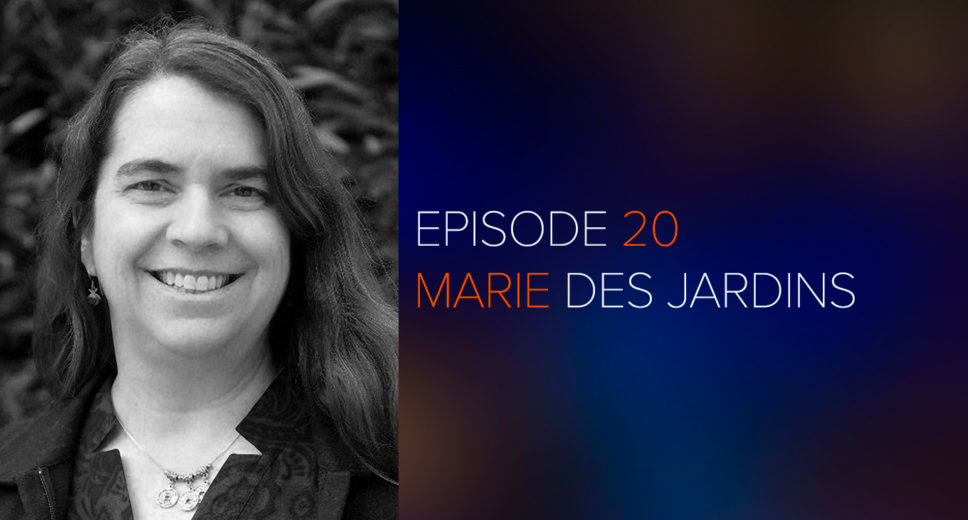
Voices in AI – Episode 20: A Conversation with Marie desJardins
Byron Reese interviewed UMBC CSEE Professor Marie desJardins as part of his Voices in AI podcast series on Gigaom. In the episode, they talk about the Turing test, Watson, autonomous vehicles, and language processing. Visit the Voices in AI site to listen to the podcast and read the interview transcript.
Here’s the start of the wide-ranging, hour long interview.
Byron Reese: This is Voices in AI, brought to you by Gigaom. I’m Byron Reese. Today I’m excited that our guest is Marie des Jardins. She is an Associate Dean for Engineering and Information Technology as well as a professor of Computer Science at the University of Maryland, Baltimore County. She got her undergrad degree from Harvard, and a Ph.D. in computer science from Berkeley, and she’s been involved in the National Conference of the Association for the Advancement of Artificial Intelligence for over 12 years. Welcome to the show, Marie.
Marie des Jardins: Hi, it’s nice to be here.
I often open the show with “What is artificial intelligence?” because, interestingly, there’s no consensus definition of it, and I get a different kind of view of it from everybody. So I’ll start with that. What is artificial intelligence?
Sure. I’ve always thought about artificial intelligence as just a very broad term referring to trying to get computers to do things that we would consider intelligent if people did them. What’s interesting about that definition is it’s a moving target, because we change our opinions over time about what’s intelligent. As computers get better at doing things, they no longer seem that intelligent to us.
We use the word “intelligent,” too, and I’m not going to dwell on definitions, but what do you think intelligence is at its core?
So, it’s definitely hard to pin down, but I think of it as activities that human beings carry out, that we don’t know of lower order animals doing, other than some of the higher primates who can do things that seem intelligent to us. So intelligence involves intentionality, which means setting goals and making active plans to carry them out, and it involves learning over time and being able to react to situations differently based on experiences and knowledge that we’ve gained over time. The third part, I would argue, is that intelligence includes communication, so the ability to communicate with other beings, other intelligent agents, about your activities and goals.
Well, that’s really useful and specific. Let’s look at some of those things in detail a little bit. You mentioned intentionality. Do you think that intentionality is driven by consciousness? I mean, can you have intentionality without consciousness? Is consciousness therefore a requisite for intelligence?
I think that’s a really interesting question. I would decline to answer it mainly because I don’t think we ever can really know what consciousness is. We all have a sense of being conscious inside our own brains—at least I believe that. But of course, I’m only able to say anything meaningful about my own sense of consciousness. We just don’t have any way to measure consciousness or even really define what it is. So, there does seem to be this idea of self-awareness that we see in various kinds of animals—including humans—and that seems to be a precursor to what we call consciousness. But I think it’s awfully hard to define that term, and so I would be hesitant to put that as a prerequisite on intentionality.
…
The post CSEE Professor Marie desJardins interviewed for Voices in AI podcast appeared first on Department of Computer Science and Electrical Engineering.
]]>
Voices in AI – Episode 20: A Conversation with Marie desJardins Byron Reese interviewed UMBC CSEE Professor Marie desJardins as part of his Voices in AI podcast series on Gigaom. In the episode,...
https://www.csee.umbc.edu/2017/11/csee-professor-marie-desjardins-interviewed-voices-ai-podcast/
https://dev.my.umbc.edu/api/v0/pixel/news/72224/guest@my.umbc.edu/06abdcfb51e0fdf9ce1e845e9fa21591/api/pixel
ai
faculty-and-staff
news
Computer Science and Electrical Engineering
https://dev.my.umbc.edu/groups/csee
https://assets3-dev.my.umbc.edu/system/shared/avatars/groups/000/000/099/d117dca133c64bf78a4b7696dd007189/xsmall.png?1314043393
https://assets1-dev.my.umbc.edu/system/shared/avatars/groups/000/000/099/d117dca133c64bf78a4b7696dd007189/original.png?1314043393
https://assets1-dev.my.umbc.edu/system/shared/avatars/groups/000/000/099/d117dca133c64bf78a4b7696dd007189/xxlarge.png?1314043393
https://assets4-dev.my.umbc.edu/system/shared/avatars/groups/000/000/099/d117dca133c64bf78a4b7696dd007189/xlarge.png?1314043393
https://assets3-dev.my.umbc.edu/system/shared/avatars/groups/000/000/099/d117dca133c64bf78a4b7696dd007189/large.png?1314043393
https://assets1-dev.my.umbc.edu/system/shared/avatars/groups/000/000/099/d117dca133c64bf78a4b7696dd007189/medium.png?1314043393
https://assets2-dev.my.umbc.edu/system/shared/avatars/groups/000/000/099/d117dca133c64bf78a4b7696dd007189/small.png?1314043393
https://assets3-dev.my.umbc.edu/system/shared/avatars/groups/000/000/099/d117dca133c64bf78a4b7696dd007189/xsmall.png?1314043393
https://assets3-dev.my.umbc.edu/system/shared/avatars/groups/000/000/099/d117dca133c64bf78a4b7696dd007189/xxsmall.png?1314043393
Computer Science and Electrical Engineering
3
0
true
Mon, 20 Nov 2017 22:05:59 -0500
talk: Jim Kurose (NSF) An Expanding and Expansive View of Computing, 1pm Mon 11/20
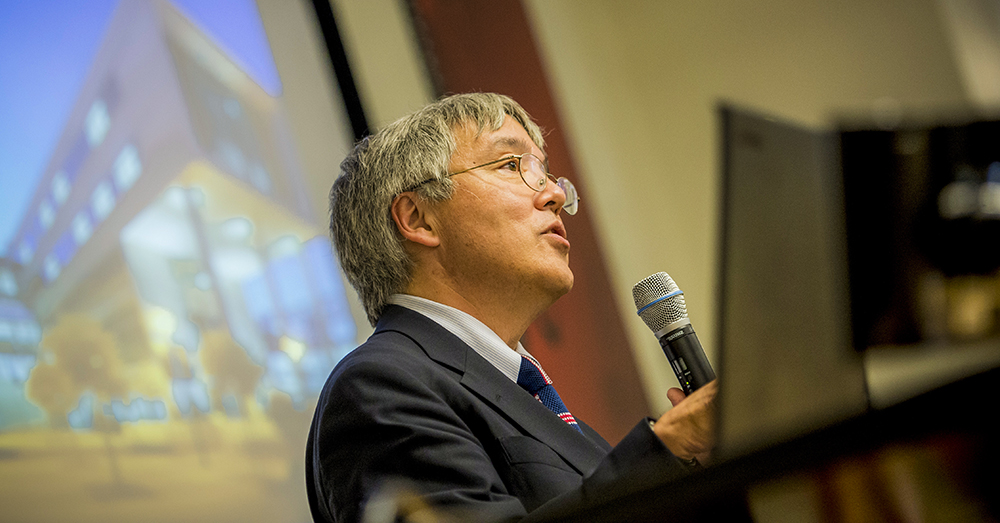
Distinguished Lecture
An Expanding and Expansive View of Computing
Jim Kurose
Assistant Director, National Science Foundation
Directorate of Computer and Information Science and Engineering
1:00-2:15pm Monday, 20 November 2017, ITE325b, UMBC
Advances in computer and information science and engineering are providing unprecedented opportunities for research and education. My talk will begin with an overview of CISE activities and programs at the National Science Foundation and include a discussion of current trends that are shaping the future of our discipline. I will also discuss the opportunities as well as the challenges that lay ahead for our community and for CISE.
Dr. Kurose is on leave from the University of Massachusetts Amherst, where he is a Distinguished Professor in the College of Information and Computer Sciences. He has served in a number of administrative roles at UMass and has been a Visiting Scientist at IBM Research; INRIA; Institut EURECOM; the University of Paris; the Laboratory for Information, Network and Communication Sciences; and Technicolor Research Labs.
His research interests include network protocols and architecture, network measurement, sensor networks, multimedia communication, and modeling and performance evaluation. Dr. Kurose has served on many national and international advisory boards and panels and has received numerous awards for his research and teaching. With Keith Ross, he is the co-author of the textbook, Computer Networking, a top down approach (6th edition) published by Addison-Wesley/Pearson.
Dr. Kurose received his Ph.D. in computer science from Columbia University and a Bachelor of Arts degree in physics from Wesleyan University. He is a Fellow of the Association for Computing Machinery (ACM) and the Institute of Electrical and Electronic Engineers (IEEE).
The post talk: Jim Kurose (NSF) An Expanding and Expansive View of Computing, 1pm Mon 11/20 appeared first on Department of Computer Science and Electrical Engineering.
]]>
Distinguished Lecture An Expanding and Expansive View of Computing Jim Kurose Assistant Director, National Science Foundation Directorate of Computer and Information Science and Engineering...
https://www.csee.umbc.edu/2017/11/talk-jim-kurose-nsf-expanding-expansive-view-computing-umbc/
https://dev.my.umbc.edu/api/v0/pixel/news/72148/guest@my.umbc.edu/2c9d1eca0620e5eca9879636f2a7a3e6/api/pixel
events
news
talks
Computer Science and Electrical Engineering
https://dev.my.umbc.edu/groups/csee
https://assets3-dev.my.umbc.edu/system/shared/avatars/groups/000/000/099/d117dca133c64bf78a4b7696dd007189/xsmall.png?1314043393
https://assets1-dev.my.umbc.edu/system/shared/avatars/groups/000/000/099/d117dca133c64bf78a4b7696dd007189/original.png?1314043393
https://assets1-dev.my.umbc.edu/system/shared/avatars/groups/000/000/099/d117dca133c64bf78a4b7696dd007189/xxlarge.png?1314043393
https://assets4-dev.my.umbc.edu/system/shared/avatars/groups/000/000/099/d117dca133c64bf78a4b7696dd007189/xlarge.png?1314043393
https://assets3-dev.my.umbc.edu/system/shared/avatars/groups/000/000/099/d117dca133c64bf78a4b7696dd007189/large.png?1314043393
https://assets1-dev.my.umbc.edu/system/shared/avatars/groups/000/000/099/d117dca133c64bf78a4b7696dd007189/medium.png?1314043393
https://assets2-dev.my.umbc.edu/system/shared/avatars/groups/000/000/099/d117dca133c64bf78a4b7696dd007189/small.png?1314043393
https://assets3-dev.my.umbc.edu/system/shared/avatars/groups/000/000/099/d117dca133c64bf78a4b7696dd007189/xsmall.png?1314043393
https://assets3-dev.my.umbc.edu/system/shared/avatars/groups/000/000/099/d117dca133c64bf78a4b7696dd007189/xxsmall.png?1314043393
Computer Science and Electrical Engineering
3
0
true
Thu, 16 Nov 2017 19:00:25 -0500
talk: An Introduction to Quantum Cryptography, Noon Friday 11/17, ITE231
The UMBC Cyber Defense Lab presents
An Introduction to Quantum Cryptography:
Or, How Alice Outwits Eve
Sam Lomonaco, CSEE, UMBC
12:00–1:00pm, Friday, 17 November 2017, ITE 231, UMBC
Alice and Bob wish to communicate without the archvillainess Eve eavesdropping on their conversation. Alice decides to take two college courses, one in cryptography, the other in quantum mechanics. During the courses, she discovers she can use what she has learned to devise a cryptographic communication system that automatically detects whether or not Eve is up to her villainous eavesdropping. Some of the topics discussed are Heisenberg’s Uncertainty Principle, the Vernam cipher, the BB84 and B92 cryptographic protocols. The talk ends with a discussion of some of Eve’s possible eavesdropping strategies, i.e., opaque eavesdropping, translucent eavesdropping, and translucent eavesdropping with entanglement.
Samuel J. Lomonaco Jr. received his PhD in mathematics from Princeton University. He has been a full professor of computer science and electrical engineering at the University of Maryland, Baltimore County (UMBC) since 1985, serving as founding chair of the CS Department from 1985 to 1991. Representative Awards, Accomplishments, and Honors include: (1) He was a visiting key research scientist at the Mathematical Sciences Research Institute (MSRI) at the University of California at Berkley in 2004. (2) He was a senior LaGrange fellow at the Institute for Scientific Exchange in Torino, Italy in 2005. (3) For contributions made to the development of the programming language Ada, he received an award from the United States Under Secretary of Defense for Research and Engineering, Dr. Richard DeLauer. (4) He was the first to introduce quantum information science to the American Mathematical Society (AMS) by organizing and giving a two-day AMS short course on quantum computation at the Annual Meeting of the AMS in Washington, DC, in January 2000. (5) He published four books on quantum computation and information science. (6) He accepted an invitation to be a guest editor of the Journal of Quantum Information Processing for a special issue on topological quantum computation.
Host: Alan T. Sherman, *protected email*
The post talk: An Introduction to Quantum Cryptography, Noon Friday 11/17, ITE231 appeared first on Department of Computer Science and Electrical Engineering.
]]>
The UMBC Cyber Defense Lab presents An Introduction to Quantum Cryptography: Or, How Alice Outwits Eve Sam Lomonaco, CSEE, UMBC 12:00–1:00pm, Friday, 17 November 2017, ITE 231, UMBC Alice...
https://www.csee.umbc.edu/2017/11/umbc-introduction-quantum-cryptography-lomonaco/
https://dev.my.umbc.edu/api/v0/pixel/news/72082/guest@my.umbc.edu/be0f403b6444f02cec66bba6fb862dc8/api/pixel
computer-engineering
computer-science
cybersecurity
news
talks
Computer Science and Electrical Engineering
https://dev.my.umbc.edu/groups/csee
https://assets3-dev.my.umbc.edu/system/shared/avatars/groups/000/000/099/d117dca133c64bf78a4b7696dd007189/xsmall.png?1314043393
https://assets1-dev.my.umbc.edu/system/shared/avatars/groups/000/000/099/d117dca133c64bf78a4b7696dd007189/original.png?1314043393
https://assets1-dev.my.umbc.edu/system/shared/avatars/groups/000/000/099/d117dca133c64bf78a4b7696dd007189/xxlarge.png?1314043393
https://assets4-dev.my.umbc.edu/system/shared/avatars/groups/000/000/099/d117dca133c64bf78a4b7696dd007189/xlarge.png?1314043393
https://assets3-dev.my.umbc.edu/system/shared/avatars/groups/000/000/099/d117dca133c64bf78a4b7696dd007189/large.png?1314043393
https://assets1-dev.my.umbc.edu/system/shared/avatars/groups/000/000/099/d117dca133c64bf78a4b7696dd007189/medium.png?1314043393
https://assets2-dev.my.umbc.edu/system/shared/avatars/groups/000/000/099/d117dca133c64bf78a4b7696dd007189/small.png?1314043393
https://assets3-dev.my.umbc.edu/system/shared/avatars/groups/000/000/099/d117dca133c64bf78a4b7696dd007189/xsmall.png?1314043393
https://assets3-dev.my.umbc.edu/system/shared/avatars/groups/000/000/099/d117dca133c64bf78a4b7696dd007189/xxsmall.png?1314043393
Computer Science and Electrical Engineering
6
0
true
Wed, 15 Nov 2017 08:10:40 -0500
talk: A Practitioner’s Introduction to Deep Learning, 1pm Fri 11/17
ACM Tech Talk Series
A Practitioner’s Introduction to Deep Learning
Ashwin Kumar Ganesan, PhD student
1:00-2:00pm Friday, 17 November 2017, ITE325, UMBC
In recent years, Deep Neural Networks have been highly successful at performing a number of tasks in computer vision, natural language processing and artificial intelligence in general. The remarkable performance gains have led to universities and industries investing heavily in this space. This investment creates a thriving open source ecosystem of tools & libraries that aid the design of new architectures, algorithm research as well as data collection.
This talk (and hands-on session) introduce people to some of the basics of machine learning, neural networks and discusses some of the popular neural network architectures. We take a dive into one of the popular libraries, Tensorflow, and an associated abstraction library Keras.
To participate in the hands-on aspects of the workshop, bring a laptop computer with Python installed and install the following libraries using pip. For windows or (any other OS) consider doing an installation of anaconda that has all the necessary libraries.
- numpy, scipy & scikit-learn
- tensorflow / tensoflow-gpu (The first one is the GPU version)
- matplotlib for visualizations (if necessary)
- jupyter & ipython (We will use python2.7 in our experiments)
Following are helpful links:
Contact Nisha Pillai (NPillai1 at umbc.edu) with any questions regarding this event.
The post talk: A Practitioner’s Introduction to Deep Learning, 1pm Fri 11/17 appeared first on Department of Computer Science and Electrical Engineering.
]]>
ACM Tech Talk Series A Practitioner’s Introduction to Deep Learning Ashwin Kumar Ganesan, PhD student 1:00-2:00pm Friday, 17 November 2017, ITE325, UMBC In recent years, Deep Neural...
https://www.csee.umbc.edu/2017/11/practitioner-introduction-deep-learning-umbc-acm-teck-talk/
https://dev.my.umbc.edu/api/v0/pixel/news/72056/guest@my.umbc.edu/f671fcc998c5b5610038273c66bf247c/api/pixel
computer-engineering
computer-science
cybersecurity
data-science
events
graduate
news
research
students
Computer Science and Electrical Engineering
https://dev.my.umbc.edu/groups/csee
https://assets3-dev.my.umbc.edu/system/shared/avatars/groups/000/000/099/d117dca133c64bf78a4b7696dd007189/xsmall.png?1314043393
https://assets1-dev.my.umbc.edu/system/shared/avatars/groups/000/000/099/d117dca133c64bf78a4b7696dd007189/original.png?1314043393
https://assets1-dev.my.umbc.edu/system/shared/avatars/groups/000/000/099/d117dca133c64bf78a4b7696dd007189/xxlarge.png?1314043393
https://assets4-dev.my.umbc.edu/system/shared/avatars/groups/000/000/099/d117dca133c64bf78a4b7696dd007189/xlarge.png?1314043393
https://assets3-dev.my.umbc.edu/system/shared/avatars/groups/000/000/099/d117dca133c64bf78a4b7696dd007189/large.png?1314043393
https://assets1-dev.my.umbc.edu/system/shared/avatars/groups/000/000/099/d117dca133c64bf78a4b7696dd007189/medium.png?1314043393
https://assets2-dev.my.umbc.edu/system/shared/avatars/groups/000/000/099/d117dca133c64bf78a4b7696dd007189/small.png?1314043393
https://assets3-dev.my.umbc.edu/system/shared/avatars/groups/000/000/099/d117dca133c64bf78a4b7696dd007189/xsmall.png?1314043393
https://assets3-dev.my.umbc.edu/system/shared/avatars/groups/000/000/099/d117dca133c64bf78a4b7696dd007189/xxsmall.png?1314043393
Computer Science and Electrical Engineering
2
0
true
Tue, 14 Nov 2017 14:56:17 -0500
[ACM Talk] A Practitioner’s Introduction to Deep Learning
A Practitioner’s Introduction to Deep Learning
Ashwin Kumar Ganesan, PhD student
1 pm - 2 pm Friday, November 17 2017, ITE 325 UMBC
In recent years, Deep Neural Networks have been highly successful at performing a number of tasks in computer vision, natural language processing and artificial intelligence in general. The remarkable performance gains have led to universities and industries investing heavily in this space. This investment creates a thriving open source ecosystem of tools & libraries that aid the design of new architectures, algorithm research as well as data collection.
This talk (and hands-on session) introduce people to some of the basics of machine learning, neural networks and discusses some of the popular neural network architectures. We take a dive into one of the popular libraries, Tensorflow, and an associated abstraction library Keras.
Workshop requirements: Laptop
Following are the list of libraries to be installed:
1. numpy, scipy & scikit-learn.
2. tensorflow / tensoflow-gpu. (The first one is the GPU version).
3. matplotlib for visualizations (if necessary).
4. jupyter & ipython. (We will use python2.7 in our experiments).
Following are helpful links:
All of the above can be installed using pip. In case of windows or (any other OS) consider doing an installation of anaconda that has all the necessary libraries.
]]>
ACM Tech Talk Series - 2 A Practitioner’s Introduction to Deep Learning Ashwin Kumar Ganesan, PhD student 1 pm - 2 pm Friday, November 17 2017, ITE 325 UMBC In recent...
https://dev.my.umbc.edu/api/v0/pixel/news/72038/guest@my.umbc.edu/17734f0c6827a55933a8d03a47ea45fc/api/pixel
Computer Science and Electrical Engineering
https://dev.my.umbc.edu/groups/csee
https://assets3-dev.my.umbc.edu/system/shared/avatars/groups/000/000/099/d117dca133c64bf78a4b7696dd007189/xsmall.png?1314043393
https://assets1-dev.my.umbc.edu/system/shared/avatars/groups/000/000/099/d117dca133c64bf78a4b7696dd007189/original.png?1314043393
https://assets1-dev.my.umbc.edu/system/shared/avatars/groups/000/000/099/d117dca133c64bf78a4b7696dd007189/xxlarge.png?1314043393
https://assets4-dev.my.umbc.edu/system/shared/avatars/groups/000/000/099/d117dca133c64bf78a4b7696dd007189/xlarge.png?1314043393
https://assets3-dev.my.umbc.edu/system/shared/avatars/groups/000/000/099/d117dca133c64bf78a4b7696dd007189/large.png?1314043393
https://assets1-dev.my.umbc.edu/system/shared/avatars/groups/000/000/099/d117dca133c64bf78a4b7696dd007189/medium.png?1314043393
https://assets2-dev.my.umbc.edu/system/shared/avatars/groups/000/000/099/d117dca133c64bf78a4b7696dd007189/small.png?1314043393
https://assets3-dev.my.umbc.edu/system/shared/avatars/groups/000/000/099/d117dca133c64bf78a4b7696dd007189/xsmall.png?1314043393
https://assets3-dev.my.umbc.edu/system/shared/avatars/groups/000/000/099/d117dca133c64bf78a4b7696dd007189/xxsmall.png?1314043393
Computer Science and Electrical Engineering
5
0
true
Tue, 14 Nov 2017 08:57:02 -0500
Volunteer to help in UMBC’s Hour of Code events, Dec 4 and 5
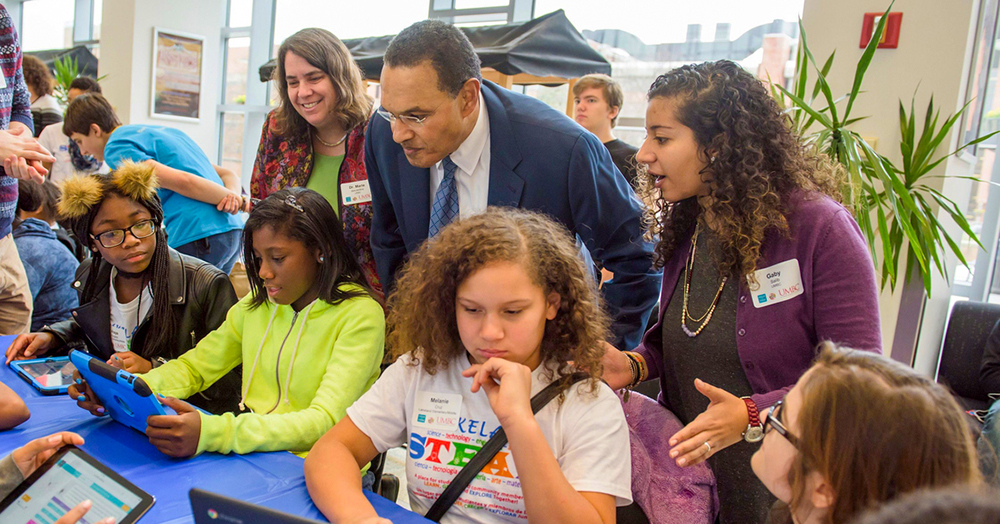
Volunteer to help in UMBC’s Hour of Code events, Dec 4 and 5
Hour of Code is a worldwide effort to celebrate computer science using a one-hour coding activity. The one hour coding activity is designed to show that anyone can learn the basics of coding, and to create a more inclusive computer science community. The CS Education student organization, with support from the CS Matters in Maryland CS education project, will host UMBC’s Hour of Code event on Monday (Dec. 4) and Tuesday (Dec. 5).
On December 4th from 10am-1pm, they will host the Hour of Code event for anyone who wants to try the coding activities on Main Street.
On December 5th from 11am-2pm, they will have special guests. Some students from Lakeland Elementary School will learn to code along with President Freeman Hrabowski.
The CS Education Club needs volunteers to make this event a success. Coding experience is useful, but not necessary. They will host training sessions prior to the event for everyone who volunteers. The training will give you a chance to try our Hour of Code activity along with a Makey Makey activity. Read about last year’s Hour of Code event at UMBC here.
If you are interested in helping, please visit this link for more information and to sign up.
The post Volunteer to help in UMBC’s Hour of Code events, Dec 4 and 5 appeared first on Department of Computer Science and Electrical Engineering.
]]>
Volunteer to help in UMBC’s Hour of Code events, Dec 4 and 5 Hour of Code is a worldwide effort to celebrate computer science using a one-hour coding activity. The one hour coding activity is...
https://www.csee.umbc.edu/2017/11/volunteer-to-help-in-umbcs-hour-of-code-events-dec-4-and-5/
https://dev.my.umbc.edu/api/v0/pixel/news/72032/guest@my.umbc.edu/ddeb56a7455e1b637d4d0fd2d29e7a61/api/pixel
computer-engineering
computer-science
education
news
students
Computer Science and Electrical Engineering
https://dev.my.umbc.edu/groups/csee
https://assets3-dev.my.umbc.edu/system/shared/avatars/groups/000/000/099/d117dca133c64bf78a4b7696dd007189/xsmall.png?1314043393
https://assets1-dev.my.umbc.edu/system/shared/avatars/groups/000/000/099/d117dca133c64bf78a4b7696dd007189/original.png?1314043393
https://assets1-dev.my.umbc.edu/system/shared/avatars/groups/000/000/099/d117dca133c64bf78a4b7696dd007189/xxlarge.png?1314043393
https://assets4-dev.my.umbc.edu/system/shared/avatars/groups/000/000/099/d117dca133c64bf78a4b7696dd007189/xlarge.png?1314043393
https://assets3-dev.my.umbc.edu/system/shared/avatars/groups/000/000/099/d117dca133c64bf78a4b7696dd007189/large.png?1314043393
https://assets1-dev.my.umbc.edu/system/shared/avatars/groups/000/000/099/d117dca133c64bf78a4b7696dd007189/medium.png?1314043393
https://assets2-dev.my.umbc.edu/system/shared/avatars/groups/000/000/099/d117dca133c64bf78a4b7696dd007189/small.png?1314043393
https://assets3-dev.my.umbc.edu/system/shared/avatars/groups/000/000/099/d117dca133c64bf78a4b7696dd007189/xsmall.png?1314043393
https://assets3-dev.my.umbc.edu/system/shared/avatars/groups/000/000/099/d117dca133c64bf78a4b7696dd007189/xxsmall.png?1314043393
Computer Science and Electrical Engineering
3
2
true
Mon, 13 Nov 2017 22:25:40 -0500
Mon, 13 Nov 2017 22:25:40 -0500
UMBC upgrades High Performance Computing Facility through new NSF grant
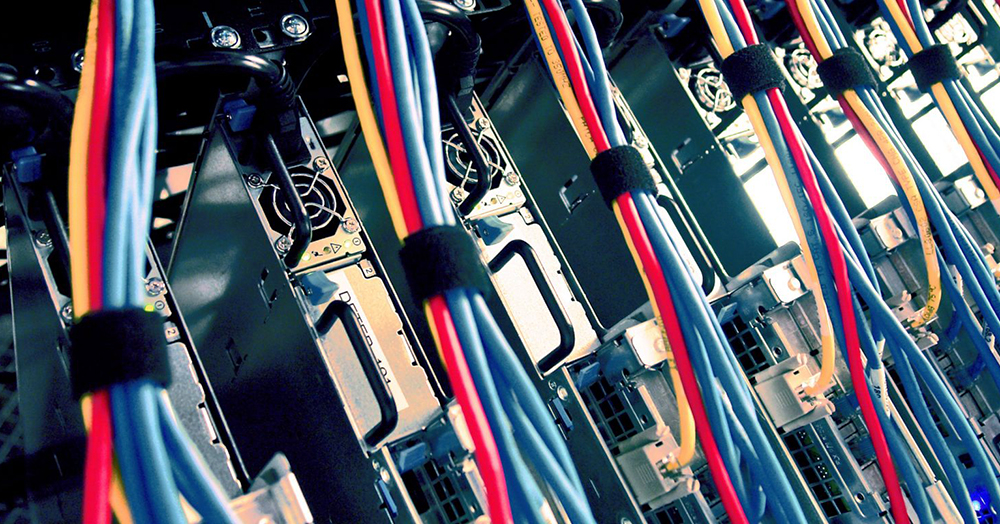
UMBC upgrades High Performance Computing Facility through new NSF grant, expanding possibilities for data-intensive research
The National Science Foundation recently awarded UMBC a Major Research Instrumentation (MRI) award totaling more than $550,000 to expand the university’s High Performance Computing Facility (HPCF). The funding will go toward upgraded hardware and increased computing speeds for the interdisciplinary core facility, which supports scientific computing and other complex, data-intensive research across disciplines, university-wide. As part of the NSF grant, UMBC is required to contribute 30 percent of the amount that NSF is providing to further support the project, meaning a total new investment of more than $780,000 in UMBC’s High Performance Community Facility.
Meilin Yu, assistant professor of mechanical engineering, is the principal investigator on the grant. He replaced Matthias Gobbert, professor of mathematics, who served as principal investigator on previous grants for the core facility in 2008, 2012 and 2017 on behalf of the 51 faculty investigators from academic departments and research centers across all three colleges. Co-Principal investigators on the grant are Professors Marc Olano, Jianwu Wang and Daniel Lobo.
“The MRI grant will allow us to upgrade the UMBC HPCF with state-of-the-art computing nodes and networks,” explains Yu. “It will boost sustained growth in research and education relating to computational science and engineering, including but not limited to, high performance computing, cybersecurity and big data, atmospheric physics, environmental science and engineering, and life sciences.”
Through the facility, researchers can run simulations with a range of applications, including industrial designs and weather prediction. UMBC faculty will utilize the upgraded system to complete simulations and modeling tasks significantly faster than the current system allows, explain Yu and Gobbert. The updated technology includes accelerated graphics processing units that, in addition to speeding up calculations, will “improve the quality of digital visualization,” says Yu.
The HPCF governance committee is working with UMBC’s Division of Information Technology to purchase and implement the upgraded hardware, including central processing units, which completes computing tasks, graphics processing units, which manages the visual displays on computers, and cores. “We hope to have at least 72 nodes in service to the UMBC community by spring 2018, with 16 core Central Processing Units, Graphics Processing Units suitable for integer/single-precision and double-precision arithmetic, and cutting-edge many-core Intel Xeon Phi KNL processors with 68 cores,” Gobbert explains, adding that by increasing the number of nodes, UMBC’s HPCF is worth more than $2 million.
UMBC faculty are able to use the facility for their research at no charge, and they receive technical support from graduate assistants as well as staff in UMBC’s Division of Information Technology. The upgraded facility will support projects from researchers in more than a dozen academic departments across all three colleges at UMBC. Gobbert shares that he expects this community of scholars will expand further as the core facility continues to grow. “I am most proud of the fact that such a large number of faculty total put their trust in me to lead the writing and management of this proposal,” he said. “Our success at the NSF validates that the strong interdisciplinary cooperation of many researchers from across the campus is valued there.”
The HPCF was established in 2008 in response to a university-wide need for technology to support high-performance computing. The initial system had 35 nodes, and was funded by UMBC’s Division of Information Technology, the Office of the Vice President for Research and faculty contributions. Over the past nine years, the HCPF has grown to include over 300 nodes, and has been used by more than 400 researchers and students for their work. The facility has led to more than 250 publications, including 100 in peer-reviewed journals, in addition to 30 theses. The recent funding will support the expansion of the facility to include 84 nodes, which individually communicate with each other, and cutting-edge processors. The oldest portion of the HPCF will be replaced with with more powerful nodes.
Adapted for a UMBC news article by Megan Hanks
The post UMBC upgrades High Performance Computing Facility through new NSF grant appeared first on Department of Computer Science and Electrical Engineering.
]]>
UMBC upgrades High Performance Computing Facility through new NSF grant, expanding possibilities for data-intensive research The National Science Foundation recently awarded UMBC a Major...
https://www.csee.umbc.edu/2017/11/umbc-upgrades-high-performance-computing-facility-new-nsf-grant/
https://dev.my.umbc.edu/api/v0/pixel/news/71809/guest@my.umbc.edu/c6ee020a06d0d325532ebe7418851092/api/pixel
news
research
Computer Science and Electrical Engineering
https://dev.my.umbc.edu/groups/csee
https://assets3-dev.my.umbc.edu/system/shared/avatars/groups/000/000/099/d117dca133c64bf78a4b7696dd007189/xsmall.png?1314043393
https://assets1-dev.my.umbc.edu/system/shared/avatars/groups/000/000/099/d117dca133c64bf78a4b7696dd007189/original.png?1314043393
https://assets1-dev.my.umbc.edu/system/shared/avatars/groups/000/000/099/d117dca133c64bf78a4b7696dd007189/xxlarge.png?1314043393
https://assets4-dev.my.umbc.edu/system/shared/avatars/groups/000/000/099/d117dca133c64bf78a4b7696dd007189/xlarge.png?1314043393
https://assets3-dev.my.umbc.edu/system/shared/avatars/groups/000/000/099/d117dca133c64bf78a4b7696dd007189/large.png?1314043393
https://assets1-dev.my.umbc.edu/system/shared/avatars/groups/000/000/099/d117dca133c64bf78a4b7696dd007189/medium.png?1314043393
https://assets2-dev.my.umbc.edu/system/shared/avatars/groups/000/000/099/d117dca133c64bf78a4b7696dd007189/small.png?1314043393
https://assets3-dev.my.umbc.edu/system/shared/avatars/groups/000/000/099/d117dca133c64bf78a4b7696dd007189/xsmall.png?1314043393
https://assets3-dev.my.umbc.edu/system/shared/avatars/groups/000/000/099/d117dca133c64bf78a4b7696dd007189/xxsmall.png?1314043393
Computer Science and Electrical Engineering
4
0
true
Mon, 06 Nov 2017 21:43:29 -0500
Chan Zuckerberg Initiative: Career & Internship Info. Session & TechTalk, 5:30-7:15 Wed 11/1
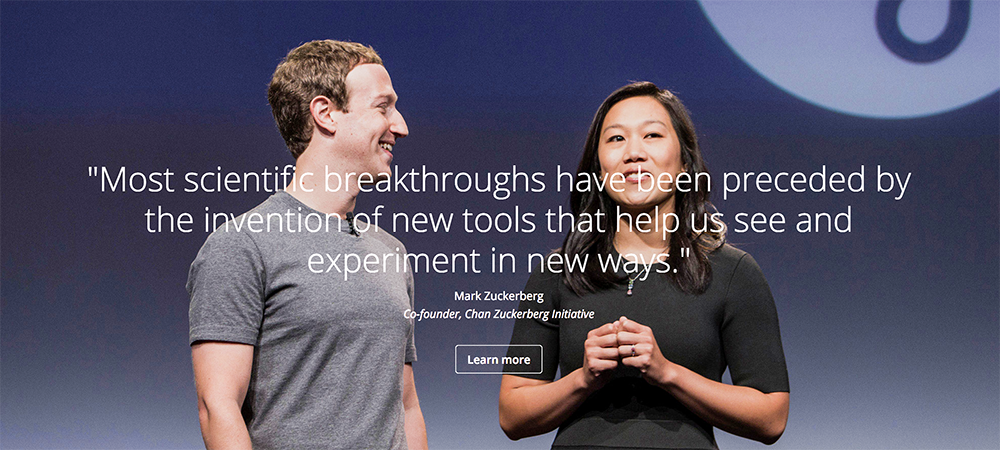
Chan Zuckerberg Initiative- Career & Internship Information Session & TechTalk
Advancing Human Potential and Promoting Equal Opportunity
5:30-7:15pm Wednesday, 1 November 2017, Albin O. Kuhn Library, 7th Floor
Join representatives from the Chan Zuckerberg Initiative to learn about career and intern opportunities and listen to a technical talk by Jeremy Freeman, James Wang and Elizabeth Caley. Open to undergraduate and graduate students from all majors with a focus or interest in STEM (Science, Technology, Engineering, & Math).
The Chan Zuckerberg Initiative, founded by Mark Zuckerberg and Priscilla Chan in December 2015, is dedicated to advancing human potential and promoting equal opportunity. We believe technology can help accelerate discovery and scale solutions to facilitate social change. We support science and technology that will help make it possible to cure, prevent, or manage all diseases by the end of the century.
We’re hiring data scientists, software engineers, biologists, designers and more. See https://chanzuckerberg.com/careers for all the current positions. Internships will be posted shortly.
5:30 PM: CZI Overview & Career and Intern Opportunities
6:00 PM: TechTalk
- Jeremy Freeman, Manager Computational Biology
- James Wang, Director of Engineering, and
- Elizabeth Caley, Chief of Staff, META: AI for Science
7:00 PM: Chan Zuckerberg Initiative Meet & Great (open networking)
Join us to hear about some of the projects underway to help accelerate scientific progress by bringing together scientists and engineers:
- Overview of Chan Zuckerberg Science — our goals and what we do to bring tools and platforms to scientists
- The Chan Zuckerberg Biohub — how an independent nonprofit research center brings together scientists, engineers, and data scientists to make fundamental discoveries and develop new technologies for the scientific community
- Scientific Knowledge — the products, projects, and collaborations that help accelerate the sharing and awareness of scientific knowledge for researchers
The post Chan Zuckerberg Initiative: Career & Internship Info. Session & TechTalk, 5:30-7:15 Wed 11/1 appeared first on Department of Computer Science and Electrical Engineering.
]]>
Chan Zuckerberg Initiative- Career & Internship Information Session & TechTalk Advancing Human Potential and Promoting Equal Opportunity 5:30-7:15pm Wednesday, 1 November 2017, Albin...
https://www.csee.umbc.edu/2017/10/chan-zuckerberg-initiative-career-internship-information-session-tec-talk/
https://dev.my.umbc.edu/api/v0/pixel/news/71647/guest@my.umbc.edu/59a274c5883bbfd2cbe8da0c54a35a42/api/pixel
events
jobs
news
students
Computer Science and Electrical Engineering
https://dev.my.umbc.edu/groups/csee
https://assets3-dev.my.umbc.edu/system/shared/avatars/groups/000/000/099/d117dca133c64bf78a4b7696dd007189/xsmall.png?1314043393
https://assets1-dev.my.umbc.edu/system/shared/avatars/groups/000/000/099/d117dca133c64bf78a4b7696dd007189/original.png?1314043393
https://assets1-dev.my.umbc.edu/system/shared/avatars/groups/000/000/099/d117dca133c64bf78a4b7696dd007189/xxlarge.png?1314043393
https://assets4-dev.my.umbc.edu/system/shared/avatars/groups/000/000/099/d117dca133c64bf78a4b7696dd007189/xlarge.png?1314043393
https://assets3-dev.my.umbc.edu/system/shared/avatars/groups/000/000/099/d117dca133c64bf78a4b7696dd007189/large.png?1314043393
https://assets1-dev.my.umbc.edu/system/shared/avatars/groups/000/000/099/d117dca133c64bf78a4b7696dd007189/medium.png?1314043393
https://assets2-dev.my.umbc.edu/system/shared/avatars/groups/000/000/099/d117dca133c64bf78a4b7696dd007189/small.png?1314043393
https://assets3-dev.my.umbc.edu/system/shared/avatars/groups/000/000/099/d117dca133c64bf78a4b7696dd007189/xsmall.png?1314043393
https://assets3-dev.my.umbc.edu/system/shared/avatars/groups/000/000/099/d117dca133c64bf78a4b7696dd007189/xxsmall.png?1314043393
Computer Science and Electrical Engineering
3
0
true
Tue, 31 Oct 2017 19:34:00 -0400
talk: DOE Energy Exascale Earth System Model, 2:30 Tue 10/31, ITE325
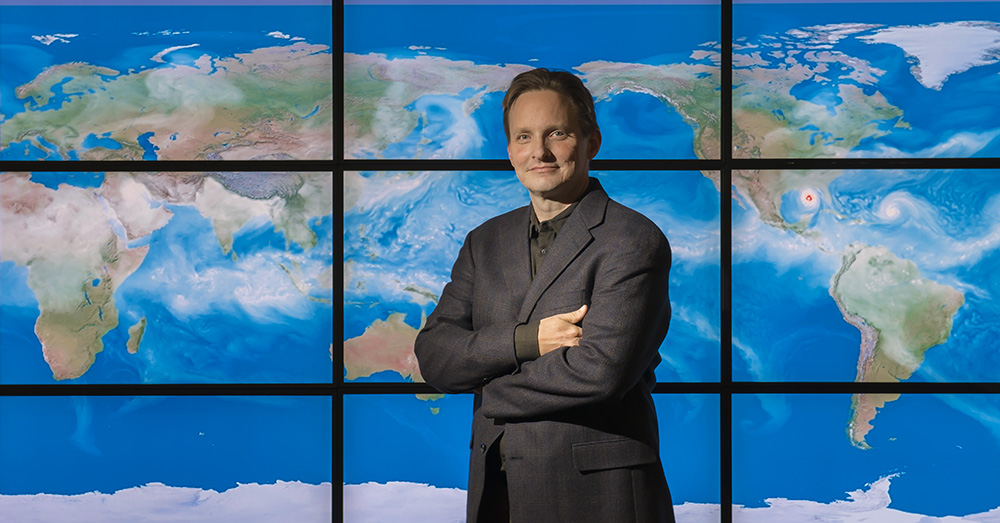
CHMPR Distinguished Lecture Series
Energy Exascale Earth System Model
Dr. Mark Taylor, E3SM Chief Computational Scientist, Sandia National Laboratories
2:30pm Tuesday, 31 October 2017, ITE 325, UMBC
Dr. Taylor will present an overview of the DOE Energy Exascale Earth System Model (E3SM), including Sandia’s role in numerical algorithms, parallel scalability, and computational performance. E3SM is designed to run on upcoming next-generation DOE supercomputers. Adapting simulation codes to these new architectures is expected to be more disruptive than the previous transition from vector to massively parallel supercomputers. E3SM development is driven by several grand challenge science questions focused Earth’s cryosphere, biogeochemical and water cycle systems. E3SM has a new land and atmosphere component models branched from the CESM v1.2, coupled to new MPAS ocean, sea ice, and land ice models.
The current performance and throughput challenges of the E3SM high-resolution coupled configuration on several DOE computers will be discussed. Our current focus is on the NERSC Cori system with Intel Xeon Phi architecture, in the longer term we hope to make effective use of the upcoming NVIDIA GPU based system at ORNL. An analysis is presented of the E3SM spectral element atmosphere dycore following the NGGPS dycore computational evaluation protocol, but with an emphasis on the throughput rates needed for climate simulations. For even higher resolution simulations, we will rely on E3SM’s ability to use unstructured grids in all component models. This will allow us to achieve cloud-resolving resolution in select regions of interest seamlessly within the global modeling system.
Mark Taylor is a mathematician who specializes in numerical methods for parallel computing and geophysical flows. He currently serves as Chief Computational Scientist for the DOE’s Accelerated Climate Modeling for Energy (ACME) project. Mark developed the mimetic/conservative formulation of the spectral element method, one of the atmospheric dynamical cores used in the Community Earth System Model (CESM) and the ACME project. Mark received his Ph.D. from New York University’s Courant Institute of Mathematical Sciences in 1992 and has worked at Sandia National Laboratories since 2004. In 2014 he was awarded The Secretary of Energy Achievement Award for his work unifying the DOE climate modeling research community and enabling the development of high-resolution fully-coupled climate-system simulations.
The post talk: DOE Energy Exascale Earth System Model, 2:30 Tue 10/31, ITE325 appeared first on Department of Computer Science and Electrical Engineering.
]]>
CHMPR Distinguished Lecture Series Energy Exascale Earth System Model Dr. Mark Taylor, E3SM Chief Computational Scientist, Sandia National Laboratories 2:30pm Tuesday, 31 October 2017,...
https://www.csee.umbc.edu/2017/10/talk-umbc-csee-mark-taylor-doe-energy-exascale-earth-system-model/
https://dev.my.umbc.edu/api/v0/pixel/news/71571/guest@my.umbc.edu/48ff22dff8735d6ff1ff6ddd18934a64/api/pixel
computer-science
data-science
news
research
talks
Computer Science and Electrical Engineering
https://dev.my.umbc.edu/groups/csee
https://assets3-dev.my.umbc.edu/system/shared/avatars/groups/000/000/099/d117dca133c64bf78a4b7696dd007189/xsmall.png?1314043393
https://assets1-dev.my.umbc.edu/system/shared/avatars/groups/000/000/099/d117dca133c64bf78a4b7696dd007189/original.png?1314043393
https://assets1-dev.my.umbc.edu/system/shared/avatars/groups/000/000/099/d117dca133c64bf78a4b7696dd007189/xxlarge.png?1314043393
https://assets4-dev.my.umbc.edu/system/shared/avatars/groups/000/000/099/d117dca133c64bf78a4b7696dd007189/xlarge.png?1314043393
https://assets3-dev.my.umbc.edu/system/shared/avatars/groups/000/000/099/d117dca133c64bf78a4b7696dd007189/large.png?1314043393
https://assets1-dev.my.umbc.edu/system/shared/avatars/groups/000/000/099/d117dca133c64bf78a4b7696dd007189/medium.png?1314043393
https://assets2-dev.my.umbc.edu/system/shared/avatars/groups/000/000/099/d117dca133c64bf78a4b7696dd007189/small.png?1314043393
https://assets3-dev.my.umbc.edu/system/shared/avatars/groups/000/000/099/d117dca133c64bf78a4b7696dd007189/xsmall.png?1314043393
https://assets3-dev.my.umbc.edu/system/shared/avatars/groups/000/000/099/d117dca133c64bf78a4b7696dd007189/xxsmall.png?1314043393
Computer Science and Electrical Engineering
1
0
true
Sun, 29 Oct 2017 11:56:24 -0400
