talk: Probabilistic Information for Spectrum Sensing and Utilization, 11:45 3/7, UMBC
Exploiting Probabilistic Information for Spectrum Sensing
and Utilization: towards Efficient Wireless Coexistence
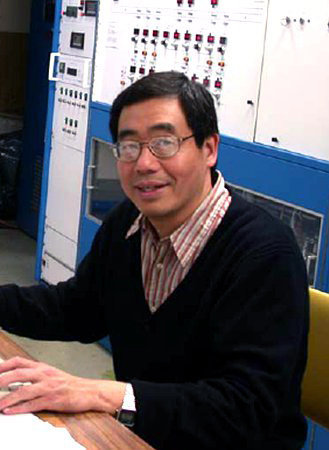
Prof. Xiangwei Zhou
University of Illinois, Carbondale
11:45am Friday, 7 March 2014, ITE 325b, UMBC
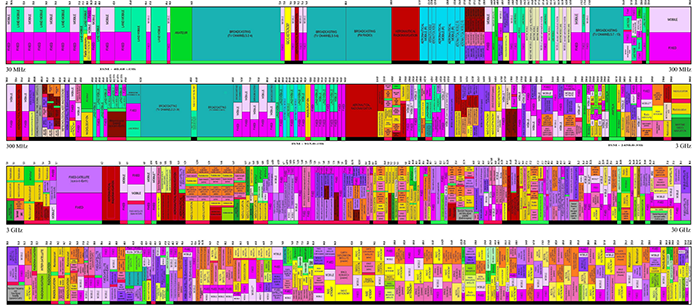
With the rapid growth of wireless devices and applications, the electromagnetic radio spectrum is considered to be in short supply. To overcome spectrum scarcity and satisfy emerging user demands, cognitive radio, which can sense and adapt to the surrounding spectral environment, has been introduced to enhance the utilization of the spectrum. However, it is a challenging task to design a robust and cost-effective system involving identification and reuse of spectrum opportunities changing over time, frequency, and space. In this talk, I will focus on efficient spectrum sensing and utilization techniques for dynamic spectrum access. In particular, I will emphasize the importance of exploiting probabilistic information unique to such a system. I will present novel techniques from the perspectives of both a single user and a multi-user network. In the end, I will discuss further extension of the work to enable the coexistence of heterogeneous wireless networks.
Xiangwei Zhou received his Ph.D. degree in Electrical and Computer Engineering from Georgia Institute of Technology, Atlanta, Georgia, in 2011. He received his M.S. degree in Information and Communication Engineering from Zhejiang University, Hangzhou, China and his B.S. degree in Communication Engineering from Nanjing University of Science and Technology, Nanjing, China, in 2007 and 2005, respectively. Since 2013, Dr. Zhou has been with the Department of Electrical and Computer Engineering at Southern Illinois University Carbondale as an Assistant Professor. Prior to that, he was a Senior Systems Engineer with Marvell Semiconductor, Santa Clara, California, from 2011 to 2013. Dr. Zhou’s general research interests include wireless communications and statistical signal processing, with current emphasis on cognitive radio and heterogeneous coexistence, cyber-physical systems, and cross-layer optimization. He is now serving as an Editor for IEEE Transactions on Wireless Communications.
Host: Mohamed Younis, Sorry, you need javascript to view this email address.
]]>
Exploiting Probabilistic Information for Spectrum Sensing and Utilization: towards Efficient Wireless Coexistence Prof. Xiangwei Zhou University of Illinois, Carbondale 11:45am Friday, 7...
http://www.csee.umbc.edu/2014/02/talk-probabilistic-information-for-spectrum-sensing-and-utilization-1145-37-umbc/?utm_source=rss&utm_medium=rss&utm_campaign=talk-probabilistic-information-for-spectrum-sensing-and-utilization-1145-37-umbc
https://dev.my.umbc.edu/api/v0/pixel/news/42622/guest@my.umbc.edu/e83b8f01c5b7aaffbaf5b611d7878c62/api/pixel
computer-engineering
electrical-engineering
news
research
talks
Computer Science and Electrical Engineering
https://dev.my.umbc.edu/groups/csee
https://assets3-dev.my.umbc.edu/system/shared/avatars/groups/000/000/099/d117dca133c64bf78a4b7696dd007189/xsmall.png?1314043393
https://assets1-dev.my.umbc.edu/system/shared/avatars/groups/000/000/099/d117dca133c64bf78a4b7696dd007189/original.png?1314043393
https://assets1-dev.my.umbc.edu/system/shared/avatars/groups/000/000/099/d117dca133c64bf78a4b7696dd007189/xxlarge.png?1314043393
https://assets4-dev.my.umbc.edu/system/shared/avatars/groups/000/000/099/d117dca133c64bf78a4b7696dd007189/xlarge.png?1314043393
https://assets3-dev.my.umbc.edu/system/shared/avatars/groups/000/000/099/d117dca133c64bf78a4b7696dd007189/large.png?1314043393
https://assets1-dev.my.umbc.edu/system/shared/avatars/groups/000/000/099/d117dca133c64bf78a4b7696dd007189/medium.png?1314043393
https://assets2-dev.my.umbc.edu/system/shared/avatars/groups/000/000/099/d117dca133c64bf78a4b7696dd007189/small.png?1314043393
https://assets3-dev.my.umbc.edu/system/shared/avatars/groups/000/000/099/d117dca133c64bf78a4b7696dd007189/xsmall.png?1314043393
https://assets3-dev.my.umbc.edu/system/shared/avatars/groups/000/000/099/d117dca133c64bf78a4b7696dd007189/xxsmall.png?1314043393
Computer Science and Electrical Engineering
0
0
true
Fri, 28 Feb 2014 23:39:44 -0500
Fri, 28 Feb 2014 23:39:44 -0500
POSTPONED: talk: Underwater Acoustic Communication…, Noon Mon 3/2
Due to uncertainty about the weather, this talk has
been postponed and will be rescheduled soon
Underwater Acoustic Communication and
Networking for Ocean Sampling
Dr. Aijun Song
Assistant Research Professor
College of Earth, Ocean, and Environment
University of Delaware, Newark, DE 19716
Noon – 1:00pm Monday, 3 March 2014, ITE325b, UMBC
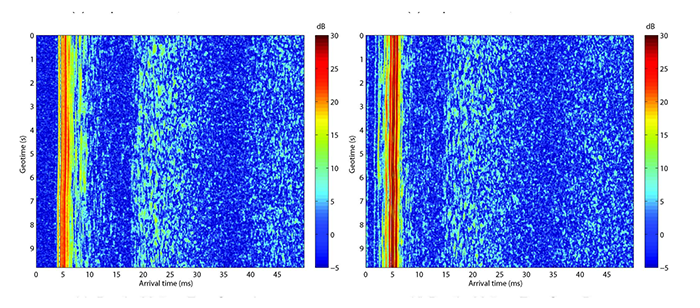
On our planet Earth, the marine ecosystem is undergoing significant changes due to human activities and natural processes. These changes call for enhanced capabilities to sample and communicate in the oceans. With this background, underwater acoustic communication has attracted much attention across multiple disciplines, as a means to access oceanographic data in real-time and to support navigation of underwater vehicles. This talk will focus on my recent efforts in 1) characterization and modeling of the ocean environment as a communication medium, 2) development of high data rate acoustic modems, both software and hardware, and 3) application of underwater acoustic communication networks in ocean sampling.
Dr. Aijun Song received his Ph.D. degree in the Department of Electrical Engineering, University of Delaware, Newark, Delaware in 2005. From 2005 to 2008, he was a postdoctoral research associate at the College of Earth, Ocean, and Environment (CEOE), University of Delaware. During this period, he was also an Office of Naval Research (ONR) postdoctoral fellow, supported by the special research award in the Ocean Acoustics program. Since 2008, he has been an Assistant Research Professor of the CEOE, University of Delaware. His research interests include advanced signal processing and communication techniques for mobile radio frequencies as well as for underwater acoustic environments, underwater acoustic signal propagation, and the general area of ocean sampling.
]]>
Due to uncertainty about the weather, this talk has been postponed and will be rescheduled soon Underwater Acoustic Communication and Networking for Ocean Sampling Dr. Aijun Song Assistant...
http://www.csee.umbc.edu/2014/02/talk-underwater-acoustic-communication-networking-noon-mon-32/?utm_source=rss&utm_medium=rss&utm_campaign=talk-underwater-acoustic-communication-networking-noon-mon-32
https://dev.my.umbc.edu/api/v0/pixel/news/42624/guest@my.umbc.edu/7e5eeaaf345c55aab11de34ab4470088/api/pixel
electrical-engineering
news
talks
Computer Science and Electrical Engineering
https://dev.my.umbc.edu/groups/csee
https://assets3-dev.my.umbc.edu/system/shared/avatars/groups/000/000/099/d117dca133c64bf78a4b7696dd007189/xsmall.png?1314043393
https://assets1-dev.my.umbc.edu/system/shared/avatars/groups/000/000/099/d117dca133c64bf78a4b7696dd007189/original.png?1314043393
https://assets1-dev.my.umbc.edu/system/shared/avatars/groups/000/000/099/d117dca133c64bf78a4b7696dd007189/xxlarge.png?1314043393
https://assets4-dev.my.umbc.edu/system/shared/avatars/groups/000/000/099/d117dca133c64bf78a4b7696dd007189/xlarge.png?1314043393
https://assets3-dev.my.umbc.edu/system/shared/avatars/groups/000/000/099/d117dca133c64bf78a4b7696dd007189/large.png?1314043393
https://assets1-dev.my.umbc.edu/system/shared/avatars/groups/000/000/099/d117dca133c64bf78a4b7696dd007189/medium.png?1314043393
https://assets2-dev.my.umbc.edu/system/shared/avatars/groups/000/000/099/d117dca133c64bf78a4b7696dd007189/small.png?1314043393
https://assets3-dev.my.umbc.edu/system/shared/avatars/groups/000/000/099/d117dca133c64bf78a4b7696dd007189/xsmall.png?1314043393
https://assets3-dev.my.umbc.edu/system/shared/avatars/groups/000/000/099/d117dca133c64bf78a4b7696dd007189/xxsmall.png?1314043393
Computer Science and Electrical Engineering
0
0
true
Fri, 28 Feb 2014 00:09:39 -0500
Prof. Fow-Sen Choa Elected SPIE Fellow
CSEE professor Fow-Sen Choa has been selected as a Fellow of SPIE, the International Society for Optics and Photonics.
SPIE Fellows are honored for their technical achievements and for their service to the general optics community and to SPIE in particular. Professor Choa was cited for for achievements in the development of standoff chemical sensing using quantum cascade lasers. In the announcement of Dr. Choa’s section, the SPIE noted that
“Choa has contributed significantly to the advancement of standoff chemical sensing using quantum cascade lasers, achieving a greater than 41 feet standoff chemical detection distance. In addition his research on MOCVD growth and regrowth of quantum cascade lasers (QCLs) has led to the development of high power QCLs, integrated widely tunable QCLs, and power scalable surface-emitting QCL arrays. He has developed large format (64×64) photon counting arrays and demonstrated current-bias-mode photon counting techniques to simplify the bias circuits for 64×64 single photon arrays. Notably, his research has extended into broadband, low crosstalk, low noise semiconductor gain materials, Photon-neuron interactions, high speed long distance (loss-limited) multimode fiber transmissions, and other technologies associated with optical networks, lasers, and integrated coherent receivers.
A prolific scientific author, Choa has published nearly 200 refereed conference papers and over 70 peerreviewed articles, has received nearly 50 grants, and has been issued 10 patents. He has also served the greater optical community by serving as an associate editor, topical editor, and reviewer for several journals and he has been recognized as for his expertise as research faculty for eight years.
Choa has made sustained contributions to the SPIE community by serving on program committees of the SPIE Defense, Security, and Sensing Conference. He has authored and co-authored more than 50 SPIE journal and conference publications including three invited papers.”
In his opto-electronics and MOCVD lab at UMBC, Dr. Choa uses a Chemical Vapor Deposition System to grow semiconductors, which include semiconductor lasers, semiconductor detectors, semiconductor optical amplifiers, modulators, and optical switches. A member of MIRTHE (Mid-Infrared Technologies for Health and the Environment), whose mission is to conduct research with postdocs and graduate students, while engaging undergraduate students, high school teachers and students in science and engineering projects as a way to encourage them to pursue careers in the field, Dr. Choa is responsible for providing MIRTHE with mid-IR materials, lasers, detectors and subsystems.
The semiconductors grown in his lab can also be applied for chemical detection and breath analysis using photo-acoustic (PA) effects. “When the wavelength of the photon matches with molecules’ vibrational transition, light can generate acoustic signals through thermal expansion,” he explains. “Using the PA effect, people have demonstrated parts per billion chemical detection sensitivities. Using the chemical sensing capability we can monitor contamination in our environment and the chemical content of our breath as precursors of our health conditions.”
]]>
CSEE professor Fow-Sen Choa has been selected as a Fellow of SPIE, the International Society for Optics and Photonics. SPIE Fellows are honored for their technical achievements and for their...
http://www.csee.umbc.edu/2014/02/prof-fow-sen-choa-elected-spie-fellow/
https://dev.my.umbc.edu/api/v0/pixel/news/41839/guest@my.umbc.edu/6071bfe831858373a77ed8f225ebc5a7/api/pixel
computer-engineering
electrical-engineering
faculty-and-staff
news
research
Computer Science and Electrical Engineering
https://dev.my.umbc.edu/groups/csee
https://assets3-dev.my.umbc.edu/system/shared/avatars/groups/000/000/099/d117dca133c64bf78a4b7696dd007189/xsmall.png?1314043393
https://assets1-dev.my.umbc.edu/system/shared/avatars/groups/000/000/099/d117dca133c64bf78a4b7696dd007189/original.png?1314043393
https://assets1-dev.my.umbc.edu/system/shared/avatars/groups/000/000/099/d117dca133c64bf78a4b7696dd007189/xxlarge.png?1314043393
https://assets4-dev.my.umbc.edu/system/shared/avatars/groups/000/000/099/d117dca133c64bf78a4b7696dd007189/xlarge.png?1314043393
https://assets3-dev.my.umbc.edu/system/shared/avatars/groups/000/000/099/d117dca133c64bf78a4b7696dd007189/large.png?1314043393
https://assets1-dev.my.umbc.edu/system/shared/avatars/groups/000/000/099/d117dca133c64bf78a4b7696dd007189/medium.png?1314043393
https://assets2-dev.my.umbc.edu/system/shared/avatars/groups/000/000/099/d117dca133c64bf78a4b7696dd007189/small.png?1314043393
https://assets3-dev.my.umbc.edu/system/shared/avatars/groups/000/000/099/d117dca133c64bf78a4b7696dd007189/xsmall.png?1314043393
https://assets3-dev.my.umbc.edu/system/shared/avatars/groups/000/000/099/d117dca133c64bf78a4b7696dd007189/xxsmall.png?1314043393
Computer Science and Electrical Engineering
0
0
true
Wed, 26 Feb 2014 17:39:06 -0500
Wed, 26 Feb 2014 17:39:06 -0500
POSTPONED: talk: Underwater Acoustic Communication…, Noon Mon 3/2
Due to uncertainty about the weather, this talk has
been postponed and will be rescheduled soon
Underwater Acoustic Communication and
Networking for Ocean Sampling
Dr. Aijun Song
Assistant Research Professor
College of Earth, Ocean, and Environment
University of Delaware, Newark, DE 19716
Noon – 1:00pm Monday, 3 March 2014, ITE325b, UMBC
On our planet Earth, the marine ecosystem is undergoing significant changes due to human activities and natural processes. These changes call for enhanced capabilities to sample and communicate in the oceans. With this background, underwater acoustic communication has attracted much attention across multiple disciplines, as a means to access oceanographic data in real-time and to support navigation of underwater vehicles. This talk will focus on my recent efforts in 1) characterization and modeling of the ocean environment as a communication medium, 2) development of high data rate acoustic modems, both software and hardware, and 3) application of underwater acoustic communication networks in ocean sampling.
Dr. Aijun Song received his Ph.D. degree in the Department of Electrical Engineering, University of Delaware, Newark, Delaware in 2005. From 2005 to 2008, he was a postdoctoral research associate at the College of Earth, Ocean, and Environment (CEOE), University of Delaware. During this period, he was also an Office of Naval Research (ONR) postdoctoral fellow, supported by the special research award in the Ocean Acoustics program. Since 2008, he has been an Assistant Research Professor of the CEOE, University of Delaware. His research interests include advanced signal processing and communication techniques for mobile radio frequencies as well as for underwater acoustic environments, underwater acoustic signal propagation, and the general area of ocean sampling.
]]>
Due to uncertainty about the weather, this talk has been postponed and will be rescheduled soon Underwater Acoustic Communication and Networking for Ocean Sampling Dr. Aijun Song Assistant...
http://www.csee.umbc.edu/2014/02/talk-underwater-acoustic-communication-networking-noon-mon-32/
https://dev.my.umbc.edu/api/v0/pixel/news/41776/guest@my.umbc.edu/e6693360887cedf541323138775d59ef/api/pixel
electrical-engineering
news
talks
Computer Science and Electrical Engineering
https://dev.my.umbc.edu/groups/csee
https://assets3-dev.my.umbc.edu/system/shared/avatars/groups/000/000/099/d117dca133c64bf78a4b7696dd007189/xsmall.png?1314043393
https://assets1-dev.my.umbc.edu/system/shared/avatars/groups/000/000/099/d117dca133c64bf78a4b7696dd007189/original.png?1314043393
https://assets1-dev.my.umbc.edu/system/shared/avatars/groups/000/000/099/d117dca133c64bf78a4b7696dd007189/xxlarge.png?1314043393
https://assets4-dev.my.umbc.edu/system/shared/avatars/groups/000/000/099/d117dca133c64bf78a4b7696dd007189/xlarge.png?1314043393
https://assets3-dev.my.umbc.edu/system/shared/avatars/groups/000/000/099/d117dca133c64bf78a4b7696dd007189/large.png?1314043393
https://assets1-dev.my.umbc.edu/system/shared/avatars/groups/000/000/099/d117dca133c64bf78a4b7696dd007189/medium.png?1314043393
https://assets2-dev.my.umbc.edu/system/shared/avatars/groups/000/000/099/d117dca133c64bf78a4b7696dd007189/small.png?1314043393
https://assets3-dev.my.umbc.edu/system/shared/avatars/groups/000/000/099/d117dca133c64bf78a4b7696dd007189/xsmall.png?1314043393
https://assets3-dev.my.umbc.edu/system/shared/avatars/groups/000/000/099/d117dca133c64bf78a4b7696dd007189/xxsmall.png?1314043393
Computer Science and Electrical Engineering
0
0
true
Tue, 25 Feb 2014 16:09:39 -0500
Fri, 28 Feb 2014 00:09:39 -0500
Prof. Gymama Slaughter receives NSF award for self-powered biosensing microsystems
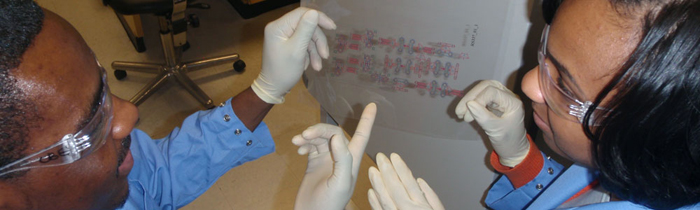
Professor Gymama Slaughter received a research award from the National Science Foundation to support her work on a self-powered biosensing microsystem that simultaneously generates bioelectricity and monitors glucose.
The four-year award in the amount of $400,000 is from NSF’s prestigious Faculty Early Career Development (CAREER) Program, which supports junior faculty who exemplify the role of teacher-scholars through outstanding research, excellent education and the integration of education and research.
With the support from NSF, Professor Slaughter and the students in her Bioelectronics Laboratory will fabricate and characterize a self-powered biosensing microsystem that simultaneously generates bioelectricity and monitors glucose. This will be accomplished using an inertial power scavenging design by converting interstitial glucose into energy through the coupling of enzymes and three-dimensional nanowire arrays to power implantable glucose monitors.
The self-powered biosensing microsystem will monitor sugar levels and embodies two key technical contributions: it eliminates the need for a potentiostat circuit and an external power source or batteries, leading to dramatic improvements in both speed and energy efficiency, and it demonstrates an autonomous, self-powered, low-power biosensing microsystem that can be adapted for other uses. For people suffering from diabetes, continuous, self-powered monitoring of glucose will improve their quality of life and can save lives.
Professor Slaughter notes that the educational component of the project enriches and complements other programs at UMBC designed to increase minority and female participation in STEM fields. The exposure of these students to a real-world problem and its solution will enable them to better appreciate the contribution of scientific research.
]]>
Professor Gymama Slaughter received a research award from the National Science Foundation to support her work on a self-powered biosensing microsystem that simultaneously generates bioelectricity...
http://www.csee.umbc.edu/2013/12/prof-gymama-slaughter-receives-nsf-award-for-self-powered-biosensing-microsystems/
https://dev.my.umbc.edu/api/v0/pixel/news/39425/guest@my.umbc.edu/4a2f9fffafbe32d5a0d580ef89dc17f1/api/pixel
computer-engineering
electrical-engineering
faculty-and-staff
news
research
Computer Science and Electrical Engineering
https://dev.my.umbc.edu/groups/csee
https://assets3-dev.my.umbc.edu/system/shared/avatars/groups/000/000/099/d117dca133c64bf78a4b7696dd007189/xsmall.png?1314043393
https://assets1-dev.my.umbc.edu/system/shared/avatars/groups/000/000/099/d117dca133c64bf78a4b7696dd007189/original.png?1314043393
https://assets1-dev.my.umbc.edu/system/shared/avatars/groups/000/000/099/d117dca133c64bf78a4b7696dd007189/xxlarge.png?1314043393
https://assets4-dev.my.umbc.edu/system/shared/avatars/groups/000/000/099/d117dca133c64bf78a4b7696dd007189/xlarge.png?1314043393
https://assets3-dev.my.umbc.edu/system/shared/avatars/groups/000/000/099/d117dca133c64bf78a4b7696dd007189/large.png?1314043393
https://assets1-dev.my.umbc.edu/system/shared/avatars/groups/000/000/099/d117dca133c64bf78a4b7696dd007189/medium.png?1314043393
https://assets2-dev.my.umbc.edu/system/shared/avatars/groups/000/000/099/d117dca133c64bf78a4b7696dd007189/small.png?1314043393
https://assets3-dev.my.umbc.edu/system/shared/avatars/groups/000/000/099/d117dca133c64bf78a4b7696dd007189/xsmall.png?1314043393
https://assets3-dev.my.umbc.edu/system/shared/avatars/groups/000/000/099/d117dca133c64bf78a4b7696dd007189/xxsmall.png?1314043393
Computer Science and Electrical Engineering
23
1
true
Fri, 13 Dec 2013 09:31:49 -0500
First hackUMBC concludes successfully
The inaugural hackUMBC hackathon was a smashing success!
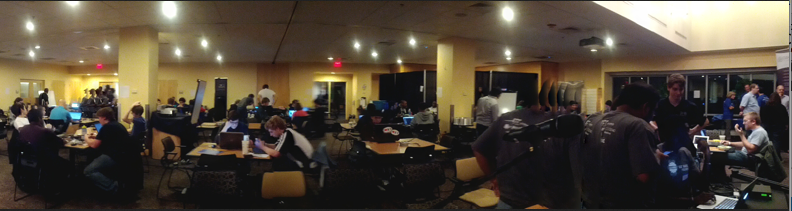
Held in the UMBC Skylight Room from 7:00pm Friday to 7:00pm Saturday this past weekend, UMBC’s first-ever hackathon was open to all UMBC students of any skill level, from innovators and explorers to designers and hardcore coders. Its purpose was to allow students to mingle and collaborate for 24 continuous hours of community exploration to grow technology projects from scratch while expanding their connections to other students, industry leaders, and faculty. Admission was free and attracted students from across the UMBC campus community, including CS, CE, EE, IS, Biology, Biotechnology, Math, Physics, and Media Studies.
The term ‘hackathon’ hearkens back to the original meaning of “hacker” and “hacking” in early Internet history — namely, to “hack together (create) something quickly” instead of their current interpretations typically referring to illegal cybersecurity activities.
The theme for hackUMBC 2013 was “Hacking to Improve Campus Life” with the goal of ‘hacking together’ any sort of hardware or software project that helps students, teachers, or schools. Accordingly, projects developed during the event included a textbook resale service, realtime intelligent parking space sensors, Peoplesoft interface refinements, and mobile apps to help UMBC students network, socialize, and monitor class schedules, among many others.
Throughout the event, volunteer mentors from UMBC and local industry circulated amongst the teams to offer advice and guidance on their efforts, including how to successfully ‘pitch’ their products to the judges.
UMBC President Freeman Hrabowski joined the festivities early Friday evening to offer words of encouragement and motivation for the nearly 100 UMBC students competing in this innovative and highly charged event.
hackUMBC was conceived by CSEE students Perry Ogwuche and Randi Williams following their summer experience as fellows at CODE2040. Assisting in the effort was Prajit Kumar Das, CS PhD student and president of UMBC’s ACM chapter, and Alexander Morrow, a senior CS student and president of UMBC’s Cryptocurrency Club. CSEE’s Dr. Rick Forno served as faculty advisor to the event.
Projects were evaluated by several faculty and staff judges based on creativity, technical difficulty, polish, relevance, and usefulness. More than $2500 in prizes were awarded!
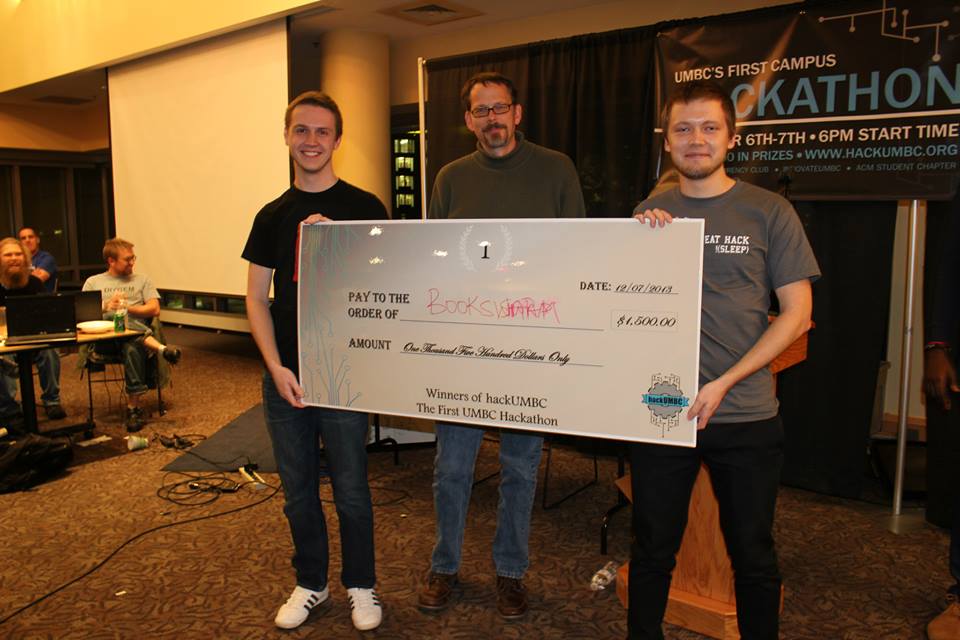
First Place: BookSwap (Rostislav Tsiomenko, Ilya Dynin)
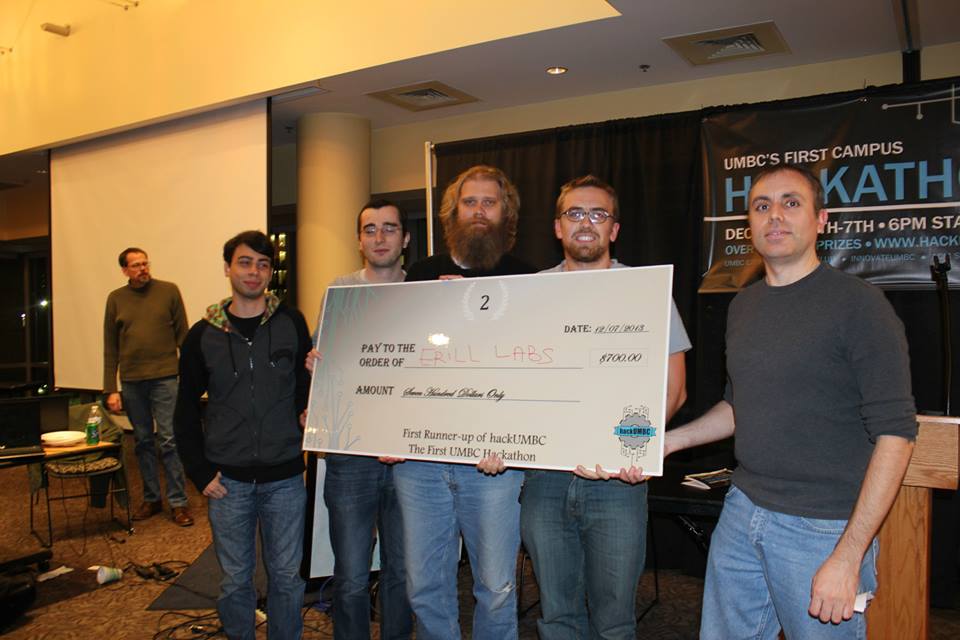
Second Place: Erill Labs (Robert Forder, Talmo Pereira, Patrick O’Neill, Sefa Kilic)
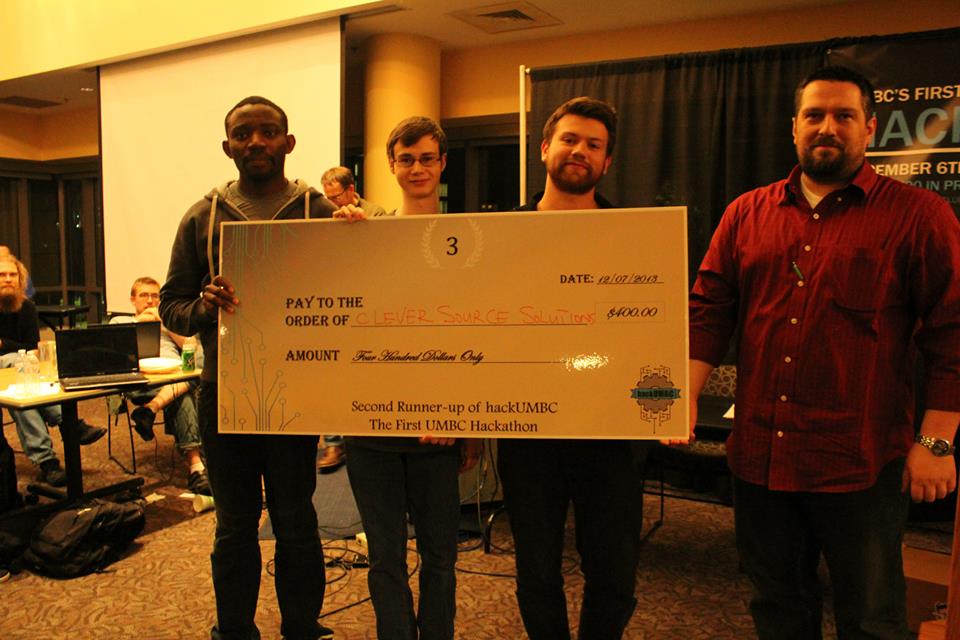
Third Place: Clever Source Solutions (Edward Mukasey, Ian Shefferman, Chinonso Ugwu)
hackUMBC Judges: Tim Oates, Rick Forno, Wesley Griffin, Dan Hood, Shawn Lupoli, Valerie Thomas, Geoffrey Weiss, and Ashwinkumar Ganesan.
hackUMBC was sponsored by Northrop Grumman, the UMBC Department of Computer Science and Electrical Engineering, ClearEdge IT Solutions, Independent Security Evaluators, Next Century Corporation, TriTech Systems, Github, CODE2040, the UMBC BWTech Cync Program, and the UMBC Alex Brown Center.
More information can be found at the hackUMBC page.
]]>
The inaugural hackUMBC hackathon was a smashing success! Held in the UMBC Skylight Room from 7:00pm Friday to 7:00pm Saturday this past weekend, UMBC’s first-ever hackathon was open to all UMBC...
http://www.csee.umbc.edu/2013/12/first-hackumbc-concludes-successfully/
https://dev.my.umbc.edu/api/v0/pixel/news/39298/guest@my.umbc.edu/ccda83873ec78b746e51f5ad4c59a0c7/api/pixel
computer-engineering
computer-science
csee
electrical-engineering
news
Computer Science and Electrical Engineering
https://dev.my.umbc.edu/groups/csee
https://assets3-dev.my.umbc.edu/system/shared/avatars/groups/000/000/099/d117dca133c64bf78a4b7696dd007189/xsmall.png?1314043393
https://assets1-dev.my.umbc.edu/system/shared/avatars/groups/000/000/099/d117dca133c64bf78a4b7696dd007189/original.png?1314043393
https://assets1-dev.my.umbc.edu/system/shared/avatars/groups/000/000/099/d117dca133c64bf78a4b7696dd007189/xxlarge.png?1314043393
https://assets4-dev.my.umbc.edu/system/shared/avatars/groups/000/000/099/d117dca133c64bf78a4b7696dd007189/xlarge.png?1314043393
https://assets3-dev.my.umbc.edu/system/shared/avatars/groups/000/000/099/d117dca133c64bf78a4b7696dd007189/large.png?1314043393
https://assets1-dev.my.umbc.edu/system/shared/avatars/groups/000/000/099/d117dca133c64bf78a4b7696dd007189/medium.png?1314043393
https://assets2-dev.my.umbc.edu/system/shared/avatars/groups/000/000/099/d117dca133c64bf78a4b7696dd007189/small.png?1314043393
https://assets3-dev.my.umbc.edu/system/shared/avatars/groups/000/000/099/d117dca133c64bf78a4b7696dd007189/xsmall.png?1314043393
https://assets3-dev.my.umbc.edu/system/shared/avatars/groups/000/000/099/d117dca133c64bf78a4b7696dd007189/xxsmall.png?1314043393
Computer Science and Electrical Engineering
49
7
true
Tue, 10 Dec 2013 13:17:53 -0500
Tue, 10 Dec 2013 13:17:53 -0500
UMBC ACM student chapter
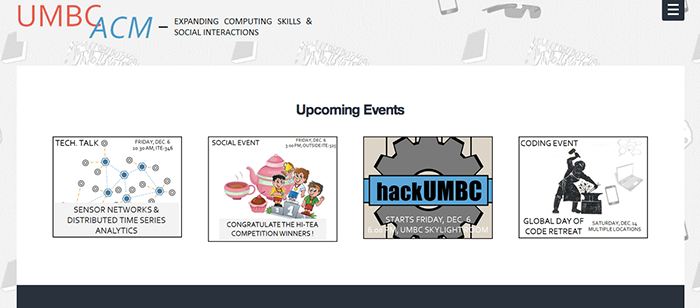
UMBC’s ACM student chapter has a new website that will be used to announce its activities and events as well as news about computing related opportunities and resources. The chapter is open to both undergraduate and graduate students interested in computing from all majors. Joining is free and is a great way to meet other students interested in computing and to participate in activities that will help you grow as a professional.
ACM, the Association for Computing Machinery, is the the world’s largest educational and scientific computing society. It provides members with resources that advance computing both as a science and a profession. UMBC’s chapter meetings are open to all undergraduate and graduate students of any major. While you do not need to join ACM to be a part of the local chapter, the annual membership dues for students is only $19, heavily discounted from the non-student rate. See the ACM site for more information on student membership and its benefits.
For more information contact us at acmofficers AT lists.umbc.edu.
]]>
UMBC’s ACM student chapter has a new website that will be used to announce its activities and events as well as news about computing related opportunities and resources. The chapter is open to...
http://www.csee.umbc.edu/2013/12/umbc-acm-student-chapter/
https://dev.my.umbc.edu/api/v0/pixel/news/39073/guest@my.umbc.edu/26c493a5e87608262bceb54d8639afe8/api/pixel
computer-engineering
computer-science
electrical-engineering
game-track
graduate
news
students
undergraduate
Computer Science and Electrical Engineering
https://dev.my.umbc.edu/groups/csee
https://assets3-dev.my.umbc.edu/system/shared/avatars/groups/000/000/099/d117dca133c64bf78a4b7696dd007189/xsmall.png?1314043393
https://assets1-dev.my.umbc.edu/system/shared/avatars/groups/000/000/099/d117dca133c64bf78a4b7696dd007189/original.png?1314043393
https://assets1-dev.my.umbc.edu/system/shared/avatars/groups/000/000/099/d117dca133c64bf78a4b7696dd007189/xxlarge.png?1314043393
https://assets4-dev.my.umbc.edu/system/shared/avatars/groups/000/000/099/d117dca133c64bf78a4b7696dd007189/xlarge.png?1314043393
https://assets3-dev.my.umbc.edu/system/shared/avatars/groups/000/000/099/d117dca133c64bf78a4b7696dd007189/large.png?1314043393
https://assets1-dev.my.umbc.edu/system/shared/avatars/groups/000/000/099/d117dca133c64bf78a4b7696dd007189/medium.png?1314043393
https://assets2-dev.my.umbc.edu/system/shared/avatars/groups/000/000/099/d117dca133c64bf78a4b7696dd007189/small.png?1314043393
https://assets3-dev.my.umbc.edu/system/shared/avatars/groups/000/000/099/d117dca133c64bf78a4b7696dd007189/xsmall.png?1314043393
https://assets3-dev.my.umbc.edu/system/shared/avatars/groups/000/000/099/d117dca133c64bf78a4b7696dd007189/xxsmall.png?1314043393
Computer Science and Electrical Engineering
0
0
true
Wed, 04 Dec 2013 10:48:24 -0500
HackUMBC hackathon: relax before finals and see what you can build in 24 hours
hackUMBC is a 24 hour hackathon for UMBC students held in the UMBC Skylight room from 7:00pm Friday December 6 to 7:00pm Saturday December 7. Breakfast, lunch, dinner and caffeine will be provided.
The event is open to all UMBC students of any skill level, from innovators to designers to hardcore coders. Join other hackers for 24 hours of teamwork and exploration as you compete to grow projects from scratch, all while expanding your connections to other students, industry leaders, and professors.
All kinds of computing systems are game: Web, desktop, server, mobile, wearable,enbedded, entertainment, game and hardware projects are all welcome. Projects will be judged based on creativity, technical difficulty, polish, and usefulness. More than $2500 in prizes will be awarded.
For more information and to register, see the hackUMBC site.
]]>
hackUMBC is a 24 hour hackathon for UMBC students held in the UMBC Skylight room from 7:00pm Friday December 6 to 7:00pm Saturday December 7. Breakfast, lunch, dinner and caffeine will be...
http://www.csee.umbc.edu/2013/11/hackumbc-hackathon-relax-before-finals-and-see-what-you-can-build-in-24-hours/
https://dev.my.umbc.edu/api/v0/pixel/news/37815/guest@my.umbc.edu/c66efdf16a5e9e936b6f09b267e3c216/api/pixel
computer-engineering
computer-science
cybersecurity
electrical-engineering
events
game-track
news
students
Computer Science and Electrical Engineering
https://dev.my.umbc.edu/groups/csee
https://assets3-dev.my.umbc.edu/system/shared/avatars/groups/000/000/099/d117dca133c64bf78a4b7696dd007189/xsmall.png?1314043393
https://assets1-dev.my.umbc.edu/system/shared/avatars/groups/000/000/099/d117dca133c64bf78a4b7696dd007189/original.png?1314043393
https://assets1-dev.my.umbc.edu/system/shared/avatars/groups/000/000/099/d117dca133c64bf78a4b7696dd007189/xxlarge.png?1314043393
https://assets4-dev.my.umbc.edu/system/shared/avatars/groups/000/000/099/d117dca133c64bf78a4b7696dd007189/xlarge.png?1314043393
https://assets3-dev.my.umbc.edu/system/shared/avatars/groups/000/000/099/d117dca133c64bf78a4b7696dd007189/large.png?1314043393
https://assets1-dev.my.umbc.edu/system/shared/avatars/groups/000/000/099/d117dca133c64bf78a4b7696dd007189/medium.png?1314043393
https://assets2-dev.my.umbc.edu/system/shared/avatars/groups/000/000/099/d117dca133c64bf78a4b7696dd007189/small.png?1314043393
https://assets3-dev.my.umbc.edu/system/shared/avatars/groups/000/000/099/d117dca133c64bf78a4b7696dd007189/xsmall.png?1314043393
https://assets3-dev.my.umbc.edu/system/shared/avatars/groups/000/000/099/d117dca133c64bf78a4b7696dd007189/xxsmall.png?1314043393
Computer Science and Electrical Engineering
15
0
true
Fri, 01 Nov 2013 00:48:24 -0400
Tue, 26 Nov 2013 00:48:24 -0500
talk: Acoustic-Tactile Rendering of Visual Information for the Visually Impaired, 2:30 Mon 11/11, ITE325b
Computer Science and Electrical Engineering
University of Maryland, Baltimore County
Acoustic-Tactile Rendering of Visual
Information for the Visually Impaired
Thrasyvoulos N. Pappas
Electrical Engineering and Computer Science
Northwestern University
2:30pm Monday, 11 November 2013, ITE 325B, UMBC
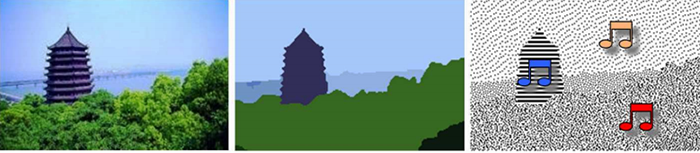
After a brief overview of research in the Department of Electrical Engineering and Computer Science at Northwestern University, we will focus on one particular research problem, the use of hearing and touch for conveying graphical and pictorial information to visually impaired (VI) people. This problem combines visual, acoustic, and tactile signal analysis with and understanding of human perception and interface design. The main idea is that the user actively explores a two-dimensional layout consisting of one or more objects with the finger on a touch screen. The objects are displayed via sounds and raised-dot tactile patterns. The finger acts as a pointing device and provides kinesthetic feedback. The touch screen is partitioned into regions, each representing an element of a visual scene or graphical display. A key element of our research is the use of spatial sound to facilitate active exploration of the layout. We use the head-related transfer function (HRTF) for rendering sound directionality and variations of sound intensity and tempo for rendering proximity. Our research has addressed object shape and size perception, as well as the of a 2-D layout of simple objects with identical size and shape. We have also considered the rendering of a simple scene layout consisting of objects in a linear arrangement, each with a distinct tapping sound, which we compare to a “virtual cane.” Subjective experiments with visually-blocked subjects demonstrate the effectiveness of the proposed approaches. Our research findings are also expected to have an impact in other applications where vision cannot be used, e.g., for GPS navigation while driving, fire-fighter operations in thick smoke, and military missions conducted under the cover of darkness.
Thrasos Pappas received the Ph.D. degree in electrical engineering and computer science from MIT in 1987. From 1987 until 1999, he was a Member of the Technical Staff at Bell Laboratories, Murray Hill, NJ. He joined the EECS Department at Northwestern in 1999. His research interests are in human perception and electronic media, and in particular, image and video quality and compression, image and video analysis, content-based retrieval, model-based halftoning, and tactile and multimodal interfaces. Prof. Pappas is a Fellow of the IEEE and SPIE. He has served as editor-in-chief of the IEEE Transactions on Image Processing (2010-12), elected member of the Board of Governors of the Signal Processing Society of IEEE (2004-07), chair of the IEEE Image and Multidimensional Signal Processing Technical Committee (2002-03), and technical program co-chair of ICIP-01 and ICIP-09. Since 1997 he has been co-chair of the SPIE/IS&T Conference on Human Vision and Electronic Imaging.
Host: Janet C. Rutledge, Ph.D.
]]>
Computer Science and Electrical Engineering University of Maryland, Baltimore County Acoustic-Tactile Rendering of Visual Information for the Visually Impaired Thrasyvoulos N. Pappas...
http://www.csee.umbc.edu/2013/10/talk-acoustic-tactile-rendering-of-visual-information-for-the-visually-impaired-230-mon-1111-ite325b/
https://dev.my.umbc.edu/api/v0/pixel/news/37735/guest@my.umbc.edu/0e80794efc5ff786b9e5ea7aee119a3e/api/pixel
computer-engineering
computer-science
electrical-engineering
news
research
talks
Computer Science and Electrical Engineering
https://dev.my.umbc.edu/groups/csee
https://assets3-dev.my.umbc.edu/system/shared/avatars/groups/000/000/099/d117dca133c64bf78a4b7696dd007189/xsmall.png?1314043393
https://assets1-dev.my.umbc.edu/system/shared/avatars/groups/000/000/099/d117dca133c64bf78a4b7696dd007189/original.png?1314043393
https://assets1-dev.my.umbc.edu/system/shared/avatars/groups/000/000/099/d117dca133c64bf78a4b7696dd007189/xxlarge.png?1314043393
https://assets4-dev.my.umbc.edu/system/shared/avatars/groups/000/000/099/d117dca133c64bf78a4b7696dd007189/xlarge.png?1314043393
https://assets3-dev.my.umbc.edu/system/shared/avatars/groups/000/000/099/d117dca133c64bf78a4b7696dd007189/large.png?1314043393
https://assets1-dev.my.umbc.edu/system/shared/avatars/groups/000/000/099/d117dca133c64bf78a4b7696dd007189/medium.png?1314043393
https://assets2-dev.my.umbc.edu/system/shared/avatars/groups/000/000/099/d117dca133c64bf78a4b7696dd007189/small.png?1314043393
https://assets3-dev.my.umbc.edu/system/shared/avatars/groups/000/000/099/d117dca133c64bf78a4b7696dd007189/xsmall.png?1314043393
https://assets3-dev.my.umbc.edu/system/shared/avatars/groups/000/000/099/d117dca133c64bf78a4b7696dd007189/xxsmall.png?1314043393
Computer Science and Electrical Engineering
0
0
true
Wed, 30 Oct 2013 14:22:29 -0400
Council of Computing Majors to meet 12-1 Mon, Oct 21 in ADMIN 101
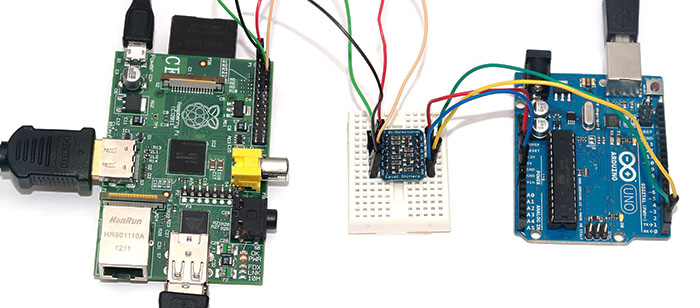
The UMBC Council of Computing Majors (CCM) will meet from Noon to 1:00pm on Monday, October 21 in room 101 in the Administration building. CCM is a student organization representing undergraduate computer science and computer engineering majors and anyone else with an interest in computing. Everyone is welcome.
At next week’s meeting, Austin Murdock will give an overview of Raspberry Pi and Arduino technology and lead a discussion about possible CCM group projects involving them.
The Raspberry Pi is an inexpensive, credit-card-sized single-board computer that runs Linux and Arduino is a single-board microcontroller used to make using electronics in multidisciplinary projects more accessible. Their low cost, size and power requirements make them ideal for building novel embedded applications in a familiar Linux environment using open source software.
]]>
The UMBC Council of Computing Majors (CCM) will meet from Noon to 1:00pm on Monday, October 21 in room 101 in the Administration building. CCM is a student organization representing undergraduate...
http://www.csee.umbc.edu/2013/10/council-of-computing-majors-to-meet-12-1-mon-oct-21-in-admin-101/
https://dev.my.umbc.edu/api/v0/pixel/news/37175/guest@my.umbc.edu/529b46f54c2769d992427f225215fe1c/api/pixel
computer-engineering
computer-science
electrical-engineering
news
students
undergraduate
Computer Science and Electrical Engineering
https://dev.my.umbc.edu/groups/csee
https://assets3-dev.my.umbc.edu/system/shared/avatars/groups/000/000/099/d117dca133c64bf78a4b7696dd007189/xsmall.png?1314043393
https://assets1-dev.my.umbc.edu/system/shared/avatars/groups/000/000/099/d117dca133c64bf78a4b7696dd007189/original.png?1314043393
https://assets1-dev.my.umbc.edu/system/shared/avatars/groups/000/000/099/d117dca133c64bf78a4b7696dd007189/xxlarge.png?1314043393
https://assets4-dev.my.umbc.edu/system/shared/avatars/groups/000/000/099/d117dca133c64bf78a4b7696dd007189/xlarge.png?1314043393
https://assets3-dev.my.umbc.edu/system/shared/avatars/groups/000/000/099/d117dca133c64bf78a4b7696dd007189/large.png?1314043393
https://assets1-dev.my.umbc.edu/system/shared/avatars/groups/000/000/099/d117dca133c64bf78a4b7696dd007189/medium.png?1314043393
https://assets2-dev.my.umbc.edu/system/shared/avatars/groups/000/000/099/d117dca133c64bf78a4b7696dd007189/small.png?1314043393
https://assets3-dev.my.umbc.edu/system/shared/avatars/groups/000/000/099/d117dca133c64bf78a4b7696dd007189/xsmall.png?1314043393
https://assets3-dev.my.umbc.edu/system/shared/avatars/groups/000/000/099/d117dca133c64bf78a4b7696dd007189/xxsmall.png?1314043393
Computer Science and Electrical Engineering
0
0
true
Fri, 18 Oct 2013 08:37:56 -0400