2015 Ontology Summit: Internet of Things: Toward Smart Networked Systems and Societies

The theme of the 2015 Ontology Summit is Internet of Things: Toward Smart Networked Systems and Societies. The Ontology Summit is an annual series of events (first started by Ontolog and NIST in 2006) that involve the ontology community and communities related to each year’s theme.
The 2015 Summit will hold a virtual discourse over the next three months via mailing lists and online panel sessions augmented conference calls. The Summit will culminate in a two-day face-to-face workshop on 13-14 April 2015 in Arlington, VA. The Summit’s goal is to explore how ontologies can play a significant role in the realization of smart networked systems and societies in the Internet of Things.
The Summit’s initial launch session will take place from 12:30pm to 2:00pm EDT on Thursday, January 15th and will include overview presentations from each of the four technical tracks. See the 2015 Ontology Summit for more information, the schedule and details on how to participate in these free an open events.
]]>
Tweet The theme of the 2015 Ontology Summit is Internet of Things: Toward Smart Networked Systems and Societies. The Ontology Summit is an annual series of events (first started by Ontolog...
http://ebiquity.umbc.edu/blogger/2015/01/14/2015-ontology-summit-internet-of-things-toward-smart-networked-systems-and-societies/
https://dev.my.umbc.edu/api/v0/pixel/news/49002/guest@my.umbc.edu/ca1f6a49f325fa17d251bef33a121101/api/pixel
agents
ai
big-data
ontologies
semantic-web
web
Ebiquity Research Group
https://dev.my.umbc.edu/groups/ebiquity
https://assets2-dev.my.umbc.edu/system/shared/avatars/groups/000/000/003/36ac8e558ac7690b6f44e2cb5ef93322/xsmall.png?1282159680
https://assets2-dev.my.umbc.edu/system/shared/avatars/groups/000/000/003/36ac8e558ac7690b6f44e2cb5ef93322/original.gif?1282159680
https://assets1-dev.my.umbc.edu/system/shared/avatars/groups/000/000/003/36ac8e558ac7690b6f44e2cb5ef93322/xxlarge.png?1282159680
https://assets1-dev.my.umbc.edu/system/shared/avatars/groups/000/000/003/36ac8e558ac7690b6f44e2cb5ef93322/xlarge.png?1282159680
https://assets2-dev.my.umbc.edu/system/shared/avatars/groups/000/000/003/36ac8e558ac7690b6f44e2cb5ef93322/large.png?1282159680
https://assets4-dev.my.umbc.edu/system/shared/avatars/groups/000/000/003/36ac8e558ac7690b6f44e2cb5ef93322/medium.png?1282159680
https://assets4-dev.my.umbc.edu/system/shared/avatars/groups/000/000/003/36ac8e558ac7690b6f44e2cb5ef93322/small.png?1282159680
https://assets2-dev.my.umbc.edu/system/shared/avatars/groups/000/000/003/36ac8e558ac7690b6f44e2cb5ef93322/xsmall.png?1282159680
https://assets3-dev.my.umbc.edu/system/shared/avatars/groups/000/000/003/36ac8e558ac7690b6f44e2cb5ef93322/xxsmall.png?1282159680
ebiquity research group
0
0
true
Wed, 14 Jan 2015 13:17:09 -0500
1100-line Perl emulator for BBN-LISP runs original Doctor program

Jeff Shager’s Genealogy of Eliza project has added an 1100-line Perl emulator written by James Markevitch for the 1966 version of BBN-LISP for the PDP-1 computer that can run Bernie Cosell’s original LISP version of doctor.
Markevitch writes in the comments
This is a Perl hack to implement the 1966 version of BBN-LISP for the PDP-1 computer. This was written primarily to run the 1966 LISP version of the “doctor” program (aka Eliza) written by Bernie Cosell. The intent is to be compatible with the version of LISP described in The BBN-LISP System, Daniel G. Bobrow et al, February, 1966, AFCRL-66-180 [BBN66]. However, because many of the quirks of that version of LISP are not documented, The BBN-LISP System Reference Manual April 1969, D. G. Bobrow et al [BBN69] was used as a reference. Finally, LISP 1.5 Programmer’s Manual, John McCarthy et al [LISP1.5] was also used as a reference. N.B. The 1966 version of BBN-LISP has differences from later versions and this interpreter will not properly execute programs written for those later versions.
You can download the Perl Lisp emulator, the doctor lisp code and the script file from the elizagen github repository.
]]>
Tweet Jeff Shager’s Genealogy of Eliza project has added an 1100-line Perl emulator written by James Markevitch for the 1966 version of BBN-LISP for the PDP-1 computer that can run Bernie...
http://ebiquity.umbc.edu/blogger/2015/01/06/1100-line-perl-emulator-for-bbn-lisp-runs-original-doctor-program/
https://dev.my.umbc.edu/api/v0/pixel/news/48895/guest@my.umbc.edu/d5a2601aca1a151aec0b1a4b2115dc13/api/pixel
general
Ebiquity Research Group
https://dev.my.umbc.edu/groups/ebiquity
https://assets2-dev.my.umbc.edu/system/shared/avatars/groups/000/000/003/36ac8e558ac7690b6f44e2cb5ef93322/xsmall.png?1282159680
https://assets2-dev.my.umbc.edu/system/shared/avatars/groups/000/000/003/36ac8e558ac7690b6f44e2cb5ef93322/original.gif?1282159680
https://assets1-dev.my.umbc.edu/system/shared/avatars/groups/000/000/003/36ac8e558ac7690b6f44e2cb5ef93322/xxlarge.png?1282159680
https://assets1-dev.my.umbc.edu/system/shared/avatars/groups/000/000/003/36ac8e558ac7690b6f44e2cb5ef93322/xlarge.png?1282159680
https://assets2-dev.my.umbc.edu/system/shared/avatars/groups/000/000/003/36ac8e558ac7690b6f44e2cb5ef93322/large.png?1282159680
https://assets4-dev.my.umbc.edu/system/shared/avatars/groups/000/000/003/36ac8e558ac7690b6f44e2cb5ef93322/medium.png?1282159680
https://assets4-dev.my.umbc.edu/system/shared/avatars/groups/000/000/003/36ac8e558ac7690b6f44e2cb5ef93322/small.png?1282159680
https://assets2-dev.my.umbc.edu/system/shared/avatars/groups/000/000/003/36ac8e558ac7690b6f44e2cb5ef93322/xsmall.png?1282159680
https://assets3-dev.my.umbc.edu/system/shared/avatars/groups/000/000/003/36ac8e558ac7690b6f44e2cb5ef93322/xxsmall.png?1282159680
ebiquity research group
1
0
true
Tue, 06 Jan 2015 08:40:46 -0500
Tue, 06 Jan 2015 08:40:46 -0500
Exploring the meanings of geek vs. nerd
click image for higher-resolution version

Mark Liberman pointed out a nice use of pmi to explore the difference in meaning of geek vs. nerd done last year by Burr Settles using Twitter data.
Settles’s original post, On “Geek” Versus “Nerd”, has a brief, but good, explanation of the method and data.
]]>
Tweet click image for higher-resolution version Mark Liberman pointed out a nice use of pmi to explore the difference in meaning of geek vs. nerd done last year by Burr Settles using Twitter...
http://ebiquity.umbc.edu/blogger/2015/01/03/exploring-the-meanings-of-geek-vs-nerd/
https://dev.my.umbc.edu/api/v0/pixel/news/48872/guest@my.umbc.edu/70168ebc9f5d1069e27d32780b6f2348/api/pixel
big-data
nlp
Ebiquity Research Group
https://dev.my.umbc.edu/groups/ebiquity
https://assets2-dev.my.umbc.edu/system/shared/avatars/groups/000/000/003/36ac8e558ac7690b6f44e2cb5ef93322/xsmall.png?1282159680
https://assets2-dev.my.umbc.edu/system/shared/avatars/groups/000/000/003/36ac8e558ac7690b6f44e2cb5ef93322/original.gif?1282159680
https://assets1-dev.my.umbc.edu/system/shared/avatars/groups/000/000/003/36ac8e558ac7690b6f44e2cb5ef93322/xxlarge.png?1282159680
https://assets1-dev.my.umbc.edu/system/shared/avatars/groups/000/000/003/36ac8e558ac7690b6f44e2cb5ef93322/xlarge.png?1282159680
https://assets2-dev.my.umbc.edu/system/shared/avatars/groups/000/000/003/36ac8e558ac7690b6f44e2cb5ef93322/large.png?1282159680
https://assets4-dev.my.umbc.edu/system/shared/avatars/groups/000/000/003/36ac8e558ac7690b6f44e2cb5ef93322/medium.png?1282159680
https://assets4-dev.my.umbc.edu/system/shared/avatars/groups/000/000/003/36ac8e558ac7690b6f44e2cb5ef93322/small.png?1282159680
https://assets2-dev.my.umbc.edu/system/shared/avatars/groups/000/000/003/36ac8e558ac7690b6f44e2cb5ef93322/xsmall.png?1282159680
https://assets3-dev.my.umbc.edu/system/shared/avatars/groups/000/000/003/36ac8e558ac7690b6f44e2cb5ef93322/xxsmall.png?1282159680
ebiquity research group
2
0
true
Sat, 03 Jan 2015 15:59:26 -0500
Sat, 03 Jan 2015 15:59:26 -0500
PhD defense: Varish Mulwad — Inferring the Semantics of Tables

Dissertation Defense
TABEL — A Domain Independent and Extensible Framework
for Inferring the Semantics of Tables
8:00am Thursday, 8 January 2015, ITE325b
Tables are an integral part of documents, reports and Web pages in many scientific and technical domains, compactly encoding important information that can be difficult to express in text. Table-like structures outside documents, such as spreadsheets, CSV files, log files and databases, are widely used to represent and share information. However, tables remain beyond the scope of regular text processing systems which often treat them like free text.
This dissertation presents TABEL — a domain independent and extensible framework to infer the semantics of tables and represent them as RDF Linked Data. TABEL captures the intended meaning of a table by mapping header cells to classes, data cell values to existing entities and pair of columns to relations from an given ontology and knowledge base. The core of the framework consists of a module that represents a table as a graphical model to jointly infer the semantics of headers, data cells and relation between headers. We also introduce a novel Semantic Message Passing scheme, which incorporates semantics into message passing, to perform joint inference over the probabilistic graphical model. We also develop and explore a “human-in-the-loop” paradigm, presenting plausible models of user interaction with our framework and its impact on the quality of inferred semantics.
We present techniques that are both extensible and domain agnostic. Our framework supports the addition of preprocessing modules without affecting existing ones, making TABEL extensible. It also allows background knowledge bases to be adapted and changed based on the domains of the tables, thus making it domain independent. We demonstrate the extensibility and domain independence of our techniques by developing an application of TABEL in the healthcare domain. We develop a proof of concept for an application to generate meta-analysis reports automatically, which is built on top of the semantics inferred from tables found in medical literature.
A thorough evaluation with experiments over dataset of tables from the Web and medical research reports presents promising results.
Committee: Drs. Tim Finin (chair), Tim Oates, Anupam Joshi, Yun Peng, Indrajit Bhattacharya (IBM Research) and L. V. Subramaniam (IBM Research)
]]>
Tweet Dissertation Defense TABEL — A Domain Independent and Extensible Framework for Inferring the Semantics of Tables Varish Vyankatesh Mulwad 8:00am Thursday, 8 January 2015,...
http://ebiquity.umbc.edu/blogger/2014/12/29/phd-defense-varish-mulwad-inferring-the-semantics-of-tables/
https://dev.my.umbc.edu/api/v0/pixel/news/48850/guest@my.umbc.edu/a1d7d2876577dac88053606b576fb461/api/pixel
kr
machine-learning
nlp
ontologies
semantic-web
Ebiquity Research Group
https://dev.my.umbc.edu/groups/ebiquity
https://assets2-dev.my.umbc.edu/system/shared/avatars/groups/000/000/003/36ac8e558ac7690b6f44e2cb5ef93322/xsmall.png?1282159680
https://assets2-dev.my.umbc.edu/system/shared/avatars/groups/000/000/003/36ac8e558ac7690b6f44e2cb5ef93322/original.gif?1282159680
https://assets1-dev.my.umbc.edu/system/shared/avatars/groups/000/000/003/36ac8e558ac7690b6f44e2cb5ef93322/xxlarge.png?1282159680
https://assets1-dev.my.umbc.edu/system/shared/avatars/groups/000/000/003/36ac8e558ac7690b6f44e2cb5ef93322/xlarge.png?1282159680
https://assets2-dev.my.umbc.edu/system/shared/avatars/groups/000/000/003/36ac8e558ac7690b6f44e2cb5ef93322/large.png?1282159680
https://assets4-dev.my.umbc.edu/system/shared/avatars/groups/000/000/003/36ac8e558ac7690b6f44e2cb5ef93322/medium.png?1282159680
https://assets4-dev.my.umbc.edu/system/shared/avatars/groups/000/000/003/36ac8e558ac7690b6f44e2cb5ef93322/small.png?1282159680
https://assets2-dev.my.umbc.edu/system/shared/avatars/groups/000/000/003/36ac8e558ac7690b6f44e2cb5ef93322/xsmall.png?1282159680
https://assets3-dev.my.umbc.edu/system/shared/avatars/groups/000/000/003/36ac8e558ac7690b6f44e2cb5ef93322/xxsmall.png?1282159680
ebiquity research group
2
1
true
Mon, 29 Dec 2014 19:07:04 -0500
DOCTOR for BBN LISP, circa 1966

Jeff Shager’s Genealogy of Eliza project has added a BBN LISP version of DOCTOR from 1966 that was recovered from a paper tape. Eliza is the classic conversational program written by Joseph Weizenbaum and and described in a 1966 CACM paper, “ELIZA–a computer program for the study of natural language communication between man and machine“. Weizenbaum wrote Eliza in his Lisp-like SLIP programming language, which ran on an IBM 7094 computer.
BBNer Bernie Cosell wrote this first Lisp version in BBN LISP and based it on the description and examples he read in the CACM paper. The recovered code is in Jeff’s github repository and an emulator that can run it is promised soon.
This is probably pretty close to the MACLISP version of DOCTOR that I played with in the early 1970s. I still have some DECtapes with old files from those days — maybe I’ll find that version of DOCTOR on one of them.
]]>
Tweet Jeff Shager’s Genealogy of Eliza project has added a BBN LISP version of DOCTOR from 1966 that was recovered from a paper tape. Eliza is the classic conversational program written by...
http://ebiquity.umbc.edu/blogger/2014/12/21/doctor-for-bbn-lisp-circa-1966/
https://dev.my.umbc.edu/api/v0/pixel/news/48795/guest@my.umbc.edu/858345bc2a3ebc1749ff91f63df814e4/api/pixel
ai
Ebiquity Research Group
https://dev.my.umbc.edu/groups/ebiquity
https://assets2-dev.my.umbc.edu/system/shared/avatars/groups/000/000/003/36ac8e558ac7690b6f44e2cb5ef93322/xsmall.png?1282159680
https://assets2-dev.my.umbc.edu/system/shared/avatars/groups/000/000/003/36ac8e558ac7690b6f44e2cb5ef93322/original.gif?1282159680
https://assets1-dev.my.umbc.edu/system/shared/avatars/groups/000/000/003/36ac8e558ac7690b6f44e2cb5ef93322/xxlarge.png?1282159680
https://assets1-dev.my.umbc.edu/system/shared/avatars/groups/000/000/003/36ac8e558ac7690b6f44e2cb5ef93322/xlarge.png?1282159680
https://assets2-dev.my.umbc.edu/system/shared/avatars/groups/000/000/003/36ac8e558ac7690b6f44e2cb5ef93322/large.png?1282159680
https://assets4-dev.my.umbc.edu/system/shared/avatars/groups/000/000/003/36ac8e558ac7690b6f44e2cb5ef93322/medium.png?1282159680
https://assets4-dev.my.umbc.edu/system/shared/avatars/groups/000/000/003/36ac8e558ac7690b6f44e2cb5ef93322/small.png?1282159680
https://assets2-dev.my.umbc.edu/system/shared/avatars/groups/000/000/003/36ac8e558ac7690b6f44e2cb5ef93322/xsmall.png?1282159680
https://assets3-dev.my.umbc.edu/system/shared/avatars/groups/000/000/003/36ac8e558ac7690b6f44e2cb5ef93322/xxsmall.png?1282159680
ebiquity research group
1
0
true
Sun, 21 Dec 2014 22:19:00 -0500
Sun, 21 Dec 2014 22:19:00 -0500
Semantics for Privacy and Shared Context

Roberto Yus, Primal Pappachan, Prajit Das, Tim Finin, Anupam Joshi, and Eduardo Mena, Semantics for Privacy and Shared Context, Workshop on Society, Privacy and the Semantic Web-Policy and Technology, held at Int. Semantic Web Conf., Oct. 2014.
Capturing, maintaining, and using context information helps mobile applications provide better services and generates data useful in specifying information sharing policies. Obtaining the full benefit of context information requires a rich and expressive representation that is grounded in shared semantic models. We summarize some of our past work on representing and using context models and briefly describe Triveni, a system for cross-device context discovery and enrichment. Triveni represents context in RDF and OWL and reasons over context models to infer additional information and detect and resolve ambiguities and inconsistencies. A unique feature, its ability to create and manage “contextual groups” of users in an environment, enables their members to share context information using wireless ad-hoc networks. Thus, it enriches the information about a user’s context by creating mobile ad hoc knowledge networks.
]]>
Tweet Roberto Yus, Primal Pappachan, Prajit Das, Tim Finin, Anupam Joshi, and Eduardo Mena, Semantics for Privacy and Shared Context, Workshop on Society, Privacy and the Semantic Web-Policy...
http://ebiquity.umbc.edu/blogger/2014/12/15/semantics-for-privacy-and-shared-context/
https://dev.my.umbc.edu/api/v0/pixel/news/48686/guest@my.umbc.edu/3046f261e5837ca094c7ffb131452ec4/api/pixel
mobile-computing
owl
policy
rdf
semantic-web
Ebiquity Research Group
https://dev.my.umbc.edu/groups/ebiquity
https://assets2-dev.my.umbc.edu/system/shared/avatars/groups/000/000/003/36ac8e558ac7690b6f44e2cb5ef93322/xsmall.png?1282159680
https://assets2-dev.my.umbc.edu/system/shared/avatars/groups/000/000/003/36ac8e558ac7690b6f44e2cb5ef93322/original.gif?1282159680
https://assets1-dev.my.umbc.edu/system/shared/avatars/groups/000/000/003/36ac8e558ac7690b6f44e2cb5ef93322/xxlarge.png?1282159680
https://assets1-dev.my.umbc.edu/system/shared/avatars/groups/000/000/003/36ac8e558ac7690b6f44e2cb5ef93322/xlarge.png?1282159680
https://assets2-dev.my.umbc.edu/system/shared/avatars/groups/000/000/003/36ac8e558ac7690b6f44e2cb5ef93322/large.png?1282159680
https://assets4-dev.my.umbc.edu/system/shared/avatars/groups/000/000/003/36ac8e558ac7690b6f44e2cb5ef93322/medium.png?1282159680
https://assets4-dev.my.umbc.edu/system/shared/avatars/groups/000/000/003/36ac8e558ac7690b6f44e2cb5ef93322/small.png?1282159680
https://assets2-dev.my.umbc.edu/system/shared/avatars/groups/000/000/003/36ac8e558ac7690b6f44e2cb5ef93322/xsmall.png?1282159680
https://assets3-dev.my.umbc.edu/system/shared/avatars/groups/000/000/003/36ac8e558ac7690b6f44e2cb5ef93322/xxsmall.png?1282159680
ebiquity research group
0
0
true
Mon, 15 Dec 2014 12:01:10 -0500
UMBC seeks nine new computing faculty
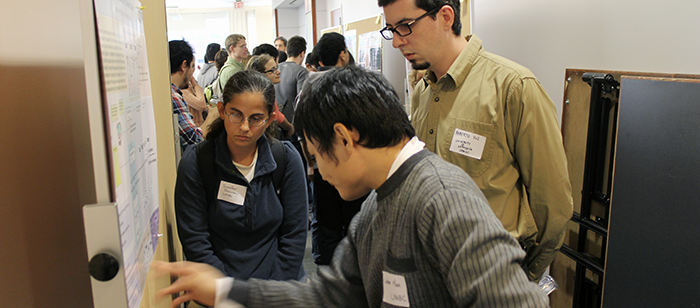
UMBC has a total of nine open full-time positions for computing faculty including five tenure track professors, a professor of the practice and three lecturers.
UMBC’s Computer Science and Electrical Engineering department is seeking to fill five positions for the coming year. They include two tenure track positions in Computer Science, up to three full-time lecturers. See the CSEE jobs page for more information.
The College of Engineering and Information Technology has a position for a full-time lecturer or Professor of Practice to focus on the needs of incoming computing majors through teaching, advising, and helping develop programs in computing. This person will work closely with faculty in the Computer Science and Electrical Engineering Department and Information Systems Department.
UMBC’s Information Systems department is accepting applications for three tenure track faculty positions in data science, software engineering and human-centered computing.
]]>
Tweet UMBC has a total of nine open full-time positions for computing faculty including five tenure track professors, a professor of the practice and three lecturers. UMBC’s Computer...
http://ebiquity.umbc.edu/blogger/2014/12/13/umbc-seeks-nine-new-computing-faculty/
https://dev.my.umbc.edu/api/v0/pixel/news/48673/guest@my.umbc.edu/d96f87a354e1b042e9718ad77113aa3a/api/pixel
general
Ebiquity Research Group
https://dev.my.umbc.edu/groups/ebiquity
https://assets2-dev.my.umbc.edu/system/shared/avatars/groups/000/000/003/36ac8e558ac7690b6f44e2cb5ef93322/xsmall.png?1282159680
https://assets2-dev.my.umbc.edu/system/shared/avatars/groups/000/000/003/36ac8e558ac7690b6f44e2cb5ef93322/original.gif?1282159680
https://assets1-dev.my.umbc.edu/system/shared/avatars/groups/000/000/003/36ac8e558ac7690b6f44e2cb5ef93322/xxlarge.png?1282159680
https://assets1-dev.my.umbc.edu/system/shared/avatars/groups/000/000/003/36ac8e558ac7690b6f44e2cb5ef93322/xlarge.png?1282159680
https://assets2-dev.my.umbc.edu/system/shared/avatars/groups/000/000/003/36ac8e558ac7690b6f44e2cb5ef93322/large.png?1282159680
https://assets4-dev.my.umbc.edu/system/shared/avatars/groups/000/000/003/36ac8e558ac7690b6f44e2cb5ef93322/medium.png?1282159680
https://assets4-dev.my.umbc.edu/system/shared/avatars/groups/000/000/003/36ac8e558ac7690b6f44e2cb5ef93322/small.png?1282159680
https://assets2-dev.my.umbc.edu/system/shared/avatars/groups/000/000/003/36ac8e558ac7690b6f44e2cb5ef93322/xsmall.png?1282159680
https://assets3-dev.my.umbc.edu/system/shared/avatars/groups/000/000/003/36ac8e558ac7690b6f44e2cb5ef93322/xxsmall.png?1282159680
ebiquity research group
23
9
true
Sat, 13 Dec 2014 10:23:49 -0500
Amir Karami on a fuzzy approach topic models for medical corpora

In this week’s Ebiquity meeting (10am Wed 12/3 in ITE346), Amir Karami will talk about “Fuzzy Approach Topic Models for Medical Corpus”.
Abstract: Looking for ways to automatically retrieve the enormous amount of medical knowledge has always been an intriguing topic. The massive flow of medical documents including scholarly publications and clinical notes has benefited experts by providing ease to access to a huge amount of text data. However, due to this amount of data, medical experts are finding it increasingly difficult locate information of interest. As a consequence, finding relevant documents has become more difficult. Effective text mining systems should be able to extract and exploit not only explicitly stated information but also implied and inferred data. Using bag-of-words leads to sparse high dimension problem that has low performance and needs more cost of computation. Dimension reduction techniques, specially topic models, are one of useful techniques to overcome the problems of bag-of-words. This research proposes a novel approach for topic modeling using fuzzy clustering. To evaluate our model, we experiment with two text datasets of medical documents. The evaluation metrics carried out through document classification, document modeling, and document clustering show that our approach produces better performance than LDA, the most-cited topic model article in Google scholar, indicating that fuzzy set theory can improve the performance of topic models in medical domain. Our approach solves redundancy issue in medical domain and can discover the relation between topics in a documents. In addition, the previous research of fuzzy clustering can help to solve the challenges of topic modeling such as defining the number of topics.
]]>
Tweet In this week’s Ebiquity meeting (10am Wed 12/3 in ITE346), Amir Karami will talk about “Fuzzy Approach Topic Models for Medical Corpus”. Abstract: Looking for ways to automatically...
http://ebiquity.umbc.edu/blogger/2014/12/02/amir-karami-on-a-fuzzy-approach-topic-models-for-medical-corpora/
https://dev.my.umbc.edu/api/v0/pixel/news/48428/guest@my.umbc.edu/9ccffe68685a92c760cb46225da0768b/api/pixel
nlp
Ebiquity Research Group
https://dev.my.umbc.edu/groups/ebiquity
https://assets2-dev.my.umbc.edu/system/shared/avatars/groups/000/000/003/36ac8e558ac7690b6f44e2cb5ef93322/xsmall.png?1282159680
https://assets2-dev.my.umbc.edu/system/shared/avatars/groups/000/000/003/36ac8e558ac7690b6f44e2cb5ef93322/original.gif?1282159680
https://assets1-dev.my.umbc.edu/system/shared/avatars/groups/000/000/003/36ac8e558ac7690b6f44e2cb5ef93322/xxlarge.png?1282159680
https://assets1-dev.my.umbc.edu/system/shared/avatars/groups/000/000/003/36ac8e558ac7690b6f44e2cb5ef93322/xlarge.png?1282159680
https://assets2-dev.my.umbc.edu/system/shared/avatars/groups/000/000/003/36ac8e558ac7690b6f44e2cb5ef93322/large.png?1282159680
https://assets4-dev.my.umbc.edu/system/shared/avatars/groups/000/000/003/36ac8e558ac7690b6f44e2cb5ef93322/medium.png?1282159680
https://assets4-dev.my.umbc.edu/system/shared/avatars/groups/000/000/003/36ac8e558ac7690b6f44e2cb5ef93322/small.png?1282159680
https://assets2-dev.my.umbc.edu/system/shared/avatars/groups/000/000/003/36ac8e558ac7690b6f44e2cb5ef93322/xsmall.png?1282159680
https://assets3-dev.my.umbc.edu/system/shared/avatars/groups/000/000/003/36ac8e558ac7690b6f44e2cb5ef93322/xxsmall.png?1282159680
ebiquity research group
0
0
true
Tue, 02 Dec 2014 09:48:06 -0500
Anupam Joshi named an IEEE Fellow
CSEE Professor Anupam Joshi has been named an IEEE Fellow, recognized for his for contributions to security, privacy and data management in mobile and pervasive systems. This designation is conferred by the IEEE Board of Directors on individuals with an outstanding record of accomplishments in any of the IEEE fields of interest and is recognized by the technical community as a prestigious honor and an important career achievement. No more than 0.1% of the total IEEE voting membership can be selected in a year.
Dr. Joshi joined UMBC’s faculty in 1998 and currently is the Director of the UMBC Center for Cybersecurity. He previousy held faculty appointments at the University of Missouri, Columbia and Purdue University. He received a Ph.D. in Computer Science from Purdue University and a B. Tech in Electrical Engineering from the Indian Institute of Technology, Delhi. While at UMBC he has taught both undergraduate and graduate courses in operating systems, mobile computing and security. He developed and teaches an Honors College seminar on “Privacy and Security in a Mobile social world”. He has mentored nine Ph.D. graduates and a large number of M.S. students.
Joshi has made many contributions to the design, analysis and development of intelligent systems for mobile, social and secure computing. Twenty years ago he was one of a handful of researchers who recognized that mobility introduced new challenges for data management, security and privacy over and above those brought about by wireless connectivity. His key insight was to model mobile and pervasive systems as distributed systems that are both open, in that they do not pre-identify a set of known participants, and dynamic, in that the participants change regularly.
He observe that applications on mobile devices require greater degrees of decision making and autonomy as they become increasingly sophisticated and intelligent and can’t always assume connectivity to central servers. Entities in these pervasive computing systems must exchange information about the data and services offered and sought and their associated security and privacy policies, negotiate for information and resource sharing, be aware of their context, and monitor for and report on suspicious or anomalous behavior. Dr. Joshi has addressed these challenges across the stack, from network protocols to data management to policy controlled interactions between autonomous entities.
Much of his research has been done in collaboration with colleagues in industry such as IBM, Microsoft, Northrop Grumman and Qualcomm. It has been funded by not just them, but also NSF, DARPA, AFOSR, ARL, NIST and other federal agencies. Joshi has published prolifically with more than 200 publications in refereed journals and conferences, many of which are highly cited. He has served as the General or Program Chair of many key conferences including the IEEE International Conference on Intelligence and Security Informatics which will be held in Baltimore in May 2015.
The IEEE is the world’s leading professional association for advancing technology for humanity. Through its 400,000 members in 160 countries, it is a leading authority on a wide variety of areas ranging from aerospace systems, computers and telecommunications to biomedical engineering, electric power and consumer electronics. Dedicated to the advancement of technology, the IEEE publishes 30 percent of the world’s literature in the electrical and electronics engineering and computer science fields, and has developed more than 900 active industry standards.
]]>
Tweet CSEE Professor Anupam Joshi has been named an IEEE Fellow, recognized for his for contributions to security, privacy and data management in mobile and pervasive systems. This designation...
http://ebiquity.umbc.edu/blogger/2014/11/27/anupam-joshi-named-an-ieee-fellow/
https://dev.my.umbc.edu/api/v0/pixel/news/48371/guest@my.umbc.edu/d3b77a70f0d52521aa65329296833bc8/api/pixel
people
Ebiquity Research Group
https://dev.my.umbc.edu/groups/ebiquity
https://assets2-dev.my.umbc.edu/system/shared/avatars/groups/000/000/003/36ac8e558ac7690b6f44e2cb5ef93322/xsmall.png?1282159680
https://assets2-dev.my.umbc.edu/system/shared/avatars/groups/000/000/003/36ac8e558ac7690b6f44e2cb5ef93322/original.gif?1282159680
https://assets1-dev.my.umbc.edu/system/shared/avatars/groups/000/000/003/36ac8e558ac7690b6f44e2cb5ef93322/xxlarge.png?1282159680
https://assets1-dev.my.umbc.edu/system/shared/avatars/groups/000/000/003/36ac8e558ac7690b6f44e2cb5ef93322/xlarge.png?1282159680
https://assets2-dev.my.umbc.edu/system/shared/avatars/groups/000/000/003/36ac8e558ac7690b6f44e2cb5ef93322/large.png?1282159680
https://assets4-dev.my.umbc.edu/system/shared/avatars/groups/000/000/003/36ac8e558ac7690b6f44e2cb5ef93322/medium.png?1282159680
https://assets4-dev.my.umbc.edu/system/shared/avatars/groups/000/000/003/36ac8e558ac7690b6f44e2cb5ef93322/small.png?1282159680
https://assets2-dev.my.umbc.edu/system/shared/avatars/groups/000/000/003/36ac8e558ac7690b6f44e2cb5ef93322/xsmall.png?1282159680
https://assets3-dev.my.umbc.edu/system/shared/avatars/groups/000/000/003/36ac8e558ac7690b6f44e2cb5ef93322/xxsmall.png?1282159680
ebiquity research group
10
2
true
Thu, 27 Nov 2014 09:38:03 -0500
Wild Big Data
In this week’s Ebiquity meeting (10am Wed Nov. 12), Jennifer Sleeman will talk about “Taming Wild Big Data”.
Wild Big Data is data that is hard to extract, understand, and use due to its heterogeneous nature and volume. It typically comes without a schema, is obtained from multiple sources and provides a challenge for information extraction and integration. We describe a way to subduing Wild Big Data that uses techniques and resources that are popular for processing natural language text. The approach is applicable to data that is presented as a graph of objects and relations between them and to tabular data that can be transformed into such a graph. We start by applying topic models to contextualize the data and then use the results to identify the potential types of the graph’s nodes by mapping them to known types found in large open ontologies such as Freebase, and DBpedia. The results allow us to assemble coarse clusters of objects that can then be used to interpret the link and perform entity disambiguation and record linking.
]]>
Tweet In this week’s Ebiquity meeting (10am Wed Nov. 12), Jennifer Sleeman will talk about “Taming Wild Big Data”. Wild Big Data is data that is hard to extract, understand, and use due to its...
http://ebiquity.umbc.edu/blogger/2014/11/11/wild-big-data/
https://dev.my.umbc.edu/api/v0/pixel/news/48005/guest@my.umbc.edu/cdc6a853107749bdfe39f50e85907ba1/api/pixel
datamining
Ebiquity Research Group
https://dev.my.umbc.edu/groups/ebiquity
https://assets2-dev.my.umbc.edu/system/shared/avatars/groups/000/000/003/36ac8e558ac7690b6f44e2cb5ef93322/xsmall.png?1282159680
https://assets2-dev.my.umbc.edu/system/shared/avatars/groups/000/000/003/36ac8e558ac7690b6f44e2cb5ef93322/original.gif?1282159680
https://assets1-dev.my.umbc.edu/system/shared/avatars/groups/000/000/003/36ac8e558ac7690b6f44e2cb5ef93322/xxlarge.png?1282159680
https://assets1-dev.my.umbc.edu/system/shared/avatars/groups/000/000/003/36ac8e558ac7690b6f44e2cb5ef93322/xlarge.png?1282159680
https://assets2-dev.my.umbc.edu/system/shared/avatars/groups/000/000/003/36ac8e558ac7690b6f44e2cb5ef93322/large.png?1282159680
https://assets4-dev.my.umbc.edu/system/shared/avatars/groups/000/000/003/36ac8e558ac7690b6f44e2cb5ef93322/medium.png?1282159680
https://assets4-dev.my.umbc.edu/system/shared/avatars/groups/000/000/003/36ac8e558ac7690b6f44e2cb5ef93322/small.png?1282159680
https://assets2-dev.my.umbc.edu/system/shared/avatars/groups/000/000/003/36ac8e558ac7690b6f44e2cb5ef93322/xsmall.png?1282159680
https://assets3-dev.my.umbc.edu/system/shared/avatars/groups/000/000/003/36ac8e558ac7690b6f44e2cb5ef93322/xxsmall.png?1282159680
ebiquity research group
0
0
true
Tue, 11 Nov 2014 23:34:44 -0500