PhD defense: On Prediction and Estimation for Datastreams Utilizing Sparsity and Structure, 6/6
Ph.D. Dissertation Defense
On Prediction and Estimation for Datastreams
Utilizing Sparsity and Structure
Shiming Yang
10:00am-12:00pm, 6 June 2013, ITE 325b, UMBC
With the unprecedented fast growth of data, we have better opportunities to understand our complex world, and simultaneously face pervasive challenges in efficiently inferring the meaning behind these vast amounts of data. It is particularly important to explore the intrinsic structures in data to increase our rational understanding of the latent mechanisms that generate them. In modeling, structures are features used to characterize the underlying systems, such as the rank of a system, the number of clusters, the levels of hierarchy, and the order of spatio-temporal correlations in multiple measurements.
In this thesis, we present our research contributions on utilizing structures and sparsity in observed data to improve estimation and prediction of trajectories of system states for two systems: the highway traffic system and the human physiology systems. Both systems exhibit features that are seen in many other applications.
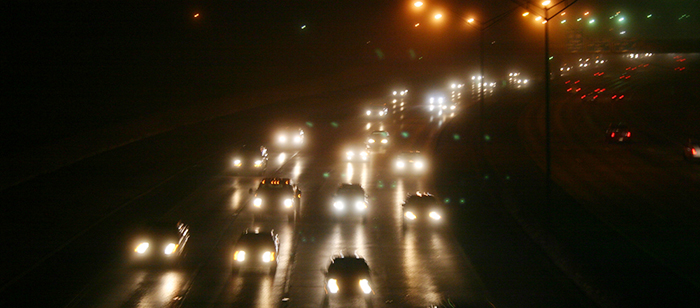
For the traffic problem, it is useful to know the near–term traffic conditions after the occurrence of some events which have noticeable impact on the road traffic. Often used macroscopic models, which view road traffic as fluid flowing in pipes, suffer from various inaccuracies, which could be mitigated by incorporating past observations to correct predictions. However, we often have limited observation and computing resources (e.g., probe vehicles, smartphones, bandwidth, sensors) to gather and process past observations. We describe a novel low-overhead strategy to adaptively select observation sites in real-time by using the density of the mesh of the numerical solution of the underlying mathematical model to capture the variability of that solution. We show that our proposed strategy improves the numerical accuracy of near–term traffic forecasting with limited observation resources as compared with with uniform deployment of the observation resources. In addition to deploying limited observation resources, one is often concerned with detecting special traffic events. To this end, we propose a novel method to decompose traffic observations into normal background and sparse events. Our method couples multiple traffic datastreams so that they share a certain sparse spatio–temporal structure.
We also study the utility of sparseness and structure in physiological datastreams. Missing values hinder the use of many machine learning methods. We show how to incorporate ideas from compressive sensing into handling the missing values problem in continuous intracranial pressure (ICP) datastreams from patients with traumatic brain injury. We experimentally evaluate the proposed method in experiments where randomly selected ICP values are marked as missing. We find our method gives estimated missing values that are in better agreement with the true values as compared with k–nearest neighbor and expectation maximization data imputation methods.
Moreover, predicting the near–term intracranial pressure for traumatic brain injury patients is of great importance to clinicians. Traditional regression methods, need an explicit parametric form of the model to fit. However, due to our limited knowledge of the complex brain physiology, it is difficult to specify an accurate parametric model. To overcome this difficulty, our model uses Gaussian processes to quantify our prior beliefs on the smoothness of the regression model, and performs regression in an infinite dimensional space. We show that the proposed Gaussian process regression model shows predicts ICP changes in clinically useful timeframes and may support future development of minimally-invasive ICP monitoring systems, earlier intervention strategies, and better patient outcomes.
Committee: Drs. K. Kalpakis (Chair), Alain Biem (IBM TJ Watson), Chein-I Chang, Colin MacKenzie, Dhananjay Phatak, Yaacov Yesha
]]>
Ph.D. Dissertation Defense On Prediction and Estimation for Datastreams Utilizing Sparsity and Structure Shiming Yang 10:00am-12:00pm, 6 June 2013, ITE 325b, UMBC With the unprecedented...
http://www.csee.umbc.edu/2013/06/phd-defense-on-prediction-and-estimation-for-datastreams-utilizing-sparsity-and-structure-66/
https://dev.my.umbc.edu/api/v0/pixel/news/30879/guest@my.umbc.edu/0bb56239d694d79af34e62614527b3b0/api/pixel
computer-science
defense
graduate
news
research
students
talks
Computer Science and Electrical Engineering
https://dev.my.umbc.edu/groups/csee
https://assets3-dev.my.umbc.edu/system/shared/avatars/groups/000/000/099/d117dca133c64bf78a4b7696dd007189/xsmall.png?1314043393
https://assets1-dev.my.umbc.edu/system/shared/avatars/groups/000/000/099/d117dca133c64bf78a4b7696dd007189/original.png?1314043393
https://assets1-dev.my.umbc.edu/system/shared/avatars/groups/000/000/099/d117dca133c64bf78a4b7696dd007189/xxlarge.png?1314043393
https://assets4-dev.my.umbc.edu/system/shared/avatars/groups/000/000/099/d117dca133c64bf78a4b7696dd007189/xlarge.png?1314043393
https://assets3-dev.my.umbc.edu/system/shared/avatars/groups/000/000/099/d117dca133c64bf78a4b7696dd007189/large.png?1314043393
https://assets1-dev.my.umbc.edu/system/shared/avatars/groups/000/000/099/d117dca133c64bf78a4b7696dd007189/medium.png?1314043393
https://assets2-dev.my.umbc.edu/system/shared/avatars/groups/000/000/099/d117dca133c64bf78a4b7696dd007189/small.png?1314043393
https://assets3-dev.my.umbc.edu/system/shared/avatars/groups/000/000/099/d117dca133c64bf78a4b7696dd007189/xsmall.png?1314043393
https://assets3-dev.my.umbc.edu/system/shared/avatars/groups/000/000/099/d117dca133c64bf78a4b7696dd007189/xxsmall.png?1314043393
Computer Science and Electrical Engineering
0
0
true
Wed, 05 Jun 2013 17:05:09 -0400
MS Defense: Nimbus: Scalable, Distributed, In-Memory Data Storage 6/6
MS Defense
Nimbus: Scalable, Distributed, In-Memory Data Storage
Adam Shook
1:30pm Thursday, 6 June 2013, 325b ITE, UMBC
The Apache Hadoop project provides a framework for reliable, scalable, distributed computing. The storage layer of Hadoop, called the Hadoop Distributed File System (HDFS), is an append-only distributed file system designed for commodity hardware. The append-only nature of the file system limits the ability for applications to have random reads and writes of data. This was addressed by Apache HBase and Apache Accumulo, which both allow for quick random access to a highly scalable key/value store.
However, these projects still require data to be read from the local disk of the server, and therefore cannot handle the type of I/O throughput that many applications require. This limits the potential for "hot" data sets that cannot be stored in memory of one machine, but do not need the scalability of HBase, i.e. the ones that can be sharded and stored in memory on dozens of machines. These data sets are often referenced by many applications and can be dozens of gigabytes in size.
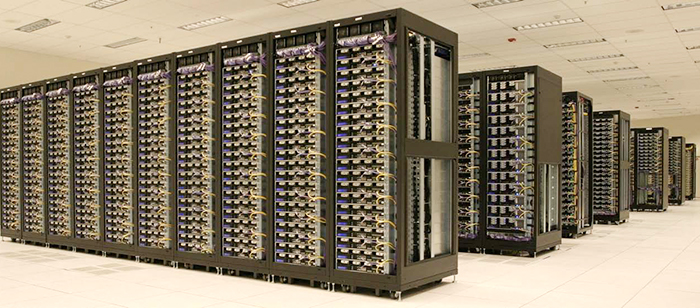
Nimbus is a project designed for Hadoop to expose distributed in-memory data structures, backed by the reliability of HDFS. By executing a series of I/O benchmarks against HBase, Nimbus's architecture and implementation are validated by demonstrating the performance advantage over HBase, allowing for high-throughput data fetch operations. The overall architecture and design of each component are discussed to validate Nimbus's design goals, as well as a description of relevant use cases and future work for the project.
Committee: Drs. Tim Finin (chair), Anupam Joshi and Konstantinos Kalpakis
]]>
MS Defense Nimbus: Scalable, Distributed, In-Memory Data Storage Adam Shook 1:30pm Thursday, 6 June 2013, 325b ITE, UMBC The Apache Hadoop project provides a framework for reliable,...
http://www.csee.umbc.edu/2013/06/ms-defense-nimbus-scalable-distributed-in-memory-data-storage-66/
https://dev.my.umbc.edu/api/v0/pixel/news/30825/guest@my.umbc.edu/76921cd930668e609d483b99fda5d1fc/api/pixel
computer-science
defense
news
research
talks
Computer Science and Electrical Engineering
https://dev.my.umbc.edu/groups/csee
https://assets3-dev.my.umbc.edu/system/shared/avatars/groups/000/000/099/d117dca133c64bf78a4b7696dd007189/xsmall.png?1314043393
https://assets1-dev.my.umbc.edu/system/shared/avatars/groups/000/000/099/d117dca133c64bf78a4b7696dd007189/original.png?1314043393
https://assets1-dev.my.umbc.edu/system/shared/avatars/groups/000/000/099/d117dca133c64bf78a4b7696dd007189/xxlarge.png?1314043393
https://assets4-dev.my.umbc.edu/system/shared/avatars/groups/000/000/099/d117dca133c64bf78a4b7696dd007189/xlarge.png?1314043393
https://assets3-dev.my.umbc.edu/system/shared/avatars/groups/000/000/099/d117dca133c64bf78a4b7696dd007189/large.png?1314043393
https://assets1-dev.my.umbc.edu/system/shared/avatars/groups/000/000/099/d117dca133c64bf78a4b7696dd007189/medium.png?1314043393
https://assets2-dev.my.umbc.edu/system/shared/avatars/groups/000/000/099/d117dca133c64bf78a4b7696dd007189/small.png?1314043393
https://assets3-dev.my.umbc.edu/system/shared/avatars/groups/000/000/099/d117dca133c64bf78a4b7696dd007189/xsmall.png?1314043393
https://assets3-dev.my.umbc.edu/system/shared/avatars/groups/000/000/099/d117dca133c64bf78a4b7696dd007189/xxsmall.png?1314043393
Computer Science and Electrical Engineering
0
0
true
Tue, 04 Jun 2013 21:39:06 -0400
Phd Defense: Dingkai Guo, Mid-Infrared Photonic Integration 6/4
Ph.D. Dissertation Defense
Mid-Infrared Photonic Integration
Dingkai Guo
10:00am Tuesday, 4 June 2013, TRC CASPR conference room
The mid-Infrared (Mid-IR) wavelength range is important for applications including medical and security imaging, environmental trace gas sensing and free space communications. However, photonic integrated circuits (PICs) in the mid-IR range are completely under-developed which significantly slows the reduction of mid-IR system size, weight, and coupling losses and limits the development of highly functional mid-IR photonic modules with lower cost. In this dissertation, a solution to mid-IR photonic integration was demonstrated using a compact widely tunable mid-IR transmitter and a mid-IR amplifying photo-detector, which can be integrated with the mid-IR source.
This integrated widely tunable mid-IR source is fabricated by incorporating super structure grating (SSG) to the mid-IR quantum cascade laser (QCL) waveguide. The emission wavelength of the fabricated SSG-DBR QCL can be well controlled by varying the injection currents to the two grating sections. The wavelength can be tuned from 4.58μm to 4.77μm (90cm-1) with a supermode spacing of 30nm. This SSG-DBR QCL can be a compact replacement for the external cavity QCL used in current mid-IR sensors.
Mid-IR amplification and detection can be achieved using the same material as the mid-IR source. This QCL amplifier has an adjustable bandwidth and tunable gain peak, so it can function as a tunable mid-IR filter. By biasing the QCL just below its threshold, we demonstrated more than 11dB optical gain and over 28dB electrical gain at specified wavelengths. In the electrical gain measurement process, the resonant amplifier also functioned as a detector. This indicates that intersubband-based gain materials are ideal candidates for mid-IR photonic integrations.
Beside the optimized fabrication processes, new characterization technique based on the electrical derivative of the QCL I-V curves is used to quickly acquire the QCL threshold and leakage current, and explore the device carrier transport. The leakage currents present in different QCL waveguide structures are also studied and compared using this technique.
Finally, we report that the telecom wavelengths induced optical quenching effects on mid-IR QCLs when the QCLs are operated well above their threshold. The quenching effect is a result of intersubband bandbending and it depends on the coupled near-IR intensity, wavelength, and the QCL voltage bias. The quenching effects not only can be used for mid-IR QCL optical switching and modulation but also reveal that the mid-IR QCLs can function as “converters” to convert the telecom optical signal into the mid-IR optical signal at the near-IR fiber end.
A coherent mid-IR transceiver with both transmitting and receiving functions can be realized based on each integrated component introduced in this dissertation. This compact transceiver includes an integrated widely tunable mid-IR source, a mid-IR filter, amplifier, and detector based on the same material system.
Committee: Drs. Fow-Sen Choa (Chair), Anthony Johnson, Terrance Worchesky (Physics) , Li Yan, Gymama Slaughter
]]>
Ph.D. Dissertation Defense Mid-Infrared Photonic Integration Dingkai Guo 10:00am Tuesday, 4 June 2013, TRC CASPR conference room The mid-Infrared (Mid-IR) wavelength range is important for...
http://www.csee.umbc.edu/2013/06/phd-defense-dingkai-guo-mid-infrared-photonic-integration-64/
https://dev.my.umbc.edu/api/v0/pixel/news/30718/guest@my.umbc.edu/4bbf7463d20ee8f86ccc2976eef499d7/api/pixel
defense
electrical-engineering
graduate
news
research
talks
Computer Science and Electrical Engineering
https://dev.my.umbc.edu/groups/csee
https://assets3-dev.my.umbc.edu/system/shared/avatars/groups/000/000/099/d117dca133c64bf78a4b7696dd007189/xsmall.png?1314043393
https://assets1-dev.my.umbc.edu/system/shared/avatars/groups/000/000/099/d117dca133c64bf78a4b7696dd007189/original.png?1314043393
https://assets1-dev.my.umbc.edu/system/shared/avatars/groups/000/000/099/d117dca133c64bf78a4b7696dd007189/xxlarge.png?1314043393
https://assets4-dev.my.umbc.edu/system/shared/avatars/groups/000/000/099/d117dca133c64bf78a4b7696dd007189/xlarge.png?1314043393
https://assets3-dev.my.umbc.edu/system/shared/avatars/groups/000/000/099/d117dca133c64bf78a4b7696dd007189/large.png?1314043393
https://assets1-dev.my.umbc.edu/system/shared/avatars/groups/000/000/099/d117dca133c64bf78a4b7696dd007189/medium.png?1314043393
https://assets2-dev.my.umbc.edu/system/shared/avatars/groups/000/000/099/d117dca133c64bf78a4b7696dd007189/small.png?1314043393
https://assets3-dev.my.umbc.edu/system/shared/avatars/groups/000/000/099/d117dca133c64bf78a4b7696dd007189/xsmall.png?1314043393
https://assets3-dev.my.umbc.edu/system/shared/avatars/groups/000/000/099/d117dca133c64bf78a4b7696dd007189/xxsmall.png?1314043393
Computer Science and Electrical Engineering
0
0
true
Mon, 03 Jun 2013 12:02:07 -0400
Mon, 03 Jun 2013 12:02:07 -0400
MS defense: A Multilayer Framework to Catch Data Exfiltration
MS Thesis Defense
A Multilayer Framework to Catch Data Exfiltration
Puneet Sharma
10:30am Wednesday, 5 June 2013, 325b ITE, UMBC
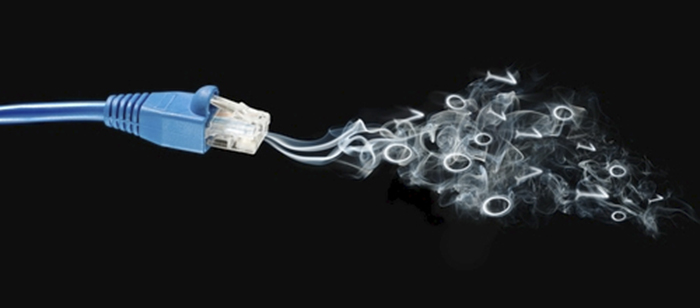
Data exfilteration is the unauthorized leakage of confidential data from a particular system. It is a specific form of intrusion that is particularly hard to catch due to the most common cause: an insider entity who is responsible for the leak. That entity could be a person employed in the organization or a malicious hardware component bought from an unreliable third party. Catching such intrusions, therefore, can be extremely difficult. We describe a framework comprising multiple parameters that are constantly monitored in a system. These parameters can cover the entire stack of the computer architecture, from the hardware up to the application layer. Malicious behavior is detected by different modules monitoring these parameters and an aggregated attack alert is produced if multiple modules detect malicious activity within a short period of time. A more distributed and comprehensive monitoring framework should ensure that designing an attack becomes extremely difficult since an attack must go through multiple detectors present in the system without raising any alarms.
Committee: Drs. Anupam Joshi (chair), Tim Finin, Chintan Patel
]]>
MS Thesis Defense A Multilayer Framework to Catch Data Exfiltration Puneet Sharma 10:30am Wednesday, 5 June 2013, 325b ITE, UMBC Data exfilteration is the unauthorized leakage of...
http://www.csee.umbc.edu/2013/06/ms-defense-a-multilayer-framework-to-catch-data-exfiltration/
https://dev.my.umbc.edu/api/v0/pixel/news/30679/guest@my.umbc.edu/6c3029458e7b688c7afe7970a2d4dd1b/api/pixel
computer-science
cybersecurity
defense
graduate
news
research
talks
Computer Science and Electrical Engineering
https://dev.my.umbc.edu/groups/csee
https://assets3-dev.my.umbc.edu/system/shared/avatars/groups/000/000/099/d117dca133c64bf78a4b7696dd007189/xsmall.png?1314043393
https://assets1-dev.my.umbc.edu/system/shared/avatars/groups/000/000/099/d117dca133c64bf78a4b7696dd007189/original.png?1314043393
https://assets1-dev.my.umbc.edu/system/shared/avatars/groups/000/000/099/d117dca133c64bf78a4b7696dd007189/xxlarge.png?1314043393
https://assets4-dev.my.umbc.edu/system/shared/avatars/groups/000/000/099/d117dca133c64bf78a4b7696dd007189/xlarge.png?1314043393
https://assets3-dev.my.umbc.edu/system/shared/avatars/groups/000/000/099/d117dca133c64bf78a4b7696dd007189/large.png?1314043393
https://assets1-dev.my.umbc.edu/system/shared/avatars/groups/000/000/099/d117dca133c64bf78a4b7696dd007189/medium.png?1314043393
https://assets2-dev.my.umbc.edu/system/shared/avatars/groups/000/000/099/d117dca133c64bf78a4b7696dd007189/small.png?1314043393
https://assets3-dev.my.umbc.edu/system/shared/avatars/groups/000/000/099/d117dca133c64bf78a4b7696dd007189/xsmall.png?1314043393
https://assets3-dev.my.umbc.edu/system/shared/avatars/groups/000/000/099/d117dca133c64bf78a4b7696dd007189/xxsmall.png?1314043393
Computer Science and Electrical Engineering
2
0
true
Sun, 02 Jun 2013 17:39:21 -0400
PhD proposal: Yu Wang, Solving the Physically-Based Modeling and Animation Problem with a Unified Solution
Ph.D. Dissertation Proposal
The Modeling Equation: Solving the Physically-Based
Modeling and Animation Problem with a Unified Solution
Yu Wang
11:00am Monday, June 3, 2013, VANGOGH Lab, ITE 352
Physically-based modeling, i.e. the ability to model sophisticated geometrical shapes and objects in complex physical environments, is an important and popular research area in computer graphics, especially in animation and modeling. Rigid body dynamics studies how solid objects react to external forces without considering collisions (unconstrained), or the interaction between rigid bodies without inter-penetration (constrained). Deformable object modeling accounts for the effects of material properties, external forces, and environment constrains on object deformation. Fluid simulation in computer graphics heavily studies efficient way of solving and/or approximating the physically-based Navier-Stokes equations.
It’s difficult to account for these behaviors from a mechanics point of view, but they have analogous rheological equations. To be exact, rheology studies deformation and flow of matters by accounting for the movements of particles that comprise the material relative to each other. There are three different rheological properties: if we apply definite forces to a material to make it reach a definite deformation, and the deformation goes back when the forces are removed, the material is elastic; if the deformation remains permanent, the material is plastic; or under definite forces, the deformation keeps increase without a limit, the material flows.
I’m proposing to create physically-accurate material behaviors using a generalized formulation based on rheological theories, i.e. kinematic and dynamic properties of rigid bodies, deformable objects, fluid-like materials can be represented by the same formulation with different weights to their rheological properties.
Committee: Drs. Marc Olano (Chair and Advisor), Matthias K. Gobbert (Mathematics and Statistics), Penny Rheingans, Lynn Sparling (Physics), Jian Chen
]]>
Ph.D. Dissertation Proposal The Modeling Equation: Solving the Physically-Based Modeling and Animation Problem with a Unified Solution Yu Wang 11:00am Monday, June 3, 2013, VANGOGH Lab,...
http://www.csee.umbc.edu/2013/06/phd-proposal-yu-wang-solving-the-physically-based-modeling-and-animation-problem-with-a-unified-solution/
https://dev.my.umbc.edu/api/v0/pixel/news/30666/guest@my.umbc.edu/5e65a544991bd4e19b5fdb2db8613a63/api/pixel
computer-science
graduate
news
research
students
Computer Science and Electrical Engineering
https://dev.my.umbc.edu/groups/csee
https://assets3-dev.my.umbc.edu/system/shared/avatars/groups/000/000/099/d117dca133c64bf78a4b7696dd007189/xsmall.png?1314043393
https://assets1-dev.my.umbc.edu/system/shared/avatars/groups/000/000/099/d117dca133c64bf78a4b7696dd007189/original.png?1314043393
https://assets1-dev.my.umbc.edu/system/shared/avatars/groups/000/000/099/d117dca133c64bf78a4b7696dd007189/xxlarge.png?1314043393
https://assets4-dev.my.umbc.edu/system/shared/avatars/groups/000/000/099/d117dca133c64bf78a4b7696dd007189/xlarge.png?1314043393
https://assets3-dev.my.umbc.edu/system/shared/avatars/groups/000/000/099/d117dca133c64bf78a4b7696dd007189/large.png?1314043393
https://assets1-dev.my.umbc.edu/system/shared/avatars/groups/000/000/099/d117dca133c64bf78a4b7696dd007189/medium.png?1314043393
https://assets2-dev.my.umbc.edu/system/shared/avatars/groups/000/000/099/d117dca133c64bf78a4b7696dd007189/small.png?1314043393
https://assets3-dev.my.umbc.edu/system/shared/avatars/groups/000/000/099/d117dca133c64bf78a4b7696dd007189/xsmall.png?1314043393
https://assets3-dev.my.umbc.edu/system/shared/avatars/groups/000/000/099/d117dca133c64bf78a4b7696dd007189/xxsmall.png?1314043393
Computer Science and Electrical Engineering
5
1
true
Sat, 01 Jun 2013 13:17:19 -0400
MS defense: Extracting cybersecurity related entities, terms and concepts from text

MS Thesis Defense
Extracting cybersecurity related entities,
terms and concepts from text
Ravendar Lal
10:30am Tuesday, 28 May 2013, ITE325b, UMBC
Securing computers, data, cyber-physical systems and networks is a growing problem as society's dependence on them increases while they remain vulnerable to attacks by both criminals and rival nation states. Creating 'situationally aware' computer systems that defend against new "zero day" software vulnerabilities requires them to automatically integrate and use new security-related data from a wide variety of sources. One important source is information found in text from security bulletins, vulnerability databases, news reports, cybersecurity blogs and Internet chat rooms.
We describe an information extraction framework to extract cybersecurity-relevant entities, terms and concepts from text. We use a Conditional Random Field based model trained on manually annotated data to identify and extract the relevant terms. These are then mapped to a previously developed OWL ontology and represented as RDF linked data. We evaluated the system's performance by comparing its results on test data from the National Vulnerability Database and security bulletins from Microsoft and Adobe.
Committee: Drs. Tim Finin (Advisor), Anupam Joshi, Tim Oates
]]>
MS Thesis Defense Extracting cybersecurity related entities, terms and concepts from text Ravendar Lal 10:30am Tuesday, 28 May 2013, ITE325b, UMBC Securing computers, data,...
http://www.csee.umbc.edu/2013/05/ms-defense-extracting-cybersecurity-related-entities-terms-and-concepts-from-text/
https://dev.my.umbc.edu/api/v0/pixel/news/30345/guest@my.umbc.edu/842d0a44fbd43e51abecae6094d94dd7/api/pixel
computer-science
cybersecurity
defense
news
research
talks
Computer Science and Electrical Engineering
https://dev.my.umbc.edu/groups/csee
https://assets3-dev.my.umbc.edu/system/shared/avatars/groups/000/000/099/d117dca133c64bf78a4b7696dd007189/xsmall.png?1314043393
https://assets1-dev.my.umbc.edu/system/shared/avatars/groups/000/000/099/d117dca133c64bf78a4b7696dd007189/original.png?1314043393
https://assets1-dev.my.umbc.edu/system/shared/avatars/groups/000/000/099/d117dca133c64bf78a4b7696dd007189/xxlarge.png?1314043393
https://assets4-dev.my.umbc.edu/system/shared/avatars/groups/000/000/099/d117dca133c64bf78a4b7696dd007189/xlarge.png?1314043393
https://assets3-dev.my.umbc.edu/system/shared/avatars/groups/000/000/099/d117dca133c64bf78a4b7696dd007189/large.png?1314043393
https://assets1-dev.my.umbc.edu/system/shared/avatars/groups/000/000/099/d117dca133c64bf78a4b7696dd007189/medium.png?1314043393
https://assets2-dev.my.umbc.edu/system/shared/avatars/groups/000/000/099/d117dca133c64bf78a4b7696dd007189/small.png?1314043393
https://assets3-dev.my.umbc.edu/system/shared/avatars/groups/000/000/099/d117dca133c64bf78a4b7696dd007189/xsmall.png?1314043393
https://assets3-dev.my.umbc.edu/system/shared/avatars/groups/000/000/099/d117dca133c64bf78a4b7696dd007189/xxsmall.png?1314043393
Computer Science and Electrical Engineering
0
0
true
Fri, 24 May 2013 22:26:44 -0400
Five COEIT Students Selected as Federal CyberCorps Scholars

Five students in UMBC's College of Engineering and Information Technology have been selected for major scholarships to pursue studies in cybersecurity-related fields under UMBC's participation in the National Science Foundation's Scholarship for Service (SFS) Federal CyberCorps program. As SFS Scholars, students receive full tuition, fees, annual reimbursement of professional development expenses ($3,000), a nine-month stipend ($20,000 for undergraduates, $25,000 for MS/MPS students, and $30,000 for PhD students) for up to two years (three years for PhD), and assistance with federal cybersecurity internships and career placement.
The awardees for AY13-14 are:
Nathan Price, MS (CMPE)
Punlada Muangrat, BS (IS)
Shannon Mcpherson, MPS (CYBR)
Alex Cooke, BS (IS)
Denis Danilin, MS (IS)
These new awardees will join existing UMBC SFS Scholars Oliver Kubik (BS, CMSC), Mary Mathews (PhD, CMSC), Brendan Masiar (MPS, CYBR) and Brandyn Schult (MPS, CYBR).
The CyberCorps program produces highly-qualified professionals to meet the United States government's increasing need to protect American's cyber infrastructure. While in the program at UMBC, SFS CyberCorps Scholars participate in special SFS program activities, have opportunities to engage in mentored research opportunities both at UMBC and its partners from industry and government, and must complete a paid summer internship for the federal government. Upon graduation, each student must work for the government (for pay) for one year for each year of scholarship received. Drs. Alan Sherman and Richard Forno direct the program under a five-year $2.5 million NSF grant received in 2012.
NOTE: We expect to have additional SFS slots coming available in January 2014. Applications for SFS support beginning in the Spring 2014 semester will be accepted through 12PM on Friday, 15 November 2013. All levels of study are welcome to apply — however, students must be admitted to (or already enrolled at) UMBC first before applying for SFS.
For information about SFS (including application information and instructions) and other US government-related cybersecurity scholarships available, please visit cisa.umbc.edu.
]]>
Five students in UMBC's College of Engineering and Information Technology have been selected for major scholarships to pursue studies in cybersecurity-related fields under UMBC's participation in...
http://www.csee.umbc.edu/2013/05/five-coeit-students-selected-as-federal-cybercorps-scholars/
https://dev.my.umbc.edu/api/v0/pixel/news/30224/guest@my.umbc.edu/b420e0c79a64a1fd7d4c03d66554108c/api/pixel
cybersecurity
news
Computer Science and Electrical Engineering
https://dev.my.umbc.edu/groups/csee
https://assets3-dev.my.umbc.edu/system/shared/avatars/groups/000/000/099/d117dca133c64bf78a4b7696dd007189/xsmall.png?1314043393
https://assets1-dev.my.umbc.edu/system/shared/avatars/groups/000/000/099/d117dca133c64bf78a4b7696dd007189/original.png?1314043393
https://assets1-dev.my.umbc.edu/system/shared/avatars/groups/000/000/099/d117dca133c64bf78a4b7696dd007189/xxlarge.png?1314043393
https://assets4-dev.my.umbc.edu/system/shared/avatars/groups/000/000/099/d117dca133c64bf78a4b7696dd007189/xlarge.png?1314043393
https://assets3-dev.my.umbc.edu/system/shared/avatars/groups/000/000/099/d117dca133c64bf78a4b7696dd007189/large.png?1314043393
https://assets1-dev.my.umbc.edu/system/shared/avatars/groups/000/000/099/d117dca133c64bf78a4b7696dd007189/medium.png?1314043393
https://assets2-dev.my.umbc.edu/system/shared/avatars/groups/000/000/099/d117dca133c64bf78a4b7696dd007189/small.png?1314043393
https://assets3-dev.my.umbc.edu/system/shared/avatars/groups/000/000/099/d117dca133c64bf78a4b7696dd007189/xsmall.png?1314043393
https://assets3-dev.my.umbc.edu/system/shared/avatars/groups/000/000/099/d117dca133c64bf78a4b7696dd007189/xxsmall.png?1314043393
Computer Science and Electrical Engineering
23
0
true
Thu, 23 May 2013 09:16:44 -0400
Thu, 23 May 2013 09:16:44 -0400
Artemis Project summer computing camp for rising 9th grade girls
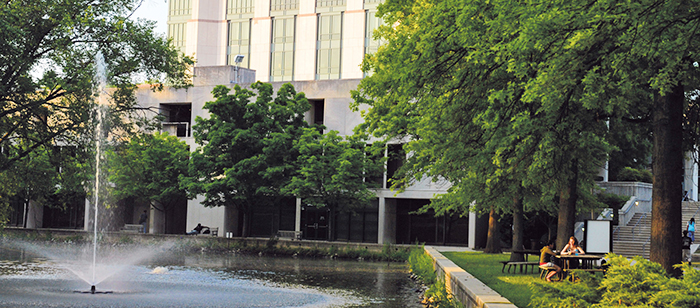
Meet the 2013 Artemis Staff
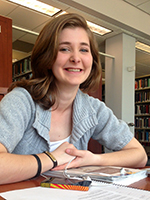
Rose Carignan is majoring in Computer Engineering
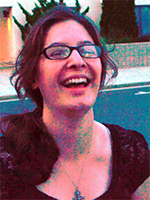
Catherine Rossbach is a Math/Physics major with a minor in Computer Science

Shari Kurland is majoring in Computer Science

Neena Paul is majoring in Computer Science
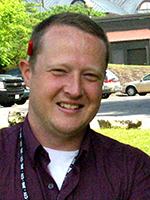
Shawn Lupoli is an lecturer in Computer Science
The Artemis Project is a five-week summer program held at UMBC for rising 9th grade girls interested in computing. Artemis 2013 will be in session from June 24 to July 26. Camp will be held from 9:00am-3:00pm Monday through Friday on the UMBC campus. The Artemis Project program originated at Brown University in 1996 and is being brought to UMBC by Professor Marie desJardins through her contact with Amy Greenwald at Brown..
Creative and motivated girls who are curious about mathematics, science or computing and are entering ninth grade in the fall of 2013 can apply. No prior computer experience is necessary or expected.
UMBC's Artemis Project program will be led and taught by four accomplished undergraduate women from UMBC's Department of Computer Science and Electrical Engineering. Shawn Lupoli, who is a lecturer in UMBC's Computer Science program, is the faculty advisor. The Artemis staff are diverse and have a wealth of knowledge and experience in computer science, computer engineering, mathematics and the sciences.
Participants will spend a part of each day learning about different topics in computer science such as computer architecture, cryptology, artificial intelligence and robotics. Students will spend time in the computer lab developing programs in Alice and Python and using applications like Adobe Photoshop and Dreamweaver.
Over the course of the five weeks the group will go on several field trips, listen to and interact with guest speakers to hear about their jobs or research and participate in fun outdoor activities. The field trips will take place every Friday to places like NASA's Goddard Space Flight Center, the Baltimore Science Center and the National Cryptologic Museum. At the end of the program, students will have a day where they can showcase the work they have done for their families and members of the UMBC community.
By the end of the program, students will have had a rigorous introduction to computer science and engineering and applications of technology. They will have learned to think more conceptually and have practical skills that they can carry with them wherever their future leads.
The fee for the camp is $1000, which covers five weeks of lessons, field trips, lunch, and a t-shirt for each student. Financial aid is available. You can find information and application forms on the 2013 UMBC Artemis site.
For more information you can contact one of the people involved i.n this summer's camp. The coordinators are all women who are undergraduate studnets who are studying either computer science or computer engineering.
- Rose Carignan, Sorry, you need javascript to view this email address.
- Shari Kurland, Sorry, you need javascript to view this email address.
- Neena Paul, Sorry, you need javascript to view this email address.
- Catherine Rossbach, Sorry, you need javascript to view this email address.
The faculty advisor for the 2013 Artemis Project camp is:
- Shawn Lupoli, Sorry, you need javascript to view this email address.
]]>
Meet the 2013 Artemis Staff Rose Carignan is majoring in Computer Engineering Catherine Rossbach is a Math/Physics major with a minor in Computer Science Shari Kurland is majoring in...
http://www.csee.umbc.edu/2013/05/artemis-project-summer-computing-camp-for-rising-9th-grade-girls/
https://dev.my.umbc.edu/api/v0/pixel/news/29844/guest@my.umbc.edu/3f6c87936fb59b290ea8d1d1908b57db/api/pixel
education
news
teaching-innovation
Computer Science and Electrical Engineering
https://dev.my.umbc.edu/groups/csee
https://assets3-dev.my.umbc.edu/system/shared/avatars/groups/000/000/099/d117dca133c64bf78a4b7696dd007189/xsmall.png?1314043393
https://assets1-dev.my.umbc.edu/system/shared/avatars/groups/000/000/099/d117dca133c64bf78a4b7696dd007189/original.png?1314043393
https://assets1-dev.my.umbc.edu/system/shared/avatars/groups/000/000/099/d117dca133c64bf78a4b7696dd007189/xxlarge.png?1314043393
https://assets4-dev.my.umbc.edu/system/shared/avatars/groups/000/000/099/d117dca133c64bf78a4b7696dd007189/xlarge.png?1314043393
https://assets3-dev.my.umbc.edu/system/shared/avatars/groups/000/000/099/d117dca133c64bf78a4b7696dd007189/large.png?1314043393
https://assets1-dev.my.umbc.edu/system/shared/avatars/groups/000/000/099/d117dca133c64bf78a4b7696dd007189/medium.png?1314043393
https://assets2-dev.my.umbc.edu/system/shared/avatars/groups/000/000/099/d117dca133c64bf78a4b7696dd007189/small.png?1314043393
https://assets3-dev.my.umbc.edu/system/shared/avatars/groups/000/000/099/d117dca133c64bf78a4b7696dd007189/xsmall.png?1314043393
https://assets3-dev.my.umbc.edu/system/shared/avatars/groups/000/000/099/d117dca133c64bf78a4b7696dd007189/xxsmall.png?1314043393
Computer Science and Electrical Engineering
3
0
true
Mon, 20 May 2013 11:41:04 -0400
Mon, 20 May 2013 11:41:04 -0400
PhD defense: Quantum Cascade Laser Arrays for Standoff Photoacoustic Chemical Detection, 5/17
Ph.D. Dissertation Defense
High Power Mid-infrared Quantum Cascade Laser Array
for Standoff Photoacoustic Chemical Detection
Xing Chen
1:00-3:00pm Friday, 17 May 17 2013, TRC CASPR Conference Room
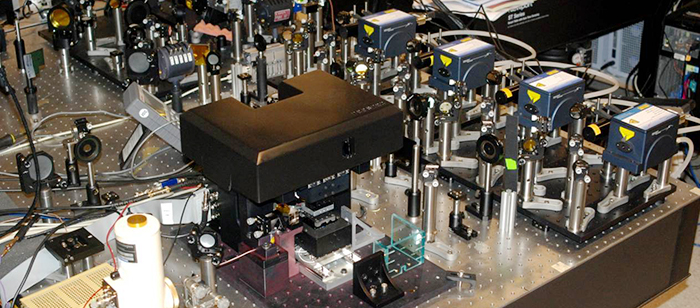
Quantum cascade lasers (QCLs) are compact, portable, powerful semiconductor laser sources with emission wavelengths from mid-infrared (mid-IR) to terahertz (THz) regions of the electromagnetic spectrum. Mid-IR (i.e. wavelengths from 3 to 20 µm) QCLs are of great importance in a wide range of applications such as trace gas sensing, environmental monitoring, free space communication, medical diagnosis and so on. High power QCLs are particularly important to applications such as infrared counter measure (IRCM) and standoff chemical detections. In such applications, the system performances critically depend on the amount of power a QCL can produce. This dissertation includes two major studies: the first part of the dissertation includes design, fabrication and characterization of high power mid-IR QCL arrays; the second part involves standoff chemical detection using QCLs as laser sources and photoacoustic effect as sensing technologies.
In the first part of the dissertation, we design, fabricate and characterize multi-emitter QCL arrays consisting of multiple narrow laser stripes. Simulation results indicate that the proposed multi-emitter laser arrays present much better thermal performance than a broad area laser device, while having the same thermal management ability as a single narrow stripe device. We have successfully fabricated edge emitting and surface emitting QCL arrays with 5 and 16 emitters. Experimental results show that, with the same laser cavity length, a QCL array with 5 emitters produces over 3 times more power than a single emitter laser device. QCL array with 16 emitters generates about 4 W output peak power at wavelength ~7.9 µm. We have also fabricated surface emitting QCL arrays and demonstrated single mode emission.
The second part of the dissertation involves using high power mid-IR QCLs to perform standoff chemical detections based on photoacoustic sensing technologies. Photoacoustic effect is a light-matter interaction effect that involves generation of acoustic waves when a medium absorbs electromagnetic energy from light. It has been known as a sensitive spectroscopic technique for chemical sensing.
Standoff photoacoustic chemical detection with distance more than 41 feet using quantum cascade laser operated at relatively low power, less than 40 mW, is demonstrated. A simplified theoretical model is developed for pulsed laser photoacoustic effect in open-air environment. The standoff photoacoustic signal can be calibrated as a function of different parameters such as laser pulse energy, gas vapor concentration and detection distance. The results yield good agreements with theoretical model. Standoff detection of solid phase explosive chemicals has also been demonstrated by the use of an ultra-sensitive microphone and acoustic reflector. More than 8 feet detection distance is obtained for standoff photoacoustic sensing of explosives.
Committee: Drs. Fow-Sen Choa (Chair), Brian Cullum, Yordan Kostov, Ryan Robucci, Chen-Chia Wang and Li Yan
]]>
Ph.D. Dissertation Defense High Power Mid-infrared Quantum Cascade Laser Array for Standoff Photoacoustic Chemical Detection Xing Chen 1:00-3:00pm Friday, 17 May 17 2013, TRC CASPR...
http://www.csee.umbc.edu/2013/05/13936/
https://dev.my.umbc.edu/api/v0/pixel/news/29563/guest@my.umbc.edu/f16a7877838a77217133f681c0cea497/api/pixel
defense
electrical-engineering
news
research
talks
Computer Science and Electrical Engineering
https://dev.my.umbc.edu/groups/csee
https://assets3-dev.my.umbc.edu/system/shared/avatars/groups/000/000/099/d117dca133c64bf78a4b7696dd007189/xsmall.png?1314043393
https://assets1-dev.my.umbc.edu/system/shared/avatars/groups/000/000/099/d117dca133c64bf78a4b7696dd007189/original.png?1314043393
https://assets1-dev.my.umbc.edu/system/shared/avatars/groups/000/000/099/d117dca133c64bf78a4b7696dd007189/xxlarge.png?1314043393
https://assets4-dev.my.umbc.edu/system/shared/avatars/groups/000/000/099/d117dca133c64bf78a4b7696dd007189/xlarge.png?1314043393
https://assets3-dev.my.umbc.edu/system/shared/avatars/groups/000/000/099/d117dca133c64bf78a4b7696dd007189/large.png?1314043393
https://assets1-dev.my.umbc.edu/system/shared/avatars/groups/000/000/099/d117dca133c64bf78a4b7696dd007189/medium.png?1314043393
https://assets2-dev.my.umbc.edu/system/shared/avatars/groups/000/000/099/d117dca133c64bf78a4b7696dd007189/small.png?1314043393
https://assets3-dev.my.umbc.edu/system/shared/avatars/groups/000/000/099/d117dca133c64bf78a4b7696dd007189/xsmall.png?1314043393
https://assets3-dev.my.umbc.edu/system/shared/avatars/groups/000/000/099/d117dca133c64bf78a4b7696dd007189/xxsmall.png?1314043393
Computer Science and Electrical Engineering
1
0
true
Thu, 16 May 2013 12:01:02 -0400
Google and NASA team to establish a quantum AI research lab
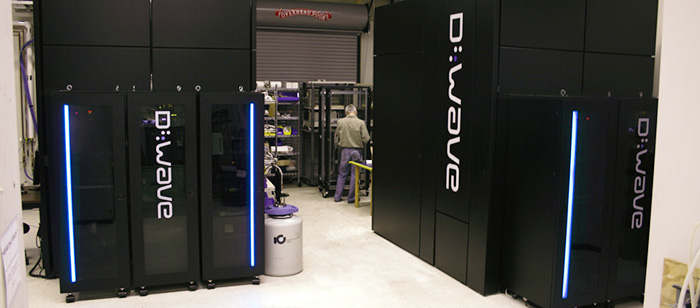
Google announced that it will establish a Quantum Artificial Intelligence Lab with NASA to study the use of quantum computing for machne lerning in support of problems including web search, speech recognition, planning and scheduling, search for exoplanets, and support operations in mission control centers.
"We believe quantum computing may help solve some of the most challenging computer science problems, particularly in machine learning. Machine learning is all about building better models of the world to make more accurate predictions. If we want to cure diseases, we need better models of how they develop. If we want to create effective environmental policies, we need better models of what’s happening to our climate. And if we want to build a more useful search engine, we need to better understand spoken questions and what’s on the web so you get the best answer."
The lab will use a D-Wave Systems computer and share it with external researchers via NASA's USRA. According to D-wave Systems, "Installation has already begun at NASA's Ames Research Center in Moffett Field, California, and the system is expected to be available to researchers during Q3."
"As part of the selection process, Google, NASA and USRA created a series of benchmark and acceptance tests that the new D-Wave 512-qubit system was required to pass before the installation at NASA Ames could proceed. In all cases, the D-Wave Two system met or exceeded the required performance specifications, in some cases by a large margin."
If you are interested in finding out more about quantum computing, you might talk to two members of the CSEE faculty who work on the topic: Professors Sam Lomonaco and Joel Morris.
]]>
Google announced that it will establish a Quantum Artificial Intelligence Lab with NASA to study the use of quantum computing for machne lerning in support of problems including web search, speech...
http://www.csee.umbc.edu/2013/05/google-and-nasa-team-to-establish-a-quantum-ai-research-lab/
https://dev.my.umbc.edu/api/v0/pixel/news/29539/guest@my.umbc.edu/a2347f91522c6edc6dd40d89e5f2c040/api/pixel
news
Computer Science and Electrical Engineering
https://dev.my.umbc.edu/groups/csee
https://assets3-dev.my.umbc.edu/system/shared/avatars/groups/000/000/099/d117dca133c64bf78a4b7696dd007189/xsmall.png?1314043393
https://assets1-dev.my.umbc.edu/system/shared/avatars/groups/000/000/099/d117dca133c64bf78a4b7696dd007189/original.png?1314043393
https://assets1-dev.my.umbc.edu/system/shared/avatars/groups/000/000/099/d117dca133c64bf78a4b7696dd007189/xxlarge.png?1314043393
https://assets4-dev.my.umbc.edu/system/shared/avatars/groups/000/000/099/d117dca133c64bf78a4b7696dd007189/xlarge.png?1314043393
https://assets3-dev.my.umbc.edu/system/shared/avatars/groups/000/000/099/d117dca133c64bf78a4b7696dd007189/large.png?1314043393
https://assets1-dev.my.umbc.edu/system/shared/avatars/groups/000/000/099/d117dca133c64bf78a4b7696dd007189/medium.png?1314043393
https://assets2-dev.my.umbc.edu/system/shared/avatars/groups/000/000/099/d117dca133c64bf78a4b7696dd007189/small.png?1314043393
https://assets3-dev.my.umbc.edu/system/shared/avatars/groups/000/000/099/d117dca133c64bf78a4b7696dd007189/xsmall.png?1314043393
https://assets3-dev.my.umbc.edu/system/shared/avatars/groups/000/000/099/d117dca133c64bf78a4b7696dd007189/xxsmall.png?1314043393
Computer Science and Electrical Engineering
0
0
true
Thu, 16 May 2013 09:08:54 -0400