PhD proposal: A Semantic Resolution Framework for Manufacturing Capability Data Integration
Ph.D. Dissertation Proposal
A Semantic Resolution Framework for
Manufacturing Capability Data Integration
10:30am Tuesday, May 14, 2013, ITE 346, UMBC
Yan Kang
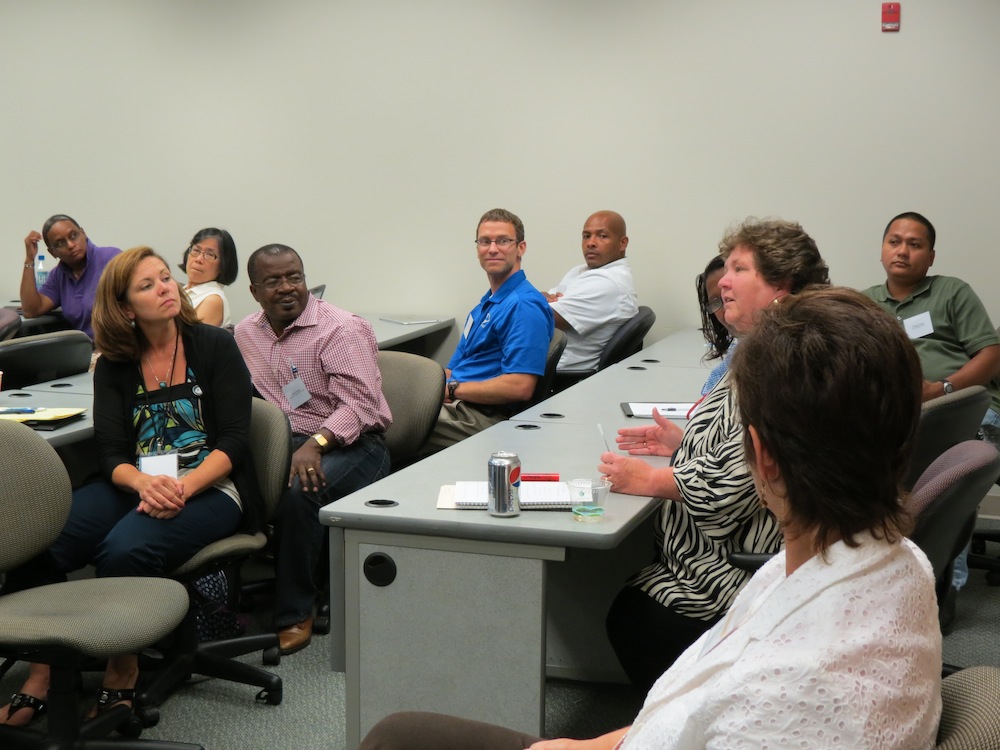
Building flexible manufacturing supply chains requires interoperable and accurate manufacturing service capability (MSC) information of all supply chain participants. Today, MSC information, which is typically published either on the supplier’s web site or registered at an e-marketplace portal, has been shown to fall short of the interoperability and accuracy requirements. This issue can be addressed by annotating the MSC information using shared ontologies. However, ontology-based approaches face two main challenges: 1) lack of an effective way to transform a large amount of complex MSC information hidden in the web sites of manufacturers into a representation of shared semantics and 2) difficulties in the adoption of ontology-based approaches by the supply chain managers and users because of their unfamiliar of the syntax and semantics of formal ontology languages such as OWL and RDF and the lack of tools friendly for inexperienced users.
The objective of our research is to address the main challenges of ontology-based approaches by developing an innovative approach that can effectively extract a large volume of manufacturing capability instance data, accurately annotate these instance data with semantics and integrate these data under a formal manufacturing domain ontology. To achieve the objective, a Semantic Resolution Framework is proposed to guides every step of the manufacturing capability data integration process and to resolve semantic heterogeneity with minimal human supervision. The key innovations of this framework includes 1) three assisting systems, including a Triple Store Extractor, a Triple Store to Ontology Mapper and a Ontology-based Extensible Dynamic Form, that can efficiently and effectively perform the automatic processes of extracting, annotating and integrating manufacturing capability data.; 2) a Semantic Resolution Knowledge Base (SR-KB) that incrementally filled with, among other things, rules/patterns learned from errors. This SR-KB together with an Upper Manufacturing Domain Ontology (UMO) provide knowledge for resolving semantic differences in the integration process; 3) an evolution mechanism that enables SR-KB to continuously improve itself and gradually reduce the human involvement by learning from mistakes.
Committee: Yun Peng (chair), Charles Nicholas, Tim Finin, Yaacov Yesha, Boonserm Kulvatunyou (NIST)
]]>
Ph.D. Dissertation Proposal A Semantic Resolution Framework for Manufacturing Capability Data Integration 10:30am Tuesday, May 14, 2013, ITE 346, UMBC Yan Kang Building flexible...
http://www.csee.umbc.edu/2013/05/phd-proposal-a-semantic-resolution-framework-for-manufacturing-capability-data-integration/
https://dev.my.umbc.edu/api/v0/pixel/news/29402/guest@my.umbc.edu/61bd79367c125d7bd4157e7a3bcfdce5/api/pixel
computer-science
graduate
news
research
talks
Computer Science and Electrical Engineering
https://dev.my.umbc.edu/groups/csee
https://assets3-dev.my.umbc.edu/system/shared/avatars/groups/000/000/099/d117dca133c64bf78a4b7696dd007189/xsmall.png?1314043393
https://assets1-dev.my.umbc.edu/system/shared/avatars/groups/000/000/099/d117dca133c64bf78a4b7696dd007189/original.png?1314043393
https://assets1-dev.my.umbc.edu/system/shared/avatars/groups/000/000/099/d117dca133c64bf78a4b7696dd007189/xxlarge.png?1314043393
https://assets4-dev.my.umbc.edu/system/shared/avatars/groups/000/000/099/d117dca133c64bf78a4b7696dd007189/xlarge.png?1314043393
https://assets3-dev.my.umbc.edu/system/shared/avatars/groups/000/000/099/d117dca133c64bf78a4b7696dd007189/large.png?1314043393
https://assets1-dev.my.umbc.edu/system/shared/avatars/groups/000/000/099/d117dca133c64bf78a4b7696dd007189/medium.png?1314043393
https://assets2-dev.my.umbc.edu/system/shared/avatars/groups/000/000/099/d117dca133c64bf78a4b7696dd007189/small.png?1314043393
https://assets3-dev.my.umbc.edu/system/shared/avatars/groups/000/000/099/d117dca133c64bf78a4b7696dd007189/xsmall.png?1314043393
https://assets3-dev.my.umbc.edu/system/shared/avatars/groups/000/000/099/d117dca133c64bf78a4b7696dd007189/xxsmall.png?1314043393
Computer Science and Electrical Engineering
1
0
true
Mon, 13 May 2013 21:31:40 -0400
CE21-Maryland Summit raises awareness about need for more women and minority Computer Science majors
You don’t know until you try.
This is what the leaders behind Computing Education for the 21st Century (CE21-Maryland) have figured out. Drs. Marie desJardins, Penny Rheingans, and Susan Martin say that removing the mystery and misconceptions surrounding Computer Science is the key to getting more women and minorities to purse careers in the field.
Historically, Computer Science has been dominated by white males. Just take a look at the numbers. In 2010-11 only 12.7% of computing degrees went to women. A mere 4.6% of Computer Science graduates were African Americans and 6.5% were Hispanics.
 It’s not that women and minorities are no good at Computer Science. It’s that they often think they’re no good. When you walk into a classroom and no one looks like you, it’s easy to feel like you don’t belong.
Dr. Marie desJardins, a CSEE professor, gives one part of the explanation for this trend. “Youth gaming culture is really dominating Computer Science majors,” she says. Boys who love video games naturally gravitate to Computer Science in college. Women aren’t typically avid gamers. Instead, they tend to gravitate towards social careers–not something they associate with the field of Computer Science.
Herein lies the problem: most of us don’t know what computer scientists actually do. “There are some iconic careers that we understand,” says CSEE Professor Penny Rheingans. “We know what doctors do. We know what lawyers do. But, nobody knows what Computer Scientists do.”
Only by experiencing the discipline firsthand will kids understand if the field is for them. Take Dr. Rheingans, who was headed down the path to becoming a lawyer when she took a Computer Science class: “And I fell in love,” she says. It was hard and sometimes frustrating, but that challenge got her hooked. “Not enough students have the opportunity to experience that.”
 Even if women and minorities want to take Computer Science, they don’t always have the opportunity in high school. Throughout Maryland, inconsistent curriculum and spotty availability has made it hard for students to be introduced to the subject.
Computer Science is not a graduation requirement, nor is it even offered at every Maryland high school. Most schools offer it as an elective like ceramics or woodshop. Since the class doesn’t count for credit, those students– who aren’t otherwise encouraged by parents, or a longstanding love of computers–don’t have much incentive to take it.
Computers are becoming an increasingly ubiquitous part of our lives. As such, Dr. desJardins thinks that Computer Science should be a requirement for high school students. “We make them take Government, Math, Science, and English. But, we don’t make them take Computer Science—but it’s the fastest growing job market of any discipline,” she says. “I think it’s morally wrong that we’re not teaching children how to master this technology.”
In March 2012, Drs. desJardins, Rheingans, and Martin formed CE21-Maryland to get a deeper understanding of the shortcomings of Computer Science education in Maryland, and to help solve this problem. The group is supported by NSF’s Computing Education for the 21st Century (CE21) program.
 Last August, CE21-Maryland held its first mini-summit to raise awareness of these issues among Computer Science high school teachers across the state. The summit successfully helped establish connections among teachers who share this passion for change. “Having a community is absolutely important to helping empower people,” says Dr. Rheingans, who has proven the importance of community first-hand as the director of UMBC’s Center for Women in Technology (CWIT).
On May 17, CE21-Maryland will hold its second Summit for Computing Education. Teachers, administrators, legislators, and industry leaders will gather at UMBC to explore these issues, network, and discuss plans for increasing the number and diversity of students studying Computer Science in our state.
The summit will include a college student panel, where current computing majors will share their journey to becoming Computer Science majors. One session will take a look at the AP CS Principles course, a proposed AP course being developed by the College Board and National Science Foundation, with pilots offered around the country.
Dr. desJardins realizes that recognizing the Computer Science curriculum problem is a lot easier than fixing it. “It’s a chicken or the egg problem,” she says. Regulating Computer Science classes across the state can’t happen until teachers are trained to teach it. Training is not likely to happen unless enrollment increases. CE21-Maryland envisions a two-pronged approach to train teachers and make connections with legislators who can make a difference.
The women behind CE21-Maryland are working hard to change the compostion of Computer Science majors. But, why?
“First of all it’s a numbers problem. Second of all it’s a diversity problem,” explains Dr. Rheingans. By 2018, nearly 40,000 new computing-related jobs will be available in Maryland each year. But, only about 2,000 bachelor’s degrees in computing and information systems are awarded by Maryland institutions annually. Recruiting more women and minorities to the major will help satisfy the huge need for computing majors in the future.
But, perhaps more importantt is the chance to add diversity to the next generation of technological problem-solvers. “Different perspectives leads you to stronger, more robust solutions,” she says.
]]>
You don’t know until you try. This is what the leaders behind Computing Education for the 21st Century (CE21-Maryland) have figured out. Drs. Marie desJardins, Penny Rheingans, and Susan Martin...
http://www.csee.umbc.edu/2013/05/ce21-maryland-summit-raises-awareness-about-need-for-more-women-and-minority-computer-science-majors/
https://dev.my.umbc.edu/api/v0/pixel/news/29356/guest@my.umbc.edu/fd3bf21748a2648e6b295c8892e1a277/api/pixel
computer-science
events
news
Computer Science and Electrical Engineering
https://dev.my.umbc.edu/groups/csee
https://assets3-dev.my.umbc.edu/system/shared/avatars/groups/000/000/099/d117dca133c64bf78a4b7696dd007189/xsmall.png?1314043393
https://assets1-dev.my.umbc.edu/system/shared/avatars/groups/000/000/099/d117dca133c64bf78a4b7696dd007189/original.png?1314043393
https://assets1-dev.my.umbc.edu/system/shared/avatars/groups/000/000/099/d117dca133c64bf78a4b7696dd007189/xxlarge.png?1314043393
https://assets4-dev.my.umbc.edu/system/shared/avatars/groups/000/000/099/d117dca133c64bf78a4b7696dd007189/xlarge.png?1314043393
https://assets3-dev.my.umbc.edu/system/shared/avatars/groups/000/000/099/d117dca133c64bf78a4b7696dd007189/large.png?1314043393
https://assets1-dev.my.umbc.edu/system/shared/avatars/groups/000/000/099/d117dca133c64bf78a4b7696dd007189/medium.png?1314043393
https://assets2-dev.my.umbc.edu/system/shared/avatars/groups/000/000/099/d117dca133c64bf78a4b7696dd007189/small.png?1314043393
https://assets3-dev.my.umbc.edu/system/shared/avatars/groups/000/000/099/d117dca133c64bf78a4b7696dd007189/xsmall.png?1314043393
https://assets3-dev.my.umbc.edu/system/shared/avatars/groups/000/000/099/d117dca133c64bf78a4b7696dd007189/xxsmall.png?1314043393
Computer Science and Electrical Engineering
1
0
true
Sun, 12 May 2013 21:38:55 -0400
Thu, 16 May 2013 12:15:55 -0400
PhD proposal: Training Neural Networks and Recurrent Deep Learning Machines
Ph.D. Dissertation Proposal
Convexification/Deconvexification for Training Neural
Networks and Recurrent Deep Learning Machines
Yichuan Gui
9:30am Thursday, 16 May 2013, ITE 325b, UMBC
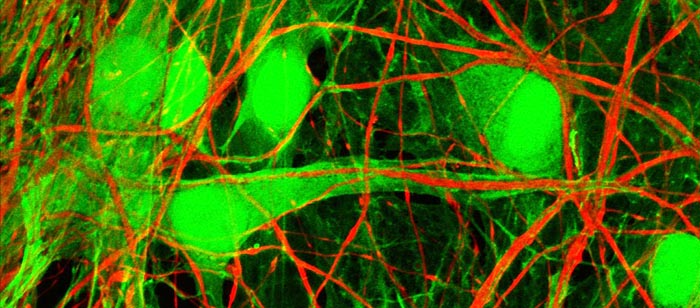
The development of artificial neural networks (ANNs) has been impeded by the local minimum problem for decades. One principle goal of this proposal focuses on devel- oping a methodology to alleviate the local minimum problem in training ANNs. A new training criterion called the normalized risk-averting error (NRAE) criterion is proposed to avoid nonglobal local minima in training multilayer perceptrons (MLPs) and deep learning machines (DLMs). Training methods based on the NRAE crite- rion are developed to achieve global or near-global minima with satisfactory learning errors and generalization capabilities.
Many advantages of DLMs have been analyzed in recent research works of ANNs, and effective architectures and training methods have been explored from those works. However, feedback structures are commonly ignored in previous research of DLMs. The next objective of this proposal is to develop recurrent deep learning machines (RDLMs) through adding feedback structures to deep architectures in DLMs. De- signing and testing works are expected to illustrate the efficiency and effectiveness of RDLMs with feedback structures comparing to feedforward DLMs.
Preliminary works presented in this proposal demonstrate the effectiveness of NRAE-based training methods in avoid nonglobal local minima for training MLPs. Methods based on the NRAE criterion will be tested in training DLMs, and the de- veloping and testing of RDLMs will be performed in subsequent works. Moreover, an approach that combining both the NRAE criterion and RDLMs will also be explored to minimize the training error and maximize the generalization capability. Contribu- tions of this proposed research are expected as (1) provide an effective way to avoid local minimum problem in training MLPs and DLMs with satisfactory performance; (2) develop a new type of RDLMs with feedback connections for training large-scale dataset efficiently; (3) apply the NRAE criterion to train RDLMs for minimizing training errors and maximizing generalization capabilities. Those contributions are expected to significantly boost research interests in ANNs' fields and stimulate new practical applications in the future.
Committee: James Lo (mentor), Yun Peng (mentor), Tim Finin, Tim Oates, Charles Nicholas
]]>
Ph.D. Dissertation Proposal Convexification/Deconvexification for Training Neural Networks and Recurrent Deep Learning Machines Yichuan Gui 9:30am Thursday, 16 May 2013, ITE 325b, UMBC...
http://www.csee.umbc.edu/2013/05/phd-proposal-training-neural-networks-and-recurrent-deep-learning-machines/
https://dev.my.umbc.edu/api/v0/pixel/news/29285/guest@my.umbc.edu/4cb3779e190eb3112965497ef5015a3b/api/pixel
computer-science
defense
news
talks
Computer Science and Electrical Engineering
https://dev.my.umbc.edu/groups/csee
https://assets3-dev.my.umbc.edu/system/shared/avatars/groups/000/000/099/d117dca133c64bf78a4b7696dd007189/xsmall.png?1314043393
https://assets1-dev.my.umbc.edu/system/shared/avatars/groups/000/000/099/d117dca133c64bf78a4b7696dd007189/original.png?1314043393
https://assets1-dev.my.umbc.edu/system/shared/avatars/groups/000/000/099/d117dca133c64bf78a4b7696dd007189/xxlarge.png?1314043393
https://assets4-dev.my.umbc.edu/system/shared/avatars/groups/000/000/099/d117dca133c64bf78a4b7696dd007189/xlarge.png?1314043393
https://assets3-dev.my.umbc.edu/system/shared/avatars/groups/000/000/099/d117dca133c64bf78a4b7696dd007189/large.png?1314043393
https://assets1-dev.my.umbc.edu/system/shared/avatars/groups/000/000/099/d117dca133c64bf78a4b7696dd007189/medium.png?1314043393
https://assets2-dev.my.umbc.edu/system/shared/avatars/groups/000/000/099/d117dca133c64bf78a4b7696dd007189/small.png?1314043393
https://assets3-dev.my.umbc.edu/system/shared/avatars/groups/000/000/099/d117dca133c64bf78a4b7696dd007189/xsmall.png?1314043393
https://assets3-dev.my.umbc.edu/system/shared/avatars/groups/000/000/099/d117dca133c64bf78a4b7696dd007189/xxsmall.png?1314043393
Computer Science and Electrical Engineering
1
0
true
Fri, 10 May 2013 08:30:07 -0400
MS defense: Social Media Analytics: Digital Footprints, 5/13

MS Defense
Social Media Analytics: Digital Footprints
Sandhya Krishnan
9:00am Monday, 13 May 2013, ITE325b
In this work we describe an approach to distinguish real and impostor/ compromised accounts on social media. Compromising a user's social media account is not only a breach of security, but can also lead to dissemination of misinformation at a fast pace on social media. There have been several such high profile attacks recently, including on Twitter feeds of AP, CBS, and Delta Airlines. A fake account for the Prime Minister's Office in India was used to spread malicious rumors last year. Our approach builds a profile or footprint of users using both the content of their tweets and the structure of their network. We analyze the real time content of users (Tweets, Facebook posts, etc.) and compare them with information about the user from reliable sources on the Web (e.g., newspapers, news channels, etc.) in order to compute a similarity metric between content from the two sources. We also compute a metric based on the social network analysis of the users: who connects to them, who they are connected with, and how central they are in their network. We have shown how such an approach can easily detect fake accounts for not just well known people such as President Obama, but also for lesser known people and organizations. We also show promising initial results on how this approach can be used to detect an account which has been hacked.
Committee: Anupam Joshi (chair), Tim Finin, Tim Oates, Ponnurangam Kumaraguru (IIIT Delhi)
]]>
MS Defense Social Media Analytics: Digital Footprints Sandhya Krishnan 9:00am Monday, 13 May 2013, ITE325b In this work we describe an approach to distinguish real and impostor/...
http://www.csee.umbc.edu/2013/05/ms-defense-social-media-analytics-digital-footprints-513/
https://dev.my.umbc.edu/api/v0/pixel/news/29198/guest@my.umbc.edu/0dccbabde2bafe067668dc51e583fde1/api/pixel
computer-science
cybersecurity
defense
news
research
talks
Computer Science and Electrical Engineering
https://dev.my.umbc.edu/groups/csee
https://assets3-dev.my.umbc.edu/system/shared/avatars/groups/000/000/099/d117dca133c64bf78a4b7696dd007189/xsmall.png?1314043393
https://assets1-dev.my.umbc.edu/system/shared/avatars/groups/000/000/099/d117dca133c64bf78a4b7696dd007189/original.png?1314043393
https://assets1-dev.my.umbc.edu/system/shared/avatars/groups/000/000/099/d117dca133c64bf78a4b7696dd007189/xxlarge.png?1314043393
https://assets4-dev.my.umbc.edu/system/shared/avatars/groups/000/000/099/d117dca133c64bf78a4b7696dd007189/xlarge.png?1314043393
https://assets3-dev.my.umbc.edu/system/shared/avatars/groups/000/000/099/d117dca133c64bf78a4b7696dd007189/large.png?1314043393
https://assets1-dev.my.umbc.edu/system/shared/avatars/groups/000/000/099/d117dca133c64bf78a4b7696dd007189/medium.png?1314043393
https://assets2-dev.my.umbc.edu/system/shared/avatars/groups/000/000/099/d117dca133c64bf78a4b7696dd007189/small.png?1314043393
https://assets3-dev.my.umbc.edu/system/shared/avatars/groups/000/000/099/d117dca133c64bf78a4b7696dd007189/xsmall.png?1314043393
https://assets3-dev.my.umbc.edu/system/shared/avatars/groups/000/000/099/d117dca133c64bf78a4b7696dd007189/xxsmall.png?1314043393
Computer Science and Electrical Engineering
0
0
true
Wed, 08 May 2013 21:32:10 -0400
Rick Forno gives CISPA Guest Lecture

On May 7, 2013, Dr. Richard Forno, Assistant Director of UMBC's Center for Cybersecurity and Director of UMBC's Graduate Cybersecurity Program, conducted an invited talk on the proposed Cybersecurity Information Sharing and Protection Act (CISPA) and moderated a discussion about general cybersecurity issues to UMBC's Delta Sigma Theta Sorority. The evening event was the second in a series of invited guest speakers as part of the Sorority's May Week festivities.
CISPA is a proposed law that would allow and encourage the sharing of Internet traffic information between the U.S. government and technology and manufacturing companies in order to help US government agencies investigate cyber threats and ensure the security of networks against cyberattacks.
Delta Sigma Theta Sorority, Inc. is a private, non-profit organization whose purpose is to provide assistance and support through established programs in local communities throughout the world. A sisterhood of more than 200,000 predominately Black college educated women, the Sorority currently has over 900 chapters located in the United States, England, Japan (Tokyo and Okinawa), Germany, the Virgin Islands, Bermuda, the Bahamas and the Republic of Korea.
]]>
On May 7, 2013, Dr. Richard Forno, Assistant Director of UMBC's Center for Cybersecurity and Director of UMBC's Graduate Cybersecurity Program, conducted an invited talk on the proposed...
http://www.csee.umbc.edu/2013/05/cispa-guest-lecture/
https://dev.my.umbc.edu/api/v0/pixel/news/29187/guest@my.umbc.edu/76b39533a95c9a9cccd9bf556b0c820c/api/pixel
cybersecurity
events
faculty-and-staff
news
talks
Computer Science and Electrical Engineering
https://dev.my.umbc.edu/groups/csee
https://assets3-dev.my.umbc.edu/system/shared/avatars/groups/000/000/099/d117dca133c64bf78a4b7696dd007189/xsmall.png?1314043393
https://assets1-dev.my.umbc.edu/system/shared/avatars/groups/000/000/099/d117dca133c64bf78a4b7696dd007189/original.png?1314043393
https://assets1-dev.my.umbc.edu/system/shared/avatars/groups/000/000/099/d117dca133c64bf78a4b7696dd007189/xxlarge.png?1314043393
https://assets4-dev.my.umbc.edu/system/shared/avatars/groups/000/000/099/d117dca133c64bf78a4b7696dd007189/xlarge.png?1314043393
https://assets3-dev.my.umbc.edu/system/shared/avatars/groups/000/000/099/d117dca133c64bf78a4b7696dd007189/large.png?1314043393
https://assets1-dev.my.umbc.edu/system/shared/avatars/groups/000/000/099/d117dca133c64bf78a4b7696dd007189/medium.png?1314043393
https://assets2-dev.my.umbc.edu/system/shared/avatars/groups/000/000/099/d117dca133c64bf78a4b7696dd007189/small.png?1314043393
https://assets3-dev.my.umbc.edu/system/shared/avatars/groups/000/000/099/d117dca133c64bf78a4b7696dd007189/xsmall.png?1314043393
https://assets3-dev.my.umbc.edu/system/shared/avatars/groups/000/000/099/d117dca133c64bf78a4b7696dd007189/xxsmall.png?1314043393
Computer Science and Electrical Engineering
2
1
true
Wed, 08 May 2013 12:36:38 -0400
Wed, 08 May 2013 12:36:38 -0400
Mobile computing class demos and posters, 5/14

Professor Nilanjan Banerjee's Introduction to Mobile Computing class will hold a poster and demonstration session showcasing student class projects from 12:30 to 2:00 on Tuesday, May 14 in room 210 of the ITE building. The projects inlcude mobile apps, games, and systems that have built during the semester. Pizza will be served.
The course was partially sponsored this year by Microsoft Research's Hawaii Initiative, which provided students with hardware and access to cloud services for storage, computing and data.
Anyone who is interested in mobile technology is welcome to attend and intereact with Professor Banerjee and the students, who include both upper-level undergraduates and graduate students. See the event flyer for more information.
Here are the systems that will be demonstrated:
-
Food Life-cycle Manager: Reduce food waste, Save your money
-
Home Guard: The easiest way to protect your home from anywhere without compromise
-
JUMP: Keep Jumping up
-
DIY Picture Dictionary: making learning Fun Multiple Places Near you Trackit: Anytime anywhere
-
SpotOrNot: A crowdsourced parking app for UMBC
-
Build-A-Bill: An easy to use bill splitting app (even after you've had a few drinks)
-
Pocket Philosopher: What would YOU do?
- Golf score browser
- Math Path
-
Community: Share whats on your mind
-
System Android Powered Telepresence: Accessible and Low-cost Telepresence with Android
-
Beat Box: tap and mix your musical mind
-
PillNote: Capturing user's interaction with medication
-
YASLA (Yet Another Shopping List App): app that saves the day by saving your lists and suggesting stores.
For more information, contact Prof. Banerjee at nilanb at umbc.edu.
]]>
Professor Nilanjan Banerjee's Introduction to Mobile Computing class will hold a poster and demonstration session showcasing student class projects from 12:30 to 2:00 on Tuesday, May 14 in room...
http://www.csee.umbc.edu/2013/05/mobile-computing-class-demos-and-posters-514/
https://dev.my.umbc.edu/api/v0/pixel/news/29179/guest@my.umbc.edu/68fc8edfb0f2f65ba89b85562d1b2359/api/pixel
computer-engineering
computer-science
events
news
students
Computer Science and Electrical Engineering
https://dev.my.umbc.edu/groups/csee
https://assets3-dev.my.umbc.edu/system/shared/avatars/groups/000/000/099/d117dca133c64bf78a4b7696dd007189/xsmall.png?1314043393
https://assets1-dev.my.umbc.edu/system/shared/avatars/groups/000/000/099/d117dca133c64bf78a4b7696dd007189/original.png?1314043393
https://assets1-dev.my.umbc.edu/system/shared/avatars/groups/000/000/099/d117dca133c64bf78a4b7696dd007189/xxlarge.png?1314043393
https://assets4-dev.my.umbc.edu/system/shared/avatars/groups/000/000/099/d117dca133c64bf78a4b7696dd007189/xlarge.png?1314043393
https://assets3-dev.my.umbc.edu/system/shared/avatars/groups/000/000/099/d117dca133c64bf78a4b7696dd007189/large.png?1314043393
https://assets1-dev.my.umbc.edu/system/shared/avatars/groups/000/000/099/d117dca133c64bf78a4b7696dd007189/medium.png?1314043393
https://assets2-dev.my.umbc.edu/system/shared/avatars/groups/000/000/099/d117dca133c64bf78a4b7696dd007189/small.png?1314043393
https://assets3-dev.my.umbc.edu/system/shared/avatars/groups/000/000/099/d117dca133c64bf78a4b7696dd007189/xsmall.png?1314043393
https://assets3-dev.my.umbc.edu/system/shared/avatars/groups/000/000/099/d117dca133c64bf78a4b7696dd007189/xxsmall.png?1314043393
Computer Science and Electrical Engineering
1
0
true
Wed, 08 May 2013 11:07:27 -0400
Wed, 08 May 2013 11:07:27 -0400
PhD proposal: Rapidly Deployable Image Classification System Using Multi-Views
Ph.D. Dissertation Proposal
A Rapidly Deployable Image
Classification System Using Multi-Views
Adrian Rosebrock
11:00am Friday, 10 May, ITE 325, UMBC
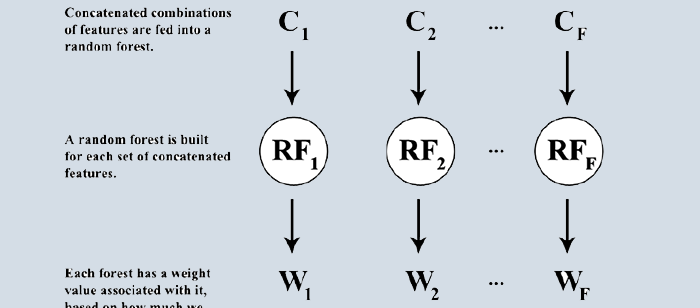
Constructing an image classification system using strong, local invariant descriptors is time consuming and tedious, requiring many experimentations and parameter tuning to obtain an adequately performing model. Furthermore, training a system in a given domain and then migrating the model to a separate domain will likely yield poor performance. As computer vision systems become more prevalent in the academic, government, and private sectors, it is paramount that a framework to more easily construct these classification systems be created. In this work we present a rapidly deployable image classification system using multi-views, where each view consists of a set of weak global features. These weak global descriptors are computationally simple to extract, intuitive to understand, and require substantially less parameter tuning than their local invariant counterparts. We demonstrate that by combining weak features with ensemble methods we are able to outperform the current state-of-the-art methods or achieve comparable accuracy. Finally, we provide a theoretical justification for our ensemble framework that can be used to construct rapidly deployable image classification systems called "Ecosembles".
Committee: Dr. Tim Oates (chair), Dr. Jesus Caban, Dr. Tim Finin, Dr. Charles Nicholas
]]>
Ph.D. Dissertation Proposal A Rapidly Deployable Image Classification System Using Multi-Views Adrian Rosebrock 11:00am Friday, 10 May, ITE 325, UMBC Constructing an image classification...
http://www.csee.umbc.edu/2013/05/phd-proposal-rapidly-deployable-image-classification-system-using-multi-views/
https://dev.my.umbc.edu/api/v0/pixel/news/29084/guest@my.umbc.edu/d17c2aaaee61c9de6e0bba78da1d65f4/api/pixel
computer-science
news
research
talks
Computer Science and Electrical Engineering
https://dev.my.umbc.edu/groups/csee
https://assets3-dev.my.umbc.edu/system/shared/avatars/groups/000/000/099/d117dca133c64bf78a4b7696dd007189/xsmall.png?1314043393
https://assets1-dev.my.umbc.edu/system/shared/avatars/groups/000/000/099/d117dca133c64bf78a4b7696dd007189/original.png?1314043393
https://assets1-dev.my.umbc.edu/system/shared/avatars/groups/000/000/099/d117dca133c64bf78a4b7696dd007189/xxlarge.png?1314043393
https://assets4-dev.my.umbc.edu/system/shared/avatars/groups/000/000/099/d117dca133c64bf78a4b7696dd007189/xlarge.png?1314043393
https://assets3-dev.my.umbc.edu/system/shared/avatars/groups/000/000/099/d117dca133c64bf78a4b7696dd007189/large.png?1314043393
https://assets1-dev.my.umbc.edu/system/shared/avatars/groups/000/000/099/d117dca133c64bf78a4b7696dd007189/medium.png?1314043393
https://assets2-dev.my.umbc.edu/system/shared/avatars/groups/000/000/099/d117dca133c64bf78a4b7696dd007189/small.png?1314043393
https://assets3-dev.my.umbc.edu/system/shared/avatars/groups/000/000/099/d117dca133c64bf78a4b7696dd007189/xsmall.png?1314043393
https://assets3-dev.my.umbc.edu/system/shared/avatars/groups/000/000/099/d117dca133c64bf78a4b7696dd007189/xxsmall.png?1314043393
Computer Science and Electrical Engineering
0
0
true
Tue, 07 May 2013 01:14:10 -0400
CSEE grad student Asmita Korde presents paper at SPIE Defense Security and Sensing Conference
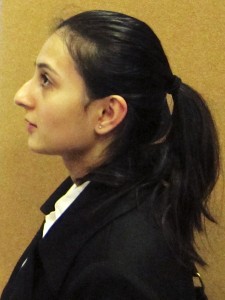 CSEE graduate student Asmita Korde will present a paper on her research with Professor Tinoosh Mohsenin tomorrow at the the SPIE Defense Security and Sensing Conference in the Baltimore Convention Center. Asmita was a UMBC CWIT Scholar and received a BS degree in Computer Engineering in 2011. She is now finishing her MS degree at UMBC in the Electrical Engineering program.
Her paper, Detection Performance of Radar Compressive Sensing in Noisy Environments, describes research done in collaboration with her mentor, Tinoosh Mohsenin, and Damon Bradley of the NASA Goddard Space Flight Center.
Here is the abstract.
In this paper, radar detection via compressive sensing is explored. Compressive sensing is a new theory of sampling which allows the reconstruction of a sparse signal by sampling at a much lower rate than the Nyquist rate. By using this technique in radar, the use of matched filter can be eliminated and high rate sampling can be replaced with low rate sampling. In this paper, compressive sensing is analyzed by applying varying factors such as noise and different measurement matrices. Different reconstruction algorithms are compared by generating ROC curves to determine their detection performance. We conduct simulations for a 64-length signal with 3 targets to determine the effectiveness of each algorithm in varying SNR. We also propose a simplified version of Orthogonal Matching Pursuit (OMP). Through numerous simulations, we _nd that a simplified version of Orthogonal Matching Pursuit (OMP), can give better results than the original OMP in noisy environments when sparsity is highly over estimated, but does not work as well for low noise environments.
]]>
CSEE graduate student Asmita Korde will present a paper on her research with Professor Tinoosh Mohsenin tomorrow at the the SPIE Defense Security and Sensing Conference in the Baltimore Convention...
http://www.csee.umbc.edu/2013/05/csee-grad-student-asmita-korde-presents-paper-at-spie-defense-security-and-sensing-conference/
https://dev.my.umbc.edu/api/v0/pixel/news/28630/guest@my.umbc.edu/27b9123c01743c42966d3df6a074c547/api/pixel
electrical-engineering
news
research
students
Computer Science and Electrical Engineering
https://dev.my.umbc.edu/groups/csee
https://assets3-dev.my.umbc.edu/system/shared/avatars/groups/000/000/099/d117dca133c64bf78a4b7696dd007189/xsmall.png?1314043393
https://assets1-dev.my.umbc.edu/system/shared/avatars/groups/000/000/099/d117dca133c64bf78a4b7696dd007189/original.png?1314043393
https://assets1-dev.my.umbc.edu/system/shared/avatars/groups/000/000/099/d117dca133c64bf78a4b7696dd007189/xxlarge.png?1314043393
https://assets4-dev.my.umbc.edu/system/shared/avatars/groups/000/000/099/d117dca133c64bf78a4b7696dd007189/xlarge.png?1314043393
https://assets3-dev.my.umbc.edu/system/shared/avatars/groups/000/000/099/d117dca133c64bf78a4b7696dd007189/large.png?1314043393
https://assets1-dev.my.umbc.edu/system/shared/avatars/groups/000/000/099/d117dca133c64bf78a4b7696dd007189/medium.png?1314043393
https://assets2-dev.my.umbc.edu/system/shared/avatars/groups/000/000/099/d117dca133c64bf78a4b7696dd007189/small.png?1314043393
https://assets3-dev.my.umbc.edu/system/shared/avatars/groups/000/000/099/d117dca133c64bf78a4b7696dd007189/xsmall.png?1314043393
https://assets3-dev.my.umbc.edu/system/shared/avatars/groups/000/000/099/d117dca133c64bf78a4b7696dd007189/xxsmall.png?1314043393
Computer Science and Electrical Engineering
0
0
true
Thu, 02 May 2013 16:51:49 -0400
JOB: Web Designer/Specialist, UMBC OIA
The UMBC Office of Institutional Advancement has extended its search for a Web Designer/Specialist. The incumbent will take an active role in the department’s website development. Specific duties include: performing hands-on web/interactive design, print and production work; developing and delivering projects in a timely manner; and performing other duties as assigned.
This is an entry-level position that requires a Bachelor's degree in web design, graphic design or related area. One year of professional experience in design, development and production of interactive marketing communications preferred. Proficiency in HTML5, CSS, Adobe Creative Suite, MS Office, mobile/responsive web design, browser compatibility and accessibility standards required. A working knowledge of JavaScript, JQuery, PHP, WordPress, Final Cut Pro, interactive charts and graphs, blogs, wikis, social media, analytics, HTML emails, and user interface design desired. Experience with higher education and/or a digital/creative agency a plus. Additionally, the ideal candidate will be a team player, positive self-starter and detail-oriented designer who is able to produce work that is current and polished. He or she should enjoy working with clients, have a sincere desire to help meet their communications goals, and be able to assess strategies to help create the most effective and responsive digital communications. The ideal candidate must also have the ability to learn new skills independently, work within the development cycle for complex web initiatives, and manage time to meet aggressive deadlines.
For best consideration, submit a cover letter including salary requirements, resume, and three non-returnable samples and/or URLs by May 10, 2013 (resumes will be accepted until filled) to: UMBC Creative Services, University of Maryland, Baltimore County, Administration Building, 8th floor, 1000 Hilltop Circle, Baltimore, MD 21250, ATTN: Design Director, Email: Sorry, you need javascript to view this email address.
]]>
The UMBC Office of Institutional Advancement has extended its search for a Web Designer/Specialist. The incumbent will take an active role in the department’s website development. Specific duties...
http://www.csee.umbc.edu/2013/05/job-web-designerspecialist-umbc-oia/
https://dev.my.umbc.edu/api/v0/pixel/news/28516/guest@my.umbc.edu/c6a2193e0a2ca27f21e9f4c84f1d2935/api/pixel
jobs
Computer Science and Electrical Engineering
https://dev.my.umbc.edu/groups/csee
https://assets3-dev.my.umbc.edu/system/shared/avatars/groups/000/000/099/d117dca133c64bf78a4b7696dd007189/xsmall.png?1314043393
https://assets1-dev.my.umbc.edu/system/shared/avatars/groups/000/000/099/d117dca133c64bf78a4b7696dd007189/original.png?1314043393
https://assets1-dev.my.umbc.edu/system/shared/avatars/groups/000/000/099/d117dca133c64bf78a4b7696dd007189/xxlarge.png?1314043393
https://assets4-dev.my.umbc.edu/system/shared/avatars/groups/000/000/099/d117dca133c64bf78a4b7696dd007189/xlarge.png?1314043393
https://assets3-dev.my.umbc.edu/system/shared/avatars/groups/000/000/099/d117dca133c64bf78a4b7696dd007189/large.png?1314043393
https://assets1-dev.my.umbc.edu/system/shared/avatars/groups/000/000/099/d117dca133c64bf78a4b7696dd007189/medium.png?1314043393
https://assets2-dev.my.umbc.edu/system/shared/avatars/groups/000/000/099/d117dca133c64bf78a4b7696dd007189/small.png?1314043393
https://assets3-dev.my.umbc.edu/system/shared/avatars/groups/000/000/099/d117dca133c64bf78a4b7696dd007189/xsmall.png?1314043393
https://assets3-dev.my.umbc.edu/system/shared/avatars/groups/000/000/099/d117dca133c64bf78a4b7696dd007189/xxsmall.png?1314043393
Computer Science and Electrical Engineering
0
0
true
Wed, 01 May 2013 09:30:19 -0400
Wed, 01 May 2013 09:30:19 -0400
JOB: Web Designer/Specialist, UMBC OIA
The UMBC Office of Institutional Advancement has extended its search for a Web Designer/Specialist. The incumbent will take an active role in the department’s website development. Specific duties include: performing hands-on web/interactive design, print and production work; developing and delivering projects in a timely manner; and performing other duties as assigned.
This is an entry-level position that requires a Bachelor's degree in web design, graphic design or related area. One year of professional experience in design, development and production of interactive marketing communications preferred. Proficiency in HTML5, CSS, Adobe Creative Suite, MS Office, mobile/responsive web design, browser compatibility and accessibility standards required. A working knowledge of JavaScript, JQuery, PHP, WordPress, Final Cut Pro, interactive charts and graphs, blogs, wikis, social media, analytics, HTML emails, and user interface design desired. Experience with higher education and/or a digital/creative agency a plus. Additionally, the ideal candidate will be a team player, positive self-starter and detail-oriented designer who is able to produce work that is current and polished. He or she should enjoy working with clients, have a sincere desire to help meet their communications goals, and be able to assess strategies to help create the most effective and responsive digital communications. The ideal candidate must also have the ability to learn new skills independently, work within the development cycle for complex web initiatives, and manage time to meet aggressive deadlines.
For best consideration, submit a cover letter including salary requirements, resume, and three non-returnable samples and/or URLs by May 10, 2013 (resumes will be accepted until filled) to: UMBC Creative Services, University of Maryland, Baltimore County, Administration Building, 8th floor, 1000 Hilltop Circle, Baltimore, MD 21250, ATTN: Design Director, Email: Sorry, you need javascript to view this email address.
]]>
The UMBC Office of Institutional Advancement has extended its search for a Web Designer/Specialist. The incumbent will take an active role in the department’s website development. Specific duties...
http://www.csee.umbc.edu/2013/05/job-web-designerspecialist-umbc-oia/?utm_source=rss&utm_medium=rss&utm_campaign=job-web-designerspecialist-umbc-oia
https://dev.my.umbc.edu/api/v0/pixel/news/42658/guest@my.umbc.edu/836c14e08823d4776efb8138678504f7/api/pixel
jobs
Computer Science and Electrical Engineering
https://dev.my.umbc.edu/groups/csee
https://assets3-dev.my.umbc.edu/system/shared/avatars/groups/000/000/099/d117dca133c64bf78a4b7696dd007189/xsmall.png?1314043393
https://assets1-dev.my.umbc.edu/system/shared/avatars/groups/000/000/099/d117dca133c64bf78a4b7696dd007189/original.png?1314043393
https://assets1-dev.my.umbc.edu/system/shared/avatars/groups/000/000/099/d117dca133c64bf78a4b7696dd007189/xxlarge.png?1314043393
https://assets4-dev.my.umbc.edu/system/shared/avatars/groups/000/000/099/d117dca133c64bf78a4b7696dd007189/xlarge.png?1314043393
https://assets3-dev.my.umbc.edu/system/shared/avatars/groups/000/000/099/d117dca133c64bf78a4b7696dd007189/large.png?1314043393
https://assets1-dev.my.umbc.edu/system/shared/avatars/groups/000/000/099/d117dca133c64bf78a4b7696dd007189/medium.png?1314043393
https://assets2-dev.my.umbc.edu/system/shared/avatars/groups/000/000/099/d117dca133c64bf78a4b7696dd007189/small.png?1314043393
https://assets3-dev.my.umbc.edu/system/shared/avatars/groups/000/000/099/d117dca133c64bf78a4b7696dd007189/xsmall.png?1314043393
https://assets3-dev.my.umbc.edu/system/shared/avatars/groups/000/000/099/d117dca133c64bf78a4b7696dd007189/xxsmall.png?1314043393
Computer Science and Electrical Engineering
0
0
true
Wed, 01 May 2013 09:30:19 -0400
Wed, 01 May 2013 09:30:19 -0400