More people are turning to the internet to diagnose themselves—Can this Ph.D. student’s work help moderate medical content on the web?
In 2024, information systems Ph.D. student Ommo Clark penned an opinion piece for BusinessDay Nigeria exploring why many Nigerians diagnose and treat their medical conditions themselves, often turning to unreliable online information.
While the essay was inspired by firsthand experiences in her native country, the impulse to consult “Dr. Google” is a worrying global trend, Clark says, and one that has motivated her Ph.D. work. It’s unlikely that people will stop going online with health questions, so Clark is researching ways that AI could help patients, healthcare providers, public health officials, and content platforms better understand and evaluate the sea of medically related content on the internet.
A dual approach to misinformation
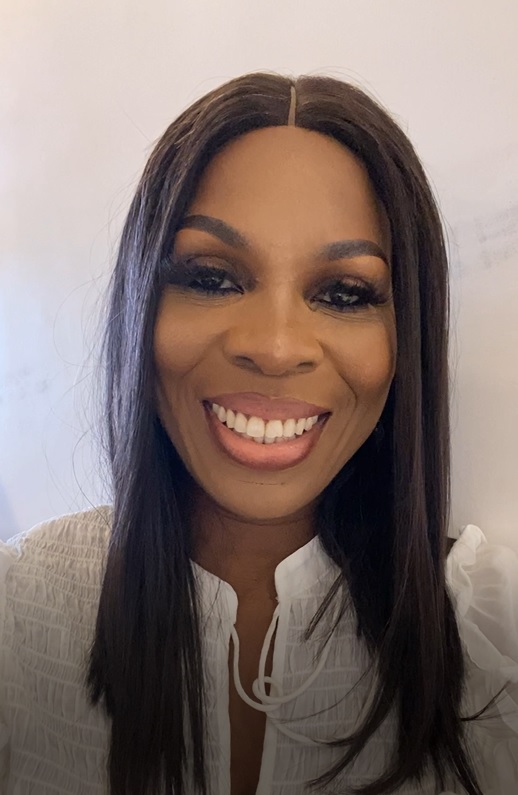 Ommo Clark (Photo courtesy of Clark)
Ommo’s efforts were recently recognized when one of her research papers, co-authored with information systems professor Karuna Joshi, won the Best Student Paper Award at the IEEE International Conference on Digital Health 2025, held in July in Helsinki, Finland. The paper, titled “Real-Time Detection of Online Health Misinformation using an Integrated Knowledgegraph-LLM Approach,” describes the results of combining two types of AI approaches (a concept sometimes called third-wave AI) to tackle the problem of identifying online health misinformation.
Clark and Joshi combined a large language model (LLM), which excels at understanding nuanced language, with knowledge graphs, which provide structured factual verification—in this case of medical knowledge. They found the combined approach significantly outperformed either approach by itself.
“The most significant takeaway is that effective health misinformation detection requires both linguistic understanding and structured medical knowledge. Neither alone is sufficient for the complexity of health discourse online,” Clark says.
Equally important, the researchers built robust privacy protections into the system, a critical piece that is missing from many current misinformation detection systems, Clark says.
Informing, not dictating
Going forward, the team is working to further improve their system by giving it the ability to understand the emotional undertones, cultural cues, stance, and persuasive structures of online health stories, in which people may describe personal experience with health treatments. This “narrative” information is important, Clark says, because it illuminates how some stories can be particularly compelling. The researchers are also working to build a system that can evaluate the clinical risk of misinformation, sorting potentially harmless claims from those that could risk your health.
 Karuna Joshi accepts the best student paper award for her Ph.D. student Ommo Clark at the IEEE International Conference on Digital Health. (Photo courtesy of Joshi)
The upgrades will produce a tool that gives users critical information and meaningful risk assessments without presenting a “true/false” judgement, Clark says. “This nuanced approach respects user autonomy,” she says. “Rather than censoring content, we are giving people the tools to make informed decisions about the health information they encounter. In this era of declining institutional trust, transparency about methodology and risk assessment rather than authoritative declarations may be more effective in protecting public health while preserving democratic discourse.”
Clark has already received positive feedback from potential users of such tools. A nurse practitioner at Retriever Integrated Health whom she talked to about her work immediately asked if the system could be integrated into Google. Healthcare practitioners consult evidence-based medical sources before diagnosing or prescribing, the nurse said, “but patients go to Google!”
]]>
In 2024, information systems Ph.D. student Ommo Clark penned an opinion piece for BusinessDay Nigeria exploring why many Nigerians diagnose and treat their medical conditions themselves, often...
https://umbc.edu/stories/ai-moderating-online-medical-information/
https://dev.my.umbc.edu/api/v0/pixel/news/151463/guest@my.umbc.edu/6e3e48a2605e475ac4230a416aca3f0c/api/pixel
coeit
is
news
research
science-and-tech
story
UMBC News & Magazine
https://dev.my.umbc.edu/groups/umbc-news-magazine
https://assets1-dev.my.umbc.edu/system/shared/avatars/groups/000/001/943/24435aa6207c452e7bc15cc74b42c7bb/xsmall.png?1748556657
https://assets1-dev.my.umbc.edu/system/shared/avatars/groups/000/001/943/24435aa6207c452e7bc15cc74b42c7bb/original.png?1748556657
https://assets2-dev.my.umbc.edu/system/shared/avatars/groups/000/001/943/24435aa6207c452e7bc15cc74b42c7bb/xxlarge.png?1748556657
https://assets2-dev.my.umbc.edu/system/shared/avatars/groups/000/001/943/24435aa6207c452e7bc15cc74b42c7bb/xlarge.png?1748556657
https://assets3-dev.my.umbc.edu/system/shared/avatars/groups/000/001/943/24435aa6207c452e7bc15cc74b42c7bb/large.png?1748556657
https://assets1-dev.my.umbc.edu/system/shared/avatars/groups/000/001/943/24435aa6207c452e7bc15cc74b42c7bb/medium.png?1748556657
https://assets2-dev.my.umbc.edu/system/shared/avatars/groups/000/001/943/24435aa6207c452e7bc15cc74b42c7bb/small.png?1748556657
https://assets1-dev.my.umbc.edu/system/shared/avatars/groups/000/001/943/24435aa6207c452e7bc15cc74b42c7bb/xsmall.png?1748556657
https://assets2-dev.my.umbc.edu/system/shared/avatars/groups/000/001/943/24435aa6207c452e7bc15cc74b42c7bb/xxsmall.png?1748556657
UMBC News & Magazine
0
0
false
Tue, 12 Aug 2025 15:29:35 -0400
Tue, 12 Aug 2025 15:29:35 -0400
A web of mentorship: Weaving support and arachnid research at UMBC
A web of mentorship, as intricate as the arachnids Mercedes Burns studies, stretches from her UMBC lab to University of North Carolina at Charlotte and University of Nevada, Las Vegas.
At the web’s center is Burns, a passionate arachnologist whose guidance heavily influenced Sarah Stellwagen, a former postdoctoral fellow in Burns’ lab and now a faculty member at UNC Charlotte. Burns and Stellwagen both mentored Tyler Brown, Ph.D. ’24, biological sciences, at UMBC, and today Brown is a National Science Foundation postdoctoral fellow with Stellwagen in North Carolina. The web extends to Emily Marinko ’23, biological sciences, who coauthored research with Brown and Burns and today is pursuing graduate work in Nevada.
Like spider silk, this network is strong, flexible, and enduring—fostering a love for science and a supportive environment that extends beyond the lab and into the community. All four of these researchers share a commitment to spreading their love for the often-maligned arachnids they study with broad audiences as a means of dispelling myths, reducing fear, and promoting the value of diversity.
 Tyler Brown (left) earned his Ph.D. in 2024, mentored by Mercedes Burns (right). (Marlayna Demond ’11/UMBC)
Guiding the next generation
Burns’ mentorship style is “a very one-on-one approach,” Stellwagen says. “She has an open door and wants to talk about details and help you think through your experiments and your projects. That was a very successful way to mentor me, and I’m trying to mentor students in that way, too.”
Burns meets students where they are, helping them pursue their interests within her research program’s framework. Burns focuses on the evolutionary ecology of Opiliones, commonly known as daddy longlegs, while Stellwagen explores the material properties of arachnid silks and glues.
“I appreciated Mercedes’ willingness to open up her lab to my interests, so we could push our expertise together, which has made me a lot more successful down the line,” Stellwagen says. “I took that openness to heart. Today, I’m a silk lab, a biomaterials lab—but for people who have different interests, as long as you can incorporate some bit of silks and glues into your research, I’m very open.”
That attitude extends to Brown, who is more interested in behavioral research. In Burns’ lab, he led a study of Opiliones mating behaviors using a novel video-tracking method driven by machine learning. Marinko conducted many of the trials, and both are co-authors with Burns on the resulting paper. Now in Stellwagen’s lab, Brown is continuing to pursue behavioral work with a silk-and-glue twist.
 Emily Marinko (above) conducted research with Mercedes Burns as an undergraduate. Here they present her findings at UMBC’s Undergraduate Research and Creative Achievement Day in 2022. (Sarah Hansen, M.S. ’15/UMBC)
“Connecting with them personally is something I’ve really appreciated with both Mercedes and Sarah. It makes the lab a more comfortable place to be in,” Brown says. In turn, “Being accessible on a personal and professional level to Emily was something that was important for me. I made sure that they had the level of independence they were hoping for.”
The personal, high-touch mentoring style in the Burns lab worked well for Marinko. “Dr. Burns and Tyler were very supportive, and I felt very welcomed. It helped me feel like I was able to ask questions, which I think is a really important part of learning in science,” Marinko says. “I wasn’t just a pair of hands that did busy work. I felt like I was really learning and contributing to the research, and that experience helped me get my position as a grad student.”
Sharing science, breaking down barriers
While much of their work happens in the lab, Burns’ team understands that thoughtful outreach can help the public care for—and perhaps even learn to like—arachnids.
“We’re talking about organisms that most people dislike,” Burns acknowledges, “so if we understand them and are curious about them, that’s going to take some of the fear away.”
For Brown, it started with “getting to know them on a more personal level”—the arachnids, that is. “Working with arachnids every day and learning so much more about them, it just becomes so much more interesting, and any fear you have sort of goes away, the more you understand them,” he says. He wants to help others overcome their fears, too.
 Burns and her lab members use this tarantula as part of their educational outreach to shift how people think about arachnids. (Marlayna Demond ’11/UMBC)
To that end, Brown recently participated in a children’s outreach event at a local library. “A lot of people were very nervous when they saw a bucketful of tarantula molts, but even in the short time frame of the event, getting to explain things and seeing people overcome that initial fear because they’re learning a bit—that has really helped guide me toward what I want to do with outreach.”
The entire Stellwagen lab participated in an outreach event at a major youth museum in Charlotte. “I think the commitment to outreach is born from having such a strong love for these organisms,” she says. “We do this because we love them so much, and we want people to learn about them so they don’t have this stigma. In the end, it’s about, ‘How do you get this information effectively to the public so they can care about and preserve these precious things?’”
Events at libraries, schools, and museums can foster scientific literacy and humanize scientists and the scientific process, leading to a better informed and more open-minded community.
Marinko started out with some of their own hangups around arachnids, but over time, that changed. “When Dr. Burns talked about her research, she was so passionate about it that I wanted to be more like her, I guess. I wanted to overcome my fear; I wanted to be braver,” they say. Today Marinko works with a potentially even scarier organism: ticks. “And obviously since I ended up working with ticks, I’m not as afraid of them as I used to be, either,” Marinko says.
 This summer, Mercedes Burns (left) and Harper Montgomery ’20 (right) traveled to Japan and South Korea to collect arachnid specimens and work in a collaborator’s laboratory. Montgomery is currently pursuing a Ph.D. with Burns, adding to the mentorship web. (Courtesy of Burns)
Embracing difference
Reducing fears of organisms we don’t understand can even affect how we think about and interact with people who are different from us, Burns says. “I don’t think it’s an accident that I’m interested in biodiversity, and I also care a lot about human diversity—about celebrating that experience and how people bring different ideas, passions, and interests to the table,” she says.
Burns strives to promote curiosity, a genuine desire to learn, and a willingness to change one’s mind in all of her students. “If you’re curious about something, there’s less fear and more of a motivation to understand,” she says. “By getting a broad range of students involved in research, they’ll go out and have those casual conversations with friends and family that lead overall to a more open perspective on biodiversity and, more broadly, an appreciation of diversity.”
“When you go into Mercedes’ lab, there’s an excitement about these organisms that you feel,” Stellwagen says. That passion helps attract outstanding students and keep them motivated, she adds. “Mercedes has created arachnology ‘lifers’ with her enthusiasm, and now that’s trickled down into me being able to pull in some lifers, too.”
 Sarah Stellwagen (left) and Mercedes Burns (right) developed a close personal relationship when Stellwagen was a postdoc with Burns; Burns even fills the role of adoptive “auntie” to Stellwagen’s children. Today they are continuing their highly productive research collaboration, with Stellwagen now a faculty member at UNC Charlotte. (Marlayna Demond ’11/UMBC)
Teamwork fuels discovery
The culture of supportive mentorship in Burns’ lab extends beyond work in the lab to the group members’ collaborative approach to applying for grants to fund their ongoing research. Together, Burns, Stellwagen, and Brown refined a strategy—ranking reviewer concerns and proposing solutions—that won funding after initial rejections.
“We collaboratively came up with techniques to go through the grant application process, and that has helped us all a lot,” Burns notes. Having each other for support also kept the group’s morale up, even when they received harsh feedback from reviewers.
Brown was involved in some of those applications, which he says “definitely helped me make mine into a successful application in my second year in Sarah’s lab.”
Burns collaborated with Stellwagen on a major grant when Stellwagen was still a postdoc in her lab, which is not necessarily typical. “I feel like a collaborative approach to grant-writing has been more my style,” Burns reflects. “If we want rich collaborative experiences, we need to enable our colleagues to be co-PIs and apply with us.”
The mentorship web spun by Burns, Stellwagen, Brown, and Marinko at UMBC illustrates a dynamic cycle of learning, collaboration, and outreach. Their shared passion for arachnids not only drives innovative research but also fosters a supportive environment where students can grow into confident scientists.
This network, built on personal connections and open inquiry, extends its impact through public engagement, encouraging broader appreciation for biodiversity. By fostering curiosity and embracing diverse perspectives, the lab’s legacy weaves an ever-expanding web, inspiring new generations to advance science and understanding—and maybe even grow an appreciation for arachnids along the way.
]]>
A web of mentorship, as intricate as the arachnids Mercedes Burns studies, stretches from her UMBC lab to University of North Carolina at Charlotte and University of Nevada, Las Vegas. At the...
https://umbc.edu/stories/arachnids-web-of-mentorship/
https://dev.my.umbc.edu/api/v0/pixel/news/151458/guest@my.umbc.edu/c6c041c5f3c058325d693c5846da6701/api/pixel
biology
cnms
gradresearch
news
research
science-and-tech
story
undergradresearch
UMBC News & Magazine
https://dev.my.umbc.edu/groups/umbc-news-magazine
https://assets1-dev.my.umbc.edu/system/shared/avatars/groups/000/001/943/24435aa6207c452e7bc15cc74b42c7bb/xsmall.png?1748556657
https://assets1-dev.my.umbc.edu/system/shared/avatars/groups/000/001/943/24435aa6207c452e7bc15cc74b42c7bb/original.png?1748556657
https://assets2-dev.my.umbc.edu/system/shared/avatars/groups/000/001/943/24435aa6207c452e7bc15cc74b42c7bb/xxlarge.png?1748556657
https://assets2-dev.my.umbc.edu/system/shared/avatars/groups/000/001/943/24435aa6207c452e7bc15cc74b42c7bb/xlarge.png?1748556657
https://assets3-dev.my.umbc.edu/system/shared/avatars/groups/000/001/943/24435aa6207c452e7bc15cc74b42c7bb/large.png?1748556657
https://assets1-dev.my.umbc.edu/system/shared/avatars/groups/000/001/943/24435aa6207c452e7bc15cc74b42c7bb/medium.png?1748556657
https://assets2-dev.my.umbc.edu/system/shared/avatars/groups/000/001/943/24435aa6207c452e7bc15cc74b42c7bb/small.png?1748556657
https://assets1-dev.my.umbc.edu/system/shared/avatars/groups/000/001/943/24435aa6207c452e7bc15cc74b42c7bb/xsmall.png?1748556657
https://assets2-dev.my.umbc.edu/system/shared/avatars/groups/000/001/943/24435aa6207c452e7bc15cc74b42c7bb/xxsmall.png?1748556657
UMBC News & Magazine
1
0
false
Tue, 12 Aug 2025 12:53:33 -0400
Tue, 12 Aug 2025 12:53:33 -0400
Summer Update on Our Response to Federal Actions and Orders
Dear UMBC Community,
While campus may seem quiet over the summer, the news from beyond campus has been anything but. I write today with an update on the impacts of federal actions and orders on UMBC and our work to respond to and address these effects.
As has been the case with previous updates, this message is not exhaustive in reporting on every piece of work being done by our core team and others involved in our response; it is meant to share important information in a few areas that we know are of concern to many at UMBC.
Budget Reconciliation
The sweeping legislation called the “
One Big Beautiful Bill Act” that was signed into law on July 4 reshapes federal tax policy and spending on a broad scale. Its impacts on higher education will be wide-ranging, both directly and indirectly.
Several of its measures related to higher education (those concerning student financial aid, in particular) do not become effective until July 2026, and so the full impacts of the law will not be realized for some time. What we know generally is this:
- Direct impacts include narrowed Pell Grant eligibility and more limited access to student and parent loans, including the elimination of GradPLUS loans for new borrowers, as well as additional fees for international students, faculty, staff, and visiting scholars
- Significant cuts to Medicaid and SNAP will affect some members of our community directly, and the financial impact of those cuts on the state of Maryland will have secondary effects on publicly funded institutions such as UMBC
In addition to working to support our students and families who may be facing greater challenges to affordability and access, our aim is to mitigate institutional impacts so that we may continue to advance access to education and support student success.
Meanwhile, the appropriations process for Fiscal Year 2026 is not yet complete. Congress is considering various spending bills, as well as President Trump’s proposed budget, all of which, to varying degrees, would dramatically reduce funding for education, research, and more.
Research Impacts
As many are aware, various executive orders and related decisions and actions by federal agencies over the past several months, including early research grant terminations, have already significantly reduced research funding, affecting higher education institutions across the country and limiting their ability to carry out vital research. Some of those actions continue to be challenged in court and/or considered in Congress.
As we have reported previously, UMBC has received about 30 terminations of grants and contracts that had already been awarded to UMBC researchers, with a net loss of about $22 million. This amounts to an annual impact of about $8 million to $10 million, or about 8 percent of our current annual federal research portfolio, for each of the next couple of years. A piece of good news: Over the past month, in response to federal lawsuits filed earlier by the State of Maryland and a number of other states, we have seen a handful of previously terminated NIH and NSF awards reinstated. We are still determining the details of these reinstatements, but we are pleased to be able to continue or resume the work that these grants support.
UMBC is in close contact with University System of Maryland institutions and with leaders in national higher education organizations as we begin to model and better understand the potential impact of a proposal to shift from the long-established negotiated indirect cost model on federal contracts and grants to a new, direct-charge model for most grant-related activities. In July, a coalition of organizations, including the Association of Public and Land-grant Universities,
issued a recommendation for a new model to replace the current cost structure used by the federal government. These discussions, which came in response to a decision to cap federal reimbursements at 15 percent, are ongoing.
Of particular concern and focus for UMBC is Goddard Space Flight Center, where almost 300 UMBC research faculty and staff work under cooperative agreements with NASA. Goddard is the epicenter of a
partnership with NASA that UMBC has cultivated over the past three decades and that has resulted in UMBC’s ranking in the top 10 in the nation for annual NASA expenditures. NASA Goddard Director Makenzie Lystrup recently announced her intent to leave the agency effective August 1, and several hundred NASA employees have accepted early retirement and resignation offers. The president’s budget proposal, if enacted, would cut NASA funding by 24 percent—disproportionally affecting NASA’s science budgets—and its workforce by a third; the impact of cuts of this scale on Goddard could be devastating.
We are monitoring this changing situation closely and actively advocating for the important work we do at Goddard and elsewhere—I met personally with members of our Congressional delegation in June, for instance. We also are meeting directly with our teams at Goddard and providing direct support for those employees, including information about health insurance options and monthly career development workshops that we began hosting in July.
There remains a great deal of uncertainty regarding federal support of research. No matter the outcome, UMBC will adapt and evolve while staying true to our identity and the public good we provide. We will remain a research institution that advances knowledge and trains scholars across the sciences, social sciences, humanities, and the arts, and that leads in critical areas of innovation and workforce needs for our state, our nation, and our world.
Our International Community
We remain concerned about the impact of federal actions on the international students, staff, and faculty who are a vital part of the UMBC community and the global education that we provide. While we know their desire to study at our institution remains strong, delays in visa processing, the travel ban affecting many countries, as well as the political climate more broadly, present significant challenges for current and prospective international students. Based on what we are seeing so far regarding increased visa processing times and decreased visa issuance rates, we expect to see a significant decline in our international graduate student enrollment this fall.
We recently surveyed newly admitted international students regarding the status of their visas. Several students have visa appointments confirmed in August but will likely be unable to arrive until after the first day of classes. We ask our campus community to be understanding of these late arrivals given the difficult challenges these students are facing in order to join UMBC.
Inclusive Excellence
Finally, I want to address the concern that many have expressed about the Trump administration’s actions and orders related to diversity, equity, and inclusion (DEI)—and the impacts of those at many higher education institutions. Among the latest developments was a
memo released in late July by the Department of Justice that provided “guidance for recipients of federal funding regarding unlawful discrimination.” Some news outlets reported that this memo declared DEI illegal.
That memo, like the Dear Colleague letter from the Department of Education (ED) that preceded it in February, followed executive orders issued by the White House targeting diversity, equity, inclusion, and accessibility efforts. Neither the ED letter nor the recent DOJ memo change existing law. Existing laws protect against discrimination based on race, color, religion, sex, or national origin—and so do UMBC’s policies, including our
nondiscrimination policy.
Inclusive excellence is not just one of our values. It is core to our identity and to our definition of educational and research excellence. We will not relent in our pursuit of inclusive excellence, nor will we overreact or anticipatorily over-comply. We will, at all times, continue to hold UMBC to the highest standards in adhering to university policies and applicable state and federal laws. The multistate
guidance on diversity, equity, inclusion, and accessibility employment initiatives issued earlier this year by Maryland State Attorney General Anthony G. Brown and 15 other state attorneys general, remains a helpful resource and guide for us all.
On behalf of our core team that has met regularly throughout the summer, thank you for your ongoing dedication and support for UMBC and all who comprise this extraordinary community. I am looking forward to the start of the semester and to the opportunity to continue our work together.
Sincerely,
President Valerie Sheares Ashby
]]>
Dear UMBC Community, While campus may seem quiet over the summer, the news from beyond campus has been anything but. I write today with an update on the impacts of federal actions and orders...
https://umbc.edu/stories/summer-update-on-our-response-to-federal-actions-and-orders-2/
https://dev.my.umbc.edu/api/v0/pixel/news/151525/guest@my.umbc.edu/1d6fd46321c5896569f6916608ba5e58/api/pixel
federal-orders
president
rss
story
UMBC News & Magazine
https://dev.my.umbc.edu/groups/umbc-news-magazine
https://assets1-dev.my.umbc.edu/system/shared/avatars/groups/000/001/943/24435aa6207c452e7bc15cc74b42c7bb/xsmall.png?1748556657
https://assets1-dev.my.umbc.edu/system/shared/avatars/groups/000/001/943/24435aa6207c452e7bc15cc74b42c7bb/original.png?1748556657
https://assets2-dev.my.umbc.edu/system/shared/avatars/groups/000/001/943/24435aa6207c452e7bc15cc74b42c7bb/xxlarge.png?1748556657
https://assets2-dev.my.umbc.edu/system/shared/avatars/groups/000/001/943/24435aa6207c452e7bc15cc74b42c7bb/xlarge.png?1748556657
https://assets3-dev.my.umbc.edu/system/shared/avatars/groups/000/001/943/24435aa6207c452e7bc15cc74b42c7bb/large.png?1748556657
https://assets1-dev.my.umbc.edu/system/shared/avatars/groups/000/001/943/24435aa6207c452e7bc15cc74b42c7bb/medium.png?1748556657
https://assets2-dev.my.umbc.edu/system/shared/avatars/groups/000/001/943/24435aa6207c452e7bc15cc74b42c7bb/small.png?1748556657
https://assets1-dev.my.umbc.edu/system/shared/avatars/groups/000/001/943/24435aa6207c452e7bc15cc74b42c7bb/xsmall.png?1748556657
https://assets2-dev.my.umbc.edu/system/shared/avatars/groups/000/001/943/24435aa6207c452e7bc15cc74b42c7bb/xxsmall.png?1748556657
UMBC News & Magazine
0
0
false
Thu, 07 Aug 2025 18:18:47 -0400
Summer Update on Our Response to Federal Actions and Orders
Dear UMBC Community,
While campus may seem quiet over the summer, the news from beyond campus has been anything but. I write today with an update on the impacts of federal actions and orders on UMBC and our work to respond to and address these effects.
As has been the case with previous updates, this message is not exhaustive in reporting on every piece of work being done by our core team and others involved in our response; it is meant to share important information in a few areas that we know are of concern to many at UMBC.
Budget Reconciliation
The sweeping legislation called the “
One Big Beautiful Bill Act” that was signed into law on July 4 reshapes federal tax policy and spending on a broad scale. Its impacts on higher education will be wide-ranging, both directly and indirectly.
Several of its measures related to higher education (those concerning student financial aid, in particular) do not become effective until July 2026, and so the full impacts of the law will not be realized for some time. What we know generally is this:
- Direct impacts include narrowed Pell Grant eligibility and more limited access to student and parent loans, including the elimination of GradPLUS loans for new borrowers, as well as additional fees for international students, faculty, staff, and visiting scholars
- Significant cuts to Medicaid and SNAP will affect some members of our community directly, and the financial impact of those cuts on the state of Maryland will have secondary effects on publicly funded institutions such as UMBC
In addition to working to support our students and families who may be facing greater challenges to affordability and access, our aim is to mitigate institutional impacts so that we may continue to advance access to education and support student success.
Meanwhile, the appropriations process for Fiscal Year 2026 is not yet complete. Congress is considering various spending bills, as well as President Trump’s proposed budget, all of which, to varying degrees, would dramatically reduce funding for education, research, and more.
Research Impacts
As many are aware, various executive orders and related decisions and actions by federal agencies over the past several months, including early research grant terminations, have already significantly reduced research funding, affecting higher education institutions across the country and limiting their ability to carry out vital research. Some of those actions continue to be challenged in court and/or considered in Congress.
As we have reported previously, UMBC has received about 30 terminations of grants and contracts that had already been awarded to UMBC researchers, with a net loss of about $22 million. This amounts to an annual impact of about $8 million to $10 million, or about 8 percent of our current annual federal research portfolio, for each of the next couple of years. A piece of good news: Over the past month, in response to federal lawsuits filed earlier by the State of Maryland and a number of other states, we have seen a handful of previously terminated NIH and NSF awards reinstated. We are still determining the details of these reinstatements, but we are pleased to be able to continue or resume the work that these grants support.
UMBC is in close contact with University System of Maryland institutions and with leaders in national higher education organizations as we begin to model and better understand the potential impact of a proposal to shift from the long-established negotiated indirect cost model on federal contracts and grants to a new, direct-charge model for most grant-related activities. In July, a coalition of organizations, including the Association of Public and Land-grant Universities,
issued a recommendation for a new model to replace the current cost structure used by the federal government. These discussions, which came in response to a decision to cap federal reimbursements at 15 percent, are ongoing.
Of particular concern and focus for UMBC is Goddard Space Flight Center, where almost 300 UMBC research faculty and staff work under cooperative agreements with NASA. Goddard is the epicenter of a
partnership with NASA that UMBC has cultivated over the past three decades and that has resulted in UMBC’s ranking in the top 10 in the nation for annual NASA expenditures. NASA Goddard Director Makenzie Lystrup recently announced her intent to leave the agency effective August 1, and several hundred NASA employees have accepted early retirement and resignation offers. The president’s budget proposal, if enacted, would cut NASA funding by 24 percent—disproportionally affecting NASA’s science budgets—and its workforce by a third; the impact of cuts of this scale on Goddard could be devastating.
We are monitoring this changing situation closely and actively advocating for the important work we do at Goddard and elsewhere—I met personally with members of our Congressional delegation in June, for instance. We also are meeting directly with our teams at Goddard and providing direct support for those employees, including information about health insurance options and monthly career development workshops that we began hosting in July.
There remains a great deal of uncertainty regarding federal support of research. No matter the outcome, UMBC will adapt and evolve while staying true to our identity and the public good we provide. We will remain a research institution that advances knowledge and trains scholars across the sciences, social sciences, humanities, and the arts, and that leads in critical areas of innovation and workforce needs for our state, our nation, and our world.
Our International Community
We remain concerned about the impact of federal actions on the international students, staff, and faculty who are a vital part of the UMBC community and the global education that we provide. While we know their desire to study at our institution remains strong, delays in visa processing, the travel ban affecting many countries, as well as the political climate more broadly, present significant challenges for current and prospective international students. Based on what we are seeing so far regarding increased visa processing times and decreased visa issuance rates, we expect to see a significant decline in our international graduate student enrollment this fall.
We recently surveyed newly admitted international students regarding the status of their visas. Several students have visa appointments confirmed in August but will likely be unable to arrive until after the first day of classes. We ask our campus community to be understanding of these late arrivals given the difficult challenges these students are facing in order to join UMBC.
Inclusive Excellence
Finally, I want to address the concern that many have expressed about the Trump administration’s actions and orders related to diversity, equity, and inclusion (DEI)—and the impacts of those at many higher education institutions. Among the latest developments was a
memo released in late July by the Department of Justice that provided “guidance for recipients of federal funding regarding unlawful discrimination.” Some news outlets reported that this memo declared DEI illegal.
That memo, like the Dear Colleague letter from the Department of Education (ED) that preceded it in February, followed executive orders issued by the White House targeting diversity, equity, inclusion, and accessibility efforts. Neither the ED letter nor the recent DOJ memo change existing law. Existing laws protect against discrimination based on race, color, religion, sex, or national origin—and so do UMBC’s policies, including our
nondiscrimination policy.
Inclusive excellence is not just one of our values. It is core to our identity and to our definition of educational and research excellence. We will not relent in our pursuit of inclusive excellence, nor will we overreact or anticipatorily over-comply. We will, at all times, continue to hold UMBC to the highest standards in adhering to university policies and applicable state and federal laws. The multistate
guidance on diversity, equity, inclusion, and accessibility employment initiatives issued earlier this year by Maryland State Attorney General Anthony G. Brown and 15 other state attorneys general, remains a helpful resource and guide for us all.
On behalf of our core team that has met regularly throughout the summer, thank you for your ongoing dedication and support for UMBC and all who comprise this extraordinary community. I am looking forward to the start of the semester and to the opportunity to continue our work together.
Sincerely,
President Valerie Sheares Ashby
]]>
Dear UMBC Community, While campus may seem quiet over the summer, the news from beyond campus has been anything but. I write today with an update on the impacts of federal actions and orders...
https://my3.my.umbc.edu/groups/announcements/posts/151380
https://dev.my.umbc.edu/api/v0/pixel/news/151389/guest@my.umbc.edu/5c78999b0c1cde3e72874bb87cf25c96/api/pixel
federal-orders
president
rss
story
UMBC News & Magazine
https://dev.my.umbc.edu/groups/umbc-news-magazine
https://assets1-dev.my.umbc.edu/system/shared/avatars/groups/000/001/943/24435aa6207c452e7bc15cc74b42c7bb/xsmall.png?1748556657
https://assets1-dev.my.umbc.edu/system/shared/avatars/groups/000/001/943/24435aa6207c452e7bc15cc74b42c7bb/original.png?1748556657
https://assets2-dev.my.umbc.edu/system/shared/avatars/groups/000/001/943/24435aa6207c452e7bc15cc74b42c7bb/xxlarge.png?1748556657
https://assets2-dev.my.umbc.edu/system/shared/avatars/groups/000/001/943/24435aa6207c452e7bc15cc74b42c7bb/xlarge.png?1748556657
https://assets3-dev.my.umbc.edu/system/shared/avatars/groups/000/001/943/24435aa6207c452e7bc15cc74b42c7bb/large.png?1748556657
https://assets1-dev.my.umbc.edu/system/shared/avatars/groups/000/001/943/24435aa6207c452e7bc15cc74b42c7bb/medium.png?1748556657
https://assets2-dev.my.umbc.edu/system/shared/avatars/groups/000/001/943/24435aa6207c452e7bc15cc74b42c7bb/small.png?1748556657
https://assets1-dev.my.umbc.edu/system/shared/avatars/groups/000/001/943/24435aa6207c452e7bc15cc74b42c7bb/xsmall.png?1748556657
https://assets2-dev.my.umbc.edu/system/shared/avatars/groups/000/001/943/24435aa6207c452e7bc15cc74b42c7bb/xxsmall.png?1748556657
UMBC News & Magazine
1
0
false
Thu, 07 Aug 2025 14:18:47 -0400
Jane Austen as an abolitionist? Margie Burns unpacks the loaded history of the phrase “pride and prejudice”
Figuring out what to get someone for their birthday can be both fun and daunting, especially when it’s their 250th birthday. On December 16, 1775, Jane Austen was born in Steventon, Hampshire, England. Margie Burns, an assistant teaching professor of English literature, is a lifelong superfan of Jane Austen’s six novels: Sense and Sensibility, Pride and Prejudice, Mansfield Park, Emma, Northanger Abbey, and Persuasion.
With Hollywood movies and New York Times-bestselling spinoffs of Austen’s novels, it might seem that everything there is to say about the prolific author has already been said. Burns begs to differ as she ushers in a year of Austen celebrations worldwide with her latest contribution to the Austen canon withJane Austen, Abolitionist: The Loaded History of the Phrase “Pride and Prejudice”(McFarland, 2024). This new insight into Austen’s life allows Burns to open up a fresh discussion for Austen enthusiasts and to attract new readers interested in female authors who challenge societal norms by writing leading female characters with bold opinions. Burns discusses her Austen journey in a Q&A below.
Q: When did you become interested in Jane Austen and why?
A: I first read Pride and Prejudice as a college freshman. At that time, we had a full year of freshman English, focused on literature, alert reading, and writing. This was a great opportunity, even after I had taken a course on major works of literature in high school.
I was hooked. In time, I read the rest of Austen’s books. Naturally, when I like an author, I seek out everything else they’ve written and devour that as well. With Austen, as with Shakespeare, my interest deepened over time, reinforced (rather than undermined) by academic rigor. Given Austen’s current global standing, I have come to think of Jane Austen as England’s second Shakespeare.
 Margie Burns. (Brad Ziegler/UMBC)
Q: Why did you choose to write Jane Austen Abolitionist?
A: I was flabbergasted to discover how widespread, prevalent, and ethically fundamental the phrase “pride and prejudice” was in Britain and even in America before Austen chose it as her novel title. I was even more powerfully struck by finding out, over and over again across more than two centuries, that “pride and prejudice” as a phrase was being used as a critique of slavery and the slave trade. There was absolutely no one else writing about this aspect of Austen’s work.
I am not alone in seeing that part of Austen’s appeal lies in the successful transmission of ethics through her heroines: pro-health, pro-spirit, and pro-ethical stature, although not in a simplistic and preachy way.
Margie Burns
assistant teaching professor of English literature
Once I dug deeper, I found hundreds of examples. Most of the discussion about the Austens and slavery has focused on Austen’s more remote relatives. I do not believe that Jane Austen was unduly influenced by family finances involving her non-nuclear relatives. Her immediate family opposed the slave trade. More importantly, the evidence is overwhelming that she opposed it.
I would like to produce a second edition of the book. There is further relevant and closely related material, literary and historical evidence, through the end of the U.S. Civil War.
Q: What is your favorite Austen book?
A: That is a hard question. My “favorite” Austen book is probably whichever one I am working on/doing research on, or writing about at a given time.
Q: Which Austen character do you like to quote?
A: Elizabeth Bennett in Pride and Prejudice says one of my favorite quotes: “You shall not, for the sake of one individual, change the meaning of principle and integrity, nor endeavour to persuade yourself or me, that selfishness is prudence, and insensibility of danger, security for happiness.” (Elizabeth is talking about Charlotte Lucas’s decision to marry Mr. Collins. )
Q: Why would anyone be interested in Austen’s work centuries after it was published?
A: I dislike the word “themes” and try to avoid it, but there is no doubt that Austen’s heroines, their situation/s, and their ethics still speak to readers today, and in a language easily understood by contemporary readers. The readers are also being joined by millions of viewers, as the ever-evolving stream of film adaptations from Hollywood, Bollywood, and elsewhere demonstrates.
I am not alone in seeing that part of Austen’s appeal lies in the successful transmission of ethics through her heroines: pro-health, pro-spirit, and pro-ethical stature, although not in a simplistic and preachy way. Currently, of course, the appeal is broadcast farther through a range of media and genres, from podcast to parody.
Read more about Burns’s insights into Austen’s ideas on abolitionism in “The Loaded History of the Phrase ‘Pride and Prejudice” article she wrote for The Conversation.
Burns will present her research at the annual general meeting of the Jane Austen Society of North America in Baltimore this fall 2025.
Learn more about UMBC’s English department.
Header graphic: Design by Jill Blum/UMBC. Headshot by Brad Ziegler/UMBC. Book cover courtesy of Margie Burns.
]]>
Figuring out what to get someone for their birthday can be both fun and daunting, especially when it’s their 250th birthday. On December 16, 1775, Jane Austen was born in Steventon, Hampshire,...
https://umbc.edu/stories/jane-austen-abolitionist-margie-burns/
https://dev.my.umbc.edu/api/v0/pixel/news/151376/guest@my.umbc.edu/382d7c79b6d6d85f407b1f92195489a3/api/pixel
arts-and-culture
cahss
cahss-research
english
international
news
research
retriever-authors
story
UMBC News & Magazine
https://dev.my.umbc.edu/groups/umbc-news-magazine
https://assets1-dev.my.umbc.edu/system/shared/avatars/groups/000/001/943/24435aa6207c452e7bc15cc74b42c7bb/xsmall.png?1748556657
https://assets1-dev.my.umbc.edu/system/shared/avatars/groups/000/001/943/24435aa6207c452e7bc15cc74b42c7bb/original.png?1748556657
https://assets2-dev.my.umbc.edu/system/shared/avatars/groups/000/001/943/24435aa6207c452e7bc15cc74b42c7bb/xxlarge.png?1748556657
https://assets2-dev.my.umbc.edu/system/shared/avatars/groups/000/001/943/24435aa6207c452e7bc15cc74b42c7bb/xlarge.png?1748556657
https://assets3-dev.my.umbc.edu/system/shared/avatars/groups/000/001/943/24435aa6207c452e7bc15cc74b42c7bb/large.png?1748556657
https://assets1-dev.my.umbc.edu/system/shared/avatars/groups/000/001/943/24435aa6207c452e7bc15cc74b42c7bb/medium.png?1748556657
https://assets2-dev.my.umbc.edu/system/shared/avatars/groups/000/001/943/24435aa6207c452e7bc15cc74b42c7bb/small.png?1748556657
https://assets1-dev.my.umbc.edu/system/shared/avatars/groups/000/001/943/24435aa6207c452e7bc15cc74b42c7bb/xsmall.png?1748556657
https://assets2-dev.my.umbc.edu/system/shared/avatars/groups/000/001/943/24435aa6207c452e7bc15cc74b42c7bb/xxsmall.png?1748556657
UMBC News & Magazine
0
0
false
Thu, 07 Aug 2025 12:57:46 -0400
Thu, 07 Aug 2025 12:57:46 -0400
UMBC mathematician honored with invitation to Stephen Smale’s 95th birthday conference
Matthew Kvalheim, assistant professor of mathematics, was one of only about 20 scholars who spoke at a conference celebrating the 95th birthday of Stephen Smale, one of the most influential mathematicians alive today. Held July 21 – 22, 2025, at the Simons Institute for the Theory of Computing in Berkeley, California, the invitation to present was an honor for Kvalheim, who joined the UMBC faculty in 2023.
Stephen Smale, a Fields Medalist (an award often likened to a Nobel Prize in mathematics), revolutionized fields like topology and dynamical systems. His groundbreaking work, which Kvalheim uses as a basis for his own research, has shaped modern mathematics.
Kvalheim’s research explores systems that evolve over time. Specifically, he studies “asymptotically stable” systems—those that naturally settle into a predictable state, like a pendulum coming to rest. Kvalheim’s talk at the conference built on Smale’s foundational discoveries, using them to determine whether certain system behaviors are possible or fundamentally unattainable.
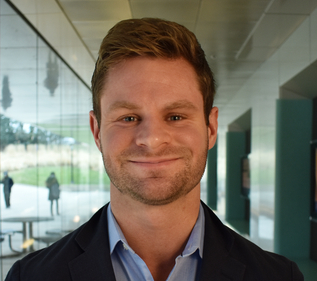 Matthew Kvalheim (courtesy of Kvalheim)
“It was a great privilege to speak about Professor Smale’s legacy, and in particular the deep impact his work has had on one of my projects funded by the Air Force Office of Scientific Research,” Kvalheim says. “The result of this project, which relies heavily on Smale’s breakthrough solution of a mathematical puzzle known as the ‘generalized Poincaré conjecture,’ helps us understand limitations in designing stable real-world systems.”
This work has far-reaching implications, from ensuring the safety of autonomous vehicles to optimizing complex robotics. By developing mathematical tools that apply across diverse applications, Kvalheim’s research offers universal insights into what systems can and cannot do, blending creativity with mathematical rigor to tackle fundamental questions with real-world impact.
Learn more about UMBC’s programs in mathematics and statistics.
]]>
Matthew Kvalheim, assistant professor of mathematics, was one of only about 20 scholars who spoke at a conference celebrating the 95th birthday of Stephen Smale, one of the most influential...
https://umbc.edu/quick-posts/stephen-smale-95th-conference/
https://dev.my.umbc.edu/api/v0/pixel/news/151331/guest@my.umbc.edu/8ad034036c83a56ebecfa693023dd927/api/pixel
cnms
mathstat
news
quick-post
research
science-and-tech
UMBC News & Magazine
https://dev.my.umbc.edu/groups/umbc-news-magazine
https://assets1-dev.my.umbc.edu/system/shared/avatars/groups/000/001/943/24435aa6207c452e7bc15cc74b42c7bb/xsmall.png?1748556657
https://assets1-dev.my.umbc.edu/system/shared/avatars/groups/000/001/943/24435aa6207c452e7bc15cc74b42c7bb/original.png?1748556657
https://assets2-dev.my.umbc.edu/system/shared/avatars/groups/000/001/943/24435aa6207c452e7bc15cc74b42c7bb/xxlarge.png?1748556657
https://assets2-dev.my.umbc.edu/system/shared/avatars/groups/000/001/943/24435aa6207c452e7bc15cc74b42c7bb/xlarge.png?1748556657
https://assets3-dev.my.umbc.edu/system/shared/avatars/groups/000/001/943/24435aa6207c452e7bc15cc74b42c7bb/large.png?1748556657
https://assets1-dev.my.umbc.edu/system/shared/avatars/groups/000/001/943/24435aa6207c452e7bc15cc74b42c7bb/medium.png?1748556657
https://assets2-dev.my.umbc.edu/system/shared/avatars/groups/000/001/943/24435aa6207c452e7bc15cc74b42c7bb/small.png?1748556657
https://assets1-dev.my.umbc.edu/system/shared/avatars/groups/000/001/943/24435aa6207c452e7bc15cc74b42c7bb/xsmall.png?1748556657
https://assets2-dev.my.umbc.edu/system/shared/avatars/groups/000/001/943/24435aa6207c452e7bc15cc74b42c7bb/xxsmall.png?1748556657
UMBC News & Magazine
1
0
false
Tue, 05 Aug 2025 14:22:26 -0400
Tue, 05 Aug 2025 14:22:26 -0400
PNC Bank On Campus
Join the team from PNC Bank for a "Banking in the USA" seminar.
Following the seminar, the team will be available to help interested students apply for a bank account.
Location: University Center 204
Friday 8/15, 2-3pm
Monday 8/25, 2-3pm
Wednesday 9/3, 2-3pm
***If you are going to apply for a bank account, please bring your I-20, passport, and other documents with you to the event***
]]>
Join the team from PNC Bank for a "Banking in the USA" seminar. Following the seminar, the team will be available to help interested students apply for a bank account. Location: University...
Flyer
https://assets2-dev.my.umbc.edu/system/shared/attachments/217b5a442d2b0fcd0061066d8b0e825b/6a0b1d73/news/000/151/330/d2af662257c2d673d8cf29d630eb25ab/Do you need a bank account.png?1754416820
https://dev.my.umbc.edu/api/v0/pixel/news/151330/guest@my.umbc.edu/a4c522e449c2b495ec8ebfbba544240b/api/pixel
International Student and Scholar Services (ISSS)
https://dev.my.umbc.edu/groups/ies
https://assets4-dev.my.umbc.edu/system/shared/avatars/groups/000/000/431/46ad84ea8ba0baeed7c3faf29d1fd4ef/xsmall.png?1693323874
https://assets3-dev.my.umbc.edu/system/shared/avatars/groups/000/000/431/46ad84ea8ba0baeed7c3faf29d1fd4ef/original.jpeg?1693323874
https://assets1-dev.my.umbc.edu/system/shared/avatars/groups/000/000/431/46ad84ea8ba0baeed7c3faf29d1fd4ef/xxlarge.png?1693323874
https://assets1-dev.my.umbc.edu/system/shared/avatars/groups/000/000/431/46ad84ea8ba0baeed7c3faf29d1fd4ef/xlarge.png?1693323874
https://assets4-dev.my.umbc.edu/system/shared/avatars/groups/000/000/431/46ad84ea8ba0baeed7c3faf29d1fd4ef/large.png?1693323874
https://assets3-dev.my.umbc.edu/system/shared/avatars/groups/000/000/431/46ad84ea8ba0baeed7c3faf29d1fd4ef/medium.png?1693323874
https://assets1-dev.my.umbc.edu/system/shared/avatars/groups/000/000/431/46ad84ea8ba0baeed7c3faf29d1fd4ef/small.png?1693323874
https://assets4-dev.my.umbc.edu/system/shared/avatars/groups/000/000/431/46ad84ea8ba0baeed7c3faf29d1fd4ef/xsmall.png?1693323874
https://assets3-dev.my.umbc.edu/system/shared/avatars/groups/000/000/431/46ad84ea8ba0baeed7c3faf29d1fd4ef/xxsmall.png?1693323874
International Student and Scholar Services (ISSS)
https://assets3-dev.my.umbc.edu/system/shared/thumbnails/news/000/151/330/853e5201d06428132b6f73bb43d9d3ec/xxlarge.jpg?1754416757
https://assets1-dev.my.umbc.edu/system/shared/thumbnails/news/000/151/330/853e5201d06428132b6f73bb43d9d3ec/xlarge.jpg?1754416757
https://assets3-dev.my.umbc.edu/system/shared/thumbnails/news/000/151/330/853e5201d06428132b6f73bb43d9d3ec/large.jpg?1754416757
https://assets1-dev.my.umbc.edu/system/shared/thumbnails/news/000/151/330/853e5201d06428132b6f73bb43d9d3ec/medium.jpg?1754416757
https://assets2-dev.my.umbc.edu/system/shared/thumbnails/news/000/151/330/853e5201d06428132b6f73bb43d9d3ec/small.jpg?1754416757
https://assets2-dev.my.umbc.edu/system/shared/thumbnails/news/000/151/330/853e5201d06428132b6f73bb43d9d3ec/xsmall.jpg?1754416757
https://assets2-dev.my.umbc.edu/system/shared/thumbnails/news/000/151/330/853e5201d06428132b6f73bb43d9d3ec/xxsmall.jpg?1754416757
0
0
true
Tue, 05 Aug 2025 14:03:16 -0400
Nurturing peace through daily acts, collaborative research with Afro-Colombian women in Colombia’s Pacific Northwest
Over 10 years ago, Tania Lizarazo met with Justa Mena Córdoba in Chocó, Colombia. Before Mena Córdoba passed away, Lizarazo promised to tell her story as one of the founding commissioners of the Gender Commission of COCOMACIA, Colombia’s largest Afro-Colombian peasants’ association.
With her new book, Postconflict Utopias: Everyday Survival in Chocó, Colombia (University of Illinois Press, 2024), Lizarazo fulfills that promise. “It means a lot to me to publish this book as this was my first collaborative research project,” says Lizarazo, associate professor of modern languages, linguistics, and intercultural communication and global studies. “I promised Justa that I would do my best to share her story and legacy of peace-building amidst decades of ongoing violence by supporting women’s daily work.”
 Lizarazo (red shirt) with members of the Gender Commission COCOMACIA. (Image courtesy of Lizarazo)
Lizarazo’s interest in Latin American cultural studies and transnational feminist research led her to explore the Gender Commission of COCOMACIA. Curious to learn more, Lizarazo reached out to Mena Córdoba. She invited Lizarazo to her home and the headquarters of the commission, both in Chocó, located in the northwest, bordering Panama and the Atlantic and Pacific Oceans, and where the largest Afro-Colombian community in the country lives. For over a decade, Mena Córdoba served as Lizarazo’s friend, mentor, and fellow researcher.
Many scholars, says Lizarazo, both Colombian like herself, and foreign, research the Colombian Pacific and use ethnography as their main research approach. She notes that while she uses ethnography, her work also places the community on equal footing with researchers. The book documents the collaboration between Lizarazo and the Afro-Colombian women of the Gender Commission. The team used digital storytelling tools to document the commission’s daily efforts to build networks and share resources that strengthen their families, schools, jobs, and communities.
 Tania Lizarazo (l) with a member of the Gender Commission of COCOMACIA at the community radio station. (Image courtesy of Lizarazo)
“Sometimes we highlight protests but ignore the daily mundane actions that build over time and make collective survival possible. This is the case for Black women in the Colombian Pacific,” explains Lizarazo for The Conversation. “Their solidarity is a reminder that peace and justice are a collaborative, everyday effort. As Justa told me in 2012: “One cannot change the world by herself.”
Learn more about Lizarazo’s collaboration with fellow UMBC faculty María Célleri, Yolanda Valencia, and Thania Muñoz to document the experiences of Latinx communities with Latinx communities in D.C., Maryland, and Virginia.
Visit the Walters Art Museum’s new “Latin American Art/ Arte Latinoamericano” exhibit, where Lizarazo contributed her expertise in Colombian history.
]]>
Over 10 years ago, Tania Lizarazo met with Justa Mena Córdoba in Chocó, Colombia. Before Mena Córdoba passed away, Lizarazo promised to tell her story as one of the founding commissioners of the...
https://umbc.edu/stories/afro-colombian-women-and_tania_lizarazo/
https://dev.my.umbc.edu/api/v0/pixel/news/151317/guest@my.umbc.edu/1615370153fa04efd5365a78a088d73c/api/pixel
cahss
cahss-research
globalstudies
international
mlli
news
policy-and-society
research
retriever-authors
story
UMBC News & Magazine
https://dev.my.umbc.edu/groups/umbc-news-magazine
https://assets1-dev.my.umbc.edu/system/shared/avatars/groups/000/001/943/24435aa6207c452e7bc15cc74b42c7bb/xsmall.png?1748556657
https://assets1-dev.my.umbc.edu/system/shared/avatars/groups/000/001/943/24435aa6207c452e7bc15cc74b42c7bb/original.png?1748556657
https://assets2-dev.my.umbc.edu/system/shared/avatars/groups/000/001/943/24435aa6207c452e7bc15cc74b42c7bb/xxlarge.png?1748556657
https://assets2-dev.my.umbc.edu/system/shared/avatars/groups/000/001/943/24435aa6207c452e7bc15cc74b42c7bb/xlarge.png?1748556657
https://assets3-dev.my.umbc.edu/system/shared/avatars/groups/000/001/943/24435aa6207c452e7bc15cc74b42c7bb/large.png?1748556657
https://assets1-dev.my.umbc.edu/system/shared/avatars/groups/000/001/943/24435aa6207c452e7bc15cc74b42c7bb/medium.png?1748556657
https://assets2-dev.my.umbc.edu/system/shared/avatars/groups/000/001/943/24435aa6207c452e7bc15cc74b42c7bb/small.png?1748556657
https://assets1-dev.my.umbc.edu/system/shared/avatars/groups/000/001/943/24435aa6207c452e7bc15cc74b42c7bb/xsmall.png?1748556657
https://assets2-dev.my.umbc.edu/system/shared/avatars/groups/000/001/943/24435aa6207c452e7bc15cc74b42c7bb/xxsmall.png?1748556657
UMBC News & Magazine
0
0
false
Tue, 05 Aug 2025 08:58:12 -0400
Tue, 05 Aug 2025 08:58:12 -0400
The evolution, existence, and extinction of butch culture
Ever wonder what dinosaur poets would write about if they knew their moment of extinction was near? That’s one of the questions poet Tanya Olson, associate teaching professor of English, considered while writing her latest book, Born Backwards (YesYes Books, 2024). As she worked on the collection, Olson reflected on extinction and preservation—of food, objects, experiences, relationships, places, and people, especially butch life in the American South during the 1980s and ’90s.
“The poems of Born Backwards remember anyone who feels out of place—in a body, a hometown, or a century,” says Olson. “In a time when such histories are again a threat, remembering becomes urgent.”
One of Oslon’s favorite parts of teaching is guiding students through the research process for their writing. Some of Olson’s research for the 20 poems in Born Backwards draws on her life growing up in the South. She shares episodes of her time on her grandmother’s farm doing chores, learning to drive from her father—starting with a push mower—and helping her mom tend a large vegetable garden. Alongside these experiences are reflections on questions of being queer and the decision to leave in search of a more queer-friendly place.
Olson also draws inspiration from the MTV revolution of the 1980s and the country music she heard growing up—artists like Johnny Cash, Patsy Cline, and Loretta Lynn—as well as the trailblazing career of k.d. lang, a pioneer for lesbian country music artists. Reflecting on extinction and preservation, Olson contemplates what could be lost if she is the last butch to remember smoky lesbian bars and to witness the decline of butch culture, wondering who will preserve these histories in the future.
Butches are not being erased
Butches are not being replaced
It is simply our time to go
Extinction happens to everyone
Tanya Olson
“Let Me Not Forget Me Not,” one of the poems in Born Backwards, was featured in the DC 2025 Pride Poem-A-Day Series.
Get tickets to see Tanya Olson at Profs & Pints Baltimore: Queer Country on Monday, August 18, 2025.
Read more of Tanya Olson’s poetry in Boyishly (Yesyes, 2013) and Stay (Yesyes, 2019).
Header graphic: Design by Jill Blum/UMBC. Book cover and headshot courtesy of Tanya Olson.
]]>
Ever wonder what dinosaur poets would write about if they knew their moment of extinction was near? That’s one of the questions poet Tanya Olson, associate teaching professor of English,...
https://umbc.edu/stories/_butch_born_backwards_poetry_queer/
https://dev.my.umbc.edu/api/v0/pixel/news/151312/guest@my.umbc.edu/5abdb7701e17d8edbdb93fb686a13873/api/pixel
arts-and-culture
cahss
cahss-research
english
news
retriever-authors
story
UMBC News & Magazine
https://dev.my.umbc.edu/groups/umbc-news-magazine
https://assets1-dev.my.umbc.edu/system/shared/avatars/groups/000/001/943/24435aa6207c452e7bc15cc74b42c7bb/xsmall.png?1748556657
https://assets1-dev.my.umbc.edu/system/shared/avatars/groups/000/001/943/24435aa6207c452e7bc15cc74b42c7bb/original.png?1748556657
https://assets2-dev.my.umbc.edu/system/shared/avatars/groups/000/001/943/24435aa6207c452e7bc15cc74b42c7bb/xxlarge.png?1748556657
https://assets2-dev.my.umbc.edu/system/shared/avatars/groups/000/001/943/24435aa6207c452e7bc15cc74b42c7bb/xlarge.png?1748556657
https://assets3-dev.my.umbc.edu/system/shared/avatars/groups/000/001/943/24435aa6207c452e7bc15cc74b42c7bb/large.png?1748556657
https://assets1-dev.my.umbc.edu/system/shared/avatars/groups/000/001/943/24435aa6207c452e7bc15cc74b42c7bb/medium.png?1748556657
https://assets2-dev.my.umbc.edu/system/shared/avatars/groups/000/001/943/24435aa6207c452e7bc15cc74b42c7bb/small.png?1748556657
https://assets1-dev.my.umbc.edu/system/shared/avatars/groups/000/001/943/24435aa6207c452e7bc15cc74b42c7bb/xsmall.png?1748556657
https://assets2-dev.my.umbc.edu/system/shared/avatars/groups/000/001/943/24435aa6207c452e7bc15cc74b42c7bb/xxsmall.png?1748556657
UMBC News & Magazine
0
0
false
Fri, 01 Aug 2025 15:28:14 -0400
Fri, 01 Aug 2025 15:28:14 -0400
UMBC’s human services psychology doctoral program is inspiring careers to serve people with opioid use disorders and post-traumatic stress
If you could develop a treatment to improve the care of millions of people with opioid use disorder (OUD) and post-traumatic stress disorder (PTSD), where would you start? For doctoral students like Laurel Meyer, with a passion for serving this community, the answer begins with funded clinical research opportunities and faculty mentorship.
In 2020, Rebecca Schacht, clinical psychologist and associate professor of psychology, and Kevin R. Wenzel, a clinical psychologist and director of research at Baltimore-based Maryland Treatment Centers, welcomed Meyer into the human services psychology doctoral program as a research coordinator in their study. Schacht and Wenzel were conducting a randomized trial of written exposure therapy (WET) for people with PTSD in residential OUD and substance use disorder (SUD) treatment settings. WET is an evidence-based treatment for PTSD in which patients process their trauma by writing an in-depth narrative about a specific traumatic event in five sessions.

 (l-r): Rebecca Schacht and Kevin R. Wenzel. (Image courtesy of Schacht)
“At the start of the project, I contributed to research design and protocol development. I then collaborated with clinical staff at the treatment facility to identify and recruit eligible patients,” says Meyer, who, along with fellow research assistant Samantha Berg, a fifth-year human services psychology doctoral student, had the opportunity to share the findings as co-authors on the article “A pilot test of Written Exposure Therapy for PTSD in residential substance use treatment” in the American Journal on Addictions.
“Throughout the trial, I worked directly with participants in several capacities, including assessing eligibility for the study, providing Written Exposure Therapy as a study therapist, and conducting follow-up interviews to understand participants’ experiences,” says Meyer.
Thanks to the team’s rigorous research, Schacht and Wenzel, the co-principal investigator, are scaling up their research with a grant of over $3 million from the National Institute on Drug Abuse to develop and test Written Exposure in Substance Treatment (WEST), an adapted version of WET for use with people with OUD in residential SUD treatment.
“One of the most exciting aspects of grants like this one is that they include funding for Ph.D. students. This project will support at least two doctoral students throughout the six years of the project, including summer funding,” says Schacht, the director of the UMBC Psychology Training Clinic. “Most doctoral students serve as either research assistants or teaching assistants. These positions provide students with mentored professional development and include tuition, health insurance, and stipends to support living expenses.”
The research cycle
Now a sixth-year doctoral student, Meyer is passing the baton to the next generation of researchers in the human services psychology doctoral program, one of whom is second-year doctoral student Alexis Alfano. This summer, Alfano has been preparing assessments by programming measures in Qualtrics, an online survey tool to build and distribute surveys, collect responses, and analyze response data. Because the research involves human participants, Alfano is assisting in developing a detailed plan for participant involvement to submit to the Institutional Review Board for review and approval. She also contributed to the development of the procedure manual and materials used during interviews and focus groups, and assisted with programming forms, transcribing qualitative data, and data entry.
“I had the opportunity to become involved in Project WEST by being a student in Dr. Schacht’s lab and receiving her mentorship,” says Alfano. “For the last two years, I have participated in a variety of tasks, including recruiting and interviewing both patients and staff at the Maryland Treatment Centers to gather feedback on Written Exposure Therapy.”
 (l-r): Julia Thomas and Morgan Dease, research coordinators at Maryland Treatment Centers, demonstrate what a WEST session looks like. (Image courtesy of Schacht)
Maryland Treatment Centers have a longstanding history of conducting clinical research trials to improve patient care and treatment delivery, with the support of patients and staff, as well as researchers and universities. The seven-year partnership between Schacht and Wenzel offers students a real-world clinical setting to develop hands-on clinical skills essential for treating patients, collaborating with center staff and fellow researchers, and gaining the experience needed to become clinical psychologists and conduct clinical research.
“Patients are at the center of the research. Their experiences, insights, and feedback help us identify which aspects of the treatment are most effective and which need to be adjusted for maximum impact,” says Schacht. “We consider people to be the experts of their own experience, and their perspectives are essential to designing an intervention that’s aligned with their needs.” Schacht hopes that, by the end of the project, the team will have an effective intervention that can be widely implemented, making WEST the gold-standard treatment for PTSD available in residential and other SUD treatment contexts.
The long game
Doctoral training is a years-long process. In the coming year, Meyer is completing her predoctoral internship in an integrated healthcare setting where she is receiving further clinical training in evidence-based treatment for PTSD. She is excited to move closer to her career goal to combine both clinical practice and clinically focused research.
“My role as research coordinator in Dr. Schacht’s research on Written Exposure Therapy has deepened my passion for clinical research and has been instrumental in shaping my long-term career goals,” says Meyer. “Being part of research that has such a direct impact on clinical care has inspired me to pursue a career in which I can use science and clinical practice to enhance treatment outcomes and quality of life for individuals who have experienced trauma and substance use.”
Learn more about UMBC’s psychology graduate programs.
]]>
If you could develop a treatment to improve the care of millions of people with opioid use disorder (OUD) and post-traumatic stress disorder (PTSD), where would you start? For doctoral students...
https://umbc.edu/stories/psych-program-careers-in-opioid-use-disorders-and-ptsd/
https://dev.my.umbc.edu/api/v0/pixel/news/151261/guest@my.umbc.edu/bb9c2cdfeb33459f8b9b6306cd4e1480/api/pixel
cahss
cahss-research
gradresearch
news
policy-and-society
psychology
research
story
UMBC News & Magazine
https://dev.my.umbc.edu/groups/umbc-news-magazine
https://assets1-dev.my.umbc.edu/system/shared/avatars/groups/000/001/943/24435aa6207c452e7bc15cc74b42c7bb/xsmall.png?1748556657
https://assets1-dev.my.umbc.edu/system/shared/avatars/groups/000/001/943/24435aa6207c452e7bc15cc74b42c7bb/original.png?1748556657
https://assets2-dev.my.umbc.edu/system/shared/avatars/groups/000/001/943/24435aa6207c452e7bc15cc74b42c7bb/xxlarge.png?1748556657
https://assets2-dev.my.umbc.edu/system/shared/avatars/groups/000/001/943/24435aa6207c452e7bc15cc74b42c7bb/xlarge.png?1748556657
https://assets3-dev.my.umbc.edu/system/shared/avatars/groups/000/001/943/24435aa6207c452e7bc15cc74b42c7bb/large.png?1748556657
https://assets1-dev.my.umbc.edu/system/shared/avatars/groups/000/001/943/24435aa6207c452e7bc15cc74b42c7bb/medium.png?1748556657
https://assets2-dev.my.umbc.edu/system/shared/avatars/groups/000/001/943/24435aa6207c452e7bc15cc74b42c7bb/small.png?1748556657
https://assets1-dev.my.umbc.edu/system/shared/avatars/groups/000/001/943/24435aa6207c452e7bc15cc74b42c7bb/xsmall.png?1748556657
https://assets2-dev.my.umbc.edu/system/shared/avatars/groups/000/001/943/24435aa6207c452e7bc15cc74b42c7bb/xxsmall.png?1748556657
UMBC News & Magazine
2
0
false
Fri, 01 Aug 2025 12:16:20 -0400
Fri, 01 Aug 2025 12:16:20 -0400
