UMBC and Building STEPs partner to help Baltimore City high school students reach their potential in STEM
Boing! Bouncy balls strike the hallway floor as small groups of students measure bounce heights with a meterstick and record data. They repeat the test in a carpeted classroom, then analyze results in Excel, discussing how surfaces affect energy conversion.
This might sound like a physics laboratory, but it’s actually a math course for high schoolers in Building Science Technology Education Partnerships (STEPs), a college-preparatory program for students from under-resourced high schools in Baltimore City. For two weeks this summer, 21 rising seniors and college-bound students, nine college-student tutors, and instructor Rebecca Kirvan, M.A. ’13, secondary education and teaching, filled the fourth floor of UMBC’s Interdisciplinary Life Sciences Building for intensive, hands-on math instruction each afternoon. In the mornings, the students participated in professional development programming, such as a financial literacy workshop and team-based problem-solving challenges.
This is the fifth year of collaboration between Building STEPS and UMBC, but thanks to a deepening relationship between the organization and the College of Natural and Mathematical Sciences (CNMS), this year the summer program came to UMBC’s campus for the first time. In addition, the math portion shifted from traditional tutoring to an adapted version of MATH 110: Math in Action, a unique laboratory-style math course heading into its third year being taught at UMBC.
 UMBC tutor Xavier Cohen (left), a rising senior majoring in math and computer science, has been tutoring math in various capacities since 2021. He says that he sees firsthand how the activity-based curriculum used by Building STEPs improves student learning. (Brad Ziegler/UMBC)
“UMBC and CNMS have been incredible collaborators, providing Building STEPs students with accessible and effective math enrichment in an immersive college experience,” says Debra Hettleman, CEO of Building STEPs.
William R. LaCourse, CNMS dean, believes strongly in making math education engaging and relevant for all students, in support of developing their critical thinking skills. “Teaching math in an interactive format shows the students how it relates to their everyday lives,” he says. “Creating opportunities for them to make those connections is so important.”
From tutoring to hands-on labs
In 2021, Cindy Greenwood, associate director of UMBC’s Center for Women in Technology, coordinated the original tutoring initiative for her capstone project in UMBC’s certificate program in community leadership, after learning from Building STEPs that that was what they needed most.
Alexis O’Malley ’18, mathematics and psychology, took the lead developing a robust curriculum for the tutors to implement on top of her role as a calculus instructor in CNMS. Until this year, the University of Baltimore hosted the tutoring sessions. For 2025, CNMS hired Kirvan to modify the activities in MATH 110, which O’Malley also originally led with support from math department faculty.
“As a former high school teacher, I’ve enjoyed the opportunity to adapt college labs for a high school audience,” Kirvan says. “It’s great to work with this group of students and help them beef up their math skills and get ready for college.”
 UMBC alumna Rebecca Kirvan, right, taught the lab-based math course this summer. (Brad Ziegler/UMBC)
The students see the benefits.
“It’s been good to review concepts and practice my math skills,” shared Benjamin Kima, a participant from Mergenthaler Vocational-Technical High School. Sam Boad, also at Mergenthaler, said, “I’m glad they’re giving us a chance to see the content ahead of the school year.” Zaiqah Pinkney, from City Neighbors High School, added, “I like hands-on activities. It helps me learn better.”
“Students consistently rate math as their favorite part of the day,” shares Sheyna Mikeal, chief program officer at Building STEPs. “It challenges them, but the small-group structure, guided by dedicated tutors, builds confidence and encourages real growth.”
Campus immersion and career prep
Beyond providing math instruction, CNMS funded lunches at UMBC’s True Grit’s dining hall, freeing up Building STEPs’ budget for student transportation and enabling greater participation.
“I’ve enjoyed the opportunity to be on a college campus,” shared Brandon Thomas, a student at Mergenthaler.
And beyond the summer program, a larger cohort of Building STEPs students visited UMBC during the semester. They heard presentations from CNMS departments and took a tour of campus. “We’ve witnessed the power of learning on a college campus shifting the students’ perspective,” Mikeal says. “It reinforces that college is not just a goal, it’s an environment where they belong.”
Other Building STEPs activities include visits to companies like Northrop Grumman and Beckton-Dickinson, workshops on searching for and applying to colleges, and one-on-one feedback with volunteer writing advisors.
 Benjamin Kima (standing) runs a trial in a lab activity about potential and kinetic energy. (Brad Ziegler/UMBC)
Strength beyond academics
Students in the program, founded in 2000, are recommended by college counselors and teachers, and must maintain a 3.0 GPA. This past academic year, there were 83 juniors and 83 seniors enrolled, and there are 175 Building STEPs alumni. Nearly 80 percent earn a college degree, and nearly two-thirds earn degrees in STEM. Coming from 15 of Baltimore’s most challenged high schools, 87 percent are first-generation college graduates. Alumni return from college to offer programming to current participants, fostering leadership development.
“Together with UMBC, we’re not only strengthening academic skills—we’re also expanding access to opportunity,” Mikeal says.
LaCourse sees providing space, funds, and effective and engaging math activities to benefit local high schoolers as a natural fit for the college.
“Building STEPs participants are bright, motivated students who just need a little support to reach their potential,” LaCourse says. “It’s a privilege to be able to offer the resources the program needs—from classrooms to curriculum—to enable an enriching summer math and professional development experience. We hope to see some of their faces on campus again soon—this time as UMBC students.”
 Building STEPs participant Brandon Thomas relaxes with his group members between experiments. (Brad Ziegler/UMBC)
]]>
Boing! Bouncy balls strike the hallway floor as small groups of students measure bounce heights with a meterstick and record data. They repeat the test in a carpeted classroom, then analyze...
https://umbc.edu/stories/umbc-building-steps-partnership/
https://dev.my.umbc.edu/api/v0/pixel/news/151257/guest@my.umbc.edu/78258b47f3068ff9dd7afde03f0bddb5/api/pixel
alumni
baltimore-city
cahss
cnms
coeit
community
community-leadership
cwit
education
news
science-and-tech
story
UMBC News & Magazine
https://dev.my.umbc.edu/groups/umbc-news-magazine
https://assets1-dev.my.umbc.edu/system/shared/avatars/groups/000/001/943/24435aa6207c452e7bc15cc74b42c7bb/xsmall.png?1748556657
https://assets1-dev.my.umbc.edu/system/shared/avatars/groups/000/001/943/24435aa6207c452e7bc15cc74b42c7bb/original.png?1748556657
https://assets2-dev.my.umbc.edu/system/shared/avatars/groups/000/001/943/24435aa6207c452e7bc15cc74b42c7bb/xxlarge.png?1748556657
https://assets2-dev.my.umbc.edu/system/shared/avatars/groups/000/001/943/24435aa6207c452e7bc15cc74b42c7bb/xlarge.png?1748556657
https://assets3-dev.my.umbc.edu/system/shared/avatars/groups/000/001/943/24435aa6207c452e7bc15cc74b42c7bb/large.png?1748556657
https://assets1-dev.my.umbc.edu/system/shared/avatars/groups/000/001/943/24435aa6207c452e7bc15cc74b42c7bb/medium.png?1748556657
https://assets2-dev.my.umbc.edu/system/shared/avatars/groups/000/001/943/24435aa6207c452e7bc15cc74b42c7bb/small.png?1748556657
https://assets1-dev.my.umbc.edu/system/shared/avatars/groups/000/001/943/24435aa6207c452e7bc15cc74b42c7bb/xsmall.png?1748556657
https://assets2-dev.my.umbc.edu/system/shared/avatars/groups/000/001/943/24435aa6207c452e7bc15cc74b42c7bb/xxsmall.png?1748556657
UMBC News & Magazine
1
0
false
Fri, 01 Aug 2025 12:07:10 -0400
Fri, 01 Aug 2025 12:07:10 -0400
Yasmine Kotturi named one of nine inaugural Computing Research Association Trustworthy AI Research Fellows
Building STEPs participant Brandon Thomas relaxes with his group members between experiments. (Brad Ziegler/UMBC)
]]>
Boing! Bouncy balls strike the hallway floor as small groups of students measure bounce heights with a meterstick and record data. They repeat the test in a carpeted classroom, then analyze...
https://umbc.edu/stories/umbc-building-steps-partnership/
https://dev.my.umbc.edu/api/v0/pixel/news/151257/guest@my.umbc.edu/78258b47f3068ff9dd7afde03f0bddb5/api/pixel
alumni
baltimore-city
cahss
cnms
coeit
community
community-leadership
cwit
education
news
science-and-tech
story
UMBC News & Magazine
https://dev.my.umbc.edu/groups/umbc-news-magazine
https://assets1-dev.my.umbc.edu/system/shared/avatars/groups/000/001/943/24435aa6207c452e7bc15cc74b42c7bb/xsmall.png?1748556657
https://assets1-dev.my.umbc.edu/system/shared/avatars/groups/000/001/943/24435aa6207c452e7bc15cc74b42c7bb/original.png?1748556657
https://assets2-dev.my.umbc.edu/system/shared/avatars/groups/000/001/943/24435aa6207c452e7bc15cc74b42c7bb/xxlarge.png?1748556657
https://assets2-dev.my.umbc.edu/system/shared/avatars/groups/000/001/943/24435aa6207c452e7bc15cc74b42c7bb/xlarge.png?1748556657
https://assets3-dev.my.umbc.edu/system/shared/avatars/groups/000/001/943/24435aa6207c452e7bc15cc74b42c7bb/large.png?1748556657
https://assets1-dev.my.umbc.edu/system/shared/avatars/groups/000/001/943/24435aa6207c452e7bc15cc74b42c7bb/medium.png?1748556657
https://assets2-dev.my.umbc.edu/system/shared/avatars/groups/000/001/943/24435aa6207c452e7bc15cc74b42c7bb/small.png?1748556657
https://assets1-dev.my.umbc.edu/system/shared/avatars/groups/000/001/943/24435aa6207c452e7bc15cc74b42c7bb/xsmall.png?1748556657
https://assets2-dev.my.umbc.edu/system/shared/avatars/groups/000/001/943/24435aa6207c452e7bc15cc74b42c7bb/xxsmall.png?1748556657
UMBC News & Magazine
1
0
false
Fri, 01 Aug 2025 12:07:10 -0400
Fri, 01 Aug 2025 12:07:10 -0400
Yasmine Kotturi named one of nine inaugural Computing Research Association Trustworthy AI Research Fellows
Yasmine Kotturi, an assistant professor of human-centered computing, was selected by the Computing Research Association (CRA) to be part of the inaugural cohort of Trustworthy AI Research Fellows. The fellowship program, sponsored by Microsoft, supports researchers working to integrate ethical and societal considerations into computing research, particularly in the field of AI. The nine inaugural fellows hail from institutions across the U.S. and bring expertise in the social sciences together with computing knowledge.
“I’m most excited about building connections with fellow scholars who are reimagining what trustworthy AI looks like—especially across institutions and disciplines—to fundamentally shift how we teach and practice computing,” says Kotturi, whose research focuses on designing and building sociotechnical systems that support worker resilience, especially among those navigating precarious employment and entrepreneurship. “At a time when civic participation feels increasingly urgent, I see this work as essential to preparing technologists to engage with both the technical and social realities of their practice,” she says.
The researchers began their work with a virtual kick-off meeting in July and will attend a four-day, in-person field school in August. Over the course of the 15-month fellowship, they will engage in collaborative research, contribute to the development of a national trustworthy AI lexicon and framework, and help lead initiatives at CRA partner institutions.
“This inaugural cohort brings a remarkable range of expertise, insight, and passion to the challenges of building more trustworthy AI,” says Mary L. Gray, senior principal researcher at Microsoft Research and the chair of the CRA Trustworthy AI Fellowship Advisory Committee, in an announcement of the cohort selection. “I can’t wait to get started and see what they accomplish together.”
]]>
Yasmine Kotturi, an assistant professor of human-centered computing, was selected by the Computing Research Association (CRA) to be part of the inaugural cohort of Trustworthy AI Research Fellows....
https://umbc.edu/quick-posts/kotturi-trustworthy-ai-research-fellow/
https://dev.my.umbc.edu/api/v0/pixel/news/151258/guest@my.umbc.edu/7abced85ba668507cc1c89f3f539c750/api/pixel
coeit
is
news
quick-post
research
science-and-tech
UMBC News & Magazine
https://dev.my.umbc.edu/groups/umbc-news-magazine
https://assets1-dev.my.umbc.edu/system/shared/avatars/groups/000/001/943/24435aa6207c452e7bc15cc74b42c7bb/xsmall.png?1748556657
https://assets1-dev.my.umbc.edu/system/shared/avatars/groups/000/001/943/24435aa6207c452e7bc15cc74b42c7bb/original.png?1748556657
https://assets2-dev.my.umbc.edu/system/shared/avatars/groups/000/001/943/24435aa6207c452e7bc15cc74b42c7bb/xxlarge.png?1748556657
https://assets2-dev.my.umbc.edu/system/shared/avatars/groups/000/001/943/24435aa6207c452e7bc15cc74b42c7bb/xlarge.png?1748556657
https://assets3-dev.my.umbc.edu/system/shared/avatars/groups/000/001/943/24435aa6207c452e7bc15cc74b42c7bb/large.png?1748556657
https://assets1-dev.my.umbc.edu/system/shared/avatars/groups/000/001/943/24435aa6207c452e7bc15cc74b42c7bb/medium.png?1748556657
https://assets2-dev.my.umbc.edu/system/shared/avatars/groups/000/001/943/24435aa6207c452e7bc15cc74b42c7bb/small.png?1748556657
https://assets1-dev.my.umbc.edu/system/shared/avatars/groups/000/001/943/24435aa6207c452e7bc15cc74b42c7bb/xsmall.png?1748556657
https://assets2-dev.my.umbc.edu/system/shared/avatars/groups/000/001/943/24435aa6207c452e7bc15cc74b42c7bb/xxsmall.png?1748556657
UMBC News & Magazine
1
0
false
Fri, 01 Aug 2025 11:50:18 -0400
Meet a Retriever—Dann Malihom ’10, M.A. ’16, UMBC staff member, sociology faculty, and Alumni Association board member
Meet Dann Malihom ’10, M.A. ’16. Dann has spent most of his adult life at UMBC. He is a double alum (with plans to be a triple alum one day), earning both his degrees in sociology. He is a UMBC staff member, serving as the event specialist in the Office of Institutional Advancement. He is an adjunct faculty member in the sociology, anthropology, and public health department. And Dann also serves as the vice president of engagement on the UMBC Alumni Association Board of Directors. Talk about a lifelong Retriever! Take it away, Dann!
Q: What is your WHY? What brought you to UMBC?
A: UMBC was appealing to me because of its authenticity. It felt different from “traditional” colleges, not because it was trying and failing or trying to be intentionally counter-culture. It just was. I immediately felt welcomed and embraced for who I was, academically and personally. In an age when everything feels marketed or insincere, UMBC tells you up front that we are not just aiming for excellence, but inclusive excellence.
UMBC has always been an institution that embraces inclusive excellence. It wants you to be unapologetically yourself and will ensure you have the support to do so. It is definitely a place that doesn’t just talk the talk, but walks the walk.
Dann Malihom ’10, M.A. ’16
Q: Who is someone in the UMBC community who has inspired you or supported you?
A: Christine Mair of the Department of Sociology, Anthropology, and Public Health. She was my mentor during my thesis for my master’s in applied sociology. She was the reason I was able to get a position as an adjunct with UMBC in 2017, and was a fantastic support as I learned the ropes of being a professor. She showed immediate faith in me and has always been a valuable resource for me to turn to whenever I need a suggestion, direction, or even just confirmation that I was making the right choices with my teaching pedagogy.
Q: What do you love about sociology?
A: I love teaching in the sociology, anthropology, and public health department. By definition, all of us are connected to sociology due to the fact that we live, learn, and interact with society. The little “ah ha!” moments when students begin to make connections to things that have influenced them never get old. While the course material can sometimes get heavy as we talk about topics like racism, gender inequality, and social stratification, the students always show deep reflection and recognition of these social issues. Even more promising, they take these recognitions of the problems as their first steps toward correcting them.
 After participating in the Family Fun Run at Homecoming 2024 with his kids, Malihom took a photo with a former colleague, Robert Bernhard, and two former student employees.
Q: Tell us about your current job. What do you like most about it?
A: I have worked at UMBC full-time since 2012. I started out as a facilities coordinator in Campus Life Operations before transitioning into my current role as the event specialist in the Office of Institutional Advancement in 2024. I enjoy getting to support milestone events that bring the students, faculty, staff, and UMBC community together in a shared place of belonging. Commencement is a whirlwind of an event that means so much to so many people, such as first-generation students, international students, and non-traditional students. Being able to be a part of that as these individuals walk across stage is so rewarding.
Q: What would you tell someone who is considering a career at UMBC?
A: UMBC is a special place. This is reflected in the number of alumni who are now staff members. It may not be for everyone, but for many, it is truly a place they love and are welcomed fully.
Q: Where have you found support in the UMBC community?
A: The shared governance aspect of UMBC is a wonderful thing. UMBC truly strives to include all voices and perspectives in decisions, and it shows. Whether it’s through groups like the Exempt Staff Senate or just the accessibility of administration, it is easy to share your opinion and, perhaps more importantly, feel like you’ve actually been heard.
Q: How have you stayed connected with the UMBC alumni community?
A: I have been a member of the Alumni Association Board of Directors since 2019. I initially joined at the recommendation of the current president, Nate Dissmeyer ’07, and became a part of the Strategic Initiatives committee. Last year, I was able to become the chair of that committee, and starting this year, I am the vice president of engagement for the board. My positions have afforded me the opportunity to meet and connect with alumni not just from my cohort, but as far back as the Founding Four (alumni from UMBC’s first four graduating classes).
Q: What drives you to support UMBC?
A: My teaching philosophy that I inherited from my high school philosophy teacher is “You can count the number of seeds in an apple, but you can’t count the number of apples in a seed.” Every year, I give to the Department of Sociology, Anthropology, and Public Health, the Women’s, Gender, & Equity Center, and the Alumni Endowment Scholarship Fund. Some of the recipients have been students I’ve taught directly. Regardless of whether I know them or not, I know UMBC is developing engaged, empathetic, global citizens, and many of them will go on to change the world.
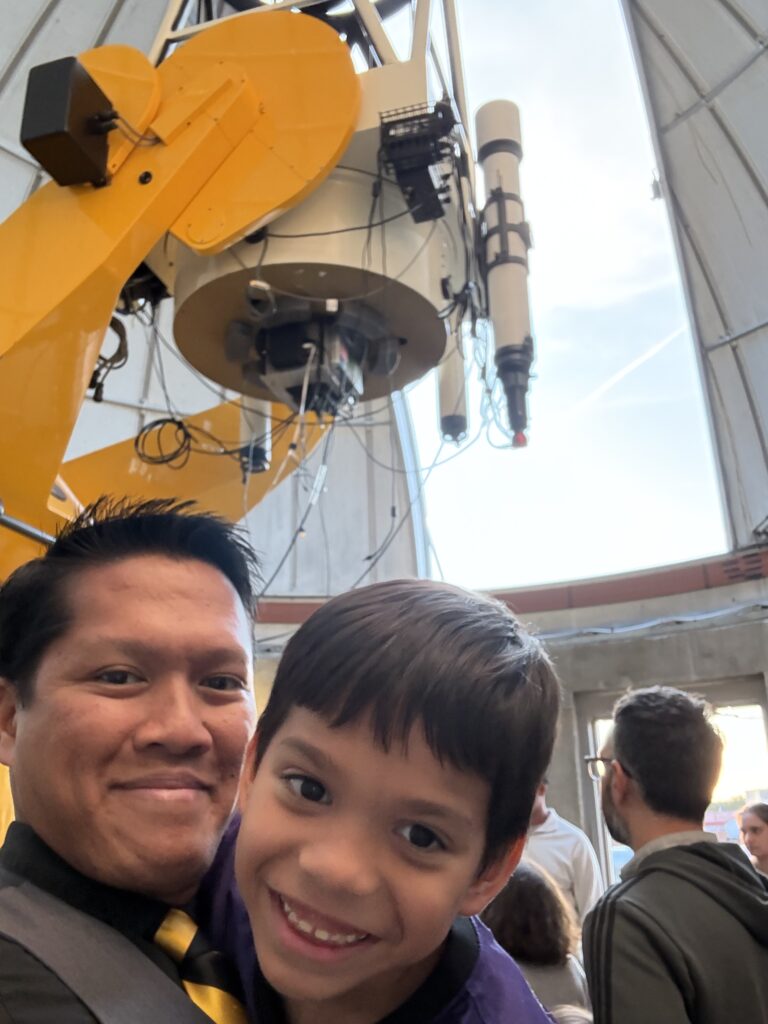
Pictured right: Malihom and his son Miles, who are both obsessed with space, got to check out the telescope at the UMBC Observatory as part of the Homecoming celebration.
* * * * *
UMBC’s greatest strength is its people. When people meet Retrievers and hear about the passion they bring, the relationships they create, the ways they support each other, and the commitment they have to inclusive excellence, they truly get a sense of our community. That’s what “Meet a Retriever” is all about.
Learn more about how UMBC can help you achieve your goals.
]]>
Meet Dann Malihom ’10, M.A. ’16. Dann has spent most of his adult life at UMBC. He is a double alum (with plans to be a triple alum one day), earning both his degrees in sociology. He is a UMBC...
https://umbc.edu/stories/meet-dann-malihom-sociology-faculty-board-member/
https://dev.my.umbc.edu/api/v0/pixel/news/151248/guest@my.umbc.edu/d49adbc0a8dbd4b0a24d8164cffbdd87/api/pixel
alumni
alumni-association
alumni-endowed-scholarship
impact
magazine
meet-a-retriever
sociology
story
UMBC News & Magazine
https://dev.my.umbc.edu/groups/umbc-news-magazine
https://assets1-dev.my.umbc.edu/system/shared/avatars/groups/000/001/943/24435aa6207c452e7bc15cc74b42c7bb/xsmall.png?1748556657
https://assets1-dev.my.umbc.edu/system/shared/avatars/groups/000/001/943/24435aa6207c452e7bc15cc74b42c7bb/original.png?1748556657
https://assets2-dev.my.umbc.edu/system/shared/avatars/groups/000/001/943/24435aa6207c452e7bc15cc74b42c7bb/xxlarge.png?1748556657
https://assets2-dev.my.umbc.edu/system/shared/avatars/groups/000/001/943/24435aa6207c452e7bc15cc74b42c7bb/xlarge.png?1748556657
https://assets3-dev.my.umbc.edu/system/shared/avatars/groups/000/001/943/24435aa6207c452e7bc15cc74b42c7bb/large.png?1748556657
https://assets1-dev.my.umbc.edu/system/shared/avatars/groups/000/001/943/24435aa6207c452e7bc15cc74b42c7bb/medium.png?1748556657
https://assets2-dev.my.umbc.edu/system/shared/avatars/groups/000/001/943/24435aa6207c452e7bc15cc74b42c7bb/small.png?1748556657
https://assets1-dev.my.umbc.edu/system/shared/avatars/groups/000/001/943/24435aa6207c452e7bc15cc74b42c7bb/xsmall.png?1748556657
https://assets2-dev.my.umbc.edu/system/shared/avatars/groups/000/001/943/24435aa6207c452e7bc15cc74b42c7bb/xxsmall.png?1748556657
UMBC News & Magazine
1
0
false
Fri, 01 Aug 2025 09:23:02 -0400
Fri, 01 Aug 2025 09:23:02 -0400
Internationally minded excellence: Faculty and staff across all three UMBC colleges receive Fulbright U.S. Scholar awards to teach and research abroad
Four UMBC faculty and staff members have received highly competitive Fulbright U.S. Scholar awards to teach, conduct research, and forge cross-cultural connections around the world in the coming year. The recipients span all three UMBC colleges and comprise three faculty members and one staff member. Augusto Casas, an associate teaching professor in information systems, will travel to Colombia; Cynthia Wagner, a teaching professor in biological sciences, will travel to Kyrgyzstan; Irene Chan, a professor in visual arts, will travel to Romania; and Tom Penniston, M.A. ’09, TESOL, Ph.D. ’14, language, literacy, and culture, the coordinator of learning analytics in the Division of Information Technology (DoIT), will travel to Croatia.
“Fulbright Scholar awards are not just a globally prestigious academic award; they are also a centerpiece of public diplomacy,” says Brian Souders, Ph.D. ’09, language, literacy, and culture, M.A. ’19, TESOL, the associate director for global learning in UMBC’s Center for Global Engagement.
The Fulbright Program was founded in 1946 with the goal of increasing mutual understanding and supporting friendly relations between people in the United States and other countries. It is the flagship international academic exchange program sponsored by the United States government. UMBC has had 18 Fulbright Scholars over the past 10 years, not including the upcoming year’s four recipients. Past awardees have taught or conducted research throughout the world, including in Ethiopia, Kosovo, Colombia, Germany, Australia, the United Kingdom, Denmark, and China.
Sharing a passion with international partners
The new UMBC awardees will connect with international partners in areas of shared interest.
 Augusto Casas (Photo courtesy of Casas)
“My primary responsibility at UMBC is to support data-informed pedagogy, and my Fulbright grant aligns directly with this work,” says Penniston, who will be working with colleagues at the University of Zagreb in Croatia on projects such as AI-assisted course redesigns and mapping how learning analytics tools are adopted within and between universities. “I am most excited to dive headfirst into work and be a data wonk,” he says.
Casas, who is an associate teaching professor in the online M.S. in information systems program at UMBC, will assist the Universidad del Atlántico in Barranquilla, Colombia, in creating an online software engineering degree program to reach beyond the university’s physical campus. He will support creating the curriculum, help select the most appropriate technology, and train their faculty.
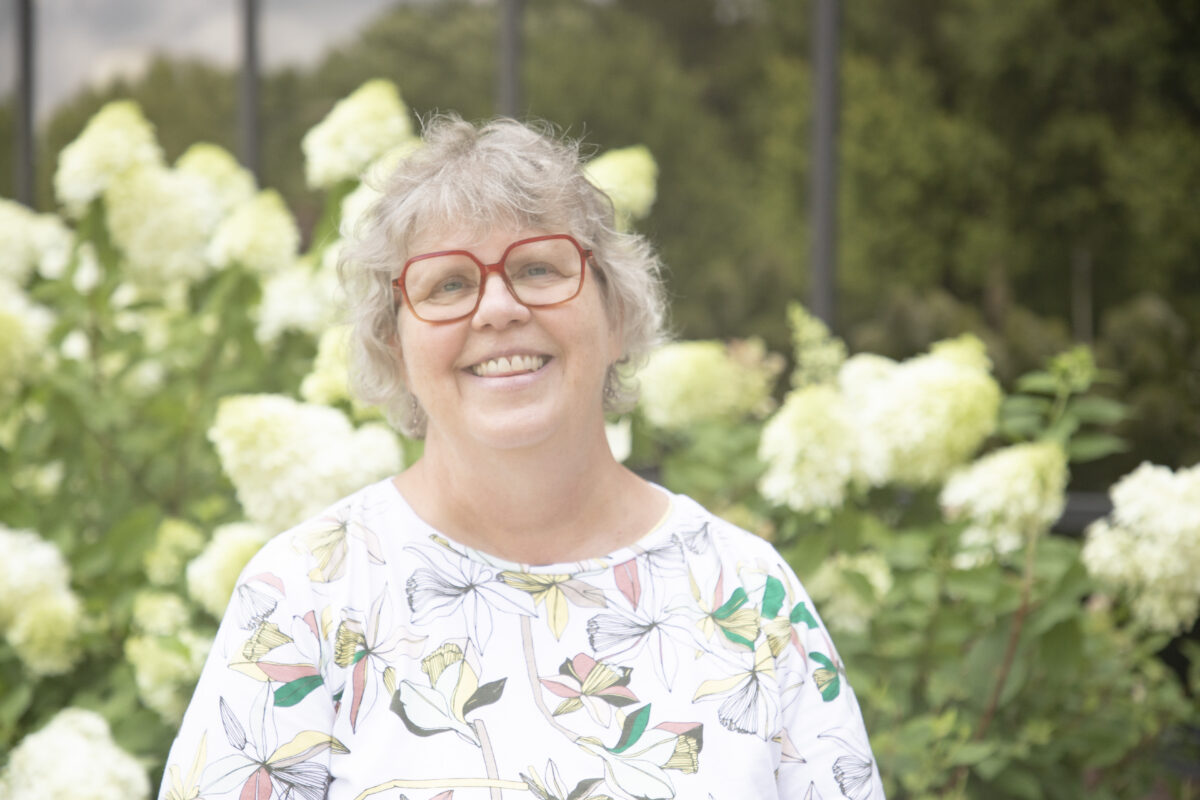 Cynthia Wagner (Photo courtesy of Wagner)
Wagner, who recently retired from UMBC after decades of inspiring students in her popular biology courses, will teach biology classes in English to students at Kyrgyz-Turkish Manas University in Bishkek, Kyrgyzstan. She’ll also conduct research searching for novel antimicrobial agents in the soil of Kyrgyzstan.
Lastly, Chan, a multidisciplinary artist engaged in conceptual work across print media, papermaking, installation art, and storytelling performance, will instruct both undergraduate and graduate students at the University of Art and Design in Cluj Napoca, Romania, utilizing concepts and methodologies she has developed during her tenure at UMBC. Additionally, she will produce a new collection of artist books, focusing on research into fiber art techniques and Romanian folk tales. These books, intended for display in both Romanian and international art collections, will also subtly reference corresponding motifs found within Chan’s own Chinese and American cultural heritage. This recognition of folk art traditions provides a foundation for cultural exchange, Chan says.
 Chan printing in August 2024 at ‘ace Proyecto, Buenos Aires, Argentina. (Photo courtesy of Chan)
Finding support at home and abroad
Souders, who serves as the Fulbright Scholar Liaison, says most UMBC faculty and staff work with him to hone their application. Casas shares that while he had been interested in the Fulbright awards since he started his academic career in the early 2000s, it wasn’t until he attended an informational webinar by Souders that he realized he was ready to apply. He met with Souders for advice, reached out to colleagues at the Universidad del Atlántico to assess where their needs and his interests overlapped, submitted his application, and “Here I am,” he says.
Penniston credits his supervisors and colleagues in DoIT with supporting his application and the opportunity for him to work remotely from Croatia following his six-month residency at the University of Zagreb. He hopes his time abroad will deepen his understanding of European Union education policy and seed partnerships that will ultimately benefit UMBC students and faculty.
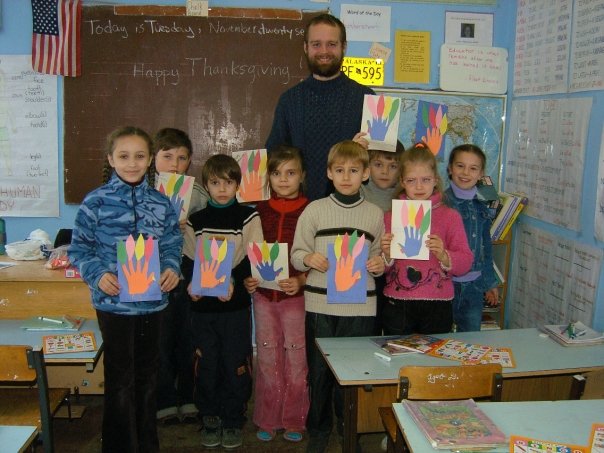 Tom Penniston with students at a school in Moldova, where he served as a U.S. Peace Corps volunteer. (Photo courtesy of Penniston)
Different scholars find different ways to bring bits of the world back with them when they return to the UMBC community, Souders says. For example, the College of Engineering and Information Technology’s award-winning Global Engineering course, co-taught with faculty at the University of Porto in Portugal, originated with the Fulbright project of Marc Zupan, an associate professor in the Department of Mechanical Engineering.
Wagner says it would be amazing to make a discovery that might one day help alleviate the antibiotic resistance crisis in the world. “A good majority of our current antibiotics come from soil microbes,” she says. “Kyrgyzstan has several different ecological niches in which the soil could vary and so could the microbes.”
Across the board, UMBC’s newest crop of Fulbright Scholars is excited to connect internationally and advance projects of shared interest.
“My Croatian hosts have already gone out of their way to make me feel welcome,” says Penniston. “I am thrilled to embark on this immersive intercultural experience, and to share it with my wife and our children.”
Wagner echoes the sense of excitement at a new, horizon-broadening opportunity: “It will be an adventure!” she says.
]]>
Four UMBC faculty and staff members have received highly competitive Fulbright U.S. Scholar awards to teach, conduct research, and forge cross-cultural connections around the world in the coming...
https://umbc.edu/stories/umbc-fulbright-scholar-awards-2025-2026/
https://dev.my.umbc.edu/api/v0/pixel/news/151242/guest@my.umbc.edu/40aedb34ecbc39cdccebef1442f801d5/api/pixel
biological-sciences
cahss
cnms
coeit
doit
fulbright
is
news
policy-and-society
research
story
visualarts
UMBC News & Magazine
https://dev.my.umbc.edu/groups/umbc-news-magazine
https://assets1-dev.my.umbc.edu/system/shared/avatars/groups/000/001/943/24435aa6207c452e7bc15cc74b42c7bb/xsmall.png?1748556657
https://assets1-dev.my.umbc.edu/system/shared/avatars/groups/000/001/943/24435aa6207c452e7bc15cc74b42c7bb/original.png?1748556657
https://assets2-dev.my.umbc.edu/system/shared/avatars/groups/000/001/943/24435aa6207c452e7bc15cc74b42c7bb/xxlarge.png?1748556657
https://assets2-dev.my.umbc.edu/system/shared/avatars/groups/000/001/943/24435aa6207c452e7bc15cc74b42c7bb/xlarge.png?1748556657
https://assets3-dev.my.umbc.edu/system/shared/avatars/groups/000/001/943/24435aa6207c452e7bc15cc74b42c7bb/large.png?1748556657
https://assets1-dev.my.umbc.edu/system/shared/avatars/groups/000/001/943/24435aa6207c452e7bc15cc74b42c7bb/medium.png?1748556657
https://assets2-dev.my.umbc.edu/system/shared/avatars/groups/000/001/943/24435aa6207c452e7bc15cc74b42c7bb/small.png?1748556657
https://assets1-dev.my.umbc.edu/system/shared/avatars/groups/000/001/943/24435aa6207c452e7bc15cc74b42c7bb/xsmall.png?1748556657
https://assets2-dev.my.umbc.edu/system/shared/avatars/groups/000/001/943/24435aa6207c452e7bc15cc74b42c7bb/xxsmall.png?1748556657
UMBC News & Magazine
12
0
false
Thu, 31 Jul 2025 14:51:07 -0400
Thu, 31 Jul 2025 14:51:07 -0400
Meet a Retriever—Debora Fajer-Smith ’81, lawyer, author, and UMBC donor
Meet Debora Fajer-Smith ’81, political science. Debora is a lawyer with over 40 years of experience, who has received numerous honors for her community involvement, mentoring, and leadership. She was twice named one of the Top 100 Women in Maryland by The Daily Record, honored with the Leader in Law award, and has consistently been voted as a Best Lawyer in the personal injury category by her peers. In summer 2025, she started a new position as Partner at the law firm of Price Benowitz LLP. Earlier in the year, Debora also published her first novel, “Pieces of Gold,” under the pen name Leah Kelly, which was named a “must read” by Naptown Scoop. Debora is also an avid Retriever supporter, establishing the Fajer-Smith Some One Cares (SOCS) Scholarship in 1998. Take it away, Debora!
Q: What initially brought you to UMBC?
A: I chose UMBC because I wanted to go to a small honors college in the Maryland system. I am a graduate of the class of 1981 and lived on campus in what was then Dorm 2. In my first semester, I ran for student body senate and never looked back. Since that moment, with everything I have done, I have tried to give back to UMBC.
I was a pre-law, political science major, and was nominated from UMBC for the Harry S. Truman Scholarship. I eventually went on to the University of Maryland School of Law, and I have practiced law for over 40 years. I have loved helping injury victims who were hurt and needed help to prosper on their own again. I served on the Maryland Senate House Oversight Committee as an appointed member, as well as the Maryland State Bar Association Judicial Nominating Committee.

Q: How have you given back to UMBC?
A: It is a gift when you look back at your life and realize how much your university helped shape your goals and prepare you for a wonderful future. UMBC did that for me. Looking back, everything I did in my career, I tried to give back to UMBC or partner with UMBC students. First, I endowed the Fajer-Smith Some One Cares (SOCS) Scholarship in 1998—which supports high school graduates from my hometown community who wish to attend UMBC—because I want my contribution to be a permanent support to the university long after I’m gone. Next, I started the UMBC Law Society, which brings together graduates who became lawyers. Most recently, I worked with the Alex. Brown Center for Entrepreneurship and Innovation to grant students an opportunity to gain equity in a new venture called Amron Home and Health, LLC, a brand to help support CPAP users when traveling.
Partnering with UMBC on Amron Home and Health has truly been an honor and a privilege. How special to take students interested in launching a company, winning pitch competitions, and working together for several years to build a company that would not only be profitable but bring about change in people’s lives who suffer from sleep apnea.
I always say you can do good while doing good.
Debora Fajer-Smith ’81
political science
Q: What is your favorite part of Retriever Nation?
A: Retriever Fever never goes away! I stay close with many of my friends and classmates.
Q: Can you tell us about your book?
A: I was always a writer, but I recently had the opportunity to write a children’s book series under the pen name Leah Kelly. In 2025, I published my first adult novel, Pieces of Gold, set in my hometown of Annapolis, Maryland. The book, which has been named a “must read” by Naptown Scoop, centers around four female friends who attended UMBC together. Each woman is distinct from the other, but nothing can break their bond. Melody holds the group together. Kate is the adventurous attorney who explores life after divorce. Dahlia is the proud Latina professional juggernaut. And you’ll root for Winifred, who struggles with her African American family expectations and her deep desire to conceive a baby.
Pieces of Gold is a delicious romp and a fast, exciting read that sees these women traveling to different parts of the world. It tugs on your heart strings, then brings you into dangerous and very intimate moments. Hold on, especially when Kate learns to fly a small plane with a handsome instructor!
You can learn more at LeahKellyBooks.com.
Photo right: Leah Kelly book signing event at Parole Town Center.

* * * * *
UMBC’s greatest strength is its people. When people meet Retrievers and hear about the passion they bring, the relationships they create, the ways they support each other, and the commitment they have to inclusive excellence, they truly get a sense of our community. That’s what “Meet a Retriever” is all about.
Learn more about how UMBC can help you achieve your goals.
]]>
Meet Debora Fajer-Smith ’81, political science. Debora is a lawyer with over 40 years of experience, who has received numerous honors for her community involvement, mentoring, and leadership. She...
https://umbc.edu/stories/meet-debora-fajer-smith-lawyer-author-umbc-donor/
https://dev.my.umbc.edu/api/v0/pixel/news/151224/guest@my.umbc.edu/9be512679e9236f7974aa80cf073bf2e/api/pixel
alumni
donor
impact
magazine
meet-a-retriever
political-science
pre-law
retriever-authors
story
UMBC News & Magazine
https://dev.my.umbc.edu/groups/umbc-news-magazine
https://assets1-dev.my.umbc.edu/system/shared/avatars/groups/000/001/943/24435aa6207c452e7bc15cc74b42c7bb/xsmall.png?1748556657
https://assets1-dev.my.umbc.edu/system/shared/avatars/groups/000/001/943/24435aa6207c452e7bc15cc74b42c7bb/original.png?1748556657
https://assets2-dev.my.umbc.edu/system/shared/avatars/groups/000/001/943/24435aa6207c452e7bc15cc74b42c7bb/xxlarge.png?1748556657
https://assets2-dev.my.umbc.edu/system/shared/avatars/groups/000/001/943/24435aa6207c452e7bc15cc74b42c7bb/xlarge.png?1748556657
https://assets3-dev.my.umbc.edu/system/shared/avatars/groups/000/001/943/24435aa6207c452e7bc15cc74b42c7bb/large.png?1748556657
https://assets1-dev.my.umbc.edu/system/shared/avatars/groups/000/001/943/24435aa6207c452e7bc15cc74b42c7bb/medium.png?1748556657
https://assets2-dev.my.umbc.edu/system/shared/avatars/groups/000/001/943/24435aa6207c452e7bc15cc74b42c7bb/small.png?1748556657
https://assets1-dev.my.umbc.edu/system/shared/avatars/groups/000/001/943/24435aa6207c452e7bc15cc74b42c7bb/xsmall.png?1748556657
https://assets2-dev.my.umbc.edu/system/shared/avatars/groups/000/001/943/24435aa6207c452e7bc15cc74b42c7bb/xxsmall.png?1748556657
UMBC News & Magazine
0
0
false
Thu, 31 Jul 2025 09:28:52 -0400
Thu, 31 Jul 2025 09:28:52 -0400
Meet a Retriever—Mary Jumbelic ’79, author and former chief medical examiner
Meet Mary Jumbelic ’79, biological sciences. Mary is an author and former chief medical examiner of Onondaga County, New York. In her 25-year career, she has performed thousands of autopsies and helped pass national safety policies for consumer products, preventing untimely deaths. She’s been an expert witness on Dateline, 48 Hours, the Discovery Channel, and the Law & Crime Network. While retired from government work, Mary continues to consult on cases while pursuing her passion for writing. In 2023, she published her first book, Here, Where Death Delights: A Literary Memoir, and just recently released her second this summer, Speak Her Name: Stories from a Life in True Crime. Take it away, Mary!
Q: What initially brought you to UMBC?
A: When considering colleges, I was looking for lower-cost schooling to which I could commute. I couldn’t afford to move away from home or live on campus. UMBC had an excellent reputation in the sciences, and I planned to go on to medical school. The chance to attend a four-year college, live at home, and receive scholarships was extraordinary to me. Plus, the connection with the University of Maryland system paved the way for medical school.
 Jumbelic at her gamelan angklung concert with her friend, Steven Zachs.
Q: What did you love about your academic programs at UMBC?
A: As a first-generation student, I felt a bit at sea my first semester. UMBC allowed me to repeat a course I failed and receive a new grade. Both were present on my transcript, but the higher grade counted in my GPA. This grace provided me with more confidence. I also struggled as a pre-med student and drifted into accounting, education, and creative writing. UMBC made it easy to sample classes from many different disciplines. I studied under Pulitzer Prize-winning poets, heard preeminent lecturers in chemistry, and settled into a rigorous academic life in biological sciences. Taking the Myers-Briggs personality test, I matched with a career in medicine. Biology turned out to be the perfect fit.
 Jumbelic working the microscope. She worked in forensic pathology for more than 25 years.
Badminton at the gym, gamelan angklung music classes, and foreign language studies rounded out my education. I graduated cum laude in 1979, the first of my family to ever go to college.
Q: Who in the UMBC community has inspired you or supported you?
A: A posting on the biology bulletin board led to the best job I ever had in college, opening the door to four years with the Martin Marietta Environmental Technology Center’s research and development program. Dr. K. Zankel, a brilliant physicist at Martin Marietta, taught me to be a research assistant in the field and in the lab, leading by example and serving as my first, and one of my most cherished, mentors. I worked counting fish populations in the effluent from the nuclear plant (both on sonar tracking and in vivo) as well as in their sulphur dioxide monitoring program with site visits to their plant in St. Croix. UMBC accepted my affiliation and research paper for credit, which helped me graduate.
UMBC made it easy to sample classes from many different disciplines. I studied under Pulitzer Prize-winning poets, heard preeminent lecturers in chemistry, and settled into a rigorous academic life in biological sciences.
Mary Jumbelic ’79
biological sciences
Q: Can you tell us about your career and any upcoming projects?
A: I am a board-certified forensic pathologist and former chief medical examiner of Onondaga County, the first female to hold the role in all of Central New York. In my 25-year career, I’ve performed thousands of autopsies across the United States and abroad as part of special assignments to aid in world disaster sites. I’ve even used forensic evidence to help pass national safety policies for consumer products, preventing untimely deaths. Over time, I’ve received awards for my work from the National Transportation Safety Board and the New York State Senate, among others. I am honored to have been recognized as a trailblazer by the National Organization of Women. While retired from government work, I continue to lend my expertise and consult on cases, as well as speak on forensic pathology topics on national podcasts and for educational speaking engagements. I’ve also had more time to devote to my passion—writing.
 Jumbelic at a book signing at a Rochester Barnes & Noble.
In the last decade, I’ve published numerous short stories across more than 30 publications. I’ve been nominated for a Pushcart Prize and was a top-10 finalist in the Tucson Literary Festival. In 2023, I launched my company, Final Words Publishing, and released my first book Here, Where Death Delights: A Literary Memoir. The book quickly gained international readership, receiving First Prize from The BookFest, Silver Awards from the Nonfiction Authors Association and Reader’s Favorite, as well as Gold from the Colorado Independent Publishers Association. In July 2025, I published my second book, Speak Her Name: Stories from a Life in True Crime. With this work, I give a voice to the many women I found on my autopsy table as I had learned to find my own voice, which I use to educate and empower those still with us today.
My books are true stories of my life in and out of the morgue, where I spent more than 25 years with the dead. I speak for them and demystify death for the living.
* * * * *
UMBC’s greatest strength is its people. When people meet Retrievers and hear about the passion they bring, the relationships they create, the ways they support each other, and the commitment they have to inclusive excellence, they truly get a sense of our community. That’s what “Meet a Retriever” is all about.
Learn more about how UMBC can help you achieve your goals.
]]>
Meet Mary Jumbelic ’79, biological sciences. Mary is an author and former chief medical examiner of Onondaga County, New York. In her 25-year career, she has performed thousands of autopsies and...
https://umbc.edu/stories/meet-mary-jumbelic-author-medical-examiner/
https://dev.my.umbc.edu/api/v0/pixel/news/151225/guest@my.umbc.edu/ec3eb439710a56bc642c82fcc56d3488/api/pixel
alumni
forensic-pathologist
magazine
medical-examiner
meet-a-retriever
retriever-authors
story
UMBC News & Magazine
https://dev.my.umbc.edu/groups/umbc-news-magazine
https://assets1-dev.my.umbc.edu/system/shared/avatars/groups/000/001/943/24435aa6207c452e7bc15cc74b42c7bb/xsmall.png?1748556657
https://assets1-dev.my.umbc.edu/system/shared/avatars/groups/000/001/943/24435aa6207c452e7bc15cc74b42c7bb/original.png?1748556657
https://assets2-dev.my.umbc.edu/system/shared/avatars/groups/000/001/943/24435aa6207c452e7bc15cc74b42c7bb/xxlarge.png?1748556657
https://assets2-dev.my.umbc.edu/system/shared/avatars/groups/000/001/943/24435aa6207c452e7bc15cc74b42c7bb/xlarge.png?1748556657
https://assets3-dev.my.umbc.edu/system/shared/avatars/groups/000/001/943/24435aa6207c452e7bc15cc74b42c7bb/large.png?1748556657
https://assets1-dev.my.umbc.edu/system/shared/avatars/groups/000/001/943/24435aa6207c452e7bc15cc74b42c7bb/medium.png?1748556657
https://assets2-dev.my.umbc.edu/system/shared/avatars/groups/000/001/943/24435aa6207c452e7bc15cc74b42c7bb/small.png?1748556657
https://assets1-dev.my.umbc.edu/system/shared/avatars/groups/000/001/943/24435aa6207c452e7bc15cc74b42c7bb/xsmall.png?1748556657
https://assets2-dev.my.umbc.edu/system/shared/avatars/groups/000/001/943/24435aa6207c452e7bc15cc74b42c7bb/xxsmall.png?1748556657
UMBC News & Magazine
0
0
false
Thu, 31 Jul 2025 09:27:01 -0400
Thu, 31 Jul 2025 09:27:01 -0400
Leaf year: PACE satellite data reveals global plant health
A new study using data collected by NASA’s Plankton, Aerosol, Cloud, ocean Ecosystem (PACE) satellite established a novel method to determine how productive plants are worldwide. The new remote sensing technique could help us better understand plants’ role in capturing carbon on a global scale and reveal how plants are responding to factors like changing water availability and temperature, with relevance for conservation, agriculture, and more.
The research, led by Karl F. Huemmrich, a UMBC research scientist with the Goddard Earth Sciences Technology and Research (GESTAR) Center II, shows that PACE’s advanced camera can track plant health by analyzing the light leaves reflect. By comparing these satellite observations with measurements taken on the ground, the study confirmed that the new method works across diverse landscapes, opening the door to improved global ecosystem monitoring.
Launched in February 2024, PACE’s Ocean Color Instrument (OCI) captures daily images of Earth that show how plants are responding to their environment in real time. While OCI’s primary mission is to study oceans (hence its name), it also collects data over land.
“Although they do not appear to be very active to us, plants are constantly making physiological adjustments to their environment, responding to factors such as changing light, temperature, humidity, water, and nutrient availability,” Huemmrich explains. A plant can change its leaf area, leaf orientation, and the prevalence of different leaf pigments, he says. All of those changes alter the intensity and wavelengths of light the plants reflect, which OCI detects.
“PACE provides almost daily repeat observations,” except for areas blocked by clouds, Huemmrich says. “This time series can be used to describe changes in vegetation productivity related to seasonal change, for example the timing of spring green-up and autumn senescence, or more transient effects, like droughts or cold snaps.”
 This gif shows how PACE’s OCI “sees” plant productivity changing throughout the growing season across North America. (Skye Caplan)
One algorithm to track them all
Unlike older satellite methods, such as MODIS Gross Primary Productivity, which needed weather data like temperature and humidity to estimate plant growth, PACE relies solely on the light reflected by plants.
“By using the information from the spectral reflectance alone, we are letting the plants show us their responses to environmental conditions, rather than trying to predict their responses,” Huemmrich explains. This approach makes it easier to accurately capture short-term changes.
The study tested PACE’s data against ground measurements from National Ecological Observatory Network (NEON) sites across the U.S., covering everything from arctic tundra to tropical dry forests.
“The NEON sites were chosen to cover all of the major ecoclimate types within the U.S.,” Huemmrich notes, “and frankly, it was surprising that a single algorithm could do as well as it did across all of those very different vegetation types.” This success suggests the method can be used globally, and there are plans to include more sites worldwide in future studies to cover even more ecosystems.
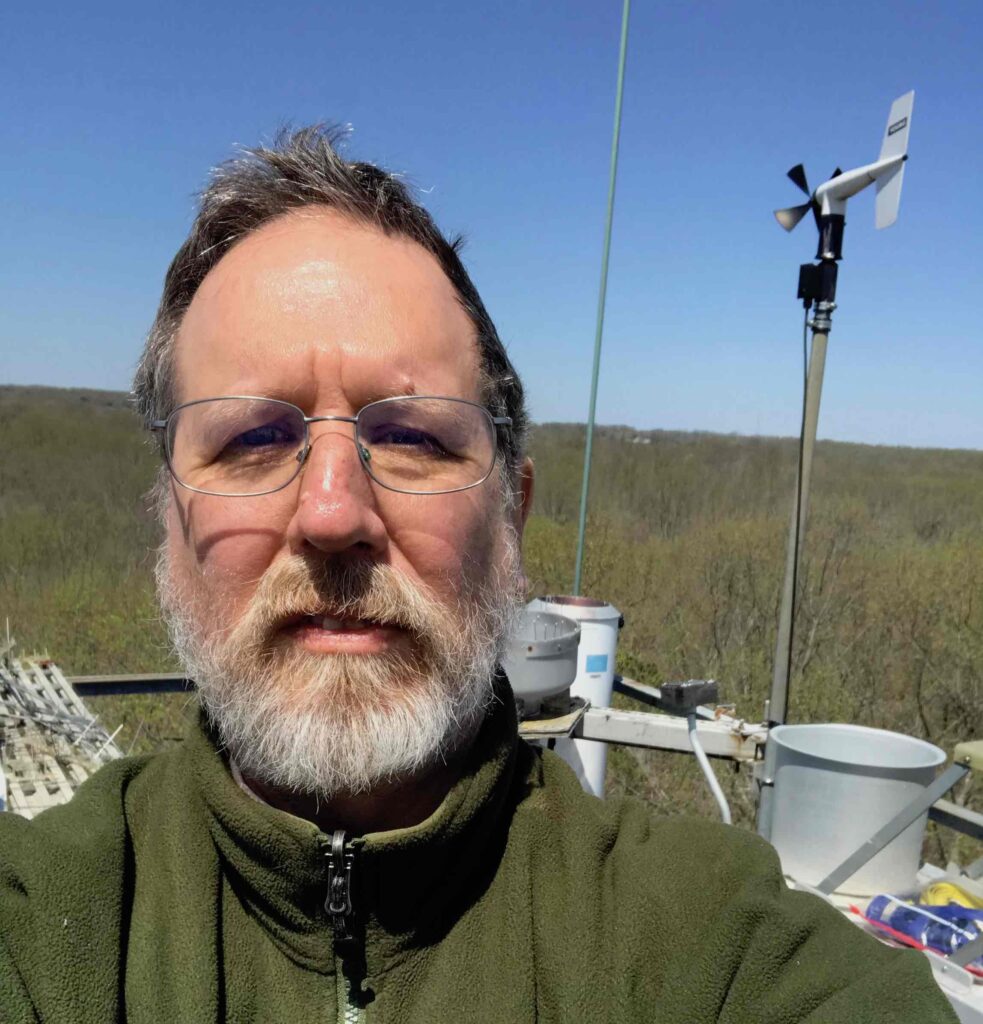 Huemmrich stands 100 feet above the ground on a meteorology tower at the Smithsonian Environmental Research Center in Edgewater, Maryland. (Courtesy of Huemmrich)
“An entirely new view”
This research could transform how scientists track carbon sequestration—how plants absorb and store carbon dioxide, a key greenhouse gas—improving understanding of how different ecosystems influence climate change. The ability to spot stress events early could also help farmers and environmental managers act quickly to improve outcomes for crops and wildlife.
PACE’s global reach is a huge step forward. “I believe this new ability to describe global ecosystem dynamics opens up an entirely new view of the Earth’s ecological functioning that we really have not been able to see before,” Huemmrich says. Unlike earlier methods that relied on labor-intensive ground measurements or expensive airplane flights, PACE offers a cost-effective way to monitor ecosystems worldwide.
Moving into PACE’s second year, Huemmrich is excited to explore how plant responses change over time. “I’m interested in looking at year-to-year differences,” he says. “I want to see how best to use the spectral information for early detection of stress events. Can we learn to diagnose types of stress responses? Do these responses vary among different types of plants?”
These questions will drive future research, aiming to improve how we detect and understand plant stress across diverse ecosystems. PACE’s frequent, detailed satellite data will help scientists, policymakers, and conservationists protect ecosystems and understand how plants are responding to a changing world.
The findings were published in IEEE Transactions on Geoscience and Remote Sensing and co-authored by Petya Campbell, a UMBC research scientist with GESTAR II and senior author; Skye Caplan, Goddard Space Flight Center; and John Gamon, University of Nebraska–Lincoln.
]]>
A new study using data collected by NASA’s Plankton, Aerosol, Cloud, ocean Ecosystem (PACE) satellite established a novel method to determine how productive plants are worldwide. The new remote...
https://umbc.edu/stories/pace-data-plant-health/
https://dev.my.umbc.edu/api/v0/pixel/news/151205/guest@my.umbc.edu/efc63e24949abe2900bbd83c39929fdd/api/pixel
gestar2
news
research
science-and-tech
story
UMBC News & Magazine
https://dev.my.umbc.edu/groups/umbc-news-magazine
https://assets1-dev.my.umbc.edu/system/shared/avatars/groups/000/001/943/24435aa6207c452e7bc15cc74b42c7bb/xsmall.png?1748556657
https://assets1-dev.my.umbc.edu/system/shared/avatars/groups/000/001/943/24435aa6207c452e7bc15cc74b42c7bb/original.png?1748556657
https://assets2-dev.my.umbc.edu/system/shared/avatars/groups/000/001/943/24435aa6207c452e7bc15cc74b42c7bb/xxlarge.png?1748556657
https://assets2-dev.my.umbc.edu/system/shared/avatars/groups/000/001/943/24435aa6207c452e7bc15cc74b42c7bb/xlarge.png?1748556657
https://assets3-dev.my.umbc.edu/system/shared/avatars/groups/000/001/943/24435aa6207c452e7bc15cc74b42c7bb/large.png?1748556657
https://assets1-dev.my.umbc.edu/system/shared/avatars/groups/000/001/943/24435aa6207c452e7bc15cc74b42c7bb/medium.png?1748556657
https://assets2-dev.my.umbc.edu/system/shared/avatars/groups/000/001/943/24435aa6207c452e7bc15cc74b42c7bb/small.png?1748556657
https://assets1-dev.my.umbc.edu/system/shared/avatars/groups/000/001/943/24435aa6207c452e7bc15cc74b42c7bb/xsmall.png?1748556657
https://assets2-dev.my.umbc.edu/system/shared/avatars/groups/000/001/943/24435aa6207c452e7bc15cc74b42c7bb/xxsmall.png?1748556657
UMBC News & Magazine
2
0
false
Tue, 29 Jul 2025 14:52:47 -0400
Tue, 29 Jul 2025 14:52:47 -0400
UMBC publishes first-of-its-kind tutorial for teaching complex computational chemistry technique
Joseph Bennett, assistant professor of chemistry and biochemistry, and Mona Layegh, Ph.D. ’25, chemistry, know how hard it can be to teach density functional theory (DFT) to undergraduates. DFT is a computational method for predicting a substances’ properties at the quantum level, such as how they conduct electricity or react with other compounds. Despite its complexity, DFT is a foundational technique that underpins research in fields like renewable energy, pharmaceuticals, and nanotechnology, so it’s critical that students understand it and know how to apply it.
To address the challenge of teaching DFT well, Bennett and Layegh coauthored a tutorial on teaching the technique, which was published in the Journal of Chemical Education. Their paper was the first ever published in the journal’s brand new Tutorial section, which was inspired by their submission and a need to develop more training tools.
The tutorial, refined over five years of training UMBC students in DFT, is paired with open-source resources on GitHub, including ready-to-use files and visualizations. These allow instructors at community colleges or in areas with limited internet to teach the concepts even without advanced computers.
“If you can erase some of the hurdles to make DFT a little bit more accessible, more students can get into it,” Bennett says.
In sharing these teaching tools, UMBC is leveling the playing field, making it possible for students in all kinds of learning environments to master this core technique. As a result, they’ll be better prepared for careers in growing industries like technology and healthcare, where they may go on to design better batteries, solar panels, life-saving drugs, and more.
]]>
Joseph Bennett, assistant professor of chemistry and biochemistry, and Mona Layegh, Ph.D. ’25, chemistry, know how hard it can be to teach density functional theory (DFT) to undergraduates. DFT is...
https://umbc.edu/quick-posts/chemistry-tutorial-published/
https://dev.my.umbc.edu/api/v0/pixel/news/151117/guest@my.umbc.edu/9396ad05149080141d08e90e009638ea/api/pixel
chembiochem
cnms
graduateschool
news
quick-post
research
science-and-tech
UMBC News & Magazine
https://dev.my.umbc.edu/groups/umbc-news-magazine
https://assets1-dev.my.umbc.edu/system/shared/avatars/groups/000/001/943/24435aa6207c452e7bc15cc74b42c7bb/xsmall.png?1748556657
https://assets1-dev.my.umbc.edu/system/shared/avatars/groups/000/001/943/24435aa6207c452e7bc15cc74b42c7bb/original.png?1748556657
https://assets2-dev.my.umbc.edu/system/shared/avatars/groups/000/001/943/24435aa6207c452e7bc15cc74b42c7bb/xxlarge.png?1748556657
https://assets2-dev.my.umbc.edu/system/shared/avatars/groups/000/001/943/24435aa6207c452e7bc15cc74b42c7bb/xlarge.png?1748556657
https://assets3-dev.my.umbc.edu/system/shared/avatars/groups/000/001/943/24435aa6207c452e7bc15cc74b42c7bb/large.png?1748556657
https://assets1-dev.my.umbc.edu/system/shared/avatars/groups/000/001/943/24435aa6207c452e7bc15cc74b42c7bb/medium.png?1748556657
https://assets2-dev.my.umbc.edu/system/shared/avatars/groups/000/001/943/24435aa6207c452e7bc15cc74b42c7bb/small.png?1748556657
https://assets1-dev.my.umbc.edu/system/shared/avatars/groups/000/001/943/24435aa6207c452e7bc15cc74b42c7bb/xsmall.png?1748556657
https://assets2-dev.my.umbc.edu/system/shared/avatars/groups/000/001/943/24435aa6207c452e7bc15cc74b42c7bb/xxsmall.png?1748556657
UMBC News & Magazine
0
0
false
Tue, 22 Jul 2025 15:32:42 -0400
Making STEM courses more inclusive with lab and lecture hall upgrades
This summer UMBC is partnering with the Maryland Department of Disabilities to upgrade nine teaching labs in the Meyerhoff Chemistry Building. The updates will allow students with mobility disabilities to fully participate in critical chemistry and biochemistry lab courses.
Sinks, lab benches, cabinets, fume hoods, specialized equipment stations, and more will all be constructed that are accessible for wheelchair users. A research lab will be similarly modified to allow students with disabilities to gain research experience.
“These projects are a part of an ongoing campus-wide effort to remove barriers to access throughout our campus buildings,” Celso Guitian, UMBC’s campus planner, says.
A lecture hall in the Engineering Building is also being renovated this summer. The changes are similar to those made in lecture halls in the Administration, Meyerhoff Chemistry, and Biological Sciences buildings in recent years to create multiple spaces for wheelchair-users with fold-down desk tablets, both at the front and rear of the lecture hall. TV monitors will help students with vision disabilities who may not be able to see the whiteboard or screen at the front of these lecture halls. And seating size variations, including standing-desk options, accommodate students of varied body types and disabilities, including supporting pregnant students and students with orthopedic challenges. Assisted listening technology and an area for sign language interpreters support students who are deaf or hard of hearing.
Other projects under construction this summer include accessibility upgrades in four Biological Sciences Building restrooms and elevator upgrades in several academic buildings.
“The Office of Accessibility & Disability Services greatly values our longstanding partnership with Facilities Management to assist us in the mission of inclusive access and elimination of barriers for all UMBC community members,” says Tawny McManus, assistant vice president for accessibility. “Improving our teaching labs allows increased participation of our students with disabilities and shows them UMBC welcomes everyone here.”
]]>
This summer UMBC is partnering with the Maryland Department of Disabilities to upgrade nine teaching labs in the Meyerhoff Chemistry Building. The updates will allow students with mobility...
https://umbc.edu/quick-posts/inclusive-lab-and-lecture-hall-upgrades/
https://dev.my.umbc.edu/api/v0/pixel/news/151118/guest@my.umbc.edu/44b1341b2e8c55dc87ba049142c9d7f2/api/pixel
chembiochem
cnms
coeit
news
quick-post
science-and-tech
student-disability-services
UMBC News & Magazine
https://dev.my.umbc.edu/groups/umbc-news-magazine
https://assets1-dev.my.umbc.edu/system/shared/avatars/groups/000/001/943/24435aa6207c452e7bc15cc74b42c7bb/xsmall.png?1748556657
https://assets1-dev.my.umbc.edu/system/shared/avatars/groups/000/001/943/24435aa6207c452e7bc15cc74b42c7bb/original.png?1748556657
https://assets2-dev.my.umbc.edu/system/shared/avatars/groups/000/001/943/24435aa6207c452e7bc15cc74b42c7bb/xxlarge.png?1748556657
https://assets2-dev.my.umbc.edu/system/shared/avatars/groups/000/001/943/24435aa6207c452e7bc15cc74b42c7bb/xlarge.png?1748556657
https://assets3-dev.my.umbc.edu/system/shared/avatars/groups/000/001/943/24435aa6207c452e7bc15cc74b42c7bb/large.png?1748556657
https://assets1-dev.my.umbc.edu/system/shared/avatars/groups/000/001/943/24435aa6207c452e7bc15cc74b42c7bb/medium.png?1748556657
https://assets2-dev.my.umbc.edu/system/shared/avatars/groups/000/001/943/24435aa6207c452e7bc15cc74b42c7bb/small.png?1748556657
https://assets1-dev.my.umbc.edu/system/shared/avatars/groups/000/001/943/24435aa6207c452e7bc15cc74b42c7bb/xsmall.png?1748556657
https://assets2-dev.my.umbc.edu/system/shared/avatars/groups/000/001/943/24435aa6207c452e7bc15cc74b42c7bb/xxsmall.png?1748556657
UMBC News & Magazine
0
0
false
Tue, 22 Jul 2025 15:28:12 -0400
UMBC researchers pioneer method to discover new 2D materials for advanced electronics
Finding new materials with useful properties is a primary goal for materials scientists, and it’s central to improving technology. One exciting area of current research is 2D materials—super-thin substances made of just a few layers of atoms, which could power the next generation of electronic devices. UMBC researchers have developed a new way to predict 2D materials that might transform electronics, and the results were published in Chemistry of Materials earlier in July.
Picture a sheet of paper so thin that it’s only a few atoms thick, and that’s what 2D materials are like. One might think they would be fragile—but these materials can actually be incredibly strong or conduct electricity in unique ways. They’re held together by weak forces called van der Waals bonds, which allow materials to slightly deform without breaking under stress. Stacked layers of these 2D materials can slide past each other, further reducing brittleness.
The research team, led by Peng Yan, Ph.D. candidate in chemistry, and Joseph Bennett, assistant professor of chemistry and biochemistry, focused on a type of 2D material called van der Waals layered phosphochalcogenides. Some of these materials are ferroelectric, meaning they can hold an electric charge in a particular direction, and then the direction can be reversed on command—sort of like tiny, reversible batteries. Some ferroelectric materials are also magnetic, behaving similarly when a magnetic field is applied. That combination makes them ideal for advanced electronics like memory devices and sensors.
“There’s only two known 2D van der Waals ferroelectric materials with this type of structure,” Bennett said, “so we were asking ourselves, where might others be hiding?” The new publication is their answer to that question.
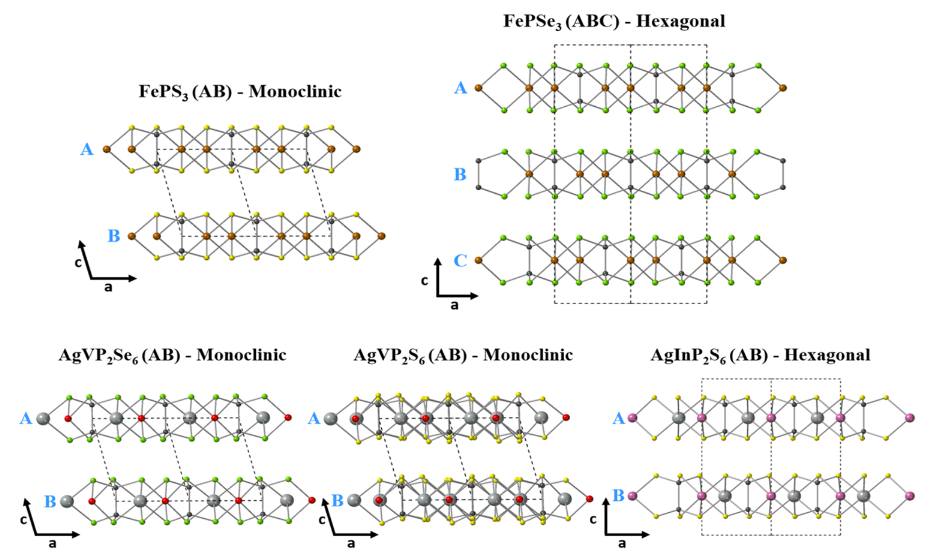 Figure 1 from the new study shows examples of atomic structures that the research team’s algorithm identified as having features conducive for potential use as 2D materials.
A treasure map to new 2D materials
The researchers used a mix of data mining, computer modeling, and structural analysis (because only materials with certain shapes are conducive to use in electronics) to ferret out new material candidates.
“We developed a set of chemical design rules to predict these materials, which could significantly accelerate the discovery of new functional materials,” Yan, the study’s first author, said.
Joshua Birenzvige ’23, chemistry, played a key role by developing a Python script that helped sort the potential materials based on their properties, speeding up the team’s progress. Mona Layegh, a Ph.D. candidate in Bennett’s group, is also a co-author on the new paper.
 Joseph Bennett’s research lab focuses on the discovery and design of new functional materials. (Marlayna Demond ’11/UMBC)
The researchers began by digging into the Inorganic Crystal Structure Database, a huge collection of known crystal structures. Then they used quantum structural diagrams—which map materials on a chart according to how they relate to each other, determined by their atomic traits—to find areas within the diagrams where promising new materials might be hiding.
“By analyzing basic parameters like differences in electronegativity and radius, we were able to separate materials that have the properties we want from those that don’t,” Bennett explained. Electronegativity measures how strongly an atom attracts electrons, and an atom’s radius is the distance from its center to the outer edge of its electron cloud.
“These quantum structural diagrams act like a treasure map,” Bennett said, “guiding us to regions of chemical space where new, stable 2D materials are likely to exist.”
Their results indicated 83 potential new materials that could be made and used in the tech industry, potentially increasing the number of known ferroelectric materials by an incredible margin.
From the computer to the lab bench
After the computer-based analysis, the team took their work a step further. The UMBC researchers collaborated with Ryan Stadel, Peter Zavalij, and Efrain Rodriguez at the University of Maryland, College Park (UMD), who made and tested some of the predicted materials in the lab. Their work proved the UMBC predictions could be used to guide experiments with the predicted materials.
“Being able to predict which compositions are likely to form stable, functional materials gives us a huge head start in the lab,” Bennett said. “It’s like having a recipe book for materials that haven’t been made yet, which saves time and resources.”
These new materials could shine in real-world uses, substantially advancing the electronics industry. For example, they could help build memory devices that can store data after power is shut off, tiny sensors that detect minute amounts of particular substances, or low-power components that make your phone battery last longer. These properties are in high demand across the tech industry and the U.S. government—this work was funded by a substantial grant from the Defense Threat Reduction Agency.
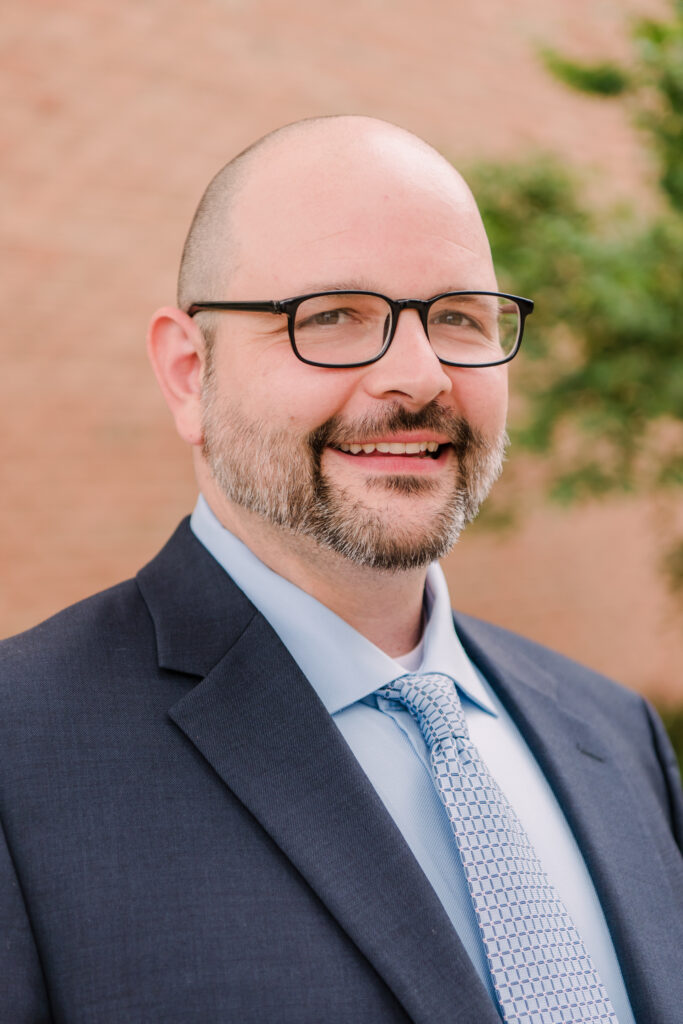
 Joseph Bennett’s students Peng Yan (top left), Joshua Berinzvige (top right), and Mona Layegh (bottom) are all authors on the new study. (Courtesy of Bennett)
An exciting future of discovery
“I’m excited because the work demonstrates a successful data-guided approach to discovering novel 2D materials with promising functional properties, potentially accelerating the design of next-generation electronic materials,” Yan said.
Next up, the team will use a complex computer simulation, called high-throughput density functional theory modeling, to explore these 83 materials in more depth. They’ll check their ferroic traits and how easily they can be made. Plus, they’ll continue their collaboration with the UMD to synthesize and study the materials in the lab, aiming to confirm their special properties and tweak them for specific applications.
The research is a major step forward, paving the way for materials that could change how engineers build electronics—from sensors for the military to longer-lasting laptops and tablets for students on the go.
]]>
Finding new materials with useful properties is a primary goal for materials scientists, and it’s central to improving technology. One exciting area of current research is 2D materials—super-thin...
https://umbc.edu/stories/new-2d-materials-for-advanced-electronics/
https://dev.my.umbc.edu/api/v0/pixel/news/151101/guest@my.umbc.edu/0bb5442dfdd83f7ff2784483866a9272/api/pixel
chembiochem
cnms
gradresearch
news
research
science-and-tech
story
UMBC News & Magazine
https://dev.my.umbc.edu/groups/umbc-news-magazine
https://assets1-dev.my.umbc.edu/system/shared/avatars/groups/000/001/943/24435aa6207c452e7bc15cc74b42c7bb/xsmall.png?1748556657
https://assets1-dev.my.umbc.edu/system/shared/avatars/groups/000/001/943/24435aa6207c452e7bc15cc74b42c7bb/original.png?1748556657
https://assets2-dev.my.umbc.edu/system/shared/avatars/groups/000/001/943/24435aa6207c452e7bc15cc74b42c7bb/xxlarge.png?1748556657
https://assets2-dev.my.umbc.edu/system/shared/avatars/groups/000/001/943/24435aa6207c452e7bc15cc74b42c7bb/xlarge.png?1748556657
https://assets3-dev.my.umbc.edu/system/shared/avatars/groups/000/001/943/24435aa6207c452e7bc15cc74b42c7bb/large.png?1748556657
https://assets1-dev.my.umbc.edu/system/shared/avatars/groups/000/001/943/24435aa6207c452e7bc15cc74b42c7bb/medium.png?1748556657
https://assets2-dev.my.umbc.edu/system/shared/avatars/groups/000/001/943/24435aa6207c452e7bc15cc74b42c7bb/small.png?1748556657
https://assets1-dev.my.umbc.edu/system/shared/avatars/groups/000/001/943/24435aa6207c452e7bc15cc74b42c7bb/xsmall.png?1748556657
https://assets2-dev.my.umbc.edu/system/shared/avatars/groups/000/001/943/24435aa6207c452e7bc15cc74b42c7bb/xxsmall.png?1748556657
UMBC News & Magazine
0
0
false
Mon, 21 Jul 2025 13:54:33 -0400
Mon, 21 Jul 2025 13:54:33 -0400