UMBC supports NIH's Baltimore Regional Seminar
This is the 5th year UMBC has volunteered as an Ambassador Institution. This year we had the highest number of volunteers (10). This event is an amazing opportunity for research-active faculty and administrative staff to learn firsthand about current NIH funding and administration. Not only do research administrators learn about the administration, faculty have a chance to learn about funding opportunities, and can have one on one in person discussions with NIH program managers/technical experts. Most of the volunteers took advantage of attending one day for free when volunteering one day.
OVPR would like to thank all of the amazing volunteers this year!


]]>
This is the 5th year UMBC has volunteered as an Ambassador Institution. This year we had the highest number of volunteers (10). This event is an amazing opportunity for research-active faculty...
Photo
https://assets3-dev.my.umbc.edu/system/shared/attachments/67bfa95b1040da1563ac007417c8a377/69fe3ca2/news/000/084/672/b96a8bcf64591ca8e9c43f114de1daba/IMG_3267.jpg?1558466206
https://dev.my.umbc.edu/api/v0/pixel/news/84672/guest@my.umbc.edu/4738cf232994dc0f0894902da6dd08b6/api/pixel
ovpr-news-2019
Archived RCA News
https://dev.my.umbc.edu/groups/research
https://assets4-dev.my.umbc.edu/system/shared/avatars/groups/000/000/794/4bca2aa331eb7e472d63d97e0798b600/xsmall.png?1743706368
https://assets2-dev.my.umbc.edu/system/shared/avatars/groups/000/000/794/4bca2aa331eb7e472d63d97e0798b600/original.jpg?1743706368
https://assets3-dev.my.umbc.edu/system/shared/avatars/groups/000/000/794/4bca2aa331eb7e472d63d97e0798b600/xxlarge.png?1743706368
https://assets4-dev.my.umbc.edu/system/shared/avatars/groups/000/000/794/4bca2aa331eb7e472d63d97e0798b600/xlarge.png?1743706368
https://assets2-dev.my.umbc.edu/system/shared/avatars/groups/000/000/794/4bca2aa331eb7e472d63d97e0798b600/large.png?1743706368
https://assets4-dev.my.umbc.edu/system/shared/avatars/groups/000/000/794/4bca2aa331eb7e472d63d97e0798b600/medium.png?1743706368
https://assets4-dev.my.umbc.edu/system/shared/avatars/groups/000/000/794/4bca2aa331eb7e472d63d97e0798b600/small.png?1743706368
https://assets4-dev.my.umbc.edu/system/shared/avatars/groups/000/000/794/4bca2aa331eb7e472d63d97e0798b600/xsmall.png?1743706368
https://assets3-dev.my.umbc.edu/system/shared/avatars/groups/000/000/794/4bca2aa331eb7e472d63d97e0798b600/xxsmall.png?1743706368
Office of the Vice President for Research
https://assets4-dev.my.umbc.edu/system/shared/thumbnails/news/000/084/672/d69ecb6cf2e50df341ccfc19894bddc8/xxlarge.jpg?1558466322
https://assets3-dev.my.umbc.edu/system/shared/thumbnails/news/000/084/672/d69ecb6cf2e50df341ccfc19894bddc8/xlarge.jpg?1558466322
https://assets3-dev.my.umbc.edu/system/shared/thumbnails/news/000/084/672/d69ecb6cf2e50df341ccfc19894bddc8/large.jpg?1558466322
https://assets3-dev.my.umbc.edu/system/shared/thumbnails/news/000/084/672/d69ecb6cf2e50df341ccfc19894bddc8/medium.jpg?1558466322
https://assets1-dev.my.umbc.edu/system/shared/thumbnails/news/000/084/672/d69ecb6cf2e50df341ccfc19894bddc8/small.jpg?1558466322
https://assets1-dev.my.umbc.edu/system/shared/thumbnails/news/000/084/672/d69ecb6cf2e50df341ccfc19894bddc8/xsmall.jpg?1558466322
https://assets2-dev.my.umbc.edu/system/shared/thumbnails/news/000/084/672/d69ecb6cf2e50df341ccfc19894bddc8/xxsmall.jpg?1558466322
0
0
true
Tue, 21 May 2019 15:19:01 -0400
Hilltop Researcher Publishes Article in The Conversation
The Costs of Tobacco-Related Illness
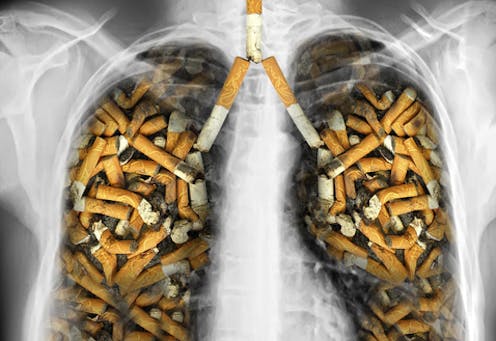
Hilltop Institute researcher Charles Betley has just published an article on the costs of tobacco-related illness to the Mississippi Medicaid program in the online daily newsletter, The Conversation. Betley and fellow researchers conducted a study for the Center for Mississippi Health Policy in which they employed a different, more specific method than using national estimates to reach their findings. These findings were published in a Hilltop report and also in a Center for Mississippi Health Policy issue brief.
Read the article here.
]]>
Hilltop Institute researcher Charles Betley has just published an article on the costs of tobacco-related illness to the Mississippi Medicaid program in the online daily newsletter, The...
https://www.hilltopinstitute.org/
https://dev.my.umbc.edu/api/v0/pixel/news/83749/guest@my.umbc.edu/727432f301709f6363f87f1a15ff491a/api/pixel
Archived RCA News
https://dev.my.umbc.edu/groups/research
https://assets4-dev.my.umbc.edu/system/shared/avatars/groups/000/000/794/4bca2aa331eb7e472d63d97e0798b600/xsmall.png?1743706368
https://assets2-dev.my.umbc.edu/system/shared/avatars/groups/000/000/794/4bca2aa331eb7e472d63d97e0798b600/original.jpg?1743706368
https://assets3-dev.my.umbc.edu/system/shared/avatars/groups/000/000/794/4bca2aa331eb7e472d63d97e0798b600/xxlarge.png?1743706368
https://assets4-dev.my.umbc.edu/system/shared/avatars/groups/000/000/794/4bca2aa331eb7e472d63d97e0798b600/xlarge.png?1743706368
https://assets2-dev.my.umbc.edu/system/shared/avatars/groups/000/000/794/4bca2aa331eb7e472d63d97e0798b600/large.png?1743706368
https://assets4-dev.my.umbc.edu/system/shared/avatars/groups/000/000/794/4bca2aa331eb7e472d63d97e0798b600/medium.png?1743706368
https://assets4-dev.my.umbc.edu/system/shared/avatars/groups/000/000/794/4bca2aa331eb7e472d63d97e0798b600/small.png?1743706368
https://assets4-dev.my.umbc.edu/system/shared/avatars/groups/000/000/794/4bca2aa331eb7e472d63d97e0798b600/xsmall.png?1743706368
https://assets3-dev.my.umbc.edu/system/shared/avatars/groups/000/000/794/4bca2aa331eb7e472d63d97e0798b600/xxsmall.png?1743706368
Office of the Vice President for Research
0
0
true
Mon, 15 Apr 2019 11:34:37 -0400
Mon, 15 Apr 2019 13:12:39 -0400
UMBC invents approach to remove pollutant from waterways
This story was written by Sarah Hansen and first appeared on news.umbc.edu
UMBC professors Kevin Sowers and Upal Ghosh have advanced a new technique to eliminate PCBs—one of the most persistent, pervasive, and dangerous chemical pollutants found in waterway sediments. Their innovative, environmentally-friendly approach, published in Environmental Science and Technology, resulted in reducing PCBs by over 50 percent in treated areas.
Sowers, a professor of marine biotechnology, and Ghosh, a professor of chemical, biochemical, and environmental engineering, had been working on PCB removal separately for years. Only recently did they realize their separate efforts could be combined to create a new, more-effective way to get rid of dangerous PCBs, even in ecologically sensitive or hard-to-reach areas, such as around piers and in fragile wetlands. Sowers and Ghosh have now formed a company, Rembac Environmental, to help bring their process to more areas that need PCB remediation.
From required to “remove it!”
PCBs were used extensively as fire retardants—and even required in some products—until they were banned in the U.S. in 1979 because of findings suggesting they might be neurotoxic, disrupt animals’ endocrine systems, and possibly cause cancer. Despite the fact that the ban has been in place for decades, PCBs still persist in sediments around the country, including in Chesapeake Bay. In the Mid-Atlantic, PCBs are the second most common reason for public advisories against consuming fish, just behind mercury.
“If they were to be left alone, PCBs would be in the sediments for decades, and depending on the level it could be a century,” says Sowers. “They’re very stable,” he adds. “That was their selling point.”
The best techniques to deal with PCBs are dredging, which physically removes the PCBs from the area (along with loads of sediment), and capping, which involves piling gravel on top of the sediment to keep the PCBs from interacting with aquatic life above. While each method has its place in the fight against PCB contamination, both are extremely costly, cannot be deployed in ecologically sensitive areas, and are not always effective.
People have tried for decades to develop and sell methods to remove PCBs from sediments biologically. Microorganisms that can break down PCBs occur naturally in sediment, and most efforts have focused on encouraging their populations to grow by adding cocktails of nutrients. None of those prior efforts worked especially well, and Sowers remembers hearing repeatedly that biological removal of PCBs was impossible, but he wasn’t quite ready to give up on the idea.
Never give up
“The technology itself started in the 1980s,” Sowers says, when officials were trying to show that naturally-occurring microbes alone could take care of PCBs in the Hudson River. The effort was not successful, because scientists couldn’t identify the specific microbes doing the work. In the mid-1990s, Sowers and another collaborator, Hal May at the Medical University of South Carolina, identified the species, and soon after that, they developed a method for growing them in the lab without sediment.
“Once we could isolate them, we could study them. We learned enough about them to scale them up and inject them back into sediment,” he says. And finally, about nine years ago, “We found that if we added them in high numbers, we could get rid of the PCBs.” Bingo.

Upal Ghosh (left) and Kevin Sowers in Sowers’s lab at the Institute of Marine and Environmental Technology. Photo by Marlayna Demond ’11 for UMBC.
Well, almost. Sowers was still delivering the PCB-eating microbes to sediment set up in the lab. How could he inject the microbes over huge bodies of water in the real world?
Sowers’s microbes need to enter the sediment and settle there, not float around in the water. He needed a delivery method that was safe for sensitive areas, relatively quick, and ideally much less expensive than dredging or capping.
Collaboration opens doors
In parallel with Sowers’s work, Ghosh had also been working for years on PCB remediation, but he’d taken a different approach. He had developed pellets made of activated carbon. When the pellets enter the sediment, they bond tightly to PCBs.
“It doesn’t eliminate the PCBs, but it reduces the risk of PCBs getting into the food chain,” he explains. This, in turn, reduces the danger to aquatic life, and the need for fish consumption advisories.
Because carbon is one of the key building blocks of all life, it also wasn’t a significant environmental threat. Ghosh founded a company called Sediment Solutions to produce the pellets, known as SediMite. But it wasn’t until Ghosh and Sowers met that they realized their projects could complement each other.
“Working together allowed us to see the bottlenecks,” Ghosh says.
One breakthrough for the new team was figuring out why the naturally occurring PCB-eaters weren’t enough to have a substantial impact in bodies of water. As an environmental engineer, Ghosh dived into examining the energy balance in the sediment environment, and found it just wouldn’t facilitate growth of those populations in large enough numbers. “You need the microbes in higher levels to see PCB degradation happen in months, and not decades or centuries,” he explains.
With that realization, they began to see the tremendous potential of their partnership. Sowers could produce the microbes that could eliminate PCBs, and Ghosh had pellets that would settle into the sediment—a novel delivery mechanism for the microbes. “When we started working and talking together, we realized, ‘I can solve your problem and you can solve my problem,’” Ghosh says.
Scaling up
Their new publication is the result of the first field trial of the new combined technology. Sowers and Ghosh found a way to bind the microbes to the pellets, and sprayed them into a polluted body of water on the Quantico Marine Corps Base, which drains into the Potomac River. The Department of Defense funded the trial as part of its commitment to clean up PCB contamination at military bases.
The experiment was a success, showing not only that the method is effective at removing PCBs, but also that it didn’t negatively impact the local environment in any detectable way. Ghosh and Sowers also found that the plot treated with the combined microbes and pellets showed a greater reduction in PCBs than a plot treated with the carbon pellets alone. This is the first concrete evidence that a biological approach to removing PCBs can work if delivered in the right way.
Ghosh and Sowers hope the technique will become popular for use in sensitive and hard-to-reach areas. For now, their company is working with another biotech firm to produce the microbes at large scale, but as they take on more remediation projects, they hope to expand their company and start growing the organisms themselves, Sowers says.
It’s taken a long time to get to this point, partly because environmental work of this sort is scrutinized so heavily, “for good reasons,” Ghosh says. But now, Sowers adds, “The most exciting thing is seeing it out there in the field.”
Banner image: Kevin Sowers (left) and Upal Ghosh in Sowers’s lab at the Institute of Marine and Environmental Technology. Photo by Marlayna Demond ’11 for UMBC.
]]>
This story was written by Sarah Hansen and first appeared on news.umbc.edu UMBC professors Kevin Sowers and Upal Ghosh have advanced a new technique to eliminate PCBs—one of the most...
Photo
https://assets3-dev.my.umbc.edu/system/shared/attachments/407625b5a1597e3fcbc5f4396c291021/69fe3ca2/news/000/083/734/be6534833d70c9056185831475fd92a1/0.jpg?1555248484
https://dev.my.umbc.edu/api/v0/pixel/news/83734/guest@my.umbc.edu/4b5a509d49650f4653d658f79237d6a1/api/pixel
ovpr-news-2019
Archived RCA News
https://dev.my.umbc.edu/groups/research
https://assets4-dev.my.umbc.edu/system/shared/avatars/groups/000/000/794/4bca2aa331eb7e472d63d97e0798b600/xsmall.png?1743706368
https://assets2-dev.my.umbc.edu/system/shared/avatars/groups/000/000/794/4bca2aa331eb7e472d63d97e0798b600/original.jpg?1743706368
https://assets3-dev.my.umbc.edu/system/shared/avatars/groups/000/000/794/4bca2aa331eb7e472d63d97e0798b600/xxlarge.png?1743706368
https://assets4-dev.my.umbc.edu/system/shared/avatars/groups/000/000/794/4bca2aa331eb7e472d63d97e0798b600/xlarge.png?1743706368
https://assets2-dev.my.umbc.edu/system/shared/avatars/groups/000/000/794/4bca2aa331eb7e472d63d97e0798b600/large.png?1743706368
https://assets4-dev.my.umbc.edu/system/shared/avatars/groups/000/000/794/4bca2aa331eb7e472d63d97e0798b600/medium.png?1743706368
https://assets4-dev.my.umbc.edu/system/shared/avatars/groups/000/000/794/4bca2aa331eb7e472d63d97e0798b600/small.png?1743706368
https://assets4-dev.my.umbc.edu/system/shared/avatars/groups/000/000/794/4bca2aa331eb7e472d63d97e0798b600/xsmall.png?1743706368
https://assets3-dev.my.umbc.edu/system/shared/avatars/groups/000/000/794/4bca2aa331eb7e472d63d97e0798b600/xxsmall.png?1743706368
Office of the Vice President for Research
https://assets3-dev.my.umbc.edu/system/shared/thumbnails/news/000/083/734/4cddd78af9d2f209d224589637b97d95/xxlarge.jpg?1555248642
https://assets2-dev.my.umbc.edu/system/shared/thumbnails/news/000/083/734/4cddd78af9d2f209d224589637b97d95/xlarge.jpg?1555248642
https://assets4-dev.my.umbc.edu/system/shared/thumbnails/news/000/083/734/4cddd78af9d2f209d224589637b97d95/large.jpg?1555248642
https://assets2-dev.my.umbc.edu/system/shared/thumbnails/news/000/083/734/4cddd78af9d2f209d224589637b97d95/medium.jpg?1555248642
https://assets4-dev.my.umbc.edu/system/shared/thumbnails/news/000/083/734/4cddd78af9d2f209d224589637b97d95/small.jpg?1555248642
https://assets4-dev.my.umbc.edu/system/shared/thumbnails/news/000/083/734/4cddd78af9d2f209d224589637b97d95/xsmall.jpg?1555248642
https://assets1-dev.my.umbc.edu/system/shared/thumbnails/news/000/083/734/4cddd78af9d2f209d224589637b97d95/xxsmall.jpg?1555248642
2
0
true
Sun, 14 Apr 2019 09:31:00 -0400
Donna Ruginski joins UMBC as Exec Director-Cyber Initiatives
This story was written by Megan Hanks and first appeared on news.umbc.edu
“Cybersecurity research is important because we live in a connected world. As a society, we have an expectation to conduct professional business in a safe and secure technology environment,” says Donna Ruginski, UMBC’s new executive director for cybersecurity initiatives. “Research is thriving at UMBC, and some of the nation’s leading cybersecurity research is being conducted at UMBC.”
Ruginski joins the Office of the Vice President for Research as the first campus leader to hold this partnership-focused cybersecurity role.
“I am delighted to join the UMBC community and to work with its visionary leadership and extraordinary faculty and staff,” she says. “UMBC’s capabilities and resources in cybersecurity contribute to the region’s economic development through a comprehensive cybersecurity focus on academic education, research, workforce development, technology incubators, and entrepreneurship. UMBC truly offers the complete package, making it an exciting place to be.”
Ruginski brings significant experience in cybersecurity to her new role at UMBC. She holds a master’s degree in computer science from Johns Hopkins University and has founded and served as a senior technology executive at software companies over the course of her career.
Karl V. Steiner, vice president for research at UMBC, says Ruginski’s role is important for UMBC, for Maryland, and for the United States. “UMBC is already recognized for its strength in the growing field of cybersecurity and through our strong relationships with federal agencies and the private sector,” Steiner explains. “Ruginski comes to us with an exceptional background and strong skill set that will enable our community to thrive and successfully pursue exciting new opportunities in the years to come.”
In her new role, Ruginski will work to enhance awareness of UMBC’s broad portfolio of cybersecurity initiatives and expand research partnerships with public and private organizations, says Steiner.
“Expanding cybersecurity research at UMBC will offer additional opportunities for faculty and students at all levels,” says Ruginski. “I’m excited to supportUMBC’s growing reputation as a leading research institution.”
Banner image: Donna Ruginski. Photo by Marlayna Demond ’11 for UMBC.
]]>
This story was written by Megan Hanks and first appeared on news.umbc.edu “Cybersecurity research is important because we live in a connected world. As a society, we have an expectation to...
Photo
https://assets3-dev.my.umbc.edu/system/shared/attachments/a1c9aaa49a0f32c628c9d87d994e7363/69fe3ca2/news/000/083/733/e6e9d37a0f6a79c25564cade197a8e3c/0.jpg?1555248013
https://dev.my.umbc.edu/api/v0/pixel/news/83733/guest@my.umbc.edu/0fc249f173d8531a464dd26233a4c192/api/pixel
ovpr-news-2019
Archived RCA News
https://dev.my.umbc.edu/groups/research
https://assets4-dev.my.umbc.edu/system/shared/avatars/groups/000/000/794/4bca2aa331eb7e472d63d97e0798b600/xsmall.png?1743706368
https://assets2-dev.my.umbc.edu/system/shared/avatars/groups/000/000/794/4bca2aa331eb7e472d63d97e0798b600/original.jpg?1743706368
https://assets3-dev.my.umbc.edu/system/shared/avatars/groups/000/000/794/4bca2aa331eb7e472d63d97e0798b600/xxlarge.png?1743706368
https://assets4-dev.my.umbc.edu/system/shared/avatars/groups/000/000/794/4bca2aa331eb7e472d63d97e0798b600/xlarge.png?1743706368
https://assets2-dev.my.umbc.edu/system/shared/avatars/groups/000/000/794/4bca2aa331eb7e472d63d97e0798b600/large.png?1743706368
https://assets4-dev.my.umbc.edu/system/shared/avatars/groups/000/000/794/4bca2aa331eb7e472d63d97e0798b600/medium.png?1743706368
https://assets4-dev.my.umbc.edu/system/shared/avatars/groups/000/000/794/4bca2aa331eb7e472d63d97e0798b600/small.png?1743706368
https://assets4-dev.my.umbc.edu/system/shared/avatars/groups/000/000/794/4bca2aa331eb7e472d63d97e0798b600/xsmall.png?1743706368
https://assets3-dev.my.umbc.edu/system/shared/avatars/groups/000/000/794/4bca2aa331eb7e472d63d97e0798b600/xxsmall.png?1743706368
Office of the Vice President for Research
https://assets1-dev.my.umbc.edu/system/shared/thumbnails/news/000/083/733/cccfeb55f0bc0477727f2ce1d8e2de0a/xxlarge.jpg?1555247997
https://assets4-dev.my.umbc.edu/system/shared/thumbnails/news/000/083/733/cccfeb55f0bc0477727f2ce1d8e2de0a/xlarge.jpg?1555247997
https://assets3-dev.my.umbc.edu/system/shared/thumbnails/news/000/083/733/cccfeb55f0bc0477727f2ce1d8e2de0a/large.jpg?1555247997
https://assets2-dev.my.umbc.edu/system/shared/thumbnails/news/000/083/733/cccfeb55f0bc0477727f2ce1d8e2de0a/medium.jpg?1555247997
https://assets3-dev.my.umbc.edu/system/shared/thumbnails/news/000/083/733/cccfeb55f0bc0477727f2ce1d8e2de0a/small.jpg?1555247997
https://assets3-dev.my.umbc.edu/system/shared/thumbnails/news/000/083/733/cccfeb55f0bc0477727f2ce1d8e2de0a/xsmall.jpg?1555247997
https://assets4-dev.my.umbc.edu/system/shared/thumbnails/news/000/083/733/cccfeb55f0bc0477727f2ce1d8e2de0a/xxsmall.jpg?1555247997
0
0
true
Sun, 14 Apr 2019 09:23:21 -0400
Sun, 14 Apr 2019 09:24:40 -0400
Dr. Arnold's laser technology detects IEDs, other hazards
This story was written by Sarah Hansen and first appeared on news.umbc.edu
You’re a U.S. soldier, motoring across the desert at 60 miles an hour in an Army truck, heading back to base. Suddenly, a red light flashes on your dashboard—an instrument has detected traces of explosive material on the road surface ahead. You divert around the hazard and continue safely toward your destination.
“There is currently nothing available to do this at this speed,” says Bradley Arnold, professor of chemistry and biochemistry. But that could soon change.
Today, in order to detect hazards, service members must pause and send a robot to check an area of concern. This procedure slows progress, which can increase risk for military personnel trying to move through an area quickly. However, technology to make high-speed, near-comprehensive detection possible is close to coming to the U.S. Armed Forces, thanks to Arnold’s work.
Arnold’s research group recently received $480,000 for two years from the U.S. Army to develop a prototype of their detection device, which has been in development for three years. The Army will test it on military vehicles early next year, and if it passes field tests, it may be deployed soon after.
Molecular fingerprinting

Bradley Arnold, professor of chemistry at UMBC.
So how does it work? The device sends out 10 laser pulses per second as the truck drives along, and each laser pulse contacts about one square inch of the ground. At 60 miles per hour, one pulse hits the ground every eight feet. Arnold’s team is working to develop lasers that can pulse more rapidly. Then, the beams could overlap—even at high speeds—providing complete coverage.
The system collects the light that scatters off molecules on the ground in a specialized detector. Depending on the structure of their chemical bonds, different compounds generate unique scattering patterns. By analyzing those patterns, the detector “can identify a molecule’s characteristic fingerprint,” Arnold says.
The new system can identify “just about anything,” Arnold says, from compounds used in military or improvised explosives, to nerve agents, to biological threats. “Being able to detect these things on the fly is of critical importance,” he adds. The new device would make this possible for the first time.
The detector also stores all the data it collects, which provides additional benefits. “You could search the data for specific things afterward, and you could compare day to day what you see in specific areas,” Arnold says. “And both of these things would be a tremendous advantage.”
Outside the box
The basic technique the device employs is related to standard Raman spectroscopy, used in chemistry labs all over the world, but with one very notable difference.
In standard systems, a lens focuses the laser beam on a single point. But too much power focused at one point can destroy the thing you want to detect. To make the traditional method work in this case, Arnold’s team would need to reduce the power of the laser so much that they’d lose the benefit of having a high-powered laser to begin with. Their solution: remove the focusing lens, even though “99.9 percent of the universe insists the lens is required,” Arnold says.
Without the focusing lens, the laser beam is about three-fourths of an inch across when it strikes the ground. “We can turn the power up on the laser several orders of magnitude, and we don’t have to focus it on a single spot—that entire area is imaged onto our detector,” Arnold explains. In this setup, the detector is less efficient at collecting the scattered light, but the high power of the laser compensates for the inefficiency.
The technique is so novel that Arnold has met skepticism in the scientific community, despite publishing details of the technology in the Canadian Journal of Chemistry. “Nobody believes that it works,” he says, “but it’s actually much easier than the traditional method.” Coming up with the idea, he says, “was just a matter of recognizing the problem and thinking a bit outside the box.”

Brad Arnold (center) examines the laser setup with Sara Tahir ’21, biochemistry, and Eric Bowman (right), Ph.D. student in chemistry.
Always thinking ahead
As a future step, Arnold would like to work toward a lighter version of the device that could fly on a drone ahead of military convoys. He has submitted a Small Business Innovation Research grant to support efforts to that end.
In addition to military uses, Arnold is also thinking ahead to potential civilian applications. For example, a similar system at airport security could remove the need to swab suspect bags to detect trace materials on their surface. Instead, every bag’s surface would be automatically analyzed using this new system. It could even be used for security at stadiums or other large venues.
In the event that the military adopts the technology, and especially if civilian applications come into play, a way to produce the systems at scale will become necessary. With that in mind, Arnold has founded NuMoon Spectroscopy with support from a TEDCO Maryland Innovation Initiative grant.
Arnold loves the idea of seeing the technology do good in the world, which is why he has shepherded this project to the startup company stage. “This could be not just cool, but important,” he says.
His dream is to connect NuMoon with a more-established company to pursue larger-scale production. At that point, the potentially life-saving technology would be able to truly make a significant, positive difference, Arnold explains, and “that’s the goal that I’ve had more than anything else.”
Banner image: Brad Arnold (center) works in the lab with Sara Tahir ’21, biochemistry, and Eric Bowman (right), Ph.D. student in chemistry. All photos by Marlayna Demond ’11 for UMBC.
]]>
This story was written by Sarah Hansen and first appeared on news.umbc.edu You’re a U.S. soldier, motoring across the desert at 60 miles an hour in an Army truck, heading back to base....
Photo
https://assets4-dev.my.umbc.edu/system/shared/attachments/b5cbe94068c04f5b3d87a04fef53eab5/69fe3ca2/news/000/083/617/4b0cb9685dd1da13cd7d85b3e4de824f/0.jpg?1554906647
https://dev.my.umbc.edu/api/v0/pixel/news/83617/guest@my.umbc.edu/636b6332d51d55147a00f1e8c2299b50/api/pixel
ovpr-news-2019
Archived RCA News
https://dev.my.umbc.edu/groups/research
https://assets4-dev.my.umbc.edu/system/shared/avatars/groups/000/000/794/4bca2aa331eb7e472d63d97e0798b600/xsmall.png?1743706368
https://assets2-dev.my.umbc.edu/system/shared/avatars/groups/000/000/794/4bca2aa331eb7e472d63d97e0798b600/original.jpg?1743706368
https://assets3-dev.my.umbc.edu/system/shared/avatars/groups/000/000/794/4bca2aa331eb7e472d63d97e0798b600/xxlarge.png?1743706368
https://assets4-dev.my.umbc.edu/system/shared/avatars/groups/000/000/794/4bca2aa331eb7e472d63d97e0798b600/xlarge.png?1743706368
https://assets2-dev.my.umbc.edu/system/shared/avatars/groups/000/000/794/4bca2aa331eb7e472d63d97e0798b600/large.png?1743706368
https://assets4-dev.my.umbc.edu/system/shared/avatars/groups/000/000/794/4bca2aa331eb7e472d63d97e0798b600/medium.png?1743706368
https://assets4-dev.my.umbc.edu/system/shared/avatars/groups/000/000/794/4bca2aa331eb7e472d63d97e0798b600/small.png?1743706368
https://assets4-dev.my.umbc.edu/system/shared/avatars/groups/000/000/794/4bca2aa331eb7e472d63d97e0798b600/xsmall.png?1743706368
https://assets3-dev.my.umbc.edu/system/shared/avatars/groups/000/000/794/4bca2aa331eb7e472d63d97e0798b600/xxsmall.png?1743706368
Office of the Vice President for Research
https://assets4-dev.my.umbc.edu/system/shared/thumbnails/news/000/083/617/3e247b248fcf4cf04a2e8a72222f6690/xxlarge.jpg?1554906624
https://assets2-dev.my.umbc.edu/system/shared/thumbnails/news/000/083/617/3e247b248fcf4cf04a2e8a72222f6690/xlarge.jpg?1554906624
https://assets2-dev.my.umbc.edu/system/shared/thumbnails/news/000/083/617/3e247b248fcf4cf04a2e8a72222f6690/large.jpg?1554906624
https://assets2-dev.my.umbc.edu/system/shared/thumbnails/news/000/083/617/3e247b248fcf4cf04a2e8a72222f6690/medium.jpg?1554906624
https://assets3-dev.my.umbc.edu/system/shared/thumbnails/news/000/083/617/3e247b248fcf4cf04a2e8a72222f6690/small.jpg?1554906624
https://assets1-dev.my.umbc.edu/system/shared/thumbnails/news/000/083/617/3e247b248fcf4cf04a2e8a72222f6690/xsmall.jpg?1554906624
https://assets4-dev.my.umbc.edu/system/shared/thumbnails/news/000/083/617/3e247b248fcf4cf04a2e8a72222f6690/xxsmall.jpg?1554906624
0
0
true
Wed, 10 Apr 2019 10:31:13 -0400
UMBC is #3 U.S. university in global social, economic impact
This story was written by Dinah Winnick and first appeared on news.umbc.edu
Times Higher Education has just named UMBC #3 in the nation in achieving social and economic impact. This 2019 University Impact Ranking measures how well universities deliver on UN Sustainable Development Goals, which were adopted in 2015 by all United Nations Member States as a blueprint for global peace and prosperity.
Core values
“The new Times Higher Education impact rankings are distinct from other university rankings in that they are a measure of the difference UMBC is making in the world,” says Katharine H. Cole, vice provost and dean of Undergraduate Academic Affairs. “It is not surprising that UMBC is ranked so highly as it is this type of societal and economic impact that is at the very core of UMBC’s mission and values. This is a place where people are committed to taking on global challenges to make the world a better place.”

UMBC students participate in a Critical Social Justice workshop organized by the Women’s Center at UMBC.
The new ranking from the London-based international publication examines university performance in 11 of the 17 Sustainable Development Goals. UMBC led among U.S. universities in several categories, and ranked just after UNC Chapel Hill and Arizona State University overall. In the full global ranking, which includes hundreds of universities from 76 countries, UMBC was recognized as #62 overall.
“UMBC’s highly-recognized emphasis on inclusive excellence is well-aligned with the United Nations’ Sustainable Development Goals recognized by this impact ranking,” says Karl Steiner, vice president of research. “Our position among the top institutions recognizes our focus on social and economic impact across the nation and the world.”
Highlights
UMBC was highlighted as a top university in promoting sustainable cities and communities (#5 in the U.S., #36 in the world). This area extends across a broad range of fields. UMBC’s highlighted strengths range from atmospheric physics research to scholarship that rethinks the relationship between art institutions and the public, to the university’s work to decrease its carbon footprint, even at a time of significant growth.
UMBC’s particularly strong ranking in the area of gender equity (#5 in the U.S., #56 in the world) recognizes the university’s work to support women in STEM at all levels — undergraduate, graduate and postgraduate, and faculty. Highlights include the Center for Women in Technology and its CWIT Scholars Program, as well as UMBC ADVANCE, which supports the development, hiring, and advancement of women faculty in STEM.

Naomi Mburu ’18, UMBC’s first Rhodes Scholar, works in the lab with faculty mentor.
UMBC was also #2 in the U.S. in both work to reduce inequalities (#23 globally) and the development of partnerships for the goals (#47 globally). The University was #3 in the U.S. for climate action (#23 globally) and #5 in the U.S. for promoting decent work and economic growth (#101 globally), and #55 globally for promoting responsible consumption and production.
This new ranking comes on the heels of U.S. News recognizing UMBC’s graduate programs as among the best in the nation, and NSF ranking UMBC as one of the top 150 U.S. universities in federal research funding. With its unique approach, this new measure brings together UMBC’s achievements in teaching, research, and creative achievement, and commitment to serving as a model for inclusive excellence.
Learn more about the full rankings and the methodology behind them.
Featured photo: Chemical and biochemical engineering Ph.D. student Adam Day (left) works with Prof. Erin Lavik (right) in her lab, which focuses on polymer synthesis and processing, drug delivery, and stem cell biology to create new therapies. All photos by Marlayna Demond ’11 for UMBC.
]]>
This story was written by Dinah Winnick and first appeared on news.umbc.edu Times Higher Education has just named UMBC #3 in the nation in achieving social and economic impact. This 2019...
Photo
https://assets3-dev.my.umbc.edu/system/shared/attachments/e3791eb1a63b3eb3958f6490801451f6/69fe3ca2/news/000/083/616/5b347a27844fa303dd8c02b7da1c9206/0.jpg?1554906507
https://dev.my.umbc.edu/api/v0/pixel/news/83616/guest@my.umbc.edu/a610d9c54bffdba9f933290eb8b56a82/api/pixel
ovpr-news-2019
Archived RCA News
https://dev.my.umbc.edu/groups/research
https://assets4-dev.my.umbc.edu/system/shared/avatars/groups/000/000/794/4bca2aa331eb7e472d63d97e0798b600/xsmall.png?1743706368
https://assets2-dev.my.umbc.edu/system/shared/avatars/groups/000/000/794/4bca2aa331eb7e472d63d97e0798b600/original.jpg?1743706368
https://assets3-dev.my.umbc.edu/system/shared/avatars/groups/000/000/794/4bca2aa331eb7e472d63d97e0798b600/xxlarge.png?1743706368
https://assets4-dev.my.umbc.edu/system/shared/avatars/groups/000/000/794/4bca2aa331eb7e472d63d97e0798b600/xlarge.png?1743706368
https://assets2-dev.my.umbc.edu/system/shared/avatars/groups/000/000/794/4bca2aa331eb7e472d63d97e0798b600/large.png?1743706368
https://assets4-dev.my.umbc.edu/system/shared/avatars/groups/000/000/794/4bca2aa331eb7e472d63d97e0798b600/medium.png?1743706368
https://assets4-dev.my.umbc.edu/system/shared/avatars/groups/000/000/794/4bca2aa331eb7e472d63d97e0798b600/small.png?1743706368
https://assets4-dev.my.umbc.edu/system/shared/avatars/groups/000/000/794/4bca2aa331eb7e472d63d97e0798b600/xsmall.png?1743706368
https://assets3-dev.my.umbc.edu/system/shared/avatars/groups/000/000/794/4bca2aa331eb7e472d63d97e0798b600/xxsmall.png?1743706368
Office of the Vice President for Research
https://assets3-dev.my.umbc.edu/system/shared/thumbnails/news/000/083/616/20c377b992c122f00db2c7fa43436a85/xxlarge.jpg?1554906490
https://assets1-dev.my.umbc.edu/system/shared/thumbnails/news/000/083/616/20c377b992c122f00db2c7fa43436a85/xlarge.jpg?1554906490
https://assets2-dev.my.umbc.edu/system/shared/thumbnails/news/000/083/616/20c377b992c122f00db2c7fa43436a85/large.jpg?1554906490
https://assets2-dev.my.umbc.edu/system/shared/thumbnails/news/000/083/616/20c377b992c122f00db2c7fa43436a85/medium.jpg?1554906490
https://assets4-dev.my.umbc.edu/system/shared/thumbnails/news/000/083/616/20c377b992c122f00db2c7fa43436a85/small.jpg?1554906490
https://assets4-dev.my.umbc.edu/system/shared/thumbnails/news/000/083/616/20c377b992c122f00db2c7fa43436a85/xsmall.jpg?1554906490
https://assets2-dev.my.umbc.edu/system/shared/thumbnails/news/000/083/616/20c377b992c122f00db2c7fa43436a85/xxsmall.jpg?1554906490
0
0
true
Wed, 10 Apr 2019 10:28:55 -0400
Lorraine Remer receives Research Faculty Excellence Award
Dr. Lorraine
Remer, Research Professor in UMBC’s Joint Center for Earth Systems Technology
(JCET) and Affiliate Professor in the Departments of Physics and Geography and Environmental
Systems, has been selected as the 2019 recipient of the UMBC Research Faculty
Excellence Award. The award recognizes overall excellence in research,
and where appropriate, significant contributions to teaching and
service/leadership while at UMBC.
Dr. Remer joined
UMBC in 2012, after a successful career in the private sector and – prior to
joining UMBC – at NASA Goddard Space Flight Center. She is an active researcher, participating as
PI or Co-Investigator in at least fourteen successful funding proposals
submitted to federal agencies. Including her role as Co-Investigator on the
HyperAngle Rainbow Polarimeter (HARP), UMBC’s first satellite mission,
scheduled to launch later this year.
As a UMBC
Research Professor, Dr. Remer is conducting her research in the Department of Physics
Laboratory for Aerosols, Clouds and Optics with faculty, postdocs and students,
in addition to teaching courses and serving on graduate committees.
Among Dr. Remer’s
many important and interesting research results is the quantification of the
amount of nutrient-rich Saharan dust that is transported across the Atlantic,
fertilizing the Amazon basin, reinforcing the notion that we are all part of
one interconnected global climate system.
In 2015, Dr.
Remer was named a Fellow of the American Geophysical Union (AGU), an
international scientific society of geophysicists; a prestigious honor, since
only 0.1% of members are elected as AGU Fellows.
In 2014, Dr.
Remer was named among the world’s top scientists, according to the Thomson
Reuters Highly Cited Researchers list, "The Most Influential
Scientific Minds 2014." According to Thomson Reuters, Highly Cited
Researchers is a compilation of influential names in science that spotlights
some of the “standout researchers of the last decade,” ranking her among the
top 1% most cited for their subject field and year of publication between 2002
and 2012.
Since 2012 Dr.
Remer has been serving as editor of the Journal of the Atmospheric Sciences.
She also served as an Invited Panelist for the National Academy of Sciences
Workshop on National Assets in June 2015.
Together with another
UMBC faculty colleague, Dr. Remer serves as CEO and minority owner of Airphoton
LLC, a faculty start-up company founded in 2012 at the bwtech@UMBC business
incubator.
Upon notification
of the award, Dr. Remer stated: “I feel fortunate to be a member of the UMBC
community and am very grateful for all the support I've received from the
university since starting here. JCET is a wonderful organization that makes it
easy to succeed. I feel strongly that
the JCET leadership and staff share in this award with me, as well as the many
collaborators who have enriched my research endeavors and continue to challenge
me to explore new avenues of science, technology, teaching and business.”
Dr. Belay Demoz, JCET
Director and Professor of Physics, states: “We are absolutely delighted about
this highly deserved acknowledgement of Dr. Remer’s contributions to UMBC. Her recent recognition as a highly cited
researcher puts her in exclusive company among her peers and we are proud to
count her as one or our own.”
Karl V. Steiner,
Vice President for Research, adds: “Dr. Remer is an outstanding representative
of our UMBC research community. UMBC is
the academic home to over 180 Research Faculty who contribute their expertise
and personal commitment to making UMBC a destination of choice for cutting-edge
research while providing our students with remarkable insights and
opportunities. Dr. Remer is clearly a leader in her field and her
energy and expertise have been a major factor in UMBC being recognized as a
significant contributor to atmospheric sciences.”
]]>
Dr. Lorraine Remer, Research Professor in UMBC’s Joint Center for Earth Systems Technology (JCET) and Affiliate Professor in the Departments of Physics and Geography and Environmental Systems, has...
Photo
https://assets4-dev.my.umbc.edu/system/shared/attachments/0a3e6bd458f66fd804cc7c211764df8d/69fe3ca2/news/000/083/168/b520fbfb0d37fbb44382ab286af16a50/Lorraine Remer.jpg?1553663011
https://dev.my.umbc.edu/api/v0/pixel/news/83168/guest@my.umbc.edu/9d4ff0bf25e115d635347cd798c31d98/api/pixel
ovpr-news-2019
Archived RCA News
https://dev.my.umbc.edu/groups/research
https://assets4-dev.my.umbc.edu/system/shared/avatars/groups/000/000/794/4bca2aa331eb7e472d63d97e0798b600/xsmall.png?1743706368
https://assets2-dev.my.umbc.edu/system/shared/avatars/groups/000/000/794/4bca2aa331eb7e472d63d97e0798b600/original.jpg?1743706368
https://assets3-dev.my.umbc.edu/system/shared/avatars/groups/000/000/794/4bca2aa331eb7e472d63d97e0798b600/xxlarge.png?1743706368
https://assets4-dev.my.umbc.edu/system/shared/avatars/groups/000/000/794/4bca2aa331eb7e472d63d97e0798b600/xlarge.png?1743706368
https://assets2-dev.my.umbc.edu/system/shared/avatars/groups/000/000/794/4bca2aa331eb7e472d63d97e0798b600/large.png?1743706368
https://assets4-dev.my.umbc.edu/system/shared/avatars/groups/000/000/794/4bca2aa331eb7e472d63d97e0798b600/medium.png?1743706368
https://assets4-dev.my.umbc.edu/system/shared/avatars/groups/000/000/794/4bca2aa331eb7e472d63d97e0798b600/small.png?1743706368
https://assets4-dev.my.umbc.edu/system/shared/avatars/groups/000/000/794/4bca2aa331eb7e472d63d97e0798b600/xsmall.png?1743706368
https://assets3-dev.my.umbc.edu/system/shared/avatars/groups/000/000/794/4bca2aa331eb7e472d63d97e0798b600/xxsmall.png?1743706368
Office of the Vice President for Research
https://assets3-dev.my.umbc.edu/system/shared/thumbnails/news/000/083/168/fbf3fab978ca5d2014956ebba231f161/xxlarge.jpg?1553662985
https://assets3-dev.my.umbc.edu/system/shared/thumbnails/news/000/083/168/fbf3fab978ca5d2014956ebba231f161/xlarge.jpg?1553662985
https://assets2-dev.my.umbc.edu/system/shared/thumbnails/news/000/083/168/fbf3fab978ca5d2014956ebba231f161/large.jpg?1553662985
https://assets3-dev.my.umbc.edu/system/shared/thumbnails/news/000/083/168/fbf3fab978ca5d2014956ebba231f161/medium.jpg?1553662985
https://assets2-dev.my.umbc.edu/system/shared/thumbnails/news/000/083/168/fbf3fab978ca5d2014956ebba231f161/small.jpg?1553662985
https://assets4-dev.my.umbc.edu/system/shared/thumbnails/news/000/083/168/fbf3fab978ca5d2014956ebba231f161/xsmall.jpg?1553662985
https://assets4-dev.my.umbc.edu/system/shared/thumbnails/news/000/083/168/fbf3fab978ca5d2014956ebba231f161/xxsmall.jpg?1553662985
0
0
true
Wed, 27 Mar 2019 01:04:31 -0400
NEH award to Dr. McDonough for research on medieval women
This story was written by Catalina Sofia Dansberger Duque and first appeared on news.umbc.edu
“The term ‘medieval’ is used to mean something bad and backward—a period where travel was mostly viewed through the exploits of male merchants, pirates, sailors, soldiers, and clergy, not a period to help us gain insight into restrictive laws and gender roles,” explains UMBC’s Susan McDonough, associate professor of history. She’s just earned a 2019-20 National Endowment for the Humanities fellowship to further research that is more inclusive of women’s experiences in the medieval Mediterranean.
“I want to look into the lives of medieval prostitutes to help us understand the gendered and political influences that fostered their roles as businesswomen and community members,” says McDonough.

Susan McDonough. Photo by Marlayna Demond ’11 for UMBC.
McDonough initially learned about the important role of female prostitution, a legal practice in the medieval Mediterranean, while researching her first book about witness testimony and civil court records in late medieval Marseille, France. “There aren’t many criminal court records that are still left from that period,” she notes. “I have one court record from 1380 and almost twenty percent of the cases deal with prostitution.”
McDonough explains, “Prostitutes are not twenty percent of the criminals or of the population, yet they’re overrepresented.” This fact piqued her curiosity about the benefits prostitutes might have gained by using the court system.
Defying municipal statutes
As she continued to investigate, McDonough found that prostitutes were going to court not because men had accused them of stealing or “respectable” women charged them with wrongdoing, but because of accusations and slander by other prostitutes. Beyond protecting their reputation, it seems they were using the court system as a way to access barred spaces.

Mediterranean view, from Marseille. Photo by Susan McDonough.
“In Marseille, the criminal courts are outside and are next to an important church,” describes McDonough. “The statues for the city of Marseille say that prostitutes aren’t allowed to be in the spaces near churches. By going to criminal courts they are defying municipal statutes.”
Understanding migration
Beyond the deliberate choice of using the court system to maneuver around restrictive laws, there is also a question of migration. McDonough noted that despite the fact that most prostitutes were working in port cities around the Mediterranean Sea, they were not locals but had migrated from other places.
“The notion of migration inspired more questions about the reasons these women move. Is it out of choice or because they don’t have strong family ties? Are they going to port cities because they feel there is an economic benefit to being in a port city?,” asks McDonough. “I want to know more about what it means to travel in a body that is gendered female in the middle Mediterranean.”
Connecting the medieval Mediterranean to the classroom
The fellowship will give McDonough an opportunity to complete a year of archival research in Barcelona, Marseille, and other Mediterranean port cities, which will be the foundation for a book.
McDonough is also equally excited about bringing the research back to the classroom. “It is hard for me to leave for a year because I love teaching,” she says. “But this story will resonate with students because of how it informs us about how reputation and stereotypes affect the way people move through society and bear challenges and burdens because of them.”
Banner Image: Archive Latin manuscript about a case of a prostitute named Moneta de Nicia, from Archives Départementales du Bouches-du-Rhône 3B96 fol. 32r. Photo by Susan McDonough.
]]>
This story was written by Catalina Sofia Dansberger Duque and first appeared on news.umbc.edu “The term ‘medieval’ is used to mean something bad and backward—a period where travel was mostly...
Photo
https://assets4-dev.my.umbc.edu/system/shared/attachments/d2c02af20a3d650b9c326d8bf5065112/69fe3ca3/news/000/082/996/9fdf913312884f2e344898dfdda3409f/0.jpg?1552917990
https://dev.my.umbc.edu/api/v0/pixel/news/82996/guest@my.umbc.edu/8ba64f1f1045361e7db7190b46e8ef01/api/pixel
ovpr-news-2019
Archived RCA News
https://dev.my.umbc.edu/groups/research
https://assets4-dev.my.umbc.edu/system/shared/avatars/groups/000/000/794/4bca2aa331eb7e472d63d97e0798b600/xsmall.png?1743706368
https://assets2-dev.my.umbc.edu/system/shared/avatars/groups/000/000/794/4bca2aa331eb7e472d63d97e0798b600/original.jpg?1743706368
https://assets3-dev.my.umbc.edu/system/shared/avatars/groups/000/000/794/4bca2aa331eb7e472d63d97e0798b600/xxlarge.png?1743706368
https://assets4-dev.my.umbc.edu/system/shared/avatars/groups/000/000/794/4bca2aa331eb7e472d63d97e0798b600/xlarge.png?1743706368
https://assets2-dev.my.umbc.edu/system/shared/avatars/groups/000/000/794/4bca2aa331eb7e472d63d97e0798b600/large.png?1743706368
https://assets4-dev.my.umbc.edu/system/shared/avatars/groups/000/000/794/4bca2aa331eb7e472d63d97e0798b600/medium.png?1743706368
https://assets4-dev.my.umbc.edu/system/shared/avatars/groups/000/000/794/4bca2aa331eb7e472d63d97e0798b600/small.png?1743706368
https://assets4-dev.my.umbc.edu/system/shared/avatars/groups/000/000/794/4bca2aa331eb7e472d63d97e0798b600/xsmall.png?1743706368
https://assets3-dev.my.umbc.edu/system/shared/avatars/groups/000/000/794/4bca2aa331eb7e472d63d97e0798b600/xxsmall.png?1743706368
Office of the Vice President for Research
https://assets1-dev.my.umbc.edu/system/shared/thumbnails/news/000/082/996/68c201f91934eb372ee6a529a8446c6f/xxlarge.jpg?1552917961
https://assets4-dev.my.umbc.edu/system/shared/thumbnails/news/000/082/996/68c201f91934eb372ee6a529a8446c6f/xlarge.jpg?1552917961
https://assets2-dev.my.umbc.edu/system/shared/thumbnails/news/000/082/996/68c201f91934eb372ee6a529a8446c6f/large.jpg?1552917961
https://assets2-dev.my.umbc.edu/system/shared/thumbnails/news/000/082/996/68c201f91934eb372ee6a529a8446c6f/medium.jpg?1552917961
https://assets1-dev.my.umbc.edu/system/shared/thumbnails/news/000/082/996/68c201f91934eb372ee6a529a8446c6f/small.jpg?1552917961
https://assets4-dev.my.umbc.edu/system/shared/thumbnails/news/000/082/996/68c201f91934eb372ee6a529a8446c6f/xsmall.jpg?1552917961
https://assets4-dev.my.umbc.edu/system/shared/thumbnails/news/000/082/996/68c201f91934eb372ee6a529a8446c6f/xxsmall.jpg?1552917961
0
0
true
Mon, 18 Mar 2019 10:07:06 -0400
Dr. Swan contributes to landmark global stream ecology study
This story was written by Sarah Hansen and first appeared on news.umbc.edu
A single leaf dropping into a stream has just a tiny impact, but, together, the billions of leaves that drop into waterways every year help keep global ecosystems going. How this works and why it’s so important are two questions addressed in a massive, new study in Science Advances co-authored by UMBC’s Chris Swan and over 150 researchers across all seven continents.
Leaves are mostly made of carbon, a primary building block for all living things. As leaves fall, organisms that live in or near rivers and streams are “supported by this pulse of carbon,” either directly or indirectly, says Swan, professor of geography and environmental systems.
“At any one point in time there’s not a lot of carbon there,” Swan explains, “but rivers serve as the plumbing system of the planet when it comes to how much carbon flows through.” So what factors drive how all that carbon is processed?
The new landmark study reveals how environmental factors drive the flow of carbon through the world’s waterways. “The study looked across the globe to learn what drives the rate of carbon decay in rivers and streams,” Swan says. “How is it transformed into energy as it travels up through the food web or transported downstream?”
Shifting patterns
The researchers first determined the overall carbon flow in waterways “across all continents and across a serious range of latitudes,” Swan says. They found that temperature was the biggest driver of carbon flow.
“That’s important because of climate change,” Swan says. “This study suggests that if temperature goes up, the rate at which carbon degrades will also go up.” This means that temperature change could reshape how carbon flows “either up the food chain or downstream.”
For example, bacteria, fungi, and aquatic invertebrates (like crayfish) are all responsible for breaking down some of the carbon in rivers. With climate change, “Bacteria and fungi that consume carbon are probably going to be more responsible for degrading it than invertebrates, because invertebrates aren’t able to evolve as fast” to adapt to the changing temperature, Swan explains. As some species succeed and others struggle, that could eventually lead to shifts in the makeup of aquatic ecosystems.

Chris Swan checks on plants at the UMBC greenhouses for use in restoration projects. Photo by Marlayna Demond ’11 for UMBC.
Development and dead zones
Increasing human development near waterways may also play an important role in carbon flow. Development “snips off” the smallest streams, but it’s at those abundant small streams where there’s an “intimate connection between streams and the forest,” Swan says. Those small streams are “part of the water purification process,” he explains.
Without as many small streams to break down the carbon, it ends up on pavement and runs off into larger streams and rivers. That creates higher than normal carbon concentrations, which can lead to low-oxygen “dead zones” in those larger waterways that are dangerous, even lethal, to aquatic life.
The value of partnership
The results of this study provide an important baseline for research on carbon flow in waterways moving forward. The experimental design at each site was simple, “but to manage and deploy it across the globe to all seven continents was a Herculean task that could only be done with a network of colleagues,” says Swan. “The key here is true partnerships and global coverage.”
To come to their conclusions, the scientists all used the same protocol: They each placed identical cotton squares provided by the lead author, Scott Tiegs at Oakland University, in a nearby stream. Then they carefully measured variables like the temperature, chemical makeup, flow rate, and width of the stream, plus the percentage canopy cover (how shaded the stream is). Everyone sent their cotton squares back to Tiegs, and he measured the cotton’s integrity at the end of the experiment.
Leaf chemistry can play a significant role in how quickly leaves decay—oak leaves are very slow, and ash leaves are fast, for example. But by using the cotton squares instead of real leaves, “we held all of that leaf chemistry constant and just looked at the environmental drivers,” Swan says.
“What I’m most proud about is being part of a group that was able to document the patterns on such a large scale using a consistent approach,” Swan says. Because of its extensive scope and scale, Swan expects the paper to be used in classrooms for a long time to come. As a benchmark study, it could teach generations of ecology students the fundamentals of carbon processing in waterways.
“The study is a lesson in stream ecology,” Swan says, “but the bigger lesson is that if you have partnerships you can do big things, and come up with big patterns.”
Image: Chris Swan. Photos by Marlayna Demond ’11 for UMBC.
]]>
This story was written by Sarah Hansen and first appeared on news.umbc.edu A single leaf dropping into a stream has just a tiny impact, but, together, the billions of leaves that drop into...
Photo
https://assets4-dev.my.umbc.edu/system/shared/attachments/9e73c1a9206b27889aef5b703611abbd/69fe3ca3/news/000/082/995/8c711b2a61cccea42c643ce986dc203a/0.jpg?1552917863
https://dev.my.umbc.edu/api/v0/pixel/news/82995/guest@my.umbc.edu/f6fcc762cee72f5f7f73e9692c1c6582/api/pixel
ovpr-news-2019
Archived RCA News
https://dev.my.umbc.edu/groups/research
https://assets4-dev.my.umbc.edu/system/shared/avatars/groups/000/000/794/4bca2aa331eb7e472d63d97e0798b600/xsmall.png?1743706368
https://assets2-dev.my.umbc.edu/system/shared/avatars/groups/000/000/794/4bca2aa331eb7e472d63d97e0798b600/original.jpg?1743706368
https://assets3-dev.my.umbc.edu/system/shared/avatars/groups/000/000/794/4bca2aa331eb7e472d63d97e0798b600/xxlarge.png?1743706368
https://assets4-dev.my.umbc.edu/system/shared/avatars/groups/000/000/794/4bca2aa331eb7e472d63d97e0798b600/xlarge.png?1743706368
https://assets2-dev.my.umbc.edu/system/shared/avatars/groups/000/000/794/4bca2aa331eb7e472d63d97e0798b600/large.png?1743706368
https://assets4-dev.my.umbc.edu/system/shared/avatars/groups/000/000/794/4bca2aa331eb7e472d63d97e0798b600/medium.png?1743706368
https://assets4-dev.my.umbc.edu/system/shared/avatars/groups/000/000/794/4bca2aa331eb7e472d63d97e0798b600/small.png?1743706368
https://assets4-dev.my.umbc.edu/system/shared/avatars/groups/000/000/794/4bca2aa331eb7e472d63d97e0798b600/xsmall.png?1743706368
https://assets3-dev.my.umbc.edu/system/shared/avatars/groups/000/000/794/4bca2aa331eb7e472d63d97e0798b600/xxsmall.png?1743706368
Office of the Vice President for Research
https://assets2-dev.my.umbc.edu/system/shared/thumbnails/news/000/082/995/0b54f7ca405e998bbc3eb095629a66cf/xxlarge.jpg?1552917841
https://assets4-dev.my.umbc.edu/system/shared/thumbnails/news/000/082/995/0b54f7ca405e998bbc3eb095629a66cf/xlarge.jpg?1552917841
https://assets1-dev.my.umbc.edu/system/shared/thumbnails/news/000/082/995/0b54f7ca405e998bbc3eb095629a66cf/large.jpg?1552917841
https://assets2-dev.my.umbc.edu/system/shared/thumbnails/news/000/082/995/0b54f7ca405e998bbc3eb095629a66cf/medium.jpg?1552917841
https://assets3-dev.my.umbc.edu/system/shared/thumbnails/news/000/082/995/0b54f7ca405e998bbc3eb095629a66cf/small.jpg?1552917841
https://assets3-dev.my.umbc.edu/system/shared/thumbnails/news/000/082/995/0b54f7ca405e998bbc3eb095629a66cf/xsmall.jpg?1552917841
https://assets3-dev.my.umbc.edu/system/shared/thumbnails/news/000/082/995/0b54f7ca405e998bbc3eb095629a66cf/xxsmall.jpg?1552917841
0
0
true
Mon, 18 Mar 2019 10:04:44 -0400
Mon, 18 Mar 2019 10:04:53 -0400
UMBC's infant incubator wins Global Health Research Award
This story was written by Megan Hanks and first appeared on news.umbc.edu
When Kevin Tran ‘12, chemical engineering, was a student at UMBC, he took a course on sensors that made him realize the best high tech solution is sometimes a low tech solution.
Govind Rao, professor of chemical, biochemical, and environmental engineering, and director of the Center for Advanced Sensor Technology (CAST) asked Tran and his classmates to explore a problem that could be solved by sensors, but to not lose sight of factors beyond the technology. The team began work on a low-cost infant incubator. After years of refinement in the lab, the invention has now earned the 2019 Global Health Research Award from the Academic Pediatric Association. Rao and co-authors will be recognized at the Pediatric Academic Societies Meeting in Baltimore, April 27–30.
Rao and his students sought to develop an incubator to support premature babies in communities with limited resources, and in remote areas that do not have access to medical facilities. The incubators they developed are made from cardboard, and can be easily disposed of after each use. The materials used to construct them are fairly easy to find, making them inexpensive and accessible to people in low- and middle-income countries.
 Govind Rao, center, explaining the cardboard incubator that he and his collaborators have developed to Maryland Secretary of Commerce Mike Gill. Photo by Marlayna Demond ’11 for UMBC.
Seeing the challenge firsthand
Tran recalls that, from the very beginning, the project stretched his mind and allowed him to think of creative solutions to a significant real-world challenge. “The scope of the project was much broader than just the sensor itself,” and Rao emphasized the need to look at social and economic factors, recalls Tran. “Rather than just trying to make an efficient and low-cost sensor, our design would also be heavily influenced by which target population we were trying to reach.”
After completing the course, Tran joined CAST for the summer to continue working on the project alongside the professor. Tran and several other student researchers joined Rao on a trip to India to see, firsthand, how local medical facilities used incubators for premature infants.

Govind Rao, third from left, with UMBC students and research partners, during a trip to India. Photo courtesy of Kevin Tran.
The facilities they visited had some access to incubators, but the situation was far from ideal. “We learned that incubators that broke were not able to be serviced at hospitals or primary health care facilities,” explains Tran. “Since many [incubators] were donated…no one know how to go about repairing them.”
Eventually, the collaboration included funding from the Food and Drug Administration to support collaborations with the Sri Ramachandra Institute of Higher Education and Research and Phoenix Medical Systems to conduct clinical trials, which resulted in the award winning work.

Some incubator development team members during a trip to India. Photo courtesy of Kevin Tran.
Thinking outside the box
The research project has evolved over time to better account for the particular needs of communities that would use this incubator technology. Heating systems are common for incubators in air conditioned facilities, and a heating system for the incubator is currently in a clinical trial in India. But what about incubators used in warm environments without air conditioning?
In these contexts, a cooling system can be just as important to help infants maintain a steady body temperature. Plus, both the heating and cooling systems must be highly reliable and cost-effective.
Elizabeth Tan ‘19, chemical engineering, has worked in CAST for about two years, and is conducting research to develop a cooling system. She is collaborating with Deepika Sagar to develop the system, and she says that working a student in another major has allowed her to learn new skills, from computer-aided design to soldering.
“It’s great to put what you learned into play,” Tan says. She adds, “It’s nothing like what I expected.”
Tan has enjoyed learning about the broader process of how a product is designed, tested, and launched, and all of the factors that go into making it successful. It’s also opened her eyes to the opportunities she has to make an impact on how medical care is delivered in communities with limited resources. “You realize the need” for these kinds of solutions, says Tan. That’s affected how she understands the project and how she envisions her career.
In the future, the team envisions the device being modified at a local level to fit the needs of people in different areas. After all, says Tran, providing care for premature babies is a problem faced by all communities, “not just one country or certain population.”
“The dream is to be able to shift paradigms” throughout the world, he explains, so all communities can access this life-saving technology.
Banner image: An infant’s hand. Photo by Limor Zellermayer on Unsplash.com.
]]>
This story was written by Megan Hanks and first appeared on news.umbc.edu When Kevin Tran ‘12, chemical engineering, was a student at UMBC, he took a course on sensors that made him realize...
Photo
https://assets3-dev.my.umbc.edu/system/shared/attachments/f1da0307f74d772a98e562543b03f6a1/69fe3ca3/news/000/082/994/157db0091dc94a8b439cf5e46fc5dfd2/0.jpg?1552917728
https://dev.my.umbc.edu/api/v0/pixel/news/82994/guest@my.umbc.edu/0519c0bc74a1e704510878dc02f92c6b/api/pixel
ovpr-news-2019
Archived RCA News
https://dev.my.umbc.edu/groups/research
https://assets4-dev.my.umbc.edu/system/shared/avatars/groups/000/000/794/4bca2aa331eb7e472d63d97e0798b600/xsmall.png?1743706368
https://assets2-dev.my.umbc.edu/system/shared/avatars/groups/000/000/794/4bca2aa331eb7e472d63d97e0798b600/original.jpg?1743706368
https://assets3-dev.my.umbc.edu/system/shared/avatars/groups/000/000/794/4bca2aa331eb7e472d63d97e0798b600/xxlarge.png?1743706368
https://assets4-dev.my.umbc.edu/system/shared/avatars/groups/000/000/794/4bca2aa331eb7e472d63d97e0798b600/xlarge.png?1743706368
https://assets2-dev.my.umbc.edu/system/shared/avatars/groups/000/000/794/4bca2aa331eb7e472d63d97e0798b600/large.png?1743706368
https://assets4-dev.my.umbc.edu/system/shared/avatars/groups/000/000/794/4bca2aa331eb7e472d63d97e0798b600/medium.png?1743706368
https://assets4-dev.my.umbc.edu/system/shared/avatars/groups/000/000/794/4bca2aa331eb7e472d63d97e0798b600/small.png?1743706368
https://assets4-dev.my.umbc.edu/system/shared/avatars/groups/000/000/794/4bca2aa331eb7e472d63d97e0798b600/xsmall.png?1743706368
https://assets3-dev.my.umbc.edu/system/shared/avatars/groups/000/000/794/4bca2aa331eb7e472d63d97e0798b600/xxsmall.png?1743706368
Office of the Vice President for Research
https://assets2-dev.my.umbc.edu/system/shared/thumbnails/news/000/082/994/c4d5c485fcf02af9a458a4bb47a84155/xxlarge.jpg?1552917713
https://assets4-dev.my.umbc.edu/system/shared/thumbnails/news/000/082/994/c4d5c485fcf02af9a458a4bb47a84155/xlarge.jpg?1552917713
https://assets1-dev.my.umbc.edu/system/shared/thumbnails/news/000/082/994/c4d5c485fcf02af9a458a4bb47a84155/large.jpg?1552917713
https://assets4-dev.my.umbc.edu/system/shared/thumbnails/news/000/082/994/c4d5c485fcf02af9a458a4bb47a84155/medium.jpg?1552917713
https://assets2-dev.my.umbc.edu/system/shared/thumbnails/news/000/082/994/c4d5c485fcf02af9a458a4bb47a84155/small.jpg?1552917713
https://assets2-dev.my.umbc.edu/system/shared/thumbnails/news/000/082/994/c4d5c485fcf02af9a458a4bb47a84155/xsmall.jpg?1552917713
https://assets2-dev.my.umbc.edu/system/shared/thumbnails/news/000/082/994/c4d5c485fcf02af9a458a4bb47a84155/xxsmall.jpg?1552917713
0
0
true
Mon, 18 Mar 2019 10:03:08 -0400