When Jaime Miller ’06, biochemistry, was in the final stages of her M.D/Ph.D., she did not expect her 15-year educational journey to be derailed by her own medical mystery. She certainly didn’t foresee finding peace and purpose through turning her chronic illness into a life of advocacy—but that’s exactly what’s happened.
Before coming to UMBC, Miller seized early opportunities: Her teachers encouraged her interests in STEM, leading her to attend the Baltimore Polytechnic Institute (Poly), a STEM magnet high school requiring a combined bus and light rail commute from her home in Baltimore’s Morrell Park neighborhood. After her junior year, a summer neuroscience program for high schoolers at the University of Maryland further ignited her love for life science. As a first-generation college student, she entered these unfamiliar spaces with an uncommon boldness.
“I didn’t wear a plain Jane suit to the interview for the University of Maryland program. It was mint green, which is hilarious, looking back,” she says. “I didn’t know what I was doing. But I’ve just always been somebody that hasn’t feared failure. You just learn and keep on going. It’s like a building step.”
The summer program, where Miller thrived in a lab studying Alzheimer’s disease under mentor Mervin Monteiro, extended into her senior year through Poly’s research practicum, where she continued lab work, wrote a thesis, and won first prize at the Intel Science Talent Search (now the Regeneron STS). When Miller learned from a lab colleague that most M.D./Ph.D. programs pay for medical school, it was “like fireworks going off in my head,” she says, knowing medical school would be beyond her family’s budget. Aware of UMBC’s reputation for preparing STEM majors to excel in graduate study, Miller decided to use the local institution as a launchpad for a funded graduate program.
Right on track
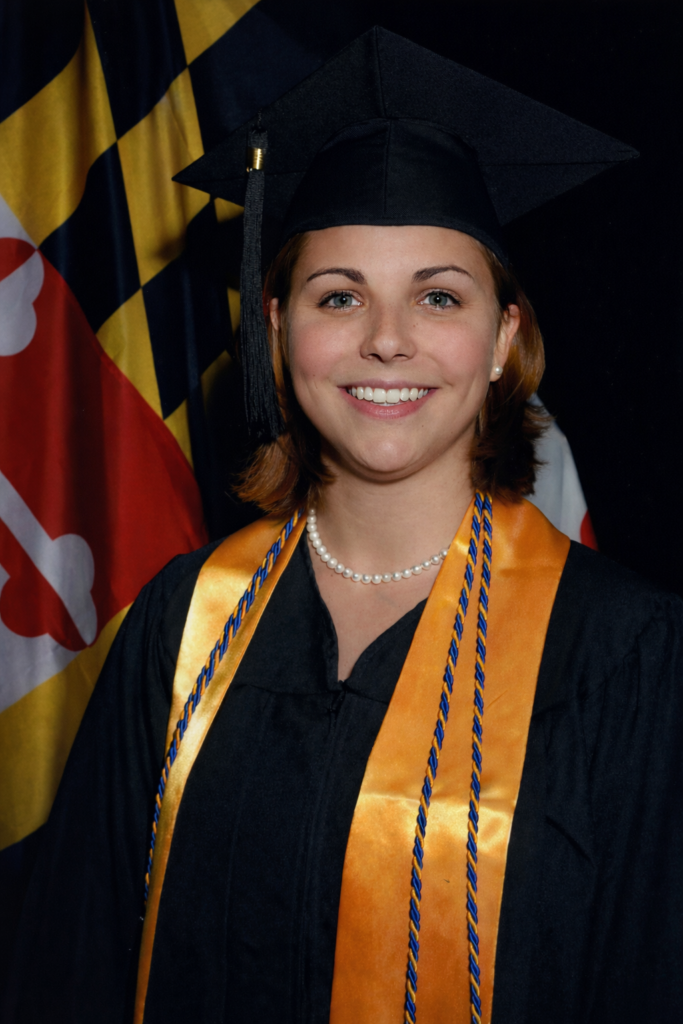 Jaime Miller graduated magna cum laude from UMBC and was inducted into the prestigious Phi Beta Kappa National Honor Society. (Courtesy of Miller)
Drawn to UMBC’s supportive environment, strong science programs, and proximity to home, Miller accepted a College Bound scholarship and a small award from a pharmaceutical company. Miller found a minor in philosophy complemented her scientific pursuits by honing her critical thinking and providing diverse insights. She particularly enjoyed courses in moral theory, she says, exploring challenging topics like euthanasia, abortion, and pornography in a safe environment for discussion.
The emphasis on clarity, precision, and organization in philosophical arguments directly enhanced her scientific communication and planning skills, too: “You want to make sure any experimental design is clean and succinct, so that when you present it, everybody understands what you’re doing and what your goal is.”
Again seizing opportunities, Miller emailed Michael Summers, distinguished professor of chemistry and biochemistry, about joining his lab, even negotiating her pay. “It was my first foray in advocating for myself,” she reflects. Summers remembers Miller as “a wonderful, caring person” with standout “resilience, professionalism, and commitment to others in need.” Her work with his research group led to a publication in Proceedings of the National Academy of Sciences.
After UMBC, Miller pursued an M.D./Ph.D. at the University of Virginia, focusing on epigenetics and blood disorders. “There was something about blood and blood cancers that I was just really drawn toward,” she says. After being selected for a fellowship in hematology-oncology at the University of Pittsburgh Medical Center (UPMC) in 2015, Miller seemed poised for a thriving clinical and research career.
Redirected by chronic illness
In 2018, however, a constellation of nagging symptoms escalated: extreme fatigue, joint pain, swollen lymph nodes, and, finally, pneumonia. After seemingly endless testing and specialist visits, she was diagnosed with systemic lupus erythematosus, an autoimmune disease. Lupus, she explains, “can affect literally any organ in the body” and manifests in every patient differently. Unfortunately, “I ran into a lot of obstacles” when requesting accommodations like no overnight shifts, she says, including dismissive comments about her “mystery illness.” Ultimately, UPMC terminated her, refusing a part-time option.
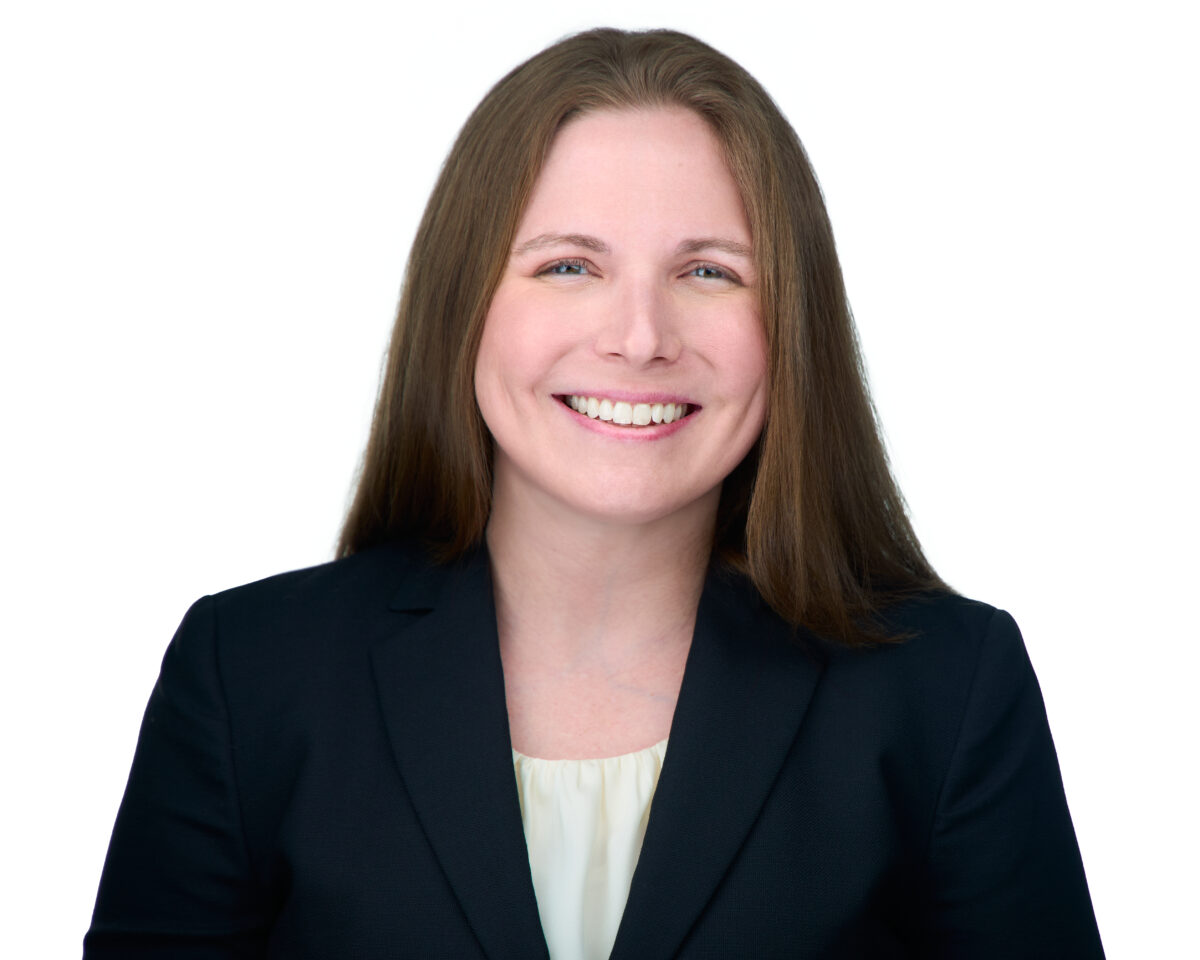 Jaime Miller (Courtesy of Miller)
This setback could have been devastating after 15 years of rigorous training, but Miller channeled it into purpose. “Despite how negative it sounds, it’s not tragic. My husband could see I was mentally breaking from sacrificing so much of my quality of life for my career. Leaving medicine was a brutal reality check, but it also showed me how much else I could explore and enjoy,” Miller says. For example, “When I was too sick to do much, I started small things I’d always wanted: I bought a guitar to learn music, a sewing machine to make clothes—simple activities I could do sitting in a chair. It was an eye-opener. I’m happier now—100 percent.”
As an ambassador for the Lupus Foundation of America, she co-facilitates a Pittsburgh support group and organized the city’s first officially sponsored Walk to End Lupus Now in 2025, raising $60,000. She has also found a way to continue her medical career on a part-time basis by voluntarily consulting for All4Cure, an online platform where specialists like her provide guidance for multiple myeloma patients, ensuring equitable care for those in rural areas treated by general oncologists.
From adversity to purpose
Miller spent years practicing self-advocacy on her academic journey, and now she’s using those skills to benefit others, as well. This resilience shines in her advice for the chronic illness community: “You have to take care of yourself. You can’t take care of anything else unless you take care of yourself, both physically and mentally.” She emphasizes seeking counseling early and advocating fiercely for one’s needs, even when it feels isolating.
Miller was raised in the Catholic church but drifted toward atheism during her medical training. After her diagnosis, however, she found herself sensing the voice of her grandmother, a committed Christian who also had lupus: “Maybe this is happening for a reason. You’re a physician and you’ll be able to educate and advocate a lot better for those that can’t advocate for themselves.” Today she is still navigating her spiritual life, but for now she believes in “something out there in the universe that makes things the way that they are”—an energy or presence that gives meaning to hardship and opens new paths.
UMBC played a foundational role in where Miller finds herself today, fostering her confidence and research skills in a nurturing setting. Today, at 41, Miller embraces a fuller life than a traditional physician path would have allowed. Her mantra extends to younger generations, who she hopes will try new things, take risks, and forge their own paths. “Failure is okay,” Miller reiterates. “It’s nothing more than a learning step to success.”
 Jaime Miller, right, celebrates with close friends in Baltimore’s Little Italy after her UMBC graduation. (Courtesy of Miller)