At UMBC, restorative practices have grown from a promising idea into a campus-wide movement—one shaped by dedicated staff and reaching far beyond the university itself.
For Jeff Cullen, UMBC’s director of Student Conduct and Community Standards, this work has been years in the making. Now in his 18th year at the university, Cullen has helped guide the evolution of student conduct from a traditional, punitive model toward something more meaningful: a restorative approach that centers accountability, healing, and community.
“Each student I encounter is unique,” Cullen explains. “I enjoy working with them in a restorative way—offering high levels of support while also demanding high levels of accountability.”
Building a proactive framework
UMBC formally began integrating restorative practices in 2015, after adopting training models inspired by the International Institute for Restorative Practices. What started as an alternative way to resolve disputes has since expanded into a proactive framework for building relationships and fostering authentic communication across campus.
Instead of focusing solely on punishment, restorative practices ask deeper questions. Cullen describes a hypothetical situation: a student returns to their residence hall inebriated, damages a bulletin board, and creates a mess in a shared space. In a traditional system, the outcome might center on sanctions. But a restorative approach broadens the lens.
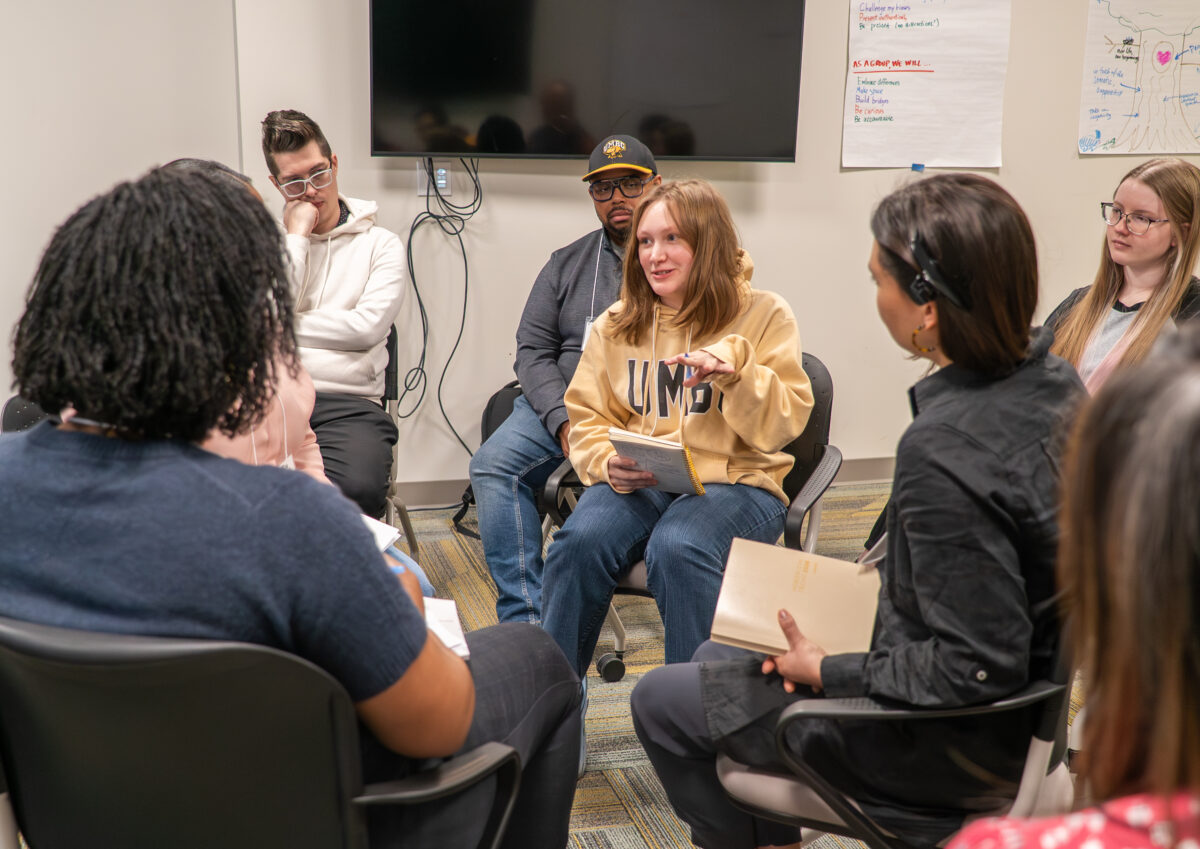 Samantha Kennedy ’25, social work, a graduate assistant for restorative practices in Student Conduct and Community Standards participates in a “fishbowl circle” which can be useful for idea generation and problem solving.
“It’s not just about the student,” Cullen says. “There are custodial staff, residential life staff, and other students who are impacted.”
Through restorative circles, those affected come together—the student, staff members, peers—and engage in guided dialogue. They reflect on what happened, who was harmed, and how to make things right. The result is not only accountability, but also understanding and, often, reintegration into the community.
While the process can feel challenging at first, Cullen notes that participants often leave with a sense of resolution and stronger conflict-resolution skills. Early data and broader research suggest that restorative approaches can reduce repeat offenses, increase satisfaction, and create healthier communities overall.
That impact is not limited to UMBC.
Restorative practices beyond the classroom
Toshiyasu Tsuruhara, an associate professor at Ritsumeikan Asia Pacific University in Japan, traveled across the globe to attend a 2-day restorative practices workshop at UMBC (combining his trip with another training in San Diego). With a background in conflict mediation—including accreditation as a community mediator in the U.K. and experience working with neighbor disputes and in family court—Tsuruhara was already familiar with restorative justice concepts.
But the workshop offered something new.
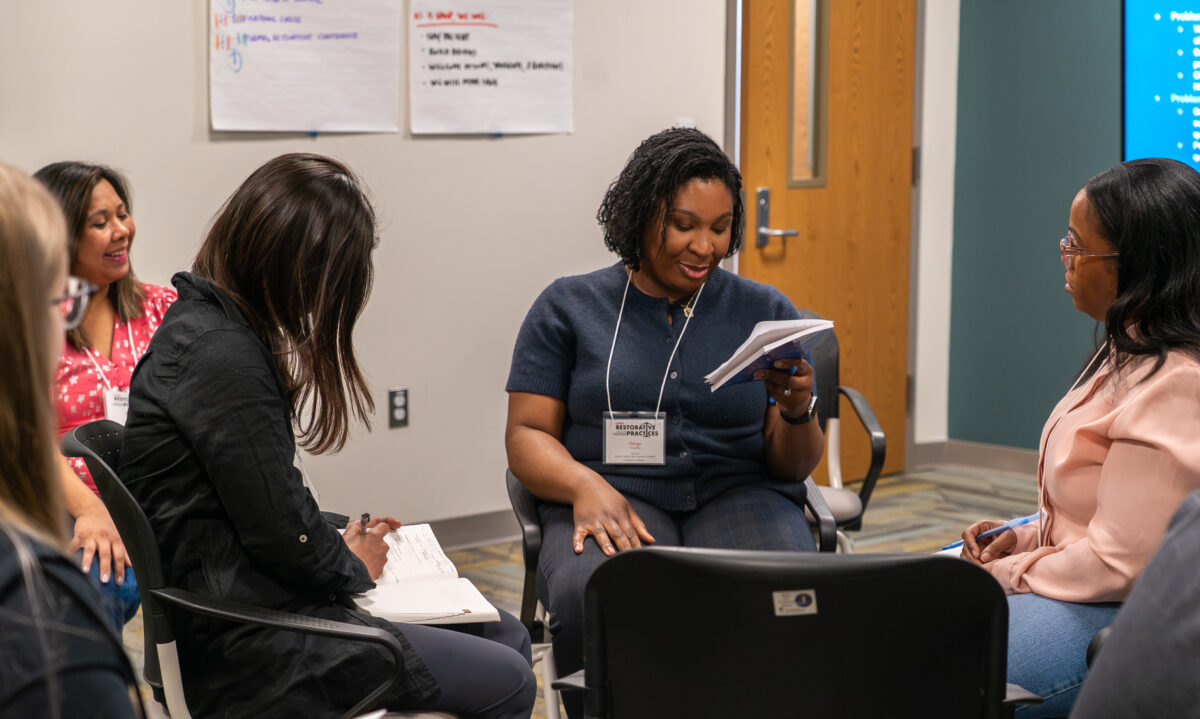
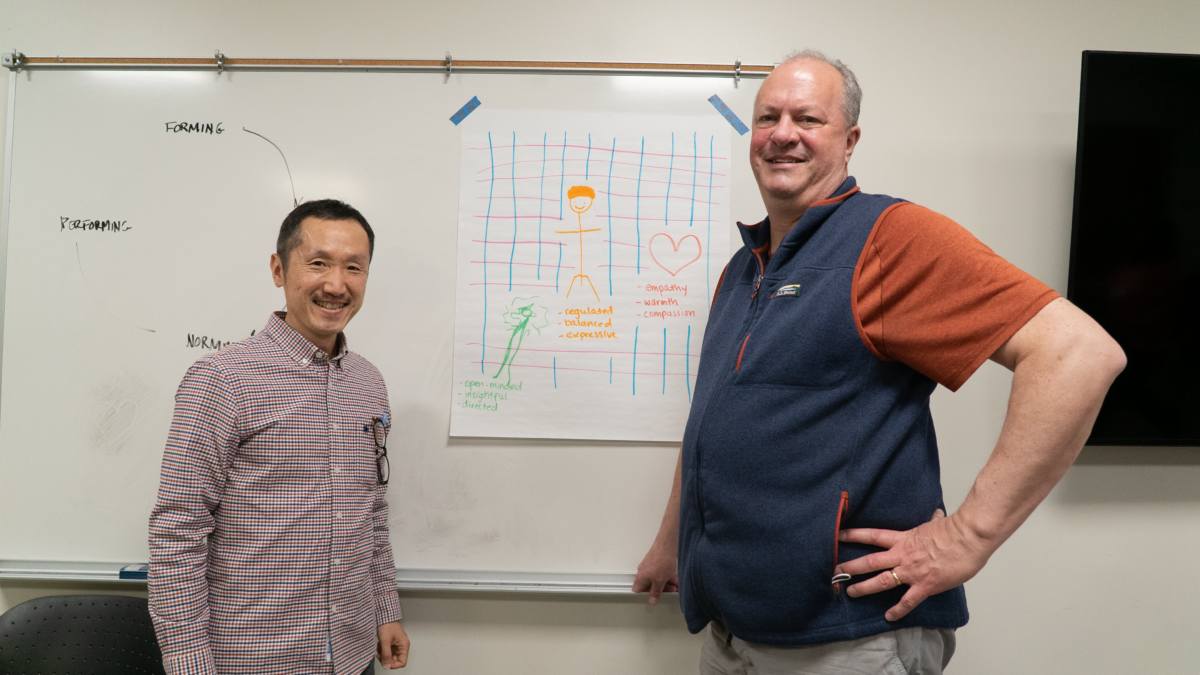 Left: More fishbowl circle work at the 2026 training. Right: Toshiyasu Tsuruhara and Jeff Cullen met during the 2-day training.
“I learned how these tools can be applied in real-life situations,” he explains. “I am interested in restorative practices because they offer tools to repair relationships and bring communities toward peace,” Tsuruhara says. “They are not just for education—they can be applied in work, family, and friendships.”
During his time at UMBC, Tsuruhara engaged closely with students and staff, participating in discussions, collaborative exercises, and even creative activities like short dramatic presentations to explore key concepts. What stood out most was not just the theory, but how actively it was practiced.
For Tsuruhara, the experience also highlighted the value of introducing restorative practices early in students’ lives. He observed how these approaches could help students navigate both academic and social challenges, while also preparing them for professional environments.
“They help maintain peaceful relationships with workmates,” he says. “And if conflict happens, they provide tools to resolve it.”
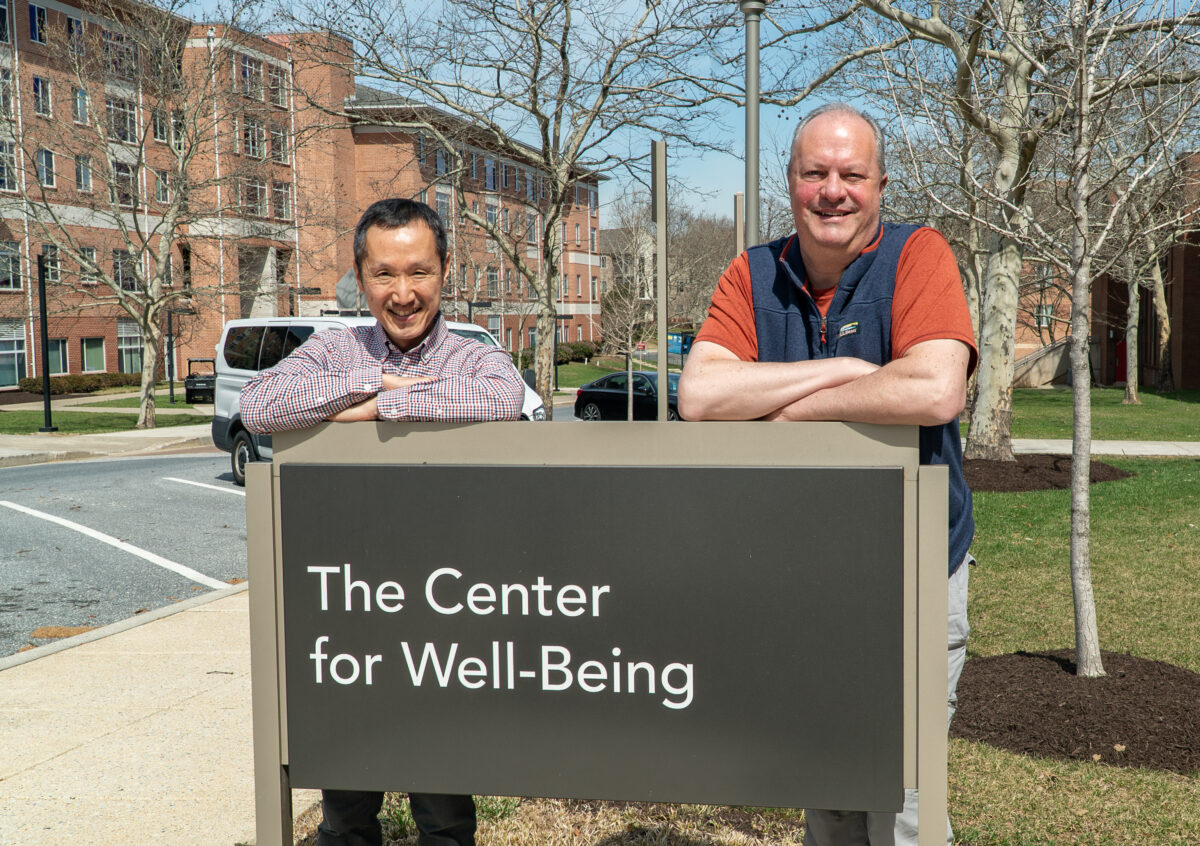
Inspired by what he learned, Tsuruhara plans to continue to integrate restorative practices into his own teaching. In his “Multicultural Cooperation Workshop,” students from diverse national and cultural backgrounds collaborate on long-term group projects—an environment where conflict can naturally arise. Rather than relying solely on mediation training, he sees restorative practices as a more holistic and educational approach.
One small effort turns into campus-wide movement
Back at UMBC, Cullen reflects on how far the initiative has come. What began over a decade ago as a small effort has grown into a campus-wide movement, with hundreds of students, faculty, and staff trained in restorative methods.
“At UMBC, if you have a good idea, you’re encouraged to implement it,” Cullen says. “We had no idea it would grow like this—but here we are.”
Supported by colleagues in Residential Life and Student Affairs leadership, and shaped through years of collaboration, restorative practices at UMBC continue to evolve—impacting not only the campus community, but also educators and practitioners around the world.
Click here for more resources on restorative practices at UMBC