Through a rigorous academic curriculum, service as a tutor, internships, tennis pick-up games, close friendships, and more, Manav Narendra ’26, mathematics and computer science, has made the most of his time at UMBC and built a strong foundation for future success in applied math and related fields. A leukemia survivor, Narendra has adopted a posture of gratitude and resilience, crediting in part his mother’s unwavering support and UMBC’s close-knit community for helping him thrive academically and personally. Here, Narendra reflects on his path to date, the people who shaped it, and the lessons he’s carrying forward.
Q: Why did you choose UMBC and your two degrees?
A: As a QuestBridge Scholar in high school, I was able to apply to select colleges with no application fee and the potential for a full-ride scholarship. In the end, UMBC just felt right—it was the closest to home, and I appreciated the smaller, more intimate community feel. I felt like at a bigger school I could’ve gotten lost in the crowd, but here I could actually stand out. Plus, UMBC gave me a merit scholarship, which mattered a lot coming from a single-parent household.
I’ve always loved math—calculus was my favorite class in high school. I originally planned to double major in math and physics, because I wanted to go into astronomy or astrophysics. But the job outlook seemed stronger for computer science, and I’d enjoyed coding since middle school, so I switched to that. Now I’m leaning toward applied math fields like actuarial science, because I enjoy stochastic (chaotic) process modeling and probability analysis more than pure software development.
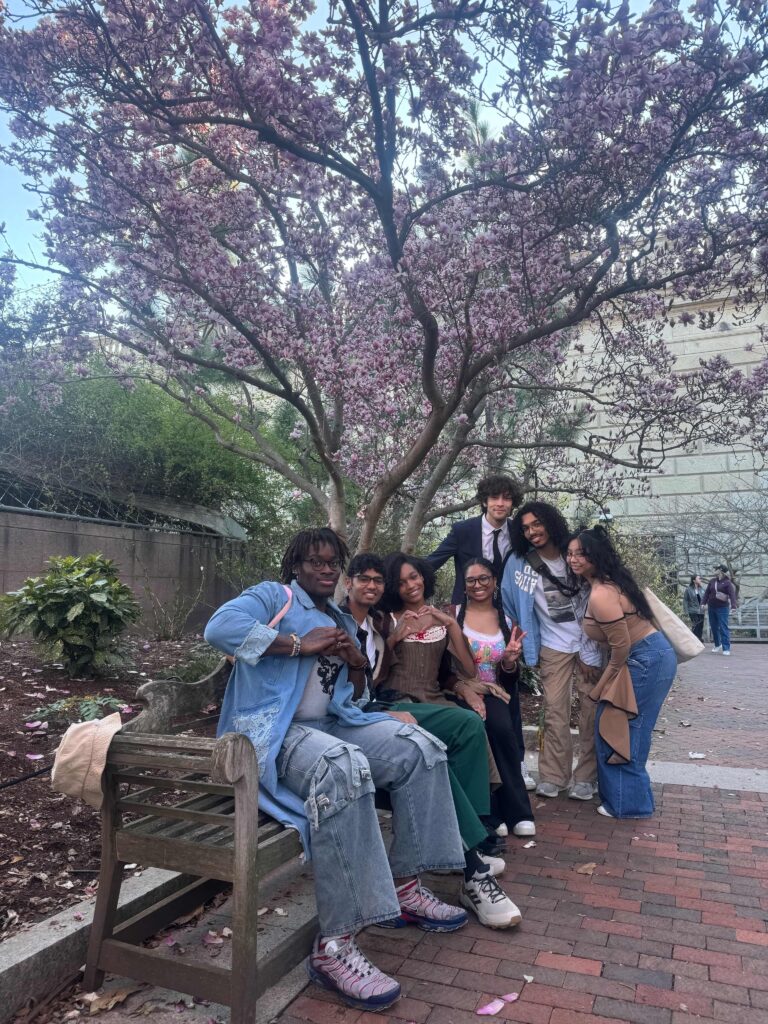
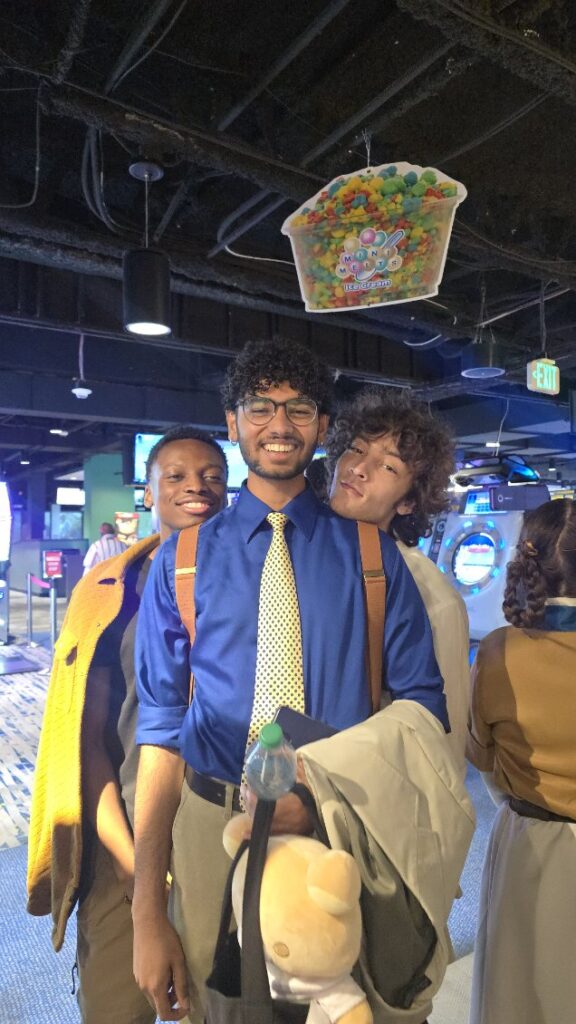 Manav Narendra made friends at UMBC through the discussion and connection possible in smaller classes. (Courtesy of Narendra)
Q: How did your internships enhance your education and influence your career trajectory?
A: I did the same business operations internship at the investor services division of Mitsubishi UFJ Financial Group, where I supported third-party mutual fund administration, twice—after my sophomore and junior years. I’m convinced that talking to company reps in person at the UMBC Career Fair really helped me get the offer. I spent a ton of time in Excel and learned Visual Basic for Applications (VBA), writing programs to automate procedures for other teams at the company. The internship taught me what a corporate environment feels like—being accountable, professional, and how one mistake could have a real effect on production.
The experience was incredibly valuable, even though I don’t think it’s the exact kind of work I want to do long term. I had zero Excel or VBA experience before, and those skills are huge in actuarial work. So even though I realized I want something more independent and creative, the internships gave me practical skills I can take straight into data analysis or actuarial roles. The internships also showed me it’s okay to explore—every experience teaches you something you can carry forward.
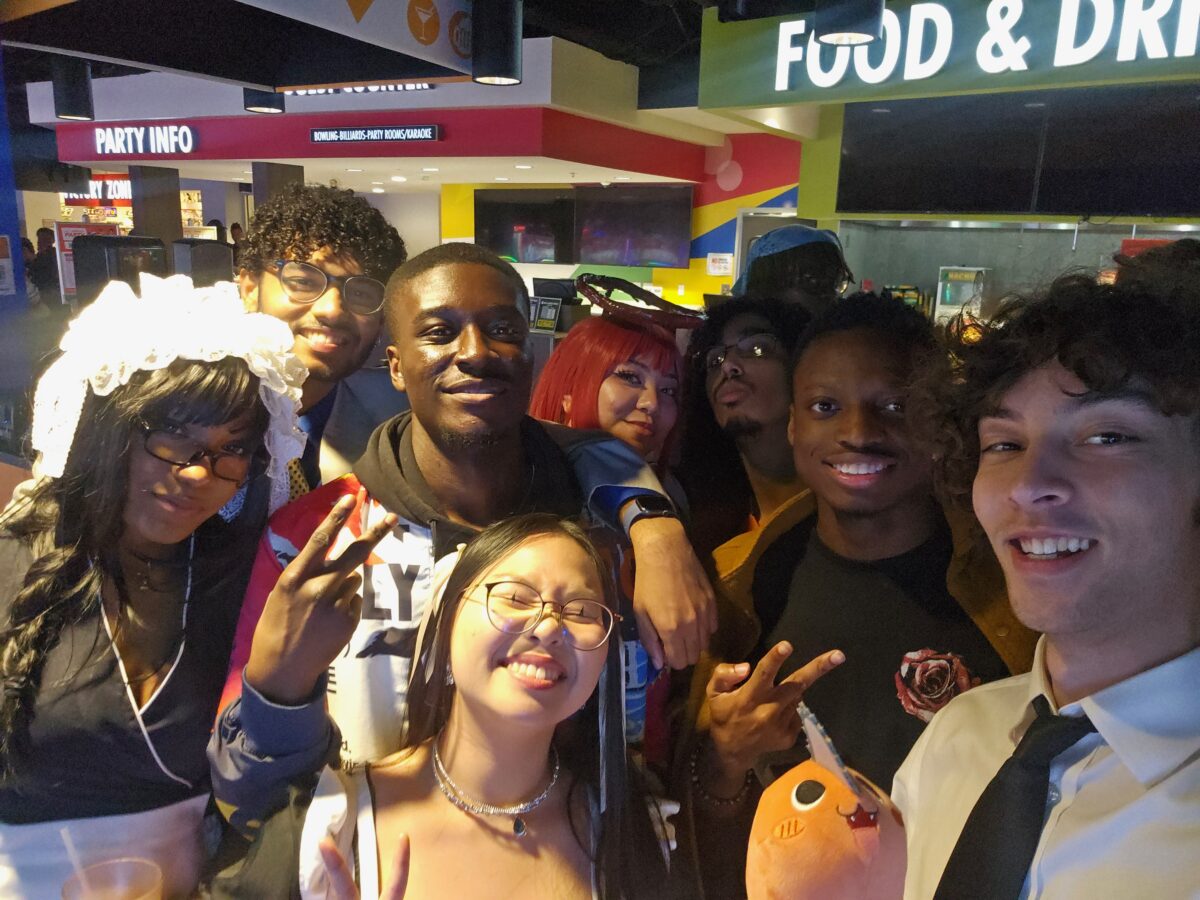 Manav Narendra (back row, left) found plenty of opportunities to spend time with friends despite his demanding academic curriculum. (Courtesy of Narendra)
Q: What’s next for you after graduation?
A: The job market is tough right now, so I’m keeping my options open. I’m considering actuarial positions, data science and analysis, underwriting, even some IT and software roles. I’m open to moving anywhere—I’ve moved a lot in my life, and after five years in Maryland I’m actually getting a little restless!
Certification exams are really important in the fields I want to go into, and I took my first actuarial exam in January. Right now I’m in the Financial Math for Actuaries class at UMBC, which lines up perfectly with the next exam in June. I just want to get my foot in the door somewhere and keep learning.
Q: How have you gotten involved on campus, and how have those experiences supported your well-being and growth?
A: The smaller class sizes at UMBC—especially the 20- to 30-person ones—made everything feel more personal. That’s where I made most of my friends, through connections sparked by real discussion. I also tutored math and Japanese at the Academic Success Center for three years. That was rewarding and kept me grounded.
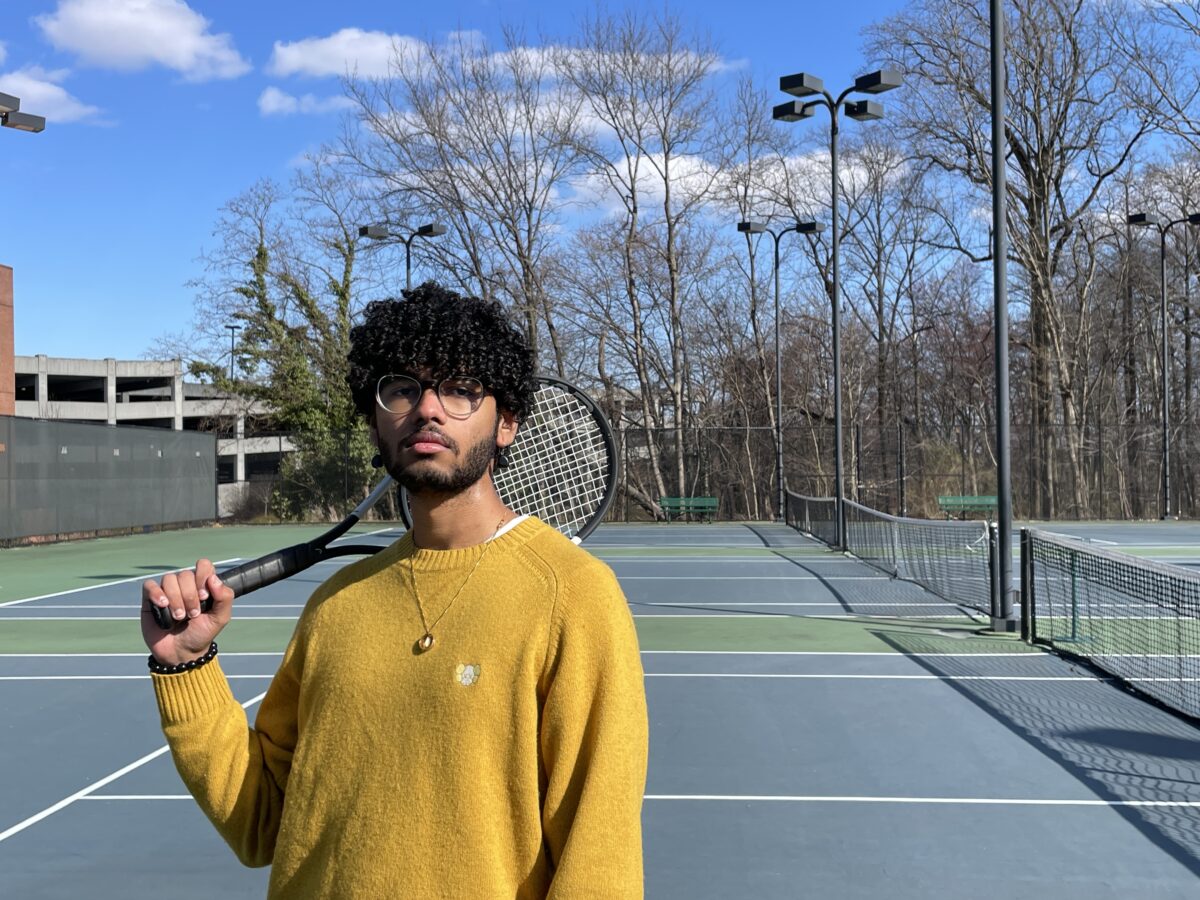 Manav Narendra enjoyed pick-up tennis matches during his time at UMBC. (Courtesy of Narendra)
I’m in the Honors College and the national mathematics honor society, Pi Mu Epsilon, and I just applied to Mu Sigma Rho, the honor society for statistics. My friend is an officer of the Bonsai Club, and I’ve gone to some of their origami and painting events. And I play a lot of pickup tennis—UMBC’s courts are great, and that’s been huge for my physical and mental health and making friends. All of it kept me balanced, especially with a heavy course load to complete both of my degrees in four years.
Q: Who has supported you in your academic and life journey, and what difference has that made?
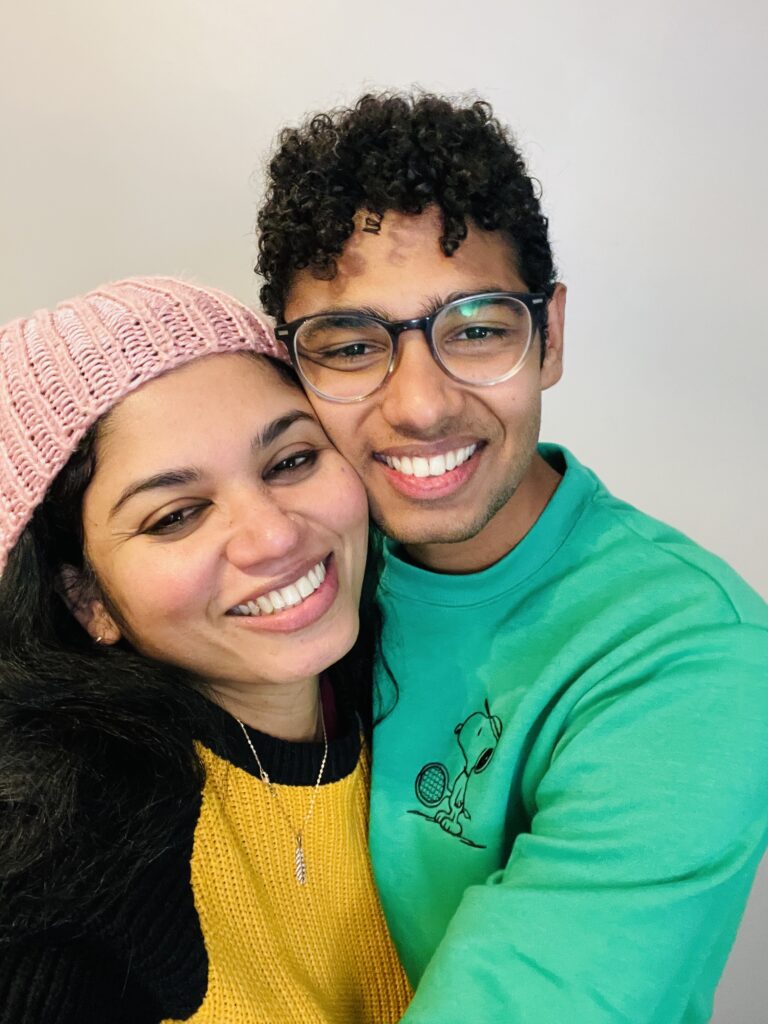 Manav Narendra with his mom, who has provided critical support for him as he underwent cancer treatment and now pursues his professional goals.
A: My mom has been everything. She’s my biggest supporter and my lifelong inspiration, both personally and academically. She stopped working for years to take care of me when I had cancer, getting me to every appointment and advocating for my treatment. I tell people it was much harder for her than for me—I just had to deal with the physical pain, but she handled so much, mentally, emotionally…I wasn’t the brave one during treatment; she was. She’s overcome so much adversity to get me to where I am today, and for that I’m eternally humbled and grateful. Also, at a time in India when women were discouraged from pursuing their dreams and there were large gender disparities in higher education, she embraced her passion for public health and became the first person from her village to earn a doctorate. She later completed a postdoc at Duke—that’s why we first came to the U.S. Her story inspires me every single day to chase after my dreams and always stay true to myself.
At UMBC, Dr. Simon Stacey andDr. Julie Oakes in the Honors College; Dr. Hye-Won Kang and Dr. Kal Nanes in the math department; and pretty much every professor I’ve had have been incredible. They’ve advised me on careers, written recommendation letters, and helped me explore actuarial science. That support made me feel seen and capable.
Q: How did having cancer affect your outlook?
A: When I was 13, I was diagnosed with acute lymphoblastic leukemia (ALL) while we were living in India. The first year of intense chemo was brutal—my brain has blocked out memory of the worst of the agonies. In my debilitated state, I was forced to miss the bulk of 8th grade. Later on, I had GI complications that left me bedridden and using a nasal feeding tube for months, but one silver lining of that time overlapping with the pandemic was that I could join online school right from my bed. Thankfully, I’ve been off treatment since summer 2020, and I’m doing well now. I still have some minor residual issues from treatment—but I’m here!
Cancer gave me resilience. It’s my second chance at life. Challenges that used to feel huge just don’t faze me the same way anymore. That experience put everything in perspective: If I could get through that, I can get through anything. I try to live life to the fullest because of it.
Q: What advice do you have for incoming UMBC students?
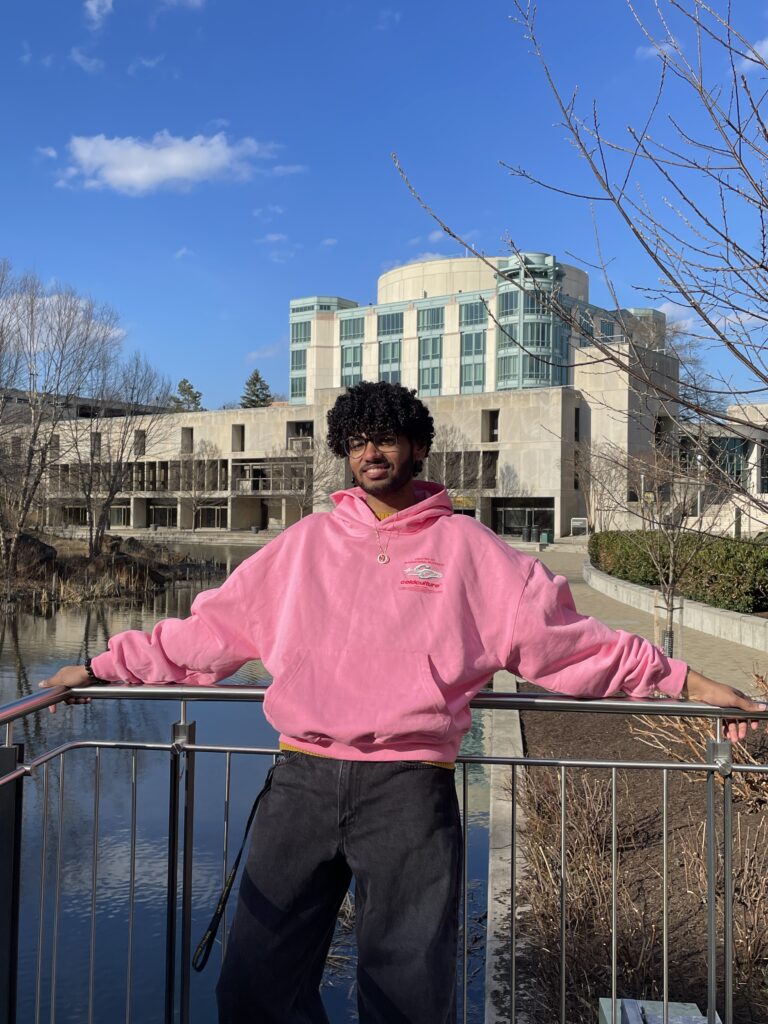 Manav Narendra has come into his own at UMBC, and now he is ready to take on his next chapter. (Courtesy of Narendra)
A: Keep going. Even when things get hard—personal stuff, academics, whatever—just keep moving forward. Break everything into small steps. I’m a serial procrastinator, but I still get everything done by staying consistent with a simple to-do list. Whatever your goal is—an internship, a recital, a competition—just take one small step at a time. Nothing is impossible.
And above all, try to be a good person. I love this Einstein quote: “Try not to become a man of success, but rather try to become a man of value. He is considered successful in our day who gets more out of life than he puts in. But a man of value will give more than he receives.” Be kind. Be empathetic. That matters more than straight As. And UMBC’s community will meet you where you are, and then help you grow, as long as you show up.