<?xml version="1.0"?>
<News hasArchived="false" page="1" pageCount="1" pageSize="10" timestamp="Sun, 26 Apr 2026 21:47:24 -0400" url="https://dev.my.umbc.edu/groups/womenscenter/posts.xml?tag=pregnancy">
  <NewsItem contentIssues="true" id="133551" important="false" status="posted" url="https://dev.my.umbc.edu/groups/womenscenter/posts/133551">
  <Title>Exploring Artificial Reproductive Technologies</Title>
  <Body>
    <![CDATA[
    <div class="html-content"><p><em>Positionally statement: This post is written by Audrey Gatewood. I am a senior in the UMBC School of Social Work, completing my field placement at the Women’s Center. I’m writing this blog as a result of learning about reproductive technologies in my personal life, with the belief that other people may be interested too. I do not have any background in medical education, and do not have first- hand experience with reproductive technologies. This blog is written from research I’ve done for myself, prompted by my own interest in using reproductive technologies, and does not cover everyone’s experience or all possible circumstances in which reproductive technologies may be used. </em></p>


    <a href="https://womenscenteratumbc.wordpress.com/wp-content/uploads/2023/05/image.png" rel="nofollow external" class="bo"><img width="1024" height="435" src="https://womenscenteratumbc.wordpress.com/wp-content/uploads/2023/05/image.png?w=1024" alt="" style="max-width: 100%; height: auto;"></a>


    <p><em>(A simplified illustration of the difference between artificial insemination, in which sperm is injected directly into the uterus, and in vitro fertilization, in which an egg is fertilized in a petri dish before being inserted into the uterus. Photo via </em><a href="https://www.invitra.com/" rel="nofollow external" class="bo"><em>https://www.invitra.com/</em></a><em> ) </em></p>


    <p>When I mention my partner and I may consider having kids, generally a beat of intrigued confusion follows. My partner and I are both women, and cannot get pregnant on our own. Even surrounded by other LGBTQ people, follow up ensues: Adoption? Intrauterine insemination? Sperm donor? </p>


    <p>Fertility is typically viewed as a given for people of a certain age, and parenthood as inherent in long-term heterosexual partnerships. For women in particular, fertility and motherhood are seen as defining states of being. But what about people who are infertile, who can’t get pregnant for health reasons, who want children but don’t want to be pregnant, who are older, lesbian and gay couples, and so on? Disrupting the typical image of childbearing comes with many questions of intention, method, and outcome. Particularly interesting are the medical technologies and methods that people may use to get pregnant, called <strong>artificial reproductive technology</strong>, or ART. </p>


    <p>Artificial reproductive technologies are innovations in healthcare that help people conceive. According to the American Center for Disease Control definition, ART includes </p>


    <p><em>“any fertility-related treatments in which eggs or embryos are manipulated. Procedures where only sperm are manipulated, such as intrauterine inseminations, are not considered under this definition (</em><a href="https://pubmed.ncbi.nlm.nih.gov/35015434/" rel="nofollow external" class="bo"><em>Jain and Singh, 2023</em></a><em>).”</em></p>


    <p>The most well known and common ART procedure is in vitro fertilization, or IVF, in which a sperm and an egg are combined outside of the body in a laboratory dish. Eggs are retrieved in a process called ovarian stimulation, in which a person is given hormonal fertility medications to stimulate multiple egg growth in the ovaries, instead of just one per month (Jain and Singh, 2023). This way there are more chances for the egg to be effectively fertilized and result in a pregnancy, as not every egg will fertilize, and not every fertilized egg will result in a full term pregnancy. The fertilized egg, or multiple eggs, are then transplanted into the uterus, where they may or may not attach to the uterine lining and develop into a pregnancy. </p>


    <a href="https://womenscenteratumbc.wordpress.com/wp-content/uploads/2023/05/image-2.png" rel="nofollow external" class="bo"><img width="1024" height="798" src="https://womenscenteratumbc.wordpress.com/wp-content/uploads/2023/05/image-2.png?w=1024" alt="" style="max-width: 100%; height: auto;"></a>


    <p><em>(Illustration of the in vitro fertilization process. Photo via dreamstime.com)</em></p>


    <p>In this same process, one could choose to have eggs and/or embryos frozen for future use in a process called cryopreservation (Jain and Singh, 2023). This saves the person from having to go through the process of ovarian stimulation again, as it’s a relatively involved, 1-2 week long process that requires many doctors visits and potential side effects from hormone fluctuation. Some people choose to use cryopreservation to preserve eggs before undergoing major health undertakings, like chemotherapy, to prevent eggs from being damaged, or if age is a concern, one may choose to freeze their eggs at a younger age and use them at a later time, when they are ready to be pregnant.</p>


    <p>IVF is the most common ART in use, but there is also intrauterine insemination, or IUI. IUI is the process of inserting sperm directly into the uterus around the time of ovulation to increase the chance of fertilization (<a href="https://www.plannedparenthood.org/learn/pregnancy/fertility-treatments/what-iui" rel="nofollow external" class="bo">Planned Parenthood)</a>. Sperm is collected either from a partner or from a donor, “washed” in a process that collects healthy sperm and removes chemicals in the semen, and inserted via a catheter. The process is much more low- tech than IVF, less invasive, and generally takes about 5-10 minutes. But how do you get pregnant when sperm isn’t readily available? Most likely through a sperm bank, using donor sperm. </p>


    <a href="https://womenscenteratumbc.wordpress.com/wp-content/uploads/2023/05/image-1.png" rel="nofollow external" class="bo"><img width="1024" height="553" src="https://womenscenteratumbc.wordpress.com/wp-content/uploads/2023/05/image-1.png?w=1024" alt="" style="max-width: 100%; height: auto;"></a>


    <p><em>(Illustration of the intrauterine insemination process, in which washed sperm is injected into the uterus via a catheter. Photo via Jonathan Dimes for BabyCenter)</em></p>


    <p>People may choose to use donor sperm for a variety of reasons: if their/their partner’s sperm is infertile, to avoid passing down hereditary diseases, if a single woman is ready to have a kid, or if neither partner can produce sperm, like many lesbian couples, for example. People can use sperm from a friend or relative, but often sperm is coming from donors with varying levels of anonymity. Whether and to what degree a donor remains anonymous depends on the sperm bank and policies local to the state and country. Generally, though, total anonymity cannot be <em>guaranteed</em> to a sperm donor, particularly with the rise of consumer-level DNA testing for websites like 23AndMe or Ancestery.com. Generally, a medical history and varying levels of descriptors are provided to a person or couple looking to use donated sperm, descriptors that may include hair color, self-reported personality traits, ethnicity, personal interests/hobbies/ career, and sometimes, though not always, a photo. Sperm donors are heavily screened for infectious and hereditary disease, undergoing extensive medical questionnaires, full physical exams, and sperm analysis. Donors will also go through mental health screening and a criminal background check (<a href="https://www.ucsfhealth.org/treatments/donor-sperm-insemination#:~:text=Once%20retrieved%2C%20your%20eggs%20will,enhance%20fertilization%20of%20the%20egg" rel="nofollow external" class="bo">UCSF Health 2020</a>). </p>


    <p>ART and other related procedures like IUI come with a price. A single IVF cycle can range from $15,000 to $30,000 on average (<a href="https://www.forbes.com/health/family/how-much-does-ivf-cost/" rel="nofollow external" class="bo">Forbes Magazine, 2023</a>). IUI can cost between $300 to $1,000 per session, depending on if donor sperm is used (Planned Parenthood). Neither procedure guarantees a full term pregnancy. In fact, national data from the Society for Assisted Reproductive Technology reports that <em>“the rate of live births following first-use IVF for women under the age of 35 using their own oocytes is only 37% (Center for Reproductive Rights, 2020)”</em>. Private insurance companies may cover some or much of the procedure, and there are grants, discount programs and clinical studies that can reduce the cost  (Forbes Magazine, 2023). </p>


    <p>Even so, fertility treatments come with a barrier of accessibility, and may only be available to those who can afford them. IVF in particular can be burdensome for those who utilize it, not only coming at a huge financial cost, but demanding an investment of time and emotional and physical strain, causing many people to discontinue using it after an unsuccessful first attempt. </p>


    <p>IUI faces a much lower barrier of accessibility, but is not an option for everyone in need of fertility assistance. In addition to being financially inaccessible for many, infertility or using ART can come with a stigma, one which typically affects women. Deviance from the typical fertility narrative challenges the societal expectation of women as inherently mothers, and of the normative family dynamic of a married man and woman having children ‘naturally.’ Women using ART due to fertility issues may experience social stigma, personal shame, and anxiety or depression <a href="https://reproductiverights.org/" rel="nofollow external" class="bo">(Center for Reproductive Rights, 2020)</a>. Despite the fact that male-factor infertility accounts for 50% of clinical cases, women tend to receive the brunt of this stigma. For lesbian couples using IUI, stigma can follow the couple through their whole lives as a family, as the rules of a normative family structure are broken when a man is removed from the equation, and when pregnancy is achieved in a non-normative way. </p>


    <p> There isn’t much representation of lesbian moms. Even surrounded by my sizable LGBTQ community, in a “progressive” city, I haven’t had many examples of what parenting as a lesbain couple could look like. Sometimes I find myself wondering, if I had a kid, what their experience would be like having two moms? Will it be a huge difference from how I grew up? How would our family be treated by others? Will they be asked invasive questions about their birth? How much would they look like the sperm donor? What if they got in touch with the sperm donor when they were older, and what would that mean?</p>


    <p> Regardless of these questions, I’m grateful that reproductive technologies exist, and hope to see barriers to access removed. The future potential for growth, not only in the technological aspect, but in the regulation and accessibility of consumer use of fertility treatments, and of societal understanding, points to ongoing questions about medical technology, genetics, parenthood and more. </p>


    <p><strong>Reference </strong></p>


    <p><a href="https://reproductiverights.org/wp-content/uploads/2020/02/64785006_Infertility-and-IVF-Access-in-the-U.S.-Fact-Sheet_2.5.2020_Final.pdf" rel="nofollow external" class="bo">Center for Reproductive Rights. (2020).  <em>Infertility and IVF access in the United States</em>.</a> </p>


    <p><a href="https://www.forbes.com/health/family/how-much-does-ivf-cost/" rel="nofollow external" class="bo">Forbes Magazine. (2023, March 7th). <em>How much does IVF cost?</em>. Forbes. </a></p>


    <p><a href="https://pubmed.ncbi.nlm.nih.gov/35015434/" rel="nofollow external" class="bo">Jain, Meaghan; Singh, Manvinder. (January 2023)  <em>Assisted Reproductive Technology (ART) techniques</em>. National Center for Biotechnology Information.</a></p>


    <p><a href="https://www.plannedparenthood.org/learn/pregnancy/fertility-treatments/what-iui" rel="nofollow external" class="bo">Planned Parenthood. <em>What is intrauterine insemination (IUI)?</em> </a></p>


    <p><a href="https://www.ucsfhealth.org/treatments/donor-sperm-insemination#:~:text=Once%20retrieved%2C%20your%20eggs%20will,enhance%20fertilization%20of%20the%20egg" rel="nofollow external" class="bo">UCSF Health. (2020, October 7). <em>Donor sperm insemination</em>. ucsfhealth.org. </a></p></div>
]]>
  </Body>
  <Summary>Positionally statement: This post is written by Audrey Gatewood. I am a senior in the UMBC School of Social Work, completing my field placement at the Women’s Center. I’m writing this blog as a...</Summary>
  <Website>https://womenscenteratumbc.wordpress.com/2023/05/16/exploring-artificial-reproductive-technologies/</Website>
  <TrackingUrl>https://dev.my.umbc.edu/api/v0/pixel/news/133551/guest@my.umbc.edu/98cadefc71272c49fd70b403fd045215/api/pixel</TrackingUrl>
  <Tag>artificial-reproductive-technologies</Tag>
  <Tag>feminism</Tag>
  <Tag>ivf</Tag>
  <Tag>lgbtq</Tag>
  <Tag>lgbtq-readings</Tag>
  <Tag>pregnancy</Tag>
  <Tag>reproductive-health</Tag>
  <Group token="womenscenter">Women's, Gender, &amp;amp; Equity Center</Group>
  <GroupUrl>https://dev.my.umbc.edu/groups/womenscenter</GroupUrl>
  <AvatarUrl>https://assets2-dev.my.umbc.edu/system/shared/avatars/groups/000/000/125/78272a4842689b30dbf74672182b78f8/xsmall.png?1750974263</AvatarUrl>
  <AvatarUrl size="original">https://assets1-dev.my.umbc.edu/system/shared/avatars/groups/000/000/125/78272a4842689b30dbf74672182b78f8/original.png?1750974263</AvatarUrl>
  <AvatarUrl size="xxlarge">https://assets1-dev.my.umbc.edu/system/shared/avatars/groups/000/000/125/78272a4842689b30dbf74672182b78f8/xxlarge.png?1750974263</AvatarUrl>
  <AvatarUrl size="xlarge">https://assets1-dev.my.umbc.edu/system/shared/avatars/groups/000/000/125/78272a4842689b30dbf74672182b78f8/xlarge.png?1750974263</AvatarUrl>
  <AvatarUrl size="large">https://assets1-dev.my.umbc.edu/system/shared/avatars/groups/000/000/125/78272a4842689b30dbf74672182b78f8/large.png?1750974263</AvatarUrl>
  <AvatarUrl size="medium">https://assets2-dev.my.umbc.edu/system/shared/avatars/groups/000/000/125/78272a4842689b30dbf74672182b78f8/medium.png?1750974263</AvatarUrl>
  <AvatarUrl size="small">https://assets1-dev.my.umbc.edu/system/shared/avatars/groups/000/000/125/78272a4842689b30dbf74672182b78f8/small.png?1750974263</AvatarUrl>
  <AvatarUrl size="xsmall">https://assets2-dev.my.umbc.edu/system/shared/avatars/groups/000/000/125/78272a4842689b30dbf74672182b78f8/xsmall.png?1750974263</AvatarUrl>
  <AvatarUrl size="xxsmall">https://assets3-dev.my.umbc.edu/system/shared/avatars/groups/000/000/125/78272a4842689b30dbf74672182b78f8/xxsmall.png?1750974263</AvatarUrl>
  <Sponsor>Women's Center</Sponsor>
  <PawCount>5</PawCount>
  <CommentCount>0</CommentCount>
  <CommentsAllowed>false</CommentsAllowed>
  <PostedAt>Tue, 16 May 2023 16:06:44 -0400</PostedAt>
  <EditAt>Tue, 16 May 2023 16:06:44 -0400</EditAt>
</NewsItem>
  <NewsItem contentIssues="true" id="66470" important="false" status="posted" url="https://dev.my.umbc.edu/groups/womenscenter/posts/66470">
  <Title>Performing Pregnancy As A Black Woman</Title>
  <Body>
    <![CDATA[
    <div class="html-content"><p><span><img src="https://womenscenteratumbc.files.wordpress.com/2017/03/screen-shot-2017-02-01-at-7-07-09-pm.png?w=187&amp;h=219" alt="Screen Shot 2017-02-01 at 7.07.09 PM.png" width="187" height="219" style="max-width: 100%; height: auto;"></span></p>
    <p><em>A reflection by Women’s center staff member, Kayla Smith.</em></p>
    <p> </p>
    <p>Full disclosure: I’m a Beyonce <a href="http://www.urbandictionary.com/define.php?term=Stan" rel="nofollow external" class="bo">stan</a>. I support pretty much everything she does. There are very few things Beyonce can do that I wouldn’t damn near worship. Needless to say when she released pictures from her maternity shoot I was ready to bow down.</p>
    <p> </p>
    <div><img src="https://womenscenteratumbc.files.wordpress.com/2017/03/screen-shot-2017-03-01-at-4-40-39-pm.png?w=574&amp;h=421" alt="screen-shot-2017-03-01-at-4-40-39-pm" width="574" height="421" style="max-width: 100%; height: auto;"><p>Beyonce’s pregnancy announcement on Instagram</p></div>
    <p>I scrolled through her <a href="http://www.beyonce.com" rel="nofollow external" class="bo"><span>website</span></a><span> looking at all the maternity pictures in awe. The </span><a href="https://bitchmedia.org/article/black-venus-rising/symbolism-beyonc%C3%A9s-pregnancy-photos" rel="nofollow external" class="bo"><span>symbolism</span></a><span> of a black woman evoking the Virgin Mary and the goddess Venus was not lost on me as I looked through the pictures feeling overjoyed for her and hopeful for my own future. She looked regal and glowed  with pride. This pregnancy announcement was radically different from her first, and was shrouded in much less mystery. I was reminded that in 2015 </span><a href="http://people.com/babies/beyonce-pregnant-previous-miscarriage-heartbreak/" rel="nofollow external" class="bo"><span>Beyonce suffered a miscarriage</span></a><span> and I was so happy that she could announce another pregnancy with confidence. I even lamented to my boyfriend hoping that I would be as beautiful as Beyonce whenever I decide to have kids.</span></p>
    <p> </p>
    <div><img src="https://womenscenteratumbc.files.wordpress.com/2017/03/screen-shot-2017-03-01-at-4-12-07-pm.png?w=266&amp;h=413" alt="screen-shot-2017-03-01-at-4-12-07-pm" width="266" height="413" style="max-width: 100%; height: auto;"><p><a href="http://www.beyonce.com/vault/" rel="nofollow external" class="bo">Beyonce</a> as the Goddess Venus, pictured with a bust of Nefertiti.</p></div>
    <p><span>To my surprise, outside of the BeyHive bubble, not everyone responded to the maternity shoot in the same way I did. </span><a href="http://jezebel.com/beyonce-is-carrying-and-has-carried-her-own-children-1791914593" rel="nofollow external" class="bo"><span>Comment threads</span></a><span> are filled with comments that call the maternity shoot “tacky,” “extra,” and “self absorbed.” </span><a href="http://www.manrepeller.com/2017/02/facebook-pregnancy-announcements.html" rel="nofollow external" class="bo"><span>Articles</span></a><span> were written criticizing not just the image, but Beyonce and the announcement itself.</span></p>
    <p><span>I can understand criticism, and I’m sure Bey can handle it. But one </span><a href="http://www.independent.co.uk/voices/beyonce-pregnant-with-twins-instagram-not-what-it-really-looks-like-a7559116.html" rel="nofollow external" class="bo"><span>article</span></a><span> in particular really felt like something was off. The author calls the Instragram picture “a brave woman who has the optimism to kneel down in front of a million flowers, get their wedding veil back on again, and know that bar the bump, the rest of their body is in perfect condition. People, this is not what pregnancy looks like.” A stranger, telling the public that Beyonce’s actual pregnancy isn’t what a pregnancy looks like. </span><strong>The author invalidates the actual pregnant woman</strong><span>, who is controlling her exposure and the narrative surrounding her pregnancy, by saying that, because it doesn’t look the way she expects pregnancy to look, it isn’t valid. In the days following the announcement I found myself falling down the rabbit hole of reading more and more articles criticizing Beyonce and her announcement. My excitement for her began to fade, and I wondered if maybe she should have avoided the criticism all together by being less flashy, or less “extra.”</span></p>
    <div><img src="https://womenscenteratumbc.files.wordpress.com/2017/03/screen-shot-2017-03-01-at-4-11-50-pm.png?w=649&amp;h=457" alt="screen-shot-2017-03-01-at-4-11-50-pm" width="649" height="457" style="max-width: 100%; height: auto;"><p><a href="http://www.beyonce.com/vault/" rel="nofollow external" class="bo">Beyonce</a> being pregnant on a car. I’m not sure why, but I’m here for it.</p></div>
    <p><span>I started to think about women who </span><a href="http://www.nytimes.com/2012/10/07/opinion/sunday/why-women-hide-their-pregnancies.html?_r=1&amp;emc=eta1" rel="nofollow external" class="bo"><span>hide their pregnancies</span></a><span> in order to avoid backlash from their employers and peers and the expectations thrust onto women about the proper way to compose themselves during their pregnancies and once they become mothers. In 2016, when Chimamanda Ngozi Adichie gave birth to her child, she didn’t tell anyone when she was pregnant because she didn’t want to “perform pregnancy.” She’s </span><a href="https://qz.com/722822/award-winning-author-chimamanda-ngozi-adichie-has-had-a-baby-not-that-its-anyones-business/" rel="nofollow external" class="bo"><span>quoted saying</span></a><span>, “</span><strong>I just feel like we live in an age when women are supposed to perform pregnancy. We don’t expect fathers to perform fatherhood.</strong><span> I went into hiding. I wanted it to be as personal as possible.” Knowles-Carter and Adichie are both controlling the narrative around how much access the public has to their pregnancies. </span></p>
    <p><span>I know I’m not nearly as famous as Beyonce or Chimamanda Ngozi Adichie so I’m probably not going to have any articles written about me whenever I get pregnant, but </span><strong>I will still be a black woman carrying a child in a society where people feel entitled to comment on a woman’s appearance and police how she carries herself.</strong><span> Black women are not only harshly criticized for their appearance, we are also subjected to racist perceptions around black pregnancy. There is the assumption that black women are someone’s “baby mama” or that the pregnancy was an accident. </span><strong>Black women are not afforded the same respect as other women when they decide to bear children.</strong></p>
    <div><img src="https://womenscenteratumbc.files.wordpress.com/2017/03/screen-shot-2017-03-01-at-4-10-47-pm.png?w=627&amp;h=435" alt="screen-shot-2017-03-01-at-4-10-47-pm" width="627" height="435" style="max-width: 100%; height: auto;"><p><a href="http://www.beyonce.com/vault/" rel="nofollow external" class="bo">Beyonce</a> and her first child Blue.</p></div>
    <p><span>I still have a lot of life to live before I have children, but in the digital age I wonder about what my own pregnancy announcement will look like, if I have one at all. Would I be willing to weather the storm of criticisms thrown at me or would I be more private? I often wonder what kind of mom I will be on social media. Will I be Beyonce, performing pregnancy from the day of my pregnancy announcement to the child’s birth or will I be Adichie, and keep the public away from the very personal and miraculous process that is pregnancy?</span></p>
    <p><span>Two years ago, when I decided I wanted to have kids one day, I fantasized about telling anyone who would listen about my pregnancy; however, after seeing the backlash women of color face online it’s easy to understand why it would be tempting to keep a pregnancy quiet altogether.</span></p>
    <div><img src="https://womenscenteratumbc.files.wordpress.com/2017/03/screen-shot-2017-03-02-at-5-41-06-pm.png?w=335&amp;h=411" alt="screen-shot-2017-03-02-at-5-41-06-pm" width="335" height="411" style="max-width: 100%; height: auto;"><p><a href="http://www.beyonce.com/vault/" rel="nofollow external" class="bo">Beyonce</a> being flawless during her Grammy’s performance.</p></div>
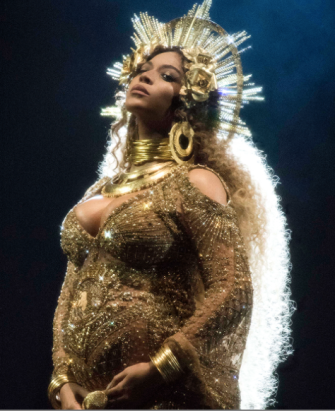
    <p><span>This is where I come back to Beyonce. Instead of covering her pregnant belly up when she performed at the Grammys, she evoked the image of a Nigerian fertility goddess. She performed covered in gold and jewels, literally beaming like the sun. </span><strong>She took every criticism about being over the top and threw it all right back at her critics.</strong></p>
    <p><span>Women of color are already told how to act, how to sound, how to dress, and how to treat other people;however, like Beyonce, I refuse to let society tell me how to carry a child.</span></p>
    <p> </p><br>   </div>
]]>
  </Body>
  <Summary>A reflection by Women’s center staff member, Kayla Smith.       Full disclosure: I’m a Beyonce stan. I support pretty much everything she does. There are very few things Beyonce can do that I...</Summary>
  <Website>https://womenscenteratumbc.wordpress.com/2017/03/14/performing-pregnancy-as-a-black-woman/</Website>
  <TrackingUrl>https://dev.my.umbc.edu/api/v0/pixel/news/66470/guest@my.umbc.edu/0ed994f19cbb11f959956b20114e459f/api/pixel</TrackingUrl>
  <Tag>beyonce</Tag>
  <Tag>chimamanda-ngozi-adichi</Tag>
  <Tag>pregnancy</Tag>
  <Tag>uncategorized</Tag>
  <Tag>women-of-color</Tag>
  <Tag>womens-history-month</Tag>
  <Group token="womenscenter">Women's, Gender, &amp;amp; Equity Center</Group>
  <GroupUrl>https://dev.my.umbc.edu/groups/womenscenter</GroupUrl>
  <AvatarUrl>https://assets2-dev.my.umbc.edu/system/shared/avatars/groups/000/000/125/78272a4842689b30dbf74672182b78f8/xsmall.png?1750974263</AvatarUrl>
  <AvatarUrl size="original">https://assets1-dev.my.umbc.edu/system/shared/avatars/groups/000/000/125/78272a4842689b30dbf74672182b78f8/original.png?1750974263</AvatarUrl>
  <AvatarUrl size="xxlarge">https://assets1-dev.my.umbc.edu/system/shared/avatars/groups/000/000/125/78272a4842689b30dbf74672182b78f8/xxlarge.png?1750974263</AvatarUrl>
  <AvatarUrl size="xlarge">https://assets1-dev.my.umbc.edu/system/shared/avatars/groups/000/000/125/78272a4842689b30dbf74672182b78f8/xlarge.png?1750974263</AvatarUrl>
  <AvatarUrl size="large">https://assets1-dev.my.umbc.edu/system/shared/avatars/groups/000/000/125/78272a4842689b30dbf74672182b78f8/large.png?1750974263</AvatarUrl>
  <AvatarUrl size="medium">https://assets2-dev.my.umbc.edu/system/shared/avatars/groups/000/000/125/78272a4842689b30dbf74672182b78f8/medium.png?1750974263</AvatarUrl>
  <AvatarUrl size="small">https://assets1-dev.my.umbc.edu/system/shared/avatars/groups/000/000/125/78272a4842689b30dbf74672182b78f8/small.png?1750974263</AvatarUrl>
  <AvatarUrl size="xsmall">https://assets2-dev.my.umbc.edu/system/shared/avatars/groups/000/000/125/78272a4842689b30dbf74672182b78f8/xsmall.png?1750974263</AvatarUrl>
  <AvatarUrl size="xxsmall">https://assets3-dev.my.umbc.edu/system/shared/avatars/groups/000/000/125/78272a4842689b30dbf74672182b78f8/xxsmall.png?1750974263</AvatarUrl>
  <Sponsor>Women's Center</Sponsor>
  <PawCount>16</PawCount>
  <CommentCount>0</CommentCount>
  <CommentsAllowed>false</CommentsAllowed>
  <PostedAt>Tue, 14 Mar 2017 10:00:33 -0400</PostedAt>
  <EditAt>Tue, 14 Mar 2017 10:00:33 -0400</EditAt>
</NewsItem>
</News>