Broad(mede) Vistas Aging
The Erickson School’s masters program for the Management of Aging Services (MAgS) counts among its alumni professionals as diverse as lawyers, publishers, artists, nursing directors, and, of course, seniors housing executives – hailing from states as far away as Texas.
But one small retirement community in particular – Quaker-directed Broadmead in Cockeysville, Md. – dominates the school’s young crop of alumni with seven graduates, including the company’s CEO, Rich Compton ’08.

It started with Compton hiring fellow classmate, Diana Givens ’08, midway through the program to become Broadmead’s Director of Community Excellence. Before even graduating in December 2008, Compton knew he wanted the rest of his leadership team to enroll in the Erickson School’s unique masters program integrating aging, policy and management.
“We needed to help all facets of the organization understand how managing aging services is no longer something that can be done by people with just good intentions,” Compton said. “The program opened my eyes to the changing landscape of aging in America and the need to adapt our business practices.”
By December of 2009, the Erickson School graduated five more master’s degree alumni associated with Broadmead, including the organization’s Associate CEO Tom Mondloch ’09, Resident Life Director Brenda Becker ’09, Rehab Director Charee Collins ’09, trust fund manager Elizabeth Shaughnessy ’09 and Board of Trustees member Bettie Farrar ’09.
Mondloch is now spearheading an organization-wide initiative to adopt the principles of “culture change,” a central philosophy at the Erickson School that emphasizes person-centered approaches to long-term care. For Broadmead, a continuous care retirement community, the goal is to create living environments that will provide a quality living experience that does not change when residents transition from independent living to assisted living or to nursing care.
“We’re trying to create equity within people’s experiences, remaining person-centered in the sense that where you live is not the primary driver as to what your life experience is,” Mondloch said.
This is being realized in 2010 by the conversion of the third floor of a community residence building into 28 assisted-living apartments with private bathrooms, bedrooms and living areas, walk-in closets, kitchenettes and stacked washer and dryers.
“Not many graduate programs can boast such a robust legacy and immediate impact right out of the gate,” said Erickson School interim dean Judah Ronch. “But this is exactly the kind of leadership development that the Erickson School was designed to create.”
The impetus for creating the Erickson School came from the shared vision of UMBC President Freeman A. Hrabowski, III, and Erickson Retirement Communities founder John Erickson. They recognized the significant societal shift that would come with the impending retirement of the baby boom generation, nearly 80 million strong.
A donation of $5 million by Erickson and a matching grant from the state helped launch the Erickson School as an interdisciplinary program intended to address every phase of aging in America through undergraduate, graduate and executive education programs integrating aging, policy and management.
The school currently enrolls 470 undergraduate and 35 master’s degree students. Broadmead’s ties to the Erickson School also extend into the undergraduate program with four UMBC students participating in Broadmead internships in the past two years.
— Kavan Peterson
]]>
The Erickson School’s masters program for the Management of Aging Services (MAgS) counts among its alumni professionals as diverse as lawyers, publishers, artists, nursing directors, and, of...
https://umbc.edu/stories/broadmede-vistas-aging/
https://dev.my.umbc.edu/api/v0/pixel/news/124823/guest@my.umbc.edu/b4c731089b5b16a349d0c576739c3e4a/api/pixel
stories
summer-2010
UMBC News & Magazine
https://dev.my.umbc.edu/groups/umbc-news-magazine
https://assets1-dev.my.umbc.edu/system/shared/avatars/groups/000/001/943/24435aa6207c452e7bc15cc74b42c7bb/xsmall.png?1748556657
https://assets1-dev.my.umbc.edu/system/shared/avatars/groups/000/001/943/24435aa6207c452e7bc15cc74b42c7bb/original.png?1748556657
https://assets2-dev.my.umbc.edu/system/shared/avatars/groups/000/001/943/24435aa6207c452e7bc15cc74b42c7bb/xxlarge.png?1748556657
https://assets2-dev.my.umbc.edu/system/shared/avatars/groups/000/001/943/24435aa6207c452e7bc15cc74b42c7bb/xlarge.png?1748556657
https://assets3-dev.my.umbc.edu/system/shared/avatars/groups/000/001/943/24435aa6207c452e7bc15cc74b42c7bb/large.png?1748556657
https://assets1-dev.my.umbc.edu/system/shared/avatars/groups/000/001/943/24435aa6207c452e7bc15cc74b42c7bb/medium.png?1748556657
https://assets2-dev.my.umbc.edu/system/shared/avatars/groups/000/001/943/24435aa6207c452e7bc15cc74b42c7bb/small.png?1748556657
https://assets1-dev.my.umbc.edu/system/shared/avatars/groups/000/001/943/24435aa6207c452e7bc15cc74b42c7bb/xsmall.png?1748556657
https://assets2-dev.my.umbc.edu/system/shared/avatars/groups/000/001/943/24435aa6207c452e7bc15cc74b42c7bb/xxsmall.png?1748556657
UMBC News & Magazine
0
0
false
Thu, 20 May 2010 20:16:05 -0400
Chasing Tales

As a journalist and an author, UMBC English professor Christopher Corbett has a knack for finding marvelous and mislaid stories past and present.
By Rafael Alvarez
Christopher Corbett once chased news for the Central Maine Morning Sentinel, the last daily newspaper in New England to use hot type before computers took the noise out of the business.
 It was the final gasp of an epoch, when copy was still lowered down to the composing room in a wire basket to a few old goats who remembered the days of the newsroom telegrapher. “We wrote about bean suppers and lists of new books at the library,” marvels Corbett, a professor of the practice in UMBC’s English department and a connoisseur of the everyday marvel. “Everything was news in Maine.”
Corbett was in his early 20s, a newly-minted penny out of Northwestern University, tossed into the world of Watergate journalism after a stint on the Maine Weekly and a spell in Ireland among his ancestral fabulists.
While the young Turks with reporter’s notebooks in Washington were bringing down hog-jowled presidents, Sentinel readers were bringing dead animals into the Waterville newsroom.
“We had a full-time fish and game columnist,” says Corbett, doing what he does best – spinning yarn – over a plate of lasagna in Little Italy. “They’d come in with turtles as big as manhole covers.”
Stories ripe and hanging low for the picking: Hustlers teaching white water canoeing through the mail! Turtles as big as manhole covers!
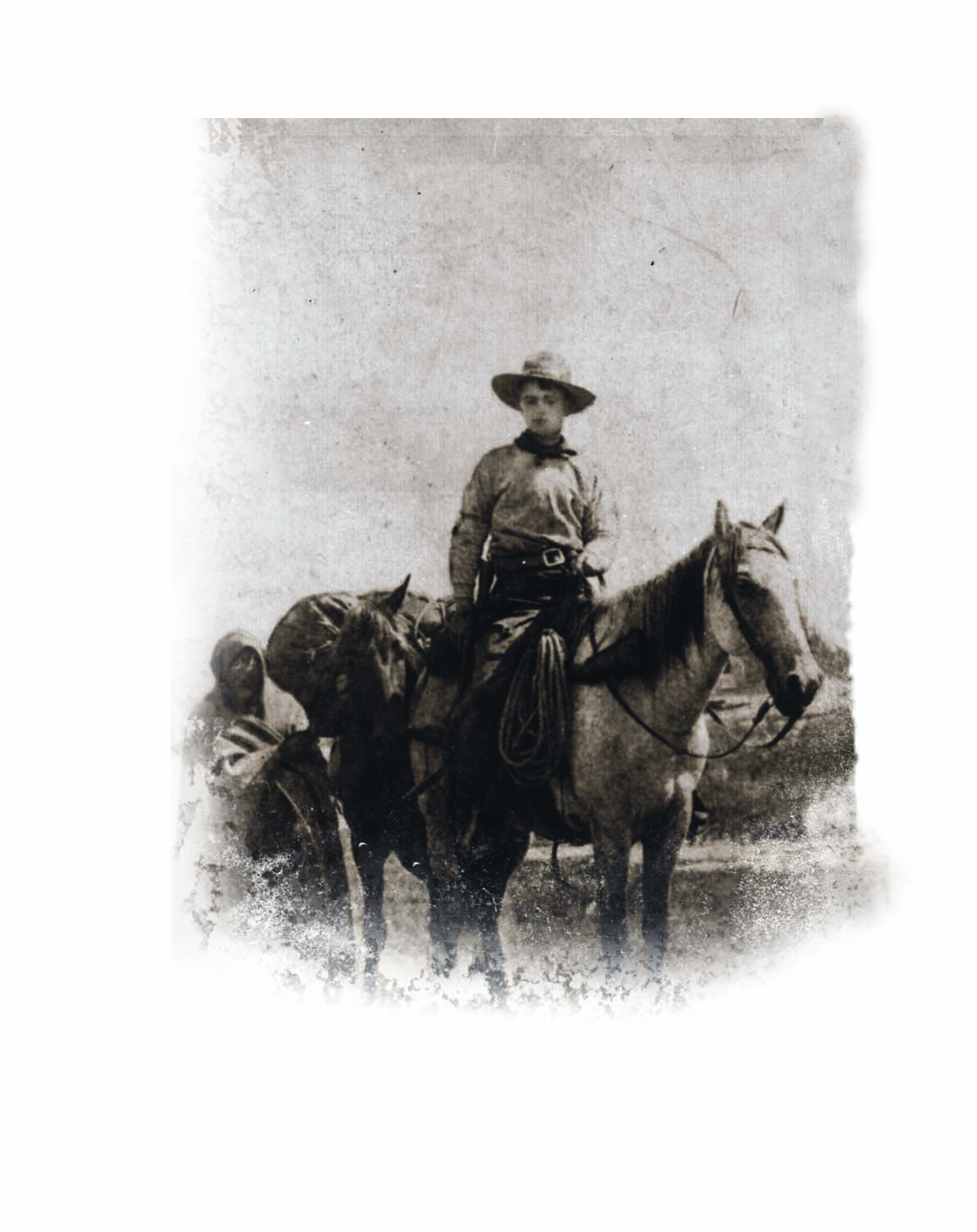
And therein is the skeleton key to Corbett’s success: the instinct to know that before you can write a good story, you must be able to tell one. And before you can spin the yarns that he has spun as a reporter – along with books such as Orphans Preferred: The Twisted Truth and Lasting Legend of the Pony Express – it helps to have lived a few.
Some were tragic – “bad things, terrible things,” he says of his early days on the cops and robbers beat. And others were just breakfast, like his Washington Post assignment to cover the first annual Spam Festival in Austin, Minn.
And sometimes, an especially rascally reporter helps herd a story into print and becomes a part of local lore in the doing, as Corbett did in Farmington, Maine – his first outpost at the Morning Sentinel.
“In my four years in Farmington, I never stopped hearing about the Corbett legend,” says Neil Genzlinger, now a copy editor with The New York Times. “Farmington was the kind of backwater where weird news tends to occur.”
The Farmington “bureau” was a room at the back of Mickey’s Variety Store, recalls Corbett, and it was there that an obscure inventor named Chester Greenwood – who invented the earmuff in the town in 1873 – went from local trivia item to famous native son.

“Corbett’s greatest coup,” Genzlinger says, “was when he and Mickey Maguire – an aged local legend – cooked up the idea that the town should celebrate Greenwood. There would be a Chester Greenwood Day and a local state legislator helped draft and pass a statewide proclamation.”
The first celebration took place in 1977. The national media descended on Farmington to cover it. A parade to celebrate Chester Greenwood (a machinist who also patented a steel tooth rake) has been celebrated each December ever since.
“There was a Chester Greenwood and he did invent the earmuff,” twinkles Corbett. “But I helped him out.”
Anative of the Pine Tree State, Chris Corbett has lived in Baltimore since 1980. He has taught in the English Department of UMBC for the past 20 years. The acting chair of the department in 2006 and 2007, he became a professor of the practice in 2006.
Corbett’s “practice” is the written word. Little else in American life – aside from joining the circus or running away to sea, neither of which are what they used to be – allowed for obtaining such experience as being a rookie reporter at the now-quaint institution known as a daily newspaper.
Many of Corbett’s adventures as a newspaperman in Maine became the source of his first book, the 1986 novel, Vacationland.
“I was riding around in a 1967 Buick LeSabre with a 20-channel Bearcat police scanner on the dashboard, covering news and taking pictures in the town where the earmuff was invented,” remembers Corbett. “I was 22 or 23-years-old taking pictures of car accidents. When you’ve seen someone go through the windshield, you tend to remember it.”
A repast with Corbett, whether a plate of pasta on South High Street or coffee at the Evergreen Café near his home in Roland Park, might persuade one that he’s never forgotten anything, except perhaps to clean out the garage like his wife asked him to do.
“I can see it all when Chris talks. It’s a monologue you can’t interrupt,” says Greg Otto, a Baltimore artist known for his local streetscapes – a territory he regularly walks with Corbett. “When he talks of the Old West, a real love of his, I can see those scattered Pony Express stations.”
“Chris Corbett would never want to write a story that’s been written the same way a hundred times,” says Ann LoLordo, a former Baltimore Sun editorial writer and a poet. “His intellectual curiosity complements his curiosity about the common man. What he finds isn’t always pretty, but it makes for good storytelling.”
Not that the public necessarily wants pretty. “No one cares if you went to Bermuda and had a good time,” says Corbett, a veteran of the travel narrative. “Bad experiences make for good stories. People want a nightmare.”
All of Corbett’s skill, considerable charm and skeptic’s love of the Old West are on display in his new book, The Poker Bride: The First Chinese in the Wild West (Atlantic Monthly Press).

The tale, described by Corbett as a “popular narrative,” recounts the legacy of the mid-19th century California Gold Rush, one of mankind’s great migrations. The story is told through the largely dreary and often tragic experiences of Chinese laborers who landed in California to get their piece of the action once the cry of “Eureka!” circled the globe in 1848.
“The welcome wagon was not there to meet them,” says Corbett of the 130,000 or so Chinese – most from the Pearl River delta – who came to the American West through the port of San Francisco. “It was not a particularly jolly episode in American history.”
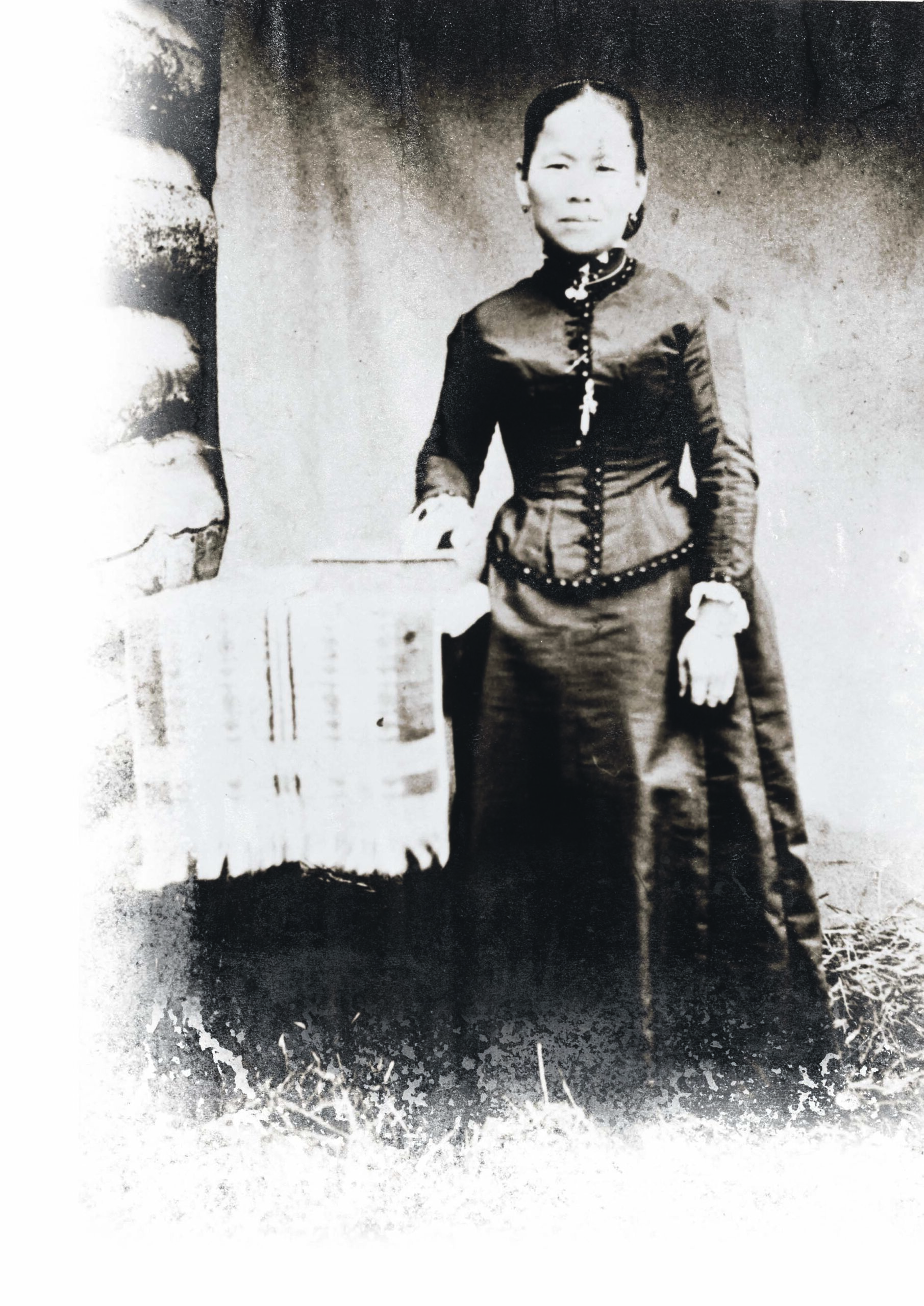
One of those who landed on the shores of what the Chinese called “the Golden Mountain,” was an illiterate sex slave, a woman who became the winning jackpot of the book’s title, a singular character we only know as Polly Bemis.
Not only was Polly an unlikely survivor whose affable ghost drives the story, but her tale, says Corbett, “put a face on an experience we don’t know a lot about. “The Library of Congress has lamented the lack of primary source material for the Chinese in the American West… Their story has been told from the perspective of this country, and all references to them are either comic or unflattering.”
Edged out of the prime mining claims, the Chinese who arrived in America did domestic work that no one else in the bachelor society of the Old West was willing to do, including laundry and cooking.
“There isn’t a flyblown town from Grangeville, Idaho down to Nevada that doesn’t have a Chinese restaurant” that harkens back to the Old West, said Corbett. “The more I poked around, the more Chinese I found.”
As the decades wore on after the California Gold Rush, fewer Chinese were admitted into the United States. Legislation was passed in 1882 prohibiting their entry for a decade, a law that was then renewed.
The racist phrase “a Chinaman’s chance” – an epithet applied to the fate of a Chinese immigrant whether in a court of law or an argument over a pig – represents the odds the entire group had in a white man’s world.
Says Corbett: “The Chinaman’s chance is no chance at all.”
Polly Bemis survived an era of fatal fights over sex slaves imported from China (with the Chinese favoring hatchets over six-shooters) that appeared in newspapers as late as World War I.
Corbett claims she outlived the hate that labeled her and her brethren a “yellow peril.”
Polly beat the odds.
If Corbett’s instincts for the tales told in The Poker Bride and Orphans Preferred (released this year in paperback to commemorate the 150th anniversary of the Pony Express) were nurtured at the Morning Sentinel, they were honed in his seven years as a reporter and editor for the Associated Press (AP).

At the storied wire service, he says, “You were taught to be careful, to ask questions.”
Corbett first shoveled AP copy in Hartford, Conn., the one-time home of Mark Twain, that rare American writer, he points out, who wrote passionate defenses of the immigrant Chinese in the Old West, particularly in the 1872 classic, Roughing It.
From Hartford, Corbett landed in Baltimore when his wife, the Pulitzer Prize-winning editor Rebecca Corbett (now with The New York Times), took a job with the Sun.
If “everything” was news in Maine, the characters behind bizarre tales along the Patapsco knocked on a reporter’s door to introduce themselves in Crabtown.
“Baltimore is ground zero for man-bites-dog stories,” he says. “More men bite dogs here than anywhere on the Eastern seaboard. I have interviewed many a lady who’d taught her parrot how to sing ‘Home on the Range.’”
Reporting for a wire service, Corbett said, was “like being a short order cook in a mental hospital. You learn to work quickly because all of the patients wanted something different and they wanted it right now!”
It was a life, he said, about as far removed from the mood of a college campus as the plates of noodles shared among Chinese mule packers during the California Gold Rush were from the salons that nurtured Edith Wharton’s society intrigues.
The life of kings, to quote H.L. Mencken, if the monarchs happened to reign over people who talked funny, dressed funny and had absolutely no idea how funny they were. “My first AP office was at 210 North Calvert Street,” he recalls. ‘The other tenant was some operation that dealt with junkies. The mounted police used to tie their horses up at the back door.”
Now something of a vanished world, it bore “no resemblance to the world of UMBC. I might as well have come off a spaceship,” says Corbett, under whose mentorship The Retriever Weekly student newspaper won national awards in 1995 and 1996.
Trying to get a young writer’s radar to pick up the presence of other worldly characters who crowd the shores of the Chesapeake is somewhat more difficult than teaching the five Ws of news gathering, says Corbett.
“I tell my students to find a good story and then let the story carry them,” he says. “I use the annual ‘Night of 100 Elvises’ as an example. How can you not get a base hit out of 100 fat guys who think they look like Elvis?”
Though no one can recall Elvis stopping by the Baltimore AP office in the years that Corbett was there (1980-1984), a frequent source of news was the late John Kafka, founding legend of “Polock Johnny’s” polish sausage, once promoted as the “un-burger.”
Kafka was an ironclad original who made his bones and a boatload of shekels around the corner from the AP office on “The Block” before a heart attack took him in 1986. “Here is a big difference between now and then,” says Corbett. “Polock Johnny would not stop at UMBC to discuss metaphysics with us. I suppose it was all a long, long time ago.” But not quite as long ago was the day the woman who would be known as Polly Bemis landed on the crowded wharves of San Francisco in 1872 to work the sex trade, having been sold for bags of seed in China by her impoverished parents and resold in California for $2,500.
Polly was later won in a poker game by a borderline cad and deadbeat gambler named Charlie Bemis who – in a move that kept her in a New World that so many of her countrymen abandoned in time – made her his wife.
It is Polly, a true pioneer of the Idaho Territory who died in 1933 at the age of 80, who shadows The Poker Bride as the California Gold Rush and its aftermath drive the story.
“We do not have anyone else like Polly – period. Hers is as much of a story as we have that is also true about someone who survived the Chinese sex slave trade,” says Corbett. While kicking around the Western United States on another story, Corbett kept coming across deep veins of memories and remnants about the first Chinese communities there. And he was intrigued to discover that while “the whole world is buried” in Old West cemeteries, there was scant trace of any Chinese interred there.
Bone collectors had come from China to take the corpses home.
But not Polly.
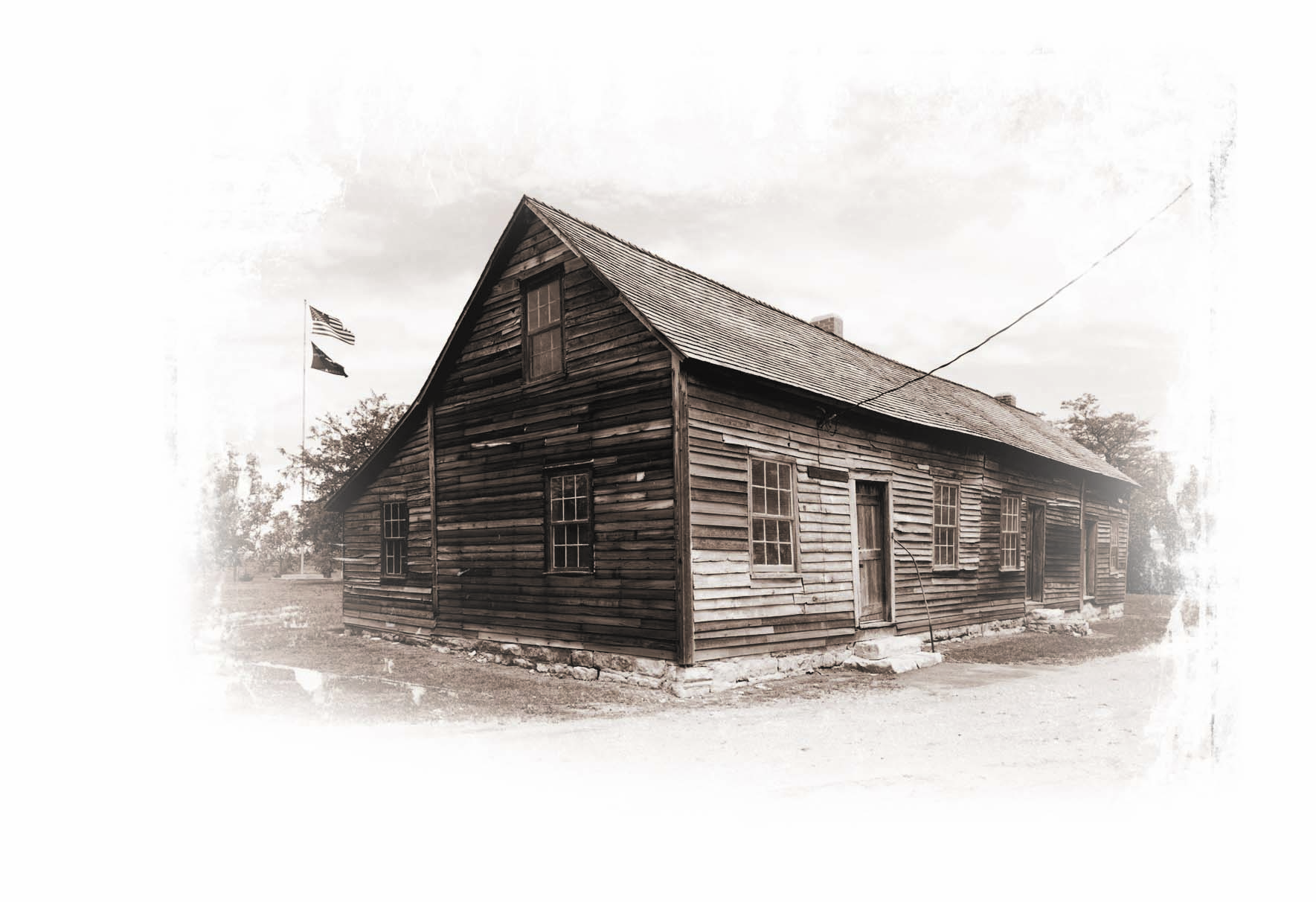
She is buried near the home that friends built for her along the Salmon River, her cabin a museum on the National Register of Historic Places.
“Polly shines a light on a sad and little-explored experience about the way the Chinese were treated in the West,” says Corbett. “In the end, it was all a melancholy tale.”
]]>
As a journalist and an author, UMBC English professor Christopher Corbett has a knack for finding marvelous and mislaid stories past and present. By Rafael Alvarez Christopher Corbett once...
https://umbc.edu/stories/chasing-tales/
https://dev.my.umbc.edu/api/v0/pixel/news/124824/guest@my.umbc.edu/b9ce488d8e866637a13b7a084e0c1d6c/api/pixel
stories
summer-2010
UMBC News & Magazine
https://dev.my.umbc.edu/groups/umbc-news-magazine
https://assets1-dev.my.umbc.edu/system/shared/avatars/groups/000/001/943/24435aa6207c452e7bc15cc74b42c7bb/xsmall.png?1748556657
https://assets1-dev.my.umbc.edu/system/shared/avatars/groups/000/001/943/24435aa6207c452e7bc15cc74b42c7bb/original.png?1748556657
https://assets2-dev.my.umbc.edu/system/shared/avatars/groups/000/001/943/24435aa6207c452e7bc15cc74b42c7bb/xxlarge.png?1748556657
https://assets2-dev.my.umbc.edu/system/shared/avatars/groups/000/001/943/24435aa6207c452e7bc15cc74b42c7bb/xlarge.png?1748556657
https://assets3-dev.my.umbc.edu/system/shared/avatars/groups/000/001/943/24435aa6207c452e7bc15cc74b42c7bb/large.png?1748556657
https://assets1-dev.my.umbc.edu/system/shared/avatars/groups/000/001/943/24435aa6207c452e7bc15cc74b42c7bb/medium.png?1748556657
https://assets2-dev.my.umbc.edu/system/shared/avatars/groups/000/001/943/24435aa6207c452e7bc15cc74b42c7bb/small.png?1748556657
https://assets1-dev.my.umbc.edu/system/shared/avatars/groups/000/001/943/24435aa6207c452e7bc15cc74b42c7bb/xsmall.png?1748556657
https://assets2-dev.my.umbc.edu/system/shared/avatars/groups/000/001/943/24435aa6207c452e7bc15cc74b42c7bb/xxsmall.png?1748556657
UMBC News & Magazine
0
0
false
Thu, 20 May 2010 20:10:17 -0400
Discovery – Summer 2010

The Eyes Have It
When you think of advanced, complex visual systems – eyes with far more acuity of vision than human eyes – you do not think of shrimp. Tom Cronin does. He collects samples of a variety of the animals to study how they view the world, and to see if anything he can learn from them would be useful to us.
Specifically, Cronin, a professor of biological sciences at UMBC, studies mantis shrimps, named because of their folded arms and tilted, mantis-like stance. The creatures – some of which are edible, and can range in size from half an inch to a foot long – are remarkable in many ways.
For one thing, they aren’t really shrimp. The variously-colored creatures are crustaceans from the order Stomatopoda (shrimp are usually Decapods), but these long, flat crustaceans often acquire the “shrimp” name. They have evolved a remarkable visual system because they are predators: they hunt down smaller creatures, crush and eat them. Yes, killer shrimp. They even have a nasty disposition. Fishermen who catch them can get their hands mangled if they grab them from their nets. One surgeon in South Africa lost a hand when a mantis shrimp stabbed him, Cronin says. While they are popular aquarium pets, you don’t want anything else in the tank unless it is very big or very fast. They can knock out the glass in tanks.
But it’s the shrimps’ eyes, and not their temperament, that fascinates Cronin. His lab’s motto is, “If it has eyes, we study it,” and Cronin travels to the Great Barrier Reef in Australia yearly to pick up samples.
The mantis shrimp’s eyes can do things ours cannot.
“They are extremely complicated, in some ways advanced, in some ways primitive,” he says. “They have more color channels than any other animal we know about. Humans are pretty weak in the color vision department.” Humans have only three color channels. Many invertebrates have a fourth channel for ultraviolet or long red sensing.
More interesting, mantis shrimp eyes, which are located on two constantly moving stalks in the head, can see polarized light in ways we cannot. We can see the colors, but the shrimp can tell whether it is polarized, if the electromagnetic vibrations are all going the same direction. That helps them see details we would miss, and are great for hunting.
The system evolved as a “kludge,” attributes piled on attributes during evolution; without the elegance some systems develop. The eyes must keep moving to see anything. They scan, with parts of the two eyes moving separately, and the stalks moving independently. If they see a target, they snap to attention. Because the shrimp have tiny brains and the information collected by the eyes is huge, the shrimps, like most arthropods, have most of their nervous system in the eye stalks.
Cronin gets his funding from the National Science Foundation and the U.S. Air Force. The military is interested because studying the eyes could lead to better instruments for both communication and scientific measurement. The research might also produce better DVD or disc players because more information can be crammed onto a single disc.
— Joel N. Shurkin
Reading Culture in Child Lit
Fables and tales for children are often foundational texts for our culture. But does it work the other way around? Can we read larger movements in popular culture back into the immense amounts of literature for children on the market today?
Ellen Handler Spitz, Honors College professor of the visual arts, takes children’s literature very seriously – as a researcher and a critic. Among her scholarly works are two classic studies of children’s literature and their aesthetic world: Inside Picture Books (1999), and The Brightening Glance: Imagination and Childhood (2006). She also has a new book, Illuminating Childhood: Portraits in Fiction, Film, and Drama, forthcoming from University of Michigan Press later this year.

Now Spitz is also writing about children’s literature from one of the loftiest perches in the journalism of ideas: The New Republic and its online review, The Book. In recent essays, she’s written about a trio of books for children that tackle the topic of same-sex marriage (including the classic Heather Has Two Mommies) and David Wiesner’s retelling of the classic The Three Pigs aimed at “the population of children known as ‘cyberkids,’ ‘digital youth,’ and the ‘net generation.’”
Spitz’s essays read the works for children that she’s reviewing back into an intellectual heritage ranging from Ovid to La Fontaine to Walter Benjamin. And while her pieces are not reviews in the traditional consumer sense, she is also not afraid to make bold assertions.
In her review of The Three Pigs, for instance, she notes that the pigs simply leap out of the story when threatened by the wolf. “By letting pigs out of the story, Wiesner has pushed us out as well… When bad comes along here, you simply jump out of your story into another one. Click. Evil is therefore unreal.” She concludes that “the risk with the cyber-genre is that, with all its glitz, we lose the pity and the terror which Aristotle extolled and Plato feared.”
Spitz was invited to become the regular writer on children’s literature by The New Republic’s literary editor, Leon Wieseltier, and other editors at the magazine. “I said to Leon I’d be interested in doing it,” she says, “but only if I had free rein. I didn’t want to only just review contemporary children’s books.
I wanted more of a range, because my research and my writing have to do much more broadly with children’s aesthetic lives.”
The new platform has turned out to be a perfect fit, she continues: “They said, ‘We don’t want any cutesy, kiddie-lit kind of thing. We want serious, smart, hard-hitting critical reviews.’”
Spitz also sees strong links between her forays into mainstream media and her work at UMBC. “In the United States, we keep our academics very separate from the rest of the world,” she says. “There’s a lot of mistrust. I’ve always hated that. I think it’s absurd… For me, these worlds should not be separated. Everyone gains when they’re not.
The American academy needs to connect more closely with other elements in our cultural life.”
— Richard Byrne ’86
Nobel Nod
Every year, Nobel Laureates in the sciences meet in the Bavarian town of Lindau to exchange ideas. The meeting is also an opportunity for 500 young researchers, selected in a rigorous competition, to benefit from the dialogue. This year, Benyam Kinde ’10, will be among them. Kinde is a Meyerhoff scholar with ambitions to study neuroscience. He was nominated to attend the conference by Peter Agre, a medical doctor, professor and molecular biologist at The Johns Hopkins University who was awarded the 2003 Nobel Prize in Chemistry and received an honorary degree from UMBC in 2009.

Kinde is currently weighing M.D./Ph.D. offers from The Johns Hopkins University and Harvard University. His brother, Isaac Kinde ’05, biological sciences, is pursuing that same joint degree at Hopkins.
Making Math Matter
There’s a small but shiny apple on the desk in Bonny Tighe’s office on the fourth floor of the Mathematics/Psychology building.
It’s precisely the right sort of fruit for Tighe – who is a senior lecturer in the Mathematics Department. Last year, she was also the first recipient of a new award for teaching created by UMBC’s College of Natural and Mathematical Sciences.

The Carl S. Weber Excellence in Science and Mathematics Teaching Award was created in memory of Weber, an assistant professor emeritus of biological sciences known for his passion for classroom teaching. The prize is intended to honor professors and lecturers in the college who combine the qualities of rigor, approachability, inspiration and pedagogical innovation.
Tighe laughs heartily as she recalls being surprised with news of the award at an academic committee meeting. “I was speechless,” she chuckles. “And that never happens.”
“When nominations were sought for the Weber prize, I could not think of anyone other than Bonny who deserved the award more,” says Professor Nagaraj Neerchal, chairman of the Department of Mathematics and Statistics. “Bonny spends numerous hours beyond the class time with her students, and her help sessions are legendary.”
Tighe teaches Calculus I and Calculus II at UMBC – foundational and gateway courses to a wide range of disciplines in the sciences. Many successful UMBC students have numbered Tighe’s no-nonsense approach to the subject among their earliest memories of the university.
She says the students that arrive in her class from high school or elsewhere “are all bright. But most of them have no idea how to take responsibility for their own learning. They just sit there waiting for something to happen. That’s the biggest challenge. They’re bright, so in high school they can sit there and do well. Here, they sit there and they don’t do so well.”
At the beginning, at least. Tighe has a battery of weapons at her disposal to break the passivity and get things moving in the right direction. “I encourage them. I chastise them. It’s worse than being a mother… If you are willing to work, I will work with you every day. That’s the reputation I have. I’m hard. I require them to perform. But if they’re working at it, I’ll do anything to help.”
One of the arrows in Tighe’s quiver is getting the right balance of theory (“the ‘why’ of calculus,” she calls it) and problem solving in the course. Insistence on memorization as the key to mastering calculus is another. “They haven’t been expected to train their memory,” she says of her incoming students. “But there’s no knowledge without memory. All mathematics builds on what you know.”
And then there’s that voice: Tighe’s cheery boom that could waken the sleeping or the dead, let alone the passive student – even in UMBC’s large lecture halls. “My voice is loud,” she laughs. “So that’s not a problem.”
Tighe says the moments when she sees the lightbulb go on over a student’s head – and stay on – is “what keeps you going. If you don’t have those moments, then you quit.”
— Richard Byrne ’86
Targeting Terror in Turkey
Turkey is a nation faced with unique challenges and opportunities. It is a secular democracy – balancing its resurgent Islamic parties with a powerful military that has often dabbled in politics. It is seeking membership in the European Union. It is a key ally of the United States in a region that remains volatile.
One of Turkey’s greatest challenges, however, is an internal challenge: a movement by the nation’s Kurdish minority to gain greater rights and perhaps even autonomy in the country’s southeast region – which borders on Iraq and Iran.
The Kurdistan Workers’ Party (PKK) was formed in the late 1970s under the leadership of Abdullah Ocalan. The group launched violent guerilla attacks on Turkey for a number of years, exacting a large number of casualties and costing millions of dollars. Even Ocalan’s capture in 1999 has not completely stemmed the attacks.
Turkey’s effectiveness in battling the PKK was a topic that intrigued Mustafa Cosar Unal ’09, Ph.D., public policy. Unal, who is an intelligence official with Turkey’s National Police, dedicated his doctoral dissertation to researching the effects of Turkish government anti-terrorism policies aimed at thwarting violence.
His conclusion? The government’s efforts failed to produce long-term reductions in violence, despite bringing about the PKK’s military defeat.
Unal’s research examined the effects of the Turkish Government’s anti-terrorism policies on reducing PKK violence from 1984-2007, the response of the PKK to those policies and the underlying causes of the violence.
Based on a quantitative and qualitative analysis of Turkish government policies and the PKK’s internal dynamics and strategic decisions, Unal concluded that despite some short-term reductions in violence and the PKK’s eventual military defeat, Turkish government policies intended to eliminate PKK violence have been ineffective in the long term. He also determined that policies aimed at incapacitating PKK members resulted in increased retaliatory PKK-initiated violence for up to three months.
Unal also emphasizes the role of the civilian population as key to reducing ethnic violence. He stated that the government’s failure to thwart PKK violence can be attributed largely to its singular reliance on criminological-based policies. Such an approach disregards grievances buried in social context and public sentiments that lead some individuals to engage in terrorist activities. As a result, government policies are likely to be perceived as illegitimate by civilians and therefore increase anti-government hostility, Unal said.
“Regardless of whether or not the government’s counterterrorism policies defeat the PKK and/or reduce the PKK violence, the PKK issue remains unresolved in Turkey and will be affected by internal and international events for some time to come,” Unal wrote.
UMBC President Freeman A. Hrabowski, III, singled out Unal’s work at the university’s winter commencement ceremonies, calling his research on terrorism “crucial to the world we live in today.”
Current events seem to bear out much of Unal’s analysis. While violent clashes between the Turkish military and the PKK continue, the group’s imprisoned leader Ocalan and others have been arguing for nonviolent solutions to Turkey’s disputes with its Kurdish minority. Turkish politicians have also broached the possibility of an amnesty that would bring guerilla fighters and the civilian population which supports them into the political process.
— Kavan Peterson and Richard Byrne ’86
]]>
The Eyes Have It When you think of advanced, complex visual systems – eyes with far more acuity of vision than human eyes – you do not think of shrimp. Tom Cronin does. He collects samples of a...
https://umbc.edu/stories/discovery-summer-2010/
https://dev.my.umbc.edu/api/v0/pixel/news/124825/guest@my.umbc.edu/0e5e632709be1830fcbaa3181acb2d2d/api/pixel
stories
summer-2010
UMBC News & Magazine
https://dev.my.umbc.edu/groups/umbc-news-magazine
https://assets1-dev.my.umbc.edu/system/shared/avatars/groups/000/001/943/24435aa6207c452e7bc15cc74b42c7bb/xsmall.png?1748556657
https://assets1-dev.my.umbc.edu/system/shared/avatars/groups/000/001/943/24435aa6207c452e7bc15cc74b42c7bb/original.png?1748556657
https://assets2-dev.my.umbc.edu/system/shared/avatars/groups/000/001/943/24435aa6207c452e7bc15cc74b42c7bb/xxlarge.png?1748556657
https://assets2-dev.my.umbc.edu/system/shared/avatars/groups/000/001/943/24435aa6207c452e7bc15cc74b42c7bb/xlarge.png?1748556657
https://assets3-dev.my.umbc.edu/system/shared/avatars/groups/000/001/943/24435aa6207c452e7bc15cc74b42c7bb/large.png?1748556657
https://assets1-dev.my.umbc.edu/system/shared/avatars/groups/000/001/943/24435aa6207c452e7bc15cc74b42c7bb/medium.png?1748556657
https://assets2-dev.my.umbc.edu/system/shared/avatars/groups/000/001/943/24435aa6207c452e7bc15cc74b42c7bb/small.png?1748556657
https://assets1-dev.my.umbc.edu/system/shared/avatars/groups/000/001/943/24435aa6207c452e7bc15cc74b42c7bb/xsmall.png?1748556657
https://assets2-dev.my.umbc.edu/system/shared/avatars/groups/000/001/943/24435aa6207c452e7bc15cc74b42c7bb/xxsmall.png?1748556657
UMBC News & Magazine
0
0
false
Thu, 20 May 2010 20:07:28 -0400
First of the Fab Fours – Robin Keller Mayne ’69, American studies
When Robin Keller Mayne ’69, American studies, graduated from UMBC, she wore no robes and no mortarboard. There was no crowd to cheer her across the stage. In fact, there was no stage.
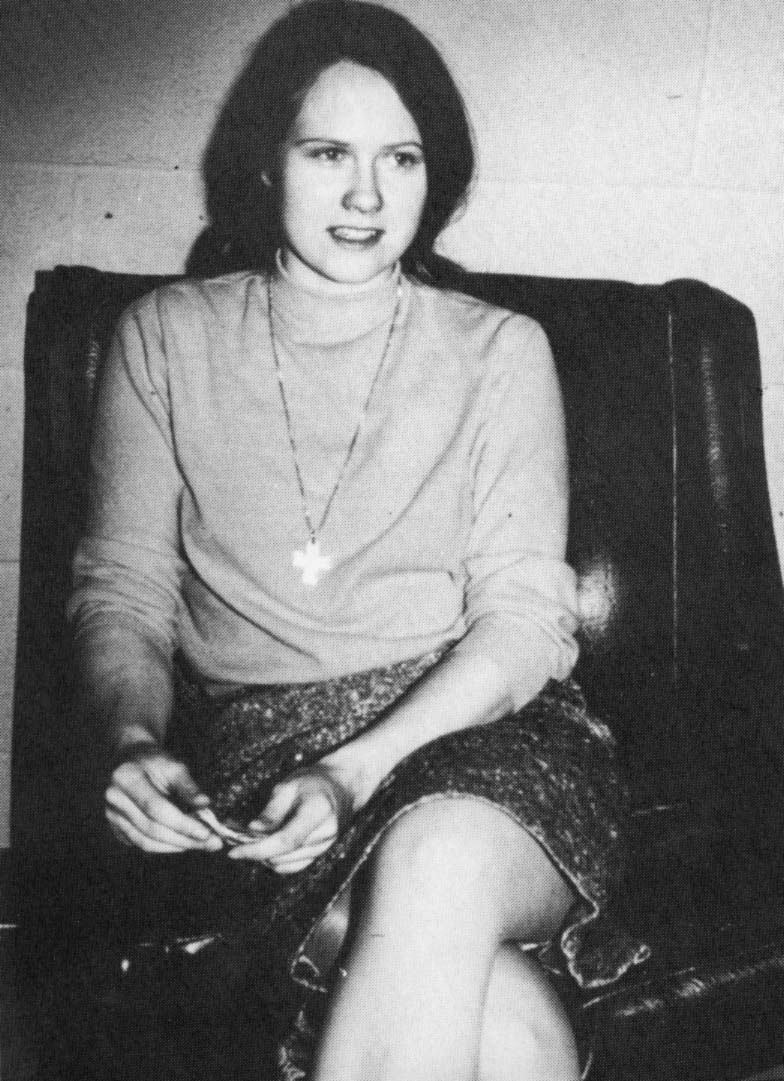
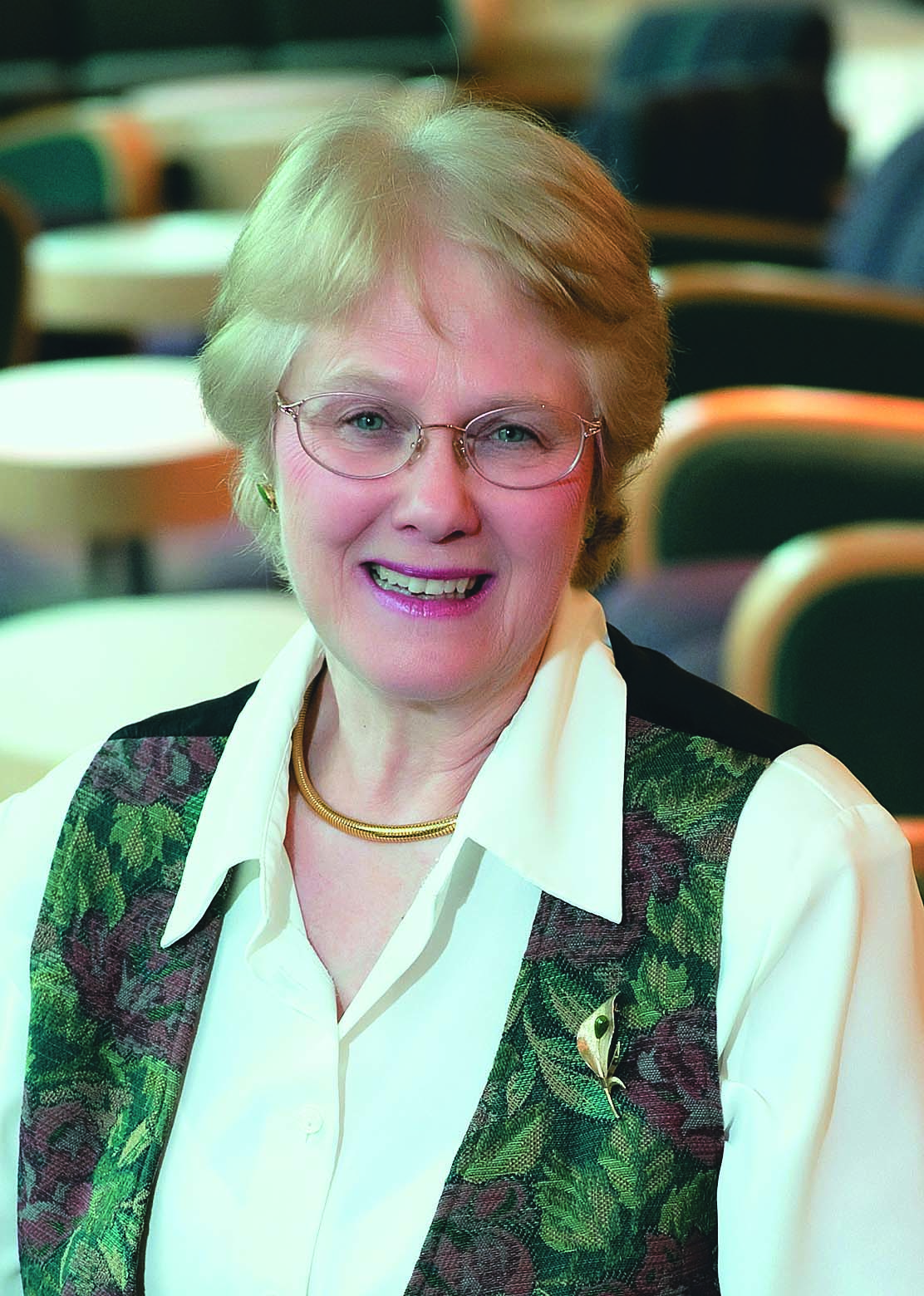
It was 1969, just three years after the university opened its doors, and one year before its first official commencement ceremony. So instead of publicly turning a tassel – or even giving much thought to her pioneer status in UMBC’s history – Mayne quietly collected her books and resumed her daily life as a mother and teacher.
“I feel as though it was just an accident that I was UMBC’s first graduate. It just happened,” said Mayne, who now lives in Fort Worth, Texas, where she works as fleet administrator for Jacobs Engineering. “For a while I was neck and neck with another girl… but I finished classes in December 1968, and that was that.”
Mayne began her undergraduate study at the University of Maryland at Baltimore, then transferred to the brand-new UMBC in 1966 in order to attend daytime classes. With her daughter in daycare, Mayne commuted to UMBC, working part-time as an administrative assistant in what was then known as the social sciences department. She made coffee and typed syllabi for professors – many of whom were not much older than their students.
“Some of my dearest memories are from working there,” said Mayne, who was drawn in by the spirit of intellectual curiosity on the new campus. “It was the ’60s – everyone was questioning everything. Our professors were so young and excited. They pushed us. They didn’t want you to just accept what anyone told you.”
Without a true student union – or even a separate library – UMBC’s first 700 or so students hung out in the cafeteria, discussing their classes across disciplines. Mayne’s favorites? A course discussing “The God is Dead Movement,” another on the American novel, and a class focusing on social psychology.
“My classes dealt not only with subject matter, but also issues, real issues that were stirring in all of us during the ’60s,” she said. “I was being confronted with complex questions which demanded soul-searching answers. No longer could I just absorb material and spit it back on a test. I was being forced (sometimes dragged) into thinking critically.”
Many of UMBC’s earliest grads – sometimes referred to as “The Fab Four” – speak wistfully of the university’s first days and the “three buildings and a pile of mud” at the center of what was originally an orchard. Mayne recalls a similar landscape – one of pure potential, as much for intellectual philosophy as bricks and mortar.
“I would arrive on campus at 7 a.m. You’d have the fog lying on the hill and I swear you’d see deer crossing,” she said. “It was really quite wild…It’s so hard (now) to imagine it was ever like that.”
Following graduation, Mayne left her native Maryland. She worked in Nashville as a Head Start teacher, then moved to Germany with her first husband. She also made a stop in Missoula, before arriving in Fort Worth, where she started a career in information technology and made a life with her current husband, Jim.
“Nobody had degrees in computing or IT then,” she said. “They’d determine you had an aptitude for it, and then they’d train you.”
A few years later, in 1991, Mayne earned her master’s degree in software design and development from Texas Christian University. And more than twenty years after her departure from her first alma mater, the mother of two finally got to turn her tassel.
“I got to walk across the stage and do the whole nine yards.”
— Jenny O’Grady
]]>
When Robin Keller Mayne ’69, American studies, graduated from UMBC, she wore no robes and no mortarboard. There was no crowd to cheer her across the stage. In fact, there was no stage. It...
https://umbc.edu/stories/first-of-the-fab-fours-robin-keller-mayne-69-american-studies/
https://dev.my.umbc.edu/api/v0/pixel/news/124826/guest@my.umbc.edu/1ff7876b7c3482d7911eca6a0e9d6d90/api/pixel
stories
summer-2010
UMBC News & Magazine
https://dev.my.umbc.edu/groups/umbc-news-magazine
https://assets1-dev.my.umbc.edu/system/shared/avatars/groups/000/001/943/24435aa6207c452e7bc15cc74b42c7bb/xsmall.png?1748556657
https://assets1-dev.my.umbc.edu/system/shared/avatars/groups/000/001/943/24435aa6207c452e7bc15cc74b42c7bb/original.png?1748556657
https://assets2-dev.my.umbc.edu/system/shared/avatars/groups/000/001/943/24435aa6207c452e7bc15cc74b42c7bb/xxlarge.png?1748556657
https://assets2-dev.my.umbc.edu/system/shared/avatars/groups/000/001/943/24435aa6207c452e7bc15cc74b42c7bb/xlarge.png?1748556657
https://assets3-dev.my.umbc.edu/system/shared/avatars/groups/000/001/943/24435aa6207c452e7bc15cc74b42c7bb/large.png?1748556657
https://assets1-dev.my.umbc.edu/system/shared/avatars/groups/000/001/943/24435aa6207c452e7bc15cc74b42c7bb/medium.png?1748556657
https://assets2-dev.my.umbc.edu/system/shared/avatars/groups/000/001/943/24435aa6207c452e7bc15cc74b42c7bb/small.png?1748556657
https://assets1-dev.my.umbc.edu/system/shared/avatars/groups/000/001/943/24435aa6207c452e7bc15cc74b42c7bb/xsmall.png?1748556657
https://assets2-dev.my.umbc.edu/system/shared/avatars/groups/000/001/943/24435aa6207c452e7bc15cc74b42c7bb/xxsmall.png?1748556657
UMBC News & Magazine
0
0
false
Thu, 20 May 2010 20:05:20 -0400
How to Give a Dawg a Facelift

With Jim Lord ’99, Design Director, Creative Services

They say you can’t teach an old dog new tricks, but how about an old Dawg?
As universities change, mascots evolve along with them, and so it goes for True Grit this summer with the rollout of a brand-new look, as voted upon by more than 2,500 students, faculty, staff and alumni.
Creating a new athletics mascot for UMBC was more than a simple point of pride for Design Director Jim Lord ’99, visual arts – it was a matter of keeping up with the big boys of university athletics. As designer of the latest and most recent athletics mascots, Lord was perhaps the biggest critic of his past work – and one of the biggest proponents of change.
— Jenny O’Grady
Step 1: Sniff around to find out who’s top dog
For Lord, seeing the Retrievers men’s basketball team advance to the courts of the 2008 NCAA tournament – and comparing the Dawgs’ 10-year-old athletic mascot to that of their opponents, the Georgetown Hoyas, on the national stage – was enough to spark the first conversation about a mascot facelift.

“We didn’t match up to our competitors,” he said. “In fact, we seemed kind of dated and flat in comparison.”
So, Lord started looking closely at the mascots of other universities and major sports teams. As a designer, he noticed some major trends – colorization techniques, letter blocking, etc. – and as an alum himself, he thought about ways of spinning the personality of the kind and loyal Chesapeake Bay Retriever into something fierce enough to put some scare into the opposing teams’ gym shorts.
Step 2: A lot of barks (and a little bite)
True Grit has not always looked like True Grit. In fact, the dawg has morphed over the years at least five times, shifting from a pointer and then semi-humanoid basketball dribbler in the 1970s, to a curly-haired sweetheart with a shield (early 1990s) or Maryland flag-inspired banner (late 1990s), to the dark and toothy version of the early 2000s, which Lord designed.
That’s why getting folks’ opinions was such a big part of the process, Lord said. As he made the rounds of focus groups with athletes, students, faculty, staff and alumni, he discovered (surprise!!) that people sometimes got a bit worked up about their favorites.
“It was a lot of fun finding out people’s opinions… that’s what we really did right this time,” said Lord. “We involved athletes and coaches and students and alums.”
Step 3: Try, Try Again
Over the course of half a year, Lord drew more than thirty different versions of the dog. Some had squinched eyes and snarling teeth. Some went heavy on the Chesapeake Bay Retriever curl. Or detailed muzzle and nose. Some, Lord tossed as soon as he drew them.
“For every couple that saw the light of day in the focus groups, there were four or five that I just said ‘No, that’s not cutting it’ – so I scrapped them,” he said. “There’s a fine line between realistic and cartoonish,” said Lord, who keeps some of his original pencil drawings on the board near his desk. “For a while, it seemed like no matter what I came up with, it still looked like a cartoon. What we really needed was something more stylized.”

Step 4: Let the dogs out
Just like a university athletics tourney, it was suddenly down to the final, um, three. Which, for Lord, meant hitting the streets once again for feedback from the coaches, the athletes – and just about everyone else in the UMBC universe.
“A lot of people needed to see it. They couldn’t always necessarily tell you what they want, but they could definitely tell you what they didn’t want once they saw it.”
During Homecoming weekend, Lord and fellow staff manned a voting station, where alums and students could choose their favorite. Soon after, an online poll was posted on myUMBC. With more than 2,500 votes by students, faculty, staff and alumni, UMBC had an overwhelming winner: one described by several alumni as “solemn,” “proud” and “strong.”
“I like it,” said Lord. “Times change, and trends change. I think we fit in a lot better with our competitors now.”
See a complete history of UMBC’s athletics logos online here.
Now What?
So how exactly does a university roll out a new mascot?
1. True Grit in the Bookstore and The Commons: With each new school year, the campus bookstore orders new t-shirts, sweats and other Dawg merchandise. Expect to see the new Retriever logo in the store starting May 12 – the same day The Commons will unveil a ginormous new Dawg on the walls of the Sports Zone.
2. True Grit on the Record: As the department of athletics updates its web and stationery, the dawg will become a presence on both.
3. True Grit in the RAC: Slowly, but surely, the new dawg will be replaced on the walls and seating of the Retriever Activities Center.
]]>
With Jim Lord ’99, Design Director, Creative Services They say you can’t teach an old dog new tricks, but how about an old Dawg? As universities change, mascots evolve along with them, and...
https://umbc.edu/stories/how-to-give-a-dawg-a-facelift/
https://dev.my.umbc.edu/api/v0/pixel/news/124827/guest@my.umbc.edu/d9912d16dfb841cb6c9c9ed853a6d397/api/pixel
stories
summer-2010
UMBC News & Magazine
https://dev.my.umbc.edu/groups/umbc-news-magazine
https://assets1-dev.my.umbc.edu/system/shared/avatars/groups/000/001/943/24435aa6207c452e7bc15cc74b42c7bb/xsmall.png?1748556657
https://assets1-dev.my.umbc.edu/system/shared/avatars/groups/000/001/943/24435aa6207c452e7bc15cc74b42c7bb/original.png?1748556657
https://assets2-dev.my.umbc.edu/system/shared/avatars/groups/000/001/943/24435aa6207c452e7bc15cc74b42c7bb/xxlarge.png?1748556657
https://assets2-dev.my.umbc.edu/system/shared/avatars/groups/000/001/943/24435aa6207c452e7bc15cc74b42c7bb/xlarge.png?1748556657
https://assets3-dev.my.umbc.edu/system/shared/avatars/groups/000/001/943/24435aa6207c452e7bc15cc74b42c7bb/large.png?1748556657
https://assets1-dev.my.umbc.edu/system/shared/avatars/groups/000/001/943/24435aa6207c452e7bc15cc74b42c7bb/medium.png?1748556657
https://assets2-dev.my.umbc.edu/system/shared/avatars/groups/000/001/943/24435aa6207c452e7bc15cc74b42c7bb/small.png?1748556657
https://assets1-dev.my.umbc.edu/system/shared/avatars/groups/000/001/943/24435aa6207c452e7bc15cc74b42c7bb/xsmall.png?1748556657
https://assets2-dev.my.umbc.edu/system/shared/avatars/groups/000/001/943/24435aa6207c452e7bc15cc74b42c7bb/xxsmall.png?1748556657
UMBC News & Magazine
0
0
false
Thu, 20 May 2010 20:02:03 -0400
Pictures From Providence – Sharon Knecht ’99 and ’03 M.A., history

 Most members of the UMBC community who drive between the university’s main campus and its south campus don’t know that they’re passing a bit of Baltimore’s cultural and religious history along the way. Tucked on a hill near south campus is the motherhouse of the Oblate Sisters of Providence – a Catholic religious community founded in the United States by women of African descent.
During her studies at UMBC, Sharon Knecht ’99 and ’03 M.A., history, became involved in helping the Oblates tell their uniquely American story. In the following essay, Knecht shares her experience as an archivist with the order:
Members of the Oblate Sisters of Providence (OSP) have lived in the Baltimore suburbs surrounding UMBC since the 1930s, decades before the university itself arrived on the scene. As a longtime resident, I knew that this order of women religious of African descent existed here. I would see them from time to time— in the local shops or in the post office—and wonder about them.
Eight years ago, however, I was led, through God’s providence, to become part of the OSP’s extended family. The master of arts degree in historical studies at UMBC requires students to complete two internships. Among the possibilities offered to me for an internship was working in the archives of the Oblate Sisters of Providence—and the chance to satisfy my curiosity about these nuns.
I called the order’s archivist, Sr. Reginald Gerdes, OSP, and applied for the post. Her acceptance of my application in 2002 commenced an amazing journey which continues to this day.
The order of the Oblate Sisters of Providence is the oldest order of women religious of African descent in the world. Father James Joubert, a French-born Sulpician priest, and Mother Mary Lange, a West Indies immigrant, created the new group in 1829 in Baltimore with a mandate to teach and care for African-American children. The Oblates opened their first school, St. Frances Academy, in 1828, and it is the oldest continuously operating black Catholic school in the United States.

From this humble beginning, the Oblate Sisters of Providence grew into a community of over 350 sisters who served in the order’s missions in eighteen states, several Caribbean countries and Nigeria. Over the past 180 years the order’s members have served their communities by creating and maintaining schools and orphanages and providing other social services. The archives of the order are located at the Oblate Sisters’ motherhouse, which is adjacent to UMBC’s South Campus. It is a repository for a variety of invaluable historical materials about the Roman Catholic Church in the United States: organizational records, Catholic African-American periodicals and newspapers and over 600 rare books dating from the late 1600s to the 1840s. The collection also includes a variety of materials detailing the Oblates’ activities in their missions throughout the United States, Central America and Cuba. These manuscripts have been useful to a variety of academic, religious and local history scholars, as well as genealogists and students.
Taken together, the collection is an amazing treasure trove. But two elements of it grabbed my attention from my first days working in the archives. The first is an extensive collection of 19th and 20th century photographs that document the lives and labor of African-Americans. The second is an impressive collection of eight 19th century needlework samplers created by African American schoolgirls.

The conservation and preservation of both collections became my highest priority. In 2003, I began writing grant proposals to the National Publications and Records Commission to request funding to create an electronic finding aid and a searchable database of archival images. I also pursued and won permission from the Oblate Council to assemble a book to tell the order’s story using photographs from the collection. With preliminary funding from actor Bill Cosby and his wife, Camille, I selected 250 images and secured a publisher for Oblate Sisters of Providence: A Pictorial History, which was published in 2007 and is close to selling out its second printing.
Saving the eight schoolgirl samplers for future generations was also a priority. Through generous donations from needlework guild and private donors, all the samplers are stabilized, encased in archival cartons, and stored in climate-and-humidity-controlled conditions.
My relationship with the Oblates has continued long past my internship, and has blossomed into a career and a vocation. My work at the motherhouse includes helping the Oblate sisters with their computers and marketing items on the community’s website.
Over the years, the number of sisters in the order has dwindled to 75 women. But though their numbers are diminished, the members of the Oblate community’s faith, and strength, and determination to do the will of God have not faltered.


When the recent financial crisis interrupted construction of a new addition on the motherhouse property to house the elderly and infirm sisters, the Oblates moved forward and found new and different ways to support their needs and serve their community.
If the history contained in the archives where I work every day tells us anything, it is that struggles and challenges are not new to the Oblates. That same history also reveals that hard work and a belief in God’s providence can see the order through this crisis as it has so many times before in the Oblates’ 180 years of caring and service.
]]>
Most members of the UMBC community who drive between the university’s main campus and its south campus don’t know that they’re passing a bit of Baltimore’s cultural and religious history along the...
https://umbc.edu/stories/pictures-from-providence-sharon-knecht-99-and-03-m-a-history/
https://dev.my.umbc.edu/api/v0/pixel/news/124828/guest@my.umbc.edu/bb01d757e4fe1e438b29b517677a1c61/api/pixel
stories
summer-2010
UMBC News & Magazine
https://dev.my.umbc.edu/groups/umbc-news-magazine
https://assets1-dev.my.umbc.edu/system/shared/avatars/groups/000/001/943/24435aa6207c452e7bc15cc74b42c7bb/xsmall.png?1748556657
https://assets1-dev.my.umbc.edu/system/shared/avatars/groups/000/001/943/24435aa6207c452e7bc15cc74b42c7bb/original.png?1748556657
https://assets2-dev.my.umbc.edu/system/shared/avatars/groups/000/001/943/24435aa6207c452e7bc15cc74b42c7bb/xxlarge.png?1748556657
https://assets2-dev.my.umbc.edu/system/shared/avatars/groups/000/001/943/24435aa6207c452e7bc15cc74b42c7bb/xlarge.png?1748556657
https://assets3-dev.my.umbc.edu/system/shared/avatars/groups/000/001/943/24435aa6207c452e7bc15cc74b42c7bb/large.png?1748556657
https://assets1-dev.my.umbc.edu/system/shared/avatars/groups/000/001/943/24435aa6207c452e7bc15cc74b42c7bb/medium.png?1748556657
https://assets2-dev.my.umbc.edu/system/shared/avatars/groups/000/001/943/24435aa6207c452e7bc15cc74b42c7bb/small.png?1748556657
https://assets1-dev.my.umbc.edu/system/shared/avatars/groups/000/001/943/24435aa6207c452e7bc15cc74b42c7bb/xsmall.png?1748556657
https://assets2-dev.my.umbc.edu/system/shared/avatars/groups/000/001/943/24435aa6207c452e7bc15cc74b42c7bb/xxsmall.png?1748556657
UMBC News & Magazine
0
0
false
Thu, 20 May 2010 20:00:56 -0400
The Matter of Mind – Reid Thompson ’85, biological sciences
When Reid Thompson ’85, biological sciences, was named chairman of Vanderbilt University’s Department of Neurological Surgery this past fall, it was yet another big step forward on a road that began at UMBC.
The recipient of the Outstanding Alumnus in Natural and Mathematical Sciences in 2008, Thompson credits UMBC with giving him a wide-ranging store of knowledge that has helped to shape him as a surgeon, a researcher and an administrator.
 Reid Thompson, MD
NeuroSurgery
“One of the things I learned at UMBC was a different way of looking at the world,” says Thompson. “A broad way of looking at the world that comes from liberal education.” Thompson’s encounters with the broader world began before UMBC. He came to university from Deerfield Academy, a New England prep school, and he had spent a good amount of time in his teenage years in Indonesia and elsewhere in Asia, where his father was working as a plant geneticist.
He was planning on attending Emory University when his parents – who had relocated to Maryland – asked him to consider a school closer to home. UMBC’s fledgling Honors Program – now the Honors College – was one attraction. But it was a prominent reminder of Indonesia in the form of UMBC’s Gamelan Angklung – an ensemble that played traditional Indonesian music – that really sealed the deal.
“I told Honors Program assistant director Barbara Ireland that I’d spent time in Indonesia,” says Thompson, “and she said that there was a really interesting guy at UMBC named Mantel Hood, who ran the ethnomusicology program. And Mantel had been the first person to bring the Indonesian Gamelan to this country – first at UCLA and then at UMBC. It was one of the only Indonesian Gamelans in the country. At UMBC. I had studied Gamelan in Indonesia, so it seemed like the stars were aligning.”
Thompson recalls that he was a student with a taste for philosophy and literature as well as biology. UMBC and the Honors Program also gave him early chances to acquire leadership skills as the student representative on curricular committees, where he remembers that campus leaders were eager to hear student points of view. “I remember sitting around a table with department chairs,” says Thompson, “and saying to myself: ‘They actually care what I think.’”
But it was the study of the human brain that most fascinated Thompson as an undergraduate. And when he finally settled on pursuing that study via a career in medicine, Honors Program assistant director Barbara Ireland (whom Thompson cites as a key mentor) arranged for Thompson to work in The Johns Hopkins University laboratory of one of America’s leading neuroscientists, Joseph T. Coyle, who eventually left Hopkins to become Eben S. Draper Chair of Psychiatry and Neuroscience at Harvard Medical School. An undergraduate’s path to a career as a neurosurgeon began to open up.
The lure of neurosurgery, says Thompson, is the chance to work closely with the brain itself on a daily basis. “To be in an operating room and see the human brain is an unforgettable thing the first time you see it,” Thompson recalls. “As a neurosurgeon, every day I get to see the brain. Neurosurgeons get to feel the human brain, and marvel at it.”
Thompson took his medical degree from Hopkins in 1989. In his career, Thompson has excelled as a surgeon, a researcher, and an administrator. An expert in surgical treatments for patients with complex brain and spinal cord tumors, Thompson was recruited to Vanderbilt by George S. Allen, chairman of the university’s neurological surgery department, to become both vice chairman of the university’s neurological surgery department and the head of its Brain Tumor Center. When Allen retired late last year, Thompson was promoted to chairman of the department.
Thompson admits that juggling surgery, research and administration is not always the easiest of tasks. “For a surgeon,” he says, “there’s always a gravitational pull to the operating room.”
But his opportunities to develop as a researcher and an academic leader have led him to discover that “I can see a larger picture. I’m seeing what it means to have your imprint on a department, and on a new generation of neurosurgeons.”
Thompson insists that his experiences at UMBC – the study of liberal arts as well as sciences – have also influenced his view of what’s needed to excel as a neurosurgeon. “You need to master a certain technical level of skill to do what we do,” he says. “But I think there’s more to it than that. There’s talking to patients about what could be potentially a fatal diagnosis. Caring for patients in a meaningful way requires more than technical skill.”
— Richard Byrne ’86
]]>
When Reid Thompson ’85, biological sciences, was named chairman of Vanderbilt University’s Department of Neurological Surgery this past fall, it was yet another big step forward on a road that...
https://umbc.edu/stories/the-matter-of-mind-reid-thompson-85-biological-sciences/
https://dev.my.umbc.edu/api/v0/pixel/news/124829/guest@my.umbc.edu/9332e8f73e2c70a7d6a493d349f1b820/api/pixel
stories
summer-2010
UMBC News & Magazine
https://dev.my.umbc.edu/groups/umbc-news-magazine
https://assets1-dev.my.umbc.edu/system/shared/avatars/groups/000/001/943/24435aa6207c452e7bc15cc74b42c7bb/xsmall.png?1748556657
https://assets1-dev.my.umbc.edu/system/shared/avatars/groups/000/001/943/24435aa6207c452e7bc15cc74b42c7bb/original.png?1748556657
https://assets2-dev.my.umbc.edu/system/shared/avatars/groups/000/001/943/24435aa6207c452e7bc15cc74b42c7bb/xxlarge.png?1748556657
https://assets2-dev.my.umbc.edu/system/shared/avatars/groups/000/001/943/24435aa6207c452e7bc15cc74b42c7bb/xlarge.png?1748556657
https://assets3-dev.my.umbc.edu/system/shared/avatars/groups/000/001/943/24435aa6207c452e7bc15cc74b42c7bb/large.png?1748556657
https://assets1-dev.my.umbc.edu/system/shared/avatars/groups/000/001/943/24435aa6207c452e7bc15cc74b42c7bb/medium.png?1748556657
https://assets2-dev.my.umbc.edu/system/shared/avatars/groups/000/001/943/24435aa6207c452e7bc15cc74b42c7bb/small.png?1748556657
https://assets1-dev.my.umbc.edu/system/shared/avatars/groups/000/001/943/24435aa6207c452e7bc15cc74b42c7bb/xsmall.png?1748556657
https://assets2-dev.my.umbc.edu/system/shared/avatars/groups/000/001/943/24435aa6207c452e7bc15cc74b42c7bb/xxsmall.png?1748556657
UMBC News & Magazine
0
0
false
Thu, 20 May 2010 19:58:52 -0400
Broad(mede) Vistas Aging
The Erickson School’s masters program for the Management of Aging Services (MAgS) counts among its alumni professionals as diverse as …
]]>
The Erickson School’s masters program for the Management of Aging Services (MAgS) counts among its alumni professionals as diverse as …
https://magazine.umbc.edu/broadmede-vistas-aging/
https://dev.my.umbc.edu/api/v0/pixel/news/107609/guest@my.umbc.edu/ede311128e237db2423e11df835858c1/api/pixel
stories
summer-2010
UMBC Magazine
https://dev.my.umbc.edu/groups/umbc-magazine
https://assets2-dev.my.umbc.edu/images/avatars/group/5/xsmall.png?1778114291
https://assets4-dev.my.umbc.edu/images/avatars/group/5/original.png?1778114291
https://assets3-dev.my.umbc.edu/images/avatars/group/5/xxlarge.png?1778114291
https://assets1-dev.my.umbc.edu/images/avatars/group/5/xlarge.png?1778114291
https://assets4-dev.my.umbc.edu/images/avatars/group/5/large.png?1778114291
https://assets2-dev.my.umbc.edu/images/avatars/group/5/medium.png?1778114291
https://assets3-dev.my.umbc.edu/images/avatars/group/5/small.png?1778114291
https://assets2-dev.my.umbc.edu/images/avatars/group/5/xsmall.png?1778114291
https://assets1-dev.my.umbc.edu/images/avatars/group/5/xxsmall.png?1778114291
UMBC Magazine
0
0
false
Thu, 20 May 2010 16:16:05 -0400
Chasing Tales
As a journalist and an author, UMBC English professor Christopher Corbett has a knack for finding marvelous and mislaid stories …
]]>
As a journalist and an author, UMBC English professor Christopher Corbett has a knack for finding marvelous and mislaid stories …
https://magazine.umbc.edu/chasing-tales/
https://dev.my.umbc.edu/api/v0/pixel/news/107610/guest@my.umbc.edu/9c55f1763dba14022e3730b04382109c/api/pixel
stories
summer-2010
UMBC Magazine
https://dev.my.umbc.edu/groups/umbc-magazine
https://assets2-dev.my.umbc.edu/images/avatars/group/5/xsmall.png?1778114291
https://assets4-dev.my.umbc.edu/images/avatars/group/5/original.png?1778114291
https://assets3-dev.my.umbc.edu/images/avatars/group/5/xxlarge.png?1778114291
https://assets1-dev.my.umbc.edu/images/avatars/group/5/xlarge.png?1778114291
https://assets4-dev.my.umbc.edu/images/avatars/group/5/large.png?1778114291
https://assets2-dev.my.umbc.edu/images/avatars/group/5/medium.png?1778114291
https://assets3-dev.my.umbc.edu/images/avatars/group/5/small.png?1778114291
https://assets2-dev.my.umbc.edu/images/avatars/group/5/xsmall.png?1778114291
https://assets1-dev.my.umbc.edu/images/avatars/group/5/xxsmall.png?1778114291
UMBC Magazine
0
0
false
Thu, 20 May 2010 16:10:17 -0400
Discovery – Summer 2010
The Eyes Have It When you think of advanced, complex visual systems – eyes with far more acuity of vision …
]]>
The Eyes Have It When you think of advanced, complex visual systems – eyes with far more acuity of vision …
https://magazine.umbc.edu/discovery-summer-2010/
https://dev.my.umbc.edu/api/v0/pixel/news/107611/guest@my.umbc.edu/851298090277ee9a376b53bf3494204f/api/pixel
stories
summer-2010
UMBC Magazine
https://dev.my.umbc.edu/groups/umbc-magazine
https://assets2-dev.my.umbc.edu/images/avatars/group/5/xsmall.png?1778114291
https://assets4-dev.my.umbc.edu/images/avatars/group/5/original.png?1778114291
https://assets3-dev.my.umbc.edu/images/avatars/group/5/xxlarge.png?1778114291
https://assets1-dev.my.umbc.edu/images/avatars/group/5/xlarge.png?1778114291
https://assets4-dev.my.umbc.edu/images/avatars/group/5/large.png?1778114291
https://assets2-dev.my.umbc.edu/images/avatars/group/5/medium.png?1778114291
https://assets3-dev.my.umbc.edu/images/avatars/group/5/small.png?1778114291
https://assets2-dev.my.umbc.edu/images/avatars/group/5/xsmall.png?1778114291
https://assets1-dev.my.umbc.edu/images/avatars/group/5/xxsmall.png?1778114291
UMBC Magazine
0
0
false
Thu, 20 May 2010 16:07:28 -0400
