Over Coffee – Summer 2009
Kosher and halal dining options began to pop up in the dining halls and other spots on campus over the past few years. Why? A big reason was a joint multiyear effort by a number of groups on campus, including UMBC’s Hillel, the Jewish Student Union and the Muslim Student Association. UMBC Magazine talked with Rella Kaplowitz ’06, psychology (right) and Syed Junaid Hassan ’09, biochemistry and molecular biology about the collaborative process to achieve this common goal.
Why kosher and halal food on campus?
Syed: The main reason was so that Muslims would have an easier time adhering to religious standards without having to compromise. I certainly foresaw a better relationship between Muslims and Jews on campus – and also an opportunity to recruit more students from Jewish and Muslim backgrounds to campus as residents and commuters. Food is a key way to bring people of various cultural or religious backgrounds together.
Rella: Growing up in the Orthodox Jewish community in Pikesville, many of my peers chose other universities. To them, a kosher meal plan was synonymous with a strong Jewish community; if UMBC did not have kosher food, the community must not be very vibrant.
Of course, that couldn’t be farther from the truth. But UMBC’s lack of kosher food was a roadblock for many potential students. As someone who kept kosher, it was hard when my friends would grab food in the Commons and I’d sit and have a soda.
As a leader in the Jewish community at UMBC, I felt it was my responsibility to help enhance the college experience for Jewish students on campus. And once we started talking about kosher food, it made sense to see if we could work on halal food as well, so we contacted the Muslim Student Association. I saw this partnership as a way of building community on campus, especially between two groups that don’t always get along on other campuses.
How did joining forces assist the ultimate success of the project?
Rella: UMBC is one of the most diverse universities of its size, and I think that characteristic carried through to our partnership for kosher food. Jewish and Muslim students, as well as vegetarian and vegan students and those with food allergies, all benefit from having kosher meal options. It didn’t even cross our minds to go at it alone. I hope (and believe) this partnership has encouraged Jewish and Muslim students to collaborate outside of this project as well.
Syed: Unfortunately, the process to bring halal food to campus is still ongoing, though we are getting some assistance from Chartwells (the current food provider at UMBC). It has added volume to the call for UMBC and state universities in Maryland to provide services for students of varied religious backgrounds. It has also given the Muslim students an added sense of responsibility in both working for their own benefit as well as working with other organizations.
How do you both feel about this effort as a legacy that you are leaving to campus life?
Syed: As far as my own legacy is concerned, I was only a participant, trying to be humble and not overstep my bounds. Ideally, more than remembering who did the work, I hope that there are new individuals after I leave UMBC who are willing to take on this responsibility.
Rella: There is an old Jewish tale about a man who is planting a carob tree. Someone walks up to him and says: “Why are you planting this? It won’t bear fruit for at least 70 years, and you will be long dead by then.” The man replies: “I eat from the carob trees that my ancestors planted for me, so I plant this tree for my children.” It wasn’t easy to work on a project I was skeptical would ever come to fruition, and most certainly would not happen in my time at UMBC. But at the same time, it taught me a lot about thinking of future generations of Jewish UMBC students.
]]>
Kosher and halal dining options began to pop up in the dining halls and other spots on campus over the past few years. Why? A big reason was a joint multiyear effort by a number of groups on...
https://umbc.edu/stories/over-coffee-summer-2009/
https://dev.my.umbc.edu/api/v0/pixel/news/124964/guest@my.umbc.edu/289d4dca6799d79c8cf37701a77cd991/api/pixel
stories
summer-2009
UMBC News & Magazine
https://dev.my.umbc.edu/groups/umbc-news-magazine
https://assets1-dev.my.umbc.edu/system/shared/avatars/groups/000/001/943/24435aa6207c452e7bc15cc74b42c7bb/xsmall.png?1748556657
https://assets1-dev.my.umbc.edu/system/shared/avatars/groups/000/001/943/24435aa6207c452e7bc15cc74b42c7bb/original.png?1748556657
https://assets2-dev.my.umbc.edu/system/shared/avatars/groups/000/001/943/24435aa6207c452e7bc15cc74b42c7bb/xxlarge.png?1748556657
https://assets2-dev.my.umbc.edu/system/shared/avatars/groups/000/001/943/24435aa6207c452e7bc15cc74b42c7bb/xlarge.png?1748556657
https://assets3-dev.my.umbc.edu/system/shared/avatars/groups/000/001/943/24435aa6207c452e7bc15cc74b42c7bb/large.png?1748556657
https://assets1-dev.my.umbc.edu/system/shared/avatars/groups/000/001/943/24435aa6207c452e7bc15cc74b42c7bb/medium.png?1748556657
https://assets2-dev.my.umbc.edu/system/shared/avatars/groups/000/001/943/24435aa6207c452e7bc15cc74b42c7bb/small.png?1748556657
https://assets1-dev.my.umbc.edu/system/shared/avatars/groups/000/001/943/24435aa6207c452e7bc15cc74b42c7bb/xsmall.png?1748556657
https://assets2-dev.my.umbc.edu/system/shared/avatars/groups/000/001/943/24435aa6207c452e7bc15cc74b42c7bb/xxsmall.png?1748556657
UMBC News & Magazine
0
0
false
Sun, 21 Jun 2009 16:45:49 -0400
Locale Hero
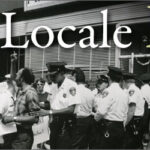
In four decades at UMBC, W. Edward Orser’s research and teaching have helped uncover American triumphs and tragedies in city neighborhoods, small towns and parklands.
By Richard Byrne ’86
Forty years ago, when W. Edward Orser arrived in Baltimore as a young professor in American studies at UMBC, he was also planting himself in new soil. Orser had studied at Randolph-Macon College and Yale University before he and his wife, Jo Annette, were among the first waves of those who answered John F. Kennedy’s call to service in the Peace Corps. They spent two years in Ethiopia before he returned and took his Ph.D. at the University of New Mexico.
Yet Orser has done more than simply take root at UMBC. As a researcher and teacher, he has thrived. His 1994 book, Blockbusting in Baltimore (University of Kentucky Press) blazed a path for scholars and policymakers with its nuanced yet pungent analysis of how racism and opportunism transformed the racial makeup of West Baltimore in the late 1950s and early 1960s. And his research has also been accompanied by a knack for creating and leading classroom projects that meld the best practices of scholarship with a keen sense of the possibilities of public history.
“Ed Orser has also been among the most active and effective teachers in bringing students into his research,” says John Jeffries, dean of UMBC’s College of Arts, Humanities and Social Sciences.
Those projects left a trail of books, pamphlets and exhibits that have knit the university more closely to its surrounding communities – and created avenues for local citizens to investigate and reflect upon their own communal history.
“His intellectual passions have helped make UMBC a nationally recognized site for exemplary scholarship in the field,” says Patrice McDermott, chair of the American Studies department. “But we also benefit from Ed Orser’s belief in the power of community to shape and sustain the core values of our campus, our department and our classrooms. His true gift is his ability to inspire others to join him in the pursuit of these ideals.”
Orser says he has sought to take advantage of the opportunities that a focus on place can have in understanding America’s story.
“How do you ground the American experience in something you can get your hands around?” asks Orser. “I always thought it was helpful to bring things down to a certain scale. Maybe because that’s as much as I could try to get my mind around, but also it is because in some ways, that’s where we live our lives.”
For Orser, the opportunities to teach and research great controversies of race and economics and war and peace have abounded in UMBC’s environs.
“I keep on trying to get students to look at what’s so nearby,” he says.
Town and Country
Orser’s earliest effort to get students to examine UMBC’s backyard came in 1972, when he led an American studies senior seminar in an examination of nearby Ellicott City – which was then a faded mill town still years away from its restoration and revival.
“We think of Ellicott City today as a booming place,” he observes, “but in the ’50s and the ’60s, before I came [to UMBC], it was pretty much on its last legs…. I think the notion of it that was so exciting was that we were trying to look at the community as a whole. It was something you could get your hands around: oral interviews, photographs and other records.”
Each student focused on an aspect of the community’s history and decline. “We put together a little book at the end of the semester,” Orser continues. “And the title we gave it – which was from one of the oral interviews – was ‘The Train Doesn’t Stop Here Anymore.’”
Another early seminar project focused on Patapsco State Park. When Orser discovered that the park was built during the New Deal by the Civilian Conservation Corps [CCC], his interest was piqued. But when it also turned out that the camp used by the CCC was used by the federal government as its first camp for conscientious objectors in World War II, the professor knew that a teachable – and researchable – moment was on offer.
“The remnants of the old camp were there,” Orser recalls. “And that connected up with students at the time who were concerned, as I was, about the Vietnam War and the peace movement. So we did interviews with people who had been in conscientious objector camps – and if not that one, then others.”
Tales of Two ’Villes
These projects led to an even wider array of explorations, including one in nearby Catonsville. Students dug into old photos, census records, fire insurance atlases and maps to reconstruct how Catonsville grew from a modest community along the Frederick Turnpike into a thriving community. And the results of the Catonsville History Project, which was led by Orser and UMBC professor of history Joseph Arnold, were unveiled in exhibits at UMBC and in the community – and then published in 1989 in a book, Catonsville 1880 to 1940: From Village to Suburb that is still available for sale at the Catonsville Public Library.
It is, however, the local participation and input in the research process that Orser particularly insists on highlighting.
“There were local people who had done a wonderful job of creating a Catonsville room at the local public library,” he recalls. “They had gathered photographs, begun to do oral histories. They were diligent. There are always people like this in communities, who squirrel things away and have a good instinct, but they didn’t know how to take the next step. Make these things available. Organize them.”
Another student project led by Orser investigated the small African-American community of Cowdensville, which had existed since at least the 1840s on the southeast edge of what is now UMBC’s campus.
Jean Flanagan ’97, American studies, was one of the students who sketched out the history of the community, which was centered on an African Methodist Episcopal Church. Now the managing editor of the Moorefield Examiner in West Virginia, she says that the researching and interviewing skills that she acquired while compiling oral histories for the project have proven invaluable to her in her subsequent career.
Past adding to her skills, however, Flanagan adds that Orser “taught me there is much more to history than what is written in books. There is the life of everyday people, and their day-to-day struggles and triumphs in the context of ‘textbook’ history are what real history is about.”
The Cowdensville study, she adds, strengthened UMBC’s ties to the local community. “Some Cowdensville residents remarked it was the first time they had set foot on the UMBC campus,” says Flanagan. Orser is also proud of how the body of scholarly knowledge about the region has been advanced in the work of students on these projects.
In the Cowdensville study, for instance, Orser notes that “residents were fairly sure, from oral histories, that their families went back to before the Civil War, and that they were free and were property owners. But they couldn’t come across documents to nail that down. One of our students traced the family names back as far as the 1840 census, and established that there were members of that family that were free and property owners.”
The Cowdensville project also spurred Orser to write his own paper about a little-known case taken on by future U.S. Supreme Court Justice Thurgood Marshall in the mid-1930s. Orser’s paper, which was published in Maryland Historical Magazine in 1997, argued that Marshall’s failed attempt to win the right for Cowdensville students to attend white high schools in Baltimore County foreshadowed the lawyer’s ultimately successful efforts in Brown vs. Board of Education to strike a fatal blow to segregation in schools.
Blocks as Battlefields
Excavating untold stories of the region’s contentious race relations in student projects is important to Orser. And classroom discussion also led him to the idea for his most significant scholarly achievement – the comprehensive study of racial upheaval in West Baltimore housing in the 1950s and 1960s.
“It came on my radar screen when I had students in my classes doing family histories,” Orser recalls. “It would come up in the family histories of white students and in family histories of black students.” It would turn out that their families at one point or another had crossed the same territory. So it was clear to me that this was a very difficult moment.”
“Blockbusting” was a practice in which real-estate agents would sell a house on an all-white block to an African-American family. Often, the sale would ignite a panic amongst the other white residents on the block, who would sell at a loss to move away. The real-estate agents would then sell the properties at a profit to African-American families who would then move in.
Orser’s initial research turned up numerous tales of the practice. But Blockbusting in Baltimore was the first systematic look at the practice, using census data, historical documents and even telephone directories of the era.
“One of the things about oral accounts is that you’re always skeptical,” Orser says. “You need to be wary. Maybe people are exaggerating. So I did what I did with a lot of other projects… I went to the census. And sure enough, it is so vivid.”
Orser developed a method of looking at how blockbusting radically altered certain blocks in the Edmonson Village section of Baltimore. “What I found there is that it was not a 10-year process,” he observes. “It was a one-month process on particular blocks.”
Blockbusting in Baltimore has spurred numerous subsequent studies of the phenomenon in other cities, and Jeffries asserts that the book “is one of the finest histories written about the resistance to integration.” What remains with Orser about the study of blockbusting, however, is the sheer trauma that the experience inflicted on blacks and whites alike who were caught up in it. – and the difficulties in navigating the terrain of racial conflict that occurred so relatively recently.
“Race is such a sensitive issue and so complicated and so hard to treat fairly,” says Orser. “The hardest thing with the book was to try and represent the experience fairly. There were harder feelings than I felt willing to report.”
Parks and Progress
Orser’s recent work has plunged him more deeply into public history, and specifically how the public interacts with one of the region’s recreational pleasures: the Gwynns Falls Trail. Last year, he published a book, The Gwynns Falls: Baltimore Greenway to the Chesapeake Bay (The History Press), which expanded on a series of trail markers that Orser created in his role as urban historian for a National Park Service-funded project.
The Gwynns Falls traces the use of the trail by Native Americans and its early explorations by John Smith through its key role in the burgeoning Baltimore economy of mills and other industry in the 18th and 19th centuries. It takes the reader up to the present day, in which the grand 1904 Baltimore parks plan proposed by Frederick Law Olmsted Jr. set aside the land that is now enjoyed by so many as a hiking and biking trail. Orser calls tracing the history of the development of specific paths of egress and ingress “horizontal archaeology,” and says that it can be remarkably revealing.
“If you take any corridor of an urban area like Baltimore, and you follow it – York Road, Reisterstown Road, Edmondson Avenue – you have this incredible chronology of the history of the area: from early settlement and changes that have happened over time.”
Orser says that “the Gwynns Falls captures my imagination in a similar way. It is a stream valley that even today is – parts of it still – very urban, out of sight, out of mind land.”
As he pursues his explorations of local history and the possibilities of rooting that work in specific places, Orser also continues to mentor students and help them create change in communities. Just last year, Simran Noor ’08, political science and American studies, created a plan for redeveloping the Coppin Heights/Greater Walbrook area of West Baltimore under Orser’s direction. (Noor’s research was recently published in the university’s undergraduate research journal, UMBC Review.)
Noor says that Orser “spent endless hours giving me feedback on my work and meeting with me both in and outside of school to develop the project. Using much of what I had learned from [him], I was able to develop a strong plan.”
Rooting the study of history in the local, Orser says, “gives you a feeling that you have some way of defining it.” But in that definition, he concludes, there are multiple layers of complication that enrich the study, rather than simplify it.
“The tighter you draw your circle,” he says, “the more you realize how complex history is.”
]]>
In four decades at UMBC, W. Edward Orser’s research and teaching have helped uncover American triumphs and tragedies in city neighborhoods, small towns and parklands. By Richard Byrne ’86...
https://umbc.edu/stories/locale-hero/
https://dev.my.umbc.edu/api/v0/pixel/news/124965/guest@my.umbc.edu/765c7a2ce754715b29bdeb4e759be1a1/api/pixel
stories
summer-2009
UMBC News & Magazine
https://dev.my.umbc.edu/groups/umbc-news-magazine
https://assets1-dev.my.umbc.edu/system/shared/avatars/groups/000/001/943/24435aa6207c452e7bc15cc74b42c7bb/xsmall.png?1748556657
https://assets1-dev.my.umbc.edu/system/shared/avatars/groups/000/001/943/24435aa6207c452e7bc15cc74b42c7bb/original.png?1748556657
https://assets2-dev.my.umbc.edu/system/shared/avatars/groups/000/001/943/24435aa6207c452e7bc15cc74b42c7bb/xxlarge.png?1748556657
https://assets2-dev.my.umbc.edu/system/shared/avatars/groups/000/001/943/24435aa6207c452e7bc15cc74b42c7bb/xlarge.png?1748556657
https://assets3-dev.my.umbc.edu/system/shared/avatars/groups/000/001/943/24435aa6207c452e7bc15cc74b42c7bb/large.png?1748556657
https://assets1-dev.my.umbc.edu/system/shared/avatars/groups/000/001/943/24435aa6207c452e7bc15cc74b42c7bb/medium.png?1748556657
https://assets2-dev.my.umbc.edu/system/shared/avatars/groups/000/001/943/24435aa6207c452e7bc15cc74b42c7bb/small.png?1748556657
https://assets1-dev.my.umbc.edu/system/shared/avatars/groups/000/001/943/24435aa6207c452e7bc15cc74b42c7bb/xsmall.png?1748556657
https://assets2-dev.my.umbc.edu/system/shared/avatars/groups/000/001/943/24435aa6207c452e7bc15cc74b42c7bb/xxsmall.png?1748556657
UMBC News & Magazine
0
0
false
Sun, 21 Jun 2009 16:43:35 -0400
How To Purify Water With Simple Tools
With Karin Readel, Senior Lecturer, Geography & Environmental Systems
You never know when or where extreme thirst might occur. Exploring ancient ruins in the Amazon, you drop your canteen into a snake-filled gully. Or you’re hiking in the Appalachian woods, miles from a water fountain.
Or, maybe you’ve always craved a sip of the water in UMBC’s Library Pond. No need to fret. With the help of Karin Readel, senior lecturer in UMBC’s Geography & Environmental Systems program, and her sidekick, Bob the dog, you can have your lake and drink it, too.
— Jenny O’Grady
|
Step 1: Collect the Water Sample
Be careful not to upset the water unnecessarily. Readel used duct tape to attach an old broom handle to a clean plastic water bottle so she could gain better access to the water at Library Pond. By lightly skimming the top with the bottle, she avoided disrupting the sediment closer to the bottom of the pond. As the saying goes, let sleeping gunk lie. |
|
Step 2: Filter the Water, Part I
If you’re a light packer, you might not have remembered to take coffee filters with you on your trip to the Amazon. If so, a clean handkerchief or paper towel works. Use the filter/hankie/towel to cover the mouth of the metal pot, then pour the water you collected into the pot. You should see bits of sediment collecting in your homemade filter. It’s mostly unicellular green algae, says Readel. Mmmm…algae. |
|
Step 3: Boil the Water
Remove the filter from the top of the pot, and place the pot atop your stove or campfire. Bring your water to a rolling boil that lasts for at least five minutes, if not longer. This is important! Boiling the water kills any major bacteria you might find swimming around, so your belly won’t play host to a parasite circus. |
|
Step 4: Filter the Water, Part II
Once your water cools down, repeat Step 2, this time placing your filter on top of the original bottle and pouring from the metal pot. Be careful not to accidentally place the sediment-laden side of your filter upside-down over the vessel. You wouldn’t want to wash your first round of gunk back into the water, now would you? Yuck. |
|
Step 5: Let it Settle…Then Drink It!
Remember in Step 1 when we told you not to disturb the bottom of the pond? The same principle works here in Step 5. Allow your newly-filtered water to sit for a few minutes, and you’ll notice the remaining sediment falling to the bottom of the bottle. Once this has happened, carefully tip the container and drink from the top of the water. Cheers! |
A WORD OF CAUTION
In an ideal world, you might run a simple $2 fecal coliform test on your water before drinking it, like we did in Readel’s lab before the filtration process. However, this isn’t always possible. Please be careful of where you get your water, and always think before you drink.
Click here to view the video.
]]>
With Karin Readel, Senior Lecturer, Geography & Environmental Systems You never know when or where extreme thirst might occur. Exploring ancient ruins in the Amazon, you drop your canteen...
https://umbc.edu/stories/how-to-purify-water-with-simple-tools/
https://dev.my.umbc.edu/api/v0/pixel/news/124966/guest@my.umbc.edu/7075e3e03ff2a12f5f08d425f1dfa3fc/api/pixel
stories
summer-2009
UMBC News & Magazine
https://dev.my.umbc.edu/groups/umbc-news-magazine
https://assets1-dev.my.umbc.edu/system/shared/avatars/groups/000/001/943/24435aa6207c452e7bc15cc74b42c7bb/xsmall.png?1748556657
https://assets1-dev.my.umbc.edu/system/shared/avatars/groups/000/001/943/24435aa6207c452e7bc15cc74b42c7bb/original.png?1748556657
https://assets2-dev.my.umbc.edu/system/shared/avatars/groups/000/001/943/24435aa6207c452e7bc15cc74b42c7bb/xxlarge.png?1748556657
https://assets2-dev.my.umbc.edu/system/shared/avatars/groups/000/001/943/24435aa6207c452e7bc15cc74b42c7bb/xlarge.png?1748556657
https://assets3-dev.my.umbc.edu/system/shared/avatars/groups/000/001/943/24435aa6207c452e7bc15cc74b42c7bb/large.png?1748556657
https://assets1-dev.my.umbc.edu/system/shared/avatars/groups/000/001/943/24435aa6207c452e7bc15cc74b42c7bb/medium.png?1748556657
https://assets2-dev.my.umbc.edu/system/shared/avatars/groups/000/001/943/24435aa6207c452e7bc15cc74b42c7bb/small.png?1748556657
https://assets1-dev.my.umbc.edu/system/shared/avatars/groups/000/001/943/24435aa6207c452e7bc15cc74b42c7bb/xsmall.png?1748556657
https://assets2-dev.my.umbc.edu/system/shared/avatars/groups/000/001/943/24435aa6207c452e7bc15cc74b42c7bb/xxsmall.png?1748556657
UMBC News & Magazine
0
0
false
Sun, 21 Jun 2009 16:42:22 -0400
Fighting Fistula – Jeffrey Wilkinson ’89, INDS
In a developing world awash with suffering, Jeffrey Wilkinson ’89, interdisciplinary studies, has used his medical skills to focus on a very specific problem for African women: a hugely debilitating condition known as obstetric fistula.
Obstetric fistula occurs in women who undergo a difficult childbirth or are victims of sexual violence. The fistula is a hole that appears between the rectum and vagina or between the bladder and the vagina. It often develops after prolonged labor, and the condition causes incontinence and infections, as patients cannot hold in their urine or fecal matter.
The United Nations Population Fund estimates that two million women remain untreated for obstetric fistula in developing countries – and at least 50,000 to 100,000 new cases occur each year. Treatment requires a relatively simple and low-cost form of reconstructive surgery, but most fistula patients can’t afford the $300 that pays for the surgery and post-surgical care.
That is where Wilkinson – a physician with the Duke University Center for Minimally Invasive Gynecologic Surgery – enters the picture. He moved to Tanzania in 2008 to perform fistula surgeries at the Kilimanjaro Christian Medical Centre (KCMC), a Duke partner facility, in the town of Moshi, near Mount Kilimanjaro.
Wilkinson received his medical degree from the Johns Hopkins University School of Medicine. As a urogynecologist (a subspecialty of obstetrics and gynecology that deals with incontinence), he has helped many patients that he says are “the most underrepresented and vulnerable group of patients you can possibly think of…without power, money or voice.”
The surgeries at KCMC are covered by the center’s own budget, government grants, the African Medical and Research Foundation, and other donations. Wilkinson and the OB-GYN team at the center are also teaching Tanzanian health workers how to do emergency obstetrics as a preventative measure to avoid maternal mortality and fistulas.
Wilkinson’s colleagues say he has made a big difference in the countries where he has worked. His efforts featured prominently in a recent article in the New York Times, which highlighted the work done by Wilkinson and his Tanzanian colleague Gileard Masenga at KCMC.
“The work he is doing on behalf of women in the developing world and as a representative of our Duke faculty set him apart from the average physician,” said Haywood Brown, chair of the department of obstetrics and gynecology at Duke University Medical Center.
Masenga, a senior obstetrician and gynecologist and one of Tanzania’s leading experts on fistula surgery, agrees. “The KCMC obstetric and gynecology department has improved and benefited from his presence in term of improved patient care, teaching and clinical oriented research,” he says.
Wilkinson took several short trips to Niger between 2004 and 2008 where he treated fistula patients and grew increasingly interested in working full-time in Africa. When he moved to Tanzania last year, he traveled with his wife, a family physician, and their two young children.
Wilkinson says the most common reason for maternal mortality and prevalence of fistulas in a country like Tanzania are delays in seeking and receiving obstetric care during childbirth.
“There are insurmountable odds against women,” he says. “It’s fortunate that most labors can occur without major problems on their own, or else this would be a much more widespread problem.” Looking back on his days at UMBC, Wilkinson says that his interdisciplinary studies have helped him manage the different issues and fields he grapples with in his current job.
“Our work isn’t just doing a surgical fix to a patient’s problem. We also address the psychological and social aspects of condition, as well as the financial and economic issues, the science behind it, the statistics, and the epidemiology,” he said. “The [interdisciplinary program]… has helped me a lot in understanding the problem of obstetric fistula and maternal mortality.”
— Eliza Barclay
]]>
In a developing world awash with suffering, Jeffrey Wilkinson ’89, interdisciplinary studies, has used his medical skills to focus on a very specific problem for African women: a hugely...
https://umbc.edu/stories/fighting-fistula-jeffrey-wilkinson-89-inds/
https://dev.my.umbc.edu/api/v0/pixel/news/124967/guest@my.umbc.edu/b69aa02df89c020c1b2de037819fe3ff/api/pixel
stories
summer-2009
UMBC News & Magazine
https://dev.my.umbc.edu/groups/umbc-news-magazine
https://assets1-dev.my.umbc.edu/system/shared/avatars/groups/000/001/943/24435aa6207c452e7bc15cc74b42c7bb/xsmall.png?1748556657
https://assets1-dev.my.umbc.edu/system/shared/avatars/groups/000/001/943/24435aa6207c452e7bc15cc74b42c7bb/original.png?1748556657
https://assets2-dev.my.umbc.edu/system/shared/avatars/groups/000/001/943/24435aa6207c452e7bc15cc74b42c7bb/xxlarge.png?1748556657
https://assets2-dev.my.umbc.edu/system/shared/avatars/groups/000/001/943/24435aa6207c452e7bc15cc74b42c7bb/xlarge.png?1748556657
https://assets3-dev.my.umbc.edu/system/shared/avatars/groups/000/001/943/24435aa6207c452e7bc15cc74b42c7bb/large.png?1748556657
https://assets1-dev.my.umbc.edu/system/shared/avatars/groups/000/001/943/24435aa6207c452e7bc15cc74b42c7bb/medium.png?1748556657
https://assets2-dev.my.umbc.edu/system/shared/avatars/groups/000/001/943/24435aa6207c452e7bc15cc74b42c7bb/small.png?1748556657
https://assets1-dev.my.umbc.edu/system/shared/avatars/groups/000/001/943/24435aa6207c452e7bc15cc74b42c7bb/xsmall.png?1748556657
https://assets2-dev.my.umbc.edu/system/shared/avatars/groups/000/001/943/24435aa6207c452e7bc15cc74b42c7bb/xxsmall.png?1748556657
UMBC News & Magazine
0
0
false
Sun, 21 Jun 2009 16:41:18 -0400
Early Risers

After 9 a.m. – and until the last classes of the day – UMBC is a busy place.
The Commons and Quad and Academic Walk bustle with students and faculty and staff going busily about the business of learning. Classrooms and labs are filled with the sounds of lectures and discussions – or the concentrated silence of experiments and exams. The parking lots are full – and parking services employees write tickets to the scofflaws.
But there is also a great deal going on at UMBC and in its vicinity before most people turn their cars onto the Loop or exit a bus each morning. So we asked writers and photographers to set their alarms and capture some of the morning sights and sounds of the campus waking up. These early birds found not only their worms – but much more.
5:15 Crew Club Practice—Baltimore Rowing Club Cherry Hill
It’s April, and it’s snowing. A high school crew team has already turned tail and canceled practice. A few UMBC rowers look expectantly to Renee Foard ’00, chemistry. “You can row in the snow,” she says, in perfect coach deadpan.

Minutes later, they ease their yellow eight-seater into water that is several degrees warmer than the air surrounding them at this hour. The coxswain, Allison Tullier ’12, shouts drills from the stern. In the dark, with the city lights twinkling, the boats resemble airplanes on a runway.
The sun rises slowly behind the team as they cut through the wake of nearby shipping crafts, rounding a buoy just off the coast of Fort McHenry. The red in their cheeks is not sunburn.
“People think we’re crazy,” says Foard. “But I love it. There’s a lot of grace to this sport.”
— Jenny O’Grady
6:00 Early Reveille—Retriever Activities Center
“One one thousand! Two one thousand!”
UMBC’s ROTC cadets are powering through a regimen of calisthenics and three grueling rounds of push-ups. As much as the routine tones the bodies of future Army officers, it also creates camaraderie.

“Really a tight-knit group,” observes Staff Sergeant Michael Bishop. “They go to breakfast after training, those that don’t have class, and attend a lot of events together.”
At 6:32 a.m., the group assembles outside the Retriever Activites Center to begin a two-mile run along the inner-circle of the loop. The first runners appear in the distance 15 minutes later.
One female cadet reaches the finish line at 6:50 a.m. and asks: “We’re not the last, are we?”
After the run, the cadets gather in a circle and reflect upon their morning session.
One sweaty cadet quips: “Should we do caterpillar pushups?” He’s greeted with a collective and exhausted reply in the negative.
— Matthew Morgal ’09
6:20 Leggo My Breakfast—UMBC Campus
They say that the early bird gets the worm, but the truth of the matter is this: On most any university campus, the mealtime options available to willing and waiting wildlife are more like a Vegas all-you-can eat buffet.

On a recent morning, amongst a random assortment of discarded peanuts, popcorn, puffed rice particles and – Mmmm! – red-flavored gum, one lucky squirrel finds the ultimate prize: a lightly toasted blueberry Eggo waffle.
Dash the physics of it all, it must be thinking. Hunger triumphs over mass as this tenacious grey squirrel
darts from beneath the bushes to pick up the waffle. It takes a guarded bite, and carries its windfall back to its secret lair. No syrup necessary.
— Jenny O’Grady
6:45 Open and Quiet—Albin O. Kuhn Library Atrium
Either physics lecturer Eric Anderson’s class is tough, or his students are very motivated. Or maybe both.
By 7 a.m., five people in the Albin O. Kuhn Library Atrium are studying for Anderson’s physics test at 8 a.m. Three of them have been there since 6 a.m. No one is dozing off.

Compared to the atmosphere in the open-all-night Atrium during finals week, Porter observes that 6:30 a.m. isn’t all that early – or late, depending on your perspective.The Atrium is also preferable to a steering wheel. Commuter Aimee Porter ’11 is prepping for the same exam. “We come to the library because we don’t like studying in the car,” she says.
“Studying here keeps us awake because we’re not in our dorm rooms,” says Rose Wilson ’10.
“You should see this place around 3 a.m. There are sleeping bags all over the place,” says Porter.
— B. Rose Huber
7:00 UMBC Campus
I have always been a morning person. The drive to work is easier – and with less traffic and stopping, it’s also more environmentally friendly. Sometimes the world gives you a treat, and the gate to the parking lot is open, and you drive right through. You have your choice of parking spaces.
Then there’s the view. As one walks down the hill from Lot 16 on a bright sunny morning, one sees UMBC’s campus in its quiet beauty.

Freshly waxed and buffed floors greet you with a shiny smile. Mostly I look at my calendar and prepare for the day—or catch up on emails. Department chairs can’t plan for the day. Everyone else does it for you. The most you can do is be ready for what may come.
If I have the time, I’ll walk the building, greet others who started the day early, and appreciate the wonderful life with which I have been blessed.
— William R. LaCourse Chair & Professor of Analytical Chemistry Department of Chemistry and Biochemistry
7:20 Breakfast Is Served—UMBC Dining Hall
The building shines like a beacon through the rain and gray dawn sky. There is warmth inside. And food.
There are no lines in the dining hall at opening time. No fight for a table big enough to fit the group. At this hour, most students are alone, moving silently with trays and textbooks balanced precariously. Only two people – both studying – sit in the half-darkness near the salad bar.
The low murmur of workers preparing food and the distant clang of dishes punctuate the silence. The steam from empty warming trays curls upward to the red and yellow mottled lamps above.
Crew team members and ROTC cadets arrive. The hall gets more boisterous. One girl from the crew team is on a mission for fruit. She drafts team members and they return bearing an armload of apples and a single orange.
The main fruit gatherer is barefoot the entire time. But don’t tell the dining hall staff. It’s probably against the rules.
— Kaitlin Taylor ’09
8:00 Fine Arts Building
Senior music major Danielle Spaeth ’09 is used to keeping odd hours. A flute player since fourth grade, she regularly practices 10 hours a week, most of them in the early morning. Only 10 days away from her senior recital performance of a Bach sonata, Spaeth was up till 3 a.m. the night before, talking with her husband, Brandon, who is a senior airman with the U.S. Air Force’s military police in Kandahar, Afghanistan.

“He’ll sometimes end up calling me during practice,” she says. “Whenever he gets to call is completely random.”
They were married in November, 2008. Brandon is scheduled to return home this fall. Until then, she waits, and practices, her wedding ring gleaming as her fingers dance delicately on the keys.
— Chip Rose
8:30 Choosing to Make a Difference—Choice Program Office
At an early meeting, Chase York [YEAR] and other workers in the Shriver Center’s Choice Program huddle in a meeting room to talk about what’s happening with the at-risk high school students for whom they serve as counselors and monitors. Workers tend to pull 50 or 60 hours a week, supporting the students whom they have been assigned.
York heads out to visit her assigned students at schools after the meeting. At Catonsville Middle School, the conversation with her student ranges from bowling to disgust about the school’s gym uniforms.
At the Catonsville Center for Alternative Studies, York’s student has refused to complete an art assignment: Draw an elephant with seven legs. Her concern over attendance issues and poor grades is met with apathy.
So York dangles the promise of a trip to McDonald’s in return for renewed focus on schoolwork. The prospect of fast food seems to do the trick.
— Matthew Morgal ’09
Watch our feature coverage here.
]]>
After 9 a.m. – and until the last classes of the day – UMBC is a busy place. The Commons and Quad and Academic Walk bustle with students and faculty and staff going busily about the business of...
https://umbc.edu/stories/early-risers/
https://dev.my.umbc.edu/api/v0/pixel/news/124968/guest@my.umbc.edu/62605529a45be9cef16e7d3592ab499a/api/pixel
stories
summer-2009
UMBC News & Magazine
https://dev.my.umbc.edu/groups/umbc-news-magazine
https://assets1-dev.my.umbc.edu/system/shared/avatars/groups/000/001/943/24435aa6207c452e7bc15cc74b42c7bb/xsmall.png?1748556657
https://assets1-dev.my.umbc.edu/system/shared/avatars/groups/000/001/943/24435aa6207c452e7bc15cc74b42c7bb/original.png?1748556657
https://assets2-dev.my.umbc.edu/system/shared/avatars/groups/000/001/943/24435aa6207c452e7bc15cc74b42c7bb/xxlarge.png?1748556657
https://assets2-dev.my.umbc.edu/system/shared/avatars/groups/000/001/943/24435aa6207c452e7bc15cc74b42c7bb/xlarge.png?1748556657
https://assets3-dev.my.umbc.edu/system/shared/avatars/groups/000/001/943/24435aa6207c452e7bc15cc74b42c7bb/large.png?1748556657
https://assets1-dev.my.umbc.edu/system/shared/avatars/groups/000/001/943/24435aa6207c452e7bc15cc74b42c7bb/medium.png?1748556657
https://assets2-dev.my.umbc.edu/system/shared/avatars/groups/000/001/943/24435aa6207c452e7bc15cc74b42c7bb/small.png?1748556657
https://assets1-dev.my.umbc.edu/system/shared/avatars/groups/000/001/943/24435aa6207c452e7bc15cc74b42c7bb/xsmall.png?1748556657
https://assets2-dev.my.umbc.edu/system/shared/avatars/groups/000/001/943/24435aa6207c452e7bc15cc74b42c7bb/xxsmall.png?1748556657
UMBC News & Magazine
0
0
false
Sun, 21 Jun 2009 16:39:10 -0400
Double Threat – Donna Lewis ’86, English
Donna Lewis ’86, English, leads a double life. She earned her law degree at the University of Maryland School of Law in Baltimore and is currently an attorney with the Department of Homeland Security after 12 years in private sector litigation.
But away from the office, Lewis is a humorist who draws cartoons, writes and performs stand-up comedy. (In 2007, she competed in the Washington Post’s “Funniest Fed” stand-up competition.)
UMBC Magazine asked Lewis how she squared the law and the laugh. She argues that they are more intertwined than you might think:
When people find out you’re a lawyer who dabbles in the funny side of life, they respond in one of two ways. Half of the people make the typical lawyer jokes. (I don’t do lawyer jokes.) The other 50 percent find it impossible that a lawyer knows anything about what’s funny. (Much less that a lawyer could be funny.)
Lawyers and laughing? Please.
But then the questions begin. And this is how I answer the ones they ask – and the ones I wish they’d ask.
When did you get funny?
I didn’t realize the value of humor while I was in college or law school. I certainly appreciated good humor, but I firmly subscribed to a clear dichotomy between work and play. For any “serious” endeavor like school or work, I would flip on my somber switch very quickly.
The funny business came from a very practical professional need. After a few difficult years in litigation, I began to notice the weight and burden of my clients’ pain. Individuals would come into the office with fears and stress that distorted their perspectives to the point that they were not thinking rationally.
So I began to use the humor that I had always saved for after hours. My clients became more relaxed as a result. And when I began using humor with other lawyers and with judges, I became a more effective professional.
So you’re a funny lawyer? Does that harm your credibility?
There’s a big difference between being a class clown and a funny lawyer. Class clowns just want attention. They often can’t distinguish between a good joke and a bad joke, or between positive attention and negative attention.
Being a funny lawyer is about strategy. It’s about the bigger goal of getting your audience on board in a fun and positive way. In fact, it’s all about the audience. When you’re dealing with people, you’re dealing with conflict. And in the law, conflict is the name of the game. The entire goal is to resolve the conflict. The key in utilizing humor as a tool in that process is to maintain a seriousness and depth in addressing the subject matter while also balancing a healthy respect for the fact that you’re dealing with humans and not robots.
What’s harder, litigation or standup?
Standup is, without a doubt, the hardest. Making people laugh and laugh and laugh is ridiculously tough. Litigation is easy by comparison. In litigation, you know exactly what you’ve got and you deal with it. You’ve got the law on your side or the facts on your side. Sometimes, you’ve got nothing on your side but a losing case.
In standup, though, all you have going for you or against you is you. A bad night of standup is just truly awful. It just makes you want to cry and disappear off of the face of the earth. Unfortunately, all it takes is one good night of standup to make you keep coming back for the humiliation.
What did comedy teach you about practicing law?
My theory is that if everyone took an improvisation class, there would be a lot less conflict in relationships and in the world. My theory rests on a major concept in improv, commonly called “Yes, and…” It works like this: One character speaks and/or acts and then the next character in the exercise must somehow indicate agreement by continuing the chain of action or conversation. “Yes, and…” keeps the improv scene moving and keeps it from ending.
This exercise is the opposite of a conversation habit that most of us are used to: “Yes, but…” If you listen at home and at work, you’ll notice that many people respond with “Yes, but…” or some similar variation. In litigation, especially, I had gotten so used to the notion of debating and arguing that I would always automatically disagree with the other side.
What I’ve learned as I have matured professionally is that two sides – even opposing sides – usually have more in common than they think. If they start from a point of agreement, they can iron out their differences much faster. “Yes, and…” will get you to a more efficient and painless resolution than “Yes, but…”
With an audience, the goal is always to keep them laughing. In law, keep them agreeing. At home, keep them doing both.
What should you never do in law or in comedy?
The same rules work in both environments. Don’t say things that make people groan. If you don’t have a good joke, why make one? Don’t take cheap shots. You don’t need them and they’re not effective. Say less, not more. Some of the funniest people I know, both on stage and in the courtroom, are the quietest. But when they’re funny, they’re really funny. And finally, don’t use foul language. There’s no need for vulgarity. Sure, you can get away with it in today’s culture. But that’s not a good reason to do it. Rely on your material, your timing, your strategic use of silence and just enough good manners and appeal to keep your audience on your side.
Advice for someone who thinks they’re funny?
Take an improv class. Then take a stand up class. Write a funny article. Draw a cartoon. Do something funny. If you feel funny or if people think you’re funny, you may just be funny. So go be funny!
]]>
Donna Lewis ’86, English, leads a double life. She earned her law degree at the University of Maryland School of Law in Baltimore and is currently an attorney with the Department of Homeland...
https://umbc.edu/stories/double-threat-donna-lewis-86-english/
https://dev.my.umbc.edu/api/v0/pixel/news/124969/guest@my.umbc.edu/883826af7316d3c5245360ab06282d6e/api/pixel
stories
summer-2009
UMBC News & Magazine
https://dev.my.umbc.edu/groups/umbc-news-magazine
https://assets1-dev.my.umbc.edu/system/shared/avatars/groups/000/001/943/24435aa6207c452e7bc15cc74b42c7bb/xsmall.png?1748556657
https://assets1-dev.my.umbc.edu/system/shared/avatars/groups/000/001/943/24435aa6207c452e7bc15cc74b42c7bb/original.png?1748556657
https://assets2-dev.my.umbc.edu/system/shared/avatars/groups/000/001/943/24435aa6207c452e7bc15cc74b42c7bb/xxlarge.png?1748556657
https://assets2-dev.my.umbc.edu/system/shared/avatars/groups/000/001/943/24435aa6207c452e7bc15cc74b42c7bb/xlarge.png?1748556657
https://assets3-dev.my.umbc.edu/system/shared/avatars/groups/000/001/943/24435aa6207c452e7bc15cc74b42c7bb/large.png?1748556657
https://assets1-dev.my.umbc.edu/system/shared/avatars/groups/000/001/943/24435aa6207c452e7bc15cc74b42c7bb/medium.png?1748556657
https://assets2-dev.my.umbc.edu/system/shared/avatars/groups/000/001/943/24435aa6207c452e7bc15cc74b42c7bb/small.png?1748556657
https://assets1-dev.my.umbc.edu/system/shared/avatars/groups/000/001/943/24435aa6207c452e7bc15cc74b42c7bb/xsmall.png?1748556657
https://assets2-dev.my.umbc.edu/system/shared/avatars/groups/000/001/943/24435aa6207c452e7bc15cc74b42c7bb/xxsmall.png?1748556657
UMBC News & Magazine
0
0
false
Sun, 21 Jun 2009 16:32:21 -0400
Discovery – Summer 2009
Shakespeare: Page to Stage
Michele Osherow is one of UMBC’s rising stars in the humanities. An assistant professor of English, she serves as director of the Humanities Scholars Program and as the associate director of the Dresher Center for the Humanities. Osherow also runs a monthly Shakespeare reading group and organizes events such as an April marathon reading of Shakespeare’s sonnets – put together with UMBC associate professor of theatre Alan Kreizenbeck.
But Osherow’s Bard-ic efforts don’t stop at the edge of Hilltop Circle. In addition to having won multiple awards as an actress, she is also the resident dramaturg at the Folger Theatre in Washington, D.C. It’s a job in which Osherow uses scholarship and a love of theater to aid in getting Shakespeare plays such as The Winter’s Tale – produced by the Folger, appropriately enough, last winter – from the page to the stage.
“The role of the dramaturg is essentially the scholar in the rehearsal room,” Osherow says. But the job starts long before the actors turn up for the first read-through of lines.
“The majority of my work is done actually before the rehearsals start,” she says. “I will work with the director on concept. Why are we attracted to this play? Actually, I carry it around in my pocket for awhile. What’s the story that we want to tell? And how are we how are we going to make that classical – that 400-year-old – story accessible to a modern audience? There’s a lot of discussion, and a lot of arguing, and a lot of reading that goes on.”
Dramaturgs also tackle the daunting task of cutting Shakespearean texts down to a playable length. What’s editing the Bard like?
“It’s actually kind of fun,” says Osherow. “And it’s often a case where I make more cuts than a director does.” But she adds that the point of the cutting is to clarify language and plot points and, of course, make sure that Shakespeare’s wit and humor land with the intended effect.
Dramaturgs add as well as subtract, observes Osherow. “I will suggest some scholarly work [to the director],” she says, “because the idea is to infuse the production with a kind of scholarly energy that can be helpful, as opposed to getting in the way of a story.”
The dramaturg also answers actors’ questions about context. Osherow says that in her experience, such context is “particularly helpful for women. Shakespeare gives us some very strong women, but those women were unusual – especially considering the constraints placed on women.
“Women were supposed to be chaste, silent and obedient,” Osherow continues. “Silence was equated with chastity. A woman who spoke a lot was called a ‘whore.’” In a play like The Winter’s Tale, where Queen Hermione remains dignified and even silent under the mistaken assault leveled on her virtue by her husband, Osherow argues that knowing that context is key for actors and for the audience.
“Hermione’s refusal to speak in certain situations is not because of fear,” Osherow says, “but because she is a true gentlewoman.”
— Richard Byrne ’86
No NO = No Migraines
Pain relievers can often “take away” a headache. But those who suffer migraines often find it much harder to obtain relief. Elsa Garcin, an assistant professor of chemistry and biochemistry, is investigating ways that might someday directly attack the migraine at its creation.
Her migraine work builds on research she has already done on immune systems problems like arthritis and inflammation. In the human body, nitric oxide (also known as NO) plays many roles. It is the molecule that regulates blood pressure and transmits signals between nerve cells. As part of the body’s immune response, NO also attacks bacteria, viruses, and tumors. But a problem can arise: If the immune system makes too much NO, says Garcin, “it also attacks your own molecules.”
Trying to lower NO levels in just one part of the body is a tricky problem. The three respective enzymes that produce the molecule to regulate blood pressure, carry nerve signals and perform immune work are almost identical. Block one enzyme to reduce the overall presence of NO in the body and you can get awful side effects from having also interfered with the other two.
Garcin has found a way to be more choosy, she and 20 colleagues reported last fall in the journal Nature Chemical Biology. She solved the targeting problem by making a drug molecule that binds most strongly to the immune version of the enzyme.
Designing this discerning drug molecule proved tricky, since the three enzymes are identical in shape at the place where they produce nitric oxide. Finding the right enzyme is also crucial because that specific target is also the place where a drug would bind in order to block the enzyme.
Using a technique called x-ray crystallography to look at the 3-D structure of the three NO-producing enzymes, Garcin discovered that the immune-system enzyme has what she calls a “sweet spot” – located far from the spot where the enzyme makes nitric oxide. That distance allowed her to design a drug molecule that not only blocks the NO-producing site but also possesses an extension that reaches around to bind specifically with the immune enzyme at its sweet spot.
The extension on the experimental drug molecule allows the immune version of the enzyme and the drug molecule to become inseparable, thus shutting down overproduction of NO. The extension, she says, makes the drug molecule bind 3,000 times more strongly to the immune enzyme than to the other two.
Garcin is now looking for ways to interfere with the brain version of the enzyme that produces NO, while leaving the other two enzymes unperturbed. Finding a way to do so might eliminate a key trigger for migraines. “If you target this one but do not target the one in blood pressure,” she says, “there’s a potential for migraine treatment.”
— Lila Guterman
Research Rewarded
As the Spring 2009 semester ended, three UMBC faculty members received prestigious awards that will allow them to travel and continue research in history, emergency health services and biology.
• Kate Brown, associate professor of history, was named a John Simon Guggenheim Fellow for 2009. She is working on a tandem history of two cities (Hanford, Washington and Maiak, Russia) that were located near the world’s first two plutonium plants.
• Brian Maguire, clinical associate professor of emergency health services, has won a 2009 Fulbright Scholarship. He will travel to Australia to pursue research on the occupational risks among ambulance personnel.
• Stephen Miller, associate professor of biological sciences, has won a 2009 Fulbright Scholarship. He will travel to Germany to continue his work on the origins of multicellularity – the ability of higher plants and animals to create many different kinds of cells.
The Good Stuff
Theresa Good has a knack for forging the demands of a career in science into tangible rewards: cutting-edge research in Alzheimer’s disease, prestigious awards for her research and mentoring, and intense camaraderie with colleagues. As a professor of chemical and biological engineering, Good excels in motivating and training her students to untangle thorny research problems, all the while creating lifelong collaborations with them and with other colleagues.
In February, Good was named a Fellow of the American Institute for Medical and Biological Engineers, a distinction bestowed upon the top two percent of the field. And in 2007, she won UMBC’s Donald Creighton Memorial Faculty Award for Graduate Student Mentoring.
The accolades come as no surprise to current and former graduate students. “She’ll give you the freedom you need as a researcher to make the project your own and to pursue ideas that others may not,” says James Henry, a former graduate student who is now an assistant professor of chemical engineering at Louisiana State University.
Good’s research explores why the brain’s nerve cells die in Alzheimer’s disease. “Most of the questions we ask are trying to understand the relationship between the structure of the [Alzheimer’s] protein and how it interacts with cells,” she explains. To do the work, she and her students develop new tools and techniques, including new spectroscopy methods. Some of the findings, such as the ability of certain polymers to lessen the toxicity of Alzheimer’s proteins, could even lead to treatments for the disease.
Though her methods and discoveries have influenced other scientists, none of her attempts to stop Alzheimer’s disease has yet reached the clinics where doctors are grappling with the disease. “I’m not going to become rich anytime soon,” she laughs. “But it’s probably contributed to the way that people think about targets for disease and some of the approaches we can use.”
Good grew up near Rochester, N.Y., and taught science in the Peace Corps in the Democratic Republic of Congo before getting a Ph.D. at the University of Wisconsin, Madison. She then taught at Texas A&M University before joining the faculty at UMBC in 2002. To celebrate her promotion to full professor in 2007, she bought herself a 26-foot sailboat, in which she often sails with her students on the Chesapeake Bay.
Good also encourages students to run the Annapolis Ten Mile Run alongside her each year. In the first few years, Good jokes, “I told them that if they didn’t allow me to beat them, I wouldn’t sign their forms to graduate.” Now, she says, “they don’t have to pretend to go slower than me.”
While the honor from the engineering institute is flattering, Good says, she was even more touched by the mentoring award since she was nominated by her own students. “I think I do some good research,” she says, “but what I really produce is people.”
— Lila Guterman
Nine Digit Histories
From behind his large, tidy wooden desk at the Social Security Administration’s headquarters in Woodlawn, Larry DeWitt, ’04 M.A., history, will happily discuss the philosophical underpinnings of social insurance and the importance of knowing the past when making future decisions about the nation’s economic safety net.
But DeWitt, the historian at this vast federal agency and the lead editor of weighty new tome of primary source material about the agency, Social Security: A Documentary History (CQ Press) can’t conceal the plain truth. He is just itching to get out of his seat and show off his collection.
It doesn’t take long to see why. The adjoining office is crammed with pamphlets, placards, books – and even old agency telephone directories. A wartime poster reminds why it’s important to hold on to Social Security cards: “Replacing 1.8 million cards last year cost Uncle Sam the price of 550 jeeps.”
Dig deeper into one file, and there’s a shopworn report from 1952 about problems with account numbers. In another, a 33 1/3 rpm record with comedy bits from Woody Allen, Bill Cosby and Bob Newhart – each introduced by a 30-second pitch for Social Security from Nipsey Russell.
Suddenly, DeWitt scampers up a small ladder. “Ooh, let’s see if I can find…” he says, eventually retrieving another public service announcement, this one recorded by Johnny Mathis.
The Social Security history tour continues in a small museum just a few steps down the hall. DeWitt points out a 1795 pamphlet by Thomas Paine calling for creation of an old-age insurance scheme, the earliest US proposal for social insurance he has found. (He adds, with a laugh, that back then, 50 was considered old age.) There is a pen used by President Franklin D. Roosevelt to sign the 1935 law establishing Social Security is on display, as well as the agency’s first PC – purchased for $9,600 in 1983 and reliant on two floppy disks. Still more artifacts and documents fill a musty overflow storage room upstairs, but DeWitt hopes a new museum and archives set to open in August will have room for it all.
The attention to its past is a bit surprising for an agency best known to many for doling out nine-digit numbers. But while most government offices don’t share such a commitment to their history, DeWitt points to others, like the military branches, which do share it.
“An institution this large and this important in American life has to have a sense of its history,” he explains, pointing out that Social Security is the largest single category in the federal budget. Nearly 51 million Americans – retired and disabled workers and their dependents, and survivors of deceased workers – will receive $650 billion in benefits.
DeWitt began his working life as a Social Security claims representative in Los Angeles 31 years ago, and has been the historian here since 1995. In addition to setting up exhibits and giving tours of the museum, he also manages the archive, helping those inside and outside the agency with research, and does his own writing and research on the institution and the program’s legislative history.
Attracted to UMBC because of its welcoming approach to mid-career professionals and part-time students, DeWitt completed his master’s in historical studies in 2004, writing his thesis on a little-known program run by the Social Security Administration that provided assistance to the families of Japanese-Americans who were interned during World War II and helped internees with relocation and job placement when they were released.
DeWitt is now working on a Ph.D. in public policy, and plans to write his dissertation about the tenure of Arthur Altmeyer, a high-ranking executive during the first two decades of Social Security who oversaw the program’s founding, as well as its first major expansion, to include dependents and survivors. Somehow, he also maintains a personal website, www.larrydewitt.net, which touches on history, philosophy, public policy, and poetry.
After he retires from his historian’s post, DeWitt hopes to teach at a university. But his documentary history of the agency’s past is already providing a new tool for those who teach about America’s social contract. Social Security: A Documentary History was intended for university libraries, and it relies on primary documents, such as speeches, committee reports, congressional testimony, and letters – many drawn from the agency’s archive – to trace the legislative development of the program.
It’s weedy stuff for the general reader. But for students of the program, such a complete overview in a single spot, with detailed treatment of expanding benefits to new categories of workers, indexing payments to the inflation rate, and other issues is invaluable. It is also clear evidence that today’s debates about privatization and solvency really aren’t new. Not convinced? Check out the debate over 1939 amendments, designed to shrink the size of the program’s projected surplus – deemed too tempting while the federal budget was in constant deficit – or a 1983 report from the Cato Institute that pushes for private accounts.
DeWitt doesn’t like to weigh in on current arguments. But he insists that those who do should know their stuff. “We historians believe that in order to understand contemporary policy debates correctly, you need to have a historical context for them. And that’s what we try to provide,” he says. “We don’t take positions. We try to show how we got to where we are.”
For all his Social Security knowledge, there is one historical detail that eludes DeWitt. In that familiar photograph of Roosevelt signing the program into law, surrounded by dignitaries such as Secretary of Labor Frances Perkins, who is the bow-tied man standing at the back? “If I could solve this, I could retire.”
— Holly Yeager
]]>
Shakespeare: Page to Stage Michele Osherow is one of UMBC’s rising stars in the humanities. An assistant professor of English, she serves as director of the Humanities Scholars Program and as...
https://umbc.edu/stories/discovery-summer-2009/
https://dev.my.umbc.edu/api/v0/pixel/news/124970/guest@my.umbc.edu/417b372fbdd82d6e4d90937f141f0fea/api/pixel
stories
summer-2009
UMBC News & Magazine
https://dev.my.umbc.edu/groups/umbc-news-magazine
https://assets1-dev.my.umbc.edu/system/shared/avatars/groups/000/001/943/24435aa6207c452e7bc15cc74b42c7bb/xsmall.png?1748556657
https://assets1-dev.my.umbc.edu/system/shared/avatars/groups/000/001/943/24435aa6207c452e7bc15cc74b42c7bb/original.png?1748556657
https://assets2-dev.my.umbc.edu/system/shared/avatars/groups/000/001/943/24435aa6207c452e7bc15cc74b42c7bb/xxlarge.png?1748556657
https://assets2-dev.my.umbc.edu/system/shared/avatars/groups/000/001/943/24435aa6207c452e7bc15cc74b42c7bb/xlarge.png?1748556657
https://assets3-dev.my.umbc.edu/system/shared/avatars/groups/000/001/943/24435aa6207c452e7bc15cc74b42c7bb/large.png?1748556657
https://assets1-dev.my.umbc.edu/system/shared/avatars/groups/000/001/943/24435aa6207c452e7bc15cc74b42c7bb/medium.png?1748556657
https://assets2-dev.my.umbc.edu/system/shared/avatars/groups/000/001/943/24435aa6207c452e7bc15cc74b42c7bb/small.png?1748556657
https://assets1-dev.my.umbc.edu/system/shared/avatars/groups/000/001/943/24435aa6207c452e7bc15cc74b42c7bb/xsmall.png?1748556657
https://assets2-dev.my.umbc.edu/system/shared/avatars/groups/000/001/943/24435aa6207c452e7bc15cc74b42c7bb/xxsmall.png?1748556657
UMBC News & Magazine
0
0
false
Sun, 21 Jun 2009 16:30:52 -0400
At Play – Summer 2009
Monkee Business
In a crowded basement bar in Silver Spring in late winter, the Stepping Stones are bashing out a version of the Monkees’ “Mary, Mary.” As the song veers out of its chorus, UMBC professor of public policy and economics Timothy J. Brennan unleashes a dirty and riveting guitar solo that has the crowd buzzing with approval.
By day, Brennan is a researcher whose work tackles the intersection of markets and government regulations – antitrust laws, utilities, and copyright. But in his free time, you might find him playing jazz guitar, working over a blues song with friends, or in a Monkees cover band like the Stepping Stones – which he formed last year with Washington Post Metro columnist John Kelly.
The Stepping Stones are a “cover” band – and not a tribute band with costumes and moptops. “There are 25 to 30 Monkees songs that are palatable,” Brennan wisecracks. “And there’s not a lot of issue among the band as to which ones are palatable.”
Brennan is also a self-admitted guitar aficionado who has 17 guitars in his collection, including a Rickenbacker, a Gibson SG and a classic Gretsch Country Gentleman (made famous by Elvis Presley, Chet Atkins and Monkees guitarist Mike Nesmith) that he says “might be the finest guitar I own.”
— Richard Byrne ‘86
Saddle Up
UMBC’s Equestrian Club isn’t all well-pressed riding jackets and spit-shined boots. There are arguments about pizza toppings and recollections about a member who was nearly trampled filming a riding lesson.
And, of course, there are horses. The club practices once a week at the Patapsco Horse Center, and its members have competed in ten intercollegiate shows this year. (They have the ribbons to prove it.)
The club was formed in 2003 by students Amanda McClaskey and Heidi Brueckner ’06, interdisciplinary studies, who brought the idea to C. Jill Randles, assistant vice provost for undergraduate education, who serves as the club’s advisor.
The competitive aspect of the group has caused perplexity: is it a club or a team? Members are required to take lessons, and the group may hold tryouts next year. Still, says club president Emily Plitt ’11, “we are more concerned about riders’ commitment than their actual skill.”
Funding is also a bit of a puzzle: As a club, the group gets no money from UMBC Athletics, but the Student Government Association does not fund competitive teams. The solution? The SGA funds field trips, but team members must pay for their own entry fees and transportation at competitions.
“The club’s initial goal was to pull a group of students together who love horses, rid[ing], and want to learn more and share experiences,” says Randles. “The creation of a team that would compete as part of the Intercollegiate Horse Show Association was a longer-term goal.”
— Kaitlin Taylor ’09
Fun & GAIM
All-nighters. Advanced skills in video gaming. Both factored into the Global Game Jam, an annual weekend-long sprint of gaming creativity held in late winter all over the world.
UMBC hosted one of the regional pods in the competition, an event brought to the school by the two faculty members behind the university’s Games, Animation and Interactive Media (GAIM) Program – Neal McDonald from visual arts and Marc Olano of computer science.
“It was 48 hours of frantic activity,” said Olano. “It was exciting to be part of something that involved 53 sites in over 20 countries, with more than 1,600 participants creating over 300 games.”
Five teams made up of 15 UMBC students and eight guest participants worked through the weekend to create original games of five minutes in length with titles such as “Q-Tip Nightmare” and “Feather Tether.”
The GAIM program brings together UMBC students in visual arts and computer science to work on projects that can lead not only to careers in gaming, but are also applicable to aerospace, architecture, healthcare and other fields.
“It’s good energy, lots of laughing, but more importantly, learning to do things just like they’re done in the industry,” says McDonald.
For more information on the Games, Animation and Interactive Media Program, please visit gaim.umbc.edu/news
— Chip Rose
Catonsville 1, Chapel Hill 0
Late last spring, the University of North Carolina began courting long-time UMBC men’s lacrosse coach Don Zimmerman. And when the Tar Heels go after something, they go hard.
Word leaked quickly that Zimmerman and North Carolina were talking. The rumor mill, turning more quickly than ever in the Internet age, thrust the coach’s dilemma into the spotlight. Would he stay or would he go?
Many assumed he would take the job at the bigger school. But Zimmerman decided that he would skip a chance to coach lacrosse at one of the most prominent schools in college athletics to remain at UMBC.
His family was a big factor in helping the coach decided that staying where he had been for 16 years was the right call. “I just realized this was the place for me,” Zimmerman said.
A Baltimore native, Zimmerman coached Johns Hopkins to three national titles during his seven years there before leaving the school after the 1990 season. Earlier in his career, he also was an assistant coach on two North Carolina national championship teams, which was another reason many felt he would make the jump to Chapel Hill.
The entire saga only took about a week. Zimmerman spoke with UMBC president Freeman A. Hrabowski III and the university’s athletic director, Charles Brown after being contacted by North Carolina, and promised a quick decision.
During the decision process, Zimmerman attended the NCAA Final Four men’s lacrosse championships in Massachusetts, where curiosity about his status meant his phone literally wouldn’t stop ringing. The exasperated coach even skipped the national championship game just to escape the questions.
Zimmerman’s family told him they thought that staying UMBC was the best decision for him. In the end, the coach never even visited North Carolina before giving Brown the happy news that he would stay. UMBC promptly rewarded Zimmerman with a new six-year contract.
“The reason I decided to stay is I’ve fallen in love with UMBC,” Zimmerman said. “This has been my home for 16 years…and I just couldn’t see turning my back on all those people who have made the commitment as I did to develop this program to where it is today. To me, that’s not the right thing.”
Zimmerman now has his sights set on even great success in Catonsville. UMBC has made the NCAA men’s lacrosse tournament in each of the three years. The team also started the 2009 campaign ranked highly in the national top 10.
“The fact that he stayed showed a great deal of confidence in us,” says Alex Hopmann, a team captain. “There was a great deal of worry, [but] when he came back, we felt complete.”
Brown agrees that Zimmerman’s decision will keep the university’s rebuilding process in men’s lacrosse on track. UMBC has given Zimmerman many of the resources that he felt the school needed to be a top-level program: a new field, new locker room facilities, multiple assistant coaches and an improved schedule.
“We have the right coach for the right situation,” Brown says. “For us to be able to retain him here is a big feather in our cap.”
— Jeff Seidel ’85
]]>
Monkee Business In a crowded basement bar in Silver Spring in late winter, the Stepping Stones are bashing out a version of the Monkees’ “Mary, Mary.” As the song veers out of its chorus, UMBC...
https://umbc.edu/stories/at-play-summer-2009/
https://dev.my.umbc.edu/api/v0/pixel/news/124971/guest@my.umbc.edu/85ce8d2f11b2704adeea1579484bb85b/api/pixel
stories
summer-2009
UMBC News & Magazine
https://dev.my.umbc.edu/groups/umbc-news-magazine
https://assets1-dev.my.umbc.edu/system/shared/avatars/groups/000/001/943/24435aa6207c452e7bc15cc74b42c7bb/xsmall.png?1748556657
https://assets1-dev.my.umbc.edu/system/shared/avatars/groups/000/001/943/24435aa6207c452e7bc15cc74b42c7bb/original.png?1748556657
https://assets2-dev.my.umbc.edu/system/shared/avatars/groups/000/001/943/24435aa6207c452e7bc15cc74b42c7bb/xxlarge.png?1748556657
https://assets2-dev.my.umbc.edu/system/shared/avatars/groups/000/001/943/24435aa6207c452e7bc15cc74b42c7bb/xlarge.png?1748556657
https://assets3-dev.my.umbc.edu/system/shared/avatars/groups/000/001/943/24435aa6207c452e7bc15cc74b42c7bb/large.png?1748556657
https://assets1-dev.my.umbc.edu/system/shared/avatars/groups/000/001/943/24435aa6207c452e7bc15cc74b42c7bb/medium.png?1748556657
https://assets2-dev.my.umbc.edu/system/shared/avatars/groups/000/001/943/24435aa6207c452e7bc15cc74b42c7bb/small.png?1748556657
https://assets1-dev.my.umbc.edu/system/shared/avatars/groups/000/001/943/24435aa6207c452e7bc15cc74b42c7bb/xsmall.png?1748556657
https://assets2-dev.my.umbc.edu/system/shared/avatars/groups/000/001/943/24435aa6207c452e7bc15cc74b42c7bb/xxsmall.png?1748556657
UMBC News & Magazine
0
0
false
Sun, 21 Jun 2009 15:55:53 -0400
Up on the Roof – Summer 2009
UMBC President Freeman A. Hrabowski, III, takes your questions. Q. How does UMBC prepare students for the real world? What …
]]>
UMBC President Freeman A. Hrabowski, III, takes your questions. Q. How does UMBC prepare students for the real world? What …
https://magazine.umbc.edu/up-on-the-roof-summer-2009/
https://dev.my.umbc.edu/api/v0/pixel/news/107659/guest@my.umbc.edu/8f1805dce46ba057ec76016f46997d05/api/pixel
stories
summer-2009
UMBC Magazine
https://dev.my.umbc.edu/groups/umbc-magazine
https://assets4-dev.my.umbc.edu/images/avatars/group/5/xsmall.png?1777298502
https://assets4-dev.my.umbc.edu/images/avatars/group/5/original.png?1777298502
https://assets1-dev.my.umbc.edu/images/avatars/group/5/xxlarge.png?1777298502
https://assets2-dev.my.umbc.edu/images/avatars/group/5/xlarge.png?1777298502
https://assets1-dev.my.umbc.edu/images/avatars/group/5/large.png?1777298502
https://assets1-dev.my.umbc.edu/images/avatars/group/5/medium.png?1777298502
https://assets4-dev.my.umbc.edu/images/avatars/group/5/small.png?1777298502
https://assets4-dev.my.umbc.edu/images/avatars/group/5/xsmall.png?1777298502
https://assets3-dev.my.umbc.edu/images/avatars/group/5/xxsmall.png?1777298502
UMBC Magazine
0
0
false
Sun, 21 Jun 2009 12:56:19 -0400
Top Mountaineer – James P. Clements ’85, CompSci, and ’91 M.S. and ’93 Ph.D., operations analysis
According to Google Maps, it takes a little over three hours to get from Catonsville to Morgantown, West Virginia. For …
]]>
According to Google Maps, it takes a little over three hours to get from Catonsville to Morgantown, West Virginia. For …
https://magazine.umbc.edu/top-mountaineer-james-p-clements-85-compsci-and-91-m-s-and-93-ph-d-operations-analysis/
https://dev.my.umbc.edu/api/v0/pixel/news/107660/guest@my.umbc.edu/05fdb7960ca8a547377d41cc3425ce9c/api/pixel
stories
summer-2009
UMBC Magazine
https://dev.my.umbc.edu/groups/umbc-magazine
https://assets4-dev.my.umbc.edu/images/avatars/group/5/xsmall.png?1777298502
https://assets4-dev.my.umbc.edu/images/avatars/group/5/original.png?1777298502
https://assets1-dev.my.umbc.edu/images/avatars/group/5/xxlarge.png?1777298502
https://assets2-dev.my.umbc.edu/images/avatars/group/5/xlarge.png?1777298502
https://assets1-dev.my.umbc.edu/images/avatars/group/5/large.png?1777298502
https://assets1-dev.my.umbc.edu/images/avatars/group/5/medium.png?1777298502
https://assets4-dev.my.umbc.edu/images/avatars/group/5/small.png?1777298502
https://assets4-dev.my.umbc.edu/images/avatars/group/5/xsmall.png?1777298502
https://assets3-dev.my.umbc.edu/images/avatars/group/5/xxsmall.png?1777298502
UMBC Magazine
0
0
false
Sun, 21 Jun 2009 12:54:50 -0400