Vehicle Tracker Issues - All Routes
Due to ongoing vehicle maintenance in preparation for the Fall semester, there may be several routes/buses running without vehicle trackers. Please refer to the printed route times and rest assured that all routes are still currently running. If you have any questions or concerns please contact the Transit office at 410-455-2454.
]]>
Due to ongoing vehicle maintenance in preparation for the Fall semester, there may be several routes/buses running without vehicle trackers. Please refer to the printed route times and rest...
https://dev.my.umbc.edu/api/v0/pixel/news/61349/guest@my.umbc.edu/1c37a3a7b16dea8c8ea5864989d86ba1/api/pixel
UMBC Transit
https://dev.my.umbc.edu/groups/transit
https://assets4-dev.my.umbc.edu/system/shared/avatars/groups/000/000/592/23ec211d0365be0665abf1354689014d/xsmall.png?1448285304
https://assets3-dev.my.umbc.edu/system/shared/avatars/groups/000/000/592/23ec211d0365be0665abf1354689014d/original.png?1448285304
https://assets4-dev.my.umbc.edu/system/shared/avatars/groups/000/000/592/23ec211d0365be0665abf1354689014d/xxlarge.png?1448285304
https://assets4-dev.my.umbc.edu/system/shared/avatars/groups/000/000/592/23ec211d0365be0665abf1354689014d/xlarge.png?1448285304
https://assets3-dev.my.umbc.edu/system/shared/avatars/groups/000/000/592/23ec211d0365be0665abf1354689014d/large.png?1448285304
https://assets3-dev.my.umbc.edu/system/shared/avatars/groups/000/000/592/23ec211d0365be0665abf1354689014d/medium.png?1448285304
https://assets1-dev.my.umbc.edu/system/shared/avatars/groups/000/000/592/23ec211d0365be0665abf1354689014d/small.png?1448285304
https://assets4-dev.my.umbc.edu/system/shared/avatars/groups/000/000/592/23ec211d0365be0665abf1354689014d/xsmall.png?1448285304
https://assets4-dev.my.umbc.edu/system/shared/avatars/groups/000/000/592/23ec211d0365be0665abf1354689014d/xxsmall.png?1448285304
UMBC Transit
0
0
true
Thu, 04 Aug 2016 16:10:22 -0400
UMBC’s Rick Forno shares best practices to prevent cyber attacks against election technology

With the presidential election just a few months away, and a recent hack against the Democratic National Committee making headlines worldwide, many are asking tough questions about the security of the U.S. election infrastructure.
Rick Forno, assistant director of the UMBC Center for Cybersecurity and director of the Cybersecurity Graduate Program at UMBC, explains how electronic ballot boxes are vulnerable to attacks, and some tactics that the U.S. can use to secure the voting machines and protect the data it collects, in The Conversation (also published by Salon and U.S. News).
“One of the most obvious, direct ways to affect a country’s election is to interfere with the way citizens actually cast votes,” Forno writes.
The U.S. electronic voting network is spread out across the country, with many points of potential entry, which heightens the vulnerabilities of the system. Increasing risk of a hack to impact an election, one factor that has changed recently “is the ability of individuals, governments, militaries and criminal or terrorist organizations to use internet-based tools—commonly called cyberweapons—not only to gather information but also to generate influence within a target group,” says Forno.” But implementing best practices for cybersecurity, data collection, and information access can make it “more difficult for adversaries to conduct cyber mischief,” he suggests.
When citizens go to the polls to vote, they expect that the equipment, process, and people involved to be secure and trustworthy, as a cornerstone of the democratic system. “That trust must not be broken by complacency, lack of resources, or the intentional actions of a foreign power,” Forno writes.
Read the full article “How vulnerable to hacking is the US election cyber infrastructure?,” in The Conversation.
Forno also did a radio interview about the possibility of the voting systems in the U.S. being hacked. Listen to the “Hacked Voting Machines” segment on BYU Radio. Forno wrote “This election was not hacked – but it was attacked.” which appeared in The Conversation.
Image: Rick Forno. Photo by Marlayna Demond ’11.
]]>
With the presidential election just a few months away, and a recent hack against the Democratic National Committee making headlines worldwide, many are asking tough questions about the security of...
https://umbc.edu/stories/umbcs-rick-forno-shares-best-practices-to-prevent-cyber-attacks-against-election-technology/
https://dev.my.umbc.edu/api/v0/pixel/news/121064/guest@my.umbc.edu/5d7974c58506f7700c666ccad29ae2a9/api/pixel
coeit
cybersecurity
science-and-technology
UMBC News & Magazine
https://dev.my.umbc.edu/groups/umbc-news-magazine
https://assets1-dev.my.umbc.edu/system/shared/avatars/groups/000/001/943/24435aa6207c452e7bc15cc74b42c7bb/xsmall.png?1748556657
https://assets1-dev.my.umbc.edu/system/shared/avatars/groups/000/001/943/24435aa6207c452e7bc15cc74b42c7bb/original.png?1748556657
https://assets2-dev.my.umbc.edu/system/shared/avatars/groups/000/001/943/24435aa6207c452e7bc15cc74b42c7bb/xxlarge.png?1748556657
https://assets2-dev.my.umbc.edu/system/shared/avatars/groups/000/001/943/24435aa6207c452e7bc15cc74b42c7bb/xlarge.png?1748556657
https://assets3-dev.my.umbc.edu/system/shared/avatars/groups/000/001/943/24435aa6207c452e7bc15cc74b42c7bb/large.png?1748556657
https://assets1-dev.my.umbc.edu/system/shared/avatars/groups/000/001/943/24435aa6207c452e7bc15cc74b42c7bb/medium.png?1748556657
https://assets2-dev.my.umbc.edu/system/shared/avatars/groups/000/001/943/24435aa6207c452e7bc15cc74b42c7bb/small.png?1748556657
https://assets1-dev.my.umbc.edu/system/shared/avatars/groups/000/001/943/24435aa6207c452e7bc15cc74b42c7bb/xsmall.png?1748556657
https://assets2-dev.my.umbc.edu/system/shared/avatars/groups/000/001/943/24435aa6207c452e7bc15cc74b42c7bb/xxsmall.png?1748556657
UMBC News & Magazine
0
0
false
Thu, 04 Aug 2016 16:04:37 -0400
Preventing cyber attacks against election technology
Rick Forno shares how US can protect electronic voting data
With the presidential election just a few months away, and a recent hack against the Democratic National Committee making headlines worldwide, many are asking tough questions about the security of the U.S. election infrastructure.
Rick Forno, assistant director of the UMBC Center for Cybersecurity and director of the Cybersecurity Graduate Program at UMBC, explains how electronic ballot boxes are vulnerable to attacks, and some tactics that the U.S. can use to secure the voting machines and protect the data it collects, in
The Conversation (also published by
Salon and
U.S. News).
“One of the most obvious, direct ways to affect a country’s election is to interfere with the way citizens actually cast votes,” Forno writes.
The U.S. electronic voting network is spread out across the country, with many points of potential entry, which heightens the vulnerabilities of the system. Increasing risk of a hack to impact an election, one factor that has changed recently “is the ability of individuals, governments, militaries and criminal or terrorist organizations to use internet-based tools—commonly called cyberweapons—not only to gather information but also to generate influence within a target group,” says Forno.” But implementing best practices for cybersecurity, data collection, and information access can make it “more difficult for adversaries to conduct cyber mischief,” he suggests.
When citizens go to the polls to vote, they expect that the equipment, process, and people involved to be secure and trustworthy, as a cornerstone of the democratic system. “That trust must not be broken by complacency, lack of resources, or the intentional actions of a foreign power,” Forno writes.
Image: Rick Forno. Photo by Marlayna Demond ’11.
]]>
August 4, 2016 by Megan Hanks With the presidential election just a few months away, and a recent hack against the Democratic National Committee making headlines worldwide, many are asking...
http://news.umbc.edu/umbcs-rick-forno-shares-best-practices-to-prevent-cyber-attacks-against-election-technology/
https://dev.my.umbc.edu/api/v0/pixel/news/61348/guest@my.umbc.edu/4fafe9c2856b8bfae25ca6f794abbaff/api/pixel
coeit
cybersecurity
College of Engineering and Information Technology
https://dev.my.umbc.edu/groups/retired-95
https://assets3-dev.my.umbc.edu/system/shared/avatars/groups/000/000/095/c2a784a6cda726ef5f845e9192adb64b/xsmall.png?1496851664
https://assets1-dev.my.umbc.edu/system/shared/avatars/groups/000/000/095/c2a784a6cda726ef5f845e9192adb64b/original.jpg?1496851664
https://assets3-dev.my.umbc.edu/system/shared/avatars/groups/000/000/095/c2a784a6cda726ef5f845e9192adb64b/xxlarge.png?1496851664
https://assets3-dev.my.umbc.edu/system/shared/avatars/groups/000/000/095/c2a784a6cda726ef5f845e9192adb64b/xlarge.png?1496851664
https://assets2-dev.my.umbc.edu/system/shared/avatars/groups/000/000/095/c2a784a6cda726ef5f845e9192adb64b/large.png?1496851664
https://assets3-dev.my.umbc.edu/system/shared/avatars/groups/000/000/095/c2a784a6cda726ef5f845e9192adb64b/medium.png?1496851664
https://assets3-dev.my.umbc.edu/system/shared/avatars/groups/000/000/095/c2a784a6cda726ef5f845e9192adb64b/small.png?1496851664
https://assets3-dev.my.umbc.edu/system/shared/avatars/groups/000/000/095/c2a784a6cda726ef5f845e9192adb64b/xsmall.png?1496851664
https://assets2-dev.my.umbc.edu/system/shared/avatars/groups/000/000/095/c2a784a6cda726ef5f845e9192adb64b/xxsmall.png?1496851664
College of Engineering and Information Technology
0
0
false
Thu, 04 Aug 2016 16:00:09 -0400
National Gallery of Art
Janaya
Unlike other visits, the trip to the labs in the National Gallery of Art was focused on the imaging side of art conservation. It was very interesting to see the different machines used. I personally was surprised by the many different machines that were being utilized. Up until then, I was aware of the imaging side of science but I never considered the extent to which it is used. I was even more shocked to find out that many scientists had taken the time to build new imaging machines to help their purpose. I realized that so much more goes into doing your job than just the description. It is also important to try and advance the techniques that you are using in an effort to continuously improve the accuracy and reliability of your findings. The best part of this portion of the trip was listening to the scientist speak on the specific discoveries they had made as far as different paintings. For example, being able to see a finished painting and learning that the artist had not painted their original sketch. Using an infrared camera, the conservation scientists were able to see the under sketch and realized that originally, there was supposed to be another child in the painting but only the leg was ever drawn. Being able to see the artist’s sketch is not only helpful for determining the way in which they went about painting the portrait but also for restoring damaged paintings as well. Many paintings have been damaged or have simply degraded overtime. In a lot of cases, the degradation is in the form of paint chipping but there is also the possibility that colors have simply changed over time. The scientists at the National Gallery of Art examined a painting in which the flowers appeared to be white but the color did not make sense especially considering the fact that there seemed to be a red color around the edges of many of the flowers. Using various imaging techniques, it was determined that the flowers were in fact originally painted red. Getting to see the mysteries that have been solved simply by looking at art using different kinds of microscopes was very exciting and in my opinion, a great way to learn about other aspects of art conservation.
Khalid
It’s a strange sight to see a classic Van Gogh painting of a small green baby mounted to a mechanical metal frame the size of a small bedroom surrounded by museum scientist. But that image from the National Gallery of Art is forever stuck in my mind and it represents one of the most unique unions in academia: analytical science and art. The conservators and scientist at the National Gallery were using this apparatus to study the painting with all of the equipment at their disposal including IR cameras and XRF technology. This setup, which is unique to the National Gallery allows for studies of each point on the painting by moving the painting along the frame instead of moving the imaging device; a more common practice.The scientist were aware of the effect of degrading paints changing the colors of older paintings and watching them discuss the process they take to uncover the real color of the painting made me realize the detective nature of this interesting profession. Not unlike the legendary Sherlock Holmes, I saw these scientist investigate and hunt for evidence and meticulously examine different spectra to uncover the truth of this artwork. It was inspiring to watch the investigators of one of the finest art galleries in the United States dust of the clouded path that leads back in time directly to mind of the most famous artistic minds in history.
]]>
Janaya Unlike other visits, the trip to the labs in the National Gallery of Art was focused on the imaging side of art conservation. It was very interesting to see the different machines used. ...
http://sciart.umbc.edu/national-gallery-of-art/
https://dev.my.umbc.edu/api/v0/pixel/news/61346/guest@my.umbc.edu/ca4429199bcc8d5a0f40c5704ef9d901/api/pixel
SCIART
https://dev.my.umbc.edu/groups/sciart
https://assets2-dev.my.umbc.edu/system/shared/avatars/groups/000/001/228/647c30902deaaa927b1cdf13e4cb3dd5/xsmall.png?1465325683
https://assets2-dev.my.umbc.edu/system/shared/avatars/groups/000/001/228/647c30902deaaa927b1cdf13e4cb3dd5/original.jpg?1465325683
https://assets2-dev.my.umbc.edu/system/shared/avatars/groups/000/001/228/647c30902deaaa927b1cdf13e4cb3dd5/xxlarge.png?1465325683
https://assets4-dev.my.umbc.edu/system/shared/avatars/groups/000/001/228/647c30902deaaa927b1cdf13e4cb3dd5/xlarge.png?1465325683
https://assets2-dev.my.umbc.edu/system/shared/avatars/groups/000/001/228/647c30902deaaa927b1cdf13e4cb3dd5/large.png?1465325683
https://assets4-dev.my.umbc.edu/system/shared/avatars/groups/000/001/228/647c30902deaaa927b1cdf13e4cb3dd5/medium.png?1465325683
https://assets3-dev.my.umbc.edu/system/shared/avatars/groups/000/001/228/647c30902deaaa927b1cdf13e4cb3dd5/small.png?1465325683
https://assets2-dev.my.umbc.edu/system/shared/avatars/groups/000/001/228/647c30902deaaa927b1cdf13e4cb3dd5/xsmall.png?1465325683
https://assets4-dev.my.umbc.edu/system/shared/avatars/groups/000/001/228/647c30902deaaa927b1cdf13e4cb3dd5/xxsmall.png?1465325683
SCIART
0
0
true
Thu, 04 Aug 2016 15:21:03 -0400
SCIART Visits Winterthur
Recently, our group of fellows visited the conservation department at Winterthur in Wilmington, Delaware. This site consists of a museum, gardens, and state-of-art conservation facility all housed at the Henry du Pont family estate. Winterthur maintains the nineteenth-century original mansion as well as sixty acres of gardens. Inside the estate is one of the most impressive collections of American decorative arts, featuring tens of thousands of objects including furniture, textiles, paintings and everyday artifacts. Notably, the conservation department also hosts one of just four graduate programs in art conservation in the United States, a world-renowned program through Winterthur and the University of Delaware.
On our visit to the museum, we were welcomed by conservation scientists, as well as Debra Hess Norris, photography conservator and Department Chair. She shared her passion for photography, stressing the importance of this sector of conservation. While this field is still relatively new to many of us, the photography presentation was eye-opening because we all take photographs. What do photographs mean for us and for people all over the world? As millennials, the medium of photography has changed drastically in our generation, from film cameras to cell phones. We know what it’s like to have just one photograph copy from our childhood, whereas now we can reproduce an image digitally as often as we want. Our images mostly exist as files in cyberspace, not as printed physical copies.
Just as technology changes drastically over a couple short decades, conservators are just a step behind, doing whatever problem-solving is necessary to preserve the primary documents that are objects from the past, whether a printed photograph, or digital file. Over the course of the day, we met many conservators, including objects and painting conservators, as well as the conservation scientists whose analytical techniques provide a backbone for conservation problem-solving. With each conversation with the conservators, we learned about their patterns of decision-making, specific to each object’s treatment. While our SCIART program seeks to help answer questions posed by challenges in conservation, we students came to the program with mostly experience in the sciences. This visit to Winterthur gave us insight into the conservator’s approach, which is different from that of a scientist. Similar, yes, but different. Understanding the kinds of questions conservators ask when considering an object is essential to the success of our conservation science research. Needless to say, this trip was invaluable to our understanding of the bigger picture.
]]>
Recently, our group of fellows visited the conservation department at Winterthur in Wilmington, Delaware. This site consists of a museum, gardens, and state-of-art conservation facility all...
http://sciart.umbc.edu/sciart-visits-winterthur/
https://dev.my.umbc.edu/api/v0/pixel/news/61345/guest@my.umbc.edu/b6ddf2795b6144a53533a8fae8453fb3/api/pixel
SCIART
https://dev.my.umbc.edu/groups/sciart
https://assets2-dev.my.umbc.edu/system/shared/avatars/groups/000/001/228/647c30902deaaa927b1cdf13e4cb3dd5/xsmall.png?1465325683
https://assets2-dev.my.umbc.edu/system/shared/avatars/groups/000/001/228/647c30902deaaa927b1cdf13e4cb3dd5/original.jpg?1465325683
https://assets2-dev.my.umbc.edu/system/shared/avatars/groups/000/001/228/647c30902deaaa927b1cdf13e4cb3dd5/xxlarge.png?1465325683
https://assets4-dev.my.umbc.edu/system/shared/avatars/groups/000/001/228/647c30902deaaa927b1cdf13e4cb3dd5/xlarge.png?1465325683
https://assets2-dev.my.umbc.edu/system/shared/avatars/groups/000/001/228/647c30902deaaa927b1cdf13e4cb3dd5/large.png?1465325683
https://assets4-dev.my.umbc.edu/system/shared/avatars/groups/000/001/228/647c30902deaaa927b1cdf13e4cb3dd5/medium.png?1465325683
https://assets3-dev.my.umbc.edu/system/shared/avatars/groups/000/001/228/647c30902deaaa927b1cdf13e4cb3dd5/small.png?1465325683
https://assets2-dev.my.umbc.edu/system/shared/avatars/groups/000/001/228/647c30902deaaa927b1cdf13e4cb3dd5/xsmall.png?1465325683
https://assets4-dev.my.umbc.edu/system/shared/avatars/groups/000/001/228/647c30902deaaa927b1cdf13e4cb3dd5/xxsmall.png?1465325683
SCIART
0
0
true
Thu, 04 Aug 2016 15:20:10 -0400
Metropolitan Museum of Art
Feddi
Our field trip to the Metropolitan Museum of Art was an amazing opportunity to learn about the many different facets of art conservation. We started our tour in the Greek and Roman gallery where we looked at the residual purple color found along the edge of a statue’s robe. While purple was a common color to adorn the robes of upper class individuals in ancient times, the conservation science team at the Met were perplexed because when they analyzed the purple color they found traces of gold instead of the purple pigment they expected. While they first thought that there used to be gold designs in addition to the purple pigment, they later discovered that it was in fact gold nanoparticles that were the right size and shape to produce a purple color. Next on our tour, we visited the Arts of Africa, Oceania and the Americas gallery, where we learned that art conservation is not limited to preserving old artwork. We were told that some of the pieces in this collection, such as a large wooden instrument, came from the 20th century. Despite their relatively young age, these pieces still need to be preserved and thus the museum has shades over all the windows in the gallery in order to prevent the artwork from being damaged by the sun. This theme of newer art pieces also needing to be conserved continued when we visited the Museum of Modern Art and learned that modern materials and techniques can sometimes pose a problem to conservators. One such art piece was Klein’s Blue Monochrome, which we saw in the MOMA conservation labs. Klein’s use to matte color with no varnishes is making it more complicated for conservators to fixes the scrapes and other damages that have befallen the painting. The realization that the ancient world can still surprise us in their production of color and that modern art needs protection too were a few of the many amazing insights we received into the world of art conservation while on our tours at the Metropolitan Museum of Art and MOMA.
Laurence
Visiting the Metropolitan museum of art is always an amazing experience. This past friday (July 29th) with the SCIART program, students, myself included, got a behind the scenes tour of one of the most pioneering and research intensive museums in the art world. Up there with the Tate museum, the Louvre, and the Walter’s, the Metropolitan has one of the best equipped and most gifted art conservation and research labs in the world. After being brought on a brief tour of greco-roman hellenistic art (New Greek and Roman galleries) by our gracious host (and chief scientist in the department of scientific research at the Metropolitan museum of art) Marco Leona, we were brought into the basement conservation and research labs. I met a very welcoming and interesting conservator from Iran, Parviz Holakooei, here and after the SCIART students had been given a quick walkthrough of all the different instruments used in the lab (XRD, XRF, SEM/EDS, Uv-Vis, Raman) we talked about what his research projects as a junior fellow at the metropolitan museum of art have been this past summer. He had been working on two project he was aiming to finish in the following month. One on opacifiers, opaque surface particle present in first millennia bc Persian glazes, and another on analyzing the coloring agents on iranian glazes. At the time he was in the process of finishing research on both of these projects and took me to the XRD he had been recently using to analyze the surfaces of persian glaze shards. The presence of certain characteristic elements such as lead antimonate and brizziite were important for concluding the use of opacifiers and confirming his hunch. He was extraordinarily passionate about his research and interested in drawing a conclusion in order to make a significant finding regarding the history of these material and the region, finishing his fellowship on a strong note. Being from iran he told me how he moved to italy and kick started his career in the cross section of art and science by taking conservation science classes at the University of Ferrara. He told me how and why he became an art conservation scientist and left a good impression on me regarding the importance, mysteries, and excitement in the field of art conservation science and art conservation.
]]>
Feddi Our field trip to the Metropolitan Museum of Art was an amazing opportunity to learn about the many different facets of art conservation. We started our tour in the Greek and Roman gallery...
http://sciart.umbc.edu/metropolitan-museum-of-art-two-perspectives/
https://dev.my.umbc.edu/api/v0/pixel/news/61344/guest@my.umbc.edu/576ece5f54dcb6d224153c9215bc50cb/api/pixel
SCIART
https://dev.my.umbc.edu/groups/sciart
https://assets2-dev.my.umbc.edu/system/shared/avatars/groups/000/001/228/647c30902deaaa927b1cdf13e4cb3dd5/xsmall.png?1465325683
https://assets2-dev.my.umbc.edu/system/shared/avatars/groups/000/001/228/647c30902deaaa927b1cdf13e4cb3dd5/original.jpg?1465325683
https://assets2-dev.my.umbc.edu/system/shared/avatars/groups/000/001/228/647c30902deaaa927b1cdf13e4cb3dd5/xxlarge.png?1465325683
https://assets4-dev.my.umbc.edu/system/shared/avatars/groups/000/001/228/647c30902deaaa927b1cdf13e4cb3dd5/xlarge.png?1465325683
https://assets2-dev.my.umbc.edu/system/shared/avatars/groups/000/001/228/647c30902deaaa927b1cdf13e4cb3dd5/large.png?1465325683
https://assets4-dev.my.umbc.edu/system/shared/avatars/groups/000/001/228/647c30902deaaa927b1cdf13e4cb3dd5/medium.png?1465325683
https://assets3-dev.my.umbc.edu/system/shared/avatars/groups/000/001/228/647c30902deaaa927b1cdf13e4cb3dd5/small.png?1465325683
https://assets2-dev.my.umbc.edu/system/shared/avatars/groups/000/001/228/647c30902deaaa927b1cdf13e4cb3dd5/xsmall.png?1465325683
https://assets4-dev.my.umbc.edu/system/shared/avatars/groups/000/001/228/647c30902deaaa927b1cdf13e4cb3dd5/xxsmall.png?1465325683
SCIART
0
0
true
Thu, 04 Aug 2016 15:18:45 -0400
Library of Congress
On Friday, July 22, the Baltimore SciArt and NSF REU students made a day trip into Washington D.C. to visit the labs at the Library of Congress and the National Gallery. The Library of Congress is the second largest library in the world, and houses more than 23 million books and has more than 160 million objects total in its collection. It has three buildings in D.C. and a storage/conservation facility in Culpeper, VA
Recorded sound is a massive part of the Library of Congress’s collection, with some samples going way back until the late 1800s. These sounds were made on a type of artefact called Groove Media, where the stored sound is recorded on a physical wave, much like on a record! Groove media has become part of the past, but that doesn’t mean that the secrets these devices (be it a wax cylinder or a shellac disk) hold are lost forever. Wax cylinders, for example, contain some of the earliest recorded sounds and are an irreplaceable part of our history. One wax cylinder contains a one of a kind recording of a ceremony of a Native American tribe from the 1800s. The IRENE project at the Library of Congress allows Conservators to optically scan and predict what would have been played. On a record, for example, the grooves the needle feels are transformed into music. In the IRENE program, a camera analyzes these grooves and predicts what it would sound like, sometimes more effective than the groove media itself!
Once the recording is preserved, next comes the artefact itself. One of the projects at the Library of Congress is to recreate the wax cylinders based off of old patent texts and lab notebooks, so that they have samples to test conservation methods on. Thomas Edison was the first to invent the phonograph cylinder, but his methods and patent were contested by other inventors. Luckily, the Library of Congress has access to original lab notebooks by the scientists in these cases so they can carefully and accurately reconstruct what the earliest wax cylinders looked like!
The Library of Congress houses 18 glass flutes out of 110 – the largest collection in the world. The glass flutes were made by a French instrument maker Claude Laurent, who got the patent number 382 “nouvelle fabrication des flutes en cristal” (“a new method of making flutes from crystal”) for the new process of making flutes. The flutes were donated to the Library of Congress by the scientist Dayton Miller, and are made of different kinds of glass. Some of the glass flutes are made of uranium as opposed to the more common method of using lead, as uranium was known to be a green colorant at the time. Over the years some of the flutes have been exposed to the elements such as humidity after being played. The exposure results into degradation of the flutes, they experience flaking and cracking due to expansion and contraction of the glass. As functional objects, these flutes were meant to be played, and have been several times in their time at the Library of Congress. The big question facing the conservators is whether these problems can be resolved or will they have to leave the flutes in their state.
Sources
The IRENE Project: New Technologies to Preserve and Access Historical Recorded Sound
http://irene.lbl.gov/wp-content/uploads/sites/40/2016/06/Sound-Project-0513s.pdf
The Glass Flutes: Dayton C. Miller Collection
https://www.loc.gov/collections/dayton-c-miller-collection/articles-and-essays/five-flutes/glass-flute/
]]>
On Friday, July 22, the Baltimore SciArt and NSF REU students made a day trip into Washington D.C. to visit the labs at the Library of Congress and the National Gallery. The Library of Congress is...
http://sciart.umbc.edu/library-of-congress/
https://dev.my.umbc.edu/api/v0/pixel/news/61343/guest@my.umbc.edu/1929d5af16e5ad22ae4fdeb60df450ee/api/pixel
SCIART
https://dev.my.umbc.edu/groups/sciart
https://assets2-dev.my.umbc.edu/system/shared/avatars/groups/000/001/228/647c30902deaaa927b1cdf13e4cb3dd5/xsmall.png?1465325683
https://assets2-dev.my.umbc.edu/system/shared/avatars/groups/000/001/228/647c30902deaaa927b1cdf13e4cb3dd5/original.jpg?1465325683
https://assets2-dev.my.umbc.edu/system/shared/avatars/groups/000/001/228/647c30902deaaa927b1cdf13e4cb3dd5/xxlarge.png?1465325683
https://assets4-dev.my.umbc.edu/system/shared/avatars/groups/000/001/228/647c30902deaaa927b1cdf13e4cb3dd5/xlarge.png?1465325683
https://assets2-dev.my.umbc.edu/system/shared/avatars/groups/000/001/228/647c30902deaaa927b1cdf13e4cb3dd5/large.png?1465325683
https://assets4-dev.my.umbc.edu/system/shared/avatars/groups/000/001/228/647c30902deaaa927b1cdf13e4cb3dd5/medium.png?1465325683
https://assets3-dev.my.umbc.edu/system/shared/avatars/groups/000/001/228/647c30902deaaa927b1cdf13e4cb3dd5/small.png?1465325683
https://assets2-dev.my.umbc.edu/system/shared/avatars/groups/000/001/228/647c30902deaaa927b1cdf13e4cb3dd5/xsmall.png?1465325683
https://assets4-dev.my.umbc.edu/system/shared/avatars/groups/000/001/228/647c30902deaaa927b1cdf13e4cb3dd5/xxsmall.png?1465325683
SCIART
0
0
true
Thu, 04 Aug 2016 15:16:45 -0400
Zero tolerance laws contribute to racial disparities in U.S. public schools, research by F. Chris Curran reveals
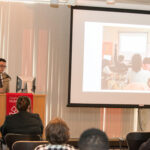
As students and families are preparing to start the new school year, new research demonstrates that certain school discipline laws may increase racial disparities and suspension rates for minority students and do little to improve the safety and order of schools.
The research, published in Educational Evaluation and Policy Analysis by F. Chris Curran, assistant professor of public policy at UMBC, finds that state mandatory expulsion laws—which mandate expulsion for offenses such as weapons or assault—have led to increased suspensions for all students, but at a much higher rate for Black and Hispanic students than for White students.
Curran wrote about his findings in an article published in The Conversation on July 24. He examined national data collected by the U.S. Department of Education as part of the Civil Rights Data Collection and the Schools and Staffing Survey, and through further research determined several key findings.
“First, the study showed that state laws requiring schools to have zero tolerance policies increased suspension rates for all students. Second, suspension rates increased at a higher rate for African-American students, potentially contributing to racial disparities in discipline. Finally, principals reported few decreases in problem behaviors in schools, suggesting that the laws did not improve the safety and order of schools,” Curran explains in his article.
The research is timely, as states like Michigan are considering passing legislation to curtail zero tolerance discipline policies in public schools. Curran anticipates that states beginning to move away from zero tolerance policies will have an overall positive impact on the education environment.
“Clearly, such zero tolerance laws were meant to improve the safety and order of the school environment,” Curran writes in The Conversation. “However, in recent years, they have been seen as being overly prescriptive and as contributing to racial disparities in school discipline.”
Through his research, Curran also found that zero tolerance laws can have a significant negative impact on the learning environment for all students.
“Principals report few decreases in problem behaviors such as fighting, drug use, or disrespect as a result of these laws,” says Curran.
This suggests that state zero tolerance laws may be resulting in more students, particularly students of color, being excluded from the learning environment while failing to improve the school setting for those students who remain.
More on this research can be found in Curran’s recently published article “Estimating the Effect of State Zero Tolerance Laws on Exclusionary Discipline, Racial Discipline Gaps, and Student Behavior.” Read “Zero tolerance laws increase suspension rates for black students,” in The Conversation.
Professor Curran joined UMBC’s School of Public Policy in August 2015. His research focuses on education policy, early childhood education, school discipline and safety, teacher labor markets, and the politics of education. Last year, he published a Baltimore Sun op-ed about educational opportunity in Baltimore and a column about teacher overtime policy in Education Week. He also recently launched a website with Ann Kellogg, a Ph.D. student in public policy, to track public sentiment on the Every Student Succeeds Act (ESSA).
Image: Chris Curran presents talk at UMBC about his research. Photo by Marlayna Demond ’11 for UMBC.
]]>
As students and families are preparing to start the new school year, new research demonstrates that certain school discipline laws may increase racial disparities and suspension rates for minority...
https://umbc.edu/stories/zero-tolerance-laws-contribute-to-racial-disparities-in-u-s-public-schools-research-by-f-chris-curran-reveals/
https://dev.my.umbc.edu/api/v0/pixel/news/121065/guest@my.umbc.edu/5b6cbc24e8e02b5e02a7f6a07d4de911/api/pixel
cahss
education
policy-and-society
publicpolicy
research
UMBC News & Magazine
https://dev.my.umbc.edu/groups/umbc-news-magazine
https://assets1-dev.my.umbc.edu/system/shared/avatars/groups/000/001/943/24435aa6207c452e7bc15cc74b42c7bb/xsmall.png?1748556657
https://assets1-dev.my.umbc.edu/system/shared/avatars/groups/000/001/943/24435aa6207c452e7bc15cc74b42c7bb/original.png?1748556657
https://assets2-dev.my.umbc.edu/system/shared/avatars/groups/000/001/943/24435aa6207c452e7bc15cc74b42c7bb/xxlarge.png?1748556657
https://assets2-dev.my.umbc.edu/system/shared/avatars/groups/000/001/943/24435aa6207c452e7bc15cc74b42c7bb/xlarge.png?1748556657
https://assets3-dev.my.umbc.edu/system/shared/avatars/groups/000/001/943/24435aa6207c452e7bc15cc74b42c7bb/large.png?1748556657
https://assets1-dev.my.umbc.edu/system/shared/avatars/groups/000/001/943/24435aa6207c452e7bc15cc74b42c7bb/medium.png?1748556657
https://assets2-dev.my.umbc.edu/system/shared/avatars/groups/000/001/943/24435aa6207c452e7bc15cc74b42c7bb/small.png?1748556657
https://assets1-dev.my.umbc.edu/system/shared/avatars/groups/000/001/943/24435aa6207c452e7bc15cc74b42c7bb/xsmall.png?1748556657
https://assets2-dev.my.umbc.edu/system/shared/avatars/groups/000/001/943/24435aa6207c452e7bc15cc74b42c7bb/xxsmall.png?1748556657
UMBC News & Magazine
0
0
false
Thu, 04 Aug 2016 15:05:46 -0400
bwtech@UMBC’s Potomac Photonics makes big strides in micro-manufacturing

Potomac Photonics, a bwtech@UMBC-based micro-manufacturing company, uses lasers, 3D printers and other technologies to alter and develop products with extreme precision, to the scale of one micron, smaller than a particle of dust.
“We like to say that if you can see it, we didn’t do it,” says Mike Adelstein ‘96, biochemistry and molecular biology, and president and CEO of Potomac Photonics, in a recent article in The Baltimore Sun.
The company has used lasers to insert tiny holes into medical stitches so localized radiation can be delivered in small doses to patients with breast and prostate cancer. These sutures have been approved by the U.S. Food and Drug Administration and are now being used at hospitals, including Walter Reed National Military Medical Center. Potomac Photonics is also working with a company in Europe to create a device to identify early stage cancer cells in a new way.
With all of the advances that the company is making, Adelstein anticipates that the Baltimore County region “will become a hotbed for manufacturing technology.” He suggests facilities and programs at UMBC and the Community College of Baltimore County will contribute significantly to that surge.
“There’s really a lot of resources and investment that are going on in this area right here to develop new advanced manufacturing technologies,” said Adelstein. “I think there’s a great opportunity for this region to grow.”
Read the full article “Arbutus-based micro-manufacturing company doesn’t sweat the small stuff,” in The Baltimore Sun.
Image: The bwtech@UMBC entrance. Photo by Marlayna Demond ’11 for UMBC.
]]>
Potomac Photonics, a bwtech@UMBC-based micro-manufacturing company, uses lasers, 3D printers and other technologies to alter and develop products with extreme precision, to the scale of one...
https://umbc.edu/stories/bwtechumbcs-potomac-photonics-makes-big-strides-in-micro-manufacturing/
https://dev.my.umbc.edu/api/v0/pixel/news/121066/guest@my.umbc.edu/2c92fd488cf9237163a799dcab6358ba/api/pixel
biology
bwtech
cfr
chembiochem
cnms
science-and-technology
UMBC News & Magazine
https://dev.my.umbc.edu/groups/umbc-news-magazine
https://assets1-dev.my.umbc.edu/system/shared/avatars/groups/000/001/943/24435aa6207c452e7bc15cc74b42c7bb/xsmall.png?1748556657
https://assets1-dev.my.umbc.edu/system/shared/avatars/groups/000/001/943/24435aa6207c452e7bc15cc74b42c7bb/original.png?1748556657
https://assets2-dev.my.umbc.edu/system/shared/avatars/groups/000/001/943/24435aa6207c452e7bc15cc74b42c7bb/xxlarge.png?1748556657
https://assets2-dev.my.umbc.edu/system/shared/avatars/groups/000/001/943/24435aa6207c452e7bc15cc74b42c7bb/xlarge.png?1748556657
https://assets3-dev.my.umbc.edu/system/shared/avatars/groups/000/001/943/24435aa6207c452e7bc15cc74b42c7bb/large.png?1748556657
https://assets1-dev.my.umbc.edu/system/shared/avatars/groups/000/001/943/24435aa6207c452e7bc15cc74b42c7bb/medium.png?1748556657
https://assets2-dev.my.umbc.edu/system/shared/avatars/groups/000/001/943/24435aa6207c452e7bc15cc74b42c7bb/small.png?1748556657
https://assets1-dev.my.umbc.edu/system/shared/avatars/groups/000/001/943/24435aa6207c452e7bc15cc74b42c7bb/xsmall.png?1748556657
https://assets2-dev.my.umbc.edu/system/shared/avatars/groups/000/001/943/24435aa6207c452e7bc15cc74b42c7bb/xxsmall.png?1748556657
UMBC News & Magazine
0
0
false
Thu, 04 Aug 2016 14:59:07 -0400
Iron Crow Theatre Seeks Choreographer for Andrew Lippa's The Wild Party
Iron Crow Theatre is seeking a choreographer for the theatre's MainStage production of The Wild Party by Andrew Lippa. Choreographer must be available various dates and times between August 19th and September 30th. Interested in pedestrian based, modern and burlesque inspired movement. Rehersal schedule is flexible. Stipend provided. Performs September 30th - October 9th at The Baltimore Theatre Project.
]]>
Iron Crow Theatre is seeking a choreographer for the theatre's MainStage production of The Wild Party by Andrew Lippa. Choreographer must be available various dates and times between August 19th...
http://www.baltimoreculture.org/programs/jobsplus/10780
https://dev.my.umbc.edu/api/v0/pixel/news/61342/guest@my.umbc.edu/e0bf5aea33cdde0dd23cdb44f18b08c2/api/pixel
alliance
arts
baltimore
cultural
culture
dance
greater
jobs
museum
nonprofit
opportunities
organizations
positions
studies
theater
Museum Practice
https://dev.my.umbc.edu/groups/museumpractice
https://assets2-dev.my.umbc.edu/system/shared/avatars/groups/000/000/780/ec390e445f99f5d8c57a847f02552fbc/xsmall.png?1384380461
https://assets3-dev.my.umbc.edu/system/shared/avatars/groups/000/000/780/ec390e445f99f5d8c57a847f02552fbc/original.png?1384380461
https://assets1-dev.my.umbc.edu/system/shared/avatars/groups/000/000/780/ec390e445f99f5d8c57a847f02552fbc/xxlarge.png?1384380461
https://assets4-dev.my.umbc.edu/system/shared/avatars/groups/000/000/780/ec390e445f99f5d8c57a847f02552fbc/xlarge.png?1384380461
https://assets2-dev.my.umbc.edu/system/shared/avatars/groups/000/000/780/ec390e445f99f5d8c57a847f02552fbc/large.png?1384380461
https://assets3-dev.my.umbc.edu/system/shared/avatars/groups/000/000/780/ec390e445f99f5d8c57a847f02552fbc/medium.png?1384380461
https://assets2-dev.my.umbc.edu/system/shared/avatars/groups/000/000/780/ec390e445f99f5d8c57a847f02552fbc/small.png?1384380461
https://assets2-dev.my.umbc.edu/system/shared/avatars/groups/000/000/780/ec390e445f99f5d8c57a847f02552fbc/xsmall.png?1384380461
https://assets1-dev.my.umbc.edu/system/shared/avatars/groups/000/000/780/ec390e445f99f5d8c57a847f02552fbc/xxsmall.png?1384380461
Museum Practice
0
0
true
Thu, 04 Aug 2016 14:45:24 -0400
Thu, 04 Aug 2016 14:45:24 -0400