The Ewing Marion Kauffman Foundation Awards $2 Million to Fund Entrepreneurship at UMBC
Initiative Seeks to Develop Entrepreneurs Outside of Business, Engineering Schools

UMBC has been awarded a $2 million grant to build entrepreneurship programs across the campus, joining a select group of colleges and universities receiving funding for entrepreneurship endeavors through the Kauffman Campuses Initiative.
The Kauffman Foundation initiated the three-year-old Kauffman Campuses Initiative to catalyze entrepreneurship programs outside of business and engineering schools. The Kauffman Foundation grant complements two substantial commitments already received by UMBC to support its Alex. Brown Center for Entrepreneurship. The first commitment is $1 million from Constellation Energy Group. The second is $1 million from the Herbert Bearman Foundation to establish The Bearman Family Chair in Entrepreneurship at UMBC.
The Kauffman Foundation grant acknowledges the success and potential of the Alex. Brown Center for Entrepreneurship, created six years ago through a gift of $1 million from the Alex. Brown Foundation to develop a leading university entrepreneurship center for the Baltimore region.
UMBC has developed three broad strategies to make entrepreneurship education a common and accessible experience for students in all majors: exposure of students and faculty to entrepreneurs and their expertise, creation of formal education opportunities and development of programs to give students and faculty experience in entrepreneurial settings.
UMBC, recognized for its culture of entrepreneurship education despite the absence of a business school, joins a prestigious group of institutions selected by the Kauffman Foundation for funding. The others are Arizona State University, Brown University, Carnegie Mellon University, Georgetown University, New York University, Purdue University, Syracuse University and the University of Wisconsin-Madison.
UMBC learned of its selection after a campus delegation, led by President Freeman A. Hrabowski, III, presented its proposal before an independent panel of judges at Kauffman Foundation headquarters in Kansas City, Mo., on December 12.
“This partnership gives UMBC the opportunity to take entrepreneurship programming to the next level,” says Vivian Armor, director of the Alex. Brown Center. “It will allow UMBC to expand course offerings for current undergraduates, graduate students and working professionals. It will improve programming that exposes students and faculty to important entrepreneurial concepts. Finally, the partnership will help develop systems to support individuals as they work to launch successful business ventures or address urgent challenges facing our communities through social entrepreneurship.”
The Alex. Brown Center supports the kind of entrepreneurial creativity and action exemplified by the creation of OpenPosting.com, the first online classified community for college students. Students Wan Hsi Yuan and Jason Servary, members of the Center’s student-run CEO Club, created the site. It has 1,500 registered users and receives roughly 4,000 page views per day.
Entrepreneurship at UMBC also thrives via the Alex. Brown Center’s summer entrepreneurship institute. In summer, 2006, UMBC’s first Faculty Summer Institute was held for eight faculty members representing the departments of music, dance, theater and visual arts. The institute was created to broaden faculty exposure to concepts of entrepreneurship and integrate into their curricula career development skills, internships and mentoring relationships with established entrepreneurs.
Participation by faculty was determined based upon proposals that demonstrated interest in learning more about entrepreneurship. Winning proposals from faculty included the exploration of marketing and audience development initiatives, the development of courses to help students understand professional careers in the arts and arts and non-profit organization management.
The Center also serves as one of the University’s partners in the ACTiVATE program, funded by the National Science Foundation to address the unique needs of accomplished women interested in starting technology companies. Eight women in the ACTiVATE program, established two years ago, now lead their own tech companies.
The Alex. Brown Center’s activities are complemented by such other initiatives as techcenter@UMBC and bwtech@UMBC, which offer specialized support geared specifically toward research and technology businesses. Through UMBC’s Shriver Center, a national leader in promoting community-based service and internship programs, businesses are introduced to undergraduate and graduate students interested in internship experience in career-related fields.
“The Alex. Brown Center augments the excellent education UMBC offers by giving students the proper toolset to interface with business leaders in their field of choice,” said Greg Barnhill,” chair of the Alex. Brown Center Board of Visitors and partner and member of the board of Brown Advisory Securities. “We offer students guidance on how to deal with people on a daily basis, compose quality written communication and verbalize opinions effectively.”
The grant is awarded with the expectation that UMBC will raise an additional $8 million toward entrepreneurship programs during the next five years.
The Kauffman Campuses Initiative began in 2003 with $25 million in funding to eight schools that provided entrepreneurship education within liberal arts, engineering and other non-business programs.
Selection of this latest round of Kauffman Campuses schools was based on a series of criteria, including the ability to generate a partnership with other foundations and funders and the potential to create new representative models.
“Our initiative is creating a cultural change and making the entire university system more entrepreneurial,” said Kauffman CEO Carl Schramm. “We want all students, not just those in business schools, to see the value of thinking like entrepreneurs. We want them to be able to recognize and seize opportunity when it presents itself, no matter what field they find themselves in.”
About the Alex. Brown Center
Established in 2000 through a gift of $1 million from the Alex. Brown Foundation, the Alex. Brown Center for Entrepreneurship is the hub of entrepreneurial-based activity at the University of Maryland, Baltimore County (UMBC). It provides an active link between the academic community and the corporate environment. Since its inception, the Center has worked closely with the Baltimore business community to create one of the leading university centers for entrepreneurship in the country housed at a mid-sized university. Information about the Alex. Brown Center is available at http://www.umbc.edu/entrepreneurship.
About the Kauffman Foundation
The Ewing Marion Kauffman Foundation of Kansas City is a private, nonpartisan foundation that works with partners to advance entrepreneurship in America and improve the education of children and youth. The Kauffman Foundation was established in the mid-1960s by the late entrepreneur and philanthropist Ewing Marion Kauffman. Information about the Kauffman Foundation is available at www.kauffman.org.
]]>
Initiative Seeks to Develop Entrepreneurs Outside of Business, Engineering Schools UMBC has been awarded a $2 million grant to build entrepreneurship programs across the campus, joining a...
http://www.umbc.edu/research/blog/2006/12/the_ewing_marion_kauffman_foun.html
https://dev.my.umbc.edu/api/v0/pixel/news/46563/guest@my.umbc.edu/ed461d27dd3087be802496f120847364/api/pixel
ovpr-news-2006
Division of Research and Creative Achievement
https://dev.my.umbc.edu/groups/research
https://assets4-dev.my.umbc.edu/system/shared/avatars/groups/000/000/794/4bca2aa331eb7e472d63d97e0798b600/xsmall.png?1743706368
https://assets2-dev.my.umbc.edu/system/shared/avatars/groups/000/000/794/4bca2aa331eb7e472d63d97e0798b600/original.jpg?1743706368
https://assets3-dev.my.umbc.edu/system/shared/avatars/groups/000/000/794/4bca2aa331eb7e472d63d97e0798b600/xxlarge.png?1743706368
https://assets4-dev.my.umbc.edu/system/shared/avatars/groups/000/000/794/4bca2aa331eb7e472d63d97e0798b600/xlarge.png?1743706368
https://assets2-dev.my.umbc.edu/system/shared/avatars/groups/000/000/794/4bca2aa331eb7e472d63d97e0798b600/large.png?1743706368
https://assets4-dev.my.umbc.edu/system/shared/avatars/groups/000/000/794/4bca2aa331eb7e472d63d97e0798b600/medium.png?1743706368
https://assets4-dev.my.umbc.edu/system/shared/avatars/groups/000/000/794/4bca2aa331eb7e472d63d97e0798b600/small.png?1743706368
https://assets4-dev.my.umbc.edu/system/shared/avatars/groups/000/000/794/4bca2aa331eb7e472d63d97e0798b600/xsmall.png?1743706368
https://assets3-dev.my.umbc.edu/system/shared/avatars/groups/000/000/794/4bca2aa331eb7e472d63d97e0798b600/xxsmall.png?1743706368
Office of the Vice President for Research
0
0
false
Thu, 14 Dec 2006 12:00:00 -0500
UMBC Professor's Company Profiled in Baltimore Examiner
Fluorometrix, a company co-founded by Govind Rao, a professor of biochemical engineering at UMBC, was profiled in the Dec. 4 Baltimore Examiner.
Fluorometrix uses technology developed by Rao to produce light-based probes for the biomedical industry that aim to help companies get new vaccines to market faster. Fluorometrix is an affiliate company of techcenter@UMBC, the University's on-campus high-tech business incubator.
]]>
Fluorometrix, a company co-founded by Govind Rao, a professor of biochemical engineering at UMBC, was profiled in the Dec. 4 Baltimore Examiner. Fluorometrix uses technology developed by Rao to...
http://www.umbc.edu/research/blog/2006/12/umbc_professors_company_profil.html
https://dev.my.umbc.edu/api/v0/pixel/news/46564/guest@my.umbc.edu/66a4c637b2b40fbe397d746d8dfb02a2/api/pixel
ovpr-news-2006
Division of Research and Creative Achievement
https://dev.my.umbc.edu/groups/research
https://assets4-dev.my.umbc.edu/system/shared/avatars/groups/000/000/794/4bca2aa331eb7e472d63d97e0798b600/xsmall.png?1743706368
https://assets2-dev.my.umbc.edu/system/shared/avatars/groups/000/000/794/4bca2aa331eb7e472d63d97e0798b600/original.jpg?1743706368
https://assets3-dev.my.umbc.edu/system/shared/avatars/groups/000/000/794/4bca2aa331eb7e472d63d97e0798b600/xxlarge.png?1743706368
https://assets4-dev.my.umbc.edu/system/shared/avatars/groups/000/000/794/4bca2aa331eb7e472d63d97e0798b600/xlarge.png?1743706368
https://assets2-dev.my.umbc.edu/system/shared/avatars/groups/000/000/794/4bca2aa331eb7e472d63d97e0798b600/large.png?1743706368
https://assets4-dev.my.umbc.edu/system/shared/avatars/groups/000/000/794/4bca2aa331eb7e472d63d97e0798b600/medium.png?1743706368
https://assets4-dev.my.umbc.edu/system/shared/avatars/groups/000/000/794/4bca2aa331eb7e472d63d97e0798b600/small.png?1743706368
https://assets4-dev.my.umbc.edu/system/shared/avatars/groups/000/000/794/4bca2aa331eb7e472d63d97e0798b600/xsmall.png?1743706368
https://assets3-dev.my.umbc.edu/system/shared/avatars/groups/000/000/794/4bca2aa331eb7e472d63d97e0798b600/xxsmall.png?1743706368
Office of the Vice President for Research
0
0
false
Tue, 05 Dec 2006 12:00:00 -0500
Sari Bennett Receives Nat’l Council for the Social Studies
Award
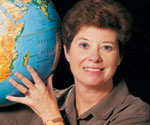
Sari Bennett Receives National Council for the Social Studies Award
“How can students be citizens of the world if they don’t have the background they need to know about its people and its places?” asks Sari Bennett, clinical associate professor of geography and environmental systems and a longtime advocate for strengthening the teaching of geography at the K-12 level.
On December 2, Bennett, coordinator for the Maryland Geographic Alliance–which has worked with over 12,000 K-12 teachers since 1989–will receive the National Council for the Social Studies (NCSS) Outstanding Service Award. It honors exceptional service in support of K-16 social studies at the national and local levels.
A member of the National Council for the Social Studies and the Maryland Council for the Social Studies (MDCSS), Bennett has made contributions to the social studies profession at the local, state and national levels. She has been a member of MDCSS for more than 20 years and has served as its president and executive director. At the state level, she has served on numerous committees including the Social Studies Taskforce of the Maryland State Department of Education and has worked on the development of social studies content standards and the Voluntary State Curriculum. At the national level, Bennett has been a three-time program co-chair for the NCSS Annual Conference.
The Maryland Geographic Alliance, jointly funded by the State of Maryland and the National Geographic Society, develops lesson plans and other materials for teachers to use in their classrooms, and presents workshops and summer institutes.
Currently, Bennett and the Maryland Geographic Alliance are working with Sultana Projects, Inc. on lesson plans for the John Smith Four Hundred Project, which will retrace Captain John Smith’s 1608 Chesapeake expedition. In addition, they were asked by the Maryland State Department of Education to create educational materials and lesson plans for this year’s 300th anniversary of the Port of Baltimore. Previous projects include a collaborative project with Tom Rabenhorst, senior lecturer in geography and environmental systems at UMBC, and his students on a digital atlas of Maryland for 4th graders.
(11/28/06)
© 2006-07 University of Maryland, Baltimore County � 1000 Hilltop Circle, Baltimore, MD 21250 � 410-455-1000 �
]]>
Sari Bennett Receives National Council for the Social Studies Award “How can students be citizens of the world if they don’t have the background they need to know about its people and its...
https://umbc.edu/stories/sari-bennett-receives-natl-council-for-the-social-studies-award/
https://dev.my.umbc.edu/api/v0/pixel/news/125093/guest@my.umbc.edu/18017a2f89b941eff8cfba5e0df5bb0e/api/pixel
window-stories
UMBC News & Magazine
https://dev.my.umbc.edu/groups/umbc-news-magazine
https://assets1-dev.my.umbc.edu/system/shared/avatars/groups/000/001/943/24435aa6207c452e7bc15cc74b42c7bb/xsmall.png?1748556657
https://assets1-dev.my.umbc.edu/system/shared/avatars/groups/000/001/943/24435aa6207c452e7bc15cc74b42c7bb/original.png?1748556657
https://assets2-dev.my.umbc.edu/system/shared/avatars/groups/000/001/943/24435aa6207c452e7bc15cc74b42c7bb/xxlarge.png?1748556657
https://assets2-dev.my.umbc.edu/system/shared/avatars/groups/000/001/943/24435aa6207c452e7bc15cc74b42c7bb/xlarge.png?1748556657
https://assets3-dev.my.umbc.edu/system/shared/avatars/groups/000/001/943/24435aa6207c452e7bc15cc74b42c7bb/large.png?1748556657
https://assets1-dev.my.umbc.edu/system/shared/avatars/groups/000/001/943/24435aa6207c452e7bc15cc74b42c7bb/medium.png?1748556657
https://assets2-dev.my.umbc.edu/system/shared/avatars/groups/000/001/943/24435aa6207c452e7bc15cc74b42c7bb/small.png?1748556657
https://assets1-dev.my.umbc.edu/system/shared/avatars/groups/000/001/943/24435aa6207c452e7bc15cc74b42c7bb/xsmall.png?1748556657
https://assets2-dev.my.umbc.edu/system/shared/avatars/groups/000/001/943/24435aa6207c452e7bc15cc74b42c7bb/xxsmall.png?1748556657
UMBC News & Magazine
0
0
false
Tue, 28 Nov 2006 05:00:00 -0500
UMBC Astronomer Helps Discover Possible New Black Hole
Previously Unknown Black Hole’s Speed, Power Surprises NASA, European Space Agency Team

Illustration Caption: An artist's impression of a possible new black hole ripping gas and matter from the star it orbits.
Click on the illustration to view a European Space Agency gallery of images and animation related to this story.
An international team of astrophysicists including Volker Beckmann of UMBC/NASA-Goddard has discovered a possible new black hole near the center of the Milky Way galaxy.
The previously unknown black hole surprised scientists by suddenly “switching on,” emitting strong pulses of radiation as it began consuming gas from the star it orbits over 26,000 light years away from our solar system. The discovery, detailed in a letter published in the journal Astronomy & Astrophysics, was made using NASA and European Space Agency (ESA) satellites.
In an ESA press release, Roland Walter, an astronomer at the INTEGRAL Science Data Centre and lead author of the research results, said "The galactic center is one of the most exciting regions for gamma-ray astronomy because there are so many potential gamma-ray sources.”
Beckmann, a research assistant professor at UMBC’s Joint Center for Astrophysics and NASA’s Goddard Space Flight Center, was part of the team who used NASA's Swift satellite and ESA's INTEGRAL satellite to spot the tell-tale gamma-ray outburst. The research team includes scientists from Switzerland, France, Belgium, Poland, the United States and Spain.
According to Beckmann, potential new black holes are scarcer than commonly thought. “We know about 10 stellar systems in which we’re pretty sure that there's a black hole involved, and 10 more are good candidates,” he said. “What really surprised us was the intensity of the radiation it emitted and how quickly it became an obvious black hole candidate.”
The team found that the black hole’s unusually strong gravitational pull ripped off layers of the star it orbits, drawing them into its maelstrom. “We’re not sure why this black hole is letting off occasional bright outbursts of radiation instead of a steady stream,” said Beckmann, “But we suspect these powerful emissions are caused by big chunks of the star’s matter falling into the black hole.”
"This detection was possible because of the capability of NASA's Swift satellite to respond quickly to new objects showing up in the sky,” said Neil Gehrels, chief of NASA/Goddard’s Astroparticle Physics Laboratory and leader of the Swift satellite team.
The possible new black hole has drawn the attention of the international astronomy community, having been viewed by all major X-ray telescopes in space including: NASA's Chandra telescope, the Japanese JAXA and NASA collaboration Suzaku and the ESA's XMM-Newton X-ray satellite.
]]>
Previously Unknown Black Hole’s Speed, Power Surprises NASA, European Space Agency Team Illustration Caption: An artist's impression of a possible new black hole ripping gas and matter...
http://www.umbc.edu/research/blog/2006/11/umbc_astronomer_helps_discover.html
https://dev.my.umbc.edu/api/v0/pixel/news/46565/guest@my.umbc.edu/616ad745bb7028096a7233eeaedcf967/api/pixel
ovpr-news-2006
Division of Research and Creative Achievement
https://dev.my.umbc.edu/groups/research
https://assets4-dev.my.umbc.edu/system/shared/avatars/groups/000/000/794/4bca2aa331eb7e472d63d97e0798b600/xsmall.png?1743706368
https://assets2-dev.my.umbc.edu/system/shared/avatars/groups/000/000/794/4bca2aa331eb7e472d63d97e0798b600/original.jpg?1743706368
https://assets3-dev.my.umbc.edu/system/shared/avatars/groups/000/000/794/4bca2aa331eb7e472d63d97e0798b600/xxlarge.png?1743706368
https://assets4-dev.my.umbc.edu/system/shared/avatars/groups/000/000/794/4bca2aa331eb7e472d63d97e0798b600/xlarge.png?1743706368
https://assets2-dev.my.umbc.edu/system/shared/avatars/groups/000/000/794/4bca2aa331eb7e472d63d97e0798b600/large.png?1743706368
https://assets4-dev.my.umbc.edu/system/shared/avatars/groups/000/000/794/4bca2aa331eb7e472d63d97e0798b600/medium.png?1743706368
https://assets4-dev.my.umbc.edu/system/shared/avatars/groups/000/000/794/4bca2aa331eb7e472d63d97e0798b600/small.png?1743706368
https://assets4-dev.my.umbc.edu/system/shared/avatars/groups/000/000/794/4bca2aa331eb7e472d63d97e0798b600/xsmall.png?1743706368
https://assets3-dev.my.umbc.edu/system/shared/avatars/groups/000/000/794/4bca2aa331eb7e472d63d97e0798b600/xxsmall.png?1743706368
Office of the Vice President for Research
0
0
false
Mon, 27 Nov 2006 12:00:00 -0500
Monitoring the Health of Vulnerable Populations
Monitoring the Health of Vulnerable Populations
Working in the nation’s capital changed Todd Eberly ’06 , Ph.D. public policy, from a political scientist to a specialist in poverty and public health. The shift seems to be a good fit, as Eberly recently won the National Association of Schools of Public Affairs and Administration’s dissertation award for his work on how managed care affects services received by enrollees in Medicaid, the nation’s health insurance program for low income individuals.
After receiving his bachelor’s degree from Pennsylvania’s Clarion University, Eberly went to work in Washington, DC analyzing federal health policy. “I saw good policy options ignored and bad policy options embraced,” Eberly said. “I realized that I wanted a better understanding of the policy process.”
The experience drew Eberly to UMBC’s Department of Public Policy in a quest for a way to make a real-world difference. “The UMBC program goes beyond theory and really deals with practical application.,” he said. “Political Science is still my passion – but I feel that the interdisciplinary approach of the UMBC program made me a better political scientist.”
Maryland started the HealthChoice managed care program eight years ago as a way to control costs for over half a million state residents receiving Medicaid, including 30 percent of Maryland’s children. However, researchers were unsure whether managed care met the needs of socially vulnerable populations, particularly racial and ethnic minorities.
Eberly’s study of before-and-after data on Maryland Medicaid recipients found that the program increased preventive care receipt by black, white and Hispanic children and adolescents, along with black and Hispanic adults. “The improvements for minority youth were particularly noteworthy, because children are especially vulnerable,” said Eberly. “Access to preventive care is key to the promotion of good heath and quality of life.”
Eberly now continues his work as a senior research analyst at UMBC’s Center for Health Program Development and Management (CHPDM) and as an affiliate assistant professor in public policy and an adjunct professor in political science and sociology.
“I’m still very interested in the politics of poverty and social policy design,” Eberly said. “It has the potential to impact so many lives, so I want to know whether policies are working to make lives better or just perpetuating inequalities.”
(11/15/06)
© 2006-07 University of Maryland, Baltimore County � 1000 Hilltop Circle, Baltimore, MD 21250 � 410-455-1000 �
]]>
Monitoring the Health of Vulnerable Populations Working in the nation’s capital changed Todd Eberly ’06 , Ph.D. public policy, from a political scientist to a specialist in poverty and...
https://umbc.edu/stories/monitoring-the-health-of-vulnerable-populations/
https://dev.my.umbc.edu/api/v0/pixel/news/125094/guest@my.umbc.edu/26285999d08b44cbe55a0e0c4826300e/api/pixel
window-stories
UMBC News & Magazine
https://dev.my.umbc.edu/groups/umbc-news-magazine
https://assets1-dev.my.umbc.edu/system/shared/avatars/groups/000/001/943/24435aa6207c452e7bc15cc74b42c7bb/xsmall.png?1748556657
https://assets1-dev.my.umbc.edu/system/shared/avatars/groups/000/001/943/24435aa6207c452e7bc15cc74b42c7bb/original.png?1748556657
https://assets2-dev.my.umbc.edu/system/shared/avatars/groups/000/001/943/24435aa6207c452e7bc15cc74b42c7bb/xxlarge.png?1748556657
https://assets2-dev.my.umbc.edu/system/shared/avatars/groups/000/001/943/24435aa6207c452e7bc15cc74b42c7bb/xlarge.png?1748556657
https://assets3-dev.my.umbc.edu/system/shared/avatars/groups/000/001/943/24435aa6207c452e7bc15cc74b42c7bb/large.png?1748556657
https://assets1-dev.my.umbc.edu/system/shared/avatars/groups/000/001/943/24435aa6207c452e7bc15cc74b42c7bb/medium.png?1748556657
https://assets2-dev.my.umbc.edu/system/shared/avatars/groups/000/001/943/24435aa6207c452e7bc15cc74b42c7bb/small.png?1748556657
https://assets1-dev.my.umbc.edu/system/shared/avatars/groups/000/001/943/24435aa6207c452e7bc15cc74b42c7bb/xsmall.png?1748556657
https://assets2-dev.my.umbc.edu/system/shared/avatars/groups/000/001/943/24435aa6207c452e7bc15cc74b42c7bb/xxsmall.png?1748556657
UMBC News & Magazine
0
0
false
Tue, 21 Nov 2006 05:00:00 -0500
Erickson Technology, Broadcast Divisions to Build at UMBC Research Park


UMBC announced today that Erickson Retirement Communities will construct a $20 million building at the university’s on-campus research and technology park bwtech@UMBC. Erickson will move its information technology (IT) department, its adult living national broadcast network Retirement Living TV (RL-TV) and its private charitable foundation to the 110,000 square-foot building, expected to be completed by mid-2008.
The move will increase research collaboration and internship opportunities between the Erickson organization and UMBC students and faculty in The Erickson School and visual arts, communications and information technology programs.
The Erickson School at UMBC grew out of Erickson founder John Erickson’s vision for interdisciplinary research and education to improve life for older adults. Since its start in January 2005, the School has launched an undergraduate major in management of aging services, expanded an executive education program for senior housing and care professionals and is planning a professional master’s program.
Current research partnerships between The Erickson School and the Erickson organization include developing new computer technology applications for seniors’ housing, support for three gerontology doctoral students’ studies of older adult health and well-being and proposals to make selected Erickson communities National Institute on Aging research sites.
"We look forward to expanding our partnership with UMBC in a way that will help us to more effectively shape the future of aging studies in the United States and to enhance the operational components of our company that will help to redefine it," said John Erickson, chairman and CEO of Erickson Retirement Communities.
“UMBC is delighted to strengthen our relationship with Erickson Retirement Communities,” said UMBC President Freeman Hrabowski. “Together we will shape innovative approaches combining healthcare, public policy, information technology and communications to meet the needs and interests of the aging Baby Boom generation.”
RL-TV will house its corporate headquarters and three production studios in the new facility. The network recently signed a national broadcasting agreement with DirectTV to expand its viewing audience to over 24 million homes. Retirement Living TV produces programming focused on health, finance, politics and living for people over the age of 55. RL-TV recently partnered with UMBC’s New Media Studio to produce pilots for two programs and is expected to collaborate further with UMBC’s Imaging Research Center and College of Arts, Humanities and Social Sciences.
Erickson’s IT department will work with UMBC on advanced research in health informatics, real time data applications, information assurance, data security and wearable computing. The department will move 60 professionals and a high bandwidth data center to the new building and is expected to hire 10 to 15 UMBC graduates per year as the company grows.
Founded in 1998, the Erickson Foundation funds research projects aimed at improving best practices in active aging and aging with choices. The Foundation is currently conducting research on walking studies, ergonomics, balance control, nursing, memory and other senior wellness and lifestyle issues.
The Erickson facility will be the fifth bwtech@UMBC building. Ellen Hemmerly, executive director of the UMBC Research Park Corporation, says demand for office and lab space at UMBC remains strong.
"Many outside businesses and emerging tech firms from our incubator continue to express interest in locating on our campus," Hemmerly said. "We continue to welcome companies that seek all the advantages of growing their business at UMBC."
Construction is underway for the park’s third building, a new home for the U.S. Geological Survey’s (USGS) MD/DE/DC Regional Water Science Center. Ground is expected to be broken for the fourth building -- an 110,000 square-foot, $22 million multi-tenant facility-- in the first half of 2007. Both the USGS and multi-tenant buildings are being developed by Corporate Office Properties Trust.
About Erickson:
John Erickson launched Erickson Retirement Communities with the 1983 opening of Catonsville, Maryland’s Charlestown, now the nation’s largest campus-style retirement community. Today, Erickson Retirement Communities operates 16 campuses housing more than 18,000 people in eight states. Two more communities are set to open in the near future. The company is noted for its progressive approach to recruitment, training and development, and has broadened its business lines with the addition of a managed health plan for residents. Mr. Erickson has also shown his commitment to the interests of individuals over the age of 55 with his September 2006 launch of Retirement Living, a television and Internet media company. More information is online at www.EricksonCommunities.com and www.RL.TV.
About bwtech@UMBC:
bwtech@UMBC is a state-of-the-art, 41-acre research and technology community. UMBC began planning for a new research and technology park in the early 1990s, based on the success of other U.S. parks and the vision of the late Michael Hooker, UMBC president from 1986-1992. The first building was completed in 2001. To date, UMBC’s research park and technology incubator have received public and private sector funding from the Maryland Economic Development Corporation (MEDCO), the State of Maryland, the City of Baltimore, Baltimore County, the U.S. Department of Commerce, The Abell Foundation, and the Maryland Technology Development Corporation (TEDCO.) bwtech@UMBC is part of Baltimore County's Southwest Enterprise Zone, making companies moving to the park eligible for credits on real property and income taxes, as well as credits for job creation.
]]>
UMBC announced today that Erickson Retirement Communities will construct a $20 million building at the university’s on-campus research and technology park bwtech@UMBC. Erickson will move its...
http://www.umbc.edu/research/blog/2006/11/erickson_technology_broadcast.html
https://dev.my.umbc.edu/api/v0/pixel/news/46566/guest@my.umbc.edu/0603658480871422233192ab50144199/api/pixel
ovpr-news-2006
Division of Research and Creative Achievement
https://dev.my.umbc.edu/groups/research
https://assets4-dev.my.umbc.edu/system/shared/avatars/groups/000/000/794/4bca2aa331eb7e472d63d97e0798b600/xsmall.png?1743706368
https://assets2-dev.my.umbc.edu/system/shared/avatars/groups/000/000/794/4bca2aa331eb7e472d63d97e0798b600/original.jpg?1743706368
https://assets3-dev.my.umbc.edu/system/shared/avatars/groups/000/000/794/4bca2aa331eb7e472d63d97e0798b600/xxlarge.png?1743706368
https://assets4-dev.my.umbc.edu/system/shared/avatars/groups/000/000/794/4bca2aa331eb7e472d63d97e0798b600/xlarge.png?1743706368
https://assets2-dev.my.umbc.edu/system/shared/avatars/groups/000/000/794/4bca2aa331eb7e472d63d97e0798b600/large.png?1743706368
https://assets4-dev.my.umbc.edu/system/shared/avatars/groups/000/000/794/4bca2aa331eb7e472d63d97e0798b600/medium.png?1743706368
https://assets4-dev.my.umbc.edu/system/shared/avatars/groups/000/000/794/4bca2aa331eb7e472d63d97e0798b600/small.png?1743706368
https://assets4-dev.my.umbc.edu/system/shared/avatars/groups/000/000/794/4bca2aa331eb7e472d63d97e0798b600/xsmall.png?1743706368
https://assets3-dev.my.umbc.edu/system/shared/avatars/groups/000/000/794/4bca2aa331eb7e472d63d97e0798b600/xxsmall.png?1743706368
Office of the Vice President for Research
0
0
false
Mon, 20 Nov 2006 12:00:00 -0500
Honoring a Mathematical Mind

Comedians have the Friars Club Roast, actors receive lifetime achievement Oscars, but in the world of math, a distinguished career is honored by a big gathering of very smart people.
Mathematicians honor their own with academic conferences. They gather to talk shop, present new ideas and most of all, share their passion for the theorems and equations that make the vital stuff of the world work.
UMBC mathematics and statistics professor Thomas I. Seidman recently celebrated his 70th birthday and 35th year of service to the University in high style. 92 of his peers from 26 universities and three foreign countries came to campus to honor his work with the conference "Advances in Control of Partial Differential Equations.”
According to mathematics associate professor Matthias Gobbert, partial differential equations are crucial to making the machinery of modern life work properly. “They describe many physical and engineering systems and controlling them is necessary for all sorts of systems like satellites and thermostats to work,” Gobbert said.
The conference, colloquially known as “SeidmanFest,” included eight talks by distinguished invited speakers from Harvard, Rutgers, Tennessee, Virginia Tech and other top universities. A panel discussion on the future of the field and 14 research poster presentations were also given. Gobbert, fellow UMBC math professor Kathleen Hoffman and University of Maryland, College Park mathematician Stuart Antman organized the tribute to Seidman.
The National Science Foundation provided $6,000 in travel grants for junior researchers and graduate students to attend. UMBC’s Department of Mathematics and Statistics and the Dean’s Office of the College of Natural and Mathematical Sciences provided additional funding.
Seidman came to UMBC in 1972 from Carnegie Mellon University and has over 50 years of mathematical research under his belt since his grad school days at NYU. He has authored over 150 papers with more than 60 collaborators in his career.
"It's a great tribute for a conference to be organized in one's honor and, of course, pleasant to hear nice things said about the significance of one's research,” Seidman said. “I feel a little bit like Tom Sawyer sneaking in to listen to his own funeral."
“The event was very large for a conference organized in someone's honor and we were able to attract very distinguished speakers,” said Gobbert. “It is a testament to the respect for Professor Seidman among his fellow mathematicians.”
]]>
Comedians have the Friars Club Roast, actors receive lifetime achievement Oscars, but in the world of math, a distinguished career is honored by a big gathering of very smart people....
http://www.umbc.edu/research/blog/2006/11/honoring_a_mathematical_mind.html
https://dev.my.umbc.edu/api/v0/pixel/news/46567/guest@my.umbc.edu/483155ad46d2b74d1b4a3e53c58de6d1/api/pixel
ovpr-news-2006
Division of Research and Creative Achievement
https://dev.my.umbc.edu/groups/research
https://assets4-dev.my.umbc.edu/system/shared/avatars/groups/000/000/794/4bca2aa331eb7e472d63d97e0798b600/xsmall.png?1743706368
https://assets2-dev.my.umbc.edu/system/shared/avatars/groups/000/000/794/4bca2aa331eb7e472d63d97e0798b600/original.jpg?1743706368
https://assets3-dev.my.umbc.edu/system/shared/avatars/groups/000/000/794/4bca2aa331eb7e472d63d97e0798b600/xxlarge.png?1743706368
https://assets4-dev.my.umbc.edu/system/shared/avatars/groups/000/000/794/4bca2aa331eb7e472d63d97e0798b600/xlarge.png?1743706368
https://assets2-dev.my.umbc.edu/system/shared/avatars/groups/000/000/794/4bca2aa331eb7e472d63d97e0798b600/large.png?1743706368
https://assets4-dev.my.umbc.edu/system/shared/avatars/groups/000/000/794/4bca2aa331eb7e472d63d97e0798b600/medium.png?1743706368
https://assets4-dev.my.umbc.edu/system/shared/avatars/groups/000/000/794/4bca2aa331eb7e472d63d97e0798b600/small.png?1743706368
https://assets4-dev.my.umbc.edu/system/shared/avatars/groups/000/000/794/4bca2aa331eb7e472d63d97e0798b600/xsmall.png?1743706368
https://assets3-dev.my.umbc.edu/system/shared/avatars/groups/000/000/794/4bca2aa331eb7e472d63d97e0798b600/xxsmall.png?1743706368
Office of the Vice President for Research
0
0
false
Thu, 16 Nov 2006 12:00:00 -0500
A Closer Look at the Inner Space of Disease

A Closer Look at the Inner Space of Disease
Dan Fabris, associate professor of chemistry, became fascinated with the machinery of life at an early age. Now his passion for understanding the inner workings of cells is bringing UMBC a powerful new tool in the fight against diseases like cancer and AIDS.
Fabris was recently honored as one of just 14 U.S. researchers and the leader of the only lab in Maryland to receive a National Institutes of Health National Center for Research Resources (NCRR) High-End Instrumentation grant. With the $1.5 million grant, UMBC has purchased an extremely powerful, high-resolution, mass spectrometer known as a hybrid, 12 Tesla quadrupole-Fourier transform ion cyclotron resonance or Q-FTICR.
The Q-FTICR allows researchers to see molecular-level biochemical reactions that impact drug resistance by HIV, other retroviruses and cancer. UMBC will soon become one of just a handful of U.S. institutions and only three on the east coast to have such a powerful mass spectrometer.
When the custom built instrument arrives in the spring 2007, it will be in high demand by biomedical researchers at UMBC and from across the region. Fabris’s lab will share the Q-FTICR with colleagues in similar research fields like Michael Summers (HIV), Lasse Lindahl (antibiotic resistant germs), Kathleen Seley-Radtke (antibacterial and antiviral drugs) and James Fishbein (cancer).
Fabris’s interest in the machinery of life started as a boy. “I used to drive my parents crazy by taking appliances apart to look inside them, save for being unable to putting them back together afterwards,” Fabris said. “Cells are the most amazing example of how molecular machines work together to accomplish the complex tasks that sustain life.”
(11/8/06)
© 2006-07 University of Maryland, Baltimore County � 1000 Hilltop Circle, Baltimore, MD 21250 � 410-455-1000 �
]]>
A Closer Look at the Inner Space of Disease Dan Fabris, associate professor of chemistry, became fascinated with the machinery of life at an early age. Now his passion for understanding the...
https://umbc.edu/stories/a-closer-look-at-the-inner-space-of-disease/
https://dev.my.umbc.edu/api/v0/pixel/news/125102/guest@my.umbc.edu/7f6f3b0331c2059570ea456ee470f645/api/pixel
window-stories
UMBC News & Magazine
https://dev.my.umbc.edu/groups/umbc-news-magazine
https://assets1-dev.my.umbc.edu/system/shared/avatars/groups/000/001/943/24435aa6207c452e7bc15cc74b42c7bb/xsmall.png?1748556657
https://assets1-dev.my.umbc.edu/system/shared/avatars/groups/000/001/943/24435aa6207c452e7bc15cc74b42c7bb/original.png?1748556657
https://assets2-dev.my.umbc.edu/system/shared/avatars/groups/000/001/943/24435aa6207c452e7bc15cc74b42c7bb/xxlarge.png?1748556657
https://assets2-dev.my.umbc.edu/system/shared/avatars/groups/000/001/943/24435aa6207c452e7bc15cc74b42c7bb/xlarge.png?1748556657
https://assets3-dev.my.umbc.edu/system/shared/avatars/groups/000/001/943/24435aa6207c452e7bc15cc74b42c7bb/large.png?1748556657
https://assets1-dev.my.umbc.edu/system/shared/avatars/groups/000/001/943/24435aa6207c452e7bc15cc74b42c7bb/medium.png?1748556657
https://assets2-dev.my.umbc.edu/system/shared/avatars/groups/000/001/943/24435aa6207c452e7bc15cc74b42c7bb/small.png?1748556657
https://assets1-dev.my.umbc.edu/system/shared/avatars/groups/000/001/943/24435aa6207c452e7bc15cc74b42c7bb/xsmall.png?1748556657
https://assets2-dev.my.umbc.edu/system/shared/avatars/groups/000/001/943/24435aa6207c452e7bc15cc74b42c7bb/xxsmall.png?1748556657
UMBC News & Magazine
0
0
false
Wed, 15 Nov 2006 05:00:00 -0500
Monitoring the Health of Vulnerable Populations
Monitoring the Health of Vulnerable Populations
Working in the nation’s capital changed Todd Eberly ’06 (Ph.D. public policy) from a political scientist to a specialist in poverty and public health. The shift seems to be a good fit, as Eberly recently won the National Association of Schools of Public Affairs and Administration’s dissertation award for his work on how managed care affects services received by enrollees in Medicaid, the nation’s health insurance program for low income individuals.
After receiving his bachelor’s degree from Pennsylvania’s Clarion University, Eberly went to work in Washington, DC analyzing federal health policy. “I saw good policy options ignored and bad policy options embraced,” Eberly said. “I realized that I wanted a better understanding of the policy process.”
The experience drew Eberly to UMBC’s Department of Public Policy in a quest for a way to make a real-world difference. “The UMBC program goes beyond theory and really deals with practical application.,” he said. “Political Science is still my passion – but I feel that the interdisciplinary approach of the UMBC program made me a better political scientist.”
Maryland started the HealthChoice managed care program eight years ago as a way to control costs for over half a million state residents receiving Medicaid, including 30 percent of Maryland’s children. However, researchers were unsure whether managed care met the needs of socially vulnerable populations, particularly racial and ethnic minorities.
Eberly’s study of before-and-after data on Maryland Medicaid recipients found that the program increased preventive care receipt by black, white and Hispanic children and adolescents, along with black and Hispanic adults. “The improvements for minority youth were particularly noteworthy, because children are especially vulnerable,” said Eberly. “Access to preventive care is key to the promotion of good heath and quality of life.”
Eberly now continues his work as a senior research analyst at UMBC’s Center for Health Program Development and Management (CHPDM) and as an affiliate assistant professor in public policy and an adjunct professor in political science and sociology.
“I’m still very interested in the politics of poverty and social policy design,” Eberly said. “It has the potential to impact so many lives, so I want to know whether policies are working to make lives better or just perpetuating inequalities.”
(11/15/06)
© 2006-07 University of Maryland, Baltimore County � 1000 Hilltop Circle, Baltimore, MD 21250 � 410-455-1000 �
]]>
Monitoring the Health of Vulnerable Populations Working in the nation’s capital changed Todd Eberly ’06 (Ph.D. public policy) from a political scientist to a specialist in poverty and...
https://umbc.edu/stories/monitoring-the-health-of-vulnerable-populations-2/
https://dev.my.umbc.edu/api/v0/pixel/news/125103/guest@my.umbc.edu/81d9f33442c660bf04b9a653b3bcfbc4/api/pixel
window-stories
UMBC News & Magazine
https://dev.my.umbc.edu/groups/umbc-news-magazine
https://assets1-dev.my.umbc.edu/system/shared/avatars/groups/000/001/943/24435aa6207c452e7bc15cc74b42c7bb/xsmall.png?1748556657
https://assets1-dev.my.umbc.edu/system/shared/avatars/groups/000/001/943/24435aa6207c452e7bc15cc74b42c7bb/original.png?1748556657
https://assets2-dev.my.umbc.edu/system/shared/avatars/groups/000/001/943/24435aa6207c452e7bc15cc74b42c7bb/xxlarge.png?1748556657
https://assets2-dev.my.umbc.edu/system/shared/avatars/groups/000/001/943/24435aa6207c452e7bc15cc74b42c7bb/xlarge.png?1748556657
https://assets3-dev.my.umbc.edu/system/shared/avatars/groups/000/001/943/24435aa6207c452e7bc15cc74b42c7bb/large.png?1748556657
https://assets1-dev.my.umbc.edu/system/shared/avatars/groups/000/001/943/24435aa6207c452e7bc15cc74b42c7bb/medium.png?1748556657
https://assets2-dev.my.umbc.edu/system/shared/avatars/groups/000/001/943/24435aa6207c452e7bc15cc74b42c7bb/small.png?1748556657
https://assets1-dev.my.umbc.edu/system/shared/avatars/groups/000/001/943/24435aa6207c452e7bc15cc74b42c7bb/xsmall.png?1748556657
https://assets2-dev.my.umbc.edu/system/shared/avatars/groups/000/001/943/24435aa6207c452e7bc15cc74b42c7bb/xxsmall.png?1748556657
UMBC News & Magazine
0
0
false
Wed, 15 Nov 2006 05:00:00 -0500
Tom Schaller Whistles Past Dixie
A New Map for American Politics
As an associate professor of political science specializing in the U.S. electoral system, Tom Schaller is usually excited come Election Day. But Nov. 7 will bring added anticipation as Schaller celebrates the publication of his latest book, �Whistling Past Dixie: How Democrats Can Win Without the South� and waits to see how his strategic map for Democrats� electoral success holds up to the will of the people.
The book argues that religion and race have already swung the South irrevocably to the GOP and “values voters.” Schaller advises the Democrats to focus on the Midwest and Interior West states, made more receptive to Democratic messages thanks to pocketbook issues and changing demographics.
“Dixie” was published by Simon & Schuster and edited by the legendary Alice Mayhew, who also works with best-selling authors Jimmy Carter, Bob Woodward and Stephen Ambrose. The New York Times, The Baltimore Sun, Kirkus Reviews, The Economist, and The Chicago Tribune have given “Dixie” good reviews. The Times seems to like Schaller’s writing, as he recently began an election-year columnist stint for Times Select, the paper’s premium online content.
According to Schaller, “Dixie” began as a conventional wisdom-challenging conversation with a former graduate school colleague. “He said, so matter-of-factly, that the Democrats could win without the South,” said Schaller. “I thought about it a lot, started looking at the historical numbers and the more recent data, and realized the case could be made — and made easily.” Schaller traveled to five states – part of what he calls the “Democratic Diamond”: Ohio, Wisconsin, Montana, Colorado and Arizona – plus South Carolina, to research the book.
Unlike many Washington pundits, Schaller is up front about his longtime loyalty to Democratic causes and candidates. �I think it’s important to be transparent about my partisanship and personal preferences as a way to mitigate media bias,� said Schaller.
One of Schaller’s former students, Sean Latanishen (Political Science, ’02) worked as a research assistant and one-man ideological check-and-balance system during the writing of “Dixie.” “Sean is brilliant, and has an encyclopedic grasp of modern American politics,” Schaller said. “That he is a conservative only helped, because he’s a natural skeptic of many of my arguments. He is that rare student who keeps me on my heels with his tough questions and challenges.”
The midterm elections will offer no respite for Schaller, whose analysis will be in high demand by regional and national media. In the past three years, he’s written 20 columns for the Washington Examiner, over 30 pieces for a variety of newspapers and magazines, and has blogged for The Gadflyer and the American Prospect. Despite this prolific resume, Schaller doesn’t plan to become a full-time author anytime soon.
“The sum total is that I’ve really written two books in the past three years, while editing and publishing a co-authored third book,” said Schaller. “So all I really want to do after the election is to go into hiding for a while and spend some time with my wife and dog.”
Schaller will discuss “Dixie” on Tuesday, Nov. 14, at 4 p.m. in the Albin O. Kuhn Library Gallery as part of UMBC’s Social Sciences Forum.
(10/23/06)
© 2006-07 University of Maryland, Baltimore County � 1000 Hilltop Circle, Baltimore, MD 21250 � 410-455-1000 �
]]>
A New Map for American Politics As an associate professor of political science specializing in the U.S. electoral system, Tom Schaller is usually excited come Election Day. But Nov. 7 will...
https://umbc.edu/stories/tom-schaller-whistles-past-dixie/
https://dev.my.umbc.edu/api/v0/pixel/news/125098/guest@my.umbc.edu/66aa1fdb3e47d3d83bb8c8218b18bc9e/api/pixel
window-stories
UMBC News & Magazine
https://dev.my.umbc.edu/groups/umbc-news-magazine
https://assets1-dev.my.umbc.edu/system/shared/avatars/groups/000/001/943/24435aa6207c452e7bc15cc74b42c7bb/xsmall.png?1748556657
https://assets1-dev.my.umbc.edu/system/shared/avatars/groups/000/001/943/24435aa6207c452e7bc15cc74b42c7bb/original.png?1748556657
https://assets2-dev.my.umbc.edu/system/shared/avatars/groups/000/001/943/24435aa6207c452e7bc15cc74b42c7bb/xxlarge.png?1748556657
https://assets2-dev.my.umbc.edu/system/shared/avatars/groups/000/001/943/24435aa6207c452e7bc15cc74b42c7bb/xlarge.png?1748556657
https://assets3-dev.my.umbc.edu/system/shared/avatars/groups/000/001/943/24435aa6207c452e7bc15cc74b42c7bb/large.png?1748556657
https://assets1-dev.my.umbc.edu/system/shared/avatars/groups/000/001/943/24435aa6207c452e7bc15cc74b42c7bb/medium.png?1748556657
https://assets2-dev.my.umbc.edu/system/shared/avatars/groups/000/001/943/24435aa6207c452e7bc15cc74b42c7bb/small.png?1748556657
https://assets1-dev.my.umbc.edu/system/shared/avatars/groups/000/001/943/24435aa6207c452e7bc15cc74b42c7bb/xsmall.png?1748556657
https://assets2-dev.my.umbc.edu/system/shared/avatars/groups/000/001/943/24435aa6207c452e7bc15cc74b42c7bb/xxsmall.png?1748556657
UMBC News & Magazine
0
0
false
Wed, 15 Nov 2006 05:00:00 -0500