Howard Hughes Medical Institute Awards $2.2 Million to HHMI Scholars Program at UMBC

The Howard Hughes Medical Institute (HHMI) has awarded a $2.2 million teaching grant to the University of Maryland, Baltimore County (UMBC) to further develop the HHMI Scholars Program, a science education initiative that focuses on students from diverse backgrounds.
The HHMI Scholars Program provides a summer “bridge” structure that helps freshmen make a smooth college transition. During their freshman year, Hughes Scholars rotate through several labs and eventually choose a "home" laboratory in which they will do long-term research. The summer before their sophomore year, they start working in that lab. Scholars also complete at least one summer of research with an HHMI investigator elsewhere in the country, usually before their junior year. Each scholar also has the option of spending his or her junior year as an exchange student in the lab of another HHMI investigator.
Hughes Scholars also provide math and science tutoring for elementary and high school students in Baltimore to inspire the next generation of science majors. They might also tutor fellow UMBC undergraduates.
UMBC is one of 50 universities in the nation to receive an HHMI grant in this round of funding. The first UMBC Hughes Scholars supported by an undergraduate science education grant from HHMI graduated from UMBC in 2005. All three students have gone on to Ph.D. or M.D./Ph.D. programs at Stanford University, The Johns Hopkins University, and Case Western Reserve University. Five additional students recently graduated and all have been accepted into a Ph.D., M.D./Ph.D. or M.D. program at Baylor College of Medicine, University of Florida, University of Maryland, University of Michigan, and Cornell University.
"They're not just getting into graduate programs, they’re getting into the very best programs," said Michael Summers, the only HHMI investigator at a Maryland public university and director of the Hughes Scholar Program at UMBC. Of 25 Hughes Scholars so far, 23 are African American. While many Hughes Scholars are from Maryland, students also come to the program from as far away as California, Florida, North Carolina and South Carolina.
Hughes Scholars will interact with students who are in the UMBC Meyerhoff Scholarship Program, a program open to high-achieving high school seniors with an interest in pursuing doctoral study in the sciences or engineering and advancing minorities in the sciences and related fields.
“With this support, some of the brightest young students who are interested in biomedical research and issues of diversity will have the opportunity to focus on their studies and research while undergraduates and work with some of the nation’s best biomedical researchers,” Summers said.
Hughes Scholars are selected as incoming freshmen. An HHMI grant provides funds for summer research and travel to scientific meetings. The grant also covers tuition and room and board for their first two years of college. Tuition, room and board are covered for the students' junior and senior years through a federal grant.
Before classes start, Hughes Scholars attend a summer program to familiarize themselves with the campus and the research being done at UMBC.
“Summer bridge programs—a component of several of the new grants—are particularly important in helping minority students make a successful transition to the world of the research university,” said Peter J. Bruns, HHMI vice president for grants and special programs. “Individualized mentoring and early research experiences with working scientists also are vital components of a university education that prepares undergraduates for graduate school and careers in science. The universities want to offer their students these opportunities, and HHMI is pleased to help them do so.”
In selecting recipients of the new grants, HHMI reviewed 158 applications. A panel composed of leading scientists and educators, including HHMI professors and an invited 214 HHMI investigators, reviewed the applications.
“We believe it is vital to bring fresh perspectives to the teaching of established scientific disciplines and to develop novel courses in emerging areas, such as computational biology, genomics, and bio-imaging, said Thomas R. Cech, HHMI president. “Our grantee universities are providing hands-on research experiences to help prepare undergraduates, including women and minorities underrepresented in the sciences, for graduate studies and for careers in biomedical research, medicine, and science education.”
A nonprofit medical research organization, the Howard Hughes Medical Institute was established in 1953 by the aviator-industrialist. The Institute, headquartered in Chevy Chase, Maryland, is one of the largest philanthropies in the world, with an endowment of $14.8 billion at the close of its 2005 fiscal year. HHMI spent $483 million in support of biomedical research and $80 million for support of a variety of science education and other grants programs in fiscal 2005.
]]>
The Howard Hughes Medical Institute (HHMI) has awarded a $2.2 million teaching grant to the University of Maryland, Baltimore County (UMBC) to further develop the HHMI Scholars Program, a science...
http://www.umbc.edu/research/blog/2006/06/howard_hughes_medical_institut.html
https://dev.my.umbc.edu/api/v0/pixel/news/46583/guest@my.umbc.edu/f7520541863f166a6c34a242b6a2555b/api/pixel
ovpr-news-2006
Division of Research and Creative Achievement
https://dev.my.umbc.edu/groups/research
https://assets4-dev.my.umbc.edu/system/shared/avatars/groups/000/000/794/4bca2aa331eb7e472d63d97e0798b600/xsmall.png?1743706368
https://assets2-dev.my.umbc.edu/system/shared/avatars/groups/000/000/794/4bca2aa331eb7e472d63d97e0798b600/original.jpg?1743706368
https://assets3-dev.my.umbc.edu/system/shared/avatars/groups/000/000/794/4bca2aa331eb7e472d63d97e0798b600/xxlarge.png?1743706368
https://assets4-dev.my.umbc.edu/system/shared/avatars/groups/000/000/794/4bca2aa331eb7e472d63d97e0798b600/xlarge.png?1743706368
https://assets2-dev.my.umbc.edu/system/shared/avatars/groups/000/000/794/4bca2aa331eb7e472d63d97e0798b600/large.png?1743706368
https://assets4-dev.my.umbc.edu/system/shared/avatars/groups/000/000/794/4bca2aa331eb7e472d63d97e0798b600/medium.png?1743706368
https://assets4-dev.my.umbc.edu/system/shared/avatars/groups/000/000/794/4bca2aa331eb7e472d63d97e0798b600/small.png?1743706368
https://assets4-dev.my.umbc.edu/system/shared/avatars/groups/000/000/794/4bca2aa331eb7e472d63d97e0798b600/xsmall.png?1743706368
https://assets3-dev.my.umbc.edu/system/shared/avatars/groups/000/000/794/4bca2aa331eb7e472d63d97e0798b600/xxsmall.png?1743706368
Office of the Vice President for Research
0
0
false
Mon, 12 Jun 2006 12:00:00 -0400
UMBC Scientists Spot the Greatest of Great Balls of Fire

A research effort led by the University of Maryland, Baltimore County has found a comet-like ball of gas over a billion times the mass of the sun hurling through a distant galaxy cluster over 500 miles per second. This colossal "ball of fire" is by far the largest object of this kind ever identified.
Dr. Alexis Finoguenov and Prof. Mark Henriksen of the UMBC Department of Physics and visiting UMBC scientist Dr. Francesco Miniati discovered the gas ball with a European X-ray satellite called XMM-Newton.
The gas ball is about three million light years across, or about five billion times the size of our solar system. It appears from our perspective as a circular X-ray glow with a comet-like tail nearly half the size of the moon. This observation is described in the Astrophysical Journal.
"The size and velocity of this gas ball is truly fantastic," said Finoguenov, who is an adjunct assistant professor of physics at UMBC and an associated scientist at the Max Planck Institute for Extra-Terrestrial Physics in Garching, Germany. "This is likely a massive building block being delivered to one of the largest assembly of galaxies we know."
The gas ball is in a galaxy cluster called Abell 3266, millions of light years from Earth, thus posing absolutely no danger to our solar system. Abell 3266 contains hundreds of galaxies and great amounts of hot gas that is nearly a hundred million degrees. Both the cluster gas and the giant gas ball are held together by the gravitational attraction of unseen dark matter.
"What interests astronomers is not just the size of the gas ball but the role it plays in the formation and evolution of structure in the universe," said Miniati, who worked on this data at UMBC while visiting from the Swiss Federal Institute of Technology in Zurich, Switzerland.
Abell cluster 3266 is part of the Horologium-Reticulum super-cluster and is one of the most massive galaxy clusters in the southern sky. It is still actively growing in size, as indicated by the gas ball, and will become one of the largest mass concentrations in the nearby universe.
Using XMM-Newton data, the science team produced an entropy map, which is a thermodynamical property that allows for the separation of the cold and dense gas of the comet from the hotter and more rarefied gas of the cluster. This is based on X-ray spectra. The data show with remarkable detail the process of gas being stripped from the comet's core and forming a large tail containing lumps of colder and denser gas. The researchers estimate that a sun's worth of mass is lost every hour.
"In Abell 3266 we are seeing structure formation in action," said Henriksen. "Dark matter is the gravitational glue holding the gas ball together. But as it races through the galaxy cluster, a tug-of-war ensues where the galaxy cluster eventually wins, stripping off and dispersing gas that perhaps one day will seed star and galaxy growth within the cluster."
XMM-Newton was built by and is operated by the European Space Agency.
For images and more information about the result, refer to http://www.esa.int/esaSC/SEMWD1AATME_index_0.html.
For a directory of high-resolution images, refer to: http://universe.nasa.gov/press/xmm
Special Thanks to Christopher Wanjek at NASA-Goddard News for this story.
]]>
A research effort led by the University of Maryland, Baltimore County has found a comet-like ball of gas over a billion times the mass of the sun hurling through a distant galaxy cluster over 500...
http://www.umbc.edu/research/blog/2006/06/umbc_scientists_spot_the_great.html
https://dev.my.umbc.edu/api/v0/pixel/news/46584/guest@my.umbc.edu/7be36869641b3ef1f49f8ee834de3822/api/pixel
ovpr-news-2006
Division of Research and Creative Achievement
https://dev.my.umbc.edu/groups/research
https://assets4-dev.my.umbc.edu/system/shared/avatars/groups/000/000/794/4bca2aa331eb7e472d63d97e0798b600/xsmall.png?1743706368
https://assets2-dev.my.umbc.edu/system/shared/avatars/groups/000/000/794/4bca2aa331eb7e472d63d97e0798b600/original.jpg?1743706368
https://assets3-dev.my.umbc.edu/system/shared/avatars/groups/000/000/794/4bca2aa331eb7e472d63d97e0798b600/xxlarge.png?1743706368
https://assets4-dev.my.umbc.edu/system/shared/avatars/groups/000/000/794/4bca2aa331eb7e472d63d97e0798b600/xlarge.png?1743706368
https://assets2-dev.my.umbc.edu/system/shared/avatars/groups/000/000/794/4bca2aa331eb7e472d63d97e0798b600/large.png?1743706368
https://assets4-dev.my.umbc.edu/system/shared/avatars/groups/000/000/794/4bca2aa331eb7e472d63d97e0798b600/medium.png?1743706368
https://assets4-dev.my.umbc.edu/system/shared/avatars/groups/000/000/794/4bca2aa331eb7e472d63d97e0798b600/small.png?1743706368
https://assets4-dev.my.umbc.edu/system/shared/avatars/groups/000/000/794/4bca2aa331eb7e472d63d97e0798b600/xsmall.png?1743706368
https://assets3-dev.my.umbc.edu/system/shared/avatars/groups/000/000/794/4bca2aa331eb7e472d63d97e0798b600/xxsmall.png?1743706368
Office of the Vice President for Research
0
0
false
Mon, 12 Jun 2006 12:00:00 -0400
Serious Students, Ancient Drama
Serious Students, Ancient Drama
While UMBC celebrates its 40th anniversary this year, a diverse group of talented students is doing its best to turn the clock back 2,500 years this weekend.
On May 11, 12 and 13, the grassy hillside between the Fine Arts and Chemistry buildings will be transformed to an ancient Greek natural theatre as student members of UMBC’s Ancient Studies Club and Theatre Council of Majors present a free performance of Frogs, the classical comedy by Aristophanes. (Information about the rain location is at the end of this story.)
The play, which starts at 4:30 p.m. each day, is open to the public and the entire UMBC community and comes complete with authentic costumes and free Greek food made by members of UMBC’s Hellenic Association.
Frogs began thanks to the vision of director/producer Steve Killen, a senior ancient studies major and president of the Ancient Studies Club. “I often walked by the hillside and thought how it would make a perfect natural theatre for an authentic Greek drama,” Killen said. “We’ve worked very hard to make the production as close as possible to how it was performed 2,500 years ago.”
Frogs tells the story of how the demigod Dionysus, having grown despondent at the state of the arts on Earth after the recent death of master poet Euripedes, takes a sometimes perilous and often hilarious journey to the underworld to find a good poet. There he encounters the two great Athenian poets, Euripides (senior biological sciences/psychology major Mark Hendricks) and Aeschylus (visiting lecturer of philosophy Greg Ealick) as the two get ready to square off in a poetic contest for the ages.
The producers of Frogs made one concession to modern technology by amplifying the actors’ voices. While the production includes some theatre majors like freshman Alexander Scally (Dionysus) and received advice from UMBC theatre faculty members, the idea behind Frogs was for it to be an independent, all-volunteer labor of love created entirely by students from a cross-section of majors.
The real labor came over winter break as many of the crew and cast spent their winter break making the play their own by working two hours a day, three days a week on a unique translation of the play from Greek to English with the help of Associate Professor of Ancient Studies Jay Freyman.
This type of dedication to academics is typical for the six Ancient Studies majors who worked on the translation, most of whom are seniors headed to prestigious graduate studies programs after completing undergraduate degrees at UMBC.
- Kristin Hulburt, stage manager/producer for Frogs, will attend the University of Chicago’s one-year intensive, interdisciplinary MA program in the humanities with future plans to pursue a Ph.D.
- Clare Ryan, who has several roles in the play, will attend Kings College London to read for M.A. in Classical Art and Archaeology.
- Rebecca Stephen, the play’s resident authentic Greek costume expert, earned a full scholarship for the combined M.A./Ph.D. program in Classical Archaeology at the University of North Carolina-Chapel Hill.
- Joe Howley, co-salutatorian of the Class of 2006, was a finalist and alternate for the British Marshall Scholarship and UMBC’s nominee for the Rhodes Scholarship. He is editor-in-chief of The Retriever Weekly student newspaper. Howley will pursue a master’s of philosophy in classics at St. Andrews University in Scotland.
- Skylar Neil will spend her summer as an archeological intern with Anne Arundel County, Maryland’s Lost Towns Project, and will then pursue an M.A. in Classical Archaeology at Tufts University in the fall.
- Killen, who is not scheduled to graduate until fall 2006, will spend his summer narrowing down his graduate school application field and digging with an ongoing archaeological field research program excavation at Tel Beth Shemesh in Israel.
“In an age when so many of their generation are concerned with the immediate satisfaction of material wants, it is refreshing to find a group of students who pursue an intellectual exercise for its own sake, just because it is fun and intriguing to do and is healthy for the mind,” said Freyman. “The seriousness and depth of their analysis and discussion during these sessions would rival that of any graduate seminar.”
Important Note: The rain location for Frogs will be Lecture Hall 7, located in the UMBC Information Technology & Engineering (ITE) Building (building #21 on UMBC Campus Map).
For more information on the performance of Frogs, contact Kristin Hulburt at 240-460-7432 or Steve Killen at 443-851-3364.
(5/11/06)
]]>
Serious Students, Ancient Drama While UMBC celebrates its 40th anniversary this year, a diverse group of talented students is doing its best to turn the clock back 2,500 years this weekend....
https://umbc.edu/stories/serious-students-ancient-drama/
https://dev.my.umbc.edu/api/v0/pixel/news/125110/guest@my.umbc.edu/8b0cf2f45d59ee8d309c06000417d76c/api/pixel
window-stories
UMBC News & Magazine
https://dev.my.umbc.edu/groups/umbc-news-magazine
https://assets1-dev.my.umbc.edu/system/shared/avatars/groups/000/001/943/24435aa6207c452e7bc15cc74b42c7bb/xsmall.png?1748556657
https://assets1-dev.my.umbc.edu/system/shared/avatars/groups/000/001/943/24435aa6207c452e7bc15cc74b42c7bb/original.png?1748556657
https://assets2-dev.my.umbc.edu/system/shared/avatars/groups/000/001/943/24435aa6207c452e7bc15cc74b42c7bb/xxlarge.png?1748556657
https://assets2-dev.my.umbc.edu/system/shared/avatars/groups/000/001/943/24435aa6207c452e7bc15cc74b42c7bb/xlarge.png?1748556657
https://assets3-dev.my.umbc.edu/system/shared/avatars/groups/000/001/943/24435aa6207c452e7bc15cc74b42c7bb/large.png?1748556657
https://assets1-dev.my.umbc.edu/system/shared/avatars/groups/000/001/943/24435aa6207c452e7bc15cc74b42c7bb/medium.png?1748556657
https://assets2-dev.my.umbc.edu/system/shared/avatars/groups/000/001/943/24435aa6207c452e7bc15cc74b42c7bb/small.png?1748556657
https://assets1-dev.my.umbc.edu/system/shared/avatars/groups/000/001/943/24435aa6207c452e7bc15cc74b42c7bb/xsmall.png?1748556657
https://assets2-dev.my.umbc.edu/system/shared/avatars/groups/000/001/943/24435aa6207c452e7bc15cc74b42c7bb/xxsmall.png?1748556657
UMBC News & Magazine
0
0
false
Tue, 16 May 2006 04:00:00 -0400
Men’s Lacrosse Wins America East Title
Men’s Lacrosse Wins America East Title
The UMBC men’s lacrosse program achieved what most lacrosse observers believed was impossible at the beginning of the 2006 season. They went through the regular season unscathed (5-0), and then the top-seeded Retrievers won their first America East Conference Tournament by defeating third-seeded University of Albany 19-10 at UMBC Stadium on Sunday. The winner of the America East Conference tournament earns an automatic berth into the NCAA Division I tournament. It is UMBC’s first berth in the tournament since 1999, when they made their second of back-to-back appearances in the championships.
The top-seeded Retrievers defeated third-seeded University of Albany 19-10. The winner of the America East Conference tournament earns an automatic berth into the NCAA Division I tournament. This is UMBC’s third NCAA tournament berth overall since moving to Division I in 1981.
“These guys just came ready to play,” said Head Coach Don Zimmerman, who led the Retrievers to their first-ever NCAA Division I tournament appearance in 1998. “They believe in themselves…what you saw is a combination of some good talent, but great chemistry and a great attitude. I couldn’t be prouder of these guys.”
Lacrosse success at UMBC this spring was not limited to the men’s program. The UMBC women’s lacrosse team finished the season with a 12-10 record. They earned the right to host the America East tourney as the conference No. 1 seed but lost on May 5 in the America East semifinal to New Hampshire. Two UMBC seniors, Julie Libertini (Mount de Sales) and Kelly Fiorani (Liberty High School in Eldersburg, Md.) were named to the 2006 America East Women’s Lacrosse All-Championship Team, the conference announced on May 7.
On May 13, the men’s team will travel to Princeton University. The game time for this opening-round meeting with Princeton will be announced later in the week.
If the Retrievers upset Princeton, the No. 7 seed, they will advance to the quarterfinals on May 21 against the winner of an opening-round game between the University of Maryland and Denver. The quarterfinal will be played at a neutral site, Towson University.
The 16-team tournament concludes with the Final Four championships on Memorial Day weekend at Lincoln Financial Field in Philadelphia. The University of Virginia is the tournament’s overall No. 1 seed. The other top four seeds are, in descending order, Maryland, Hofstra and Johns Hopkins.
The Retrievers enter the 2006 tournament on a six-game winning streak. In winning eight of their past nine, they have erased some of the bitter memory of losing at home each of the past two years in the America East tournament.
Defense has been a foundation of the 2006 team. Before defeating Albany to clinch the America East title, the Retrievers had held nine straight opponents, including Maryland, to single digits.
However, UMBC carries several outstanding players on offense, including Brendan Mundorf. The senior from Baltimore ( Mt. St. Joseph’s) is a two-time America East Conference Player of the Year. Against Albany in the America East title game, Mundorf had five goals and one assist and was named the tournament most valuable player.
Indeed, Mundorf is central to a “strength-against-strength” matchup that should be central to the May 13 opening-round game at Princeton. While Mundorf is one of the top attackmen in Division I, he will have to contend with Princeton’s standout goaltender, sophomore Alex Hewit, who has led Division I goaltenders in save percentage throughout the season.
Zimmerman has succeeded in recruiting standout lacrosse talent from the greater Baltimore-Annapolis region. Of the 35 players on the UMBC roster, 17 are from the Baltimore-Annapolis area. Among the seniors, those players are Mundorf, defenseman Justin Berdeguez (Annapolis High School), defenseman James Hyland (St. Mary’s of Annapolis) and transfer student and midfielder P.J. Kimener (Community College of Baltimore County-Catonsville).
(5/8/06)
]]>
Men’s Lacrosse Wins America East Title The UMBC men’s lacrosse program achieved what most lacrosse observers believed was impossible at the beginning of the 2006 season. They went through...
https://umbc.edu/stories/mens-lacrosse-wins-america-east-title/
https://dev.my.umbc.edu/api/v0/pixel/news/125111/guest@my.umbc.edu/1a04ee9c56d5141bc02522939038e9c5/api/pixel
window-stories
UMBC News & Magazine
https://dev.my.umbc.edu/groups/umbc-news-magazine
https://assets1-dev.my.umbc.edu/system/shared/avatars/groups/000/001/943/24435aa6207c452e7bc15cc74b42c7bb/xsmall.png?1748556657
https://assets1-dev.my.umbc.edu/system/shared/avatars/groups/000/001/943/24435aa6207c452e7bc15cc74b42c7bb/original.png?1748556657
https://assets2-dev.my.umbc.edu/system/shared/avatars/groups/000/001/943/24435aa6207c452e7bc15cc74b42c7bb/xxlarge.png?1748556657
https://assets2-dev.my.umbc.edu/system/shared/avatars/groups/000/001/943/24435aa6207c452e7bc15cc74b42c7bb/xlarge.png?1748556657
https://assets3-dev.my.umbc.edu/system/shared/avatars/groups/000/001/943/24435aa6207c452e7bc15cc74b42c7bb/large.png?1748556657
https://assets1-dev.my.umbc.edu/system/shared/avatars/groups/000/001/943/24435aa6207c452e7bc15cc74b42c7bb/medium.png?1748556657
https://assets2-dev.my.umbc.edu/system/shared/avatars/groups/000/001/943/24435aa6207c452e7bc15cc74b42c7bb/small.png?1748556657
https://assets1-dev.my.umbc.edu/system/shared/avatars/groups/000/001/943/24435aa6207c452e7bc15cc74b42c7bb/xsmall.png?1748556657
https://assets2-dev.my.umbc.edu/system/shared/avatars/groups/000/001/943/24435aa6207c452e7bc15cc74b42c7bb/xxsmall.png?1748556657
UMBC News & Magazine
0
0
false
Thu, 11 May 2006 04:00:00 -0400
UMBC Students, Alumna Receive Fulbrights
UMBC Students, Alumna Receive Fulbrights
Three UMBC students and an alumna have received international recognition as Fulbright Scholars for their exceptional research and academic achievements. This latest honor marks a UMBC first, with the largest number of students receiving Fulbright awards since the University’s first Fulbright Scholar in 2002. (Tim Nohe, associate professor of visual arts, also received a Fulbright and will be profiled at a later date.)
Administered by the U.S. Department of State, the Fulbright Program was created by Congress in 1946 as an educational and cultural exchange program. Each year, approximately 1,000 one-year grants are awarded to U.S. students (recent bachelor’s degree recipients and graduate students) to use for pursuing research or teaching English in one of about 150 nations.
Asynith Palmer, a double major in English and modern languages and linguistics, is the recipient of a full grant, allowing her to design her own research project. Palmer’s grant will send her to France, where she will conduct a more in-depth study of the French admiration of William Faulkner’s literary work.
When I found out the French loved Faulkner, I wondered how the Faulknerian novel could possibly be translated into such a structured language as French,” said Palmer. “This topic fascinated me, so I dug right in.”
Palmer spent last summer at the University of Rennes researching the height of Faulkner’s popularity in France. Last semester, with the help of UMBC’s Study Abroad program, she studied at the International School at the University of Nice. For the Fulbright program, Palmer will return to the University of Rennes to continue her research and sharpen her French skills in reading, writing and speaking.
Palmer formerly worked as a research assistant for Christoph Irmscher, professor and chair of English, and Elaine Rusinko, professor of Russian studies. Palmer is a Humanities Scholar and a member of the English Honors Program. She is co-editor of the UMBC Review, a journal of undergraduate research and creative works, and founder of UMBC’s Running Club. According to Palmer’s professors, she speaks French better than natives. Palmer is a budding scholar of American literature and has been accepted by prestigious graduate programs. She plans to enter a Ph.D. program at the University of Michigan after completing her Fulbright year. Palmer will graduate in the spring with summa cum laude honors.
Pamela Greenlee, a political science major with a minor in French, will travel on a full grant to Rabat, the capital of Morocco. Under the Islamic Civilization Initiative, a component of the Fulbright program which seeks to build an understanding between America and Islamic countries, Greenlee plans to examine human rights issues, particularly the rights of Islamic women. She will look at how civic participation has influenced changes in Islamic family law. In preparation, she will spend this summer at the Johns Hopkins University School of Advanced International Studies ( SAIS), where she interned last year. SAIS is helping Greenlee acquire resources for the trip such as contact information for experts in her interest field and scholarly data. She is fluent in French, has also studied German and is learning Arabic.
In spring 2005, she participated in the Washington Semester program at American University where she studied American foreign policy. Greenlee, an intern for the Shriver Center’s Choice Program, graduates in spring 2006. After she completes her Fulbright year, she will conduct seminars for SAIS. She hopes to attend a graduate school with a strong international relations program and eventually become a foreign service officer.
Leonard Salter , a biochemistry and molecular biology major, sees his Fulbright opportunity as a chance to learn more about the world. “Graduating from college and being 21 means you have to be a responsible person,” said Salter. “The more I read the news, I realize I don’t know about the world.”
Salter will use his teaching grant to teach English in Malaysian high schools and universities. Though he’s not required to speak Malay, he would like to enroll in a class where he can learn the language. Salter has worked for Pfizer for three summers conducting immunology research. At his suggestion, Salter worked with one of his chemistry professors to create a chemistry assistant position. He has held this position for three semesters, researching experiments, collecting the materials and demonstrating the experiments to his peers. Active on campus, Salter serves as president of Phi Kappa Sigma and is a member of the Honors College and National Society of Collegiate Scholars. Though his post-Fulbright plans are still under development, Salter, who graduates this spring with cum laude honors, is contemplating a career as a professor and researcher.
When Jessica Lewis ’05, psychology, goes to Baden-Wüerttemberg, Germany for her Fulbright year, she won’t be going to an unfamiliar place. Lewis was born in Germany and lived there for several years when she was a small child. With her teaching grant, she will work as an assistant to German instructors teaching English.
“Though most Germans know how to speak English, I hope to bring them a real representation of America,” said Lewis, who will use this summer collecting items from her life such as personal photos and pop culture items to use as teaching aids for her students.
Lewis, a December 2005 summa cum laude graduate, has taken advanced courses in German language and literature. Although she has not participated in an official study abroad program, Lewis took a month-long camping trip of Western Europe visiting London, Paris, Andorra, Barcelona, Nice and Cannes, Monte Carlo, Pisa, Rome, Sorrento and Capri, Corfu, Venice, Vienna, Munich, Lucerne, Heidelberg and Amsterdam. Since graduating, she has worked in the Albin O. Kuhn Library’s Circulation/Reserves department. She expects to pursue a graduate degree when she returns from her Fulbright year or begin work as a foreign service officer.
Information on prestigious scholarships is available at http://www.umbc.edu/prestige/ or contact Nancy Miller, coordinator of special projects and prestigious fellowships advisor, at 410-455-6865 or nmiller@umbc.edu.
(5/1/06)
]]>
UMBC Students, Alumna Receive Fulbrights Three UMBC students and an alumna have received international recognition as Fulbright Scholars for their exceptional research and academic...
https://umbc.edu/stories/umbc-students-alumna-receive-fulbrights/
https://dev.my.umbc.edu/api/v0/pixel/news/125112/guest@my.umbc.edu/11ddf1b7f52b599fd43a8c1b2725605e/api/pixel
window-stories
UMBC News & Magazine
https://dev.my.umbc.edu/groups/umbc-news-magazine
https://assets1-dev.my.umbc.edu/system/shared/avatars/groups/000/001/943/24435aa6207c452e7bc15cc74b42c7bb/xsmall.png?1748556657
https://assets1-dev.my.umbc.edu/system/shared/avatars/groups/000/001/943/24435aa6207c452e7bc15cc74b42c7bb/original.png?1748556657
https://assets2-dev.my.umbc.edu/system/shared/avatars/groups/000/001/943/24435aa6207c452e7bc15cc74b42c7bb/xxlarge.png?1748556657
https://assets2-dev.my.umbc.edu/system/shared/avatars/groups/000/001/943/24435aa6207c452e7bc15cc74b42c7bb/xlarge.png?1748556657
https://assets3-dev.my.umbc.edu/system/shared/avatars/groups/000/001/943/24435aa6207c452e7bc15cc74b42c7bb/large.png?1748556657
https://assets1-dev.my.umbc.edu/system/shared/avatars/groups/000/001/943/24435aa6207c452e7bc15cc74b42c7bb/medium.png?1748556657
https://assets2-dev.my.umbc.edu/system/shared/avatars/groups/000/001/943/24435aa6207c452e7bc15cc74b42c7bb/small.png?1748556657
https://assets1-dev.my.umbc.edu/system/shared/avatars/groups/000/001/943/24435aa6207c452e7bc15cc74b42c7bb/xsmall.png?1748556657
https://assets2-dev.my.umbc.edu/system/shared/avatars/groups/000/001/943/24435aa6207c452e7bc15cc74b42c7bb/xxsmall.png?1748556657
UMBC News & Magazine
0
0
false
Mon, 08 May 2006 04:00:00 -0400
UMBC, Johns Hopkins, Join Princeton in Multi-Million NSF Engineering Research Center
Advanced Research in Mid-Infrared Spectrum Could Yield Sensor Breakthroughs for Medicine, Environment, Military, Homeland Security

UMBC and The Johns Hopkins University are part of a newly announced multimillion-dollar National Science Foundation (NSF) Engineering Research Center based at Princeton University that is expected to revolutionize sensor technology, yielding supersensitive devices that can detect minute amounts of chemicals found in the atmosphere, emitted from factories or exhaled in human breath.
The goal of the Center’s research is to produce devices that are so low in cost and easy to use that they transform the way physicians monitor patients, states track air quality, governments guard against terror attacks and scientists understand the evolution of greenhouse gases in the atmosphere.
Other partner institutions with Princeton, Johns Hopkins and UMBC are Rice University, Texas A&M University and City College of New York. NSF and industrial funding for the Center could exceed $40 million over 10 years. NSF funding started May 1 with $2.97 million for the first year.
The center – named MIRTHE, for Mid-Infrared Technologies for Health and the Environment – will combine the work of about 40 faculty members, 30 graduate students and 30 undergraduates from the six universities. The center also is collaborating with dozens of industrial partners on technology commercialization and is partnering with several educational outreach partners to apply MIRTHE research in improving science and engineering education.
“The sensors we are creating will be portable and easy to use,” said Claire Gmachl, associate professor of electrical engineering at Princeton and MIRTHE’s director. “Today’s state-of-the-art sensors are very sensitive, but require an expert to operate and are bulky and expensive. Our vision is to make sensors with the same or better level of sensitivity at a fraction of the size and cost.”
Sensor technologies developed by MIRTHE team members are expected to have a variety of commercial, military and educational applications. UMBC is home to several NASA-Goddard related atmospheric, environmental and earth science research centers and the Baltimore Ecosystem Study, where MIRTHE technologies should improve monitoring of pollution in the soil, water and air. Another potential application is an “invisible fence” sensor system that can vastly improve detection of chemical and biological hazards for military troops in the battlefield and homeland security first responders.
MIRTHE is a National Science Foundation Engineering Research Center, one of several interdisciplinary centers located at universities across the United States. The centers are among the foundation’s largest and most prestigious grants.
MIRTHE team members’ expertise ranges from fundamental science to applied technology. Work on MIRTHE at UMBC will be led by MIRTHE deputy director Anthony Johnson, a past president of the Optical Society of America and director of UMBC’s Center for Advanced Studies in Photonics Research (CASPR).
“This is an exciting day for engineering research in the Baltimore-Washington region” Johnson said. “With seven faculty researchers each from The Johns Hopkins University and UMBC, this is incredible news for science in the state of Maryland.”
As deputy director of MIRTHE, Johnson brings a wealth of knowledge on the design, workings and manufacture of next-generation sensors based on novel optoelectronic materials. These sensors will be capable of detecting chemical and biological molecular markers in the mid-infrared portion of the spectrum.
Other UMBC researchers on the MIRTHE team include: L. Michael Hayden, chair of physics; Yanhua Shih, professor of physics; Joel Morris, Curtis Menyuk and Fow-Sen Choa, professors of computer science and electrical engineering; and Claire Welty, director of the Center for Urban Environmental Research and Education.
Johns Hopkins researchers involved in MIRTHE include: Terence H. Risby of the Bloomberg School of Public Health; Katalin Szlavecz, a geologist and lecturer at the Krieger School of Arts and Sciences; Robert Brown of the Department of Anesthesiology and Critical Care Medicine in the School of Medicine; Jacob Khurgin of the Department of Electrical and Computer Engineering in the Whiting School of Engineering; Charles Lowenstein and Steven Solga of the Department of Medicine in the School of Medicine; and Michael Trush of the Department of Environmental Health Sciences in the Bloomberg School of Public Health.
MIRTHE’s other key mission is in education – working to train a new and diverse generation of engineering students in the U.S. The center will incorporate extensive efforts to engage college and K-12 students in hands-on science and engineering projects, with major outreach programs taking place at UMBC, City College of New York and Princeton.
At UMBC, MIRTHE will link with the Meyerhoff Scholars Program, which is recognized nationally as a model for preparing high-achieving undergraduate students, particularly African-Americans, for research careers in science and engineering. Johnson also has extensive experience with K-12 optical science education outreach to under-represented minority students through his work with the Optical Society of America’s Hands-On Optics (HOO) program.
“PROMISE: Maryland’s Alliance for Graduate Education and the Professoriate (AGEP), which is also sponsored by the NSF, will focus on the cultivation, retention and successful graduation of graduate students from populations that are underrepresented in MIRTHE’s core disciplines,” said UMBC’s PROMISE Director Renetta Tull.
The work of creating the successful proposal to the NSF already has established a sense of community among the participants. “We are delighted to be partnering with Princeton and the other fine institutions in the Engineering Research Center’s critical work,” said Freeman Hrabowski, president of UMBC.
]]>
Advanced Research in Mid-Infrared Spectrum Could Yield Sensor Breakthroughs for Medicine, Environment, Military, Homeland Security UMBC and The Johns Hopkins University are part of a newly...
http://www.umbc.edu/research/blog/2006/05/umbc_johns_hopkins_join_prince.html
https://dev.my.umbc.edu/api/v0/pixel/news/46585/guest@my.umbc.edu/276f96245a31985a68724f990fea2218/api/pixel
ovpr-news-2006
Division of Research and Creative Achievement
https://dev.my.umbc.edu/groups/research
https://assets4-dev.my.umbc.edu/system/shared/avatars/groups/000/000/794/4bca2aa331eb7e472d63d97e0798b600/xsmall.png?1743706368
https://assets2-dev.my.umbc.edu/system/shared/avatars/groups/000/000/794/4bca2aa331eb7e472d63d97e0798b600/original.jpg?1743706368
https://assets3-dev.my.umbc.edu/system/shared/avatars/groups/000/000/794/4bca2aa331eb7e472d63d97e0798b600/xxlarge.png?1743706368
https://assets4-dev.my.umbc.edu/system/shared/avatars/groups/000/000/794/4bca2aa331eb7e472d63d97e0798b600/xlarge.png?1743706368
https://assets2-dev.my.umbc.edu/system/shared/avatars/groups/000/000/794/4bca2aa331eb7e472d63d97e0798b600/large.png?1743706368
https://assets4-dev.my.umbc.edu/system/shared/avatars/groups/000/000/794/4bca2aa331eb7e472d63d97e0798b600/medium.png?1743706368
https://assets4-dev.my.umbc.edu/system/shared/avatars/groups/000/000/794/4bca2aa331eb7e472d63d97e0798b600/small.png?1743706368
https://assets4-dev.my.umbc.edu/system/shared/avatars/groups/000/000/794/4bca2aa331eb7e472d63d97e0798b600/xsmall.png?1743706368
https://assets3-dev.my.umbc.edu/system/shared/avatars/groups/000/000/794/4bca2aa331eb7e472d63d97e0798b600/xxsmall.png?1743706368
Office of the Vice President for Research
0
0
false
Tue, 02 May 2006 12:00:00 -0400
Grasmick to Be Honored for Fighting Tech Gender Gap at UMBC’s Computer Mania Day
Fashion Designer Cynthia Rowley to Link High-Tech, High Fashion
For 100’s of Middle School Girls Saturday

State Superintendent of Schools Dr. Nancy Grasmick will be honored for her contributions to fighting the gender gap in information technology this Saturday at UMBC’s fourth annual Computer Mania Day event. Fashion designer Cynthia Rowley headlines the day of free, fun, hands-on activities which brings hundreds of middle school girls from across Maryland for tech career path inspiration by women role models from industry and academia.
The Center for Woman and Information Technology (CWIT) at UMBC, which addresses and rectifies women's under-representation in information technology and enhances the understanding of the relationship between gender and IT, will present the Joan Korenman Award to Grasmick during the start of the day’s activities at 10:10 AM in UMBC’s Retriever Activities Center.
The Joan Korenman Award is named for the founder of CWIT and honors an individual or group of individuals who have supported, promoted, and encouraged girls and women to strive to achieve personal and professional growth through the use of, employment in, or leadership in information technology or a related field, where women are traditionally underrepresented.
“I’m thrilled to be a recipient of the Joan Korenman Award this year,” said Grasmick. “I continue to encourage women to persevere in their efforts to achieve their objectives. We must strive to have equity in all fields, including those that are technology based. I truly believe that we should continue to create and sustain pathways for all individuals to enter and remain in Information Technology or a related technology field.”
Many Baltimore-Washington area technology firms give financial and volunteer support to Computer Mania Day, which they see as an effective way to increase gender diversity in high-tech industries.
Research shows that the information technology (IT) gender gap opens as early as the middle school years, when girls are most image-conscious and do not want to be labeled as “geeks” or “nerds.” Girls also make up only 14 percent of Advanced Placement students in computer science, a key to success in IT-related fields at the college level.
"We are thrilled to continue our support of CWIT and its goal to encourage students', especially girls', interest and involvement in information technology," said Jennifer Jones, Sales Vice President for AT&T, who will present the award to Grasmick.
"Computer Mania Day demonstrates that science and computer skills not only facilitate our fast-paced, 24/7 connected lives, these skills enhance job performance and improve efficiencies across all industries,” said Jones. “This message is especially important to share with our nation's young people so that the U.S. will not continue to lose its competitive advantage in the global marketplace." The AT&T Foundation is a sponsor of Computer Mania Day.
"There is no greater imperative for protecting the future technological strength and security of our nation than getting today's primary and secondary-school children interested in math, science and engineering-related disciplines,” said James F. Pitts, Corporate Vice President and President of Northrop Grumman’s Electronic Systems sector. “That's why we at Northrop Grumman strongly support activities such as Computer Mania Day at UMBC." Katherine A. Gray, VP of F16 Sensor Systems at Northrop Grumman Electronics Systems, will give the welcoming address to Computer Mania attendees.
Rowley, whose signature designs are found in Cynthia Rowley boutiques, better department stores and specialty stores across the U.S. and globe, has won multiple awards from The Council of Fashion Designers of America. Her creations have been featured in Vogue, Elle, Glamour, Harper’s Bazaar and The New York Times. She is also the co-author of a best-selling series of books on personal and home style and an entrepreneur.
At Computer Mania Day, kids will get the chance to meet Rowley and participate in workshops led by positive female role models from UMBC along with business, government and education leaders. Girls’ events highlights include “Hardware Rocks,” “Google of Opportunities,” digital art and imaging, and the physics of do-it-yourself hot air balloons. Adult workshop highlights include how to prepare your kids for college, “Computers 101,” and “Cyber Safety: Keeping Your Child Protected Online.” All attendees will have the chance to win great giveaways like the HP iPAQ, Dell USB Memory Key and Cisco Routers.
]]>
Fashion Designer Cynthia Rowley to Link High-Tech, High Fashion For 100’s of Middle School Girls Saturday State Superintendent of Schools Dr. Nancy Grasmick will be honored for her...
http://www.umbc.edu/research/blog/2006/05/grasmick_to_be_honored_for_fig.html
https://dev.my.umbc.edu/api/v0/pixel/news/46586/guest@my.umbc.edu/74d51a6f0f2631555d4ee5c7b5739501/api/pixel
ovpr-news-2006
Division of Research and Creative Achievement
https://dev.my.umbc.edu/groups/research
https://assets4-dev.my.umbc.edu/system/shared/avatars/groups/000/000/794/4bca2aa331eb7e472d63d97e0798b600/xsmall.png?1743706368
https://assets2-dev.my.umbc.edu/system/shared/avatars/groups/000/000/794/4bca2aa331eb7e472d63d97e0798b600/original.jpg?1743706368
https://assets3-dev.my.umbc.edu/system/shared/avatars/groups/000/000/794/4bca2aa331eb7e472d63d97e0798b600/xxlarge.png?1743706368
https://assets4-dev.my.umbc.edu/system/shared/avatars/groups/000/000/794/4bca2aa331eb7e472d63d97e0798b600/xlarge.png?1743706368
https://assets2-dev.my.umbc.edu/system/shared/avatars/groups/000/000/794/4bca2aa331eb7e472d63d97e0798b600/large.png?1743706368
https://assets4-dev.my.umbc.edu/system/shared/avatars/groups/000/000/794/4bca2aa331eb7e472d63d97e0798b600/medium.png?1743706368
https://assets4-dev.my.umbc.edu/system/shared/avatars/groups/000/000/794/4bca2aa331eb7e472d63d97e0798b600/small.png?1743706368
https://assets4-dev.my.umbc.edu/system/shared/avatars/groups/000/000/794/4bca2aa331eb7e472d63d97e0798b600/xsmall.png?1743706368
https://assets3-dev.my.umbc.edu/system/shared/avatars/groups/000/000/794/4bca2aa331eb7e472d63d97e0798b600/xxsmall.png?1743706368
Office of the Vice President for Research
0
0
false
Mon, 01 May 2006 12:00:00 -0400
Celebrating Undergraduate & Graduate Research
Celebrating Undergraduate & Graduate Research
From opera to organic chemistry, this week puts UMBC’s core commitment to student research and creative activity on center stage for two full days.
The Carnegie Foundation ranks UMBC in the category of Research Universities with high research activity, and this week 120 undergraduates and 95 graduate students will prove that as they share their original, interdisciplinary research findings through oral and poster presentations and free arts performances and exhibits open to the campus community and public.
UMBC’s Tenth Undergraduate Research and Creative Achievement Day (URCAD) on Wednesday, April 26, is the biggest in the event’s nine-year history, having doubled the number of student presenters from last year.
On Friday, April 28, the UMBC and University of Maryland, Baltimore (UMB)Graduate Student Associations jointly host the 28th annual 2006 Graduate Research Conference (GRC) at the University Center (U.C.).
Founded in 1997 by the Office of the Provost, URCAD has grown steadily since then and is now a project of the Office of Undergraduate Education. The URCAD experience gives students valuable experience preparing for graduate school or future careers.
“Research experience is part of the distinctive undergraduate education offered at UMBC,” said Diane Lee, Vice Provost and Dean of Undergraduate Education. “The 120 students presenting during URCAD are representative of hundreds of students, across all disciplines, conducting research or bringing into existence a new artistic expression or interpretation. Our students and their faculty mentors are to be congratulated on the quality and creativity of these efforts.”
Another key component of UMBC’s commitment to student research is the Undergraduate Research Awards (URA). Each year, students apply during February for these competitive grants of up to $1,500 to support research during the following year. 26 URA scholars from 2005 – 2006 will be presenting their research results at URCAD this week. During the noon session, 36 newly selected URA scholars for 2006 – 2007 will be introduced along with their mentors.
URA scholars will present and perform from a broad spectrum of knowledge on Wednesday.
- Junior environmental science major Ramya Ambikapathi (pictured on homepage, right) studies the impact of the invasive tree species ‘Tree of Heaven’ on eastern U.S. deciduous forests. Her URCAD project helped prepare her for work this summer with the US Environmental Protection Agency’s Western Ecological Facility in Oregon.
- Junior music major Christina Finn (pictured on homepage, center) explores both the business and artistic side of her passion for classical opera singing. Her project, “The Art of Auditioning,” will help her prepare for auditions for apprentice programs at three major American opera companies in the fall.
- Sophomore biological sciences major Rasheeda Johnson (pictured on homepage, left) examines the structure and replication of the bovine leukemia virus, which could yield new approaches to fighting HIV, the virus that causes AIDS. Johnson does her research in the Howard Hughes Medical Institute (HHMI) lab at UMBC, under the mentorship of HHMI Investigator Michael Summers.
For graduate students, the GRC is a chance to network with peers and mentors while getting a practice run at the rigors of presenting at research conferences in their fields and defending dissertations.
“The GRC provides graduate students with the opportunity to present the results of their ongoing research to peers, faculty members, the University of Maryland community at large and other interested parties,” said Naresh Sunkara, co-chair of the GRC and president of the Chemistry Graduate Student Association.
Like URCAD, the GRC allows graduate students from across disciplines to shine.
- Computer science Ph.D. student Alark Joshi’swork focuses on better visualization of the structure and evolution of hurricanes.
- Chemistry Ph.D. student John Kiser is working on a new type of spectroscopy that could help improve outcomes for one of the most difficult-to-remove forms of brain tumor.
- Language, literacy and culture Ph.D. student Joan Kang Shin studies how online learning environments can provide a unique space for the growth of global communities for teachers of English as a foreign language (EFL).
“We are also excited to have UMBC graduate student alumni attending and judging the conference for the first time, and a big highlight is our keynote speaker Jorge Cham,” said Sunkara.
Cham, an instructor at the California Institute of Technology, is the creator of Piled Higher and Deeper, a highly successful comic strip about graduate school life. In his keynote address, Cham will recount tales of bringing humor into the lives of stressed out academics and explore the guilt, myth and power of procrastination.
URCAD will be held on Wednesday, April 26 from 9 am to 4 pm at the University Center and Fine Arts Building. A full morning session will be devoted to dance and film presentations. The plenary session at noon in U.C. 312 will feature President Hrabowski and two UMBC/URCAD alumni. The complete schedule is available online.
The 2006 Graduate Research Conference will be held on Friday, April 28, from 9 am to 5 pm. Oral presentations will take place in the U.C. Ballroom and ITE building. Posters will be displayed in the Engineering and Computer Science building atrium. The complete schedule is online.
(5/22/06)
]]>
Celebrating Undergraduate & Graduate Research From opera to organic chemistry, this week puts UMBC’s core commitment to student research and creative activity on center...
https://umbc.edu/stories/celebrating-undergraduate-graduate-research/
https://dev.my.umbc.edu/api/v0/pixel/news/125113/guest@my.umbc.edu/1c8159594ccabe2efd186f4d425bc0c0/api/pixel
window-stories
UMBC News & Magazine
https://dev.my.umbc.edu/groups/umbc-news-magazine
https://assets1-dev.my.umbc.edu/system/shared/avatars/groups/000/001/943/24435aa6207c452e7bc15cc74b42c7bb/xsmall.png?1748556657
https://assets1-dev.my.umbc.edu/system/shared/avatars/groups/000/001/943/24435aa6207c452e7bc15cc74b42c7bb/original.png?1748556657
https://assets2-dev.my.umbc.edu/system/shared/avatars/groups/000/001/943/24435aa6207c452e7bc15cc74b42c7bb/xxlarge.png?1748556657
https://assets2-dev.my.umbc.edu/system/shared/avatars/groups/000/001/943/24435aa6207c452e7bc15cc74b42c7bb/xlarge.png?1748556657
https://assets3-dev.my.umbc.edu/system/shared/avatars/groups/000/001/943/24435aa6207c452e7bc15cc74b42c7bb/large.png?1748556657
https://assets1-dev.my.umbc.edu/system/shared/avatars/groups/000/001/943/24435aa6207c452e7bc15cc74b42c7bb/medium.png?1748556657
https://assets2-dev.my.umbc.edu/system/shared/avatars/groups/000/001/943/24435aa6207c452e7bc15cc74b42c7bb/small.png?1748556657
https://assets1-dev.my.umbc.edu/system/shared/avatars/groups/000/001/943/24435aa6207c452e7bc15cc74b42c7bb/xsmall.png?1748556657
https://assets2-dev.my.umbc.edu/system/shared/avatars/groups/000/001/943/24435aa6207c452e7bc15cc74b42c7bb/xxsmall.png?1748556657
UMBC News & Magazine
0
0
false
Mon, 01 May 2006 04:00:00 -0400
JCET/GEST Director, Students Track Chinese Dust Storms, Celebrate Satellite Launch

When someone tells Ray Hoff, professor of physics and director of two of UMBC’s NASA-Goddard related collaborative research centers, that he and his graduate students have their heads in the clouds, it’s taken as a compliment.
This spring has seen two big events for Hoff and his team of faculty and graduate student researchers at the Joint Center for Earth Systems Technology (JCET) and Goddard Earth Science and Technology Center (GEST).
On April 28, Hoff and his students celebrated the successful launch
of NASA’s CALIPSO and Cloudsat satellites. Hoff, a member of the NASA science team for CALIPSO, will join JCET/GEST researchers at UMBC for research using spaceborne lidar (an acronym for light detection and ranging -- using laser beams aimed down from space or up from the earth to collect scientific data) analysis from CALIPSO for years to come.
Throughout April, they worked with colleagues at the University of Wisconsin to track some of the biggest dust storms the Asian continent has seen in decades. The dust storms, which sent large clouds of dust as high as 20,000 feet, were tracked on the “Smog Blog” a web journal devoted to tracking manmade and natural pollution events in the atmosphere.
UMBC, which is ranked 16th nationally in NASA research funding, is also home to a third major NASA-related research center, the Joint Center for Astrophysics (JCA).
]]>
When someone tells Ray Hoff, professor of physics and director of two of UMBC’s NASA-Goddard related collaborative research centers, that he and his graduate students have their heads in the...
http://www.umbc.edu/research/blog/2006/04/jcetgest_director_students_tra.html
https://dev.my.umbc.edu/api/v0/pixel/news/46588/guest@my.umbc.edu/83588bc07febb2e83b70533e7708519f/api/pixel
ovpr-news-2006
Division of Research and Creative Achievement
https://dev.my.umbc.edu/groups/research
https://assets4-dev.my.umbc.edu/system/shared/avatars/groups/000/000/794/4bca2aa331eb7e472d63d97e0798b600/xsmall.png?1743706368
https://assets2-dev.my.umbc.edu/system/shared/avatars/groups/000/000/794/4bca2aa331eb7e472d63d97e0798b600/original.jpg?1743706368
https://assets3-dev.my.umbc.edu/system/shared/avatars/groups/000/000/794/4bca2aa331eb7e472d63d97e0798b600/xxlarge.png?1743706368
https://assets4-dev.my.umbc.edu/system/shared/avatars/groups/000/000/794/4bca2aa331eb7e472d63d97e0798b600/xlarge.png?1743706368
https://assets2-dev.my.umbc.edu/system/shared/avatars/groups/000/000/794/4bca2aa331eb7e472d63d97e0798b600/large.png?1743706368
https://assets4-dev.my.umbc.edu/system/shared/avatars/groups/000/000/794/4bca2aa331eb7e472d63d97e0798b600/medium.png?1743706368
https://assets4-dev.my.umbc.edu/system/shared/avatars/groups/000/000/794/4bca2aa331eb7e472d63d97e0798b600/small.png?1743706368
https://assets4-dev.my.umbc.edu/system/shared/avatars/groups/000/000/794/4bca2aa331eb7e472d63d97e0798b600/xsmall.png?1743706368
https://assets3-dev.my.umbc.edu/system/shared/avatars/groups/000/000/794/4bca2aa331eb7e472d63d97e0798b600/xxsmall.png?1743706368
Office of the Vice President for Research
0
0
false
Fri, 28 Apr 2006 12:00:00 -0400
Provine Essay Selected Among Best American Science Writing
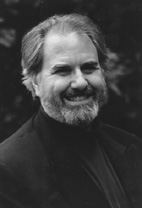
“Yawning,” an essay for the Nov./Dec. 2005 issue of American Scientist magazine written by Robert Provine, professor of psychology and an internationally renowned expert on the science of laughter and other contagious behavior, has been selected for inclusion in the “Best American Science Writing 2006.” The latest in the series of annual compilations of top scientific writing in the nation will be published on September 1 by Ecco/Harper Perennial.
]]>
“Yawning,” an essay for the Nov./Dec. 2005 issue of American Scientist magazine written by Robert Provine, professor of psychology and an internationally renowned expert on the science of laughter...
http://www.umbc.edu/research/blog/2006/04/provine_essay_selected_among_b.html
https://dev.my.umbc.edu/api/v0/pixel/news/46587/guest@my.umbc.edu/e87e6bc546389a0c959b75c6263e930d/api/pixel
ovpr-news-2006
Division of Research and Creative Achievement
https://dev.my.umbc.edu/groups/research
https://assets4-dev.my.umbc.edu/system/shared/avatars/groups/000/000/794/4bca2aa331eb7e472d63d97e0798b600/xsmall.png?1743706368
https://assets2-dev.my.umbc.edu/system/shared/avatars/groups/000/000/794/4bca2aa331eb7e472d63d97e0798b600/original.jpg?1743706368
https://assets3-dev.my.umbc.edu/system/shared/avatars/groups/000/000/794/4bca2aa331eb7e472d63d97e0798b600/xxlarge.png?1743706368
https://assets4-dev.my.umbc.edu/system/shared/avatars/groups/000/000/794/4bca2aa331eb7e472d63d97e0798b600/xlarge.png?1743706368
https://assets2-dev.my.umbc.edu/system/shared/avatars/groups/000/000/794/4bca2aa331eb7e472d63d97e0798b600/large.png?1743706368
https://assets4-dev.my.umbc.edu/system/shared/avatars/groups/000/000/794/4bca2aa331eb7e472d63d97e0798b600/medium.png?1743706368
https://assets4-dev.my.umbc.edu/system/shared/avatars/groups/000/000/794/4bca2aa331eb7e472d63d97e0798b600/small.png?1743706368
https://assets4-dev.my.umbc.edu/system/shared/avatars/groups/000/000/794/4bca2aa331eb7e472d63d97e0798b600/xsmall.png?1743706368
https://assets3-dev.my.umbc.edu/system/shared/avatars/groups/000/000/794/4bca2aa331eb7e472d63d97e0798b600/xxsmall.png?1743706368
Office of the Vice President for Research
0
0
false
Fri, 28 Apr 2006 12:00:00 -0400