Project Lead the Way and STEM at UMBC
Since 2004, UMBC has hosted Project Lead the Way training program, directed by Dr. Anne Spence, a Mechanical Engineering Professor and co-Director of the ME S-STEM Scholarship Program at UMBC. This program has offered a large variety of engineering and technology courses to middle school and high school teachers in Maryland and prepared those teachers to deliver pre-engineering curriculum in the middle and high school classroom. The ME S-STEM scholarship Program has been promoted to the teachers who have served as a bridge between students in high school and UMBC's strong engineering programs.
]]>
Since 2004, UMBC has hosted Project Lead the Way training program, directed by Dr. Anne Spence, a Mechanical Engineering Professor and co-Director of the ME S-STEM Scholarship Program at UMBC. ...
https://dev.my.umbc.edu/api/v0/pixel/news/61535/guest@my.umbc.edu/b30d8a988a52212136361b4a1e304ede/api/pixel
Mechanical Engineering S-STEM Scholarship Program
https://dev.my.umbc.edu/groups/mestem
https://assets1-dev.my.umbc.edu/images/avatars/group/12/xsmall.png?1776034340
https://assets2-dev.my.umbc.edu/images/avatars/group/12/original.png?1776034340
https://assets2-dev.my.umbc.edu/images/avatars/group/12/xxlarge.png?1776034340
https://assets4-dev.my.umbc.edu/images/avatars/group/12/xlarge.png?1776034340
https://assets4-dev.my.umbc.edu/images/avatars/group/12/large.png?1776034340
https://assets3-dev.my.umbc.edu/images/avatars/group/12/medium.png?1776034340
https://assets4-dev.my.umbc.edu/images/avatars/group/12/small.png?1776034340
https://assets1-dev.my.umbc.edu/images/avatars/group/12/xsmall.png?1776034340
https://assets2-dev.my.umbc.edu/images/avatars/group/12/xxsmall.png?1776034340
Mechanical Engineering S-STEM Scholarship Program
https://assets3-dev.my.umbc.edu/system/shared/thumbnails/news/000/061/535/05d5391c522380ebb132a8079a6a2930/xxlarge.jpg?1471371871
https://assets1-dev.my.umbc.edu/system/shared/thumbnails/news/000/061/535/05d5391c522380ebb132a8079a6a2930/xlarge.jpg?1471371871
https://assets4-dev.my.umbc.edu/system/shared/thumbnails/news/000/061/535/05d5391c522380ebb132a8079a6a2930/large.jpg?1471371871
https://assets2-dev.my.umbc.edu/system/shared/thumbnails/news/000/061/535/05d5391c522380ebb132a8079a6a2930/medium.jpg?1471371871
https://assets3-dev.my.umbc.edu/system/shared/thumbnails/news/000/061/535/05d5391c522380ebb132a8079a6a2930/small.jpg?1471371871
https://assets4-dev.my.umbc.edu/system/shared/thumbnails/news/000/061/535/05d5391c522380ebb132a8079a6a2930/xsmall.jpg?1471371871
https://assets3-dev.my.umbc.edu/system/shared/thumbnails/news/000/061/535/05d5391c522380ebb132a8079a6a2930/xxsmall.jpg?1471371871
0
0
true
Tue, 16 Aug 2016 14:25:27 -0400
UMBC School of Public Policy alumni advance as leaders in higher education and public health
Rear Admiral Sylvia Trent-Adams '06 Ph.D., public policy, now deputy surgeon general, is one of several public policy alumni to be recognized with a high-level appointment in recent months.
]]>
Rear Admiral Sylvia Trent-Adams '06 Ph.D., public policy, now deputy surgeon general, is one of several public policy alumni to be recognized with a high-level appointment in recent months.
https://news.umbc.edu/school-of-public-policy-alumni-take-on-leadership-roles-in-higher-education-and-public-health/
https://dev.my.umbc.edu/api/v0/pixel/news/108607/guest@my.umbc.edu/76c257acddaa3057336717f8ef00d95e/api/pixel
alumni
cahss
policy-and-society
publicpolicy
umbc50
UMBC News
https://dev.my.umbc.edu/groups/umbc-news
https://assets2-dev.my.umbc.edu/system/shared/avatars/groups/000/001/944/2c79aeea85b1abb37f8cf9fbcdc382b0/xsmall.png?1632921809
https://assets4-dev.my.umbc.edu/system/shared/avatars/groups/000/001/944/2c79aeea85b1abb37f8cf9fbcdc382b0/original.png?1632921809
https://assets4-dev.my.umbc.edu/system/shared/avatars/groups/000/001/944/2c79aeea85b1abb37f8cf9fbcdc382b0/xxlarge.png?1632921809
https://assets1-dev.my.umbc.edu/system/shared/avatars/groups/000/001/944/2c79aeea85b1abb37f8cf9fbcdc382b0/xlarge.png?1632921809
https://assets1-dev.my.umbc.edu/system/shared/avatars/groups/000/001/944/2c79aeea85b1abb37f8cf9fbcdc382b0/large.png?1632921809
https://assets1-dev.my.umbc.edu/system/shared/avatars/groups/000/001/944/2c79aeea85b1abb37f8cf9fbcdc382b0/medium.png?1632921809
https://assets4-dev.my.umbc.edu/system/shared/avatars/groups/000/001/944/2c79aeea85b1abb37f8cf9fbcdc382b0/small.png?1632921809
https://assets2-dev.my.umbc.edu/system/shared/avatars/groups/000/001/944/2c79aeea85b1abb37f8cf9fbcdc382b0/xsmall.png?1632921809
https://assets4-dev.my.umbc.edu/system/shared/avatars/groups/000/001/944/2c79aeea85b1abb37f8cf9fbcdc382b0/xxsmall.png?1632921809
UMBC News
0
0
false
Tue, 16 Aug 2016 13:56:52 -0400
Summer Undergraduate Research Fest
Spotlight on next generation of scientists
August 16, 2016 by Sarah Hansen
A crowd of more than 250 people gathered to learn from and celebrate emerging scientists at UMBC’s Summer Undergraduate Research Fest (SURF) on August 10, 2016. The program has humble beginnings, but it’s come a long way in 19 years.
“In its first year, we had 10 posters in the engineering building,” says Lasse Lindahl, director of the MARC*USTAR Scholars Program and professor of biological sciences. This year, there were 83 posters from 11 different summer research programs, ranging from the National Security Agency Scholars to the new SCIART program.
“SURF’s growth demonstrates the commitment of UMBC to undergraduate research and getting the next generation of researchers prepared,” Lindahl says.
Kayla Sims, a rising sophomore at the STEM magnet high school Baltimore Polytechnic Institute, had never taken chemistry when she dived into research at UMBC’s Molecular Characterization and Analysis Complex (MCAC) this summer as part of the Summer Biomedical Training Program sponsored by UMBC’s College of Natural and Mathematical Sciences (CNMS) and Graduate School. She was nervous, but, “The people at MCAC taught me a lot,” she says. Now she can explain myoglobin digestion optimization like a pro, and she is ready to tackle her first chemistry course this fall.
Anna Opoku-Agyeman ’18, biological sciences, is a MARC*USTAR Scholar and says her summer of research has been “life-changing.” She researched novel therapies for breast cancer to help prevent recurrence. She also developed a clearer sense of her interests in scientific research and policy, and she now hopes to pursue a Ph.D. related to infectious diseases that affect sub-Saharan Africa. A law degree might also be in her future, to enable policy work.
In addition to the two lively poster sessions, six student research teams gave oral presentations to the packed ballroom. Austin Gabel ‘19, biological sciences, conducted research in the lab of Rachel Brewster, associate professor of biological sciences. He discussed his work on developmental arrest in zebrafish embryos with poise, enthusiasm, and clarity. Joel Tyson ‘17, biochemical engineering, explained his pioneering work to develop a minimally-invasive probe that measures brain activity, conducted in the lab of Gymama Slaughter, assistant professor of computer science and electrical engineering. Additional projects dealt with topics ranging from climate modeling to nanoscale drug delivery.
Across these diverse areas, the SURF presenters shared a commitment to developing new scientific knowledge through research, both in their future careers and in high-level work during their student years. CNMS dean Bill LaCourse reflected, “To see the joy and the excitement in the students’ faces is a wonderful thing.”
Image: SURF participants from the Summer Biomedical Training Program, with mentor Michael Summers on far left and Kayla Sims on far right; photo Tim Ford.
]]>
August 16, 2016 by Sarah Hansen A crowd of more than 250 people gathered to learn from and celebrate emerging scientists at UMBC’s Summer Undergraduate Research Fest (SURF) on August 10, 2016....
http://news.umbc.edu/summer-undergraduate-research-fest-spotlights-next-generation-of-scientists/
https://dev.my.umbc.edu/api/v0/pixel/news/61534/guest@my.umbc.edu/48334df724c6ac0a731c3c3fffc9eb81/api/pixel
biology
cbee
chemistry
cnms
csee
marcustar
research
undergradresearch
College of Engineering and Information Technology
https://dev.my.umbc.edu/groups/retired-95
https://assets3-dev.my.umbc.edu/system/shared/avatars/groups/000/000/095/c2a784a6cda726ef5f845e9192adb64b/xsmall.png?1496851664
https://assets1-dev.my.umbc.edu/system/shared/avatars/groups/000/000/095/c2a784a6cda726ef5f845e9192adb64b/original.jpg?1496851664
https://assets3-dev.my.umbc.edu/system/shared/avatars/groups/000/000/095/c2a784a6cda726ef5f845e9192adb64b/xxlarge.png?1496851664
https://assets3-dev.my.umbc.edu/system/shared/avatars/groups/000/000/095/c2a784a6cda726ef5f845e9192adb64b/xlarge.png?1496851664
https://assets2-dev.my.umbc.edu/system/shared/avatars/groups/000/000/095/c2a784a6cda726ef5f845e9192adb64b/large.png?1496851664
https://assets3-dev.my.umbc.edu/system/shared/avatars/groups/000/000/095/c2a784a6cda726ef5f845e9192adb64b/medium.png?1496851664
https://assets3-dev.my.umbc.edu/system/shared/avatars/groups/000/000/095/c2a784a6cda726ef5f845e9192adb64b/small.png?1496851664
https://assets3-dev.my.umbc.edu/system/shared/avatars/groups/000/000/095/c2a784a6cda726ef5f845e9192adb64b/xsmall.png?1496851664
https://assets2-dev.my.umbc.edu/system/shared/avatars/groups/000/000/095/c2a784a6cda726ef5f845e9192adb64b/xxsmall.png?1496851664
College of Engineering and Information Technology
0
0
false
Tue, 16 Aug 2016 13:47:20 -0400
From the Editor – Summer 2016
So You Want to Be a Pioneer?
Founding UMBC faculty across disciplines reflect on building a new public university.
By Richard Byrne ’86
See Editor’s Note
UMBC opened its doors on September 19, 1966. But as concrete was poured and red bricks were laid, founding chancellor Albin O. Kuhn and founding dean of faculty Homer Schamp were also recruiting faculty members for a new research institution.
In a 1994 oral history interview conducted by Ed Orser, emeritus professor of American studies, Kuhn observed that adventure and ambition were his key selling points to recruits.
“[T]hat was the thing we talked about a lot when we were trying to attract original faculty and staff,” said Kuhn. “’Want to be a pioneer? Come join us. You can develop and help to make it what it will be…. It wasn’t a bad thing to get that kind of person.”
Founding faculty members of UMBC remember that desire to forge new trails and build as a powerful lure.
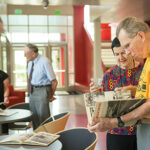
 Professors emeriti Joan Korenman and Walter Sherwin (foreground)
“The thought of coming to a new university was very attractive to me,” says William Rothstein, emeritus professor of sociology, and one of the professors hired for the university’s opening day.
“It was exciting to think about starting a program,” says Walter Sherwin, emeritus professor of ancient studies. “There was no one really over me. It was pretty heady stuff. It was all so exciting that I never thought about the risk.”
And as UMBC grew, it attracted more top-notch young faculty members – many of whom built lengthy careers in research and teaching at what was then the University of Maryland’s newest campus.
“I knew I was coming to a research university,” says Marilyn Demorest, emerita professor of psychology, “because it was the University of Maryland….We were University of Maryland faculty. And we were held to those standards.”
“It Was a Great Experiment”
Kuhn and Schamp initially organized UMBC into clusters: humanities and arts, social sciences, life sciences, and mathematics and physics. It was practicality at work: UMBC was too small to have full-fledged departments.
Finding faculty to meet the demand created by baby boomers also had an impact. Even established universities struggled to fill their professorial ranks in 1966. For many founding professors, UMBC was their first job.
Robert Burchard, emeritus professor of biological sciences, arrived on campus in January 1967, fresh from the Peace Corps, where he had been teaching microbiology in Nigeria and doing research on tsetse flies.
Burchard recalls that creating a new biology curriculum from scratch was invigorating: “It was a great experiment. And we were excited about what we were doing.”
Sherwin recalls that in the early years, offices were assigned by lot, and professors from various disciplines mingled together. “I enjoyed interacting with people outside my area,” he says. “We were in this together, and a lot of the conversation was not specific to discipline, but specific to making things work.”
Charles “Chuck” Peake, emeritus professor of economics, arrived in September 1967. “We had this idea we were going to build something,” he says.
Peake had an office in the “Gray House” that once stood outside Hilltop Circle near today’s athletics fields. He recalls that some classes were held in the Hillcrest Building that overlooked campus. “I remember walking up the hill past apple trees to get to classes,” he says.
The newness of the university, says Rothstein, also meant that “there was nothing to put your feet on. Everything was up for grabs.”
 Professors emeriti Robert Burchard and Joan Korenman
That feeling persisted through the university’s early years. “UMBC was an immense contrast to what I was experiencing in graduate school at Harvard,” says Joan Korenman, emerita professor of English and women’s studies, who arrived in 1969. “It was like a breath of fresh air. Everything was wide open and ready for discussion.”
UMBC asked Korenman if she was interested in a lecturer position in English. But at an interview, she indicated an interest in an assistant professor position. That was the position she was offered. Advancement was quick. Like many of her colleagues, Korenman discovered that the freedom to build had other obligations when she was appointed as an area coordinator soon after her arrival.
“Young faculty were expected to take on more administrative responsibilities,” she recalls.
“We Can Do This!”
Kuhn excelled in securing resources from the University of Maryland and state government. And as new students swelled the university’s enrollment, construction of UMBC’s physical campus was matched by an expansion of the faculty orchestrated by Schamp.
“I remember talking to Kuhn,” says Rothstein. “He told me: ‘I bring the money in, and Homer spends it.’”
Faculty took advantage of the opportunities. Jay Freyman, emeritus associate professor of ancient studies, landed at UMBC in 1968 with a Ph.D. in Classical Studies from the University of Pennsylvania. He says that the atmosphere at UMBC “was the same kind of attraction that someone feels when they go to a startup in Silicon Valley. It’s the ground up. There’s nowhere to go but up. You’re going to make something there that wasn’t there before. We could do some things that were offbeat. We could try things.”
Freyman had ideas about where his discipline was headed – and how he and his colleagues needed to adapt. “We recognized that a traditional ‘classics’ program would not survive. Latin and Greek. Those were the departments that were getting dumped,” he says. “We realized that in order to survive, we had to have a broader appeal than just linguistic and literary. So we incorporated history and archaeology. We were one of the first departments in the country to do this.”
Ancient studies faculty members were also at the forefront of another great UMBC tradition: Study abroad. UMBC faculty had already leapt ahead of many other universities in creating a January session (dubbed the “minimester”). But it was Sherwin, Freyman and their colleague Rudolph Storch, emeritus professor of ancient studies, who organized and led trips to Italy and Greece in the first years of the university.
 Associate professor emeritus Jay Freyman
For many of the students of that era, it was a mind-blowing adventure. Sherwin got the idea from a Fulbright fellowship he had at the American Academy in Rome that combined lectures and visits to historic sites. “I came back and told my colleagues, ‘We can do this! We will establish a program abroad.”
UMBC professors didn’t stop at curricular innovations. Burchard’s passion for environmentalism and pedagogy intersected when campus planners turned their gaze to Pig Pen Pond – a body of water that remained from the campus’ days as farmland – and planned to pave over half of it.
“The biology folks looked at that as a good teaching resource,” says Burchard. “I raised hell about it.”
Burchard and others succeeded in saving Pig Pen Pond. Today, it is a key element of the Conservation and Environmental Research Areas [CERA] – and it remains as a locus for campus research.
“Pushing for Quality”
UMBC did have growing pains. The administration and the faculty debated which courses should be required for graduation for a number of years. The denial of tenure to some popular professors hired in UMBC’s early years also elicited student protests.
And though UMBC was the first university founded in Maryland in the post-segregation era, racial disparities in enrollment, employment, and curriculum at UMBC quickly became apparent.
In May 1969, a committee created by Kuhn to achieve “significant integration of minority groups at UMBC” offered an array of proposals to the chancellor, including creation of a department of “Black Studies.” A year later, the university’s Black Student Union and a caucus of black faculty and staff pressed the case for change more urgently, and by the end of 1970, UMBC had hired Elechukwu Njaka from Tuskegee Institute to build a program with the rank of a division within UMBC.
Among the faculty who built the program was Daphne Harrison, emerita professor of Africana studies, and founder of UMBC’s Humanities Forum. “I found that UMBC was quite different from many institutions,” she recalls. “The attitude was that you as a professor are important, but the professor also has to work.”
Harrison taught a wide array of courses, but she says that her insistence on rigorous interrogation of notions received from mass culture was at the heart of the endeavor: “Young people were getting a lot of information but they didn’t know how to vet it. That was one of the things I remember doing with them. You have to know whether or not what you’ve got is real. You have to check to see whether it is accurate.”
 Professors emeritus Willie Lamousé-Smith
In 1975, UMBC hired Willie Lamousé-Smith from Syracuse University to head the program. A Ghanaian scholar who received his doctorate from the University of Münster, he was lured from a tenured positions in Syracuse’s Afro-American studies program department and as associate director of the East African studies program in its Maxwell School of Citizenship and Public Affairs.
Hiring Lamousé-Smith from a prominent research institution was one signal that UMBC aspired to raise its profile in the humanities. But demanding the best from students and helping them find their place in campus life was equally important to him.
“I do not intend to make people comfortable,” says Lamousé-Smith. “And that is my policy when I am teaching. People have to take their studies seriously. It’s only a short time in the person’s life. And yet the person’s whole future is going to depend and rely upon what that person does in that short period. So if I do not help the person to achieve their highest level, I feel I have not done well.”
Other key academic programs emerged. The late 1960s and 1970s was a busy era in experimental psychology – and psychology quickly became (and remains) one of UMBC’s most popular majors.
Demorest recalls hearing about “that place in Catonsville,” as she finished graduate studies at Johns Hopkins University and post-doctoral work at the University of Pittsburgh. She admits it didn’t sound appealing at first.
In 1972, however, she was recruited by the late Aron Siegman, a professor of psychology at UMBC. She reluctantly came for an interview and was surprised. “I spent two absolutely glorious days,” she recalls, “being passed from one faculty member to another, talking about every different type of psychology…. So I ended up coming to ‘that place in Catonsville’ really excited about being here.”

Psychology launched one of UMBC’s first graduate programs: a community clinical psychology master’s program created in 1974.
Demorest says that the burgeoning quality of UMBC’s faculty in that era later helped her, as vice provost, to recruit others to campus to join her. “I would invite [candidates] to look at the credentials. We were recruited from first-rate institutions from Columbia and Chicago and Hopkins….and so we came in with the standards we were held to, and so those were the standards we held our students to. We didn’t know any different.”
“You Can’t Do That with Just Science”
Psychology was not alone in its prominence. Many founding faculty point to the arrival of the late Martin “Marty” Schwartz as the coordinator of the biology division in 1969 as the beginning of UMBC’s ambitious push to make grant-funded research an engine that would propel the university into maturity and excellence.
“The scientists were clearly the most hard-nosed in terms of academic research,” says Rothstein. “And making UMBC have a name for itself as a quality research institution, the sciences were clearly leading the pack.”
Phillip Sokolove, emeritus professor of biology, arrived in 1974 and found himself in the center of a busy hub of research activity spearheaded by Schwartz.
“He was a man with vision,” Sokolove says. “My interaction with him was extremely positive as a young professor. He was quite clear what the nature of the department was, and that we had to become one of the premier research departments on the campus, along with chemistry. Since Swartz was chair of both departments, and of the biochemistry department, he adds, “Schwartz saw them as natural allies.”
 Professors emeriti William Rothstein, Joan Korenman, Marilyn Demorest, Robert Burchard, and Walter Sherwin
Sokolove says that Schwartz was driven to get the best from his faculty. “He was able to give his faculty the time to do what they needed to do,” he recalls, “and then pushed them hard to do it. And when somebody came in and couldn’t cut the mustard he was ruthless. Not ruthlessly himself. What he did was turn the faculty into a well-developed jury of peers.”
Lamousé-Smith, who served with Schwartz on UMBC’s Council of Divisional Deans with Schwartz, recalls that he pushed for academic excellence and leadership with equal vigor. Schwartz was a “strong personality” who often played hardball over resources in meetings of academic leadership. “He would chew you up and spit you out and then embrace you and kiss you on the cheek,” Lamousé-Smith says.
“But Marty Schwartz was not just pushing for his own department, but for every department,” Lamousé-Smith continues. “Marty Schwartz, and his impatience, planted the seeds of pushing for excellence at UMBC.”
UMBC now boasts a strong balance between research and teaching across disciplines. That strength in all areas is part of its founding chancellor’s blueprint. As Kuhn told associate professor of history Joseph Tatarewicz in an oral interview conducted in 2001, UMBC was created at the moment when influential University of California system president Clark Kerr touted America’s universities as a ‘prime instrument of national purpose.”
Kuhn argued that a modern university “can’t do that with just science. You have to do that with understanding people. You have to do it with understanding the real drive that’s involved in the humanities and arts. And when you put it all together, it can be very forceful. Without all of it together, you won’t get there.”
“That place in Catonsville” – as Demorest fondly refers to it now – has come a long way toward fulfilling Kuhn’s vision because of the strength of its founding faculty, and the professors who have followed them to this day.
Editor’s Note
The cover of the Summer 2016 issue of UMBC Magazine you may have received in the mail has a significant error for which I would like to personally apologize to our readers.
In our image of professors then and now, the magazine cover mistakenly paired a recent photo of Professor Emeritus of Africana Studies Willie Lamousé-Smith with an archival photo of longtime UMBC professor of Africana Studies Jonathan Peters from the Albin O. Kuhn Library’s collection of university photographs.
Our magazine team has redesigned the magazine cover digitally to pair Professor Lamousé-Smith with a correct image – which we have posted on the magazine website, to our Facebook site, and to our wider UMBC Alumni site. But I did not catch the error before the magazine was sent to the printing press and then on to our readers.
As you will discover both in the “Editor’s Note” to this issue and in the story about the founding faculty of the university (“So You Want to Be a Pioneer? – read below this note), Professor Lamousé-Smith’s wisdom and spirit have played a significant role in UMBC’s rising fortunes as a university through the decades. I have reached out to Professor Lamousé-Smith personally to apologize for this error.
The many contributions and achievements of our faculty and staff are a significant part of what we are celebrating this year in UMBC’s 50th anniversary. It has been part of the mission of UMBC Magazine to tell these stories accurately. In this case, we let our readers down. We hope this note serves both to correct the record and express our regret for the error.
Richard Byrne ’86
Editor, UMBC Magazine
]]>
So You Want to Be a Pioneer? Founding UMBC faculty across disciplines reflect on building a new public university. By Richard Byrne ’86 See Editor’s Note UMBC opened its doors on September...
https://umbc.edu/stories/want-to-be-a-pioneer/
https://dev.my.umbc.edu/api/v0/pixel/news/121049/guest@my.umbc.edu/5159536223f8cf8d140cfefb11487b81/api/pixel
perspectives
summer-2016
UMBC News & Magazine
https://dev.my.umbc.edu/groups/umbc-news-magazine
https://assets1-dev.my.umbc.edu/system/shared/avatars/groups/000/001/943/24435aa6207c452e7bc15cc74b42c7bb/xsmall.png?1748556657
https://assets1-dev.my.umbc.edu/system/shared/avatars/groups/000/001/943/24435aa6207c452e7bc15cc74b42c7bb/original.png?1748556657
https://assets2-dev.my.umbc.edu/system/shared/avatars/groups/000/001/943/24435aa6207c452e7bc15cc74b42c7bb/xxlarge.png?1748556657
https://assets2-dev.my.umbc.edu/system/shared/avatars/groups/000/001/943/24435aa6207c452e7bc15cc74b42c7bb/xlarge.png?1748556657
https://assets3-dev.my.umbc.edu/system/shared/avatars/groups/000/001/943/24435aa6207c452e7bc15cc74b42c7bb/large.png?1748556657
https://assets1-dev.my.umbc.edu/system/shared/avatars/groups/000/001/943/24435aa6207c452e7bc15cc74b42c7bb/medium.png?1748556657
https://assets2-dev.my.umbc.edu/system/shared/avatars/groups/000/001/943/24435aa6207c452e7bc15cc74b42c7bb/small.png?1748556657
https://assets1-dev.my.umbc.edu/system/shared/avatars/groups/000/001/943/24435aa6207c452e7bc15cc74b42c7bb/xsmall.png?1748556657
https://assets2-dev.my.umbc.edu/system/shared/avatars/groups/000/001/943/24435aa6207c452e7bc15cc74b42c7bb/xxsmall.png?1748556657
UMBC News & Magazine
0
0
false
Tue, 16 Aug 2016 13:23:24 -0400
The Pursuit Of Excellence
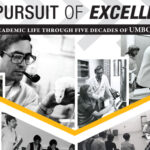
From the day UMBC opened its doors, the work of teaching and research has been at the heart of university life. The love of learning has been passed on by the university’s faculty across disciplines in lecture halls, laboratories, office hours, and in the field. We’ve selected some of the best images of a dynamic endeavor of teaching and exploration that has stretched from 1966 to the present day, aspiring not only to excellence but to greater access for all students to the wisdom and understanding that our faculty carry with them.
 TOP (Left to Right): Paul Lovett, Professor of Biology; Felix Powell, Professor of Music BOTTOM (Left to Right): Patrick Canavan, Professor of Visual Arts; Karen Vitelli, Professor of Ancient Studies
 TOP (Left to Right): Jim (En-Shinn) Wu, Professor of Physics; William Bettridge, Professor of English; Bernard Rabin, Professor pf Psychology; BOTTOM (Left to Right): Sinan Koont, Professor of Mathematics; Daphne Harrison, Professor of Africana Studies
 TOP (Left to Right): Timothy Brennan, Professor of Public Policy and Economics; Carol Hess, Professor of Dance; BOTTOM (Left to Right): Chen Yung-Jui, Professor of Electrical Engineering; Ivan Kramer, Associate Professor of Physics
 TOP (Left to Right): Bruce Walz, Professor of Emergency Health Services; Andrew Miller, Professor of Geography and Environmental Systems; BOTTOM (Left to Right): Marilyn Goldberg, Professor of Ancient Studies; Doug Hamby, Associate Professor of Dance
 TOP (Left to Right): Marie DesJardins, Professor of Computer Science; Zeev Rosenzweig, Professor of Chemistry BOTTOM ( Left to RIght): Jason Schiffman, Associate Professor of Psychology; Kimberly Moffitt, Associate Professor of American Studies
 TOP (Left to RIght): Thomas Field, Professor of Linguistics and French; Michael Summers, University Distinguished Professor of Chemistry and Biochemistry; Lisa Moren, Professor of Visual Arts BOTTOM: Steven McAlpine, Assistant Director, Interdisciplinary Studies
]]>
From the day UMBC opened its doors, the work of teaching and research has been at the heart of university life. The love of learning has been passed on by the university’s faculty across...
https://umbc.edu/stories/the-pursuit-of-excellence/
https://dev.my.umbc.edu/api/v0/pixel/news/121050/guest@my.umbc.edu/20bc5f9946f79dd5604896d633c2528e/api/pixel
faculty
summer-2016
umbc-history
UMBC News & Magazine
https://dev.my.umbc.edu/groups/umbc-news-magazine
https://assets1-dev.my.umbc.edu/system/shared/avatars/groups/000/001/943/24435aa6207c452e7bc15cc74b42c7bb/xsmall.png?1748556657
https://assets1-dev.my.umbc.edu/system/shared/avatars/groups/000/001/943/24435aa6207c452e7bc15cc74b42c7bb/original.png?1748556657
https://assets2-dev.my.umbc.edu/system/shared/avatars/groups/000/001/943/24435aa6207c452e7bc15cc74b42c7bb/xxlarge.png?1748556657
https://assets2-dev.my.umbc.edu/system/shared/avatars/groups/000/001/943/24435aa6207c452e7bc15cc74b42c7bb/xlarge.png?1748556657
https://assets3-dev.my.umbc.edu/system/shared/avatars/groups/000/001/943/24435aa6207c452e7bc15cc74b42c7bb/large.png?1748556657
https://assets1-dev.my.umbc.edu/system/shared/avatars/groups/000/001/943/24435aa6207c452e7bc15cc74b42c7bb/medium.png?1748556657
https://assets2-dev.my.umbc.edu/system/shared/avatars/groups/000/001/943/24435aa6207c452e7bc15cc74b42c7bb/small.png?1748556657
https://assets1-dev.my.umbc.edu/system/shared/avatars/groups/000/001/943/24435aa6207c452e7bc15cc74b42c7bb/xsmall.png?1748556657
https://assets2-dev.my.umbc.edu/system/shared/avatars/groups/000/001/943/24435aa6207c452e7bc15cc74b42c7bb/xxsmall.png?1748556657
UMBC News & Magazine
0
0
false
Tue, 16 Aug 2016 13:17:43 -0400
Bright Futures
TOP (Left to RIght): Thomas Field, Professor of Linguistics and French; Michael Summers, University Distinguished Professor of Chemistry and Biochemistry; Lisa Moren, Professor of Visual Arts BOTTOM: Steven McAlpine, Assistant Director, Interdisciplinary Studies
]]>
From the day UMBC opened its doors, the work of teaching and research has been at the heart of university life. The love of learning has been passed on by the university’s faculty across...
https://umbc.edu/stories/the-pursuit-of-excellence/
https://dev.my.umbc.edu/api/v0/pixel/news/121050/guest@my.umbc.edu/20bc5f9946f79dd5604896d633c2528e/api/pixel
faculty
summer-2016
umbc-history
UMBC News & Magazine
https://dev.my.umbc.edu/groups/umbc-news-magazine
https://assets1-dev.my.umbc.edu/system/shared/avatars/groups/000/001/943/24435aa6207c452e7bc15cc74b42c7bb/xsmall.png?1748556657
https://assets1-dev.my.umbc.edu/system/shared/avatars/groups/000/001/943/24435aa6207c452e7bc15cc74b42c7bb/original.png?1748556657
https://assets2-dev.my.umbc.edu/system/shared/avatars/groups/000/001/943/24435aa6207c452e7bc15cc74b42c7bb/xxlarge.png?1748556657
https://assets2-dev.my.umbc.edu/system/shared/avatars/groups/000/001/943/24435aa6207c452e7bc15cc74b42c7bb/xlarge.png?1748556657
https://assets3-dev.my.umbc.edu/system/shared/avatars/groups/000/001/943/24435aa6207c452e7bc15cc74b42c7bb/large.png?1748556657
https://assets1-dev.my.umbc.edu/system/shared/avatars/groups/000/001/943/24435aa6207c452e7bc15cc74b42c7bb/medium.png?1748556657
https://assets2-dev.my.umbc.edu/system/shared/avatars/groups/000/001/943/24435aa6207c452e7bc15cc74b42c7bb/small.png?1748556657
https://assets1-dev.my.umbc.edu/system/shared/avatars/groups/000/001/943/24435aa6207c452e7bc15cc74b42c7bb/xsmall.png?1748556657
https://assets2-dev.my.umbc.edu/system/shared/avatars/groups/000/001/943/24435aa6207c452e7bc15cc74b42c7bb/xxsmall.png?1748556657
UMBC News & Magazine
0
0
false
Tue, 16 Aug 2016 13:17:43 -0400
Bright Futures

UMBC’s growing reputation as a hub for research with powerful impact isn’t founded on the achievements of renowned scholars who have created laboratories or explored the limits of the arts, humanities and social sciences at the university alone. It is also built on a growing number of impressive younger scholars who have found a home for their work at UMBC.
The pedigree of the scholars who will propel research and teaching at the university in its next 50 years can be measured in part by the number of early career teaching and research awards these up-and-coming faculty members have received.
One of the most prestigious of these honors is the National Science Foundation’s Early Career Development (CAREER) award, which was created to support “junior faculty who exemplify the role of teacher-scholar through outstanding research, excellent education, and the integration of education and research within the context of the mission of their organizations.” UMBC faculty members have received 29 NSF CAREER awards over the last two decades.
UMBC Magazine would like to introduce you to some of the faculty who represent the bright future for research and teaching at UMBC – and how they are already making their mark on academia and the world.
Christopher Hennigan

Everyone dreads a bad air day when it pops up on a weather forecast, but knowing how those conditions are created is essential to finding ways to ameliorate or prevent the damage to health and climate.
Christopher Hennigan, assistant professor of chemical, biochemical, and environmental engineering, is at the forefront of analyzing these issues. His work focuses on pollutants known as particulate matter or aerosols—small particles in the air that have detrimental effects on human health and important implications for climate change.
This work has come to the attention of the National Science Foundation (NSF), which gave Hennigan a CAREER award of $524,606 to characterize the effects of acid-catalyzed reactions on the atmospheric transformation of volatile organic compounds into secondary organic aerosol (SOA).
SOA is an ubiquitous component in the atmosphere that contributes to aerosol effects on human health and climate, but there has been disagreement between laboratory studies and ambient readings on the role of particle acidity in its formation. So Hennigan and his team are developing new methods to rapidly measure particle acidity through automated system that provides the best combination of high time resolution and accuracy.
When Hennigan’s new technique is deployed, it will provide more accurate models representing SOA formation, thus improving scientists’ ability to make predictions related to ambient aerosol events.
“The five-year duration of the CAREER award is especially advantageous, as it will allow us to push the work forward in a highly significant way,” says Hennigan.
–Dinah Winnick
Danielle Beatty Moody

Can poverty and discrimination lead to accelerated diseases and disorders related to the brain including stroke, dementia, and cognitive decline? Pronounced racial disparities have been observed in studies of brain health and pathology, but little is known about how social disadvantages over a lifespan may contribute to those outcomes.
Danielle L. Beatty Moody, an assistant professor of psychology, won a $600,000 Career Development Award from the National Institutes of Health (NIH) in 2014 to investigate these disparities in brain health for African Americans, taking into account many of the possible causal complexities.
As primary investigator of the project, Beatty Moody works with nearly 300 Baltimore residents to determine if there is a relationship between social disadvantages early in life and MRI-indicators of brain pathology that predict future strokes and overall cognitive decline. Her work also examines if these combined factors are more pronounced in African American adults than they are in white adults.
“This type of study has really not been done before,” explains Beatty Moody. “We have a diverse sample in our study, considering race, ethnicity, and a range of socioeconomic statuses.”
Beatty Moody will also investigate associations these data might have with risk factors for cardiovascular disease. The goal of her research is to develop appropriate prevention and intervention strategies that can reduce – and ultimately eliminate – race-related health disparities.
“The key is to understand how early life adversity and race and ethnicity interact to form the health disparities we see in adulthood with African Americans,” Beatty Moody says. “A lot of what happens in childhood can be hard to undo.”
–Max Cole
Felipe Filomeno

Why have some countries taken relatively corporate-friendly approaches to intellectual property rules, while others have been more resistant to corporations’ desires? Felipe Filomeno, an assistant professor of political science, spent half a decade studying those questions in South America. Last year, his research led to an Early Career Prize from the Latin American Studies Association.
As a student, Filomeno became intrigued by the disputes surrounding Roundup Ready soybean seeds, a genetically-engineered product introduced by the Monsanto Company in 1996. The seeds generate easy-to-grow crops that are resistant to herbicides, but Monsanto has fought for widely-disliked laws that forbid farmers from saving, trading, or cross-breeding patented seeds.
In some countries — notably Brazil — Monsanto has won almost all the legal protections it has sought. In Argentina, for example, farmers have maintained the right to save and recultivate seeds from their own soybean crops, including seeds that have inherited Monsanto’s engineered traits.
“I thought [these differences were] an interesting and understudied issue,” says Filomeno, who spent several years doing field work, archival research, and interviews while he was earning a doctorate in sociology at Johns Hopkins University.
In Monsanto and Intellectual Property in South America (Palgrave Macmillan, 2014), he argued that Argentine farmer-activists’ success derives largely from the fact that the nation’s major farmers’ organizations were given formal roles in regulating agricultural biotechnology as early as the 1970s.
Since arriving at UMBC in 2014, Filomeno has researched how cities make conscious efforts to welcome immigrants. He has spent the past two years studying ostensibly pro-immigrant municipal policies in Baltimore and other U.S. cities, and is now examining immigration policies in Buenos Aires, Mexico City, and Sao Paolo.
–David Glenn
Jeffrey Gardner

Simple biological processes can have great impacts. They may even be the future of fuel.
Jeffrey Gardner, an assistant professor of biological sciences, investigates the soil bacterium Cellvibrio japonicas and how it finds and breaks down complex sugars for energy. He received the Department of Energy’s Early Career Award in 2015 to advance work that adds to foundational knowledge and may have practical uses in renewable fuel.
Gardner is especially interested in how C. japonicas may prioritize one energy source over another. “If you’re a bacterium in soil, your senses are not as sophisticated as ours,” observes Gardner. Yet the microbe at the center of his research is able to regulate production of enzymes that break down nutrient sources depending on which are present and “move toward things they like and away from things they don’t.”
Part of Gardner’s work focuses on engineering C. japonicas to produce bio-ethanol as a source of renewable fuel. He recently submitted his first patent application. “It’s exciting to translate the research into a product,” he says.
While the applications are exciting, Gardner says the foundational knowledge his research provides is crucial. “Getting people to find value in fundamental science is incredibly important,” he says.
Gardner adds that UMBC’s biological sciences department “really wanted to make sure my research program took off. A lab is like a spaceship: It takes a really long time to get to the launch pad, and a whole lot of fuel to lift off, but once you’re in orbit, things get a little easier.”
–Sarah Hansen
Viviana MacManus

The human cost of conflicts in Latin America in the latter half of the 20th Century was immense – so much so that the political violence in places including Mexico and Argentina became fixed in the public imagination as so-called “dirty wars.”
Viviana MacManus, assistant professor of gender and women’s studies, has focused much of her research on uncovering the legacy of those conflicts. It is research that has been recognized by the Woodrow Wilson National Fellowship Foundation with a Career Enhancement Fellowship for Junior Faculty award.
Funded by the Andrew W. Mellon Foundation, the award provides support to junior faculty to pursue scholarly research and writing essential to attaining tenure. MacManus will use the sixth-month fellowship to work on her book manuscript We Are Protagonists of This History: Gender, Political Violence, and Testimonies of Resistance in Latin America’s Dirty Wars.
MacManus cites the “support network and sense of camaraderie” at the university as a key to “helping junior faculty thrive and succeed in their careers at UMBC.”
Her book is largely based on research she conducted in Argentina and centers on gender and state violence during the violent political tumult in the region in the two decades after 1960. MacManus is compiling extensive interviews she conducted into oral histories that examine the gender politics involved in guerrilla movements and unarmed political organizations in Mexico and Argentina.
“I am pleased that there is investment in supporting academic work on social justice scholarship and feminist theory,” says MacManus, “as my research focuses on critical human rights and gender violence in Latin America.”
–Max Cole
Helena Mentis

Physicians, and specifically surgeons, have a wide array of new technologies to help them perform faster, safer procedures. But how can they be utilized while maintaining core principles of surgery – especially ensuring sterility?
Helena Mentis, assistant professor of information systems, is pushing that careful balance of innovation and tradition with work that focuses on “touchless interaction” interfaces. The technologies that Mentis uses in her lab are commercially available, she explains, and surgeons can wear the devices under their scrubs. She began her research using Xbox Kinect, then eventually moving to Leap Motion. Most recently, she has worked with the Myo armband and Google Glass.
The National Science Foundation (NSF) saw the potential in Mentis’ research on surgical telemedicine and gave her a $518,121 CAREER award to explore the benefits of collaborative image interaction through gesture-based tools. Such tools will allow remote surgeons, for instance, to share their expert knowledge in the operating room.
Finding the right tools and best practices to most effectively facilitate telemedicine, teleconsulting, and telementoring will be at the center of Mentis’ research. She will also investigate verbal and nonverbal mechanisms that medical professionals use to share knowledge and images quickly, while avoiding contamination in the operating room.
Mentis observes that telemedicine is often considered the future of medicine. But though there are many promising technologies now available, she adds, “there are no clear directions yet about the best ways to do telemedicine.”
Over the course of the grant, Mentis hopes to incorporate new emerging technologies into her research and help shape the direction telemedicine will take as it becomes a common tool in medical practice.
–Megan Hanks
Corrie Parks

Most animation is created digitally, but Corrie Francis Parks – an assistant professor of visual arts – prefers to handcraft colorful work such as her short animated film, “A Tangled Tale,” using materials including sand.
“We’ve been through the digital revolution,” says Parks. “We’ve achieved photo realism. What comes next? What comes next is artistry.”
“A Tangled Tale” has been shown at film festivals around the world – one of a series of projects that is bringing Parks international acclaim. Her new book, Fluid Frames, was published in April, and features some 30 pioneers in experimental animation, and her tour for the book included a stop in Vienna, Austria.
In March, Parks and UMBC associate professor of visual arts Kelley Bell ’06, imaging and digital arts created “Projected Aquaculture” – a whimsical look at the Chesapeake Bay – for the Light City Baltimore festival. This summer, the project will be screened on the facade of the Museum of Contemporary Art in Zagreb, Croatia.
Parks was a freelance animator and photographer in Montana before joining UMBC’s faculty to teach stop motion and character animation two years ago. “It’s a really fabulous place to be a faculty member,” she says.
She appreciates that UMBC’s approach to research explicitly embraces the arts. “That’s the kind of environment you want to work in,” Parks says.
The students in UMBC’s broad liberal arts program have also proved to be an attraction to Parks ”They come up with things I couldn’t teach them,” she observes. “They just figure it out.”
–Mary K. Tilghman ’79
To see “A Tangled Tale,” go to corriefrancis.com.
Matt Pelton

Nanoparticles are a key element of product design, so foundational research in understanding how they interact with the environment is crucial. Scientists understand how conventional liquids, like water, behave on ordinary time and length scales, and how individual molecules make up liquids, but there is less understanding about liquids on intermediate scales.
Matt Pelton, assistant professor of physics, is exploring liquids’ behavior at that scale. He has developed a method based on ultrafast laser spectroscopy of vibrating metal nanoparticles suspended in liquids to understand the complex properties and molecular interactions of ordinary liquids. It is work that not only has technological potential, but also advances our understanding of the function of biological molecules, which live in a liquid environment.
“It’s like ringing a bell, but on a much smaller scale,” says Pelton. The nanoparticles in liquids that Pelton studies vibrate a few billion times per second, and can be manipulated with laser pulses. These pulses cause the nanoparticles to expand and vibrate, but like a bell, they react differently depending on the liquid that they are in. Pelton is working to understand how long the nanoparticles vibrate when hit with laser pulses, and where the energy goes as the particle moves.
The National Science Foundation (NSF) recently gave Pelton a CAREER award of approximately $650,000 to advance his work on how mechanical energy flows at the nanometer scale. Pelton has also created a research group on campus, and says that he is committed to training the “next generation of scientists in an environment that emphasizes inclusive excellence.”
–Megan Hanks
Save
]]>
UMBC’s growing reputation as a hub for research with powerful impact isn’t founded on the achievements of renowned scholars who have created laboratories or explored the limits of the arts,...
https://umbc.edu/stories/bright-futures/
https://dev.my.umbc.edu/api/v0/pixel/news/121051/guest@my.umbc.edu/47678c7d18f74bbd2641f00102605eec/api/pixel
discovery
faculty
summer-2016
UMBC News & Magazine
https://dev.my.umbc.edu/groups/umbc-news-magazine
https://assets1-dev.my.umbc.edu/system/shared/avatars/groups/000/001/943/24435aa6207c452e7bc15cc74b42c7bb/xsmall.png?1748556657
https://assets1-dev.my.umbc.edu/system/shared/avatars/groups/000/001/943/24435aa6207c452e7bc15cc74b42c7bb/original.png?1748556657
https://assets2-dev.my.umbc.edu/system/shared/avatars/groups/000/001/943/24435aa6207c452e7bc15cc74b42c7bb/xxlarge.png?1748556657
https://assets2-dev.my.umbc.edu/system/shared/avatars/groups/000/001/943/24435aa6207c452e7bc15cc74b42c7bb/xlarge.png?1748556657
https://assets3-dev.my.umbc.edu/system/shared/avatars/groups/000/001/943/24435aa6207c452e7bc15cc74b42c7bb/large.png?1748556657
https://assets1-dev.my.umbc.edu/system/shared/avatars/groups/000/001/943/24435aa6207c452e7bc15cc74b42c7bb/medium.png?1748556657
https://assets2-dev.my.umbc.edu/system/shared/avatars/groups/000/001/943/24435aa6207c452e7bc15cc74b42c7bb/small.png?1748556657
https://assets1-dev.my.umbc.edu/system/shared/avatars/groups/000/001/943/24435aa6207c452e7bc15cc74b42c7bb/xsmall.png?1748556657
https://assets2-dev.my.umbc.edu/system/shared/avatars/groups/000/001/943/24435aa6207c452e7bc15cc74b42c7bb/xxsmall.png?1748556657
UMBC News & Magazine
0
0
false
Tue, 16 Aug 2016 13:17:19 -0400
Music To Market

UMBC professors are navigating the startup economy – and finding harmony between research and commerce.
By Elizabeth Heubeck ’91
UMBC professor of music Linda Dusman found herself sitting next to UMBC President Freeman A. Hrabowski, III at a UMBC Orchestra concert in 2010. Between movements, she whispered snippets of background information about the music to one of the orchestra’s biggest fans.
Because Dusman is a musical composer with a deeply ingrained respect for the traditions of classical concerts, the experience provided a rare “aha” moment. What if there was a way to convey real-time information about the music and its meaning to audience members in an appealing yet unobtrusive way?
“I was looking at it as a way to give audiences the backstory, a fuller palette of information, so they can re-engage with a symphonic piece,” Dusman explains.
Around the same time, Dusman observed how her adolescent son and his friends quickly became enraptured by Apple’s new iPad, which had just come onto the market: “Watching how the entire existence of my son and his friends began to revolve around screens from school to entertainment made me think there has to be a way to harness this for good.”
Fast forward just six years later. Dusman’s notion to marry technology and an enhanced audience experience is now in beta-testing with professional orchestras.
How? Dusman and Eric Smallwood ’03, visual arts, and ’10, MFA, imaging and digital arts, an assistant professor of visual arts, co-founded a startup company called Octava to develop a mobile app that provides smartphone users explanatory text and subtle visual imagery in real time to accompany music at symphony concerts.

Concert goers are usually reminded to turn off their phones. But they might soon be turning on Octava at concerts for a brief text-based explanation of what the composer had in mind when he wrote that dark, moody movement. Background imagery in the app synchronizes with thematic elements of the work as it is performed.
“I look for that nice edge between visuals that adds to the experience without distracting from it,” Smallwood says.
Dusman and Smallwood say that their journey has not always been easy. They were twice passed over for faculty grants, experienced some technological failures, and got negative initial feedback from test audiences. But they credit a $150,000 Maryland Innovation Initiative grant and industry advice they received from experts at UMBC for their app finally hitting its high notes.
The tweaks that the duo made to Octava have won rave reviews from professional symphonies. This summer and fall, they’ll be testing the app at the Baltimore Symphony Orchestra. And Dusman and Smallwood are exploring whether Octava can work in other mediums, including theatre. This summer, they will get feedback from audiences at the Houston Shakespeare Festival.
The Maryland Innovation Initiative and the outreach and advising program (dubbed “site mining”) that aided Octava and its founders are both part of a robust University System of Maryland (USM) initiative to promote faculty entrepreneurship. These efforts – and others – are paying off in a number of research-based startups founded by faculty in offices and laboratories throughout UMBC.
SHIFTING CULTURES
Support for faculty-based entrepreneurship endeavors is rising, especially as funding for traditional research grants has dropped steadily over the past decade or so . Between fiscal years 2003 and 2015, for instance, research grants provided by the National Institutes of Health (NIH) – a key engine of research support – fell by almost 25 percent, primarily due to budget cuts.
Yet this emerging model of encouraging faculty members to find commercial applications for their research as well as publishing it represents a profound shift in academic culture for universities and their research faculty. To accelerate the transition, faculty entrepreneurship is supported by the broad-based Maryland Innovation Initiative launched in 2012 by the USM and run by the Maryland Technology Development Corporation, or TEDCO – an independent organization created by the Maryland state legislature to support the transfer of technology from Maryland’s research universities and laboratories to the marketplace.
The program – budgeted at $5.8 million annually – invests in new technologies developed by faculty members at five of Maryland’s leading academic research institutions: Johns Hopkins University, University of Maryland, College Park, University of Maryland, Baltimore (UMB), Morgan State University, and UMBC.
To date, UMBC faculty members have received more than $1.7 million for a total of twenty projects from the initiative. Out of 21 awards made by the program to UMBC researchers, 13 projects are in a developmental phase (Phase 1) and six projects, including Octava, are in a testing and beta mode (Phase 2).
Two projects have reached Phase 3, in which a company moves from product development toward profitability. One is Tarsier Optics, founded by professor of physics Yanhua Shih, which focuses on development of a high-resolution camera system for surveillance. The other is VakSea, a company in which Vik Vakharia, a professor of marine biotechnology at the Institute of Marine and Environmental Technology (IMET), serves as chief science officer.
Ultimately, the goal behind the initiative is for universities to become a greater piece of Maryland’s economic engine. And UMBC is making great strides toward that goal.
“UMBC is successfully moving technology through the program from the validation phase to company formation,” notes Jennifer Hammaker, director of the Maryland Innovation Initiative. “It doesn’t happen overnight. When you’re changing the culture and educating faculty members, it’s a process.”
MINING FOR POTENTIAL
A key aspect of the initiative is identifying technologies that might be suited to the program and getting the ball rolling. It’s called “site mining” and resources have also been deployed to create opportunities to dig deep into research at UMBC and other schools covered by the initiative.
 “For years, when faculty members would get tenure, there was no recognition related to commercialization. Everyone focused just on education, research, publications and service. That’s changing,” says David Fink, who is the entrepreneur in residence at the bwtech@UMBC Research & Technology Park. Fink is a site miner at UMBC, and he brings immense experience in founding and working for startup biotech companies to his role as an adviser to the 20 early-stage incubator companies at the university.
Fink also actively seeks out potential entrepreneurial ventures among faculty members at UMBC along with two other dedicated site miners. Once UMBC’s miners identify prospective projects, they serve as mentors to develop the projects, prepare a solid business application, and then act as champions throughout a rigorous review process.
This support is paying off. Fink estimates he’s talked to 60 professors across campus to gauge whether or not their research could be the foundation for a startup.
“We’ve identified about 25 projects we’ve thought were commercially viable,” says Fink. Eight companies have formed with UMBC faculty members as founders, and several more are in development. “That’s probably more than in the university’s entire existence,” he adds.
REALIZING ENTREPRENEURIAL GOALS
When officials at the Maryland Innovation Initiative consider which projects to fund, Hammaker says they weigh the commercial viability and potential marketplace competitiveness of a proposal. She adds that the initiative is also one path for faculty startups to win the support they need to take their project to the next level. “It’s not a one-size-fits-all program,” she observes. “We’re one element of a broader ecosystem that works for some people.”
Indeed, UMBC researchers have found additional resources to pursue entrepreneurship. One resource is Innovation Corps (or I-Corps) – a National Science Foundation-backed program designed to bring university researchers’ discoveries to market.
Mark Marten, a professor of chemical, biochemical and environmental engineering, was recently selected to participate in I-Corps. His startup, MycoInnovation LLC, is working to develop an additive for chicken feed that would be cheaper and safer than antibiotics, which are currently used in the majority of chicken feed to make the animals grow more efficiently. (The startup also received a $100,000 award from the Maryland Innovation Initiative.)
Marten has been at the university for two decades. He describes I-Corps as “entrepreneurial boot camp,” and he credits the program for making it possible for him to even imagine starting a company. “We have a lot to learn,” he adds. “We’re not business people.”
Fink says that the intense, two-month immersion program offered by I-Corps, which draws on the experience of Silicon Valley entrepreneurs, helps professors understand the underpinnings of commercial ventures. “It completely turns around the thinking of academics,” he observes.
The pivot to entrepreneurship in the academy has other effects as well. Faculty who acquire the skills and ability to bring academic knowledge to the marketplace can also shape how students view the role of academic research. And faculty members such as Dusman see a pedagogical aspect to their pursuit of success with projects like Octava.
“I’m now aware of the increasing pressure on higher education to not be an ivory tower,” says Dusman, “and to create, to help students think of themselves as citizens of the world, and to have a positive impact on the world, and to think entrepreneurially.”
]]>
UMBC professors are navigating the startup economy – and finding harmony between research and commerce. By Elizabeth Heubeck ’91 UMBC professor of music Linda Dusman found herself sitting next...
https://umbc.edu/stories/music-to-market/
https://dev.my.umbc.edu/api/v0/pixel/news/121052/guest@my.umbc.edu/a01b28c2eaec9aaee9d7faa93503ac04/api/pixel
cahss
discovery
eric-smallwood
linda-dusman
music
octava
summer-2016
UMBC News & Magazine
https://dev.my.umbc.edu/groups/umbc-news-magazine
https://assets1-dev.my.umbc.edu/system/shared/avatars/groups/000/001/943/24435aa6207c452e7bc15cc74b42c7bb/xsmall.png?1748556657
https://assets1-dev.my.umbc.edu/system/shared/avatars/groups/000/001/943/24435aa6207c452e7bc15cc74b42c7bb/original.png?1748556657
https://assets2-dev.my.umbc.edu/system/shared/avatars/groups/000/001/943/24435aa6207c452e7bc15cc74b42c7bb/xxlarge.png?1748556657
https://assets2-dev.my.umbc.edu/system/shared/avatars/groups/000/001/943/24435aa6207c452e7bc15cc74b42c7bb/xlarge.png?1748556657
https://assets3-dev.my.umbc.edu/system/shared/avatars/groups/000/001/943/24435aa6207c452e7bc15cc74b42c7bb/large.png?1748556657
https://assets1-dev.my.umbc.edu/system/shared/avatars/groups/000/001/943/24435aa6207c452e7bc15cc74b42c7bb/medium.png?1748556657
https://assets2-dev.my.umbc.edu/system/shared/avatars/groups/000/001/943/24435aa6207c452e7bc15cc74b42c7bb/small.png?1748556657
https://assets1-dev.my.umbc.edu/system/shared/avatars/groups/000/001/943/24435aa6207c452e7bc15cc74b42c7bb/xsmall.png?1748556657
https://assets2-dev.my.umbc.edu/system/shared/avatars/groups/000/001/943/24435aa6207c452e7bc15cc74b42c7bb/xxsmall.png?1748556657
UMBC News & Magazine
0
0
false
Tue, 16 Aug 2016 13:15:56 -0400
Mariya Shcheglovitova highlighted for presentation at ESA!
Mariya Shcheglovitova and her colleagues were highlighted for their presentations at a session at the Ecological Society of America Annual Meeting in Ft Lauderdale (Aug 7-12 2016). The session was titled "Quantifying Responses of Functional Community Assemblages to Disturbance: A Predictive Tool in a Changing World". Mariya presented her work on fungal community structure in urban streams.
]]>
Mariya Shcheglovitova and her colleagues were highlighted for their presentations at a session at the Ecological Society of America Annual Meeting in Ft Lauderdale (Aug 7-12 2016). The session...
http://blogs.plos.org/ecology/2016/08/16/function-over-form-predicting-disturbance-responses-with-functional-traits-at-esa-2016/
https://dev.my.umbc.edu/api/v0/pixel/news/61532/guest@my.umbc.edu/5ff1905c8ffdc0d481805557b39c8db8/api/pixel
Biodiversity Research Group
https://dev.my.umbc.edu/groups/biodiversity
https://assets3-dev.my.umbc.edu/system/shared/avatars/groups/000/000/609/1da76f4e60189995aa60cc1d19993ae9/xsmall.png?1438373591
https://assets3-dev.my.umbc.edu/system/shared/avatars/groups/000/000/609/1da76f4e60189995aa60cc1d19993ae9/original.jpg?1438373591
https://assets2-dev.my.umbc.edu/system/shared/avatars/groups/000/000/609/1da76f4e60189995aa60cc1d19993ae9/xxlarge.png?1438373591
https://assets1-dev.my.umbc.edu/system/shared/avatars/groups/000/000/609/1da76f4e60189995aa60cc1d19993ae9/xlarge.png?1438373591
https://assets2-dev.my.umbc.edu/system/shared/avatars/groups/000/000/609/1da76f4e60189995aa60cc1d19993ae9/large.png?1438373591
https://assets2-dev.my.umbc.edu/system/shared/avatars/groups/000/000/609/1da76f4e60189995aa60cc1d19993ae9/medium.png?1438373591
https://assets4-dev.my.umbc.edu/system/shared/avatars/groups/000/000/609/1da76f4e60189995aa60cc1d19993ae9/small.png?1438373591
https://assets3-dev.my.umbc.edu/system/shared/avatars/groups/000/000/609/1da76f4e60189995aa60cc1d19993ae9/xsmall.png?1438373591
https://assets4-dev.my.umbc.edu/system/shared/avatars/groups/000/000/609/1da76f4e60189995aa60cc1d19993ae9/xxsmall.png?1438373591
Biodiversity Research Group
0
0
true
Tue, 16 Aug 2016 13:11:41 -0400
Researcher of the Week: Joel Tyson
Undergraduate researchers explore their interests!
Meet Joel,
He is a Biochemical Engineering major, a JHU Researcher and a presenter at URCAD 2016. Joel also gave a presentation at Johns Hopkins’ Annual Summer Undergraduate Research Symposium and gave a presentation to the Hopkins Inistitute of NanoBiotechnology.
His research focused Parkinson's disease; in this study the most toxic fibrillar form of misfolded α-syn, pre-formed fibrils (α-syn-PFF), were used to elucidate the functional domain of a nascent transmembrane receptor, JHA1, in its role as a mediator of α-syn-PFF endocytosis. Joel's advice to research students is to apply to labs or to opportunities that actually interest you. This will also make your application stronger.
Read more about his research here…
]]>
Meet Joel, He is a Biochemical Engineering major, a JHU Researcher and a presenter at URCAD 2016. Joel also gave a presentation at Johns Hopkins’ Annual Summer Undergraduate Research Symposium...
http://ur.umbc.edu/home/our-researchers/research-profiles-15-16/tysonjoel/
https://dev.my.umbc.edu/api/v0/pixel/news/61531/guest@my.umbc.edu/5a0122bf78256b613913b2a54c87715b/api/pixel
Undergraduate Research
https://dev.my.umbc.edu/groups/undergradresearch
https://assets2-dev.my.umbc.edu/system/shared/avatars/groups/000/000/006/875606ced2b629148af4caa1a4e8dd3c/xsmall.png?1600355057
https://assets3-dev.my.umbc.edu/system/shared/avatars/groups/000/000/006/875606ced2b629148af4caa1a4e8dd3c/original.jpg?1600355057
https://assets4-dev.my.umbc.edu/system/shared/avatars/groups/000/000/006/875606ced2b629148af4caa1a4e8dd3c/xxlarge.png?1600355057
https://assets1-dev.my.umbc.edu/system/shared/avatars/groups/000/000/006/875606ced2b629148af4caa1a4e8dd3c/xlarge.png?1600355057
https://assets2-dev.my.umbc.edu/system/shared/avatars/groups/000/000/006/875606ced2b629148af4caa1a4e8dd3c/large.png?1600355057
https://assets2-dev.my.umbc.edu/system/shared/avatars/groups/000/000/006/875606ced2b629148af4caa1a4e8dd3c/medium.png?1600355057
https://assets4-dev.my.umbc.edu/system/shared/avatars/groups/000/000/006/875606ced2b629148af4caa1a4e8dd3c/small.png?1600355057
https://assets2-dev.my.umbc.edu/system/shared/avatars/groups/000/000/006/875606ced2b629148af4caa1a4e8dd3c/xsmall.png?1600355057
https://assets4-dev.my.umbc.edu/system/shared/avatars/groups/000/000/006/875606ced2b629148af4caa1a4e8dd3c/xxsmall.png?1600355057
Undergraduate Research
https://assets4-dev.my.umbc.edu/system/shared/thumbnails/news/000/061/531/d43ceff0f38daab69194a48d2c39abd7/xxlarge.jpg?1471366884
https://assets3-dev.my.umbc.edu/system/shared/thumbnails/news/000/061/531/d43ceff0f38daab69194a48d2c39abd7/xlarge.jpg?1471366884
https://assets1-dev.my.umbc.edu/system/shared/thumbnails/news/000/061/531/d43ceff0f38daab69194a48d2c39abd7/large.jpg?1471366884
https://assets2-dev.my.umbc.edu/system/shared/thumbnails/news/000/061/531/d43ceff0f38daab69194a48d2c39abd7/medium.jpg?1471366884
https://assets2-dev.my.umbc.edu/system/shared/thumbnails/news/000/061/531/d43ceff0f38daab69194a48d2c39abd7/small.jpg?1471366884
https://assets2-dev.my.umbc.edu/system/shared/thumbnails/news/000/061/531/d43ceff0f38daab69194a48d2c39abd7/xsmall.jpg?1471366884
https://assets1-dev.my.umbc.edu/system/shared/thumbnails/news/000/061/531/d43ceff0f38daab69194a48d2c39abd7/xxsmall.jpg?1471366884
20
0
true
Tue, 16 Aug 2016 13:02:22 -0400
Summer Undergraduate Research Fest spotlights next generation of scientists
“SURF’s growth demonstrates the commitment of UMBC to undergraduate research and getting the next generation of researchers prepared,” says Lasse Lindahl. More than 250 people turned out for the August event to learn what 83 intrepid undergrads have been up to this summer.
]]>
“SURF’s growth demonstrates the commitment of UMBC to undergraduate research and getting the next generation of researchers prepared,” says Lasse Lindahl. More than 250 people turned out for the...
https://news.umbc.edu/summer-undergraduate-research-fest-spotlights-next-generation-of-scientists/
https://dev.my.umbc.edu/api/v0/pixel/news/108608/guest@my.umbc.edu/eaca3092841b0995483a15d8ae10026a/api/pixel
biology
cbee
chembiochem
cnms
csee
marcustar
research
science-and-technology
undergradresearch
UMBC News
https://dev.my.umbc.edu/groups/umbc-news
https://assets2-dev.my.umbc.edu/system/shared/avatars/groups/000/001/944/2c79aeea85b1abb37f8cf9fbcdc382b0/xsmall.png?1632921809
https://assets4-dev.my.umbc.edu/system/shared/avatars/groups/000/001/944/2c79aeea85b1abb37f8cf9fbcdc382b0/original.png?1632921809
https://assets4-dev.my.umbc.edu/system/shared/avatars/groups/000/001/944/2c79aeea85b1abb37f8cf9fbcdc382b0/xxlarge.png?1632921809
https://assets1-dev.my.umbc.edu/system/shared/avatars/groups/000/001/944/2c79aeea85b1abb37f8cf9fbcdc382b0/xlarge.png?1632921809
https://assets1-dev.my.umbc.edu/system/shared/avatars/groups/000/001/944/2c79aeea85b1abb37f8cf9fbcdc382b0/large.png?1632921809
https://assets1-dev.my.umbc.edu/system/shared/avatars/groups/000/001/944/2c79aeea85b1abb37f8cf9fbcdc382b0/medium.png?1632921809
https://assets4-dev.my.umbc.edu/system/shared/avatars/groups/000/001/944/2c79aeea85b1abb37f8cf9fbcdc382b0/small.png?1632921809
https://assets2-dev.my.umbc.edu/system/shared/avatars/groups/000/001/944/2c79aeea85b1abb37f8cf9fbcdc382b0/xsmall.png?1632921809
https://assets4-dev.my.umbc.edu/system/shared/avatars/groups/000/001/944/2c79aeea85b1abb37f8cf9fbcdc382b0/xxsmall.png?1632921809
UMBC News
0
0
false
Tue, 16 Aug 2016 12:51:51 -0400